Lady Gaga says she took lithium after a ‘psychotic break’ – here’s what the science says about this drug

Source: The Conversation – UK – By Dipa Kamdar, Senior Lecturer in Pharmacy Practice, Kingston University
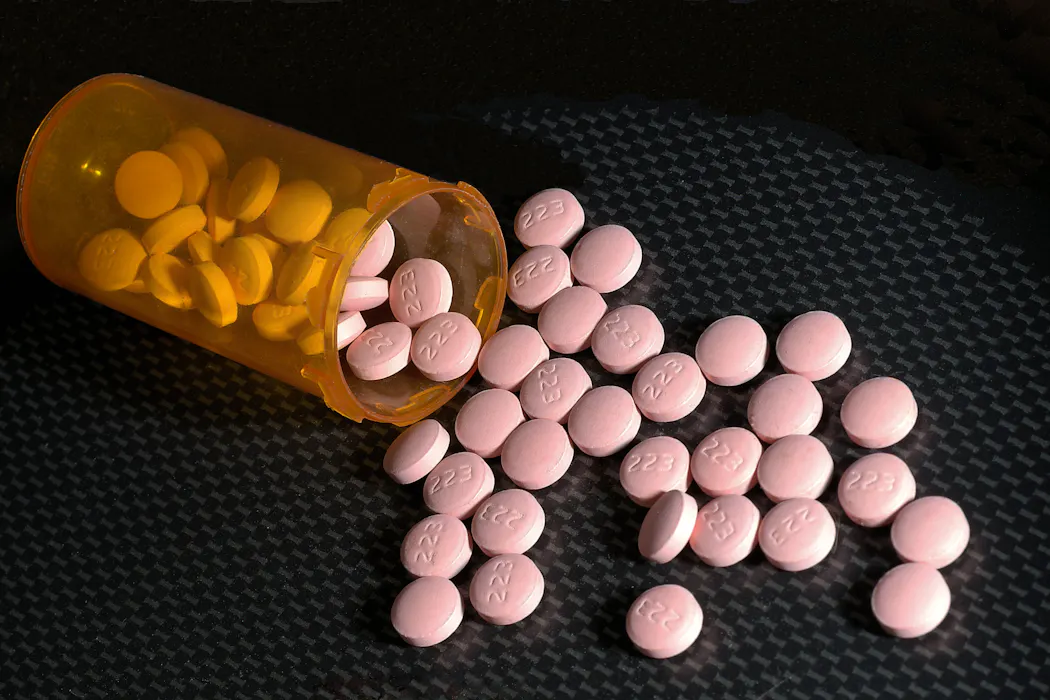
Ray Geiger/Shutterstock.com

When Lady Gaga recently spoke in an interview about taking lithium while suffering from a “psychotic break”, it drew attention to a drug that has long been used in psychiatry but is less widely understood outside it.

Lithium has been used in psychiatric care for more than 70 years, most notably to treat bipolar disorder. Alongside this renewed attention, a recent study has explored whether much lower doses of lithium might help protect the ageing brain – raising questions about whether its effects could extend beyond mental health treatment.

But the science tells a more complicated – and more sobering – story.

Lithium is a naturally occurring chemical element, found in soil, rocks and water. Most people consume tiny amounts of it through drinking water and foods such as vegetables and grains.

In medicine, it is prescribed in the form of lithium carbonate or lithium citrate. At the doses used in treatment, it steadies mood by reducing how often and how severely manic and depressive episodes occur.

It is also one of the few psychiatric medicines shown to reduce the risk of suicide. In the UK, lithium is licensed for bipolar disorder, mania, severe depression and some forms of aggressive or self-harming behaviour.

Despite decades of use, scientists still do not fully understand how lithium works. What is clear is that it acts across multiple systems in the body at once – affecting brain chemicals such as serotonin and dopamine, helping the immune system function more evenly, and helping to regulate the body’s internal clock.

It may also slow some of the processes associated with ageing at a cellular level, including protecting the structures at the tips of chromosomes that tend to wear down over time, and supporting the tiny structures inside cells that generate energy. In the brain, these combined effects appear to make nerve cells more resilient to stress and damage.

This has led researchers to explore whether lithium might have a role in diseases where the brain gradually deteriorates, such as Alzheimer’s.

An animal study published earlier this year found that when lithium levels in mice were experimentally reduced, the animals developed more of the protein build-ups – amyloid plaques and tau tangles – that are closely associated with Alzheimer’s disease, along with faster memory decline. When lithium levels were restored, these changes were prevented. The findings are promising, but they have not yet been confirmed in humans.

Human studies have produced more cautious results. One trial found that a dose of just 300 micrograms of lithium – far below the amounts used in psychiatric treatment – was linked to slower memory loss in people with Alzheimer’s disease.

Another two-year trial in older adults in the early stages of memory problems found that low-dose lithium was safe, and that memory fared slightly better in those taking it than in those given a placebo. The difference, however, was too small to be considered reliable by the standards researchers use to judge whether a result is real or down to chance.

A 2023 review also noted that areas with higher levels of lithium in drinking water tend to report lower rates of Alzheimer’s disease, although the results varied considerably across studies.

The same review suggested that low-dose lithium might have broader effects beyond the brain, with possible links to heart health, muscle loss, bone thinning and type 2 diabetes. The researchers were clear, though, that the evidence is not yet strong enough to draw firm conclusions.

Lithium as a supplement

So what about taking lithium as a supplement? This is where the picture becomes less clear, and where the risks become more important to consider.

Lithium has what pharmacologists call a “narrow therapeutic window”. In plain terms, this means the gap between a dose that helps and a dose that harms is unusually small. People prescribed lithium require regular blood tests to check that levels in the body remain safe, and to keep an eye on kidney and thyroid health. Without medical supervision, none of that monitoring is likely to happen.

Lithium is processed by the kidneys and can build up in the body, particularly in people who are dehydrated or eating a low-salt diet. It also interacts with a number of commonly used medicines, including anti-inflammatories such as ibuprofen, blood pressure treatments such as Ace inhibitors like ramipril, and water tablets such as indapamide.

These interactions can push lithium levels higher in unpredictable ways, even when the dose being taken seems small. Too much lithium in the body can cause trembling, confusion, vomiting and, in serious cases, seizures.

Many of the low-dose products sold online contain a form called lithium orotate. This is different from the forms prescribed by doctors and is not held to the same safety and quality standards as prescription medicines. There are no large human trials directly comparing it with lithium carbonate or citrate.

Some doctors prescribe low-dose lithium orotate for mood symptoms that do not meet the criteria for bipolar disorder, but this is not backed by strong clinical evidence. Online, it is often sold with sweeping claims about mood, behaviour and memory that go well beyond what the research currently shows.

It is also worth being clear about what Lady Gaga actually said. She described taking prescription lithium – a regulated medicine used under medical supervision – not an over-the-counter supplement. The two are not the same thing.

Research into low-dose lithium and brain health is ongoing, and the early findings are worth watching. But early findings are not the same as answers.

Until large-scale trials show clearly that low-dose lithium is both safe and effective, taking it without medical guidance carries real risks – risks that are easy to miss when the focus falls on the possible benefits. Lithium is a genuinely important medicine. That is precisely why it should not be treated as a casual addition to a supplement routine.

The Conversation

Dipa Kamdar does not work for, consult, own shares in or receive funding from any company or organisation that would benefit from this article, and has disclosed no relevant affiliations beyond their academic appointment.

ref. Lady Gaga says she took lithium after a ‘psychotic break’ – here’s what the science says about this drug – https://theconversation.com/lady-gaga-says-she-took-lithium-after-a-psychotic-break-heres-what-the-science-says-about-this-drug-278169

Climate change is altering Saharan dust – and Europe is downwind

Source: The Conversation – UK – By Hossein Hashemi, Senior Lecturer, Division of Water Resources Engineering & Centre for Advanced Middle Eastern Studies, Lund University

ragusaliaga / shutterstock

In recent years, residents of Spain, France and the UK have looked up to see an eerie sight: deep orange sunrises and skies thick with a yellowish haze. These hazy skies often deposit “blood rain”, rust-colored precipitation that leaves a fine grit on cars and windows.

These events are caused by dust plumes from the Sahara desert that travel thousands of kilometres across the Mediterranean. As climate change alters the world’s largest desert, Europe is finding itself increasingly downwind of a shifting environmental crisis.

The Sahara accounts for more than half of the world’s total dust emissions. Under hot, dry and windy conditions, particles are lifted several kilometres into the atmosphere and transported across continents.

While most travels west toward the Americas, some moves north towards Europe, particularly between February and June. Recent plumes – such as the intense “Calima” that sometimes blankets Spain – have reached as far as the North Sea and Scandinavia.

Parthenon in organe dust cloud
Saharan dust blankets Athens, Greece, in April 2024.
Lesley Hellgeth / shutterstock

The relationship between a warming planet and dust is complex.

On one hand, rising temperatures dry out soils and accelerate desertification, making it far easier for wind to dislodge fine particles. Under extreme warming scenarios, the amount of Saharan dust lifted into the atmosphere could rise by 40% to 60% by the end of the century.

However, the “dustiness” of the future also depends on wind patterns. Certain Saharan sand and dust storms have actually become rarer and less intense over the past two decades. Partly, this is due to an increase in vegetation in the Sahel region at the southern border of the Sahara. But it’s also down to a weakening of surface winds in general, and changes in certain large-scale climate patterns.

Health risks and economic consequences

For Europe, the impact is not just aesthetic. Saharan dust can substantially degrade air quality, pushing levels of invisible particulate matter beyond health guidelines. These fine particles, known as PM10, can penetrate deep into the lungs, triggering asthma and cardiovascular issues. In Spain and Italy, modelling studies suggest Saharan dust may account for up to 44% of deaths linked to PM10 pollution.

Dust also carries other costs. When it settles on snow in the Alps it darkens the surface and makes it less able to reflect sunlight, accelerating melting. It can reduce the efficiency of solar panels and disrupt aviation and road traffic by lowering visibility.

snowy mountain valley, with orange dust
Saharan dust-stained snow in the Spanish Pyrenees.
Xavi Lapuente / shutterstock

What to do about dust

Responding to this growing cross-border problem means acting both at the source and in affected areas.

In the Sahara and its margins, preventing the disruption of intact soils is critical. Overgrazing, river damming and land abandonment can all increase dust emissions. To stabilise the ground, measures include restoring vegetation, maintaining river flows and protecting the fragile “biocrust” of bacteria, moss and other organisms that bind the top few millimetres of desert soils and form a natural shield against wind erosion.

In Europe, the focus is on being prepared. Early warning systems now provide predictions up to 15 days in advance, allowing health authorities to issue alerts for vulnerable people to stay indoors. Simple measures, from improved building ventilation to creating more urban green spaces, can also reduce exposure.

In decades to come, the Saharan “dust belt” will remain a visible indicator of our planet’s health. But technology and forecasting alone will not be enough to solve the problem.

Dust does not respect borders, so managing it will require stronger international cooperation – and binding agreements – on everything from managing river basins to stop lake beds from drying out, to public health responses across Europe. Whether orange skies remain a curiosity or become a regular feature of European life, governments throughout Europe and Africa must take this shared risk seriously.

The Conversation

Hossein Hashemi does not work for, consult, own shares in or receive funding from any company or organisation that would benefit from this article, and has disclosed no relevant affiliations beyond their academic appointment.

ref. Climate change is altering Saharan dust – and Europe is downwind – https://theconversation.com/climate-change-is-altering-saharan-dust-and-europe-is-downwind-278605

Jürgen Habermas: a philosopher whose hopes for a better future are more important than ever

Source: The Conversation – UK – By Susan Smith, Honorary Professor of Geography, University of Cambridge

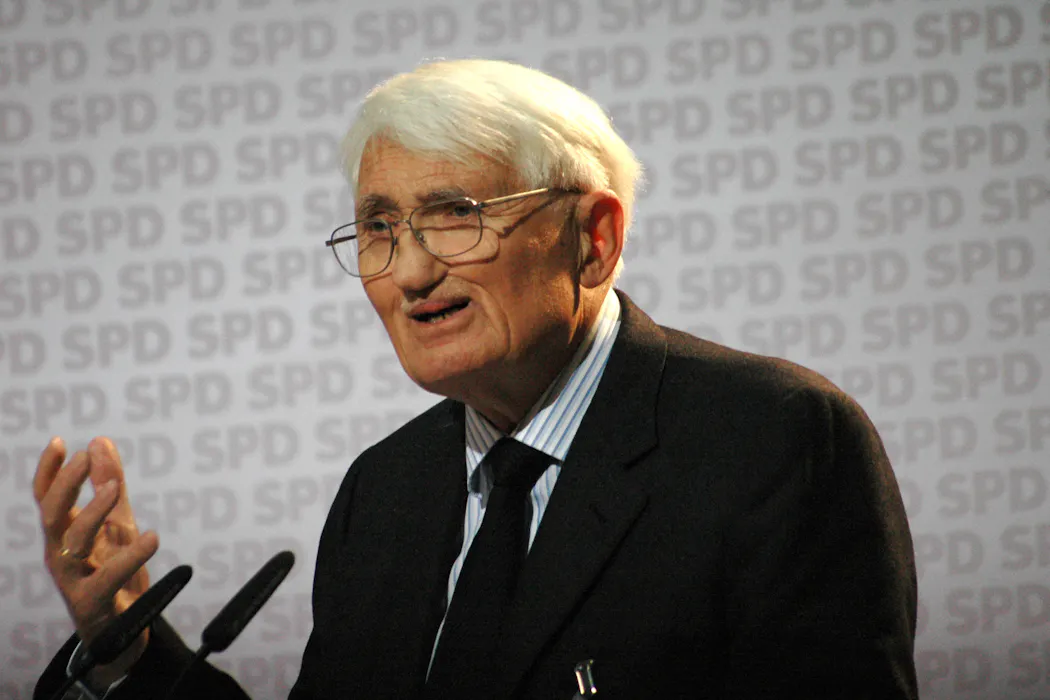
Jürgen Habermas speaking in 2007. 360b/Shutterstock

It is impossible to capture seven decades of formidable intellect, wrapped into some 14,000 books and articles, in less than a thousand words. Yet German philosopher Jürgen Habermas staked his career on the power of dialogue and deliberation, so it is worth chiming in.

Habermas, who died on March 14 at the age of 96, was among the greatest thinkers of our time. He was unshakeable in his conviction that people have minds of their own, can hope for a better future, and have the capability, collectively and democratically, to bring that future to life.

Born in Düsseldorf in 1929, he escaped conscription to the Wehrmacht by a whisker. His later realisation that, as a child, he had been enveloped by “a politically criminal system” propelled him into a lifelong scholarly, political and personal campaign to rescue democracy and restore the future.

It was an uphill struggle of breathtaking proportions. If the best was still to come, the journey towards enlightenment would require “nothing less than a comprehensive theory of modern society and its underlying dynamics”.

That was the scholarly project, and few 20th century theorists could tackle it. Habermas led the way with sweeping interdisciplinary reach: historical understanding, geographical imagination, sociological insight, grasp of legal theory, sustained engagement with ethics, aesthetics, psychology, epistemology, theology and more. Any one of these approaches would have moved the dial, but in Habermas they came together with a powerful political message.

Variously described as a socialist, democrat, internationalist, and above all humanitarian, his philosophy – practical, perhaps pragmatic – was his politics. Its centrepiece was the formation, functioning and fragility of a public sphere – Öffentlichkeit – mediating between states and civil societies, promising an alternative to the authoritarian, totalitarian regimes he eschewed.

Bookended by two landmark works, Habermas’s lifelong conviction was that the formation of public opinion through rational, reasoned conversation was vital for the conduct and survival of parliamentary democracy. Both works are cautionary tales concerned equally with the forces stifling deliberative democracy and with the conditions in which it might flourish.

The first, the Structural Transformation of the Public Sphere (1962) finds the scope for informed, inclusive, critical debate compromised by the intrusion of calculative, commercial and bureaucratic interests. Six decades later, A New Structural Transformation of the Public Sphere and Deliberative Politics (2022) takes on the algorithms driving social media. These, he argued – by accident, design or vested interests – fragment the public sphere, undermining the possibility for collective action against environmental change, excessive inequality and more.

Meanwhile, anchored on the two-volume Theory of Communicative Action (1981), Habermas mounted a sustained effort to make the public sphere work.

What scholar in the humanities and social sciences in the last half century is untouched by this project? My own reckoning, for example, was his prequel on Knowledge and Human Interests (1968). Once you realise that knowledge is not a thing to be discovered but a practice constituted by competing interests, there is no going back.

We were all critical theorists then, on a self-reflective pilgrimage to more rational, fairer futures. Habermas stayed with us every step of the way, not least because he did not confine himself to scholarly books and articles. His journalistic output and other public interventions were equally prodigious. Consider, for example, some 12 volumes of talks, speeches and commentary gathered in his Kleine Politische Schriften.

There is, it must be said, a well-developed feminist critique – and re-visioning – of Habermas’ core ideas. Those very public spaces in which deliberative democracy thrives (if it does) have traditionally been occupied by men, and are generally exclusionary in other ways. Not that such challenges fazed Habermas, who regularly exchanged views with a wide range of public intellectuals. These debates were how he expected the future to unfold.

Hope for the future

For Habermas, hope has not always triumphed over experience. Early in his career he underestimated how tame “conversation” might seem to his students. In the middle years, he probably oversold the potential of intellectuals to steer public debate.

More recently, a trend towards democratic decline and strengthening authoritarianism might suggest that he fell into a classic “democracy trap”. Was it futile to hope that the mandate for fully enfranchised populations to choose their governments through regular free and fair elections would spread?

Habermas was, in fact, acutely aware that the capacity for deliberative democracy can never be taken for granted. However, he never gave up on its promise. On this, he wrote actively to the end, sometimes controversially.

Not everyone liked his style: one obituary describes him as “brilliant, influential and stupefyingly tedious”. But the more telling view is that his work “has given us a vocabulary in which the promises of dignity, autonomy, and emancipation are kept alive and true”.

All in all, Habermas’ achievements are a valorisation of everything that populism is not. He held fast to his conviction that deep knowledge and cogent arguments can win the day, that even the smallest gesture towards a better world is worth the effort.

That is why a recent reviewer could describe his final three-volume project – Also a History of Philosophy – as “a work of willed optimism”. And it is why, in his last work, a collection of biographical conversations – Things Needed to Get Better – Habermas still pins his hopes on critical dialogue and reasoned debate.

This article features references to books that have been included for editorial reasons, and may contain links to bookshop.org. If you click on one of the links and go on to buy something from bookshop.org The Conversation UK may earn a commission.

The Conversation

Susan Smith has received funding from the ESRC, ARC and AHURI. She is affiliated with the British Academy and the University of Cambridge.

ref. Jürgen Habermas: a philosopher whose hopes for a better future are more important than ever – https://theconversation.com/jurgen-habermas-a-philosopher-whose-hopes-for-a-better-future-are-more-important-than-ever-279020

High vet bills have eroded pet-owners’ trust – but vets aren’t getting rich from their fees

Source: The Conversation – UK – By Rachel Williams, Reader in Human Resource Management, Cardiff University

Korawat photo shoot/Shutterstock

What would you pay to ease the pain of a beloved pet? For pet owners, vet bills are likely to be one expense that’s tightly bound up with emotion. But it seems the market is not working as well as it should. A report into the UK’s veterinary sector has identified concerns about price transparency and the growing dominance of large corporate groups that own local vet practices.

In the lead-up to the report by regulator the Competition and Markets Authority (CMA), much of the media coverage focused on rising veterinary fees. But behind practice doors, there is a subtler but equally important issue at play – declining trust between pet owners and professionals.

Vets have long been portrayed as trusted figures, from the James Herriot novels to Mrs Hamster in the Peppa Pig cartoons. But, increasingly, that trust is being questioned and vets report that clients are suspicious of the advice they offer. One vet I spoke to this week was frustrated that a client had refused all treatment options because they believed the recommendations were motivated by financial targets and not their pet’s welfare.

In my research with early-career vets, this shift in the public’s perception is clear. Some vets describe hostility from clients, while others avoid telling people they are a vet to escape conversations about fees. One vet in my study even left the profession due to the stress of these interactions.

High fees for clients do not equate to high salaries for vets. Vets I interviewed with around four years’ experience reported salaries ranging from £37,000 to £48,000. This is broadly comparable to other graduate professions such as teaching.

However, unlike teachers, some vets are offered only statutory sick pay, and have no enhanced holiday or pension benefits. Despite this, they are often seen as personally profiting from rising fees, when in reality they have limited control over pricing decisions.

Trust matters not only for the wellbeing of vets, but also for animal welfare. When trust breaks down, clients may delay or decline treatment. Vets told me they struggled to balance the best outcome for the pet with the owner’s willingness or ability to pay.

This can lead to distressing outcomes, including the euthanasia of animals with treatable conditions. Some owners are also taking their pets to Europe for surgery, where lower wages and overheads, as well as different regulatory frameworks, can significantly reduce the cost of treatment.

What will the new rules mean for pet owners?

The CMA’s findings suggest that part of this distrust may stem from how the veterinary market operates. It proposes a series of reforms, to come in later this year, to give pet owners more control and clearer information about pricing and practice ownership.

In a central change, price transparency will be mandatory. Practices will be required to publish prices for common treatments and provide written estimates before expensive procedures take place. In addition, price comparison tools will be introduced to allow people to shop around. Together, these measures aim to inform and empower pet owners.

The CMA is also targeting the way medicines are sold. Many pet owners don’t know that they can request a prescription and purchase medications online, often at lower cost. Under the new proposals, vets will be required to make this option clear, and there will be a £21 cap on prescription fees.

However, many online retailers of animal medication are owned by the corporate practices and so some believe this will merely transfer income from independent practices.

springer spaniel lying on a tiled floor
When trust between vet and client breaks down, it can delay vital treatment.
Cavan-Images/Shutterstock

Another key recommendation is greater transparency around practice ownership. Around 60% of practices are owned by a small number of corporate groups – up from 10% just over a decade ago. These practices are funded through venture capitalists and large corporations, although two also offer joint ownership models with vets.

Yet this information is often hidden, as practices work under their own names. In future, practices will need to state clearly who their parent company is on all signage and communications. They must also identify if this company also owns related businesses such as pet crematoria, online pharmacies and referral hospitals.

In theory, these changes should help rebuild trust. When clients have the ability to compare options, they may be less likely to assume that their vet’s recommendations are driven by profit.


Read more:
Are independent vets really better? The real issue isn’t necessarily who owns them


But transparency alone may not fully address the loss of trust in the profession. There is a risk that more focus on pricing could reinforce the perception of veterinary care as a commercial transaction rather than a professional service grounded in animal welfare.

In my interviews, vets frequently told me that they did not join the profession for the money. And yet the public perception is that high veterinary charges lead to high salaries.

The CMA also highlighted the need for broader regulatory reform, including potential changes to the Veterinary Surgeons Act, which regulates vets’ training, conduct and disciplinary processes. Updating this to regulate whole practices rather than just individual vets will reflect the dominance of large corporate providers and ensure minimum standards of care.

The veterinary profession is navigating a complex set of pressures, including the rising cost of living, increasing overheads in the UK and difficulty in retaining experienced vets. The CMA’s recommendations are an important step towards improving transparency and empowering pet owners, but rebuilding trust will take more than clearer pricing. It will depend on people understanding and anticipating the cost of pet ownership and valuing the expertise and care at the heart of veterinary relationships.

The Conversation

Rachel Williams does not work for, consult, own shares in or receive funding from any company or organisation that would benefit from this article, and has disclosed no relevant affiliations beyond their academic appointment.

ref. High vet bills have eroded pet-owners’ trust – but vets aren’t getting rich from their fees – https://theconversation.com/high-vet-bills-have-eroded-pet-owners-trust-but-vets-arent-getting-rich-from-their-fees-279170

Donald Trump’s ‘new’ 15-point plan is the biggest sign yet that Washington fears it is losing this war

Source: The Conversation – UK – By Bamo Nouri, Honorary Research Fellow, Department of International Politics, City St George’s, University of London

The language of power often reveals more than it intends. In a rare moment of candour on March 7, the US president, Donald Trump, described the confrontation with Iran as “a big chess game at a very high level … I’m dealing with very smart players … high-level intellect. High, very high-IQ people.”

If Iran is, by Trump’s own admission, a “high-level” opponent, then the sudden revival of a 15-point plan previously rejected by Iran a year ago suggests a disconnect between how the adversary is understood and how it is being approached. It’s a plan already examined in negotiation by Iran and dismissed as unrealistic and coercive. Despite this, the Trump administration is once again framing the “roadmap” as a pathway to de-escalation. Tehran has once again dismissed the gambit as Washington “negotiating with itself – reinforcing the perception that the US is attempting to impose terms rather than negotiate them.

The US president is right about one thing – Iran is not an opponent that can be easily dismissed or overwhelmed. Trump’s own description is a tacit acknowledgement that this is a far more capable and complex adversary than those the US has faced in past Middle Eastern wars, such as Iraq. And that is why the odds are increasingly stacked against the United States and Israel.

This conflict reflects a familiar but flawed imperial assumption: that overwhelming military force can compensate for strategic misunderstanding. The US and Israel appear to have misjudged not only Iran’s capabilities, but the political, economic and historical terrain on which this war is being fought.

Unlike Iraq, Iran is a deeply embedded and adaptable regional power. It has resilient institutions, networks of influence, and the capacity to impose asymmetric costs across multiple theatres. It knows how to manage maximum pressure.

The most immediate problem is lack of legitimacy. This war has authorisation from neither the United Nations or, in the case of America, the US Congress. Further, US intelligence assessments indicate Iran was not rebuilding its nuclear programme following earlier strikes – contradicting one of Washington’s justifications for war. The resignation of Joe Kent as head of the National Counterterrorism Center on March 17, was even more revealing. In his resignation letter Kent insisted that Iran posed no imminent threat.

This effectively collapses one of the original narratives underpinning the US decision to start the war – a further blow to legitimacy.


Read more:
Iran war lacks strategy, goals, legitimacy and support – in the US and around the world


A majority of Americans oppose the war, reflecting deep fatigue after Iraq and Afghanistan – hardly ideal conditions for what increasingly looks like another “forever war” in the Middle East. Current polling shows Trump’s Republicans trailing the Democrats ahead of the all-important midterm elections in November.

The war is both militarily uncertain and politically unsustainable. International allied support is also eroding. The United Kingdom — often trumpeted as Washington’s closest partner — has limited itself to defensive coordination, while Germany and France have distanced themselves from offensive operations. European allies also declined a US request to deploy naval forces to secure the strait of Hormuz. This reflects not just disagreement, but a deeper loss of trust in US leadership and strategic judgement.

US influence has long depended on legitimacy as much as force. That reservoir is now rapidly draining. Global confidence is falling, while images of civilian casualties — including over 160 schoolchildren killed in an airstrike on the first day of the war – have shocked international onlookers. Rather than reinforcing leadership, this war is accelerating its erosion.

Israel faces a parallel crisis of legitimacy – one that began in Gaza and has now deepened. The war in Gaza severely damaged its global standing, with sustained civilian casualties and humanitarian devastation drawing unprecedented criticism, even among traditional allies. This confrontation with Iran compounds that decline.

Striking Iran during active negotiations — for the second time — reinforces the perception that escalation is preferred over diplomacy. The issue is no longer just conduct, but credibility.

Strategic failure, narrative defeat

The conduct of the war compounds the problem. The assassinations of Iranian leaders, framed as tactical victories, are strategic failures. They have unified rather than destabilised Iran. Mass pro-regime demonstrations illustrate how external aggression can consolidate internal legitimacy.

The issue is no longer just the conduct of the war, but the credibility of the conflict itself. Regardless of how impressive the US and Israeli military are, it doesn’t compensate for reputational collapse. When building support for a conflict like this – domestically and internationally – legitimacy is a strategic asset. Once eroded across multiple conflicts, it is extraordinarily difficult to rebuild.

Rather than stabilising the system, US actions are fragmenting it. Allies are distancing themselves, adversaries are adapting, and neutral states are hedging.

The most decisive factor may be economic. The war is already destabilising global markets – driving up oil prices, inflation, and volatility at levels that combine the effects of 1970s and Ukraine war oil shocks.

This is a war that cannot be contained geographically nor economically. The deployment of 2,500 US marines to the Middle East (and reports that up to another 3,000 paratroopers will also be sent), reportedly with plans to secure Kharg Island – and with it Iran’s most important oil infrastructure – would be a dangerous escalation.

For Gulf states, the assumption that the US can guarantee security is increasingly questioned. Some states are reportedly now looking to diversify their partnerships and turning toward China and Russia, mirroring post-Iraq shifts, when US failure opened space for alternative powers.

Iran holds the cards

Wars are not won by destroying capabilities alone, but by securing sustainable and legitimate political outcomes. On both counts, the US and Israel are falling short.

Iran, by contrast, does not need military victory. It only needs to endure, impose costs, and outlast its adversaries. This is the logic of asymmetric conflict: the weaker power wins by not losing, while the stronger one loses when the costs of continuing become unsustainable.

This dynamic is already visible. Having escalated rapidly, Trump now appears to be searching for an off-ramp — reviving proposals and signalling openness to negotiation. But he is doing so from a position of diminishing leverage. In contrast, Iran’s ability to threaten energy flows, absorb pressure, and shape the tempo of escalation means it increasingly holds key strategic cards. The longer the war continues, the more that balance tilts.

Empires rarely recognise when they begin to lose. They escalate, double down, and insist victory is near. But by the time the costs become undeniable – economic crisis, political fragmentation, global isolation – it is already too late. The US and Israel may win battles. But they may be losing the war that matters: legitimacy, stability and long-term influence.

And, as history suggests, that loss may not only define the limits of their power, but mark a broader shift in how power itself is judged, constrained, and resisted.

The Conversation

The authors do not work for, consult, own shares in or receive funding from any company or organisation that would benefit from this article, and have disclosed no relevant affiliations beyond their academic appointment.

ref. Donald Trump’s ‘new’ 15-point plan is the biggest sign yet that Washington fears it is losing this war – https://theconversation.com/donald-trumps-new-15-point-plan-is-the-biggest-sign-yet-that-washington-fears-it-is-losing-this-war-279001

Matt Brittin: BBC’s new director general appointed at an existential moment for the broadcaster

Source: The Conversation – UK – By Steven Barnett, Professor of Communications, University of Westminster

The BBC has appointed former Google executive Matt Brittin as its new director general. Brittin will replace outgoing director general Tim Davie. He resigned last year in the wake of revelations about the editing of a Panorama documentary about Donald Trump and board disagreements over how it should be handled.

Brittin’s appointment comes at a critical moment, as the broadcaster prepares to renew its royal charter. This is the constitutional basis for the BBC’s existence, which sets out its mission and public purposes. It is traditionally renewed once a decade to make sure the BBC keeps up to date with political and technological changes.

Because the renewal process is run by the government of the day, it can involve difficult conversations with ministers who – while acknowledging the BBC’s independence – can insist on major changes. Despite some challenging political environments, each charter renewal has generally resulted in an evolution from previous years. The BBC has moved from radio to TV, from analogue to digital and online.

But this time around feels more existential. In a world dominated by American streamers and online platforms owned by tech billionaires, the government has proposed a range of options for the BBC’s future that raise fundamental questions, in particular about its funding and governance.

The culture secretary, Lisa Nandy, announced the government’s intention to make the charter permanent to avoid the risk of political interference. Following a period of consultation, the government will publish firmer proposals in the autumn, with the new charter signed off by Nandy (or her successor) early next year.

This was a significant victory for the BBC, which argued for a permanent charter in its own response to the government consultation. It also called for changes to how appointments are made to the BBC board, to avoid any suggestion of government influence. This was perhaps influenced by the circumstances of Davie’s departure.


Read more:
The political meddling that led to BBC crisis – and how to stop it in the future


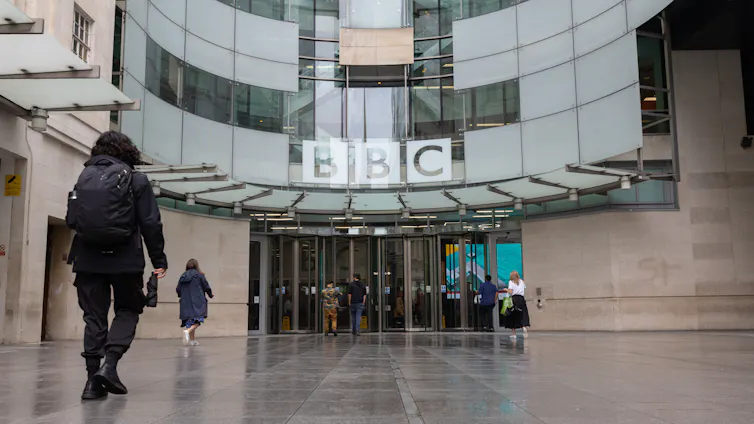
Front facade of BBC broadcasting house
The BBC faces a key moment with the renewal of its charter.
Zeynep Demir Aslim/Shutterstock

There are three key pieces of context that make this review so important.

First, it is quite possible that the broadcast signal will be switched off in the next charter period. The government is now considering options for the distribution of TV, which will require upgrading existing infrastructure if the current terrestrial system is to continue into the 2040s. Given that households are moving to broadband via smart TVs and other devices, broadcasters have expressed a clear preference for an earlier switch-off to avoid the cost of running two distribution systems.

At that point, the BBC ceases to be a broadcaster (except perhaps via radio) and becomes a public service content provider. It will have to compete not just with powerful streamers like Netflix, but with platforms like YouTube. A tech background like Brittin’s will arguably help the BBC in this new competitive environment. But he will need an experienced deputy with the kind of journalistic background required to deal with the (inevitable) editorial controversies that the BBC will face.

Second, the notion of a TV licence fee has become increasingly anachronistic in the digital world. There is greater pressure – especially in a cost-of-living crisis – for a more progressive payment system that takes better account of ability to pay.

The government has ruled out a German-style household tax and funding through general taxation, but not advertising or the idea of top-up subscription (where a “premium” is charged for content beyond a basic tier). It is also considering a reformed licence fee.

Third, the current political environment is more volatile than it has been for decades. Nigel Farage has made his contempt for the BBC abundantly clear, as well as his party’s determination to cut its funding by half. The charter renewal is an opportunity to insulate the BBC from longer term attempts to undermine or dismantle it.

Protecting the BBC

Critics may want to see a downsized BBC. But in a media world dominated by US-based tech billionaires and entertainment behemoths – and where disinformation poses serious risks to democracy – the broadcaster is more necessary than ever.

It is not only the most trusted news brand in the UK, but provides billions in investment to Britain’s creative industries. And, it is a vital element of Britain’s soft power in an unstable geopolitical environment.

The new charter must therefore guarantee the BBC’s independence. No parliament can tie the hands of its successors. But the next charter can ensure there are obstacles to any government determined to inflict damage on the BBC.

Nandy’s announcement of a permanent charter is an important first step, guaranteeing the BBC’s long-term existence. While it would of course be seriously weakened by a major funding cut, the institution itself would survive and could be revived by a subsequent government.

That permanent charter could be accompanied by a much more independent process of appointing a chair and non-executive directors, to insulate the BBC from political influence. A recent report from the British Academy, examining how other countries manage their public broadcasting systems, drew attention to Germany’s model. There, an independent body is charged both with protecting the independence of German public broadcasters and independently setting the level of funding.

A second area of fundamental reform would be a funding system that provides for universal payment, but is not linked specifically to television and makes some allowance for ability to pay. An evolution from the current licence fee – one possibility floated by the government – would provide the BBC with a more secure and sustainable funding base, along with options to provide discounts for struggling households.

The BBC’s future is now in the hands of a government that appears to appreciate its continuing importance to Britain’s cultural and democratic life. We will soon find out whether this government is up to the job of a much-needed radical renewal.

The Conversation

Steven Barnett is a member of the British Broadcasting Challenge which campaigns for Public Service Broadcasting. He is on the management and editorial boards of the British Journalism Review. He is on the Advisory Board of the Charitable Journalism Project which campaigns for public interest journalism and on the board of Hacked Off which campaigns for a free and accountable press.

ref. Matt Brittin: BBC’s new director general appointed at an existential moment for the broadcaster – https://theconversation.com/matt-brittin-bbcs-new-director-general-appointed-at-an-existential-moment-for-the-broadcaster-278453

Kent meningitis outbreak: the latest on the bacterial strain at its centre

Source: The Conversation – UK – By Mark Fielder, Professor of Medical Microbiology, Kingston University

A meningitis outbreak in Kent has been caused by a strain of bacteria that appears to be genetically distinct from anything scientists have seen before. Health officials are working urgently to understand what that means.

As of March 23, 23 young people have been confirmed as cases or considered probable cases of invasive meningococcal disease linked to the outbreak. Two have died. The majority attended a nightclub in Canterbury called Club Chemistry in the first week of March, and almost all are students or young people in education, with an average age of 19.

The strain belongs to a well-known family of meningococcal bacteria called clonal complex 41/44, which accounts for around 40% of invasive meningococcal disease in the UK. Within that family, it sits in a subgroup that has been circulating in England since 2020. But when scientists at the UK Health Security Agency sequenced its genome – essentially reading its genetic code – they found it was slightly different from its closest known relatives, with around 80 genetic differences between it and the most similar strains on record.

One differences is in the pilX gene, which affects structures on the surface of the bacterium that are known to play a role in how infectious it is. Scientists are cautious about reading too much into this at this stage – genetic differences do not automatically translate into changes in disease-causing properties – but it is one of several features that need to be investigated further.

What does this mean in practice? Officials are not yet sure why this outbreak is larger and spreading faster than usual. Three possible explanations are on the table. The bacteria may be more transmissible or virulent than usual. The population of young people affected may have lower immunity than expected. Or social and environmental factors, such as crowded venues, close contact and shared drinks, may have driven the spread. Most likely, say officials, it is a combination of all three.

The good news is that the strain responds to standard antibiotics. Tests have confirmed it is sensitive to penicillin, ciprofloxacin, rifampicin and cefotaxime, the drugs routinely used to treat and prevent meningococcal disease. Anyone who has been in close contact with a confirmed case has been offered preventative antibiotics.

Antibiotic pills.
Antibiotics are still effective against the strain that caused the outbreak.
Sonis Photography/Shutterstock.com

The vaccine question

There are two vaccines in the UK that protect against MenB – the strain causing this outbreak – called Bexsero and Trumenba. But the situation around vaccines is not straightforward. Both work by triggering the immune system to recognise proteins on the surface of the bacteria.

Testing suggests the outbreak strain is likely to be covered by at least one component of Bexsero, which is encouraging. However, a full assessment is still underway, and none of the people who fell ill would have been eligible for MenB vaccination through the standard childhood programme, which was introduced in 2015 and given to babies at eight weeks old.


Read more:
Kent’s meningitis outbreak was years in the making – here’s why


Vaccination has been offered to students and close contacts linked to the outbreak, and health officials say this remains an important protective measure.

The outbreak is currently classified at its lowest active level – a known cluster with cases directly linked to one another, all in Kent, with no sign of wider spread across the country. However, officials consider it likely that a few cases connected to the cluster but outside Kent will emerge in the coming weeks, as some of those who attended Club Chemistry may have returned to other parts of the country.

The chance of this outbreak spreading nationwide is currently considered remote. But officials are urging increased vigilance. Risk assessments will be updated as new evidence comes in.

Several studies are now underway. Researchers are examining blood samples from young people to understand how much natural immunity exists against this particular strain. A separate study will look in detail at what happened at Club Chemistry on the nights of 5 to 7 March, in an effort to understand exactly how transmission occurred.

The Conversation

Mark Fielder has received funding from JPIAMT/MRC

ref. Kent meningitis outbreak: the latest on the bacterial strain at its centre – https://theconversation.com/kent-meningitis-outbreak-the-latest-on-the-bacterial-strain-at-its-centre-278925

Hoppers embraces the messy reality of nature – and shows why diversity matters in environmental storytelling

Source: The Conversation – UK – By Yuan Pan, Lecturer in Digital Infrastructures & Sustainability, King’s College London

Pixar’s new film Hoppers follows Mabel Tanaka, a young environmentalist who grew up exploring a forest glade with her grandmother. When the city of Beaverton’s mayor announces plans to demolish the glade for a new highway, Mabel’s attempts to stop him go nowhere. This is until she discovers a secret university lab.

Scientists in the lab have developed a technology that transfers human consciousness into lifelike robotic animals, allowing people to experience the world from an animal’s perspective. Mabel (Piper Curda) hops into a robotic beaver to rally the creatures of the glade. What she discovers there – a world governed by its own complex rules of coexistence – is far more complicated than anything she expected.

The film’s central line is spoken by Grandma Tanaka (Karen Huie) as she and Mabel sit quietly in nature: “It’s hard to be mad when you feel like you’re part of something big.” It is a simple line that anchors the film’s entire moral values.

Hoppers arrives 17 years after Wall-E, Pixar’s last overtly environmentally themed film. Traditionally, mainstream western-centric animation has favoured anthropomorphic sentimentality over ecological realism. However, Hoppers signals a shift toward more complexity, where animals eat one another and humans are not simple villains. By depicting the uncute realities of nature, Pixar is embracing more nuanced environmental storytelling.

The trailer for Hoppers.

The film is populated by angry characters: Mabel at the destruction of nature; Mayor Jerry (Jon Hamm) at Mabel’s obstruction of his superhighway; the Monarch butterfly insect queen (Meryl Streep) at human disrespect for wildlife; and her heir Titus (a caterpillar voiced by Dave Franco) at humans and animals alike for disrespecting insects.

Their anger will be recognisable to anyone working in environmental conservation. The feeling that nature is continually losing ground to economic interests generates intense frustration – something I have experienced repeatedly over the course of my career.

Set against all of this, however, is the beaver leader of the pond, King George (Bobby Moynihan) whose “pond rules” offer a quietly radical alternative. He knows every creature in the pond by name, down to the earthworms. He believes that hunger must be fed, even if one animal must eat another. Above all, he holds that “we’re all in this together” – a principle he extends even to the humans destroying his habitat.

George embodies what environmental researchers call relational values: the connections that link humans to nature and to other humans, which shape who we are as people.

His worldview gives Grandma Tanaka’s line its full weight. The film resists the temptation to make its human antagonist a straightforward villain. Mayor Jerry is not just an evil developer. He is, by most measures, a well-liked and good mayor. He simply fails to care for the wildlife.

This reflects the genuine complexity of social-ecological systems, where the trade-offs between human development and environmental protection are rarely a contest between good and evil. This moral complexity is more reminiscent of the Japanese animation studio Studio Ghibli, than mainstream Pixar. Ghibli films like Princess Mononoke (1997) resist clean resolutions, portraying neither humans as purely destructive nor nature as passive.


Read more:
How Studio Ghibli films can help us rediscover the childlike wonder of our connection with nature


As I have argued elsewhere, this is a distinctly non-western approach to environmental storytelling. The fact that Pixar appears to be borrowing from this tradition is significant. It suggests that the most effective environmental narratives do not come from western animation’s default moral framework. Hoppers’ argument is that the rhetoric of “us versus them” has never resolved any environmental crisis, or any global crisis. Anger and fear divide people. A sense of shared belonging connects us.

Representation in environmental stories

Hoppers does something else that matters. It puts an east Asian woman at the centre of an ecological story. This is not simply a question of representation. It is a question of who belongs in environmental spaces.

As a British-Chinese environmental researcher, I am acutely aware of these questions. In the UK, 95% of the environmental sector identifies as white. This lack of diversity is not merely a matter of numbers. The term “environmentalist” has long carried associations with whiteness and wealth, and those associations shape who enters the profession, who stays, and whose approaches are considered legitimate.

Growing up with pressure to choose a stable and high-status profession, many people from minority communities never see environmental conservation as a path available to them. I have experienced this tension personally, and it disproportionately affects those from minority backgrounds. When media narratives exclude minority voices from environmental stories, they reinforce the homogeneity that weakens environmental conservation as a field.

Mabel’s role in Hoppers, as a bridge between King George’s nature realm and the human world, mirrors a position that many academics from underrepresented backgrounds would know well. They act as the translator, the intermediary and the person who moves between worlds. From a personal perspective, seeing that role embodied by an east Asian woman in a major animated film is not a small thing. It signals to diverse young people that environmental advocacy is a space that belongs to them. I hope this film inspires a new generation of diverse environmental conservationists.

Animation can reach audiences through emotional pathways that differ from academic research. Hoppers uses that reach wisely, by not oversimplifying the environmental crisis. Grandma Tanaka’s line: “It’s hard to be mad when you feel like you’re part of something big,” is the kind of environmental message that stays with people. Not a warning. But an invitation for humans to be reconnected to nature.


The climate crisis has a communications problem. How do we tell stories that move people – not just to fear the future, but to imagine and build a better one? This article is part of Climate Storytelling, a series exploring how arts and science can join forces to spark understanding, hope and action.


The Conversation

Yuan Pan does not work for, consult, own shares in or receive funding from any company or organisation that would benefit from this article, and has disclosed no relevant affiliations beyond their academic appointment.

ref. Hoppers embraces the messy reality of nature – and shows why diversity matters in environmental storytelling – https://theconversation.com/hoppers-embraces-the-messy-reality-of-nature-and-shows-why-diversity-matters-in-environmental-storytelling-279127

Banksy’s identity may have been published – but was the investigation in the public interest?

Source: The Conversation – UK – By Peter Bengtsen, Senior Lecturer in Art History and Visual Studies, Lund University

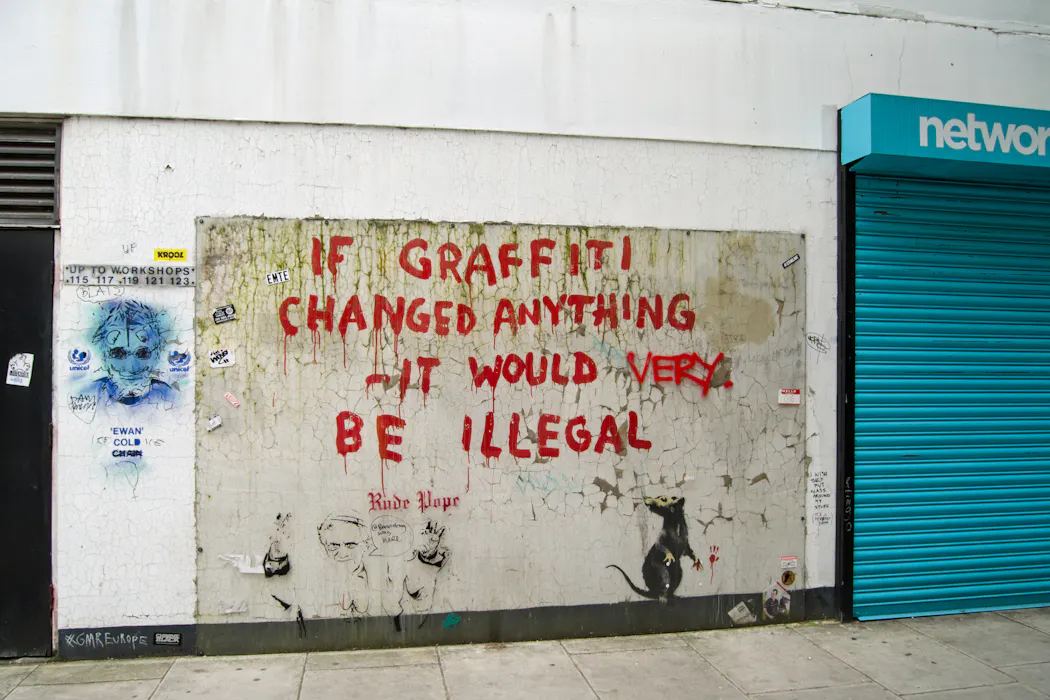
A Banksy work from 2011. BasPhoto/Shutterstock

The British artist Banksy, who is in part famous for being anonymous, has seemingly been unmasked – again. On March 13, Reuters published an investigation that claims to have “revealed, beyond dispute, Banksy’s true identity”.

This is not the first time Banksy’s identity has ostensibly been made public. In addition to previous journalistic inquiries also cited by Reuters, an academic article titled Tagging Banksy: Using Geographic Profiling to Investigate a Modern Art Mystery was published in Journal of Spatial Science almost ten years ago to the day the Reuters story came out.

The article used a mathematical method that looked at where Banksy’s graffiti appeared to figure out where the artist might live and work, and their results pointed to a specific person as likely being the artist. I argued at the time that the authors’ decision to publish the name of a person they believe to be Banksy was ethically problematic. It seemed to serve no scholarly purpose and to have primarily been done to attract media attention to what is otherwise a niche academic study.

The Reuters investigation comes across as a thoroughly researched piece of journalism. However, the investigation’s detailed account of how Banksy was ostensibly identified leaves another question unanswered: how does exposing Banksy’s identity benefit the public?

The power of anonymity

The Reuters investigation claims that “the public has a deep interest in understanding the identity and career of a figure with his profound and enduring influence on culture, the art industry and international political discourse”. I disagree.

Banksy’s career and cultural influence are already well documented. It is not clear how naming the person behind the mask provides significant additional insights into their work or impact.

The longstanding mystery about Banksy’s identity has played an important role in building the myth of a larger-than-life figure whose work could turn up anywhere at any time. Banksy’s work is conceptually, technically and contextually accomplished – and often socially relevant. But it is the myth surrounding the artist that continues to inspire a fascination that goes beyond individual artworks. Anonymity and secrecy are fundamental to the artist’s oeuvre.

Some art experts have questioned the intentions of the investigation

The Reuters investigation argues that Banksy is a public figure and as such is “subject to scrutiny, accountability, and, sometimes, unmasking”. However, as noted by a commenter in a Reddit discussion started by one of the Reuters journalists, it is not clear “how naming him somehow increases his transparency or accountability”.

On a practical level, anonymity has made it possible for Banksy to create work around the world without much interference from authorities or, indeed, fans. The attention given to a London builder previously “identified” as Banksy (though this was later disproved) suggests that the latter group could make life difficult for the artist, as well as anyone else bearing the legal name now attributed to Banksy by Reuters.

At least as important, though, is that anonymity enables the public to project their own ideas on to both artist and artwork. For example, it has been suggested that Banksy might be a woman.

As cultural studies scholar Sofia Pinto has pointed out, this idea may rest on stereotypical notions of what constitutes feminine traits in culture and art. This includes the artist’s focus on social justice and “capacity for imagining being in someone else’s shoes”. However, the point is not Banksy’s actual gender. It is rather that the artist’s anonymity allows viewers to speculate and fill in the blanks.

The idea that Banksy could be anyone surely has broadened the artist’s appeal and may also have inspired people who do not look like – or have the same background as – Banksy to engage in street art or other creative endeavours.

The Reuters journalists have quoted German art historian Ulrich Blanché, who likens the search for Banksy’s identity to a treasure hunt. While this metaphor may seem apt, a treasure hunt does not necessarily entail taking the whole treasure for yourself – especially if doing so spoils the fun for everyone else.

At this troubled time in history, when it can seem increasingly difficult to meet the world with a sense of wonder rather than cynicism, why deprive the public of the enigma that is an integral part of Banksy’s oeuvre? The vague notion that revealing the identity of the person behind Banksy is somehow in the public interest fundamentally misjudges the function and importance of the artist’s anonymity.

The Conversation

Peter Bengtsen does not work for, consult, own shares in or receive funding from any company or organisation that would benefit from this article, and has disclosed no relevant affiliations beyond their academic appointment.

ref. Banksy’s identity may have been published – but was the investigation in the public interest? – https://theconversation.com/banksys-identity-may-have-been-published-but-was-the-investigation-in-the-public-interest-279140

Jürgen Habermas dies at 96: a philosopher whose hopes for a better future are more important than ever

Source: The Conversation – UK – By Susan Smith, Honorary Professor of Geography, University of Cambridge

Jürgen Habermas speaking in 2007. 360b/Shutterstock

It is impossible to capture seven decades of formidable intellect, wrapped into some 14,000 books and articles, in less than a thousand words. Yet German philosopher Jürgen Habermas staked his career on the power of dialogue and deliberation, so it is worth chiming in.

Habermas, who died on March 14 at the age of 96, was among the greatest thinkers of our time. He was unshakeable in his conviction that people have minds of their own, can hope for a better future, and have the capability, collectively and democratically, to bring that future to life.

Born in Düsseldorf in 1929, he escaped conscription to the Wehrmacht by a whisker. His later realisation that, as a child, he had been enveloped by “a politically criminal system” propelled him into a lifelong scholarly, political and personal campaign to rescue democracy and restore the future.

It was an uphill struggle of breathtaking proportions. If the best was still to come, the journey towards enlightenment would require “nothing less than a comprehensive theory of modern society and its underlying dynamics”.

That was the scholarly project, and few 20th century theorists could tackle it. Habermas led the way with sweeping interdisciplinary reach: historical understanding, geographical imagination, sociological insight, grasp of legal theory, sustained engagement with ethics, aesthetics, psychology, epistemology, theology and more. Any one of these approaches would have moved the dial, but in Habermas they came together with a powerful political message.

Variously described as a socialist, democrat, internationalist, and above all humanitarian, his philosophy – practical, perhaps pragmatic – was his politics. Its centrepiece was the formation, functioning and fragility of a public sphere – Öffentlichkeit – mediating between states and civil societies, promising an alternative to the authoritarian, totalitarian regimes he eschewed.

Bookended by two landmark works, Habermas’s lifelong conviction was that the formation of public opinion through rational, reasoned conversation was vital for the conduct and survival of parliamentary democracy. Both works are cautionary tales concerned equally with the forces stifling deliberative democracy and with the conditions in which it might flourish.

The first, the Structural Transformation of the Public Sphere (1962) finds the scope for informed, inclusive, critical debate compromised by the intrusion of calculative, commercial and bureaucratic interests. Six decades later, A New Structural Transformation of the Public Sphere and Deliberative Politics (2022) takes on the algorithms driving social media. These, he argued – by accident, design or vested interests – fragment the public sphere, undermining the possibility for collective action against environmental change, excessive inequality and more.

Meanwhile, anchored on the two-volume Theory of Communicative Action (1981), Habermas mounted a sustained effort to make the public sphere work.

What scholar in the humanities and social sciences in the last half century is untouched by this project? My own reckoning, for example, was his prequel on Knowledge and Human Interests (1968). Once you realise that knowledge is not a thing to be discovered but a practice constituted by competing interests, there is no going back.

We were all critical theorists then, on a self-reflective pilgrimage to more rational, fairer futures. Habermas stayed with us every step of the way, not least because he did not confine himself to scholarly books and articles. His journalistic output and other public interventions were equally prodigious. Consider, for example, some 12 volumes of talks, speeches and commentary gathered in his Kleine Politische Schriften.

There is, it must be said, a well-developed feminist critique – and re-visioning – of Habermas’ core ideas. Those very public spaces in which deliberative democracy thrives (if it does) have traditionally been occupied by men, and are generally exclusionary in other ways. Not that such challenges fazed Habermas, who regularly exchanged views with a wide range of public intellectuals. These debates were how he expected the future to unfold.

Hope for the future

For Habermas, hope has not always triumphed over experience. Early in his career he underestimated how tame “conversation” might seem to his students. In the middle years, he probably oversold the potential of intellectuals to steer public debate.

More recently, a trend towards democratic decline and strengthening authoritarianism might suggest that he fell into a classic “democracy trap”. Was it futile to hope that the mandate for fully enfranchised populations to choose their governments through regular free and fair elections would spread?

Habermas was, in fact, acutely aware that the capacity for deliberative democracy can never be taken for granted. However, he never gave up on its promise. On this, he wrote actively to the end, sometimes controversially.

Not everyone liked his style: one obituary describes him as “brilliant, influential and stupefyingly tedious”. But the more telling view is that his work “has given us a vocabulary in which the promises of dignity, autonomy, and emancipation are kept alive and true”.

All in all, Habermas’ achievements are a valorisation of everything that populism is not. He held fast to his conviction that deep knowledge and cogent arguments can win the day, that even the smallest gesture towards a better world is worth the effort.

That is why a recent reviewer could describe his final three-volume project – Also a History of Philosophy – as “a work of willed optimism”. And it is why, in his last work, a collection of biographical conversations – Things Needed to Get Better – Habermas still pins his hopes on critical dialogue and reasoned debate.

This article features references to books that have been included for editorial reasons, and may contain links to bookshop.org. If you click on one of the links and go on to buy something from bookshop.org The Conversation UK may earn a commission.

The Conversation

Susan Smith has received funding from the ESRC, ARC and AHURI. She is affiliated with the British Academy and the University of Cambridge.

ref. Jürgen Habermas dies at 96: a philosopher whose hopes for a better future are more important than ever – https://theconversation.com/jurgen-habermas-dies-at-96-a-philosopher-whose-hopes-for-a-better-future-are-more-important-than-ever-279020