Donald Trump says the US doesn’t get much out of Nato membership – but is that true?

Source: The Conversation – UK – By Andrew Gawthorpe, Lecturer in History and International Studies, Leiden University

Following the reluctance of many traditional American allies to become involved in the war against Iran, Donald Trump is once again threatening to withdraw the US from Nato. “They haven’t been friends when we needed them,” he said in an interview with Reuters on April 1. “We’ve never asked them for much … it’s a one-way street.”

To be sure, membership in Nato does impose some costs on the US. Washington pays roughly US$750 million (£568 million) per year in direct costs to keep the organisation running, and a further US$4 billion or so towards the European Deterrence Initiative. This initiative rotates some US forces in and out of Europe to deter Russian aggression.

There are also other US forces stationed permanently in Germany and various other European countries, including the UK and Italy. The cost to the US of keeping these forces where they are is comparable to the cost of basing them at home.

For a global superpower which is finding it increasingly difficult to maintain a robust military presence in every region of the world, these costs are not negligible – particularly when some of them could be taken on by wealthy European countries themselves.

But, at the same time, it is hard to justify Trump’s belief that Nato is a “one-way street”. The US derives many benefits from the existence of Nato, which generations of American strategists, military officers and diplomats have viewed as worthwhile.

Following the first and second world wars, US presidents concluded that allowing Europe to be dominated either by recurrent cycles of conflict or a single hostile power was unacceptable. The American economy could not prosper without transatlantic trade and investment, and the US could not be secure if one of the great centres of global wealth and power was in hostile hands.

Founded in 1949, Nato was intended to be a stabilising force that avoided these outcomes. Its primary purpose is to deter aggression against any of its 32 member states, with Article 5 of the alliance stating that an armed attack against one Nato member shall be considered an attack against them all.

The world has changed since Nato’s founding, but the importance of European stability to the US economy remains. Europe is a key market for many American companies. In 2024, the US exported nearly US$295 billion in services and US$414 billion in goods to the EU – figures that are together equivalent to about 80% of the entire US defence budget that year.

By providing European countries with solid security guarantees, Nato remains vital to maintaining the stability which underpins this economic relationship. It deters Russia from military forays into eastern Europe and the Baltics and helps to prevent the catastrophic descent into European war that occurred so frequently in the centuries before the alliance was founded.

American defence guarantees also mean that most European allies do not feel the need to develop their own arsenal of nuclear weapons – a step that could unleash a dangerous arms race.

Defending US interests

These benefits may seem intangible because they mostly concern things that, since Nato’s formation, have not happened. But at the same time, the alliance provides plenty of direct, tangible benefits to the US as well. For instance, Nato provides the US with the means to defend its interests in other regions of the world.

Through the alliance, the US has access to a network of strategically located naval, air and ground force bases which can be used to project power into the Middle East, Africa and central Asia. For instance, the US has used RAF Fairford in the UK to support operations in the current conflict in Iran.

Nato allies frequently contribute capabilities to US military missions too, or carry out tasks that the US would have to perform if Europeans were not doing them. Tens of thousands of Nato soldiers fought in Afghanistan, for example, with over 1,000 of these people losing their lives. Nato sailors also patrol the Atlantic Ocean, keeping trade flowing.

A convoy of armoured vehicles patrol a mountainous area of Afghanistan.
Nato forces on patrol in the Ghazni province of Afghanistan in 2012.
Ryanzo W. Perez / Shutterstock

The US’s Nato partners are also stepping up their contributions to Arctic security, a key demand of the Trump administration. In addition, many Nato members have specialised capabilities in cyber warfare or intelligence collection, which the US would struggle to replicate.

Nato provides a unified and durable framework in which this cooperation can occur. The US does not have to renegotiate its defence relationship with each of the 31 other Nato states constantly. Instead, all members of the alliance invest in equipment and capabilities which are able to be integrated into one common battle plan.

Finally, Nato serves as a springboard for unified diplomacy. Countries that are aligned in their defence policies are likely to be aligned diplomatically, too. Thus, the US has a ready made stable of allies to draw on if tensions rise with any non-Nato country. And if the situation deteriorates to the point that conflict looks likely, the alliance provides the basis for coordinating increased defence spending and, ultimately, war-fighting.

None of this means that Nato will necessarily follow the US into every conflict. But to dismantle an alliance that brings such profound benefits to the US over one disagreement would be a shame. It would perhaps be better for Trump to appreciate one key virtue of close friends and allies – that they are willing to tell you when you are making a mistake.

The Conversation

Andrew Gawthorpe is affiliated with the Foreign Policy Centre.

ref. Donald Trump says the US doesn’t get much out of Nato membership – but is that true? – https://theconversation.com/donald-trump-says-the-us-doesnt-get-much-out-of-nato-membership-but-is-that-true-279798

Men’s wellbeing groups are growing – and helping fill gaps in mental health support

Source: The Conversation – UK – By Richard Gater, Research Assistant at the Centre for Adult Social Care Research, Cardiff University

Pressure on mental health services across the UK is leaving many men without timely support when they need it most.

Men in the UK die by suicide at more than three times the rate of women. There’s a link between poor mental health and suicide, which means men’s wellbeing needs urgent attention. Yet long NHS waiting lists for psychological support mean that many men are unable to access help when they need it.

In Wales, the mental health charity Mind Cymru reports that more than 2,000 people with moderate to severe mental health problems are waiting over six months for therapy in any given month. When men are unable or unwilling to seek support, they have historically been inclined to engage in alternative coping strategies, such as substance use.

As formal services come under increasing strain, informal men’s groups, including community-based peer support groups, continue to grow. These groups remain poorly understood. New research by my colleagues and I on these groups in Wales shows that they could help fill an important gap in mental health support.

We surveyed 30 men’s wellbeing groups across Wales and found that these initiatives are thriving despite limited resources. More than 80% reported rising attendance, drawing in men of all ages, which suggests they may be responding to unmet demand.

Most groups were volunteer-run and operated without public funding, which many highlighted as the biggest barrier to providing the group. Only 21% reported having any professionally qualified staff.

Yet these groups offer men a space where they can turn up and talk without fear of judgment. Their informal environments often appeal to men who feel uncomfortable with clinical structures, assessments, diagnoses and formal appointments. Community groups help remove barriers that can deter men from seeking support and can create a trusting environment perceived as more “male-friendly”.

From health by stealth to emotional openness

Traditionally, men’s wellbeing community initiatives, such as Men’s Sheds, have used “health by stealth” approaches. This means that by engaging in activities together, men are encouraged to communicate with one another. While 40% of groups still used these methods, the research showed a clear shift. Emotional expression is now central in many groups rather than incidental.

Talking about personal issues featured strongly in our survey responses, with nearly 80% of the groups saying they actively encouraged men to speak openly about personal difficulties. Activities used to allow for conversation included support groups, structured discussions and one-to-one conversations.

Emotional expression matters because traditional masculine norms, especially the expectations that men should be tough, reject weakness and hide vulnerability, have made it difficult for many men to talk openly about mental health. These challenges are intensified by long NHS waiting lists that can stretch into months and leave men without timely support.


Read more:
Why ‘toxic masculinity’ isn’t a useful term for understanding all of the ways to be a man


Against this backdrop, our research shows that community groups are especially important and could help fill an important gap in mental health support. These groups are creating spaces where men can be more emotionally open and talk about difficulties before they escalate. In doing so, they challenge traditional masculine norms and the idea that men simply will not talk about their problems.

Our evidence contributes to emerging research showing that when the environment feels safe, men do talk. This shift reflects a broader cultural moment in which more inclusive expressions of manhood are being promoted and widely accepted, and softer expressions of masculinity are becoming more common among men.

Close up of people in a group therapy session.
Most groups surveyed operated without public funding.
StockLab/Shutterstock

A quiet cultural shift

The growth of these community support groups signals a subtle but meaningful shift in how men are experiencing different types of masculinity. These groups are not only helping men cope with health difficulties, but also helping reshape the landscape of manhood.

Within these spaces, men are learning to express vulnerability without feeling that it undermines their identity or masculinity. This matters because these groups may be offering support at a time when demand for NHS mental health services is exceeding what is available.

But informal volunteer‑led services also come with their own challenges. Operating without qualified staff means limited regulation and uncertainty about the quality, standard and consistency of the support on offer.

Our research had a modest sample size, so we still do not know exactly how these groups operate in everyday practice or what they offer to different men. More detailed and in‑depth research would help build this understanding and provide clearer insight into how these groups might complement overstretched NHS services.

The Conversation

Richard Gater does not work for, consult, own shares in or receive funding from any company or organisation that would benefit from this article, and has disclosed no relevant affiliations beyond their academic appointment.

ref. Men’s wellbeing groups are growing – and helping fill gaps in mental health support – https://theconversation.com/mens-wellbeing-groups-are-growing-and-helping-fill-gaps-in-mental-health-support-276933

AI laws overlook environmental damage – here’s what needs to change

Source: The Conversation – UK – By Louise Du Toit, Lecturer in Law, Southampton Law School, University of Southampton

Huge energy-intensive data centres are required to support growing AI demands. Make more Aerials/Shutterstock

More than 200 laws have been developed to regulate AI in more than 100 countries. Many of them focus on issues such as privacy, bias, disinformation, security and cybersecurity rather than the environmental consequences of AI.

AI is an energy-intensive and thirsty industry. It leads to huge greenhouse gas emissions, pollution and loss of nature. These impacts arise partly from the manufacture and use of energy-, carbon- and water-intensive “complex computer chips”, called graphics processing units (GPUs), for the training of AI models as well as increasing e-waste.

My research into the regulatory responses to AI in the EU and the UK highlights how laws often ignore the environmental implications of this big tech. The lack of stringent obligation in AI law and policy is concerning.

There are environmental consequences at all stages of the AI lifecycle. From the manufacture of AI hardware, training of AI models, deployment and use of AI right through to the disposal of AI hardware.

The manufacture of components relies on the extraction of rare earth elements. This can contaminate soil and water, pollute the air and lead to loss of nature and forest habitats. Training AI models is incredibly energy- and water-intensive. A team of researchers estimated in 2025 that training GPT-3 – a large language model released by OpenAI in 2020 – consumed an estimated 700,000 litres of freshwater for electricity generation and cooling of data centres.

Even though AI models are becoming more energy efficient, as models become larger and AI proliferates, overall energy consumption and associated emissions are rising. And the energy consumed in the use of AI, including to generate text or images, vastly outweighs that used during training.

However, it’s difficult to accurately measure the environmental effects of AI, partly due to the lack of transparency of technology companies.

When the EU’s AI Act came into force on August 1 2024, it was the “world’s first comprehensive law” on AI. The AI Act acknowledges some of AI’s environmental consequences. It also requires that “AI systems are developed and used in a sustainable and environmentally friendly manner”.

It outlines that AI providers must disclose information on “known or estimated energy consumption data of the model”. But while promising, this information only needs to be provided when requested by the AI Office, which has been established within the European Commission.

cooling towers/pics in data centre
Industrial cooling towers in every data centre require vast amounts of water.
sutthilak.c10/Shutterstock

Further measures include preparing codes of conduct to assess and minimise “the impact of AI systems on environmental sustainability”. But this is not compulsory. Overall, the AI Act is intentionally anthropocentric. It states that: “AI should be a human-centric technology. It should serve as a tool for people, with the ultimate aim of increasing human wellbeing.”

The UK has no AI-specific legislation. AI is currently only regulated by existing laws. The UK government’s 2023 white paper on AI regulation, which proposes a regulatory framework for AI, doesn’t prioritise sustainability at all. Although the white paper acknowledges that AI can contribute to technologies to respond to climate change, it does not specifically address any environmental risks:

The proposed regulatory framework does not seek to address all of the wider societal and global challenges that may relate to the development or use of AI. This includes issues relating to … sustainability. These are important issues to consider … but they are outside of the scope of our proposals for a new overarching framework for AI regulation.

A transparent future?

More transparency starts with AI developers having to disclose information about how much energy and water is consumed, how much carbon is emitted, the rare earth elements extracted and how much plastic is used during the AI production process.

This data then provides a baseline. Then appropriate targets and limits can be set for energy efficiency, carbon emissions and water use to improve the sustainability of AI.

Several proposals have been made for how reduced carbon emissions and water consumption could practically be achieved, such as training AI models on less carbon-intensive energy grids or in less water-intensive data centres.

Warnings about environmental effects could tell consumers how much carbon dioxide is emitted or water consumed for each query. In addition, an AI labelling system could mirror the EU’s existing energy efficiency labelling schemes, which clearly indicate the energy efficiency of appliances, ranking them from most energy-efficient (dark green) to least energy-efficient (red).

Proposals include an AI “energy star” rating system and a social and environmental certification system. This would help consumers to make informed choices about which AI systems to use or whether AI should be used at all. Tax incentives and funding incentives could also encourage tech firms to make more sustainable choices.

By integrating sustainability into AI laws, through these types of measures, the planet can be somewhat safeguarded alongside AI’s rapid expansion.

The Conversation

Louise Du Toit does not work for, consult, own shares in or receive funding from any company or organisation that would benefit from this article, and has disclosed no relevant affiliations beyond their academic appointment.

ref. AI laws overlook environmental damage – here’s what needs to change – https://theconversation.com/ai-laws-overlook-environmental-damage-heres-what-needs-to-change-279047

The Samurai Detectives: Volume 2 explores money and kinship in the Edo underworld

Source: The Conversation – UK – By Hui-Ying Kerr, Senior Lecturer in Fashion Communication and Promotion, Nottingham Trent University

At high noon on a scorching summer day, retired samurai Kohei finds the fearsome Kumagoro writhing around a field in agony. The stricken man’s name translates as “demon bear”, and he’s the proprietor of a bar of the same name. Kohei finds him next to a temple famous for a tragic legend of familial loss and despair.

This setting frames the second instalment of The Samurai Detectives, written by Shōtarō Ikenami between 1972 and 1989 and newly translated by Yui Kajita. The novel is steeped in mystery, legend, and the ties and tensions of blood kin, fierce loyalty and pride.

Returning to 18th-century Edo Japan, we leave behind the complex machinations of political assassination plots of the first book. This volume explores the seedier underbelly of the city that became modern-day Tokyo, with a new cast of characters.

Engraving of a demon bear
A depiction of an onikuma (demon bear) by Shunsensai Takehara in the Ehon Hyaku Monogatari (1841).
WikiCommons

In addition to the “demon bear” bar owner, these include an upwardly mobile but corrupt samurai willing to hew down innocent passersby, an aged father-warrior seeking his missing son, a street-vendor looking to “muscle-up”, a beloved merchant’s daughter who keeps disappearing, and a kosamebo (“demon drizzle monk”) who visits in the rain.

In the centre of all this is Kohei, the protagonist samurai-detective, and his son, the upright warrior Daijiro. They’re joined by some familiar faces from their previous adventures.

Life is looking up for the two, with a bit more money and food for Daijiro. But at heart, Kohei is still the wily old samurai whose age belies his mental and physical abilities.

There are also the familiar temptations of cosmopolitan Edo: the easy sex, the allure of money and, underpinning it, the ever-present violence – all of which threaten to topple any one of the characters that succumb to it. Sex and love make for powerful motivators but it’s money that provides the lubricant for the inevitable violence.

Family betrayals and fatherly care

Ultimately, the second Samurai Detective volume is a meditation on the ties of parent-child relationships – and what happens when they go wrong. Satelliting Kohei and Daijiro’s admirable father-son, master-pupil, warrior-comrade dynamic of respect and care are other examples that range from love to despair.

As with the last book, the tension of law verses morality forms the basis of thesde stories. In a city of complex fealty and interconnected relationships, it asks: what does doing the right thing mean?

Social, moral and natural justice all play their part in this complex society – though in a pinch, the rough justice of the warrior code will do. This is clear through the number of arms, legs and noses that go flying during the many sword fights.

Painting of a busy street in Edo Japan.
Suruga Street by Utagawa Hiroshige (1836).
Moma

In this volume, Kohei and Daijiro unravel mysteries shaped by complicated family relationships. At the heart of these stories are contrasts between care, respect, love and loyalty – and on the other side, neglect, abandonment, betrayal and abuse.

The ensuing resolutions use revenge as their motivator. But there are underlying concerns of power, hierarchy and money that structure the intricate society of Edo.

Towards the end of the book, another tragic, unresolved character from the previous volume returns: a figure of doomed, forbidden love. While portrayed as monstrous, we come to understand that worse still was the cruelty of parental abandonment that sets the chain of events in motion. Ultimately, these are also about the abandonment of the samurai code, something that underpins all the stories in this book.

Balancing all this is the fatherly care of Kohei – not only for Daijiro, who he continues to train, but for all the characters who come his way.

From the continuing concern for Mifuyu, the warrior-daughter of the most powerful lord in Edo, to the disappeared son of his own son’s former teacher, Kohei feels the pull of a collective responsibility to the younger ones. Even the lower-status merchant daughters and unagi eel sellers on the street are not below his level of concern.

They fuel an inquisitiveness that leads Kohei to undignified actions, such as hiding in toilets to overhear plots of intrigue – and ultimately investigate.

As a sequel, The Samurai Detectives: The Killer on the Streets does more than paint an ongoing series of mysteries in Edo Japan. It highlights the necessity of respect, love and care in the creation of a stable society.

This article features references to books that have been included for editorial reasons, and may contain links to bookshop.org. If you click on one of the links and go on to buy something from bookshop.org The Conversation UK may earn a commission.

The Conversation

Hui-Ying Kerr previously received funding from the AHRC for her PhD in History of Design (2010 – 2013), on the 1980s Japanese Bubble Economy.

ref. The Samurai Detectives: Volume 2 explores money and kinship in the Edo underworld – https://theconversation.com/the-samurai-detectives-volume-2-explores-money-and-kinship-in-the-edo-underworld-279607

The world’s supply of helium is being threatened by the Iran war

Source: The Conversation – UK – By Gavin D. J. Harper, Research Fellow, Birmingham Centre for Strategic Elements & Critical Materials, University of Birmingham

The war in the Middle East has disrupted the world’s supply of helium. Qatar produces about a third of global helium, but attacks on its gas infrastructure have forced production to stop.

At the same time, Iran is blocking the Strait of Hormuz, one of the world’s busiest shipping channels, through which Qatar exports both natural gas and helium. Losing 30% of global helium could have major consequences for science, medicine and industry.

Helium is used to cool the superconducting magnets used in MRI (magnetic resonance imaging) scanners, which help diagnose conditions through high-resolution, 3D imaging of human tissues.

Superconducting magnets enable the sustained, intense currents needed for high resolution imaging. A superconductor is a material that conducts electricity with zero resistance (defined as the opposition to current flow in a material).

In order to do this, however, the magnets need to operate at extremely low temperatures.

Helium is the ideal coolant for these magnets because it has the lowest boiling point of any element: -268.9°C. At this temperature or below, helium is liquid and can be used to bathe the magnetic coils used by MRI scanners.

Some particle accelerators, such as the Large Hadron Collider at Cern in Geneva, also use liquid helium to cool their superconducting magnets. These magnets are used to bend and control proton beams.

A versatile element

Helium is used in computer chip production to displace oxygen and moisture within fabrication facilities, where conditions are tightly controlled to avoid contaminating delicate microprocessors.

The element is also used as a coolant during high-temperature stages of chip production. These include the etching process, where unwanted material is removed from semiconductor wafers – the substrates on which circuits are assembled.

Helium is used in the production of silicon wafers, a vital component of computer chip manufacturing.
Metamorworks / Shutterstock

In space rockets, the non-flammable gas is used to flush out fuel lines and to pressurise fuel tanks.

Welding and fibre optic production requires helium to create inert, controlled environments.

Helium’s value comes from physical properties that are very difficult to substitute. In addition to its low boiling point, which makes it an excellent coolant, helium is inert and extremely light.

Its tiny molecules make it ideal for detecting the smallest leaks in pipelines and equipment.

Despite being the second most abundant element in the universe, helium is extremely rare on Earth. It forms underground over billions of years from the radioactive decay of uranium and thorium.

Because it is lighter than air, it escapes easily into the atmosphere and eventually into space, making it effectively non-renewable.

Manufacturing helium

Unlike most resources, helium is rarely produced on its own. In Qatar and other countries, helium is produced as a by-product of liquefied natural gas (LNG) production.

That means the supply of helium depends entirely on the production of natural gas: when gas production drops, so does helium output.

This is exactly what has happened in Qatar, where attacks on gas facilities have suspended both gas and helium production.

Exporting helium is not simple. It requires highly specialised cryogenic containers to keep it extremely cold during transport. These shipments must pass through narrow trade routes such as the Strait of Hormuz, making the supply chain vulnerable to political conflict.

Other countries have tried to develop helium production to reduce reliance on Qatar. Iran has worked to extract helium from its South Pars Gas Field, but sanctions have made this difficult. China, meanwhile, has been building the infrastructure to make its own helium and is prospecting for new reserves to diversify supply.

The US has the world’s largest helium reserves, stored in Amarillo, Texas. Originally established in 1925 to supply the airship industry, the reserve became a global strategic buffer that helped stabilise prices.

In recent decades, however, the US sold off much of the stockpile under the Helium Stewardship Act of 2013, reducing this safety net.

Adapting to pressure

However, there are ways that countries could adapt to a squeeze in global helium stocks.

Stockpiling: keeping reserves of helium for critical applications.

Substitution: limiting helium use to applications where its unique properties are essential.

Recycling: recovering helium from industrial or scientific processes, though this is difficult because helium easily escapes containment.

Diversification: Expanding production in multiple countries and exploring new reserves, as China is currently doing.

These measures could help alleviate future fluctuations in helium supply. But none are quick fixes. That’s why the disruption to supplies caused by the situation in the Strait of Hormuz is being felt around the world.

The Conversation

Gavin D. J. Harper does not work for, consult, own shares in or receive funding from any company or organisation that would benefit from this article, and has disclosed no relevant affiliations beyond their academic appointment.

ref. The world’s supply of helium is being threatened by the Iran war – https://theconversation.com/the-worlds-supply-of-helium-is-being-threatened-by-the-iran-war-278811

Traveller’s tummy: why going on holiday can affect your bowel habits – and what you can do to prevent it

Source: The Conversation – UK – By Kate Grimshaw, Associate Clinical Fellow, Dietetics, Manchester Metropolitan University

Changes to our normal routine can throw our bowels out of whack. S Prodution/ Shutterstock

Travelling abroad is something many of us look forward to. It’s a chance to break free from the norm, discover new sights, try new foods and do things we might not normally have a chance to do.

But sometimes, our body has other plans – and our long-awaited holiday is spoiled by changes in our bowel habits. From bloating and discomfort to constipation and diarrhoea, travellers’ tummy is a well-recognised issue. Here’s why it happens – and what you can do to prevent it from ruining your plans.

Our bowels get used to how we normally eat and drink. They don’t really like great changes in that routine. Anything out of the ordinary will have some sort of effect on how they work.

This is why constipation (defined as having fewer than three bowel movements in a week, with straining and hard or dry, lumpy poo) can be a common problem in travellers.

Constipation lasting a few days into the holiday is probably due to dehydration. This is especially the case if you’re on holiday in a hot country, as you’ll be sweating a lot. Drinking more alcohol than you might normally have at home can also make dehydration worse.

Add to this a change in diet – such as irregular eating times and having fewer fruits and vegetables – and our bowels become sluggish and the constipation can get worse.

Finally, we tend to get a lot less exercise while on holiday. As exercise – particularly walking and cycling – helps stimulate bowel movements, that’s another reason why we may suffer from constipation.

Stress and potentially jet lag may also play a role in holiday constipation. Plus, recent research has shown that some people are just more prone to experiencing constipation while travelling.

On the other hand, some people experience episodes of diarrhoea on holiday.

One of the most common culprits behind traveller’s diarrhoea is gastroenteritis (an “upset tummy”), which is caused by eating contaminated or spoiled food.

But changes in diet can also be a common cause. Eating high-fat meals or drinking more alcohol than normal can both lead to episodes of diarrhoea.

Drinking a lot of fruit drinks can cause it too, due to their high fruit sugar (fructose) content. Similarly, strong tea and coffee can also have a similar effect due to the caffeine in them.

Finally, prolonged sun exposure can lead to diarrhoea as the body struggles to regulate internal temperature.

It’s possible to have episodes of both diarrhoea and constipation while on holiday. Most people find they experience diarrhoea first, which can cause dehydration if the lost fluids aren’t replaced by drinking enough, which can go on to cause constipation.

Preventing traveller’s tummy

So what can you do to reduce the likelihood of upset bowels on your holiday?

A young man wearing a backpack drinks water from a plastic bottle.
Staying hydrated is one key piece of advice.
Jemi Alpian/ Shutterstock

First, think about the area you’re travelling to. In some regions, there’s a higher risk of food and water contamination. Check advice on vaccinations and any specific advice for the places you will be visiting regarding food and water safety.

Other things you can do to look after your bowels on holiday include:

  • Keep your fluid intake up – ideally with water or naturally sweetened drinks;
  • Eat plenty of fruit and veg – especially ones that are similar to what you normally eat;
  • Limit your fruit juice intake to just one drink per day;
  • Walk after every meal if you can, to keep your digestive system working;
  • Eat regularly and avoid missing meals to keep a routine for your bowels to work with;
  • Avoid overly large meals – particularly those containing a lot of fat;
  • Try not to consume alcohol in excess.

What to do if you are affected

If you find you still come down with symptoms of constipation or diarrhoea on holiday, there are a number of things you can do.

For constipation, first and foremost, increase your fluid intake and take some fruit juice drink over the day. The water will soften your stool and the juice will encourage more water into your stool.

You should also try to increase the amount of fibre that’s in your diet. This can include snacking on dried fruit or adding flax or chia seeds to food. But make sure you’re drinking enough fluids, as too much fibre without water can have the opposite effect. You could also take an over-the-counter remedy, such as a fibre supplement or a laxative.


Read more:
‘Fibremaxxing’ is trending – here’s why that could be a problem


For diarrhoea, over-the-counter medication (such as loperamide) can be useful to stop the symptoms. Take this as soon as you get symptoms. Diarrhoea can cause dehydration, so to prevent that from happening, make sure you take an oral rehydration solution (such as Dioralyte) and drink plenty of water.

If your diarrhoea is accompanied by a high temperature or bloody or mucusy poos, do not take any over-the-counter medication and seek medical help immediately. This may be a sign of a more serious infection that requires specific medication.

Once you return home, it may take another few days for your bowel habits to return to your normal pattern. If any symptoms persist for more than a few days, it may be worth speaking with your GP.

The Conversation

Kate Grimshaw does not work for, consult, own shares in or receive funding from any company or organisation that would benefit from this article, and has disclosed no relevant affiliations beyond their academic appointment.

ref. Traveller’s tummy: why going on holiday can affect your bowel habits – and what you can do to prevent it – https://theconversation.com/travellers-tummy-why-going-on-holiday-can-affect-your-bowel-habits-and-what-you-can-do-to-prevent-it-279126

Four reasons why the new DC cinematic universe may fail (again)

Source: The Conversation – UK – By Roman Pavlyuchenko, Lecturer in Marketing, University of Bath

Marvel and DC have been captivating the world with their superheroes and supervillains for almost a century. Characters like Spider-Man (Marvel) and Superman (DC) are global household names whose recognition rivals that of world leaders.

For most of their history, Marvel and DC have gone toe-to-toe in comics, cartoons, TV and films. In 2008, Marvel made a breakthrough with its Marvel Cinematic Universe, an ongoing series of interconnected films and TV shows. Overall, it is the highest-grossing film franchise in history, with 2019’s Avengers: Endgame also being the highest-grossing franchise film ever made.

Forced to compete, DC responded with its own cinematic universe (2013-2023) that featured Man of Steel (2013), Batman vs Superman: Dawn of Justice (2015), Justice League (2017) and The Suicide Squad (2021). But it flopped both commercially and critically, forcing an abrupt ending in 2023 with Aquaman: The Lost Kingdom.

Now, in 2026, DC is attempting a revival. The home of Batman and Superman is launching a brand new cinematic universe, with director James Gunn leading the charge. The flagship Superman film was released in 2025, the second film with David Corenswet in the lead role, and Supergirl is dropping this July.

In total, 23 new films and shows have been announced, and DC is on a media blitz promoting its comeback. The timing could not have been better; Marvel is reeling from its own string of disappointments, such as 2021’s Eternals, 2023’s The Marvels, and 2025’s Thunderbolts*, all of which performed rather poorly at the box office given their big budgets.

Can DC pull it off this time around? My ongoing research into mega-franchises such as Marvel, DC and Warhammer, suggests not.

One of the reasons is DC’s failure to understand the psychology of mega-franchise consumers, even after Marvel’s multi-year success from 2008 onwards, and DC’s own failures. Below are four research-backed issues that could start posing serious problems for DC soon.

1. Lack of stylistic diversity

James Gunn is the genius director who gave Marvel the Guardians of the Galaxy franchise, its much praised (and highly successful) comic relief. His 2025 Superman for DC shared the same light-hearted humour and quirky dialogue. And going by the trailer, this year’s Supergirl looks to be similar in tone.

However, a universe cannot be built on quirkiness alone. Dozens of fans I interviewed uniformly praised the impeccable variety of styles that Marvel has managed to deliver since 2008. Some films are darkly funny (Deadpool), and some are dead serious (Eternals). And Marvel is very good at shuffling styles to keep viewers perpetually entertained.

This roller-coaster unpredictability is what drives the success of mega-franchises. If every film was just another spin on Guardians of the Galaxy, consumers could quickly lose interest.

2. Getting the pacing wrong

Last year’s Superman barraged consumers with a cavalcade of characters from DC’s roster, including Superman himself, but also Mister Terrific, Green Lantern, Metamorpho and Hawkgirl, to name a few. Which means DC is doing what it did in 2017, when its Justice League film introduced several major characters all at once.

In contrast, my research shows that fans prefer slower pacing, where characters are introduced first on their own and then aggregated into major spectacles such as Marvel’s Avengers. If the pacing is more measured, consumers cultivate an emotional stake in the characters’ stories. But if dozens of characters are introduced at the same time without proper grounding, who can blame audiences for not caring enough?

3. Over-reliance on obscure characters

Mega-franchises thrive on huge rosters of characters. However, it is important to first focus on just a few popular characters to get that “I know them!” effect. Here, Marvel did an excellent job promoting its biggest heroes first. Its first film featured the iconic Iron Man, quickly followed by mainstays like Captain America, Hulk and Thor. They already existed in the popular consciousness – which is exactly what Marvel counted on.

In this regard, DC’s release schedule leaves much to be desired. A few major characters (Aquaman) are meshed with minor episodic villains (Clay Face) and obscure heroes that have not seen major action in decades (Sergeant Rock).

Meanwhile, one of DC’s biggest characters, Batman, is not even getting his own film (the 2022 film starring Robert Pattinson was not part of this DC universe, but something called DC Elseworlds). If consumers refuse to become comic book nerds to enjoy a two-hour flick, whose problem is it?

4. The missing ‘big picture’

Mega-franchises such as Marvel and DC are famous for their massive life-or-death dramas. This is what drives audience engagement and gives a mega-franchise its purpose.

As my interviewees attest, the fact that such purpose emerged early on in Marvel’s oeuvre is what made it successful. From the start, audiences knew that everything was leading to the Avengers team-up. And, when The Avengers was released, it established Thanos as the archenemy and ensured that all threads led to him. The resulting film, 2019’s Avengers: Endgame, tied everything together in a massive spectacle that also happens to be the highest-grossing franchise film in history.

For now, the new DC universe can’t see the wood for the trees. As such, last year’s flagship film Superman did not seem to establish any major threats, cosmic events, supervillain archenemies, or any meaningful connection to any upcoming characters except Supergirl.

Instead, it opted for a local conflict between Superman and his arch-rival Lex Luthor. And, looking at the upcoming releases, it appears that the Justice League (DC’s version of Marvel’s Avengers) film is not even on the list.

Releasing a bunch of seemingly unrelated superhero offerings harks back to the early 2000s, when both Marvel and DC tried to reinterpret various characters in a series of disconnected standalone films. With audiences accustomed to major interconnected film sagas, this approach will not suddenly work in 2026. If audiences don’t know where the road is going (and, with mega-franchises, it is a long road), who can blame them for not taking it?

While DC’s comeback is sorely needed, the odds are that the current version is just not it. However, DC has always found ways to rebound, and it is still an iconic brand adored by millions (myself included). Like many fans, I await with baited breath to see how this new universe expands – or not.

This article features references to books that have been included for editorial reasons, and may contain links to bookshop.org; if you click on one of the links and go on to buy something, The Conversation UK may earn a commission.

The Conversation

Roman Pavlyuchenko does not work for, consult, own shares in or receive funding from any company or organisation that would benefit from this article, and has disclosed no relevant affiliations beyond their academic appointment.

ref. Four reasons why the new DC cinematic universe may fail (again) – https://theconversation.com/four-reasons-why-the-new-dc-cinematic-universe-may-fail-again-277550

The unseen challenges of life on the Moon

Source: The Conversation – UK – By Damian Bailey, Professor of Physiology and Biochemistry, University of South Wales

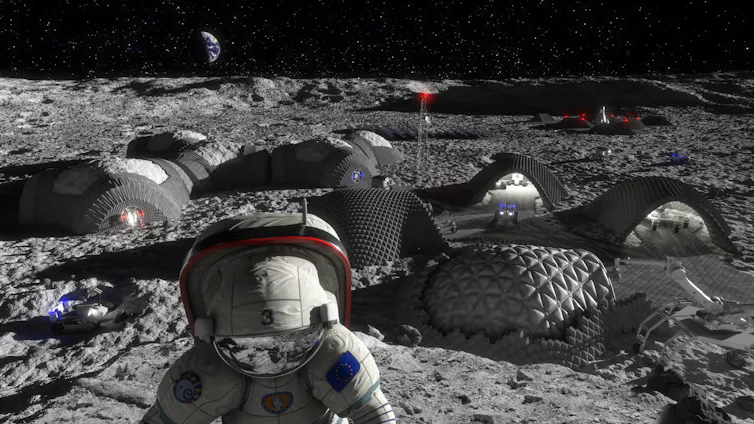
For the first time since the Apollo era, humans are preparing not just to visit the Moon, but to live and work there for weeks, months – and eventually years.

But what would it really be like to spend an extended period on the lunar surface? The answer is exhilarating – and brutally unforgiving. An exciting new era of deep-space exploration is opening up. The US Artemis programme aims to set up an outpost on the Moon’s surface. It marks a fundamental shift in how we explore space.

Rather than just leaving “flags and footprints” as the Apollo missions did, Nasa wants to establish a sustained human presence on the Moon, beginning at the lunar South Pole.

The programme unfolds in stages. In 2022, the Artemis I mission successfully tested the Space Launch System (SLS) rocket and Orion spacecraft as an integrated system on an uncrewed mission around the Moon.

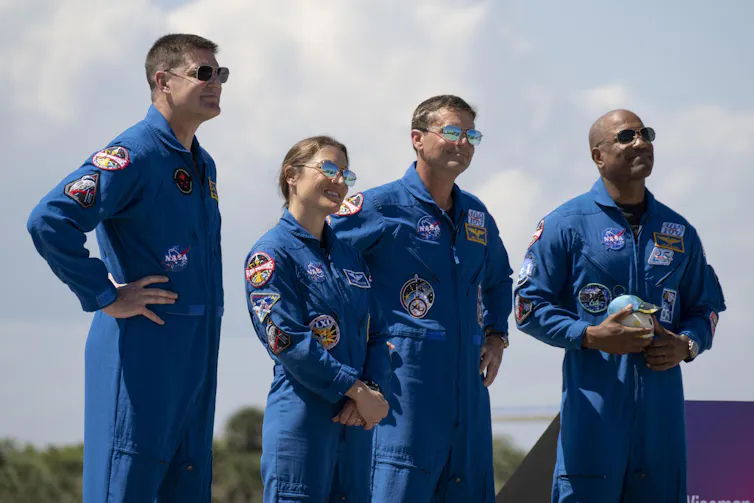
On April 1, 2026, Nasa launched Artemis II a ten-day mission, carrying four astronauts around the Moon.

The four Artemis II astronauts arrived at Kennedy Space Center in Florida on March 27, 2026 to begin final preparations for launch.
NASA/Jim Ross

As Nasa’s first crewed flight of Orion and SLS, Artemis II is a pivotal mission designed to verify that life-support systems, navigation, thermal protection and deep-space operations all function safely with humans onboard.

Before astronauts can live on the Moon, the journey there must be proven reliable.

Beyond these early missions, Nasa’s long-term vision extends far beyond a single landing. Nasa plans to spend US$20 billion (£15 billion) on a lunar surface base, intended to support repeated and progressively longer surface stays. This is designed to teach us how to operate sustainably beyond Earth – knowledge that will ultimately feed forward to future human missions to Mars, the horizon goal.

Health challenges

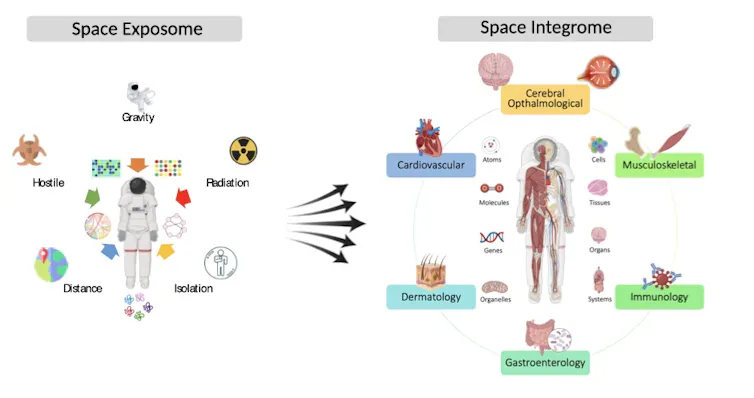
Living on the Moon will challenge every organ system in the human body. The lunar environment exposes astronauts to a unique space exposome – the combined set of
physical, chemical, biological and psychological stressors encountered beyond Earth.

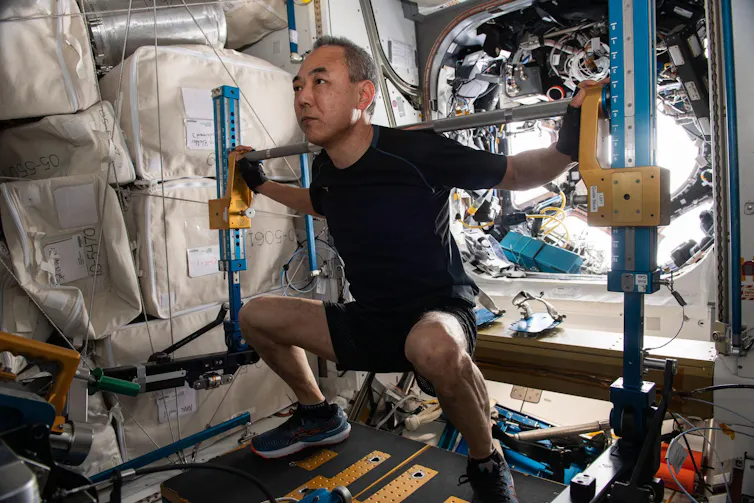
Japanese astronaut Satoshi Furukawa works out on the International Space Station.
Regular exercise will be critical for staying healthy on the Moon. Here, Japanese astronaut Satoshi Furukawa works out on the International Space Station.
Nasa

These include reduced gravity (about one-sixth of Earth’s), chronic exposure to cosmic radiation, extreme temperature swings, toxic lunar dust, isolation, disrupted sleep-wake cycles, and prolonged confinement.

Unlike astronauts in low-Earth orbit, lunar crews operate largely outside Earth’s protective magnetic field. This increases exposure to space radiation, which can damage DNA, disrupt immune function and affect the brain and cardiovascular system in subtle but potentially serious ways.

Reduced gravity also fundamentally alters how blood, oxygen and fluids move around the body. Microgravity can disrupt how blood, oxygen and glucose are delivered to the brain, potentially increasing vulnerability to neurological and vascular dysfunction over time.

This figure was modified with permission.
The physiology of survival: Space.

To properly understand these risks, we need to look beyond individual organs and instead consider the space integrome – the way that the brain, heart, blood vessels, muscles, bones, immune system and metabolism interact as an integrated whole under space conditions. A small disturbance in one system sends ripples through others.

One of the most challenging aspects is that many space-related physiological changes develop insiduously. Astronauts may feel well while complications simmer beneath the surface, only becoming apparent months or even years later.

That is why Nasa places such emphasis on long-term physiological monitoring and human risk mitigation in its Artemis science strategy.


Read more:
Nasa plans to have a permanent base on the Moon by 2030 – how it can be done


Reducing the risk

The encouraging news is that humans are remarkably adaptable. The challenge is guiding that adaptation in safe and sustainable ways. Space countermeasures are the tools used to reduce risk and preserve astronaut health.

Exercise remains the cornerstone. On the International Space Station, astronauts spend around two hours per day exercising to protect muscle mass, bone density and cardiovascular function. On the Moon, however, exercise systems must be redesigned for partial gravity, where familiar Earth-based loading no longer applies.

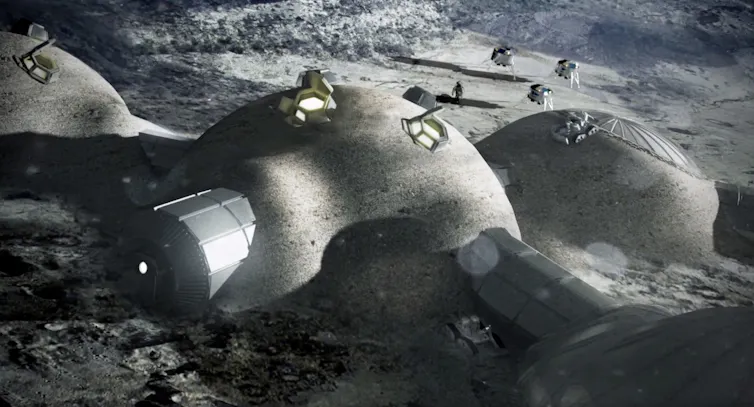
Lunar regolith (soil) could be used to create structures that protect habitats from radiation and micrometeoroids.
Foster + Partners

Nutrition is another powerful countermeasure. Diet influences bone health, muscle maintenance, immune resilience and even how the body responds to radiation.

Personalised nutrition strategies, tailored to individual physiology rather than a “one-size-fits-all” menu, are likely to become increasingly important during long lunar missions.

Artificial gravity is also being explored. Short-radius centrifuges could expose astronauts to brief periods of increased gravitational loading, potentially helping stabilise cardiovascular and neurovascular systems. While still experimental, this approach may prove valuable for future surface missions.

Vegetables grown in a lunar base greenhouse could enhance astronaut nutrition.
Nasa

Radiation protection will rely on multiple layers of defence: habitat shielding – potentially using structures made of lunar soil – early warning systems for solar storms, and operational strategies that limit exposure during high-risk periods.

Crucially, countermeasures should be proactive rather than reactive. Continuous physiological monitoring, wearable sensors and advanced data analytics may allow mission teams to detect early warning signs and intervene before small problems become mission-limiting ones.

Spending extended time on the Moon will be awe-inspiring. Imagine watching Earth hang motionless above a stark, silent horizon, or working under a sky that never turns blue.

Lunar base
A lunar base would teach humans how to operate sustainably beyond Earth.
RegoLight, visualisation: Liquifer Systems Group, 2018

But it will also be demanding, uncomfortable and unforgiving. The Moon is not just a destination – it is a test of our biology.

If we can learn how to keep humans healthy, resilient and productive on the lunar surface, we take a decisive step toward becoming a truly spacefaring species. Artemis shows that exploration is no longer about brief heroics.

It is about sustainability, adaptability and understanding ourselves as deeply as the worlds we seek to explore.

In learning how to live on the Moon, we may ultimately learn as much about life on Earth as we do about our future beyond it.

The Conversation

D.M.B. is the outgoing Chair of the Life Sciences Working Group and member of the Human Spaceflight and Exploration Science Advisory Committee to ESA. He is a current member of the ESA-HRE-Biology Panel and Space Exploration Advisory Committees to the UK and Swedish National Space Agencies. He is also affiliated to Bexorg, Inc. (USA) focused on the technological development of novel biomarkers of cerebral bioenergetic function in humans. He is supported by a Royal Society Wolfson Research Fellowship (Grant No. WM170007).

ref. The unseen challenges of life on the Moon – https://theconversation.com/the-unseen-challenges-of-life-on-the-moon-273370

A popular horror novel was pulled over AI concerns – here’s what it means for publishing

Source: The Conversation – UK – By Natalie Wall, PhD in English Literature, University of Liverpool

One of the largest book publishers in the US has pulled an upcoming horror novel from its scheduled release later this year following accusations that the author used artificial intelligence to write it.

Hachette Book Group was approached with what The New York Times claimed was evidence that Shy Girl by Mia Ballard was allegedly AI-generated. Following this, the publisher said its imprint Orbit was removing the book from publication in the US and UK.

The novel follows Gia, a young woman who is “lonely, broke and depressed with a serious case of OCD”. She encounters a mysterious and rich man who, in exchange for her living as his devoted pet, promises to erase all her debts. The novel follows her time in captivity as she becomes increasingly animalistic in nature.

In an email to The New York Times, Ballard said the controversy “has changed my life in many ways and my mental health is at an all time low”. Ballard has denied personally using AI to write the novel. But she has said that an acquaintance she hired to work on an earlier self-published version incorporated AI tools.

Many people disagree with the use of AI for a host of reasons, from environmental to ethical concerns. But cultivating a climate of distrust around writing and authors is also not necessarily productive, and further pushes AI use into secrecy.

The author now faces a challenging situation, as Hachette withdrawing the book will appear to some to validate the accusations, even if it simply reflects uncertainty.

What happened?

The book was initially self-published in February 2025 before it was bought by Orbit Books, following a growing industry trend to traditionally publish successful self-published or fan-fiction works.

Issues started to arise regarding the novel’s provenance in mid-2025 on Reddit when one user, who claimed they were a book editor, made a post which pointed out several issues with the novel that suggested it was AI generated.

Their main claim was based on the novel’s repetitive style, something also pointed out by other critical readers. Specifically, they highlighted that almost every noun is preceded by an adjective, actions are frequently described with similes, descriptions came in lists of three and certain words are overused.

The discussion spread to other platforms such as the BookTok community (TikTok users dedicated to discussing books and publishing), Instagram and YouTube.

There is still no final consensus about how Shy Girl was written and Ballard has removed herself from the public eye and taken her social media accounts offline following the scandal. Hachette told The Independent that they “remain committed to protecting original creative expression and storytelling”. They have made no definitive statement on the claims but did tell the NYT that they conducted a thorough and lengthy review of the text.

How should readers and publishers respond?

Readers and publishers have spent years debating the impact of AI in the abstract but 2026 is the year these debates have become reality.

Stories like Shy Girl and The New York Times’ profile of AI romance author Coral Hart, who boasted of using AI to write and self-publish 200 hundred books across 21 pen names in a recent profile by The New York Times, demonstrate that theoretical disputes did not prepare us to be confronted with the reality of AI.

It’s clear that even the suggestion of AI writing inspires immense disgust in many readers. This means that regardless of the truth (if we ever find it out) Shy Girl and Ballard will likely be tainted by this scandal. Therefore, we must ask whether it is possible for publishing and reading to survive not just AI’s increasing normalisation but also the hostile and suspicious environment its use is creating for writers.

As a researcher of contemporary and digital reading culture, I believe we should cultivate an openness around the use of AI in writing by lobbying publishers to provide this information openly and clearly. This is already starting to happen. The Society of Authors, which is the UK’s largest writers’ trade union, has launched a logo to be used to identify “human authored” books – a step toward empowering consumers to know what they are choosing to support with their money.

Copyright law also needs to reflect AI’s reshaping of the creative field. A work requires a human author to be covered under copyright law in the US and any doubts about this are potentially a big part of Hachette pulling Shy Girl from publication due to the publisher’s inability to copyright.

This creates a difficult position for the novel and author. The book’s cancellation looks like confirmation of guilt whereas it may just be doubt. However, UK copyright law does offer protection for computer-generated works. This creates a murky area where AI-generated or assisted works can receive certain legal protections, but not necessarily the same rights as human-authored works.

Under UK law, computer-generated works can qualify for copyright, with authorship attributed to the person who made the necessary arrangements for the work’s creation. However, these works do not benefit from the full range of protections afforded to human authors, particularly moral rights, such as the right to be identified as the author or to object to derogatory treatment of the work.

This framework may change following a recent consultation led by the UK government on copyright and artificial intelligence. The consultation has now closed and the government has not yet implemented definitive legislative changes. However, its stated priorities suggest any reforms will aim to balance protecting creators’ rights with supporting innovation, investment and growth in the AI sector.

It’s an undeniably fraught situation, which is continually developing. In the near future we may unfortunately see more authors like Ballard made examples of while, behind the scenes, many more may be using AI undetected.

The Conversation

Natalie Wall does not work for, consult, own shares in or receive funding from any company or organisation that would benefit from this article, and has disclosed no relevant affiliations beyond their academic appointment.

ref. A popular horror novel was pulled over AI concerns – here’s what it means for publishing – https://theconversation.com/a-popular-horror-novel-was-pulled-over-ai-concerns-heres-what-it-means-for-publishing-279714

How to build a digital ‘twin’ of the human brain – what existing models overlook

Source: The Conversation – UK – By Andrea Luppi, Senior Research Associate, Department of Psychiatry, University of Oxford

The potential to create personalised digital “twins” of your brain and body is a hot topic in neuroscience and medicine today. These computer models are designed to simulate how parts of your brain interact, and how the brain may respond to stimulation, disease or medication.

The extraordinary complexity of the brain’s billions of neurons makes this a very difficult task, of course, even in the era of AI and big data. Until now, whole-brain models have struggled to capture what makes each brain unique.

People’s brains are all wired slightly differently, so everyone has a unique network of neural connections that represents a kind of “brain fingerprint”.

However, most so-called brain twins are currently more like distant cousins. Their performance is barely any closer to the real thing than if the model were using the wiring diagram of a random stranger.

This matters because digital twins are increasingly proposed as tools for testing treatments by computer simulation, before applying them to real people. If these models fail to capture fundamental principles of each patient’s unique brain organisation, their predictions won’t be personalised – and in worst cases could be misleading.

In our latest study, published in Nature Neuroscience, we show that realistic digital brain twins require something that many existing models overlook: competition between the brain’s different systems.

Our findings suggest that without competition, digital twins risk being overly generic, missing out on what makes you “you”.

Excess of cooperation

The human brain is never static. The ebb and flow of its activity can be mapped non-invasively using neuroimaging methods such as functional MRI. A computer model can be built from this, specific to that person and simulating how the regions of their brain interact. This is the idea of the digital twin.

The brain is often described as a highly cooperative system. Yet everyday experiences such as focusing attention or switching between tasks tells us intuitively that brain systems compete for limited resources. Our brains cannot do everything at once, and not all regions can be active together all the time.

Despite this, the vast majority of brain simulations over the past 20 years have not taken these competitive interactions between regions into account. Rather, they have “forced” neighbouring regions to cooperate. This can push the simulated brain into overly synchronised states that are rarely seen in real brains.

In a large comparative study of humans, macaque monkeys and mice, our international team of researchers used non-invasive brain activity recordings to show that the most realistic whole-brain models not only require cooperative interactions within specialised brain circuits, but long-range competitive interactions between different circuits.

To achieve this, we compared two types of brain model: one in which all interactions between brain regions were cooperative, and another in which regions could either excite or suppress each other’s activity. In humans, monkeys and mice, the models that included competitive interactions consistently outperformed cooperative-only models.

Using a large-scale analysis of over 14,000 neuroimaging studies, we found that spontaneous activity in the competitive models more faithfully reflected known cognitive circuits, such as those involved in attention or memory. This suggests competition is crucial for enabling the brain to flexibly activate appropriate combinations of regions – a hallmark of intelligent behaviour.

Visual summary of our study:

When whole-brain models of humans, macaques and mice are allowed to treat interactions between some brain regions as competitive, they consistently do so.
When whole-brain models of humans, macaques and mice are allowed to treat interactions between some brain regions as competitive, they consistently do so – generating activity patterns that closely resemble those associated with real cognitive processes.
Luppi et al/Nature Neuroscience, CC BY

We concluded that competitive interactions act as a stabilising force, allowing different brain systems to take turns in shaping the direction of the brain’s ebbs and flows without interference or distraction. This ability to avoid runaway activity may also contribute to the remarkable energy-efficiency of the mammalian brain, which is many orders of magnitude more efficient than modern AI systems.

Crucially, models with competitive interactions were not only more accurate but also more individual-specific. This means they were better at capturing the unique brain fingerprint that distinguishes one person’s brain from another’s.

No longer lost in translation?

The fact that our findings hold across humans and other mammals suggests they reflect fundamental principles of how intelligent systems work. In each case, we found models with competitive interactions generated brain activity patterns that closely resembled those associated with real cognitive processes.

This could have major implications for translational neuroscience. Animal models are routinely used to test treatments before human trials, yet differences between species often limit how well these results translate. Around 90% of treatments for neuropsychiatric disorders are “lost in translation”, failing in human clinical trials after showing promise in animal trials.

Combining brain imaging data from human patients with whole-brain modelling could radically change this. A framework that works across species would provide a powerful bridge between basic research and clinical application.

If someone needs intervention in the brain, for example due to epilepsy or a tumour, their digital twin could be used to explore how the patient’s brain activity would change when stimulated with different levels of drugs or electrical impulses. This might significantly improve on existing trial-and-error approaches with real patients, and thus provide better treatments.

The general principles of brain organisation across species also offer a path for understanding how to shape the next generation of artificial intelligence. In the not-too-distant future, we may be able to construct digital twins that are more faithful in reproducing the salient features of the human brain – and potentially, AI models that are more faithful to the human mind.

The Conversation

Andrea Luppi receives funding from the Wellcome Trust, St John’s College, Cambridge, and the Canadian Institutes of Health Research.

Gustavo Deco receives funding from the European Regional Development Fund, EU ERC Synergy Horizon Europe, and the Department of Research and Universities of the Generalitat of Catalunya.

Morten L. Kringelbach has received research funding from Pettit, Carlsberg and Cillo Foundations as well the ERC. Deco and Kringelbach are the authors of Whole-brain Modelling: Cartography of the Dynamics of Mind. This open-access title is available at https://hedonia.kringelbach.org/whole-brain-modelling/

ref. How to build a digital ‘twin’ of the human brain – what existing models overlook – https://theconversation.com/how-to-build-a-digital-twin-of-the-human-brain-what-existing-models-overlook-279681