Long COVID associated with higher risk of heart disease

Source: The Conversation – UK – By Pia Lindberg, PhD Candidate, Department of Medicine, Karolinska Institutet
Women with long COVID had more than double the risk of developing cardiovascular disease compared with women without long COVID. TetianaKtv/ Shutterstock

Most people who get COVID recover within a few weeks. But for some, symptoms persist for months – a condition now known as long COVID. While it’s often associated with fatigue, breathlessness and “brain fog”, growing evidence suggests it may also affect something less visible, but potentially more serious: the heart.

In our recent study, we found that people with long COVID had higher risk of developing cardiovascular disease – including cardiac arrhythmias, heart attack and heart failure. Importantly, the increased risks were seen in people who had never been hospitalised during their initial COVID infection.

Much of the early research on long COVID and heart health focused on patients who were hospitalised, particularly those treated in intensive care. These patients often had multiple risk factors for cardiovascular disease such as being overweight and having hypertension or diabetes. This made it difficult to separate the effects of severe acute illness from the long-term effects of the infection.

However, the majority of people who had COVID were never admitted to a hospital – yet many still developed chronic symptoms of so-called long COVID. To explore the potential risks in this much larger group, we focused specifically on patients who had experienced a mild-to-moderate COVID infection which they managed at home.

We used healthcare data from more than 1.2 million adults living in Stockholm, Sweden. Among them, 9,000 were diagnosed by a doctor with long COVID. We then followed up these patients over time and compared occurrence of new cardiovascular disease – including heart attack, heart failure, arrhythmias, stroke and peripheral arterial disease – with people who did not have long COVID and had no previous cardiovascular disease.

After a follow-up period of up to four years, cardiovascular disease was more common among people with long COVID.

Among women with long COVID, 18% experienced some form of cardiovascular event, compared with 8% of women without long COVID. Among men, the corresponding figures were 21% versus 11%.

These results did not substantially differ even when we adjusted analyses for age, socioeconomic status and underlying health status – including conditions such as high blood pressure, diabetes, high cholesterol, obesity, depression, smoking and alcohol consumption which are known risk factors of cardiovascular disease.

An older man has his blood pressure checked by a young female doctor.
Men with long COVID had a 30% higher risk of cardiovascular disease.
fizkes/ Shutterstock

Women with long COVID had more than double the risk of developing cardiovascular disease overall compared with women without long COVID, while men had around a 30% higher risk.

The strongest associations were seen for irregular heart rhythm and coronary heart disease. In women, we also observed an increased risk of heart failure and peripheral arterial disease. However, we did not find an association between long COVID and stroke risk.

Why long COVID might affect the heart

It’s not fully understood why long COVID is associated with cardiovascular disease, but several biological mechanisms have been proposed.

The virus can affect the lining of blood vessels, leading to what is known as endothelial dysfunction. It may also trigger long-lasting inflammation and changes in the immune system. Together, these processes can affect how blood flows through the body and how the heart functions.

There’s also growing evidence that long COVID can disrupt the autonomic nervous system – the automatic mechanisms that control heart rate and blood pressure. This may potentially explain why irregular heart rhythms and conditions such as postural orthostatic tachycardia syndrome (Pots) are more common in long COVID patients.

Another possibility is that long COVID may not necessarily cause entirely new disease, but rather reveal underlying conditions that had not yet been diagnosed. In some cases, symptoms such as chest pain or palpitations may lead to further medical evaluation, increasing the likelihood that cardiovascular disease is detected.

Our findings suggest that long COVID is not simply a transient condition, even among people who were never severely ill during the acute infection. Instead, it may have longer-term implications for cardiovascular health.

At the same time, it’s important to put the results into context. The overall risk of cardiovascular disease remains relatively low at the population level. But the relative increase in risk is meaningful and comparable to that seen with established cardiovascular risk factors such as hypertension or diabetes.

The increased cardiovascular risk in long COVID has also important implications for healthcare. Patients with long COVID – particularly women and younger patients – may benefit from more structured follow-up, including assessment of cardiovascular symptoms and better management of cardiovascular risk factors

It also suggests that long COVID should be included in future strategies for cardiovascular risk assessment and prevention, not only in specialist care but also in primary care settings where most of these patients are managed.

More research is now needed to understand the long-term trajectory of these risks and whether they persist, decrease or increase over time. Future studies should also explore whether early identification and management of cardiovascular symptoms in long COVID could help reduce the risk of more serious complications later on.

As the number of people living with long COVID continues to grow, understanding its broader health consequences will be essential – not only for each patient, but for healthcare systems as a whole.

The Conversation

Artur Fedorowski received funding from the Swedish Heart Lung Foundation.

Axel Carl Carlsson and Pia Lindberg do not work for, consult, own shares in or receive funding from any company or organisation that would benefit from this article, and have disclosed no relevant affiliations beyond their academic appointment.

ref. Long COVID associated with higher risk of heart disease – https://theconversation.com/long-covid-associated-with-higher-risk-of-heart-disease-279883

The Testaments: female friendship fuels resistance in this Handmaid’s Tale sequel

Source: The Conversation – UK – By Debra Ferreday, Senior Lecturer in Sociology, Lancaster University

The Testaments, now streaming on Disney+, has big shoes to fill. It arrives in a post-MeToo media landscape still shaped by the seismic impact of Margaret Atwood’s previous adaptation, The Handmaid’s Tale. Released in 2017, The Handmaid’s Tale quickly transcended its source material to become a feminist touchstone, inspiring a vivid visual and cultural language of resistance across politics, performance, music and the arts.

In Atwood’s world of Gilead, women are reduced to archetypes within a patriarchal rape culture: complicit, privileged wives; submissive house servants known as “Marthas”; or the Handmaids themselves, stripped to mere breeding stock for the regime.

As life in the US seemed eerily to catch up with Atwood’s vision, the hallmark red dress, white cap and down-turned gaze of the handmaids became iconic. For protesters, it provided a graphic symbol of the fate awaiting women in a world where the president has described himself as the “fertilisation president” “protecting” women whether they “like it or not”.

When Atwood returned to Gilead in 2019 with follow-up book The Testaments, she did so in the shadow of renewed assaults on women’s and LGBTQIA+ rights worldwide. The release of this adaptation of her sequel challenges viewers not only to face that reality, but to think about what popular culture can do in the face of cultural regression.

The trailer for The Testaments.

The Testaments also has to resolve the plot dilemmas established in The Handmaid’s Tale. Many fans had been disappointed that, after following along for six seasons, they did not get to see protagonist June (Elisabeth Moss) reunited with her daughter Hannah. Nor did we see an end to Gilead.

The Testaments returns to these themes while probing why Atwood’s world still grips us amid escalating crises. Can the series offer anything fresh, or has original show-runner Bruce Miller’s vision – mixing extreme violence with striking visuals – already run its course?

The aesthetics of Gilead

The Testaments looks strikingly different from its predecessor, although the two shows share a visual DNA.

Much like our own world, Gilead has become, in some ways, inured to tyranny. For the privileged at least, there is a sort of everyday acceptance recognisable from real-world examples of life under dictatorship.

Like the young audience it courts, Gilead’s young women – including protagonist Hannah, played with tensile calm by One Battle After Another’s Chase Infiniti – have grown up in a world where political violence and control of the reproductive body are explicitly intertwined. We pick up the story some years after the original show, although since girls in Gilead are not allowed calendars they don’t know exactly how long. We are told this in voice-over by Hannah, now renamed Agnes.

Another resonance with our own times is the importance of style as a means of both escape and control.

The costume and set designs of new Gilead resemble a contemporary AI-authored Pinterest board. For all its pretensions to timelessness, this world has fashion. The handmaids’ Puritan-plain red line dresses have been replaced by neat Kennedy-era ensembles in gentler tones of plum, pink and white.

The scarcity we saw in The Handmaid’s Tale has been superseded by a pastel-toned, cottagecore fantasy of colonial mansions and horses’ manes flowing in golden sunlight. Images of containment abound. Characters fill the frame or are seen through frames, gates, tantalisingly half-open windows and a dolls’ house which uncannily mirrors the home of commander Kyle, Agnes’ absent adopted father, in which she is held captive.

For all the old money theatrics, obsession with bodies is never far from the surface. “The Plums” are so called because they are ripe fruit, waiting to be plucked by much older, powerful men – a fate which becomes assured when a girl has her first period. Violence is never far away either. While the girls attend a sort of finishing school run by disappointed ideologue turned resistance figure Aunt Lydia (Anne Dowd, reprising her breakout villain role from The Handmaid’s Tale), the peacefulness of their education is disrupted by constant threats of corporal punishment.

Female friendship and hope

The Gilead of The Testaments is a fun-house mirror version of our own times. People are entertained by watching violence against groups treated as less than human – but instead of TikTok or constant news coverage, it’s public punishments like mutilations and executions.

“God’s justice is beautiful”, the girls are told, as they view a scaffold (a public hanging site) which they are told holds members of a supposed sex trafficking gang, though they are also told the victim was really to blame.

Obsessed with cleanliness, order, and control, this world is nastily prurient. It is fixated on spotting and rooting out impurity. It reminds us what is at stake when the state polices reproductive bodies.

Ultimately, though, it is the power of young women’s friendship and the inherent, ebullient anarchy of teen girls that holds the potential finally to bring down Gilead. This is what makes the show original.

Atwood has said she wrote The Testaments to offer hope. Hope, in 2026, seems like a dangerous thing: it can seem naïve given the demands of the current moment. But as the American writer and activist Rebecca Solnit puts it: “If the word hope doesn’t work for you, try ‘Never fucking surrender.’”

Aided by its talented young cast, The Testaments reworks Gilead into a space where resistance emerges spontaneously in a world structured to make it unthinkable. In this setting, girls’ friendships, their laughter and their power become seeds of rebellion. The result is a timely, absorbing reflection how we might at last burn the dolls’ house to the ground.

This article features references to books that have been included for editorial reasons, and may contain links to bookshop.org. If you click on one of the links and go on to buy something from bookshop.org The Conversation UK may earn a commission.

The Conversation

Debra Ferreday does not work for, consult, own shares in or receive funding from any company or organisation that would benefit from this article, and has disclosed no relevant affiliations beyond their academic appointment.

ref. The Testaments: female friendship fuels resistance in this Handmaid’s Tale sequel – https://theconversation.com/the-testaments-female-friendship-fuels-resistance-in-this-handmaids-tale-sequel-280062

Babies: raw, nuanced, real – what this BBC drama gets right about recurrent miscarriage

Source: The Conversation – UK – By Susie Kilshaw, Professor in Medical Anthropology, UCL

I heard about the new BBC drama Babies the week before it aired and was keen to watch it, not least because miscarriage is so rarely portrayed on screen – particularly as a central storyline. I enjoyed it, insofar as that word can be applied to such a devastating subject. The series offers a raw, nuanced and deeply realistic account of recurrent miscarriage and it gets a great deal right.

Lisa (Siobhán Cullen) and Stephen (Paapa Essiedu) are a young couple in their thirties navigating the heartbreak caused by repeated miscarriages. The pacing of the show – at times almost painfully slow – mirrors the real experience of conception, early pregnancy and reproductive loss.

It allows the viewer to sit with emotional complexity – the shifting feelings, the uncertainty and the drawn-out liminality of making a family. Time appears suspended for the couple, even as life continues around them. We see Lisa returning to work increasingly detached, exhausted and withdrawn, while other pregnancies progress, babies are born and the world moves on.

Stephen’s insistence that they “must think positive” is familiar – the partner adopting a supportive role while masking their own grief. When Lisa challenges his suggestion that others don’t realise she has “been through so much,” reminding him that it has happened to both of them, the moment is ambiguous. Is she inviting him to share in the grief, or expressing frustration that he is not experiencing the loss in the same way? These tensions echo accounts shared by women I have interviewed through my work on fertility, reproduction and pregnancy endings.

Throughout the series, Lisa and Stephen navigate layers of distress – at times drawing close, at others remaining emotionally distant. Their oscillation between hope and despair, and between the need to “keep moving” and the pull of grief, reflects patterns commonly found in miscarriage stories.

Visceral realities of baby loss

I was most interested in how the physical experience of miscarriage would be portrayed. Early in the first episode, I felt a familiar disappointment. The miscarriages occur off-screen, with the focus placed almost entirely on emotional aftermath, with little attention paid to the reality of pain and bleeding. However, this shifts with Lisa’s third miscarriage, which is one of the most accurate portrayals I have seen.

We see blood, albeit briefly and only a very small amount. Lisa’s pain is audible in her cries and moans. The movement through different spaces – her place of work before returning home, then their bedroom, the bathroom, the living room – marks escalating levels of distress, capturing the duration and inconsistency of miscarriage.

This is not a quick or contained event, but an unfolding process. Stephen’s growing panic as he seeks help, culminating in the arrival of paramedics (seemingly against Lisa’s wishes), underscores the seriousness of the situation, the lack of preparation and the couple’s helplessness.

The series also conveys the diversity of miscarriage experience and response. Lisa’s first loss is a “spontaneous” miscarriage at seven weeks; the second, a missed miscarriage managed surgically; the third unfolds “naturally” after the onset of pain and bleeding. Importantly, the viewer witnesses these experiences in ways that may feel recognisable to many – this is not “just a heavy period”.

That said, I would have welcomed more detail on miscarriage management. While we learn that Lisa undergoes an “ERPC” (evacuation for retained products of conception) for her second miscarriage, the absence of discussion around her options and decision-making represents a missed opportunity to depict clinical care more fully, and to foreground women’s agency.

The series doesn’t shy away from the visceral reality of loss. Lisa’s anguished description of “my baby dripping into the toilet”, is confronting but important. Miscarriage is often sanitised in public debate, and frequently unfolds in private domestic spaces. Babies portrays the reality of miscarriage, including toilets, where most miscarriages occur and are disposed of. The drama also gives a sense of the range of feelings that accompany miscarriage: hope, fear, anger, frustration, optimism, sadness and grief.

While Babies succeeds in many respects, the portrayal of clinicians is more problematic. The first doctor’s casual “Yup, yup, yup, all gone” during a scan devastates, with no sense that for Lisa what is “gone” is her longed-for baby.

During the second pregnancy the sonographer refers to their “baby” and suggests they look at the screen before becoming excruciatingly quiet. The abrupt shift from shared excitement to silence and blunt disclosure, and the GP’s depiction is emblematic of an unfeeling NHS system, all contributing to a narrative of insensitive care.

Some viewers may recognise these experiences. Over 15 years of research in Qatar and the UK, I have encountered accounts of poor and insensitive miscarriage care. However, more recent research suggests that particularly within the NHS, care has improved significantly, with women reporting compassionate and sensitive support. During 20 months of fieldwork in a large NHS foundation trust in England, I consistently observed responsive and empathetic clinical care.

This is not to suggest uniformity across and within settings, but rather to question whether Lisa’s experience reflects the norm in many NHS contexts today. As I have argued elsewhere, an understanding of miscarriage as bereavement increasingly underpins NHS care, reflecting a broader cultural shift that recognises miscarriage as a significant loss.

While Babies contributes to this important recognition, it also reinforces a dominant narrative in which miscarriage is always experienced as traumatic and devastating. While this will resonate with many – and such validation is important – it risks marginalising those whose experiences fall outside this, including some of the women I have interviewed in my work.

The involvement of consultants from Tommy’s Charity contributes to the series’ sensitivity and accuracy, underscoring the value of such collaborations. Cullen and Essiedu deliver compelling performances, conveying emotional complexity and intimacy with subtlety and depth.

Babies is slow, thoughtful and often heartbreaking. Despite some limitations, it is a welcome and important contribution – one that lays bare the realities of miscarriage with honesty and compassion.

The Conversation

Susie Kilshaw receives funding from the Wellcome Trust as part of a University Award in the Social and Historical
Science (Award number: 212731/Z/18/Z) and also holds a AHRC Curiosity Award (Award number: UKRI1126)
She has also received funding from ESRC Impact Acceleration grant (Award number: KEI2024-01-53 ESRC IAA KEIF).

ref. Babies: raw, nuanced, real – what this BBC drama gets right about recurrent miscarriage – https://theconversation.com/babies-raw-nuanced-real-what-this-bbc-drama-gets-right-about-recurrent-miscarriage-280134

Pakistan, Turkey, Egypt and Saudi Arabia emerge as a new regional power bloc amid Iran war

Source: The Conversation – UK – By Natasha Lindstaedt, Professor in the Department of Government, University of Essex

Pakistan’s prime minister, Shehbaz Sharif, announced that a two-week ceasefire had been agreed between the US and Iran in the early hours of April 8. Delegates from both sides are expected to attend further talks in the Pakistani capital of Islamabad on Friday.

This comes less than two weeks after Pakistan hosted talks with Saudi Arabia, Egypt and Turkey in which the four countries called for an end to hostilities in the Gulf. The meeting established the quartet as the primary negotiating channel between Tehran and Washington, and may signal the beginning of a new regional order designed to curb Israeli and Iranian dominance after the war.

Even before the war began in late February, Israel and Iran were both isolated in the region. There is no chance of any rapprochement between Israel and Saudi Arabia, which was the original goal of the 2020 Abraham accords. These accords sought to normalise relations between Israel and other countries in the Middle East.

The United Arab Emirates and Bahrain signed agreements with Israel as part of the accords. But the Saudis have long said they will not normalise ties with Israel before the establishment of a Palestinian state, which was ruled out by the Israeli parliament in a 2024 vote. Reports suggest that Saudi Arabia now wants to replace Israel with Syria as the transit country for a fiber-optic cable connecting the kingdom to Greece.

Turkey also halted its relationship with Israel in 2024 over the conflict in Gaza. And relations between Israel and Qatar soured in September 2025 after an Israeli strike on Hamas leaders in Doha, which drew unanimous condemnation from the UN security council.

Iran’s only main allies are Russia and, to a much lesser extent, China and the Houthi rebel group in Yemen. Since the conflict with the US and Israel began, China has distanced itself from Iran. The Houthis recently became involved in the war in support of Iran, but they have been weakened by Israeli attacks in recent years.

The solid relationship between Qatar and Iran has been severed after Iranian missiles struck the country’s main gas facility, Ras Laffan, on March 18. And Iran’s partial detente with Saudi Arabia, which was brokered by China in 2023 after years of hostility, has now been destroyed following Iranian attacks on Saudi energy facilities.

It is against this backdrop, in which both Iran and Israel are considered regional pariahs, that Pakistan, Saudi Arabia, Turkey and Egypt have ramped up their efforts to secure stability in the Middle East.

A new order?

These four countries share some common areas of interest that help explain their desire to reshape the region. They all have political and economic ties with the US and are members of Donald Trump’s Board of Peace. Established in 2026, the board aims to tackle global conflicts and achieve lasting peace and reconstruction in Gaza.

Each country also brings important contributions to their burgeoning alliance. Pakistan possesses nuclear weapons, Saudi Arabia has the world’s second-largest oil reserves, Egypt controls access to the vital Suez canal waterway and Turkey is a member of the Nato alliance. All have fairly advanced defence industries and a combined population of 500 million people. Taken together, they represent the most politically and militarily influential Muslim-majority countries in the world.

But these four nations are not necessarily natural allies, and their relationships have experienced turbulence over the years. Egypt’s relationship with Saudi Arabia, for example, has often been described as a “difficult marriage”. Egypt was once the driver of pan-Arab nationalism, a movement that promotes a secular and unified Arab political identity.

The Saudi kingdom has historically viewed this movement as a threat. But since Abdel Fattah el-Sisi came to power as Egypt’s president in 2014, their differences have been overcome. Sisi offered political and military support to the Saudi operation against the Houthis in 2015, with Egypt and Saudi Arabia subsequently deepening their defence ties.

Particularly under the leadership of Recep Tayyip Erdoğan, Turkey has positioned itself as a regional leader and problem solver. But Turkey, too, has endured periods of frosty relations with other regional powers. Ankara’s relations with Cairo deteriorated sharply after the Egyptian president, Mohammed Morsi, a close ally of Turkey, was ousted in a 2013 coup.

Similarly, tensions between Turkey and Saudi Arabia became particularly acute following the 2018 murder of journalist Jamal Khashoggi in the Saudi consulate in Istanbul. A 2021 US intelligence report found that Saudi crown prince Mohammed bin Salman approved the murder, though he denies this allegation.

A process of rapprochement took place between Turkey and Saudi Arabia in 2022, and then between Turkey and Egypt in 2025. Erdoğan visited Cairo and Riyadh in February 2026 and has proposed several different geoeconomic frameworks to connect Asia with Europe. These include the so-called Middle East Corridor, a planned economic corridor aimed at fostering economic integration between Asia, the Persian Gulf and Europe.

Pakistan, meanwhile, has so far not come to Saudi Arabia’s aid when it has come under attack from Iran in the current conflict. This is despite the signing of a strategic mutual defence agreement between the two countries in 2025.

Saudi Arabia, Egypt, Pakistan and Turkey have not always seen eye to eye. But their relationships of convenience are now becoming increasingly significant as Israel and Iran’s regional isolation grows.

The Conversation

Natasha Lindstaedt does not work for, consult, own shares in or receive funding from any company or organisation that would benefit from this article, and has disclosed no relevant affiliations beyond their academic appointment.

ref. Pakistan, Turkey, Egypt and Saudi Arabia emerge as a new regional power bloc amid Iran war – https://theconversation.com/pakistan-turkey-egypt-and-saudi-arabia-emerge-as-a-new-regional-power-bloc-amid-iran-war-279782

Iran ceasefire has brought a sudden fall in oil prices – but this pause underscores the volatility in the market

Source: The Conversation – UK – By Adi Imsirovic, Lecturer in Energy Systems, University of Oxford

Who is Danny/Shutterstock

Before the temporary ceasefire in the Gulf, the world had been experiencing the biggest oil price shock ever, surpassing even the crises of the 1970s. The scale and speed of movements were comparable to some of the most disruptive episodes in modern energy markets.

At the centre of the disruption was the US-Israel conflict with Iran and the effective closure of the strait of Hormuz. The strait is a choke-point through which roughly one fifth of the global oil supply typically flows. Under the terms of the ceasefire, it is now expected to reopen.

The use of energy as a geopolitical weapon is not new. Sanctions imposed by the US and its allies on countries such as Cuba, Venezuela, Iraq, Russia and Iran have long contributed to oil market volatility. These measures reduce the pool of freely marketable oil and increase uncertainty.

More recently, European, UK and US sanctions on Russia also reshaped trade flows and pricing dynamics. And the G7 has imposed its own price caps on Russian crude.

When it comes to the Gulf, there are alternative export routes out to open sea but their capacity is limited. Saudi Arabia’s east-west pipeline can transport around five million barrels of oil per day to the Red Sea. And the UAE’s pipeline to the city of Fujairah can move around 1.5 million barrels per day, bypassing the strait. Throughout the hostilities, Iran continued to export an estimated 1.5 million barrels of oil per day.

But even accounting for these alternatives, any disruption in the strait implies a loss of roughly 10% of the world’s oil supply. In comparison, the oil shocks of the 1970s represented around 5-7% of the world’s supply.

The effects of this supply crunch propagated rapidly through global markets. They initially hit Asian buyers before spreading to Europe and beyond. Price premiums for physical crude have surged, and prices for the three main benchmark crudes (Brent, Dubai and West Texas Intermediate (WTI)) have all risen sharply.

Crude oil and heating oil prices from December 2025 to April 2026.

At the same time, volatility in the market has also increased dramatically. Implied volatility in Brent futures has climbed from below 30% in December to around 90% more recently. Put simply, this means the price of oil was expected to change by no more than 30% in December last year, but this expectation rose to 90% recently.

In part, it reflects a fundamental imbalance between scarce physical supply and a largely unchanged volume of financial (“paper”) trading and hedging activity.

In the spot market (where purchases are made “on the spot”), prices have reflected the acute scarcity. Here, prices for physical Brent reached US$140 (£106) per barrel. Some grades have been trading at premiums exceeding US$10 above this.

Saudi Arabia’s official selling price for its flagship “Arab Light” crude has risen steeply for Asian buyers. This underscores the tightness in markets for immediate delivery and the extent of short-term pressure on demand.

But futures markets tell a different story. As the name suggests, these are where buyers agree a price for later delivery. These prices are significantly lower. This suggests that traders still expected the disruption to be temporary, with the possibility of a relatively rapid price correction should geopolitical conditions stabilise.

These expectations are not without foundation. While some refining infrastructure (such as Ras Tanura and Samref in Saudi Arabia, Ruwais in the UAE, Mina Al-Ahmadi and Mina Abdullah in Kuwait and Bapco in Bahrain among others) have been damaged, much of the core oil production capacity in the region remains intact. In theory, exports could resume within days or weeks.

In addition, a large number of tankers known as very large crude carriers (VLCCs) have been stranded in the Gulf. This deescalation should quickly release significant volumes of oil back on to the market.

Optimism or caution?

This gap between short-term panic and longer-term expectations is a key feature of the current market. It reflects the wide range of possible geopolitical outcomes.

But there are reasons to be cautious about such optimism. Control of the strait of Hormuz is one of Iran’s most powerful strategic tools. Further disruption may serve both Iran’s economic and political objectives, particularly after it has suffered such significant infrastructure damage.

The cessation of hostilities and reopening of the strait should ease immediate supply concerns. But it could also signal a deeper shift in the global security architecture that has underpinned energy markets for decades. In particular, a reduced role for the US as a security guarantor in key shipping lanes could introduce a more persistent risk premium into oil prices. This would raise consumer costs across the world for a huge variety of goods.

In such a world, the primary constraint on energy markets may shift from the availability of resources to the security of production and transport infrastructure. This could potentially embed higher volatility into oil markets over the longer term.


Read more:
Could this energy crisis be worse for the global economy than COVID?


The negotiations will be difficult, and diverging objectives among the key actors complicate the outlook. For Iran, the conflict has been existential. For Israel, weakening Iran may be a long-term objective. And US policy goals remain less clearly defined. The widening regional dimension just adds more uncertainty.

A pause in the conflict does not mean the end of hostilities. The temporary truce may enable the oil tankers to leave the Persian Gulf, but will they dare to go back in? The uncertainty only amplifies the market volatility.

There is still the option of more releases from strategic petroleum reserves – and governments may choose to do this. However, this would be a temporary relief and would risk leaving global reserves depleted, creating vulnerabilities to future shocks. Markets would be likely to anticipate this and it would limit the effectiveness of the move in stabilising prices.

A renewal of the conflict represents the worst scenario. Sustained high prices would bring back the spectre of inflation, high interest rates, economic slowdown and growing unemployment. In a global economy already burdened with debt from the COVID crisis, there are few levers left for central banks to tackle this predicament.

The Conversation

Adi Imsirovic does not work for, consult, own shares in or receive funding from any company or organisation that would benefit from this article, and has disclosed no relevant affiliations beyond their academic appointment.

ref. Iran ceasefire has brought a sudden fall in oil prices – but this pause underscores the volatility in the market – https://theconversation.com/iran-ceasefire-has-brought-a-sudden-fall-in-oil-prices-but-this-pause-underscores-the-volatility-in-the-market-280076

Middle East conflict: this ceasefire may have made Iran stronger

Source: The Conversation – UK – By Bamo Nouri, Honorary Research Fellow, Department of International Politics, City St George’s, University of London

Ceasefires are often presented as moments of relief – pauses in violence that open the door to diplomacy. But sometimes they reveal something more consequential: who has actually gained from the war. The emerging ceasefire between the US, Israel and Iran may be one of those moments.

On the surface, all sides are claiming success. Donald Trump has declared a “total and complete victory”, presenting the agreement as evidence that US objectives have been met. Meanwhile, Iran’s leadership has framed the ceasefire as a strategic achievement, with its Supreme National Security Council formally endorsing the deal on the condition that attacks stop.

But beneath these competing narratives lies a deeper reality: the content and structure of the ceasefire suggests that Iran may have emerged not weakened, but strengthened. While much of its senior leadership has been assassinated during the conflict, the regime’s ability to rapidly appoint replacements and maintain cohesion points to institutional resilience rather than collapse.

The ceasefire was not imposed by decisive military defeat. It was negotiated – and shaped – around Iranian conditions, delivering gains it previously did not have, with Tehran’s ten-point plan serving as a starting framework for negotiations rather than a finalised agreement being imposed on Iran.

Tehran’s proposals went beyond ending hostilities. They include sanctions relief, access to frozen assets, reconstruction support and continued influence over the Strait of Hormuz. They also include effective US withdrawal from the Middle East – and an end to Israeli attacks on Lebanon.

The Strait of Hormuz, through which roughly one-fifth of global oil transits, has been reopened under Iranian oversight, a clear signal of where leverage now lies. Control over Hormuz is not just strategic but economic. Iran has reportedly proposed continuing the charging of transit fees it begin during the conflict – creating a potential revenue stream at precisely the moment reconstruction is needed.

In effect, a war that involved sustained bombing of Iranian infrastructure may now leave Iran with new financial mechanisms to rebuild and potentially expand its regional influence.

The logic is paradoxical but familiar. Military campaigns are designed to degrade an opponent’s capabilities. But when they fail to produce decisive political outcomes, they often create new opportunities for the targeted state. Iran entered this war already adapted to pressure. Years of sanctions had forced it to build resilience by diversifying networks, strengthening institutions and developing asymmetric strategies.

What the war appears to have done is accelerate that process. Rather than collapsing, Iran has demonstrated its ability to disrupt global energy markets, absorb sustained strikes and force negotiations on terms that include economic concessions.

Illusion of victory

This is where the dissonance in US messaging becomes most visible. The US president may have framed the ceasefire as a “complete victory” but, tellingly, while the ceasefire deal will involve the temporary reopening of the Strait of Hormuz, which has been the US president’s main demand in recent days, talks will centre on Iran’s ten-point plan rather than the original US 15-point plan, which centred on dismantling Iran’s nuclear and missile capabilities.

The shift suggests an American search for an off-ramp. At the same time, Iran has maintained a consistent position: rejecting temporary arrangements unless they deliver structural outcomes such as sanctions relief and security guarantees.


Read more:
Iran war: the search for an ‘off ramp’


For Washington the ceasefire halts escalation and stabilises markets. For Tehran, it aims to consolidate the leverage offered by its control of the Strait of Hormuz. This asymmetry suggests the ceasefire is not a neutral pause, but a moment that could lock in a shift in regional power.

The most decisive dimension of this shift is economic. The war has destabilised global markets – with oil prices fluctuating sharply in response to disruptions of supply. But the ceasefire introduces a new dynamic. If sanctions are eased, Iran gains access to global markets at a time of sustained energy demand. Combined with potential transit revenues and reconstruction flows, this creates the conditions for a significant economic rebound.

In effect, the war risks producing the opposite of its intended outcome. Rather than weakening Iran economically, it may instead have strengthened it.

A stronger Iran, a weaker order?

This raises a larger question: what does this ceasefire reveal about power itself? For decades, US influence in the Middle East has rested on military dominance and economic pressure. This conflict suggests both are under strain.

Militarily, the US and Israel have demonstrated overwhelming capability, yet without decisive outcomes. Iran has retained its core capacities, maintained cohesion and leveraged its position to shape deescalation.

At the same time, US and Israeli legitimacy has eroded. The war’s contested justification, civilian toll and lack of broad international support have weakened their standing, even among allies. American soft power – long central to its global leadership – is diminished. Trump’s increasingly abusive social media posts have certainly alienated even its closest allies, most of whom stayed silent in face of US threats.

Economically, Iran’s ability to influence – and potentially monetise – global energy flows gives it a form of structural power that force alone cannot neutralise. The result is a paradox: a war intended to contain Iran may have reinforced its strength.

It is still early. Ceasefires can collapse, negotiations can fail, and conflicts can reignite. But if this agreement holds – even temporarily – it may mark a turning point. Not because it ends the war, but because of what it reveals about how wars are now won and lost. Victory is no longer defined by battlefield dominance alone, but by outcomes that are economically sustainable, politically legitimate and strategically durable.

On those measures, Iran appears well positioned. The US and Israel may have demonstrated military superiority. But Iran has demonstrated something different: the ability to endure, adapt and convert pressure into leverage.

That’s why this ceasefire matters; not just as an end to a phase of conflict, but marking the moment when a war intended to weaken Iran instead left it stronger – and exposed the limits of the power that sought to contain it.

The Conversation

The authors do not work for, consult, own shares in or receive funding from any company or organisation that would benefit from this article, and have disclosed no relevant affiliations beyond their academic appointment.

ref. Middle East conflict: this ceasefire may have made Iran stronger – https://theconversation.com/middle-east-conflict-this-ceasefire-may-have-made-iran-stronger-280164

Iran ceasefire: trust will be vital but it’s in short supply right now

Source: The Conversation – UK – By Nicholas John Wheeler, Professor of International Relations Department of Political Science and International Studies, University of Birmingham; BASIC

The US and Iran have agreed a two-week ceasefire in a deal brokered by Pakistan, which will see Iran open the Strait of Hormuz to shipping while negotiations continue for a more permanent settlement.

The US president, Donald Trump, announced the agreement on his TruthSocial platform less than two hours before the deadline of 8pm EST on April 7. Hours earlier he had posted: “A whole civilisation will die tonight, never to be brought back again. I don’t want that to happen, but it probably will.”

Talks are due to begin in Islamabad on April 10, where the two sides will discuss a ten-point plan presented by Iran on April 6. The plan offers to open the Strait of Hormuz in return for a permanent end to attacks by the US and Israel. Other conditions include lifting all primary and secondary sanctions, US withdrawal from the Middle East and Iranian control of the Strait of Hormuz, with plans for a US$2 million fee for ships transiting the strait in future to be shared between Iran and Oman. Fees collected by Iran would be used for reconstruction.

The office of Israeli prime minister, Benjamin Netanyahu, has said that it supports the ceasefire but that the deal does not include Lebanon. But both Iran and Pakistan have said that Lebanon is part of the deal. This point of contention is likely to affect negotiations from the start.

An important issue to consider as all parties to the conflict continue to react to each other’s attempts at diplomacy is the level of trust involved. On March 31, Iran’s foreign minister, Abbas Araghchi, told Al Jezeera that Iran had “zero trust” in the US. He added that: “Twice – last year and now this year – we negotiated and the result was an attack by them. And so we don’t have any faith that negotiations with the US will yield any results.”

Iran has ‘zero trust’ in the US: foreign minister, Abbas Araghchi.

With Mark Saunders at the University of Birmingham and Chiara Cervasio at the British American Security Information Council (BASIC), I’ve been looking into the relationship between trust and distrust in international relations. The first thing to note is the importance of distinguishing between the absence of trust and the presence of distrust. In a situation where the parties involved neither trust nor distrust each other, they remain open to the possibility that negotiations could reach a state where trust develops. Where there is distrust, by contrast, at least one of the parties is sure that the other has hostile intentions.

Araghchi’s language of “zero trust”, then, is best understood as an expression of active distrust. This reflects a clear belief on the part of Iranian decision-makers that diplomatic engagement with Washington will be exploited and not reciprocated.

From Tehran’s perspective, the US has repeatedly acted in bad faith. It carried out its Operation Midnight Hammer on Iran’s nuclear facilities while engaged in active negotiations over Iran’s nuclear programme. Again, on February 28, when the US commenced Operation Epic Fury in concert with Israel, mediators had reported that negotiations were proceeding well and reliable sources suggested that a deal was in the making.

Vital role of trust

In his interview with Al Jazeera, Araghchi mentioned that the US and Iran had been able to reach a deal “one time, years ago”. This was the Joint Comprehensive Programme of Action (JCPOA) negotiated with Iran in 2015 by the Obama administration with the UK, France, China, Russia and Germany as co-signatories. The agreement significantly rolled back Iran’s enrichment programme and set up a regime of inspections which – until the Trump administration pulled the US out of the agreement in 2018 – Iran was reportedly complying with.

The JCPOA agreement only became possible because of trust at the highest levels of US-Iran diplomacy. But this has clearly now hardened into active distrust on Iran’s part.

Trust requires a willingness to be vulnerable based on positive expectations about the intentions of others. So when states enter into negotiations they have to believe in the other side’s good faith and a commitment to using diplomacy to find a deal that will satisfy the interests of all sides. This requires a “presumption of trust”: a willingness to treat the other side as potentially trustworthy.

There’s an interesting historical parallel in the Cuban missile crisis of 1962. The episode, which brought the world to the brink of a nuclear confrontation, occurred during a period where the US and the Soviet Union deeply distrusted each other. But both the US president, John F. Kennedy, and the Soviet leader, Nikita Khrushchev, came to recognise their shared vulnerability in the face of the destructive power of each side’s nuclear arsenal. This recognition enabled them to develop a bond that allowed a path to de-escalation. But in this instance both leaders believed that the other understood the stakes and the importance of trustworthiness in reducing tensions.

Araghchi’s recent statement suggests that Iran has no such presumption of trust in the US. By communicating that Iran believes negotiations will be exploited by Washington rather than reciprocated, Araghchi is indicating that the basic condition for diplomacy, and with it the promise of trust, no longer exists.

If Trump is serious about negotiations, he will have to convince Iranian leaders that US diplomacy is not a cover for further military action. The lesson is not that trust is necessary for diplomacy to begin but that it cannot operate when one or both sides think they are going to be betrayed.

The Conversation

Nicholas John Wheeler has received funding from the UK’s Economic and Social Research Council.

ref. Iran ceasefire: trust will be vital but it’s in short supply right now – https://theconversation.com/iran-ceasefire-trust-will-be-vital-but-its-in-short-supply-right-now-280056

How Artemis II’s Earthset photo compares with the iconic Earthrise image from 1968

Source: The Conversation – UK – By Robert Poole, Professor of History, University of Lancashire

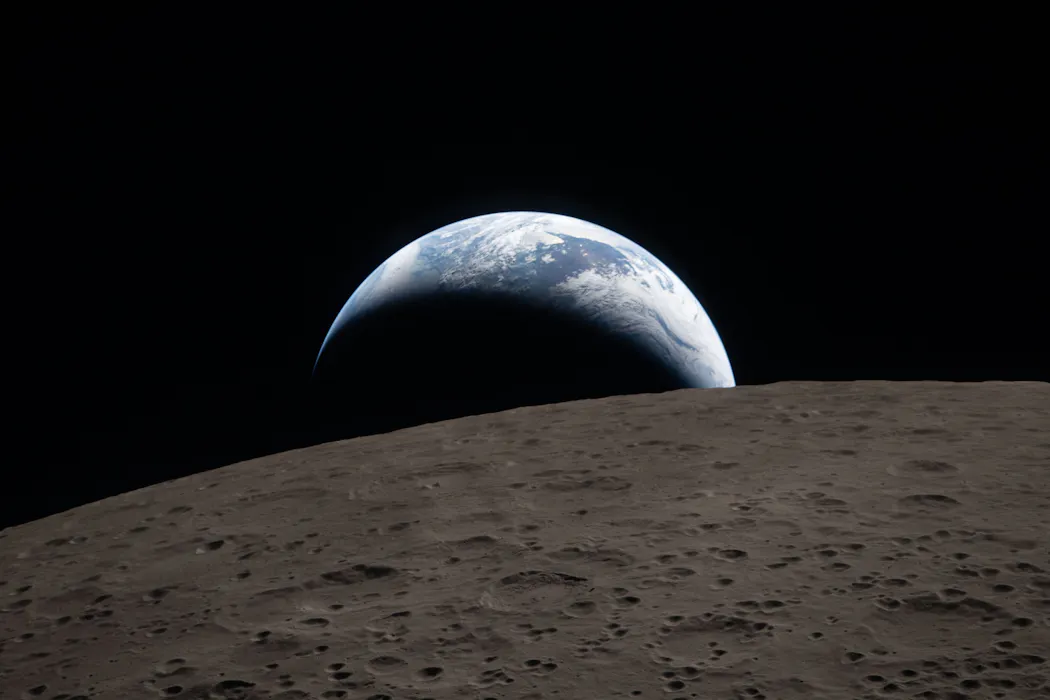
Earthset, as captured aboard the Orion spacecraf during the Artemis II mission. Nasa

As Nasa’s Artemis II mission completed its lunar flyby, the astronauts sent back a stunning image of the colourful Earth setting behind the Moon. This breathtaking photo, called Earthset, draws inevitable comparisons with the original Earthrise photo from the Apollo 8 flight in 1968.

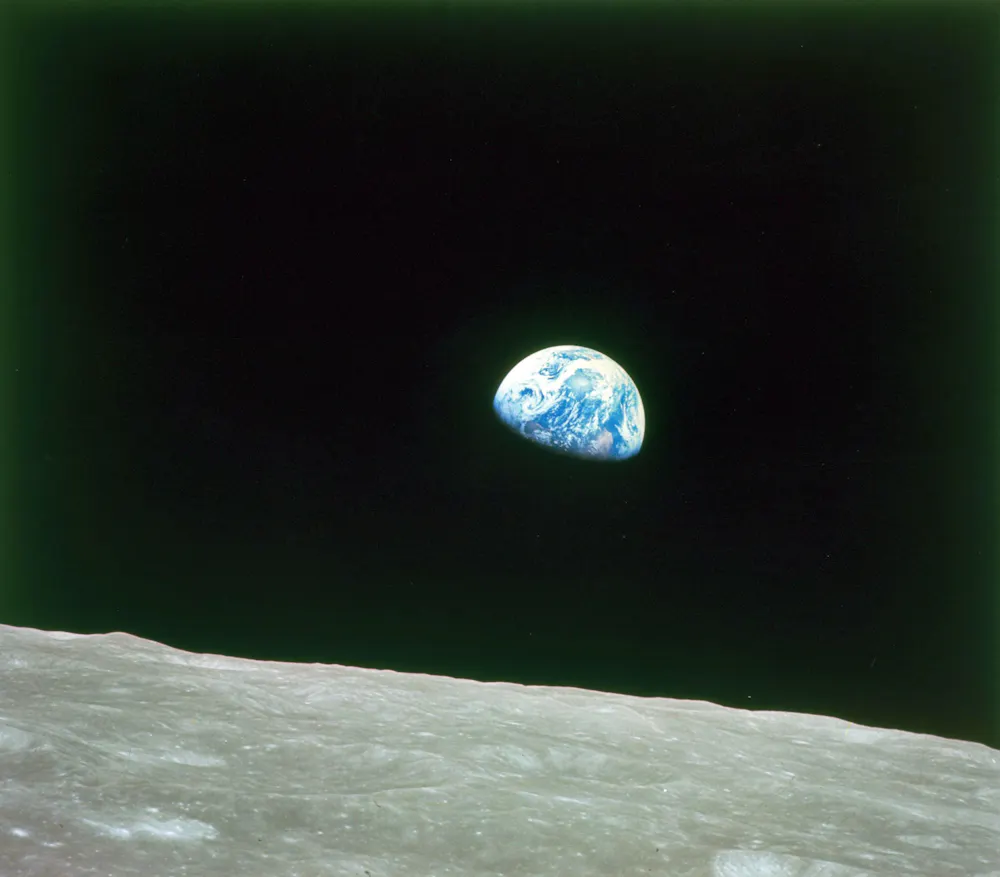
The Apollo-era photo showed our planet climbing above the lunar horizon. It revealed Earth as a bright blue oasis, standing out against the vast blackness of space and the barren Moon.

As I described in my book, Earthrise: a Short History of the Whole Earth, the effect of this image (actually part of a set) was profound. It caused a sensation on its release and helped inspire the burgeoning environmental movement.


Read more:
Earthrise to Earthset: how the planet’s climate has changed since the photo that inspired the environmental movement


The polished image from Artemis II and the slightly askew picture from Apollo 8 are, however, the product of entirely different approaches to photography from space.

“I don’t want to see you guys looking out the window,” Apollo 8 commander Frank Borman warned his colleagues Jim Lovell and Bill Anders during the 1968 mission to orbit the Moon.

Astronauts back then were discouraged from wasting film on touristy snapshots of the Earth. The Apollo 8 mission plan listed Earth images as mere “targets of opportunity”, the lowest priority of all.

The way the two missions kicked off underline the differences between 1968 and 2026. The crew of Apollo 8 took no still photos of Earth on the way out, but had reluctantly agreed to take a black-and-white TV camera for live transmissions.

Photography is a high priority for the Artemis II crew, but things were different when the Earthrise image was taken in 1968.
Nasa

They were unable to fit the telephoto lens to the camera in time for the first transmission, so viewers saw only a fuzzy blob of light. Once the lens was fitted, the Moon bounced around the screen while mission control tried to issue “up a bit, down a bit” instructions with a 1.3-second delay.

Despite this more haphazard approach to photography during some of the Apollo missions, the imagery from that era looms large in the public imagination. Earthrise is one icon from that era; another is the whole-Earth image known as Blue Marble – taken in 1972 during the Apollo 17 mission.

One of the earliest images released by Nasa from the Artemis II flight was a crystal-clear image of our planet taken on a tablet computer by the mission’s commander, Reid Wiseman. The image of Earth’s full disk, initially dubbed “Hello, World” but later changed to “mother Earth”, clearly recalls the iconic Blue Marble photo.

Unlike that famous daytime image from 1972, it shows the Earth at night – but has been enhanced to look like daylight. In the new photo, auroras can be seen at the poles and a thin crescent of sunlight is visible, glowing through the atmosphere. Both photos show a predominance of southern ocean and cloud, with Europe just visible near the rim.

Left: Earth as captured by Artemis II astronaut Reid Wiseman in 2026; right: Earth captured aboard the Apollo 17 mission in 1972.
Nasa

The Earthrise image from 1968 came about largely due to the initiative of Anders. On the mission’s fourth orbit around the Moon, the three crew members were busy photographing it in black and white when Anders noticed some unexpected colour out of the corner of his eye. “Oh my God! Look at that picture over there! Here’s the Earth coming up,” he exclaimed.

After a brief tussle over cameras and colour film, he snapped Earthrise using a mechanical Hasselblad camera with no viewfinder. No-one would see any of their pictures until after they returned to Earth and the film could be developed and printed.

As well as its impact on environmentalists, the image also inspired a young David Bowie in London. Shortly afterwards, he wrote the song Space Oddity about a stranded astronaut gazing upon an Earth to which he can never return.


Read more:
David Bowie and the birth of environmentalism: 50 years on, how Ziggy Stardust and the first UN climate summit changed our vision of the future


The Earthrise photo taken by Apollo 8 astronaut Bill Anders in 1968.
Nasa
Earthset
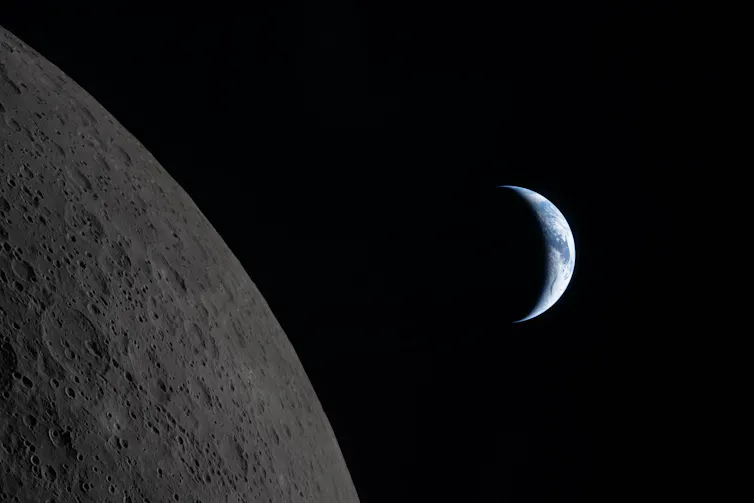
Earthset, taken on April 6 aboard Artemis II.
Nasa

As Artemis II swung round the Moon on April 6, anticipation grew for a modern counterpart to Apollo 8’s legendary image. Before the flyby, Nasa had released simulations of what the Artemis astronauts would see. The simulations showed a half-lit Moon with the distant crescent Earth at its side and clear black space between – like twin planets.

Earthset is different from Earthrise because the Moon is farther away, and because the Earth is only partially sunlit. While Artemis II swept round the Moon in a leisurely, gravity powered slingshot five thousand miles away, Apollo 8 orbited the Moon ten time from just 70 miles up. This gives us a small crescent Earth rising and setting behind an almost full lunar disc.

Nasa seems to have chosen to showcase the Earthset image because it feels more like the familiar 1968 Earthrise. The Artemis images of the Earth rising show a small crescent Earth with its back to the lunar horizon, like the new Moon as seen from Earth.

An Artemis II image of the Moon coming into view along the terminator, the boundary between lunar day and night, where low-angle sunlight casts long, dramatic shadows across the surface.
Nasa

Environmental awakening

Apollo 8’s Earthrise, released two days after splashdown, was not seen in colour until the weekly magazines appeared. Space enthusiasts had expected Earth to appear relatively insignificant in the vastness of space. The phrase “Earth is man’s cradle, but one cannot live in the cradle forever” was a familiar quote at the time.

But viewed from the vicinity of the barren lunar landscape, the Earth looked even more like home. Borman thought “this is what God sees”, while Anders mused: “We came all this way to the Moon … and yet the most significant thing we’re seeing is our own home planet, the Earth.”

Our planet draws closer to passing behind the Moon in this image by the Artemis II crew.
Nasa

The image’s link to the environmental movement is unsurprising when viewed in this light. The Apollo 8 image was used in the logo for the first Earth Day in 1970 and, as the Apollo programme was ending, Earth sciences – the study of our home planet – began to take off.

The 1972 Blue Marble image also resonated among environmentalists. It was replicated by Nasa’s deep space telescope DSCOVR 50 years later. A side-by-side comparison between the 2022 DSCOVR image and the 1972 photo highlights the effects of environmental degradation.

In the intervening years, much of Madagascar had turned from tropical green to brown from deforestation, the Sahara had expanded, the Antarctic ice had retreated, and ancient snows had disappeared from the mountains of Iran.

Left: the 1972 Blue Marble image from Apollo 17; right: the 2022 image from DSCOVR. The comparison reveals the effects of deforestation in Madagascar and desertification in the Sahara.
Nasa

It remains to be seen whether the images from Artemis II will have a comparable impact on the global environmental consciousness. However, the title of Earthset is perhaps the perfect name in an era where societies are threatened by climate change.

The crew of Artemis II have made clear where the priorities still lie. “It is so great to hear from Earth again,” said mission specialist Christina Koch as the craft regained radio contact after a brief blackout as the spacecraft passed behind the Moon.

“We do not leave Earth but we choose it … We will inspire, but ultimately we will always choose Earth.”

The Conversation

Robert Poole does not work for, consult, own shares in or receive funding from any company or organisation that would benefit from this article, and has disclosed no relevant affiliations beyond their academic appointment.

ref. How Artemis II’s Earthset photo compares with the iconic Earthrise image from 1968 – https://theconversation.com/how-artemis-iis-earthset-photo-compares-with-the-iconic-earthrise-image-from-1968-279966

The dark side of music as ‘therapy’

Source: The Conversation – UK – By Hilary Moss, Professor of Music Therapy, University of Limerick

Simon Kadula/ Shutterstock

A violinist plays in a cancer ward. A playlist loops in the waiting room. A surgeon hums along to the radio mid-operation. We assume, almost without thinking, that music helps. But what if it doesn’t – or worse, what if it harms?

Music has been used since the beginning of time, in every culture, as a positive part of social and ceremonial events, including eating, hunting, courtship, weddings, funerals, coronations, sports and social celebrations. But music has also been used as a weapon of war, to torture, humiliate and disorientate people.

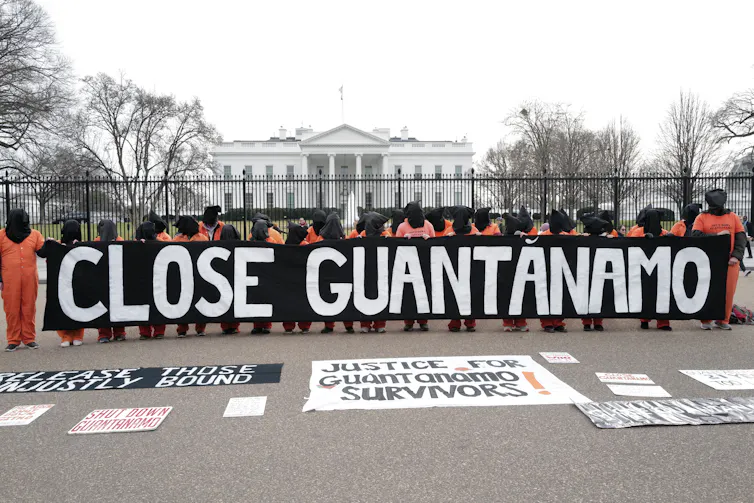
Music was used as a form of torture in Guantanamo Bay after 9/11 and by the Nazis, who forced musical prisoners to entertain their captors while they starved and awaited death. It’s a jarring thought that the same force that moves us to tears at a concert can be weaponised to break people.

Similarly, in hospitals and clinics, music is generally seen as a low-risk and harmless way to reduce anxiety in waiting rooms, as background support for staff in the operating theatre and as a stimulation to exercise in rehabilitation. It is rare to recognise music as a double-edged sword.

Music therapists are healthcare professionals, trained to use music as a clinical tool rather than simply a pleasant distraction. They work across a wide range of settings – in hospitals, hospices, mental health units, care homes, specialist schools and community clinics – and their work is grounded in evidence, not instinct. They are experts in using music to improve health and wellbeing, attuned to whether music might cause harm or support wellbeing, yet the research in this field rarely focuses on whether music might sometimes do more harm than good.

In practice, music therapists do remarkable work. They help people with dementia to communicate and connect when words have failed them. They support children with brain injuries to develop speech. They help stroke survivors regain physical movement. Music is also used to help people work through complex trauma. These are serious, skilled interventions – not background noise.

Protestors calling for the closure of Guantanamo.
Music was used as a form of torture in Guantanamo.
Phil Pasquini/Shutterstock.com

The wrong note

But music can cause real harm too, and we don’t talk about this nearly enough.

Think about what happens when music is imposed on people who haven’t asked for it. Premature babies and patients with disorders of consciousness are particularly sensitive to sensory overload. Blasting music at them isn’t soothing, it’s stressful.

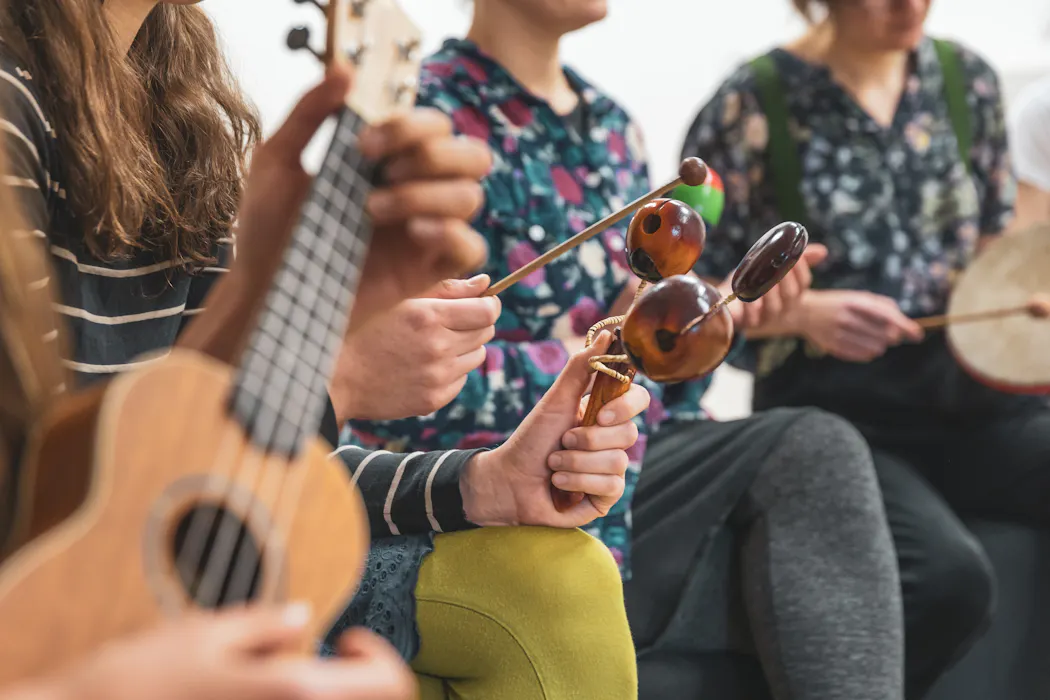
Residents in care homes are routinely subjected to music they didn’t choose, played at times that suit the staff rather than the people living there. Well-meaning volunteers turn up to hospital wards with guitars and ukuleles, and nobody asks whether the patients actually want a performance. Good intentions don’t cancel out a bad outcome.

Doctors and managers in hospitals and care homes are reaching for music as an easy, feel-good intervention without asking hard questions about whether it’s appropriate. Music can connect people and bring joy, but it can also exclude, irritate, distress and disorient. The same qualities that make it powerful make it problematic when used carelessly.

The principle should be simple: music should always be chosen by the person listening to it, never imposed on them. It should be thoughtfully selected and of decent quality. A study found that more than half of patients on an older people’s ward had no say over what was on the radio or television. That’s not music as therapy – it’s just noise.

This doesn’t mean music shouldn’t be used in hospitals and care homes. Used well, it can reduce pain, lift mood, aid recovery and help people feel less alone. “Used well” means assessing whether a patient actually wants music. It means choosing the right music for the right person at the right moment. It means training staff to understand when music helps and when it doesn’t. And it means being honest that a cheerful playlist isn’t a neutral act, it’s an intervention. And like any intervention, it can go wrong. It’s about qualified music therapists working with music to improve patient wellbeing.

Family visitors can create meaningful playlists to leave with the patient, and listening to music together is possible when other shared activities are difficult. But always ask first, and remember that silence can be just as valuable as any playlist. As the American entertainer Will Rogers said: “Never miss a good chance to shut up.”

The Conversation

Hilary Moss does not work for, consult, own shares in or receive funding from any company or organisation that would benefit from this article, and has disclosed no relevant affiliations beyond their academic appointment.

ref. The dark side of music as ‘therapy’ – https://theconversation.com/the-dark-side-of-music-as-therapy-278919

Zajal – this form of Arabic poetic duelling has broken onto TikTok

Source: The Conversation – UK – By Marlé Hammond, Reader in Arabic Popular Literature and Culture, SOAS, University of London

“I am a king of angels, from beginning to end. Arrani you’ll soon be crying out, weeping endless tears,” sings Akram Qawar in Arabic while gesticulating at his opponent. Muhammad al-Arrani sings back: “What are you mumbling about? No one understands your verse, did you just come here to make a fool of yourself in the arena?”

“Who’s [sic] uncles are out here doing battle raps,” one fan exclaims in the caption on a video in which he dances along to the sound of a similar exchange to the one above. If you’ve seen these videos of predominantly middle-aged men insulting each other poetically in Arabic you too may have likened them to modern day rap battles. What they actually are is a centuries-old genre of Arabic sung poetry called zajal.

In its general sense, zajal refers to poetry composed in any of a number of colloquial Arabic dialects. Much more specifically, it refers to a kind of musical poetic performance, often involving verbal duels, which is especially popular in Lebanon, Palestine, Syria and Jordan.


No one’s 20s and 30s look the same. You might be saving for a mortgage or just struggling to pay rent. You could be swiping dating apps, or trying to understand childcare. No matter your current challenges, our Quarter Life series has articles to share in the group chat, or just to remind you that you’re not alone.

Read more from Quarter Life:


Zajal dates back to 12th-century Islamic Iberia, where it emerged as an alternative to the standard Arabic poetic tradition. Zajal poems differed from that tradition not only in language – the Andalusian dialect of Arabic was used – but also in form. These poems had complex rhyme schemes, unlike the monorhyme that characterised high poetry of the time. And, they were composed to be sung.

Zajal’s most celebrated early practitioner was Ibn Quzman (1078 to 1160), a Cordoban who travelled from court to court seeking favour with his songs of praise, wine and love, which often had a rebellious twist. In one poem, for example, he celebrates the end of Ramadan as a return to illicit behaviour:

Hurrah, drunkards, for the sake of the Prophet, gang!
This is the time when the month of fasting ends!

From Spain, zajal soon spread to North Africa and the Middle East. According to an article by scholar of Arabic Adnan Haydar, there is a theory that, in the particular case of Lebanon, zajal poetry has its roots in the Maronite church. This is a church centred in Lebanon that is part of the Roman Catholic Church but with a distinct Antiochan/west Syrian liturgical tradition.

It’s believed that in late 13th century the Maronite church fathers started translating Syriac hymns into the local Arabic dialect. These zajal hymns were recorded in manuscripts from the 15th until the late 17th century, when zajal became an integral part of Lebanese folk culture.

A famous proponent and composer of zajal in the modern era was Rachid Nakhlé (1873 to 1939). Dubbed the Prince of Zajal, Nakhlé’s vernacular poetry is said to have influenced Lebanon’s Romantic and Symbolist poets.

Haydar describes the occasions for zajal performances as village gatherings, from weddings to saint days to functions in private homes. The best zajal performers from certain districts would sometimes meet for competitions where each would try to outperform the other in improvised verbal artistry. In its heyday in the mid-20th century, zajal performers would team up in bands and have competitions between two rival groups, sometimes before audiences in the tens of thousands.

The verbal sparring involves boasting about their capabilities and putting down their rivals and opponents. Martial imagery is common, but it is poetic supremacy that the zajal performers seek.

Haydar relates a famous exchange between zajal poets Jiryis Bustani and Tali Hamdan that took place in a concert at a monastery in Beit Meri, Lebanon in 1971. In the first stanza, Bustani compares his poetic prowess to slaughter, threatening to scatter heads, and asserting that the “Battle of Beit Miri” will go down in history. In the second stanza Hamdan mocks Bustani’s threats, saying “I shall strangle you and make you a mere echo (sada),” before asserting that he will beat Bustani in every battle, that of Beit Miri being no exception.

Bustani returns in the third stanza, picking up on Hamdan’s “echo”, saying that the registers of history will mention the “echoes of my cannonballs”. A common strategy is to repeat words and phrases at the heart of the competitor’s put-downs and to reframe them as a strength.

An excerpt from a 1968 concert underscores the extent to which wordplay guides the performers. Zajal poet Zein Sheib begins the exchange by waxing poetic about the free soldier who has his own mind. He speaks of piety, on land and in the air, and a quail flying off, as he negotiates the waves of a tumultuous sea. What makes his words cohere is not so much meaning as sound. He is continuously rhyming on the letter “r”, rolled and doubled, using words such as “farr” (escape) and “jarr” (drag). He’s showing off his ability to place these words in grammatically correct, if somewhat frivolous, sentences. Next comes Edouard Harb. He does the same with the letter “m”, continuing with the sea imagery.

Then Tali Hamdan sings of swords and rhymes intensively on the letter “l”. Zaghloul el Damour (aka Joseph al-Hashem) finishes things off decisively as he rhymes on the letter “d”. First, he boasts about himself, saying that although his horse has fallen he has managed to send his rival retreating, and then he taunts each of his three competitors: Zein got worked up, earnestly and in jest; Harb ranks in the minor league, and Hamdan thinks highly of himself but is no taller than a legless table. The insults are slung light-heartedly, and all present – performers and audience members alike – revel in their wit.

Zajal experienced a decline during the Lebanese Civil War (1975 to 1990) but has seen a revival in the decades since. For instance, in the 2010s the zajal competitions in the TV show Owf attracted competitors from throughout the region. Meanwhile, highlights from Lebanese zajal performances in the 1960s and 70s are being sampled in remixes and mashups on YouTube, TikTok and Instagram. Palestinian artists engage in a similar tradition, which is also trending.

So, if a friend shares a video of uncles “doing battle raps” you can tell them what they’re actually doing, which is engaging in the storied poetic tradition of zajal.

The Conversation

The authors do not work for, consult, own shares in or receive funding from any company or organisation that would benefit from this article, and have disclosed no relevant affiliations beyond their academic appointment.

ref. Zajal – this form of Arabic poetic duelling has broken onto TikTok – https://theconversation.com/zajal-this-form-of-arabic-poetic-duelling-has-broken-onto-tiktok-279630