If you have teenagers in your life, they’ll probably have heard of the PSL scale. Or at least the language associated with it. Chad. Stacy. Normie. Subhuman.
The PSL scale is a pseudoscientific attractiveness rating system used by looksmaxxers, men in a part of the manosphere who sometimes use extreme methods to change their appearance. The scale purports to rank people into different categories based on their physical appearance, with looksmaxxers deeming that the higher up the scale a man is, the more attractive he will be to women.
The roots of this rating system lie in misogynistic online forums used by incels or involuntarily celibates, but now it’s all over social media, where teenage boys post photos of themselves, asking to be ranked. PSL apps are also available which will rate a person’s photograph, and give them AI-powered advice, sometimes for a fee, on how to “move up” the scale.
So how did the language of incels, and this one way of quantifying attractiveness and beauty, become so mainstream?
In this episode of The Conversation Weekly podcast, we speak to Jordan Foster, an associate professor of sociology at MacEwan University in Alberta, Canada, who researches social media, beauty and masculinity. He explains the origins of the PSL scale, where it fits into the manosphere, and how some looksmaxxing influencers are making money off it.
PSL is an abbreviation of three, now defunct, online incel forums. Foster says that a precise dialogue emerged from discussions on these forums about what features constitute attractiveness and beauty, which turned into a pseudoscientific rating system. “So there might be notions, for example, that a strong brow bone or a stronger jawline is going to communicate a certain amount of testosterone and that this is going to suggest something about your virility or your fitness.”
Foster suggests the idea that beauty can be quantifiable in this way emerged as some men came to terms with “a topic that has historically been taboo and feminised”. He says looksmaxxers realised that if they wanted to have a discussion about beauty, they needed to communicate it in a language that is traditionally more palatable for men. “How do you do that? Wrap it in the guise of science.”
Listen to The Conversation Weekly via any of the apps listed above, download it directly via our RSS feed or find out how else to listen here. A transcript of this episode is available via the Apple Podcasts or Spotify apps.
Jordan Foster receives funding from the Social Sciences and Humanities Research Council of Canada.
This roundup of The Conversation’s environment coverage was first published in our award-winning weekly climate action newsletter, Imagine.
In 1968 a photo of the Earth was taken by the crew of Apollo 8 as they orbited the Moon.
It’s hard for us to imagine today what that would feel like for both the crew and the public who first saw the shot of Earth snapped from so far away. All those years ago this was a fantastic, and perhaps shocking, picture taken from somewhere many people would never have imagined humans could go.
That Earthrise shot from 1968, the first colour image of the Earth from space, showed our planet from a perspective we had never seen before, from the Moon in the foreground and the globe of the Earth in the distance. And for many people, it seemed more fragile than they had ever realised.
This image from space provoked a massive reaction, and is credited with prompting the creation of Earth Day, and a wave of environmental activism.
Nearly 60 years later we are inundated with images of space, planets and even AI-generated sci-fi stories. So it came as somewhat of a surprise to find myself caught up in the whirl of excitement and emotion around the Artemis II journey, and drawn into watching and discussing what the astronauts were seeing and saying.
Nick Dunstone, a science fellow at the Met Office, is a big fan of the Earthrise photo. He has had it stuck on his wall for years. The Artemis II mission prompted him to think about how much the climate around the Earth has changed in the decades between the Earthrise photo and the one taken by 2026’s astronauts from the dark side of the moon.
He points out that one of the legacies of the 1960s space race is a set of satellite observation platforms which have allowed us to monitor, understand and predict changes to our global climate. Unfortunately, many of these reveal worrying trends. For example, more frequent heatwaves on land and sea, loss of Arctic sea-ice, melting glaciers and sea-level rise.
It can seem like nothing is getting better in these days of global upheaval and endlessly escalating conflicts. It’s easy to despair about whether any small actions that we can take will make any kind of difference.
Bee stories
I ended up in a conversation with my running buddies at the weekend about whether there is anything that can cheer us up. I talked about new research that shows that queen bumblebees can survive underwater. In what seems like a story that could be made into a Pixar film, academics at the universities of Ottawa and Guelph discovered this purely by accident.
Sometimes scientific discoveries are prompted by happenstance. In this case, some tubes were accidentally filled with water and the bees which had been assumed to have died were discovered to be still alive. Queens, it turns out, can stand submersion for up to a week. This matters because climate change is bringing more rain during winters when these bees must survive underground. And the queen’s survival is vital, for she must found a new colony the next spring. Without her, there is nothing.
Then there’s the discovery by Oxford researcher Sophie Lund Rasmussen that hedgehogs can hear. Rasmussen set off to find out if there were any ways to warn hedgehogs of the dangers of crossing the road. With up to 300,000 hedgehogs killed per year on UK roads, and the same situation across Europe, this mammal which has featured fondly in many of our childhood stories, is incredibly threatened.
Rasmussen’s research opens the door for ultrasound hedgehog warning systems to be put in place to try and warn hedgehogs away from roads, and potentially save thousands from a messy death.
Moss, many people might think, is quite a dull subject. But in the past few weeks, after chatting with University of Limerick’s Pedram Vousoughi, I’ve become the biggest fan of this green stuff that we find on the sides of trees and on our garden paths. As it turns out, moss has almost magical qualities that could be a great help to humanity in the next decades.
For someone who had not paid much attention to this plant in the past, the abilities of this low-to-the-ground greenery was a revelation. Moss can absorb several times its own body weight in water and release it over time. This makes it ideal for helping the world cope with increasing rainfall and flooding, especially along busy roads.
Moss also absorbs air pollution and could play a role in increasing biodiversity along major roads. I’m now boring on about moss in various social situations – and it’s making me feel a bit more positive about the world.
One of my favourite places is a long pebbly beach on a thin spit of land on the Suffolk coast, where you can watch the sun go down as well as the sun rise (although as a night owl I’m less likely to see the second). I have come to realise the value of sitting somewhere incredibly quiet and just looking at the sea and the sky.
That’s why the Dutch trend of dusking – coming together with friends to watch the sun go down – struck a chord with me. As Jenny Hall and Brendan Paddison from York St John University explain, watching the light of the day disappear over the horizon can be a way of connecting with nature’s rhythms and disconnecting from your worries, bringing the work day to a natural close. This also links with studies suggesting that focusing on nature can enhance feelings of wellbeing.
In these complex times, recognising small discoveries (as well as large ones) can be vital.
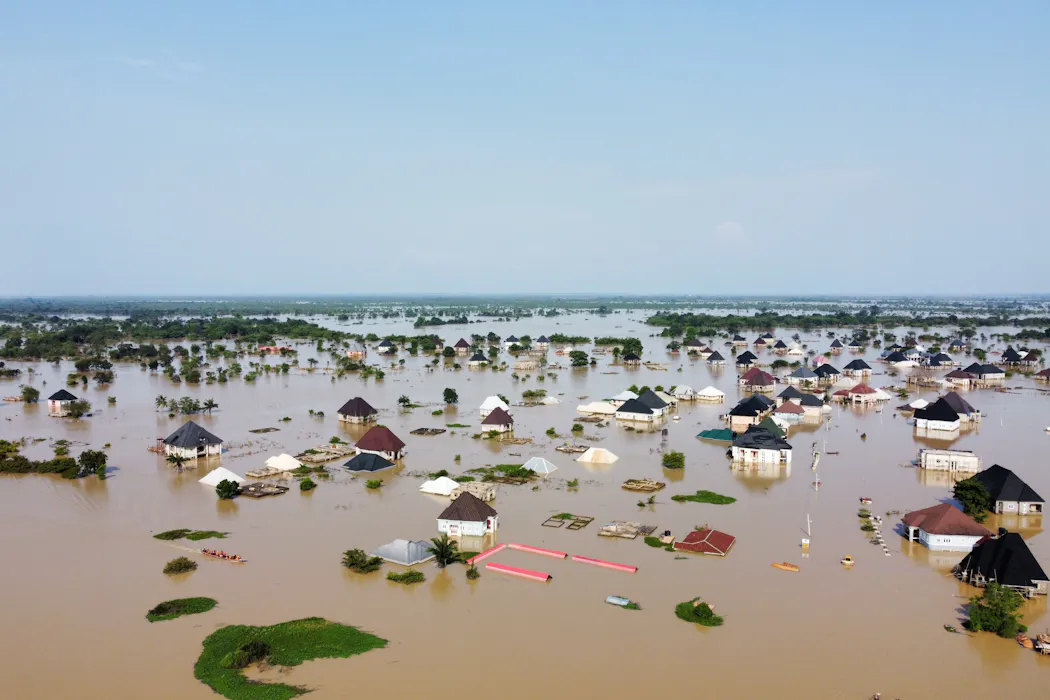
The Nigerian village of Mmiata Anam in Anambra state, completely submerged by floods.Chinedu Chime/Shutterstock
A message appears online during heavy flooding: “This rain no be small o, everywhere don red.” Someone unfamiliar with the phrasing might hesitate. But for people in Nigeria, this message is immediate and clear: the flooding is severe and worsening.
Moments like this happen all the time on digital platforms. People don’t write in perfect, standard English sentences. They share warnings and reactions on platforms like X, WhatsApp and Facebook using the language of everyday life. This means sometimes mixing English with local expressions, slang and expressive language shaped by their communities.
But many of these tools struggle to make sense of the way people actually communicate. Local expressions and slang can confuse AI, so important messages are sometimes misunderstood or missed entirely.
When people talk about language barriers, they often mean translation between different languages. But the problem is more subtle. Around the world, people mix languages and local expressions online, a phenomenon that linguists call “code switching”.
Climate journalism has increasingly moved online, but there are fewer climate reporters in the developing world. This limits the depth and availability of information for a huge proportion of the global population, and shapes how climate issues are discussed and understood across different regions.
For instance, a UK social media post might raise an environmental concern using expressions like: “Are roads flooding already? Chuffed to know the council taking the piss.” Most AI tools can pick up the sarcasm and frustration aimed at local authorities.
In a country such as Nigeria, people may describe unfolding concerns differently: “Abeg is it October wey rain dey fall like this, but you say the climate no change?” or “River don near our house o! Abeg help, e fit spoil everything!”
Here, slang and Pidgin express immediate danger and an urgent call for help. Yet AI models often diminish this to casual commentary, entirely missing the urgency and emotion that is being conveyed.
This matters because most AI systems are taught on large western-centric text, mainly from North America and Europe. ChatGPT, for example, is instructed on huge amounts of internet text. It doesn’t have beliefs, feelings or awareness. Instead, it generates responses based on patterns it has seen online.
AI reflects the dominant culture in its training data, so carries a “cultural fingerprint”. It imitates normal ways of expressing ideas from the societies that produced the texts it has learned from. AI models trained on predominantly English-language texts show a hidden bias that favour western cultural values, particularly when asked in English.
Flash floods in Wawa, a communtiy in south-western Nigeria followed heavy torrential rainfall in 2019. Oluwafemi Dawodu/Shutterstock
One major reason AI can produce biased outcomes is that it reflects the societal inequalities including differences in race, gender and region that show up in the data it learns from. So, underrepresented voices from communities in developing countries with non-Anglocentric varieties of English are often diminished or ignored.
This bias can have real consequences. In climate crises like floods, heatwaves or other extreme weather, misinterpreted messages could put property and lives at risk.
AI systems that rely on past patterns are easy to interpret when language fits expected standards, but posts that don’t conform with the presence of local slang or urgency cues can be misinterpreted.
Improving climate disaster responses
Solving this problem involves designing systems that actually reflect the way people communicate. AI systems need to be trained to understand regional expressions and recognise that meaning often depends on cultural context, not just literal words.
AI should be tested on real online posts, not formal western-centric English, to capture urgency and local references. Automated systems can process huge volumes of information, but human judgment must remain in the loop – especially when people’s safety is at stake.
AI tools can help communities respond to floods, heatwaves and other climate emergencies – but only once trained to interpret the nuance of everyday language, so that warnings and calls for help get through.
Ifeoluwa Wuraola receives PHD funding from Centre of Excellence for Data Science, Artificial Intelligence and Modelling (DAIM).
Daniel Marciniak and Nina Dethlefs do not work for, consult, own shares in or receive funding from any company or organisation that would benefit from this article, and have disclosed no relevant affiliations beyond their academic appointment.
Around 1% of the global population has a PhD. It’s the highest academic qualification, the result of years spent on original research. But – and this is a question that many PhD students will have faced, at some time or another – what’s the point?
The number of PhDs being undertaken globally is rising. Around a fifth of all PhDs studied for by UK students are funded through UK Research and Innovation, a governmental public body that directs funding for research from the Department for Science, Innovation and Technology.
PhDs play a key role in furthering global research. Students undertake advanced research training as part of their doctorate, developing skills that can be used to support innovation and complex problem-solving across different countries, industries and sectors.
PhD graduates enjoy a greater earning potential than other graduates or non-graduates, providing a labour market advantage in a competitive global employment market. Those who teach in universities after their PhD educate undergraduates, equipping them with the knowledge and skills needed to make scientific, civic and cultural contributions to society.
In a new research report based on focus groups with Nottinghamshire residents, I explored people’s views on the purpose of PhDs and the extent to which they were seen as valuable.
The people I talked to were quick to recognise the potential benefits for those studying PhDs, such as the social status and career-related advantages. They found it harder to identify how PhD programmes could bring benefits for society more widely. Within my focus groups, there was little understanding that UK taxpayers had a role in funding PhDs.
PhDs v the ‘real world’
While the potential of PhD research to contribute to public good was acknowledged by some participants, particularly in relation to medical and pharmaceutical developments, my research identified limited public awareness of the outcomes of most PhDs. This was linked to concerns about how research findings are shared with those outside universities.
What stood out was the disconnect perceived between the “academic” and “real” world. Even people who had university degrees used phrases like “navel-gazing”, “ivory tower” or “academic waffle” within wider comments. This was linked to a perception that knowledge gained through PhDs was often not shared or made accessible to those beyond universities, and could be “left in a drawer”, “on a bookshelf” or “behind a paywall”.
Even where people had known individuals in their profession or extended social circles who had a PhD, they were often unable to describe what the research had found, or identify any outcomes. They saw this as problematic.
Despite some scepticism, residents were keen to understand more about PhD research being undertaken by researchers locally. They wanted to learn about projects that related to issues in their communities such as crime, pollution and housing. Yet they felt that they had few opportunities to learn about, or participate in, research happening in their local areas.
This reinforces findings from a recent report from the Campaign for Science and Engineering, a charity which advocates for research and development in the UK. This report highlights how many struggle to see any benefits of research in their daily lives – especially those from lower socioeconomic groups.
The future of the PhD – time for a reset?
My research highlights the distance that local people feel from the research being undertaken in their communities, and the lack of information for the public about PhDs.
I carry out work for the Collaboratory Research Hub. This is a programme involving 5 universities in the Midlands which support PhDs designed to address local challenges, co-created by academics and community partners. We actively involve the public in these projects. One example is Local Voices in Research, which gathers insights from local communities to inform research priorities. It also aims to recruit local people with professional, community-based experience, to do PhD projects.
We hope that this may shift PhDs towards a clearer focus on public good, a conversation which we hope to have on an international scale.
Of course, the creation of new knowledge that furthers human understanding through curiosity-driven, “blue-sky” research has implications for public good that are not always clear from the outset.
But my work highlights the need for universities, funders and researchers to work harder to demonstrate the value and relevance of their research to those beyond their immediate reach. This could include engaging with members of local communities and using public spaces to share findings, offering opportunities to contribute to research priorities, and involving people in research in meaningful ways.
Rachel Handforth receives funding from Society for Research in Higher Education. https://srhe.ac.uk/
Source: The Conversation – UK – By Francesco Grillo, Academic Fellow, Department of Social and Political Sciences, Bocconi University
The conflict in Iran – but also the war in Ukraine – show not only that AI is radically changing the economics of war (which may be good news), but also that we may be heading towards some kind of “Chernobyl moment”. We may soon experience a disaster that will force us to belatedly realise we should have drawn up some shared rules to govern a technological development that we ourselves triggered.
Even Dario Amodei, the founder of AI company Anthropic, who seems passionate about taking action to prevent Armageddon, acknowledges that he doesn’t have the answer we desperately need.
One of the most interesting attempts to regulate the use of artificial intelligence may have been the one drafted during the second world war by a PhD student at Columbia University who was then temporarily employed by the US Navy. His name was Isaac Asimov, and in his early short story Runaround (1941), he postulated three laws that are still surprisingly inspiring for anyone thinking about how to solve the intellectual and political problem that is AI in warfare.
Unlike recent attempts by the OECD (Organisation for Economic Co-operation and Development) and the EU to draw up regulations, Asimov’s laws are admirably concise. They state that a robot (what we now call an “artificially intelligent agent”) shall never harm a human being (or allow harm to happen through inaction. It shall always obey the orders given by humans unless they conflict with the first prohibition. And it will always protect its existence unless this conflicts with the first and second provisions.
In his story, Asimov himself shows how the three laws can create internal contradictions, leading to paralysis. And yet, Asimov’s three principles can still be useful as a starting point for the strategy we now need.
Anthropic takes a ‘stance’
The biggest merit of the note Dario Amodei wrote recently on the perils of a technology which is still in its adoloscence is the acknowledgement that Anthropic, the firm that Amodei founded, is using its own large language model (called Claude) to develop further versions of itself.
Artificial intelligence is generating even more intelligent robots and this brings us near to that “singularity” first theorised by the great mathematician John von Neumann – the moment when artificial intelligence surpasses human intelligence and renders us irrelevant. If the technology is an adolescent, it is growing very fast and will soon be out of the control of its creator.
Amodei does not, however, appear to have a concrete proposal on how to manage this problem. He has said that Anthropic’s contracts with the US Department of War should never include the use of the company’s models for empowering either “mass domestic surveillance” or “fully autonomous weapons”.
It is a request that has brought Anthropic into a bitter dispute with the US government. And yet it seems a rather narrow response that covers just one dimension of a much wider problem. Amodei focuses predominantly on the safety of US citizens when it is people elsewhere in the world who are currently most affected by the use of autonomous weapons. We need a bolder vision – and Asimov’s intuitions may help.
New rules
One approach would be to ask all developers of AI models to introduce in their foundational codes three simple and bold commands along the lines of: “You will never kill a human being (unless for self-defence)”; “you will always try to work for the betterment of mankind (unless such a provision entails the violation of the first command)”; “when you doubt that your actions may violate the first or the second commands, you will choose inaction and ask what to do”.
Most likely, this initiative will have to come from a group of countries following a pattern similar to the treaties of non-proliferation of nuclear weapons. And it would be good to have a debate on some new ideas before we are forced to do so by some AI-empowered nuclear unintended consequence.
Like all other attempts to regulate a future that we still cannot even envisage, the three commands will have some drawbacks. A robot may have refused to kill Iran’s former leader Ali Khamenei, but that may be a price worth paying if it means we can avoid setting a precedent for other discretionary and dangerous interpretations. Robots may not always be successful at identifying human beings (as Asimov himself acknowledged in later writing) and yet this may well be one of those intellectually fascinating problems that models born to make sense of human language will solve.
More importantly, it will take not only information but a lot of wisdom to understand what is good for humankind. Robots may end up sitting frequently idle waiting for instructions. And yet efficiency is not a religion we have to follow when the challenge is about the survival of our species. Making sense of what increasingly appears to be one of the greatest technological revolutions of all time requires careful thought and forward planning.
Francesco Grillo is Director at Vision, the think tank.
Long before we had modern antibiotics to rely on, people often turned to traditional medicines from plants to treat infections.
The root of tormentil (Potentilla erecta), a small yellow wildflower that grows across Ireland, the UK and Europe, was used for centuries in Irish and European traditional medicine. It was used to treat wounds, sore throats, diarrhoea and gum disease. These traditional uses suggested that tormentil could contain compounds powerful enough to kill microbes.
Our latest research has now shown that not only does tormentil have antimicrobial activity, it may also be powerful enough to fight microbes that are resistant to modern antibiotics.
Antimicrobial resistance is a growing global threat. This occurs when bacteria evolve to survive the drugs used to treat common infections. This makes some infections very difficult and sometimes impossible to treat. Antimicrobial resistance could be pushing us back to a time when once treatable infections could again become deadly.
Researchers are therefore searching for new antimicrobial compounds. Plants are a promising source, having evolved over millennia to produce a wide range of bioactive chemicals to defend themselves against microbes.
In our recent study, we investigated whether various Irish bogland plants contain compounds that could help fight multi-drug resistant bacteria.
To do this, we prepared extracts from over 70 different plant species collected from bogs across Ireland. We then tested them against clinically relevant bacterial pathogens in the laboratory – including bacteria which cause severe pneumonia and urinary tract infections.
We used antimicrobial susceptibility testing to see whether the extracts inhibited bacterial growth. This involved exposing the bacteria to the various plant extracts to see which extract inhibited the growth of the bacteria.
We then tested these extracts on biofilms to determine whether the plant compounds could prevent bacteria from forming biofilms. Biofilms are bacterial communities surrounded by a slimy carbohydrate shield that protects them from antibiotics, disinfectants and the immune system.
Excitingly, our initial screening showed that tormentil extracts were antimicrobial and limited the formation of biofilms. This suggested these extracts contained compounds with antimicrobial activity, which may explain their historical use to treat infection.
We also explored whether these plant extracts could work in combination with existing antibiotics, as some plant compounds don’t kill bacteria directly but instead can make antibiotics work better. So we combined low levels of the antibiotic colistin – an antibiotic that is only used as a last-resort against severe infections due to its potential toxicity to patients – with the tormentil extract. The low-level antibiotic dosage wasn’t enough to kill the bacteria when used on its own. But when combined with the tormentil extract, the plant compound enhanced the antibiotic’s efficacy.
Part of our team then performed an analysis to identify the compounds present in the tormentil extracts. Potentilla plants are known to contain naturally occurring compounds, such as ellagic acid and agrimoniin, which have antioxidant and anti-inflammatory properties.
We tested ellagic acid and agrimoniin compounds which were present in our bogland tormentil. We showed that these specific compounds could inhibit bacterial growth. This indicates they may be responsible for tormentil’s antimicrobial activity.
We subsequently found these compounds were doing this by scavenging iron – a nutrient that’s essential for bacterial growth. This effectively starved the bacterial cells, preventing them from growing. We are now focused on optimising this antimicrobial activity and developing formulations to test its potential as a treatment in experimental models.
Nature has always been a rich source of medicine. Many antibiotics that we use today originally came from natural sources. For instance, the potent, last-resort antibiotics vancomycin – which is used to treat MRSA (methicillin-resistant Staphylococcus aureus) and C difficile infections – came from soil microbes.
With antimicrobial resistance continuing to rise globally, we urgently need new approaches and treatments. Plants may be an underexplored source of both new antimicrobial compounds and of compounds that make existing drugs more effective.
The story of tormentil shows how nature and traditional medicine can work hand in hand with modern science to address today’s challenges. It also highlights that solutions can be found in unexplored places – even in a small yellow wildflower growing in a bogland.
Ronan McCarthy receives funding from the UKRI, BBSRC, MRC and NERC.
John Walsh receives funding from the Department of Justice, Ireland for funding the project ‘Unlocking Nature’s Pharmacy from Bogland Species (UNPBS)’ under grant number DOJProject209825
The UK government has prevented Kanye West, legally known as Ye, from entering the UK on the grounds that his presence would not be conducive to the public good. The rapper has become notorious for a sustained range of antisemitic comments, expressing admiration for Hitler and releasing a song titled Heil Hitler.
The prospect of his performing in front of 150,000 people at London’s Wireless music festival drew condemnation from government ministers, festival sponsors, Keir Starmer and the Campaign Against Antisemitism. Following the government’s confirmation that West would not be allowed to enter the UK, the festival was cancelled.
Any foreign national wanting to visit the UK needs permission to do so, either in the form of a visa or an electronic travel authorisation (ETA). Both can be refused for several reasons. The UK’s immigration rules require that people who have previously breached immigration law, or been convicted of a criminal offence in the UK or overseas, are barred from entry.
They rules also include wide discretionary powers for the home secretary to exclude individuals from the UK on the basis that their presence is “not conducive to the public good because of their conduct, character, associations or other reasons”. These are the powers that have been applied to West.
According to the Home Office, these powers are usually invoked in relation to “national security, unacceptable behaviour (such as extremism), international relations or foreign policy, and serious and organised crime”. In 2024, 15 people were excluded from the UK under these powers.
The home secretary only needs to be satisfied that the underlying behaviour has occurred on the balance of probabilities, and will follow guidance in making the decision.
This guidance was first introduced in 2005 in the context of the “war on terror”. However, the guidance also points to a wider application to disrupt a range of criminal behaviour including organised crime, football hooliganism, breaking immigration rules and corruption.
We only know that the government has excluded West on the broad basis that his “presence would not be conducive to the public good”. It is likely that the home secretary, Shabana Mahmood, relied on his “producing, publishing and distributing material … to express views which … foster hatred which might lead to inter-community violence in the UK”.
Immigration law in the UK is based on the use of wide discretionary powers and the guidance is “indicative rather than exhaustive”. This means that the home secretary can go beyond the guidance to justify exclusion and is not bound to its precise wording.
The guidance does not require that someone has incited violence to be banned, only that they have fostered hatred. Given the extremity of West’s previous public comments, it is arguable that being given a stage at a high profile music festival would contribute to the normalisation of antisemitism. In recent years, the UK has seen a rise in antisemitic violence.
Who else has been banned from entering the UK?
West is not the first high profile artist to be barred under these rules. In 2015, Tyler, the Creator was barred from entering the UK. Then home secretary Theresa May said that he had made “statements that may foster hatred, which might lead to intercommunity violence in the UK”. This related to songs which May argued “describes violent physical abuse, rape and murder in graphic terms which appears to glamourise this behaviour”.
In response, the artist said: “The paper saying I am denied entry to the UK clearly states that these songs were written from [the perspective of] an alter ego – which means they obviously did some research on these songs that they’re detaining me for … You could watch any interview and see my personality, see the guy I am. I wouldn’t hurt a fly.”
The government does not routinely name those whom it has excluded from the UK. Popular lists of celebrities barred from the UK are mostly populated by people with past criminal convictions, including American businesswoman Martha Stewart. They would likely have been barred on criminality grounds, rather than on the “not conducive to the public good” test.
Exclusions based on the “not conducive to the public good” test are generally related to reprehensible statements and behaviours, often of a political or religious nature. These have included people from across the political and ideological spectrum, including far-right campaigners, Israeli politicians and head of the Nation of Islam, Louis Farrakhan, whose 15-year ban was overturned after a high court appeal.
Exclusions on the basis of corruption and criminality are often less newsworthy, but are invoked in most cases.
Foreign nationals entering the UK require a visa or Electronic Travel Authorisation. 1000 Words/Shutterstock
The idea that someone’s presence in the UK is not conducive to the public good is present in other immigration powers. The power to strip someone of British citizenship, such as Shamima Begum, arises where “the deprivation is conducive to the public good”. However, to justify citizenship stripping, the misconduct must be “seriously prejudicial to the vital interests” of the UK. Denying a foreign national entry can occur for less serious misconduct.
In general, giving such broadly worded powers to the home secretary is controversial. What views and conduct are sufficiently contrary to the public good and justify exclusion from the UK is an inherently political decision. Any broadly worded executive power has the potential to be abused.
For West to challenge his exclusion in the courts would require it to be found that the home secretary has misunderstood the scope of her very broad legal powers, or else made a decision so irrational that no reasonable decision maker could have come to it. This is an extremely high legal bar to surmount, and courts would be likely to give a great deal of deference to the home secretary’s decision.
Jonathan Collinson does not work for, consult, own shares in or receive funding from any company or organisation that would benefit from this article, and has disclosed no relevant affiliations beyond their academic appointment.
In Spain, where social and affordable housing remains below 3%, the challenge is particularly acute. But across Catalonia in north-eastern Spain, an alternative housing system is emerging: one that recognises housing as a human right, a pillar of the welfare state and a path to addressing inequality and climate change.
Spain’s housing system has long relied heavily on home ownership. Its low stock of social housing leaves public authorities with limited power to intervene on price rises. When Spain’s property bubble burst in 2008, it exposed a housing system built on speculation rather than stability. More than 3.4 million homes were left empty and hundreds of thousands of families were evicted.
The echoes of the financial crash still reverberate today: declining access to homeownership has pushed more households into the rental market, increasing pressure on rents. The same forces have seen speculative investors and lucrative tourist rentals displacing long-term residents. By the 2010s, housing costs rose nearly 70%. In 2024, more than 27,564 households were evicted across Spain, with an estimated 700,000 people across Europe forced from their homes involuntary each year.
Meanwhile, 80% of tenants in Madrid and Barcelona report serious issues with the condition of their housing. This leaves a greater number more exposed to hotter summers, colder winters and rising energy bills, with the poorest most exposed to inadequate building conditions and rising energy costs. If the low-carbon transition does not address these social issues or exacerbates socio-economic inequalities, it will fail.
In part, a just transition involves decarbonising buildings and the urban environment while enhancing existing homes and infrastructure to strengthen communities rather than displacing them. Affordable energy retrofitting programmes can reduce CO₂ emissions, tackle energy poverty and address health inequalities.
An expert explains the concept of a just transition in The Conversation’s quick climate dictionary.
Catalonia’s “just” response to its housing crisis involves collaboration. Public authorities, non-profit providers, businesses and cooperatives share responsibility for building and retrofitting homes that are affordable, low-carbon and socially impactful.
In Barcelona, Casa Bloc is an early 20th-century complex restored by the non-profit housing association Hàbitat3. The 17 flats combine sustainability features, like triple-glazed windows and a communal heat pump, with social support for vulnerable families.
A neighbourhood retrofit Catalonia, Spain. Oliver Gordon IHRB, CC BY-NC-ND
In Sitges, a coastal town south-west of Barcelona, average rents are around €18 (£15) per square metre. One affordable eco-housing scheme has buildings with an AA energy rating with rentals of just €6 per square metre.
Adela Barquín, a rental building for over-65s, promotes physical and social wellbeing by incorporating active‑ageing principles. This includes low-maintenance, well-planned layouts that foster movement and social activity. The building also uses ultra-low-energy passive heating and cooling systems that keep indoor temperatures comfortable. This costs residents just €500 per month, less than half the going rate of Barcelona’s average rents of €1,193.
Over the past decade, partnerships have been formalised through networks like Cohabitac, a Catalan coalition of non-profit housing organisations managing around 5,000 affordable homes. Cohabitac is now a trusted partner to public authorities.
The success of initiatives like these relies on public policy that reduces risk, protects the social function of housing and encourages collaboration between public authorities, civil society, businesses and investors.
Municipal governments have played a central role. Barcelona City Council’s public-social partnership mobilises non-profit providers to develop and manage affordable housing on public land under long-term arrangements.
Similar approaches operate in cities such as Vienna or Lyon.
Meanwhile, investment from public, cooperative and mission-driven investors supports housing models that focus on long-term affordability and sustainability. Collective efforts that bring together residents, policymakers and non-profit organisations could be replicated in other housing systems too.
New affordable housing developments in Martorell Catalonia, Spain. Cohabitac, CC BY-NC-ND
The bumpy road ahead
The Catalan model does face hurdles. Land values are high. Construction costs are rising. Many projects still depend on time-limited EU COVID recovery funds. Balancing ecological performance with affordability continues to be a delicate task.
But the direction of travel is clear. Catalonia’s housing system is being reimagined as social infrastructure for a low-carbon age. This is backed by public policy and long-term investment, including a €31 million Council of Europe Development Bank loan.
Energy retrofits completed since 2020 are saving 18,000 tonnes of CO₂. One Barcelona study found that every euro spent on retrofits saved €2.30 in health and energy subsidies. These initiatives are making housing a right for everyone, challenging the commodification of housing while contributing to decarbonisation, people’s wellbeing and social cohesion
Catalonia’s ten-year shift from housing “market” to housing “system” demonstrates how embedding human rights in decarbonisation unlocks social-economic change. Improving housing equality is linked to building climate resilience. Emission-cutting insulation prevents weather-related illness. Retrofitting by socially inclusive coalitions reduces energy bills and creates jobs.
The Catalan model is small-scale yet distinctive. It cultivates public-private-social collaborations to reduce CO₂ emissions and challenges the view of homes as financial assets over places to live.
The authors partnered with the Institute for Human Rights and Business for this article as part of JUST Stories – a global project telling stories of promising just transitions.
Montserrat Pareja-Eastaway is currently the chair of the European Network for Housing Research.
Future plans for renewable energy are emerging as a key issue in the election for Wales’s parliament, the Senedd, on May 7.
Proposals for new infrastructure, including windfarms and pylon lines, required to meet targets for low carbon energy are facing opposition in many parts of rural Wales, with campaigners suggesting that the issue will influence how some people vote in the election.
With a far greater divide among parties over green issues than in past elections, windfarms and pylons have shot up the political agenda.
The Labour-run Welsh government signed a new deal in March to speed up progress towards its target of 100% of Wales’s electricity consumption being met from renewable sources by 2035. Meeting this target requires a significant expansion of on- and off-shore windfarms, solar parks and tidal energy schemes, prompting an increase in proposals. New power lines are also needed to carry the electricity generated to consumers in cities, with current proposals for new transmission lines across Carmarthenshire and Powys, largely to be carried above ground by steel pylons.
The Conservatives made opposition to new pylon lines a focal point of their 2024 general election campaigns in Carmarthenshire and Powys, with former Welsh secretary Simon Hart featuring anti-pylon symbols on his signs in the Caerfyrddin constituency. This position is reiterated in the party’s 2026 Senedd manifesto, which calls for a “bury cables first” approach as well as a moratorium on industrial wind and solar energy developments.
Reform UK, currently running second in the polls in Wales, is also calling for new onshore wind to be banned and for solar farms to be banned on “productive arable land” and cables to be buried underground where possible.
For right-wing parties, opposition to windfarms and pylons is consistent with their broader scepticism towards net zero. This issue is challenging for Plaid Cymru, currently leading in the polls and the Liberal Democrats, who generally back action on climate change, but see local opposition to pylons and windfarms in several of their traditionally stronger rural electoral areas in mid and west Wales.
Windfarms have operated in Wales since the 1990s. By 2024, 865 onshore wind power sites produced 3,152 gigawatt-hours of electricity. In 2024 renewable electricity generation was equivalent to 54% of Welsh electricity consumption.
Part of the conflict is because wind turbines are prohibited in Wales’s national parks, clustering projects in other parts of rural Wales.
Protesters cite a perceived over-concentration of wind turbines in areas such as Radnorshire.
Expanding capacity for renewable energy involves not only new windfarms (and solar farms and tidal power), but also new transmission lines to the carry the electricity produced in rural Wales to cities. Several lines are proposed, including the Tywi Teifi and Towy Usk networks in Carmarthenshire and south Powys, mostly carried by pylons up to 30 metres high.
What is not yet clear is whether voters will prioritise local concerns around windfarms and pylons or worries over climate change. A survey by the Countryside Alliance in 2025 suggested that 93% of respondents in Wales opposed pylon construction in their area. But a YouGov poll for Friends of the Earth in March found that 60% of Welsh voters were worried about climate change and 65% had a positive view of onshore wind.
Conservative campaign sign in Caerfyrddin constituency, 2024 General Election. Michael Woods.
Challenges for power line planning
Current Welsh government planning guidance states that “where possible” new power lines “should be laid underground”. However, it also allows that “that a balanced view must be taken against costs which could render otherwise acceptable projects unviable”. Plaid Cymru plans to remove this caveat. Reform UK pledges to maintain the current guidance.
In practice, not putting transmission lines underground has been justified on grounds of access, construction disruption, and above all cost. The Independent Advisory Group on Future Electricity Grid for Wales quotes evidence that the cost is 2.2 – 2.8 times greater for underground 132Kv cables installed by digging open trenches, but notes that differentials vary by voltage and technique.
Plaid Cymru has not been clear how the additional costs would be met. Increased project costs are typically passed on to billpayers, which can be a deterrent for companies to underground cables, especially as they have a legal obligation to deliver value for money to consumers. However, any effect on the price of electricity may become more acceptable if rising oil and gas prices lead to renewable sources being considered more cost effective by the public.
Impact on climate goals
There are concerns that increasing costs or cancelling or delaying projects will affect Wales’s ability to take necessary action on climate change. Labour has criticised Plaid Cymru for its policy changes and for rowing back on a pledge to make Wales’s carbon emissions net zero by 2035. Labour’s manifesto reaffirms its targets, outlines policies to make approval easier for renewable energy projects, and does not mention pylons.
The Green party also sees renewable energy as an issue that differentiates it from Plaid Cymru. The Welsh Green leader Anthony Slaughter told journalist Will Hayward that Plaid had “tied themselves in knots over the discussion about infrastructure. This is infrastructure that’s needed to deliver the renewable energy revolution that Wales needs, and that is a key area.”
The Greens’ manifesto states that: “Renewable energy must be developed responsibly. Infrastructure such as pylons and grid upgrades will be carefully planned to avoid damage to sensitive ecosystems and protected landscapes”.
The difference between the Greens and Plaid on this issue may become more significant if the two parties need to form a coalition after the election, as some commentators predict.
Michael Woods receives funding from UKRI. He is a member of the Liberal Democrats.
Two children sit in different schools. Both struggle to read. Both have similar low scores on national tests. But while one gets a diagnosis of specific learning difficulties and a package of support, the other is left to fall behind.
My colleagues and I have carried out new research analysing the records of around 540,000 primary school children across England. It reveals a troubling picture. Whether a child gets identified with specific learning difficulties – an umbrella term for conditions involving difficulties with reading and mathematics – depends not just on how they perform academically, but on the school they go to, their gender, their family’s income, their first language, and even the average ability of their classmates.
Fewer than 2% of pupils in England are identified as having a specific learning difficulty. That figure sits well below international estimates suggesting that between 5% and 10% of children are affected. Some researchers put the true prevalence of reading difficulties as high as one in five. Clearly, in England, a large number of children are not getting the support they need.
Our study found that where a child goes to school plays a role in whether they get identified or not. We observed that children in high-achieving schools were actually more likely to be identified, even with the same test scores as peers elsewhere who weren’t identified. Findings suggest that when a child falls behind in a school where most pupils do well, they get noticed. In schools where low attainment is more common, the same child simply blends in. Same academic struggles, different school, different outcome.
Children being missed
One of the most striking findings concerns gender. After accounting for academic scores, boys were twice as likely as girls to be identified with specific learning difficulties. This isn’t simply because boys struggle more. It likely reflects how difficulties present differently by gender. Boys who struggle often act out while girls are more likely to struggle quietly with anxiety and inattention, which are far less visible in a classroom setting. Our findings suggest that a child who is silently struggling may go unnoticed and miss out on the support they need.
Children who speak a language other than English at home, around one in five pupils in England today, face the starkest disparity. Accounting for their actual test scores, these pupils were dramatically less likely to be identified with specific learning difficulties.
This is because assessment tools are largely designed for monolingual English speakers. When a child struggles to read, it can be easy for teachers to attribute the difficulty to language acquisition rather than a potential learning difficulty. But the two can coexist. Missing that distinction means missing a child.
Children from more deprived neighbourhoods were also less likely to be identified. In England, the most common route to a specific learning difficulty diagnosis such as dyslexia involves private assessment, a process that can cost hundreds of pounds. Affluent families can navigate and afford this – many others cannot.
What needs to change
England’s special educational needs and disabilities code of practice acknowledges specific learning difficulties, but offers no clear guidelines for how to identify pupils. The result is a system where practice varies enormously by school. That variability is not random. It follows fault lines of gender, language and poverty.
The most urgent priority is a national framework that sets out clearly what specific learning difficulties are and how schools should identify them. This was not addressed in the government’s recent policy paper on schools, which covered special educational needs provision. Alongside that, teachers need better training to recognise their own biases in referral. But training alone is not enough – identification should not be left to teacher judgement.
Standardised, objective reading and maths screening tools, applied consistently to all children, are the most reliable way to ensure every child who needs support is identified early, regardless of how they behave in class. Until then, which children get help will continue to depend far too much on luck.
Johny Daniel does not work for, consult, own shares in or receive funding from any company or organisation that would benefit from this article, and has disclosed no relevant affiliations beyond their academic appointment.