Superman wasn’t always so squeaky clean – in early comics he was a radical vigilante

Source: The Conversation – UK – By John Caro, Principal Lecturer, Film and Media, University of Portsmouth

Superman was the very first superhero. He debuted in Action Comics issue #1 which was released in June 1938. Over time, the character has been assigned multiple nicknames: “The Man of Steel”, “The Man of Tomorrow” and “The Big Blue Boy Scout”. However, in his first appearance in ravaged Depression-era America, the byline used to announce Superman’s debut was: “The Champion of the Oppressed”.

Created by the sons of Jewish immigrants, writer Jerry Siegel and artist Joe Shuster, Superman is an example of youthful male wish fulfilment: an all-powerful figure dressed like a circus strong man, who uses brawn to right wrongs. However, Siegel and Shuster’s initial version of the character was a more flawed character.

Appearing in a 1933 fanzine, Siegel’s prose story The Reign of the Superman with accompanying illustrations by Shuster, featured a reckless scientist whose hubris is punished when he creates the telepathic “super man” by experimenting on a drifter plucked from the poverty lines. Echoing Mary Shelley’s Frankenstein, the creator is dispatched by his creation.


Looking for something good? Cut through the noise with a carefully curated selection of the latest releases, live events and exhibitions, straight to your inbox every fortnight, on Fridays. Sign up here.


Siegel and Shuster had some early success selling stories to National Allied Publications, the forerunner of DC Comics. At this time, comic books were mainly collections of newspaper cartoons – the “funnies” – pasted together to create more portable anthologies. They featured the escapades of characters like Popeye and Little Orphan Annie.

Inspired by the heroic tales of derring do of pulp fiction adventurers such as Johnston McCulley’s Zorro (1919) and Philip Wylie’s 1930 science fiction novel Gladiator, Siegel and Shuster further developed their Superman character. They transformed him into a hero and added the now familiar cape and “S” logo.

Having no luck selling their superhero to the newspapers, they eventually sold the rights to Superman to DC Comics, where Superman achieved huge success. Within a year, there was a syndicated newspaper strip and a spin-off Superman comic book featuring the first superhero with their own exclusive title. Along with extensive merchandising, there was a 1940 radio show, followed by an animation series in 1941, with the inevitable live action serial in 1948.

In this early example of a property crossing multiple media platforms, Superman’s apparent appeal lay with the fantastical aspects, as he battled mad scientists, criminal masterminds and giant dinosaurs.

But in the early issues, Superman’s enemies were noticeably more earthbound and reflected the concerns of an audience reeling from the effects of the Great Depression. In an early story, War in Sante Monte, Superman confronts a corrupt Washington lobbyist, Alex Greer, who is bribing a greedy senator. It transpires that Greer represents an arms dealer who is profiteering by manipulating both sides in an overseas war.

In a later tale, Superman Battles Death Underground, our hero challenges the owner of a dangerous mine who is cutting corners with safety precautions.

In 1932 Siegel’s father, a tailor, died following the attempted robbery of the family shop – so it is no surprise that Superman had a low tolerance for crime and its causes. In the story Superman in the Slums, dated January 1939, the social commentary is plain. When teenager Frankie Marello is sentenced to reform school, Superman acknowledges the impact of the boy’s social environment:

It’s these slums – your poor living conditions – if there was only some way I could remedy it!

His solution is to raze the dilapidated buildings to the ground, forcing the authorities to replace them with modern cheap-rental apartments. In creating new construction work, here is Superman’s extreme version of President Franklin D. Roosevelt’s New Deal.

In the 1998 forward to Superman: The Action Comics Archives Volume 2, former DC Comics editor Paul Kupperberg comments this is a Superman “who fought (mainly) guys in suits out to screw over the little guy”. The form that the fight took is of interest, for this Superman has no time for niceties or due process, as he gleefully intimidates and bullies anyone who gets in his way.

A man caught beating his wife is thrown into a wall and warned that there is plenty more where that came from. The corrupt lobbyist is dangled over power cables until he reveals who he is working for. Any police officers that attempt to obstruct Superman’s personal quest for justice are brushed aside with annoyance.

Refining Superman

Through his appearances on mainstream radio and cinema, Superman softened and became more patient. In popular culture, concerns about the depression and social injustice shifted to efforts to encourage a national consensus as the United States moved to a war footing in the early 1940s.

Post-war, there were occasional returns to the more radical interpretations of Superman, but generally it is the clean cut, fantastical Big Blue Boy Scout perception of the character that has dominated.

The new Superman film appears to be maintaining that image. In the trailer, actor David Corenswet’s Superman tackles various super-villains and a destructive Kaiju (a Godzilla-like skyscraper-sized monster) – although there is the suggestion that behind them all is the corrupt industrialist, Lex Luthor.

The trailer for the latest Superman film.

Fittingly, it is in the pages of comic books that a more progressive, militant representation of Superman has emerged. In 2024 DC rebooted its familiar superheroes with its new grittier “Absolute” universe.

Jason Aaron and Rafa Sandoval’s Absolute Superman comic (2024) emphasises the character’s status as an isolated blue-collar immigrant from the doomed planet of Krypton. This is a youthful, less seasoned Superman who is quick to anger and less likely to pull his punches. Their interpretation is closer to Superman’s early vigilante roots, including a storyline where he liberates the workers in a Brazilian mine from the clutches of exploitative big business.

Perhaps – in the comic books at least – the Champion of the Oppressed has finally returned.


This article features references to books that have been included for editorial reasons, and may contain links to bookshop.org. If you click on one of the links and go on to buy something from bookshop.org The Conversation UK may earn a commission.

The Conversation

John Caro does not work for, consult, own shares in or receive funding from any company or organisation that would benefit from this article, and has disclosed no relevant affiliations beyond their academic appointment.

ref. Superman wasn’t always so squeaky clean – in early comics he was a radical vigilante – https://theconversation.com/superman-wasnt-always-so-squeaky-clean-in-early-comics-he-was-a-radical-vigilante-260721

Superman: James Gunn’s prolonged punch-fest falls flat

Source: The Conversation – UK – By Laura Crossley, Senior Lecturer in Film, Bournemouth University

The first two superhero movies of the year examined the morality of power and politics (Captain America: Brave New World) and mental health and personal accountability (Thunderbolts*) in thoughtful and often nuanced ways. It is rather depressing, then, that the third act of Superman is largely a prolonged CGI punch-fest that lacks any narrative or visual vigour to make it interesting.

There is a lot riding on the success of the DC Universe (DCU), now under the creative stewardship of director James Gunn and producer James Safran. After the varied fortunes of the DC Extended Universe (DCEU), this iteration of Superman marks a reboot of DC properties and is the introductory instalment of the first phase, or “chapter” as they are being called, with the subtitle Gods and Monsters.

The films also marks a shift from the “Snyderverse” – the series of interconnected films made under the oversight of director Zack Snyder – which were characterised by the darkness of both their themes and their aesthetics.

This darkness, and the attendant moral ambiguity, of the Snyderverse has been replaced by a more optimistic tone. This new Superman film is more simplistic and clear-cut, with good versus bad and a bright, comic-book design.


Looking for something good? Cut through the noise with a carefully curated selection of the latest releases, live events and exhibitions, straight to your inbox every fortnight, on Fridays. Sign up here.


Anyone familiar with Gunn’s previous superhero offerings (The Guardians of the Galaxy trilogy; The Suicide Squad) will recognise much of the tone and the look. This is very much the Superman movie that Gunn wants to make. And therein lies part of the problem.

As the opening film of chapter one, this effectively sets the tone for all that is to come across the DCU. But that raises the question of how Gunn’s overall approach will work with future properties that will have (or should have) very different styles, narrative themes and concerns.

This film is deliberately not an origin story. We meet Superman (David Corenswet), bloodied and battered after having lost an off-screen fight. He’s already an established superhero in a world accustomed to them after approximately 300 years of “metahumans” – as the opening exposition dump helpfully informs us.

Superman then returns to the icy Fortress of Solitude, complete with robot staff and adorable CGI super-dog, Krypto. We are, in effect, entering the middle of the story, with Superman’s dual identity as Clark Kent already known to his girlfriend Lois Lane (Rachel Brosnahan).

The pair have a fun, palpable chemistry. In an early stand-out scene, Lois, in journalist mode, grills Clark/Superman on the finer points of superhero accountability and responsibility after he single-handedly – and without any form of legal jurisdiction – stops a war between the fictitious countries of Boravia (eastern European, evil) and Jahanipur (a south-east Asian/Middle Eastern mash-up in which the people are impoverished and entirely agency-free), just before the movie begins. Sadly, these valid and deeply relevant questions remain unexplored for the rest of the film.

The trailer for Superman.

Brosnahan is a spiky, intelligent and self-assured Lois Lane who is not given enough to do, partly because this “starting in the middle” approach robs her relationship with Clark/Superman of any real tension and complexity. But also because the film is so overstuffed that there is little room for any meaningful character development.

What we do have is incoherent plotting, clunky dialogue and exposition and too many characters who are too thinly drawn.

The gang’s back together

Corenswet is a fine Superman, commandingly heroic and believably vulnerable when required. However, there is not much opportunity for him to explore his Clark Kent alter-ego before he is in full superhero mode, thereby denying the character time to establish the humanity that is core to Superman’s personality.

Lex Luthor (Nicholas Holt), the quintessential Superman villain, is supposed to be brilliant but here is rendered more as an Elon Musk-like figure with hints of Trump. He’s a megalomaniac with a populist touch with motivations that are so unclear as to be nonsensical.

We also get members of the Justice Gang, including a horribly bewigged Nathan Fillion as Green Lantern, Hawkgirl (Isabela Merced) and Mister Terrific (Edi Gathegi).

Gathegi steals almost the entire movie with a charismatic, laid-back turn that is crying out for his own standalone entry. Mister Terrific gets the movie’s most fun set piece: a single-handed fight against multiple goons choreographed to an upbeat pop soundtrack that is straight out of the James Gunn playbook.

As is the Justice Gang’s fight against an inter dimensional giant squid, which plays out as the comedic backdrop visible through a window during a pivotal scene with Lois Lane, and in which a depressed Superman takes no part. Any moments of seriousness are immediately undercut by on the nose and often cheap jokes.

The lack of narrative focus and character development results in a story that does not give us any tangible reasons to care about these characters beyond the fact that they are already well-established cultural icons. The lack of scaffolding means that when we reach what should be the emotional turning points, there is no heft to these moments.

The phoney war between Boravia and Jahanipur also provides problematic optics. The people of Jahanipur are an anonymous mass of peasants armed only with sticks who get a single word of dialogue shared between them (“Superman!”). They are at the mercy of their warlike neighbours in Boravia, whose evil is made evident through the grotesque physicality of their leader (Zlatko Buric).

This plot device seems to be making a passing reference to both the war in Ukraine and the Israeli-Palestinian conflict, without having anything of value to say about either. The situation is resolved by the arrival of the American Justice Gang (because all metahumans are exclusively based in America, apparently) and then we’re on to the next joke.

In this Superman reboot, the humanity of the character is largely lost, something we are told about rather than see. This is ironic given that truth, justice and humanity are supposed to be the guiding principles of the Superman story.

The Conversation

Laura Crossley does not work for, consult, own shares in or receive funding from any company or organisation that would benefit from this article, and has disclosed no relevant affiliations beyond their academic appointment.

ref. Superman: James Gunn’s prolonged punch-fest falls flat – https://theconversation.com/superman-james-gunns-prolonged-punch-fest-falls-flat-260940

England’s family hubs plan aims to build on Sure Start’s success – but may struggle to overcome today’s child poverty levels

Source: The Conversation – UK – By Sally Pearse, Strategic Lead for Early Years and Director of the Early Years Community Research Centre, Sheffield Hallam University

Rawpixel.com/Shutterstock

The government has announced its strategy for “giving every child the best start in life”, laying out proposals covering early years care, education and support in England.

The strategy builds on the current local family hub model of services, which offer a range of support aimed at babies and young children. Best Start family hubs will further bring together early years and family services in a similar way to the previous Sure Start programme. The government’s commitment includes £1.5 billion in investment to implement these reforms.

The Best Start Hubs will be a one-stop shop to support families with their child’s early development, from breastfeeding advice to speech and language support and stay and play sessions. The hubs will also support families with wider challenges such as housing and benefits, and provide courses for parents.

The attempt to bring services together to deliver local, holistic support to families is understandable given the impact of the original Sure Start initiative, introduced by Tony Blair’s Labour government.


Get your news from actual experts, straight to your inbox. Sign up to our daily newsletter to receive all The Conversation UK’s latest coverage of news and research, from politics and business to the arts and sciences.


The Sure Start Local Programmes that were established from 1999 onwards had a significant positive effect on those families who had access to them. From 2010, though, when the Conservative-Liberal Democrat coalition came into power, funding was cut and many Sure Start centres closed.

In May 2025 the Institute for Fiscal Studies published a summary report on the short- and medium-term effects of Sure Start on children’s lives.

They found that the impact of the Sure Start services for under-fives was remarkably long-lasting, with improvements during their teenage years in educational attainment and behaviour in school, and reductions in hospital admissions. The Institute for Fiscal Studies estimates that these long-term benefits significantly outweigh the cost of the Sure Start programme.

Like Sure Start, the Best Start strategy has the potential to be transformational for young children and their families.

However, the current range of challenges faced by families and the depth of child poverty in the country will make bringing about this transformation challenging. A 2023 report from charity the Joseph Rowntree Foundation estimates that there are one million children growing up destitute in the UK, without the means to stay warm, dry, clean and fed.

The challenge of poverty

The day after the Best Start strategy was launched, the children’s commissioner for England published a research report on children’s experience of growing up in a low-income family. Based on interviews with 128 children, the report outlines the “almost-Dickensian” levels of poverty experienced by children whose basic needs are not being met. Children described poor housing conditions, mouldy food and lack of hot water.

The significant impact that poverty has on children’s educational attainment, health and future lives will be difficult for the benefits that the Best Start programme may provide to negate.

I have witnessed these financial challenges and the wider range of issues families are dealing with on a daily basis in my own role as the director of the Early Years Community Research Centre at Sheffield Hallam University, and through my wider research with families.

In March 2024 I was part of a team of researchers who were commissioned by the Ministry for Housing, Community and Local Government to explore how multiple insecurities, such as financial difficulties, health problems, precarious work, poor housing and lack of support networks affected people’s lives.

Parents described the difficulties of making ends meet. They talked about having to deal with many different national and local agencies, the stress this created within their family and the toll on their health and wellbeing.

Even working full-time did not necessarily make families more secure. In one family, the working pattern the parents had to adopt to make ends meet meant that they only had one day a fortnight to be together.

We have to do stupid hours. I mean my partner, she works nights. I work mainly days … we’re kind of like passing ships in the night.

The places these families turned to were local community centres run by a range of organisations. The common themes about why they accessed these centres were the warm, welcoming, non-judgemental approach taken by staff, trusting relationships with staff and the range of services and support that were offered.

This bodes well for the Best Start strategy – if it is able to deliver the full range of services the government has outlined in a local trusted space. However, this will be a significant challenge in communities that have lacked support over recent years, are suffering the hardships of poverty and that may have lost trust in government services.

The Conversation

Sally Pearse received funding from the Ministry for Housing, Communities and Local Government

ref. England’s family hubs plan aims to build on Sure Start’s success – but may struggle to overcome today’s child poverty levels – https://theconversation.com/englands-family-hubs-plan-aims-to-build-on-sure-starts-success-but-may-struggle-to-overcome-todays-child-poverty-levels-260630

A one minute scan of your foot could help prevent amputation – here’s how

Source: The Conversation – UK – By Christian Heiss, Professor of Cardiovascular Medicine, Head of Department of Clinical and Experimental Medicine, University of Surrey
YAKOBCHUK VIACHESLAV/Shutterstock

Imagine having blocked arteries in your legs and not knowing it. At first, there may be no symptoms at all. Just occasional fatigue, cramping or discomfort – symptoms easy to dismiss as ageing or being out of shape.

But as blood flow worsens, a small cut on your foot might not heal. It can turn into an ulcer. In the worst cases, it can lead to amputation. This condition is called peripheral artery disease (PAD) – and it’s far more common than many realise.

PAD affects around one in five people over the age of 60 in the UK, and is especially prevalent in people with diabetes, high blood pressure or kidney disease.

PAD is rarely an isolated issue: it’s usually a sign of widespread atherosclerosis, the build-up of fatty deposits that can also narrow arteries in the heart and brain.

It also significantly increases the risk of heart attacks, strokes and other conditions linked to poor blood flow to vital organs. Research shows that a large proportion of people diagnosed with PAD will die within five to ten years, most often due to these complications.

Early detection is key to reducing the impact of PAD, and I’ve been working with colleagues to develop a faster, simpler way to diagnose it.

PAD testing

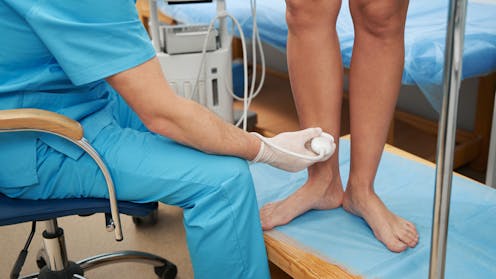
Doctors can check circulation in the feet by comparing blood pressure in the toe with that in the arm. The result is known as the toe–brachial index (TBI). The trouble is that the test needs a toe-sized cuff, an optical sensor and a doctor who knows how to use the equipment.

Many GP surgeries and foot clinics don’t have this kit. And in many people, especially those with diabetes or stiff arteries, the test doesn’t always give a clear or reliable, result.

Our research team asked a simple question: could we turn a routine ultrasound scan into a quick, reliable way to measure blood flow in the foot?

Most hospitals, and many community clinics, already have handheld ultrasound probes, which use Doppler sound to track how blood flows through vessels.

This works through the Doppler effect: as blood moves, it changes the pitch of the sound waves. Healthy blood flow creates a strong, steady “swoosh”, while a narrowed or blocked artery produces a faint or disrupted sound. Doctors are trained to hear the difference and use these sound patterns to spot circulation problems, especially in conditions like PAD.

But my research team wondered whether a computer could do more than listen: we wanted to know whether it could convert the shape of that Doppler “wave” into a number that mirrors the TBI.

To investigate, we scanned the feet of patients already being treated for PAD – 150 feet in all. For each artery, we used Doppler ultrasound to measure how quickly blood surged with each heartbeat, a pattern known as the acceleration index. We then compared these results to the standard toe–brachial index, the traditional test that measures blood pressure in the toe.

A one-minute scan, a nearly perfect match

The acceleration index alone was able to predict the standard toe–brachial index with 88% accuracy. Using a simple formula, we converted that Doppler reading into an “estimated TBI” – a number that closely mirrored the conventional result. It needed no toe cuff, no optical sensor and it took under a minute to perform.

Even more encouraging, estimated TBI rose in tandem with traditional TBI results after treatment. When patients underwent angioplasty – a procedure to reopen blocked arteries – their estimated TBI increased almost identically to the measured TBI. That means this scan doesn’t just help diagnose PAD; it could also be used to track recovery over time.

Crucially, our approach works with equipment that’s already widely available. We repeated the experiment using a basic pocket Doppler: the kind many GPs and podiatrists have tucked in a drawer.

While it wasn’t quite as precise as hospital-grade ultrasound, the results were still strong. With some additional software refinement, doctors could soon assess foot circulation quickly and accurately using tools they already own, without adding time to a busy clinic schedule.

Why early detection matters

Because early diagnosis of PAD changes everything. It can mean the difference between losing a foot, keeping your mobility and living longer with a better quality of life. It can shorten hospital stays and reduce the risk of heart attack and stroke.

But right now, too many people with PAD aren’t diagnosed until they already have chronic limb-threatening ischaemia – the most severe form of the disease. This condition occurs when blood flow to the legs or feet becomes critically low, depriving tissues of oxygen. It can cause constant foot pain (especially at night), wounds that won’t heal and, in advanced cases, tissue death (gangrene) and the risk of amputation. Without urgent treatment to restore circulation, chronic limb-threatening ischaemia can be life-threatening.

Part of the problem is that the tools used to diagnose PAD are often slow, expensive or too complicated for routine use. That’s why a simple, cuff-free Doppler scan that provides a reliable estimate of toe–brachial index is so promising. It uses equipment that many clinics already have, takes less than a minute and delivers immediate results – offering a faster, easier way to spot poor circulation before serious damage is done.

We’re now looking at ways to automate the measurement so that it can be used even by non-specialists. We’re testing it in various clinics with different patient groups and exploring its performance over time. But the evidence so far suggests that this could become a key part of vascular care – not just in hospitals, but in GP surgeries, diabetes clinics and anywhere else early intervention could save a limb.

Blocked arteries don’t need to stay hidden. With the right tools, we can find them earlier, treat them faster and protect people from the devastating consequences of late diagnosis.

The Conversation

Christian Heiss has received funding from Lipton Teas & Infusions, Ageless Science, iThera, the Medical Research Council, the ESRC, European Partnership on Metrology, co-financed from European Union’s Horizon Europe Research and Innovation Programme and UK Research and Innovation. He is member of the board of the European Society of Vascular Medicine, president of the Vascular, Lipid and Metabolic Medicine Council of the Royal Society of Medicine, and chairperson-elect of the ESC WG Aorta and Peripheral Vascular Diseases.

ref. A one minute scan of your foot could help prevent amputation – here’s how – https://theconversation.com/a-one-minute-scan-of-your-foot-could-help-prevent-amputation-heres-how-260847

Dyspraxia: why children with developmental coordination disorder in the UK are still being failed

Source: The Conversation – UK – By Charikleia Sinani, Senior Lecturer in Physiotherapy, School of Science, Technology and Health, York St John University

M-Production/Shutterstock

When a child struggles to tie their shoelaces, write legibly or stay upright during PE, it can be dismissed as clumsiness or lack of effort. But for around 5% of UK children, these challenges stem from a neurodevelopmental condition known as developmental coordination disorder (DCD), also known as dyspraxia. And new findings reveal how deeply it’s impacting their lives – at home, in school and in their future.

Alongside colleagues, we conducted a national survey of more than 240 UK parents. The findings reveal a stark reality for families of children with developmental coordination disorder (DCD).

Despite affecting around 5% of children – making it as common as ADHD – DCD remains underdiagnosed, misunderstood and insufficiently supported. Families reported an average wait of nearly three years for a diagnosis, with almost one in five children showing clear signs of DCD but not yet having begun the diagnostic process.

The diagnosis, when it comes, is often welcomed: 93% of parents say it helped explain their child’s difficulties and offered clarity. But many also expressed frustration that this recognition didn’t change much in practical terms, particularly in schools. One parent summarised the prevailing sentiment: “It is helpful for us at home but not at school.”


Get your news from actual experts, straight to your inbox. Sign up to our daily newsletter to receive all The Conversation UK’s latest coverage of news and research, from politics and business to the arts and sciences.


Our survey showed that the movement difficulties associated with DCD can ripple through everyday life, mental health and wellbeing.

Children with DCD face daily physical struggles with eating, dressing, cutting with scissors and handwriting. These aren’t just inconveniences. They translate into fatigue, frustration and often social exclusion. Compared to national averages, children in this survey were less active, with only 36% meeting recommended physical activity levels. Many parents worry that early disengagement from sport is cultivating lifelong habits that will undermine their children’s health.

The emotional impact is just as severe. A staggering 90% of parents expressed concern about their child’s mental health. Anxiety, low self-esteem and feelings of isolation are common. Children with DCD are significantly more likely than their peers to show signs of emotional and peer-related difficulties.

One parent recalled their child asking, “Why do I even try when I’m never picked?” Others shared heartbreaking worries: a child who felt “he doesn’t belong here” or another who had internalised the idea that they are “stupid” or “terrible”.

DCD is a lifelong condition: it doesn’t go away with age, and there’s currently no “cure.” However, with the right support, many children can develop strategies to manage their difficulties and thrive. Early intervention, tailored therapies, especially occupational therapy, and appropriate classroom accommodations can make a significant difference to a child’s confidence, independence and quality of life.

Schools are often unprepared

Despite 81% of teachers being aware of a child’s motor difficulties, fewer than 60% had individual learning plans in place. Support was inconsistent: some children benefited from teaching assistants or adaptive tools like laptops, while others found themselves struggling alone. Physical education posed particular challenges, with 43% of parents saying their child wasn’t supported in PE lessons, often facing teachers who didn’t understand DCD at all.

The consequences are significant: 80% of parents felt that movement difficulties negatively impacted their child’s education, and the same number feared it would affect their future employment.

Therapy helps but is hard to access. Most families had sought therapy, with occupational therapy proving transformative for some. Yet many faced long waits or had to pay out of pocket, with some families spending thousands annually. Even when therapy was available, 78% felt it wasn’t sufficient.

And it’s not just the children who suffer – 68% of parents reported constant emotional concern, and nearly half said the condition restricted their ability to take part in normal family activities.

What needs to change

To improve outcomes for children with DCD, we need urgent, coordinated action across five key areas. Parents and experts involved in the report outlined clear recommendations:

Awareness: A nationwide effort is needed to educate the public, schools and healthcare professionals about DCD as a common yet currently poorly understood condition.

Diagnosis: GPs and frontline professionals need clear, step-by-step guidance and referral routes to help them identify early motor difficulties and connect families with the right support quickly.

Education: All teachers should receive mandatory training in DCD and practical strategies for supporting affected pupils in the classroom.

Mental health: Support systems must recognise the deep connection between movement challenges and emotional wellbeing, ensuring that physical and psychological needs are treated together.

Support: Crucially, children shouldn’t have to wait for a formal diagnosis to get support. Early intervention is vital to preventing long-term harm – and must be available as soon as difficulties emerge.

Children with DCD are bright, capable and full of potential. But as one parent warns, “If she can’t write her answers down quickly enough in exams, she won’t be able to show her knowledge.” The cost of neglect is high, not just in lost grades or missed goals, but in the wellbeing of a generation of children struggling in silence.

The Conversation

Charikleia Sinani has received funding from The Waterloo Foundation.

The Impact of Developmental Coordination Disorder in the UK study was conducted in collaboration with our colleagues Catherine Purcell, Judith Gentle, Melissa Licari, Jacqueline Williams, Mark Mierzwinski and Sam Hudson.

Greg Wood has previously received funding from The Waterloo Foundation.

Kate Wilmut has in the past received funding from ESRC (Economic and Social Research Council), The Leverhulme Trust and The Waterloo Foundation

ref. Dyspraxia: why children with developmental coordination disorder in the UK are still being failed – https://theconversation.com/dyspraxia-why-children-with-developmental-coordination-disorder-in-the-uk-are-still-being-failed-260853

The Salt Path scandal: defending a memoir’s ‘emotional truth’ is a high-risk strategy

Source: The Conversation – UK – By Robert Eaglestone, Professor of Contemporary Literature and Thought, Royal Holloway University of London

Raynor Winn, author of the award-winning memoir The Salt Path, which was recently adapted into a film, has been accused of “lies, deceit and desperation”. Writing in The Observer, reporter Chloe Hadjimatheou claims that Winn left out significant facts and invented parts of the story.

The Salt Path follows a transformative 630-mile trek along England’s South West Coast Path that Winn took with her terminally ill husband Moth after they lost their home and livelihood.

The Observer article claims that aspects of both the story of losing their home and Winn’s husband’s illness were fabricated. In a statement on her website, Winn has defended her memoir, calling the claims “grotesquely unfair” and “highly misleading”.

There’s a long list of memoirs which have been shown to be problematic. James Frey’s recovery memoir A Million Little Pieces (2003) was allegedly exaggerated. In 2006, he apologised for fabricating portions of the book. Worse, Binjamin Wilkomirski’s feted Holocaust survivor memoir Fragments: Memories of a Wartime Childhood (1995) was completely fake. Wilkomirski’s real name was Bruno Dössekker and he was not a Holocaust survivor, he had simply invented his “memories” of a death camp, though he seemed to believe they were true.

But, for readers, how much does this matter? Novelist D.H. Lawrence wrote that readers should: “Never trust the artist. Trust the tale.” As readers of The Salt Path, we fear for Raynor and Moth as they desperately try to escape drowning from a freak high tide at Portheras Cove. We are relieved when we hear that Moth’s terminal disease was “somehow, for a while, held at bay”.

The origin of the word fiction is from the Latin fingere, which means not to lie, but to fashion or form. All memoirs – indeed, all texts, from scientific articles to history books to bestselling novels – are “formed” or “shaped”. Writing doesn’t just fall from a tree, we make it, and it reveals the world by mediating the world.


Looking for something good? Cut through the noise with a carefully curated selection of the latest releases, live events and exhibitions, straight to your inbox every fortnight, on Fridays. Sign up here.


But this idea, that writing is a “shaping”, is why this case matters. Writing, done by oneself, or by a ghostwriter (or even by AI) has conventions, not-quite-rules that underlie its creation and reception. Some of these are in the text (the enemies eventually become lovers); some are outside the text itself (you really can judge a book by its cover). But most conventions are both inside and outside at the same time.

Works by historians have footnotes to sources, so you (and other historians) can check the claims. Each scientific article refers to many others, because each article is just one tiny piece of the whole puzzle on which a huge community of scientists are working, and the extensive references show how this piece fits (or doesn’t). Non-fiction follows conventions, while novelists can do whatever they want, of course, to challenge or obey the conventions (that’s one reason why novels are exciting).

Memoir has a particularly important convention, revealed most clearly by the historian Stefan Maechler’s report on Wilkomirski’s fraudulent memoir. Maechler argued that Wilkomirski broke what the French critic Philippe Lejeune called the “autobiographical pact”, a contract of truth between the author and the reader.

For Lejeune, however, this pact is not like a legal agreement. A memoir, unlike a scientific article, need only put forward the truth as it appeared to the author in that area of their life. While the information needs to be accurate to some degree, its level of verifiability is less than a legal document or work of history. Much more important for Lejeune is the harder-to-pin-down fidelity to meaning.

After all, many meaningful things – falling in love, for example, or grief – happen mostly inside us and are hard to verify. Even more, the developing overall shape of our life as it seems to us is not really a historical fact, but our own making of meaning. For Lejeune, in a memoir, this emotional truth is more significant than the verifiable truth.

Playing with ‘emotional truth’

The author of The Salt Path seems to have leaned into this idea. In her first statement after The Observer’s piece she claims that her book “lays bare the physical and spiritual journey Moth and I shared, an experience that transformed us completely and altered the course of our lives … This is the true story of our journey”. How, after all, could one verify a “spiritual journey”?

However, I don’t fully agree with Lejeune. Perhaps our inner and outer worlds are not as separate as he supposes. Our public actions, including sharing facts, show who we are as much as our words describing our inner journeys.

In a memoir, the verifiable truth and the emotional truth are linked by a kind of feedback loop. As readers, we allow some degree of playing with verifiable truth: dialogue is reconstructed, not recorded; we accept some level of dramatisation; we know it’s from one person’s perspective. But we also make a judgment about these things (there’s no fixed rule, no science to this judgment).

If there’s too much reconstruction, too much dramatisation, we begin to get suspicious about the emotional truth too: is this really how it felt for them? Was it honestly a spiritual journey? And, in turn, this makes us more suspicious of the verifiable claims. By contrast, the novelist’s pact with the reader admits they fake emotional truth, which somehow makes it not fake at all: that’s one reason why novels are complicated.

This is why defending a memoir’s “emotional truth” is a high-risk strategy. We know from our own lives that people who are unreliable in small (verifiable) things are often unreliable in large (emotional, meaningful) ones.

So, for readers, the facts behind The Salt Path matter less in themselves and more because each question points to a larger issue about the book’s meaning. When you call someone “fake”, you don’t really mean that “their factual claims are inaccurate”, but that they are somehow inauthentic, hollow or – it’s a teenager’s word, but still – phoney. Once the “autobiographical pact” looks broken in enough small details, the reader no longer trusts the teller or the tale.

In a lengthy statement published on her website in which she addresses the allegations in detail, Winn said that the suggestion that Moth’s illness was fabricated was an “utterly vile, unfair, and false suggestion” and added: “I can’t allow any more doubt to be cast on the validity of those memories, or the joy they have given so many.”


This article features references to books that have been included for editorial reasons, and may contain links to bookshop.org. If you click on one of the links and go on to buy something from bookshop.org The Conversation UK may earn a commission.

The Conversation

Robert Eaglestone does not work for, consult, own shares in or receive funding from any company or organisation that would benefit from this article, and has disclosed no relevant affiliations beyond their academic appointment.

ref. The Salt Path scandal: defending a memoir’s ‘emotional truth’ is a high-risk strategy – https://theconversation.com/the-salt-path-scandal-defending-a-memoirs-emotional-truth-is-a-high-risk-strategy-260937

Child hospitalised as bird flu cases climb in Cambodia

Source: The Conversation – UK – By Divya Venkatesh, BBSRC Discovery Fellow, University of Oxford

Tom…foto/Shutterstock.com

Cambodia’s Ministry of Health recently confirmed the country’s twelfth human case of H5N1 avian influenza so far this year. The patient, a five-year-old boy from Kampot province, is currently in intensive care with severe respiratory symptoms.

The announcement, on July 3, came just days after a 19-month-old child in neighbouring Takeo province died from the same virus.

To date, there is no evidence of human-to-human transmission. But the steady increase in cases has renewed attention to the risks posed by H5N1. This highly pathogenic bird flu virus spreads rapidly among poultry and occasionally jumps to humans – often with deadly consequences.

Since 2003, there have been at least 954 reported human infections globally, nearly half of them fatal, according to the World Health Organization (WHO). Experts have long considered H5N1 a serious pandemic threat due to its high mortality rate and potential to evolve.


Get your news from actual experts, straight to your inbox. Sign up to our daily newsletter to receive all The Conversation UK’s latest coverage of news and research, from politics and business to the arts and sciences.


The recent Cambodian cases are linked to the 2.3.2.1e lineage of H5N1 (previously known as 2.3.2.1c), a strain that has circulated for decades in poultry across Cambodia, Laos and Vietnam. From 2005 to 2014, Cambodia saw sporadic but severe human infections – then almost a decade passed without new cases.

That changed in 2023 when six human cases were reported. The numbers have since climbed: ten in 2024, and now 12 in the first half of 2025. Of these recent infections, at least 12 – about 43% – have been fatal. A troubling pattern is also emerging: seven of this year’s cases occurred in June alone, according to the WHO’s latest Disease Outbreak News update.

Animal pandemic

Globally, however, a different H5N1 lineage – 2.3.4.4b – has dominated in recent years. This strain sparked a devastating wave of avian outbreaks starting in 2021, sweeping across continents and decimating wild bird and poultry populations. It also spread to mammals, leading scientists to label it an “animal pandemic”.

Although it no longer causes mass die-offs, 2.3.4.4b remains widespread and dangerous, particularly because of its capacity to infect mammals. It has been linked to about 70 human cases in the US alone, with only one death recorded so far, and is under investigation for suspected mammal-to-mammal transmission in species, including US dairy cattle and seals.

A dairy farm showing cows and farmers.
Bird flu strain 2.3.4.4b is suspected of mammal-to-mammal transmission.
BearFotos/Shutterstock

Influenza viruses are notoriously prone to genetic reassortment – a process by which two or more strains infect the same host and exchange genetic material. These events can sometimes generate new, more transmissible or deadly variants. In April 2024, the UN Food and Agriculture Organization reported the emergence of a reassortant virus in Vietnam. This new strain combines surface proteins from the long-standing 2.3.2.1e virus with internal genes from the globally dominant 2.3.4.4b.

Evidence suggests that this reassortant virus may be driving the rise in Cambodian human infections.

A 2024 study, which has not yet undergone peer review, found that the new virus carries genetic markers that could enhance its ability to infect humans – although it is not yet considered human-adapted. According to the study’s authors, this reassortant form has become the predominant strain found in poultry across the region in recent years.

So far, all confirmed human cases in Cambodia have been linked to direct contact with infected or dead poultry – often in small, rural backyards. This suggests that the country’s “one health” strategy, which aims to integrate human, animal and environmental health responses, is functioning as intended. Although some gaps clearly remain.

Food safety and food security remain serious concerns across much of Cambodia and south-east Asia. Limited veterinary oversight, informal poultry markets, lack of compensation for poultry losses due to disease, and poor biosecurity may offer the virus opportunities to persist and evolve – and potentially reach more people.

Since the COVID pandemic, advances in disease surveillance and reporting have made it easier to detect and confirm human infections, Dr Vijaykrishna Dhanasekaran, head of the Pathogen Evolution Lab at Hong Kong University, told me over email. However, he notes that surveillance remains heavily concentrated in urban areas and the commercial poultry sector, while rural settings and interactions with wild birds are poorly monitored.

Expanding surveillance to these overlooked areas will be vital, he says, if the world hopes to better understand – and prepare for – the next potential influenza pandemic.

The Conversation

Divya Venkatesh receives funding from BBSRC.

ref. Child hospitalised as bird flu cases climb in Cambodia – https://theconversation.com/child-hospitalised-as-bird-flu-cases-climb-in-cambodia-260565

Over 1.6 million children live in families made poorer by the two-child limit on benefits – new data

Source: The Conversation – UK – By Ruth Patrick, Professor in Social Policy, University of Glasgow

New government statistics released today show the reach of the two-child limit. There are 1,665,540 children in England, Scotland and Wales living in households affected by the two-child limit, an increase of over 35,000 from the same time in 2024.

The two-child limit restricts means-tested child benefits to the first two children in a household, subject to some exceptions.

Its sister policy, the benefit cap, affects over 115,000 households, including 300,000 children. It routinely pushes families into deep poverty, far below the standard poverty line of 60% of median income.

The benefit cap places a limit on the total amount a household can receive if no-one in the household earns a minimum amount, again subject to some exceptions linked to receipt of disability benefits.


Get your news from actual experts, straight to your inbox. Sign up to our daily newsletter to receive all The Conversation UK’s latest coverage of news and research, from politics and business to the arts and sciences.


Over the past five years, we have been part of a team of academic researchers investigating the impact of both policies on families with three or more children. We’ve found that these policies drive up poverty, creating deprivation and hardship. This in turn causes sustained and severe harm to children and their families.

The two-child limit and benefit cap leave many families living with extreme financial insecurity. They harm parental mental health, as mothers and fathers struggle to try and make an inadequate income stretch to meet the needs of their children.

Parent with baby in supermarket
Parents are struggling to make their income go far enough.
Odua Images/Shutterstock

In addition, these policies do not fall evenly across the population when looking at ethnicity. Overall, 70% of the families affected by the two-child limit are white, as are 66% affected by the benefit cap. But our new analysis shows that children from an ethnic minority are up to three times as likely as white children to be affected by the two-child limit. They are also up to four times as likely to be affected by the benefit cap.

Alongside administrative statistics, we have analysed household survey data, published today as a policy brief. We find that one in five children from Pakistani families and one in four children from Bangladeshi families are now affected by the two-child limit.

Rising poverty

Our analysis also indicates that these policies are contributing to very high and rising levels of poverty. We estimate that 66% of Bangladeshi children, 60% of Pakistani children, and nearly half (48%) of black children live in poverty. This compares to one in four (24%) white children living below the poverty line – still far too many.

This new analysis provides us with better understanding of where the damage done by both policies is falling. It’s an important reminder of how the two-child limit and benefit cap directly conflict with ambitions not only to act on child poverty, but also to reduce systematic inequalities linked to ethnicity.

Scrapping the two-child limit would give larger families access to benefits they currently miss out on – but it would not have any effect on smaller families living in poverty, so isn’t the only policy solution needed.

Nonetheless, analysis by the Resolution Foundation has shown that getting rid of the two-child limit – which would cost £1.4 billion – is by far the most cost-effective way to reduce the number of children living in poverty. Spending £1.4 billion in other ways – for example by increasing benefits for all families – would make less difference to child poverty than if the two-child limit were ended.

It’s also important to keep in mind the impact on the depth of poverty. Larger families tend to be living further below the poverty line. Scrapping the two-child limit will make a big difference in many households, even if they are not lifted out of poverty as a result.

Labour came into government on a manifesto of “change”, and Keir Starmer has promised to be “laser-focused” in his commitment to drive down poverty.

Labour have already said that they want to get rid of the two-child limit, arguing that they just need to find the money to do so. The government has established a child poverty taskforce, due to report in the autumn, and made a first concrete policy commitment with the extension of free school meals provision for families in England. But there is no alternative to serious action on social security benefits if significant progress is to be made.

The Conversation

Ruth Patrick receives funding from a range of funders including Nuffield Foundation, AFFT, Trust for London, The Robertson Trust and the Centre for Impact on Urban Health. She is a member of The Labour Party.

Kitty Stewart has received funding from the Nuffield Foundation and from LSE for the research reported in this article.

ref. Over 1.6 million children live in families made poorer by the two-child limit on benefits – new data – https://theconversation.com/over-1-6-million-children-live-in-families-made-poorer-by-the-two-child-limit-on-benefits-new-data-260449

Plans to relocate Gazans to a ‘humanitarian city’ look like a crime against humanity – international law expert

Source: The Conversation – UK – By James Sweeney, Professor, Lancaster Law School, Lancaster University

The Israel Defense Forces (IDF) are refusing to implement a government plan to move hundreds of thousands of Palestinians into a what it calls a “humanitarian city” in Rafah on Gaza’s southern border with Egypt. Lieutenant General Eyal Zamir, chief of the IDF general staff said the plan was not part of the military’s operational plan for destroying Hamas and freeing the remaining hostages.

Army reservists have reportedly also complained that the plan amounts to a war crime. In my view as an expert in international law, they are correct. Forcibly relocating a population is prohibited, even in war. It is also a crime against humanity and could even amount, under certain circumstances, to genocide.

There is some important historical context to consider before examining the legal issues at play.


Sign up to receive our weekly World Affairs Briefing newsletter from The Conversation in the UK. Every Thursday we’ll bring you expert analysis of the big stories in international relations.


The prosecution of crimes against humanity first took place at the Nuremberg trials of surviving senior Nazis after the second world war. By that time the idea of war crimes was clearly established – but they tended to concern what you should not do to the enemy civilian population.

The problem was that the worst atrocities of the Nazis were committed against their own people – the German Jews (and many, many others too). The idea of crimes against humanity was created to fill this gap, and was used to prosecute the surviving masterminds of the Holocaust.

Conditions for a ‘crime against humanity’

Crimes against humanity are a category that contains several separate crimes. If the right conditions are there, you might talk about “the crime against humanity of murder” or the “crime against humanity of rape”. The conditions are that the underpinning crime takes place against a backdrop of a “widespread or systematic” attack on a civilian population.

The attack does not have to include a literal armed attack: apartheid, for example, was established as a crime against humanity in 1973 in response to the policies of the South African government. It is also not necessary that there is an armed conflict for a particular crime to be a crime against humanity.

Within the category of crimes against humanity is included “deportation and forcible transfer” (see article 7 of the Rome statute of the International Criminal Court).

This is what the Israeli government’s plan for moving Palestinians into a “humanitarian city” would appear to amount to. If the plan stopped at leaving Gazan Palestinians in Rafah then it would be “forcible transfer”, and if they were relocated to another country it would be “deportation”.

Coercion is key to the crime of forcible transfer. It’s fanciful to think that every single Gazan civilian would want to move to Rafah in circumstances where they would be security-checked on entry and thereafter forbidden from leaving.

How could a liveable city, with all the infrastructure needed, even be created? What of the dentists, doctors, teachers, lawyers, mechanics, entrepreneurs and anyone else who was able to make an honest living? Will they really be given a place to carry out their work?

Ethnic cleansing

The term “ethnic cleansing” is sometimes used to describe what is being proposed by the Israeli government. I dislike the term, and it has no meaning in law. It became a commonly used term during the 1990s conflict in the former Yugoslavia when ethnic Serbs, and in some instances ethnic Croats, expelled hundreds of thousands of people of any other ethnicity out of the territory that they held.

For this practice, the president of the former Yugoslavia, Slobodan Milošević, and a string of Bosnian Serb and Bosnian Croat leaders were charged with crimes against humanity by the International Criminal Tribunal for the former Yugoslavia (ICTY).

Milošević died before the ICTY could deliver a verdict in his case, but many others were found guilty. The actions of the Bosnian Serb forces in the town of Srebrenica were even found by the ICTY to have been an act of genocide, because they were not just expelling non-Serbs but wiping them out: at one point in July 1995 they killed around 8,000 men and boys in just a few days.

A lot would depend on the conditions in which the Palestinians would live in the “humanitarian city”. If they were deprived of sufficient food and medical supplies in a way that could only be seen as intended to lead to their deaths, then that too could be held to qualify as an act of genocide.

Justice and accountability

It is clear to me that the forced relocation of Gazans to a “humanitarian city” would violate international law. What is not so clear cut is how to hold its instigators to account.

There are already arrest warrants issued by the International Criminal Court (ICC) for Israel’s prime minister, Benjamin Netanyahu, and his former defence minister, Yoav Gallant. But there is no international police force and so the ICC relies on participating states to arrest suspects on its behalf. Hungary welcomed Netanyahu in April this year, while announcing it would withdraw from the ICC.

In the same way, Netanyahu flew to Washington DC this week to meet with Donald Trump, but was not arrested because the US doesn’t recognise the ICC. During his visit, Netanyahu announced he would be nominating Trump for the Nobel peace prize.

South Africa has also sought to hold the state of Israel to account at the International Court of Justice, alleging the crime of genocide. The court has yet to rule, saying only that it is plausible that acts of genocide might occur in Gaza.

Since Hamas launched its vicious attack on Isreal on the October 7 2023, there has been constant violence and massive loss of life in the region. However, the proposed “humanitarian city” is not, in my view, a lawful route to peace and stability. As for anyone actually facing justice for the many atrocities that we have seen, an international consensus in favour simply doesn’t exist. And, in the current climate, there’s little sign that it will exist any time soon.

The Conversation

James Sweeney does not work for, consult, own shares in or receive funding from any company or organisation that would benefit from this article, and has disclosed no relevant affiliations beyond their academic appointment.

ref. Plans to relocate Gazans to a ‘humanitarian city’ look like a crime against humanity – international law expert – https://theconversation.com/plans-to-relocate-gazans-to-a-humanitarian-city-look-like-a-crime-against-humanity-international-law-expert-260727

Women’s Euro 2025: what players do to recover between matches — and how they prepare for their next game

Source: The Conversation – UK – By Paul Hough, Lecturer Sport & Exercise Physiology , University of Westminster

Recovery starts for England’s Lionesses as soon as the match ends. Romain Biard/ Shutterstock

As with many competitions, competitors in the UEFA Women’s Euro 2025 tournament face a gruelling match schedule. There are typically only three or four days between matches during the group stage of international tournaments – with some teams even facing tighter turnarounds depending on scheduling.

This congested fixture schedule places a significant physical demand on players, increases injury risk and makes it challenging to sustain peak physical performance. This is why recovery strategies are put into action from the moment the match ends so players are in peak condition for the next match.

The first recovery strategy happens as soon as players arrive in the changing room. There will be a buffet-style food selection with plenty of carbohydrate and protein-based snacks to begin refuelling. Players also typically consume a “recovery” drink. This consists of carbohydrates to restore muscle glycogen (which our body uses for energy), and around 20-30 grams of protein to aid muscle repair.


Get your news from actual experts, straight to your inbox. Sign up to our daily newsletter to receive all The Conversation UK’s latest coverage of news and research, from politics and business to the arts and sciences.


Over the following days, players will follow a meticulously-planned diet with the correct balance of carbohydrates, protein, fats and nutrients (such as the polyphenols found in tart cherry juice) to support muscle repair and adaptation.

Sweat loss during matches – particularly in summer tournaments – leads to significant dehydration. Players typically sweat around 1.5 litres or more during a match. Immediately after a match, players are given isotonic drinks to replace the water and electrolytes (specifically sodium) they’ve lost through sweating.

To estimate fluid loss, players’ post-match weight is recorded to guide how much they should drink. A one kilogram reduction in body weight corresponds to roughly one litre of fluid lost through sweating. To re-hydrate, players drink around 1.5 litres per kilogram of weight lost.

Physical recovery

Some players might perform around 10-15 minutes of low-intensity aerobic activity immediately following the match – such as cycling. This light activity maintains blood flow to the muscles, which might reduce the feeling of muscle soreness in the following days, although the evidence for this is inconclusive.

Players often use cold water immersion (ice baths) to reduce inflammation, swelling and muscle soreness. This involves standing or sitting in cold water (which is between 10–15°C) for around 10–15 minutes. Players may also take ice baths in the days between matches. Although there’s debate over whether ice baths speed up recovery, it remains a widely accepted practice in elite sport where rapid recovery is prioritised.

Another option involves alternating between hot water (around 36°C) and cold water – a practice known as contrast water therapy. Contrast water therapy causes the blood vessels to constrict in the cold water, then dilate in the hot water. This practice may enhance blood flow, reduce swelling and decrease muscle soreness.

Players often wear compression garments for several hours post-match and overnight. These garments enhance blood flow and reduce swelling. They’re also shown to reduce pain and muscle soreness.

Recently, inflatable compression leg sleeves have become popular among athletes. These boots inflate and deflate cyclically to promote blood flow and lymphatic drainage. This works similar to a sports massage or contrast water therapy, helping clear inflammatory proteins from the body. This may reduce swelling and decrease the severity of muscle soreness.

Sleep also plays a crucial role in a player’s physical and mental restoration between tournament matches. Players are encouraged to get eight to ten hours of quality sleep per night. Some players even take a 20-90 minute nap in the early afternoon to increase alertness, improve mood and potentially improve performance.

England footballer Lucy Bronze kicks the ball forward while holding off an opponent.
Recovery will be tailored to each player.
Jose Breton- Pics Action/ Shutterstock

Good sleep hygiene can help players get a good night’s sleep even despite hectic tournament schedules. This involves ensuring their bedroom is cool and dark and minimising screen time before bed.

Preparing for the next match

The day after a match, players will perform a recovery session incorporating some sort of light activity – such as cycling, dynamic movements in the swimming pool and foam rolling (a type of self-massage that uses a foam cylinder to apply pressure to different muscles).

Although light activity does not accelerate muscle recovery, it can offer psychological benefits – such as reducing the feeling of muscle soreness and stiffness. Players may also undergo targeted physiotherapy and massage to reduce muscle soreness, increase mobility and ease pain.

Recovery time varies between players and the level of fatigue they experience. Fatigue will be influenced by the player’s age and their match demands – with players who run a greater distance or perform more sprints and changes of direction typically taking more time to recover between matches.

Players’ fatigue is monitored between matches using various methods – including GPS data, biochemical markers of inflammation and muscle damage, and wellness questionnaires. This data is used to individualise training and recovery.

Players showing elevated fatigue might perform light technical drills, tactical walkthroughs of different plays and strategies the player might use on the field and mobility-focused gym work to maintain sharpness without causing more fatigue. Whereas players whose fatigue levels have returned to close to normal will resume normal training.

Performing on the world stage with the weight of national pride brings intense pressure. Players must contend with media scrutiny coupled with the expectations of coaches and fans. These factors can disrupt sleep and trigger a biological stress response, which may impair recovery.

So to help manage mental stress, teams schedule structured downtime, encouraging players to connect with family or engage in hobbies that promote mental recovery and psychological detachment from football. Sports psychologists may also support players during tournaments, providing mental skills training and helping players develop strategies to cope with stress and pressure.

The Conversation

Paul Hough does not work for, consult, own shares in or receive funding from any company or organisation that would benefit from this article, and has disclosed no relevant affiliations beyond their academic appointment.

ref. Women’s Euro 2025: what players do to recover between matches — and how they prepare for their next game – https://theconversation.com/womens-euro-2025-what-players-do-to-recover-between-matches-and-how-they-prepare-for-their-next-game-260248