European gloom over the Trump deal is misplaced. It’s probably the best the EU could have achieved

Source: The Conversation – UK – By Maha Rafi Atal, Adam Smith Senior Lecturer in Political Economy, School of Social and Political Sciences, University of Glasgow

The trade deal between the US and the European Union, squeezed in days before the re-introduction of Donald Trump’s “liberation day” tariffs, is reflective of the new politics of global trade. Faced with the threat of 30% baseline tariffs from Washington, as well as additional levies on specific sectors, the EU has secured a partial reprieve of a flat 15% tariff on all goods.

Was this the best the bloc could have achieved? In the time available, it may well have been. The 15% rate is higher than the UK secured earlier this year, but it’s significantly below the level applied to China and Mexico, and on par with Japan.

The EU has also managed a “zero-for-zero” tariffs deal on some hi-tech goods, notably semiconductors vital for products like phones and laptops. This is something the UK did not push for or secure in its own framework agreed with the US president.


Read more:
Donald Trump has reduced tariffs on British metals and cars, but how important is this trade deal? Experts react


What’s more, EU leaders have argued that agreeing to the deal has security benefits in protecting dwindling US support for European defence. The urgency of Europe’s security concerns in Ukraine made these talks different from trade negotiations in the first Trump administration, when Europe could afford to be more aggressive.

The biggest winners in this deal are Europe’s carmakers. The US has collapsed various sector-specific duties on goods like aircraft, cars and automotive parts into the 15% ceiling. This effectively reduces tariffs on EU-made cars (from 27.5%).

American automakers, meanwhile, rely heavily on parts from Mexico and China – still subject to higher tariffs at the time of writing. This makes EU vehicles more competitive for US consumers than “American” cars that rely on overseas parts.

Most importantly however, like the UK deal before it, the new EU agreement is a statement of understanding between the White House and the European Commission, rather than a formal treaty. A treaty would be subject to parliamentary ratification on both sides.

But the semi-formal nature of this agreement allows both Trump and European leaders to portray the deal as a “win” by playing fast and loose with what’s actually in it.

For example, the Trump administration will celebrate an EU commitment to buy US$250 billion (£189 billion) in US energy imports annually. Yet the concession holds no legal weight in the EU. The European Commission, which negotiated with Trump, does not buy any energy nor does it manage the power grid inside its 27 member states.

The commission can encourage, but cannot compel, those states to buy American. (Indeed, it might want to do so anyway, since it helps it to pivot away from Russian gas). But ultimately, member states and businesses decide where their energy supply comes from, and they are not direct parties to the deal. Only a formal treaty ratified by the European parliament would compel them.

No guarantees from Trump

The informal nature of this agreement also allows EU member states to protest against what they see as capitulation to Trump’s demands without real consequence. After all, there is not yet a treaty text they would be required to vote on or implement.

The Trump administration similarly imposed its sweeping tariff threats in early spring without a vote from Congress, and has been making ad hoc changes to the rates in the same way.

On the one hand, this means European countries may not ultimately be required to implement some of the deal’s less savoury elements such as the energy purchases or lowering the bloc’s own tariffs on US goods.

On the other hand, this means the Trump administration – notorious for abrupt changes of turn – can also renege at any time. In reality, there is little the EU can do about this. The question of leverage looms large. Trump’s longstanding antipathy towards the EU – seeing it less as an ally and more as a rival – meant that Brussels was never negotiating from a position of strength.

The fact that the EU avoided the worst-case scenario, protected key sectors and secured other sector-specific advantages suggests a deal shaped not by triumph, but by containment of Trump. Since the deal was announced, the picture emerging from many European leaders has been one of gloom. True, the EU didn’t win – but it survived. And that, for now, is probably enough.


Get your news from actual experts, straight to your inbox. Sign up to our daily newsletter to receive all The Conversation UK’s latest coverage of news and research, from politics and business to the arts and sciences.

The Conversation

Maha Rafi Atal does not work for, consult, own shares in or receive funding from any company or organisation that would benefit from this article, and has disclosed no relevant affiliations beyond their academic appointment.

ref. European gloom over the Trump deal is misplaced. It’s probably the best the EU could have achieved – https://theconversation.com/european-gloom-over-the-trump-deal-is-misplaced-its-probably-the-best-the-eu-could-have-achieved-262369


By building the world’s biggest dam, China hopes to control more than just its water supply

Source: The Conversation – UK – By Tom Harper, Lecturer in International Relations, University of East London

China’s already vast infrastructure programme has entered a new phase as building work starts on the Motuo hydropower project.

The dam will consist of five cascade hydropower stations arranged from upstream to downstream and, once completed, will be the world’s largest source of hydroelectric power. It will be four times larger than China’s previous signature hydropower project, the Three Gorges Dam, which spans the Yangtse river in central China.

The Chinese premier, Li Qiang, has described the proposed mega dam as the “project of the century”. In several ways, Li’s description is apt. The vast scale of the project is a reflection of China’s geopolitical status and ambitions.

Possibly the most controversial aspect of the dam is its location. The site is on the lower reaches of the Yarlung Zangbo river on the eastern rim of the Tibetan plateau. This is connected to the Brahmaputra river which flows into the Indian border state of Arunachal Pradesh as well as Bangladesh. It is an important source of water for Bangladesh and India.

Both nations have voiced concerns over the dam, particularly since it can potentially affect their water supplies. The tension with India over the dam is compounded by the fact that Arunachal Pradesh has been a focal point of Sino-Indian tensions. China claims the region, which it refers to as Zangnan, saying it is part of what it calls South Tibet.

At the same time, the dam presents Beijing with a potentially formidable geopolitical tool in its dealings with the Indian government. The location of the dam means that it is possible for Beijing to restrict India’s water supply.

This potential to control downstream water supply to another country has been demonstrated by the effects that earlier dam projects in the region have had on the nations of the Mekong river delta in 2019. As a result, this gives Beijing a significant degree of leverage over its neighbours.

One country restricting water supply to put pressure on another is by no means unprecedented. In fact in April 2025, following a terror attack by Pakistan-based The Resistance Front in Kashmir, which killed 26 people (mainly tourists), India suspended the Indus waters treaty, restricting water supplies to Pakistani farmers in the region. So the potential for China’s dam to disrupt water flows will further compound the already tense geopolitics of southern Asia.

Concrete titans

The Motuo mega dam is an advertisement of China’s prowess when it comes to large-scale infrastructure projects. China’s expertise with massive infrastructure projects is a big part of modern Chinese diplomacy through its massive belt and road initiative.

This involves joint ventures with many developing nations to build large-scale infrastructure, such as ports, rail systems and the like. It has caused much consternation in Washington and Brussels, which view these initiatives as a wider effort to build Chinese influence at their expense.

The completion of the dam will will bring Beijing significant symbolic capital as a demonstration of China’s power and prosperity – an integral feature of the image of China that Beijing is very keen to promote. It can also be seen as a manifestation of both China’s aspiration and its longstanding fears.

Harnessing the rivers

The Motuo hydropower project also represents the latest chapter of China’s long battle for control of its rivers, a key story in the development of Chinese civilisation.

Rivers such as the Yangtze have been at the heart of the prosperity of several Chinese dynasties (the Yangtse is still a major economic driver in modern China) and has devastated others. The massive Yangtse flood of 1441 threatened the stability of the Ming dynasty, while an estimated 2 million people died when the river flooded in 1931.

France 24 report on the construction of the mega dam project.

Such struggles have been embodied in Chinese mythology in the form of the Gun-Yu myth. This tells the story of the way floods displaced the population of ancient China, probably based on an actual flooding at Jishi Gorge on the Yellow River in what is now Qinghai province in 1920BC.

This has led to the common motif of rivers needing human control to abate natural disaster, a theme present in much classical Chinese culture and poetry.

The pursuit of controlling China’s rivers has also been one of the primary influences on the formation of the Chinese state, as characterised by the concept of zhishui 治水 (controlling the rivers). Efforts to control the Yangtze have shaped the centralised system of governance that has characterised China throughout its history. In this sense, the Motuo hydropower project represents the latest chapter in China’s quest to harness the power of its rivers.

Such a quest remains imperative for China and its importance has been further underlined by the challenges of climate change, which has seen natural resources such as water becoming increasingly limited. The Ganges river has already been identified as one of the world’s water scarcity hotspots.

As well as sustaining China’s population, the hydropower provided by the dam is another part of China’s wider push towards self-sufficiency. It’s estimated that the dam could generate 300 billion kilowatt-hours of electricity every year – about the same about produced by the whole UK. While this will meet the needs of the local population, it also further entrenches China’s ability to produce cheap electricity – something that has enabled China to become and remain a manufacturing superpower.

Construction has only just begun, but Motuo hydropower project has already become a microcosm of China’s wider push towards development. It’s also a gamechanger in the geopolitics of Asia, giving China the potential to exert greater control in shaping the region’s water supplies. This in turn will give it greater power to shape the geopolitics of the region.

At the same time, it is also the latest chapter of China’s longstanding quest to harness its waterways, which now has regional implications beyond anything China’s previous dynasties could imagine.


Get your news from actual experts, straight to your inbox. Sign up to our daily newsletter to receive all The Conversation UK’s latest coverage of news and research, from politics and business to the arts and sciences.

The Conversation

Tom Harper does not work for, consult, own shares in or receive funding from any company or organisation that would benefit from this article, and has disclosed no relevant affiliations beyond their academic appointment.

ref. By building the world’s biggest dam, China hopes to control more than just its water supply – https://theconversation.com/by-building-the-worlds-biggest-dam-china-hopes-to-control-more-than-just-its-water-supply-261984

Your dog can read your mind – sort of

Source: The Conversation – UK – By Laura Elin Pigott, Senior Lecturer in Neurosciences and Neurorehabilitation, Course Leader in the College of Health and Life Sciences, London South Bank University

Dmytro Zinkevych/Shutterstock.com

Your dog tilts its head when you cry, paces when you’re stressed, and somehow appears at your side during your worst moments. Coincidence? Not even close.

Thousands of years of co-evolution have given dogs special ways to tune in to our voices, faces and even brain chemistry. From brain regions devoted to processing our speech to the “love hormone” or oxytocin that surges when we lock eyes, your dog’s mind is hardwired to pick up on what you’re feeling.

The evidence for this extraordinary emotional intelligence begins in the brain itself. Dogs’ brains have dedicated areas that are sensitive to voice, similar to those in humans. In a brain imaging study, researchers found that dogs possess voice-processing regions in their temporal cortex that light up in response to vocal sounds.

Dogs respond not just to any sound, but to the emotional tone of your voice. Brain scans reveal that emotionally charged sounds – a laugh, a cry, an angry shout – activate dogs’ auditory cortex and the amygdala – a part of the brain involved in processing emotions.

Dogs are also skilled face readers. When shown images of human faces, dogs exhibit increased brain activity. One study found that seeing a familiar human face activates a dog’s reward centres and emotional centres – meaning your dog’s brain is processing your expressions, perhaps not in words but in feelings.

Dogs don’t just observe your emotions; they can “catch” them too. Researchers call this emotional contagion, a basic form of empathy where one individual mirrors another’s emotional state. A 2019 study found that some dog-human pairs had synchronised cardiac patterns during stressful times, with their heartbeats mirroring each other.

This emotional contagion doesn’t require complex reasoning – it’s more of an automatic empathy arising from close bonding. Your dog’s empathetic yawns or whines are probably due to learned association and emotional attunement rather than literal mind-mirroring.

The oxytocin effect

The most remarkable discovery in canine-human bonding may be the chemical connection we share. When dogs and humans make gentle eye contact, both partners experience a surge of oxytocin, often dubbed the “love hormone”.

In one study, owners who held long mutual gazes with their dogs had significantly higher oxytocin levels afterwards, and so did their dogs.

This oxytocin feedback loop reinforces bonding, much like the gaze between a parent and infant. Astonishingly, this effect is unique to domesticated dogs: hand-raised wolves did not respond the same way to human eye contact. As dogs became domesticated, they evolved this interspecies oxytocin loop as a way to glue them emotionally to their humans. Those soulful eyes your pup gives you are chemically binding you two together.

Beyond eye contact, dogs are surprisingly skilled at reading human body language and facial expressions. Experiments demonstrate that pet dogs can distinguish a smiling face from an angry face, even in photos.

Dogs show a subtle right-hemisphere bias when processing emotional cues, tending to gaze toward the left side of a human’s face when assessing expressions – a pattern also seen in humans and primates.

A woman looking at her cute beagle puppy.
When dogs and humans make eye contact, both experience a surge of oxytocin.
Dmytro Zinkevych/Shutterstock.com

Dogs rely on multiple senses to discern how you’re feeling. A cheerful, high-pitched “Good boy!” with a relaxed posture sends a very different message than a stern shout with rigid body language. Remarkably, they can even sniff out emotions. In a 2018 study, dogs exposed to sweat from scared people exhibited more stress than dogs that smelled “happy” sweat. In essence, your anxiety smells unpleasant to your dog, whereas your relaxed happiness can put them at ease.

Bred for friendship

How did dogs become so remarkably attuned to human emotions? The answer lies in their evolutionary journey alongside us. Dogs have smaller brains than their wild wolf ancestors, but in the process of domestication, their brains may have rewired to enhance social and emotional intelligence.

Clues come from a Russian fox domestication experiment. Foxes bred for tameness showed increased grey matter in regions related to emotion and reward. These results challenge the assumption that domestication makes animals less intelligent. Instead, breeding animals to be friendly and social can enhance the brain pathways that help them form bonds.

In dogs, thousands of years living as our companions have fine-tuned brain pathways for reading human social signals. While your dog’s brain may be smaller than a wolf’s, it may be uniquely optimised to love and understand humans.

Dogs probably aren’t pondering why you’re upset or realising that you have distinct thoughts and intentions. Instead, they excel at picking up on what you’re projecting and respond accordingly.

So dogs may not be able to read our minds, but by reading our behaviour and feelings, they meet us emotionally in a way few other animals can. In our hectic modern world, that cross-species empathy is not just endearing; it’s evolutionary and socially meaningful, reminding us that the language of friendship sometimes transcends words entirely.


Get your news from actual experts, straight to your inbox. Sign up to our daily newsletter to receive all The Conversation UK’s latest coverage of news and research, from politics and business to the arts and sciences.

The Conversation

Laura Elin Pigott does not work for, consult, own shares in or receive funding from any company or organisation that would benefit from this article, and has disclosed no relevant affiliations beyond their academic appointment.

ref. Your dog can read your mind – sort of – https://theconversation.com/your-dog-can-read-your-mind-sort-of-261720

Why some underwater earthquakes cause tsunamis – and others, just little ripples

Source: The Conversation – UK – By Matthew Blackett, Reader in Physical Geography and Natural Hazards, Coventry University

After a massive earthquake off the coast of Kamchatka, a peninsula in the far east of Russia, on July 30 2025, the world watched as the resultant tsunami spread from the epicentre and across the Pacific Ocean at the speed of a jet plane.

In some local areas, such as in Russia’s northern Kuril Islands, tsunami waves reached heights of over three metres. However, across the Pacific there was widespread relief in the hours that followed as the feared scenario of large waves striking coastal communities did not materialise. Why was this?

Not all underwater earthquakes result in tsunamis. For a tsunami to be generated, the Earth’s crust at the earthquake site must be pushed upwards in a movement known as vertical displacement. This typically occurs during reverse faulting, or its shallow-angled form known as thrust faulting, where one block of the Earth’s crust is forced up and over another, along what is called a fault plane.

It is no coincidence that this type of faulting movement occurred at a subduction zone on “the Pacific ring of fire”, where the dense oceanic Pacific plate is being forced beneath the less dense Eurasian continental plate.

These zones are known for generating powerful earthquakes and tsunamis because they are sites of intense compression, which leads to thrust faulting and the sudden vertical movement of the seafloor. Indeed, it was the ring of fire that was also responsible for the two most significant tsunami-generating earthquakes of recent times: the 2004 Indonesian Boxing Day and March 2011 Tohoku earthquakes.

Why did the Indonesian and Japanese earthquakes generate waves over 30 metres high, but the recent magnitude 8.8 earthquake off Kamchatka (one of the strongest ever recorded) didn’t? The answer lies in the geology involved in these events.

In the case of the 2004 Indonesian tsunami, the sea floor was measured to have risen by up to five metres within a rupture zone of 750,000 sq km.

For the tsunami that struck Japan in March 2011, estimates indicate the seafloor was thrust upwards by nearly three metres within a rupture zone of 90,000 sq km.

Preliminary data from the recent Kamchatka event has been processed into what geologists call a finite fault model. Rather than representing the earthquake as a single point, these models show where and how the crust ruptured, including the length of that rupture in Earth’s crust, its depth and what direction it followed.

The model results show that the two sides of the fault slipped by up to ten metres along a fault plane of 18°, resulting in about three metres of vertical uplift. Think of it like walking ten metres up an 18° slope: you don’t rise ten metres into the air, you only rise about three metres, because most of your movement is forward rather than upward.

However, since much of this occurred at depths greater than 20km (over an area of 70,000 sq km) the seabed displacement would probably have been reduced as the overlying rock layers absorbed and diffused the motion before it reached the surface.

For comparison, the associated slippage for the Tohoku and Indonesian events was as shallow as 5km in places.

An added complication

So, while the size of sea floor uplift is key to determining how much energy a tsunami begins with, it is the processes that follow – as the wave travels and interacts with the coastline – that can transform an insignificant tsunami into a devastating wall of water at the shore.

As a tsunami travels across the open ocean it is often barely noticeable – a long, low ripple spread over tens of kilometres. But as it nears land, the front of the wave slows down due to friction with the seabed, while the back continues at speed, causing the wave to rise in height. This effect is strongest in places where the sea floor gets shallow quickly near the coast.

The shape of the coastline is also important. Bays, inlets and estuaries can act like funnels that further amplify the wave as it reaches shore. Crescent City in California is a prime example. Fortunately however, when the wave arrived in Crescent City on July 30 2025, it reached a height of just 1.22 metres – still the highest recorded in the continental US.

So, not every powerful undersea earthquake leads to a devastating tsunami — it depends not just on the magnitude, but on how much the sea floor is lifted and whether that vertical movement reaches the ocean surface.

In the case of the recent Russian quake, although the slip was substantial, much of it occurred at depth, meaning the energy wasn’t transferred effectively to the water above. All of this shows that while earthquake size is important, it’s the precise characteristics of the rupture that truly decide whether a tsunami becomes destructive or remains largely insignificant.


Get your news from actual experts, straight to your inbox. Sign up to our daily newsletter to receive all The Conversation UK’s latest coverage of news and research, from politics and business to the arts and sciences.

The Conversation

Matthew Blackett does not work for, consult, own shares in or receive funding from any company or organisation that would benefit from this article, and has disclosed no relevant affiliations beyond their academic appointment.

ref. Why some underwater earthquakes cause tsunamis – and others, just little ripples – https://theconversation.com/why-some-underwater-earthquakes-cause-tsunamis-and-others-just-little-ripples-262352

A World of Water exhibition asks: ‘Can the seas survive us?’

Source: The Conversation – UK – By John Kenneth Paranada, Curator of Art and Climate Change, University of East Anglia

Water is at the heart of the disruption wrought by climate change. The seas, once seen as vast and stable, are now unpredictable and restless.

That tidy, looping diagram of the water cycle once pinned up in primary school classrooms – clouds, rivers, evaporation and rain – now reads more like a fragmented recollection than a dependable process. Human impact has cracked that once-stable loop wide open.

Sea levels inch upward year on year. Droughts grow more prolonged and severe. Rainfall becomes erratic and violent. What was once spoken of in future tense is now present and pressing.

In Norfolk, land and sea have long coexisted in an uneasy truce. Here, the threat of sea level rise is not a speculative concern, it is data-backed, visible and accelerating.

According to research from the Tyndall Centre for Climate Change Research, vast swathes of Norfolk risk being submerged by rising seas if global temperatures rise by even two degrees celsius. It is one of the most at-risk areas in the UK.

Against this backdrop comes the Sainsbury Centre’s exhibition, A World of Water (part of the Can the Seas Survive Us? season). In the show, water is explored as subject, medium and metaphor. It is both agent and witness, shaping civilisations, sustaining life, and now challenging our ability to coexist with it.

Curated through an interdisciplinary lens, the exhibition was shaped by deep collaboration with scientists, artists, ecologists, activists and coastal communities. Rooted in lived experience, from a two-day walk along the Wherry Man’s Way to a 36-hour sail aboard a 1921 fishing smack, the curatorial process traced fragile coastlines and the North Sea’s rapid transformation into an industrial nexus of energy infrastructures.


Looking for something good? Cut through the noise with a carefully curated selection of the latest releases, live events and exhibitions, straight to your inbox every fortnight, on Fridays. Sign up here.


The curatorial approach to the show embraces the multifaceted nature of water by weaving together maritime history, Indigenous knowledge and contemporary works rooted in the artists’ experiences.

Many of the participating artists hail from communities already wrestling with rising tides and the realities of climate disruption. Their contributions form three thematic currents: Mudplume, Water Water Everywhere and In a State of Flux.

These overlapping threads investigate how water connects, nourishes and imperils. Rather than positioning the sea as a line of division, the exhibition reframes it as a living, connective tissue linking culture, history and ecology.

A curatorial geomorphology of the sea

Guidance for the exhibition’s conceptual framework came, fittingly, from water itself. Its mutable nature – solid, liquid, vapour – shaped the rhythm of the curatorial process. Rather than impose a rigid thesis, the exhibition offers an ever-shifting constellation of perspectives.

The exhibition journey begins with sound. Visitors are welcomed by a low murmur, tides lapping, water dripping, echoing through the museum entrance. This leads to Spiral Fosset (2024), a sculptural work by the Dutch collective De Onkruidenier.

Mirroring the central staircase of the museum, the piece suggests the brackish confluence where fresh and saltwater mingle. From here, the viewer descends into the lower galleries, reimagined as an estuary.

Within the lower galleries, artworks unfold like coastal mudflats at low tide. Seventeenth-century Dutch seascapes hang alongside photographs, video works and sculptures made from plastic waste. Sands from the beaches of Cromer, Happisburgh and Cley are featured, anchoring the exhibition in local terrain.

East Anglia’s centuries-old ties with the Low Countries form a steady through line. Hendrick van Anthonissen’s View of Scheveningen Sands (1641) shares space with works by Norwich School masters such as John Sell Cotman, John Crome and Robert Ladbrooke.

This approach privileges resonance over chronology. The exhibition avoids a linear march through time in favour of prioritising association, connection and drift. For instance, Shore Compass by Olafur Eliasson (2019) sits in subtle dialogue with Jodocus Hondius’s 1589 Drake Map an early cartographic rendering of Sir Francis Drake’s circumnavigation of the world.

Created during the height of European maritime expansion and colonialism, the map illustrates the interplay between empire, navigation and power. Time, like tide, is allowed to meander.

The exhibition adopts what might be called a “curatorial geomorphology”: a way of curating that draws on the sculpting force of water. In the natural sciences, geomorphology examines how landscapes are formed and reshaped by flowing water, storms and tides, while hydrology traces water’s movement through the environment.

This curatorial approach translates those scientific ideas into a cultural and creative practice. Like a river, it flows through histories, stories and meanings. What unfolds is a tidal narrative, an estuary of thought where time loosens, the present deepens and new futures begin to surface.

Visitors to A World of Water can expect something different from a traditional gallery experience. It invites you to think with the seas, to tune into their rhythms, tensions and secret lives.

As you wander through the galleries, you enter a realm shaped by flux, expect to feel and reimagine a world where land, water and life move as one. And perhaps, by moving as water does, we may begin to sense an answer to the question: Can the Seas Survive Us? Not in certainty, but through our collective and individual actions toward a more regenerative and sustainable future.

A World of Water is at the Sainsbury Centre Norwich until August 3. It’s part of a six-month season of interlinked exhibitions and events that explore the question: “Can the seas survive us?”


Get your news from actual experts, straight to your inbox. Sign up to our daily newsletter to receive all The Conversation UK’s latest coverage of news and research, from politics and business to the arts and sciences.

The Conversation

John Kenneth Paranada received funding from the John Ellerman Foundation; the Art Fund’s Jonathan Ruffer Curatorial Grant; the Association of Art Museum Curators’ EPIC Curatorial Fellowship Award; the Mondriaan Fund’s International Art Presentation Grant; the Kingdom of the Netherlands’ Cultural Diplomacy Grant; and Arts Council England’s National Lottery Fund for the project A World of Water: Can the Seas Survive Us? at the Sainsbury Centre.

ref. A World of Water exhibition asks: ‘Can the seas survive us?’ – https://theconversation.com/a-world-of-water-exhibition-asks-can-the-seas-survive-us-262057

Flames to floods: how Europe’s devastating wildfires are fuelling its next climate crisis

Source: The Conversation – UK – By Ioanna Stamataki, Senior Lecturer in Hydraulics and Water Engineering, University of Greenwich

In recent years, I have all too often found myself passing over an active wildfire when flying from London to my family home in Greece during the summer months. The sky glows an eerie, apocalyptic red, and the scent of smoke fills the cabin. Silence falls as we become unwilling witnesses to a tragic spectacle.

Now wildfires are again raging across the Mediterranean. But the flames themselves are only part of the story. As wildfires become more intense and frequent, they’re setting off a dangerous chain reaction – one that also includes a rising risk of devastating floods.

Wildfire viewed from a plane
Author’s photo from a plane landing in Athens last summer.
Ioanna Stamataki

In January 2024, Nasa reported that climate change is intensifying wildfire conditions, noting that the frequency of the most extreme wildfires had more than doubled over the past two decades. While some of this is driven by natural weather variability, human-induced warming is clearly playing a major role. Decades of rising temperatures combined with longer and more severe droughts have created ideal conditions for wildfires to ignite and spread.

This year, another brutal Mediterranean wildfire season is unfolding right before our eyes, with numerous active wildfire fronts across the region. As of July 22 2025, 237,153 hectares have burned in the EU – an increase of nearly 78% from the same period last year. The number of fires rose by about 45%, and CO₂ emissions increased by 23% compared to 2024. These are terrifying statistics.

Climate phenomena are closely interconnected

The fires themselves are bad enough. But they’re also closely connected to other climate-related extremes, including floods.

Natural hazards often trigger chain reactions, turning one disaster into many. In the case of floods, wildfires play a big role both through weather patterns and how the land responds to rain.

On the weather side, higher temperatures lead to more extreme rainfall, as warmer air can hold more moisture and fuels stronger storms. Intense wildfires can sometimes get so hot they generate their own weather systems, like pyrocumulus clouds – towering storm clouds formed by heat, smoke and water vapour. These clouds can spark sudden, localised storms during or shortly after the fire.

The damage doesn’t end when the flames die down. Satellite data shows that burned land can remain up to 10°C hotter for nearly a year, due to lost vegetation and damaged soil.

As the world warms, the atmosphere is able to hold about 7% more moisture for every extra degree. Recent temperatures of 40°C or more in Greece suggest a capacity for more downpours and more flooding.

Climate stripes chart for Greece
Greece is getting hotter and hotter (Each stripe represents one year, with blue indicating cooler and red indicating warmer than the 1961-2010 average).
Ed Hawkins / Show Your Stripes (Data: Berkeley Earth & ERA5-Land), CC BY-SA

Wildfires also make the land itself more vulnerable to flooding. Burnt areas respond much faster to rain, as there is less vegetation to slow down the water. Wildfires also change the soil structure, often making it water-repellent. This means more water runs off the surface, erosion increases, and it takes less rain to trigger a flood.

Under these conditions, a storm expected once every ten years can cause the sort of catastrophic flooding expected only every 100 to 200 years. Water moves much faster across scorched landscapes without plants to slow it down. Wildfires also leave behind a lot of debris, which can be swept up by fast-moving floodwaters.

While EU-wide data on post-wildfire flood risk is still limited, various case studies from southern Europe offer strong evidence of the connection. In Spain’s Ebro River Basin, for example, research found that if emissions remain high and climate policy is limited, wildfires will increase the probability of high flood risk by 10%.

Nature’s ability to regenerate is nothing short of magical, but recovering from a wildfire takes time. Burnt soil takes years to return to normal and, during that time, the risks of extreme rainfall are higher. Beyond the impact of wildfires on soil and water, it is important not to overlook the devastating loss of plant and animal species or even entire ecosystems, making the natural world less biodiverse and resilient.

To reduce the frequency and severity of extreme events, we must focus on repairing climate damage. This means moving beyond isolated perspectives and adopting a multi-hazard approach that recognises how disasters are connected.

Flooding after wildfires is just one example of how one crisis can trigger another. We need to recognise these cascading risks and focus on long-term resilience over short-term fixes.


Get your news from actual experts, straight to your inbox. Sign up to our daily newsletter to receive all The Conversation UK’s latest coverage of news and research, from politics and business to the arts and sciences.

The Conversation

Ioanna Stamataki currently receives funding from the Leverhulme Trust and the Royal Society for ongoing flood research. Previous research has been supported by the EPSRC and the Newton Fund (via the British Council) for career development and international collaboration.

ref. Flames to floods: how Europe’s devastating wildfires are fuelling its next climate crisis – https://theconversation.com/flames-to-floods-how-europes-devastating-wildfires-are-fuelling-its-next-climate-crisis-262204

Weight loss drug demand continues to grow in the UK – here’s what’s being done to keep supplies readily available

Source: The Conversation – UK – By Liz Breen, Professor of Health Service Operations, School of Pharmacy & Medical Sciences, University of Bradford

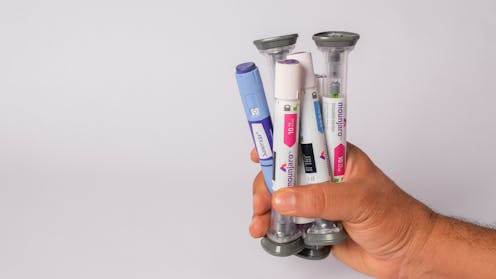
Demand for weight loss jabs has surged in the UK. Mohammed_Al_Ali/ Shutterstock

Over a fifth of people in the UK have tried to access a weight loss drug in the last year, according to a recent poll.

Weight loss jabs such as Mounjaro (tirzepatide) and Wegovy (semaglutide) are very effective in managing obesity. Clinical trials have shown that some people lose up to 26% of their body weight while using these drugs.

With this impact, it’s no wonder a growing number of people are seeking out these products – often buying them in private clinics or online. But with plans to expand access to these drugs through NHS prescriptions, there are concerns that supply may not meet demand – especially for those people in most need.

In the UK, NHS prescriptions for weight loss jabs are only approved for people who meet strict eligibility requirements. For example, to qualify early for Mounjaro from your GP, you must have health problems due to your weight and a body mass index greater than 40 (adjusted for ethnicity). People assessed by the NHS and given prescriptions will also have access to additional support – such as advice about diet and physical activity.

Weight loss drugs can be prescribed by specialist clinics and, increasingly, local GPs. But a lack of time and resources means even those who are eligible are left waiting. Consequently, people who can afford to do so are approaching private providers for access to these medicines – despite the potential risks to their health.

There’s also evidence that people who aren’t clinically eligible for weight loss jabs prescribed by the NHS are purchasing them from online pharmacies.

Supply issues

Demand for weight loss jabs is about to grow, as the provision of Mounjaro via GPs is imminent, pending the creation of an infrastructure to support safe local prescribing.

The number of monthly GP prescriptions in England for Mounjaro has already risen from under 3,000 in March 2024 (on introduction) to over 200,000 in May 2025. Mounjaro (also marketed in the US as Zepbound) is widely considered to be the best weight loss jab currently available and a great commercial success.

GP prescriptions of all forms of semaglutide (the active ingredient in Wegovy) are more stable, at around 130,000 items per month (including generics and products to treat diabetes).

While a number of GLP-1 drugs faced shortages last year (including Wegovy and Mounjaro), these shortages have now been resolved. Shortages were spurred by a spike in global demand for these drugs alongside stockpiling by private clinics to feed requests.

Still, there were reports early this year that certain strengths of Mounjaro were difficult to access. The reasons for this are not clear, but may be due to the novelty of access to this new medication or a lack of access to alternatives.

Around 220,000 people in England are due to be offered Mounjaro via the NHS over the next three years. However, it’s estimated that 3.4 million people in England could actually be eligible for Mounjaro.

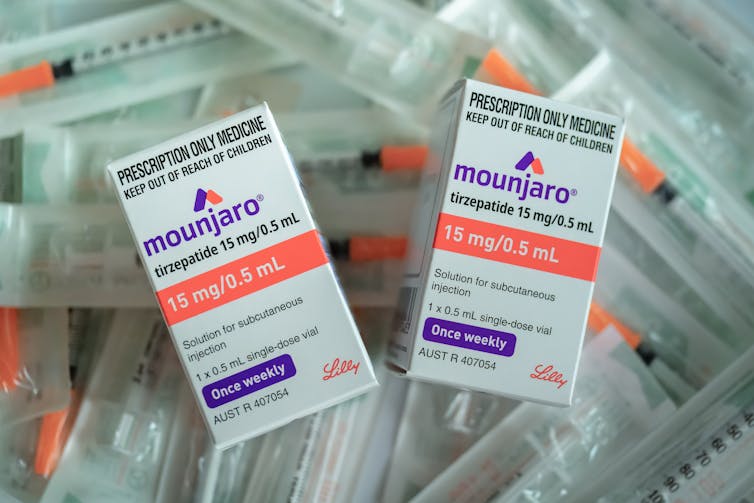
Two prescription boxes of Mounjaro 15mg.
Mounjaro will initially be offered to 220,000 people on the NHS over the next three years.
Cynthia A Jackson/ Shutterstock

Wider NHS access to this drug is being phased to manage staff workload and ensure good support for patients. Phased rollout may also help to ensure there is enough supply for those who need to be prescribed one of these medications.

Future access

It’s likely that demand for these weight loss drugs will only continue to grow in the UK, so it’s important that supply is readily available.

Regulatory agencies have taken some steps to tighten controls of online prescribing of weight loss drugs and prevent misuse. Registered online pharmacies must seek independent verification of key clinical information (such as from a GP or through a person’s medical records) instead of relying on questionnaires or phone calls.

However, weight loss products remain easy to access for people with money and savvy search skills, but who may be clinically ineligible. The scale of demand from this group is difficult to quantify, but it’s clear more needs to be done to keep patients safe and manage demand.

Several new weight loss drugs are undergoing trials in the UK. These drugs will work similarly to those already available but may be administered differently (such as an oral tablet). The trials for these and subsequent approvals will not only increase market competition, but also improve patient access and choice.

Key patents for the manufacture of semaglutide are also due to expire in 2026 and 2031. Once a pharmaceutical product is outside of its patented time frame, other companies can be approved to manufacture it as a generic product.

A generic product is approved on the basis that it works in the same manner and has equal benefits to the original product. The generics market allows new entrants and new versions of these very popular products onto the market.

Generic products are usually less expensive and so are bought (where still clinically safe and effective) by the NHS. This change could provide greater access to weight loss medications and save the NHS and patients money in the long term.

Generic semaglutide products will probably be available in the UK from 2032 but will be initially authorised to treat diabetes rather than weight loss. Still, this should have a positive impact on the availability of prescription drugs used for both diabetes and weight management.

Generic liraglutide is already available on the NHS for the treatment of diabetes. The liraglutide brand Saxenda is also marketed for weight management. However, liraglutide is less effective than Wegovy or Mounjaro and requires daily injections.

The number of monthly NHS prescriptions for liraglutide has fallen from over 40,000 in July 2020 to 1,000 in May 2025. This fall was most likely influenced by the discontinuation of the Victoza brand for type 2 diabetes in late 2024. Shortages of all types of GLP-1 drugs, which lasted until the end of 2024, may also have impacted demand for liraglutide.

For now, NHS staff can report on known demand for these products to inform manufacturing quantities and procurement. What isn’t known is the future demand for online or private purchases of weight management drugs. It’s this “unknown” demand that may mean supply security is challenged and unsustainable.


Get your news from actual experts, straight to your inbox. Sign up to our daily newsletter to receive all The Conversation UK’s latest coverage of news and research, from politics and business to the arts and sciences.

The Conversation

The authors do not work for, consult, own shares in or receive funding from any company or organisation that would benefit from this article, and have disclosed no relevant affiliations beyond their academic appointment.

ref. Weight loss drug demand continues to grow in the UK – here’s what’s being done to keep supplies readily available – https://theconversation.com/weight-loss-drug-demand-continues-to-grow-in-the-uk-heres-whats-being-done-to-keep-supplies-readily-available-262065

Medieval skeletons reveal the lasting damage of childhood malnutrition – new study

Source: The Conversation – UK – By Julia Beaumont, Researcher in Biological Anthropology, University of Bradford

Beneath churchyards in London and Lincolnshire lie the chemical echoes of famine, infection and survival preserved in the teeth of those who lived through some of the most catastrophic periods in English history.

In a new study, my colleagues and I examined over 270 medieval skeletons to investigate how early-life malnutrition affected long-term health and life expectancy.

We focused on people who lived through the devastating period surrounding the Black Death (1348-1350), which included years of famine during the little ice age and the great bovine pestilence (an epidemic that killed two-thirds of cattle in England and Wales). We found that the biological scars of childhood deprivation during this time left lasting marks on the body.

These findings suggest that early nutritional stress, whether in the 14th century or today, can have consequences that endure well beyond childhood.

Children’s teeth act like tiny time capsules. The hard layer inside each tooth, called dentine, sits beneath the enamel and forms while we’re growing up. Once formed, it stays unchanged for life, creating a permanent record of what we ate and experienced.

As our teeth develop, they absorb different chemical versions (isotopes) of carbon and nitrogen from our food, and these get locked into the tooth structure. This means scientists can read the story of someone’s childhood diet by analysing their teeth.

A method of measuring the chemical changes in sequential slices of the teeth is a recent advance used to identify dietary changes in past populations with greater accuracy.

When children are starving, their bodies break down their fat stores and muscle to continue growing. This gives a different signature in the newly formed dentine than the isotopes from food. These signatures make centuries-old famines visible today, showing exactly how childhood trauma affected health in medieval times.

We identified a distinctive pattern that had been seen before in victims of the great Irish famine. Normally, when people eat a typical diet, the levels of carbon and nitrogen in their teeth move in the same direction. For example, both might rise or fall together if someone eats more plants or animals. This is called “covariance” because the two markers vary together.

But during starvation, nitrogen levels in the teeth rise while carbon levels stay the same or drop. This opposite movement – called “opposing covariance” – is like a red flag in the teeth that shows when a child was starving. These patterns helped us pinpoint the ages at which people experienced malnutrition.

Lifelong legacy

Children who survived this period reached adulthood during the plague years, and the effect on their growth was recorded in the chemical signals in their teeth. People with famine markers in their dentine had different mortality rates than those who lacked these markers.

Children who are nutritionally deprived have poorer outcomes in later life: studies of modern children have suggested that children of low birth weight or who suffer stresses during the first 1,000 days of life have long-term effects on their health.

For example, babies born small, a possible sign of nutritional stress, seem to be more prone to illnesses such as heart disease and diabetes in adulthood than the population at large. These characteristics can also be passed to future offspring through changes in how genes are switched on or off, known as “epigenetic effects” – which can endure for three generations.

Epigenetics explained.

In medieval England, early nutritional deprivation may have been beneficial during catastrophic times by producing adults of short stature and the capacity to store fat, but these people were much more likely to die after the age of 30 than their peers with healthy childhood dentine patterns.

The patterns for childhood starvation increased in the decades leading up to the Black Death and declined after 1350. This suggests the pandemic may have indirectly improved living conditions by reducing population pressure and increasing access to food.

The medieval teeth tell us something urgent about today. Right now, millions of children worldwide are experiencing the same nutritional crises that scarred those long-dead English villagers – whether from wars in Gaza and Ukraine or poverty in countless countries.

Their bodies are writing the same chemical stories of survival into their growing bones and teeth, creating biological problems that will emerge decades later as heart disease, diabetes and early death.

Our latest findings aren’t just historical curiosities; they’re an urgent warning that the children we fail to nourish today will carry those failures in their bodies for life and pass them on to their own children. The message from the medieval graves couldn’t be clearer: feed the children now or pay the price for generations.


Get your news from actual experts, straight to your inbox. Sign up to our daily newsletter to receive all The Conversation UK’s latest coverage of news and research, from politics and business to the arts and sciences.

The Conversation

Julia Beaumont receives funding from Arts and Humanities research council, British Academy/Leverhulme.

ref. Medieval skeletons reveal the lasting damage of childhood malnutrition – new study – https://theconversation.com/medieval-skeletons-reveal-the-lasting-damage-of-childhood-malnutrition-new-study-262081

Why Donald Trump has stopped some conflicts but is failing with Ukraine and Gaza

Source: The Conversation – UK – By Stefan Wolff, Professor of International Security, University of Birmingham

In yet another twist in his unpredictable decision making, US president Donald Trump has dramatically shortened his original 50-day ultimatum to Vladimir Putin to call a ceasefire in Ukraine to a mere ten days. It’s an unmistakable sign of Trump’s frustration with the Russian leader who he now appears to view as the main obstacle to ending the war.

Progress has been similarly limited on another of Trump’s flagship foreign policy projects: ending the war in Gaza. As a humanitarian catastrophe engulfs the territory, Trump and some of his Maga base are finally challenging Israel’s denials that, after almost two years of war, many Gazans now face a real risk of starvation.

In neither case have his efforts to mediate and bring an end to the violence borne any fruit. But not all of Trump’s efforts to stop violence in conflicts elsewhere in the world have been similarly futile. The administration brokered a ceasefire between Rwanda and the Democratic Republic of Congo (DRC), which the two countries’ foreign ministers signed in Washington on June 27.

The US president has also claimed to be behind the ceasefire between India and Pakistan in May after the two sides had engaged in several days of fierce combat following a terror attack in Indian-administered Kashmir by a Pakistan-backed rebel group. And, drawing a clear parallel between this conflict and the border clashes between Cambodia and Thailand in July, Trump announced he had pushed both countries’ leaders to negotiate a ceasefire.

All of these ceasefires, so far, have held. By contrast, the ceasefire in the war between Israel and Hamas in Gaza, to which Trump contributed in January, even before he was inaugurated for his second term, broke down in March and fighting has escalated ever since. A short-lived ceasefire in Ukraine in April was barely worth its name given the countless violations.

Mixed record

Three factors can explain Trump’s mixed record of peacemaking to date. First, the US president is more likely to succeed in stopping the fighting where he has leverage and is willing to use it to force foreign leaders to bend to his will. For example, Trump was very clear that there would be no trade negotiations with Thailand or Cambodia “until such time as the fighting STOPS”.

The crucial difference, so far, with the situation in the war against Ukraine is that Trump has, and has used, similar leverage only with the Ukrainian president, Volodymyr Zelensky. This led to a US-Ukraine agreement on a 30-day ceasefire proposal just two weeks after the now-notorious row between Trump and Zelensky in the Oval Office.

The mere threat of sanctions against Russia, by contrast, has done little to persuade Putin to accept whatever deal might Trump offer him. Trump’s threats – which he has never followed through on – did not work in January or May. The Kremlin’s initial reactions to the latest ultimatum from the White House do not indicate a change in Putin’s attitude.

A second factor that may explain why Trump has had peacemaking success in some cases but not others is the level of complexity of US interests involved. When it comes to US relations with Russia and Israel, there is a lot more at stake for Trump.

The US president still appears keen to strike a grand bargain with Russia and China under which Washington, Beijing and Moscow would agree to recognise, and not interfere in, their respective spheres of influence. This could explains his hesitation so far to follow through on his threats to Putin.

Similarly, US interests in the Middle East – whether it’s over Iran’s nuclear programme or relations with America’s Gulf allies – have put strains on the alliance with Israel. Trump also needs to weigh carefully the impact of any move against, or in support of, Israel on his domestic support base.

In the deal Trump brokered between Rwanda and the DRC, the issues at stake were much simpler: access for US investors to the mineral riches of the eastern DRC. Just days into his second term, Trump acknowledged that the conflict was a “very serious problem”. Congo’s president, Felix Tshisekedi, responded by offering the US access to minerals in exchange for pushing Rwanda to a deal to end the invasion and stop supporting proxy forces in the DRC.

This leads to the third factor that has enabled Trump’s peace-making success so far: simpler solutions are easier to achieve. Thailand and Cambodia and India and Pakistan can go back to the situation before their recent fighting. That does not resolve any of the underlying issues in their conflicts, but returns their relations to some form of non-violent stability.

It is ultimately also in the interests of the conflict parties. They have had a chance to make their violent statements and reinforce what they will and won’t tolerate from the other side. The required investment by an external mediator to end battles that have achieved what the warring sides want anyway – to avoid further escalation – is consequently quite limited.

Complex conflicts

Getting to any kind of stability in Ukraine or the Middle East by contrast requires prolonged engagement and attention to detail. These conflicts are at a stage in which a return to how things were before is not in the interests of the parties or their external backers. Nudging warring parties along on the path to agreement under such conditions requires a well-designed process, which is absent in Ukraine and failing in Gaza.

Thanks to funding and personnel cuts, the US secretary of state, Marco Rubio, is now required to perform multiple roles. Trump relies on personal envoys with at best limited foreign policy expertise, while insisting he makes all the decisions. This ultimately suggests that the White House simply may not have the bandwidth for the level of engagement that would be necessary to get to a deal in Ukraine and the Middle East.

This is a self-inflicted opportunity lost, not only for the United States but also for the long-suffering people of Ukraine and the Middle East.

The Conversation

Stefan Wolff is a past recipient of grant funding from the Natural Environment Research Council of the UK, the United States Institute of Peace, the Economic and Social Research Council of the UK, the British Academy, the NATO Science for Peace Programme, the EU Framework Programmes 6 and 7 and Horizon 2020, as well as the EU’s Jean Monnet Programme. He is a Trustee and Honorary Treasurer of the Political Studies Association of the UK and a Senior Research Fellow at the Foreign Policy Centre in London.

ref. Why Donald Trump has stopped some conflicts but is failing with Ukraine and Gaza – https://theconversation.com/why-donald-trump-has-stopped-some-conflicts-but-is-failing-with-ukraine-and-gaza-262241

New peace plan increases pressure on Israel and US as momentum grows for Palestinian statehood

Source: The Conversation – UK – By Scott Lucas, Professor of International Politics, Clinton Institute, University College Dublin

A new vision for Middle East peace emerged this week which proposes the withdrawal of Israel from Gaza and the West Bank, the disarming and disbanding of Hamas and the creation of a unified Palestinian state. The plan emerged from a “high-level conference” in New York on July 29, which assembled representatives of 17 states, the European Union and the Arab League.

The resulting proposal is “a comprehensive and actionable framework for the implementation of the two-state solution and the achievement of peace and security for all”.

Signatories include Turkey and the Middle Eastern states of Saudi Arabia, Qatar, Egypt and Jordan. Europe was represented by France, Ireland, Italy, Norway, Spain and the UK. Indonesia was there for Asia, Senegal for Africa, and Brazil, Canada and Mexico for the Americas. Neither the US nor Israel were present.

Significantly, it is the first time the Arab states have called for Hamas to disarm and disband. But, while condemning Hamas’s attack on Israel of October 7 2023 and recalling that the taking of hostages is a violation of international law, the document is unsparing in its connection between a state of Palestine and an end to Israel’s assault on Gaza’s civilians.

It says: “Absent decisive measures toward the two-state solution and robust international guarantees, the conflict will deepen and regional peace will remain elusive.”

A plan for the reconstruction of Gaza will be developed by the Arab states and the Organisation of Islamic Cooperation – a Jeddah-based group which aims to be the collective voice of the Muslim world – supported by an international fund. The details will be hammered out at a Gaza Reconstruction and Recovery Conference, to be held in Cairo.

It is a bold initiative. In theory, it could end the Israeli mass killing in Gaza, remove Hamas from power and begin the implementation of a process for a state of Palestine. The question is whether it has any chance of success.

First, there appears to be growing momentum to press ahead with recognition of the state of Palestine as part of a comprehensive peace plan leading to a two-state solution. France, the UK and, most recently, Canada have announced they would take that step at the UN general assembly in September. The UK stated that it would do so unless Israel agreed to a ceasefire and the commencement of a substantive peace process.


Read more:
UK and France pledges won’t stop Netanyahu bombing Gaza – but Donald Trump or Israel’s military could


These announcements follow those made in May 2024 by Spain, Ireland and Norway, three of the other European signatories. By the end of September at least 150 of the UN’s 193 members will recognise Palestinian statehood. Recognition is largely symbolic without a ceasefire and Israeli withdrawal from both Gaza and the West Bank. But it is essential symbolism.

For years, many European countries, Canada, Australia and the US have said that recognition could not be declared if there was the prospect of Israel-Palestine negotiations. Now the sequence is reversed: recognition is necessary as pressure for a ceasefire and the necessary talks to ensure the security of both Israelis and Palestinians.

Israel accelerated that reversal at the start of March, when it rejected the scheduled move to phase two of the six-week ceasefire negotiated with the help of the US, and imposed a blockade on aid coming into the Strip.

The Netanyahu government continues to hold out against the ceasefire. But its loud blame of Hamas is becoming harder to accept. The images of the starvation in Gaza and warnings by doctors, humanitarian organisations and the UN of an effective famine with the deaths of thousands can no longer be denied.

Saudi Arabia and Qatar, behind the scenes and through their embassies, have been encouraging European countries to make the jump to recognition. Their efforts at the UN conference in New York this week are another front of that campaign.

Israel and the Trump administration

But in the short term, there is little prospect of the Netanyahu government giving way with its mass killing, let alone entering talks for two states. Notably neither Israel nor the US took part in the conference.

Trump has criticised the scenes of starvation in Gaza. But his administration has joined Netanyahu in vitriolic denunciation of France and the UK over their intentions to recognise Palestine. And the US president has warned the Canadian prime minister, Mark Carney, that recognition of Palestinian statehood would threaten Canada’s trade deal with the US.

In response to Trump’s concern over the images of starving children and his exhortation “We’ve got to get the kids fed,” Israel has airdropped a few pallets of aid – less than a truck’s worth. Yet this appears more of a public relations exercise directed at Washington than a genuine attempt to ease the terrible condition on the Strip.

A small number of lorries with supplies from UN and humanitarian organisations have also crossed the border, but only after lengthy delays and with half still held up. There is no security for transport and delivery of the aid inside Gaza.

A sacrifice for a state?

So the conference declaration is not relief for Gaza. Instead, it is yet another marker of Israel’s increasing isolation.

After France’s announcement, the Netanyahu government thundered: “Such a move rewards terror and risks creating another Iranian proxy … A Palestinian state in these conditions would be a launch pad to annihilate Israel.”

But while recognising Hamas’s mass killing of October 7 2023, most governments and their populations do not perceive Israel as attacking Hamas and its fighters. They see the Netanyahu government and Israeli military slaying and starving civilians.

Even in the US, where the Trump administration is trying to crush sympathy for Palestine and Gazans in universities, non-governmental organisations and the public sphere, opinion is shifting.

In a Gallup poll taken in the US and released on July 29, only 32% of respondents supported Israel’s actions in Gaza – an all-time low – and 60% opposed them. Netanyahu was viewed unfavourably by 52% and favourably by only 29%.

Israel has lost its moment of “normalisation” with Arab states. Its economic links are strained and its oft-repeated claim to being the “Middle East’s only democracy” is bloodstained beyond recognition.

This will be of no comfort to the people of Gaza facing death. But in the longer term, there is the prospect that this sacrifice will be the catalyst to recognise Palestine that disappeared in 1948.


Get your news from actual experts, straight to your inbox. Sign up to our daily newsletter to receive all The Conversation UK’s latest coverage of news and research, from politics and business to the arts and sciences.

The Conversation

Scott Lucas does not work for, consult, own shares in or receive funding from any company or organisation that would benefit from this article, and has disclosed no relevant affiliations beyond their academic appointment.

ref. New peace plan increases pressure on Israel and US as momentum grows for Palestinian statehood – https://theconversation.com/new-peace-plan-increases-pressure-on-israel-and-us-as-momentum-grows-for-palestinian-statehood-262259