Gene therapy can be less effective in women – and my research in mice brings us one step closer to understanding why

Source: The Conversation – UK – By Alison Clare, Senior Research Associate, Translational Health Sciences and Ophthalmology, University of Bristol
Some gene therapies may be less effective in women. crystal light/ Shutterstock

Gene therapies hold immense promise for treating sight loss. These therapies use a modified, harmless virus to deliver therapeutic genes directly to diseased cells, helping them to function normally again.

But numerous clinical trials have found that gene therapy causes serious side-effects in some patients because their immune system recognises the virus and attacks it.

So to improve safety and efficacy of gene therapy in the eye, my colleagues and I wanted to understand more about this immune response so we can someday prevent it from happening.

We discovered that old female mice were more vulnerable to experiencing a damaging side-effect from gene therapy, compared to both male mice and young female mice. This reaction was directly related to differences in the way the immune systems of old female mice functioned.

To conduct our study, we gave both male and female mice the gene therapy, which was delivered into the eye. The therapy was tested on young, middle-aged and old mice.

We found that in young mice, females had increased immune activation – even from a lower dose of gene therapy. A similar finding was also recently observed in human blood samples – with women’s immune cells exhibiting greater amounts of inflammation, a sign these immune cells were mounting an attack against the therapy.

Our research went on to show that age was also associated with a stronger inflammatory response to the gene therapy. This was true for both old male and female mice. The inflammatory response lasted longer in the older mice, too.

When we looked more closely at a specific type of immune cell that’s found in the brain and eye, we saw that in older female mice these cells showed signs of both an earlier stress response and stronger inflammatory reaction compared to younger mice and male mice. This reaction was also linked to signs of tissue degeneration.

Together, these findings suggest that women, particularly older women, could be at greater risk of harmful reactions to gene therapy – especially at the doses needed for these therapies to work.

Although our study was conducted in mice, it’s not the first research to show that immune response differences can affect the way men and women react to certain treatments.

Another research group also showed that female mice mounted a stronger response against a gene therapy – recognising it as foreign and removing it. This reduced the amount of therapy delivered successfully to females compared to males.

Treatments for conditions such as arthritis are another example of the way women’s immune response can affect how they respond to treatment. These immunotherapies work better in men compared to women. Some scientists believe this is because women’s immune systems are more likely to recognise the drug as foreign and remove it.

Sex differences and immune function

There’s one key reason men’s and women’s immune systems may respond differently to the same treatment. Women’s immune systems are generally more reactive than men’s to anything unfamiliar.

A digital drawing depicting a strand of DNA, alongside the X chromosome.
The X chromosome plays a role in immune response.
Anusorn Nakdee/ Shutterstock

The types of immune cells that respond the strongest and fastest to a foreign substance are different for men and women. This is because sex hormones – primarily oestrogen for females and testosterone for males – directly affect the way these cells behave.

The X chromosome also plays a role in immune response, as it contains a greater number of immune-related genes compared to the Y chromosome. Females have two X chromosomes, while males have one X and one Y chromosome. These differences will affect how well men and women respond to treatments.


Read more:
How biological differences between men and women alter immune responses – and affect women’s health


Age further affects how the immune system acts – and how the body responds to different treatments.

As we get older, our immune cells lose their ability to recognise and remove foreign pathogens – though these cells still continue to stimulate inflammation. This leads to a persistent inflammatory state, which is thought to be involved in many age-related conditions – including cardiovascular disease and neurodegeneration.

Differences in immune cell function also become more evident for men and women after the age of 65.

In older men, their inflammatory immune cells are more active after the age of 65, while their adaptive immune cells (which coordinate the recognition and removal of foreign pathogens) are less active.

But as women age, their adaptive immune cell activity can stay the same. Having a stronger adaptive immune response increases the risk of autoimmune conditions – a condition that has been linked to certain neurodegenerative diseases.

These differences help explain why vaccines are less effective for older men because they have fewer functioning adaptive immune cells. They may also help to explain why the older female mice in our study had adverse reactions to the gene therapy, as their immune cells are more primed to attack.

Women have historically been underrepresented in biomedical research. Modelling everything on males has created a data gap in clinical translation, causing harm. For instance, women have nearly twice as many adverse reactions to a drug compared to men.

But studies like ours are helping to provide important insight into why certain medications are less effective in women – and how the immune system is implicated. Crucially, these findings can also help us identify new targets to explore for future treatments.

The Conversation

Alison Clare has received funding from the Wellcome Trust and the Medical Research Council. Her position is currently funded by National Institute for Health and Care Research (NIHR) Biomedical Research Center based at Moorfields Eye Hospital NHS Foundation Trust and UCL Institute of Ophthalmology.

– ref. Gene therapy can be less effective in women – and my research in mice brings us one step closer to understanding why – https://theconversation.com/gene-therapy-can-be-less-effective-in-women-and-my-research-in-mice-brings-us-one-step-closer-to-understanding-why-258135

Will Trump’s deal between Armenia and Azerbaijan lead to lasting peace?

Source: The Conversation – UK – By Brian Brivati, Visiting Professor of Contemporary History and Human Rights, Kingston University

Armenia and Azerbaijan signed a peace framework in Washington on August 8 after nearly four decades of conflict. The two nations, long divided over territorial disputes, committed to end hostilities, normalise relations and respect each other’s territorial integrity.

Brokered by the US president, Donald Trump, it had all the glitzy appearance of a comprehensive peace agreement. But in reality, it is merely a move in that direction. There are still many ways it could break down.

The decision of Armenia’s prime minister, Nikol Pashinyan, to pursue peace is politically risky. Armenian military defeats to Azerbaijan in 2020 and 2023, and the loss of the disputed Nagorno-Karabakh region, left deep scars.

Many Armenians feared concessions would legitimise Azerbaijan’s military gains or erode national sovereignty. Diaspora voices warned of “rewarding aggression” and ignoring the rights of displaced Karabakh Armenians. Yet Pashinyan pressed ahead, arguing a diplomatic settlement was the only route to security and prosperity.

His pivot away from relying on Russia – a former security guarantor whose credibility in Armenia has crumbled after failing to stop Azerbaijan from seizing Nagorno-Karabakh – signals a profound geopolitical shift. The US is now the guarantor of security, ending the Minsk process that has been working to resolve the conflict since 1994.

Sovereignty secured

One of the thorniest issues was Azerbaijan’s demand for a land route across southern Armenia to connect with its Nakhchivan exclave. Armenians feared this could mean ceding control of national territory. The US-brokered agreement resolves the dispute.

Armenia retains full sovereignty and jurisdiction over any new route. All transport links will operate under Armenian law, with Armenian customs and security in place. This is a marked improvement on the vague “unimpeded” transit clause in the 2020 ceasefire, which left room for dispute.

By enshrining sovereignty in the text, Armenia can reassure its public that the corridor is not an extraterritorial carve-out, but a transport link it is hosting. However, the corridor runs close to the Iranian border. And the Iranians, also pushed out of their influential role in Armenia by this deal, have already rejected it.

Following its recent war with Israel, Iran is perhaps too weak to stop the project from starting. But it could represent a threat to the security of companies involved in the route’s construction.

A map of the South Caucasus.
The peace deal creates a US-overseen transit area that will allow ‘unimpeded connectivity’ between Azerbaijan and its Nakhchivan exclave.
Peter Hermes Furian / Shutterstock

The transit corridor, which connects Azerbaijan to Turkey as well as to Nakhchivan, will be named the Trump Route for International Peace and Prosperity. The US has secured a 99-year development lease for the route. Planned infrastructure includes highways, railways, pipelines and fibre-optic cables.

Armenia keeps legal control, but gains investment and transit revenue from these endeavours without bearing construction costs. Azerbaijan will gain faster, cheaper export routes for oil, gas and manufactured goods to Turkish and European markets. Armenia also stands to benefit from access to Turkey if the border reopens – the Turks closed it in 1993 in support of Azerbaijan.

Armenia and Azerbaijan have signed separate bilateral agreements with the US on energy, technology and infrastructure, signalling a parallel push to modernise their economies as they normalise relations. Georgia, traditionally the most pro-western and strategically vital state in the South Caucuses, has been sidelined by this arrangement. This is a consequence of its more pro-Russia stance.


Read more:
Georgia: how democracy is being eroded fast as government shifts towards Russia


The Washington summit has capped years of intermittent mediation attempts. What set this round apart was sustained, high-level US engagement. The Trump administration sent envoys repeatedly, kept negotiations focused on solvable issues, and re-framed the transit corridor as a shared commercial venture.

US involvement is also a built-in guarantee. By taking a long-term stake in the corridor’s development, Washington has an interest in ensuring the agreement is implemented and respected. For Armenia, US backing offers reassurance against renewed coercion from Azerbaijan backed by Turkey. And it opens the door for Azerbaijan to forge deeper ties with the west during a period of bad relations with Russia.

Hurdles ahead

Despite the celebratory signing, the peace deal faces significant hurdles. The agreement sidesteps the plight of Armenian prisoners of war and detainees still held in Azerbaijan. It also ignores the right of return for over 110,000 Armenian civilians who were forcefully expelled from Nagorno-Karabakh. Armenian opposition and diaspora groups have criticised the accord for “sidelining justice”.

Political challenges inside Armenia further cloud the deal’s future. Azerbaijan’s president, Ilham Aliyev, has demanded that Armenia amend its constitution to renounce any territorial claims – specifically removing the 1990 declaration of independence that implied Nagorno-Karabakh is part of Armenia. Baku insists this change is a prerequisite for a “final” peace treaty.

Such external pressure is deeply sensitive. Pashinyan has agreed in principle that Armenia needs a new constitution by 2027 to reflect post-war realities. But if the alterations are perceived as capitulation to Azerbaijani diktat, the domestic backlash could be intense.

The Armenian opposition – already angered by the loss of Karabakh – will likely seize on any constitutional concessions as evidence of national humiliation. With parliamentary elections on the horizon in 2026, Pashinyan’s rivals are positioning to campaign against the peace deal.

They argue that his western-leaning “peace agenda” endangers Armenia’s sovereignty and security. Some have hinted they would reject or renegotiate the agreement if they come to power. Pashinyan’s party was polling poorly earlier in 2025, and recent local elections saw gains for pro-Russian figures, suggesting a volatile electorate.

Armenia’s security services have warned of possible foreign interference and destabilisation efforts as the elections approach. Moscow, in particular, could covertly back Pashinyan’s hardline opponents or spread disinformation to sway the vote, hoping to install a more Russia-aligned leadership that might undermine the deal.

The Washington framework has opened a path to peace. But the coming months and years will determine whether pragmatic interests can triumph over entrenched mistrust.

To succeed, Armenia and Azerbaijan must navigate a minefield of unresolved disputes and political minefields at home, all under the gaze of regional powers uneasy about their changing environment. Washington and Brussels will need to remain engaged, to guarantee compliance and help deliver early economic gains that reinforce peace.

If either side reneges – be it through renewed demands, slow-rolling implementation or back-channel interference – hard-won progress could quickly unravel. This historic breakthrough thus marks not an endpoint but the start of a delicate balancing act.

The Conversation

Brian Brivati does not work for, consult, own shares in or receive funding from any company or organisation that would benefit from this article, and has disclosed no relevant affiliations beyond their academic appointment.

– ref. Will Trump’s deal between Armenia and Azerbaijan lead to lasting peace? – https://theconversation.com/will-trumps-deal-between-armenia-and-azerbaijan-lead-to-lasting-peace-262889

Synthetic drugs are having devastating effects around the world, from Sierra Leone to the UK

Source: The Conversation – UK – By Joseph Janes, Senior Lecturer in Criminology, Swansea University

In the blistering heat of Freetown, Sierra Leone, young men gather on street corners, their limbs swollen, eyes glazed. They are the victims of kush, a cheap and deadly synthetic drug sweeping the country.

But kush is not an isolated tragedy. From the townships of apartheid South Africa to the 21st-century streets of the UK, synthetic drugs have a long history of flourishing in places where society has abandoned its most vulnerable.

Kush first appeared in Sierra Leone around 2016, but its spread in recent years has been nothing short of catastrophic. Between 2020 and 2023, psychiatric admissions linked to the drug skyrocketed to a reported 1,865 cases at the country’s only psychiatric hospital.

The drug claims mostly young men between the ages of 18 and 25, whose bodies are ravaged by kush’s toxic effects. Doctors in Freetown estimate that hundreds of users have died from organ failure caused by the drug in recent months.

Sierra Leone’s president, Julius Maada Bio, branded kush a “death trap” and declared a national emergency. The drug, he says, represents an “existential crisis” for the nation.

Kush is both cheap and easily accessible, sold openly on the streets for as little as 20 pence per joint. But for those hooked on it, the cost can climb to £8 a day. This is a staggering sum in a country where the average income barely exceeds £4,000 a year.

The drug’s ingredients are equally chilling. A mix of cannabis, synthetic opioids like fentanyl, formalin (used in embalming) and, according to some reports, ground human bone, it’s a concoction that speaks to the bleakness of life for those who turn to it.

Channel 4 News report on kush in Sierra Leone.

Kush’s grip on Sierra Leone is not a random phenomenon but a symptom of a much deeper problem. The drug has become a chemical escape for people who see no viable future for themselves.

For those living in poverty and experiencing hunger, kush offers something that life in Sierra Leone often cannot: temporary relief from trauma and despair. It’s not a recreational indulgence but survival in a country where many face daily battles just to get by.

The drug’s rise follows a pattern seen in other parts of the world, where synthetic substances fill the void left by broken systems.

Apartheid South Africa

The situation in Sierra Leone echoes a chilling chapter from South Africa’s apartheid era. In the 1980s, methaqualone, a synthetic sedative-hypnotic drug – sold as quaalude or mandrax – became widely used in the townships, particularly among Black communities.

Often smoked alongside cannabis in a mix known as the “white pipe”, it became a cheap, sedative drug much like kush in Freetown today.

Vice documentary on methaqualone.

The apartheid government didn’t just turn a blind eye to its widespread use but deliberately encouraged it. Under the secretive Project Coast, the government’s chemical and biological warfare programme, scientists developed large quantities of methaqualone, ostensibly for crowd control and incapacitation.

Methaqualone was not officially declared a weapon. But evidence compiled by the UN suggests it was developed and stockpiled in prototype delivery systems that were intended to incapacitate without killing, then deployed quietly among the dissenting population.


Read more:
Addicted: how the world got hooked on illicit drugs – and why we need to view this as a global threat like climate change


The parallels with kush are undeniable. Both are chemically produced, highly addictive depressants offering cheap and easily accessible sedation to marginalised populations. These types of drug do not just affect individuals but serve to suppress entire communities under the weight of structural violence.

In South Africa, methaqualone was weaponised by the state as a means of control, while in Sierra Leone, kush has emerged in areas abandoned by the government. In both cases, the effect is the same: a drug-fuelled stasis that deepens despair and maintains a status quo of social neglect.

It’s a pattern where a synthetic depressant materialises in places where no other social or economic medicine exists, sedating not only bodies but resistance and possibility.

Spice in the UK

This pattern of synthetic drugs as a response to social decay is not confined to Africa. In the UK, synthetic drugs such as spice have become more common over the past decade, especially among homeless people and prisoners. Described as a “zombie drug” for its paralysing effects, spice is often used not for pleasure but to escape hunger, cold and trauma.

A 2023 study among the UK’s homeless population found that nearly 70% of participants, aged 18-64, used synthetic drugs such as spice to escape the harsh realities of homelessness. Many reported adverse effects that led to hospitalisation.

In many British towns and cities, it has become common to see users slumped on pavements or convulsing in parks, echoing the scenes from Sierra Leone’s kush hotspots.

This serves as a stark reminder that synthetic drugs are not an isolated issue. They are a global crisis playing out in different forms but with the same underlying causes.

Synthetic drugs like kush, methaqualone and spice are symptoms of deeper systemic failures. They thrive where housing is unstable, unemployment is rampant and healthcare is out of reach. Addressing the crisis requires more than just cracking down on drug use. It demands a radical shift in how we treat the most vulnerable in our society.


Read more:
‘There has never been a more dangerous time to take drugs’: the rising global threat of nitazenes and synthetic opioids


In Sierra Leone, this means investing in youth employment, improving nutrition and strengthening mental health services. In the UK, it calls for restoring funding to housing and substance use services, and recognising that stable shelter and social support are fundamental to recovery, not rewards for abstinence.

If we are serious about tackling this problem, we need to move beyond punishment and focus on addressing the root causes of addiction. Only by investing in social care and harm reduction can we hope to break the cycle of sedation and despair.

The Conversation

Joseph Janes does not work for, consult, own shares in or receive funding from any company or organisation that would benefit from this article, and has disclosed no relevant affiliations beyond their academic appointment.

– ref. Synthetic drugs are having devastating effects around the world, from Sierra Leone to the UK – https://theconversation.com/synthetic-drugs-are-having-devastating-effects-around-the-world-from-sierra-leone-to-the-uk-262746

From clear skin to detoxing, chlorophyll and collagen supplements promise a lot, but what does the science say?

Source: The Conversation – UK – By Dan Baumgardt, Senior Lecturer, School of Physiology, Pharmacology and Neuroscience, University of Bristol

Tatevosian Yana/Shutterstock

Walk into any health store, scroll through TikTok, or browse the shelves of your favourite beauty retailer, and you’ll be met with a familiar promise: that a pill, powder or potion could be the secret to glowing skin, boosted energy, or even inner “detoxification.” Among the most hyped are chlorophyll – the green pigment in plants now found in trendy waters and tinctures – and collagen, the protein hailed as the holy grail for youthful skin and strong joints.

But how much of the buzz is backed by science? And how much is just clever marketing dressed up in green juice and glossy packaging?

Let’s take a closer look to explore what they actually do, what the evidence says, and whether your money (and hopes) might be better spent elsewhere.

Chlorophyll

Dark leafy greens like kale and cavolo nero are well known for boosting levels of essential nutrients such as iron, folate and beta-carotene. They’re also rich in chlorophyll – the pigment that plays a key role in photosynthesis, the process by which plants use sunlight to produce glucose and oxygen.

Some wellness influencers, including Gwyneth Paltrow and Kourtney Kardashian-Barker, have popularised chlorophyll water as part of their daily health routines. Both promote it through their respective wellness brands – Goop and Poosh – touting a range of supposed benefits, from reducing body odour to supporting detoxification. One of the more persistent claims is that chlorophyll – in water or supplement form – can “oxygenate” the blood.

But as Ben Goldacre – physician, academic and prominent critic of pseudoscience – has pointed out, that claim doesn’t quite hold up. The human body, unlike a plant leaf, isn’t flooded with sunlight. And without light, chlorophyll simply can’t perform photosynthesis in the gut or bloodstream. It can’t generate oxygen internally – no matter how green your smoothie.

So what does chlorophyll actually do? Aside from turning plants (and your poo) a vivid shade of green, its core function is to trap sunlight and convert water and carbon dioxide into glucose and oxygen. Cast your mind back to GCSE biology and the familiar photosynthesis equation scribbled across the whiteboard.

Through this process, plants generate food for themselves and for animals – while releasing oxygen into the atmosphere. It’s a pathway fundamental to life on Earth. But since we breathe in oxygen and eat carbohydrates, we’ve managed to thrive without chlorophyll. And for it to work in humans the way it does in plants, it would surely need to be present in our skin – effectively turning us into the Wicked Witch of the West.

So what about those wider health claims? Supplement packaging for chlorophyllin – a semi-synthetic, water-soluble form of chlorophyll thought to be more active – often promises detoxification, glowing skin, improved wound healing and even better body odour.

The suggested mechanisms? Chlorophyll may inhibit bacterial growth or neutralise foul-smelling compounds in the gut. It’s also been proposed as a free radical scavenger – mopping up the unstable molecules generated by toxins or metabolism that can damage tissues.

The evidence is mixed. A few (much older) studies suggest chlorophyllin can reduce the odour of faeces and flatulence, although it might also turn them green. There’s weaker evidence when it comes to halitosis or body odour. Research supporting its role as an antioxidant is limited, and the buzz around weight loss is largely anecdotal. Realistically, any benefit in that department likely comes from a diet rich in greens – low in fat and high in fibre – rather than chlorophyll alone.

Where things get more promising is in wound care. Chlorophyll-based dressings have been investigated for their ability to accelerate healing and reduce odours from infected wounds.


Read more:
How to treat a wound – without using superglue, grout or vodka, like some people


Collagen

But chlorophyll isn’t the only so-called “miracle” substance being sold to the wellness crowd. Take collagen – arguably even more popular than any green powder or superfood pill.

Collagen is a protein and a natural component of connective tissue found throughout the body. It gives strength and structure to the skin, bones, ligaments, blood vessels – even the heart and lungs. Without enough collagen – or in conditions where collagen production is impaired, such as Ehlers-Danlos syndrome – tissues can become fragile, prone to damage or slow to heal.

All the more reason, then, to make sure our bodies can produce it. Collagen is made from amino acids – the building blocks of protein – so eating enough protein is essential. Vitamin C also plays a vital role, helping the body synthesise collagen from those amino acids.

But do we really need to supplement it? What does the evidence say? Some studies suggest oral collagen supplements may help improve skin appearance, support joint health, increase bone strength, and enhance muscle mass. But there’s no convincing evidence that they promote weight loss or treat cardiovascular or autoimmune conditions – despite the lofty promises made by some brands.

Topical collagen products are even more widespread, but their scientific backing is thinner. Collagen molecules are generally too large to be absorbed through the skin, meaning they’re unlikely to have any meaningful impact on wrinkles. At best, they may hydrate the surface and offer a temporary plumping effect.

In short, the research is patchy – encouraging in some areas, inconclusive in others. And when it comes to supporting your body’s natural collagen production, there may be more effective (and less expensive) options. Foods such as chicken, fish, eggs and bone broth ensure a good protein intake. So too are collagen-supporting micronutrients, including vitamin C, copper and zinc.


Read more:
Bone broth is hyped by celebrities and hailed as a wellness superfood – here’s what the science says


So unless you’re Poison Ivy from Batman (who, to be fair, looks fantastic), you probably don’t need to load up on chlorophyll. And unless your diet is lacking, you don’t need to shell out for collagen powders or creams either.

Love the skin you’re in. It’s better than turning green like Elphaba from Wicked.

The Conversation

Dan Baumgardt does not work for, consult, own shares in or receive funding from any company or organisation that would benefit from this article, and has disclosed no relevant affiliations beyond their academic appointment.

– ref. From clear skin to detoxing, chlorophyll and collagen supplements promise a lot, but what does the science say? – https://theconversation.com/from-clear-skin-to-detoxing-chlorophyll-and-collagen-supplements-promise-a-lot-but-what-does-the-science-say-261210

Politicians are using social media to campaign – new research tells us what works and what doesn’t

Source: The Conversation – UK – By Emma Connolly, Research Fellow, Digital Speech Lab, UCL

Shutterstock.

By the time the next US election takes place in 2028, millennial and gen Z voters – who already watch over six hours of media content a day – will make up the majority of the electorate. As gen alpha (people born between 2010 and 2024) also comes of voting age, social media platforms such as TikTok and Instagram or their future equivalents can play a role in political success – if political actors can capitalise on it.

On these platforms, politics mixes with entertainment, creating fertile ground for memes and viral content that shape public opinion in real time – particularly in the US. But going viral isn’t simple, as my new research shows, and political actors have so far have struggled to make the most of it. If content doesn’t feel authentic, isn’t accompanied by clear messaging, or adapted to different platforms, then it’s unlikely to be successful.

Also, viral content spreads quickly, sometimes unpredictably, and across platforms that all behave differently. The algorithms behind viral spread are specific to each platform – and not transparent. This makes the impact of viral activity difficult to measure and hard to track. This presents a challenge to politicians and campaigns looking to capitalise on it.

My recently published research investigated this. I mapped and visualised the “Kamala IS brat” phenomenon as it moved across X, Instagram and TikTok in the run-up to the 2024 US election. The aim of the research was to investigate the anatomy of a viral movement: what made it spread on each platform, how long did it last, and who was driving it.

I found that viral political content that emerges on X spreads by a mix of strategic communication, and letting the audience do the rest. It often spreads to TikTok through catchy adaptations, and moves slightly slower on Instagram, but “explainer” content with images, for instance – often from a mix of everyday users and mainstream media outlets keeps – it visible.

Viral content moves between platforms, adapting to the environment of each as it is transformed into audio and visual forms. My research found that using audio was particularly powerful: turning quotes into soundbites and superimposing dance trends onto political backgrounds made for hugely shareable combinations, and the more surreal, the better.

Most people think that going viral is short-lived, but this study – and other research – has found that digital content has a “long tail”: it pops up, resurges and re-emerges, days, weeks, or even months later, offering new chances to reconnect with audiences.

This was particularly apparent on X, where content was re-used and re-contextualised in satirical and humorous ways. This wasn’t always positive. In the data I analysed, Republican supporters used the phrase “Kamala IS brat” to try and switch the narrative into something negative but it’s likely that this increased visibility as views are driven by influential public figures and shared by meme accounts.

Kamala Harris used social media in her 2024 campaign, but she didn’t win.

For politicians, this potential for re-emergence means that successful social media engagement is not just about strategic planning, it’s more about understanding how audiences remix and repost content in ways that can be hard to predict.

It’s not about rigidly tailoring content to each platform either, but about adapting to their styles. Effective digital strategists work with, not for, their audience, and make the most of moments that can’t always be planned in advance. Canada’s prime ministerial candidate, Mark Carney, for instance, embraced the hashtag #elbowsupCanada during his successful 2025 campaign.

The research also found that posting the right type of content is important – and short-form content works best. Social media platforms use a mix of recommender and social algorithms, that are politically intuitive. A high number of followers can still help to increase visibility, but getting the content right can extend viral reach, regardless of how many followers an account has.

Donald Trump regularly posts his decisions on Truth Social social media network.

TikTok’s algorithm in particular is set up for exploration, and Instagram’s Threads already pushes political content to users, not necessarily from accounts that they follow. Research suggests that users of any platform expect to see political content, whether they’re looking for it or not.

Given the potential for viral activity to reach a huge – and increasingly politically significant – audience, the challenge remains for political actors to turn social media engagement into electoral gain.

Many are trying, with varying levels of success. Harris’s digital-first strategy took an innovative approach – giving creative licence to a rapid response team of 25-year-olds. The digital campaign itself was considered a blueprint for PR success, but it ultimately failed to translate into votes. This was probably because it wasn’t accompanied by clear, concise messaging.

Other political hopefuls, such as Arizonan activist Deja Foxx and Democratic mayoral candidate Zohran Mamdani, are also capitalising on social media engagement. While Foxx recently lost in her bid to become the first gen Z woman to be elected to Congress, her approach, based on catchy content and influencer tactics, turned a long-shot candidacy into a very competitive campaign.

Mamdani has had more tangible success. His effective use of social media visuals, and multilingual engagement expanded his reach, and were credited with helping him win New York City’s Democratic mayoral primary in June.

So, if politicians can get it right, there is growing evidence that capitalising on going viral can influence political success.

Social media won’t win an election on its own, but looking ahead to 2028, it’s increasingly likely to be a part of a winning campaign. Young voters are far from a monolith, but what they do have in common is where they spend their time: on social media. TikTok remains the fastest-growing platform among this age group. Far from just providing entertainment, many use it to get their news, and engage in politics. Campaigns can’t afford to ignore it.

The Conversation

Emma Connolly does not work for, consult, own shares in or receive funding from any company or organisation that would benefit from this article, and has disclosed no relevant affiliations beyond their academic appointment.

– ref. Politicians are using social media to campaign – new research tells us what works and what doesn’t – https://theconversation.com/politicians-are-using-social-media-to-campaign-new-research-tells-us-what-works-and-what-doesnt-261509

Mexico’s tourism protests are a symptom of longstanding inequality in Latin American cities

Source: The Conversation – UK – By Nicolas Forsans, Professor of Management and Co-director of the Centre for Latin American & Caribbean Studies, University of Essex

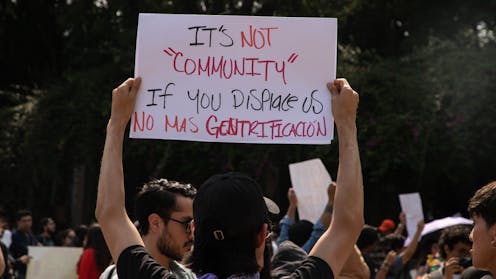
A protester holds a sign reading ‘it’s not community if you displace us’ during a demonstration against gentrification in Mexico City. Octavio Hoyos / Shutterstock

When thousands of residents took to the streets of Mexico City in July chanting “Gringo, go home”, news headlines were quick to blame digital nomads and expats. The story seemed simple: tech-savvy remote workers move in, rents go up and locals get priced out.

But that’s not the whole tale. While digital migration has undeniably accelerated housing pressures in Latin America, the forces driving resentment towards gentrification there run far deeper. The recent protests are symptoms of several structural issues that have long shaped inequality in the region’s cities.

Long before digital nomad visas became policy buzzwords after the pandemic, Latin America’s cities were changing at speed. In 1950, around 40% of the region’s population was urban. This figure had increased to 70% by 1990.

Nowadays, about 80% of people live in bustling cities, making Latin America the world’s most urbanised region. And by 2050, cities are expected to host 90% of the region’s population. Such rapid urbanisation has proved a magnet for international investors, tourists and, more recently, digital nomads.

In Latin America, gentrification has often involved large-scale redevelopment and high-rise construction, driven by state policies that prioritise economic growth and city branding over social inclusion.

Governments have re-branded entire working-class or marginalised areas as “innovation corridors” or “creative districts”, as in the La Boca neighbourhood of Buenos Aires, to attract investment. Neighbourhood re-branding has fostered resentment among locals and, in Buenos Aires, policies supporting self-managed social housing.

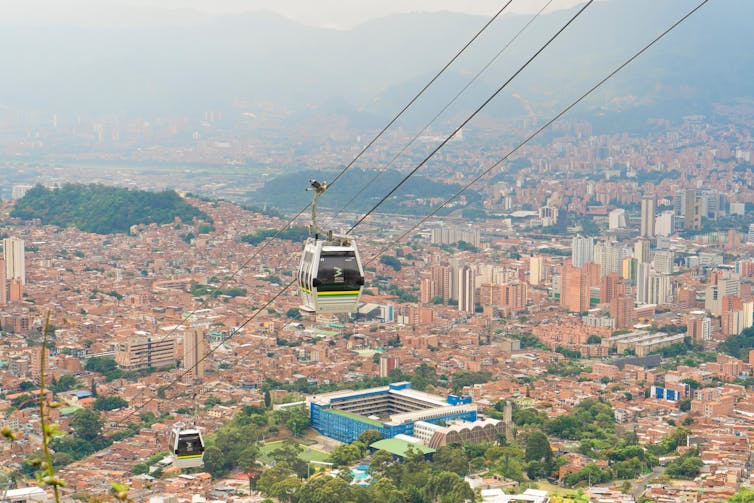
The introduction of integrated urban public transport systems has, while improving city access for marginalised communities, also triggered property speculation in once-isolated communities. In the Colombian city of Medellín, for instance, this has driven up prices and displaced long-time residents from hillside neighbourhoods like Comuna 13.

This is not an isolated case. A study from 2024 found that transport projects in Latin America are frequently leveraged by governments to attract private investment, effectively using mobility as a tool for urban restructuring rather than social equity.

A cable car above the city of Medellín.
The expansion of the public transportation system in Medellín has been associated with increased property values in once-isolated communities.
Alexander Canas Arango / Shutterstock

Researchers call the urban development seen in Latin America “touristification”. This is a form of extractivism where – just like raw materials are removed from the earth for export – urban heritage, culture and everyday life are “mined” for economic value.

In the Barranco district of the Peruvian capital, Lima, heritage is marketed for tourism. But while the district’s bohemian and artistic identity has become a distinctive tourism asset, Barranco now faces challenges that threaten its sociocultural diversity and authenticity. The price of land there increased by 22% between 2014 and 2017, compared with just 4% in San Insidro, which is considered the wealthiest district of metropolitan Lima.

In Chile, the designation of Valparaíso’s historic quarter as a Unesco world heritage site in 2003 led to an increase in heritage-led tourism. Persistent outward migration of long-term residents from the city centre has led to a severe decline in the residential function of the world heritage area – and with it, the loss of vibrant local life.

Symptoms of deeper issues

Protests against high rents and displacement in Latin America are often framed as direct responses to gentrification. However, academic research and policy analysis suggest these protests are symptoms of much deeper structural issues.

Latin America is one of the most unequal regions in the world. Limited access to things like quality education and formal employment means many urban residents are already vulnerable before gentrification pressures begin. More than half of the current generation’s inequality in Latin America is inherited from the past, with estimates ranging from 44% to 63% depending on the country and measure used.

Cities in the region also have long histories of spatial and social segregation, with marginalised groups concentrated in under-resourced neighbourhoods. Gentrification often exacerbates this by pushing these populations further to the periphery.

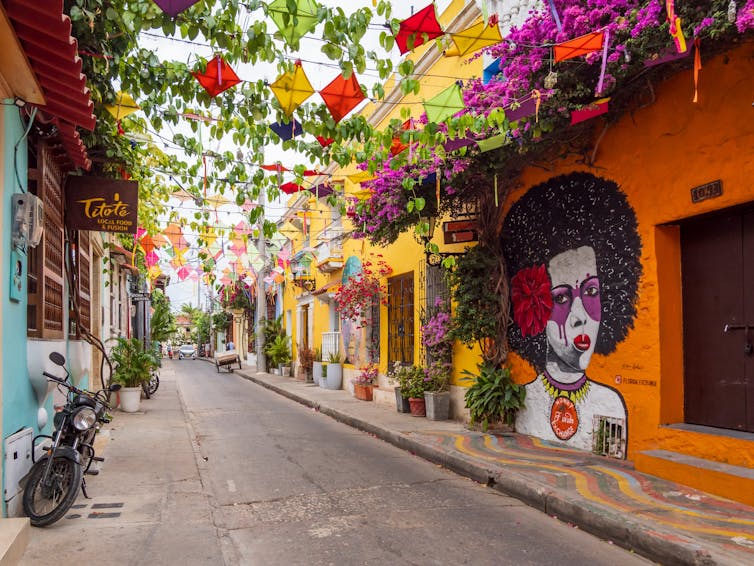
Cartagena, a port city with roots in colonial-era divisions, possibly exemplifies the greatest urban segregation in Colombia’s history. Spaniards and other Europeans lived in the fortified centre, while enslaved people were confined to poorer neighbourhoods like Getsemaní outside the walls.

Recently, urban planning decisions have been taken there that favour certain groups over others. Only the colonial legacy linked to Europeans has been protected. Getsemaní, once populated with slaves’ homes and workshops, is now home to luxury hotels, restaurants and housing.

The colourful streets of the Getsemaní neighbourhood of Cartagena.
The colourful streets of Getsemaní, a neighbourhood in Cartagena, Colombia.
Nowaczyk / Shutterstock

Finally, a large share of Latin America’s urban workforce is employed informally. Informality, where workers lack job security and social protections, is not just an unfortunate effect of economic development. It is an integral part of how global capitalism and urbanisation unfold in Latin America.

It reflects the failure of state and market systems to meet the needs of the majority. Rising rents and living costs driven by gentrification disproportionately hurt those who have few resources to absorb such shocks.

Protesters in Mexico aren’t just angry at an influx of remote workers sipping flat whites. They are responding to decades of urban inequality, neglect and exclusion. What is emerging is a continent-wide battle over who gets to live in, profit from and shape the future of Latin American cities.

The region’s urban future doesn’t have to mirror its past. But getting there means moving beyond simplistic narratives about foreign renters or digital workers, and tackling the structural issues that have long shaped inequality in Latin America’s cities.

The Conversation

Nicolas Forsans does not work for, consult, own shares in or receive funding from any company or organisation that would benefit from this article, and has disclosed no relevant affiliations beyond their academic appointment.

– ref. Mexico’s tourism protests are a symptom of longstanding inequality in Latin American cities – https://theconversation.com/mexicos-tourism-protests-are-a-symptom-of-longstanding-inequality-in-latin-american-cities-261634

How RFK Jr is systematically undermining vaccines around the world

Source: The Conversation – UK – By Christina Pagel, Professor of Operational Research, Director of the UCL Clinical Operational Research Unit, UCL

NEW YORK CITY, USA – March 7, 2025: Stand up for Science rally against DOGE cuts to scientific research in Washington Square Park in Manhattan.
Christopher Penler/Shutterstock

Vaccines are one of the greatest public health success stories of all time. Over the past 50 years, they’ve saved an estimated 154 million lives. But in the US, both access to vaccines and public trust in them are being systematically undermined – not by conspiracy theorists online, but from within the highest levels of government.

In January 2025, Robert F. Kennedy Jr – long associated with vaccine misinformation – was confirmed as US health secretary. Despite being pressed during his Senate confirmation hearings, Kennedy insisted he was not anti-vaccine and pledged to maintain scientific standards.

Seven months later, his actions tell a different story.

Kennedy has launched a sweeping assault on the US vaccine infrastructure: gutting oversight committees, sowing doubt about settled science, politicising ingredient safety, limiting access to vaccines and halting funding for research. His strategy doesn’t involve outright bans. But the cumulative effect may prove just as damaging.

In the US, the Advisory Committee on Immunization Practices (ACIP) plays a central role in vaccine policy, offering evidence-based recommendations on schedules. Until recently, its members were respected experts in immunology, epidemiology and infectious disease – all vetted, conflict-checked and publicly accountable.

In May 2025, Kennedy overrode ACIP’s recommendation on COVID-19 vaccination for pregnant women and young children. The following month, he disbanded the 17-member committee, citing alleged conflicts of interest. In their place, Kennedy appointed a smaller panel that included people with well-documented anti-vaccine views.

This broke decades of precedent. For the first time, ACIP’s membership was handpicked by the health secretary without standard vetting, training or safeguards to ensure independence.

In July, the ousted ACIP members published a commentary in the New England Journal of Medicine, warning the recommendation process was facing “seismic disruption”. In August, Kennedy banned respected scientific societies from advising ACIP, claiming they were too biased. This removed yet another check on the panel’s independence.

Meanwhile, Kennedy has reopened long-closed debates. He has called for “reassessment” of the childhood vaccine schedule, standard vaccine ingredients, and reportedly even the thoroughly debunked claim that the MMR vaccine is linked to autism. The latter has been refuted by multiple peer-reviewed studies, including a meta-analysis involving over 1.2 million children.

At ACIP’s first meeting under new leadership, Kennedy’s panel reviewed thimerosal, a mercury-based preservative used in some flu vaccines. CDC scientists were scheduled to present their evidence but were dropped from the agenda. Instead, the only evidence came from Lyn Redwood, a vaccine critic and co-founder of the World Mercury Project, an initiative that preceded Kennedy’s own Children’s Health Defense group.

Her presentation appeared to include at least one non-existent study, yet ACIP went on to ban thimerosal from flu shots – a decision Kennedy later extended to all US vaccines.

Though thimerosal was already used in very few vaccines, the way it was removed – based on flawed evidence and limited expert input – sets a dangerous precedent.

Kennedy has also criticised aluminium hydroxide, used in many vaccines to boost the immune response. His review article contradicts a large body of peer-reviewed evidence that supports its safety. Aluminium salts are found in vaccines against hepatitis A and B, meningococcal disease and tetanus.

Restricting access and innovation

The ripple effects of Kennedy’s changes go beyond oversight. In July, ACIP announced it would review recommendations for childhood vaccines, hepatitis B at birth, and the MMRV combination vaccine — a single shot that protects against measles, mumps, rubella, and varicella (chickenpox).

These guidelines help determine what vaccines are covered by public insurers like Medicaid. Weakening them could make vaccines unaffordable for low-income families.

Kennedy has also targeted the Vaccine Compensation Program, which provides payouts for rare adverse effects while protecting vaccine supply from litigation. He is considering expanding eligibility to include autism, despite consensus refuting any link, and may allow more lawsuits. These changes could deter pharmaceutical companies from offering vaccines in the US.

Kennedy has insisted that all new vaccines must undergo new placebo-controlled trials, ignoring the fact that new vaccines already follow this standard. Only modified versions of approved vaccines – like annual flu shots – are currently exempt, for ethical reasons.

If Kennedy bans widely used ingredients like aluminium salts, companies may be forced to reformulate vaccines – triggering unnecessary full clinical trials (the multi-phase process typically required for entirely new vaccines) and delaying access to boosters.

In May, vaccine manufacturer Moderna withdrew its application for a combined COVID-flu vaccine, citing regulatory difficulties. Days later, Kennedy’s department cancelled US$700 million (£550 million) in funding for a Moderna bird flu vaccine, followed by cuts to HIV vaccine research and mRNA platforms for cancer prevention.

Other countries may continue vaccine research, but the US’s retreat leaves a major gap.

Destabilising global trust

Perhaps most troubling is the messaging. Kennedy has repeatedly questioned the need for childhood vaccines, spread misinformation, inflated the risks and downplayed the threat of measles.

He has also attacked medical journals as corrupt and threatened to bar government scientists from publishing in respected outlets such as The Lancet and The New England Journal of Medicine — two of the world’s most prestigious peer-reviewed journals. Instead, he has proposed state-run alternatives. His own review on Aluminium Hydroxide was published in a non-peer-reviewed outlet.

In just a few months as health secretary, Kennedy has reshaped vaccine policy and public trust in the US. He has repeatedly claimed that the scientific and medical establishment is corrupt and that consensus cannot be trusted. This rhetoric is especially dangerous at a time when vaccine uptake is already low and falling.

But the consequences don’t stop at national borders. When coverage drops in one country, the risk of disease outbreaks increases globally, as seen in the recent measles outbreak in Canada.

Kennedy has shown both determination and ingenuity in undermining vaccine science, often through methods that are complex, obscure, or hard to explain publicly. Without issuing a single ban, he has weakened the foundations of vaccine availability and trust in the US.

In the 19th century, the average life expectancy in the US was around 40 years . Many children died of infections that are now preventable. In an age when the deadly realities of diseases like measles have faded from memory, it’s chilling to consider the possibility of returning to a pre-vaccine era.

The Conversation

Christina Pagel receives funding from University College London to explore and document vulnerabilities of UK Arms Length Bodies to political interference.

She also founded and runs TrumpActionTracker.info , a website documenting actions of the Trump administration that fall within authoritiarian domains.

Sheena Cruickshank does not work for, consult, own shares in or receive funding from any company or organisation that would benefit from this article, and has disclosed no relevant affiliations beyond their academic appointment.

– ref. How RFK Jr is systematically undermining vaccines around the world – https://theconversation.com/how-rfk-jr-is-systematically-undermining-vaccines-around-the-world-262854

My daily surveys suggest British earwigs are declining drastically

Source: The Conversation – UK – By John Murray, Senior Research Fellow, School of Environment, Earth and Ecosystem Sciences, The Open University

The common earwig. Henri Koskinen/Shutterstock

Every morning for the past 32 years, I have been counting earwigs. Here at Marshalls Heath, a small nature reserve in Hertfordshire, the only site where these nocturnal insects have been so systematically monitored for so long, the number of common earwigs has declined dramatically.

Using a light trap (equipment that entices nocturnal flying insects towards an artificial light and into a box until they can be counted and released in the morning), I found 282 earwigs in a single night in 1996. In 2024, only 31 adults were trapped in that entire year.

My new study, published in the Entomologist’s Record and Journal of Variation, indicates how this catastrophic decline appears to be due to very late frosts, with much higher numbers in the 1990s linked to runs of sunny, dry summers. I have had other anecdotal reports of declines in numbers in other parts of the UK, so this could be a more widespread phenomenon.

Most gardeners regard earwigs as a pest because they eat some leaves and flower petals. But their favourite foods also include woolly apple aphids, codling moth caterpillars and pear psyllid – these are all tiny insects that feed on apples and pears. In commercial orchards, earwigs are introduced to eat other insects and control apple and pear pests.

Like many insects, earwigs break down waste and decompose dead matter – this improves soil structure and helps create a healthy landscape. They also provide a source of food for some birds and small mammals.

A frosty decline

My research shows that the cause of the decline at Marshalls Heath is due to a number of factors. Years of exceptionally high numbers of earwigs were those when summer sunshine had been greatest and rainfall lowest in the two previous years, and when autumns had been cool and the springs dry – weather in the current year had no effect on numbers. But this does not explain their sudden drop in numbers in 2020.

Man crouched next to light trap with white hat holding red notebook
John Barrett Murray has used a light trap to catch, count and then release earwigs.
John Barrett Murray, CC BY-NC-ND

A key part of the puzzle is how adult female earwigs behave towards their young. Unusually for an insect, studies dating back to 1941 have shown that the mother defends and incubates her eggs and cares for her newly-hatched young in an underground nest.

As the young earwigs (called nymphs) grow, they may accompany their mother when she forages at night on the ground outside the nest, always returning back to the underground nest during daylight hours. But as soon as the nymphs moult for the first time, when they are about 5mm long, the mother abandons them to fend for themselves.


Read more:
Earwigs are the hero single mothers of the insect world – and good for your garden too


This is a critical stage in the young insect’s life, and my new study shows that the earlier the nymphs reach this free-roaming phase, the higher are their chances of survival. A delay of one month can be fatal, since they are vulnerable to disease, starvation and predation by birds and small mammals.

To reach this stage earlier, it appears that the fewer the late spring frosts, the better. In 2011, when nymphs moulted early, there were only eight ground frosts in April and May. In 2021, when adult numbers crashed, there were 32 late frosts, and according to the Met Office, it was the frostiest April since records began.

So what next? Trends over the past four years at Marshalls Heath show adult numbers of between 31 and 47 earwigs per year. In 2025 so far, I have only caught seven adults and nine nymphs.

So there is no sign of any revival in these numbers. However, the hot dry summer this year is just what might favour the survival of these insects in the years to come. If we have a cool autumn and a dry spring, followed by similar conditions next year, I’m hoping to record larger numbers in 2027.


Don’t have time to read about climate change as much as you’d like?

Get a weekly roundup in your inbox instead. Every Wednesday, The Conversation’s environment editor writes Imagine, a short email that goes a little deeper into just one climate issue. Join the 45,000+ readers who’ve subscribed so far.


The Conversation

John Murray volunteers as warden for the Marshalls Heath nature reserve.

– ref. My daily surveys suggest British earwigs are declining drastically – https://theconversation.com/my-daily-surveys-suggest-british-earwigs-are-declining-drastically-262558

Trump’s tariffs have finally kicked in, so what happens next?

Source: The Conversation – UK – By Maha Rafi Atal, Adam Smith Senior Lecturer in Political Economy, School of Social and Political Sciences, University of Glasgow

Donald Trump’s new international trade tariffs have landed. Some are lower than others, some deals have been done, but overall they are the highest they have been in 100 years.

They are also unprecedented in the era of the rules-based trade system that has been in place since 1945.

So what happens next? That’s a tricky question to answer given that the US president has already pressed the pause button on this economic policy before.

But assuming that doesn’t happen again straight away, we can make some confident predictions about the consequences.

First off, the immediate economic effect will be felt by American consumers. JP Morgan, the biggest bank in the US, estimates that 60% of the cost of Trump’s tariffs will be passed directly on to his fellow citizens.

And that’s just the start. Most goods bought in the US, whether they’re electrical items, cars, medical devices, processed foods or makeup sets, are made up of dozens of components, sourced from multiple countries. A finished product may therefore be “tariffed” several times before it reaches the shelf, adding to the final price rise.

Medium-sized businesses are likely to feel the most pain. They have neither the global reach to reorganise their supply chains quickly nor the deep margins to absorb new costs. That means higher prices for the goods they produce.

As a result of all of this, things will get more expensive and consumer spending will fall. It’s too early to quantify the drop, but survey data shows that households are already cutting back.

Businesses will also cut or delay investment in new plants, staff and product lines, as more of their revenue goes on covering higher import taxes.

These effects will be inflationary, pushing prices up. They will also be “recessionary” – in other words, they could cause a recession by cooling demand and investment.

Trump card

The political irony here is striking. Trump’s election victory was fuelled in part by voter frustration over high inflation early in Joe Biden’s presidency.

By the time of the election in November 2024, inflation had eased – but the perception that Biden was linked to higher prices (often discussed with reference to the price of eggs in the grocery store) lingered.

Now Trump’s policy choices look set to drive up prices again, while also risking a significant economic downturn.

A US recession would have global consequences. Mexico, China, Canada, Germany and Japan – the countries which export the most goods to the US – are particularly exposed. Together with the US, these economies account for roughly half of global GDP. If US economic activity slows, and its key suppliers follow, that would be enough to trigger a global contraction.

Eggs in an egg box.
The price of eggs can rise and fall.
ArturTona/Shutterstock

There’s also the risk of renewed supply chain delays. Faced with uncertainty about demand, companies will slow or stop new orders.

Then, when consumers start buying again, the components needed may not be in stock, delaying production and pushing up costs further. These disruptions tend to cascade through multiple sectors, meaning the impact will be widely felt around the globe.

So how long can this tariff regime hold? In April, Trump’s so-called “liberation day” tariffs were rolled back within days under pressure from American businesses that were suddenly paying more for vital imports.

Since then, very few countries have signed deals with the US, and the ones that have secured broad agreements rather than binding treaties. That means the political backlash from businesses and consumers could once again force the administration to retreat.

For now, the US is testing how far it can push this experiment in protectionism. But the risks are clear: higher prices at home, slower global growth, and a political gamble that may prove costly.

The Conversation

Maha Rafi Atal does not work for, consult, own shares in or receive funding from any company or organisation that would benefit from this article, and has disclosed no relevant affiliations beyond their academic appointment.

– ref. Trump’s tariffs have finally kicked in, so what happens next? – https://theconversation.com/trumps-tariffs-have-finally-kicked-in-so-what-happens-next-262843

Donald Trump to chair new Olympic taskforce in bid to allay international visitor concerns ahead of 2028 Los Angeles Games

Source: The Conversation – UK – By Richard Hargy, Visiting Research Fellow in International Studies, Queen’s University Belfast

The US president, Donald Trump, signed an executive order on August 5 to set up a government taskforce to manage the 2028 Summer Olympics in Los Angeles. During the White House announcement, Trump said: “We’ll do anything necessary to keep the Olympics safe, including using our National Guard or military.”

This move may go some way to addressing international concern over the Trump administration’s tough immigration polices, which include a travel ban on 12 countries. There were fears that this could make it difficult for some international supporters to attend the games (although athletes and coaches are exempt).

A report earlier this year by the US Travel Association also flagged concerns over the US’s ability to logistically manage an event on this scale.

The upcoming Fifa World Cup in 2026 will be seen as a dry run for the Olympics in terms of handling large numbers of international visitors. Thousands of supporters are likely to travel between co-hosts, the US, Canada and Mexico, to attend different matches.

Victor Matheson, a professor at College of Holy Cross in Massachusetts, who specialises in sports economics, has said: “You could have significant immigration problems with fans and players going across borders.”


Read more:
Masked and armed agents are arresting people on US streets as aggressive immigration enforcement ramps up


There are, however, a number of political factors at play in Trump’s decision to create a special task force. Its formation comes in the wake of Trump’s contentious decision in June 2025 to order the deployment of National Guard troops and US Marines onto the streets of Los Angeles. This was in response to protests against immigration raids launched by US Immigration and Customs Enforcement (Ice) across the city.

Since then, relations between the Trump administration and Los Angeles municipal officials, including the mayor Karen Bass, have been fairly frosty. After arrests by federal authorities in LA, Bass accused Trump of “ratcheting up chaos”, and perpetuating a “political agenda of provoking fear and terror”. Trump referred to Bass as “not very competent” during the recent White House event.

At a separate event, administration spokesperson Tammy Bruce said the task force would “coordinate across federal, state and local agencies to ensure streamlined visa processes, robust security and efficient transportation”.

It is not unprecedented for a US administration to assume this type of role over a major event. The military and National Guard have previously provided support to state and municipal agencies when US cities have hosted major sporting fixtures.

This will partly be about the memory of what happened at the Altanta games in 1996, when a bomb attack killed two people and injured 111. The 2028 Summer Olympic and Paralympic Games had already been designated a “national security event”.

The scale of security planning for the Los Angeles Olympics will be huge. And Trump’s One Big Beautiful Bill Act has already set aside US$1 billion (£745,190,000) in federal government funding for security at the 2028 games.

Trump announces the task force for the Olympics.

Jules Boykoff, a professor of politics and government at Pacific University, has said that designating Los Angeles 2028 a national security special event gives the federal government broader latitude to have control over the organisation of the games, and that he expects to see “President Trump flexing like that more and more, the closer that we get to the Olympic Games”.

Boykoff also warned that the national special security event status now given to the LA Olympics may provide an opportunity for further crackdowns in the city.

There are also political risks for the Trump administration if immigration policies throw up issues for people attending the games, or it is not seen as successful. The president has made reducing immigration a priority policy, but his way of doing this and sending in masked Ice agents is losing support.

William A. Galston, a senior fellow at the Brookings Institution, pointed out recently that the way it is being carried out is not necessarily popular. Galston pointed to a YouGov poll taken in July which found that 52% of Americans said Trump’s immigration policy was “too harsh”, while 54% said Ice agents have gone “too far” in enforcing immigration laws.

In dealing with international apprehension about who can attend and travel restrictions, the White House has said that the new task force will “streamline visa processing and credentialing” for participants and media. Despite this assurance, there are concerns from some Los Angeles officials that the administration’s immigration policies could deter tourists and complicate the issuing of visas for Olympic teams.

Earlier this year, the man in charge of the Los Angeles Olympics, Casey Wasserman, sought to allay these worries. In an address to the International Olympic Committee in Pylos, Greece, Wasserman said that he had received assurances from Trump and the US secretary of state, Marco Rubio, and that he did not “anticipate any problems from any country to come and participate and have their delegations in full force.”

Trump clearly wants to host a triumphant Los Angeles 2028, and hopes that a successful games will boost his popularity. He will expect his new task force to smooth the way for that to happen.

The Conversation

Richard Hargy does not work for, consult, own shares in or receive funding from any company or organisation that would benefit from this article, and has disclosed no relevant affiliations beyond their academic appointment.

– ref. Donald Trump to chair new Olympic taskforce in bid to allay international visitor concerns ahead of 2028 Los Angeles Games – https://theconversation.com/donald-trump-to-chair-new-olympic-taskforce-in-bid-to-allay-international-visitor-concerns-ahead-of-2028-los-angeles-games-262831