Family farmers say their way of life is an impossible dream when ‘the bread of life is worth less than rusty metal’

Source: The Conversation – UK – By Dan Taylor, Senior Lecturer in Social and Political Thought, The Open University

‘Ridiculous costs’: Andy Pearce on his farm in the Fens of eastern England. Photograph by Rebecca Pearce, CC BY-NC-ND

The Pearces have been farming the Fens of eastern England for generations – a region where more than a third of the country’s vegetables are grown, packed and processed. Andy and Rebecca Pearce lease a small family farm in south Lincolnshire with Andy’s parents and brother, on which they grow potatoes, wheat, pulses and sugar beet. They grew peas too until this year, when the unpredictable weather no longer made them viable.

Visiting their farm on a fine summer day, the landscape feels idyllic – a largely flat landscape of big skies and black soil, epic fields and waterways. As he drives around in his tractor, Andy keeps a diary of all the wildlife he sees: starlings, sparrows, badgers and buzzards, kestrels, wagtails, hares and deer. It’s a job he and Rebecca talk about with passion and love – yet he says that sense of vocation is clouded with ever-increasing money worries:

Look at the price of grain now: £180 a tonne – it was probably that in the mid-1990s … I can’t think of any other industry that is working on the same price as they were 30 years ago for produce. Yet the inputs have gone up astronomically.

In 2021-22 (the latest government statistics), the average farm household income in England was just £22,200. A 2025 report by the Food, Farming and Countryside Commission found that UK farmers’ incomes have remained stagnant over the past half-century, while costs have recently escalated, as Pearce explains:

In our case, rent is obviously one of the biggest outlays. Chemicals, fertilisers, tractors – you name it, everything has gone up astronomically … The ridiculous costs of machinery, the things you’ve got to do, the amount of red tape you’ve got to fill in, are all going one way.

He warns that farming is becoming an “impossible dream” for people like them – and that this is reflected in the reluctance of young people to get involved. He says it’s “almost impossible for somebody to come in now and start farming without some sort of backing”, explaining:

The sustainability of farming is getting less and less all the time … Unless you’ve got a big enough area to offset all that [expense], then it’s getting very, very difficult now. And that’s not going to change … You’re going to lose your family farms. You’re basically going to be left with agribusinesses at the end of the day.

Over the past three years, we have spent a lot of time in the Fens getting to know farmers like the Pearces. Our intention was to go beyond the polarised headlines to understand how farmers really feel, and what they want from government policy. For one of us (Dan), this forms part of Fen Power, a research project exploring how local infrastructure, identity and connection shapes economic sustainability and political trust in this part of rural England.

A trailer for the Fen Power project.

Despite farmers being highly skilled and hardworking experts who help maintain the UK’s food security and protect its countryside, many told us they feel abandoned by the government and anxious about their future. But delving deeper into the roots of this unhappiness, we found a more nuanced and complex story than is sometimes presented in media reports about the farmers’ protests.

A privilege or a curse?

Peter Lundgren farms the black soils of the Fens further north in Lincolnshire. Now in his sixties, he says farming is a “huge privilege – being able to walk across that field and ask nobody’s permission to do it”.

Lundgren – a non-organic farmer who campaigns against harmful pesticide and GM use – influenced a past Conservative government’s policy shift to link farming more closely with the provision of public goods. This included new subsidies to encourage farmers to protect biodiversity by planting more hedgerows and woodland, rather than focusing entirely on industrial food production.

Lundgren admits he leads a “very, very privileged lifestyle” – and as we walk around his beautiful small estate among dykes and woodland he has painstakingly restored, it’s hard to disagree. Yet now, he is selling up.


The Insights section is committed to high-quality longform journalism. Our editors work with academics from many different backgrounds who are tackling a wide range of societal and scientific challenges.


Unlike the Pearces, he has something to sell: Lundgren bought his 93-acre farm 30 years ago when it was rundown and collapsing. Having grown up on a struggling farm which eventually succumbed to debt, he has always sought a mode of farming that’s economically and environmentally sustainable. But now, while fit enough to continue, Lundgren says his passion is no longer there:

This spring, it shook me. I took rusty scrap into the scrap dealers in Lincoln, and I got more money a tonne for scrap metal than I got for my feed wheat … So the bread of life is worth less than rusty metal.

Many small- and medium-sized farmers find themselves under these growing economic pressures. Beyond the immediate crises of increasingly unpredictable weather or government policy, Lundgren says it comes down to the lack of power farmers have in the wider food system, where supermarkets and big suppliers drive down prices. The UK chicken industry, for example, is dominated by a handful of huge companies, so farmers can be forced into a loop of having to invest in big, expensive sheds in order to supply these few companies, as no one else buys chicken at this scale. As Lundgren puts it:

They’ll get a farmer to invest half a million quid in a chicken shed – and then they’ve got that farm exactly where they want them … They know they’ve got you under the thumb, and you now are a slave to [these companies].

Most farmers have a powerful sense of vocation in stewarding their land for future generations. But Lundgren says economic insecurity is putting off many farmers’ children from taking over the business. “One friend farms over in Norfolk … Both his sons have turned around and said: ‘You are bloody joking, dad.’”

Lundgren talks poignantly about the “feeling that you’ve let down past generations … that feeling of failure”. The economic decline he describes (in pints of beer) spans decades, not just recent years:

The first crop of wheat I grew, I got £120 a tonne for it – when I was 18 and beer was 50p a pint. So I got 240 pints for every tonne going off the farm. Last year, I got £65 a tonne and beer has come up to £3. So now, I’m getting 20 pints a tonne.

The problem, as Lundgren sees it, goes much deeper than the government’s recent policies that have sparked such ire in many farmers – most notably, the announcement that farmers would no longer be exempt from paying inheritance tax. From 2026, upon their death, any farm or business assets worth over £1 million could face a 20% inheritance tax over that threshold (with some exceptions). But for Lundgren, these tax changes are just another layer of risk in an already precarious profession. They exacerbate the fundamental problem of being “asset rich, cash poor” that affects so many in agriculture:

One of the worst problems is sometimes you put your hand in your back pocket and haven’t got the price of a pint – even though on paper, you’re worth a shitload of money.

This goes to the heart of occasional social media backlashes to the farmers’ protests. Rebecca Pearce describes the popular stereotype of farmers as rich aristocrats in tweeds, shooting foxes and “raping the countryside” with pesticides and shoddy practices.

There is a grain of truth in this image: around 30% of English land is owned by the aristocracy and landed gentry, and a significant further share is held by wealthy individuals including offshore firms and investment bankers (another 17% of land remains unregistered with the Land Registry, making ownership unclear). In recent decades, wealthy individuals have bought farmland to offset their tax liabilities – a key reason given by Labour for introducing the new inheritance tax rules.

But in practice, many ordinary family farms are being swept up in this new tax regime. According to estimates from the National Farmers Union and the Agriculture and Horticulture Development Board, around 75% of commercial farms – some 42,000 across England and Scotland – will be affected.

Alt text
Andy Pearce: ‘Chemicals, fertilisers, tractors – you name it, everything has gone up astronomically.’
Photograph by Rebecca Pearce, CC BY-NC-ND

Given that farms are often in some of the most beautiful and sought-after locations for second homes and property developments in the UK, the capital assets (such as land and buildings) of these farms are often highly valuable, even if the farms themselves produce incomes for their owners which are little over the minimum wage.

And while around 60% of British farmers are tenants like the Pearces, who do not own the land they work, many still operate within family-run farm businesses that include owned assets such as machinery, livestock, stored produce or residential buildings. In some cases, these assets alone may push their estates above the £1 million threshold for full relief, or above the £3 million mark where inheritance tax liabilities begin to rise significantly.

TV programmes such as (Jeremy) Clarkson’s Farm have put the everyday struggles of farmers more squarely on the map, and around 55% of the public say they would support farmers if they were to go on strike, in line with support for nurses and paramedics. In April 2025, the UK’s first farmers’ strike broke out, with some farmers refusing to load milling wheat needed for Britain’s bakeries.

While a one-off event, it may not be the last. A recent Ashbridge survey of 2,000 British farmers suggested that 39% of their farms would be “unsustainable” within five years. There are now two options for most farmers to stay afloat: intensify food production, or sell up.

Lundgren has put his farm up for sale.

A view of hedgerow and trees and a crop field beyond
Small-scale farmers play a key role in protecting the UK countryside and its biodiversity.
Photograph by Amy Gibbons, CC BY-NC-ND

Why farming is such a gamble

Farming isn’t just a business, it’s a gamble. Take a tonne of wheat: the seed bought one month ago and put in the ground today will be harvested in up to a year’s time – meaning the farmer only gets paid for it in 18 months.

Now factor in the volatility of prices set by the global market amid the unpredictability of Brexit, COVID and Ukraine – not to mention the weather. In the Fens and many other parts of the UK, 2024’s unusually wet weather flooded and submerged many farmers’ crops.

Then there’s the volatility of government policies, from the long-term EU subsidies of the Common Agricultural Policy that made farming viable in an era of cheap food, to the hotchpotch of environmental policies post-Brexit, which today many farmers find incoherent and poorly implemented. According to Andy Pearce: “It’s a case of giving with one hand, and taking away at least as much with the other.”

There are many risks farmers have little protection from – including the hardball practices of supermarkets engaging in price wars. Farmers in the UK mostly supply supermarkets via suppliers, who have the power to reject and even fine farmers for not supplying to the right standard or quantity. Prices have been squeezed artificially low for decades by suppliers and supermarkets, even while new technologies and government directives have rapidly increased yields.

The only reason most farmers have remained in business is through vast subsidies like the EU’s Common Agricultural Policy, which encouraged high-input (high-fertiliser) farming and rewarded big landowners. But subsidies are double-edged: some farmers think the system allowed supermarkets to get away with paying low prices, because subsidies meant farmers would never face the threat of going out of business.

After the UK left the EU, the Conservative government introduced a new approach to farming: “Public money for public goods.” Farmers were now to be incentivised to prioritise sustainability and environmentalism over industrial food production, in the shape of Environmental Land Management schemes and the Sustainable Farming Incentive (SFI).

When introduced in 2021, these policies were generally widely embraced by farmers – all of whom, in our research, fully subscribed to an ethos of sustainability and public service.

But from the outset, conditions for accessing these funds were difficult. They required significant investment of time and money upfront, with payments later. They set conditions which are difficult, arbitrary and onerous. Subsequent rollout and payment delivery was slow. They only provided a financial reward to those who deliver environmental benefits in line with the goals of a 25-year environment plan that works towards achieving net zero by 2050. According to Andy Pearce:

There is absolutely nothing in it for us at all, basically … It is just not economically viable.

In December 2023, the Basic Payment Scheme – a longstanding government subsidy that provided a basic income safety net for active farms – came to an end. It was replaced from January 2024 by delinked payments: time-limited support based on past claims, with lower overall funding and fewer farms eligible.

This was followed in November 2024 by the suspension of several capital grants schemes to new applicants due to high demand. Then, at short notice, in March 2025, the SFI scheme was suddenly suspended to new entrants after reaching its annual budget cap.

Over the past decade, across both Conservative and Labour governments, British farmers have been gradually stripped of most sources of financial support. A turbulent and rapidly changing policy landscape has left few farmers able to adequately financially plan. Meanwhile, the cost of inputs rise, prices remain low, inheritance tax looms, and the work remains grindingly hard. Trust between government and farmers has never been lower. Andy Pearce says:

In the best-case scenario, I’m going to come out evens. If I have a really good harvest, I’m going to be losing money doing this scheme … Basically, we’ve got the worst of both worlds. Now we’re competing against subsidised produce from Europe without the subsidies.

Alt text
Farmers are questioning the incentives provided for sustainability and environmentalism.
Photograph by Amy Gibbons, CC BY-NC-ND

‘There’s got to be a total rethink’

Not everyone involved in farming is a freeholder or tenant. Some, like Martin Reams, work as farm managers for large agribusinesses that produce intensively at scale. They often work long hours on the land with the same passion and vocation as family farmers like the Pearces and Lundgren.

Reams oversees operations on a 2,000-acre farm in Lincolnshire with just two employees. They grow wheat, barley, peas, potatoes, broccoli and cauliflower. Come harvest time, they’ll draw on labour from eastern Europe – many migrant workers have also settled (mostly in the mid-to-late 2000s) and integrated into the local area.

Reams has farmed all his life; from his family’s smallholding to managing farms across the world. No two days are the same and he’s outdoors every day, come rain or shine. Also in his sixties, Reams has lived through a major technological revolution in farming.

Whereas once farms were labour-intensive and managed by hand, tractor and a crude understanding of fertilisers, today farms like his are managed using GPS field scans, smartphones, robotics, fine-tuned computer systems and self-driving tractors. And out in the fields, year after year, Reams says he has witnessed the impacts of climate change at first-hand:

Without a shadow of a doubt, the weather has changed dramatically over the 45 years I’ve actively been working on farms … The big thing I have noticed is the amount of rain we get. It’s either all or nothing. Either very dry or very wet. And that is one of the major driving forces that is really [forcing us to upscale] what we’re doing.

Reams doesn’t own a farm, but like everyone else we spoke with, he’s dismayed by the change in inheritance tax rules, suggesting it will “probably kibosh a lot of the smaller farms”.

Many farmers we spoke to fear that, as more small- and medium-size farmers are driven to sell up to larger agribusinesses and solar farms, the standards of food production will fall, as the UK becomes reliant on cheap overseas producers not bound by the same environmental regulations.

Reams says simply: “We’re not on a level playing field.” When asked about farming’s future, his assessment is blunt:

At the present moment, I would say forget it – it’s doomed. It’s going to be like the coal mines, it’s going to be like the fisheries. There’s got to be a total rethink on food production, how people value food.

These days, the average age of British farmers is 59. It’s similar internationally, and a third of British farmers are over 65 and ought to be enjoying retirement. Most of the farmers we spoke to talked about the barriers for new entrants into farming: high amounts of capital to get started, difficult and long work, with median farm household incomes often below the minimum wage.

Having grown up on struggling farms, many farmers’ children – including Lundgren’s – have no interest in taking up the profession, and farmers appear less inclined to encourage them to follow in their footsteps. Whereas most of the people we interviewed worked on farms as children, today such practices are largely outlawed or frowned upon.

In response, some agricultural colleges are doing their best to attract young people to farming, and in recent years there has been a slight increase in the number of students enrolling to study land-based and agricultural degrees around the UK. We met one example of this potential new generation of farmers amid an array of beautiful flowers in the north-east of England.

Alt text
Roisin Taylor: passionate about the future of horticulture.
Photo by Jocelyn Pritchard, CC BY-NC-ND

Regeneration is possible

“Why have I not been doing this my entire life?” Roisin Taylor asks us, having recently established a two-acre flower farming business on a new site near Newcastle (her mother having originally founded the company). She’s not being sarcastic.

Taylor grew up in County Durham, working on farms and dry-stone walling. Like many her age, she took the university route, completing two degrees before coming back into farming and agricultural community engagement. A co-director of UK Youth 4 Nature and Nuffield farming scholar, she researches how the British cut-flower industry should adapt to a world of two-degree warming.

Having not come from a farming family directly, and despite facing the new entrant barriers – notably the difficulties of securing land – Taylor’s story suggests farming can still be a career and lifestyle that attracts young people.

She is passionate about the future of horticulture – in particular, its need to adapt to climate change. She calls for a long-term perspective where “public money for public good” is used to make farming a high-skill, high-conservation catalyst for change. At the same time, she highlights the failures of the current renting model, particularly for small-scale farming:

It’s frightening that somebody might have control over a large portion of my business. It makes it more difficult to invest in the long-term purchases you need to make your businesses sustainable.

While Taylor does not work in food production, flower farming has also been affected by the policy “chaos” that other interviewees have highlighted to us. In 2023 at the time of speaking to Taylor, the previous government’s plan for a new horticulture strategy was abruptly scrapped. Speaking more widely about how farmers were feeling, Taylor told us:

If you don’t feel like you’ve got a voice, of course you’re going to go out and complain because you don’t feel you’ve got agency … The cycle of distrust continues to grow. Motivation is driven by momentum, and we need some wins to prove to farmers, growers and policymakers that change is possible.

Alt text
Roisin Taylor: ‘The cycle of distrust continues to grow.’
Photo by Jocelyn Pritchard, CC BY-NC-ND

Earlier this year, the National Farmers’ Union published a UK horticulture strategy for growth in which it welcomes the government’s promised “roadmap” for farming in England up to 2050 as “an ambitious vision to make farming and growing more sustainable and profitable”. In her roles both as farmer and advocate, Taylor aims to act as a bridge between farmers, policymakers and environmentalists, and is confident they can find common ground:

Both farmers and environmentalists are trying to move the dial forwards. They’re just trying to both make a living and also see a future where something is better … [But] public perception of farming is steeped in inaccuracies, which does the sector no favours when we are trying to advocate for change.

Nonetheless, Taylor is in it for the long haul. Part of the gamble and privilege of farming, she says, is working to a much longer timeframe – with the need to also consider “building things like climate adaptation into that long-term framework and planning”. But is time running out?

The future of farming

We’re back with Andy and Rebecca Pearce in their cottage. Andy’s mum brings in mugs of tea, followed by his brother popping in to check they’ve got enough oil for the tractor. “It used to be a man with a spanner who’d come out and fix it, now it’s a man with a laptop,” Rebecca quips.

Though the Pearces are tenant farmers, they are mired in the same challenges and uncertainty as many other small and medium-sized farmers we spoke with. Andy tells us that from a smaller farmer’s point of view, “the sustainability of farming is getting less and less all the time”.

As costs for farmers grow and revenues shrink, he says that “unless you’ve got a big enough area to offset that, then it’s getting very, very difficult now. That’s not going to change.” His prognosis is clear:

You’re going to lose your family farms. You’re basically going to be left with agribusinesses at the end of the day.

Alt text
Andy Pearce: ‘You’re going to lose your family farms.’
Photo by Rebecca Pearce, CC BY-NC-ND

We heard this message time and again from the farmers, farm managers, agronomists (who study the science of soil management and crop production) and rural communities we spoke with.

And yet the demise of family farms is not some natural inevitability, like the melting of glaciers or the mizzley rain in these parts.

Farmers are sometimes criticised for over-extracting from the natural environment to put food on our tables. But they are just one piece of the jigsaw. It isn’t just the soil that’s depleted through overextraction; the people who produce our food and protect our countryside are also being depleted. At its root, Taylor says, is the fact that “we don’t pay what food’s worth”.

Farmers aren’t the only group in society battling the effects of inflation. But they are perhaps uniquely exposed. Unlike many businesses that can simply shift their costs on to customers while maintaining profit, farmers are at the frontline of a complex modern food system in which the price we pay for our food, most often in supermarkets, has been kept low for decades by extensive price squeezing.

But it’s not just farmers who suffer as a result. Lundgren talks about a fundamental “divorce” between farmers and consumers in modern society:

I think my argument about farmers being divorced from consumers, it’s very much around the creation of the food chain. The further we get forced apart is another link in that damn chain so that someone else can get in and make a lot of money.

Reams offers a memorable example of this breakdown in the connection between consumers and their food:

I went to a school not very far from here in rural Lincolnshire, took a sugar beet, and nobody knew what it was. In rural Lincolnshire! They didn’t know what it was.

This disconnect breeds misconceptions and bewilderment on both sides – as Rebecca Pearce expresses over tea in their farmhouse cottage:

I don’t really understand why people hate farmers so much, when everybody eats.

In our plastic-packed, supermarket-fed world, a lot of the public doesn’t understand where food comes from – nor have the time to find out. On the other side, many of the farmers we spoke to think that all the public wants is cheap identical food, with little regard for who makes it and with what means.

Neither is true, as Lundgren explains in characteristically colourful style:

Farmers will come in the pub on a Friday night and say: ‘The public don’t care as long as it’s cheap.’ Which is absolute crap. And the public will say: ‘You never see a farmer on his bike – [instead] driving around in Range Rovers shouting “get off my land!”‘ Which is also crap.

What’s undeniable is that the British food system is under immense strain. Consumers are failing to get access to affordable, nutritious food, and many farmers are struggling to maintain a basic livelihood or pass on their farms to their children. As Rebecca Pearce says:

We’ve got to work together with environmental groups and everybody to try and get farming [better understood]. There has to be a dialogue.


For you: more from our Insights series:

The Conversation

Dan Taylor does not work for, consult, own shares in or receive funding from any company or organisation that would benefit from this article, and has disclosed no relevant affiliations beyond their academic appointment. His broader research project, Fen Power, is funded by the Open University’s Open Societal Challenges scheme (www.tinyurl.com/fen-power).

Amy Gibbons is a member of the Green party.

ref. Family farmers say their way of life is an impossible dream when ‘the bread of life is worth less than rusty metal’ – https://theconversation.com/family-farmers-say-their-way-of-life-is-an-impossible-dream-when-the-bread-of-life-is-worth-less-than-rusty-metal-258960

Wild salmon are the Zendayas of the fish world – what that tells us about conservation

Source: The Conversation – UK – By William Perry, Postdoctoral Research Associate at the School of Biosciences, Cardiff University

An Atlantic salmon slowmotiongli/Shutterstock

Wild salmon are not just rarer than their farmed cousins – they’re better looking too. In a new study by my colleagues and I, we found that they are noticeably more symmetrical than those reared in captivity. In other words, they’re prettier (by human standards, at least). And that’s not just cosmetic.

The global sale of aquatic species reared in captivity (known as aquaculture) is worth more than US$300 billion (£225 billion) annually. That’s a huge figure that doesn’t even include the wholesale or retail markups and revenue generated from other industries such as processing or packaging.

Of all the cultured aquatic organisms, the Atlantic salmon is the most valuable but is seeing widespread declines in the wild.

To put salmon decline into perspective, in 2024 the aquaculture industry produced somewhere in the region of 3 million metric tonnes of Atlantic salmon for consumption, which is roughly 600 million fish (assuming a harvest weight of 5kg per fish). Yet, there are fewer than two million wild Atlantic salmon returning to rivers every year.

This has led to the Atlantic salmon being classified as endangered in Britain by the International Union for Conservation of Nature. Some countries have turned to hatcheries as a way to boost wild numbers, releasing captive-bred fish into rivers to try to strengthen struggling populations.

But rearing fish in artificial hatchery environments changes elements of their biology, making them less likely to survive in the wild. Not only this, but when they are released into the wild, their genetics can pollute local gene pools.

So, while hatcheries seem to offer a solution to declining wild salmon populations, decades of research has shown that they largely have a negative effect on the populations they are trying to save. Despite these problems, hatcheries can sometimes be the only thing standing between a population and extinction.

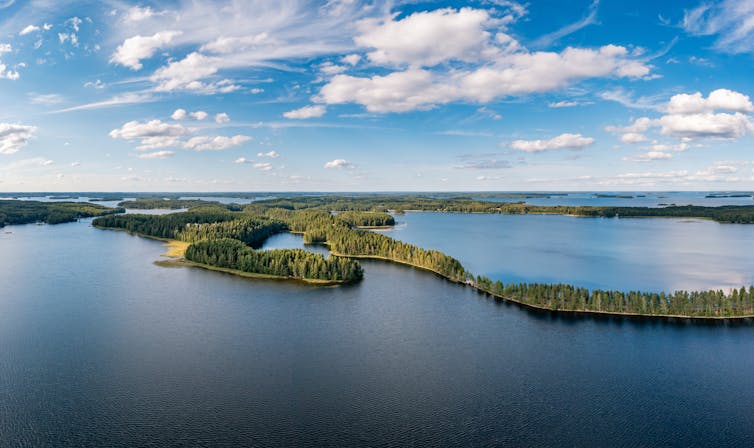
We carried out our study on the Saimaa salmon in Finland, a critically endangered, landlocked population that’s been around since the last ice age. Once common in the wild, the Saimaa salmon would now go extinct in the wild if it were not for hatchery production sustaining the population. This is because the construction of hydropower stations and deforestation destroyed their natural spawning habitats in the 20th century.

An aerial view of Lake Saimaa on a summer's day.
Lake Saimaa in Finland.
ArtBBNV/Shutterstock

In humans, facial symmetry is often associated with beauty. It’s no coincidence that stars like Zendaya and Harry Styles, whose features exhibit remarkable symmetry, are held up as icons of attractiveness.

In fish, symmetry is associated with low environmental stress. So, it can be a valuable tool for understanding how effective hatcheries are in producing more natural fish.

To understand how hatchery conditions shape fish development, we photographed Saimaa salmon from both sides and compared their features. Some fish had spent a year in tanks, others just a few days before being released into a river. We then measured their symmetry as an indicator of stress.

What we found was striking. Even fish reared in captivity for just one year showed clear signs of asymmetry. And efforts to enrich their lives, such as by adding shelters and fluctuating water flows, did not prevent asymmetry.

The only technique that prevented asymmetry was releasing the fish into a natural river after they had just hatched, minimising their exposure to the hatchery environment.

Fish released into the wild after hatching also had larger pectoral fins and lower jaws, relative to body size, when compared to those reared in captive environments. These traits may be beneficial in the wild where there are more complex river flows and diets. They were reduced in those fish who had spent most of their life in the hatchery.

Letting nature lead

Our research suggests that the hatchery environment – no matter how carefully managed – is no substitute for nature. While hatcheries can act as a stopgap for critically endangered populations like the Saimaa salmon, they are not a long-term fix for species in decline.

If hatcheries must be used, our study show it’s vital to get fish into natural conditions as early as possible. But ultimately, if we want wild salmon to not just survive but thrive, we have to fix the problems that caused their decline in the first place.

Humanity often tries to engineer its way out of environmental crises. But nature isn’t easily replaced. Sometimes, the best solution is to give it the space to recover on its own.

The Conversation

William Perry does not work for, consult, own shares in or receive funding from any company or organisation that would benefit from this article, and has disclosed no relevant affiliations beyond their academic appointment.

ref. Wild salmon are the Zendayas of the fish world – what that tells us about conservation – https://theconversation.com/wild-salmon-are-the-zendayas-of-the-fish-world-what-that-tells-us-about-conservation-262268

Morocco using economic clout to strengthen grip on disputed Western Sahara territory

Source: The Conversation – UK – By Andrea Maria Pelliconi, Lecturer in Human Rights Law, University of Southampton

Christopher Nolan, known for directing blockbusters like Memento, Interstellar and Oppenheimer, is facing public backlash for filming scenes of his new film, The Odyssey, in part of north Africa called Western Sahara.

The territory, formerly known as Spanish Sahara when it was administered from Madrid, was occupied by the Moroccan military in the 1970s and unlawfully annexed. It remains classified by the UN as a “non-self-governing territory” awaiting decolonisation.

The recent controversy concerns the filming of part of The Odyssey in Dahkla, a Western Saharan city on the coast of the Atlantic Ocean. It has brought attention to one of the most overlooked and protracted armed conflicts in the modern world, now 50 years old.

Since Spain’s withdrawal in 1975, Western Sahara has been entangled in a territorial dispute involving an Algeria-backed national liberation movement called the Polisario Front, Morocco and, briefly, Mauritania. Amid serious human rights concerns, Morocco now occupies around 80% of the territory.

This is despite a landmark 1975 International Court of Justice (ICJ) advisory opinion affirming that the indigenous Sahrawi people have the right to decide whether to join Morocco or form their own state in a UN-backed referendum.

The referendum, which has been repeatedly delayed, is intended to ensure the free expression of the will of the Sahrawi people. Known as the “people of the Sahara”, the Sahrawi are made up of numerous tribes with a shared culture. They are a distinct ethnic group from Moroccans.

Only part of the Sahrawi people continue to live in Western Sahara under Morocco’s control. Most have fled to Algerian refugee camps supported by the UN Refugee Agency.

A map of Morocco and Western Sahara.
Morocco has claimed Western Sahara as its own since 1975.
Peter Hermes Furian / Shutterstock

It was from Algeria, in 1976, that the Polisario Front declared the Sahrawi Arab Democratic Republic (SADR). The Polisario Front claims to represent the Sahrawi people and is considered a legitimate interlocutor by the UN and EU.

The SADR is now a member of the African Union and has, over the years, been recognised (and sometimes un-recognised) by numerous states. Yet it is far from being universally recognised, and Morocco and Polisario continue to engage in armed hostilities for territorial control.

Only a referendum could determine whether the Sahrawi want to be Moroccans or have their own state. But five decades on from the ICJ’s advisory opinion, no such referendum has been held. Meanwhile, Morocco has entrenched its control of Western Sahara, or what it calls the “Southern Provinces”.

It has done so by changing the demographic composition of the population by civil and military means, and bolstering international support for its 2007 autonomy plan. The plan offers limited self-rule for Sahrawis under Moroccan sovereignty, and is harshly opposed by Polisario and Sahrawi groups.

Recognising Moroccan sovereignty

In 2020, under the first Trump administration, the US became the first major power to recognise the autonomy plan and Moroccan sovereignty over Western Sahara. This was part of a diplomatic quid pro quo for Rabat’s normalisation of ties with Israel under the Abraham Accords. Washington has recently reaffirmed its position.

Other global players have followed suit. Spain endorsed the autonomy plan in 2022, despite maintaining an ambiguous policy of “active neutrality”. And France officially recognised Morocco’s sovereignty in 2024.

In June 2025, the UK stated that the autonomy plan represents “the most credible, viable and pragmatic basis for a mutually agreed and lasting solution to the Western Sahara dispute” in a joint communiqué with Morocco. This was despite affirming later that the territory remains of “undetermined” status.

Growing support for Morocco’s sovereignty claims is driven by several geopolitical interests. These include energy security, investment opportunities, counter-terrorism cooperation, migration management and regional influence.

Western Sahara is rich in phosphates, fisheries and potential offshore oil and gas reserves. Major infrastructure projects there, including water management, ports and renewables, are luring international investors.

More recently, Morocco has expanded its focus to tourism and transport development and, as seen with Nolan’s film and its plans to co-host the 2030 Fifa men’s World Cup, apparently also the entertainment industry.

Rabat seems to be using development as a means of domination. And its growing economic clout and regional influence are shifting the cost-benefit calculus of world powers to take Morocco’s side in this dispute. This has made support for legal principles politically inconvenient.

But legal principles matter and consistently support the Sahrawi position. In 2022, the African Court on Human and Peoples’ Rights reaffirmed that Morocco’s continued occupation violates the Sahrawi people’s right to self-determination. This right is a “jus cogens norm” in international law, meaning it is binding on all states and cannot be derogated from.

The International Law Commission stipulates that third states must neither recognise situations arising from breaches of such norms nor assist in their maintenance. This position was reaffirmed by the ICJ in July 2024. In its advisory opinion on Israel’s occupation of Palestinian territories, it reiterated that states and international organisations should not aid or assist the maintenance of illegal occupations.

This further implies that states should disengage from their investments in Western Sahara unless these have been agreed with the Sahrawi people. In October 2024, the EU’s Court of Justice annulled EU-Morocco trade and fisheries agreements where these applied to Western Sahara. It cited the lack of Sahrawi consent in violation of self-determination.

The growing diplomatic endorsement of Morocco’s autonomy plan risks legitimising an unlawful occupation under the veneer of pragmatism. The normalisation of occupation sets a troubling precedent for other territorial disputes around the world, from Ukraine and Palestine to Syria and Kashmir.

Some argue that Morocco’s autonomy plan represents a “realistic” solution to an intractable conflict. But decisions imposed without consent are not solutions, as they lead to further opposition and conflict. Privileging power over principle would betray the Sahrawi people and jeopardise international law.

The Conversation

Andrea Maria Pelliconi is a recipient of a British Academy/Leverhulme Small Research Grant (2024 – 2026) to complete a study of demographic engineering and apartheid in Western Sahara.

I gratefully acknowledge the work of our two research assistants: Dr. Meriem Naili and Beya Mousli. For further information about our project please visit: https://www.nottingham.ac.uk/research/groups/nottingham-international-law-and-security-centre/research/western-sahara-project/western-sahara-project.aspx

Victor Kattan is a recipient of a British Academy/Leverhulme Small Research Grant (2024 – 2026) to complete a study of demographic engineering and apartheid in Western Sahara.

ref. Morocco using economic clout to strengthen grip on disputed Western Sahara territory – https://theconversation.com/morocco-using-economic-clout-to-strengthen-grip-on-disputed-western-sahara-territory-262763

Menopause and brain fog: why lifestyle medicine could make a difference

Source: The Conversation – UK – By Maria Pertl, Lecturer in Psychology, Department of Health Psychology, RCSI University of Medicine and Health Sciences

SpeedKingz/Shutterstock

By 2030, an estimated 47 million women worldwide will enter menopause each year. The transition through menopause can last several years and brings with it a host of physical, mental and brain changes. One of the most distressing symptoms reported by women is “brain fog”.

This umbrella term refers to difficulties with memory, concentration and mental clarity. Women may find themselves forgetting words, names or appointments, or misplacing items. While these symptoms can be alarming, they usually resolve after menopause and are not a sign of dementia.

Hormonal fluctuations, particularly declining oestrogen levels, are a key driver of cognitive changes during the menopause transition. But it’s not just hormones. Hot flushes, night sweats, poor sleep and low mood all contribute to cognitive difficulties. The good news? Many of the contributing factors are modifiable. That’s where lifestyle medicine comes in.

Lifestyle medicine is an evidence-based approach that uses lifestyle interventions to prevent and manage chronic conditions such as heart disease, diabetes and dementia. It focuses on six pillars: sleep, physical activity, nutrition, stress management, social connection and avoidance of harmful substances. These same pillars can also support cognitive health during menopause.

Sleep is an underestimated factor in brain health — it is essential for memory consolidation and brain repair. Yet one in three women going through menopause experience significant sleep disturbance. Hot flashes, anxiety, and hormonal changes can all disrupt sleep, creating a vicious cycle that worsens brain fog.

Improving sleep hygiene can help. This includes avoiding caffeine late in the day, reducing screen time before bed, keeping a consistent sleep schedule and maintaining a cool bedroom. Physical activity during the day – especially outside in the morning – also supports better sleep.

Physical activity is one of the most powerful tools for brain health. It improves blood flow to the brain, reduces inflammation and increases the size of the hippocampus (the brain’s memory centre). It also helps regulate mood, improve sleep and support cardiovascular and metabolic health. For menopausal women, it has the added benefit of improving bone health, sexual function and maintaining a healthy weight.

The World Health Organization recommends at least 150–300 minutes of moderate-intensity aerobic activity per week, plus two sessions of muscle-strengthening exercises. Even brisk walking can make a difference.

Stress can make it difficult to think clearly and chronic stress may accelerate brain ageing through chronically elevated cortisol levels. Menopause can be a stressful time, especially when cognitive changes affect sleep, confidence and daily functioning.

Mindfulness, yoga, tai chi and breathing exercises can help reduce stress and improve focus. Cognitive behavioural therapy (CBT), a form of talking therapy, is also effective in addressing negative thought patterns and improving coping strategies. Finding a hobby that brings joy or a sense of “flow” can also be a powerful stress reliever.

What we eat plays a crucial role in brain health. The Mediterranean diet — rich in vegetables, fruits, whole grains, legumes, nuts, olive oil and fish — has been linked to better memory and reduced risk of cognitive decline.

Omega-3 fatty acids, found in fatty fish and flaxseeds, are particularly beneficial for brain function. Avoiding ultra-processed foods, added sugars and trans fats can help reduce inflammation and stabilise energy levels.

Social connection is a powerful yet often overlooked pillar of lifestyle medicine that has substantial effects on physical, mental and brain health. During menopause, women may feel less able to participate in social activities and experience increased isolation or changes in relationships, which can negatively affect mood and cognition.

Strong social ties stimulate the brain, support emotional regulation, and buffer against stress. Quality matters more than quantity. Regular check-ins with friends, joining a club, volunteering, or even brief positive interactions can all make a difference.

Alcohol and other substances can have a circular effect on sleep, mood, and cognition. While alcohol may initially feel relaxing, it disrupts sleep quality and can worsen anxiety and memory issues.

Reducing alcohol and avoiding tobacco and recreational drugs can improve sleep, mood and cognitive clarity. If cutting back feels difficult, seeking support from a healthcare professional or support group can be a helpful first step.

Making lifestyle changes can feel overwhelming, especially when you’re already feeling tired or stressed. Financial pressures or personal circumstances can make lifestyle changes feel out of reach. Start small. Make just one change in one pillar, such as sticking to a regular bedtime or adding a short daily walk, and build from there. Small, consistent steps can make a big difference to clearing brain fog.

Menopausal brain fog is real, but it’s also manageable. By focusing on the six pillars of lifestyle medicine, women can take proactive steps to support their cognitive health and overall wellbeing during this important life transition.

The Conversation

Maria Pertl receives research funding from the Irish Cancer Society and the National Cancer Control Programme. She is a committee member of the Irish Society of Lifestyle Medicine.

Lisa Mellon co-founded the Irish Society for Lifestyle Medicine.

ref. Menopause and brain fog: why lifestyle medicine could make a difference – https://theconversation.com/menopause-and-brain-fog-why-lifestyle-medicine-could-make-a-difference-261683

Weight loss support before IVF could boost pregnancy chances – and reduce the need for treatment

Source: The Conversation – UK – By Nerys M. Astbury, Associate Professor, Health Behaviours, University of Oxford

Close-up of in vitro fertilisation in a petri dish Rohane Hamilton/Shutterstock

Around one in five women of childbearing age are living with [obesity], defined by the World Health Organization as having a body mass index (BMI) over 30 kg/m². Compared with women in the healthy BMI range (18.5–24.9 kg/m²), those living with obesity are three times more likely to experience fertility problems and nearly twice as likely to have a miscarriage. Many turn to in vitro fertilisation (IVF) in the hope of having a baby.

Women with obesity who are planning a pregnancy are already advised that losing weight can improve their chances of conceiving. Our research suggests that structured weight loss support may also improve outcomes for those seeking IVF.

Our study analysed data from 12 international trials involving 1,921 women living with obesity, all planning IVF. It compared those offered a weight loss programme before IVF with those receiving standard care, which typically does not include such support.

Women who took part in a weight loss programme had a 21% higher chance of becoming pregnant overall – whether naturally or through IVF. The biggest difference was in natural conceptions: the likelihood of getting pregnant without IVF rose by 47%, meaning some women avoided fertility treatment altogether.

However, despite these higher pregnancy rates and no increase in miscarriage risk, there was no clear evidence of an effect on live birth rates. This may be because many of the included studies didn’t track live birth outcomes – even though this is the result that matters most to patients.

IVF access paradox

In the UK, publicly funded IVF is restricted to women with a BMI under 30. Similar weight-based eligibility rules exist in many other countries. These policies disproportionately affect women from more deprived backgrounds and some ethnic groups, who are more likely to be living with obesity.

The paradox is clear: women with obesity are more likely to need IVF, but less likely to be eligible for it.

Some can afford private weight loss programmes to meet the BMI requirement. Others resort to unproven or unsafe methods to lose weight quickly, risking their health in order to access fertility care.

Our research findings suggest that offering structured weight loss programmes to women with obesity who are otherwise ineligible for IVF could help more women become pregnant – and in some cases avoid IVF altogether.

This approach could also make fertility treatment more equitable. Since the cost of weight loss support is relatively low compared with IVF, including it in the treatment pathway might offer better value for healthcare providers.

Weight loss options before IVF

The most effective non-surgical option for significant weight loss is a class of medications called GLP-1 receptor agonists – such as Wegovy or Mounjaro – which have been shown to lead to substantial weight reduction.

However, these drugs should not be used during pregnancy, while trying to conceive, or while breastfeeding, as there’s little safety data in humans – and animal studies suggest potential harm to foetal development. Anyone who becomes pregnant while taking GLP-1 drugs should stop immediately and consult a healthcare professional.

For women planning to conceive soon, there are other safe and effective options, including structured support groups and low-energy diet programmes. The problem is that such services are not offered as part of standard IVF care.

While some NHS weight management programmes exist, access is limited, waiting lists can be long, and most are aimed at people with obesity-related health conditions rather than those seeking fertility treatment. In many other countries, insurance coverage for weight loss support is similarly patchy, meaning these services must often be funded privately – a cost that can put them out of reach for those who could benefit most.

The message from this research is clear: targeted, supportive weight loss programmes before IVF don’t just improve pregnancy chances – they could also reduce the need for IVF, promote fairer access to fertility treatment, and save healthcare resources. The challenge now is making sure they’re available to everyone who needs them, not just those who can afford to pay.

The Conversation

The authors do not work for, consult, own shares in or receive funding from any company or organisation that would benefit from this article, and have disclosed no relevant affiliations beyond their academic appointment.

ref. Weight loss support before IVF could boost pregnancy chances – and reduce the need for treatment – https://theconversation.com/weight-loss-support-before-ivf-could-boost-pregnancy-chances-and-reduce-the-need-for-treatment-260544

GPT-5: has AI just plateaued?

Source: The Conversation – UK – By Michael Rovatsos, Professor of Artificial Intelligence, University of Edinburgh

OpenAI claims that its new flagship model, GPT-5, marks “a significant step along the path to AGI” – that is, the artificial general intelligence that AI bosses and self-proclaimed experts often claim is around the corner.

According to OpenAI’s own definition, AGI would be “a highly autonomous system that outperforms humans at most economically valuable work”. Setting aside whether this is something humanity should be striving for, OpenAI CEO Sam Altman’s arguments for GPT-5 being a “significant step” in this direction sound remarkably unspectacular.

He claims GPT-5 is better at writing computer code than its predecessors. It is said to “hallucinate” a bit less, and is a bit better at following instructions – especially when they require following multiple steps and using other software. The model is also apparently safer and less “sycophantic”, because it will not deceive the user or provide potentially harmful information just to please them.

Altman does say that “GPT-5 is the first time that it really feels like talking to an expert in any topic, like a PhD-level expert”. Yet it still doesn’t have a clue about whether anything it says is accurate, as you can see from its attempt below to draw a map of North America.

It also cannot learn from its own experience, or achieve more than 42% accuracy on a challenging benchmark like “Humanity’s Last Exam”, which contains hard questions on all kinds of scientific (and other) subject matter. This is slightly below the 44% that Grok 4, the model recently released by Elon Musk’s xAI, is said to have achieved.

The main technical innovation behind GPT-5 seems to be the introduction of a “router”. This decides which model of GPT to delegate to when asked a question, essentially asking itself how much effort to invest in computing its answers (then improving over time by learning from feedback about its previous choices).

The options for delegation include the previous leading models of GPT and also a new “deeper reasoning” model called GPT-5 Thinking. It’s not clear what this new model actually is. OpenAI isn’t saying it is underpinned by any new algorithms or trained on any new data (since all available data was pretty much being used already).

One might therefore speculate that this model is really just another way of controlling existing models with repeated queries and pushing them to work harder until it produces better results.

What LLMs are

It was back in 2017 when researchers at Google found out that a new type of AI architecture was capable of capturing tremendously complex patterns within long sequences of words that underpin the structure of human language.

By training these so-called large language models (LLMs) on large amounts of text, they could respond to prompts from a user by mapping a sequence of words to its most likely continuation in accordance with the patterns present in the dataset. This approach to mimicking human intelligence became better and better as LLMs were trained on larger and larger amounts of data – leading to systems like ChatGPT.

Ultimately, these models just encode a humongous table of stimuli and responses. A user prompt is the stimulus, and the model might just as well look it up in a table to determine the best response. Considering how simple this idea seems, it’s astounding that LLMs have eclipsed the capabilities of many other AI systems – if not in terms of accuracy and reliability, certainly in terms of flexibility and usability.

The jury may still be out on whether these systems could ever be capable of true reasoning, or understanding the world in ways similar to ours, or keeping track of their experiences to refine their behaviour correctly – all arguably necessary ingredients of AGI.

In the meantime, an industry of AI software companies has sprung up that focuses on “taming” general purpose LLMs to be more reliable and predictable for specific use cases. Having studied how to write the most effective prompts, their software might prompt a model multiple times, or use numerous LLMs, adjusting the instructions until it gets the desired result. In some cases, they might “fine-tune” an LLM with small-scale add-ons to make them more effective.

OpenAI’s new router is in the same vein, except it’s built into GPT-5. If this move succeeds, the engineers of companies further down the AI supply chain will be needed less and less. GPT-5 would also be cheaper to users than its LLM competitors because it would be more useful without these embellishments.

At the same time, this may well be an admission that we have reached a point where LLMs cannot be improved much further to deliver on the promise of AGI. If so, it will vindicate those scientists and industry experts who have been arguing for a while that it won’t be possible to overcome the current limitations in AI without moving beyond LLM architectures.

Old wine into new models?

OpenAI’s new emphasis on routing also harks back to the “meta reasoning” that gained prominence in AI in the 1990s, based on the idea of “reasoning about reasoning”. Imagine, for example, you were trying to calculate an optimal travel route on a complex map. Heading off in the right direction is easy, but every time you consider another 100 alternatives for the remainder of the route, you will likely only get an improvement of 5% on your previous best option. At every point of the journey, the question is how much more thinking it’s worth doing.

This kind of reasoning is important for dealing with complex tasks by breaking them down into smaller problems that can be solved with more specialised components. This was the predominant paradigm in AI until the focus shifted to general-purpose LLMs.

GPT-5 phone in front of a computer screen
No more gold rush?
JarTee

It is possible that the release of GPT-5 marks a shift in the evolution of AI which, even if it is not a return to this approach, might usher in the end of creating ever more complicated models whose thought processes are impossible for anyone to understand.

Whether that could put us on a path toward AGI is hard to say. But it might create an opportunity to move towards creating AIs we can control using rigorous engineering methods. And it might help us remember that the original vision of AI was not only to replicate human intelligence, but also to better understand it.

The Conversation

Michael Rovatsos has received funding from the Cisco University Research Program Fund that supports research involving Large Language Models (LLMs), in-kind contributions in the form of cloud credits from Google to use LLMs they provide, and public funding from UK Research and Innovation and the European Commission. He has also provided consultancy to UK government departments. He is a member of the Scottish Government’s Tech Council and affiliated with the Alan Turing Institute.

ref. GPT-5: has AI just plateaued? – https://theconversation.com/gpt-5-has-ai-just-plateaued-262963

Where you think you are in society (not where you actually are) matters for how you think about inequality

Source: The Conversation – UK – By Giacomo Melli, PhD candidate in sociology, University of Oxford

Where do you see yourself on the ladder? Cristina Conti/Shutterstock

Imagine society as a ladder with ten rungs. Where would you place yourself? That answer reflects your subjective social status – where you see yourself in society. Importantly, this is not necessarily reflective of where you actually are. Subjective social status matters as it shapes what you believe, how you behave, and, as my new study shows, how much you care about economic inequality.

These days, economic inequality is hard to ignore. In the UK, the richest 10% of households holds nearly half of all wealth, while millions struggle to make ends meet.

My research asked: why do some people support reducing inequality while others don’t?

Take two middle class professionals with similar jobs and incomes. One supports higher taxes on the wealthy, the other doesn’t. Why the difference? It’s not just their actua class position. What matters is where they feel they stand in society – their subjective social status.

My research analysed survey data on more than 51,000 people from 25 countries where respondents placed themselves on a ten-rung ladder representing society. This simple question – about how people feel they rank socially – turns out to be a powerful predictor of support for redistribution, such as progressive taxation or government efforts to reduce income inequality.

You might assume that views on redistribution boil down to income: those struggling financially want the government to help reduce inequality, while those who are doing well want to keep things as they are. But what really matters is where people feel they stand compared to others, regardless of their actual income or job.

As the sociological theory known as the Thomas theorem puts it: “If people define situations as real, they are real in their consequences.” These consequences can also affect politics – how people perceive their social standing can shape what policies (and parties) they support.

Where do you think you are?

My research found that people who feel at the bottom of the social ladder tend to support income redistribution, regardless of how unequal their country actually is. That might seem obvious.

But what’s striking – and what the research also shows – is how often people’s perceptions don’t match their economic reality. One in five who place themselves in the top third are in fact working class, while one in five people who see themselves in the bottom third of society are actually high income earners in their country. People’s perceptions of where they stand often don’t match reality because they rely on personal background, upbringing and comparisons with peers or social circles.

You might expect those who feel near the top of society to oppose redistribution, especially in countries where inequality is high. Yet the evidence tells a different story. People behave very differently depending on how unequal their society is.

In countries where income inequality is high, those who feel privileged are often more supportive of redistribution. This doesn’t happen in countries where inequality is low. My findings show that, for example, someone who feels near the top in the US (an unequal country) is 31% more likely to support government action to reduce inequality than their counterpart in more equal Denmark.

This suggests that “wealthy” people’s attitudes aren’t just about protecting their own interests. Something else is at play.

Fear and altruism

One possible answer lies in two feelings: fear and altruism. Those who feel socially well off don’t live in a vacuum, they notice when inequality is high around them. Whether out of fear for their own safety, altruism for those struggling or both, these feelings can lead even the privileged to support government efforts to reduce inequality.

Why should those who feel at the top of society in low-inequality countries worry? They think they are doing well, and they can see that society around them is also functioning reasonably well.

People respond not only to their material conditions, but to how they see themselves and the context around them. Even those who feel they’re doing well may support redistribution if they believe growing inequality could threaten the system.

Wooden blocks depicting two people on an uneven seesaw, against a yellow background
Where you think you are in terms of wealth in society doesn’t necessarily reflect where you actually are.
Bored Photography/Shutterstock

This research reveals something crucial about how politics works in democratic societies. Politics is about how people see themselves, not just their income or class. This matters beyond redistribution. It also affects populist attitudes, electoral participation and support for far-right parties.

This insight helps explain why some middle-class voters might back policies that don’t seem to benefit them, and why opinions vary so much between similar countries. As inequality keeps shaping political debates worldwide, understanding these feelings becomes key to making sense of contemporary politics. At the end of the day, it’s perception, not just reality, that drives the politics we see.

The Conversation

Giacomo Melli does not work for, consult, own shares in or receive funding from any company or organisation that would benefit from this article, and has disclosed no relevant affiliations beyond their academic appointment.

ref. Where you think you are in society (not where you actually are) matters for how you think about inequality – https://theconversation.com/where-you-think-you-are-in-society-not-where-you-actually-are-matters-for-how-you-think-about-inequality-259715

Synthetic drugs are having devastating effects around the world, from Sierra Leone to the UK

Source: The Conversation – UK – By Joseph Janes, Senior Lecturer in Criminology, Swansea University

In the blistering heat of Freetown, Sierra Leone, young men gather on street corners, their limbs swollen, eyes glazed. They are the victims of kush, a cheap and deadly synthetic drug sweeping the country.

But kush is not an isolated tragedy. From the townships of apartheid South Africa to the 21st-century streets of the UK, synthetic drugs have a long history of flourishing in places where society has abandoned its most vulnerable.

Kush first appeared in Sierra Leone around 2016, but its spread in recent years has been nothing short of catastrophic. Between 2020 and 2023, psychiatric admissions linked to the drug skyrocketed to a reported 1,865 cases at the country’s only psychiatric hospital.

The drug claims mostly young men between the ages of 18 and 25, whose bodies are ravaged by kush’s toxic effects. Doctors in Freetown estimate that hundreds of users have died from organ failure caused by the drug in recent months.

Sierra Leone’s president, Julius Maada Bio, branded kush a “death trap” and declared a national emergency. The drug, he says, represents an “existential crisis” for the nation.

Kush is both cheap and easily accessible, sold openly on the streets for as little as 20 pence per joint. But for those hooked on it, the cost can climb to £8 a day. This is a staggering sum in a country where the average income barely exceeds £4,000 a year.

The drug’s ingredients are equally chilling. A mix of cannabis, synthetic opioids like fentanyl, formalin (used in embalming) and, according to some reports, ground human bone, it’s a concoction that speaks to the bleakness of life for those who turn to it.

Channel 4 News report on kush in Sierra Leone.

Kush’s grip on Sierra Leone is not a random phenomenon but a symptom of a much deeper problem. The drug has become a chemical escape for people who see no viable future for themselves.

For those living in poverty and experiencing hunger, kush offers something that life in Sierra Leone often cannot: temporary relief from trauma and despair. It’s not a recreational indulgence but survival in a country where many face daily battles just to get by.

The drug’s rise follows a pattern seen in other parts of the world, where synthetic substances fill the void left by broken systems.

Apartheid South Africa

The situation in Sierra Leone echoes a chilling chapter from South Africa’s apartheid era. In the 1980s, methaqualone, a synthetic sedative-hypnotic drug – sold as quaalude or mandrax – became widely used in the townships, particularly among Black communities.

Often smoked alongside cannabis in a mix known as the “white pipe”, it became a cheap, sedative drug much like kush in Freetown today.

Vice documentary on methaqualone.

The apartheid government didn’t just turn a blind eye to its widespread use but deliberately encouraged it. Under the secretive Project Coast, the government’s chemical and biological warfare programme, scientists developed large quantities of methaqualone, ostensibly for crowd control and incapacitation.

Methaqualone was not officially declared a weapon. But evidence compiled by the UN suggests it was developed and stockpiled in prototype delivery systems that were intended to incapacitate without killing, then deployed quietly among the dissenting population.


Read more:
Addicted: how the world got hooked on illicit drugs – and why we need to view this as a global threat like climate change


The parallels with kush are undeniable. Both are chemically produced, highly addictive depressants offering cheap and easily accessible sedation to marginalised populations. These types of drug do not just affect individuals but serve to suppress entire communities under the weight of structural violence.

In South Africa, methaqualone was weaponised by the state as a means of control, while in Sierra Leone, kush has emerged in areas abandoned by the government. In both cases, the effect is the same: a drug-fuelled stasis that deepens despair and maintains a status quo of social neglect.

It’s a pattern where a synthetic depressant materialises in places where no other social or economic medicine exists, sedating not only bodies but resistance and possibility.

Spice in the UK

This pattern of synthetic drugs as a response to social decay is not confined to Africa. In the UK, synthetic drugs such as spice have become more common over the past decade, especially among homeless people and prisoners. Described as a “zombie drug” for its paralysing effects, spice is often used not for pleasure but to escape hunger, cold and trauma.

A 2023 study among the UK’s homeless population found that nearly 70% of participants, aged 18-64, used synthetic drugs such as spice to escape the harsh realities of homelessness. Many reported adverse effects that led to hospitalisation.

In many British towns and cities, it has become common to see users slumped on pavements or convulsing in parks, echoing the scenes from Sierra Leone’s kush hotspots.

This serves as a stark reminder that synthetic drugs are not an isolated issue. They are a global crisis playing out in different forms but with the same underlying causes.

Synthetic drugs like kush, methaqualone and spice are symptoms of deeper systemic failures. They thrive where housing is unstable, unemployment is rampant and healthcare is out of reach. Addressing the crisis requires more than just cracking down on drug use. It demands a radical shift in how we treat the most vulnerable in our society.


Read more:
‘There has never been a more dangerous time to take drugs’: the rising global threat of nitazenes and synthetic opioids


In Sierra Leone, this means investing in youth employment, improving nutrition and strengthening mental health services. In the UK, it calls for restoring funding to housing and substance use services, and recognising that stable shelter and social support are fundamental to recovery, not rewards for abstinence.

If we are serious about tackling this problem, we need to move beyond punishment and focus on addressing the root causes of addiction. Only by investing in social care and harm reduction can we hope to break the cycle of sedation and despair.

The Conversation

Joseph Janes does not work for, consult, own shares in or receive funding from any company or organisation that would benefit from this article, and has disclosed no relevant affiliations beyond their academic appointment.

ref. Synthetic drugs are having devastating effects around the world, from Sierra Leone to the UK – https://theconversation.com/synthetic-drugs-are-having-devastating-effects-around-the-world-from-sierra-leone-to-the-uk-262746

From clear skin to detoxing, chlorophyll and collagen supplements promise a lot, but what does the science say?

Source: The Conversation – UK – By Dan Baumgardt, Senior Lecturer, School of Physiology, Pharmacology and Neuroscience, University of Bristol

Tatevosian Yana/Shutterstock

Walk into any health store, scroll through TikTok, or browse the shelves of your favourite beauty retailer, and you’ll be met with a familiar promise: that a pill, powder or potion could be the secret to glowing skin, boosted energy, or even inner “detoxification.” Among the most hyped are chlorophyll – the green pigment in plants now found in trendy waters and tinctures – and collagen, the protein hailed as the holy grail for youthful skin and strong joints.

But how much of the buzz is backed by science? And how much is just clever marketing dressed up in green juice and glossy packaging?

Let’s take a closer look to explore what they actually do, what the evidence says, and whether your money (and hopes) might be better spent elsewhere.

Chlorophyll

Dark leafy greens like kale and cavolo nero are well known for boosting levels of essential nutrients such as iron, folate and beta-carotene. They’re also rich in chlorophyll – the pigment that plays a key role in photosynthesis, the process by which plants use sunlight to produce glucose and oxygen.

Some wellness influencers, including Gwyneth Paltrow and Kourtney Kardashian-Barker, have popularised chlorophyll water as part of their daily health routines. Both promote it through their respective wellness brands – Goop and Poosh – touting a range of supposed benefits, from reducing body odour to supporting detoxification. One of the more persistent claims is that chlorophyll – in water or supplement form – can “oxygenate” the blood.

But as Ben Goldacre – physician, academic and prominent critic of pseudoscience – has pointed out, that claim doesn’t quite hold up. The human body, unlike a plant leaf, isn’t flooded with sunlight. And without light, chlorophyll simply can’t perform photosynthesis in the gut or bloodstream. It can’t generate oxygen internally – no matter how green your smoothie.

So what does chlorophyll actually do? Aside from turning plants (and your poo) a vivid shade of green, its core function is to trap sunlight and convert water and carbon dioxide into glucose and oxygen. Cast your mind back to GCSE biology and the familiar photosynthesis equation scribbled across the whiteboard.

Through this process, plants generate food for themselves and for animals – while releasing oxygen into the atmosphere. It’s a pathway fundamental to life on Earth. But since we breathe in oxygen and eat carbohydrates, we’ve managed to thrive without chlorophyll. And for it to work in humans the way it does in plants, it would surely need to be present in our skin – effectively turning us into the Wicked Witch of the West.

So what about those wider health claims? Supplement packaging for chlorophyllin – a semi-synthetic, water-soluble form of chlorophyll thought to be more active – often promises detoxification, glowing skin, improved wound healing and even better body odour.

The suggested mechanisms? Chlorophyll may inhibit bacterial growth or neutralise foul-smelling compounds in the gut. It’s also been proposed as a free radical scavenger – mopping up the unstable molecules generated by toxins or metabolism that can damage tissues.

The evidence is mixed. A few (much older) studies suggest chlorophyllin can reduce the odour of faeces and flatulence, although it might also turn them green. There’s weaker evidence when it comes to halitosis or body odour. Research supporting its role as an antioxidant is limited, and the buzz around weight loss is largely anecdotal. Realistically, any benefit in that department likely comes from a diet rich in greens – low in fat and high in fibre – rather than chlorophyll alone.

Where things get more promising is in wound care. Chlorophyll-based dressings have been investigated for their ability to accelerate healing and reduce odours from infected wounds.


Read more:
How to treat a wound – without using superglue, grout or vodka, like some people


Collagen

But chlorophyll isn’t the only so-called “miracle” substance being sold to the wellness crowd. Take collagen – arguably even more popular than any green powder or superfood pill.

Collagen is a protein and a natural component of connective tissue found throughout the body. It gives strength and structure to the skin, bones, ligaments, blood vessels – even the heart and lungs. Without enough collagen – or in conditions where collagen production is impaired, such as Ehlers-Danlos syndrome – tissues can become fragile, prone to damage or slow to heal.

All the more reason, then, to make sure our bodies can produce it. Collagen is made from amino acids – the building blocks of protein – so eating enough protein is essential. Vitamin C also plays a vital role, helping the body synthesise collagen from those amino acids.

But do we really need to supplement it? What does the evidence say? Some studies suggest oral collagen supplements may help improve skin appearance, support joint health, increase bone strength, and enhance muscle mass. But there’s no convincing evidence that they promote weight loss or treat cardiovascular or autoimmune conditions – despite the lofty promises made by some brands.

Topical collagen products are even more widespread, but their scientific backing is thinner. Collagen molecules are generally too large to be absorbed through the skin, meaning they’re unlikely to have any meaningful impact on wrinkles. At best, they may hydrate the surface and offer a temporary plumping effect.

In short, the research is patchy – encouraging in some areas, inconclusive in others. And when it comes to supporting your body’s natural collagen production, there may be more effective (and less expensive) options. Foods such as chicken, fish, eggs and bone broth ensure a good protein intake. So too are collagen-supporting micronutrients, including vitamin C, copper and zinc.


Read more:
Bone broth is hyped by celebrities and hailed as a wellness superfood – here’s what the science says


So unless you’re Poison Ivy from Batman (who, to be fair, looks fantastic), you probably don’t need to load up on chlorophyll. And unless your diet is lacking, you don’t need to shell out for collagen powders or creams either.

Love the skin you’re in. It’s better than turning green like Elphaba from Wicked.

The Conversation

Dan Baumgardt does not work for, consult, own shares in or receive funding from any company or organisation that would benefit from this article, and has disclosed no relevant affiliations beyond their academic appointment.

ref. From clear skin to detoxing, chlorophyll and collagen supplements promise a lot, but what does the science say? – https://theconversation.com/from-clear-skin-to-detoxing-chlorophyll-and-collagen-supplements-promise-a-lot-but-what-does-the-science-say-261210

Freakier Friday: nostalgia-soaked sequel explores grief and blended families

Source: The Conversation – UK – By Harriet Fletcher, Lecturer in Media and Communication, Anglia Ruskin University

Twenty-two years after Lindsay Lohan and Jamie Lee Curtis first swapped bodies in the teen classic Freaky Friday, the beloved duo returns. This time there’s twice the chaos in an ambitious four-person body swap comedy dripping in noughties nostalgia. This sequel successfully recaptures the unapologetic girlish silliness that made the first film so beloved.

The timing couldn’t be better. Curtis is fresh from her Oscar win for Everything Everywhere All at Once, while Lohan is in the midst of her romcom renaissance in Netflix movies like Falling For Christmas (2022), Our Little Secret (2024) and Irish Wish (2024).

The film opens with a daydreaming Anna (Lohan), now in her late thirties, tearing it up on the electric guitar. It immediately recalls 2003 when Lohan first played the rebellious teen and aspiring rock star. Then reality hits.

This time, rebel Anna hasn’t swapped bodies with her mother – she’s become her mother. She’s a single mum working a busy job as a music producer, having shelved her rock-star dreams to raise her teenage daughter Harper (Julia Butters). Picking up where the last film left off, Anna’s mum Tess (Curtis) is still a successful therapist and author – though her latest foray into podcasting isn’t exactly going as planned.

The plot quickly sets up Anna’s new romance with fellow single-parent Eric (Manny Jacinto). He’s a charming British restaurateur who – much to Harper’s dismay – happens to be the father of her high-school nemesis Lily (Sophia Hammons). Ironically, the couple’s meet-cute in the principal’s office is incited by the girls’ feuding antics, including a science experiment that goes horribly wrong and an all-out food fight in the school yard.

The trailer for Freakier Friday.

At Anna’s bachelorette party, her and Tess are dragged into a palm reading by “Madame Jen” – a pushy but incompetent psychic and all-round grifter, comically played by SNL’s Vanessa Bayer. Harper and Lily are drawn into a separate reading and given a mysterious prophecy.

All four experience what feels like an earthquake, leading them to wake up with a rather unwelcome surprise: Anna and Harper have swapped bodies, as have Tess and Lily. Over the course of the film, Anna and Tess try to track down the elusive Madame Jen to undo the spell, while Harper and Lily use their new identities to sabotage their parents’ wedding.

While this ambitious four-person body swap is a little confusing at first (I often had to remind myself who was playing who), it hits its stride when the pairs go off on their respective capers. The concept is at its best when Harper and Lily (in Anna and Tess’s bodies) make a disastrous attempt to seduce Anna’s high school boyfriend (Chad Michael Murray), and when Anna and Tess in the teens’ much younger bodies bond over their newfound love of e-scooters.

As well as being “freakier” than its 2003 predecessor, this sequel packs a bigger emotional punch by revisiting themes of grief and blended families. Newcomer Lily is the surprising emotional core of the film – a young girl grieving the loss of her mum, homesick for her life in London, and struggling to find her place in a new family. The most poignant moments come through her unlikely bond with Tess.

That said, it’s a curious omission that Anna (Lohan) – who also lost a parent when she was younger – doesn’t share any meaningful moments with Lily. Curtis (as both Tess and Lily) does a lot of heavy lifting on this front.

Pure nostalgia

It could be argued that Freakier Friday didn’t need to retread the first film’s thematic ground at all. While the repetition does enable some degree of character development, it’s hard not to wonder what bolder risks could have taken after 22 years.

The film flirts with exploring teenage girls’ relationships with their bodies, including an over-the-top mirror scene where the teens recoil in horror at their older faces (despite Lohan and Curtis looking amazing), though mostly settles for cheap “old lady” gags.

Curtis groans about creaky knees, struggling to get off the floor and constantly needing to pee. These jokes feel out of place when she runs rings around her younger cast members and is undoubtedly the most dynamic presence in this film. At one point, Lily (in Tess’s body) overuses a lip plumper to absurd effect – a moment that hints at satirising beauty standards in the age of Botox and fillers but doesn’t dig much deeper than a surface-level punchline.

Chad Michael Murray returns as Jake for Freakier Friday.

While Freakier Friday has some fun references to contemporary pop culture, from Love Island to The Great British Bake Off with a smattering of gen-Z lingo here and there, it is a self-aware throwback to noughties girlhood. The soundtrack features Britney Spears and the Spice Girls, Curtis rocks Baby Spice pigtails, and Lohan’s pink-tint shades look like they could have teleported straight from 2003.

Even Harper and Lily’s scheme to derail the wedding feels like an intentional nod to Lohan’s childhood film, The Parent Trap (1998) – a nod that’s underscored by a cameo from Elaine Hendrix, who co-starred in the film with Lohan.

Overall, the film delivers satisfying fan service, especially through the return of noughties heartthrob Murray, whose role is pure nostalgia for long-time fans.


Looking for something good? Cut through the noise with a carefully curated selection of the latest releases, live events and exhibitions, straight to your inbox every fortnight, on Fridays. Sign up here.


The Conversation

Harriet Fletcher does not work for, consult, own shares in or receive funding from any company or organisation that would benefit from this article, and has disclosed no relevant affiliations beyond their academic appointment.

ref. Freakier Friday: nostalgia-soaked sequel explores grief and blended families – https://theconversation.com/freakier-friday-nostalgia-soaked-sequel-explores-grief-and-blended-families-262969