Ancient Incans of all classes used coded strings of hair for record keeping – new research

Source: The Conversation – UK – By Sabine Hyland, Professor of Social Anthropology, University of St Andrews
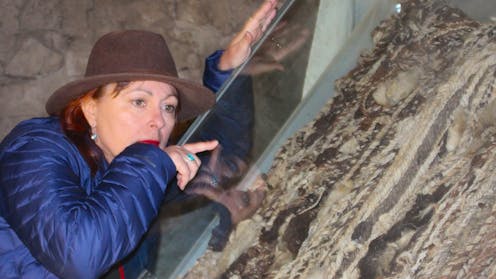
The author studying a khipu. Author provided, CC BY-SA

The people of the ancient Incan empire kept careful records of their economics, religion, demographics and history. Those records took the form of knotted cords called khipus.

Until now, researchers believed that the only people who knew how to make khipus in the Inca empire (circa 1400-1532) were very elite, high-status officials. With little direct evidence about the Inca khipu experts, researchers like myself have relied on descriptions by colonial Spanish chroniclers.

According to written sources, khipus were made exclusively by high-ranking bureaucrats who enjoyed the finest food and drink. In the Inca tradition, there was no distinction between “author” and “scribe”; both roles were combined into one.

The term used to describe an Inca khipu maker, “khipu kamayuq”, derives from the verb “kamay” which refers to creation in the sense of energising matter. Khipu experts – “kamayuq” – energised the khipus they made by imbuing the cords with their own vitality.

I head a team of researchers that has uncovered new evidence that commoners also made khipus in the Inca empire, meaning khipu literacy may have been more inclusive than previously thought. The key to this discovery is the realisation that khipu experts sometimes “signed” the khipus they made with locks of their own hair.

In Inca cosmology, human hair carried a person’s essence. A person’s hair retained his or her identity even when it was physically separated from the body. A child’s first hair-cutting, for example, was a major rite of passage. The hair removed in this ritual was given as an offering to the gods or kept in the house as a sacred object.

The Inca emperor’s hair clippings were saved during his lifetime; after death his hair was fashioned into a life-size simulacrum that was worshipped as the emperor himself.


Read more:
The Inca string code that reveals Peru’s climate history


Historically, when human hair was tied onto khipus, the hair was the “signature” of the person from whom the hair was removed. Our team observed this recently in the highland village of Jucul in Peru, where villagers possess over 90 ancestral khipus, some made centuries ago.

On the khipus of Jucul, human hair attached to the primary cord represents the people who made each section of the khipu. This accords with earlier findings that herders in highland Peru tied their own hair to khipus “like a signature”, signifying their responsibility for the information on the cords.

Personal objects tied to or otherwise incorporated into the primary cord represent the khipu creator or author. For example, on a 16th-century khipu from the Andean community of Collata, strips of a leader’s insignia scarf tied to the primary cord symbolise the man who authored the khipu, imbuing the khipu with his authority.

In contrast, when khipus contained information about multiple people, each person’s data was signified by a band of pendants of the same colour or by including hair from multiple people in the pendants.

Analysing the hair

Our team identified an Inca-era khipu, known as KH0631, with a primary cord made entirely of human hair from a single person. Until now, khipus have not been examined for the presence of human hair, so it is unknown how often they contain hair.

The human hair in KH0631’s primary cord likely represented the person who made the khipu, marking the khipu with this person’s authority and essence.

The hair in the KH0631 primary cord, 104cm long, was folded in half and twisted when the khipu was made. Assuming hair growth at 1cm per month, the hair represents over eight years of growth.

To learn about the person who made the khipu, we undertook simultaneous carbon, nitrogen and sulphur isotope measurements from a sample at the end of the cord.

The presence of the C4 isotope (instead of C3) generally indicates the consumption of maize in Andean diets; the relative levels of stable nitrogen isotopes allow us to make inferences about the proportion of meat in the diet; and the levels of stable sulphur isotopes enables us to determine the amount of marine food sources.

Because the hair was doubled over, the loose end included hair cut nearest the scalp and hair from the end of the tresses. This meant the sample represented two periods of the person’s life separated by eight or more years.

Isotopic analysis of carbon, nitrogen and sulphur in human hair has been used to determine the diet of ancient Andeans. The diet of high-status versus low-status groups in the Inca state differed greatly.
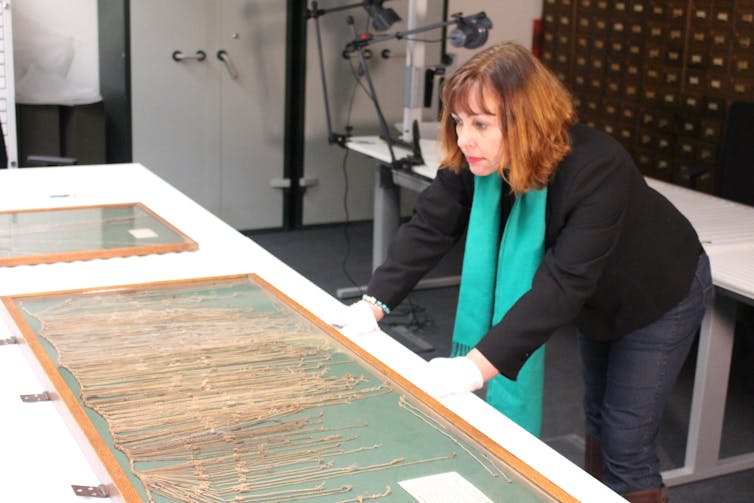
A woman looking over a glass exhibit case
The author in the Pitt Rivers Museum, Oxford undertaking research.
Author provided, CC BY-SA

Elite people consumed more meat and maize-based dishes, while commoners ate more tubers, like potatoes and greens. To our surprise, isotopic analysis of the human hair in KH0631 revealed that this person had the diet of a low-status commoner, eating a plant-based diet of tubers and greens with very little meat or maize.

Sulphur isotope analysis shows little marine contribution to the diet, indicating that this person probably lived in the highlands rather than the coast. In the ancient Andes, elites feasted on meat and maize beer, while commoners dined on potatoes, legumes and pseudo-grains like quinoa. It appears that the khipu expert who made KH0631 was a commoner.

We don’t know where in the Andes KH0631 was made, so we tested the oxygen and hydrogen isotopes in the sample. Our results show that the person lived in the highlands between 2,600-2,800m above sea level in southern Peru or northern Chile (without better data on local water values, the exact location remains tentative).

This is the first time that isotopic analysis has been conducted on khipu fibres. The human hair “signature” in KH0631’s primary cord allowed us to learn more about the person who made this object.

Although other researchers have argued that only elite officials made khipus in the Inca empire, our new evidence suggests that commoners made khipus too – and that khipu literacy may have been more widespread than previously believed.


Looking for something good? Cut through the noise with a carefully curated selection of the latest releases, live events and exhibitions, straight to your inbox every fortnight, on Fridays. Sign up here.


The Conversation

Sabine Hyland receives funding from the John Simon Guggenheim Foundation, the British Academy, the Leverhulme Trust, the British Museum and the University of St Andrews Impact Fund.

ref. Ancient Incans of all classes used coded strings of hair for record keeping – new research – https://theconversation.com/ancient-incans-of-all-classes-used-coded-strings-of-hair-for-record-keeping-new-research-263063

How a global plastic treaty could cut down pollution – if the world can agree one

Source: The Conversation – UK – By Will de Freitas, Environment + Energy Editor, The Conversation

Pol Sole/Shutterstock

The “Paris agreement for plastic” was set to be finalised at the end of this week.

But after a week and a half of intense discussions in Geneva, Switzerland, where negotiators from 180 countries are gathered, the talks are at risk of delivering a much weakened agreement (if one can be finalised at all).

“With less than 48 hours to go”, writes one academic in Geneva, “the window for action is closing”.

What has gone wrong in Geneva? And what do experts think needs to be part of a treaty in order to make it effective?

Running into resistance

Writing at the start of this round of negotiations on August 5, social scientists Cat Acheson, Alice Street and Rob Ralston of the University of Edinburgh, highlighted various elements in the draft text which could make a real difference.

“These include cutting plastic production (Article 6), banning plastic products and chemicals that are hazardous to humans or the environment (Article 3), and a section dedicated to protecting human health (Article 19).”

But many countries are pushing back. Winnie Courtene-Jones, our expert in Geneva, is a lecturer in marine pollution at Bangor University. She says the same political disagreements that have stalled previous talks remain unresolved:

“Resistance largely comes from a bloc of countries with strong petrochemical industries and interests, unwilling to compromise or pursue ambitious measures.”

This is the “like-minded group” of countries that has frustrated attempts to include these aims since the talks began in Uruguay in November 2022. Nearly all plastic is made from fossil fuel, hence the shared position of major petrochemical producers including Saudi Arabia, Russia and Iran – plus the large presence of people working for oil and gas firms and plastic manufacturers at the negotiations.

This cohort favours an agreement that seeks to manage waste, rather than cap plastic production.

“They have done so by arguing that plastics are in fact essential for protecting health, due to the role of single-use plastic in modern medicine,” Acheson and colleagues say.

From womb to grave

Petrostates citing the needs of healthcare workers in their arguments against limiting how much plastic is made worldwide are probably disingenuous. A landmark report published last week in the Lancet medical journal shows why.

“Plastics, the evidence shows, are a threat to human health – from womb to grave,” say Acheson, Street and Ralston. “They’re linked to miscarriages, birth defects, heart disease and cancer.”

The report highlights how more than 16,000 chemicals are used in plastic, many of which are not disclosed by the companies making it. Plastic chemicals are tied to health effects at all stages of human development, though foetuses, infants and young children are thought to be especially susceptible.

Less than 10% of plastic is recycled, the Lancet states. Much of it leaks out at various stages between use and disposal and breaks down into tinier and tinier fragments. Plants and worms in the soil and plankton in water ingest or absorb these microplastics, and are in turn eaten by larger organisms. This is how plastic travels through food webs – and eventually reaches us.

“It is now clear that the world cannot recycle its way out of the plastic pollution crisis,” according to the Lancet report.

woman's hand putting plastic bottle into colourful street recycling bin
The world cannot recycle its way out of the plastic pollution crisis.
siam.pukkato/Shutterstock

Plastic-eating microbes

There are some promising developments.

Just a few days ago, Julianne Megaw, a lecturer in microbiology at Queen’s University Belfast, reported the findings of her latest research on microbial degradation, which she says involves “harnessing the natural abilities of certain bacteria and fungi to break down plastics in ways that current technologies cannot”.

Such microbes are often found in polluted sites, but Megaw’s research shows they’re also found in more pristine environments. Some were able to degrade plastics by around 20% in a month without any pretreatment.

These results are “among the highest biodegradation rates ever recorded for these plastics,” writes Megaw. “This suggests that we don’t have to stick to polluted sites. It’s possible that we could find microbes with excellent plastic-degrading potential anywhere.”

This is great news of course. Maybe one day billions of friendly microbes will be set loose to clear up a century or two of plastic pollution. But even in the most optimistic scenario, we’re still some way off being able to use microorganisms at scale.

Reaching the limit?

And so that leaves the idea of placing limits on total plastic production. Research by Costas Velis, a lecturer in resource efficiency at the University of Leeds, indicates why an effective treaty will need to include some kind of global cap:

“All efforts to scientifically model the extent of plastic pollution in the future assume that restricting how much plastic the world makes each year will be necessary (among other measures) to curb its harmful presence in the environment.”

But even if countries can phase down plastic manufacturing, Velis cautions that we would have much further to go to solve the problem.

“Cutting production almost in half and using all other strategies, such as ramping up recycling and disposing of plastic waste in landfills or via incineration plants, would still leave residual pollution in 2040,” he says.

Waste management reforms, changes to the design of remaining plastic products and mandates for retailers will also be necessary.

“It could be possible to massively simplify the types of polymers used in packaging so that just a few are in circulation. This would make recycling more effective, as one of the present complications is the huge variation in materials that leads to cross-contamination. Likewise, countries could massively expand systems for reusing and refilling containers in shops,” he says.

You and I will have to get used to living with much less plastic as well – a marked shift in our lives for which there is little precedent, Velis says. A result in Geneva that reins in the expanding plastic industry could at least kickstart that process.

“Every year without production caps makes the necessary cut to plastic production in future steeper – and our need to use other measures to address the problem greater,” he says.

Whatever happens in the next few days, be sure to check out the latest coverage here on The Conversation. We have plastics experts lined up to assess the final treaty – or explain why talks ultimately did collapse.

Post-carbon

Last week, we asked you if growing awareness of microplastic contamination had affected your behaviour.

Stefan Frischauf said that plastic bags are a nightmare and, as an architect, “rebuilding and reuse of materials should be regulated in much more severe ways”.

Babette Schouws says: “I have stopped buying clothes made of polyester or other plastic materials … I always check the tag before I try something on.”

And Tina Grayson set up “a small business selling our solid shampoo and conditioner bars”. Each bar, she says, saves about three plastic bottles. “This is our contribution to the ever worrying increase of plastics and microplastics in our world – as well as doing other things in our house such as ordering milk from the milk man in glass bottles rather than buying plastic ones from the supermarket, using chewable toothpaste, using toothbrushes without plastic handles, buying our loo paper from Bamboo which is wrapped in paper etc.”

Next week, we’d like to know if severe heatwaves in the UK, southern Europe or beyond have affected your holiday plans. Will you try and avoid 40°C temperatures or head for a dip in the sea to cool off?


Don’t have time to read about climate change as much as you’d like?

Get a weekly roundup in your inbox instead. Every Wednesday, The Conversation’s environment editor writes Imagine, a short email that goes a little deeper into just one climate issue. Join the 45,000+ readers who’ve subscribed so far.


The Conversation

ref. How a global plastic treaty could cut down pollution – if the world can agree one – https://theconversation.com/how-a-global-plastic-treaty-could-cut-down-pollution-if-the-world-can-agree-one-262816

Israel’s opposition: against Benjamin Netanyahu but not yet for peace with the Palestnians

Source: The Conversation – UK – By John Strawson, Emeritus Professor of Law, University of East London

Sunday is the first day of the working week in Israel – but the upcoming Sunday August 17 promises to be a day of strikes and demonstrations. There’s a groundswell of public opposition to prime minister Benjamin Netanyahu’s promised all-out offensive against Gaza city as well as a growing sense of desperation at the plight of the remaining hostages.

The question is how will these actions on the streets translate into a coherent political alternative to Netanyahu in Knesset elections? The next election must take place by October 2026 – but it might well happen sooner.

Netanyahu has presided over the most right-wing government in the country’s history. During his current term from October 2022, mass protests have been a feature of Israeli society. Initially they were against the government’s attack on the powers of the supreme court, which many saw as a more general attack on democracy.

Now, with the failure of the military operation in Gaza to secure the release of all the October 7 hostages, the need to secure a ceasefire or a more permanent end to the war to bring the hostages home has become the focus of public protests. August 17 is likely to involve the largest national mobilisation yet.

But despite the mass action on the streets, Israel’s opposition parties have remained divided on policy and largely united only in their dislike of Netanyahu. Only the left: the Labor Party and Meretz seem to have grasped that the time has come to offer the country a clear political alternative.

After decades of rivalry, they’ve merged into one party, the Democrats, under the leadership of charismatic former deputy chief of staff of the Israel Defense Forces, Yair Golan.

Yesh Atid (which translates as There is a Future) led by Yair Lapid offer a broadly centrist political platforms. Like the Democrats, Yesh Atid has been active in the campaign for securing the release of the hostages but is largely silent on any resolution of the conflict with the Palestinians.

The rest of the opposition: Benny Gantz’s Blue and White and Avigdor Leiberman’s Yisrael Beitenu are firmly on the centre-right. Gantz’s party places security as its main policy but has been open to compromise with Netanyahu on the judicial reforms. Leiberman’s party is rooted among Russian immigrants and maintains a nationalist position. Once a Netanyahu associate, he is now a major critic.

Israel’s electoral system requires parties to work together to forge coalitions. Netanyahu did so in November 2022 with the support of the most right-wing parties in the Knesset. Now the polls are predicting that it is Naftali Bennet, who served as prime minister from June 2021 to June 2022, who is shaping up as the most likely candidate to lead the opposition bloc into the next election.

Bennett led a broad coalition which briefly interrupted Netanyahu’s second period in office. Consequentially, his government was supported by Mansour Abbas’s Ra’am, or United Arab List. Abbas’s presence in the coalition underlines the significance of the role that Arab parties potentially play in Israeli politics, representing, as they do, 20% of Israel’s population in a system where lawmakers are chosen by proportional representations.

But Israel’s Arab parties, which range across different shades of Islamism, Arab nationalism and socialism, are as factionalised and divided as the Jewish parties.

What the public want

A lot will depend on how the parties handle the war and hostage questions. Opinion polls consistently show there is a large majority of Israelis (74%) in favour of ending the war in Gaza and bringing the hostages home.

A majority of people, 55%, now think that Netanyahu is handling the war badly . This level of approval, together with mass action on Israel’s streets, presents an opportunity for Israel’s opposition parties to paint themselves as a viable alternative government.

Now, nearly two years after the October 7 attack, with the unresolved hostage situation, mounting settler violence on the West Bank and Israel becoming ever more isolated internationally, this issue has become even more acute. People want the war to end.

But this doesn’t translate into support for a two-state solution, which has fallen since October 7 to a small minority of 21% of voters.

It’s not what will bring people on to the streets on August 17. During the last major period of public unrest – the pro-democracy protests of two years ago – the organisers of the marches actively discouraged comparisons between the attack on democracy in Israel and the decidedly undemocratic Israeli occupation of the West Bank and Gaza.

While today there are groups such as Jewish-Arab Standing Together who make that case, especially after the course of the Gaza war, these forces are far from the mainstream of even the most activist opponents against Netanyahu’s war.

Sunday’s demonstrations will be a significant moment for Israel and a real challenge to Netanyahu’s government. It is possible that in the next few months his government will fall over the withdrawal of the ultra-orthodox parties who are angry about the goverment’s decision to revoke the exemption for ultra-orthodox Jews from the armed forces.

This is likely to make passing a budget problematic and may well trigger an elections much earlier than scheduled. Netanyahu could well face an electorate exhausted by the trauma of October 7, wars on many fronts and rising Israeli casualties in Gaza.

If the opinion polls are right, and an anti-Netanyahu bloc wins a majority, there could even be a new government in the next six months.

But to dismiss a more permanent settlement with Palestine cannot be viable in the long term. Any government committed to defending Israeli democracy will find that it is incompatible with continuing denial of Palestinian democracy. Unless there is peace with its Palestinian neighbours, Israel will not be at peace with itself.

The Conversation

John Strawson does not work for, consult, own shares in or receive funding from any company or organisation that would benefit from this article, and has disclosed no relevant affiliations beyond their academic appointment.

ref. Israel’s opposition: against Benjamin Netanyahu but not yet for peace with the Palestnians – https://theconversation.com/israels-opposition-against-benjamin-netanyahu-but-not-yet-for-peace-with-the-palestnians-262975

US presidents have always used transactional foreign policy – but Trump does it differently

Source: The Conversation – UK – By Patrick E. Shea, Senior Lecturer in International Relations and Global Governance, University of Glasgow

The US president, Donald Trump, watched on recently as the leaders of Armenia and Azerbaijan shook hands in the White House. They had just signed what Trump called a “peace deal” to end nearly four decades of conflict.

The deal grants the US exclusive rights to develop a transit corridor through southern Armenia, linking Azerbaijan to its exclave of Nakhchivan. The White House says the corridor will be named the Trump Route for International Peace and Prosperity.

Trump has positioned the US as the guarantor of security in the South Caucasus, packaging this as a commercial opportunity for American companies. This exemplifies what researchers call transactional foreign policy, a strategy that offers rewards or threatens costs to get others to act rather than persuading them through shared values.

US presidents have long mixed economic incentives with diplomacy. But Trump’s approach represents something very different. It’s a foreign policy that operates outside institutional constraints and targets democratic allies. It exploits American power for personal gain in ways no previous president has attempted.

US presidents have commonly used transactional approaches in their foreign policy. In the early 20th century, Theodore Roosevelt promised to protect Latin American governments from internal rebels and external European intervention to ensure debt payments to American bankers.

This sometimes required the US military to take control of customhouses, as happened in Dominican Republic in 1905 and Cuba in 1906. Presidents Howard Taft, Woodrow Wilson and Calvin Coolidge ordered similar military interventions in Nicaragua in 1911, Honduras in 1911 and 1912, Haiti in 1915 and Panama in 1926.

In the mid-20th century, presidents Harry Truman and John F. Kennedy innovated foreign aid policy in an attempt to dampen the appeal of communism. They did so specifically through land reform policies.

American officials viewed rural poverty in developing countries as fertile ground for communist recruitment during the cold war. So US aid was used to promote food price stabilisation and facilitate land distribution.

Around the same time, Dwight Eisenhower applied financial pressure on the UK during the 1956 Suez crisis. Britain and France, coordinating with Israel, invaded Egypt to retake the critical Suez Canal waterway after it was nationalised. The US blocked British access to financial assistance from the International Monetary Fund (IMF) to force the withdrawal of its troops.

More recently, Barack Obama’s 2015 Iran nuclear deal bundled sanctions relief with nuclear limits. And Trump’s predecessor, Joe Biden, coupled export controls with subsidies and tax credits to pull allies into a shared tech-security posture. As a result, Japan and the Netherlands limited the sale of semiconductor equipment to China.

The Armenia-Azerbaijan peace negotiations also began under the Biden administration. It is not hard to imagine that a similar deal, without the Trump branding, would have occurred under a Kamala Harris presidency.

Trump’s undemocratic approach

While a transactional approach isn’t unique in American foreign policy, Trump’s strategy marks a shift. Particularly in his second term, it resembles that of a typical authoritarian leader. Trump is carrying out his approach with minimal congressional or judicial constraint, with policies shaped by personal whims rather than institutional consistency.

This manifests in four key ways. First, Trump operates outside international and domestic legal frameworks. His tariff policies, for example, probably violate international and US domestic laws.

Second, Trump systematically targets democratic allies while embracing authoritarian partners. The US has had strained relationships with its allies before. But there has never been this level of animosity towards them. Trump has threatened to annexe Canada, while praising authoritarian leaders like Vladimir Putin, Xi Jinping, Viktor Orbán and Recep Tayyip Erdoğan.

Third, Trump prioritises domestic political enemies over traditional foreign adversaries. He has gutted institutions that he views as politically hostile like the United States Agency for International Development (USAid) and the State Department. He has even deployed federal forces in US cities under dubious legal reasoning.

And fourth, Trump exploits American foreign policy for personal gain in ways no previous US president has attempted. He receives more gifts from foreign governments, including a US$400 million (£295 million) Boeing 747-8 jumbo jet from Qatar. The jet was expected to serve as Air Force One during his presidency, but was transferred to Trump’s presidential library foundation.

Trump’s own company, the Trump Organization, has also signed deals to build luxury towers in Saudi Arabia, Qatar and the United Arab Emirates. And Trump’s son-in-law Jared Kushner secured US$2 billion from Saudi Arabia’s sovereign wealth fund just six months after leaving the White House. Kushner has denied the investment represented a conflict of interest.

Authoritarian approaches lead to authoritarian outcomes. Research consistently shows that authoritarian systems produce weaker alliances, underinvestment in public goods and non-credible promises.

They also decrease state capacity as professional institutions are hollowed out in favour of personal loyalty networks. Trump’s weakening of career diplomatic services and development agencies sacrifices institutional competence for direct presidential control. This undermines the very capabilities needed to implement international agreements effectively.

Trump’s style further encourages flattery over mutual interests. The naming of the Armenian transit corridor mirrors earlier examples: Poland’s 2018 proposal for a US military base named “Fort Trump”, foreign nominations for a Nobel peace prize and overt flattery at diplomatic meetings. These are all designed to sway a leader with personal praise rather than emphasising American interests.

Previous US presidents usually embedded transactional bargains within larger institutional projects such as Nato, the IMF, non-proliferation regimes or the liberal trade system. While those arrangements disproportionately benefited the US, they also produced global gains.

Trump’s deals may yield benefit. The Armenia-Azerbaijan peace agreement, for instance, could reduce the risk of conflict and unlock trade in the South Caucasus. But his approach represents a fundamentally different kind of American leadership – one that is undemocratic.

The Conversation

Patrick E. Shea does not work for, consult, own shares in or receive funding from any company or organisation that would benefit from this article, and has disclosed no relevant affiliations beyond their academic appointment.

ref. US presidents have always used transactional foreign policy – but Trump does it differently – https://theconversation.com/us-presidents-have-always-used-transactional-foreign-policy-but-trump-does-it-differently-262920

Cutting waiting lists for mental healthcare would save money – and people’s jobs

Source: The Conversation – UK – By Roger Prudon, Lecturer in Economics, Lancaster University

There are more than 1 million people on NHS waiting lists for mental healthcare in the UK. Many of them have to wait weeks or months before treatment can begin for conditions such as depression and anxiety.

And according to recent figures from the BBC, there are 12 times more patients waiting longer than 18 months for mental health treatment compared to those with physical conditions.

My research suggests that being on these waiting lists can have a detrimental impact not just on a person’s mental health, but also on their employment prospects and financial security.

This is because every extra month that a patient has to wait for treatment significantly increases the total amount of care they will need. And it also increases the likelihood that they will end up losing their job because of their condition.

The majority of those who lose their job after languishing on a waiting list remain unemployed for years. Many never return to work.

Among those who become unemployed, I found that approximately half end up receiving disability benefits. The other half will rely on different kinds of state benefits such as income support or depend financially on family members.

So providing speedier access to mental healthcare could have a significant economic impact, personally, and for the state. In the Netherlands where I collected my data (it’s not openly available in the UK), I calculated that a one-month reduction in average waiting time would save that country more than €300 million (£261 milllion) each year in unemployment related costs, such as benefits payments and income taxes.

For the UK, with its larger population, this would translate into an annual saving of more than £1 billion.

Recruitment savings

My calculations also show that approximately 3,000 additional full-time psychiatrists and psychologists would be needed to reduce the NHS mental healthcare waiting list by one month. With annual salaries coming to less than £300 million, this would leave £700 million to spend on recruitment and training.

The NHS knows it needs to do something about these waiting lists. Health minister Stephen Kinnock has commented: “For far too long people have been let down by the mental health system and that has led to big backlogs.”

And there is a plan to hire more mental healthcare professionals and increase training opportunities, which could substantially shorten waiting times for mental healthcare in the long run.

Door open to waiting room.
Wait and see.
Nick Beer/Shutterstock

In May 2025, the government said it would be opening specialist mental health crisis centres. Starting off with six pilots centres throughout the UK, these are meant to alleviate pressure from A&E departments and treat individuals in acute mental distress.

But while ensuring timely access to care for those with the most severe and acute mental health problems, these plans are unlikely to reduce waiting times for those waiting for non-emergency pre-planned care. Total funding for the new crisis centres is budgeted at £26 million, thereby increasing the NHS mental healthcare budget of around £18 billion by less than 0.2%.

Concerns have also been raised by the Royal College of Psychiatrists, which has stated that the new plans are unlikely to benefit the majority of patients as many of them also suffer from physical health problems. These people require fully integrated services, rather than separate mental health crisis centres.

Reducing the waiting lists for mental healthcare will not be easy and will come at a considerable financial cost. But my study shows that an economic case can be made for the increased investment.

Shorter waiting lists will speed up care and help more people to remain in work. The potential benefits, in terms of both health and economics would be substantial, helping patients, the healthcare system and society as a whole.

The Conversation

Roger Prudon receives funding from the Dutch Research Council
(NWO).

ref. Cutting waiting lists for mental healthcare would save money – and people’s jobs – https://theconversation.com/cutting-waiting-lists-for-mental-healthcare-would-save-money-and-peoples-jobs-258352

A new way of thinking about empathy could cool Britain’s migration rows

Source: The Conversation – UK – By Georgios Karyotis, Professor of Security Politics, University of Glasgow

Recent protests at asylum hotels in Epping, Essex, have prompted calls from the hotel’s residents for something rare in UK migration debates: understanding. This is something that has been clearly lacking in the conversations fuelling anti-immigrant protests, from Southport in summer 2024 to Ballymena in Northern Ireland and Essex this year.

Protesters denounce asylum seekers as “criminals”, while authorities dismiss protests as “mindless violence” and “thuggery”. These labels stick because neither side really understands the other.

Our recent study illustrates this, showing how far imagination outruns knowledge when it comes to migration. People tend to overestimate refugees’ negative feelings and underestimate their positive feelings.

We asked Britons what they thought Syrian refugees in the UK felt. But only 15% of Britons guessed that “hopeful” – not “afraid”, “desperate” or “angry” – was their most commonly reported emotion.

That mismatch between reality and perception is what researchers call an “empathy gap”: our inability to accurately recognise the emotions of people outside our own group. This gap is where fear and misinformation can take hold. But a new way of thinking about empathy could help close it.

The trouble with empathy

Empathy is often celebrated in liberal democracies as vital towards peaceful coexistence between groups, critical to democratic functioning and conflict resolution.

Evidence suggests that empathy can promote more inclusive behaviour toward refugees by making citizens more aware of refugees’ experiences. Similarly, training that emphasises the importance of empathy in police officers has been shown to reduce the risk of confrontation between protesters and officers.

Empathy research often asks people to imagine another’s feelings and then rate their own level of concern. However, self-reported empathy measures are prone to socially desirable responding and gender biases. They also assume we know what “others” feel without ever checking with them. This means that what we record as “empathy” may, in fact, be inaccurate guesswork – filtered through our own biases – rather than a genuine understanding of the other’s reality.

How can we be sure that the version of the world we see through another’s eyes is valid, if we haven’t asked the “other” in the first place how they see the world?

Instead, we propose the concept of “intersubjective empathy”. This approach is about accurately recognising how others feel, as reported by them. It is a cognitive ability, not a moral badge, necessitating that we first ask others what they feel, rather than assume it.

This boils the empathy exercise down to just two short questions: The out-group is asked: “How do you feel?” The in-group is asked separately: “How do you think the out-group feels?” Comparing these responses gives us a similarity score – our measure of empathic accuracy.

We surveyed 1,534 British citizens and 484 young Syrian refugees (aged 18-32) in 2017, shortly after the Brexit referendum and the peak of Europe’s refugee crisis.

The results showed that British citizens significantly underestimated the positive emotions refugees reported – especially happiness and hope – and overestimated their negative emotions.

Is this really a problem, you might ask? Surely it’s enough to feel that someone is going through a difficult time? But this paternalistic empathy – imagining a group as being worse off than they are – can produce negative stereotypes of the pitied group and be deeply disempowering. Accurate emotion recognition is important.

Our analysis shows that intersubjective empathy can indeed help dispel public fears over immigration. We found that people with higher levels of intersubjective empathy (greater understanding of the other group’s emotions) were not only less likely to see refugees as threatening, but also more likely to be motivated to care for them.

But empathy, even the accurate kind, has limits. At very high levels of empathic accuracy (high intersubjective empathy), support for helping refugees actually declined. Why? One possibility is that people concluded refugees were coping well and didn’t need help. Another is that high empathy triggered a sense of competition or resentment – perceiving refugee wellbeing as coming at the expense of one’s own group.

While the belief that refugees are benefiting while locals lose out does appear in the current protests, we know that this can be fuelled by misinformation, partial truths or far right ideology, not understanding. Intersubjective empathy means recognising a group’s complex and diverse realities, without reducing refugees to either helpless victims or undeserving beneficiaries.

Us v them

In a polarised society, empathy must go beyond imagining suffering and recognise people’s real experiences. That includes recognising refugees not just as victims, but as people with resilience, agency and emotional complexity. This should involve amplifying refugee voices and agency in all their diversity.

But it also means listening to those who express fear or anger about immigration, without rushing to moral judgement. Automatically branding protesters as racist or far-right thugs, without seeking to recognise their emotions, may only shift the divide from “citizens v migrants” to “good v bad citizens”.

If we want to move beyond the current (and seemingly permanent) conflicts around migration, we need tools that help reduce fear without scapegoating anyone. Intersubjective empathy is one such tool, usable in schools, policy and community work. Sometimes, the most important thing we can do isn’t feel for others, but to truly hear and understand them.

The Conversation

Georgios Karyotis was the Principal Investigator for the project ‘Building Futures: Aspirations of Syrian Youth Refugees and Host Population Responses in Lebanon, Greece & the UK’, funded jointly through the ESRC and AHRC, Forced Displacement Urgency Call, Global Challenges Research Fund, (ES/P005179/1).

Andrew McNeill and Dimitris Skleparis do not work for, consult, own shares in or receive funding from any company or organisation that would benefit from this article, and have disclosed no relevant affiliations beyond their academic appointment.

ref. A new way of thinking about empathy could cool Britain’s migration rows – https://theconversation.com/a-new-way-of-thinking-about-empathy-could-cool-britains-migration-rows-259490

We’re witnessing last-ditch talks to secure a global plastic pollution treaty

Source: The Conversation – UK – By Winnie Courtene-Jones, Lecturer in Marine Pollution, Bangor University

Negotiators from around the world are gathered in Geneva, Switzerland, for the final UN intergovernmental session to hammer out a legally binding global treaty on plastics pollution.

The conference began on August 5, but after a week and a half of intense discussions, progress has been insufficient. Despite more than two years of negotiations, the same political disagreements that have stalled talks before remain unresolved.

With less than 48 hours to go, the window for action is closing. Negotiators must now show courage if the world is to get a treaty capable of protecting people and the planet.

Delegations have spent the past week in a mix of formal contact group sessions and informal consultations. Core discussions have focused on chemicals of concern, production, product design and protecting human health.

Delegates are also debating financial mechanisms to help countries implement the treaty. But in the final days, closed-door informal consultations dominate, leaving observers like us and our colleagues with little visibility, or transparency in decisions being made.

Halfway through the session, the Ecuadorian ambassador to the UK, Luis Vayas, held a plenary to review progress. Based on the assembled text (essentially a draft treaty that brings together all the ideas countries have put forward so far), negotiators have ballooned the draft rather than streamlining it. This makes any agreement harder.

It’s a situation which mirrors previous rounds, including the last round of negotiations in Busan, South Korea, in November 2024. Resistance largely comes from a bloc of countries with strong petrochemical industries and interests, such as Saudi Arabia and Russia, unwilling to compromise or pursue ambitious measures.

The latest draft treaty text presented today demonstrates these disagreements clearly. While it could serve as a starting point for further talks, it currently weakens several important issues significantly, including measures on chemicals, plastic production and human health that were carefully negotiated for two and a half years years. Throughout the text, legally-binding obligations give way to lighter encouragement for countries to take action.

Ambitious states and observers now look to negotiators to forge a path forwards.

The science is undeniable

Plastic pollution harms human and environmental health, as confirmed by decades of international research.

Exposure to plastics and plastic chemicals affects everyone, starting in the womb and continuing throughout life. The health effects and economic costs of plastics pollution are substantial and growing as global plastics production increases.

The costs of the health effects are substantial. Deaths due to chemicals used in plastics cost the US alone between US$510 billion (£376 billion) and US$3.4 trillion a year.

Global plastic production continues to soar, however. We make more than 460 million tonnes of plastics every year. Without intervention, that figure could triple by 2060. The evidence leaves no room for delay.

These negotiations are a rare opportunity to protect people, the planet and the economy. Acting boldly now could prevent ongoing future harm.

Taking action

Ten years after the Paris agreement, a legally binding international treaty on climate change, multilateralism is under severe pressure. National protectionist measures and declining trust in institutions make global cooperation difficult. Yet recent months show there is still reason for hope.

In June, during the UN oceans conference, 95 countries signed the “Nice declaration”. This supports a strong global plastics treaty with measures across the full plastics lifecycle, including global targets to reduce plastics production and consumption.

The establishment of the science policy panel on chemicals, waste and pollution in June, similar to panels for climate change and biodiversity, builds momentum for the need of science-based decision-making to tackle global challenges.

And a recent groundbreaking ruling by the International Court of Justice calls on states to take binding action on climate change to prevent environmental harm, a ruling that provides a powerful precedent that could strengthen the plastics treaty.


Read more:
A new global ruling shows states are legally responsible for tackling climate change


However, progress in Geneva shows ambition is slipping. From where we are sat, it looks like countries that were initially committed are softening their positions, while less ambitious states have not stepped up. Compromise is coming from only one side.

With the complex challenge of plastics pollution, the world cannot afford half measures. States must seize this opportunity, remaining courageous and ambitious in their efforts to secure an effective treaty and safeguard a healthy planet for present and future generations.


Don’t have time to read about climate change as much as you’d like?

Get a weekly roundup in your inbox instead. Every Wednesday, The Conversation’s environment editor writes Imagine, a short email that goes a little deeper into just one climate issue. Join the 45,000+ readers who’ve subscribed so far.


The Conversation

The authors are unpaid members of the Scientists’ Coalition for an Effective Treaty; an International network of independent scientific and technical experts contributing robust scientific evidence to the Treaty process.

The authors are unpaid members of the Scientists’ Coalition for an Effective Treaty; an International network of independent scientific and technical experts contributing robust scientific evidence to the Treaty process. Noreen O’Meara is also a member of the International Science Council’s expert group on plastics pollution, and is a British Academy Mid-Career Fellow.

ref. We’re witnessing last-ditch talks to secure a global plastic pollution treaty – https://theconversation.com/were-witnessing-last-ditch-talks-to-secure-a-global-plastic-pollution-treaty-263133

The Rodrigues parakeet’s last day: what one extinct bird tells us about the role of museums

Source: The Conversation – UK – By Jack Ashby, Assistant Director of the University Museum of Zoology, Cambridge, University of Cambridge

One day in August, 1875, a greyish-blue parrot was shot on a small island in the Indian Ocean near Mauritius. It was the last time a Rodrigues parakeet was known to be seen alive.

That bird was one of only two ever preserved. Exactly 150 years on, both rest under our care at the University Museum of Zoology in Cambridge, England. Aside from a few fossilised fragments, they represent the only physical evidence the species ever existed.

For many extinct animals, museums are now their last remaining habitat. Without these collections, we wouldn’t just have lost the creatures themselves – we’d have lost the very knowledge that they existed at all. This can be thought of as double extinction.

As I explore in my recent book, Nature’s Memory: Behind the Scenes at the World’s Natural History Museums, those of us working in museums take seriously the responsibility of safeguarding the proof of what species we have shared our planet with, and how that diversity has changed over time. Our collections are constantly being used to learn lessons from past losses and this role has only ever increased over time.

Two dead parakeets
All that remains of the Rodrigues parakeet.
University Museum of Zoology, Cambridge

Extinction and sex bias

There are a few enigmatic accounts of green and blue parrots by sailors marooned on Rodrigues in the 1700s, but a specimen wasn’t collected until 1871. That was when the British colonial administrator on Mauritius, Edward Newton, received a female bird that had never before been scientifically described. (Scientists must write a formal “description” of a new species for it to be officially recognised).

Newton sent the preserved parakeet on to his brother Alfred Newton – 19th century Britain’s most eminent ornithologist and the University of Cambridge’s first professor of zoology – who described the new species in print.

satellite image of small island
Rodrigues Island, 350 miles from any other land, was once filled with giant tortoises, birds and other wildlife that existed nowhere else. Many of those species are now extinct.
zelvan / shutterstock

This makes it something of a rarity: only a quarter of bird species are described using female specimens, meaning that in most cases the male form is effectively considered the standard representation of its species, while the female is considered the “other”.

Incidentally, although women have always played a major role in natural history, only 8% of birds named after people are named after women. This is one of the reasons why I refer to this species as “Rodrigues parakeet”, named after its home island, in preference over its other name, Newton’s parakeet (though ironically in this specific case the island also happens to be named after a man).

In a further display of the human social gender biases underlying much of natural history, having been offered the opportunity to publish an illustration of the specimen alongside his description, Alfred Newton wrote that “as it is unluckily that of a female bird, I refrain from giving one”. He was holding out for a male.

Drawing of a parakeet
The female Rodrigues parakeet described by Alfred Newton in 1872 and illustrated for him by John Gerrard Keulemans in 1875.
John Gerrard Keulemans / wiki, CC BY-SA

Due mainly to deforestation for agriculture on Rodrigues, over the course of a century, the once common parakeet’s population had crashed. When further searches for the bird were unsuccessful, Newton eventually provided an illustration of the species – still based on that lone female.

That same year, when one was shot on August 14, 1875, Edward Newton was finally able to send his brother the male he desired. None was ever seen again, and it is quite possible that it was the true endling: the last living member of its species.

Precious little remains

Many extinction tales, and indeed the natural history museums that tell them, are intertwined with colonialism. Dodos, from nearby Mauritius, became the ultimate icons of extinction partly because they are relatively common in museums worldwide.

dodo
Dodos were last sighted in 1662 and probably went extinct in the 1690s, yet their remains are found in museums around the world.
The Art of Pics / shutterstock

Edward Newton again played a role: he was the islands’s colonial official in 1865 – almost 200 years after the dodo’s extinction – when Indian indentured labourers were ordered to extract hundreds of dodo bones from a Mauritian swamp, feeling for them in the mud with their bare feet. This is the origin of almost all dodo bones in museums today.

However, countless other lost species, like the Rodrigues parakeet, are represented only by one or two specimens. Without museums preserving these precious remains, we could never comprehend what has been lost. Beyond scientific research, these specimens provide museum visitors with a tangible connection to the permanent reality of extinction.

Found, lost, described

This isn’t just a 19th century story. In 2000, for instance, a single snake-eyed lizard was collected during fieldwork on a wooded plateau in northwest India. It was preserved in the vast collections of the Bombay Natural History Society, before being described as a new species 20 years later: Ophisops agarwali.

But when researchers returned to its habitat, they could not find the lizard again. They have concluded that it is probably extinct, most likely because of traditional forest burning practices.

The lizard was caught just in time to be recognised – but not in time to be saved.

Why these losses matter now

Like the lizard, the Rodrigues parakeet’s story isn’t just a quirk of natural history – it’s a warning. Across the world, species are being lost far faster than we can name them. It’s a sad truth that there are undescribed species in museum storerooms which can no longer be found in their wild habitats. Some become extinct in the window between collection and description.

When we preserve those fragments, we keep more than a specimen. We keep a record of what the planet once held.

If that single lizard had not been caught in 2000, or if those parakeets had not been stored in 1875, the existence of their species would never have been recognised and nor would its loss. We are both richer and poorer for that knowledge.

The Conversation

Jack Ashby is affiliated with the Natural Sciences Collections Association.

ref. The Rodrigues parakeet’s last day: what one extinct bird tells us about the role of museums – https://theconversation.com/the-rodrigues-parakeets-last-day-what-one-extinct-bird-tells-us-about-the-role-of-museums-263086

Can’t sleep? Your ability to adapt to shiftwork and the changing seasons may be determined by your genes

Source: The Conversation – UK – By Laura Roden, Professor in Chronobiology, Coventry University

Barillo_Images/Shutterstock

Many people find that their sleep and moods are linked to the seasons. Those living in temperate zones may feel like hibernating in winter and staying out all night in summer, though even those in the tropics can be affected by changing seasons. That’s because we are seasonal animals and adjust our behaviour according to cues from the environment.

Now, it turns out that our ancient adaptation to the seasons also affects our ability to adjust to modern lifestyle factors such as shiftwork – and probably jet lag, too.

This is the conclusion of a recent paper studying about 3,000 US medical interns wearing health trackers on their wrists for a year. The study also found significant differences between participants, which it linked to variations in a specific gene called SLC20A2.

On average, the medical interns’ daily step count and the time they spent awake were both higher in summer than in winter. Yet some participants showed little to no difference in their step counts between summer and winter, while some even showed opposite patterns to the main group.

Although most in the study were more active in summer, some people rested more.
Maples Images/Shutterstock

The authors used heart-rate data collected via the health trackers to calculate each person’s internal time, in other words what time it “feels like” to their body. This is determined by our circadian rhythm, the “body clock” which also affects everything from body temperature to hormone levels. The authors then compared this to participants’ activity patterns to look at to what extent their bodies were disrupted by night shifts.

Participants who showed the greatest seasonal difference in step count also showed the most disruption from winter night shifts to their sleep-wake cycle – when and how long they sleep. They were not disrupted in the same way after summer night shifts.

The researchers then looked at how these findings related to the SLC20A2 gene, since previous work had shown that the gene is involved in seasonality in mice. This gene is responsible for encoding a protein embedded in our cell membranes that allows the movement of ions (electrically charged atoms or molecules) in and out of cells. The protein is very active in neurons in the brain, where this movement of ions is important in generating the electrical signals which form the basis of all brain functions.

The researchers found thousands of differences in the sequence of the SLC20A2 gene in the participants they studied. They focused on five differences called single nucleotide polymorphisms (SNPs) and how different combinations of those SNPs (or genotypes) influenced participants’ behaviour in summer and winter. Using mathemetical modelling, they were able to show that having a particular genotype influenced participants’ circadian rhythms, physical activity and adaptability to shiftwork in winter.

Circadian rhythms and the seasons

The most reliable feature of seasons, at least in temperate countries, is the change in the proportion of light in a day (the photoperiod). Seasonal changes in plants and animals such as when they mate and migrate are thought to be a way of responding to changes in the availability of food to increase their chances of surviving and reproducing. Even humans, particularly males, demonstrate seasonality in reproductive hormones, with higher levels of testosterone in spring and summer. This is despite the fact that we do not tend to reproduce seasonally.

Light exposure via our eyes synchronises our circadian rhythms to the environment every day. A model proposed by biologists Colin Pittendrigh and Serge Daan almost 50 years ago suggests that humans’ and many other animals’ circadian rhythms are governed by two internal clocks which are coupled to each other: one that responds to dawn and one that responds to dusk. The idea is that these separately control the transitions into daytime (active phase) and into nighttime (resting phase). Biologists still use the model as a framework to explain how living things adjust to the changing length of days across the seasons.

Light signals are transmitted from the eyes to a collection of neurons in the brain called the suprachiasmatic nuclei (SCN) which communicate that information to the rest of the brain and body. The cells in the SCN are arranged in clusters that co-operate differently in response to different day lengths. Research has shown that in mice and rats, SCNs signal in synchrony in shorter days (winter), and out of phase with one another in longer days (summer).

The intensity of how synchronised these cells are leads to differences in how they transmit information about light. This contributes to individual differences in our body’s response to changes in day length, as well as to other things like shiftwork and jet lag. Also, we also all experience different amounts of natural sunlight and indoor electrical light. The amount of light you’ve been exposed to recently can affect how you adapt to the changing seasons. This is another reason not to expect yourself to adapt to these changes in the same way as other people

Night-shiftwork is also associated with poor health such as weight gain and low quality sleep. Understanding the biological basis of people’s adaptation to shiftwork will help us to mitigate this by developing personalised strategies to shift-workers’ health. And it could help people understand whether they need more rest when jet-lagged or as the seasons change.

The Conversation

Laura Roden receives funding from the Wellcome Trust.

ref. Can’t sleep? Your ability to adapt to shiftwork and the changing seasons may be determined by your genes – https://theconversation.com/cant-sleep-your-ability-to-adapt-to-shiftwork-and-the-changing-seasons-may-be-determined-by-your-genes-257749

Do food additives cause symptoms of ADHD? It’s more complicated than you think

Source: The Conversation – UK – By David Benton, Professor Emeritus (Human & Health Sciences), Medicine Health and Life Science, Swansea University

shutterstock Abramov Michael/Shutterstock

Robert F. Kennedy Jr has spent years railing against food additives, framing them as part of a broader threat to public health. Now, as the US health secretary, his views have taken on new weight.

Plans are now afoot to start phasing out eight synthetic food dyes in the American food supply, with claims they are harmful and are linked to ADHD (attention deficit hyperactivity disorder). This has reignited a long-running debate around this subject.

Food additives have been treated with suspicion for years. Nearly 20 years ago in the UK, the Daily Mail ran a “ban the food additives” campaign. In 2017, research by the Food Standards Agency found that 29% of people in the UK thought that synthetic chemicals posed a risk to health.

Earlier this year, Arizona and New York state already went as far as removing additives from school meals. But is there convincing evidence to support this, or should we be looking elsewhere?

ADHD is a developmental condition whose symptoms include inattention, hyperactivity and impulsivity. There’s no single cause of ADHD. Risk factors include genetics, prenatal substance exposure, toxins like lead, low birth weight and early neglect.

Hyperactivity itself isn’t exclusive to ADHD. It can also be a response to anxiety, excitement, sleep problems or sensory overload. In 2021 the Californian Office of Environmental Health Hazard Assessment concluded that food dyes can also stimulate hyperactivity in sensitive children. That is, not all children were affected, but it may aggravate symptoms in those with a pre-existing problem or biological predisposition.

The effects tend to be small, often only observed through subjective reporting (such as observations by parents), rather than more objective measures. Some experts question whether these findings are clinically significant.

A close up of Robert F Kennedy Jr.
For years, RFK Jr has railed against additives and junk food.
Joshua Sukoff/Shutterstock

Having a high intake of additives correlates with a high intake of ultra-processed food – usually a diet high in sugar and fat, while low in fibre, protein, vitamins and minerals. So, why assume that additives are the problem, and not the rest of the diet?

Eating ultra-processed food – and therefore additives – is more common among low-income families, who are also at greater risk of ADHD. To some extent ADHD may be an indication of poverty, and a generally poor diet, reflecting the financial need to eat cheaper ultra-processed foods.

Studying people with ADHD also tells us little about the rest of the population. One of the largest UK studies to look at children more broadly was carried out in 2007, on the Isle of Wight off the south coast of England. Researchers gave a mix of additives to a range of children.

The European Food Safety Authority examined the findings and concluded there was only “limited evidence of a small effect on activity and attention in some children” from eating additives. The effects were inconsistent, and individual additives couldn’t be identified as harmful.

An Irish study in 2009 found that the doses of additives used in the Isle of Wight study had been much greater than are consumed in normal diets. This was an important observation, as consuming some substances in too high a dose can have an adverse reaction. Water and oxygen are examples of this.

Some experts argue that there is sufficient evidence to justify regulation of some additives, or at least adding details to food labels to help children with ADHD, although other experts disagree.

Out of precaution, since 2010 any food or drink in both the UK and EU containing any of the colour additives has had to carry a warning. Even though there was no scientific justification, it was considered better to be safe than sorry – especially when the colours have no nutritional value.

Natural = good?

There’s a common assumption that natural chemicals are good, while synthetic ones are bad. But what matters isn’t how a chemical is made but how the body responds.

Morphine and cocaine come from plants, for instance, and their dangers are well known. Recently in Australia, three people were fatally poisoned by death cap mushrooms that had been added to their meal. It’s estimated that 5% to 20% of all plants are toxic to humans. So, while “natural” sounds wholesome, it’s no guarantee of safety.

The total number of unique chemicals in the human diet exceeds 26,000, but our present understanding of how diet influences health reflects only 150 of these. The remainder are “nutritional dark matter” which have unknown effects.

Woman checking food labelling in a supermarket.
shutterstock.
Tony Thiethoaly/Shutterstock

To better understand the link between diet and hyperactivity, researchers have experimented with what’s known as the oligoantigenic diet (or a “few foods” diet). Children are given a very limited menu, then foods are gradually reintroduced to see what triggers a reaction.

The first study using this method was carried out in London in 1985. It found that at least one of the children reacted adversely to 48 of the foods in their diet with signs of hyperactivity.

With cows’ milk this was true for 64% of children in the study. For grapes it was 49%, hens’ eggs 29%, fish 23%, apples 13% and tea 10%. These are not ultra-processed foods, but we need to explore whether they contain chemicals that influence the biology of some individuals.

As many as 79% of children reacted to a preservative and a colouring, although the doses used were greater than would be normally consumed. And as no child reacted only to these additives, and different children reacted to different foods, only removing additives wouldn’t eliminate symptoms.

All the children in the study also had a history of allergic reactions, so their responses to food may reflect a biological predisposition. This is important, as it has been found consistently that a reaction to an additive occurs in a minority of children.

A 2017 review concluded “there is convincing evidence for the beneficial effect of a few-foods diet on ADHD”. It suggested the diet offered a “treatment for those with ADHD not responding to, or too young for, medication”.

For parents concerned about their child’s ADHD, it’s worth remembering that food additives are unlikely to be the sole cause. If a child’s behaviour seems linked to diet, keeping a food diary can help identify patterns. But any elimination diet should be approached with care and expert advice, to avoid doing more harm than good. Ultimately, every child is different, and what works for one may not work for another.

The Conversation

David Benton does not work for, consult, own shares in or receive funding from any company or organisation that would benefit from this article, and has disclosed no relevant affiliations beyond their academic appointment.

ref. Do food additives cause symptoms of ADHD? It’s more complicated than you think – https://theconversation.com/do-food-additives-cause-symptoms-of-adhd-its-more-complicated-than-you-think-261431