Awkwardness and acne are the first things that spring to mind when thinking of adolescence, but they’re not always the full picture. We asked eight of our experts to tell us which book they feel best represents the experience of being a teenager.
1. Natives by Akala
In this biographical polemic, Natives, Akala captures the experience of being a teenager as a time when young people begin to recognise the social injustices shaping the worlds they inhabit.
Akala reflects on his teenage years as a period of awakening. Experiences at school, encounters with authority, and immersion in music and culture all contributed to the formation of his own identity. For many teenagers, it is during these formative years that individual experiences become connected to wider social structures and for all too many teenagers, the limits placed upon them.
Akala conveys the confusion and anger that can arise when adolescents realise that society is not fair, particularly for those from minority backgrounds. His honest discussion of education, policing, and representation highlights how adolescence can be both challenging and simply unfair. At the same time, the book shows teenage years as a period of growth and empowerment. It demonstrates how young people develop their voice, values and sense of purpose as they wake up to living in 21st-century Britain.
Michael Amess is an assistant professor of secondary teacher education
2. The Catcher in the Rye by J.D. Salinger
The Catcher in the Rye remains one of the most enduringly accurate portrayals of teenage experience. It captures adolescence as a period of emotional turbulence, identity confusion and profound vulnerability.
This book exposes the internal contradictions many teenagers live with, including wanting independence yet fearing loneliness and craving authenticity while feeling alienated from the adult world. The book’s cynicism, intensity and sensitivity reflect the psychological push and pull that characterises adolescent development, especially as young people grapple with grief about the potential loss of childhood and its perceived safety or simplicity, transition and the pressure to be an adult before they feel ready.
What makes the novel resonate is how familiar the book’s internal perspectives still feel through the hyper-awareness, sense of injustice and longing for connection which mirrors what many teenagers struggle to articulate. The book captures not just the behaviours of adolescence, but the interior world behind them. This makes the novel a timeless exploration of what it feels like to stand in the liminal space between childhood and adulthood.
Sophie King-Hill is an associate professor specialising in sexual behaviours and assessment in children and young people
Frederica Potter has no friends. She is arrogant, academically competitive, dismissive of teenage preoccupations as beneath contempt, and generally spiky. She’s unable to resist an argument, even when it goes against her own interests. She is often irrationally angry. Unashamedly cerebral, she is physically awkward and socially inept, picking up social cues late, if at all.
She repeatedly gets into sexual entanglements with older men, mainly because she has no idea how to avoid these, submitting to their fumblings out of both curiosity and embarrassment – though she does, eventually, lose her burdensome virginity to someone sympathetic.
By the end, Frederica herself may not have learned much, but readers have been given a dispassionate portrait of a complex adolescent.
Carrie Paechter is a professor emerita of childhood, youth and family life
4. Radio Silence by Alice Oseman
Alice Oseman’s Radio Silence is a searing critique of the UK’s academic pressure cooker. While the creator of Netflix’s Heartstopper is famed for romance, this novel explores the hollow reality of being a study machine. For current further and higher education students, the protagonist Frances’ experiences reflect their real exhaustion within a system prioritising metrics over personhood.
Frances and her friend Aled find refuge from the mundane by collaborating on a viral, anonymous podcast, Universe City, featuring Frances’s digital art. This perfectly captures the modern teenage duality: performing academic compliance while seeking authentic identity in digital subcultures.
Frances and Aled’s fear that attending university is the only valid future mirrors the prescribed routes many students navigate. Radio Silence serves as a blueprint for reclaiming agency, valuing the essential, durable skills like critical literacy and voice that define the teenage experience today.
Joanne Bowser-Angermann specialises in post-16 English and resits
5. The Bell Jar by Sylvia Plath
Sylvia Plath’s 1963 account of a straight-A student’s descent into mental illness has been subject to an autobiographical critical lens that has often overlooked the more universal aspects of this coming-of-age narrative.
While most teenagers do not experience the extreme distress or invasive psychological therapies that heroine Esther Greenwood is subject to, her profound sense of alienation and detachment from conventional social goals is familiar teen territory. Like many young women today, Esther suffers from impostor syndrome. Coupling this is the dawning realisation that her intellectual and career success may be less valued than conforming to social beauty standards and “achieving” marriage and motherhood.
Esther is not a likeable character. She displays a lack of empathy and a tendency to judge others harshly. Yet, her psychological disintegration and rehabilitation arc marks her pathway to maturation through the rejection of prescribed values and the development of a more socially-aware and independently-minded adult character.
Roberta Garrett is a senior lecturer in creative writing
6. Needle by Patrice Lawrence
Patrice Lawrence’s Needle highlights a largely neglected group of teenagers in literature: teenage girls in care. The protagonist Charlene is multifaceted and complex, and Lawrence achieves the difficult task of making a frequently unlikable character sympathetic.
Charlene experiences being separated from her younger sister, having her creative work deliberately destroyed by her older foster brother, and the day-to-day microaggressions and racism that many Black people (especially teenagers) have to bear.
From a lesser author, Charlene would learn to deal with these acts of violence with grace. However, Lawrence understands that a day-by-day, drip-by-drip destruction of what matters to a teenager is much more likely to lead to rage. Charlene never conforms to what systems (such as the care system, prison system and educational system) expect from her. She often does exactly the opposite of what they require. But she keeps her sense of self, and this makes Needle’s Charlene a hero worth reading about.
Karen Sands-O’Connor is an expert on Black British children’s literature
7. Frankenstein by Mary Shelley
Famously, Mary Shelley started writing the novel Frankenstein when she herself was still a teenager.
She demonstrates a sense of adolescent ambivalence by dedicating the novel to her father on one page, but then using Adam’s complaint to God in Milton’s Paradise Lost as an epigraph. “Did I request thee, Maker, from my clay / To mould me man? Did I solicit thee / From darkness to promote me?”
Shelley tells the story of Victor Frankenstein, not the mad doctor of later adaptations, but a cocky undergraduate – a teenager – mansplaining science to his tutors.
Driven by grief and ambition to create new life, Victor makes a monster: a baby in adult form; in other words, a teenager. Some readers, both then and now, might identify with Frankenstein’s monster; angry, articulate, capable of gentleness and cruelty. Readers tend to find Victor whiny and unsympathetic, perhaps because his combination of vulnerability and monstrosity reminds us of our own teenage years.
Andrew McInnes is a reader in romanticisms
8. Carrie by Stephen King
Stephen King’s first novel, Carrie, is a horror tale that explores the teenage experience in an unconventional way.
In the school locker room, Carrie’s first period arrives publicly and unexpectedly, causing the other girls to shout in disgust and throw sanitary products at her. Carrie’s body violates social convention by making public a process that, at the time, was considered shameful. As a result, her relationships with her peers are adversely affected because she is labelled “other”. The main character is bullied because she has body odour and acne, menstruates publicly, and has a complicated relationship with her mother.
By attending the school prom, Carrie thinks she will finally be accepted, but that is not the case. She exercises her telekinetic ability in an act of revenge against her mother, her peers and her hometown. King uses this novel to explore the unpleasant and awkward experience of female adolescence.
Ailish Brassil is a PhD candidate in English literature researching girlhood fictions and domestic horror
Which book do you think best portrays the experience of being a teenager? Let us know in the comments below.
This article features references to books that have been included for editorial reasons, and may contain links to bookshop.org. If you click on one of the links and go on to buy something from bookshop.org The Conversation UK may earn a commission.
Andrew McInnes received funding from AHRC for his ECR Leadership Fellow project, ‘The Romantic Ridiculously’, 2020-2022, which looked at the funny side of Romantic Studies.
Ailish Kate Brassil, Carrie Paechter, Joanne Bowser-Angermann, Karen Sands-OConnor, Michael Amess, Roberta Garrett, and Sophie King-Hill do not work for, consult, own shares in or receive funding from any company or organisation that would benefit from this article, and have disclosed no relevant affiliations beyond their academic appointment.
Glaciers in the Swiss alps are experiencing rapid melt due to climate change.Manuel Wild/Shutterstock
There is often a perception that geographical distance reduces vulnerability – an idea that can be particularly appealing in neutral countries with long-standing stable and strong economies.
Switzerland is a clear example: its long-standing neutrality, formally recognised at the Congress of Vienna in 1815 and still recognised as a central part of its foreign policy, combined with its economic strength, has helped keep it outside major conflicts historically and reinforced the perception that distance, stability and wealth provide protection.
But in a world where energy, food, finance and even the atmosphere are tightly interconnected, distance (and neutrality) doesn’t shield Switzerland, or any other nation.
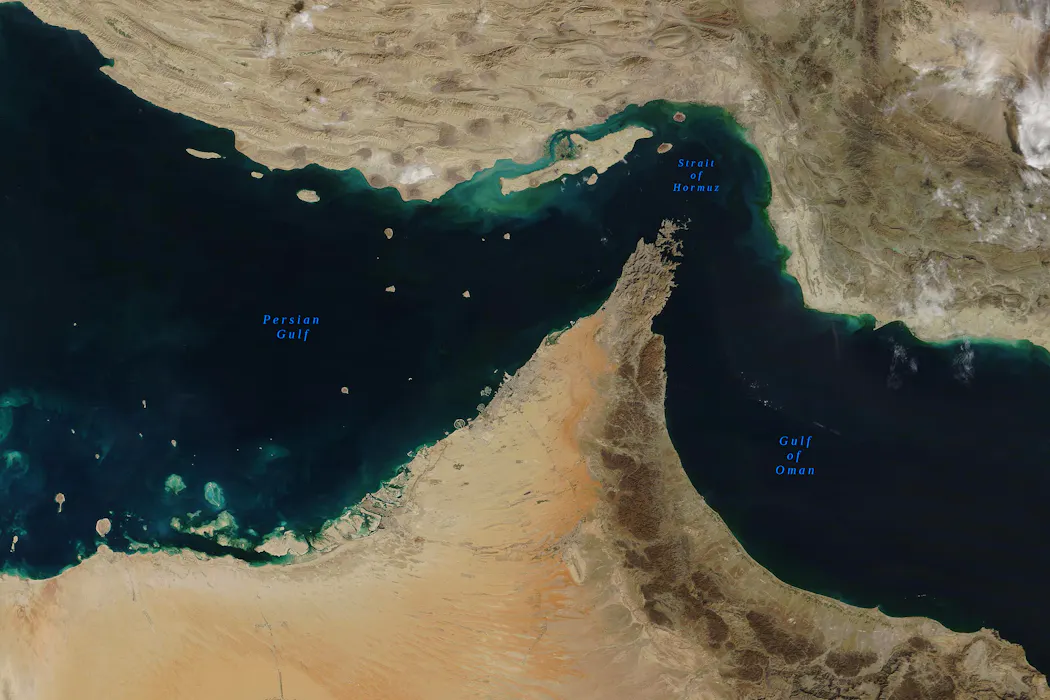
Take the Strait of Hormuz. Roughly a fifth of the world’s oil and liquified natural gas passes through it. When it’s disrupted, the effects don’t stay local; they ripple outward through longer shipping routes, strained supply chains and shifting economic decisions in ways that reach far beyond the countries directly involved and could cause long-term environmental damage.
More often than not, this appears as subtle environmental and economic changes rather than sudden shocks.
Switzerland offers a particularly instructive example. It is neither an energy exporter nor a strategic actor in the conflict. Yet it sits at the intersection of multiple global systems: shipping and transport routes, European agriculture, high-value manufacturing and international finance.
Shipping routes and ice melt
When maritime routes are disrupted, as is currently happening, shipping does not stop. It adapts. Tankers take longer routes and fuel efficiency declines. The result is an increase in particulate emissions, including black carbon. These particles can travel vast distances. In high-altitude environments, their impact is amplified. When deposited on snow and ice, black carbon reduces reflectivity, increasing heat absorption and accelerating melt. In the Swiss Alps, where glaciers are already under pressure, even small increases can have measurable effects. Therefore, what begins as a logistical adjustment in global shipping can end up altering the physical state of distant mountain systems.
Switzerland’s industrial base offers another useful illustration. When firms face restricted or more expensive products, they often shift to alternative production methods. For instance, in the pharmaceutical industry, disruptions to chemical supply chains can force firms to switch suppliers or change elements used in production. While this may make economic sense, such changes are often not environmentally neutral. Different processes generate different byproducts, introducing new compounds into waste streams. The result may not be an immediate environmental crisis, but could create a gradual shift in the composition of pollutants.
Another example is the global fertiliser trade. In 2024, Iran, Qatar, Saudi Arabia, the UAE and Bahrain together accounted for 23% of global ammonia trade, 34% of global urea trade, and 18% of global ammoniated phosphate trade, key inputs for fertiliser production. Disruptions do not simply raise prices; they constrain availability, forcing adjustments across farming systems worldwide.
In parts of Europe, including Switzerland, there could be some positive and negative affects on the environment. Reduced fertiliser use may lower nutrient runoff into waterways, easing pressure on rivers such as the Rhine River and improving conditions in some lakes. Ecosystems long stressed by excess nitrogen may experience a degree of relief. Yet this comes with trade-offs. Swiss agriculture depends on high levels of this type of fertiliser and so may see declining yields and shifts in crops if this is reduced. Alpine pastures, in particular, depend on carefully managed nutrient balances influenced by nitrogen availability. Change can disrupt that equilibrium, exposing how deeply even local ecosystems depend on global supply chains.
Shipping routes are getting longer because of constraints on travelling through the Strait of Hormuz.
Environmental change can also be shaped by investment decisions. In periods of geopolitical tension, capital tends to become more cautious. Liquidity, resilience and short-term risk management take priority over long-term projects.
Finance and migration
For financial centres such as Switzerland – home to huge reinsurance firms such as Swiss Re – this shift matters. Roughly 25% of total global cross-border assets (financial investments outside your home country) are managed in Switzerland. When uncertainty rises, risk models are recalibrated and capital is redirected.
The unintended consequence is that long-term environmental investments – such as ecosystem restoration – can be delayed or scaled back. Environmental resilience depends on steady, long-term commitment; interruptions, even temporary ones, could be detrimental.
Large-scale conflicts also tend to reshape migration patterns, sometimes indirectly. Even countries that are not primary destinations can experience increased migration or adjust policies in response to broader European dynamics. In small countries such as Switzerland, even modest population increases translate into land-use pressures.
Housing demand pushes outward, infrastructure expands, and previously marginal areas come into use. Reports suggest that agricultural land in Switzerland is reducing. Approximately one square metre is lost every second, with about 80% converted into settlement areas and the remaining 20% transitioning into forests. The environmental impact is gradual: increased resource consumption, greater strain on water and waste systems. None of these changes is dramatic on its own, but together they form a pattern of slow encroachment.
The effects of distant conflicts on neutral or far away countries are rarely direct. They are mediated through systems that operate quietly, often below the threshold of public attention.
Switzerland is not unique in this respect. It is simply a clear example: a country where environmental conditions are closely tracked, where economic systems are deeply integrated, and where small shifts can be observed with unusual precision. Neutrality may shape foreign policy, but it does not deliver environmental or economic immunity. In an interconnected world, exposure is universal.
Nima Shokri is affiliated with Hamburg University of Technology.
Salome M. S. Shokri-Kuehni does not work for, consult, own shares in or receive funding from any company or organisation that would benefit from this article, and has disclosed no relevant affiliations beyond their academic appointment.
Wolfgang Amadeus Mozart is arguably the most celebrated child prodigy in history, composing his first pieces of music aged five, his first symphony at eight and his first opera at 11. After a study in 1993 found that listening to Mozart could improve spatial IQ – prompting headlines such as “Mozart makes your brain hum” – he became a symbol for intelligence and brain training.
The study was no doubt interesting. The scientists found that performance on spatial ability tests was improved when their study participants had listened to a Mozart sonata, compared with a relaxation tape or silence. The increase in performance translated to an astounding difference of up to nine spatial IQ points.
Although the effects were temporary, lasting less than 15 minutes, the idea exploded in popular culture. The “Mozart Effect” ignited a lucrative empire of parenting books, self-help manuals and CDs promising to harness the power of Mozart’s music to foster children’s cognitive development. That was despite the fact that the study had been carried out in adults and the evidence for the effect was later overtuned.
The hard fall for the Mozart Effect ultimately highlights the value that society places on intelligence as measured by cognitive tests (like the IQ test). The global market for cognitive assessment and training was valued at about $6.87 billion in 2024 (£5.18bn) but is projected to rise to $35.30 billion by 2032.
Mozart went on to compose over 600 outstanding works in his brief lifetime. But can we reliably predict future success from a child’s performance? Today, IQ tests are often used to spot early academic talent. But are they a good measure? A growing number of scientific studies suggest that IQ measured in childhood might tell us less than we think. Scientists are discovering that children’s IQ scores aren’t as stable as adults’ – they fluctuate substantially.
So why are schools using cognitive assessments? And what other factors can help predict children’s future success?
The rise of cognitive tests to identify potential
Fostering talent is central to human progress. Exceptionally talented individuals drive scientific and cultural innovation and push the boundaries of human knowledge. For over a century, scientists have therefore sought to understand and measure intelligence. This has been partly driven by countries gradually shifting away from mass production and towards becoming knowledge economies.
The Insights section is committed to high-quality longform journalism. Our editors work with academics from many different backgrounds who are tackling a wide range of societal and scientific challenges.
One of the largest and longest running studies of giftedness, the Study of Mathematically Precocious Youth, has followed the lives of intellectually gifted people for over half a century. Over 1,600 talented 13-year-olds were invited to take part in the study if they had scored in the top 1% of ability on a standardised test, the SAT, widely used for US college admission. And indeed, four decades later, many of these young talents had achieved outstanding accomplishments. Some 4.1% had achieved tenure at a major university and 2.3% were top executives at Fortune 500 companies. They had published 85 books and secured 681 patents.
However, it is worth noting that these children were fairly old, already teenagers – and at the absolute top end of achievement. Cognitive tests, however, are taken by a much wider range of children today. Since the 1980s, cognitive ability tests have gradually replaced traditional academic subject exams as school entrance screeners. This was motivated by the idea that a cognitive test could be a more objective assessment of aptitude and potential than a child’s knowledge of the curriculum. Performance on cognitive tests is viewed by many as independent of external influences, such as a more resourceful school or a nurturing home environment.
Schools worldwide, from the US and the UK to Singapore and Vietnam now use standardised tests of cognitive abilities to select students at intake. Admission to many prestigious independent and selective high schools in the UK is often at least partly based on a cognitive ability test, such as the infamous CAT4, that hopeful ten-year-olds sit in the autumn term of their last year of primary school. The CAT4 test is also used in many state secondary schools to help determine sets, predict grades and allocate support and provisions.
One kind of IQ test item, modelled after items in the Raven’s Progressive Matrices test. wikipedia, CC BY-SA
The CAT4 takes around 2.5 hours to complete and is divided into four sections. There is verbal reasoning (thinking with words), non-verbal reasoning (thinking with shapes), quantitative reasoning (thinking with numbers) and spatial ability (thinking with shapes and space). Children who score exactly as expected for their age group would be given a score of 100. Scoring between 89 and 111 is considered to reflect “average” performance, while scores of 112 and above or 88 and below indicate above and below average performance, respectively.
Child IQ fluctuates
We know that the human brain is plastic, or changeable, particularly in childhood. It is the only organ in our body that isn’t fully developed when we are born. A newborn’s brain is about a quarter of the size of an adult brain, doubling in the first year of life. By age seven, it reaches 90% of its adult size. Beyond physical growth, our brains refine and consolidate the network of connections between neurons during this time.
Refining and whittling these connections is key to supporting cognitive and behavioural developmental milestones. Recent research shows that it’s possible to identify key “eras” of brain structural change over the life course. The first milestone – the transition from childhood to adolescence – happens at around age nine. From a brain perspective, adolescence lasts for a little over two decades and is defined by greater efficiency of connections across regions. This coincides with a steady increase in cognitive functions, including vocabulary, complex reasoning and learning.
We’ve known for some time that there is a link between intelligence, as measured by cognitive tests, and school achievement. Research from 2015 that combined data from over 100,000 students across 240 different studies did find a substantial association between intelligence and school grades. However, the magnitude of the link differed depending on children’s age. Intelligence was a much better predictor of school performance in secondary school than it was in primary school. This suggests that cognitive abilities might not be stable during the first decades of life, but vary significantly.
A 2024 analysis that combined data from 205 different studies including over 85,000 participants across 29 countries supports this view. The researchers set out to investigate how stable cognitive abilities are (whether they fluctuate) across the human lifespan and whether stability changes with age.
They discovered that the stability of cognitive abilities increased exponentially with age – and was low in the first decade of life. This means that each child’s positioning compared to their peers changes significantly in childhood. So a child’s IQ score might indeed change substantially during this time. The stability, however, increased throughout childhood and adolescence, plateauing around age 20 and remaining high throughout adulthood and old age.
But even when IQ starts stabilising, in adolescence, it can still fluctuate by up to 20 points. Somebody increasing their IQ score from 100 to 120 would move from the 50th percentile to about the 91st percentile – a 41% improvement. Indeed, one study, albeit with a small sample of students, could link such fluctuations to physical changes in the brain over time.
This means that it can be tricky to infer long-term consequences, such as later grades, from cognitive tests. Basing school intake, or more broadly selection into educational programmes on a single, unstable metric is likely to lead to systematic errors and unreliable decisions.
Worryingly, it may also result in attempts to manipulate the metric, potentially perpetuating systemic inequalities. This may be true of other tests too, but IQ tests are often seen as an exception. But research shows that you can actually train yourself to boost your IQ test score by roughly eight IQ points, for example by retaking the test. Parents with a lot of resources might be better placed to help prepare their children.
The myth of the child prodigy
Recent research has backed all this up by questioning the widely accepted myth of the child prodigy as someone destined for greatness, like Mozart. One 2025 study, which combined data from over 34,000 elite performers, from Nobel laureates and chess players to music composers and athletes, found that exceptional performance in childhood was a limited predictor of elite performance in adulthood.
In fact, about 90% of those who achieved elite performance in youth did not achieve equivalent adult status. Similarly, 90% of top performing secondary school students were no longer top performers at university. And even more strikingly, several Nobel laureates and elite athletes actually had lower childhood performance than their peers.
Mozart might have gone from strength to strength, but research shows that is unusual. neurobit/Shutterstock
The routes leading children and adults, respectively, to world-class performance also differed. Exceptional talent early in development was associated with intensive, discipline-specific progress at a young age. But adult world-class performance was more often achieved through extensive multi-faceted practice and gradual advancements.
This means that educational and talent programmes that prioritise early identification of intelligence may overlook a large proportion of future world-class innovators.
Environmental exposure
The idea behind identifying talent as early as possible so that it can be nurtured is founded on the belief that exposure to an enriched environment can impact ability and vice versa. Half a century of scientific discovery supports this proposition. Perhaps the most famous example is a study published in 1979 by paediatrician Herbert Needleman and his colleagues. This study provided the first robust evidence that exposure to the metal lead, even at levels previously considered negligible, could significantly impair a child’s cognitive performance.
By comparing children with high and low lead levels in baby teeth, while controlling for potentially confounding factors – such as the mother’s IQ and socio-economic status – the study showed that children with higher lead levels scored roughly four points lower on IQ tests. The evidence presented influenced major public health policies, including the removal of lead from gasoline and interior paint in the US.
A large number of other environmental exposures have been positively linked with cognitive development, from walking in nature to exercise and nutrition, albeit with mixed results. However, arguably the most successful environmental intervention to improve cognitive ability is administered every year to more than 85% of children worldwide: education.
By combining data collected across multiple studies from over 600,000 individuals, researchers found that education has a direct effect on the development of cognitive abilities. The study found that each year of education results in a gain of about one to five IQ points. These effects were remarkably robust, appearing across different cognitive domains and persisting throughout the lifespan. In fact, significant benefits were still measurable into people’s 80s and 90s. While a few IQ points per year may seem small, their cumulative impact at a societal level has been shown to be of great consequence.
Environmental factors that shift population IQ even modestly — like lead exposure, nutrition or education — carry enormous economic consequences. Economists have calculated that each gained IQ point is associated with roughly a 2% increase in lifetime earnings.
In the year 2000, a single IQ point gained or lost across the US population translated to between $110 and $319 billion in aggregate economic output. More recent analysis of the global economic impact of lead exposure on childhood IQ estimated the total cost of IQ loss at US$1.4 trillion globally in 2019, mainly affecting low and middle-income countries.
The role of parents
From the moment a child is born, parents invest vast amounts of energy, time and resources to promote their children’s physical and cognitive development. Not all parenting practices are supported by scientific evidence, nor is the Mozart Effect the sole parenting myth that has been busted. However, research has shown that parenting can nevertheless have profound effects on children’s early cognitive development.
Studies have found that the environment that parents provide for their children by reading to them, engaging them in stimulating activities and conversation, and maintaining a warm and organised household, has a significant positive effect on early cognitive development. This is particularly the case for the first five years of life. What makes early investment especially powerful seems to be that the benefits compound. Fostering a child’s early cognitive competence makes it easier for children to acquire new skills down the line.
However, the pathways to parental investment are complex. Reflecting on my own childhood illustrates this point. I was born in the mid-80s to parents in their early twenties. At the time, my mother was in medical school and my father designed and produced bespoke furniture. As a child, I had several ear infections which meant that I had to have regular checks with a specialist. One warm, sunny morning in early April, my mum and I set off for my otolaryngologist appointment, just the two of us. As the eldest of four children, this was a rare and special occasion.
After my check-up, we took a tram to Milan’s State University, where we attended a conference on HIV infections in vulnerable populations – the topic of my mother’s thesis. I remember sitting in the beautiful auditorium, admiring the frescos on the ceiling, and slowly adjusting a pair of disposable headphones to listen to the real-time translation of the talks. The panel of female scientists discussed the topic so eloquently and clearly that even a ten-year-old girl could grasp their main message.
I was hooked. It must be the best job in the world, I thought. It was only a quiet thought then, one that I never had the courage to privately contemplate or publicly share. That came much later, when I found the confidence to admit that a career in scientific research was for me. But this specific episode in my childhood was not an isolated peak. It was the pinnacle of many simpler, everyday moments when my parents invested time and effort to provide us with a nurturing and stimulating environment.
However, seeing these as merely environmental exposures would only provide part of the picture. Perhaps, the science-enriched environment that my mother created for us depended, at least in part, on her own, partly genetically driven, scientific aptitude.
The nature of nurture
Scientists have named this amalgamation of nature and nurture gene-environment correlation, or more intuitively, the nature of nurture. Parents who provide their children with intellectually stimulating environments may also pass on a greater disposition to doing well in school or performing well in cognitive tasks. Research has shown that accounting for genetic effects shared between mothers and children resulted in a reduction in the effect of parenting on educational attainment.
However, cognitively stimulating parenting remained a significant predictor of children’s educational outcomes beyond direct genetic inheritance and socio-economic status. It ultimately contributes to channelling children’s dispositions and translating them into academic outcomes.
Randomised control trials have demonstrated that early interventions are likely to lead to the greatest returns. Investing in children early — through parenting, stimulating environments and good nutrition — pays back far more than trying to catch up later. Every year of delay makes it harder to close the gap.
Interventions created to bridge this gap in groups of disadvantaged children through high-quality preschool education, such as the Perry Preschool Project, can lead to meaningful gains in cognitive performance. Interestingly, while the benefits on children’s cognitive performance faded over time, their long-term educational, economic and social benefits were remarkably far-reaching. So a high quality school education could indeed lead to better job prospects and higher salaries, regardless of IQ.
It follows that boosting cognitive ability may not be the only way to lasting educational, economic and health benefits. Non-cognitive skills — such as motivation, curiosity, self-regulation and social skills — are equally important.
What IQ tests fail to capture
Cognitive tests have never been viewed as instruments to capture the entire set of skills necessary for succeeding in school and life. In 1916, Alfred Binet and Theodore Simon, the inventors of the first IQ test, wrote that things other than intelligence also mattered to academic success, arguing “one must have qualities which depend especially on attention, will and character”.
Decades of research have shown that children who are emotionally stable, motivated and capable of regulating their attention and impulses do better at school, regardless of their level of cognitive ability. These important characteristics have been broadly described as “non-cognitive skills”.
Recent research by my own team shows that the importance of non-cognitive skills for learning also changes over the school years. We analysed data collected from over 10,000 children born in England and Wales who were followed throughout compulsory education, from age seven to 16. Non-cognitive skills not only predicted academic achievement at every developmental stage, but their role increased as the children got older. Still, at all ages, skills such as curiosity, creativity, motivation and self-efficacy predicted success in school in addition to what was predicted by cognitive abilities.
Similar to cognitive ability and learning, differences in non-cognitive skills are a complex product of nature and nurture. Partly based on their genetic dispositions, children encounter and select environmental experiences that contribute to the development of their motivation and curiosity. This in turn leads to differences in school achievement.
Ultimately, cognitive tests are thought to offer an objective measure of a child’s natural ability, one that is largely unaffected by upbringing or circumstances. But research shows that a range of factors, from environmental exposures to toxic agents, nutrition, differences in parenting and educational interventions, can change cognitive performance, particularly as the brain develops.
During childhood, when the brain is rapidly growing, cognitive test scores can fluctuate considerably from one year to the next. This means that a single test taken on a single day in primary school is not a reliable enough indicator for decisions as consequential as which school a child attends or which academic track they are placed on. These are decisions that can shape the entire course of their education.
Even later on, cognitive tests only capture part of what it takes to do well in school and in life. Curiosity, motivation and the belief that you can improve with effort are crucial to educational success, yet most education systems pay them little attention. Rather than treating a test score as a fixed marker of a child’s future, mounting evidence invites us to treat it as one factor among many. The best approach would be to invest in all children’s cognitive and non-cognitive development alike.
So don’t read too much into Mozart’s journey. He may have been a child prodigy destined for greatness, but chances are he was an exception rather than the rule.
To hear about new Insights articles, join the hundreds of thousands of people who value The Conversation’s evidence-based news. Subscribe to our newsletter.
Margherita Malanchini’s research is currently funded by the UKRI Medical Research Council and by a Jacobs Foundation CIFAR Research Fellowship.
Running a marathon asks a great deal of the body. You need sustained energy, careful pacing, plenty of muscle endurance and smart hydration.
Marathons also ask a great deal of the mind. At some point, almost every runner has to deal with nerves, discomfort, self-doubt or the creeping sense that the finish line is still very far away.
That is why successful marathon running is not just about fitness. It’s about fuelling well, thinking clearly and responding effectively when the race starts to bite.
Here are some of the most useful nutritional and psychological strategies to get you through marathon day.
Fuel properly
For runners, carbohydrates are not the enemy. They are the body’s main fuel source at marathon pace. On race day, how and when you take them in matters enormously.
Once the race begins, your glycogen levels (a rapid-release form of energy stored in the body), steadily deplete. For many runners, these reserves begin to run low after roughly two hours of continuous effort, which is one reason people “hit the wall”.
Proper race-day fuelling helps delay that point. Runners should aim to consume around 60 grams of carbohydrate per hour during the race. Gels, chews or sports drinks – often available at aid stations – are great ways of topping up carbohydrate stores. Race day isn’t the moment to gamble, so whatever you plan to use should already be familiar with its effects from training.
Hydration is equally important and just as personal. Some runners lose fluid quickly, while others cannot comfortably drink large amounts while running.
A useful benchmark is try to limit fluid losses to around 2–3% of your body weight during the race. The aim is to replace some of what you’re losing during the race without overdoing it.
One practical approach is to drink to thirst – taking small, regular sips rather than large volumes. This helps avoid both dehydration and the opposite risk, drinking far too much, which can lead to discomfort – or, in rare cases, hyponatraemia (low blood sodium levels).
Finally, remember that fuelling is part of race management. Taking a gel just before a challenging section or grabbing a drink during a quieter stretch can help you manage the miles more effectively.
Enjoy the atmosphere
Marathons offer a one-in-a-lifetime experience for many of us.
The crowds, noise, music, volunteers and sheer occasion can all work in the runner’s favour. Psychologically, this can help shift attention away from the discomfort you may experience during the race.
So do not be afraid to take the day in. Smile at spectators. Acknowledge the cheers. Let yourself be lifted by the event.
That said, excitement can also be costly. A marathon punishes early over-confidence. The occasion may tempt you to run faster than planned, especially in the opening miles when adrenaline is high and the legs still feel fresh.
The best marathoners are not those who ignore the noise. They are often the ones who use it well while still listening to their bodies.
Remember your motivation
For many runners, the marathon is about much more than a finishing time.
Some are running for a cause close to their heart, as way of connecting with someone or proving something to themselves.
That deeper reason matters, especially when the race becomes difficult. Be clear about why you are doing it. If nerves surface at the start line or the pain surfaces at the harder miles late on, reconnecting with that reason can help steady the mind and restore perspective.
At those moments, one of the most powerful thoughts can be a very simple one: it’s a big race but the race is not bigger than me.
Be kind to yourself
Most runners will have a difficult patch at some point in the race. That does not mean the marathon is going badly. This is just the reality of running a marathon.
This is where your internal dialogue matters.
Before race day, decide what you want to say to yourself when things get hard. The most effective phrases are usually not dramatic. They are believable, calming and constructive, such as: I’ve trained for this. Keep moving. This is tough, but so am I.
Write the phrase down, maybe keep it with you on race day. Use it when the doubts arrive. Positive affirmations are deemed to be helpful in tough and pressurised sporting situations.
One of the most valuable psychological skills in endurance sport is not pretending the challenge does not exist. It’s responding well when it does.
Because in the end, marathon running is not just about getting to the finish. It is about how you fuel, think and cope along the way.
The authors do not work for, consult, own shares in or receive funding from any company or organisation that would benefit from this article, and have disclosed no relevant affiliations beyond their academic appointment.
Source: The Conversation – UK – By Jonathan Este, Senior International Affairs Editor, Associate Editor, The Conversation
This is the text from The Conversation UK’s World Affairs Briefing email. Sign up here to receive weekly analysis of the latest developments in international relations, direct to your inbox.
The US is reported to be greatly expanding the scope of its naval blockade of Iran, asserting the right to board and seize any ships it believes to be carrying “contraband” or “conditional contraband” bound for Iran from anywhere on the open seas. Respected maritime news and intelligence agency, Lloyd’s List, says this means that “almost any industrial cargo bound for Iran could plausibly be intercepted”. This will considerably raise the stakes in an already fraught situation.
Opinions are already divided as to how effective this “blockade of a blockade” is likely to be. The US president made the decision on April 12 to “seek and interdict every vessel in International Waters that has paid a toll to Iran. No one who pays an illegal toll will have safe passage on the high seas.” The intention was to make clear to Tehran that they were ultimately not in control of the strait and certainly wouldn’t be allowed to profit by imposing a charge on ships it allowed to pass through.
The problem for the US is that traffic through the strait remains largely at a standstill. Reuters’ live tracker of traffic in the strait suggests a considerable gathering of vessels on either side of the waterway, with very little evidence of ships actually transiting the strait.
It is, writes maritime strategy expert Basil Germond, of Lancaster University, a question of who can withstand more pain from the economic fallout. So the US plan to seek and seize ships wherever they are on suspicion of carrying almost any sort of industrial cargo is clearly aimed at increasing that pain for Iran.
But one of the dangers is how far and how fast the situation might escalate. There was a fraught moment on April 14 when it appeared as if a Chinese-linked tanker had transited the strait. The Rich Starry, registered in landlocked Malawi, is Chinese owned and crewed. Would the US try to board the boat? How would China react if it did?
China buys about 90% of Iranian oil and is one of the few countries whose tankers were getting in and out of Iranian ports unchallenged, writes Tom Harper, an expert in Xino-US relations at the University of East London. US seizure of any Chinese tankers would be bound to considerably ratchet up tensions between the two superpowers.
As it turned out, the Rich Starry turned back in the Gulf of Oman and re-entered the strait without being stopped or challenged by the US. But the new US operating instructions could well make a confrontation more likely. Harper explores the implications of the US-Iran conflict for relations between Washington and Beijing in the run-up to Donald Trump’s planned state visit to the Chinese capital next month.
Meanwhile the conflict between Israel and Hezbollah in Lebanon continues unabated. Ambassadors from the two countries met in Washington this week, where they resolved to hold direct, high-level talks. The US president has said that the leadership of the two countries would also speak, “for the first time in 34 years”, but the office of Lebanon’s president Joseph Aoun denied any knowledge of the arrangement, saying that a ceasefire would need to be in place before any talks could take place.
Whether the US president has the leverage over Israeli prime minister, Benjamin Netanyahu, to make that happen is another matter. The US and Israel certainly have one of the strongest partnerships of any two countries, write Bamo Nouri and Inderjeet Parmar of City St George’s, University of London. The US was the first country to formally recognise the state of Israel in 1948 and Washington has since provided the Jewish state with more than US$300 billion (£220 billion).
Wars against Soviet-aligned Arab states in the 1970s showed how Israel could be an important cold war bulwark against the spread of communism in the Middle East.
Israel’s influence in the US is often put down to the strength of the Jewish lobby there. But it is the perceived strategic value of the relationship, Nouri and Parmar believe, that is the key factor: “When core US strategic interests have been at stake, US policy has overridden lobbying pressure”.
To Hungary, where the 16-year prime ministership of Viktor Orbán came to a close in a landslide election on April 12. The two-thirds majority won by Orbán’s opponent, Péter Magyar, gives the incoming PM the power – if he so chooses – to reverse some of the more illiberal measures implemented by the authoritarian Orbán.
It was a resounding victory: 138 seats to Magyar’s Tisza party to just 55 for Orbán’s Fidesz. All the more remarkable when you consider how the comprehensive state capture of Hungary’s media over Orbán’s tenure and the ferocious propaganda campaign the outgoing prime minister waged, using every organ of state to boost his chances.
Alexander Bor, an expert in propaganda and election manipulation at Central European University, explains that Orbán’s campaign hit two snags: the people’s disillusionment at Hungary’s parlous economy and a well-run campaign by a credible challenger in Magyar.
Magyar’s victory went down well in Brussels, writes Michael Toomey, an expert in EU democracy at the University of Glasgow. Orbán’s warm relationship with Russian president, Vladimir Putin, was no secret. He did all he could to block EU aid packages for the defence of Ukraine and at one point was even revealed to be passing on information from closed EU ministerial meetings with his Russian friends.
“Had Orbán managed to prevail in the recent elections, the relationship between the EU and Hungary is likely to have reached a breaking point”, Toomey concludes.
One relationship which appears to be under a degree of strain is that between the US president and Pope Leo XIV. Leo, the first pope born in the US, has been a highly visible and vehement opponent of the US war with Iran, calling for peace and condemning “those who wage war”, whose hands he said, quoting scripture, “are full of blood”.
Trump replied, not quoting scripture, that the pope was “weak on crime” and “terrible for Foreign Policy,” adding that he was only elected to the papacy because he is American and the Catholic church “thought that would be the best way to deal with President Donald J. Trump.”
Massimo D’Angelo, an expert in the Catholic church’s diplomacy, explains why the US president is likely to come off worse in this particular contretemps.
Sign up to receive our weekly World Affairs Briefing newsletter from The Conversation UK. Every Thursday we’ll bring you expert analysis of the big stories in international relations.
Source: The Conversation – UK – By Viet Nguyen-Tien, Research Economist, London School of Economics and Political Science
When the Strait of Hormuz first closed in March and oil hit US$120 a barrel, a very old question came back: is this finally the moment electric vehicles take off for good – or just another false start?
EVs have been here before. They surged after the 1973 oil embargo, collapsed when oil fell, and surged again. Each wave died when the external pressure eased.
We think this time is different. In a new discussion paper, we argue that the economic case for electric vehicles is now improving on its own terms. This is because of what has happened to batteries, not because of the oil price. The same evidence, though, shows the transition creates new problems as serious as the ones it solves.
Why this time is different
Battery costs have fallen 93% since 2010. That is the number that changes everything. A pack that cost more than US$1,000 per kilowatt-hour in 2010 cost US$108 by late 2025, driven down by a decade of learning, investment and policy support.
Research on the global battery industry finds that every time cumulative production doubles, costs fall by around 9%. More buyers, more production, lower costs, more buyers.
The deeper reason this wave will not fade is not technical – it is economic. An EV is a platform. Its value grows as the network around it grows, just as smartphones became indispensable not because of the hardware but because of everything connected to it.
Every charger built makes the next EV more attractive. Every software update raises the value of every car already on the road. Every recycled battery feeds back into the supply chain that makes the next one cheaper. It’s part of the reason some other technologies like hydrogen fuel cell vehicles have struggled to get off the ground in numbers – the tech exists, but all the other elements aren’t quite there.
One study of 8,000 drivers in Shanghai found that range anxiety – the fear of running out of charge – has a real economic cost due to unnecessarily avoided trips. But that cost is falling sharply, not because batteries improved, but because charging networks expanded.
Making real-time charger availability visible could add 6–8 percentage points to market share by 2030. And because EV charging is far more flexible than other household electricity demand, drivers can shift away from peak hours remarkably easily when the price is right – turning the car into a grid asset, able to store and release electricity when needed. These are economic network effects, not engineering features.
Swapping one dependency for another
Ending oil dependence does not end geopolitical exposure. It relocates it.
In late 2025, China introduced rules requiring government approval for exports containing more than 0.1% rare earths. The leverage that once came from control of oil flows now comes from control of processing capacity and component supply chains.
The minerals at stake – lithium, cobalt, nickel, graphite and neodymium to name but a handful – carry their own geopolitical risks and, as we have written elsewhere, serious human costs in the communities that mine them. This creates a predictable cycle of social contestation that threatens to stall the transition unless the industry commits to responsible, sustainable innovation.
The metal cobalt traditionally helped EVs travel further on the same charge. And when prices spiked, so did research into making batteries with less or even no cobalt. Today, more than half of all EV batteries sold globally are cobalt free.
Four decades of patent data show the same pattern: higher mineral prices consistently redirect research and development toward mineral-saving technologies.
The Hormuz crisis is a reminder of what concentrated energy dependence costs. The EV transition does not need it. The learning curve keeps falling, the platform keeps compounding, the economics keep improving. That is what makes this wave different.
What it does not do is eliminate geopolitical risk. Unlike oil, where leverage comes from energy flows, EV supply chains concentrate power at materials, processing capacity, and technological bottlenecks – supply chains that are highly concentrated and carry their own serious risks. Fuel dependence becomes mineral dependence. That dependence is highly concentrated.
Traditional carmaking regions are already absorbing concentrated job losses, and history shows such disruptions leave persistent scars even if the long-term aggregate effects are positive. Yet electric vehicle assembly is proving more labour-intensive in western countries than expected – requiring more workers on the shopfloor, not fewer, at least in the ramp-up phase. Contrast this with China, where massive automation has led to the creation of “dark factories” where there are so few humans, internal lighting isn’t required.
The same regions facing losses could benefit. But the gains and losses do not fall on the same people. That is where the work remains.
Viet Nguyen-Tien receives funding from the ESRC through the Centre for Economic Performance (ES/T014431/1) and the Programme on Innovation and Diffusion (ES/V009478/1), and previously from the Faraday Institution through the ReLiB Project (grant numbers FIRG005 and FIRG006).
Gavin D. J. Harper receives funding from the Faraday Institution (award numbers FIRG027, FIRG057 & FIRG085) ReLiB project website: https://relib.org.uk/
Robert Elliott does not work for, consult, own shares in or receive funding from any company or organisation that would benefit from this article, and has disclosed no relevant affiliations beyond their academic appointment.
This roundup of The Conversation’s environment coverage was first published in our award-winning weekly climate action newsletter, Imagine.
Every scalable solution has to start somewhere small. With a spark of an idea, an anomaly during an experiment or, perhaps, an empty seashell on an Irish beach.
Juan Diego Rodriguez-Blanco at Trinity College Dublin has found a clever use for discarded oyster shells – a byproduct of the shellfish industry. Remarkably, these shells can capture rare earth elements from water and lock them into new minerals. Rare earth elements are an essential ingredient for the green transition – they are used to make high-performance magnets used in wind turbines and electric cars, for example. So capturing these “vitamins of modern industry” by crystallising them into the calcium carbonate of the shell (rather than just sticking or adsorbing to it) is a reliable way to recover these valuable resources for future use.
Of course, this tech is in its infancy but it just goes to show, there are so many hidden surprises within nature that might, on the surface, look like worthless waste.
The Conversation is made up of a dozen English-speaking editions plus various non-English ones, including French, Spanish and Indonesian. One of the most joyful parts of my job is coordinating regular meetings for the environment editors at each edition to share ideas, develop collaborations and support each other.
Together, we cover the planet’s biggest story – the climate crisis. This beat can sometimes feel relentless. But uncovering scientific discoveries, breakthroughs and insights from academics all over the world gives me hope. Here, my global colleagues share some of their favourite – and most promising – stories from recent weeks.
Governments deploy dozens of different policies simultaneously, such as carbon taxes, renewable energy subsidies and emissions standards, but which ones are the most effective? Evaluating and comparing the results of climate strategies actually presents a major challenge for researchers and policymakers.
After analysing 1,737 climate policies across 40 countries over 32 years, scientists at the universities of Barcelona, Ludwig Maximilian of Munich, Lausanne and Oslo, have identified 28 measures that consistently reduce emissions. Their discovery will enable governments to focus on really effective strategies and avoid wasting resources, making climate action more successful.
In the western US, seven states rely on water from the mighty Colorado River, but a long-running drought and rising water demand have left reservoirs near record lows and cities’ water supplies at risk. Cities have been scrambling to lower their water use and finding creative solutions to encourage residents to make cuts, from low-flow shower heads to tearing out lawns and replacing them with xeriscaping (an approach to gardening and landscaping that reduces the need for irrigation). Las Vegas, a fast-growing city in the desert, has cut its per-capita water use by nearly 60% in the past two decades with steps like those. But as temperatures rise and the snowpack that feeds the river diminishes, we’ve wondered, can conservation alone be enough?
Environmental scientists Renee Obringer of Penn State and Dave White of Arizona State University recently ran computer models to understand what three cities – Las Vegas, Phoenix and Denver – will face in the future and how each city’s climate solutions for a dwindling water supply will hold up.
Stacy Morford, Senior Environment, Climate and Energy Editor at The Conversation US, says these results are eye-opening. This research suggests the region needs to start thinking beyond just conservation to much bigger solutions, the kind that Obringer and White describe that take years to build.
Anna Weekes, Environment and Energy Editor at The Conversation Africa, particularly loved a story highlighting another innovative way to tackle drying up water supplies. This time in South Africa’s dry Karoo desert.
Groundwater pumped from boreholes is the only water supply for many small towns. But as the climate warms and rain falls later in the year, aquifers aren’t replenishing enough to meet the demand for water. Surina Esterhuyse, Fanus Fourie and Danita Hohne are hydrologists and groundwater scientists who’ve designed and built low-cost aquifer recharge systems, drilling infiltration boreholes through hardened clay in dry river beds so that when it finally rains, the war goes straight into the aquifer instead of flowing away across the surface.
In the rural Karoo towns of Carnarvon, Vanwyksvlei, Williston, Sutherland and Calvinia, these recharge systems have been a huge success. They’re affordable and easy to implement at a small scale and offer a practical, scalable way to strengthen drought resilience and secure water supplies for vulnerable communities.
Buds, butterflies and bees
Gabrielle Maréchaux, Environment and Energy Journalist at The Conversation France loves a story about a free smartphone app called PlantNet. This “shazam” for plants, which is available on both iOS and Android, covers 85,000 species out of an estimated 400,000.
It’s popular among hikers and botanical enthusiasts. But what’s less well known is that it was developed by scientists and also helps with research by tracking abundance and locations of particular flowers, fruit, twigs and bark. It’s also a vital tool for monitoring the spread of invasive or “alien” non-native species that can disrupt ecosystems.
Meanwhile, butterflies, with their captivating patterns and colours, don’t always receive the attention they deserve, according to Ibrahim Daair, Environment and Energy Editor at The Conversation Canada. They are a fundamental part of global ecosystems, but insects have been declining at alarming rates in many places. Now, a group of researchers is working on developing a global butterfly index to track how environmental changes are affecting butterflies worldwide. They assembled a dataset of 45,000 population trends for over 1,000 butterfly species to help guide conservation and better understand the scale of the biodiversity crisis.
Don’t have time to read about climate change as much as you’d like?
In 2015, a mining dam in Mariana, in Minas Gerais state, collapsed and released about 55 million cubic meters of toxic waste – crushed rock, water and chemicals left after extracting iron – sending a massive, polluted mudflow downstream. At the time, it was the largest human-made environmental disaster in Brazil. After observing the devastated landscape, Sandra Moura, a professor at the Federal University of Ouro Preto, discovered a plant capable of accelerating the recovery process in the areas affected by the disaster.
But simply recovering the landscapes was not enough, and the professor decided to create a project to assist the affected communities by using beekeeping as a reforestation and income-generating strategy.
This story is featured in one of the episodes of the podcast Voices from the South produced by The Conversation Brazil, about solutions to the environmental problems facing Brazil and Australia.
While visiting the project’s apiary, Luciana Julião, Journalist and Audiovisual Producer at The Conversation Brazil, met incredible people, all with very diverse specialisms, who are working together in the search for possible ways to save the planet.
The coolest library on Earth
And finally, Sarah Sermondadaz, Head of Environment and Energy at The Conversation France, loved learning about first ice core library in Antarctica, designed to preserve humanity’s “climate memory”. With an average temperature of -50°C, Antarctica’s first-ever 100% natural sanctuary protects endangered ice cores from global warming. On January 14 2026, the coolest library on Earth was inaugurated at the Concordia station, Antarctica. Samples from glaciers rescued worldwide are now beginning to be stored there for safekeeping.
Source: The Conversation – UK – By Stephen Cushion, Professor, Cardiff School of Journalism, Media and Culture, Cardiff University
With the Senedd (Welsh parliament) election campaign now under way, voters in Wales are beginning to see more political coverage across television, online and social media. Broadcasters have reported on manifesto launches and party messaging.
But how far is this coverage helping voters understand what the parties are actually proposing? And how much of it is being properly scrutinised?
After the first official week of the campaign, our new analysis suggests that while broadcasters are reporting party activity, they are offering limited scrutiny of the pledges and promises being made. That matters because news media play a central role in holding politicians to account and helping voters judge the credibility of competing claims.
We analysed all election news items across major broadcasters’ TV, online and social media output between April 8 and 14. This included Welsh coverage from the BBC and ITV, alongside their UK-wide output, as well as Channel 4 and Sky News.
Broadcasters have also produced special election programming in English and Welsh, from the public asking politicians questions in live TV debates, to exploring issues in depth through podcasts, or party leaders being interrogated at length.
Our focus, however, was on day-to-day news reporting, including UK-wide media, which most people rely on in Wales to understand what is happening in the world.
Covering policies not scrutinising them
Of the 60 news items examined across TV, online and social media posts so far, just over three-quarters covered party policy or claims. Of these policy items, nearly half featured no scrutiny. A quarter featured substantial scrutiny. And a further third featured brief scrutiny.
Broadcasters are committed to holding parties to account. As the BBC stated at the start of the elections across the UK: “It is an important part of our role during elections to check and challenge where the parties are making claims that don’t stand up to scrutiny.”
The BBC’s fact-checking service, Verify, could play a greater role in testing party claims, but it has yet to feature prominently in coverage of the Senedd campaign. Channel 4, by contrast, has stood out for going beyond reporting campaign activity to interrogate the credibility of what parties are saying.
More commonly, news items present parties arguing with one another, without independent assessment of their competing claims. In some cases, broadcasters simply set out multiple positions side by side, leaving viewers to make sense of them without any journalistic scrutiny.
This might be explained by rules on impartiality. These require broadcasters to reflect up to six parties vying for power at the Senedd and perhaps limit space for further questioning. But in covering so many parties within a single news item, the breadth of perspectives can undermine the depth of analysis.
Informing voters or amplifying noise?
Broadcasters have also sought to engage voters through vox pops, which are brief interviews with members of the public. So far, members of the public (25) have appeared two and a half times more often than politicians (10) in election coverage.
Vox pops can provide more colour and human-interest than just listening to party politicians. They can also offer revealing insights into people’s real life concerns and anxieties. But the focus of people’s opinions have largely centred on the campaign, the personalities involved, or about apathy and cynicism towards the Senedd and politics more generally.
At times, vox pops have also reinforced a “horse race” narrative, asking people how they intend to vote rather than what they think about specific issues. While this may appear engaging, it offers limited insight and risks misrepresenting wider public opinion.
As Welsh politics expert, Laura McAllister, argued: “At best, [vox pops are] pointlessly reductionist and a waste of limited political air time; at worst… misleading and potentially distorting”.
Although such interviews with the public often suggest disengagement, they should not be taken as representative. With the possibility of political change, turnout in this election could in fact be higher than at any point since devolution began 27 years ago.
Rather than emphasising perceived disengagement, news coverage could do more to focus on the issues facing the next Welsh government and to scrutinise party policy positions. This would help improve public understanding of what is at stake.
Our pre-election survey of people in Wales found widespread confusion about the responsibilities of the Welsh and Westminster governments, alongside low awareness of party leaders. Recent focus groups conducted in south Wales by More in Common, a thinktank focused on public opinion and social divisions, found that many voters lacked detailed knowledge of party policies. They often expressed only a general sense that Wales needs political change.
Our own focus groups, conducted in February with people in Wales, showed a clear appetite for more policy-focused reporting over campaign coverage.
The lack of policy scrutiny in the first week of the campaign is perhaps understandable. After all, manifestos have just been published leaving journalists limited time to analyse them. But as clearer campaign narratives emerge and more political promises are made, journalists will have time to question parties and, where necessary, challenge any false, misleading or dubious claims.
With several weeks left of the campaign, broadcasters still have plenty of opportunities to hold parties to account and help people make an informed decision at the ballot box.
Stephen Cushion has received funding from the BBC Trust, Ofcom, AHRC, BA, ESRC and Welsh Government.
Keighley Perkins receives funding from the AHRC for research into broadcasters’ impartiality.
Maxwell Modell receives funding from the AHRC for research into broadcasters’ impartiality.
When people think about censorship, they often imagine an obvious ban: a book prohibited, an exhibition closed, or a speaker silenced.
But the recent revelation that London’s Victoria and Albert Museum changed exhibition catalogues at the request of its Chinese printer points to something subtler. It suggests that Chinese censorship is increasingly capable of shaping cultural production beyond China’s borders through reliance on foreign companies.
The V&A agreed to remove or replace images from at least two exhibition catalogues after objections from its Chinese printer. This included a historical map in a new exhibition, The Music Is Black, and an image of Lenin in a publication linked to the 2021 exhibition Fabergé: Romance to Revolution.
A V&A spokesperson told The Conversation: “We carefully consider, on a case-by-case basis, where we print all of our books. We sometimes print in China but maintain close editorial oversight. We were comfortable making these minor edits, as they did not affect the narrative, and would obviously pull production if we felt any requested change was problematic.”
The museum may see the changes as minor, but their significance lies less in the scale of the edits than in the mechanism through which they occurred.
Nothing in British law required these changes. No UK official ordered them. Yet the content of a British museum publication was altered because parts of its production process took place within a system governed by Chinese state censorship rules. That is why this matters. It reveals a form of externalised censorship that does not need to arrive as a direct prohibition. It can operate instead through contracts, deadlines, cost pressures and infrastructural dependence.
This article is part of our State of the Arts series. These articles tackle the challenges of the arts and heritage industry – and celebrate the wins, too.
This controversy tells a wider story about the heritage sector. Museums, galleries, libraries and publishers are all under pressure to control costs. If Chinese printers can produce catalogues at roughly half the price of British or European firms, the economic logic is obvious. Once an institution becomes reliant on a supply chain situated within an authoritarian censorship system, the practical conditions of cultural expression begin to change, even if the legal environment at home remains formally free.
In countries such as the UK, free speech is often understood in legal terms: are people formally allowed to publish, speak or exhibit? But the V&A case is a reminder that formal freedom is not the same as institutional resilience. A society may remain free on the surface while its institutions become increasingly susceptible to outside pressure.
Why the censorship matters
Museums matter especially because they are not ordinary commercial actors. They are memory institutions. They help shape public understanding of history, culture and identity. Their catalogues are not mere retail products but part of how knowledge is framed, archived and circulated. A “minor” change to an image in this context is therefore not politically neutral.
The deeper issue is that this is not only about suppressing taboo topics such as Tibet, Taiwan or Tiananmen. It is also about controlling the positive narrative.
Chinese information governance has long worked through both prohibition and projection. The 2020 Provisions on the Governance of the Online Information Content Ecosystem, issued by China’s internet regulator, encourage the production and dissemination of material that helps increase “the international influence of Chinese culture” and presents to the world a “true, three-dimensional and comprehensive China”. This forms part of a broader Party-state project, repeatedly articulated by Xi Jinping, of “telling China’s story well”.
That phrase may sound benign. But in practice it is tied to a political and legal project in which China is not merely defended from criticism, but represented abroad under conditions increasingly shaped by party-state priorities. Seen in that light, the V&A controversy is not just a matter of avoiding sensitive content. It sits within a broader effort to structure the terms under which China may be portrayed at all.
Recent developments in the digital sphere show the same broader pattern in a more aggressive form. In February 2026, OpenAI reported that it had disrupted an operation linked to a Chinese law-enforcement official who allegedly used ChatGPT to document efforts aimed at intimidating dissidents abroad. This included fake official communications and forged documents. That is different from the V&A catalogue dispute. But both illustrate a new stage of transnational control in which the Chinese party state and its affiliated actors can use a range of mechanisms at once: political security logic, economic leverage, platform manipulation, bureaucratic pressure and technological tools.
These cases should not be collapsed into one another. A museum changing an image under pressure from a company in China is not the same as a dissident being targeted through deceptive digital operations. But they belong to the same ecology. One is the hard edge of transnational repression. The other is its quieter institutional face. Together, they show that the challenge is no longer confined to dramatic diplomatic incidents or overt bans.
That has implications far beyond museums. Universities, publishers and now cultural organisations in the UK increasingly operate in environments where external authoritarian influence may be felt not through formal legal obligation, but through partnership structures, procurement decisions, market access, technological dependency and reputational caution.
Liberal institutions are often poorly equipped to recognise these pressures because they expect censorship to appear as a clear legal command. Increasingly, it appears instead as a request to make one small change, to avoid delay, to save money, to keep things moving.
The lesson of the V&A controversy, then, is not simply that one museum made a questionable decision. It is that Britain needs a more serious conversation about cultural sovereignty under conditions of asymmetric interdependence.
If institutions rely on companies governed elsewhere by censorship, then freedom of expression at home becomes more fragile. The real question is not whether British museums are free in theory. It is whether they are independent enough in practice to prevent authoritarian preferences from quietly entering the production of public culture.
Ge Chen is Associate Professor in Global Media & Information Law at Durham Law School and Affiliated Fellow of the Information Society Project at Yale Law School.
Polling company YouGov has thrown into question claims of a recent upsurge in church attendance among young adults. This has not surprised some experts, who cite evidence for the more conventional story of steep religious decline. If Christianity was once central to British society, that claim remains difficult to sustain in the 21st century.
Church membership and attendance have both fallen sharply in recent decades. In England, 11.7% of the population attended church on a typical Sunday in 1979. By 2005, that figure had dropped to 6.3%. The number of people identifying as Christian remained much higher for longer, still above 70% in England and Wales in 2001.
Perhaps this was because Christianity continued to function as a marker of national identity or moral inheritance, rather than active belief or practice. Research has shown how, especially for older generations, Christianity retained associations of moral propriety, ethnic identity and national belonging. For some, to be British was to be Christian.
But that tendency too has fallen fast. According to the 2021 census, the proportion identifying as Christian had dropped to 46.2%.
The reasons for this decline are varied and complex. Traditional religious beliefs face widespread scepticism. Cultural pluralism has weakened the assumption that Christianity provides the country’s shared moral framework. Churches have not escaped the collapse in confidence that has affected institutions more broadly, while abuse and corruption scandals have accelerated public cynicism and disillusionment.
But that is not the whole picture. The newly appointed Archbishop of Canterbury faces an uphill struggle to restore confidence in a struggling Church of England. But Christianity still retains the power, in some settings, to build community and inspire commitment.
Changing church communities
In Britain today, the most active, vibrant and socially engaged forms of Christianity are often found among ethnic minority and migrant communities.
Black Pentecostal churches seem to resist wider patterns of decline. Some have very large congregations, significant financial resources and real influence in urban centres such as Birmingham and parts of London.
Many were founded in the 1960s and 70s by Afro-Caribbean migrants who encountered the same racial prejudice in British churches that they faced elsewhere in society. Others owe their origins to Pentecostal networks in West Africa. Reporting over 12,000 weekly attendants at its “Prayer City” in Kent, Kingsway International Christian Centre claims to be “the largest growing church in western Europe.”
From the perspective of a moribund Church of England, these black majority churches represent a Christian vitality that many Anglican congregations struggle to sustain.
Research has also identified lively churches attracting Christians of Asian heritage, especially international students at British universities. Others have pointed to the revitalising effect of Eastern European migration on Roman Catholic parishes.
In Britain today, the most active, vibrant and socially engaged forms of Christianity are often found among ethnic minority and migrant communities. Puttipong Klinklai/Shutterstock
This may be one reason the political right has taken such a keen interest in Christianity in recent years. Nigel Farage has linked British identity to “Judeo-Christian principles”. Speaking in the House of Commons, former Conservative, now Reform MP Danny Kruger called for a recovery of a “Christian politics”. He contrasts this with “wokeism”: a “dangerous ideology of power” which should be “banished from public life”. Reform-adjacent campaigners, meanwhile, have made no secret of their hostility to Islam.
Some are reclaiming Christianity as part of a symbolic defence of British nationalism. At the Unite the Kingdom rally in London in September 2025, campaigners carried wooden crosses and chanted “Christ is King”. Far-right activist Tommy Robinson has leaned more heavily into Christian nationalist rhetoric, as has Restore Britain founder Rupert Lowe.
If Christianity can offer belonging and solidarity to black migrants navigating a hostile environment, it has also become, in a very different register, a badge of white ethno-nationalism.
Christian nationalism in Britain
The fusion of Christianity and far-right nationalism has a long history in the US. What is unusual is its growing visibility in the UK, which never really had its equivalent of the US Christian right. There are signs that a US-style conservative Christianity may be gaining ground in the UK.
The UK’s Christian Legal Centre resembles US organisations defending the right to affirm Christian values in the workplace. Defendants have included a homelessness officer dismissed from a job at a local council after telling a woman with an incurable illness to “put her faith in God”, and a magistrate fired for objecting to an adoption application from a same-sex couple. Both lost their cases.
This convergence of evangelical conservatism constitutes only a small minority of practising Christians in the UK. If Christian nationalism is becoming more visible, it is not because this minority is necessarily growing in size and power, but because political activists have found that Christian language resonates with their message. And they have become increasingly willing to borrow from the rhetoric of their American political allies.
This is reflected in the increasing affinity between British rightwing politics and the “Make America great again” (Maga) movement. It also points to growing momentum behind a more aggressive use of Christianity in British political life: not as a faith of worship or service, but as a nationalist weapon aimed at defending a particular form of British culture.
While it is currently not possible to gauge the size of a UK strand of “Christian nationalism”, its political, rather than religious, focus means its supporters are not limited to practising Christians. As with its US equivalent, they are more preoccupied with questions of national identity and cultural legitimacy – who belongs and who does not – than with questions of religious truth or practice.
This Christian nationalism foregrounds a common set of enemies: globalism, liberal morality, immigration and Islam. All are presented as inimical to the values of ordinary British citizens, echoing the Christian nationalism of Donald Trump’s America.
Mathew Guest does not work for, consult, own shares in or receive funding from any company or organisation that would benefit from this article, and has disclosed no relevant affiliations beyond their academic appointment.