How to give children the freedom to play all across the city – not just in playgrounds

Source: The Conversation – UK – By Michael Martin, Lecturer in Urban Design and Planning, University of Sheffield
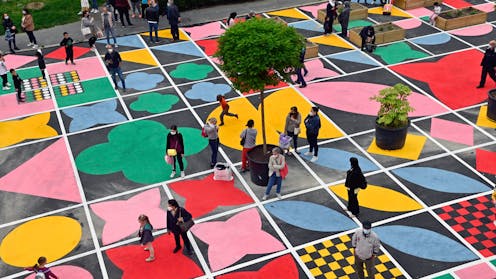
Co-created play space with children and the community, Via Val Lagarina Milan. Milan municipality

Children play everywhere. Yet their right to play – protected by a UN convention – is constantly challenged by adults.

Play is crucial to support children’s holistic development in cognitive, emotional, physical and social skills. Likewise, we know children’s environments significantly influence their health and wellbeing, for better or worse.

But across cities, young people are let down by a built environment that fails to appropriately consider their needs.

Places where children commonly used to play, such as streets and local neighbourhoods, have been transformed into car-only spaces where traffic and parking take priority. Likewise, city spaces frequently “design out” children by prohibiting skateboarding, ball games and other kinds of play.

Over time, urban planning has confined children’s opportunities for play to dedicated playground spaces only.


Get your news from actual experts, straight to your inbox. Sign up to our daily newsletter to receive all The Conversation UK’s latest coverage of news and research, from politics and business to the arts and sciences.


However, children don’t have equal access to these formal play spaces. In the largest study of playgrounds in England, my colleagues and I found substantial inequalities in access to play. Children in the most deprived areas needed to travel further to their nearest playground.

In new research, I’ve explored four international examples of how children and play can be promoted in less likely urban spaces. My findings show how play can be promoted in cities to support children’s right to play anywhere – but also that there is widespread hostility to children’s right to use urban spaces for play.

Power of play

In Sydney, a pedal park installation with temporary jumps, ramps and a pump track was set up in different car parks for the duration of the winter. In Paris, a play street was created in central Paris by closing road traffic on Friday afternoons in autumn and spring.

In Belfast, temporary play equipment and playful street furniture was set up in the Cathedral Gardens public space.

Cathedral Gardens pop-up play space in Belfast meaningfully encourages children to use the city.
Park Hood Ltd.

In Milan, a community-led design involved children in creating a colourful grid, planters, growing beds and games in a school car park, which went on to inspire a new municipal programme of temporary school streets and piazzas.

These play spaces allowed children to play freely, play with objects, play pretend, play games with rules, and play physically – the core pillars of play. What’s more, they enabled children to develop new connections with their community by appropriating urban spaces to promote relaxation and fun. This was vital following the trauma of the global pandemic – all the projects were active during COVID-19 outside of lockdown.

Intergenerational encounters at the weekly play street in the 3rd District of Paris.
Rue’golotte

These short-term projects invited children to enjoy urban life in new ways. In fact, they bolstered civic access for people of all generations. In Sydney, the closure of the car park fostered a new sense of community. Caregivers, grandparents and residents were able to connect with each other in a whole different setting.

Children in Sydney play freely in a ‘pop-up pedal park’ created in a public car park.
Randwick City Council

Politics of play

But despite the positives, over time, the projects faced protest and tension. In Milan, fears from residents emerged on play being used as a tool to displace poorer communities. This was in response to the area having long been earmarked for regeneration. In Sydney, Paris and Belfast, people actively targeted and sabotaged the informal play spaces.

In Sydney, to park their cars, older citizens successfully lobbied local councillors to reduce the total amount of space for play, from the entire car park to one aisle of parking. In Paris, local businesses were exasperated by the presence of children. Collectively they threatened project initiators and staged a protest, claiming that “play streets kill local shops”. In Belfast, the pop-up play space was set on fire, multiple times. By summer 2022, much of the park had been destroyed.

Destruction and criminal damage of the Cathedral Gardens play space in Belfast.
Author

The outcomes demonstrate the politics that children, and their play, were exposed to. Because of a range of aggressive behaviour from adults, children’s use of streets and public spaces were consistently restricted. A common statement from dissenters was “children can go elsewhere”. The reality is they can’t.

In tracking informal play projects through the pandemic and subsequent years, two additional factors hampered their longer-term success. For the council projects in Sydney and Belfast, council officers hoped to direct more resources to urban play, but the lack of a specific local policy to support play was a significant constraint. By comparison, the community projects in Paris and Milan placed an unsustainable pressure on volunteers to ensure prolonged success.

Lessons from previous crises highlight how tensions and conflict can affect innovative uses of space, often diluting their progressive purpose. Ultimately, children’s play in recovery from the pandemic experienced a similar fate.

This is worrying because Unicef research has shown children’s wellbeing has continued to suffer after COVID-19.

Places that allow for children’s play can create dynamic neighbourhoods, intergenerational encounters, and meaningful participation in urban spaces – if only we let it happen.

The Conversation

Michael Martin does not work for, consult, own shares in or receive funding from any company or organisation that would benefit from this article, and has disclosed no relevant affiliations beyond their academic appointment.

ref. How to give children the freedom to play all across the city – not just in playgrounds – https://theconversation.com/how-to-give-children-the-freedom-to-play-all-across-the-city-not-just-in-playgrounds-260444


Taurine could power your energy drink – and maybe cancer cells too. Here’s what you need to know

Source: The Conversation – UK – By Gulshanara (Rumy) Begum, Senior Lecturer in Nutrition & Exercise Science, University of Westminster

shutterstock New Africa/Shutterstock

Energy drinks are big business. Marketed as quick fixes for fatigue and performance dips, energy drinks are especially popular among young people, athletes, sports enthusiasts, and so-called “weekend warriors” – people who pack their workouts into the weekend instead of exercising regularly. Gamers are now a major target too.

But as the market grows, so do concerns about what’s actually in these drinks – and what these ingredients might be doing to our bodies.

Many energy drinks contain some combination of three familiar stimulants: caffeine, found naturally in coffee, tea and cacao; guarana, an Amazonian plant rich in caffeine; and taurine, a naturally occurring amino acid found in scallops, mussels, turkey and chicken.

Taurine, in particular, has drawn both hype and hope. It is credited with performance-enhancing properties and potential health benefits. But new research is raising important questions about how it behaves in the body – and when it might do more harm than good.

In May 2025, a study published in Nature sparked headlines and unease in equal measure. It found that taurine may fuel the progression of leukaemia, a group of blood cancers that begin in the bone marrow.

The study showed that while healthy bone marrow cells naturally produce taurine, leukaemia cells cannot. But they can absorb taurine from their surroundings and use it as a fuel source to grow and multiply. Research on mice and in human leukaemia cell samples demonstrated that taurine in the tumour microenvironment – the area around a tumour that includes blood vessels, immune cells and structural support – accelerated the progression of leukaemia.

Crucially, when researchers blocked taurine uptake by leukaemia cells (using genetic techniques), cancer progression slowed significantly. The authors suggest taurine supplements could potentially worsen outcomes in people with leukaemia and propose that developing targeted ways to block taurine uptake by cancer cells might offer a new treatment strategy.

Taurine: friend or foe?

Taurine is one of the most abundant free amino acids in the human body, found in especially high concentrations in the heart, muscles and brain. In healthy people, it’s mainly obtained through diet, but the body can also synthesise taurine from the amino acids methionine and cysteine, provided it has enough vitamin B6, which is found in foods such as salmon, tuna, chicken, bananas and milk.

Most people consuming a typical western diet take in 40mg–400mg of taurine a day from food alone. This figure refers only to taurine that is directly ingested, not including the additional amount the body can synthesise internally, which may vary depending on age, diet and health.

Fresh scallops and half a lemon
Scallops contain high levels of taurine.
barmalini/Shutterstock

Taurine is listed on the Food and Drug Administration’s (FDA’s) generally recognised as safe (GRAS) database, and according to the European Food Safety Authority (EFSA), it’s safe to consume up to six grams per day. By comparison, a serving of Red Bull or Monster contains around one gram – comfortably below that threshold.

Despite recent concerns about a possible link to blood cancer progression, taurine isn’t inherently harmful. In fact, some people may benefit from supplementation, especially those receiving long-term parenteral nutrition, where nutrients are delivered directly into the bloodstream because the gut isn’t working properly. People with chronic liver, kidney or heart failure may also have trouble producing or holding on to enough taurine, making supplementation helpful in specific clinical settings.

Ironically, some research suggests taurine may actually help reduce the side effects of chemotherapy in leukaemia patients – even as emerging studies raise concerns that it could also fuel the disease. This contradiction underscores how much context matters: the effects of taurine depend not just on dosage and delivery, but also on the patient’s underlying condition. What helps in one context, could harm in another.

But here’s the catch: taking taurine as a supplement for particular health reasons is very different from consuming large quantities through energy drinks, which often combine taurine with high levels of caffeine and sugar. This combination can put strain on the heart, interfere with sleep and increase the risk of side effects, particularly for people with underlying health conditions or those taking other stimulants.

The latest research raises important questions about whether taurine-heavy products could be harmful in some cases, especially for people with, or at risk of, blood cancers.

So, should you worry?

According to the current evidence, if you’re a healthy adult who occasionally sips an energy drink, there’s little cause for alarm. But moderation is key. Consuming multiple high-taurine drinks daily or taking taurine supplements (without prior professional consultation), on top of a taurine-rich diet might not be wise, especially if future research confirms links between taurine and cancer progression.

Until more is known, the safest approach would be to enjoy your energy boosts by consuming a nutritious diet rather than consuming energy drinks. If you have any underlying health conditions – or a family history of cancer – it’s always best to consult a healthcare professional before diving into taurine supplementation or consumption of energy drinks.

The Conversation

Gulshanara (Rumy) Begum does not work for, consult, own shares in or receive funding from any company or organisation that would benefit from this article, and has disclosed no relevant affiliations beyond their academic appointment.

ref. Taurine could power your energy drink – and maybe cancer cells too. Here’s what you need to know – https://theconversation.com/taurine-could-power-your-energy-drink-and-maybe-cancer-cells-too-heres-what-you-need-to-know-256957

England’s redesigned banknotes will reveal how the country sees itself

Source: The Conversation – UK – By Pavan Mano, Lecturer in Global Cultures, King’s College London

Richard z/Shutterstock

The Bank of England has announced a redesign of its banknotes and invited the public to suggest new themes that might feature on them. Victoria Cleland, the Bank of England’s chief cashier, said this was as “a symbolic representation of our collective national identity and an opportunity to celebrate the UK”.

Even though they can appear like the unifying symbols Cleland suggests, my research shows that there are contradictions that surround many national symbols. They are not as unifying as they might seem. In fact, in many cases they also work to exclude people.

For a long time, there has been a persuasive argument about belonging and the nation. As one of the grand theorists of the nation, Benedict Anderson, once put it, the nation is an “imagined political community”.

The idea here is that the nation is simply a collection of people who form a community together, something larger than themselves. And national symbols are supposed to represent this community. As such, national symbols are often taken as markers of belonging.

But what is often overlooked is the exclusionary element of the nation. In my book, Straight Nation, I show how for some people to belong to a nation, others must be portrayed as not belonging. It can be difficult to pinpoint exactly how one belongs to the nation; it is far easier to point at someone else and declare that they do not.

The invitation to contribute to the redesign will therefore show two things. It will tell us how the country sees itself. It will also demonstrate the contradictions around national symbols and the exclusions they can produce. The former perhaps more straightforward than the latter.


Looking for something good? Cut through the noise with a carefully curated selection of the latest releases, live events and exhibitions, straight to your inbox every fortnight, on Fridays. Sign up here.


How does England see itself?

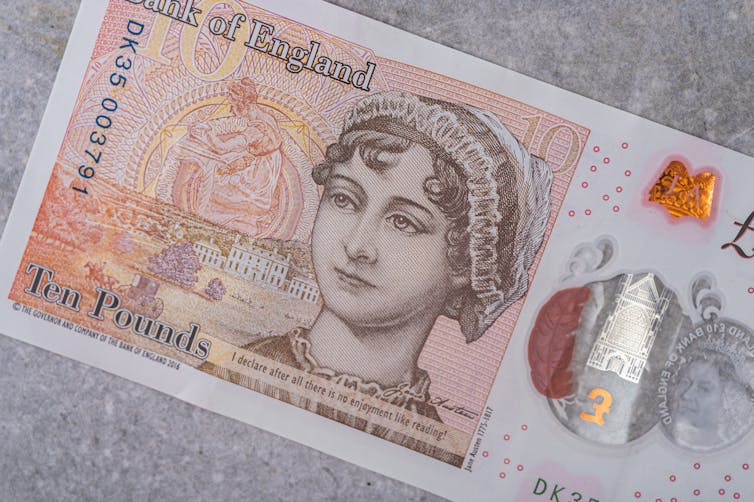
In theory, the banknote is a perfectly neat national symbol. It is an object that is only valid within the borders of the state it is issued in, so the images printed on it can be treated as representations of the nation. Current notes feature images of historically significant characters: former prime minister Sir Winston Churchill, author Jane Austen, painter J.M.W. Turner and scientist Alan Turing.

Jane Austen on the £10 note
Jane Austen is one of only three women who have been on the banknote.
Dudaeva/Shutterstock

Indeed, the Bank of England has suggested that images should not be “divisive”. In other words, they need to be as inclusive as possible. But in the current political environment, far-right politics and division have become extremely commonplace both globally and closer to home.

In the US, the current administration has squarely taken aim at diversity, equity and inclusion programmes and launched a massive wave of deportations. Across much of western Europe, far-right parties are going from strength to strength.

In the UK, rightwing Reform has emerged as the party that would win the most seats if a general election were held this year. The current prime minister, Keir Starmer, recently gave a speech where he warned the UK risked becoming an “island of strangers” without tougher immigration policies.

Amid these political currents, it will be interesting to see which themes and images are eventually chosen to adorn the new banknotes from the consultation which closes at the end of July. The designs will be instructive not least because they will show how how the current climate translates onto these notes as well as how the country sees itself.

For instance, there has never been a person of colour and only three women have previously featured on a banknote. It would be a a long time coming if this were to change.

The exclusions at the heart of national symbols

Perhaps more importantly, however, is the ironic contradiction around asking for the public’s views on banknotes when banknotes are disappearing from public view.

At the start of this year, Lloyds Banking Group announced it would be closing 136 of its high street banks. This follows a broader trend. Since 2015, banks have closed more than 6,000 branches, and the number of cash machines has fallen by more than 7,000 between June 2021 and June 2024.

Banking is becoming increasingly digital and carried out through a smartphone app. A growing number of establishments have gone entirely cashless.

Many people are affected by this, including those with disabilities, older people, those living in rural areas and small businesses. Not only is cash no longer king, it is barely in the building.

When it is redesigned, the new banknote will be released into an environment where it is less used and, in a growing number of establishments that have gone entirely cashless, will be almost entirely unwelcome.

National belonging is often romanticised. There is a sense that nationalism and unity go hand in hand, and that the nation is simply a basin of belonging. National symbols are portrayed as a matter of pride.

We do not know yet what designs they will bear when the crisp new banknotes are issued. But we do know that they will be issued in decreasing quantities and many people will find it harder to get their hands on them. That captures the contradictions of national symbols, and the exclusions they produce.

The Conversation

Pavan Mano does not work for, consult, own shares in or receive funding from any company or organisation that would benefit from this article, and has disclosed no relevant affiliations beyond their academic appointment.

ref. England’s redesigned banknotes will reveal how the country sees itself – https://theconversation.com/englands-redesigned-banknotes-will-reveal-how-the-country-sees-itself-260842

Why the Sycamore Gap tree provoked such strong emotional reactions – a psychologist explains

Source: The Conversation – UK – By Samuel Fairlamb, Senior Lecturer, Department of Psychology, Royal Holloway University of London

Joe Rey Photography/Shutterstock

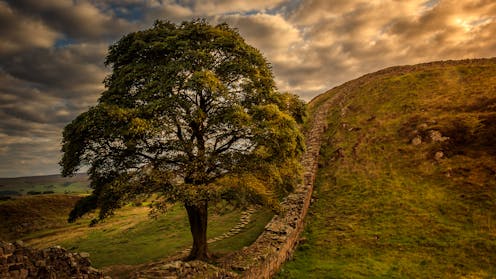
In September 2023, so many people were shocked when the famous Sycamore Gap tree, thriving in a dip along Hadrian’s Wall, was deliberately cut down overnight. For many, the tree symbolised British resilience, heritage and an enduring history. The public response was swift and intense, with widespread outrage and grief over the loss of this cultural landmark.

The two men convicted of felling the Sycamore Gap tree have been sentenced to four years and three months in prison. Meanwhile, the tree lives on thanks to an AI-generated alternate world in the film 28 Years Later.

As a psychologist, I’m interested in what inspired such a strong reaction to the destruction of a single tree. One psychological explanation, known as “terror management theory”, suggests that the emotional response reflects deeper anxieties about death – and not just about this tree.


Get your news from actual experts, straight to your inbox. Sign up to our daily newsletter to receive all The Conversation UK’s latest coverage of news and research, from politics and business to the arts and sciences.


Terror management theory, developed by psychologists Sheldon Solomon, Jeff Greenberg and Tom Pyszczynski, builds on the work of cultural anthropologist Ernest Becker, author of the Pulitzer prize-winning The Denial of Death (1973).

This book’s central idea is simple yet profound. In it, Becker proposes that our awareness of mortality creates the potential for considerable existential anxiety.

To manage this, we rely on cultural worldviews. These are our belief systems. These worldviews can be religious, secular, political or national. They all share a promise that life is meaningful and offer prescriptions for how we should live. When we live in accordance with our cultural values and standards – whether by being a good parent, a loyal citizen or following religious texts – we gain a sense of self-esteem and feel we are contributing to something enduring and significant.

These worldviews also offer the promise of immortality. Some do so literally, as in religious faiths that promise life beyond death. Others offer symbolic immortality, through lasting achievements, family bloodlines, or the continuation of one’s nation. By embedding ourselves in these worldviews, we gain a sense that some part of us will continue after we die.

Cultural symbols such as flags, religious icons, or even a tree can embody our core values and collective identity and are therefore treated with deep reverence. Throughout history, people have waged wars and shown intense emotional reactions to the desecration of such symbols (burning the American flag or the Qur’an, for example).

cur tree trunk in fenced off area
The Sycamore Gap tree was cut down in September 2023.
SunCity/Shutterstock

The Sycamore Gap tree carried similar significance. As a centuries-old landmark, it came to represent Britain’s heritage, strength and continuity. From the perspective of terror management theory, its felling may have stirred strong reactions because it reminded people that even the symbols we rely on for a sense of permanence can be suddenly lost.

This sense of cultural loss is also echoed by other recent events, such as Brexit and the immigration crisis. A collective fear over the erosion of British values and traditions place questions about the loss of British identity at the centre of public consciousness.

Rooted in mortality

Decades of psychological research support this theory’s claims. One common method (a technique called “mortality salience”) involves making participants subtly aware of their mortality (control participants are not reminded of death).

In studies carried out in the 1990s, researchers found that when the solution to a task required desecrating a cultural symbol, such as using an American flag to separate ink from a jar of sand, participants reminded of death took longer to complete the task and experienced greater apprehension.

Hundreds of studies also show how being reminded of death can increase anger and hostility towards people who threaten or violate one’s cultural values. One line of research examining reactions to those who commit moral transgressions may be particularly appropriate to this case.

For instance, in one study, participants reminded of their own death were more likely to support harsher punishments for those who committed moral transgressions such as someone who destroyed an irreplaceable artefact (much like the cutting down of a tree). Other research has shown similar effects: participants (including judges!) when reminded of death gave out harsher penalties or sentencing for those who have committed a crime.

You might question whether these effects truly reflect death anxiety or if they could be explained without invoking a desire for immortality. Research may provide compelling evidence. One study found that reminders of death increased support for harsher punishments for moral transgressors (replicating the study mentioned earlier).

However, when participants were first presented with evidence of an afterlife, the effect of death increasing harsher punishments disappeared. In other words, the promise that death is not the end appeared to buffer from the anxiety that death arouses.

The fall of the Sycamore Gap tree was more than a loss of natural beauty. It was, for many, a symbolic attack on permanence, on meaning, and on shared identity. Yet while such losses can stir outrage and calls for punishment, research also shows that when people endorse prosocial values like empathy, reminders of death can actually foster forgiveness towards those who commit moral transgressions.

According to terror management theory, these responses are not just about anger, but about what it means to be human in the face of inevitable death. In this light, the tree’s felling uprooted something sacred: a collective continuity that gives meaning to our brief lives. As we grieve its loss, perhaps we’re also mourning something more elusive – the comforting illusion that some things might last forever.


This article features references to books that have been included for editorial reasons, and may contain links to bookshop.org. If you click on one of the links and go on to buy something from bookshop.org The Conversation UK may earn a commission.


Don’t have time to read about climate change as much as you’d like?

Get a weekly roundup in your inbox instead. Every Wednesday, The Conversation’s environment editor writes Imagine, a short email that goes a little deeper into just one climate issue. Join the 45,000+ readers who’ve subscribed so far.


The Conversation

Samuel Fairlamb does not work for, consult, own shares in or receive funding from any company or organisation that would benefit from this article, and has disclosed no relevant affiliations beyond their academic appointment.

ref. Why the Sycamore Gap tree provoked such strong emotional reactions – a psychologist explains – https://theconversation.com/why-the-sycamore-gap-tree-provoked-such-strong-emotional-reactions-a-psychologist-explains-257165

Why the Nazis stole a fragment of the Bayeux tapestry

Source: The Conversation – UK – By Millie Horton-Insch, Postdoctoral Research Fellow, History of Art Department, Trinity College Dublin

There was great excitement at the news this month that the Bayeux tapestry – the 11th-century embroidered epic depicting the conquest of England by William the Conqueror in 1066 – will go on display at the British Museum in 2026. However, the tapestry had already been in the news earlier this year, admittedly to much less fanfare.

In March, it was reported that a fragment of the Bayeux tapestry had been discovered in Germany in the Schleswig-Holstein state archives. To understand how it ended up there, we must turn to a troubling and little-known episode in the tapestry’s history: Sonderauftrag Bayeux (Special Operation Bayeux), a project operated by the Nazi Ahnenerbe, the SS regime’s heritage research group.


Looking for something good? Cut through the noise with a carefully curated selection of the latest releases, live events and exhibitions, straight to your inbox every fortnight, on Fridays. Sign up here.


It has often been observed that art seems to have been of disproportionate concern to the Nazis. However, their manipulation of visual and material culture should be understood as central to – not separate from – Hitler’s genocidal regime and its efforts towards global domination.

The Ahnenerbe, under the ultimate authority of Heinrich Himmler, was established to develop and disseminate histories in support of that mythology central to the Nazi regime: the supremacy of the Aryan race. To this end, the Ahnenerbe oversaw research that claimed to use unassailable scientific methods.

However, it has long been acknowledged that their projects consciously manipulated historical evidence to construct fabricated histories that would support racist ideologies. To achieve this, numerous research projects were conducted. These projects saw scholars travel across the globe in the pursuit of objects that could act as monuments to the mythologies of Aryan supremacy. Sonderauftrag Bayeux was one such project.

Nazi interest in the Bayeux tapestry may seem surprising to British people, where the tapestry is considered a symbol of a singularly significant moment in Britain’s history. However, just as politicians in modern Britain have found it tempting to reference the tapestry in the advancement of their political agendas, so too did the Ahnenerbe.

Sonderauftrag Bayeux aimed to produce a multi-volume study of the tapestry that would assert its inherently Scandinavian character. The objective was to present the tapestry as proof of the supremacy of the early medieval Norman people, whom the Ahnenerbe claimed as the ancestors of modern German Aryans and descendants of “Viking” northern Europeans.

By June 1941, work on Sonderauftrag Bayeux had begun in earnest. Among the team sent to Normandy to study the tapestry first hand was Karl Schlabow, a textile expert and head of the Germanic Costume Institute at Neumünster in Germany. Schlabow spent a fortnight in Bayeux, and it was he who removed a fragment of the tapestry’s backing fabric and brought it back to Germany when his research visit was complete.

Though initial reports suggested that Schlabow removed this fragment when the embroidery was later transferred by the Nazis to Paris, it is more likely that he did so during June 1941, when he and his fellow members of Sonderauftrag Bayeux were stationed in Bayeux.

In a sketch by Herbert Jeschke – the artist commissioned to create a painted reproduction of the tapestry – during this visit, Jeschke depicted himself with Schlabow and Herbert Jankuhn (the director of the project) hunched over the tapestry. The sketch is accompanied by the emphatic title, “Die Tappiserie!”, an expression of delight at their privileged viewing of this medieval masterpiece.

To join the Ahnenerbe, Schlabow, like others involved in the Sonderauftrag Bayeux, was inducted into the SS. He held the rank of SS-Unterscharführer (roughly the equivalent of a sergeant in today’s British army). After the second world war many members of the Ahnenerbe denied having sympathy for Nazi policies.

However, documents seized by US intelligence officers at the end of the second world war reveal that some were denied entry to the Ahnenerbe if they, for instance, had had Jewish friends or expressed sympathy towards communist ideas. They therefore had to (at least outwardly) appear sympathetic to Nazism to be inducted into its ranks.

Details of what exactly the Ahnenerbe project uncovered, or even hoped to uncover, from this study of the tapestry are opaque. It appears that, to a large extent, the act of producing an illustrated study and dispatching researchers to the original textile was enough to claim the object as a monument to Germanic Aryan supremacy. It is clear that perceived Scandinavian influence within the tapestry’s designs was to be central to the study’s conclusions, but the project was not completed before Germany’s defeat at the end of the war.

Like many other members of the Ahnenerbe, Schlabow returned to research after the war, working at the Schleswig-Holstein State Museum in Gottorf Castle.

The discovery of even the tiniest fragment of this remarkable medieval object is cause for much excitement. However, its recovery should be framed firmly in the context in which it was removed. It should come as no surprise that Schlabow felt empowered to steal this piece of the tapestry; the regime for which he worked claimed the object as a piece of his heritage, his birthright as an Aryan German.

This find is a timely reminder that the past is closer than we realise and that there is still much work to be done to explore the long shadows cast by previous practices in the histories we inherit. The recovered fragment is currently on display in Schleswig-Holstein, but will return to the Musée la Tapisserie de Bayeux in Normandy in time for the museum’s re-opening in 2027 when the two elements will be reunited for the first time since 1941.

The Conversation

Millie Horton-Insch receives funding from the Leverhulme Trust.

ref. Why the Nazis stole a fragment of the Bayeux tapestry – https://theconversation.com/why-the-nazis-stole-a-fragment-of-the-bayeux-tapestry-260048

What Trump’s decision to send more weapons to Ukraine will mean for the war

Source: The Conversation – UK – By David Hastings Dunn, Professor of International Politics in the Department of Political Science and International Studies, University of Birmingham

At face value, Donald Trump’s announcement about his plans on Russia and Ukraine look like a major policy change. Speaking from the Oval Office on July 14, where he had been meeting with Nato secretary general Mark Rutte, the US president said he would send “top-of-the-line-weapons” to help Kyiv and – unless a ceasefire deal is agreed inside a 50-day time limit – the US would impose secondary sanctions on any countries dealing with Russia.

But while this represents a significant departure from Trump’s previous approach, it’s more of a step back towards the policy approach of his predecessor Joe Biden than the U-turn that some commentators are claiming.

For months Russia has stepped up its bombardment of Ukraine, buoyed by the fact that neither the US Congress nor the White House has authorised any new military aid to Kyiv. Moscow would have been aware of this lack of US action and its missile and drone attacks against Ukraine have aimed to run down the stocks of air defence missiles supplied by Biden while paying lip service to the idea of peace negotiations.

For Trump the penny appears finally to have dropped as to what was happening. His frustration and disappointment in Putin is what has finally led to him calling this out. According to Trump, Putin “fooled a lot of people – Clinton, Bush, Obama, Biden – he didn’t fool me. At a certain point talk doesn’t talk, it’s got to be action”.

The decision to send new supplies of defensive – and potentially even longer-range offensive missiles – to Ukraine (even if the Europeans pay for them) is an important signal to Russia. But so too is the threat of tariffs of 100% on countries, such as India and China, that sustain the Russian economy by buying its oil and gas at knockdown prices.

The US senate, led by Lindsay Graham, the influential Republican senator for South Carolina, has been itching to pass these secondary sanctions for months. Now that the Trump administration appears to have adopted this plan it is a significant policy instrument to pile the pressure on Russia.

The change in Trump’s approach may also mean that the $US8 billion (£6 billion) of frozen Russian assets in the US (and US$223 billion in Europe) could be released to aid Ukraine, which would provide a ready means to pay for the US arms transfers.

Limits to US support

What has not changed, however, is the goal of Trump’s policy towards the war in Ukraine. While the Biden administration called out the illegality of Putin’s unprovoked aggression and called for the restoration of Ukrainian sovereignty, Trump is merely calling for a ceasefire.

Trump may say he is “disappointed” with Putin, but he has not labelled him as the aggressor. In fact at one point he was blaming Ukraine for the invasion. And, significantly, he has not demanded that Russia give up the 20% of Ukraine that it currently illegally occupies.

ISW map showing the state of the war in Ukraine, July 14
As at July 14, Russian troops occupy about 20% of Ukraine’s sovereign territory.
Institute for the Study of War

The US president is also silent on what the US would commit to in terms of security and stability for Ukraine after the fighting stops. This is a much bigger question than Ukraine’s Nato membership. America’s European allies in Nato regard some sort of stability force on Ukrainian territory as necessary to deter any future Russian aggression.

Whether or not US troops would be involved (and all the signs are that they would not), some sort of US security “back-stop” or guarantee is still seen in Europe as key to its success – as would be US logistical and intelligence support for its operation.

But why the 50-day delay?

Another aspect of the change in Trump’s policy is the long lead time that Russia has been given to come to the table. A lot of Ukrainian civilians are likely to die during this period if the intense bombardment continues. On the battlefield, 50 days would give the Russians an extended window during a renewed summer offensive to make further territorial gains inside the occupied provinces.

So Trump’s proposals have to be viewed through the prism of his propensity to set deadlines that are then pushed back multiple times – as with the on-again, off-again tariffs, which have given Trump the nickname Taco (“Trump always chickens out”) on Wall Street.

Russian senator, Konstantin Kosachev, was certainly taking this view when he told the BBC after Trump’s announcement that, “if this is all Trump had to say about Ukraine today, then so far it’s been much ado about nothing”.

This sentiment was shared by the Russian stock market which rose 2.7% in the aftermath of Trump’s announcement. Analysts had expected much worse, so the long delay in the prospect of anything actually happening was clearly seen as a long way off and potentially subject to change or cancellation. Trump is seen by many as both inconsistent in his threats and unpredictable as to where policy will eventually settle.

The fact that Trump told BBC Washington correspondent Gary O’Donoghue that while he was “disappointed” with Putin, he was “not done with him” – and his clear reluctance to act quickly and decisively in sanctioning Russia – should be seen as an important counterpart to the apparent policy shift.

Like so many things with the 47th US president, it’s important not to react to the media appearances or the headlines they provoke, without also paying attention to the policy actions of his administration.

The Conversation

David Hastings Dunn has previously received funding from the ESRC, the Gerda Henkel Foundation, the Open Democracy Foundation and has previously been both a NATO and a Fulbright Fellow.

ref. What Trump’s decision to send more weapons to Ukraine will mean for the war – https://theconversation.com/what-trumps-decision-to-send-more-weapons-to-ukraine-will-mean-for-the-war-261192

Just back from holiday and not feeling well? Here are the symptoms you should take seriously

Source: The Conversation – UK – By Dan Baumgardt, Senior Lecturer, School of Physiology, Pharmacology and Neuroscience, University of Bristol

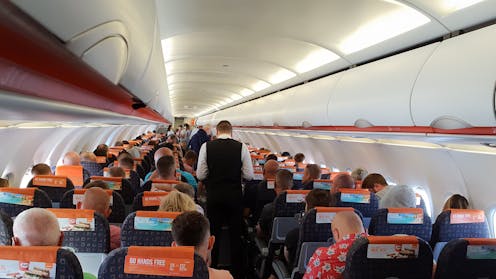
What are you bringing back with you? The Picture Studio/Shutterstock

Summer is synonymous with adventure, with millions flocking to exotic destinations to experience different cultures, cuisines and landscapes. But what happens when the souvenir you bring back isn’t a fridge magnet or a tea towel, but a new illness?

International travel poses a risk of catching something more than a run-of-the-mill bug, so it’s important to be vigilant for the telltale symptoms. Here are the main ones to look out for while away and when you return.


Get your news from actual experts, straight to your inbox. Sign up to our daily newsletter to receive all The Conversation UK’s latest coverage of news and research, from politics and business to the arts and sciences.


Fever

Fever is a common symptom to note after international travel – especially to tropical or subtropical regions. While a feature of many different illnesses, it can be the first sign of an infection – sometimes a serious one.

One of the most well-known travel-related illnesses linked to fever is malaria. Spread by mosquito bites in endemic regions, malaria is a protozoal infection that often begins with flu-like symptoms, such as headache and muscle aches, progressing to severe fever, sweating and shaking chills.

Other signs can include jaundice (yellowing of the skin or eyes), swollen lymph nodes, rashes and abdominal pain – though symptoms vary widely and can mimic many other illnesses.

Prompt medical attention is essential. Malaria is serious and can become life threatening. It’s also worth noting that symptoms may not appear until weeks or even months after returning home. In the UK, there are around 2,000 imported malaria cases each year.

Travellers to at-risk areas are strongly advised to take preventative measures. This includes mosquito-bite avoidance as well as prescribed antimalarial medications, such as Malarone and doxycycline. Although these drugs aren’t 100% effective, they significantly reduce the risk of infection.

Aside from malaria, other mosquito-borne diseases can cause fever. Dengue fever, a viral infection found in tropical and subtropical regions, leads to symptoms including high temperatures, intense headaches, body aches and rashes, which overlap with both malaria and other common viral illnesses.

Most people recover with rest, fluids and paracetamol, but in some instances, dengue can become severe and requires emergency hospital treatment. A vaccine is also available – but is only recommended for people who have had dengue before, as it provides good protection in this group.

Any fever after international travel should be taken seriously. Don’t brush it off as something you’ve just picked up on the plane – please see a doctor. A simple test could lead to early diagnosis and might save your life.

A man spraying bug-repellant on his forearm.
Avoiding being bitten is a good defensive measure.
Jaromir Chalabala/Shutterstock

Diarrhoea

Few travel-related issues are as common – or as unwelcome – as diarrhoea. It’s estimated that up to six in ten travellers will experience at least one episode during or shortly after their trip. For some, it’s an unpleasant disruption mid-holiday; for others, symptoms emerge once they’re back home.

Traveller’s diarrhoea is typically caused by eating food or drinking water containing certain microbes (bacteria, viruses, parasites) or their toxins. Identifying the more serious culprits early is essential – especially when symptoms go beyond mild discomfort.

Warning signs to look out for include large volumes of watery diarrhoea, visible blood in the stool or explosive bowel movements. These may suggest a more serious infection, such as giardia, cholera or amoebic dysentery.

These conditions are more common in regions with poor sanitation and are especially prevalent in parts of the tropics.

Some infections may require targeted antibiotics or antiparasitic treatment. But regardless of the cause, the biggest immediate risk with any severe diarrhoea is dehydration from copious fluid loss. In serious cases, hospital admission for intravenous fluids may be necessary.

The key message for returning travellers: if diarrhoea is severe, persistent or accompanied by worrying symptoms, see a doctor. What starts as a nuisance could quickly escalate without the right care.

And if you have blood in your stool, make sure you seek medical advice.

Jaundice

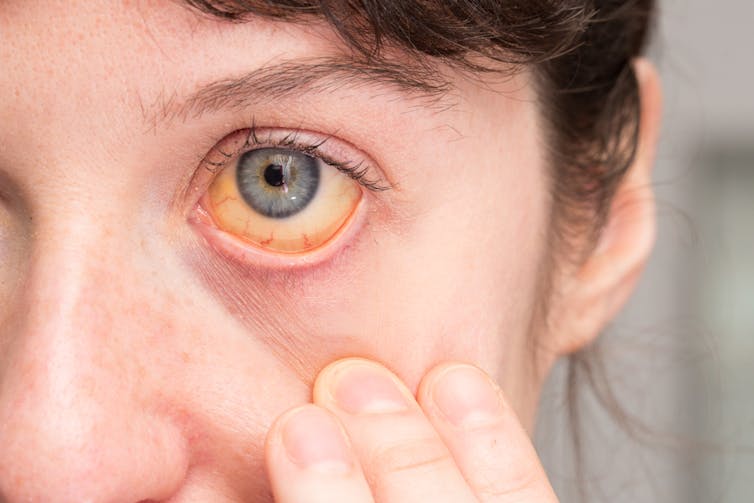
If you’ve returned from a trip with a change in skin tone, it may not just be a suntan. A yellowish tint to the skin – or more noticeably, the whites of the eyes – could be a sign of jaundice, another finding that warrants medical attention.

Jaundice is not a disease itself, but a visible sign that something may be wrong with either the liver or blood. It results from a buildup of bilirubin, a yellow pigment that forms when red blood cells break down, and which is then processed by the liver.

A person's yellow eye, showing signs of jaundice.
Signs of jaundice should be taken very seriously.
sruilk/Shutterstock.com

Several travel-related illnesses can cause jaundice. Malaria is one culprit as is the mosquito-borne yellow fever. But another common cause is hepatitis – inflammation of the liver.

Viral hepatitis comes in several forms. Hepatitis A and E are spread via contaminated food or water – common in areas with poor sanitation. In contrast, hepatitis B and C are blood-borne, transmitted through intravenous drug use, contaminated medical equipment or unprotected sex.

Besides jaundice, hepatitis can cause a range of symptoms, including fever, nausea, fatigue, vomiting and abdominal discomfort. A diagnosis typically requires blood tests, both to confirm hepatitis and to rule out other causes. While many instances of hepatitis are viral, not all are, and treatment depends on the underlying cause.

As we’ve seen, a variety of unpleasant medical conditions can affect the unlucky traveller. But we’ve also seen that the associated symptoms are rather non-specific. Indeed, some can be caused by conditions that are short-lived and require only rest and recuperation to get over a rough few days. But the area between them is decidedly grey.

So plan your trip carefully, be wary of high-risk activities while abroad – such as taking drugs or having unprotected sex – and stay alert to symptoms that develop during or after travel. If you feel unwell, don’t ignore it. Seek medical attention promptly to identify the cause and begin appropriate treatment.

The Conversation

Dan Baumgardt does not work for, consult, own shares in or receive funding from any company or organisation that would benefit from this article, and has disclosed no relevant affiliations beyond their academic appointment.

ref. Just back from holiday and not feeling well? Here are the symptoms you should take seriously – https://theconversation.com/just-back-from-holiday-and-not-feeling-well-here-are-the-symptoms-you-should-take-seriously-260013

Why Jane Austen is definitely not just for girls

Source: The Conversation – UK – By Shelley Galpin, Lecturer in Culture, Media and Creative Industries, King’s College London

In my former life as a teacher, I once had a job interview in which I was asked how I dealt with the problem of teaching Jane Austen to boys.

Having had experience of this situation, I confidently told my interviewer (a maths teacher) that the “problem” they were assuming didn’t actually exist, and that it was perfectly possible to teach Austen’s novels to mixed-sex classes with successful results. My answer was met by barely veiled scepticism – and suffice to say, I didn’t get the job.

But where did this popular perception come from? Austen’s genius has been recognised from the earliest days of the development of a canon of English literature, and has never really fallen out of fashion. So it might seem odd that the suitability of her work for a co-educational class is the subject of genuine debate.


This article is part of a series commemorating the 250th anniversary of Jane Austen’s birth. Despite having published only six books, she is one of the best-known authors in history. These articles explore the legacy and life of this incredible writer.


The increasingly intertwined associations of Austen’s literature with the many (often excellent) adaptations of her work may not help the matter, with screen retellings often foregrounding the love stories and losing much of the ironic tone that characterises Austen’s narrative style.

The myriad repackaged editions of her novels that adorn bookshelves with pastel-toned floral designs, or images of anonymous portraits of passive young women, also do little to challenge the popular perception of these books as stories for women and girls.

Finally, and perhaps most troublingly, is the still-commonly held notion that stories with a female protagonist do not have wide-ranging appeal and must be consigned to a “niche interest” bracket. Male-led stories, in contrast, have long been considered to hold universal relevance for audiences.

This last point is a bigger issue concerning the publishing and entertainment industries, so I will largely park this one. But I will point out that, as others have argued in relation to Austen’s work, the classroom is an excellent place to start countering the assumptions of the “everyman” male experience, in contrast to the “special interest” attitude to female perspectives.

With regards to the teaching of Austen’s novels, drawing on my experiences both as a scholar and as a teacher, I believe her novels can speak to young readers of different genders and from diverse backgrounds.

Money, power and inequality

Addressing the ways in which Austen’s novels tend to be packaged, I asked my students, typically aged 16-18, to explore the ideas at the heart of the novels by redesigning the book covers to better reflect these themes.

The flowers and passive young women were gone. The redesigned book covers often focused on the idea of wealth, through pictures of differing piles of money, or power, such as the image of imbalanced scales to symbolise the unequal societies inhabited by Austen’s characters.

Because, as much as they are love stories, Austen’s heroines typically achieve their “happy endings” against a backdrop of money worries, power struggles, familial tension and gendered social hierarchies. While her novels are rightly celebrated for highlighting the unequal treatment of the sexes during her lifetime, it is reductive to see this as their sole contribution to social commentary.

Take Austen’s last completed novel, Persuasion. Here, Anne Elliot – over the hill at the ripe old age of 27 – begins the novel by rueing her broken engagement to Captain Wentworth, which she had been persuaded to break off eight years earlier due to his lack of fortune.

While the narrative focus is on Anne, who is left to regret her choice and wonder whether she will ever be able to escape her odious father and siblings, the broken-hearted Wentworth, who reappears in Anne’s life shortly after the start of the novel, is at least as much a victim of the situation as Anne herself.

At its heart, this is a story of a young woman who allowed herself to be persuaded to make a bad choice, and a young man who, through no fault of his own, was deemed not good enough due to his lack of wealth. The experiences of these characters, although they are older than the average school student, are highly relatable and sympathetic to many teenagers, who may well have experienced meddling family members or unfair judgments of their own.

Take also Northanger Abbey, in which fanciful Catherine Morland mixes fact and fiction and imagines the titular abbey to be a site of gothic intrigue, only to discover that the real horror derives from a controlling patriarch and his sexually predatory oldest son.

Here again, the novel cleverly makes the point that social inequalities, and the choices of those motivated by their love of money and power, are the real darkness at the heart of Austen’s society.

In my experience, students of all genders have been able to appreciate and relate to Northanger Abbey’s depictions of the loss of innocence, class inequality, and the experience of being subject to the sometimes obscure decisions of more powerful individuals.

Austen’s works, far from being the simple love stories of popular perception, are also razor-sharp satires of social and gendered inequalities. Full of witty observations and universally relatable experiences, there is a reason for the consistent popularity of her writing 250 years after her birth.

To fail to recognise this in the classroom is to do a disservice to all our students, as well as to Austen herself.

The Conversation

Shelley Galpin does not work for, consult, own shares in or receive funding from any company or organisation that would benefit from this article, and has disclosed no relevant affiliations beyond their academic appointment.

ref. Why Jane Austen is definitely not just for girls – https://theconversation.com/why-jane-austen-is-definitely-not-just-for-girls-259193

How 1860s Mexico offered an alternative vision for a liberal international order

Source: The Conversation – UK – By Tom Long, Professor of International Relations, Department of Politics and International Studies, University of Warwick

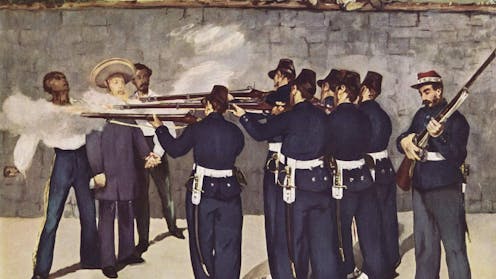
The Execution of Emperor Maximilian of Mexico, June 19, 1867 Edouard ManetWikimedia Commons

In 1867, the world’s most powerful statesmen, including Austria’s Emperor Franz Josef, France’s Napoleon III and US secretary of state, William H. Seward, petitioned the Mexican government to spare the life of a condemned man.

Mexico’s ragtag army and militias had just humbled France, then Europe’s preeminent land power. The costly six-year campaign drained the French treasury and eroded Napoleon III’s domestic support. Napoleon’s ambition to transform Mexico into a client empire under a Vienna-born, Habsburg archduke, crowned Maximilian I, ended in spectacular failure.

After his defeat, Maximilian was brought before a Mexican military tribunal. European monarchs regarded the prisoner as their peer, but Mexican liberals convicted him as a piratical invader, usurper and traitor. Despite indignant appeals from European courts, President Benito Juárez refused to commute his sentence. The would-be emperor was executed by firing squad.


Get your news from actual experts, straight to your inbox. Sign up to our daily newsletter to receive all The Conversation UK’s latest coverage of news and research, from politics and business to the arts and sciences.


The controversy went beyond one monarch’s fate. It crystallised a clash between opposed visions of global order — as Peru’s president Ramón Castilla said at the time, it was a “war of the crowns against liberty caps”.

Today, world politics are in flux. The so-called liberal international order, nominally grounded in multilateralism, open markets, human rights and the rule of law, is facing its gravest crisis since the second world war. Former advocates such as the United States now openly flout international law and undermine the very norms they once championed. China remains ambivalent, while Russia unabashedly hastens the order’s unravelling.

More broadly, the old post-second world war order appears out of step with the global south and with widespread anger over double standards exposed by the wars in Ukraine, Gaza and Iran.
Amid today’s crises, a world order arranged for and by the great powers looks both insufficient and doomed to lack legitimacy. Reordering will require support from diverse actors, including states across the global south.

1860s: a turbulent decade

The 1860s were a turbulent, although often overlooked, moment of global reordering. Technological shifts – the telegraph, electricity, steamships and railways – appeared as disruptive then as AI does today. Combined with shifting power dynamics, these transformations accelerated imperial expansion. Yet the rules of the emerging order remained uncertain, even among the imperial powers themselves.

In Europe, networks of dynastic rule still carried weight in international politics. Under growing pressure, the ancien régime sought to reinvent and reassert itself. The old empires often justified their expansion by promising to bring order and progress to supposedly backward peoples. But that “civilising mission” clashed with a worldview emerging from Spanish America – where countries had thrown off colonial rule to establish independent republics.

As we wrote in a recent article in American Political Science Review, Spanish American diplomats articulated a republican vision of international order centred on the protection of weaker states from domination by great powers.

Fending off Europe’s empires

Divided by civil conflict, Mexico became an easy target for European empires. Mexico’s Liberal party had regained power but faced internal dissent and crippling foreign debt. Britain, France and Spain formed a coalition to invade and demand repayment. France, however, had more ambitious designs.

Exploiting the distraction of the US civil war, Napoleon III dreamed of transforming Mexico into a Latin stronghold against Yankee expansion. Best of all, Napoleon thought the scheme would turn a profit. A stable Mexican empire could repay the costs of the intervention – with interest – by increasing production from the country’s famed silver mines. Meanwhile, France would gain a receptive market for its exports and a grateful geopolitical subordinate.

Maximilian, a young Austrian prince of the house of Hapsburg, somewhat naively accepted the offer to rule a distant and unfamiliar land. He dreamed of regenerating Mexico through a liberal monarchy while reviving his family’s declining dynasty.

Led by Juárez, Mexico’s liberals fiercely resisted Maximilian’s rule. While militarily Juárez was consistently on the defensive, he remained diplomatically proactive. The Juaristas encouraged US sympathies that proved decisive after the end of the civil war. They also enjoyed solidarity – though limited material support – from other Spanish American republics. Although the monarchies of Europe all recognised Maximilian as Mexican emperor, Juárez’s defiance became a rallying point for liberals and republicans in Europe.

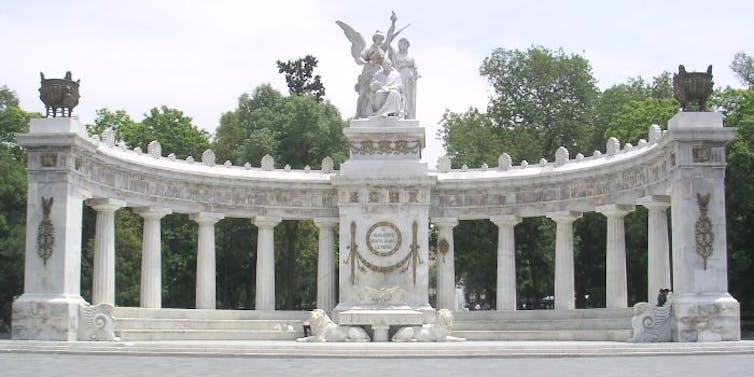
A monument to Juárez in central Mexico City.
Hero to the liberals: a monument to Juárez in central Mexico City.
Hajor~commonswiki, CC BY-ND

Vision of a new order

Beyond stoking sympathies, Juárez and his followers offered trenchant critiques of unequal international rules and practices cloaked in liberal guise.

First, the “republican internationalism” of Mexico’s Juaristas stood in direct opposition to European liberals’ “civilising mission”. Latin American republicans rejected the notion that progress could be imposed on their countries from abroad – though some echoed civilising rhetoric toward their own non-white populations, who like in the US were subject to campaigns of violence and dispossession that stretched from northern Mexico to the Patagonia. Many Latin American liberals likewise remained silent about empire elsewhere.

Second, the Juarista vision placed popular sovereignty, not dynastic ties, at the heart of legitimate statehood. These ideas drew on Mexico’s independence tradition and the principles enshrined in the 1857 constitution. European intervention, in this view, aimed to suppress popular rule in the Americas and extend the reaction against the failed revolutions of 1848, which had seriously threatened the old order when they raged across Europe.

Third, popular sovereign states were equal under international law, regardless of power, wealth, or internal disorder. Sovereign equality also underpinned Latin America’s strong commitment to non-intervention. Liberal writer and diplomat Francisco Zarco, a close confidante of Juárez, condemned frequent European economic justifications for intervention as the work of “smugglers and profiteers who wrap themselves in the flags of powerful nations”.

Finally, Mexican liberals called for an international system premised on republican fraternity, drawing on aspirations for cooperation that went back to liberator Simón Bolívar. The independence leader and committed republican convened a conference in 1826, hoping that a confederation of the newly independent Spanish American states would “be the shield of our new destiny”.

Similar arguments for an international order that advances non-domination still resonate in the global south today. The Mexican experience also underscores that the architects of international order have never come exclusively from the global north – and those who shape its future will not either.

The Conversation

Tom Long receives support from UK Arts and Humanities Research Council grant AH/V006622/1, Latin America and the peripheral origins of the 19th-century international order.

Carsten-Andreas Schulz receives support from UK Arts and Humanities Research Council grant AH/V006622/1, Latin America and the peripheral origins of the 19th-century international order.

ref. How 1860s Mexico offered an alternative vision for a liberal international order – https://theconversation.com/how-1860s-mexico-offered-an-alternative-vision-for-a-liberal-international-order-260228

UK air quality is improving but pollution targets are still being breached – new study

Source: The Conversation – UK – By James Weber, Lecturer in Atmospheric Radiation, Composition and Climate, University of Reading

Tony Skerl/Shutterstock

An estimated 4.2 million deaths can be attributed to poor air quality each year. Poor air quality is the largest fixable environmental public health risk in the world.

Our new study presents analysis of the UK-wide trends for three major pollutants – nitrogen dioxide (NO₂), ozone (O₃) and tiny particulate matter known as PM₂.₅ – between 2015 and 2024 to calculate how often air quality targets were breached.

Both nitrogen dioxide and PM₂.₅ showed robust decreases over the period 2015-2024, declining on average by 35% and 30% respectively. In 2015-2016, the average Defra monitoring site exceeded the nitrogen dioxide target on 136 days per year. By 2023-2024, this had dropped to 40 days per year.

For PM₂.₅, the number of days the average Defra site breached the target went from 40 to 22 days per year. While this is an improvement, the World Health Organization advises that these targets should not be breached on more than four days per year.


Get your news from actual experts, straight to your inbox. Sign up to our daily newsletter to receive all The Conversation UK’s latest coverage of news and research, from politics and business to the arts and sciences.


To examine the sources of pollution, we studied how pollutants were influenced by factors including time of day, day of week, wind direction and origin, location of monitoring station and even interactions between pollutant. Nitrogen dioxide concentrations are highest at monitoring sites located next to busy urban roads, lower at urban background sites (which are located at sites further from traffic such as parks) and much lower in rural sites.

Profiles over 24-hour periods show strong nitrogen dioxide peaks coinciding with the morning and evening rush hours and clear decreases at weekends. This all points to local traffic emissions being the major source. While PM₂.₅ is also higher in urban than rural locations, it exhibits more muted rush hour peaks and is more consistent between the week and weekend, suggesting traffic plays a smaller role.

We explored how wind direction and origin influenced nitrogen dioxide and PM₂.₅ by running a weather forecast model backwards for three UK locations: Reading, Sheffield and Glasgow. While nitrogen dioxide showed only a weak correlation with wind origin, PM₂.₅ was much more dependent.

For example, the probability of PM₂.₅ breaching air quality targets on a given day exceeded 15% only when the air had come from continental Europe and, for Sheffield and Glasgow, passed over much of the UK too.

NO₂ and PM₂.₅ pollution reduced over the last decade but remains too high while O₃ pollution has worsened.
James Weber, CC BY

While nitrogen dioxide and PM₂.₅ showed clear improvements, ozone exhibited a less positive picture. Ozone increased in 115 of the 121 sites considered, growing by 17% on average. A similar trend was observed across much of northern Europe. The average number of days ozone exceeded the World Health Organization target doubled from seven to 14 per year.

This may seem modest at present, but several factors are conspiring to drive ozone higher. In much of the UK, the relatively high levels of nitrogen dioxide effectively suppress ozone: as a result, ozone is higher in rural rather than urban areas and, as nitrogen dioxide decreases, ozone will increase further.

Unless, that is, we also target nitrogen dioxide’s partner in crime, volatile organic compounds (VOCs). VOCs are critical to the production of ozone and are emitted from human sources such as traffic and industry, plus certain types of vegetation like oak trees. While emissions of nitrogen dioxide fell by 20% between 2015-2024, human-driven VOC emissions declined by only 1%.

Ozone also increases in periods of hot weather due to elevated VOC emissions from vegetation and greater mixing of air from higher up in the atmosphere into the layer closest to the surface. Incidents of hot weather are only going to become more frequent in the UK, making it even more critical to crack down on human-driven VOC emissions to limit ozone pollution.

Up in the air

In the UK, considerable efforts have been made to improve air quality. Its importance has been enshrined in law for nearly 70 years. An extensive network of air quality monitoring sites is maintained by the UK government’s Department for Environment, Food and Rural Affairs (Defra) plus devolved and local authorities.

Local authorities are required to monitor air quality and develop air quality management areas in places where targets are unlikely to be met. Clean air or low emission zones have been introduced as a result.

However, air quality policy must be designed to reflect the complex nature of each pollutants’ drivers. Nitrogen dioxide is dominated by local sources, PM₂.₅ by transport from further afield and ozone by a combination of both.

big air quality measuring equipment unit , grass in background, white sky
An air quality monitoring station.
Chemival/Shutterstock

Local and national policies that cut traffic emissions by incentivising the replacement of older cars with newer, cleaner vehicles, retrofitting buses and restricting entry of the most polluting vehicles into towns and cities will probably reduce nitrogen dioxide further.

But, if nitrogen dioxide decreases are not accompanied by reductions to VOC emissions, locally and internationally, ozone will continue to rise, especially with more frequent hot weather.

By contrast, most PM₂.₅ comes from sources further afield, including industry and agriculture from other parts of the UK and beyond, so reductions hinge on stronger national and global policies that target emissions at source rather than just local efforts.

Air pollution doesn’t respect borders and while the technologies to facilitate continued improvements exist, they must be deployed in joined-up, international efforts.


Don’t have time to read about climate change as much as you’d like?

Get a weekly roundup in your inbox instead. Every Wednesday, The Conversation’s environment editor writes Imagine, a short email that goes a little deeper into just one climate issue. Join the 45,000+ readers who’ve subscribed so far.


The Conversation

James Weber does not work for, consult, own shares in or receive funding from any company or organisation that would benefit from this article, and has disclosed no relevant affiliations beyond their academic appointment.

ref. UK air quality is improving but pollution targets are still being breached – new study – https://theconversation.com/uk-air-quality-is-improving-but-pollution-targets-are-still-being-breached-new-study-260961