How Trump plays with new media says a lot about him – as it did with FDR, Kennedy and Obama

Source: The Conversation – UK – By Sara Polak, University Lecturer in American Studies, Leiden University

There is a strange and worrying parallel between the breakneck speed at which Donald Trump has operated in the first few months of his presidency and the ever-accelerating pace at which information moves on social media platforms. Where in his first term he used Twitter, now, the 47th US president is using his own platform, TruthSocial, to announce changes of direction that are sometimes so fundamental that they change decades of US policy.

Social media has become a key tool of governing for Trump’s administration. He uses it both to make announcements and to drum up support for those announcements. His social media posts can move the markets and make or break careers. They can even, it seems, stop wars.

So when he used TruthSocial to announce a ceasefire between Israel and Iran on June 23, giving the two countries a deadline to stop firing missiles, it appears that neither of the antagonists were fully aware of the situation, given they carried on attacking each other. So an all-caps message followed: “ISRAEL. DO NOT DROP THOSE BOMBS,” he posted. “BRING YOUR PILOTS HOME, NOW!” – adding, just in case anyone had any doubt he was serious: “DONALD J. TRUMP, PRESIDENT OF THE UNITED STATES.”

Trump’s use of his TruthSocial platform began as he sought to re-establish himself from the political wilderness after the insurrection of January 6 2021. It has now become a tool of his extreme power and his willingness to use (and abuse) it – globally as well as domestically.


Get your news from actual experts, straight to your inbox. Sign up to our daily newsletter to receive all The Conversation UK’s latest coverage of news and research, from politics and business to the arts and sciences.


He’s the latest in a string of US presidents known for their adroit use of whichever is the medium most guaranteed to connect with the greatest number of people. From Theodore “Teddy” Roosevelt’s adept cultivation of print journalists in the early 20th century through Franklin D. Roosevelt’s comforting use of radio as it gained popularity and John F. Kennedy’s mastery of the rising medium of television, presidents have expanded their reach and influence through adept use of media.

FDR’s “fireside chats”, broadcast on the radio throughout the US in the 1930s, reached an estimated 80% of the population, showing he understood the key media principle of reach. Roosevelt would address his listeners as “my friends” and Americans came to understand them as seemingly intimate conversations with their president.

FDR dominated the airwaves at a time when many Americans hardly understood the important role that the federal government played in their own lives – and millions of households were only just getting mains electricity (thanks to the Rural Electrification Act of 1936). But radios were becoming a common mass medium and FDR perfectly understood how to use it. If you listen to the fireside chats, FDR may sound patrician – and at times formal – but his tone is also friendly, thoughtful and reassuring.

In Germany at around the same time, Adolf Hitler’s massive stadium speeches were very effective for people who were in the stadium and being lifted by the intensity of the crowd and all the carefully thought out visual cues. But when broadcast on radio, Hitler had nothing like Roosevelt’s ability to connect with people on a personal level.

Roosevelt was hardly the first leader – or even the first US president – to speak on the radio. But he was the first to master the medium. He figured out how to use its potential to deliver a key implicit message: that his government should and did take on a central role in people’s lives.

Equally, John F. Kennedy can be said to have “discovered” political television. Not just as a medium for political campaigns, debates and speeches – but also for putting across to a mass audience his role as the embodiment of American decency, beauty and masculinity: JFK’s White House as Camelot.

JFK was considered a master of the fast-growing medium of television.

Both Roosevelt and Kennedy were in several ways physically disabled and lived with chronic illness, yet through the “new medium” of their time were able to project an image of quintessentially American strength and trustworthiness. In part this was their own doing – but it’s also a testament to the power of the media they used for their time.

Mastering the medium

These possibilities of a medium used to its best advantage – for example, to be heard around the US, but still to project a sense of intimacy – have become known as the “affordances” of a medium. The medium afforded Roosevelt space to be authentic without showing his disability. Kennedy appeared young, fit and handsome – even when dependent on painkillers.

When a new medium is introduced, people start to play around with its affordances – and this applies to politicians too. Political leaders who develop a special aptitude for using the new medium to emphasise their unique style can become particularly successful, as has Donald Trump with his use of social media.

The US president rose to power helped by his adept use of many of Twitter’s attributes – the imposed brevity of his messages, the ease of retweeting, the tendency for other users to “pile on” (and the user anonymity, which tends to encourage pile-ons) to polarise American public debate.

Trump was forced off Twitter after the Capitol Hill insurrection of January 6 2021. So he came back with his own platform, TruthSocial, where he can also make the rules. And now he uses the platform to make foreign policy, trumpeting his positions (which can change with bewildering speed) on TruthSocial well before they can be announced by the White House press team, which often has to scramble to catch up.

When Canadian communication theorist Marshall McLuhan penned his famous phrase: “The medium is the message” in his groundbreaking 1964 study, Understanding Media: The Extensions of Man, he meant to say that media form and content are not as distinct from one another as one might think and that the form of a medium of communication can shape society as much as its content. In Donald Trump’s use of social media, we are seeing this idea at work.

The Conversation

Sara Polak does not work for, consult, own shares in or receive funding from any company or organisation that would benefit from this article, and has disclosed no relevant affiliations beyond their academic appointment.

ref. How Trump plays with new media says a lot about him – as it did with FDR, Kennedy and Obama – https://theconversation.com/how-trump-plays-with-new-media-says-a-lot-about-him-as-it-did-with-fdr-kennedy-and-obama-248923

From Roman drains to ancient filters, these artefacts show how solutions to water contamination have evolved

Source: The Conversation – UK – By Rosa Busquets, Associate Professor, School of Life Sciences, Pharmacy and Chemistry, Kingston University

Thirst: In Search of Freshwater, an exhibition at Wellcome Collection. Benjamin Gilbert., CC BY-NC-ND

A new exhibition in London (open until February 2026) called Thirst: In search of freshwater highlights how civilisations have treasured – and been intrinsically linked to – safe, clean water.

As a chemist, I research how freshwater is polluted by modern civilisation. Common contaminants in rivers include pharmaceuticals,
microplastics
(which degrade further when exposed to sunlight and wave power), and forever chemicals or per- and polyfluoroalkyl substances (PFAS) (some of which are carcinogenic).

Synthetic toxic chemicals are introduced into the environment from the products we make, use and dispose of. This wasn’t a problem centuries ago, where we had a totally different manufacturing industry and technologies.

Some, such as PFAS from stain-resistant textiles or nonstick materials such as cookware, can be particularly difficult to remove from wastewater. PFAS don’t degrade easily, they resist conventional heat treatments and can easily pass through wastewater treatments, so they contaminate rivers or lakes that are sources of our drinking water.


Get your news from actual experts, straight to your inbox. Sign up to our daily newsletter to receive all The Conversation UK’s latest coverage of news and research, from politics and business to the arts and sciences.


Testing for pollutants is even more critical in developing nations that lack sanitation and face drought or flooding.
Having to protect and conserve drinking water and its sources is as relevant today as it always has been.

For this exhibition, curator at the Wellcome Collection in London, Janice Li, has selected 125 historical objects, photographs and feats of engineering that link to drought, rain, glaciers, rivers and lakes. These three artefacts from Thirst illustrate how our relationship with water contamination has evolved:

1. Ancient water filters

Made from natural materials such as clay, water jug filters have been used for hundreds of years in every continent by ancient civilisations. They show that purifying water for drinking was commonplace. The sand and soil particles that naturally get suspended in water and removed by these filters would have carried microbes.

broken arabic jug
Water jug filters with Arabic inscription, found in Egypt, dating back to 900-1,200.
Victoria and Albert Museum London/Wellcome Collection, CC BY-NC-ND

But in ancient times, pharmaceuticals and other drugs, pesticides, forever chemicals and microplastics would not have been a problem. Those filters could work relatively well despite being made of simple materials with wide pores.

Today, those ancient filters would no longer be effective. Modern water filters are made using more advanced materials which typically have small pores (called micropores and mesopores). For example, filters often include activated carbon (a highly porous type of carbon that can be manufactured to capture contaminants) or membranes that filter water. Only then is it safe for people to drink.


Read more:
Forever chemicals are in our drinking water – here’s how to reduce them


2. Roman water pipes

Lead water pipes (known as fistulae) were useful parts of a relatively advanced plumbing system that distributed drinking water throughout Roman cities. They are still common in water systems in our cities today. In the US, there are about 9.2 million lead service lines in use. Exposure to lead causes severe human health problems. Lead exposure, not necessarily from drinking water only, was attributed to more than 1.5 million deaths in 2021.

old lead water pipe on black background.
A Roman lead water pipe that dates back to 1-300CE.
Courtesy of Wellcome Collection/Science Museum Group., CC BY-NC-ND

It’s now understood that lead is neurotoxic and it can diffuse or spread from the pipes to drinking water. Lead from paints and batteries, including car batteries, can also contaminate drinking water.

To protect us from lead leaching or flaking off from pipes, some government agencies are calling for the replacement of lead pipes with copper or plastic pipes. Water companies routinely add phosphates (mined powder that contains phosphorus) to drinking water to help capture potential lead contamination and make it safe to drink.

3. The horror of unhealthy water

One caricature titled The Monster Soup by artist William Heath (1828) is part of the Wellcome Trust’s permanent collection. The graphics read “microcosms dedicated to the London Water companies” and “Monster soup, commonly called Thames Water being a correct representation of the precious stuff doled out to us”. The cartoon shows a lady so terrified at the sight of microbes in river water from the Thames that she drops her cup of tea.

poster of Monster Soup
Monster Soup by William Heath.
Courtesy of the Wellcome Collection., CC BY-NC-ND

Even today, many people remain shocked at the toxic contamination in rivers and sewage pollution prevents people from swimming.

By 2030, 2 billion people will still not have safely managed drinking water and 1.2 billion will lack basic hygiene services. Drinking water will still be contaminated by bacteria such as E. coli and other dangerous pathogens that cause waterborne diseases. So advancing technologies to filter out contamination will be just as crucial in the future as it has been in the past.


Don’t have time to read about climate change as much as you’d like?

Get a weekly roundup in your inbox instead. Every Wednesday, The Conversation’s environment editor writes Imagine, a short email that goes a little deeper into just one climate issue. Join the 45,000+ readers who’ve subscribed so far.


The Conversation

Rosa Busquets receives funding from UKRI/ EU Horizons MSCA Staff exchanges Clean Water project 101131182, DASA, project ACC6093561. She is affiliated with Kingston University, UCL, Al-Farabi Kazakh National University, UNEP EEAP.

ref. From Roman drains to ancient filters, these artefacts show how solutions to water contamination have evolved – https://theconversation.com/from-roman-drains-to-ancient-filters-these-artefacts-show-how-solutions-to-water-contamination-have-evolved-253876

When do we first feel pain?

Source: The Conversation – UK – By Laurenz Casser, Leverhulme Trust Early Career Fellow, University of Sheffield

Alina Troeva/Shutterstock.com

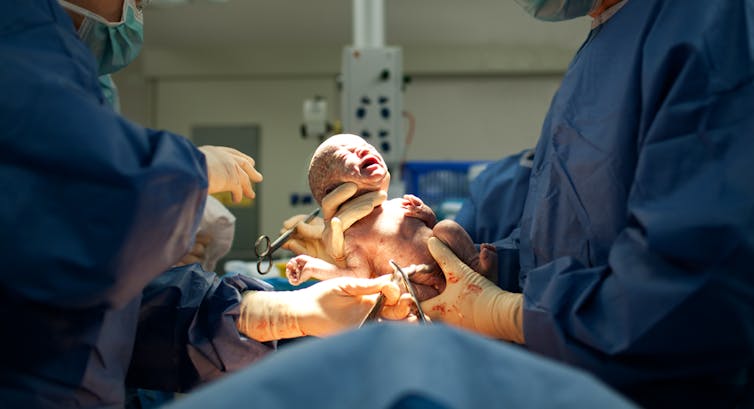
At some point between conception and early childhood, pain makes its debut. But when exactly that happens remains one of medicine’s most challenging questions.

Some have claimed that foetuses as young as twelve weeks can already be seen wincing in agony, while others have flat-out denied that even infants show any true signs of pain until long after birth.

New research from University College London offers fresh insights into this puzzle. By mapping the development of pain-processing networks in the brain – what researchers call the “pain connectome” – scientists have begun to trace exactly when and how our capacity for pain emerges. What they discovered challenges simple answers about when pain “begins”.


Get your news from actual experts, straight to your inbox. Sign up to our daily newsletter to receive all The Conversation UK’s latest coverage of news and research, from politics and business to the arts and sciences.


The researchers used advanced brain imaging to compare the neural networks of foetuses and infants with those of adults, tracking how different components of pain processing mature over time. Until about 32 weeks after conception, all pain-related brain networks remain significantly underdeveloped compared with adult brains. But then development accelerates dramatically.

The sensory aspects of pain – the basic detection of harmful stimuli – mature first, becoming functional around 34 to 36 weeks of pregnancy. The emotional components that make pain distressing follow shortly after, developing between 36 and 38 weeks. However, the cognitive centres responsible for consciously interpreting and evaluating pain lag far behind, and remain largely immature by the time of birth, about 40 weeks after conception.

This staged development suggests that while late-term foetuses and newborns can detect and respond to harmful stimuli, they probably experience pain very differently from older children and adults. Most significantly, newborns probably can’t consciously evaluate their pain – they can’t form the thought: “This hurts and it’s bad!”

A newborn held in a doctor's hands.
Does it hurt?
Martin Valigursky/Shutterstock.com

A history of changing views

These findings represent the latest chapter in a long-running scientific debate that has swung dramatically over the centuries, often with profound consequences for medical practice.

For most physiologists in the 18th and 19th centuries, the perceived delicacy of the infant’s body meant that it must be exquisitely sensitive to pain, so much so that some have had their doubts if infants ever felt anything else. Birth, in particular, was imagined to be an extremely painful event for a newborn.

However, advances in embryology during the 1870s reversed this thinking. As scientists discovered that infant brains and nervous systems were far less developed than adult versions, many began questioning whether babies could truly feel pain at all. If the neural machinery wasn’t fully formed, how could genuine pain experiences exist?

This scepticism had troubling practical consequences. For nearly a century, many doctors performed surgery on infants without anaesthesia, convinced that their patients were essentially immune to suffering. The practice continued well into the 1980s in some medical centres.

Towards the end of the 20th century, public outrage about the medical treatment of infants and new scientific results turned the tables yet again. It was found that newborns exhibited many of the signs (neurological, physiological and behavioural) of pain after all, and that, if anything, pain in infants had probably been underestimated.

The ambiguous brain

The reason why there has been endless disagreement about infant pain is that we cannot access their experiences directly.

Sure, we can observe their behaviour and study their brains, but these are not the same thing. Pain is an experience, something that’s felt in the privacy of a person’s own mind, and that’s inaccessible to anyone but the person whose pain it is.

Of course, pain experiences are typically accompanied by telltale signs: be it the retraction of a body part from a sharp object or the increased activity of certain brain regions. Those we can measure. But the trouble is that no one behaviour or brain event is ever unambiguous.

The fact that an infant pulls back their hand from a pin prick may mean that it experiences the pricking as painful, but it may also just be an unconscious reflex. Similarly, the fact that the brain is simultaneously showing pain-related activity may be a sign of pain, but it may also be that the processing unfolds entirely unconsciously. We simply don’t know.

Perhaps the infant knows. But even if they do, they can’t tell us about their experiences yet, and until they can, scientists are left guessing. Fortunately, their guesses are becoming increasingly well informed, but for now, that is all they can be – guesses.

What would it take to get certainty? Well, it would require an explanation that connects our brains and behaviour to our conscious experiences. But so far, no scientifically respectable explanation of this kind has been forthcoming.

The Conversation

Laurenz Casser receives funding from the Leverhulme Trust.

ref. When do we first feel pain? – https://theconversation.com/when-do-we-first-feel-pain-259588

Toxic fungus from King Tutankhamun’s tomb yields cancer-fighting compounds – new study

Source: The Conversation – UK – By Justin Stebbing, Professor of Biomedical Sciences, Anglia Ruskin University

Miro Varcek / Shutterstock.com

In November 1922, archaeologist Howard Carter peered through a small hole into the sealed tomb of King Tutankhamun. When asked if he could see anything, he replied: “Yes, wonderful things.” Within months, however, Carter’s financial backer Lord Carnarvon was dead from a mysterious illness. Over the following years, several other members of the excavation team would meet similar fates, fuelling legends of the “pharaoh’s curse” that have captivated the public imagination for just over a century.

For decades, these mysterious deaths were attributed to supernatural forces. But modern science has revealed a more likely culprit: a toxic fungus known as Aspergillus flavus. Now, in an unexpected twist, this same deadly organism is being transformed into a powerful new weapon in the fight against cancer.

Aspergillus flavus is a common mould found in soil, decaying vegetation and stored grains. It is infamous for its ability to survive in harsh environments, including the sealed chambers of ancient tombs, where it can lie dormant for thousands of years.

When disturbed, the fungus releases spores that can cause severe respiratory infections, particularly in people with weakened immune systems. This may explain the so-called “curse” of King Tutankhamun and similar incidents, such as the deaths of several scientists who entered the tomb of Casimir IV in Poland in the 1970s. In both cases, investigations later found that A flavus was present, and its toxins were probably responsible for the illnesses and deaths.

Despite its deadly reputation, Aspergillus flavus is now at the centre of a remarkable scientific finding. Researchers at the University of Pennsylvania have discovered that this fungus produces a unique class of molecules with the potential to fight cancer.

These molecules belong to a group called ribosomally synthesised and post-translationally modified peptides, or RiPPs. RiPPs are made by the ribosome – the cell’s protein factory – and are later chemically altered to enhance their function.

While thousands of RiPPs have been identified in bacteria, only a handful have been found in fungi – until now.

The process of finding these fungal RiPPs was far from simple. The research team screened a dozen different strains or types of aspergillus, searching for chemical clues that might indicate the presence of these promising molecules. Aspergillus flavus quickly stood out as a prime candidate.

The researchers compared the chemicals from different fungal strains to known RiPP compounds and found promising matches. To confirm their discovery, they switched off the relevant genes and, sure enough, the target chemicals vanished, proving they had found the source.

Purifying these chemicals proved to be a significant challenge. However, this complexity is also what gives fungal RiPPs their remarkable biological activity.

The team eventually succeeded in isolating four different RiPPs from Aspergillus flavus. These molecules shared a unique structure of interlocking rings, a feature that had never been described before. The researchers named these new compounds “asperigimycins”, after the fungus in which they were found.

The next step was to test these asperigimycins against human cancer cells. In some cases, they stopped the growth of cancer cells, suggesting that asperigimycins could one day become a new treatment for certain types of cancer.

The team also worked out how these chemicals get inside cancer cells. This discovery is significant because many chemicals, like asperigimycins, have medicinal properties but struggle to enter cells in large enough quantities to be useful. Knowing that particular fats (lipids) can enhance this process gives scientists a new tool for drug development.

Further experiments revealed that asperigimycins probably disrupt the process of cell division in cancer cells. Cancer cells divide uncontrollably, and these compounds appear to block the formation of microtubules, the scaffolding inside cells that are essential for cell division.

Tremendous untapped potential

This disruption is specific to certain types of cells, so this may in turn reduce the risk of side-effects. But the discovery of asperigimycins is just the beginning. The researchers also identified similar clusters of genes in other fungi, suggesting that many more fungal RiPPs remain to be discovered.

Almost all the fungal RiPPs found so far have strong biological activity, making this an area with tremendous untapped potential. The next step is to test asperigimycins in other systems and models, with the hope of eventually moving to human clinical trials. If successful, these molecules could join the ranks of other fungal-derived medicines, such as penicillin, which revolutionised modern medicine.

The story of Aspergillus flavus is a powerful example of how nature can be both a source of danger and a wellspring of healing. For centuries, this fungus was feared as a silent killer lurking in ancient tombs, responsible for mysterious deaths and the legend of the pharaoh’s curse. Today, scientists are turning that fear into hope, harnessing the same deadly spores to create life-saving medicines.

This transformation, from curse to cure, highlights the importance of continued exploration and innovation in the natural world. Nature has in fact provided us with an incredible pharmacy, filled with compounds that can heal as well as harm. It is up to scientists and engineers to uncover these secrets, using the latest technologies to identify, modify and test new molecules for their potential to treat disease.

The discovery of asperigimycins is a reminder that even the most unlikely sources – such as a toxic tomb fungus – can hold the key to revolutionary new treatments. As researchers continue to explore the hidden world of fungi, who knows what other medical breakthroughs may lie just beneath the surface?

The Conversation

Justin Stebbing does not work for, consult, own shares in or receive funding from any company or organisation that would benefit from this article, and has disclosed no relevant affiliations beyond their academic appointment.

ref. Toxic fungus from King Tutankhamun’s tomb yields cancer-fighting compounds – new study – https://theconversation.com/toxic-fungus-from-king-tutankhamuns-tomb-yields-cancer-fighting-compounds-new-study-259706