Finding ‘Kape’: How Language Documentation helps us preserve an endangered language

Source: The Conversation – France (in French) – By Francesco Perono Cacciafoco, Associate Professor in Linguistics, Xi’an Jiaotong-Liverpool University

Shiyue Wu, a member of Francesco Perono Cacciafoco’s research team at Xi’an Jiaotong-Liverpool University (XJTLU), who is currently developing intensive fieldwork in Alor Island to document and preserve endangered languages, discovered and first documented Kape during a Language Documentation fieldwork in August 2024 and therefore actively contributed to this study.


As of 2025, more than 7000 languages are spoken across the world. However, only about half of them are properly documented, leaving the rest at risk of disappearing.

Globalisation has propelled languages such as English and Chinese into the mainstream, and they now dominate global communication.

Parents today prefer their children learn widely-spoken languages. Meanwhile, indigenous languages, such as Copainalá Zoque in Mexico and Northern Ndebele in Zimbabwe, are not even consistently taught in schools.

Indigenous people generally did not use writing for centuries and, therefore, their languages do not have ancient written records. This has contributed to their gradual disappearance.

To prevent the loss of endangered languages, field linguists – or language documentarists – work to ensure that new generations have access to their cultural heritage. Their efforts reveal the vocabulary and structure of these languages and the stories and traditions embedded within them.

My research team and I have spent over 13 years documenting endangered Papuan languages in Southeast and East Indonesia, particularly in the Alor-Pantar Archipelago, near Timor, and the Maluku Islands. One of our significant and very recent discoveries is Kape, a previously undocumented and neglected language spoken by small coastal communities in Central-Northern Alor.

Not only is the discovery important for mapping the linguistic context of the island, but it also highlights the urgency of preserving endangered languages by employing Language Documentation methods.

The discovery of Kape

In August 2024, while working with our Abui consultants, Shiyue Wu, my Research Assistant at Xi’an Jiaotong-Liverpool University, discovered a previously-ignored, presumably undocumented Papuan language from Alor, ‘Kape’.

At the time, she was gathering information about the names and locations of ritual altars known as ‘maasang’ in the Abui area, with assistance from our main consultant and several native speakers. In Central Alor, every village has a ‘maasang’.

During conversations about the variants in altar names across Alor languages and Abui dialects, some speakers mentioned the name of the ‘maasang’ (‘mata’) in Kape—a language previously unrecorded and overlooked in linguistic documentation.

‘Kape’ translates to ‘rope’, symbolising how the language connects its speakers across the island, from the mountains to the sea. Geographically and linguistically, it is associated with Kabola in the east and Abui and Kamang in Central Alor.

At this stage, it is unclear whether Kape is a distinct language or a dialect of Kamang, as the two are mutually intelligible. Much of Kape’s basic lexicon (the collection of words in one language), indeed, shares cognates (related words among languages) with Kamang.

However, Kape is spoken as the primary (native) language by the whole Kape ethnic group of Alor, and the speakers consider themselves an independent linguistic and ethnic community. This could serve as an element for regarding Kape as a language.

Kape also shows connections with Suboo, Tiyei, and Adang, other Papuan languages from Alor Island. The speakers, known as ‘Kafel’ in Abui, are multilingual, fluent, to some extent, in Kape, Kamang, Bahasa Indonesia, Alor Malay, and, sometimes, Abui.

So far, no historical records have been found for Kape, though archival research may reveal more about its origins. Based on its typology and lexical characteristics, Kape appears as ancient as other languages spoken in Alor. Like many Papuan languages, it is critically endangered and requires urgent documentation to preserve its legacy.

Documenting languages: An ongoing challenge

Language Documentation aims to reconstruct the unwritten history of indigenous peoples and to guarantee the future of their cultures and languages. This is accomplished by preserving endangered, scarcely documented or entirely undocumented languages in disadvantaged and remote areas.

External sources, like diaries by missionaries and documentation produced by colonisers, can help reconstruct some historical events. However, they are insufficient for providing reliable linguistic data since the authors were not linguists.

My research team and I document endangered languages, starting with their lexicon and grammar. Eventually, we also explore the ancient traditions and ancestral wisdom of the native speakers we work with.

We have contributed to the documentation of several Papuan languages from Alor Island, especially Abui, Kula, and Sawila. These languages are spoken among small, sometimes dispersed communities of indigenous peoples belonging to different but related ethnic clusters.

They communicate with each other mostly in Bahasa Indonesia and Alor Malay. This is because their local languages are almost never taught in schools and are rarely used outside their groups.

Over time, in addition to documenting their lexicons and grammars, we worked to reconstruct their place-names and landscape names, oral traditions, foundation myths, ancestral legends and the names of plants and trees they use.

We also explored their traditional medical practices and local ethnobotany, along with their musical culture and number systems.

Safeguarding Kape is not just linguistically relevant. Its preservation and documentation are not just about attesting its existence – they also contribute to revitalising the language, keeping it alive, and allowing the local community to rediscover its history, knowledge, and traditions to pass down to the next generations.

This journey has just begun, but my team and I – with the indispensable collaboration from our local consultants and native speakers – are prepared to go all the way towards its completion.

The Conversation

Francesco Perono Cacciafoco received funding from Xi’an Jiaotong-Liverpool University (XJTLU): Research Development Fund (RDF) Grant, “Place Names and Cultural Identity: Toponyms and Their Diachronic Evolution among the Kula People from Alor Island”, Grant Number: RDF-23-01-014, School of Humanities and Social Sciences (HSS), Xi’an Jiaotong-Liverpool University (XJTLU), Suzhou (Jiangsu), China, 2024-2025.

ref. Finding ‘Kape’: How Language Documentation helps us preserve an endangered language – https://theconversation.com/finding-kape-how-language-documentation-helps-us-preserve-an-endangered-language-247465
Peatlands and mangroves: Southeast Asian countries must protect these major carbon pools to boost climate ambitions

Source: The Conversation – France (in French) – By Sigit Sasmito, Senior Research Officer, James Cook University

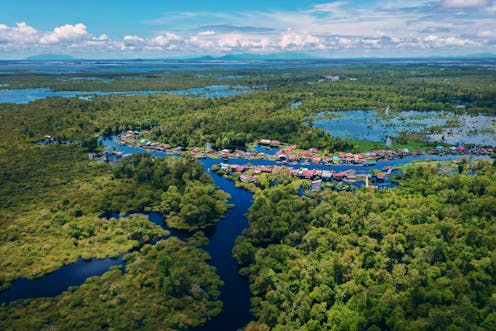
Peat swamp in Danau Sentarum National Park, West Kalimantan. (Bramanthya Fathi Makarim/Shutterstock)

Protecting and restoring peatlands and mangroves can strengthen Southeast Asian countries’ efforts to combat climate change, according to new findings from an international team of researchers.

Carbon-dense peatlands and mangroves comprise only 5% of Southeast Asia’s surface. Protecting and restoring them, however, can reduce approximately 770±97 megatonnes of CO2 equivalent (MtCO2e) annually. This is equal to more than half of the carbon emissions from land use in the region.

Conserving offers larger mitigation potential through reduced emissions from ecosystem loss in the region compared to gains from restoration. If optimally implemented, restoration can still play an important role in nature-based carbon sequestration.

Having peatlands and mangroves included in the new climate pledges (Nationally Determined Contributions 3.0) can help countries set higher emissions reduction targets for 2030 and 2035.

More benefits to offer

The study reports extensive climate benefits from conserving and restoring peatlands and mangroves. Therefore, they make effective natural climate solutions for Southeast Asian countries.

Both ecosystems protect organic matter from decay under natural conditions, acting as net carbon sinks. This means that carbon uptake exceeds carbon loss.

Net carbon gains are mainly accumulated in their soils instead of their vegetation. More than 90% of carbon stocks in peatlands and 78% in mangroves are in their soils.

At scale, protecting and restoring both types of wetlands also supports other valuable co-benefits. These include biodiversity preservation, water quality improvement, coastal protection, food security and rural development for millions of coastal people across Southeast Asian countries.

Challenges remain

Despite the benefits, many challenges and risks persist in conserving and restoring peatlands and mangroves.

When peatlands and mangroves are disturbed – commonly due to land use change – they release large quantities of carbon into the atmosphere. This release can later exacerbate climate change.

The new estimates suggest that changes in their land use for the past two decades (2001-2022) had caused the release of approximately 691±97 MtCO2e of excess emissions.

Indonesia accounts for the largest portion of the region’s emissions, accounting for 73%. Malaysia (14%), Myanmar (7%), and Vietnam (2%) follow. The other seven Southeast Asian countries generate the remaining 4% of emissions.

In Southeast Asia, mangroves and peatlands are often treated as unproductive land. Still, they have long been subject to agricultural land expansion planning.

Moreover, unclear or multi-land ownership and lack of long-term participatory monitoring programs are critical challenges for prioritising and implementing restoration on the ground.

Despite these challenges, government and corporate interest in developing conservation and restoration-based carbon projects for peatlands and mangroves is rapidly increasing.

That is why now is a good opportunity to recognise their vital roles — not only for climate change mitigation — but also for people and nature.

Implications for national emissions reduction targets

The new study addresses a critical gap in climate policy for Southeast Asian by providing annual climate change mitigation potentials from peatlands and mangroves.

Climate mitigation potential for national land-use emissions varies widely between countries.

The findings suggest that it could reduce national land-use emissions by up to 88% in Malaysia, 64% in Indonesia, and 60% in Brunei. Other countries include Myanmar at 39%, the Philippines at 26%, Cambodia at 18%, Vietnam at 13%, Thailand at 10%, Laos at 9%, Singapore at 2%, and Timor-Leste at 0.04%.

Our study also shows that mitigation potential from peatlands and mangroves in Indonesia can fulfil country Forestry and Other Land-use (FOLU) Net Sink targets by 2030.

In its 2022 NDCs, Indonesia plans to reduce its annual emissions from FOLU by 2030 between 500-729 MtCO2e, depending on the level of external support. According to the study, this figure is within the same order of mitigation potential as peatlands and mangroves can collectively generate.

However, peatland and mangrove mitigation potentials are insufficient to avoid dangerous levels of climate change in the future.

Decarbonisation remains the most effective means of curbing climate change and its impacts, with peatland and mangrove protection enhancing these efforts.

The Conversation

Susan Elizabeth Page menerima dana dari University of Leicester, UK.

Dan Friess, David Taylor, Massimo Lupascu, Pierre Taillardat, Sigit Sasmito, dan Wahyu Catur Adinugroho tidak bekerja, menjadi konsultan, memiliki saham, atau menerima dana dari perusahaan atau organisasi mana pun yang akan mengambil untung dari artikel ini, dan telah mengungkapkan bahwa ia tidak memiliki afiliasi selain yang telah disebut di atas.

ref. Peatlands and mangroves: Southeast Asian countries must protect these major carbon pools to boost climate ambitions – https://theconversation.com/peatlands-and-mangroves-southeast-asian-countries-must-protect-these-major-carbon-pools-to-boost-climate-ambitions-247570

Lack of justice in Indonesia’s climate plan may backfire, harming people and environment

Source: The Conversation – France (in French) – By Wira A. Swadana, Climate Action Senior Lead, World Resources Institute

Indonesia has developed several climate documents as pathways to curb climate change and adapt to its impacts. These impacts influence many elements of life, including displacement, the spread of infectious diseases, and even fatalities.

Some of these documents include Enhanced Nationally Determined Contributions, Long-Term Strategy for Low Carbon and Climate Resilience 2050 (LTS-LCCR), and Low Carbon Development Indonesia (LCDI).

As a scholar in social development and environmental policy, I conducted a descriptive analysis of more than five Indonesia’s climate documents to learn how the concept of a just transition is being integrated into Indonesia’s climate policies. My analisis reveals that the current narrative in those documents is limited to the outcomes of climate-related approaches.

I found that these climate documents have failed to adequately address the social and environmental aspects that are fundamental to a ‘just transition’ — a global effort to combat climate change and shift towards a sustainable economy while improving the condition of people and the environment.

Indonesia’s climate action is important because the country is home to vast tropical forests and extensive peatlands, which act as important carbon sinks. Yet, it remains one of the world’s largest emitters.

Indonesia’s just transition is essential as it supports global efforts to mitigate climate change while ensuring that the shift is more sustainable and inclusive. Neglecting these factors in the transition can risk equity, justice, and inclusion for affected communities and ecosystems in Indonesia’s climate actions.

The risks it posed

So far, Indonesia’s just transition narrative concentrates mainly on the energy sector. For instance, the government’s white paper on just transition, released in September last year, centres solely on the energy aspect.

Additionally, the use of the word just in the Just Energy Transition Partnership (JETP) — an international partnership aiming at speeding Indonesia’s renewable energy development and coal phase-out — has helped popularise the notion.

A just transition should include broader efforts to limit and adapt to climate change, given these changes directly impact communities. Despite its increasing recognition in the energy sector, just transition remains a long way from being completely integrated into Indonesia’s climate initiatives.

In the forestry sector, Indonesia’s strategy to apply Sustainable Forest Management (SFM) practices, which includes selective logging practices to minimise damage, may lead to the prohibition of traditional slash-and-burn farming in some areas. This threatens local communities that have long practised controlled burning as a sustainable land management method.

Similarly, under FOLU Net Sink 2030 — Indonesia’s plan to reduce emissions from forestry and land-use — the government has introduced community forestry initiatives to improve livelihood. However, the strategy does not yet address the potential consequences for people who rely on forests for their livelihoods and cultural heritage, which could be jeopardised by by SFM practices.

Moreover, Indonesia’s climate resilience strategies for coastal communities overlook the socio-cultural importance of fishing as a key source of income. For example, the government plans to provide business development training to assist fishing families in diversifying their income in response to extreme weather conditions. However, without acknowledging the deep cultural and economic ties these communities have to fishing, such initiatives risk being ineffective.

The cost we bear

The lack of justice in Indonesia’s transition agenda has backfired, with negative consequences for both people and the environment.

For example, the energy shift demands Indonesia to exploit more of its abundant nickel resources for EV batteries, particularly in central and eastern Indonesia. To assist nickel mining and processing, the government has implemented several policies.

While the nickel boom has helped resource-rich provinces like North Maluku and Central Sulawesi boost their economic growth, it has also had serious impacts. Indonesia’s greenhouse gas emissions climbed by 20% between 2022 and 2023, owing to the dependency on coal for nickel processing facilities.

Beyond emissions, nickel mining has also led to deforestation and pollution, affecting local communities who rely on natural resources for their livelihoods and cultural preservation, while also harming biodiversity in mining areas.

The expense of the nickel rush demonstrates how an unjust energy transition can exacerbate challenges faced by vulnerable communities and further degrade the environment.

Next steps

To integrate just transition principles effectively, Indonesia must first redefine the term ‘just transition’ within its own context. Currently, the term has not been properly incorporated into any of Indonesia’s climate-related documents.

A clear and context-specific definition will allow Indonesia to pursue a transition that is both equitable and inclusive.

To accomplish this, the government must engage a wide range of stakeholders in defining and planning the transition to all climate-related initiatives. This encompasses, but is not limited to, all sectors. The goal is to secure broad participation — not only from the public and private sectors, but also from local communities, vulnerable groups including women and Indigenous peoples, as well as other key actors.

A more defined concept and well-structured plan will make it easier to implement, monitor, and evaluate the change. Simultaneously, this inclusive strategy should ensure a fair and equitable distribution of both benefits and burdens. All actors must be able to participate in decision-making and take action prior to and during the transition process.

Indonesia must also have a robust monitoring and evaluation mechanism in place to support its climate actions. The country can learn from Scotland, which has developed a just transition framework with clear outcomes and measurable indicators while ensuring participation and continuous learning from all stakeholders.

Drawing on insights from existing literature and reports will help Indonesia develop a framework that is well-suited to its unique context.

The Conversation

Wira A. Swadana tidak bekerja, menjadi konsultan, memiliki saham, atau menerima dana dari perusahaan atau organisasi mana pun yang akan mengambil untung dari artikel ini, dan telah mengungkapkan bahwa ia tidak memiliki afiliasi selain yang telah disebut di atas.

ref. Lack of justice in Indonesia’s climate plan may backfire, harming people and environment – https://theconversation.com/lack-of-justice-in-indonesias-climate-plan-may-backfire-harming-people-and-environment-249246

From Scrooge to science: how dairy might disrupt your sleep and dreams

Source: The Conversation – UK – By Timothy Hearn, Senior Lecturer in Bioinformatics, Anglia Ruskin University

New Africa/Shutterstock

Ebenezer Scrooge tried to wave away the ghost of Jacob Marley by blaming the apparition on “an undigested bit of beef … a crumb of cheese”. Charles Dickens might have been writing fiction, but the idea that late-night dairy can warp dreams has now gained scientific support.

Researchers in Canada surveyed 1,082 university students about their eating habits, sleep patterns and dreams.  Remarkably, 40% reported that certain foods affected their sleep. Of that group, 20% blamed dairy – suggesting that Scrooge’s midnight cheese might have had more of an impact than he realised.

Just 5.5% believed food changed their dreams, but among those respondents dairy again loomed large, second only to sugary desserts as a perceived trigger for bizarre or disturbing dreams.

The researchers asked about everything from nightmare frequency to food allergies and intolerances. A clear pattern emerged: participants who reported lactose intolerance were significantly more likely to have frequent nightmares. And the link was strongest in people who also experienced bloating or cramps.


Get your news from actual experts, straight to your inbox. Sign up to our daily newsletter to receive all The Conversation UK’s latest coverage of news and research, from politics and business to the arts and sciences.


Statistical modelling suggested the stomach distress partly explains the bad dreams. In other words, food that keeps the gut churning can also set the imagination spinning.

That gut–brain route makes physiological sense. Abdominal discomfort can jolt sleepers into lighter stages of sleep where vivid or negative dreams are most common. Inflammation and spikes in cortisol (a stress hormone) triggered by digestive upset may further shape the emotional tone of dreams, especially by amplifying anxiety or negativity.

Earlier work backs the idea. A 2015 survey of Canadian undergraduates found that nearly 18% linked what they ate to their dreams, with dairy the top suspect, while a 2022 online study of 436 dream enthusiasts reported that people who ate more sugary snacks remembered more nightmares.

The new study from Canada echoes a wider literature on diet and sleep. Diets rich in fibre, fruit and vegetables are associated with deeper, more refreshing sleep, whereas meals high in saturated fat and sugar predict lighter, more fragmented rest.

A man waking from a bad dream.
Stomach distress partly explains bad dreams.
Lysenko Andrii/Shutterstock

Eating late in the evening has been tied to poorer sleep quality and to an “evening chronotype” (that is, night owls), itself linked to nightmare frequency.

If future work confirms the cheese–nightmare connection, the implications could be practical. Nightmares affect about 4% of adults worldwide and are particularly common in post-traumatic stress disorder.

Drug treatments exist but carry side-effects. Adjusting the timing or composition of evening meals, or choosing low-lactose dairy options, would be a far cheaper, lower-risk intervention.

Gut-friendly diets such as the Mediterranean diet are already being explored for mood disorders; nightmares may be another frontier for nutritional psychiatry.

What the research can’t prove

That said, the new findings come with caveats. The sample was young, mostly healthy psychology students filling out online questionnaires. Food intake, lactose intolerance and nightmare frequency were all self-reported, so “recall biases” (inaccurate memory) or the power of suggestion could inflate the associations.

Only 59 participants believed food influenced their dreams, so small-number effects (unreliable results from too few data) are possible. And a survey can only reveal associations – it can’t prove that cheese causes bad dream.

Cheese keeps cropping up in nightmare stories, and people who struggle to digest dairy report the worst of it. Scientists still have to match meal diaries, gut clues and lab-monitored dreams to prove the link. In the meantime, try eating earlier or choosing low-lactose options. Your stomach – and your dreams – may calm down.

The Conversation

Timothy Hearn does not work for, consult, own shares in or receive funding from any company or organisation that would benefit from this article, and has disclosed no relevant affiliations beyond their academic appointment.

ref. From Scrooge to science: how dairy might disrupt your sleep and dreams – https://theconversation.com/from-scrooge-to-science-how-dairy-might-disrupt-your-sleep-and-dreams-260328

Why the l-carnitine sport supplement is controversial

Source: The Conversation – UK – By Julia Haarhuis, PhD student – Food, Microbiomes and Health, Quadram Institute

Miljan Zivkovic/Shutterstock

Sport supplements are hard to get away from if you like to exercise regularly. Even if you’re not interested in them, there’s a good chance your gym will have posters extolling their virtues or your sporty friends will want to talk to you about them.

It can be hard to know what supplements to take as there is a lot of mixed information out there. L-carnitine is among the more controversial supplements. While there is evidence it supports muscle recovery and enhances exercise performance, research has also shown it can contribute to cardiovascular disease.

In a new study, my colleagues and I found it may be possible to counter the negative effects of l-cartinine by eating pomegranate with it.

First, it’s important to understand what l-carnitine is. Your body produces a small amount of l-carnitine naturally. This happens in the kidneys, liver and brain.

When l-carnitine was first identified in humans in 1952, it was thought to be a vitamin and it was referred to as vitamin BT. After years of research on this compound, l-carnitine is now considered a quasi-vitamin because for most people the human body can produce enough l-carnitine itself.


Get your news from actual experts, straight to your inbox. Sign up to our daily newsletter to receive all The Conversation UK’s latest coverage of news and research, from politics and business to the arts and sciences.


L-carnitine can be bought as a dietary supplement, but the nutrient is also added to energy drinks and some protein powders by manufacturers to try and enhance the value of their products. Manufacturers normally clearly state it on the product if it contains l-carnitine – it’s not something a company will try to hide.

Some foods naturally contain l-carnitine, such as meat and in tiny amounts in dairy products. L-carnitine is not fed to livestock but it is present in muscle tissue. L-carnitine was first found in meat in 1905. It is for this reason that the name carnitine is derived from the Latin word carnis, meaning “of the flesh”.

Jar and scoop filled with powder against yellow background.
L-carnitine is sold in sport supplements.
9dream studio/Shutterstock

The harmful effects of l-carnitine supplements

It is not thought to be intrinsically harmful. Your gut microbes are to blame for the risks associated with l-carnitine.

Less than 20% of l-carnitine supplements can be taken in by the human body. The unabsorbed l-carnitine travels down the gastrointestinal tract and reaches the colon. The colon is home to trillions of microbes, including bacteria, viruses and fungi.

When the remaining 80% of the l-carnitine supplement arrives in the colon, the microbes start absorbing the nutrient and they use it to produce something else: trimethylamine (TMA). TMA is a compound the human body can efficiently absorb, and that is where the potentially harmful effects of l-carnitine supplements arise.

Once the body absorbs TMA, it goes to the liver via the blood stream. The liver converts TMA to trimethylamine N-oxide (TMAO). Research has shown that high levels of TMAO in the blood can contribute to cardiovascular disease.

For example, a research group at the Cleveland Clinic in the US gave human participants a nutrient similar to l-carnitine that is also converted into TMA by gut microbes. The researchers found that the nutrient caused an increased risk of thrombosis (blood clots) in their participants.

L-carnitine itself is a beneficial nutrient. When it is produced by our bodies, which happens in the kidneys, brain and liver, it’s not metabolised by the gut microbiota and isn’t converted to TMAO. Your body can absorb more l-carnitine from meat than from supplements, which makes it less harmful as that means less of it ends up in the colon.

Dietary intervention can reduce harmful effects

In my team’s lab at the Quadram Institute in Norwich, England, we simulated what happens when the l-carnitine supplement reaches the microbes in the colon. We fed a culture of gut microbes with l-carnitine and measured the TMA that the microbes produced.

Then, we fed a culture of gut microbes with l-carnitine together with a pomegranate extract, which is rich in polyphenols. Polyphenols are plant compounds with antioxidant, antimicrobial, and anti-inflammatory properties that may help keep you healthy and protect you against diseases.

The main polyphenols in pomegranate belong to a group called ellagitannins, a type of polyphenol that can reach the colon almost entirely intact, where they can interact with the gut microbiota. When we measured the TMA that the gut microbes produced in the second experiment, we saw much less TMA.

Our experiments in the lab show that a polyphenol-rich pomegranate extract can reduce microbial TMA production and eliminate the potentially harmful effects of l-carnitine supplements.

Our laboratory experiments showed that the pomegranate extract can reduce the production of TMA. Ellagitannins are also abundant in other fruits and nuts, such as raspberries and walnuts. So, if you take l-carnitine supplements, our research suggests that it may be a good idea to include ellagitannin-rich foods in your diet. Eating more fruits and nuts can be good for your health, so including these in your diet will probably be beneficial anyway.

Our group is now moving the science outside of the lab. We are testing in human participants how effective the pomegranate extract is at reducing TMAO production from l-carnitine supplements. This study will tell us whether taking an l-carnitine supplement along with a pomegranate extract may be better than taking the supplement on its own.

The Conversation

Julia Haarhuis works at the Quadram Institute and receives funding from the Wellcome Trust.

ref. Why the l-carnitine sport supplement is controversial – https://theconversation.com/why-the-l-carnitine-sport-supplement-is-controversial-219520

Most plant-friendly fungi are a mystery to scientists

Source: The Conversation – UK – By Katie Field, Professor in Plant-Soil Processes, University of Sheffield

Fly agaric mushrooms partner with trees. Magnus Binnerstam/Shutterstock

If you walk through a forest and look down, you might think you’re stepping on dead leaves, twigs and soil. In reality, you’re walking over a vast underground patchwork of fungal filaments, supporting life above ground.

These are mycorrhizal fungi, which form partnerships with the roots of nearly all plants. Found everywhere from tropical rainforests to boreal forests and farmland, these underground fungi sustain life above ground, often without us realising they’re even there.

A recent academic review argues that up to 83% of ectomycorrhizal (ECM) fungi species, which form partnerships with trees, may be unknown to science.

Mycorrhizal fungi grow around root tips and form webs between root cells or penetrate root cells, then make structures inside them. They scavenge nutrients such as phosphorus and nitrogen from the soil and, in return, receive carbon from their host plants.

Traces of these unidentified fungi are often found in soil DNA. The researchers surveyed global DNA databases to see how many DNA traces that seemed to belong to ECM fungi matched to a species. Only 17% could. Scientists call these “dark taxa” – organisms that have been detected, but not formally described, named or studied.

Many of these fungi produce large fruiting bodies such as mushrooms and are foundational to forest ecosystems.

One example is the fly agaric (Amanita muscaria) which produces the iconic red and white spotted toadstools often linked to folklore and can have a range of host trees. It typically associates with birch, pine and spruce, especially in colder climates, helping trees survive in nutrient-poor soils.

Porcini fungi, (for example Boletus edulis), produce delicious mushrooms prized for their rich, nutty flavor, are ECMs too. These fungi grow with pines, firs and oaks. And the chanterelle is highly sought-after by mushroom collectors and often found near oaks, beech and conifers.

Chanterelles thrive in undisturbed, healthy forests. Their presence often signals a well-functioning forest ecosystem. They have a fruity, apricot-like scent that may attract insects to help spread spores.

Yellow mushrooms grow on forest floor.
Chanterelle mushrooms are highly sought after.
Nitr/Shutterstock

The new report shows how little we know about the world beneath our feet. This ignorance has important implications. Entire landscapes are being reshaped by deforestation and agriculture.

But reforestation efforts are happening without fully understanding how these changes affect the fungal life that underpins these ecosystems. For example, in the Amazon, deforestation for farming continues at an alarming pace with 3,800 square miles (equivalent to 1.8 million football fields) of tropical rainforest destroyed for beef production in 2018-19 alone.

Meanwhile, well-meaning carbon offset schemes often involve planting trees of a single species, potentially severing ancient relationships between native trees and their fungal partners. This is because the mycorrhizal fungi in these area will have developed in partnership with the native plants for many years – and may not be compatible with the tree species being planted for these schemes.

Although not all trees have specific fungal partners, many ECM fungi will only form symbioses with certain trees. For example, species within the Suillus genus (which includes the sticky bun mushroom) are specific to certain species of pine.

Introducing non-native plantation species may inadvertently drive endemic fungi, including species not yet known to science, toward extinction. We may be growing forests that look green and vibrant, but are damaging the invisible systems that keep them alive.

The problem isn’t limited to ECM fungi. Entire guilds (species groups that exploit resources in a similar way) of mycorrhizal fungi, remain virtually unexplored.

These dark guilds are ecologically crucial, yet most of their members have never been named, cultured or studied.

Ericoid Mycorrhizal Fungi (ERM)

These fungi form symbioses with many ericaceous shrubs, including heather, cranberry and rhododendrons. They dominate in some of the world’s harshest landscapes, including the Arctic tundra, the boreal forest (also known as snow forest), bogs and mountains.

Research suggests ERM fungi not only help plants thrive in harsh environments but also drive some of the carbon accumulation in these environments, making them potentially part of an important carbon sink.

Despite their abundant coverage across some of the most carbon-rich soils on Earth, the ecology of ERM fungi remains somewhat mysterious. Only a small number have been formally identified. However, even the few known species suggest remarkable potential.

Their genomes contain vast repertoires of genes for breaking down organic matter. This is important because it suggests ERM fungi are not just symbionts living in close interaction with other species but also active decomposers, influencing both plant nutrition and soil carbon cycling. Their dual lifestyle may play a critical role in nutrient-poor ecosystems.

Mucoromycotina fine root endophytes (MFRE)

MFRE are another group of enigmatic fungi that form beneficial relationships with plants. Long mistaken for the arbuscular mycorrhizal (AM) fungi until distinguished in 2017, MFRE are also found across a range of ecosystems including farmland and nutrient-poor soils and often live alongside AM fungi.

MFRE appear to be important in helping plants access nitrogen from within the soil, while AM fungi are more associated with phosphorus uptake. Like ERM fungi, MFRE appear to also alternate between free-living and symbiotic lifestyles.

As researchers begin to uncover their roles, MFRE are emerging as important players in plant resilience and sustainable agriculture.

These fungi frequently appear in plant roots. They are characterised by darkly pigmented, segmented fungal filaments, or hyphae, but their role is highly context-dependent.

Some DSEs appear to enhance host stress tolerance or nutrient uptake. Others may act as latent pathogens, potentially harming the host plant. Most DSEs remain unnamed and poorly understood.

Time is running out

Many of the ecosystems connected to these dark guilds of fungi are among the most vulnerable on the planet. The Arctic and alpine regions which are strongholds for ERMs, DSEs and potentially MFREs, are warming at two to four times the global average.

Peatlands have been drained and converted for agriculture or development while heathlands are increasingly targeted for tree-planting initiatives meant to sequester carbon.

Planting fast-growing, non-native species in monocultures may improve short-term carbon metrics above ground, but it could come at the cost of soil health and belowground biodiversity. Many fungi are host-specific, co-evolving with native plants over millions of years.

Replacing those plants with non-native trees or allowing invasive plants to spread could lead to local extinctions of fungi we’ve never had the chance to study. Soil fungi also mediate processes from nutrient cycling to pathogen suppression to carbon sequestration.

We are changing landscapes faster than we can understand them and in doing so we may be unravelling critical ecological systems that took millennia to form.

The Conversation

Katie Field receives funding from the European Research Council, the Biotechnology and Biological Research Council and the Natural Environment Research Council.

Tom Parker receives funding from The Scottish Government’s Rural and Environment Science and Analytical Services Division and Natural Environment Research Council

ref. Most plant-friendly fungi are a mystery to scientists – https://theconversation.com/most-plant-friendly-fungi-are-a-mystery-to-scientists-259705

What makes a good football coach? The reality behind the myths

Source: The Conversation – UK – By Alan McKay, Senior Research Assistant for the Centre for Football Research in Wales, University of South Wales

With Women’s Euro 2025 underway, attention is turning not just to the players hoping for glory, but to the head coaches tasked with leading them.

These include England’s Sarina Wiegman, who guided the Netherlands to Euro victory in 2017 and repeated the feat with England in 2022; Spain’s Montse Tomé, the reigning world champions’ first female head coach; and Rhian Wilkinson, who is preparing Wales for their first ever appearance at a major tournament.

The pressure is immense, but what actually makes a good football coach? My colleagues and I recently conducted a study on behalf of the Uefa Academy to better understand this topic.

There are plenty of myths. That the best coaches eat, sleep and breathe football 24/7. That they’re “natural leaders” who inspire through sheer charisma. That success demands constant self-sacrifice. But when coaches try to live up to these ideas, it can leave them feeling burnt out – physically and emotionally exhausted, disconnected from their personal lives and questioning their ability.

In reality, effective coaching is about much more than tactics or motivation. It’s about performance, not just on the pitch, but in the way coaches manage themselves, their staff and their players. A good coach must balance their responsibilities with time for rest and recovery. They must communicate clearly, stay calm under pressure and create an environment where everyone knows their role.

Sarina Wiegman discusses the importance of creating positive environments.

Sarina Wiegman has described her approach in just these terms: “We try to turn every stone to get as best prepared as we can be before we go into the tournament… to perform under the highest pressure.”

But coaches don’t arrive at this mindset by accident. It’s developed through experience and, importantly, through structured education.

One important finding was that the most effective coaches have a strong sense of who they are – including their values, their communication style, and their strengths and limitations. These are things which affect the players and staff with whom they work.

Even top coaches need support

This type of self-awareness is often shaped through formal coach education programmes, where participants work closely with a mentor. These mentors can offer honest feedback, challenge assumptions and help coaches develop a philosophy they can share with their team.

That process is essential at every level, whether it’s grassroots football or the international stage. Coaches who understand themselves and who can use their education are better able to adapt their approach to the context they’re working in. They can build trust, foster unity and know when to step back.

Gareth Southgate, former England men’s head coach, is a fantastic example of this. He has spoken about the importance of supporting the person first and the player second. He has discussed the value of empathy and empowering players to make decisions on and off the pitch.

Through this process, Southgate helped players focus on the “joy of playing for their country” rather than simply achieving results. This may have helped to relieve some of the inevitable pressure and expectations placed on the England squad by the media, fans and English Football Association to win tournaments.

After qualifying, a good coach will continue to seek out their mentor for advice on both professional and personal issues they may be experiencing in their role. Emma Hayes, head coach of the US women’s team, has credited her own mentor with helping her fine tune her leadership style and build team cohesion. Her ability to create a safe, supportive environment was central to Team USA’s gold medal win at the 2024 Paris Olympics.

Hayes’ methods demonstrate that coaching is not a destination but a lifelong process. It requires constant learning, reflection and adaptation. The best coaches don’t just chase trophies. They aim to build something lasting – a culture of trust, a resilient team and a space where people can thrive.

As Euro 2025 continues, it’s worth keeping an eye, not just on the scorelines, but on the sidelines. The real mark of a good coach isn’t always found on the scoreboard. It’s found in how a team plays, how they talk about each other and whether they’re still smiling at the end.

The Conversation

Alan McKay received funding from the Union of European Football Associations (UEFA) to conduct the research mentioned in this article. Alan wishes to acknowledge Professor Brendan Cropley, who was instrumental in conducting this research.

ref. What makes a good football coach? The reality behind the myths – https://theconversation.com/what-makes-a-good-football-coach-the-reality-behind-the-myths-259947

A brief history of the slogan T-shirt

Source: The Conversation – UK – By Liv Auckland, Lecturer in Fashion Communication and Creative Direction and Curation for Fashion, Nottingham Trent University

You probably have a drawer full of T-shirts. They’re comfy, easy to style, cheap and ubiquitous. But the T-shirt is anything but basic. For 70 years, they’ve been worn as a tool for self-expression, rebellion and protest. And in 2025, the slogan T-shirt is as powerful as it has ever been.

Previously worn as an undergarment, the T-shirt became outerwear after the second world war. Snugly dressed on the bodies of physically fit young men, it came to signify heroism, youth and virility.

The T-shirt was adopted by sub-cultural groups such as bikers and custom car fanatics. And it was popularised by Hollywood stars, including Marlon Brando and James Dean. By the mid-1950s, it had become a symbol of rebellion and cool.


Looking for something good? Cut through the noise with a carefully curated selection of the latest releases, live events and exhibitions, straight to your inbox every fortnight, on Fridays. Sign up here.


From the 1960s onwards, slogan T-shirts gained momentum in America and Britain, and women began wearing them as the fashions became more casual. In the postmodern era, language became less about function and more about individualistic expression and exploration. This playful approach to words, combined with an emphasis on design and social commentary, made the T-shirt an ideal canvas for the championing of individual thought.

Anti-war messaging dominated slogans in the US during the Vietnam war and amid the increasing threat of nuclear war. Perhaps the most recognised slogan featured the artwork from John Lennon and Yoko Ono’s famous 1969 “War is Over” campaign, a T-shirt which is still being replicated today. Messages of peace on clothing, whether featuring words or symbols, have stayed in our collective wardrobe ever since, from high fashion to high street.

In the 1970s, the New York Times called T-shirts the “the medium of the message”, and the message itself was becoming ever more subversive. Slogan tees sought to provoke, whether through humour or controversy.

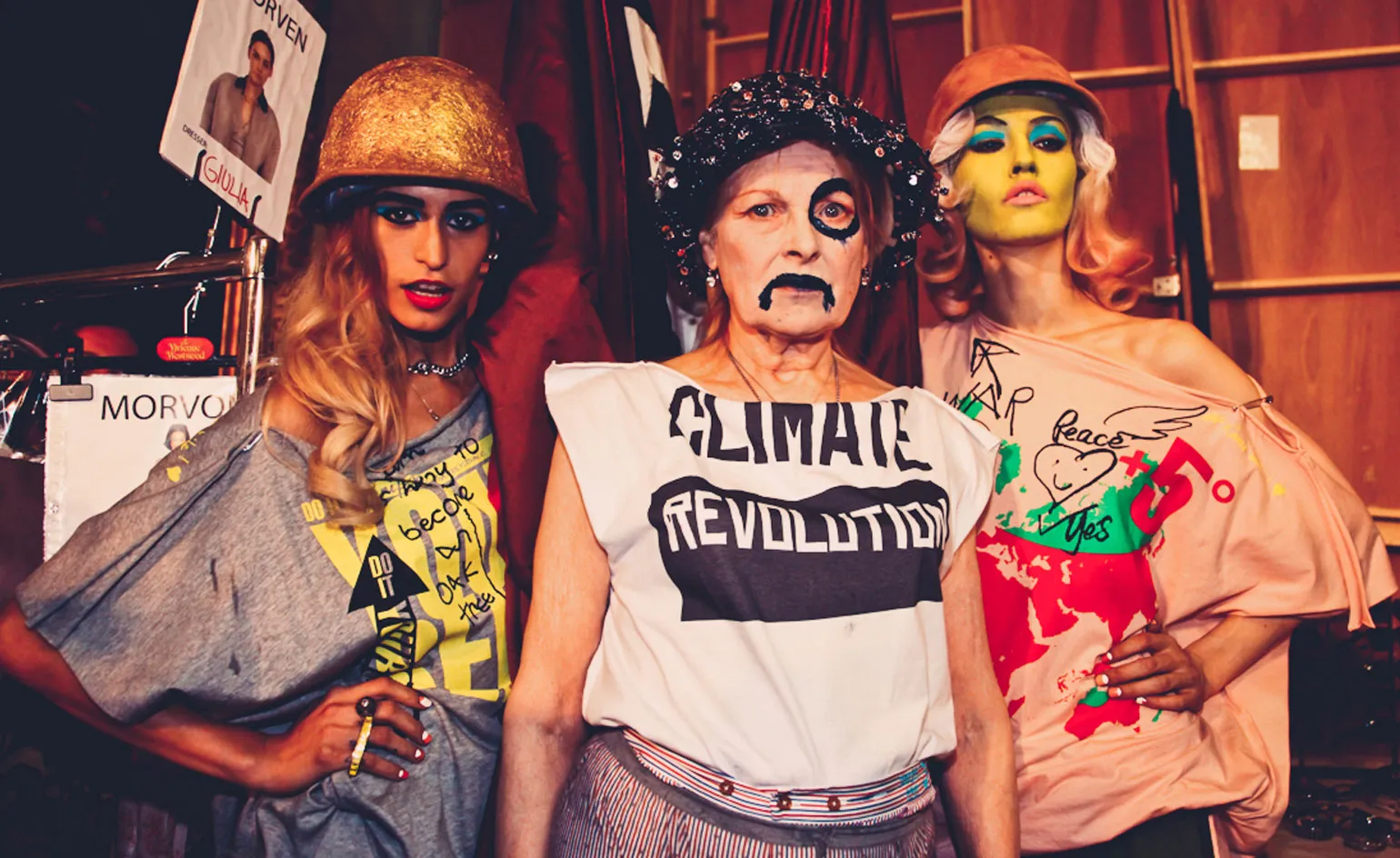
Punks were especially good at it. They constructed what subculture theorist Dick Hebdige called a “guttersnipe rhetoric” in his 1979 study Subculture: The Meaning of Style. Designers Vivienne Westwood and Malcolm McLaren paved the way for a DIY approach where slogans were often scrawled, expressive and upended social codes.

The slogan shirt in the fight for LGBTQ+ rights

Manufacturing and printing advancements in the postmodern era also meant that more designs could be printed en masse – a development used by the LGBTQ+ community and its allies.

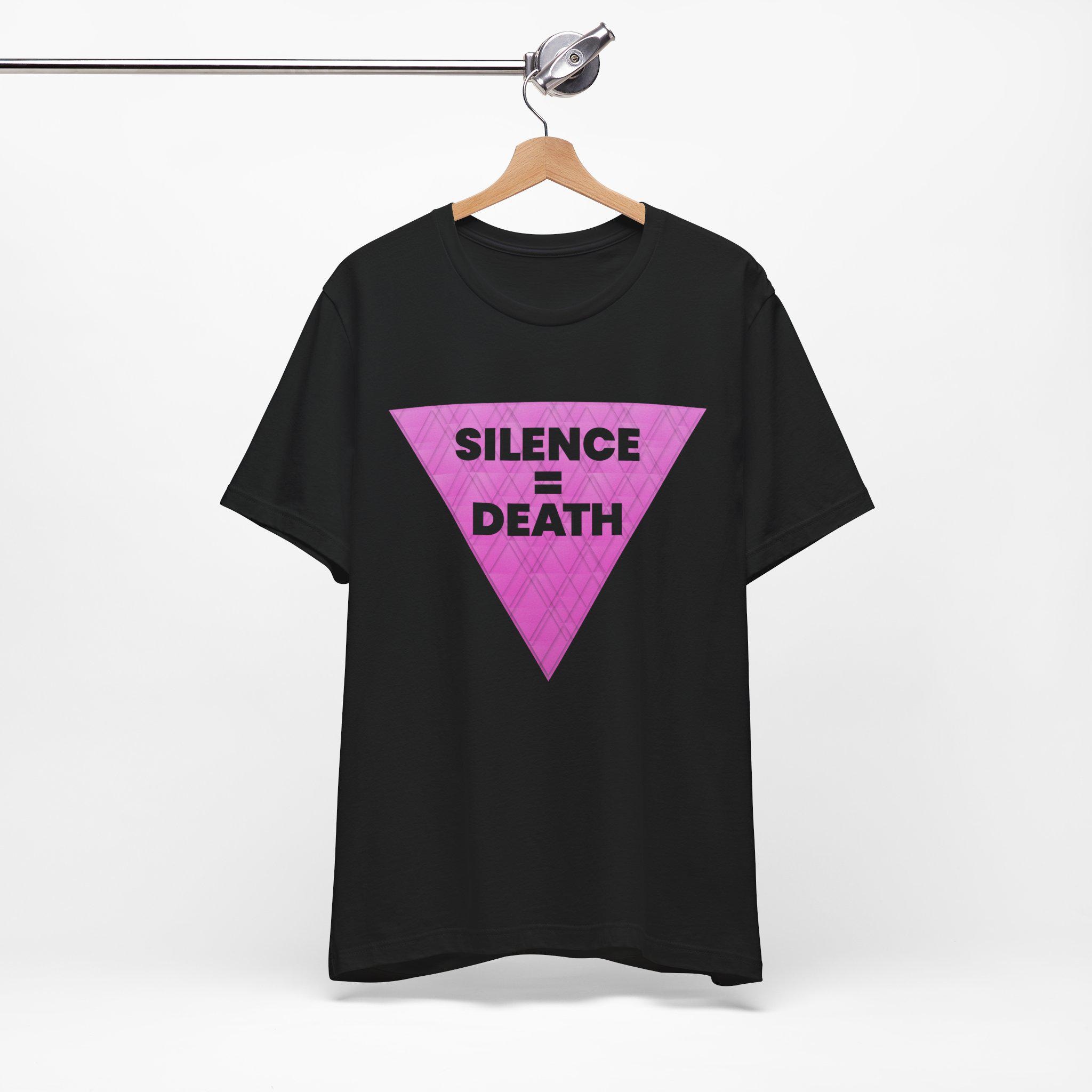
Some of the most memorable slogan T-shirts in history were created in response to the Aids epidemic in the 1980s. The most poignant simply read “Silence = Death”. Originally a poster, the design was printed on T-shirts by the Aids Coalition to Unleash Power (known as “Act Up”) for protesters to wear.

Those affected by Aids were demonised and largely ignored, so the queer community was reliant on activism to incite action from government and their fellow citizens.

In After Silence: A History of Aids through Its Images (2018), author Avram Finkelstein describes the grassroots activism of the time as an “act of call and response, a request for participation” for the lives at stake. In a pre-internet world, T-shirts provided a platform to make the fight visible.

The 80s also saw slogan T-shirts enter pop cultural spaces as well as political ones, most notably with designs from Katharine Hamnett. Known for their oversized fit, their politically charged messages adorned the torsos of celebrities including George Michael and Debbie Harry. In 1984, Hamnett made fashion history when she met then-prime minister Margaret Thatcher while wearing a T-shirt emblazoned with “58% Don’t Want Pershing”, referencing her anti-nuclear sentiment.

That same year, Hamnett’s “Choose Life” design gained icon status when it was worn in a music video by Wham!. Originally a reference to the central teachings of Buddhism, “Choose Life” took on complex meaning when read in the context of the Aids epidemic, Thatcherism and economic instability.

The Choose Life shirt featured in Wham!‘s video for Wake Me Up Before You Go-Go.

The slogan was later used in the opening monologue of the cult film Trainspotting (1996), which is set in an impoverished and drug-fuelled Edinburgh. The design has been reworked countless times, including by Hamnett herself for the refugee charity Choose Love.

In author Stephanie Talbot’s 2013 book Slogan T-shirts: Cult and Culture, she explains that slogan tees can move through time to achieve iconic status. While the Choose Life tee has transcended time and generations, it also shows how the intended message of a slogan can change depending on the wearer and the observer, and the environment within which it’s worn.

Today, to Hamnett’s consternation, Choose Life has been co-opted by pro-life campaigners, not only taking on a different meaning but flipping across the political spectrum.

Who gets to wear a slogan shirt?

When we wear a slogan T-shirt, we are transferring our internal self to an external, public self, creating an extension of ourselves that invites others to perceive us. This creates opportunities for conflict as well as connection and community, putting our bodies (particularly those that are marginalised) at risk.

In 2023 for example, numerous peaceful protesters were arrested for wearing Just Stop Oil T-shirts, highlighting how unsafe – and potentially unlawful – it can be to wear a slogan T-shirt.

Actor Pedro Pascal wears the 'Protect the Dolls' shirt with a brown coat.
Actor Pedro Pascal wears the ‘Protect the Dolls’ shirt by Connor Ives.
Fred Duval/Shutterstock

However, the LGBTQ+ community is continuing to seize the power of the slogan T-shirt – not in spite of law changes, but because of them.

Designer Connor Ives closed his 2025 London Fashion Week show wearing a T-shirt that read “Protect the Dolls”, during a time of increasing politicisation of trans lives and gender healthcare. The term “dolls” is one of endearment in queer spaces that refers to those who identify as feminine, including trans women.

After receiving a “groundswell” of support, the T-shirt went into production to raise money for American charity Trans Lifeline. Numerous celebrities have since worn the design, including actor Pedro Pascal and musician Troye Sivan, to show their support in the face of multiple law changes.

In a world that increasingly feels like it’s in turmoil, for many, the humble T-shirt still feels like a space where we can express how we truly feel.

This article features references to books that have been included for editorial reasons, and may contain links to bookshop.org. If you click on one of the links and go on to buy something from bookshop.org The Conversation UK may earn a commission.

The Conversation

Liv Auckland does not work for, consult, own shares in or receive funding from any company or organisation that would benefit from this article, and has disclosed no relevant affiliations beyond their academic appointment.

ref. A brief history of the slogan T-shirt – https://theconversation.com/a-brief-history-of-the-slogan-t-shirt-258766

What Elio can help teach us about eye patching, stigma and the developing brain

Source: The Conversation – UK – By Rebecca Willis, Doctoral Researcher in Clinical Neurosciences, University of Oxford

Disney Pixar’s latest film, Elio, follows a familiar-sounding character, a lovable and imaginative young hero who dreams of finding a place where he truly belongs. But amid the colour and chaos of the film’s outer space setting, one subtle detail stands out: Elio wears an eye patch.

In the real world, eye patches are commonly used to treat amblyopia, or “lazy eye”, a neurodevelopmental visual condition projected to affect 175.2 million people globally by 2030. In amblyopia, the brain favours one eye over the other, leading to reduced vision in the weaker eye.

Treatment often involves covering the stronger eye with a patch, encouraging the brain to rely on the weaker eye and improve its function. This therapy is most effective during early childhood and can take months of daily commitment.

Yet, despite how common visual conditions are, positive representation of patch-wearing is rare in popular media.

Animated films have long shaped childhood imaginations, but historically, characters with eye patches or other visual markers often fall into negative stereotypes.

Think Mr Potato Head’s alter ego One-Eyed Bart in Toy Story, or Madagascar’s Dr. Blowhole: characters where an eye patch signals villainy. Glasses, meanwhile, are more often seen on older characters like Carl Fredrickson from Up or Roz from Monsters Inc.

Characters with strabismus (misaligned eyes), like Ed from The Lion King, are often portrayed as unintelligent or clumsy. One recent study found that strabismus in children’s animated films is consistently associated with negative character traits – something that can reinforce harmful stigma.

These portrayals matter. Film plays a powerful role in shaping beliefs, especially for young children who are developing a sense of identity, belonging and how to relate to others. When visual conditions are stereotyped, it can reinforce feelings of embarrassment and difference.

For children wearing a patch, these feelings can lead to skipping treatment days and poorer outcomes. In contrast, authentic, positive representation can build self-esteem, promote acceptance, and provide relatable role models.

A subtle but powerful shift

Happily, things are starting to change. In recent Disney/Pixar films, we’ve seen characters with glasses portrayed as dynamic, central figures: Encanto’s Mirabel, Turning Red’s Priya and Mei, and Big Hero 6’s scientist-superhero Honey Lemon, for example. These characters challenge old stereotypes and broaden the narrative around vision.

Elio continues that progress. The young protagonist’s eye patch is not a plot point, nor is it used to symbolise frailty, villainy or wisdom. It simply exists – a quiet part of his identity, not something to overcome.

That subtlety is powerful. For children who wear patches, seeing someone like Elio leading a space mission, not sidelined by his visual condition, can be deeply affirming.

Beyond the screen, Elio has sparked conversation and awareness. Prevent Blindness launched a campaign around the film to raise public understanding of amblyopia and the importance of early detection. Eye care organisations have also used the film as an educational tool, while individuals have shared their stories of patching and treatment across social media.

When amblyopia is recognised and treated early, patching can be remarkably effective. But awareness is key, and so is reducing stigma that might discourage children from wearing their patch.

Childhood amblyopia research

Although patching often restores vision, it doesn’t work for every child – and we still don’t fully understand why. There is limited research into how patching affects the developing brain, and this lack of insight hinders improvements in treatment.

Our research with Holly Bridge, Vision Group leader at Oxford University, aims to change that. We’re studying how patching changes brain chemistry in young children.

Adult studies suggest that chemical shifts in visual parts of the brain may be linked to patching outcomes. To explore this in children, we’re running a study of five to eight-year-olds with amblyopia or healthy vision.

In our study, children with amblyopia receive a safe, non-invasive brain scan before and after patching treatment. We also measure their vision using child-friendly tests. We then compare these results to children with healthy vision who don’t wear a patch, helping us to understand both visual changes and brain development.

We hope Elio marks the beginning of more inclusive storytelling, where difference isn’t erased or exaggerated, but simply woven into the fabric of character and adventure. Like Elio’s journey through space, the path to better understanding and representation of childhood visual conditions has faced challenges.

But perhaps this is the launch we needed: towards better awareness, better research, and a future where every child feels seen – on screen and beyond.

The Conversation

Rebecca Willis receives funding from a Royal Society Studentship.

Betina Ip is funded by The Royal Society (Dorothy Hodgkin Research Fellowship, DHFR1201141) and the UKRI-MRC (MR/V034723/1).

Megan Groombridge receives funding from the MRC (MR/V034723/1).

ref. What Elio can help teach us about eye patching, stigma and the developing brain – https://theconversation.com/what-elio-can-help-teach-us-about-eye-patching-stigma-and-the-developing-brain-259946

The pandemic is still disrupting young people’s careers

Source: The Conversation – UK – By Sviatlana Kroitar, Honored Research Visiting Fellow, Labour Studies, University of Leicester

Goksi/Shutterstock

Unlike previous economic downturns, the COVID pandemic created a crisis that disrupted both education and employment, abruptly halting young people’s emerging careers and clouding their hopes for the future. It doubly affected those transitioning into adulthood, out of school or university and into work, and it threatened the job security of those embarking on their careers when the pandemic began.

There has been a disproportionate and often hidden cost borne by young people which has had a lasting impact on their career paths, financial independence and mental wellbeing.

The pandemic sparked widespread educational disruption. Schools were closed, there was a rapid switch to online learning and exams were cancelled. This hindered young people’s ability to acquire essential knowledge, skills and qualifications.

This aggravated existing educational gaps, particularly between students from different backgrounds, and those with and without reliable digital access and learning support.

The cancellation of internships and work placements – vital for practical experience – left many with a gap in their skills. This may have increased the pressure to undertake unpaid work for employability.


Get your news from actual experts, straight to your inbox. Sign up to our daily newsletter to receive all The Conversation UK’s latest coverage of news and research, from politics and business to the arts and sciences.


Young people are heavily concentrated in precarious, in-person employment sectors such as hospitality and retail. These jobs are characterised by temporary contracts, low wages and limited benefits.

This instability made them acutely vulnerable during the pandemic. Precarious roles offered few safety nets, leading to immediate job losses or reduced hours. Labour markets contracted sharply, especially in in-person sectors. This affected young people in particular, who faced higher job losses and unemployment.

Graduate recruitment also plummeted as companies froze or reduced entry-level hiring, creating a bottleneck for university leavers. This convergence of job losses and a shrinking graduate market made securing stable employment exceptionally difficult.

The pandemic also magnified existing vulnerabilities. It exacerbated hardship and job insecurity for young people who were already marginalised and disadvantaged. Young people already in non-standard employment – such as gig work, zero-hours contracts or temporary roles – experienced disproportionately severe outcomes.

The situation was the same for young people from lower-income backgrounds, women and disabled young people.

Less affluent young people often lack financial support from their families. This means deeper financial instability, increased debt and housing insecurity. These issues were exacerbated by the impact of the pandemic on employment.

Precarity carries elevated long-term risks, including prolonged low wages and stunted career progression. This often delays the achievement of typical adult milestones such as financial autonomy and independent living.

Woman stressed with laptop
Young people may have been more inclined to take any available work.
Raushan_films/Shutterstock

Economic uncertainty destabilised emerging careers, forcing young people to rethink their options – a situation dubbed “precarious hope”. Many graduates, feeling less prepared, lowered their expectations.

They may well have prioritised finding any available work, taking jobs that didn’t match their qualifications, leading to lower wages and poorer working conditions.

Transitions to adulthood

Research has found that the pandemic created significant disruptions to the typical transition to adulthood. A prominent trend was the rise of “boomerang” trajectories: young adults returning to live with parents due to economic hardship or job loss.

More broadly, the pandemic contributed to delayed milestones such as leaving home, achieving financial independence and building stable relationships, creating prolonged dependence for many.

The pandemic also blurred young professional identities. Disrupted final years of study and remote transitions stripped away traditional markers of closure. Cancelled exams, internships and graduations plunged many into prolonged limbo.

This absence of clear rites of passage and the unexpected conclusion to studies added ambiguity to young people’s ideas of their own identity and life paths. This lack of clear professional selves left young people feeling helpless, their future out of their hands.

The psychological toll

The pandemic inflicted a profound psychological burden on young people. The loss of expected life passages, social and professional connections and routines fostered feelings of isolation, stagnation and diminished control. This distress was amplified by relentless uncertainty surrounding disrupted education, altered qualifications and a volatile job market.

A “COVID echo” continues to resonate for young people. Graduates from the pandemic period may still feel that they lag behind in their careers.

The early disruptions it caused through lost entry-level job opportunities, fewer chances to build networks and hindered skill development continue to cast a shadow over the further career prospects of these young people.

Enduring negative consequences like this are termed “scarring”, threatening to affect employment and earning potential for years.

Addressing these potential long-term scars requires an overhaul of the youth labour market. This means tackling precarious work, enhancing training and re-skilling, and strengthening social safety nets. Robust support, as well as listening to what young people have to say about their futures, will be vital in empowering this generation to overcome the crisis and reach their full potential.

The Conversation

Sviatlana Kroitar does not work for, consult, own shares in or receive funding from any company or organisation that would benefit from this article, and has disclosed no relevant affiliations beyond their academic appointment.

ref. The pandemic is still disrupting young people’s careers – https://theconversation.com/the-pandemic-is-still-disrupting-young-peoples-careers-258768