From robotic trucks to smart bins: how technology is helping cities sort their waste problem

Source: The Conversation – UK – By Breno Nunes, Associate professor in Sustainable Operations Management, Aston University

Since early January 2025, residents of Birmingham in the UK have been caught in the dispute between the city council and the Unite union over pay, terms and conditions for waste and recycling collectors. The latest attempt at talks broke down in acrimony.

At one point during the crisis, there were 17 tonnes of uncollected rubbish in Birmingham. Businesses and residents face public health and safety risks including pest infestations and the spread of disease and fire hazards.

These have tainted the reputation of the city and hurt its chances of hosting events and attracting visitors. The news of cat-sized rats in Birmingham has made headlines from the US to Australia.


Read more:
Birmingham bin strikes: a threat to public health


Workers’ pay is being negotiated between the union and the council in Birmingham. However, this is a fairly dangerous job and, with an ageing population, it may become more difficult to hire new workers. We argue that a more fair approach would be to use technology to help transition workers (including through training) towards better paid and safer positions.

This would be an opportunity to build more sustainable waste management in the UK’s second largest city and beyond. Advances in robotics and AI are making automated refuse collection a reality, for example. Some cities in the US, Canada and parts of Europe already use robotics-enabled equipment in their refuse collection systems.

A shortage of skilled personnel threatens the transition towards a greener economy. People have to be at the centre of the solution. In this case, skilled workers are needed to keep different types of waste separate and so improve recycling rates.

The recovery value can be high for certain products such as electronics, automotive parts, as well as materials like plastic and metal. This is still difficult for machines to do.

Smart bins and automated trucks

Birmingham city council has already proposed improvements to waste collection. Based on publicly available information, it aims at increasing the number of rubbish trucks, reducing the number of collection days and retraining refuse collectors. But it has yet to take full advantage of existing advanced technologies.

The plan, for instance, proposes improving communication with residents about collection day via text messages. While welcome, this is rather basic. It was only during the pandemic that all recycling centres started using online booking systems. Prior to that, endless queues were common – wasting time and increasing emissions with traffic jams.

We argue that a whole-systems approach is needed to make the most of the opportunities new technology affords. Automated side loader trucks and smart bins are already used in various cities – the latter use sensors to monitor waste volumes and predict when collection is needed. The council could analyse the strengths and weaknesses of each technology in different areas of the city.

Side loader trucks, which can lift up large bins and empty them, automate a dangerous process and are already considered a mature technology, used in cities across the US, Canada and Sweden. These trucks are difficult to drive in narrow streets. But, where appropriate, their benefits include increased productivity, reduced collection costs and greater worker safety.

Sensors embedded in the vehicle, including from cameras, can provide data on the distribution of waste in different areas. This helps to produce a waste map. AI algorithms can analyse the data and provide customised collection schedules that optimise the use of trucks in the collection fleet. The algorithms can learn and be continuously revised to improve the service.

In busy areas of the city, information from smart bins can prevent rubbish accumulating. Advanced machine learning techniques can then be employed to further optimise the collection schedule by detecting, for instance, anomalies such as a sudden increase in some types of waste. Such systems can provide more adaptable solutions and increase the productivity of officers.

Recent improvements in imaging techniques and chemical analysis can help to identify different waste materials and allow automatic sorting, and the identification of hazardous waste.

Other technological solutions, such as the use of smart underground large storage containers as communal bins allow for less frequent collections, but they may require significant changes to both infrastructure and trucks. These already exist in parts of Spain.

Pneumatic waste collection systems have been tested in Wembley, a suburb in northwest London. In this system, waste is sucked through underground pipes by a fan system at speeds approaching 50mph to a central point, where it is stored in airtight containers until further treatment takes place. More than 30 countries adopt this system.

Educating the public is vital too. Reducing waste in the first place is a good way to save money and would reduce pressure on waste collection systems.

As far as Birmingham goes, overlooking advanced technologies won’t make the council’s task of satisfying residents and waste collection teams any easier. We think a lot of people would be happier to see more robotics trucks and smart bins than more rats in the streets.

The Conversation

Breno Nunes receives funding from InnovateUK for a Knowledge Transfer Partnership (KTP) project on sustainable manufacturing strategy.

Roberto Castro Alamino does not work for, consult, own shares in or receive funding from any company or organisation that would benefit from this article, and has disclosed no relevant affiliations beyond their academic appointment.

ref. From robotic trucks to smart bins: how technology is helping cities sort their waste problem – https://theconversation.com/from-robotic-trucks-to-smart-bins-how-technology-is-helping-cities-sort-their-waste-problem-260023
Sound recordings can give us an animals’ eye view of the war in Ukraine

Source: The Conversation – UK – By Janine Natalya Clark, Professor of Transitional Justice and International Criminal Law, University of Birmingham

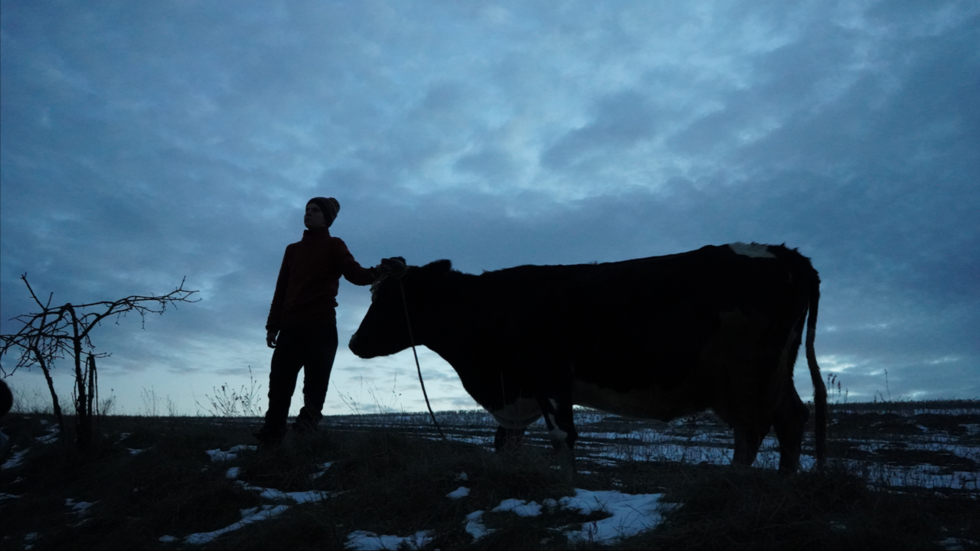
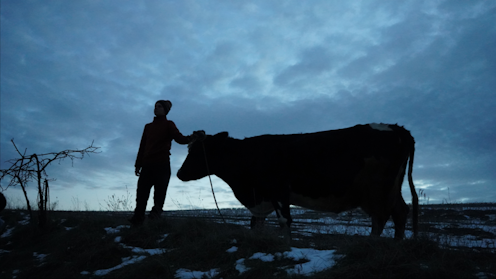
The documentary film, Animals in War, tells the story of Russia’s invasion of Ukraine from the point of view of the animals affected by the conflict. Sota Cinema Group

The 2025 Tribeca Film Festival in New York included a world premiere of War Through the Eyes of Animals (also known as Animals in War). The documentary gives an animals-eye view of Russia’s war against Ukraine and features the wartime experiences of several different species, including a cow, a rabbit and a wolf.

Throughout history, animals have been affected by war and exposed to its many dangers. Despite this, war is usually discussed from human-centred perspectives that marginalise animal experiences.

My own work on the Russia-Ukraine war uses sound as a way of thinking about some of the war’s environmental impacts and the experiences of animals. The idea that sound can provide ecological information is not new. Research has shown how the sounds, for example, of plants and animals can tell us a lot about how their environment is changing. What is new is exploring this in the context of war.

Trailer for War Through the Eyes of Animals.

For my research project I interviewed more than 30 Ukrainians, including botanists, ornithologists, herpetologists (who study reptiles and amphibians) and a marine biologist. I also asked them to make short recordings of their local soundscapes.

A scientist working in Tuzlivski Lymany National Park in the Odesa region of southern Ukraine made a recording of Iranian Shahed drones flying over his office and explained that these “abnormal” sounds greatly affect some species of birds.

Shahed drones.
Interviewee recording879 KB (download)

In 2024, for example, there was a large colony of nesting flamingos in Tuzlivski Lymany. However, noise caused them to abandon their nests, leaving their eggs vulnerable to predators. No chicks were born in the flamingo colony that year. Research in peacetime has found that drones can lead to significant breeding failures among some birds.

A herpetologist, meanwhile, shared his recording of natterjack toads and European tree frogs that he made in the Volyn region of northern Ukraine the year before the start of the full-scale invasion in 2022.

Amphibian chorus.
Interviewee recording985 KB (download)

What he wanted to convey was that he may never hear this particular “amphibian chorus” again. The area is close to the border with Belarus, and it is unclear what impact the construction of Ukrainian defensive fortifications has had on local animal and plant life.

I also asked interviewees whether the war has helped nature in any way. In response, they frequently talked about reduced anthropogenic (human-made) pressures on the environment. An example is the ban on hunting, first imposed at the start of the war in eastern Ukraine in 2014.

Summer meadow.
Interviewee recording281 KB (download)

One interviewee recorded a nighttime summer meadow in Kyiv region and captured the distant sound of a fox calling. The prohibition on hunting has enabled foxes to thrive

Another interviewee made a recording near the Kaniv Nature Reserve in central Ukraine. Alongside birdsong are the barking sounds of roe deer, another species that has benefited from the hunting ban.

Of course, such population increases are not necessarily beneficial to wider ecosystems, as ecologist Aldo Leopold discussed in his classic Thinking like a Mountain (1949). Leopold found that uncontrolled numbers of deer due to the mass killing of wolves in the United States during the first part of the 20th century took a huge toll on the environment. “I have seen every edible bush and seedling browsed”, he wrote”, “first to anaemic desuetude, and then to death”.

The fact that the Russia-Ukraine war has contributed to reducing some anthropogenic pressures does not in any way minimise the enormity of harm done to nature, including forests, soil and marine ecosystems. Yet it is too narrow to think about the environment only in terms of harms done to it.

Nature’s recovery

The Chernobyl Exclusion Zone (CEZ) created following the Chernobyl nuclear disaster in 1986 is often cited as an example of nature’s ability to recover. One of the ornithologists whom I interviewed made a recording of birdsong from within the CEZ, in northern Ukraine.

Chornobyl.
Interviewee recording1.97 MB (download)

When I listen to the recording I am reminded of research which has found that birds have adapted physiologically to radiation exposure within the CEZ.

Another example of recovery relates to the destruction of the Kakhovka dam in June 2023. When Russian aggressors breached the dam, water drained from the Kakhovka reservoir, leaving it dry. Today, there is a young willow forest growing on the site of the former reservoir.

To emphasise the resilience of nature, one of my interviewees made an audio recording from the Yelanets Steppe Nature Reserve in the Mykolaiv region in southern Ukraine. Against the acoustic backdrop of wind gusting through the grasslands are the repeated calls of the common pheasant.

Common Pheasant.
Interviewee recording2.18 MB (download)

These sounds of the wild steppe awakening in early spring, the interviewee stressed, are also the sounds of nature getting on with life.

Birdsong is clearly audible in a recording made by soldiers near the frontline in Kharkiv region.

Near frontline.
Made by Ukrainian soldiers801 KB (download)

Similarly, birds continued to sing over the trenches during the first world war. Some interviewees also pointed out that certain species of birds, including cormorants, herons and white storks, have adapted to the sounds of war, becoming less sensitive to them.

Justice and reparations

I am particularly interested in the significance of nature’s sounds in the context of transitional justice – and especially reparations.

Discourse on environmental reparations focuses on repairing harms done to nature – and sounds can provide useful insights into some of these harms.

But what is missing from existing scholarship on reparations is attention to some of the ways that ecosystems can and do regenerate and recover. Moving forward, therefore, it is essential to think about how reparations can support (and not disturb) these natural ecosystem processes.

The Conversation

Janine Natalya Clark receives funding for this research from the Leverhulme Trust (RF-2024-137)

ref. Sound recordings can give us an animals’ eye view of the war in Ukraine – https://theconversation.com/sound-recordings-can-give-us-an-animals-eye-view-of-the-war-in-ukraine-260519

Too Much: Lena Dunham’s love letter to London, romance and the messiness of being a woman

Source: The Conversation – UK – By Jane Steventon, Course Leader, BA (Hons) Screenwriting; Deputy Course Leader & Senior Lecturer, BA (Hons) Film Production, University of Portsmouth

When HBO launched Lena Dunham’s Girls in 2012, it followed shows such as Buffy (1997-2003), Sex and the City (1998-2004) and Gossip Girl (2007-2012), which had all set a standard of shiny, sanitised female representation that was both attractive and palatable to a wide audience.

The grubby realism of Dunham’s New York twentysomethings, on the other hand, offered a surprising authenticity for some. But for others it was too messy, too white, too privileged and too authored around Dunham’s own life.

Although younger characters are often categorised by self-absorption and poor judgment, the “realness” of Girls was still challenging for many viewers. In particular they struggled with Dunham’s own character, Hannah Horvath, an aspiring writer frequently making personal and professional mistakes. She made for an unlikely – and often unlikable – heroine.


Looking for something good? Cut through the noise with a carefully curated selection of the latest releases, live events and exhibitions, straight to your inbox every fortnight, on Fridays. Sign up here.


Much attention was also paid to Hannah’s nudity, which proved to be a talking point each season. Dunham is known for her bold and positive attitude to her body, which clearly does not conform to standard Hollywood beauty types. But this reaction to Hannah’s frequent nakedness was ultimately highlighted as misogynistic by the creative powers behind the series such as producer Judd Apatow and co-writer Jenni Konner, as well as Dunham herself.

The same critics may have similar problems with Too Much. Though fresh 20-something protagonist, Jessica is played with gusto by TikTok star Megan Stalter, not Dunham herself. She’s known for her scene-stealing performance in comedy-drama Hacks (2021-).

Too Much is still clearly written by Dunham. Jess’s relocation from NYC to London echoes her own move to the UK in 2021, where she met and married the Peruvian-British musician Luis Felber and settled in north London.

The pair have co-created this “love letter to London”, with Dunham directing and and Felber providing the original music. The story takes in London pubs, creative agencies, Notting-Hill-the-movie aspirations and council-estate realities.

Growing pains

As Jess starts work in a London media agency, helmed by an excitable Richard E. Grant, she meets cerebral indie musician Felix (played convincingly and charmingly by Will Sharpe). Their instant connection means that Jess is thrust back into the world of dating, with all the Instagram anxiety and breakup PTSD that her last relationship produced.

The tone is at once fresh and frivolous, but episode one feels contrived at times with the creaky set-up of post-relationship life and relocation.

The familial scenes are the most enjoyable, with Dunham calling in all her celebrity cameo favours, including herself as Jessica’s mother (she snaffles some of the show’s best lines), and Rita Wilson playing her own mother. The small but mighty Rhea Pearlman grabs the great-grandmother role with gusto, flirting salaciously with Jess’s paramour while dispensing wicked wisecracks with bone-dry humour.

As the story develops, so does the sophistication and thoroughbred quality of Dunham’s writing and directing. Glorious moments of obsession with skin, taste and touch in the early days of a relationship are convincingly conveyed by credible and well-crafted moments of intimacy, both physical and intellectual.

As Jessica and Felix navigate the inevitable ups-and-downs of togetherness (dinner parties, red-flag paranoia and an unrequited “I love you”), Dunham reflects on love’s tumultuous and terrifying roller-coaster via brilliant dialogue and meaningful visual storytelling.

A particularly thought-provoking moment of direction comes in the form of a long take at the end of episode three, where the duo cosy up together, ready for sleep, in silent closeness. Jess listens to music on headphones, potentially excluding Felix, but the inference is of acceptance and tenderness – a reassuring sign of potential longevity.

The pitfalls on the road to love are frequently revealed in flashback from Jessica’s past relationship with Zev (Michael Zegen), who has moved on with a new partner. We go from the “meet-cute” and early days of infatuation between Jess and Zev, steadily giving way to less and less tolerance and emotional intimacy, until finally the betrayal with the new love becomes clear.

Capitalising on the anxieties induced by social media, Dunham has Jess obsessively watching Zev’s new love Wendy (Emily Ratajkowski) on Instagram, where every desirable detail of her life plays out in perfection. When Wendy broadcasts the inevitable proposal on Instagram Live, Jess is sent spiralling and decides to flee to London.

As the series progresses, Dunham’s goals become clearer and echo those of Girls. Both shows explore what it means to be “too much” – an accusation that many strong, ambitious and focused women have experienced.

Being too much, it turns out, may be not such a bad thing. As Felix remarks at the close of episode four, after one of their first clashes, “too much” is not necessarily an insult – it can be a way of describing someone who is remarkable. It’s something that Dunham clearly believes – and wants us all to believe – about the tumultuous and chaotic experience of growing up.

Too Much is a hopeful paean to womanhood, a declaration that messiness, failure and fear are all part of becoming a woman just as much as joy, love and intimacy. This show inspires and engages the more it reveals of its flawed and fallible protagonist amid the melting pot of London that Dunham so clearly adores.

The Conversation

Jane Steventon does not work for, consult, own shares in or receive funding from any company or organisation that would benefit from this article, and has disclosed no relevant affiliations beyond their academic appointment.

ref. Too Much: Lena Dunham’s love letter to London, romance and the messiness of being a woman – https://theconversation.com/too-much-lena-dunhams-love-letter-to-london-romance-and-the-messiness-of-being-a-woman-260528

Lioness Lucy Bronze uses ‘cycle syncing’ to get an edge on her competition — here’s how the practise works

Source: The Conversation – UK – By Mollie O’Hanlon, PhD Candidate, Exercise Physiology, Nottingham Trent University

Bronze has said ‘cycle syncing’ has been important for her performance. Jose Breton- Pics Action/ Shutterstock

England footballer Lucy Bronze recently said in an interview that “cycle syncing” gives her an edge on the pitch. This practice involves aligning your training schedule to the different phases of your menstrual cycle.

Cycle syncing has become increasingly popular in recent years – especially among athletes who are looking to get an edge over the competition. Even Chelsea women’s football team have put this new approach to use, tailoring training schedules according to each player’s menstrual cycle.

For the average person, tailoring your workouts to your menstrual cycle is probably not going to have much of an impact. But for a professional athlete such as Bronze, cycle syncing could be a gamechanging strategy in shaping her elite performance.


Get your news from actual experts, straight to your inbox. Sign up to our daily newsletter to receive all The Conversation UK’s latest coverage of news and research, from politics and business to the arts and sciences.


The menstrual cycle begins and ends with menstruation (a period). While the length of the menstrual cycle varies for each person, it’s usually around 28 days.

The menstrual cycle is underpinned by fluctuations in levels of the female sex hormones oestrogen and progesterone. This is why the cycle is divided into three key phases: early follicular, late follicular and the luteal phase.

The early follicular phase usually lasts around seven days and begins with the start of your period. This is when hormone levels are at their lowest.

The late follicular phase follows on from the first seven days, and is where ovulation happens – usually around day 14 of the cycle, though this will depend on cycle length. Ovulation is when the egg is released and you’re at your most fertile.

After that comes the luteal phase (lasting around 12-14 days), when progesterone peaks to prepare the body for pregnancy. If pregnancy doesn’t happen, hormones drop and the cycle begins again.

It’s no secret that mood and energy levels can shift – sometimes significantly – throughout the menstrual cycle. This is why some female athletes have begun using cycle syncing. By tailoring training schedules to match hormonal fluctuations, women are gaining a deeper understanding of their bodies and the symptoms they experience throughout each phase – empowering them to train smarter, not harder.

Bronze said the strategy has transformed her performance, saying that during certain phases of her cycle she feels “physically capable of more and can train harder”.

Despite these testimonials, scientists are yet to reach a definitive conclusion on how the menstrual cycle affects athletic performance.

Lucy Bronze smiles during a match.
Bronze is just one of many female athletes putting ‘cycle syncing’ to the test.
Christian Bertrand/ Shutterstock

So far, there’s some suggestion that there may be a slight dip in performance (specifically to strength and endurance) during the early follicular phase. However, these effects are minimal – and highly dependent on the person. It’s also not entirely clear what mechanisms underpin these small performance dips that some women experienced.

Other research suggests that certain aspects of the neuromuscular system (the network of nerves and muscles that make movement possible) – specifically how our muscles generate force – is altered during the luteal phase. Research has also found that certain muscles may fatigue less quickly during this phase as well.

This implies that during the luteal phase, there may be changes in signals from the brain and spinal cord to the skeletal muscles. However, no changes in the neuromuscular function have been observed.

Part of the reason it’s so difficult for researchers to gather enough evidence to draw firm conclusions on the menstrual cycle’s potential effects on athletic performance is because of the huge variability in menstrual cycle characteristics, which makes it difficult to study. Phase length, hormone levels and symptoms can differ widely between women – and even from cycle to cycle.

The small effects seen in these studies will have little effect on how most of us train or exercise. But for an elite athlete, these minuscule differences could have an effect on their training and competition, which may be why so many are willing to give the practice a try.

So while it isn’t entirely clear how much influence certain menstrual cycle phases have on performance, how you feel during different phases could certainly affect your ability to train at your best.

Around 77% of female athletes experience negative symptoms in the days leading up to and during menstruation. Fatigue, feeling less motivated and even experiencing digestive issues such as bloating and nausea, could all affect your ability to train at your best.

Trying cycle syncing

If you’re still interested in giving cycle syncing a try to see if it has any effect for you, the best place to start is by tracking your menstrual cycle. This will help you understand your body, how you feel in each phase of your cycle and what effect certain symptoms have on your training.

It’s recommended you track your cycle for at least three months before making any changes to your training to establish a baseline and spot trends over time.

For example, if you notice you often feel fatigued when training in your luteal phase, it may help to focus on ensuring you fuel well with carbohydrates before and during workouts. Or on days where you feel more energetic and motivated to train, you might be able to push yourself a bit harder in your workouts.

Whether you’re playing for England in the Euros or simply working towards your own fitness goals, understanding your cycle can help you train smarter, manage your symptoms better and stay consistent with your training.

The Conversation

The authors do not work for, consult, own shares in or receive funding from any company or organisation that would benefit from this article, and have disclosed no relevant affiliations beyond their academic appointment.

ref. Lioness Lucy Bronze uses ‘cycle syncing’ to get an edge on her competition — here’s how the practise works – https://theconversation.com/lioness-lucy-bronze-uses-cycle-syncing-to-get-an-edge-on-her-competition-heres-how-the-practise-works-260153

How M&S responds to its cyber-attack could have a serious impact on its future – and its customers

Source: The Conversation – UK – By Aybars Tuncdogan, Reader in Digital Innovation and Information Security, King’s College London

raymond orton/Shutterstock

The cyber-attack on Marks & Spencer will lead to an estimated £300 million hit to the company’s profits this year. It now aims to have online shopping at the store back to normal by August, more than three months after IT systems were compromised.

Fans of M&S clothing and food will be relieved after all of the uncertainty. But that level of uncertainty, as well as the huge cost, is surely a sign that big retailers, which millions of people rely on, need to change how they think about – and invest in – cybersecurity.

It has to be an absolute priority. After all, few marketing strategies or HR initiatives can save a company £300 million in just six weeks. But perhaps a more sophisticated cybersecurity department could have done just that.

To be fair, M&S faced a relatively rare, high-impact ordeal. Most cyber-attacks of this nature don’t affect customers so directly, and much of the recovery typically happens behind the scenes.

But M&S shoppers saw online orders collapse, contactless payments fail and refunds, gift cards and loyalty points not functioning. Disruption in stock-management and warehousing led to empty shelves and food waste.

On June 27, M&S issued a public apology and a £5 digital gift card to affected customers. But research suggests that the most important element of keeping customers onside is the quality of the recovery process, and whether normal service is eventually resumed.

To get back to normal service, it is possible that a ransom was paid to the cyber attackers, but M&S has refused to confirm or deny this. (One survey found that many organisations hit by cyber attacks agreed to pay a ransom – and then suffered a subsequent breach, often from the very same culprits.)

But even when normal service returns, when hackers steal customer data, as they did with M&S, research suggests that this information is often reused by criminals in identity theft and phishing. A study even found that victims of data breaches are more likely to have mortgage applications denied.

From what we know about the breach at M&S, it seems that the cyber-attackers simply used a phishing technique to get the support desk of a third-party contractor to reset the password of an admin-level account. That said, although in this case the main vulnerability was human, the lesson to be learnt here is that sometimes just one vulnerability can shake the whole system to its core.

This is why business owners need to think of cybersecurity not just as a tedious and inconvenient IT issue, but as a core function of the business. Otherwise, as the M&S case illustrates, it is simply not possible for the rest of the corporate structure to operate.

Testing times

So cybersecurity targets must be incorporated into every department to ensure collective defence. And organisations also need to stress-test the different aspects of their systems.

That could be checking on human responses, but it should also include technology (like a vulnerability in the web server), physical barriers (a poorly secured server room door) and HR procedures (failure to revoke ex-employee access).

Laptop in use with with graphic of padlock and security images.
Lock down your laptop.
Thapana_Studio/Shutterstock

These lines of defence have to be stress-tested regularly and from multiple angles, rather than being considered an annual checkbox activity for compliance.

Scenario-based tests – essentially a cyber fire-drill — such as internal threat simulations and response exercises, can provide useful insights into an organisation’s readiness to detect, respond to and recover from cyber-attacks.

It’s also important that organisations learn to communicate clearly once a breach occurs. Research into responses to data breaches suggests that any backlash is sharper when the company seems to be trying to hide the breach, which may later be publicised by the criminals instead.

Consumers should also remember that they are not powerless. We may not be able to prevent a data breach, but all of us can help to stop attackers from infiltrating our online worlds by something as simple as not re-using the same passwords.

By remaining sceptical, we can prevent attackers from using the information they stole to phish us later. And by thinking carefully about what personal data we share with companies, we can reduce the impact of future breaches.

The Conversation

Aybars Tuncdogan does not work for, consult, own shares in or receive funding from any company or organisation that would benefit from this article, and has disclosed no relevant affiliations beyond their academic appointment.

ref. How M&S responds to its cyber-attack could have a serious impact on its future – and its customers – https://theconversation.com/how-mands-responds-to-its-cyber-attack-could-have-a-serious-impact-on-its-future-and-its-customers-260429

From Kabul to the catwalk – the surprising global history behind fashion’s fur revival

Source: The Conversation – UK – By Magnus Marsden, Professor of Social Anthropology, University of Sussex

The winter season of 2024-25 marked a resurgence of fur clothing – both faux and real – in fashion across Europe and North America. Shearling jackets and embroidered “Penny Lane coats” featured widely in reports on the latest fashion trends. Vintage fur coats are also back in vogue.

To many, the resurgence came as a surprise. The anti-fur movement, especially influential in the 1980s, continues to shape perceptions of fur. In the 2010s, cities including New York and Los Angeles banned the use of fur to make clothes. The UK meanwhile banned the farming of fur-bearing animals, and, alongside the EU, has committed itself to legislating against all fur imports.

Just last year the town of Worthing, in England, debated whether their mayor should wear ceremonial robes trimmed with fur or not. Despite these trends, many young people have embraced the renewed trend of wearing real fur.

Some clothes made from animal skins became popular during the counter-cultural movement of the 1960s, but historically, fur has mostly marked status, wealth and luxury. Today, many critics interpret fur’s return to fashion as a cultural expression of rightwing politics.


Looking for something good? Cut through the noise with a carefully curated selection of the latest releases, live events and exhibitions, straight to your inbox every fortnight, on Fridays. Sign up here.


Fur is prominent in the “boom boom” fashion trend, which emphasises excess and “male-coded values”. It has been described by fashion journalists as “over-the-top and unashamed about its own greed and lack of wokeness”.

Fur clothing is a reminder of the moral tensions between need and desire, and luxury and excess. In addition to being inter-generational, these debates are also about gender. For much of the 20th century, fur coats symbolised femininity, erotic power and class position in the west. But by the 1980s, advertising campaigns depicted women who wore fur as either stupid and unthinking or thinking and unspeakably cruel, leading many to jettison it.

Anti-fur protests were held across the US in 1994.

Fur’s return to fashion has injected old debates with new significance. Some young people are willing to wear faux fur because it does not involve killing animals. But others argue that, because it is made from synthetic material, faux fur is actually more environmentally damaging and prefer to wear the real thing. They claim that wearing vintage fur is a form of “sustainable consumption” but are challenged by those who argue that this fashion trend ultimately justifies killing animals to make clothes.

The boom boom trend is said to embody a contemporary expression of 1980s “conspicuous consumerism”, but in an era of economic austerity the adoption of fur by young people suggests the clothes they wear identify their desires rather than their financial reality.

A global history of fur

Today, as in the 1980s, the perspectives, interests and experiences of non-Europeans are often unheard in debates around fur. A decline of fur-bearing animal populations in North America and Siberia from the early 19th century, led to a global expansion in fur farming.


Read more:
How central Asian Jews and Muslims worked together in London’s 20th-century fur and carpet trade


From the 1850s, for example, Central Asia supplied furs to Europe and North America. Local artisans cured the pelts of karakul lambs – a native breed – to yield a rich and glossy fur. In central and south Asia, men of high status wore karakul hats; in Europe and America, they were mostly used to make women’s coats.

After the Russian revolution of 1917, many nomadic and semi-nomadic pastoralists, who raised sheep and other animals, left central Asia and moved with their flocks to neighbouring Afghanistan. The trade in karakul fur grew in the country, and foreign currency reserves came to depend on lambskins sold at auctions in London and New York.

In the 1960s, sheepskin coats made in Afghanistan – known as “Afghans” – became popular in the west, being worn by stars including Brian Jones of the Rolling Stones. The 1969 British edition of Vogue featured an interview with an icon of “oriental chic”, the “beautiful, dashing, intelligent, adventurous” Afghan socialite, Safia Tarzi, who lived in Paris, and ran a boutique clothing shop in Kabul.

The Afghan coat enjoyed a resurgence in 2000 having been worn by the character Penny Lane (Kate Hudson) in the film Almost Famous.


Read more:
Friday essay: how ‘Afghan’ coats left Kabul for the fashion world and became a hippie must-have


In the 1980s, the anti-fur campaign contributed to a declining market for karakul. For decades, rumours of Central Asian shepherds extracting lambs from the wombs of sheep to ensure a steady yield of delicate pelts had circulated. Moral opposition to the practice was not confined to the west.

During my research on globally dispersed activists, intellectuals and merchants from Afghanistan, a man from Afghanistan, now based in London, told me that his father banned his family from wearing karakul hats because sheep and their lambs were treated cruelly.

In the 1990s, civil war destroyed much of the infrastructure of the karakul industry in Afghanistan, but a trickle of pelts reached auction houses located in Frankfurt, Copenhagen and Helsinki.

In the 2000s, international development organisations attempted to revive the trade, though sales never returned to anyway near the levels of the 1970s. By the 2010s, families in northern Afghanistan struggling economically opted to send sons to travel illegally to Turkey to find work as shepherds for commercially oriented Turkish farmers.

Promotional videos of fashion houses occasionally touch on the Penny Lane coat’s ties to Afghanistan, but media coverage of fur fashions rarely address its historical connections to central Asia.

The Conversation

Magnus Marsden received funding from the Arts and Humanities Research Council including for the research upon which this article is based.

ref. From Kabul to the catwalk – the surprising global history behind fashion’s fur revival – https://theconversation.com/from-kabul-to-the-catwalk-the-surprising-global-history-behind-fashions-fur-revival-256382

Biblical Women Ageing Disgracefully: artist Sarah Lightman reimagines characters battling midlife, motherhood and menopause

Source: The Conversation – UK – By Dawn Llewellyn, Associate professor of Religion and Gender, Theology and Religious Studies, University of Chester

What happens when the women immortalised in old master paintings step out of their gilded frames and into the chaos of modern domestic life? That’s the question artist Sarah Lightman tackles, with wit, irreverence and insight, in her exhibition Biblical Women Ageing Disgracefully, now on at Chester Visual Arts, Grovesnor Shopping Centre.

In works from her Biblical Domestic (2021–2024) and Menstrual Hystery (2024) series, Lightman trades halos for housework, and heavenly glory for the cluttered reality of her own everyday life. Her saints and heroines aren’t meditating in divine serenity – they’re battling menopause, messy kitchens and midlife malaise.

With humour and intimacy, Lightman probes the distance between the idealised women of religious art and the ageing bodies we’re taught to hide. Her characters, drawn from both the canon of western Christian art and the sacred Jewish texts of her upbringing, are lovingly reimagined through a feminist lens.

What if Mary hated soft play as much as the rest of us? What if Eve was just trying to get through another basket of laundry? What if biblical women aged in real time?

With bold colours, absurdist touches and deep empathy, Biblical Women Ageing Disgracefully reframes these archetypes for today – and starts fresh conversations about visibility, care and womanhood.

Old masters, new messes

In Fridge Frustrations (2022), Caravaggio’s Judith Beheading Holofernes (1599) becomes a scene of domestic dread. Judith still holds Holofernes’ severed head – but now her crisis is storage, not salvation:

Judith can’t find anywhere in the fridge for her organic and fresh cut of Holofernes.

Lightman retains the dramatic composition of the original but shifts its meaning entirely. Her watercolour medium softens the baroque oil intensity, introducing levity without losing emotional depth.

In The Annunciation of the Menopause (2024), she riffs on The Annunciation by Fra Angelico (1425-26), the early Renaissance fresco where the Virgin Mary receives the angel Gabriel’s news that she’ll bear the son of God.

Here, Mary’s serene acceptance is swapped for something far more visceral: she sits beside an exam table mid heavy bleed, not in graceful surrender but bodily discomfort. Gabriel is gone, replaced by a gynaecologist in latex gloves. The walls? Tiled not with gold leaf but with packets of Always. This is no divine encounter – just hot flushes, greasy hair and hormonal chaos. No spiritual serenity in sight.

Instead of youthful grace, Lightman gives us perimenopausal truth: gritty, awkward, real.

Not a rejection, but a rewriting

Lightman’s work is unabashedly feminist and unapologetically funny – but it’s also rooted in reverence. Her reinterpretations of women from Hebrew scripture honour the complexity of these figures and draw from the feminist Jewish tradition of midrash: creative interpretation that fills in the biblical silences.

Lightman isn’t discarding these sacred stories: she’s inhabiting them. She paints the parts we were never told, the thoughts and struggles left out of the male-dominated canon. Her canvases ask: what if we didn’t accept the gaps in these women’s lives? What if we imagined them into our own?

Context matters – and Biblical Women Ageing Disgracefully is exhibited not in a white-walled gallery but in Chester’s Grosvenor Precinct, having previously shown at Chester’s cultural centre Storyhouse. The location is deliberate. These Madonnas and menopausal saints appear exactly where they live now: among shopping bags, toddler tantrums and the quiet sighs of women holding it all together.

Meeting Eve, Mary, Bathsheba, Susanna and Lot’s wife in a shopping centre creates a surreal and poignant dissonance. It collapses the sacred and the ordinary, and invites viewers to see their own lives reflected in these ancient figures.

Messy, mortal and magnificent

It’s a risk, of course, putting menopause, motherhood, grief, housework and rape culture centre stage. There’s a version of this exhibition that could have been grim. But Lightman’s palette is anything but dour. Her watercolours are vibrant and playful, her titles sharp with satire. These women aren’t tragic martyrs; they’re exhausted, yes, but also knowing, cheeky and in on the joke.

Lightman treats art history not as a fixed monument, but as a toolkit to be deconstructed and rebuilt. She gives her saints their bodies back – saggy, sweaty, miraculous – and their agency too.

What makes Biblical Women Ageing Disgracefully so powerful is its embrace of contradiction. It is sacred and silly, sincere and subversive, heartbreaking and hilarious. It is, in essence, a feminist midrash in watercolour: retelling holy stories through the grit and glory of contemporary womanhood, and holding them close even as it pushes them open.

Biblical Women Ageing Disgracefully is on display at Chester Visual Arts, Grovesnor Shopping Centre until July 13.

The Conversation

The authors do not work for, consult, own shares in or receive funding from any company or organisation that would benefit from this article, and have disclosed no relevant affiliations beyond their academic appointment.

ref. Biblical Women Ageing Disgracefully: artist Sarah Lightman reimagines characters battling midlife, motherhood and menopause – https://theconversation.com/biblical-women-ageing-disgracefully-artist-sarah-lightman-reimagines-characters-battling-midlife-motherhood-and-menopause-260522

Gwada-negative: the rarest blood group on Earth

Source: The Conversation – UK – By Martin L. Olsson, Medical Director of the Nordic Reference Laboratory for Blood Group Genomics, Region Skåne & Professor of Transfusion Medicine, Head of the Division, Lund University

Peter Porrini/Shutterstock.com

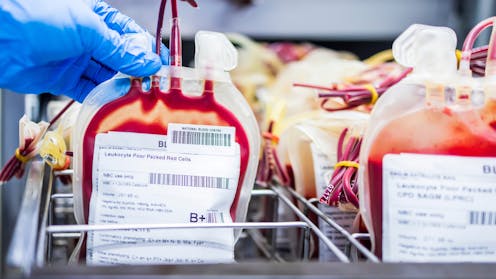
In a routine blood test that turned extraordinary, French scientists have identified the world’s newest and rarest blood group. The sole known carrier is a woman from Guadeloupe whose blood is so unique that doctors couldn’t find a single compatible donor.

The discovery of the 48th recognised blood group, called “Gwada-negative”, began when the woman’s blood plasma reacted against every potential donor sample tested, including those from her own siblings. Consequently, it was impossible to find a suitable blood donor for her.

Most people know their blood type – A, B, AB or O – along with whether they are Rh-positive or negative. But these familiar categories (those letters plus “positive” or “negative”) represent just two of several dozens of blood group systems that determine compatibility for transfusions. Each system reflects subtle but crucial differences in the proteins and sugars coating our red blood cells.

To solve the mystery of the Guadeloupian woman’s incompatible blood, scientists turned to cutting-edge genetic analysis. Using whole exome sequencing – a technique that examines all 20,000-plus human genes – they discovered a mutation in a gene called PIGZ.

This gene produces an enzyme responsible for adding a specific sugar to an important molecule on cell membranes. The missing sugar changes the structure of a molecule on the surface of red blood cells. This change creates a new antigen – a key feature that defines a blood group – resulting in an entirely new classification: Gwada-positive (having the antigen) or -negative (lacking it).

Using gene editing technology, the team confirmed their discovery by recreating the mutation in a lab. So red blood cells from all blood donors tested are Gwada-positive and the Guadeloupean patient is the only known Gwada-negative person on the planet.

The implications of the discovery extend beyond blood transfusions. The patient suffers from mild intellectual disability, and tragically, she lost two babies at birth – outcomes that may be connected to her rare genetic mutation.

The enzyme produced by the PIGZ gene operates at the final stage of building a complex molecule called GPI (glycosylphosphatidylinositol). Previous research has shown that people with defects in other enzymes needed for GPI assembly can experience neurological problems ranging from developmental delays to seizures. Stillbirths are also common among women with these inherited disorders.

Although the Caribbean patient is the only person in the world so far with this rare blood type, neurological conditions including developmental delay, intellectual disability and seizures have been noted in other people with defects in enzymes needed earlier in the GPI assembly line.

The Gwada discovery highlights both the marvels and challenges of human genetic diversity. Blood groups evolved partly as protection against infectious diseases (many bacteria, viruses and parasites use blood group molecules as entry points into cells). This means your blood type can influence your susceptibility to certain diseases.

But extreme rarity creates medical dilemmas. The French researchers acknowledge they cannot predict what would happen if Gwada-incompatible blood were transfused into the Guadeloupian woman. Even if other Gwada-negative people exist, they would be extremely difficult to locate. It is also unclear if they can become blood donors.

This reality points towards a futuristic solution: lab-grown blood cells. Scientists are already working on growing red blood cells from stem cells that could be genetically modified to match ultra-rare blood types. In the case of Gwada, researchers could artificially create Gwada-negative red blood cells by mutating the PIGZ gene.

Gwada is a colloquial term for Guadeloupe, a Caribbean island.
Shutterstock.com

A growing field

Gwada joins 47 other blood group systems recognised by the International Society of Blood Transfusion. Like most of these blood-group systems, it was discovered in a hospital lab where technicians were trying to find compatible blood for a patient.

The name reflects the case’s Caribbean roots: Gwada is slang for someone from Guadeloupe, giving this blood group both scientific relevance and cultural resonance.

As genetic sequencing becomes more advanced and widely used, researchers expect to uncover more rare blood types. Each discovery expands our understanding of human variation and raises fresh challenges for transfusion and other types of personalised medicine.

The Conversation

Martin L Olsson is a Wallenberg Clinical Scholar who receives research funding from Knut and Alice Wallenberg Foundation (grant no. 2020.0234). He holds other major grants from the Swedish Research Council (grant no. 2024-03772), the Novo Nordisk Foundation (grant no. NNF22OC0077684) and the Swedish government funds to university healthcare for clinical research (ALF grant no. 2022.0287). He is also a member of the International Society of Blood Transfusion (ISBT)’s Working Party on Red Cell Immunogenetics and Blood Group Terminology.

Jill Storry receives funding from the Swedish Research Council (grant no. 2024-03772). She is affiliated with, and the current senior Vice-President, of the International Society of Blood Transfusion, as well as a member of the society’s Working Party on Red Cell Immunogenetics and Blood Group Terminology.

ref. Gwada-negative: the rarest blood group on Earth – https://theconversation.com/gwada-negative-the-rarest-blood-group-on-earth-260155

The Story of a Heart by Rachel Clarke is a powerful account of one child’s gift to another

Source: The Conversation – UK – By Leah McLaughlin, Research Fellow in Health Services, Bangor University

What does it mean to save a life – and what does it cost? In The Story of a Heart, Rachel Clarke answers this not with slogans or sentiment, but with quiet, searing honesty. This book, which won this year’s Women’s prize for non-fiction, is about organ donation, yes, but it’s also about family, grief, love, courage, and the astonishing edges of human experience.

At its centre are two children: Max Johnson, a healthy, active nine-year-old whose heart suddenly begins to fail, and Keira Ball, another nine-year-old – vibrant, horse-loving, full of life who tragically dies in a car accident. In a moment of unimaginable grief, Keira’s parents donate her organs. Her heart goes to Max.

A child dies. A child lives.

That is the simple, brutal, beautiful truth this book never looks away from. But Clarke does more than tell the story of heart. She immerses us in it – every breath, every monitor beep, every unbearable choice.

I read this as a health services researcher who has spent years working in the emotionally complex, ethically charged, and often hidden world of organ donation. My work explores how families navigate these unimaginable scenarios, particularly in the context of recent legislative change. Clarke’s account captures, with rare precision and compassion, the silences, the emotional labour of clinicians, and the profound weight of choice that families like Keira’s carry.


Looking for something good? Cut through the noise with a carefully curated selection of the latest releases, live events and exhibitions, straight to your inbox every fortnight, on Fridays. Sign up here.


As both a doctor and a mother, Clarke brings sensitivity to every page. We feel Max’s steady decline: the exhaustion, the fear, the silence that descends as even the doctors grow unsure. We witness Keira’s final hours, the heroic efforts to save her, and the moments where unbearable grief oscillates between hope and despair, eventually giving way to a different kind of gift.

There are no easy heroes in this story, only ordinary people facing the unthinkable with extraordinary grace. Clarke brings them to life with aching clarity: the cardiologist who, in the dim light of a hospital room, sketches Max’s failing heart on a napkin so his mother can understand what words can’t explain; the ICU nurse who stays long after her shift ends, gently brushing the hair of a child who will never wake up; the donation nurse who enters a family’s darkest hour not with answers, but with quiet presence and unwavering care; the surgeon who steadies his hands – and his heart – when every second matters.

And in the chaos of resuscitation, amid alarms and broken bodies, a teddy bear is tucked beneath Keira’s arm: “Someone in the crash team has seen Keira not simply as a body, inert and unresponsive, but as a vulnerable child in need of compassion.”

The Story of a Heart is also a book about history. It’s not just about one child’s transplant, but about medicine, surgery, and the heart itself. Clarke weaves in the stories of early transplant pioneers, accidental discoveries, and the scientific stumbles and breakthroughs that built modern practice. She brings it all to life with a storyteller’s flair, making science feel intimate, alive, and deeply human.

What the heart means

What sets the heart apart, Clarke reminds us, is not just its function, but its symbolism. No other organ holds such emotional weight. “Hearts sing, soar, race, burn, break, bleed, swell, hammer and melt,” she writes. They are not just organs, they are vessels for our hopes, fears and deepest longings.

Clarke shows how, across history, the heart was seen as the source of emotion, morality – even the soul – and how that deep humanism still pulses through our language and culture today. We have our hearts broken, wear our hearts on our sleeves, and as Clarke puts it: “When trying to express our truest and most sincere selves, we do so by saying we speak from the heart, or about all that our heart desires.”

But what makes The Story of a Heart so exceptional is its emotional truth. Clarke never shies away from the pain. Max’s parents watch their son fade, terrified to even touch him. Keira’s father buys her a pink princess dress for her funeral. Max, wired to machines, records a goodbye message; we learn later he even tried to take his own life. And yet, there is light.

Keira’s sisters climb into bed with her, painting her nails and sliding Haribo sweet rings onto her fingers. Then comes a moment so clear, so quietly astonishing, it takes everyone’s breath away. Katelyn, Keira’s older sister, turns to the doctor and asks, with calm, steady eyes: “Can we donate her organs?”

This isn’t a clinical decision or a well-rehearsed conversation. It is an unprompted act of extraordinary love. These moments – fragile, generous, profoundly human – are the true beating heart of Clarke’s book.

From there, we are guided into a world so few know and even fewer ever witness: the quiet choreography that carries a gift of life from one person to another. What Katelyn sets in motion with just five words unfolds with such precision, that reading it feels like witnessing a kind of living magic.

The aftermath is just as moving. Max recovers quickly, walks again, laughs again. The two families meet. There are no big speeches, just quiet awe. And beyond that: a law is passed. Max and Keira’s Law brings in an opt-out system of donation in England. Two children. One legacy. A country changed.

And still, Clarke doesn’t let us forget the hard truths. Not every child survives. Not every family gets a miracle. Transplants are fragile. But in that fragility, she shows us, is the real miracle. Max goes fishing with his dad, the sky glows orange – Keira’s favourite colour. That is enough.

At the moment organ donation consent rates for children are declining in the UK, and there are more children on the transplant wait list than ever before. The Story of a Heart asks us to see the children, the families, and the quiet acts of love behind every donation. It’s a powerful reminder that the greatest gifts are often given in the darkest hours.

This book will break your heart – and fill it up again. It’s not just essential reading for anyone interested in organ donation and transplant. It’s essential reading for anyone who has ever loved.

This article features references to books that have been included for editorial reasons, and may contain links to bookshop.org. If you click on one of the links and go on to buy something from bookshop.org The Conversation UK may earn a commission.

The Conversation

Leah McLaughlin does not work for, consult, own shares in or receive funding from any company or organisation that would benefit from this article, and has disclosed no relevant affiliations beyond their academic appointment.

ref. The Story of a Heart by Rachel Clarke is a powerful account of one child’s gift to another – https://theconversation.com/the-story-of-a-heart-by-rachel-clarke-is-a-powerful-account-of-one-childs-gift-to-another-260611

Parental leave in the UK isn’t working – here’s what needs to change

Source: The Conversation – UK – By Ernestine Gheyoh Ndzi, Senior Lecturer at York Business School, York St John University

pikselstock/Shutterstock

The recent launch of a government review into parental leave and pay in the UK is a hugely welcome development. In order to bring about meaningful change, it must challenge the fundamental issue at the heart of current parental leave laws. They are strongly influenced by, and so perpetuate, gender norms that see women as caregivers and fathers as breadwinners.

Parents in the UK can take maternity leave, paternity leave and shared parental leave in the first year of their child’s life. While these allowances provide parents with support, the support is disproportionate in how it is split between mothers and fathers. Although gender roles have evolved significantly, UK policies lag behind.

Mothers and fathers are equal parents and have equal parenting responsibilities. However, mothers are allowed up to 52 weeks of maternity leave, while fathers are only entitled to two weeks of statutory paternity leave.

The introduction of shared parental leave in 2015 was welcomed as a positive step towards gender equality – but it has failed in this aim.

There are significant barriers stopping fathers from benefiting fully from the legislation. Parents can share up to 50 weeks of leave between them. But because mothers are entitled to a year of leave, the policy requires mothers to act as gatekeepers. The mother determines if the father can share the leave and how long she is willing to give up for the father.

Consequently, fathers have no autonomy or independence to take parental leave at a time that is important to them and their babies – and they may be reluctant to deprive the mother of leave she is entitled to.

What’s more, while maternity and paternity leave is well known and the process relatively straightforward, shared parental leave has been criticised for its complexity. Parents that have explored shared parental leave have found the policy and process incredibly complex because some employers still don’t understand how it works and so are unable to support parents.

The problems with the policy have affected its uptake. Only 5% of fathers take any shared parental leave.

Financial implications

Another problem that affects all three policies is the pay. While the UK has a generous maternity leave allowance of 52 weeks, this is not accompanied by a decent financial allowance.

Although employers can set more generous terms, the law requires only the first six weeks of maternity leave to be paid at 90% of the mother’s salary. This is followed by 33 weeks at statutory pay of £187.18 and 13 weeks of no pay. The two weeks of paternity leave are paid at the statutory rate of £187.18, or 90% of the father’s average weekly earnings (whichever is lower).

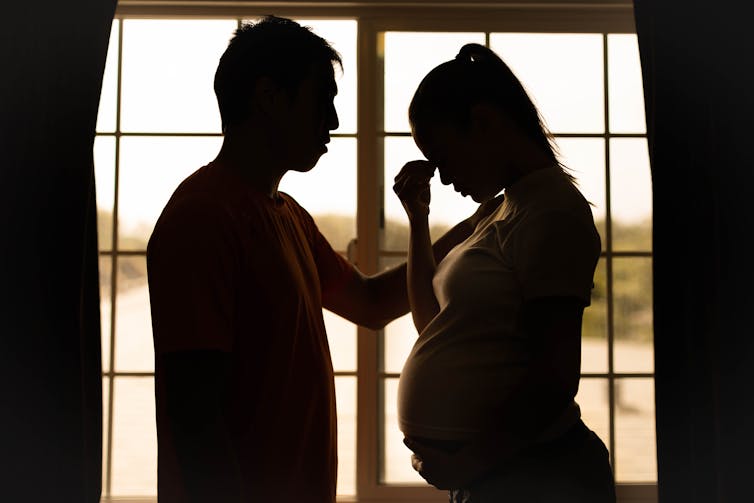
Man and pregnant woman silhouetted, looking stressed
Taking parental leave can bring financial and career worries.
christinarosepix/Shutterstock

And while shared parental leave allows the mother to split 50 weeks of leave with her partner, a significant period of this is unpaid. Out of these 50 weeks, parents can share 37 weeks of pay at statutory rate and the rest of the leave would be unpaid.

Mothers have returned to work early because financially they cannot afford to stay longer on maternity leave – a problem compounded by the rising cost of living. Fathers sometimes opt to take annual leave rather than paternity leave because of the low pay.

The same reason applies to shared parental leave because parents cannot afford to both be off at the same time or different times on the statutory rate. While the policies are well intended, there is no financial incentive for parents to take it.

Finances have a significant impact on parental leave choices. The government review should enhance parental leave pay to encourage and support parents, particularly fathers.

Impact on careers

The implications for parents’ careers also need to be considered. While parental leave should not affect the career aspirations or progressions of the parents, my research demonstrates otherwise. Mothers have been bullied, refused opportunities, and have felt forced to leave their jobs.

Research also shows that fathers have concerns about their careers when considering parental leave. While it is illegal for an employer to discriminate against a parent for taking parental leave, this remains an area of concern.

My research has demonstrated that some fathers consider shared parental leave as a “luxury” they cannot afford. They feel they need to work hard to demonstrate their commitment to their job. Equal parenting policies would support women’s careers and encourage fathers to take up more family responsibilities without fear of repercussions.

The last point to consider – and one that often goes overlooked – is that how parents choose to feed their baby may have an effect on their decisions to take parental leave. Babies can be breastfed, formula fed or a mixture of both breast and formula feeding. If the parents make the decision to breastfeed – a choice recommended by the World Health Organisation – this may affect the mother’s decision on how much leave she takes.

Employers have legal obligations to carry out risk assessments for breastfeeding mothers and make reasonable adjustments on specific health and safety guidelines. However, a general policy that covers the wider needs of breastfeeding mothers and offers them more support at work should be implemented.

My research shows that mothers may prefer to take more maternity leave to enable them to breastfeed.

The parental leave review shouldn’t miss the opportunity to introduce breastfeeding policies that ensure mothers are properly supported in the workplace – as well as making sure that both mothers and fathers have the opportunity to prioritise caring and their careers.

The Conversation

Ernestine Gheyoh Ndzi does not work for, consult, own shares in or receive funding from any company or organisation that would benefit from this article, and has disclosed no relevant affiliations beyond their academic appointment.

ref. Parental leave in the UK isn’t working – here’s what needs to change – https://theconversation.com/parental-leave-in-the-uk-isnt-working-heres-what-needs-to-change-209661