‘You can’t eat electricity’: how rural solar farms became the latest battlefront in Britain’s culture war

Source: The Conversation – UK – By Alex Heffron, PhD Candidate in Geography, Lancaster University

Sean Matthews, the Reform UK leader of Lincolnshire County Council, has said he’ll “lie down in front of bulldozers” to stop Britain’s largest solar farm being built in the county. He’s taking sides in a new rural culture war that pits green energy against the countryside’s traditional image of food and farming.

Reform’s opposition to renewables isn’t surprising. Fossil fuel interests have provided around 92% of the party’s funding according to research by DeSmog (when contacted by DeSmog, Reform did not comment on that finding). But solar farms have become a way for the party to mask these interests by presenting itself as a defender of farms, fields and “common sense” against what Matthews called the “nonsense” of net zero.

Meanwhile, the protest group Farmers to Action has urged supporters to “keep the land growing, not glowing”. Its leader, Justin Rogers, has called climate change “one of the biggest scams that has ever been told”, and the group now operates in lockstep with the Together Declaration, a rightwing campaign group with an explicit anti-net zero agenda.

Yet a recent protest organised by these groups in Liverpool, at the Labour party conference, suggests there is limited enthusiasm in the farming community for these culture wars. While most of the speakers were farmers, very few working farmers showed up. (One of us, Tom, who has been to around 15 of these protests, was there in person and estimates about 50 out of around 300 people present were farmers.)

Those mobilising the culture wars are trying to turn localised rural resentments against solar panels into a wedge issue, and in the process win over rural voters to Reform as the party of anti-net zero. If Reform wins the election, it will seek to impede necessary renewable energy projects.

However, this conflicts with the majority of farmer sentiment, which shows they are concerned by climate change. So, while Reform UK is positioning itself as anti-climate, is the party, despite the rhetoric, actually anti-farmer?

‘You can’t eat electricity’

Research by the Energy and Climate Intelligence Unit (ECIU) found 80% of UK farmers are “concerned about the impact of climate change on their ability to make a living”, while 87% have experienced reduced productivity due to heatwaves, floods or other climate change-induced extreme weather.

For farmers, productivity isn’t just about profit – it’s a central pillar of what sociologists have called the “good farmer” identity. This is the idea that being a successful food producer is central to how many farmers see themselves and their role.

Since the second world war, agricultural innovations have largely been aimed at producing more food, as a way to improve domestic food security.

Now, in essence, they are being asked to shift their identity to embrace energy production along with food production. But planting fields with solar panels clashes with the productivity aspect of what it means to be a good farmer. The truism that “you can’t eat electricity”, as Farmers to Action put it, is trying to speak to this sentiment.

The accusation is that taking land out of production threatens food security. In fact, only around 0.5% of UK farmland needs to be converted to solar to achieve the government’s target figure.

At the same time, as the research by ECIU has found, the very productivity of farming is being threatened by climate change. This presents an apparent tension.

Without urgent climate action, British farms will continue to bear the costs and consequences. Environmentalists and climate activists might wish to take advantage of this tension between what farmers need and what Reform is offering. While Nigel Farage, Richard Tice and co shake their fists at the sun, farmers suffer in the heat.

Corporate profits or community interest?

Many objections to large solar farms are driven by a sense of fairness. For example, a tenant farming family in Yorkshire is about to lose 110 acres of their best arable land – half their farm – to solar panels, without any compensation. This will have a devastating impact on their business – where they have lived and farmed for many decades.

For the landowner, the switch will probably be very lucrative, with energy companies reportedly offering rents as high as £1,000 per acre per year, on long-term contracts.

In this scenario, the landowner wins and the tenant loses, which goes against the principle of a just transition, the idea that those affected by the shift to net zero should not lose out. This is despite the prime minister, Keir Starmer, making a pre-election pledge that tenant farmers would be protected.

Effective green policy must ensure that green transitions benefit those doing the work or opposition will grow. Perhaps if the profits were recouped by local communities, not far-off corporations and large absentee landowners, nimbyism wouldn’t fester so easily.

There are fairer ways to deploy renewables, via initiatives which involve and benefit local communities. An example of this is Cwm Arian Renewable Energy, near to where one of us, Alex, lives. It has used the income from wind energy to support the local community in various ways, such as offering good employment, putting on community events and teaching land skills.


Read more:
Family farmers say their way of life is an impossible dream when ‘the bread of life is worth less than rusty metal’


Farmers, like the rest of society, are paying the price of high energy costs. Recent research has shown that wind energy alone has reduced British energy costs by at least £104 billion. Making clear that renewable energy developments can help with lowering energy bills could go some way to overcoming opposition.

Ultimately, farmers still want to farm and produce food. At the same time, agriculture must fit into broader green transitions. The challenge is to take on board the voices and concerns of farmers and see them as part of the transition – not treat them as obstacles to it. If not, there are plentiful voices on the right who are eager to offer them an alternative.


Don’t have time to read about climate change as much as you’d like?

Get a weekly roundup in your inbox instead. Every Wednesday, The Conversation’s environment editor writes Imagine, a short email that goes a little deeper into just one climate issue. Join the 45,000+ readers who’ve subscribed so far.


The Conversation

Tom Carter-Brookes receives funding from Leverhulme Trust.

Tom Carter-Brookes is a member of the Green Party.

Alex Heffron does not work for, consult, own shares in or receive funding from any company or organisation that would benefit from this article, and has disclosed no relevant affiliations beyond their academic appointment.

ref. ‘You can’t eat electricity’: how rural solar farms became the latest battlefront in Britain’s culture war – https://theconversation.com/you-cant-eat-electricity-how-rural-solar-farms-became-the-latest-battlefront-in-britains-culture-war-268128

Trump-Xi meeting: the key takeaways

Source: The Conversation – UK – By Jonathan Este, Senior International Affairs Editor, Associate Editor, The Conversation

This newsletter was first published in The Conversation UK’s World Affairs Briefing email. Sign up to receive weekly analysis of the latest developments in international relations, direct to your inbox.


It was “12 out of ten”, Donald Trump reported on emerging from his meeting with the Chinese president, Xi Jinping, in Busan, South Korea, this morning. It was the first time the two leaders have sat down face-to-face in since 2019 and a lot has happened to change the relationship between their two counties in the interim.

Particularly since April, when the US president launched his policy of applying punitive tariffs against countries he believes are “ripping off” the US, because of their trade imbalance. Trump’s policy placed Beijing firmly in the economic crosshairs. Having been gradually increasing tariffs in the first months of his second term on exports such as steel and restricting investors with links to China from investing in a range of important sectors, on Liberation Day, April 2, the US announced its plan to slap an extra 34% on export tariffs to China.

There followed a game of chicken, whereby each side saw the other’s announcement and raised them. At one point, US tariffs on exports to China reached 145%, while China raised theirs to 125%. Americans started to hurt: prices to ordinary consumers began to rise, something that Trump had campaigned on fixing, while farmers – a key Maga constituency – howled in pain when China stopped buying their soybeans. And the tech industry worried about China’s restrictions on the rare earth minerals they need to continue to manufacture so many high-tech products.

Thankfully that’s all fixed. For now. The two leaders emerged having agreed on a 12-month truce. China will start buying soybeans again and will relax many (not all) of its restrictions on rare earth minerals. The US will reduce its tariffs and relax some of its investment restrictions. Trump has said he will visit Beijing and Xi may well pay a visit to Mar-a-Lago.

But will this change the two countries’ trajectory? That’s hard to tell at this point, says Tom Harper, an expert in Chinese foreign policy at the University of East London. Fresh from catching up with details of the Busan meeting, he agreed to answer some of our key questions – namely: who will be happier, the two countries’ priorities, any remaining areas of tension and what appears to be the deliberate omission of any mention of either Taiwan or human rights.

This last point could be significant, marking as it does a major point of difference between the Trump administration and his predecessors going back decades, for whom a ticking off on the human rights front was always on the agenda.


Read more:
What will Trump’s deal with Xi mean for the US economy and relations with China? Expert Q&A


The analysis of the meeting between the two leaders released by China’s foreign ministry was revealing, in that while the US president’s post-meeting entry on TruthSocial celebrated the deals on soybeans, fentanyl and rare earths, China’s was more circumspect, stressing the country’s steady progress to a plan that had been in place for “generation after generation”.

Part of that plan involves self-reliance. “The Chinese economy is like a vast ocean, big, resilient and promising,” the foreign ministry commentary said. “We have the confidence and capability to navigate all kinds of risks and challenges.”

To be sure, writes Chee Meng Tan, an economist at the University of Nottingham, this ocean has had to weather some pretty serious storms of late. The vast real estate and infrastructure sector has been under huge pressure in recent years. So barriers to China’s export of manufactured goods – the other key component of Chinese economic growth – have also been extremely worrying for Beijing, even if, as Xi has insisted, the Chinese people are capable of “eating bitterness” (his way of saying that the people can thrive on hardship).

The continuing restrictions on Chinese access to US tech will also be a problem for Xi. China has set great store by its development into a high-tech behemoth and has telegraphed its intentions to become an AI giant in the next few decades. To do that, it either needs access to US know-how or will have to rapidly develop its own capabilities in the sector.


Read more:
What will Trump’s deal with Xi mean for the US economy and relations with China? Expert Q&A


Rise and fall of globalisation

It’s been fascinating over the past few years to watch the way global power has been shifting. Over the first 25 years of the 21st century, this has largely reflected two competing narratives. In 2000, when George W. Bush won his first term as president, his senior aides talked of a “new American century” dominated by Washington’s neo-conservative ideas. At the same time, in many people’s eyes, the 21st century seemed certain to be the “Asian century” as the region’s tiger economies woke up and began to fulfil their potential.

A world map showing the extent of the British empire in 1886.
The empire on which the sun didn’t set. Until it did.
Norman B. Leventhal Map & Education Center, Boston Public Library/Wikimedia Commons, CC BY

Xi’s meeting with Trump today and the two leaders’ apparently different approaches are the latest reflection of those competing narratives.

Steve Schifferes has been considering the global shifts in economic and political (and military) power that have shaped the world since the 16th century. Working with our Insights team, he has written a superb two-part analysis. The first instalment charts the rise and fall of the European mercantile empires and the irresistible rise of the US.


Read more:
The rise and fall of globalisation: the battle to be top dog


Part two considers the likely consequences of the end of US hegemony, warning that the shift away from French and British dominance brought painful consequences and imagining what a world without a dominant world power might look like.


Read more:
The rise and fall of globalisation: why the world’s next financial meltdown could be much worse with the US on the sidelines


Europe scrambles to help Ukraine

America’s apparent shift away from its old role as security guarantor in Europe has left its transatlantic Nato allies desperately trying to fill the vacuum. But, as Stefan Wolff and Richard Whitman point out, the fact remains that without US buy-in, Kyiv’s European friends are woefully short of the wherewithal to provide Ukraine what it needs to stem Russia’s advances on the battlefield.

ISW map showing the state of the conflict in Ukraine, October 28, 2025.
Without financial assistance, Ukraine looks set to run out of money to fund its war effort in 2026.
Institute for the Study of War

Without substantial assistance, Ukraine will run out of money to fight this war next year, but talks at how to use the estimated €210 billion (£185 billion) in frozen Russian assets have stalled once again and the decision kicked down the road until December.

Like the US last week, Europe has announced a fresh package of sanctions – its 19th – against Russia in the hope that the considerable damage this conflict is doing to Russia’s economy will finally force Putin to the negotiating table. But that looks like a vain hope.

As Wolff and Whitman conclude: “There’s mounting evidence suggesting that [Europe] will not stretch themselves to go beyond securing Ukraine’s immediate survival. Unsurprisingly, a credible pathway to ending the war with a just and stable peace is still lacking.”


Read more:
Ukraine: another week of diplomatic wrangling leaves Kyiv short of defensive options


Sign up to receive our weekly World Affairs Briefing newsletter from The Conversation UK. Every Thursday we’ll bring you expert analysis of the big stories in international relations.


The Conversation

ref. Trump-Xi meeting: the key takeaways – https://theconversation.com/trump-xi-meeting-the-key-takeaways-268709

Why was it ‘necessary’ for King Charles to take action on Andrew – and why now?

Source: The Conversation – UK – By Francesca Jackson, PhD candidate, Lancaster Law School, Lancaster University

The man formerly known as Prince Andrew will now simply be known as Andrew Mountbatten Windsor after he was stripped of all his official titles. In a statement, Buckingham Palace said the king has “initiated a formal process” to remove his brother’s titles. This refers to letters patent – the mechanism by which the monarch can remove titles like “prince”.

At the heart of the matter is Mountbatten Windsor’s relationship with convicted paedophile sex offender Jeffrey Epstein, and the allegations by Epstein victim Virginia Giuffre that she was forced to have sex with the then prince as a teenager. Mountbatten Windsor denies the accusations. The palace said:

Their Majesties wish to make clear that their thoughts and utmost sympathies have been, and will remain with, the victims and survivors of any and all forms of abuse.

Mountbatten Windsor will also be evicted from his Windsor residence, Royal Lodge, and will reportedly move to a property at Sandringham, the royal residence privately owned by the king.

But why was it, in the words of Buckingham Palace, “necessary” for King Charles to “censure” his brother in this way – and why now?

Ever since Mountbatten Windsor announced that he would no longer use his official titles, including Duke of York, public and political pressure had been mounting on the King to go further. There was a sense that the promise not to use the titles didn’t go far enough – and that they should be formally removed.

His titles were technically only in abeyance. They still existed, even if he was not going to use them. He was also still a prince and lived as such in his 30-bedroom Royal Lodge mansion.

Royal image tainted

The last royal to have his “prince” title removed was the Duke of Cumberland in 1917. But he was a traitor who fought for the Germans during the first world war. “De-princing” Mountbatten Windsor in this way conveys the sense that he has betrayed the confidence of his family and country.

Image is vitally important for the royal family, so the public perception that Mountbatten Windsor was tainting the brand will have added to the pressure on the king.

According to the 19th-century writer Walter Bagehot, known for his work on constitutional matters, the monarchy is the “dignified” part of the constitution which provides a “moral example” for people to follow by displaying “virtues”. King Charles is part of a long line of monarchs who have strained to project (and protect) this image.

Clearly it is unrealistic for royals to, in Bagehot’s words, “do no wrong” all the time. But historically where an individual member has been engulfed in scandal, the palace has been quick to take action to protect the rest of the institution. For example, in 1937 when Edward VIII wanted to marry the American divorcee Wallis Simpson, he was forced to abdicate the throne and effectively exiled to the Bahamas as its governor (before later moving to Paris).

But the late queen allowed Mountbatten Windsor to try to control the narrative around his friendship with Epstein – and, in trying to continue to present a dignified account of himself, he failed spectacularly.

First came his infamous 2019 Newsnight interview in which he claimed that he “did not regret” his friendship with Epstein and did not end their friendship sooner because he was “too honourable”. The disastrous appearance forced him to step down as a working member of the royal family.

But he was allowed to continue to take what he saw as his rightful place, among the most senior royals at the grandest state occasions, including the queen’s funeral and the king’s coronation. He also continued to live a life of entitled luxury at the palatial Royal Lodge.

What seems to have made it necessary for the king to intervene now is the revelation that his brother remained in contact with Epstein for longer than he had previously claimed. In an email, Mountbatten Windsor also told Epstein – who by that point had been to prison for procuring a minor for prostitution – “Let’s play some more soon!”

This, coupled with the publication of his accuser Virginia Giuffre’s posthumous autobiography, which included damning new claims about their relationship, led to Mountbatten Windsor’s announcement that he would no longer use the title Duke of York. However, his statement on the matter lacked contrition and represented yet another missed opportunity for him to show sympathy towards Epstein’s victims. Instead, he said that, in deciding not to use his titles, he was “putting my duty to my family and country first”.

It all meant that he had become deeply unpopular with the public: 80% wanted him to be formally stripped of his dukedom. However, the formal removal of titles could only be done by either parliament or, as the public preferred, the king himself.

In failing to take this action against his brother, Charles risked being viewed as complicit in the scandal, as illustrated when he was heckled by a member of the public asking how long he had known about Mountbatten Windsor and Epstein.

Political pressure

Political pressure was also mounting on the monarch to act. Ministers initially said it was a matter for the royal family, but as public clamour grew the tone started to change. Rachael Maskell, MP for York Central, tabled a bill to strip Mountbatten Windsor of his title.

Unusually for a high-profile government minister, the chancellor Rachel Reeves also publicly criticised him, stating that he “shouldn’t have been associated with a convicted paedophile”. And the push by MPs to launch an inquiry questioning him about Royal Lodge – where he has effectively paid no rent for more than 20 years – was publicly backed by Keir Starmer.

The threat by Liberal Democrat MPs to “humiliate” Mountbatten Windsor by using their opposition day debate to discuss him in Parliament and bring him before a parliamentary select committee appears to have been the final straw.

Mountbatten Windsor was sparking wider scrutiny of the monarchy’s constitutional affairs more generally, from its secretive funding to outdated rules preventing MPs from criticising the royals in parliament.

That’s why Charles had to act now. Bagehot wrote that the monarchy needs to maintain an air of “mystery” in order to survive: “When there is a select committee on the Queen, the charm of royalty will be gone.” The king appears to have shared Bagehot’s view that the “poking around” of politicians would be too damaging to the monarchy’s dignified façade.

The Conversation

Francesca Jackson does not work for, consult, own shares in or receive funding from any company or organisation that would benefit from this article, and has disclosed no relevant affiliations beyond their academic appointment.

ref. Why was it ‘necessary’ for King Charles to take action on Andrew – and why now? – https://theconversation.com/why-was-it-necessary-for-king-charles-to-take-action-on-andrew-and-why-now-268797

How your brain keeps falling for the latest beauty fads – and what you can do about it

Source: The Conversation – UK – By Laura Elin Pigott, Senior Lecturer in Neurosciences and Neurorehabilitation, Course Leader in the College of Health and Life Sciences, London South Bank University

Our brain’s perception of beauty can be re-trained. bigbambe/ Shutterstock

Beauty standards have always evolved, but in today’s social media age, they shift at lightning speed. From “clean girl” minimalism to the “quiet luxury” aesthetic, each new ideal promises perfection few can reach – fuelling comparison and self-doubt.

It isn’t just social media trends that fuel these feelings of inadequacy. Our brain also plays a role.

Neuroscience shows us the brain is hardwired to respond to beauty. Seeing an attractive face activates the brain’s reward and social circuits – releasing the feel-good hormone dopamine. This hormone is also released when we happen to live up to a specific beauty standard, making this feel biologically gratifying.


Read more:
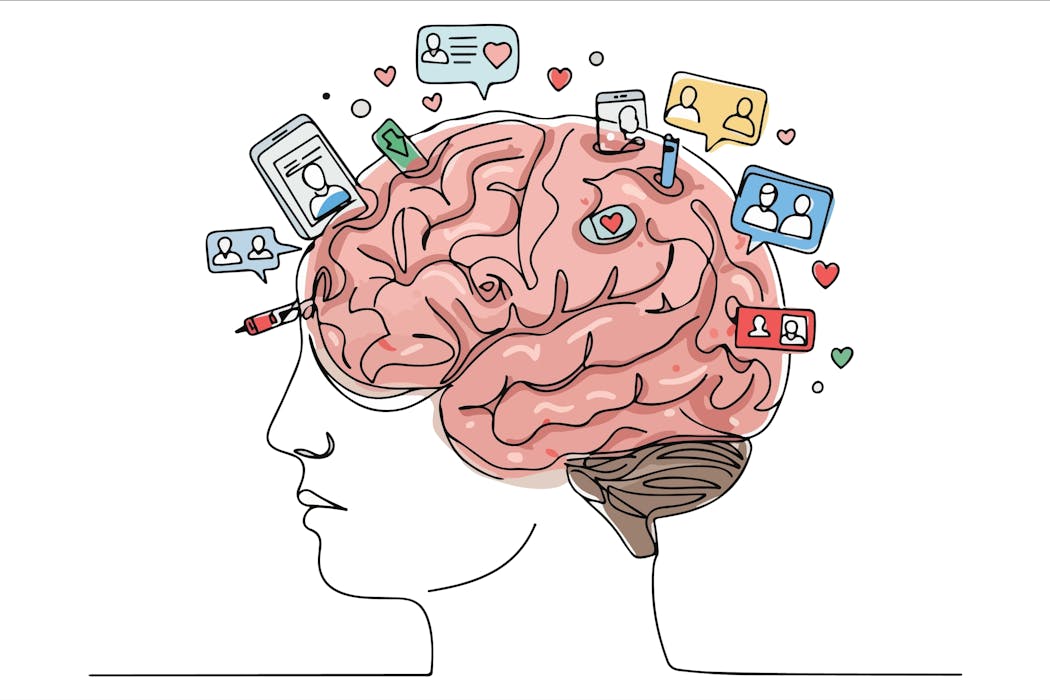
Social media rewires young minds – here’s how


But this wiring also makes us vulnerable. Over time, the brain adapts to these ideals, treating them as the new normal. Our brains’ natural ability to change (plasticity), once an evolutionary advantage, is now exploited by a digital world that continually reshapes how we see ourselves.

Understanding this science offers hope, however. If our perceptions can be trained, they can also be retrained – allowing us to reclaim control over what beauty means.

Beauty baseline

Although we’re born with some preference for symmetrical or aesthetic features — cues the brain associates with health and genetic fitness — our sense of beauty is highly plastic. Neuroscience shows that what we find attractive is shaped by what we repeatedly see and learn to value.

This adaptability comes from the brain’s reward and learning systems, particularly the two areas known as the nucleus accumbens and orbitofrontal cortex, which constantly update their “templates” for what counts as rewarding or desirable.

Over time, repeated exposure to certain beauty ideals – such as pore-less skin or “heroin chic” bodies – can shift our perception of what’s normal or attractive. Psychologists call this the mere exposure effect: the more we see something, the more likely we are to like it.

For instance, in one study, people were found to rate faces as being more attractive after seeing them multiple times. Their brain activity confirmed this adaptation. With repetition, areas involved in reward and facial recognition became more active – and the brain’s electrical signals for attention and emotion grew stronger.

In other words, the brain was literally learning to find those faces more rewarding. This process helps explain how society can so quickly adjust to new beauty standards.

This flexibility means our “beauty baseline” – the internal benchmark for attractiveness – can easily shift in unhealthy directions. When our social media feeds are filled with idealised, edited images, our reward systems start favouring those cues.

A neuroimaging study found that people exposed to digitally enhanced faces subsequently showed weaker reward responses to real ones – and they felt less satisfied with their own appearance. This shift in the brain’s valuation system means beauty becomes less about reality and more about repetition.

Social media amplifies this effect. Algorithms feed us more of what captures our attention, creating a feedback loop of homogeneous beauty. This can increase body dissatisfaction and appearance anxiety, especially among teenage girls. Frequent use of beauty filters were also associated with growing appearance concerns and a skewed sense of what’s real.

Internalising such narrow beauty ideals can have serious mental health consequences – such as body dissatisfaction, anxiety, depression and disordered eating. This dissatisfaction can escalate into chronic stress, low self-esteem or social withdrawal.

Repeated comparison to idealised images may contribute to clinical conditions such as body dysmorphic disorder and anorexia nervosa. Appearance pressures can also drive chronic dieting, steroid use or compulsive grooming.

A drawing of a woman looking sad while looking at a happy, filtered version of herself on a smartphone.
Internalising narrow beauty standards can affect mental health.
SurfsUp/ Shutterstock

Perhaps most damaging is the shift from appearance being simply a part of our identity to now being strongly associated with our self-worth as a result of social media pressures. Constantly monitoring how you look has been strongly linked to anxiety and motivation for daily activities.

For many, the pressure to match unrealistic ideals becomes a daily mental health battle with a significant social toll, leading to social withdrawal and even affecting academic performance and professional confidence.

Building resilience

Understanding the neuroscience behind beauty perception can be empowering. By recognising how our brains respond to beauty and how they can be conditioned by our environment, we can take control to improve our self-image.

They key is that our brains are malleable. If repeated exposure to idealised images can train us to crave them, diverse and realistic images can re-train those same circuits in healthier directions. Curating our social media feeds to include different body types, ages and skin tones broadens what our brains recognise as beautiful, helping counteract the narrow ideals reinforced by algorithms.

It’s also important to recognise that seeing filtered images activates dopamine-rich reward centres. So it isn’t that these images are proof of superior beauty, but rather that they reinforce a neural reflex.

Building resilience also means shifting our reward focus. The same brain systems that respond to looks also light up for achievements, connection, creativity and kindness. Simple actions such as unfollowing toxic accounts, taking breaks from social media and practising positive self-talk have been shown to protect wellbeing and re-calibrate our reward systems.

Modern culture, driven by media and social platforms, has proven adept at manipulating our neural systems for profit and popularity. By exploiting our brains’ responsiveness to reward and social cues, these forces enforce narrow beauty ideals that can sink deeply into our psyche.

The science makes it clear: our brains respond to what they’re fed. Armed with this knowledge, we can become aware of the manipulation and choose to reclaim control over our own perceptions of beauty.

The Conversation

Laura Elin Pigott does not work for, consult, own shares in or receive funding from any company or organisation that would benefit from this article, and has disclosed no relevant affiliations beyond their academic appointment.

ref. How your brain keeps falling for the latest beauty fads – and what you can do about it – https://theconversation.com/how-your-brain-keeps-falling-for-the-latest-beauty-fads-and-what-you-can-do-about-it-267274

The Children’s Booker prize will include works of translation – here are five expert recommendations to get your kids excited

Source: The Conversation – UK – By Sophie Heywood, Associate Professor in the Department of Language and Cultures, University of Reading

The Children’s Booker hopes to get more kids reading. PeopleImages/Shutterstock

The buzz around the newly announced Children’s Booker has focused on its potential to “tell kids they matter”, as they get their own version of this prestigious literary prize. With children actually included in the judging process, the prize has the power to bring thousands more young people “into the wonderful world of reading,” in the words of children’s laureate Frank Cottrell-Boyce.

As Cottrell-Boyce noted in an article for The Guardian, since its inception the Booker has expanded the audience of writers who might have been overlooked. And, as he notes, it has more importantly broadened the horizons of readers – especially since the launch of the International Booker in 2005. The Children’s Booker will do much the same as it will explicitly include translated fiction.

The decision to include translated works represents a big step towards recognising the contribution that translation makes to children’s literature. Who could deny the importance of Swedish heroine Pippi Longstocking or the French fairy tale Cinderella? Or the role of Japanese manga in encouraging young people to read?

Welcoming translations gives the prize the potential to show that books from different cultures and written in languages other than English are a valuable part of the British children’s literary firmament. We hope that books in translation will regularly feature on the shortlist in the Children’s Booker prize in 2027 and beyond.

To celebrate this decision, we asked experts from Outside In World and World Kid Lit to help us put together a list of outstanding children’s books published in English translation since 2020. These are organisations, which have long campaigned to raise the profile of children’s books from across the globe.

Here is our top five list of translated literature for the Children’s Booker from the last five years.

1. Kiki’s Delivery Service (Puffin, 2020).

Kiki's delivery service book

Penguin Random House Children’s UK

This Japanese classic by Eiko Kadano (first published in 1985) inspired the irresistible Studio Ghibli anime film of the same name.

English readers couldn’t enjoy the original stories until 2020, when it was published by Puffin in a brilliant, bewitching and often very funny translation by Emily Balistrieri.

Ghibli fans will find much to love in these adventures of a young witch setting out into the world with her cat, Jiji.

Recommended by Ruth Ahmedzai Kemp of World Kid Lit

2. The Táin: the Great Irish Battle Epic, written and translated from Irish by Alan Titley (Little Island 2023).

The Tain bookcover

Little Island Books

This historical adventure, beautifully illustrated by Eoin Coveney, is an action-packed retelling of Ireland’s most important myth, the story of the hero Cúchulainn and the Warrior Queen Maeve.

Nominated for the Yoto Carnegie Medal for Writing in 2024, this exciting tale is an example of how translations offer young English readers access to the other great literary languages of Great Britain and Ireland.

Recommended by Ruth Ahmedzai Kemp of World Kid Lit

3. Sword of Fire by Federico Ivanier, translated from the Spanish by Claire Storey (Puffin, 2025).

Sword of Fire cover

Penguin Random House Children’s UK

This lively fantasy adventure from Uruguay follows the journey of young heroine Martina Valiente as she battles the forces of Darkness in the fantastical world of Novrogod.

The first title from Latin America to be included in Puffin’s prestigious modern classics list, this work is a great introduction to the world of acclaimed Uruguayan children’s author Federico Ivanier.

Recommended by Emma Page of the Centre for Book Cultures and Publishing

Na Willa and the House in the Alley by Reda Gaudiamo, translated by poets Ikhda Ayuning Maharsi Degoul and Kate Wakeling, and illustrated by Cecillia Hidaya. (Emma Press, 2023)

This collection of mini-stories is based on Gaudiamo’s memories of her childhood in Indonesia, and centres on the feisty and inquisitive heroine Na Willa.

The book gives a real insight into the everyday things of Na Willa’s life, and its eye for fun details interests even reluctant readers, as this review detailing a nine-year old’s amused response to the story about eating milkfish eyes suggests.

Recommended by Deborah Halford of Outside in World

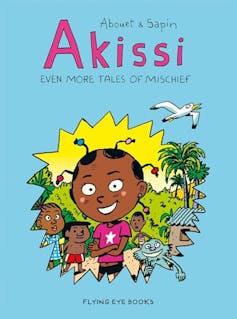
Akissi: Even More Tales of Mischief by Marguerite Abouet, translated by Marie Bédrune and Judith Taboy (Flying Eye, 2020).

Akissi cover

Flying Eye Books

The brightly-coloured mayhem of the Akissi series is a strong favourite on my university course in children’s books, and anyone with young readers at home will know how popular gross-out, laugh-out-loud graphic novels are with eight to 12-year-olds.

Marguerite Abouet’s stories are inspired by her own childhood in the Ivory Coast. Accompanied by Mathieu Sapin’s frenetic drawings, they offer a joyful, messy, real vision of African life.

As one student put it: “I loved this book – it reminded me of my family’s stories of life in Mauritius.”

Recommended by Sophie Heywood of the Centre for Book Cultures and Publishing

This article features references to books that have been included for editorial reasons, and may contain links to bookshop.org. If you click on one of the links and go on to buy something from bookshop.org The Conversation UK may earn a commission.


Looking for something good? Cut through the noise with a carefully curated selection of the latest releases, live events and exhibitions, straight to your inbox every fortnight, on Fridays. Sign up here.


The Conversation

The authors do not work for, consult, own shares in or receive funding from any company or organisation that would benefit from this article, and have disclosed no relevant affiliations beyond their academic appointment.

ref. The Children’s Booker prize will include works of translation – here are five expert recommendations to get your kids excited – https://theconversation.com/the-childrens-booker-prize-will-include-works-of-translation-here-are-five-expert-recommendations-to-get-your-kids-excited-268694

Benedict Cumberbatch, John Grisham and Ursula K. Le Guin’s fantasy maps: what to watch, read and see this week

Source: The Conversation – UK – By Jane Wright, Commissioning Editor, Arts & Culture, The Conversation

The more I see Benedict Cumberbatch on screen the more I marvel at his talent as an actor. Recently I have watched him in Eric on Netflix, as an unravelling Sesame Street-style puppeteer looking for his abducted son; in old re-runs of smartypants Sherlock Holmes on the BBC; and as a humiliated husband in The Roses with a truly ghastly Olivia Colman.

His latest film, The Thing With Feathers, promises another affecting performance, this time as a bewildered father struggling to look after his two small sons after the sudden death of his wife.

Based on Max Porter’s beautifully written novella Grief Is The Thing With Feathers, Cumberpatch plays Dad, a graphic artist who is unbearably sad, overwhelmed and increasingly untethered. In a film that is part tender human drama and part horror, this grief manifests as a large black crow, menacing but benevolent in its presence as a kind of guardian figure.

Harry Potter actor David Thewlis voices the character of Crow with thick Lancashire-accented sarcasm, at one point berating Dad for listening to “middle-aged, middle-class, Guardian-reading, beard-stroking, farmer’s-market widow music”, which has got to be my favourite line. But gradually Crow’s hardness shifts Dad, leading him through his sadness and apathy to something at least more bearable and liveable. “I won’t leave until you don’t need me any more,” Crow hisses, almost like a threat.

Our reviewer Dan O’Brien says it is easily the most poignant film he has seen this year, praising it for its nuanced handling of the subject. “Rather than something to be vanquished, the film suggests grief must be accommodated, even befriended. It’s a persuasive portrayal of mourning that recognises grief not as a wound to be sealed, but a permanent, unpredictable companion that you learn to live with.” Definitely on my list this spooky weekend.

The Thing With Feathers is in cinemas now

Like many people I am mad for maps. I find them not merely useful but endlessly fascinating – there is always something new to spy on close examination. So writers who include maps and invented places as part of the fabric of their stories intrigue me.

JRR Tolkien springs to mind, of course, but now a new exhibition in London is showcasing the wonderful maps created by the revered sci-fi writer Ursula K Le Guin, who rooted her genre-defying stories in fantasy worlds. Cartographer Mike Duggan finds the exhibition a fascinating insight into Le Guin’s process of other-world building.

The Word for World: Maps of Ursula K Le Guin is showing in the Architectural Association Gallery, London until December 6

Lies, spies and sleazy lawyers

I can honestly say I am never happier than when I am settling down on the sofa with a big bag of Maltesers and the latest episode of Slow Horses on the telly. And season five has not disappointed. Based on the brilliant series of Mick Herron novels, the drama plays out against a sinister and depressing landscape of dodgy politicians, media manipulation, radical terrorism and moral panics. But this is offset by much lighter tone that mines a rich seam of humour running beneath the serious plotlines.

From the sneaky, snooty toffs at the top of MI5 to the bored office bantz at Slough House, all the real-world ghastliness is leavened by the japes, sarcasm and eyerolling that go on.

I just adore the obnoxious Jackson Lamb and his spectacular insults, holey socks and suspect personal hygiene. Gary Oldman is enjoying the role of his life – you can practically smell the reek from the TV. But you also occasionally get the impression that the more Lamb insults, the more he cares. Maybe.

Spycraft expert Robert Dover examines how the series has managed to pull of this tricky combo of tense drama and hilarity, while claiming Lamb as the 21st-century version of John Le Carré’s George Smiley.

Slow Horses is on AppleTV

In John Grisham’s latest novel The Widow, a sleazy lawyer with less than ethical motives finds himself the main suspect after an elderly woman with a secret fortune that he has been “advising” is found murdered. When his shady legal dealings are uncovered, Simon F Latch looks like a man with opportunity and motive. But he’s innocent – so how does Grisham create a dodgy victim character the reader can muster up some sympathy for? Expert in human rights law Sarah Jane Coyle examines this grey area.

The Widow is in bookshops now

Set in Paris, Souleymane’s Story follows an asylum seeker from Guinea as he seeks work as a delivery cyclist. Seen through his perspective, the French capital becomes an unforgiving landscape fraught with danger and hardship as he strives to find work and survive. But Souleymane’s days are constantly taken up with exhausting negotiations with technology, bureaucracy, racism and threats. First-time actor Abou Sangaré won a best actor award at Cannes in 2024 for his raw but restrained performance, making Souleymane’s Story a compelling watch.

Souleymane’s Story is in cinemas now

The Conversation

ref. Benedict Cumberbatch, John Grisham and Ursula K. Le Guin’s fantasy maps: what to watch, read and see this week – https://theconversation.com/benedict-cumberbatch-john-grisham-and-ursula-k-le-guins-fantasy-maps-what-to-watch-read-and-see-this-week-263743

Mission to Mars: how space exploration pushes the human body to its limits

Source: The Conversation – UK – By Damian Bailey, Professor of Physiology and Biochemistry, University of South Wales

European Space Agency, CC BY-NC-ND

On January 14 2004, the United States announced a new “Vision for Space Exploration”, promising that humans would not only visit space but live there. Two decades later, Nasa’s Artemis programme is preparing to return astronauts to the Moon and, eventually, send humans to Mars.

That mission will last around three years and cover hundreds of millions of kilometres. The crew will face radiation, isolation, weightlessness and confinement, creating stresses unlike any encountered by astronauts before. For physiologists, this is the ultimate frontier: a living laboratory where the human body is pushed to, and sometimes beyond, its biological limits.

Space is brutally unforgiving. It is a vacuum flooded with radiation and violent temperature extremes, where the absence of gravity dismantles the systems that evolved to keep us alive on Earth. Human physiology is tuned to one atmosphere of pressure, one gravity and one fragile ecological niche. Step outside that narrow comfort zone and the body begins to fail.

Yet adversity drives discovery. High-altitude research revealed how blood preserves oxygen at the edge of survival. Deep-sea and polar expeditions showed how humans endure crushing pressure and extreme cold. Spaceflight continues that tradition, redefining our understanding of life’s limits and showing how far biology can bend without breaking.

To understand these limits, physiologists are mapping the “space exposome” – everything in space that stresses the human body, from radiation and weightlessness to disrupted sleep and isolation. Each factor is harmful on its own, but combined they amplify one another, pushing the body to its limits and revealing how it truly works.


Read more:
What happens to the brain in zero gravity?


From this complexity emerges what scientists call the “space integrome”: the complete network of physiological connections that keeps an astronaut alive in the most extreme environment known.

When bones lose minerals, the kidneys respond. When fluid shifts toward the head, it changes pressure in the brain and affects vision, brain structure and function. Immune cells react to stress hormones released by the brain. Every system influences the others in a continuous biological feedback loop.

The body as a biosphere

The spacesuit is the most tangible symbol of this integration. It is a wearable biosphere: a miniature, self-contained environment that keeps the person inside it alive, much as Earth’s atmosphere does for all life. The suit shields the body from the lethal physics of space, protecting against vacuum, radiation and extreme temperatures.

Inside its layered shells of mylar (a reflective plastic that insulates against heat), kevlar (a strong fibre that resists impact) and dacron (a tough polyester that maintains shape and pressure), astronauts live in delicate balance. There is just enough internal pressure to stop their bodily fluids from boiling in a vacuum, yet still enough flexibility to move and work.


Read more:
Modern spacesuits have a compatibility problem. Astronauts’ lives depend on fixing it


Every design choice mirrors a physiological trade-off. At too low pressure, consciousness fades within seconds. At too high pressure, the astronaut becomes trapped in a rigid shell.

Radiation remains spaceflight’s most insidious hazard. Galactic cosmic rays, made up of high-energy protons and heavy ions, slice through cells and fracture DNA in ways that biology on Earth was never built to repair. Exposure to these rays can cause DNA damage and chromosomal rearrangements that raise the risk of cancer.

But research into radiation biomarkers – molecular signals that show how cells respond to radiation exposure – is not only improving astronaut safety, it is also helping transform cancer treatment on Earth. The same biological markers that reveal radiation damage in space are being used to refine radiotherapy, allowing doctors to measure tissue sensitivity, personalise doses and limit damage to healthy cells.

Studies on how cells repair DNA after exposure to cosmic radiation are also informing the development of new drugs that protect patients during cancer treatment.

Microgravity presents another paradox. In orbit, astronauts lose 1–1.5% of their bone mass each month, and muscles weaken despite daily exercise. But this extreme environment also makes space an unparalleled model for accelerated ageing. Studies of bone loss and muscle atrophy in microgravity are helping uncover molecular pathways that could slow degenerative disease and frailty back home.

Astronauts aboard the International Space Station spend more than two hours a day performing “countermeasures”: intensive resistance workouts and sessions in lower-body negative pressure chambers, which draw blood back towards the legs to maintain healthy circulation.

They also eat carefully planned diets to stabilise their metabolism. No single strategy is enough, but together these help keep human biology closer to balance in an environment defined by instability.

Digital physiology

Tiny sensors embedded in spacesuits, or even placed under the skin, can now track heart rate, brain activity and chemical changes in the blood in real time. Multi-omic profiling combines information from across biology (genes, proteins and metabolism) to build a complete picture of how the body responds to spaceflight.

This data feeds into digital twins: virtual versions of each astronaut that allow scientists to simulate how their body will react to stressors such as radiation or microgravity.

The astronaut of the future will not simply endure space. They will work with their own biology, using real-time data and predictive algorithms to spot risks before they happen – adjusting their environment, exercise or nutrition to keep their body in balance.

By studying how humans survive without gravity, we are also learning how to live better with it. Space physiology has already helped shape treatments for osteoporosis and cardiovascular disease, and it is improving our understanding of age-related muscle loss.

Research into spaceflight-associated neuro-ocular syndrome – a condition in which fluid shifts in microgravity cause pressure to build inside the skull, sometimes leading to vision changes – is helping scientists understand intracranial hypertension on Earth.

Even studies of isolation and resilience in astronauts have advanced research into mental health and stress adaptation, offering insights that proved invaluable during the COVID-19 pandemic, when millions faced confinement and social separation similar to life aboard a spacecraft.

Ultimately, Mars will test our biology more than our technology. Every gram of muscle preserved, every synapse protected, every cell repaired will be a triumph of physiology. Space may dismantle the human body, but it also reveals our body’s astonishing capacity to rebuild.

The Conversation

Damian Bailey is supported by grants from the European Space Agency, SpaceX and Royal Society Wolfson Research Fellowship. He is Editor-in-Chief of Experimental Physiology and outgoing Chair of the Life Sciences Working Group and outgoing member of the Human Spaceflight and Exploration Science Advisory Committee to ESA. He is also a current member of the ESA-HRE-Biology Panel and Space Exploration Advisory Committees to the UK and Swedish National Space Agencies, and consultant to Bexorg, Inc. (Yale, USA) focused on the technological development of novel biomarkers of cerebral bioenergetic function in humans.

Angelique Van Ombergen works as Chief Exploration Scientist for the Directorate of Human and Robotic Exploration at the European Space Agency. She is an Associate Editor of NPJ Microgravity.

ref. Mission to Mars: how space exploration pushes the human body to its limits – https://theconversation.com/mission-to-mars-how-space-exploration-pushes-the-human-body-to-its-limits-267837

New Nasa lunar contest could pit Elon Musk against Jeff Bezos, as US fears China will win race to Moon

Source: The Conversation – UK – By Ian Whittaker, Senior Lecturer in Physics, Nottingham Trent University

The United States and China are locked in a contest to be the first country to send humans to the lunar surface in half a century. But there’s a developing twist: an emerging competition between American companies to build the landing vehicle that could win this new Moon race for the US.

The dust-up over the lunar lander could pit Elon Musk against his billionaire rival Jeff Bezos. And it has already sparked a war of words between Musk and Nasa’s acting chief, Sean Duffy, which exposes fault lines over the direction and leadership of the US space agency.

In April 2021 Musk’s company, SpaceX, was awarded the contract to develop the landing vehicle for Nasa’s Artemis III mission – the first return to the lunar surface by Americans since Apollo 17 in 1972. The lander was to be based on the innovative Starship vehicle, already under development at the time at the company’s base in south Texas.

SpaceX has carried out 11 test flights of Starship since April 2023. While launches in August and October 2025 were successful, the previous three flights ended in failure for the upper stage, or “ship” – which is the part intended to carry astronauts.

With China mounting a formidable bid for supremacy on the Moon, pressure was growing on SpaceX to make greater progress (though milestones are to some extent subjective). On October 20, Sean Duffy announced that he was opening up SpaceX’s US$4.4 billion (£3.3 billion) contract to rival companies, citing delays with Starship. Duffy, who is also the US transportation secretary, has been Nasa’s acting head since July.

Musk’s company must still demonstrate consistent launch safety. It also has to test critical technologies, such as refuelling Starship in orbit, before the planned 2027 date for Artemis III. “They (SpaceX) do remarkable things, but they’re behind schedule,” Duffy claimed.

China plans to land its astronauts on the Moon by 2030 and key figures in the US space community have warned that America may lose the race.

In October 2025, Jim Bridenstine, who led Nasa under the first Trump administration, told a US Senate hearing: “Unless something changes, it is highly unlikely the United States will beat China’s projected timeline.”

An artist's impression of Starship (left) docked to Nasa's Orion spacecraft (right) in lunar orbit.
An artist’s impression of Starship (left) docked to Nasa’s Orion spacecraft (right) in lunar orbit.
SpaceX

Given that Nasa landed crews on the lunar surface six times in the 1960s and 70s, getting there now might seem as if it should be straightforward. Unfortunately the rockets and capsules used for the Apollo programme are no longer in service and would be extremely difficult to reproduce today. With advanced technology, however, we should be able to produce more efficient missions capable of launching heavier payloads.

Of course the big difference between now and the Apollo era is funding. At its peak (between 1965 and 1966) Nasa was being given 4.5% of all US spending annually. This dropped consistently over subsequent decades and, in 2024, sat at around 0.4%. This factor of ten less means fewer staff, reduced innovation and more reliance on international collaborations.

Nasa has an additional disadvantage that many other spacefaring nations do not.
The president helps determine the goals of the agency. With the office changing hands (and potentially party) every four to eight years, a singular vision can be difficult to establish. It can also make the agency slower to react to changing geopolitics.

New entrants?

With China’s planned Moon launch fast approaching, Duffy’s call for new landers might appear to be cutting it fine. One likely contender may be able to modify an existing vehicle rather than starting from scratch. Jeff Bezos’ company, Blue Origin, is planning an uncrewed launch of its Mark 1 lander to the lunar surface in early 2026. The vehicle was designed to transport cargo, not people. But a report in Ars Technica suggests Blue Origin is looking to redesign the spacecraft so that it can carry crew.

The company’s plan reportedly involves “multiple” Mark 1 vehicles to ferry crew to the Moon’s surface and then return to lunar orbit. Duffy has already told Fox News that he expects Blue Origin to “get involved”. Critically, the proposal from Bezos’ company would skip the technical challenge of refuelling in orbit, which is required of Starship (though it’s unclear at this stage how Blue Origin would avoid this).


Read more:
The US is now at risk of losing to China in the race to send people back to the Moon’s surface


At the same time, aerospace giant Lockheed Martin has also been putting together a group of a dozen other unnamed industry players who would build a lunar lander from existing hardware. Lockheed’s vision for the Artemis III lander would take some design cues from the Apollo-era lunar module.

The day after Duffy’s lunar contract announcement, Musk launched an online tirade at Nasa’s acting chief. On X, Musk posted: “Should someone whose biggest claim to fame is climbing trees be running America’s space program?”

Duffy is a former member of Congress and world champion lumberjack speed climber. He holds a bachelor’s degree in marketing and a law degree. When comparing qualifications, it should be noted that Musk holds a bachelor’s degree (in economics and physics) but pulled out of graduate studies at Stanford.

However, the SpaceX boss’s feud with Duffy may extend beyond the potential loss of the lander contract. The Wall Street Journal recently reported on a “power struggle” over who will permanently lead Nasa under the second Trump administration. The SpaceX boss has long backed fellow billionaire and private astronaut Jared Isaacman to be in charge of the space agency.

Jared Isaacman
Jared Isaacman had previously been nominated to lead Nasa.
Nasa / Bill Ingalls

Isaacman was previously nominated by President Trump to lead Nasa, but his nomination was later withdrawn. The Wall Street Journal report says Isaacman is still in contention to lead the agency. Ars Technica, meanwhile, has reported that Duffy wants to remain in charge.

Whoever is selected will help shape the agency’s priorities at a critical time. Opening up the Artemis III lander contract could lead to further infighting between Nasa and industry, endangering – rather than accelerating – the schedule. It will also cost money that is badly needed in other parts of the agency, such as its science division. This could, for example, be spent hiring researchers to analyse data from Nasa’s existing missions.

Defending his company’s track record on X, Elon Musk posted: “SpaceX is moving like lightning compared to the rest of the space industry.” He added: “Starship will end up doing the whole Moon mission, mark my words.”

As Sean Duffy posted in response: “Love the passion. The race to the Moon is ON.”

The Conversation

Ian Whittaker does not work for, consult, own shares in or receive funding from any company or organisation that would benefit from this article, and has disclosed no relevant affiliations beyond their academic appointment.

ref. New Nasa lunar contest could pit Elon Musk against Jeff Bezos, as US fears China will win race to Moon – https://theconversation.com/new-nasa-lunar-contest-could-pit-elon-musk-against-jeff-bezos-as-us-fears-china-will-win-race-to-moon-268361

Girlbands Forever: BBC documentary charts the highs and lows of British girl groups – with one glaring ommission

Source: The Conversation – UK – By Joel Gray, Associate Dean, Sheffield Hallam University

There can be no doubt that any conversation about British girlbands of the last 30 years would be dominated by Spice Girls.

In whichever corner of the globe you are, they were the defacto pop force of the late 1990s – and their impact has been long-lasting. From Adele to Beyonce Knowles-Carter, many contemporary world-class artists cite them as an inspiration.

However, new BBC documentary series Girlbands Forever focuses on many other girlbands who have emerged in British pop music from the early ’90s (Eternal) to the present day (Little Mix). It takes a broadly chronological overview, charting their development, releases and eventual splits in almost forensic detail.

As both a girlband fan and researcher, I was, though, disappointed that it offers little discussion of the impact these artists have had on their fans. Also absent from discussion is the link to queer audiences – something many girlband members have made specific reference to themselves.

One celebratory theme that is strong throughout this three-episode series is diversity and sisterhood. Eternal, All Saints, Atomic Kitten, Sugababes and Little Mix were all made up of racially diverse singers. And as each girlband passed the baton to the next generation, both media and society seemed more and more at ease with this concept.

Other topics of discussion include changes in the media (from newspapers to gossip magazines to reality television to social media) and society more broadly (rave culture, “Cool Britannia” and changing governments). This grounds the girlband discussions in a wider context.

Particular attention is paid to Little Mix as the girlband who won TV talent show The X Factor in 2011 – yet no mention is made that Girls Aloud did it nearly ten years earlier, when they won Popstars The Rivals in 2002.

Indeed, the fact Girls Aloud are not mentioned at all in the series is a glaring omission. While Little Mix faced abuse from anonymous social media trolls and the Spice Girls were constantly targeted by ’90s tabloid newspapers, Girls Aloud were the defining girlband of the celebrity gossip magazine era in the mid-2000s. Experts such as author Michael Cragg have written about the band’s impact on pop culture, and fans are likely to be disappointed by their omission.

The absence of a band which produced superstar (and later X Factor judge) Cheryl Cole highlights another area which a future series could go into: the solo career struggles and successes of these girlband members. Cole had two solo no.1 albums, and joins Spice Girl Geri Halliwell as one the most successful British female artists of all time.

Girls Aloud are a notable absence from the documentary.

The success of girlbands has always nurtured rich careers in the entertainment industries for its individual members. Both Jade Thirlwall and Perrie Edwards of Little Mix had top-five albums in the same month recently. Spice Girl Mel B is an international TV icon, judging talent shows on multiple continents; Atomic Kitten Natasha Hamilton has established her own record label; and Eternal’s Louise Redknapp had a top-10 album in 2025.

Spice Girl Melanie C and the All Saints’ offshoot Appleton (composed of sisters Natalie and Nicole Appleton) have been seen in the studio this year, with projects rumoured for 2026.

There are also plentiful non-music projects to mention. Many girlband members go on to support charities and philanthropic causes. Halliwell recently received an honorary doctorate from my university, Sheffield Hallam, for her work advancing rights for women and children on projects with the United Nations and Royal Commonwealth Society for Literacy. And Mel B has received awards for raising awareness of domestic abuse.

But for every number-one record and charity ambassadorship role, there is a member who may have not had the same luck. All Saints star Melanie Blatt, for example, has taken on a “chef residency” at a London pub which, while no bad thing, feels rather different to filming television shows in LA, or the solo efforts of her Girls Aloud and Spice Girls peers.

In contrast to the documentary’s omissions, I am glad it spotlights the brilliance of Atomic Kitten stalwarts Jenny Frost and Natasha Hamilton, who were quintessential noughties pop stars and gay icons.

In lieu of much Spice Girls and Girls Aloud discussion, their energy and charisma brings a welcome feeling of personal nostalgia – and a reminder of why the world needs fantastic popstars. Their cheeky charm, which first won me over 25 years ago, still makes me smile today.


Looking for something good? Cut through the noise with a carefully curated selection of the latest releases, live events and exhibitions, straight to your inbox every fortnight, on Fridays. Sign up here.


The Conversation

Joel Gray does not work for, consult, own shares in or receive funding from any company or organisation that would benefit from this article, and has disclosed no relevant affiliations beyond their academic appointment.

ref. Girlbands Forever: BBC documentary charts the highs and lows of British girl groups – with one glaring ommission – https://theconversation.com/girlbands-forever-bbc-documentary-charts-the-highs-and-lows-of-british-girl-groups-with-one-glaring-ommission-268677

‘You can’t eat electricity’: how rural solar farms became Britain’s latest culture war

Source: The Conversation – UK – By Alex Heffron, PhD Candidate in Geography, Lancaster University

Sean Matthews, the Reform UK leader of Lincolnshire County Council, has said he’ll “lie down in front of bulldozers” to stop Britain’s largest solar farm being built in the county. He’s taking sides in a new rural culture war that pits green energy against the countryside’s traditional image of food and farming.

Reform’s opposition to renewables isn’t surprising. Fossil fuel interests have provided around 92% of the party’s funding according to research by DeSmog (when contacted by DeSmog, Reform did not comment on that finding). But solar farms have become a way for the party to mask these interests by presenting itself as a defender of farms, fields and “common sense” against what Matthews called the “nonsense” of net zero.

Meanwhile, the protest group Farmers to Action has urged supporters to “keep the land growing, not glowing”. Its leader, Justin Rogers, has called climate change “one of the biggest scams that has ever been told”, and the group now operates in lockstep with the Together Declaration, a rightwing campaign group with an explicit anti-net zero agenda.

Yet a recent protest organised by these groups in Liverpool, at the Labour Party conference, suggests there is limited enthusiasm in the farming community for these culture wars. While most of the speakers were farmers, very few working farmers showed up. (One of us, Tom, who has been to around 15 of these protests, was there in person and estimates about 50 out of around 300 people present were farmers.)

Those mobilising the culture wars are trying to turn localised rural resentments against solar panels into a wedge issue, and in the process win over rural voters to Reform as the party of anti-net zero. If Reform wins the election, it will seek to impede necessary renewable energy projects.

However, this conflicts with the majority of farmer sentiment, which shows they are concerned by climate change. So, while Reform UK is positioning itself as anti-climate, is the party, despite the rhetoric, actually anti-farmer?

‘You can’t eat electricity’

Research by the Energy and Climate Intelligence Unit (ECIU) found 80% of UK farmers are “concerned about the impact of climate change on their ability to make a living”, while 87% have experienced reduced productivity due to heatwaves, floods or other climate change-induced extreme weather.

For farmers, productivity isn’t just about profit – it’s a central pillar of what sociologists have called the “good farmer” identity. This is the idea that being a successful food producer is central to how many farmers see themselves and their role.

Since the second world war, agricultural innovations have largely been aimed at producing more food, as a way to improve domestic food security.

Now, in essence, they are being asked to shift their identity to embrace energy production along with food production. But planting fields with solar panels clashes with the productivity aspect of what it means to be a good farmer. The truism that “you can’t eat electricity”, as Farmers to Action put it, is trying to speak to this sentiment.

The accusation is that taking land out of production threatens food security. In fact, only around 0.5% of UK farmland needs to be converted to solar to achieve the government’s target figure.

At the same time, as the research by ECIU has found, the very productivity of farming is being threatened by climate change. This presents an apparent tension.

Without urgent climate action, British farms will continue to bear the costs and consequences. Environmentalists and climate activists might wish to take advantage of this tension between what farmers need and what Reform is offering. While Nigel Farage, Richard Tice and co shake their fists at the Sun, farmers suffer in the heat.

Corporate profits or community interest?

Many objections to large solar farms are driven by a sense of fairness. For example, a tenant farming family in Yorkshire is about to lose 110 acres of their best arable land – half their farm – to solar panels, without any compensation. This will have a devastating impact on their business – where they have lived and farmed for many decades.

For the landowner, the switch will probably be very lucrative, with energy companies reportedly offering rents as high as £1,000 per acre per year, on long-term contracts.

In this scenario, the landowner wins and the tenant loses, which goes against the principle of a just transition, the idea that those affected by the shift to net zero should not lose out. This is despite the prime minister, Keir Starmer, making a pre-election pledge that tenant farmers would be protected.

Effective green policy must ensure that green transitions benefit those doing the work or opposition will grow. Perhaps if the profits were recouped by local communities, not far-off corporations and large absentee landowners, nimbyism wouldn’t fester so easily.

There are fairer ways to deploy renewables, via initiatives which involve and benefit local communities. An example of this is Cwm Arian Renewable Energy, near to where one of us, Alex, lives. It has used the income from wind energy to support the local community in various ways, such as offering good employment, putting on community events and teaching land skills.


Read more:
Family farmers say their way of life is an impossible dream when ‘the bread of life is worth less than rusty metal’


Farmers, like the rest of society, are paying the price of high energy costs. Recent research has shown that wind energy alone has reduced British energy costs by at least £104 billion. Making clear that renewable energy developments can help with lowering energy bills could go some way to overcoming opposition.

Ultimately, farmers still want to farm and produce food. At the same time, agriculture must fit into broader green transitions. The challenge is to take on board the voices and concerns of farmers and see them as part of the transition – not treat them as obstacles to it. If not, there are plentiful voices on the right who are eager to offer them an alternative.


Don’t have time to read about climate change as much as you’d like?

Get a weekly roundup in your inbox instead. Every Wednesday, The Conversation’s environment editor writes Imagine, a short email that goes a little deeper into just one climate issue. Join the 45,000+ readers who’ve subscribed so far.


The Conversation

Tom Carter-Brookes receives funding from Leverhulme Trust.

Tom Carter-Brookes is a member of the Green Party.

Alex Heffron does not work for, consult, own shares in or receive funding from any company or organisation that would benefit from this article, and has disclosed no relevant affiliations beyond their academic appointment.

ref. ‘You can’t eat electricity’: how rural solar farms became Britain’s latest culture war – https://theconversation.com/you-cant-eat-electricity-how-rural-solar-farms-became-britains-latest-culture-war-268128