Why some ‘biodegradable’ wet wipes can be terrible for the environment

Source: The Conversation – UK – By Daniel James Jolly, PhD candidate, University of East Anglia

Daniel James Jolly, CC BY-NC-ND

Have you felt disgust when taking a walk along the riverside or plunging into the sea to escape the summer heat, only to spy a used wet wipe floating along the surface? Or shock at finding out that animals have died choking on plastic products or that the seafood we eat may be contaminated with microfibres?

These pollutants are common in our waterways because of the mismanagement of sewage and inappropriate disposal that flush hygiene products and microfibres into rivers and oceans. In the UK alone, more than 11 billion wet wipes are thrown away annually. Wet wipe litter was found on 72% of UK beaches in 2023.

They persist because they’re made of plastic, a durable material that won’t easily degrade. Plastic can last for decades to hundreds of years. Therefore, governments and manufacturers are eagerly encouraging the use of non-plastics as more “sustainable” alternatives, with the UK banning plastic in wet wipes in 2024.

These textiles can be made from plant or animal fibres such as cotton and wool, or they may be chemically and physically modified, such as rayon or viscose. They are often labelled “biodegradable” on product packaging, suggesting they are environmentally friendly, break down quickly, and are a safe alternative to plastics. But is this really the case?


Get your news from actual experts, straight to your inbox. Sign up to our daily newsletter to receive all The Conversation UK’s latest coverage of news and research, from politics and business to the arts and sciences.


My research focuses on investigating the environmental impact of these non-plastic textiles and their persistence in waterways. My colleagues and I have found that some non-plastic microfibres can be just as problematic or even more harmful than plastic.

While non-plastic textiles are not as long-lived as plastics, with many composting within weeks to months, they can last long enough to accumulate and cause damage to plants, animals and humans. Studies by scientists at the University of Stirling show that biodegradable wet wipes can last up to 15 weeks on beaches, where they can act as a reservoir for faecal bacteria and E.coli. Other studies have highlighted non-plastic textiles lasting for two months or more in rivers and oceans, where they break up into hundreds of thousands of microfibres.

woman in white top golds wet wipes
Non-plastic wet wipes can cause as much an environmental hazard as plastic ones.
Adam Radosavljevic/Shutterstock

These microfibres are so prevalent in waterways that they have contaminated animals across the food chain, from filter-feeding mussels and oysters to top predators such as sharks and the seafood we eat.

They are also found in remote locations as far away as the Arctic seafloor and deep sea, thousands of miles from civilisation. These discoveries highlight that non-plastics last longer than we think.

The dangers of non-plastics

Once exposed to aquatic life, non-plastic microfibres can be easily ingested or inhaled, where they can become trapped in the body and cause damage. During their manufacture, textile fibres can be modified with various chemical additives to improve their function, such as flame retardants, antibacterials, softeners, UV protection and dyes.

It is known that several toxic synthetic chemicals, including the plastic additive bisphenol A (BPA), are used for this purpose. These additives can be carcinogenic, cause neurotoxic effects or damage hormonal and reproductive health.

Researchers like me, have only just begun to explore the dangers of non-plastics. Some have shown that non-plastic microfibres and their additives can damage the digestive system, cause stress, hinder development and alter immune responses in animals such as shrimp, mussels, and oysters. However, other studies have shown little to no effect of non-plastic microfibres on animals exposed to them.

We do not yet know how much of a threat these materials are to the environment. Only the manufacturers know exactly what’s in the textiles we use. This makes it hard to understand what threats we are really facing. Nevertheless, assumptions that non-plastics are environmentally friendly and an easy alternative to plastic materials must be challenged and reconsidered.

To do this, we need to push for greater transparency in the contents of our everyday items and test them to make sure that they are truly sustainable and won’t harm the world around us. So next time you are browsing the supermarket aisles and come across a pack of “biodegradable” or “environmentally friendly” wet wipes, just question, are they really?


Don’t have time to read about climate change as much as you’d like?

Get a weekly roundup in your inbox instead. Every Wednesday, The Conversation’s environment editor writes Imagine, a short email that goes a little deeper into just one climate issue. Join the 45,000+ readers who’ve subscribed so far.


The Conversation

Daniel James Jolly receives funding from the University of East Anglia, Centre for Environment, Fisheries and Aquaculture Science, and the NERC ARIES doctoral training pathway as part of his PhD studentship.
He is a student member of the UK Green Party.

ref. Why some ‘biodegradable’ wet wipes can be terrible for the environment – https://theconversation.com/why-some-biodegradable-wet-wipes-can-be-terrible-for-the-environment-258836
Will Donald Trump get Vladimir Putin (before Maga gets Trump)?

Source: The Conversation – UK – By Jonathan Este, Senior International Affairs Editor, Associate Editor

This article was first published in The Conversation UK’s World Affairs Briefing email newsletter. Sign up to receive weekly analysis of the latest developments in international relations, direct to your inbox.


You know when the Kremlin is worried about something – it starts talking about nuclear weapons. And so it was, just two days after Donald Trump revealed he had decided to lift his administration’s pause on the supply of US-made weapons to Ukraine, that Vladimir Putin’s spokesperson, Dmitry Peskov, raised Russia’s nuclear doctrine. In response to a handy question from a friendly reporter as to whether Russia’s nuclear doctrine was still active, Peskov said: “Russia’s nuclear doctrine remains in effect, and thus, all its provisions continue to apply.”

By saying “all its provisions”, he was emphasising the changes made in December last year which significantly lowered the bar for Russia to use its nuclear deterrent. It states that Russia “reserves the right to employ nuclear weapons” in response to nuclear weapons or “other types of weapons of mass destruction” against itself or its allies.

Whether Putin and his team consider the sorts of weapons the US is prepared to allow Ukraine to use against Russia as weapons of mass destruction is not clear as yet. The US president specifically said that a fresh supply of Patriot systems was already en route to Ukraine from Germany. But he also hinted that other more offensive weapons could also be in the mix. And in a July 4 phone call he is reported to have asked the Ukrainian president, Volodymyr Zelensky, whether he could hit Moscow or St Petersburg, to which Zelensky replied: “Absolutely. We can if you give us the weapons.”

Trump is reported to have gone on to say that it was important to “make [Russians] feel the pain”.

At the beginning of the week, the US president was also keen for Russia to feel the economic pain of indirect sanctions, with 100% tariffs promised against any country buying Russia’s oil. Could this be a turning point?


Sign up to receive our weekly World Affairs Briefing newsletter from The Conversation UK. Every Thursday we’ll bring you expert analysis of the big stories in international relations.


Interesting question, says David Dunn. Dunn, professor of international relations at the University of Birmingham, says Trump’s decision – if he follows through with it – pretty much brings the US back in line with its policy under the Biden administration. Particularly now that Trump appears to have ruled out, for the time being, allowing Ukraine to use long-range offensive missiles against targets in Moscow.

As Dunn points out, there’s no sense that Trump has changed his overall tack on what he is looking for from Putin: a ceasefire, rather than, as Biden repeatedly insisted, a settlement that respects Ukrainian sovereignty and restores the land occupied illegally by Russian troops.

Meanwhile the economic pain he promised to inflict on Russia has been scheduled to begin in 50 days. This – as many commentators have been quick to point out – has irresistible echoes of his off-again, on-again tariff regime. So will these sanctions actually happen?


Read more:
What Trump’s decision to send more weapons to Ukraine will mean for the war


The Russian stock market certainly wasn’t that worried. Shortly after trump made his announcement, the Moscow stock exchange increased by 2.7% and the rouble strengthened. Oil markets also appear to have relaxed, suggesting traders see no imminent risks. Maybe this is another case of “Taco” (Trump always chickens out)?

Patrick O’Shea, an international relations and global governance specialist at the University of Glasgow, believes that the markets’ reaction is more than just indifference to what Trump was threatening. It was relief.

“Trump’s threat isn’t just non-credible, the positive market reaction in Russia suggests it is a gift for Moscow,” O’Shea writes. “The 50-day ultimatum is seen not as a deadline but as a reprieve, meaning nearly two months of guaranteed inaction from the US.”

What has not been widely reported in the UK is that a bipartisan bill making its way through the US congress would have been far more punitive that anything Trump is threatening. Now this has been paused pending Trump’s initiative in 50 days’ time.


Read more:
Why Russia is not taking Trump’s threats seriously


Back in Europe, meanwhile, Ukraine’s allies got together in Rome last weekend to discuss what will be needed to rebuild the war-torn country and how to raise the necessary funds. Stefan Wolff was watching proceedings and believes that while countries in the “coalition of the willing” are ready to open their coffers to help Ukraine get back on its feet, the funds so far pledged will not touch the sides.

Ukraine’s allies at the conference have pledged more than €10 billion (£8.7 billion). But, Wolff – an expert in international relations at the University of Birmingham who has contributed regular analysis of the war in Ukraine – points out that this sum looks minuscule alongside the World Bank’s latest assessment that Ukraine will need at least US$524 billion (£388 billion) over the next decade to fund its recovery.

There have been some fairly upbeat forecasts about Ukraine’s potential for growth. The IMF forecasts growth for Ukraine of between 2% and 3% for 2025, which is likely to grow to over 4% in 2026 and 2027. But it cautions that this will not happen without considerable overseas support. And an end to the war. Neither is certain anytime soon.


Read more:
Over €10 billion has now been pledged for Ukraine’s recovery. It’s nowhere near enough


Maga moves – but will Trump take responsiblity?

To Washington, where the US president is having what would probably count as the worst week of his second administration so far. Large sections of his faithful Maga base are in almost open revolt at his seeming reluctance to release what have become known as the “Epstein files”. You may remember he littered his election campaign last year with dark hints about the revelations the files must surely contain about the possible involvement of the rich and powerful in child-sex exploitation. But this week he essentially said it was old news, which was “pretty boring”, adding that “I think, really, only pretty bad people, including fake news, want to keep something like that going.”

This is not only at odds with what he spent much of 2024 saying. It also flies in the face of what his own attorney general, Pam Bondi, said in February when she said Epstein’s client list was “sitting on [her] desk right now to review”. Now of course, the justice department says there is no list. This is not what much of his base wants to hear.

Rob Dover, an intelligence specialist at the University of Hull who has researched conspiracy theories and the people who obsess about them, says this is a dangerous moment for the Trump presidency. He points to Maga unrest over Trump’s decision to bomb Iran and to resume military aid to Ukraine, both of which appear to contradict his pledge to keep the US out of foreign conflicts. Trump’s “big beautiful bill”, which has cut medicaid and other benefits to the poorest people in the US, will also inflict hurt on many is his base. Even his recent musing that he agrees with his health secretary’s questionable assertion that Coca-Cola should be made with sugar cane not corn syrup to “make America healthy again” is sure to anger corn farmers in the Midwest, another core Trump constituency.

“Maga is not a uniform group in belief or action. But if Trump loses either the loyalty of some or they refuse to flex their beliefs as they have done before, it will be politically dangerous for him,” Dover concludes.


Read more:
Trump’s changing stance on Epstein files is testing the loyalty of his Maga base


Trouble brewing in Bosnia

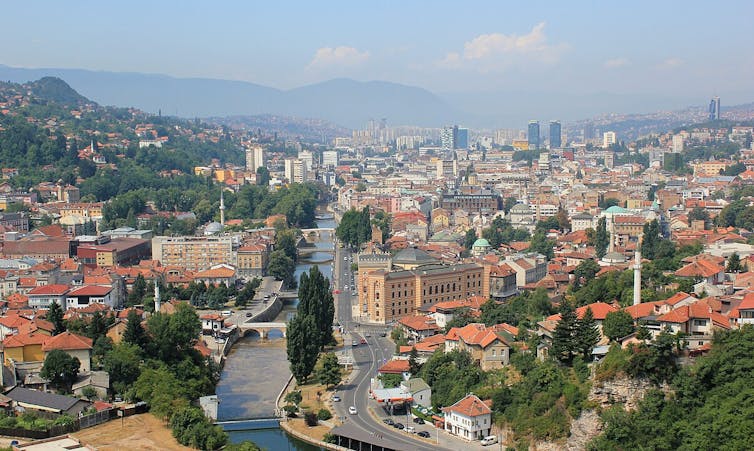
I had the great good fortune to visit Sarajevo in December last year where I spent a few days exploring, taking a walking tour of the old town and a wider tour of the whole city which took us across the notional border with the Republika Srpska, one of the two main constituent parts of the state of Bosnia and Herzegovina.

Panoramic view of Sarajevo, inclujding the old city.
Sarajevo: a beautiful but troubled city.
Julian Nyča via Wikimedia Commons, CC BY-NC-SA

The country was created by the Dayton accord, bringing an end to the ethnic conflict in the mid-1990s that saw whole populations displaced as ethnic Serbs and Croats sought to create new pure mini-states by expelling mainly Muslim Bosniaks.

When visiting, I felt a pervading sense that the two parts of the new country sit uncomfortably next to each other – and in recent months the friction has intensified considerably. Birte Julia Gippert of the University of Liverpool, who has researched extensively the conflict in the Balkans and the attempts to bring peace to the region, explains how the situation has become so tense.


Read more:
Bosnia and Herzegovina in crisis as Bosnian-Serb president rallies for secession


Why is Israel bombing Syria?

Conflict in Syria escalated again this week, with Israeli warplanes launching airstrikes against government buildings in Damascus this week. A Netanyahu government minister, Amichai Chikli, referred to Syria’s leader, Ahmed al-Shara, as “a terrorist, a barbaric murderer who should be eliminated without delay”.

Mixed up in all this is sectarian fighting in southern Syria was has been going on sporadically since al-Shara took power at the end of last year. But, as Ali Mamouri of Deakin University explains, Israel wants to see the emergence of a federal Syria, which the new regime has ruled out. It also want to retain influence in the region and secure its northern border with Syria.

While a ceasefire is in place for now, Mamouri sees the situation as extremely fragile with further clashes “not only possible but highly probable”.

World Affairs Briefing from The Conversation UK is available as a weekly email newsletter. Click here to get updates directly in your inbox.


The Conversation

ref. Will Donald Trump get Vladimir Putin (before Maga gets Trump)? – https://theconversation.com/will-donald-trump-get-vladimir-putin-before-maga-gets-trump-261416

UK to lower voting age to 16 – a once-in-a-generation opportunity to secure the future health of British democracy

Source: The Conversation – UK – By Andrew Mycock, Chief Policy Fellow, University of Leeds

The UK government has announced that the voting age will be lowered to 16 at the next election as part of a wider effort to restore trust in and “future-proof” democracy.

Votes at 16 has grown from a niche concern to become a salient – if contentious – issue supported by most UK political parties and electoral reform groups. The Conservative party remains a holdout – but has never acknowledged the contradiction of its continued opposition to the universal lowering of the voting age while empowering the Scottish and Welsh parliaments to enact the measure during its time in government.

This is a policy response to concerns about declining youth democratic engagement since the late 1990s. Since 1997, the UK general election turnout rate for those aged 65 years and over has consistently been at least 20 percentage points higher than for those aged 18-24.


Want more politics coverage from academic experts? Every week, we bring you informed analysis of developments in government and fact check the claims being made.

Sign up for our weekly politics newsletter, delivered every Friday.


Some opponents argue that the Labour government is lowering the voting age to 16 for its own electoral interest, but we should remember this was a clearly stated election manifesto commitment. Votes at 16 was part of the package that delivered Labour to government in 2024 on a huge majority.

That said, public opinion remains steadfastly opposed. The government will need to handle this tension carefully, ensuring that 16- and 17-years-olds are not treated as second-class members of the electorate as this debate pushes forward.

For and against

As when the voting age was universally lowered to 18 in 1969, the case for change has pivoted on perceptions of maturity and markers of adulthood. There was considerable political and public consensus in the 1960s that 18 was the appropriate age of majority and enfranchisement. This link has endured, and many people continue to think under 18s are too socially and politically immature to vote responsibly or regularly.

Supporters of reform emphasise the need to align enfranchisement with other rights realised before or at age 16 – such as paying tax, medical consent, working, autonomy to make decisions about future education and work lives, and undertaking military (if not frontline) service.

Opponents respond by noting the age of majority remains 18, and that the minimum age for many protective and social rights, such as marriage and leaving full-time education, has been pushed upwards to 18 in the past decade or so.

But while 18 remains the legal marker of adulthood, transitions from youthhood to adulthood have become extended and complex. There is no single age point at which young people realise all the social and economic rights and responsibilities associated with adulthood.

Biological maturation extends from late-stage childhood until early adulthood (mid-20s). Traditional markers of adulthood such as financial independence, owning a property, or getting married and having children are occurring later in life than in previous generations.

It is more than 50 years since parliament last reflected and reviewed how society understands, and frames, issues of adulthood and citizenship linked to the ages of majority and enfranchisement. Lowering the voting age to 16 offers a timely opportunity to do so again.

Extensive parliamentary debate lies ahead as this bill makes its way through to becoming law. MPs should take that time to discuss and build consensus around what British democracy should offer young people, and how enfranchisement should be conceptualised for future generations.

Lowering the age is just the start

Now that 16- and 17-year-olds are part of the electorate, we can hope that political parties will improve their responsiveness to the interests of young people.

Unfortunately, where the voting age has already been lowered, we’ve not yet seen parties address their skewed decision-making, representation or electoral behaviour, which continues to favour older voters. The average age of elected representatives has remained around 50 years of age in all UK national and devolved parliaments, and higher in local government. Few young people join political parties or are active in their campaigning.

There is also significant evidence that, regardless of whether the voting age has been lowered or not, young people are not appropriately supported to be politically and media literate to understand how and when to vote, and to make informed and independent voter choices.

So, lowering the voting age should only be the first step in a more concerted effort to improve political literacy and democratic engagement as young people grow up. This should begin in primary, not secondary, school and continue through further and higher education.

Elected representatives should hold regular school surgeries where they meet children and young people, and listen and respond to their issues and concerns. Young people need to learn to discuss political issues in school settings, and political parties should host election hustings in schools and colleges. Young people should also be involved in decision-making in their schools and communities.

Lowering the voting age offers an opportunity to reinvigorate how we host elections to ensure young people enjoy voting for the first time – and encourage their future participation.

Making electoral registration automatic, as the government has promised, will help. But joining the electoral roll is a significant civic moment in young people’s lives. Schools should host electoral registration ceremonies where pupils are welcomed into the electorate by local elected representatives, and automatically given a voter authority certificate so they have an appropriate piece of voter ID.

Political parties need to embrace this once-in-a-generation opportunity that voting age reform presents to secure the future health of British democracy.

The Conversation

Andrew Mycock does not work for, consult, own shares in or receive funding from any company or organisation that would benefit from this article, and has disclosed no relevant affiliations beyond their academic appointment.

ref. UK to lower voting age to 16 – a once-in-a-generation opportunity to secure the future health of British democracy – https://theconversation.com/uk-to-lower-voting-age-to-16-a-once-in-a-generation-opportunity-to-secure-the-future-health-of-british-democracy-261411

We detected deep pulses beneath Africa – what we learned could help us understand volcanic activity

Source: The Conversation – UK – By Emma Watts, Postdoctoral Researcher in Geography, Swansea University

Earth’s continents may look fixed on a globe, but they’ve been drifting, splitting and reforming over billions of years – and they still are. Our new study reveals fresh evidence of rhythmic pulses of molten rock rising beneath east Africa, reshaping our understanding of how continents break apart.

Our findings could help scientists understand more about volcanic activity and earthquakes.

There are around 1,300 active volcanoes on the Earth’s surface. Active volcanoes are those thought to have had an eruption over the last 12,000 years or so. Of these volcanoes, over 90 lie on the East African Rift Valley – the seam along which Africa is splitting apart. This weak seam of crust may even allow a new ocean to form over the next few million years.

Although ocean formation is happening around the world, and has been for several billion years, there are few places on Earth where you can study different stages of continental breakup at the same time. This is because they normally become submerged under water as the Earth’s crust thins, and seawater eventually inundates the rift valley.


Get your news from actual experts, straight to your inbox. Sign up to our daily newsletter to receive all The Conversation UK’s latest coverage of news and research, from politics and business to the arts and sciences.


The Rift Valley is different. There is, at its northern end (in Ethiopia) a place called Afar, which sits at the meeting point of three rifts. These are called the Red Sea Rift, the Gulf of Aden Rift, and the Main Ethiopian Rift (see the map below).

The Red Sea Rift has been spreading for the last 23 million years, and the Main Ethiopian Rift for the last 11 million years. There are active volcanoes across all three of these rifts. In Afar, all three rifts are at least partly exposed, with the Red Sea Rift and Main Ethiopian Rift having the most exposure.

Volcanic rocks that erupt when Earth’s tectonic plates spread apart provide a window into the inner Earth that wouldn’t otherwise be accessible. Each lava flow and volcano has its own story that is recorded in the rock and we can learn about that through geochemistry – the concentrations of the elements that make up the rock – and mineralogy – the minerals within the rock.

Analysing these things can tell us about the depth at which the melting rock formed and roughly where in the Earth’s mantle it formed. In our new study, we analysed over 130 new lava samples, obtained from the Afar rock repository at the University of Pisa and our own fieldwork.

We used these samples to investigate the characteristics of the mantle beneath this rifting, when tectonic plates are moving apart from each other. These samples are from Holocene eruptions (rocks younger than 11.7 thousand years old) from across Afar and the East African Rift.

Geodynamic model, showing what happens in the mantle (brown) as the plates (green) rift apart. At approximately five seconds (equivalent to 35 million years) into the video the seafloor ridge has formed.

Since the 1970s, scientists have believed that there is a mantle plume beneath the Afar region. Mantle plumes are a portion of abnormally hot mantle (around 1,450°C) or unusual composition of the mantle (or both) below the Earth’s surface. Scientists think it pushed some of the mantle to the Earth’s surface. Our study not only confirms the presence of a mantle plume in this region, but also gives scientists details about its characteristics.

We discovered that the mantle plume beneath the region rises beneath the tectonic plates in pulses, and the pulses have slightly different chemical compositions.

There are mantle plumes around the world. They can be identified in the geological record as far back as several billion years. Each of the plumes has different characteristics – with their own unique chemical composition and shape.

One mantle plume still active today is the one lying below the Hawaiian islands. These islands are part of the Hawaiian Emperor chain, formed over the last 80 million years or so, and are still forming today. The islands originate from the Pacific tectonic plate slowly moving across the top of a mantle plume, making lava bubble up, erupt and eventually solidify as rock.

This plume melts the Earth’s mantle and forms magma, which over long periods results in the formation of an island chain or breaks up continents. It can also form volcanoes along a rift in the Earth’s crust, as we see in east Africa. The Hawaiian plume signature comes from two chemical compositions rising up through the mantle together like two vertical strands.

While scientists have long thought there probably is a plume underneath Afar, what it looks like is debated.

In our study, we created several scenarios of what the plume looks like and then used mathematical modelling to see which plume scenario best fit the sample data. Using this data-driven approach, we show that the most likely scenario is a singular plume that pulses with different chemical compositions.

The three rifts in Afar are spreading at different rates. The Red Sea Rift and Gulf of Aden Rift are moving faster at about 15mm per year (that’s half the rate your fingernails grow at) compared to the Main Ethiopian Rift moving at about 5mm per year. We deduced that the pulses are flowing at different speeds along the stretched and thinner undersides of the tectonic plates.

All this shows us that the motion of tectonic plates can help focus volcanic activity to where the plate is thinner.

This finding has important implications for how we interpret volcanic and earthquake activity. It may indicate that volcanism could be more likely to occur in the faster spreading and thinner portions of the rift, as the flow beneath replenishes the magma more frequently.

However, the eruptions here may be less explosive than the slower spreading rifts. This fits observations that explosive eruptions occur more frequently in the Main Ethiopian Rift (which sits on a thicker part of the plate and where the volcanoes are more mature), compared to the Red Sea Rift.

Our understanding of the link between continental rifting and mantle plumes is still in its infancy but research is already providing insights into how tectonic plates affect mantle plumes and how this might be recorded in the future seafloors of Earth.

The Conversation

Emma Watts works for Swansea University. She receives funding from Natural Environment Research Council and the UK Research Council.

Derek Keir works for the University of Southampton. He receives funding from the Natural Environment Research Council.

Thomas Gernon works for the University of Southampton. He receives funding from the WoodNext Foundation, a donor-advised fund program, and from the Natural Environment Research Council.

ref. We detected deep pulses beneath Africa – what we learned could help us understand volcanic activity – https://theconversation.com/we-detected-deep-pulses-beneath-africa-what-we-learned-could-help-us-understand-volcanic-activity-260129

Why the UK’s butterflies are booming in 2025

Source: The Conversation – UK – By Willow Neal, Postgraduate Researcher in Conservation Ecology, The Open University

Biodiversity is in rapid decline, across the UK and globally. Butterflies are excellent for helping us understand these changes. Where butterfly communities are rich and diverse, so too is the ecosystem. But the opposite is also true: if butterfly numbers are low and there are few species, it is a bad sign for the overall variety and abundance of life in the area.

Butterfly sightings were among the lowest on record in the UK in 2024 – a low point in a downward trend that has been documented in North America and elsewhere.

The UK’s low numbers last year were probably due to the weather – in particular the notably cloudy and wet summer. These are not ideal conditions for butterflies, which use the Sun’s warmth to regulate their temperature and (mostly) do not fly in the rain.


Get your news from actual experts, straight to your inbox. Sign up to our daily newsletter to receive all The Conversation UK’s latest coverage of news and research, from politics and business to the arts and sciences.


While weather patterns vary, climate change is making unpredictable weather more common. Wildlife is under the immense combined pressure of habitat loss and climate change, and it is driving many species to extinction. Consecutive summers with poor weather can push butterflies, and other species, over the edge.

Luckily for butterflies, 2025 has been a stark contrast – so far. After the driest spring since 1893 and multiple early summer heatwaves in the UK, butterflies are really bouncing back under lots of sunshine, which keeps them active.

Legendary lepidopterist Chris van Swaay of Butterfly Conservation Europe posts results of Dutch butterfly counts from early spring to late autumn. Many of these “transect surveys”, which involve recording butterflies while following a straight line through a habitat, have been repeated in the same locations over several decades. As such, they give reliable trends of butterfly diversity and abundance.

Van Swaay notes that many common species are having an excellent year. Many of the white species, including the large white, small white and green-veined white, are faring particularly well. Peacock butterflies are also being recorded on these Dutch transects in some of their best numbers for the past 20 years. These trends are likely to be the same in the UK.

On the Knepp estate in West Sussex, a farm that underwent rewilding in 2001, biologists are reporting record numbers of not just butterflies in general, but the elusive and stunning purple emperor (Apatura iris). This species can only survive in old and large woodlands with willow trees that they lay their eggs on. Because they live almost exclusively in the canopy, they are often difficult to see.

It is a treat to see even one purple emperor, and Knepp has been recording their numbers since 2014. The previous record was 66 over the entire summer in 2018 (another hot and sunny one). But 2025’s numbers have smashed that, with a running total of 80 as of July 11.

A butterfly on a leaf with purple, white and black markings.
Knepp ecologists are confident purple emperor numbers are improving nationally.
Stephan Morris/Shutterstock

I have the pleasure of often working in a meadow next to a river, and butterfly numbers are staggering here compared with 2024. Even the buddleia bush outside my office has had at least 30 butterflies at a time, of a wide variety of common species, during the past few weeks – an absolute joy to see.

Hot weather helps butterflies – until it doesn’t

This sounds like good news, right? Butterflies have been saved, and we didn’t have to do anything. I’d be happy even if that put me out of a job, and despite it ignoring the incredible work of charities like Butterfly Conservation. But it is, of course, not the whole story.

Our standard for what constitutes a great year for butterflies has been considerably lowered due to the extent of loss over decades and centuries. The great butterfly summer we are having might be comparable to an awful year 30 years ago. Similarly, this hot and dry weather is good for a while – but if it doesn’t start raining soon, plants are going to wilt.

We saw this during the intense heatwave of summer 2022. Both the plants that butterfly larvae use for food and the nectar sources of adult butterflies were under so much stress from a lack of rainfall that they failed to help adults and caterpillars alike.

The exceptionally warm spring of 2025 led to butterflies emerging from hibernation (referred to as “overwintering” when it concerns insects) unusually early.

Butterflies overwinter as eggs, caterpillars or adults. Their emergence is typically triggered by rising temperatures, and this year’s warmth appears to have accelerated that process: 21 out of 33 butterfly species in Dorset were spotted earlier than usual. The dingy skipper (Erynnis tages), a small, unassuming and increasingly rare species, emerged a whole month earlier than usual.

While early sightings may seem encouraging, they raise concerns. If plants do not also respond to the warmer temperatures by blooming earlier, there may not be enough food to sustain these early butterflies and other pollinating insects. This is a growing concern as the global climate changes.

Overall, there are reasons to be delighted about the summer of 2025. The sunny weather has allowed for a vital boom in butterfly numbers, despite the constant strain that nature is under. It is refreshing to see a bush full of vivid, beautiful insects.

However, the rain is still necessary, and the see-saw between a very wet year in 2024 and the potential for a very dry one in 2025 indicates climate change’s violent disruption of weather patterns which nature has depended on for a long time.

You can support butterfly conservation by mowing your lawn less, planting more native flowers, and joining the UK’s annual Big Butterfly Count – which starts on Friday, July 18 – to report your sightings and help experts like me keep track.


Don’t have time to read about climate change as much as you’d like?

Get a weekly roundup in your inbox instead. Every Wednesday, The Conversation’s environment editor writes Imagine, a short email that goes a little deeper into just one climate issue. Join the 45,000+ readers who’ve subscribed so far.


The Conversation

Willow Neal received funding from NERC (National Environmental Research Council).

ref. Why the UK’s butterflies are booming in 2025 – https://theconversation.com/why-the-uks-butterflies-are-booming-in-2025-256039

When public money is tight, how do governments put a price on culture?

Source: The Conversation – UK – By Steve Nolan, Senior Lecturer in Economics, Liverpool John Moores University

It’s no secret that public finances are tight in the UK. This spells trouble for many sectors, not least culture. After all, this is an area that often relies on public funding – with many projects facing an uncertain future. But in an era of economic bad news, can it be justifiable to pump money into what some see as “frivolous” projects?

For some politicians, investment in cultural infrastructure is an investment in place and in people. This is the hope behind a £270 million fund that aims to boost the resilience of cultural institutions following an era of restricted public spending. There are limitations, and the culture-led approach – as with regeneration projects in general – remains only partially successful and deeply uneven.

From the role of large-scale cultural events like the European Capital of Culture to the so-called “Bilbao effect” (where a new cultural site is thought to spark revitalisation and economic growth), the same questions arise. Who is it for? What type of value is created – and is it shared in equitably?

But the question is also about how we might better understand and measure the value of a cultural site, collection or (re)development.


Get your news from actual experts, straight to your inbox. Sign up to our daily newsletter to receive all The Conversation UK’s latest coverage of news and research, from politics and business to the arts and sciences.


Pinning down the meaning of “value” is a tricky philosophical question – one that has long plagued economists. The standard evaluation tool of cost-benefit analysis tries to collapse these debates into a number. That is, a price that can measure the multi-faceted benefits a project can provide.

But in the cultural sphere, value often comes without a price tag. Access to many of our museums and galleries is free and the values derived from them transcend the monetary.

Even though economists can estimate this non-monetary value (albeit not without criticism), a more wide-ranging benefit of cultural investment is harder to understand. This is the counter-intuitive notion of “non-use value”.

In other words, this is the benefit that flows to an individual from the existence of a cultural good such as a museum. It can be without that person ever setting foot inside the building or engaging with any of the collections.

Consider a current culture-led redevelopment in the UK: the Waterfront Transformation Project in Liverpool. This ambitious scheme takes in the redevelopment of the International Slavery Museum, Maritime Museum and associated outdoor spaces.

Within this collection of cultural goods, “use” could be a visitor stepping inside the museums. They may derive multiple benefits, from the aesthetics of the building, the creativity of the displays and the histories and stories represented in the collection.

pane detailing slave ship history outside liverpool's museum of slavery
If these stones could speak … through their very existence, cultural sites can bring value to people who will never visit them.
NorthSky Films/Shutterstock

But what about a history lover who either lacks the desire or the ability to visit the collection? Or someone whose memories or heritage intertwines with the history? Despite having no direct contact, they might still benefit from the sites’ continuing existence: the fact, for example, that a place exists where other citizens can visit, challenge and debate.

For some, there is value simply in knowing that there are spaces for this kind of engagement. In this way, public use by others can generate indirect benefits. These benefits cannot be captured by traditional metrics like footfall. But they constitute value to that individual and, in turn, the communities in which they live.

Assessing value

The inclusion of non-use value within the Treasury’s evaluation recommendations recognises this complex public relationship with cultural goods. Correctly capturing these benefits is crucial. If not, funders may misconstrue a project’s total economic value when they make their decisions. Some that could generate significant public value might be overlooked.

However, non-use value can be slippery both to define and measure. Understanding how engagement with publicly funded cultural goods varies across communities and regions is crucial. This current gap in our knowledge means that non-use value is not always fully considered in the design or evaluation of cultural programmes.

Our ongoing project, undertaken along with post-doctoral research fellow Laura Taggart, attempts to improve this understanding in the context of Liverpool’s Waterfront Development Project.

This process raises vital questions. What are the benefits and potential harms of the site? How do relationships with it change over time and across economic and ethnic groups? And how does the public’s historic relationship with the dockside change the nature of the non-use value generated?

Clearly, the answers to these questions cannot easily be calculated from the results of a cost-benefit analysis. Like most economic tools it is a model – a simplification of reality that aims to help policymakers make informed decisions. By engaging locally and regionally, it is easier to understand what drives non-use value – and capture it in a way that is relevant across other projects.

At heart, our project aims to capture the voices that are often excluded or overlooked in decisions about cultural funding. By developing a better understanding of the range of non-use value from these spaces, we hope to support more rounded approaches to cultural policy.

This means improving evaluation tools and funding frameworks. They must better reflect how people relate to cultural goods and how this differs across communities and regions. This will help in the quest for a richer concept of “value for money” — one that supports political choices that recognise the long-term civic, emotional and historical returns of cultural infrastructure.

Ultimately, in an era of tight budgets this allows for better and more targeted decision-making that recognises the often complex value and benefit flows that culture generates. But there is work to be done to help the public articulate the nature of benefits and costs. These are as vital and complex as the cultural goods that generate them.

The Conversation

This article is part of the wider project – Cultural Heritage, People and Place (CHerPP) : Understanding Value via a regional case study. It is funded by the Arts and Humanities Research Council (AHRC) and the UK Government’s Department for Culture, Media and Sport (DCMS). Grant reference AH/Y000242/1

ref. When public money is tight, how do governments put a price on culture? – https://theconversation.com/when-public-money-is-tight-how-do-governments-put-a-price-on-culture-259483

The beauty of coral reefs is key to their survival – so we came up with a way to measure it

Source: The Conversation – UK – By Tim Lamont, Research Fellow, Marine Biology, Lancaster University

Why do people care about coral reefs? Why does their damage cause such concern and outrage? What drives people to go to great lengths to protect and restore them?

Of course, it’s partly because of their ecological importance and economic value – but it’s also because they are beautiful. Healthy coral reefs are among the most visually spectacular ecosystems on the planet – and this beauty is far from superficial. It underpins cultural heritage value, supports tourism industries, encourages ocean stewardship and deepens people’s emotional connections to the sea.

But how can such beauty be measured? And when it is destroyed, can it be rebuilt?


Get your news from actual experts, straight to your inbox. Sign up to our daily newsletter to receive all The Conversation UK’s latest coverage of news and research, from politics and business to the arts and sciences.


Traditionally, many coral reef monitoring and restoration programmes overlook their beauty, considering it too subjective to measure. And as a team of scientists, that frustrated us. We knew that to most effectively draw on this key motivator for coral conservation, we had to be able to measure beauty.

In some ways, it’s an impossible task. But our new study grapples with this challenge, delivering a way of quantifying the aesthetic value of a coral reef, as well as measuring its recovery when previously damaged reefs are restored.

Our international team of marine scientists has been working at the Mars coral restoration programme (the largest project of its kind) in central Indonesia. Here, local communities and international businesses have collaborated for over a decade, rebuilding reefs that were once decimated by dynamite fishing. This illegal fishing method uses explosives to stun and kill fish for easy collection, while shattering coral reefs into rubble – wiping out entire reef communities in seconds.

This Indonesian project has already successfully regrown coral reefs. But we wanted to explore whether this programme had been able to recreate the visual appeal of a natural reef ecosystem.

We took standardised seabed photos using settings that automatically adjust white balance and colour to compensate for underwater light conditions. This enabled us to capture accurate colours under consistent shallow-water conditions across healthy, degraded and restored reef sites.

Then we conducted online surveys with more than 3,000 participants, asking them to compare pairs of photographs and choose which they found more beautiful – enabling us to derive a rating for each photograph. Our results showed that people from very different backgrounds consistently shared similar opinions on which reefs were beautiful.

Whether respondents were young or old, from countries with coral reefs or without, or had different levels of education and familiarity with the ocean, they tended to favour images with high coral cover, vibrant colours and complex coral structures. This suggests there is a shared human appreciation for the beauty of thriving reefs.

We also used these ratings to train a machine-learning algorithm based on AI to reliably predict people’s visual preferences for photographs of different coral habitats.

The results of people’s survey responses and the machine learning algorithm were the same. Images of restored reefs were consistently rated just as beautiful as those of healthy reefs, and far more aesthetically pleasing than degraded reefs. This is encouraging, and important. It shows that efforts to rebuild these charismatic ecosystems can recreate the beauty that makes them so highly valued.

Tracking recovery

We found that beauty was strongly linked to the number of colours present in the picture, the proportion of the image taken up by living coral, and the complexity of shapes exhibited by the corals. Meanwhile, images showing grey rubble fields of dead corals with little life were consistently rated lowest.

Our results suggest that promoting a range of different coral colours and shapes will not only help marine life, but also restore the visual, cultural and tourism value of thriving coral reefs. Reef restoration experts can achieve this by choosing donor corals – healthy corals transplanted to degraded sites to aid recovery – to add colour and variety to the reefs they plant.

This also means that coral reef recovery can be tracked using simple photo-based monitoring, like that used in our study.

Coral reefs need long-term care to help them survive, thrive and maintain their beauty and ecological function. To ensure that initial restoration gains are not quickly lost, such efforts need to be paired with ongoing monitoring and maintenance. Any tourism development around restored reefs also needs to be managed carefully and sustainably.

Restoration and sustainable tourism practices can help protect and sustain the ecological and social benefits of beautiful, healthy reefs. Ultimately, restoring beautiful reefs will be crucial for communities that rely on marine tourism, and for inspiring people to care for the ocean.


Don’t have time to read about climate change as much as you’d like?

Get a weekly roundup in your inbox instead. Every Wednesday, The Conversation’s environment editor writes Imagine, a short email that goes a little deeper into just one climate issue. Join the 45,000+ readers who’ve subscribed so far.


The Conversation

Tim Lamont receives funding from the Royal Commission of 1851 and the Fisheries Society of the British Isles.

Gita Alisa receives funding from Friends of Lancaster University in America and Sheba Hope Advocate Program.

Tries Blandine Razak receives funding from the Pew Charitable Trust and the Fisheries Society of the British Isles.

ref. The beauty of coral reefs is key to their survival – so we came up with a way to measure it – https://theconversation.com/the-beauty-of-coral-reefs-is-key-to-their-survival-so-we-came-up-with-a-way-to-measure-it-261013

Japan and South Korea can show governments how to compete with China and US

Source: The Conversation – UK – By Robyn Klingler-Vidra, Vice Dean, Global Engagement | Associate Professor in Political Economy and Entrepreneurship, King’s College London

Governments around the world are hustling. European policymakers, for example, are eager to boost the region’s industrial relevance in a world where the US and China dominate cutting-edge technologies. They want to move beyond the adage that “the US innovates, China replicates and the EU regulates”.

As part of this, policymakers worldwide are striving to foster their own versions of Silicon Valley. They have invested to create ecosystems abundant with ambitious startups backed by venture capital investors. Their ultimate aim is to see these firms develop into what are known as scale-ups and compete in global markets.

But if governments – from Berlin and Brussels to Ho Chi Minh City – are to find their edge, I argue they should follow a model closer to Seoul or Tokyo’s playbook than that of Silicon Valley.

South Korean and Japanese policymakers have long understood that the proliferation of startup activity should not be an isolated aim. In our 2025 book, Startup Capitalism, my colleague Ramon Pacheco Pardo and I revealed that the approach of these countries sees national champion firms like Samsung and Toyota use startups as resources to help them compete internationally.

As the head of a government-backed startup centre in Seoul told me, a key aim of South Korean government policy for startups is to “inject innovative DNA” into the country’s large firms. Policies attempt to embed startups into the fabric of lead firms, and do not try to disrupt their competitive positions.

The 'traitorous eight' group of employees sat at a table.
The ‘traitorous eight’ group of employees.
Wayne Miller / Magnum Photos

For this objective, the Silicon Valley playbook is sub-optimal. US government policy has enabled venture capital investment through regulatory changes and has ensured that talented people are free to challenge their former employers. Classic examples include the so-called “traitorous eight” who left Shockley Semiconductor Laboratory in 1957 to found Fairchild Semiconductor.

A more recent example is Anthony Levandowski, who left Google’s self-driving car project to start his own company, Otto, in 2016. The competition was so close that Google sued Uber – as it had acquired Otto – in 2019 over the trade secrets Levandowski allegedly used to develop his self-driving truck company. Uber eventually paid Google a “substantial portion” of the US$179 million (£134 million) it was awarded initially in arbitration.

Injecting innovative DNA

The Japanese and Korean formula is distinct. South Korea’s 17 Centres for the Creative Economy and Innovation, established about ten years ago to drive innovation and entrepreneurship, each have one of the country’s large firms (chaebol) as an anchor partner. The chaebol’s industrial focus – whether it’s shipbuilding, electronics or heavy machinery – is reflected in the focus of the startups engaging with that centre.

The startups work on issues “that keep the large firm up at night” and, in return, the startups have unparalleled access to distribution channels, marketing and proof-of-concept testing. While the centres have not produced volumes of globally competitive scale-ups, they have delivered on the aim of injecting innovative ideas and talent into large companies like Hyundai, LG Electronics and SK Group.

In Japan, tax incentives encourage big businesses to acquire startups. The “open innovation tax incentive” allows a 25% deduction from the price of the acquisition. The aim here is to encourage Japan’s national champion firms to integrate startups into their core businesses. In 2024, for example, Toyota integrated high-tech wheelchair startup, Whill, into its mobility services offering.

Various government initiatives also aim to provide coaching and mentoring for startups around raising venture capital funding and sharpening a pitch for demo day. In Japan and Korea, these initiatives embed big business throughout.

In J-Startup, an initiative aimed at creating a cohort of so-called unicorns (startups valued at over US$1 billion), the Japanese government involves industrial leaders as judges that help select applicants for the programme. These people then act as coaches and mentors to the startups. Japan’s lead firms are, in return, exposed to innovative technologies and startup culture.

In a similar way, Korea’s K-Startup Grand Challenge connects participating foreign startups with the country’s chaebol for proof-of-concept development. The Korean government cites partnership and licensing agreements between the parties as an important outcome of the programme. Through these connections, Korea’s big businesses have another mechanism for accessing innovative ideas and talent from abroad.

A Samsung sign in Ho Chi Minh City.
Samsung Electronics is the largest chaebol in South Korea.
Sybillla / Shutterstock

Governments that want to compete with China or the US cannot continue on their existing path. They need to do something different, and Japan and South Korea’s approach offers an alternative.

These approaches are not without downsides. There is, of course, the risk of well-resourced corporations operating “kill zones” around their business lines. This might involve early low-value mergers and acquisitions, or even copying their products in a bid to eliminate them.

The central position of large firms to the economy also means that the innovation agenda of startups is set by incumbent firms. This fosters complementary products, and not those that disrupt – and ultimately improve – domestic firms or technologies. There’s also the worry of perceived corruption.

But I argue that pursuing a half-committed strategy is riskier. If governments maintain a wall between big business and startups, believing this is essential to minimise corruption and that large firms will innovate just as startups will scale-up into larger firms, they risk underwhelming outcomes on all levels.

We may see flailing productivity in the sectors in which countries have excelled. And scale-ups will fail to materialise while populations of “zombie startups”, that simply stagnate while propped up on state largesse, increase.

Startups should be considered as resources to boost nationwide industrial capabilities, not efforts aimed at seeding a country’s answer to Silicon Valley’s Google or OpenAI.

The Conversation

Robyn Klingler-Vidra does not work for, consult, own shares in or receive funding from any company or organisation that would benefit from this article, and has disclosed no relevant affiliations beyond their academic appointment.

ref. Japan and South Korea can show governments how to compete with China and US – https://theconversation.com/japan-and-south-korea-can-show-governments-how-to-compete-with-china-and-us-260623

Israel: Netanyahu considering early election but can he convince people he’s winning the war?

Source: The Conversation – UK – By Brian Brivati, Visiting Professor of Contemporary History and Human Rights, Kingston University

Benjamin Netanyahu’s fragile coalition is fracturing. Gil Cohen Magen / Shutterstock

One of Israel’s ultra-Orthodox Jewish parties, Shas, has announced it will resign from prime minister Benjamin Netanyahu’s government. The party said its decision was made due to the government’s failure to pass a bill exempting ultra-Orthodox students from military service.

Its exit increases the political pressure on Netanyahu. Days earlier, six members of another ultra-Orthodox coalition partner, the United Torah Judaism party, also quit the government citing the same concerns. The moves leave Netanyahu with a minority in parliament, which will make it difficult for his government to function.

Opposition leader Yair Lapid says the government now “has no authority”, and has called for a new round of elections. But even before these developments, Netanyahu was reportedly considering calling an early election in a bid to remain in power despite his unpopularity.

To win another term he would, in my view, have to spin a narrative of victory on three fronts: securing the release of the hostages, defeating Hamas and delivering regional security. It is a tall order.

In his visit to Washington in early July, Netanyahu emphasised his pursuit of a ceasefire in Gaza that facilitates the return of the remaining hostages held by Hamas.

Israelis have grown increasingly weary of the war, with recent surveys showing popular support for ending it if this brings back those still held captive. A ceasefire that sees hostages released would probably help Netanyahu generate support during an election campaign.

But Netanyahu has insisted that, while he wants to reach a hostage-ceasefire deal, he will not agree to one “at any price”. This indicates not only Israel’s refusal to compromise on security but also that any deal Netanyahu does make – whether or not it sees the release of all the hostages – will be presented as a victory to Israeli voters.

To provide the electorate with further hope of an end to the fighting, Netanyahu will also have to claim that the military campaign in Gaza is nearing its goals. Senior military officials stated recently that they have “almost fully achieved” their objectives – namely, defeating Hamas.


Get your news from actual experts, straight to your inbox. Sign up to our daily newsletter to receive all The Conversation UK’s latest coverage of news and research, from politics and business to the arts and sciences.


Netanyahu has, so far, prolonged the war to remain in power. But he will now need to spin the military campaign as a victory if he wants to win votes. This will be especially hard as critics like Yitzhak Brik, a retired Israeli general, claim that the number of Hamas fighters is now back to its pre-war level.

The hard-right members of Netanyahu’s government add another dimension to this equation. His two ultranationalist coalition partners, Jewish Power and Religious Zionism, oppose ending the war entirely. They insist on fighting Hamas to the finish.

Netanyahu will most likely want to keep his options open during an election campaign to then form a coalition with whatever he can pull together at the time. He may calculate that a short-term pause in fighting to free hostages can be spun as a victory to win votes, after which military operations could resume to appease hardliners if he needs them.

A final part of Netanyahu’s electoral strategy will be to push the message that he has delivered regional security. He has declared the war with Iran in June a success, saying “we sent Iran’s nuclear program down the drain”.

And Israel has also continued its campaign of strikes to assert its military dominance in the region, the latest in Syria and Lebanon.

Slim peace prospects

Observers warn that Netanyahu’s approach is about political survival, and will come at the expense of long-term peace prospects for Israelis and Palestinians. According to New York Times, he seems to be “kicking the Palestinian issue once again down the road”.

Indeed, part of Netanyahu’s mooted strategy for claiming victory in Gaza involves supporting a constrained political outcome for the Palestinians that ends the fighting without Israel conceding on core issues.

In this scenario, the Gaza Strip would be carved up and demilitarised under prolonged Israeli security oversight. Some areas would be annexed by Israel. Remaining parts of Gaza, along with fragments of the West Bank, would be handed over to an interim authority to create the appearance of a nascent Palestinian state.

The goal would be to declare that Israel has facilitated Palestinian statehood – but strictly on Israel’s terms – while eliminating Hamas’s rule in Gaza. The reality would probably be a designed chaos to force as many Palestinians as possible to leave.

Such a state, lacking full sovereignty and territorial continuity, would fall far short of the independent state that Palestinians seek. Crucially, this imposed outcome would also bypass substantive negotiation of issues like borders, refugees and Jerusalem, which both Israel and Palestine claim as their capital.

Palestinian leaders would almost certainly reject a curtailed state. And if they did not then ordinary Palestinians – reeling from the war’s devastation – are unlikely to view it as a just peace. A new cycle of violence would probably begin and the Palestinian population will have been heavily concentrated into restricted spaces that would be wide open to Israeli bombardment.


Read more:
Netanyahu’s occupation plan for Gaza means more suffering for Palestinians and less security for Israel


As Netanyahu weighs pulling the election trigger, he is effectively writing the next chapter of the Israel-Palestine conflict. The outcome of this manoeuvring is highly uncertain.

If his three-pronged victory narrative convinces Israeli voters, he could return to power with a fresh mandate and perhaps a retooled coalition. He might seek a broader unity government after an election, sidelining his most hardline partners in favour of centrist voices to navigate post-war diplomacy.

But if the public deems his victories hollow or indeed false, an election could sweep him out of office. This would open the door for opposition leaders who may take a different approach to Gaza and the Palestinians.

The Conversation

Brian Brivati is executive director of the Britain Palestine Project. He is writing this article in a personal capacity.

ref. Israel: Netanyahu considering early election but can he convince people he’s winning the war? – https://theconversation.com/israel-netanyahu-considering-early-election-but-can-he-convince-people-hes-winning-the-war-261141

Reform spent just £5.5m on the 2024 election, while Labour’s majority cost £30m – new data

Source: The Conversation – UK – By Sam Power, Lecturer in Politics, University of Bristol

The 2024 election was the most expensive in British political history, new figures confirm. Across parties, candidates and third parties, a whopping £94.5 million was spent. This compares with £72.6 million in 2019, which was a record high.

Some parties got a fantastic return on their investment. Others, to put it mildly, didn’t. I wouldn’t let those in charge of Conservative party coffers run your household, for example. They spent £23.9 million in 2024 to record their worst electoral showing in recent history.

Given that they won, Labour will consider the £30.1 million they spent on a huge – but shallow – majority money well spent. It is also easily the most they’ve ever spent on an election (although spending limits have recently been increased).

The real winners in 2024 though, certainly in terms of bang for their respective bucks, are Reform and the Lib Dems, both of which only spent around £5.5 million. To put that in direct context, the Lib Dems spent £14.4 million in 2019 for a far poorer result.


Want more politics coverage from academic experts? Every week, we bring you informed analysis of developments in government and fact check the claims being made.

Sign up for our weekly politics newsletter, delivered every Friday.


This also means that Reform entered parliament for the first time, won five seats and came second in 98 others on a relatively shoestring budget. They laid the groundwork for completely upending the British political system while only spending a fraction of what the established parties did.

A striking thing about the Reform spending is quite how much they used traditional media. Although they have a reputation for social media success, they spent £900,000 advertising with the Mail Online, Daily Mail, Mail on Sunday and the Telegraph – and £300,000 advertising with The Sun. In fact, at a time when we talk of the power of data-driven microtargeting on social networks, it seems they spent £2.2 million (40% of their total expenditure) on what we would understand as “traditional” media advertising.

Money does not reflect reality

These elections were fought under different rules and significantly higher spending limits than in previous contests. In 2023, the Conservatives raised how much parties could spend by 80%, to bring it in line with inflation (the prior spending limit was set in the year 2000). This meant parties could spend just over £34m in 2024 – but only Labour came close to this limit.

It’s clear, looking at these figures, that the money spent does not reflect political reality. The two traditional parties continue to spend far more than others, but the results from 2024 make a mockery of the spending limits currently in place.

Spending limits are implemented by those regulating money in politics to prevent money playing an outsize role. It is supposed to level the playing field in the same way that wage caps in certain sports intend to.

But if only two parties can even get close to the spending limit, with others fighting for scraps – albeit much more effectively – what is the need for the limit to be so high? And, as Reform and the Liberal Democrats have shown, a party can get its message out very well without coming anywhere near the spending limit.

Perhaps, given concerns about the rising power of mega-donors in UK politics – especially after Elon Musk’s threat of a £70 million donation to Reform – we should be thinking more carefully about limiting donations in UK politics. The financial story of the 2024 election, at least from a first glance, is one of complete profligacy from Labour and the Conservatives.

The wrong reforms ahead

On the same day as these figures were released, the government announced major reforms for the next election. These include votes at 16 and new rules on donations. My view, however, is that these reforms represent about the least ambitious approach one could take if the stated aim (which it apparently is) is the restoration of public trust. They wouldn’t, for example, prevent Musk from donating £70 million through X if he so pleased.

Spending limits are no longer fit for purpose. Instead, limits on donations are the only game in town. At the very least, corporate donations should be tied to profits in the UK – but above and beyond this, a cap of £1 million to £2 million should be on the table.

Recent experience from the US has shown how quickly an unregulated system can turn into an oligarchy. In 2024, the top 0.01% of donors accounted for over 50% of all money candidates raised. Many donors bankrolled parties to the tune of hundreds of millions of dollars, crowding out everything else. At least one of those donors went on to run a (quasi) government department.

Finally, it should also be noted that it is over a year after the election, and only now is the lid being lifted on what was spent during it. This is a significant (and unnecessary) failure in a system that holds transparency as its foundational ideal.

The Electoral Commission should be empowered to implement semi-automated AI tools of analysis, to move us closer to the ideal of real-time analysis of election spending (and any potential violations therein).

The 2024 figures show how much the landscape has changed. In the forthcoming elections bill, Labour need to meet the challenges where they actually are, not where they want them to be, if they are serious about restoring trust in politics.

The Conversation

Sam Power receives funding from the Engineering and Physical Sciences Research Council and the Economic and Social Research Council.

ref. Reform spent just £5.5m on the 2024 election, while Labour’s majority cost £30m – new data – https://theconversation.com/reform-spent-just-5-5m-on-the-2024-election-while-labours-majority-cost-30m-new-data-261341