The car finance scandal proves that the financial sector still has trust issues that need to be sorted

Source: The Conversation – UK – By Alper Kara, Head of Department of Economics, Finance & Accounting, Brunel University of London

The car finance scandal could have ended up costing UK banks and lenders up to £44 billion in compensation payments. But after the latest court ruling, the expected bill has been reduced to less than £18 billion.

That still counts as an expensive loss of course. And it may or may not be enough to compensate the millions of motorists thought to have paid more than they needed to for car loans.

But as well as the financial hit taken by both sides, the whole affair has come at a great cost to the relationship between the public and the financial sector. An industry still grappling with trust issues has once again been accused of long-standing practices that cost consumers dear.

Under the now-banned “discretionary commission arrangements”, car brokers were allowed to increase the interest rate on car finance agreements and receive higher commissions as a result. But customers weren’t necessarily told this at the time, and the deal may have seemed like a standard finance agreement.

The practice was widespread until 2021, when it was banned by the UK’s financial services regulator. Before that, consumers were often unaware that brokers had both the power – and incentive – to manipulate the cost of their borrowing.

The result is that millions may have overpaid for car loans, sometimes by thousands of pounds, without ever knowing. While the Supreme Court has now clarified the legal boundaries of the case, the fact that such practices were widespread for years raises serious ethical concerns.

For the scandal is yet another reminder of the fragile relationship between financial institutions and their customers. Most people might expect that loan agreements will reflect market conditions – rather than be at the discretion of a salesperson keen to maximise their own commission.

Research shows that trust is fundamental to the proper functioning of financial markets. In financial services, it depends on transparency, fairness and clear communication.

Discretionary commission arrangements violated all three of these concepts.

In some ways, the case bears similarities to the payment protection insurance (PPI) scandal, where customers were sold policies designed to step in if they were unable to repay loans because of unemployment or illness for example.

Both PPI and the car loans involved financial products being sold under conditions that consumers might not have fully understood, and both relied on misaligned incentives between lenders and borrowers. They also both exposed how a lack of transparency can lead to large-scale consumer harm.

Yet in the case of car finance, the court did not order compensation for the majority of affected borrowers. One claimant won his case, but the court stopped short of declaring all such commission arrangements unlawful by default.

Nonetheless, the Financial Conduct Authority (FCA), the financial regulator, has launched a review into historical car finance commission practices. Estimates suggest lenders could still face a bill of as much as £18 billion in redress.

This wouldn’t match the £38 billion paid out over PPI, but it’s still substantial. The industry is also likely to face class action lawsuits and broader scrutiny.

Accounts and accountability

The scandals over car finance scandal and PPI both point to a fundamental issue within the UK financial retail sector – that when the goals of finance companies are not aligned with the best interests of customers, mis-selling becomes the norm rather than the exception.

Research on the PPI scandal for example, reveals fundamental flaws in how products were sold and regulated. And one of the most troubling aspects of car finance is that discretionary commission arrangement models were in use for years. Yet despite the clear potential for consumer harm, the FCA stepped in only in 2021.

Car salesman holding tablet smiles at couple.
‘And this is what the sale means for my bonus.’
Prostock-studio/Shutterstock

This delay in turn reflects a broader problem with how financial regulation operates in the UK. Much of the enforcement seems to be reactive.

Intervention typically follows consumer complaints, investigative journalism, or court rulings, rather than being driven by proactive oversight.

The FCA has acknowledged this delay and plans to consult on a redress scheme by October 2025, with compensation payments potentially starting in 2026.

While this may not lead to immediate compensation for everyone affected, but it exposes yet another chapter in the UK’s long history of financial mis-selling and weak consumer protection.

The case also exposes the limitations of “principles-based regulation”, a system where regulators set broad rules (or “principles”) for firms to follow, rather than detailed requirements. Research shows that such regulatory models may appear flexible but can also result in inconsistent enforcement and a failure to address harmful practices swiftly enough.

An alternative is a more rules-based system, where detailed requirements clearly set out what firms can and cannot do. But while this model can reduce ambiguity, it may also limit flexibility and innovation. The challenge for regulators is finding the right balance.

The priority now must be clear action. The car finance industry – and indeed the wider financial services sector – must recognise that trust cannot be rebuilt with compliance alone.

Transparency, fairness and ethical conduct must become the norm, not the exception.

For regulators, this is a chance to move toward a stronger form of supervision – especially in markets where intricate financial products and conflicts over incentives are commonplace. For the public, the scandal is a reminder to remain vigilant, because when finance becomes too complex, it often becomes unfair.

The Conversation

Alper Kara does not work for, consult, own shares in or receive funding from any company or organisation that would benefit from this article, and has disclosed no relevant affiliations beyond their academic appointment.

ref. The car finance scandal proves that the financial sector still has trust issues that need to be sorted – https://theconversation.com/the-car-finance-scandal-proves-that-the-financial-sector-still-has-trust-issues-that-need-to-be-sorted-262750

Animal Farm at 80: why the animals really matter in Orwell’s parable about communism

Source: The Conversation – UK – By Charlotte Sleigh, Associate Professor, Dept of Science & Technology Studies, UCL

George Orwell’s Animal Farm (1945) turns 80 on August 17 2025. If there’s one thing every student of history or politics knows, it’s that the novella is not really about animals. Sure, the principal characters are pigs and horses. But really, so we are told, it is about the Soviet Union and what happened to the ideals of communism under the corrupt leadership of Joseph Stalin.

Orwell himself – part of a generation of plain-speaking British authors who had not yet heard Roland Barthes’s theory of the death of the author (the idea that words speak for themselves and the author’s intentions are irrelevant) – proclaimed that this was how the story should be read.

But what if we were to take the animals in this famous tale more seriously?

Orwell wrote this short, shocking novel at a time when it was considered scientifically inadmissible for animals to be granted thoughts or even feelings. Charles Darwin’s insight in 1859, that humans are related to all other animal species, was a lost opportunity to think about how qualities of the former might be present in the latter. Instead, animal psychologists in Orwell’s time insisted more strongly than ever on the existence of a cognitive hiatus between the human “us” and the beastly “them”.


This article is part of Rethinking the Classics. The stories in this series offer insightful new ways to think about and interpret classic books, films and artworks. This is the canon – with a twist.


His contemporary experts in the social sciences and humanities played along with this distinction. The French anthropologist Claude Lévi-Strauss wrote in 1962 that animals “are good to think with” – in other words, if we interrogate human beliefs about animals, we can reveal our own deep-seated values and social patterns.

By today’s standards, and in the context of the sixth mass extinction, this seems like a regrettable statement. Contemporary multispecies studies reject the notion that animals are nothing more than a resource for humans, even a philosophical one.

Black and white photo of George Orwell
George Orwell wrote Animal Farm between 1943 and 1944.
National Union of Journalists

By contrast, many cultures and societies around the world have traditions of interacting with animals in a manner that recognises their personhood. People who live alongside and even hunt other species very often come to closely understand their behaviour and agency.

A major UK academic project is investigating how these relationships are reflected in animal fables. Titled Rethinking Fables in the Age of Environmental Crisis, it fosters collaboration between scholars, artists and writers in imagining the unique worlds of different species including horses, rats, crows and spiders, in their fast-changing and precarious environments.

Living in an era before the comprehensive introduction of massive-scale, chemically assisted agriculture, Orwell was not so far removed from pre-industrial farming and its intimate knowledge of animals. His 1936 essay about the shooting of an elephant in Burma is filled with anguish at the suffering of a real animal.

In Animal Farm too, the starting point is animal suffering – the cruelties of the human farmer are indisputable. As Old Major, a wise and elderly boar, warns the other animals: “You young porkers … every one of you will scream out your lives at the block within a year.”

The fable changes if we hold on to this reality throughout. It is reiterated by Orwell later on in the story, when the cruelties of Pinchfield Farm are reported to the animals. Human tyranny is the enemy of the animals, and despite the betrayal of their hopes under the leadership of the pig Napoleon, the justice of their cause is never undermined.

Animal dreams

Orwell’s animal revolution, the overthrow of the farmer, is inspired by a pig’s dream. Old Major gathers the other farm beasts to tell them of his vision of “the Earth as it will be when Man has vanished”, and human exploitation of animals is no more. It’s the kind of description that would have the 20th-century animal psychologists turning in their graves. Animals with an inner life? Ridiculous!

Any dog owner will tell you that their four-legged friend has dreams – yet for decades, we allowed scientists to tell us they did not. Dog dreams are woven into the description of forest life created by anthropologist Eduardo Kohn. In his book How Forests Think (2013), Kohn argues that all animals think and imagine their future. Their survival – that fundamental driver of the farmyard revolution – is based on the ability to do so.

In one memorable passage, Kohn describes how a monkey must interpret the sounds of the forest and use them to predict possible outcomes (innocent crash or predator?) in order to live. Kohn’s animals live in a world full of meaning. The human power to make meaning through abstract language is just one example of a universal feature of life.

The trailer for the 1954 adaptation of Animal Farm.

Dreams recur throughout Animal Farm, but are eventually driven out by words. The animals’ commandments, written on the barn wall, are deviously amended one by one to vindicate the pigs’ corruption.

Once meaning is externalised and objectified in the written word, it is susceptible to manipulation. Words can be rewritten and with them, the past. The animals become uncertain of their pre-verbal memories. Dreams disappear from the narrative.

Research in science communication has argued that recent trends in popular natural history respond to the desire of readers to be knitted back into the meaning of the more-than-human world that Kohn and others describe. For such a reader, Animal Farm can explore animal agency – and the fallacy of human exceptionalism.

Beyond the canon

As part of the Rethinking the Classics series, we’re asking our experts to recommend a book or artwork that tackles similar themes to the canonical work in question, but isn’t (yet) considered a classic itself. Here is Charlotte Sleigh’s suggestion:

It’s surprisingly hard to find recent western works of animal-voiced fiction for adults – perhaps because of anxiety about sounding childish. By contrast, Indigenous literature around the world is rich in animal tales. Native American Animal Stories by Joseph Bruchac (1992) has a great selection.

Contemporary non-fiction is stronger in exploring animal-centred stories. Helen Macdonald’s memoir H is for Hawk (2014) is a modern classic. Poets have also engaged with animal voices, such as Susan Richardson in Words the Turtle Taught Me (2018). And in visual arts, Fiona MacDonald of the art and research project Feral Practice asks, among other animal-centred questions, what would happen if ants curated a gallery.


This article features references to books that have been included for editorial reasons, and may contain links to bookshop.org. If you click on one of the links and go on to buy something from bookshop.org The Conversation UK may earn a commission.


Looking for something good? Cut through the noise with a carefully curated selection of the latest releases, live events and exhibitions, straight to your inbox every fortnight, on Fridays. Sign up here.


The Conversation

Charlotte Sleigh does not work for, consult, own shares in or receive funding from any company or organisation that would benefit from this article, and has disclosed no relevant affiliations beyond their academic appointment.

ref. Animal Farm at 80: why the animals really matter in Orwell’s parable about communism – https://theconversation.com/animal-farm-at-80-why-the-animals-really-matter-in-orwells-parable-about-communism-246713

‘I have multiple side-hustles … It’s exhausting’: the challenges facing young freelance creatives

Source: The Conversation – UK – By Heidi Ashton, Associate professor, University of Warwick

KinoMasterskaya/Shutterstock

If you’re a freelancer, you know there are many perks to how you make a living. For some, this includes being free to work when and how you please, setting your own rates, and being your own boss. But you also know there are downsides to this form of working life.

And if you’re plotting your path towards going freelance, you’ll want to consider both the good and the bad aspects.

While some people want to work on a freelance basis, others – by virtue of the industry they are in – have less choice. The cultural and creative industries rely heavily on a flexible, skilled freelance workforce. Many of these freelancers work from project to project with no single workplace, which can lead to challenges.

Over the last decade or so, I have researched freelance work and freelance workers in the cultural and creative industries, examining their experiences and understanding how these are shaped by structural and political forces.

Freelancers often rely on their reputation or word-of-mouth to gain future work. This can be helpful: a good reputation can lead to recommendations and repeat work. Equally, it can mean that freelancers do not always report poor practices and behaviour, especially early in their career. “You don’t want to be seen as a troublemaker,” a freelancer in my ongoing research said in 2023.


No one’s 20s and 30s look the same. You might be saving for a mortgage or just struggling to pay rent. You could be swiping dating apps, or trying to understand childcare. No matter your current challenges, our Quarter Life series has articles to share in the group chat, or just to remind you that you’re not alone.

Read more from Quarter Life:


Reports on creative industry sub-sectors such as in TV, film and theatre show that freelancers are unlikely to speak out when facing or witnessing bullying behaviour.

“People are frightened to reveal themselves, because they think they’ll be blacklisted and won’t get jobs if they report bullies at work,” film director Brian Hill has explained.

What’s more, the labour markets in which freelancers work can include multiple layers of hidden hierarchy. Freelancers and sub-contractors can be employed to hire the freelancers below them.

This may make it extremely difficult to report up to managers who could take appropriate action, even when the problematic behaviour relates to protected characteristics such as race, disability or pregnancy. Fear of causing trouble, coupled with the need to please, can also lead to exploitation.

Facing exploitation

Despite the practice being technically illegal, many freelance workers in the cultural and creative sectors do work for free. This is either to get a foot in the door, or to please those employing them by doing additional work.

Freelancers often also wait long periods for payment – or may end up not being paid for their work at all. “Late, delayed and non-payments mean I am generally out of pocket for the work that I do,” one freelancer told me.

Unions can be very helpful in these cases, but the intensely competitive nature of this kind of work can also mean workers take lower fees initially, hoping they will increase.

Careers and wellbeing

Unlike structured employment, where workers can have access to training and opportunities for promotion either within or between organisations, freelance workers often have less clearcut means for progression.

people setting up camera shoot
Many creative industries rely on freelancers.
gnepphoto/Shutterstock

“You have to take the work that’s there at whatever level it is. You can risk turning something down and waiting for something better but then you could end up with nothing,” a freelancer I spoke to for my PhD research said.

It can be difficult for freelancers to build contacts at higher levels, particularly when the person employing them directly is also a freelancer and therefore may perceive any relationship building above them as a threat to their future employment.

A common area of concern for young freelancers is the precarity and financial insecurity of their work. They may need to juggle multiple jobs and roles.

Freelancers also lack holiday pay or regular working hours, as well as support for periods of under-employment. This can lead to increased stress and burnout for those who do not have other means of financial support.

“I have multiple side-hustles … It’s exhausting,” one freelancer said.

The accumulated impact on mental health can be significant. The Film and TV Charity, an independent charity for those working behind the scenes, found that 64% of workers in the sector were considering leaving due to poor mental health – with freelancers and younger age groups particularly vulnerable.

Having a mentor or someone who genuinely wants to support you and your career can help, as do communities of workers and unions providing support of various kinds. Anonymous reporting can be used to hold people and organisations to account for poor behaviour.

For many of the freelancers I work with, though, it’s worth it. There’s a collective sense that, although it’s tough, they wouldn’t want to do any other job.

The Conversation

Heidi Ashton does not work for, consult, own shares in or receive funding from any company or organisation that would benefit from this article, and has disclosed no relevant affiliations beyond their academic appointment.

ref. ‘I have multiple side-hustles … It’s exhausting’: the challenges facing young freelance creatives – https://theconversation.com/i-have-multiple-side-hustles-its-exhausting-the-challenges-facing-young-freelance-creatives-261705

Why some climate policies are more popular than others – a psychologist explains

Source: The Conversation – UK – By Wouter Poortinga, Professor of Environmental Psychology, Cardiff University

Low-traffic neighbourhoods can be considered controversial by some people. Hazel Plater/Shutterstock

Despite growing concern about climate change, many countries have seen backlashes against certain environmental policies, often because they are seen as costly, restrictive or unfair.

In France, an attempt to introduce a fuel tax was shelved after the yellow vests protests. In Germany, a proposed gas boiler ban was watered down after fierce resistance.

And in the UK, low-traffic neighbourhoods have sparked strong
opposition in some areas. Even non-existent measures, such as a proposed meat tax, triggered online outrage.

These reactions may give the impression people do not really want bold action on climate change. But that is not quite true. Research by the Centre for Climate Change and Social Transformation and marketing research company Ipsos has found widespread support for many climate policies, including ambitious measures such as a frequent flyer levy.

Vocal opposition can distort perceptions: it gives the impression that they some policies are less popular than they actually are. This, in turn, can make politicians reluctant to act.

Recent polling by the insights platform Climate Barometer highlights that, while a great majority (73%) of people support local renewable energy projects, MPs think only 16% of their constituents do.

However, not all climate policies are popular with the general public and how measures are designed really matters.

In a UK-wide study, my team and I asked more than 2,000 people what they thought about 12 different climate policies that focused on diet, home energy and transport. These included “push” measures such as taxes and bans that aim to discourage carbon-intensive behaviour, and “pull” measures such as subsidies and support that encourage lower-carbon alternatives.

We found that most people strongly favour pull measures, such as subsidies for low-carbon heating or building EV charging infrastructure. Push measures, particularly those affecting diet, were far less popular.

For example, while nearly 80% supported low-carbon heating in new builds, only 21%
backed restrictions on meat and dairy in catering facilities. But support is not just about the topic or the tool, but also about how policies are perceived.

Our research found a clear pattern: policies that are seen as fair and effective get more support. People want to know that a policy will actually reduce emissions. They also care deeply about how its benefits and costs are shared. Taxes and restrictions often fail both these tests: they are seen as neither effective nor as fair.

We also investigated how much people think others support or oppose a policy.
We found that people consistently underestimate how much others support climate
action. This phenomenon is known as “pluralistic ignorance”. On average, respondents underestimated support by 18%, and overestimated opposition by 16%. This creates a kind of shared illusion that climate policies are less popular than they actually are.

flat lay shot of lentil lasagne, portion on plate, yellow cloth on table
While a proposed meat tax provoked protests, framing dietary changes (such as cooking lasagne with lentils not minced beef) as a positive step can be more welcomed.
OlgaBombologna/Shutterstock

Perception is pivotal

That matters. When people think they are in the minority, they are less likely to speak up or challenge misinformation. Policymakers then may pick up on this silence and think that the public does not care.

But here is the twist: the perception gap was smaller for the less liked push policies, meaning that people are more accurate about minority support for less popular options such as taxes than about majority support for more popular measures such as subsidies.

So climate policy success depends not just on what the policy does, but also on how it is perceived. If a measure is seen as unfair or ineffective, support collapses. And if people think others don’t like a policy, they may stop speaking up.

To create successful climate policies, policymakers need to communicate clearly and credibly about public support for climate measures. People who support these measures need to know they are not alone. However, this may only work for more popular policies and is unlikely to be enough for tougher, less liked measures. Yet such measures are likely to be needed to have a realistic chance of reaching ambitious climate targets.

Simply hoping they will be accepted by the public probably won’t do the trick. These policies need to be designed with fairness in mind: people back policies they see as just, especially if they account for different abilities to pay or access alternatives.

Climate action does not just need good policy, it also needs good
psychology. Understanding and addressing how people perceive climate measures is
essential to avoid backlash and build lasting public consent.


Don’t have time to read about climate change as much as you’d like?

Get a weekly roundup in your inbox instead. Every Wednesday, The Conversation’s environment editor writes Imagine, a short email that goes a little deeper into just one climate issue. Join the 45,000+ readers who’ve subscribed so far.


The Conversation

Wouter Poortinga receives funding from ESRC, NERC, EPSRC, Welsh Government, and European Commission.

ref. Why some climate policies are more popular than others – a psychologist explains – https://theconversation.com/why-some-climate-policies-are-more-popular-than-others-a-psychologist-explains-262556

Why racehorses might hold the key to saving human lives

Source: The Conversation – UK – By Kamalan Jeevaratnam, Head of School of Veterinary Medicine, Professor in Clinical Physiology, University of Surrey

Mish d P/Shutterstock

After a routine gallop on the morning of October 31 2023, the American thoroughbred racehorse Practical Move collapsed and died. A necropsy – the animal equivalent of a human autopsy — suggested sudden cardiac death.

More than a decade earlier, on March 17, 2012, Bolton footballer Fabrice Muamba collapsed during a televised FA Cup match, 41 minutes into play. His heart had stopped due to sudden cardiac arrest.

For 78 minutes, Muamba was clinically dead. He was revived after 15 defibrillatory shocks and later fitted with an implantable cardioverter-defibrillator – a device that monitors heart rhythms and delivers shocks when dangerous arrhythmias occur.

Muamba’s story captured global attention, as did Christian Eriksen’s collapse during Euro 2020. But for every elite athlete whose sudden cardiac event makes headlines, there are countless others – both human and animal – who collapse without cameras, coverage, or answers.

Horses suffer many of the same heart conditions as humans, including arrhythmias and sudden cardiac arrest. Like elite athletes, they push their cardiovascular systems to the limit. Their extraordinary physiology makes them a unique, underused model for studying how the heart performs – and sometimes fails – under extreme physical strain.

If we’re serious about improving health outcomes across species, we need to rethink the artificial divide between animal and human medicine. That’s where the One Health, One Medicine agenda comes in.

This approach recognises that human, animal and environmental health are deeply interconnected. It calls for collaboration between doctors, veterinarians, scientists, policymakers and environmental experts to tackle shared challenges — from zoonotic pandemics and antimicrobial resistance to chronic disease.

While it’s often associated with infectious threats such as avian flu or COVID-19, One Health is equally vital in addressing non-communicable diseases (ones that can’t be passed from person to person), which are now the leading cause of death and disability worldwide.

At its core, One Health starts with a simple idea: humans and animals share the same biological systems. Studying one helps us better understand the other. And, when it comes to cardiovascular health, racehorses offer a powerful example of why that matters.

From stable to surgery

As a cardiac electrophysiologist – a specialist in the heart’s electrical activity in both humans and animals – I see cases every year of horses collapsing during or after races, potentially due to undiagnosed cardiac issues. Exercise-associated sudden death is notoriously hard to predict and devastating when it strikes – not only for the horses and their handlers, but for the racing world more broadly.

Alongside my research team, I’m working to identify subtle electrical abnormalities in the equine heart that could act as early warning signs. Our goal is to understand what causes these sudden cardiac events — and ultimately, to predict which horses are most at risk.

And this research could save lives. Not just equine ones.

What we learn from equine hearts could help transform human cardiac medicine — particularly in athletes or others under intense cardiovascular stress. If we can recognise, manage and prevent rhythm disturbances in high-performing horses, we may find new ways to prevent sudden cardiac arrest in people.

Unlike many lab animals, horses share heart anatomy and disease patterns that closely mirror our own. Their ability to shift from resting heart rates as low as 20 beats per minute to over 200 during exertion offers a natural model of extreme cardiac adaptability.

And the benefits of equine research go far beyond the heart.

Studies of horse physiology are also yielding insights into gut health, immune response and metabolism. As prey animals – species that have evolved to survive being hunted – horses are finely attuned to their environment. Their survival has long depended on their ability to detect and react quickly to potential threats, which has resulted in a highly sensitive nervous system.

This heightened reactivity extends to their gastrointestinal tract, making them especially vulnerable to stress-related gut issues. Environmental changes, emotional distress and social disruption can all trigger digestive problems in horses, including colic and gastric ulcers.

Because of this sensitivity, horses have emerged as a surprisingly valuable model for studying the gut-brain axis – the complex communication network between the digestive system and the brain. They also offer insight into how chronic stress and inflammation can affect long-term health, with potential applications not only in veterinary care but also in understanding human conditions such as irritable bowel syndrome, anxiety and depression.

When we invest in equine health, we’re not just helping animals. We’re expanding what’s possible in human medicine, too.

Breaking down the silos

Cardiovascular disease, diabetes, even some cancers — these aren’t just human problems. They’re shaped by shared genetic, environmental and behavioural forces that cut across species.

By dismantling the silos between human and animal health, One Health allows us to share knowledge, pool data, and develop cross-species innovations that benefit us all.

Too often, animal health is treated as separate — or even secondary — to human health. That’s a mistake. Our wellbeing is tightly bound to the health of the animals we care for and the environments we share.

A renewed focus on equine wellbeing doesn’t just improve outcomes for horses. It sharpens our understanding of physiology, strengthens public health, and helps prevent avoidable deaths — on and off the track.

If we want to reduce the risk of sudden cardiac death in athletes — or anyone pushing their body to its limits — we need to widen the lens.

That means recognising the value of research in veterinary medicine. It means turning the stethoscope toward the stable. Because when a horse collapses on the track, it’s more than a tragedy. It’s a missed opportunity — to understand, to prevent and to save.

The Conversation

Kamalan Jeevaratnam receives funding from British Heart Foundation, Horseracing Betting Levy Board, Hong Kong Jockey Club Equine Welfare Research Foundation, Petplan Charitable Trust, Grayson Jockey Club Research Foundation

ref. Why racehorses might hold the key to saving human lives – https://theconversation.com/why-racehorses-might-hold-the-key-to-saving-human-lives-262147

Quantum alternative to GPS navigation will be tested on US military spaceplane

Source: The Conversation – UK – By Samuel Lellouch, Assistant Professor in Digital Twinning, School of Physics and Astronomy, University of Birmingham

A US military space-plane, the X-37B orbital test vehicle, is due to embark on its eighth flight into space on August 21 2025. Much of what the X-37B does in space is secret. But it serves partly as a platform for cutting-edge experiments.

One of these experiments is a potential alternative to GPS that makes use of quantum science as a tool for navigation: a quantum inertial sensor.

Satellite-based systems like GPS are ubiquitous in our daily lives, from smartphone maps to aviation and logistics. But GPS isn’t available everywhere. This technology could revolutionise how spacecraft, airplanes, ships and submarines navigate in environments where GPS is unavailable or compromised.

In space, especially beyond Earth’s orbit, GPS signals become unreliable or simply vanish. The same applies underwater, where submarines cannot access GPS at all. And even on Earth, GPS signals can be jammed (blocked), spoofed (making a GPS receiver think it is in a different location) or disabled – for instance, during a conflict.

This makes navigation without GPS a critical challenge. In such scenarios, having navigation systems that function independently of any external signals becomes essential.

Traditional inertial navigation systems (INS), which use accelerometers and gyroscopes to measure a vehicle’s acceleration and rotation, do provide independent navigation, as they can estimate position by tracking how the vehicle moves over time. Think of sitting in a car with your eyes closed: you can still feel turns, stops and accelerations, which your brain integrates to guess where you are over time.

Eventually though, without visual cues, small errors will accumulate and you will entirely lose your positioning. The same goes with classical inertial navigation systems: as small measurement errors accumulate, they gradually drift off course, and need corrections from GPS or other external signals.

Where quantum helps

If you think of quantum physics, what may come to your mind is a strange world where particles behave like waves and Schrödinger’s cat is both dead and alive. These thought experiments genuinely describe how tiny particles like atoms behave.

At very low temperatures, atoms obey the rules of quantum mechanics: they behave like waves and can exist in multiple states simultaneously – two properties that lie at the heart of quantum inertial sensors.

The quantum inertial sensor aboard the X‑37B uses a technique called atom interferometry, where atoms are cooled to the temperature of near absolute zero, so they behave like waves. Using fine-tuned lasers, each atom is split into what’s called a superposition state, similar to Schrödinger’s cat, so that it simultaneously travels along two paths, which are then recombined.

Since the atom behaves like a wave in quantum mechanics, these two paths interfere with each other, creating a pattern similar to overlapping ripples on water. Encoded in this pattern is detailed information about how the atom’s environment has affected its journey. In particular, the tiniest shifts in motion, like sensor rotations or accelerations, leave detectable marks on these atomic “waves”.

Compared to classical inertial navigation systems, quantum sensors offer orders of magnitude greater sensitivity. Because atoms are identical and do not change, unlike mechanical components or electronics, they are far less prone to drift or bias. The result is long duration and high accuracy navigation without the need for external references.

The upcoming X‑37B mission will be the first time this level of quantum inertial navigation is tested in space. Previous missions, such as Nasa’s Cold Atom Laboratory and German Space Agency’s MAIUS-1, have flown atom interferometers in orbit or suborbital flights and successfully demonstrated the physics behind atom interferometry in space, though not specifically for navigation purposes.

By contrast, the X‑37B experiment is designed as a compact, high-performance, resilient inertial navigation unit for real world, long-duration missions. It moves atom interferometry out of the realms of pure science and into a practical application for aerospace. This is a big leap.

This has important implications for both military and civilian spaceflight. For the US Space Force, it represents a step towards greater operational resilience, particularly in scenarios where GPS might be denied. For future space exploration, such as to the Moon, Mars or even deep space, where autonomy is key, a quantum navigation system could serve not only as a reliable backup but even as a primary system when signals from Earth are unavailable.

Quantum navigation is just one part of the current, broader wave of quantum technologies moving from lab research into real-world applications. While quantum computing and quantum communication often steal headlines, systems like quantum clocks and quantum sensors are likely to be the first to see widespread use.

Countries including the US, China and the UK are investing heavily in quantum inertial sensing, with recent airborne and submarine tests showing strong promise. In 2024, Boeing and AOSense conducted the world’s first in-flight quantum inertial navigation test aboard a crewed aircraft.

This demonstrated continuous GPS-free navigation for approximately four hours. That same year, the UK conducted its first publicly acknowledged quantum navigation flight test on a commercial aircraft.

This summer, the X‑37B mission will bring these advances into space. Because of its military nature, the test could remain quiet and unpublicised. But if it succeeds, it could be remembered as the moment space navigation took a quantum leap forward.

The Conversation

Samuel Lellouch does not work for, consult, own shares in or receive funding from any company or organisation that would benefit from this article, and has disclosed no relevant affiliations beyond their academic appointment.

ref. Quantum alternative to GPS navigation will be tested on US military spaceplane – https://theconversation.com/quantum-alternative-to-gps-navigation-will-be-tested-on-us-military-spaceplane-262967

Politics has always been a game – but why does it now feel like we’re being cheated?

Source: The Conversation – UK – By Tim Beasley-Murray, Associate Professor of European Thought and Culture, UCL

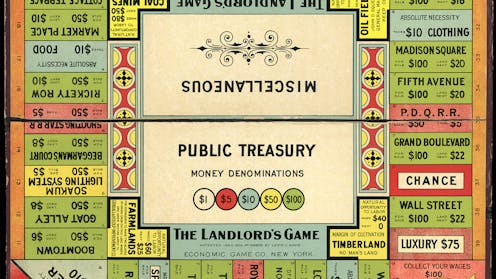
Too many politicians are collecting $200 without passing Go. Wikipedia/Landlordsgame.info/T Forsyth

Donald Trump – who has spent at least 45 days of his presidency so far on the golf course – has once again been accused of cheating, and this time there is video evidence. Trump’s long history of golfing malpractice is well documented, not least in Rick Reilly’s Commander in Cheat: How Golf Explains Trump (2019) where we read that “Trump doesn’t just cheat at golf. He throws it, boots it, and moves it. He lies about his lies. He fudges and foozles and fluffs.”

Some will recognise a similar style in his politics. I see here a more general sign that politics today has become a specific type of game – one the privileged play according to rules of their own choosing, and at the expense of others. What’s more, I’d argue, Trumpian-style cheating runs the risk of breaking the game of politics itself.

The notion that politics is like a game is by no means new. Machiavellian scheming was a central feature of Renaissance political life. In the 19th century, the diplomatic maneouvering between Britain and Russia’s imperial interests over Afghanistan was termed “the great game”. These days, political strategists often use game theory to think through a potential course of action (a locus classicus for political game theory is the Cuban missile crisis, a version of the prisonner’s dilemma).

Politics is, after all, an activity in which people, parties and governments seek to further their own interests in competition with others. And they do so in accordance to more or less codified rules, whether these be constitutional and legal, or simply social norms. Citizens of liberal democracies tend to tolerate a degree of political game-playing on the part of their representatives, as long as they are reasonably convinced they are playing by the rules.

What might be new, however, is a sense that today’s political game-players have little intention of abiding by the rules. This sort of game-playing has serious consequences.

In my book, Critical Games: On Play and Seriousness in Academia, Literature and Life (2025), I argue that we live in a world where the boundaries between play and seriousness have become dangerously blurred. Figures such as Trump, Boris Johnson, Nigel Farage and their populist counterparts elsewhere embody a form of pathological narcissism that collapses the distinction between game and reality.

Johnson treated government as an extension of his childhood game of “World King”. Even during the gravity of the COVID pandemic, he partied on, breaking the rules that he had laid down, while ordinary people buried their dead in obedient isolation.

Meanwhile, I’m a Celebrity contestant Farage is the trickster politician par excellence. He thrives on his clownish image but his intentions are deadly serious.

Above all, Trump, has turned the oval office into the playground of a narcissistic toddler. Most worryingly – with ever increasing velocity and seriousness – his second term has seen him change the rules of the game as he sees fit. He has pardoned the Capitol insurrectionists, violated the US constitution and flirted with running for a third term.

When games take over

What happens when this sort of narcissistic play becomes normalised? Let’s think a bit more theoretically about games. Games are made possible by rules, underpinned by collective consent. Players agrees to be bound by certain rules that they also expect others to be bound by. In committing ourselves to the rules of the game, we agree that we are all subject to them, equally.

To break the rules willfully and consistently – to cheat systematically at cards or, indeed, golf – is to be guilty not only of a breach of rules but also to enter into self-contradiction. A game where everybody made an exception of themselves, where everybody broke the rules, would become a game that nobody could logically wish to play – and would effectively cease to be a game.

By contrast, let’s think of the narcissist. In the eyes of the narcissist, other people only matter to the extent that they can be instrumentalised as playthings. The narcissist always considers themselves an exception. They assume the right to play by their own rules. It is not surprising, then, that narcissists are bad sports and are pathologically liable to cheat.

The extreme sort of narcissistic play, in which cheating is not the exception but the norm, has the effect of destroying the game for all but the narcissist. Johan Huizinga, the great Dutch scholar of play, noted in his groundbreaking study Homo Ludens that we tend to regard the cheat more favourably than we do the spoilsport. “This is because the spoilsport shatters the play world itself. He robs play of illusion.” The spoilsport who shatters an illusion seems a kind of coward, Huizinga notes. Meanwhile the cheat, for his part, at least still plays at playing the game.

Trump’s cheating, in its sheer brazenness and excess, carried out in plain sight, tips over into spoiling the sport. President Richard Nixon, who broke the rules in the Watergate scandal, did so in the shadows. Eventually he had to accept his guilt and resign, however reluctantly. In so doing, he was still playing at playing the game. It is hard to imagine Trump behaving in the same way and accepting that the rules apply to him.

Whether at golf or in politics, Trump’s brazen and spoilsport cheating – and that of Trumpian politicians around the world – should leave us under no illusion: the game of democratic politics is being stretched to the point of shattering. Ordinary citizens are learning to how to endure a game that seems increasingly rigged. In a situation like this, appeals to rules, let alone to a sense of fair play, only go so far. When the game finally breaks, we will find ourselves on a very dangerous field of play.


This article contains references to books that have been included for editorial reasons, and this may include links to bookshop.org. If you click on one of the links and go on to buy something from bookshop.org The Conversation UK may earn a commission.

The Conversation

Tim Beasley-Murray does not work for, consult, own shares in or receive funding from any company or organisation that would benefit from this article, and has disclosed no relevant affiliations beyond their academic appointment.

ref. Politics has always been a game – but why does it now feel like we’re being cheated? – https://theconversation.com/politics-has-always-been-a-game-but-why-does-it-now-feel-like-were-being-cheated-263083

Maths is most popular A-level again – more students should get the opportunity to take their study further

Source: The Conversation – UK – By Neil Saunders, Senior Lecturer in Mathematics, City St George’s, University of London

Gorodenkoff/Shutterstock

In 2025, more young people than ever have opened their A-level results to find out how they did in their maths exam. Once again, maths has been the most popular A-level subject, with 112,138 entries in 2025.

This is up by more than 4% compared with 2024. Entries in further maths, an A-level that expands on the maths curriculum, have also risen – an increase of 7% since 2024, with over 19,000 entries this year.

As a professional mathematician this is pleasing news. Some of these students will be happily receiving confirmation of their place to study maths at university.

The joy I experienced when I discovered in my maths degree that many of the subjects I studied at school – chemistry, biology, physics and even music – are woven together by a mathematical fabric, is something I’ve never forgotten.

I’m excited by the idea that many young people are about to experience this for themselves. But I am concerned that fewer students will have the same opportunities in the future, as more maths departments are forced to downsize or close, and as we become more reliant on artificial intelligence.

There are a number of differences between studying maths at university compared with school. While this can be daunting at first, all of these differences underscore just how richly layered, deeply interconnected and vastly applicable maths is.

At university, not only do you learn beautiful formulas and powerful algorithms, but also grapple with why these formulas are true and dissect exactly what these algorithms are doing. This is the idea of the “proof”, which is not explored much at school and is something that can initially take students by surprise.

But proving why formulas are true and why algorithms work is an important and necessary step in being able discover new and exciting applications of the maths you’re studying.

Student writing on whiteboard
Maths degrees involve finding out why mathematics works the way it does.
Gorodenkoff/Shutterstock

A maths degree can lead to careers in finance, data science, AI, cybersecurity, quantum computing, ecology and climate modelling. But more importantly, maths is a beautifully creative subject, one that allows people to be immensely expressive in their scientific and artistic ideas.

A recent and stunning example of this is Hannah Cairo, who at just 17 disproved a 40-year old conjecture.

If there is a message I wish I knew when I started studying university mathematics it is this: maths is not just something to learn, but something to create. I’m continually amazed at how my students find new ways to solve problems that I first encountered over 20 years ago.

Accessiblity of maths degrees

But the question of going on to study maths at university is no longer just a matter of A-level grades. The recent and growing phenomenon of maths deserts – areas of the country where maths degrees are not offered – is making maths degrees less accessible, particularly for students outside of big cities.

Forthcoming research from The Campaign for Mathematical Sciences (CAMS), of which I am a supporter, shows that research-intensive, higher tariff universities – the ones that require higher grades to get in – took 66% of UK maths undergraduates in 2024, up from 56% in 2006.

This puts smaller departments in lower-tariff universities in danger of closure as enrolments drop. The CAMS research forecasts that an additional nine maths departments will have fewer than 50 enrolments in their degrees by 2035.

This cycle will further concentrate maths degrees in high tariff institutions, reinforcing stereotypes such as that only exceptionally gifted people should go on to study maths at university. This could also have severe consequences for teacher recruitment. The CAMS research also found that 25% of maths graduates from lower-tariff universities go into jobs in education, compared to 8% from higher tariff universities.

Maths in the age of AI

The growing capability and sophistication of AI is also putting pressure on maths departments.

With Open AI’s claim that their recently released GPT-5 is like having “a team of PhD-level experts in your pocket”, the temptation to overly rely on AI poses further risks to the existence and quality of future maths degrees.

But the process of turning knowledge into wisdom and theory into application comes from the act of doing: doing calculations and forming logical and rigorous arguments. That is the key constituent of thinking clearly and creatively. It ensures students have ownership of their skills, capacities, and the work that they produce.

A data scientist will still require an in-depth working knowledge of the mathematical, algorithmic and statistical theory underpinning data science if they are going to be effective. The same for financial analysts, engineers and computer scientists.

The distinguished mathematician and computer scientist Leslie Lamport said that “coding is to programming what typing is to writing”. Just as you need to have some idea of what you are writing before you type it, you need to have some idea of the (mathematical) algorithm you are creating before you code it.

It is worth remembering that the early pioneers in AI – John McCarthy, Marvin Minsky, Claude Shannon, Alan Turing – all had degrees in mathematics. So we have every reason to expect that future breakthroughs in AI will come from people with mathematics degrees working creatively in interdisciplinary teams.

This is another great feature of maths: its versatility. It’s a subject that doesn’t just train you for a job but enables you to enjoy a rich and fulfilling career – one that can comprise many different jobs, in many different fields, over the course of a lifetime.

The Conversation

Neil Saunders is a supporter of The Campaign for Mathematical Sciences.

ref. Maths is most popular A-level again – more students should get the opportunity to take their study further – https://theconversation.com/maths-is-most-popular-a-level-again-more-students-should-get-the-opportunity-to-take-their-study-further-263060

The Materialists: a sadly conservative view on marriage

Source: The Conversation – UK – By Sarah Louise Smyth, Lecturer in Department of Literature Film and Theatre Studies, University of Essex

This article contains spoilers for The Materialists

The Materialists purports to be a romantic comedy with a cynical and pragmatic look at romantic relationships. Its protagonist, Lucy (Dakota Johnson), a professional matchmaker, insists that a successful partnering is all about pairing the right numbers: salary, assets, height, weight, age. The man should be tall, the woman should be young and slim; both need to be rich.

This is a world of traditional gender norms, so the film does not concern itself with queer relationships. That is beyond one gag when Lucy interviews a woman who wants to find a Republican lesbian.

As the film goes on, Lucy’s matchmaking philosophy is tested when she becomes acquainted with Harry (Pedro Pascal) – tall, slim, handsome, wealthy, single (what the matchmaking business in the film calls “a unicorn”). At the same time, she runs into her ex-boyfriend John (Chris Evans), who, despite also being tall, slim and handsome, is poor and living in a squalid apartment with dysfunctional flatmates (all reasons they broke up the first time around). The film hinges on the question: what will Lucy choose, love or money?

As an expert in romantic comedies, I can tell you they have long been concerned with the marriage of romance and money, even if economics are tastefully relegated to the background.

Ground zero for the romance plot was Jane Austen’s Pride and Prejudice, which set the template. Elizabeth Bennet fell in love with Mr Darcy – and it was a wonderful coincidence that he just so happened to be rich.

Since then, this plot has repeated in Pretty Woman (1990), Sex and the City (1998-2004), Bridget Jones’s Diary (2001), You’ve Got Mail (1998) and Crazy Rich Asians (2018), to name a few. In these romances, a key part of the fantasy is not only that the woman (for it is always a woman) is saved from abject singledom, but that she enters the upper echelons of society through her partner’s wealth.

The Materialists attempts to puncture this fantasy by foregrounding the role of money in relationships. A delicious scene occurs early on when Lucy is summoned to a bridal suite where her client is having cold feet about the man she is marrying. The suite looks expensive and the bride is beautiful.

Lucy asks the bride why, in her darkest moments, she wants to marry her fiancé. The bride sheepishly replies that it makes her sister jealous. Her fiancé is better looking, taller and richer than her sister’s husband. A flash in Lucy’s eyes suggests she can work with this. This is about being valued, Lucy reassures the bride, you want to be seen and to get what you deserve.

The stakes of this world are made clear: a good match is about perception and prestige and the emotional implications that come with it can be manipulated to justify these standards.

However, the burgeoning love triangle between Lucy, Harry and John confuses these insights. Director and writer Celine Song’s beautiful, tender and restrained debut, Past Lives (2023), also explored a love triangle. While the romantic entanglements of this film were nuanced, the emotional stakes were always clear eyed. This is less true in The Materialists.

Lucy insists that marrying someone wealthy is non-negotiable for her but then breaks up with Harry for no discernible reason. Just before the breakup scene, the film reveals a strange twist in the story. Harry got painful and invasive leg lengthening surgery, enabling him to reach the critical height of six foot. Lucy is insistent that this is not the reason she breaks up with Harry and the film seems to believe her, so the role of this storyline is unclear. Is it that, in this world, women (except for Lucy, perhaps) are as shallow as men?

Lucy then gets back together with John despite no clear indication of what he offers her emotionally or financially, especially as there has been no change in his circumstances. And this is to say nothing of a sexual assault storyline that is uncomfortably shoe-horned in, or the role of race and ethnicity in matchmaking.

Like queer sexuality, race is introduced as a joke by a white character who only wants to date other white people. Also, the role of Harry’s heritage (Pascal is Latino) was not mentioned as a potential problem for the wasps (white Anglo-Saxon protestants) who make up the majority of New York’s elite.

Ultimately, The Materialists suggests that people should stay in their lane. Lucy and Harry come from different worlds, while Lucy and John’s are very similar. As they admit to each other, as well as coming from modest backgrounds, they are both smokers, come from “shitty families” and support left-wing politics. The Pride and Prejudice plot may be a crass fantasy of social mobility, but The Materialists appears all the more conservative. If it is not clear whether Lucy and John marry for love nor money, what do they marry for?


Looking for something good? Cut through the noise with a carefully curated selection of the latest releases, live events and exhibitions, straight to your inbox every fortnight, on Fridays. Sign up here.


The Conversation

Sarah Louise Smyth does not work for, consult, own shares in or receive funding from any company or organisation that would benefit from this article, and has disclosed no relevant affiliations beyond their academic appointment.

ref. The Materialists: a sadly conservative view on marriage – https://theconversation.com/the-materialists-a-sadly-conservative-view-on-marriage-263136

From bees doing maths to fish driving cars: teaching animals irrelevant skills can help unlock the secrets of cognition – podcast

Source: The Conversation – UK – By Gemma Ware, Host, The Conversation Weekly Podcast, The Conversation

Scientists can get animals to do the strangest things. They’ve taught goldfish to drive cars, primates to perform calculations with Arabic numerals and giraffes to do statistical reasoning. But what’s the point?

In this episode of The Conversation Weekly podcast, biologist Scarlett Howard from Monash University in Australia – who has taught bees to tell the difference between odd and even numbers – defends the importance of these seemingly ecologically irrelevant experiments.

She argues that they can help us understand the secrets of animal cognition, and even potentially unlock future technological developments for humanity too.

Howard got hooked on working with bees when she realised it was possible to train individual bees using sugar water as a reward. “We work with a single bee for hours and hours at a time and she comes back and forth from the hive to the experimental area,” she says.

She began wondering what bees’ cognitive boundaries were, which led to experiments exploring how bees count and tell the difference between pictures with odd and even numbers of objects.

“ I wasn’t doing these experiments just flippantly,” she says. “There is a fun aspect to them, but I was also doing them because I thought they really had value to other areas of science.”

Howard argues that these kinds of experiments are important for the field of neuromorphic technology, computer systems inspired by animals. Learning about cognition from animals, and particularly how they do tasks very efficiently compared to their brain size, can help to develop “technology based on biological systems”, Howard says.


Read more:
Fish driving cars and chimps doing maths: what teaching animals ‘irrelevant’ skills reveals about our own minds


And she says that while these human-centric tasks may seem ecologically irrelevant to an animal’s species now, we may just not know yet. “Maybe one day we’ll find out that they choose flowers or remember flowers by looking at the petal number and remembering if it’s an even number, that’s a good flower,” she posits.

Listen to the conversation with Scarlett Howard on The Conversation Weekly podcast.


This episode of The Conversation Weekly was written and produced by Katie Flood. Gemma Ware is the host and executive producer. Mixing and sound design by Eloise Stevens and theme music by Neeta Sarl.

Listen to The Conversation Weekly via any of the apps listed above, download it directly via our RSS feed or find out how else to listen here. A transcript of this episode is available on Apple Podcasts or Spotify.

The Conversation

Scarlett Howard currently has funding from the Australian Research Council and the Hermon Slade Foundation.

ref. From bees doing maths to fish driving cars: teaching animals irrelevant skills can help unlock the secrets of cognition – podcast – https://theconversation.com/from-bees-doing-maths-to-fish-driving-cars-teaching-animals-irrelevant-skills-can-help-unlock-the-secrets-of-cognition-podcast-262288