‘See you in Valhalla’: how the FBI director waded into the far-right’s obsession with the Vikings

Source: The Conversation – UK – By Tom Birkett, Professor of Old English and Old Norse, University College Cork
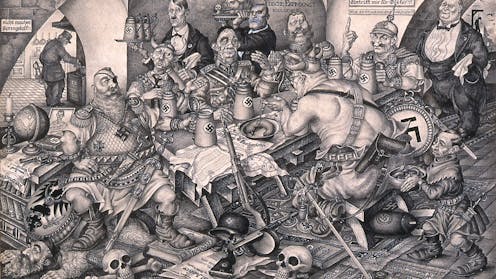
Arthur Szyk, Valhalla, from The Nibelungen Series (New York, 1942) The Arthur Szyk Society, Burlingame, CA, CC BY-SA

At a press conference announcing that the suspect in the shooting of Charlie Kirk had been detained, FBI director Kash Patel ended his speech with a personal message to his “brother”, saying: “We have the watch, and I’ll see you in Valhalla.”

Many people commenting on the press conference reacted to this confusing reference to Valhalla with a mixture of amusement and disdain, with some pointing out the contradiction of eulogising a Christian nationalist with reference to the pagan afterlife.

For scholars of the Vikings, Patel’s reference to Valhalla looked like something far more sinister. To understand why, we need to know both what Valhalla meant to the Vikings, and what it means in political discourse today.


Read more:
US Capitol riot: the myths behind the tattoos worn by ‘QAnon shaman’ Jake Angeli


The Norse peoples had a developed concept of the afterlife. The desirable destination for Norse warriors was Valhalla, the hall of the slain, where Odin watched over his band of chosen warriors as they prepared for Ragnarök, the world-destroying battle against the giants. Only those who died a heroic death in combat were brought to Valhalla by the Valkyries.

Those who died by sickness, old age or accident – or who had committed murder and other dishonourable crimes – seem to have been excluded from this martial afterlife. Some believed that you could cheat the Norse gods by arranging to be buried with deliberately worn and damaged weapons as if you had seen heavy combat. There’s a lot we don’t know.
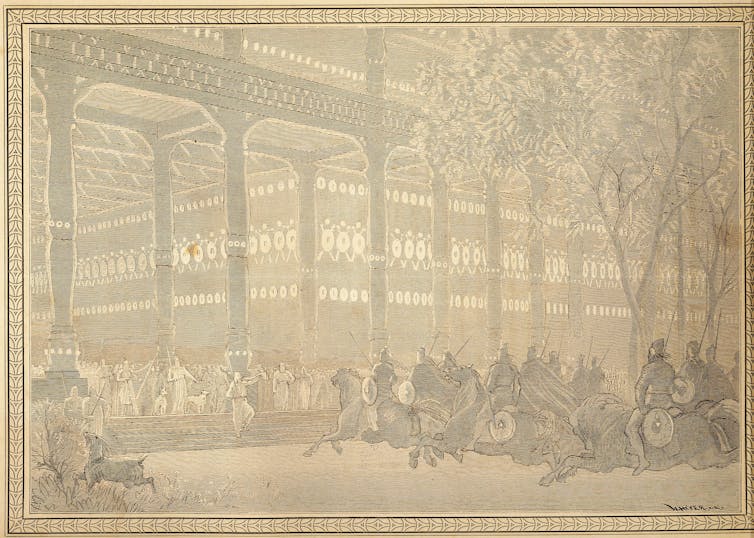
Valhalla by August Malmström (1880)
from Wikimedia Commons

What we do know is that in the 1930s the concept of Valhalla, along with the image of the heroic Viking and many of the symbols of Norse mythology, had a profound appeal to Nazi thought leaders. They looked to Norse mythology as a survival of a wider “Germanic” culture that had been erased by Judeo-Christian dominance.

The Nordic “race” was held up as the Aryan ideal. Norse cultural remnants were used to add legitimacy to the idea of a glorious German past. Heinrich Himmler in particular repurposed Norse symbols for use by the SS.

Today, many white supremacist and neo-Nazi groups continue to brand themselves using a widening range of symbols taken from Norse mythology. One aspect of Norse culture that has gained increasing prominence in the past few decades is the specific co-opting of Valhalla by those who are prepared to kill, and die, in the cause of “protecting” an endangered white supremacy.

Valhalla in terrorist manifestos

The most chilling example of the co-option of the phrase “see you in Valhalla” is found in the manifestos published by far-right terrorists in the wake of their atrocities.

In 2019, Brenton Tarrant carried out mass shootings at two mosques in Christchurch, New Zealand, in which 51 people were killed. He published a rambling manifesto in which he attempted to justify his actions, and touted the “great replacement” conspiracy theory which holds that Jewish elites are deliberately engineering the replacement of white populations through immigration.

This has since become a far-right talking point and was pushed by Charlie Kirk on his show. Tarrant signed off his diatribe against multiculturalism and “white genocide” by saying “Goodbye, god bless you all and I will see you in Valhalla.”

Tarrant in turn influenced other far-right terrorists. One such terrorist, Peyton Gendron, was convicted of the Buffalo mass shooting in 2022 in which ten black Americans were murdered. Gendron plagiarised much of his 180-page manifesto, and similarly ends his screed with the statement: “I hope to see you in Valhalla.”

By invoking Valhalla, these terrorists are attempting to cast themselves as warriors in the Viking tradition. There is, of course, nothing remotely heroic about gunning down unarmed civilians.

But the point is that this reference doesn’t require any understanding of the Norse tradition. In this context it comes directly from the Nazi’s fetishisation of violent death to secure the racial purity of Germany.

From terrorists to the FBI

Rather than borrowing from extremist discourse, Patel may have been influenced by the use of “til Valhalla” by the US marines to honour fallen comrades – including those who died by suicide. This is a use which has been traced back to the influence of Norwegian Nato forces in Afghanistan, who may have used “til Valhalla” as a kind of battle cry. Of course, the optics of using a military honorific to commemorate the assassination of a civilian is problematic in itself.

FBI director, Kash Patel, speaks at Charlie Kirk’s memorial.

Patel’s “see you in Valhalla” was much closer in its wording to the sign off used by far-right terrorists – but even this phrasing was unlikely to have been lifted directly from extremists. It is more likely an example of a phenomenon often observed in the study of the far-right online ecosystem, which is the seepage of extreme right discourse into more mainstream spaces.

Neo-Nazi groups use memes, shitposting and humour as a deliberate strategy to seed increasingly extreme ideas into groups amenable to their message.

It isn’t hard to find references to Valhalla commercialised, repackaged as inspirational Viking quotes for Maga consumption, referencing cancel culture, or even using Norse video games as a gateway to white supremacy. In this way, the more mainstream right often ends up sharing and amplifying extremist messaging.

Patel’s reference to Valhalla was at the very least a huge misstep by a government official trying to appeal to the Maga base and elevate Kirk’s tragic killing into a heroic warrior’s death.

While he may not have made his reference to Valhalla in knowledge of its association with far-right terrorism, it nevertheless served as a signal to white supremacists. As reported elsewhere, there was a lot of engagement from the extreme right on social media, but their posts tended to ridicule Patel.

His words prompted memes on social media playing on the apparent absurdity of someone of Patel’s ethnicity cosplaying as a Viking. And among this racially tinged mockery, there was also some revelling in the fact that a stock phrase of violent white supremacy had found its way into the mouth of the director of the FBI.

The Conversation

Tom Birkett receives funding from the European Union (ERC, NorseMap, Project Number 101169706). Views and opinions expressed are however those of the author only and do not necessarily reflect those of the European Union or the European Research Council. Neither the European Union nor the granting authority can be held responsible for them.”

ref. ‘See you in Valhalla’: how the FBI director waded into the far-right’s obsession with the Vikings – https://theconversation.com/see-you-in-valhalla-how-the-fbi-director-waded-into-the-far-rights-obsession-with-the-vikings-266281

Poor sleep may make your brain age faster – new study

Source: The Conversation – UK – By Abigail Dove, Postdoctoral Researcher, Neuroepidemiology, Karolinska Institutet

Ekaterina Karpacheva/Shutterstock.com

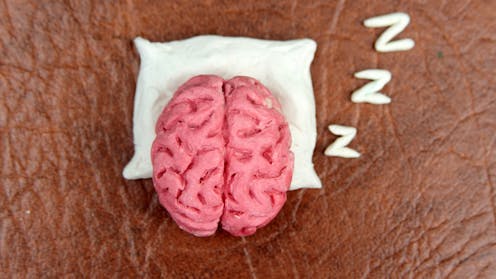
We spend nearly a third of our lives asleep, yet sleep is anything but wasted time. Far from being passive downtime, it is an active and essential process that helps restore the body and protect the brain. When sleep is disrupted, the brain feels the consequences – sometimes in subtle ways that accumulate over years.

In a new study, my colleagues and I examined sleep behaviour and detailed brain MRI scan data in more than 27,000 UK adults between the ages of 40 and 70. We found that people with poor sleep had brains that appeared significantly older than expected based on their actual age.

What does it mean for the brain to “look older”? While we all grow chronologically older at the same pace, some people’s biological clocks can tick faster or slower than others. New advances in brain imaging and artificial intelligence allow researchers to estimate a person’s brain age based on patterns in brain MRI scans, such as loss of brain tissue, thinning of the cortex and damage to blood vessels.

In our study, brain age was estimated using over 1,000 different imaging markers from MRI scans. We first trained a machine learning model on the scans of the healthiest participants – people with no major diseases, whose brains should closely match their chronological age. Once the model “learned” what normal ageing looks like, we applied it to the full study population.

Having a brain age higher than your actual age can be a signal of departure from healthy ageing. Previous research has linked an older-appearing brain to faster cognitive decline, greater dementia risk and even higher risk of early death.

Sleep is complex, and no single measure can tell the whole story of a person’s sleep health. Our study, therefore, focused on five aspects of sleep self-reported by the study participants: their chronotype (“morning” or “evening” person), how many hours they typically sleep (seven to eight hours is considered optimal), whether they experience insomnia, whether they snore and whether they feel excessively sleepy during the day.

These characteristics can interact in synergistic ways. For example, someone with frequent insomnia may also feel more daytime sleepiness, and having a late chronotype may lead to shorter sleep duration. By integrating all five characteristics into a “healthy sleep score”, we captured a fuller picture of overall sleep health.

People with four or five healthy traits had a “healthy” sleep profile, while those with two to three had an “intermediate” profile, and those with zero or one had a “poor” profile.

When we compared brain age across different sleep profiles, the differences were clear. The gap between brain age and chronological age widened by about six months for every one point decrease in healthy sleep score. On average, people with a poor sleep profile had brains that appeared nearly one year older than expected based on their chronological age, while those with a healthy sleep profile showed no such gap.

We also considered the five sleep characteristics individually: late chronotype and abnormal sleep duration stood out as the biggest contributors to faster brain ageing.

A year may not sound like much, but in terms of brain health, it matters. Even small accelerations in brain ageing can compound over time, potentially increasing the risk of cognitive impairment, dementia and other neurological conditions.

The good news is that sleep habits are modifiable. While not all sleep problems are easily fixed, simple strategies: keeping a regular sleep schedule; limiting caffeine, alcohol and screen use before bedtime; and creating a dark and quiet sleep environment can improve sleep health and may protect brain health.

Woman looking at her phone in bed.
Put down that phone!
Ground Picture/Shutterstock.com

How exactly does the quality of a person’s sleep affect their brain health?

One explanation may be inflammation. Increasing evidence suggests that sleep disturbances raise the level of inflammation in the body. In turn, inflammation can harm the brain in several ways: damaging blood vessels, triggering the buildup of toxic proteins and speeding up brain cell death.

We were able to investigate the role of inflammation thanks to blood samples collected from participants at the beginning of the study. These samples contain a wealth of information about different inflammatory biomarkers circulating in the body. When we factored this into our analysis, we found that inflammation levels accounted for about 10% of the connection between sleep and brain ageing.

Other processes may also play a role

Another explanation centres on the glymphatic system – the brain’s built-in waste clearance network, which is mainly active during sleep. When sleep is disrupted or insufficient, this system may not function properly, allowing harmful substances to build up in the brain.

Yet another possibility is that poor sleep increases the risk of other health conditions that are themselves damaging for brain health, including type 2 diabetes, obesity and cardiovascular disease.

Our study is one of the largest and most comprehensive of its kind, benefiting from a very large study population, a multidimensional measure of sleep health, and a detailed estimation of brain age through thousands of brain MRI features. Though previous research connected poor sleep to cognitive decline and dementia, our study further demonstrated that poor sleep is tied to a measurably older-looking brain, and inflammation might explain this link.

Brain ageing cannot be avoided, but our behaviour and lifestyle choices can shape how it unfolds. The implications of our research are clear: to keep the brain healthier for longer, it is important to make sleep a priority.

The Conversation

Abigail Dove receives funding from Alzheimerfonden, Demensfonden, and the Loo and Hans Osterman Foundation for Medical Research.

ref. Poor sleep may make your brain age faster – new study – https://theconversation.com/poor-sleep-may-make-your-brain-age-faster-new-study-265309

Plants are incredibly sensitive – what we learned about their response system could help protect humans

Source: The Conversation – UK – By Miguel de Lucas, Associate Professor in Biosciences, Durham University

mitritatei96/Shutterstock

At first glance, plants may seem passive – but beneath their stillness lies a world of complexity and constant activity. Plants are highly sensitive to their surroundings, continuously monitoring environmental signals to adapt and survive. Think of them as nature’s nosy neighbours, always alert to what’s happening around them.

From subtle shifts in light and temperature to the presence of pollinators, microbes, or changes in soil salinity, plants can detect a range of cues. In response, they can alter growth direction, delay flowering or produce protective chemicals.

My colleagues and I have created a cell-by-cell map of how plants respond to signals from the soil. The map offers insight into plant behaviour in an unprecedented level of detail. It could change our understanding of how living things adapt to their environment and help plants survive climate change.


Many people think of plants as nice-looking greens. Essential for clean air, yes, but simple organisms. A step change in research is shaking up the way scientists think about plants: they are far more complex and more like us than you might imagine. This blossoming field of science is too delightful to do it justice in one or two stories.

This article is part of a series, Plant Curious, exploring scientific studies that challenge the way you view plantlife.


First it’s important to understand how genes work within an organism.

The human genome contains roughly 20,000 genes. But, like other animals and plants, not all these genes are active at the same time or in every cell. It’s called selective gene expression. For years, scientists believed that selective gene expression was the main explanation for why our skin cells differ from muscle cells even though they carry the same genetic blueprint. Each cell type activates a unique set of genes, producing proteins that define its structure and function.

But scientific discoveries over the last decade or so have been revealing that there’s more to the story. It is becoming clearer that the function of a cell is also determined by what happens to those proteins afterwards.

Once a protein is made, it can undergo chemical modifications that alter its behaviour. Think of it like using a tool. If you need to see far away, you might pick up a telescope. You’re still the same person, but now with enhanced vision. Similarly, a protein can be “upgraded” with a tag that boosts its activity. On the flip side, imagine being fitted with a ball and chain – your movement is restricted. Cells do something similar to proteins they produce, attaching molecules that either activate or suppress their function.

This process, known as post-translational modification (PTM), adds a new layer of complexity to biology. The first PTM identified was phosphorylation in 1906. Scientists have since identified over 500 types of these modifications. For example, ubiquitination, a tag that often marks proteins for destruction. It’s the cell’s way of cleaning house, disposing of proteins that are no longer needed, much like washing and storing your coffee mug after use (though some of us are better at that than others!).

These tiny molecular tweaks help cells respond to changing conditions, regulate their internal machinery and maintain the organism’s health.

Most PTMs involve complex processes that take place in different parts of the cell, making them difficult for scientists to track and understand. But sumoylation, a type of PTM, relies on a simpler set of enzymes. And researchers believe this streamlined system is closely tied to its role in helping cells respond to their environment.

This is especially important in plants, where environmental cues like light,
temperature, humidity and drought influence developmental stages such
as germination, flowering and leaf shedding. These cues also affect structure, like root complexity and stem branching. Understanding how plants use sumoylation to interpret and respond to these signals could pave the way for smarter, more sustainable agricultural practices.

To unravel how sumoylation operates in plants, a group of scientists in the
UK – supported by the Biotechnology and Biological Sciences Research Council – formed a research consortium. This initiative brought together experts (including me) from four universities: Durham, Nottingham, Cambridge and Liverpool.

The consortium’s first hurdle was to build a system that could track the
activity of every enzyme involved in SUMO production within the model plant Arabidopsis thaliana. Many people also know this plant as thale cress and it is common to find it in the edge of roads and walking paths. This plant was chosen for its simple structure, well-studied genetic makeup, and predictable responses to environmental changes – making it ideal for studying complex biological processes.

Small white flowers sprouting out of a rock.
Thale cress is often used in research.
Petr Szymonik/Shutterstock

This system allowed my colleagues and I to monitor when and where each component of the SUMO machinery was active, alongside the proteins it modifies. The platform also enabled deeper molecular analysis, such as identifying previously unknown molecular partners.

The next challenge was to explore how each component of the SUMO system
behaves when plants face environmental stress. The team focused on drought, saltiness of soil or water and pathogen attack. Since roots are often the first part of the plant to sense and respond to these threats, we zoomed in on this organ to understand its role in stress adaptation.

Our findings revealed that drought stress triggers SUMO signalling deep within the root’s inner tissues, while salt stress is sensed at the outer layers. And pathogen attacks activate responses in the root’s dividing cells. Dividing cells are those that have just been made and have not reached maturity. All these stress signals appear to converge on a single protein, SCE1. This protein helps attach SUMO to molecular hubs that guide cellular changes.

This makes SCE1 a promising candidate for developing new strategies to boost plant resilience. If we enhance SCE1’s function, it may be possible to help plants respond more swiftly to drought and initiate protective mechanisms to conserve water before damage becomes irreversible.

Understanding how PTMs shape cell adaptation and protein function opens new avenues for tackling stress in plants. But the implications go far beyond agriculture. The same principles apply to animal and human health, where PTMs play critical roles in immunity, development and disease resistance. Unlocking their secrets could change how we approach everything from crop resilience to medical therapies.

The Conversation

Miguel de Lucas receives funding from BBSRC

ref. Plants are incredibly sensitive – what we learned about their response system could help protect humans – https://theconversation.com/plants-are-incredibly-sensitive-what-we-learned-about-their-response-system-could-help-protect-humans-264937

Caffeine pouches deliver a fast hit – and hidden risks

Source: The Conversation – UK – By Dipa Kamdar, Senior Lecturer in Pharmacy Practice, Kingston University

Caffeine pouches contain micro-ground caffeine and flavourings, which dissolve in saliva and release caffeine molecules directly into the bloodstream. Natalia Bohren/Shutterstock

A new caffeine craze is brewing on social media – no kettle required. Caffeine pouches promise a fast, discreet hit of energy without the faff of brewing coffee or cracking open an energy drink. But while they may look like a harmless pick-me-up, experts warn they carry real risks, especially for teenagers and people with underlying health conditions.

Caffeine pouches look and work a lot like nicotine pouches or snus. Each small, pillow-shaped packet contains micro-ground caffeine, flavourings and sometimes herbs or vitamins. Slip one under your lip and the caffeine goes straight into the bloodstream through your gums – bypassing the digestive system. The result? A jolt of energy that lands far quicker than a cup of coffee or tea.

Caffeine perks us up by blocking adenosine, a brain chemical that makes us feel sleepy. People have long used coffee, tea and energy drinks to stay awake, sharpen focus and boost performance. Pouches simply offer a hands-free, no-spill shortcut. Some gym-goers and shift workers like the convenience, while athletes value caffeine’s ability to increase endurance by making the brain register less fatigue and pain.

Their discreet design is also a selling point for teenagers, who may use them to stay alert in class or during exams. That worries experts: some fear caffeine pouches could be a gateway to nicotine or other stimulants, and some young users are even pairing them with nicotine pouches, doubling the stimulant load. TikTok has super-charged their popularity, with influencers showing them off in classrooms, gyms and gaming sessions.


Read more:
Why nicotine pouches may not be the best choice to help you to stop smoking


Potent little packets

Depending on the brand, each pouch delivers 25mg to more than 200mg of caffeine. For comparison, a typical mug of instant coffee contains about 100mg, a mug of tea 75mg and a can of cola around 40mg. Some pouches therefore pack the caffeine punch of two cups of coffee in one hit.

How much is too much? For healthy adults, the recommended daily limit is around 400mg. Pregnant women are advised to stay below 200mg per day because higher intakes can increase the risk of complications such as low birth weight or pregnancy loss.

There’s little data on safe levels for children, but the European Food Safety Authority recommends a lower limit of 3mg of caffeine per kilogram of body weight – roughly 45–150mg per day depending on age and size. Children’s smaller bodies and developing systems make them more sensitive to caffeine’s effects.

A single pouch with 200mg of caffeine can easily push a teenager well beyond that limit. And because the drug is absorbed so quickly, side-effects, such as jitteriness, anxiety, insomnia and heart palpitations, can hit harder. Caffeine may give a short-term buzz, but it can also disturb sleep, create a cycle of fatigue and lead to dependence.

Who’s most at risk

Moderate caffeine is generally safe for most adults, but certain groups are more vulnerable. People with mental health conditions may be especially sensitive.

By blocking adenosine and boosting dopamine activity, caffeine can worsen anxiety or psychosis and even increase the risk of relapse in conditions such as schizophrenia or bipolar disorder. It can also make other addictive substances feel more rewarding, potentially nudging people toward substance use disorders. The science isn’t yet clear enough to set a safe limit for these groups.

Those with heart problems also need to be cautious. Caffeine temporarily raises heart rate and blood pressure, adding stress to the heart. Some people experience palpitations, and athletes who mix high doses of caffeine with intense exercise may face an elevated risk of heart issues.

Extreme cases are rare, but there have been documented caffeine-related deaths, usually involving supplements or highly concentrated products: reminders of how potent this commonplace stimulant can be.

A regulatory blind spot

In the UK, caffeine pouches occupy a legal grey zone. They’re neither food nor medicine, so they escape the usual safety checks and labelling rules. Shoppers can’t always be sure how much caffeine they’re getting – or what other ingredients might be mixed in. Health experts are calling for clearer warnings and age restrictions, particularly as many brands use fruity flavours and bright packaging designed to catch the eye of younger consumers.

Caffeine pouches may be fashionable and convenient, but their rapid absorption and high potency make it easy to overshoot safe limits, especially for teens. An occasional pouch might not be harmful for most adults, but they’re no risk-free substitute for coffee or tea. As with any stimulant, moderation isn’t just sensible, it’s essential.

The Conversation

Dipa Kamdar does not work for, consult, own shares in or receive funding from any company or organisation that would benefit from this article, and has disclosed no relevant affiliations beyond their academic appointment.

ref. Caffeine pouches deliver a fast hit – and hidden risks – https://theconversation.com/caffeine-pouches-deliver-a-fast-hit-and-hidden-risks-263933

When China makes a climate pledge, the world should listen

Source: The Conversation – UK – By Myles Allen, Head of Atmospheric, Oceanic and Planetary Physics, University of Oxford

A few years ago, one of us (Myles Allen) asked a Chinese delegate at a climate conference why Beijing had gone for “carbon neutrality” for its 2060 target rather than “climate neutrality” or “net zero”, both of which were more fashionable terms at the time.

Her response: “Because we know what it means.”

It was a revealing answer: China, unlike many other countries, tends not to make climate commitments that it doesn’t understand or intend to keep. And that’s why its latest pledge – cutting greenhouse gas emissions by 7%–10% by 2035, as part of its commitments under the Paris agreement – matters more than the underwhelmed response might suggest.

To be fair on those other countries, lofty goals have played a role in driving the climate conversation about what is possible: there is always the argument that it is better to aim for the moon and miss than aim for the gutter and hit it.

But the climate crisis needs more than aspirations. It needs concrete, plausible plans.

That’s what makes China’s pledge so significant: Beijing has form in only promising what it plans to deliver. Having promised to peak emissions this decade, barely 50 years after it began to industrialise in earnest, it looks set to achieve that. And in the process, become a world leader in wind power, solar energy and electric vehicles.

Meanwhile, in the scientific literature…

A paper appeared in the journal Nature Communications at the end of August that provides some context for China’s announcement and ought to have received much more attention.

In it, climate scientists Junting Zhong and co-authors describe what they call a “reality-aligned scenario”. This means a pathway for emissions over the coming century that is consistent with emissions to date and countries’ near-term commitments.

The paper is provocatively titled “Plausible global emissions scenario for 2°C aligned with China’s net-zero pathway” (provocative because of the implication that some other scenarios out there are, well, less plausible).

In their scenario, global carbon dioxide emissions peak this decade and reach net zero around 2070, accompanied by immediate, sustained but not particularly dramatic reductions in emissions of methane and other greenhouse gases. In response, global warming is expected to peak at just over 2°C towards the end of this century before declining below 2°C early in the next.

Crucially, Zhong and his colleagues break out China’s contribution. In their scenario, the country’s carbon dioxide emissions would peak in the next few years before a steady decline brings them close to zero by 2060. Methane emissions would begin to decline immediately.

Train carrying coal
China is the world’s biggest emitter of methane, a potent but short-lived greenhouse gas. Much of it comes from coal mines.
Jiaye Liu / shutterstock

There is much to discuss in the relationship between this scenario and China’s latest emission pledge. How much of that 7%-10% reduction in all greenhouse gases by 2035 will be delivered by (very welcome) cuts in methane emissions? Breaking out separate contributions of long-lived (CO₂) and short-lived (like methane) greenhouse gases would be helpful to understand the implications of China’s pledges for global temperature.

Zhong and colleagues see land use changes (such as reforestation) playing only a minimal role in China’s long-term climate plan. So why does Beijing’s new pledge put so much emphasis on planting trees? Is this just a stopgap, or the start of a bigger reliance on land-based carbon dioxide removal?

And while renewables are central to China’s strategy, the country will also need to store captured carbon (from power plants or factories) on a massive scale. The real question may be around how China is going to deliver all this.

That’s why the phrase “while striving to do better” in President Xi’s announcement is so important. The world has a keen interest in China over-delivering.

Why the silence?

But perhaps the most remarkable aspect of all this is how little discussion there has been of the work by Zhong and his colleagues. It was clearly relevant: it came out just as China was preparing its pledge, it was published in one of the world’s top scientific journals, and one co-author has a prominent role in the IPCC. Yet despite all that, it received almost no online attention.

Perhaps most climate commentators were too preoccupied with responding to a very different document: a “critical review” commissioned by the US Department of Energy of greenhouse gas impacts on the US climate.

Whether or not you agreed with their conclusions, Zhong and his team’s paper was rigorous, transparent and peer-reviewed. The US review was none of those things, and already widely criticised as flawed. Yet it dominated headlines and commentary for weeks.

While the world’s second-largest emitter was debating a dodgy dossier, a carefully presented and comprehensive scenario, directly relevant to the climate policies of the world’s largest emitter, passed largely unnoticed.

That’s a missed opportunity. China’s targets aren’t just slogans or aspirations – they are statements of intent, grounded in what the country believes it can deliver. And where China goes, others will follow. Paying attention to analyses like the one from Zhong and his colleagues help us understand both China’s role and the world’s chances of keeping warming below 2°C.

That’s why President Xi’s call to “do better” applies not just to countries, but to scientists, commentators and climate policy-watchers too. Don’t be distracted by the usual suspects flooding the zone.


Don’t have time to read about climate change as much as you’d like?

Get a weekly roundup in your inbox instead. Every Wednesday, The Conversation’s environment editor writes Imagine, a short email that goes a little deeper into just one climate issue. Join the 45,000+ readers who’ve subscribed so far.


The Conversation

Myles Allen’s research receives funding from UKRI, the Oxford Martin School, Horizon Europe and VietJet Air. He chairs the scientific advisory board of Puro.Earth.

Kai Jiang does not work for, consult, own shares in or receive funding from any company or organisation that would benefit from this article, and has disclosed no relevant affiliations beyond their academic appointment.

ref. When China makes a climate pledge, the world should listen – https://theconversation.com/when-china-makes-a-climate-pledge-the-world-should-listen-266346

As mining returns to Cornwall, lithium ambitions tussle with local heritage

Source: The Conversation – UK – By Jamie Hinch, PhD Candidate in Geography and the Environment, University of Oxford

Two remnants of Cornwall’s mining heritage, Flatty and Pointy loom over the village of St Dennis. Jamie Hinch, CC BY-NC-ND

The woman’s eyes blazed as I scanned the feedback form she was showing me. “UN-BELIEVE-ABLE”, read her last word in the form’s final section. It was underlined. An incensed crescendo stabbed and dragged across the page. “Flatty and Pointy are part of us. How could they think about destroying them?” she said, shaking her head in disbelief.

She, like me, had received the form at Cornish Lithium’s recent community consultation. This consultation provided updated details of the mineral exploration company’s plans to reopen Trelavour Pit, a former China clay mine at the top of the Cornish village of St Dennis.

Once mined for kaolin, this time, a new “white gold” is being extracted. Lithium is a critical mineral for the green transition, with demand expected to triple over the next decade due to the increasing electrification of the energy system and the electric vehicles sector.

In west Cornwall, Cornish Lithium are pioneering the mining of lithium from geothermal waters. Pumped from deep in the granite below, the company plans to use a technique known as direct lithium extraction to extract the lithium dissolved in the water, while also capturing the heat for geothermal energy.

Meanwhile, in mid-Cornwall’s Clay Country, Cornish Lithium is proposing more conventional hard rock mining in an existing open pit. However, in revealing the size of the expanded Trelavour Pit, the consultation confirmed the fears of many people in St Dennis: “To enable the proposed development of the site and deliver the economic benefits for Cornwall, these sky tips will need to be removed.”

quarry pit, mound in background, blue sky
A remnant of historic mining known as Pointy, viewed from the inside of Trelavour pit, Cornwall.
Jamie Hinch, CC BY-NC-ND

Sky tips are the sandy waste mounds formed by the China clay industry. But they are heritage as much as waste. Part of the “Cornish Alps”, the sky tips affectionately known as “Flatty” and “Pointy” are emblems for St Dennis, having loomed above the village since the 19th century.

These sky tips have also loomed over my PhD research, which looks at how local communities are experiencing the UK’s new dawn of mining. As the woman’s reaction exemplifies, strong sentiments attached to Flatty and Pointy mean their future is at the core of local responses to the Trelavour Lithium Project. They had been a source of speculation and contention throughout the eight months I lived in St Dennis in 2024.

Outside of the village, critical minerals are the subject of long overdue excitement. As the UK government prepares to release its new critical minerals strategy, there’s renewed enthusiasm for domestic exploration projects for critical minerals such as lithium, tin and tungsten.

Domestic extraction is increasingly considered by western nations as essential for the security and sustainability of mineral supply chains. The return or reshoring of mining to the UK also promises jobs in regions experiencing the decline of employment opportunities through the loss of industry, including Cornwall’s clay country.

As Cornish Lithium highlights, 300 jobs will be created over the Trelavour Lithium Project’s 20-year operation, plus 800 during the construction phase.

Job creation is appreciated in St Dennis, as is Cornish Lithium’s community fund which provides financial support for the vibrant community groups and initiatives in the area. While I lived in the village, locals often lamented the decline of the clay industry, once the primary employer and centre of the community.

This is one of Cornwall’s most deprived areas. Among some, I found a tempered optimism that lithium could rejuvenate the village.

Yet, it is Flatty and Pointy tempering this optimism. While the Clay Country has long been a shifting landscape of pits and tips, blasting and collapsing hills, and villages coming and going, Flatty and Pointy have seemingly transcended this dynamism. In St Dennis residents’ living memory, they have always been there.

mound of land in background, houses and street in cornish village
The sky tip ‘Flatty’, visible from St Dennis, Cornwall.
Jamie Hinch, CC BY-NC-ND

For some, the sky tips are dangerous, unsolicited waste. For others, they are gatekeepers to a valuable lithium resource. But in St Dennis, Flatty and Pointy represent unprotected heritage, iconic monuments, access to nature, and a wild, unruly playground. They may not be natural, but they’ve become naturalised within this clayscape as a much-loved landmark.

Yet, not removing the sky tips would present an “ongoing safety risk and make the project unviable”, Cornish Lithium explain. This justification makes sense.

But so too does the injustice felt by many in this village where “all the shit gets dumped in St Dennis” is an oft-repeated, ironic slogan. Lithium mining certainly presents opportunities, but with the loss of Flatty and Pointy, locals worry that it might contribute to this area’s demise too.

The hype for reshoring critical minerals extraction cannot wash over it’s very real consequences for local communities and landscapes. These need not be negative by default. If the mourning period for Flatty and Pointy can be sensitively navigated, a new, more sustainable, mining industry can be reinvigorated in tandem with local communities.


Don’t have time to read about climate change as much as you’d like?

Get a weekly roundup in your inbox instead. Every Wednesday, The Conversation’s environment editor writes Imagine, a short email that goes a little deeper into just one climate issue. Join the 45,000+ readers who’ve subscribed so far.


The Conversation

Jamie Hinch receives funding from the Economic and Social Research Council’s Grand Union Doctoral Training Partnership.

ref. As mining returns to Cornwall, lithium ambitions tussle with local heritage – https://theconversation.com/as-mining-returns-to-cornwall-lithium-ambitions-tussle-with-local-heritage-260525

A new exhibition explores John le Carré’s writing process and what it says about his political conscience

Source: The Conversation – UK – By Jessica Douthwaite, Historian and curator, University of Oxford

To what do we owe our conscience? John le Carré once stated that all his fictional characters were, one way or another, navigating a world where duty to self is not necessarily duty to society.

A new exhibition at the Bodleian Library in Oxford explores John le Carré’s conscience – his personal, political and professional visions. Taking a global angle, the exhibition draws on an abundance of archival material bequeathed to the Bodleian Library special collections and made available to researchers, of whom I am one of the first.

The exhibition, which I curated with Professor of Criminology Federico Varese, takes le Carré’s methodology as a starting point, exploring how he built fictions from real events, people and places. Of the nine novels chosen for this exhibition, each sits within a broader global context and each – whether implicitly or explicitly – pursues a political or social debate.


Read more:
John Le Carré: authentic spy fiction that wrote the wrongs of post-war British intelligence


Reading le Carré towards the end of his career it’s hard to believe that he was once viewed as a mouthpiece of the British establishment: the upper class, Oxbridge-educated, writerly former spy. And yet, many fondly remember him in nostalgic sepia tones that hark back to an era of plummy post-war accents, tweed suits and quintessentially British (poorly-executed) spy manoeuvres.

However, as he aged, he was increasingly criticised for being too leftwing and outspoken. This was especially the case with Donald Trump’s first presidency and the Brexit referendum.

Le Carré’s privileged position as one of the UK’s best-known, most profitable spy authors made him a ripe target for criticism. Also, with increased publicising of his real past as a spy, working for both MI5 and MI6, came accusations of hypocrisy.

Despite his misdemeanours, le Carré has always questioned how global systems and structures facilitate immorality, profit the richest, exploit the poorest, promote self-interest, and destroy the liberties that are supposed to constitute a “free” society.

This exhibition showcases items and ephemera that have never been on public display. Visitors can see doodles and notes that reveal the inception of his characters and plots, and last minute amendments that chime with the designs of his book covers. Through photography, field notes, handwritten drafts, correspondence, sketches and illustrations it charts le Carré’s life and times through his practices.

Many have speculated on how his own experiences of betrayal, deceit and secrecy fuelled the imagined worlds of his novels. Yet, beyond those interpretations, while curating this exhibition, I realised that le Carré’s method embodied the political points he wanted to make. His worldview is borne out in the idiosyncrasies of his factual research, acute observations, obsession with accuracy, compulsion to travel and interest in the humans behind the news events.


Read more:
John le Carré’s archivist: papers reveal a painstaking literary craftsman


Le Carré embraced ambiguity: tension caused by ideological, political and romantic conflict was at the heart of the interactions between his characters. This blurring of moral lines was produced in part from the research that he did with expert collaborators. These experts were people who may not have agreed with each other, but through whom le Carré chose to accumulate and amalgamate knowledge in the lead up to drafting his novels.

His network comprised diverse informants, from corporate whistleblowers to humanitarian aid workers. Such breadth of intelligence, gave le Carré an unrivalled insight into the contentions and discord produced by topics like healthcare in the or war developing countries in Africa, Asia and Latin America.

Weaving real life events with fantasy, le Carré gave equal weight to academic expertise and ordinary experience. Such an approach suggests that to an extent the realities of everyday life mattered more than theory.

His emphasis on interviewing people who knew more than him allowed their stories to reach a much larger audience. He made field trips to experience events and cultures himself. Travel was an exercise in humility, exposing gaps in his knowledge. The act of sharing his work with people for their thoughts and criticism was similarly humbling. Le Carré was glad to be told a description was wrong, a detail inaccurate or a dialogue phoney. He strove for credibility because it underscored the realities of his themes.

The integrity of le Carré’s writing approach was always consistent with his eye for immorality, injustice and lawlessness. Does it matter, then, that with age le Carré became progressively more passionate about the issues he deemed most threatening to global stability: health inequalities, financial transparency, or ethical resource mining, for example?


Read more:
John le Carré, MI6 and the fact and fiction of British secret intelligence


In 2003, le Carré marched with thousands of protestors against the British government’s decision to support the invasion of Iraq and wrote a polemical article in The Times decrying a new era of paranoid American warfare. For some time after the invasion of Afghanistan in 2004, le Carré even refused to visit the United States.

In a memo written around the same time, le Carré jotted down his thoughts on the purpose of a “political novel”, conversely, he wrote, a “non-political novel accepts the status quo”. Though he was thinking specifically of the contemporary moment of America’s foreign affairs, the status quo has always been under attack in his novels; so, in a sense they have all been political.

John le Carré: Tradecraft is open at The Bodleian Library in Oxford from October 1 2025 to April 6 2026


Looking for something good? Cut through the noise with a carefully curated selection of the latest releases, live events and exhibitions, straight to your inbox every fortnight, on Fridays. Sign up here.


The Conversation

Jessica Douthwaite received funding from the AHRC from 2014-2017 and 2021-2024.

ref. A new exhibition explores John le Carré’s writing process and what it says about his political conscience – https://theconversation.com/a-new-exhibition-explores-john-le-carres-writing-process-and-what-it-says-about-his-political-conscience-264927

Calm in a can? Here’s what the evidence says about the chill-out drink craze

Source: The Conversation – UK – By Dipa Kamdar, Senior Lecturer in Pharmacy Practice, Kingston University

Studio Romantic/Shutterstock

In a world that rarely slows down, a new wave of “functional beverages” is promising to help us do exactly that. So-called “chill-out drinks”, marketed as natural stress relievers, are appearing in supermarkets and online stores as a calming alternative to caffeinated energy drinks or alcohol. But do they work and are they safe?

These drinks typically combine herbal extracts, amino acids and adaptogens – compounds believed to help the body cope with stress. Popular ingredients include L-theanine, a naturally occurring amino acid in green tea, ashwagandha, lion’s mane mushroom and CBD (cannabidiol). Each has a different scientific story.

L-theanine has been shown to promote relaxation and reduce stress without causing drowsiness. Research suggests it influences brain chemicals such as serotonin and dopamine while lowering cortisol, the body’s primary stress hormone, creating a sense of calm that doesn’t blunt alertness.

Magnesium, a mineral essential for healthy heart and brain function, has also been linked to better sleep and reduced insomnia. Studies indicate that it supports melatonin production and binds to Gaba receptors, which help quiet nerve activity and promote relaxation. Low magnesium levels have been associated with a higher risk of depression, and several trials hint that supplementation may ease depressive symptoms, though more research is needed.

Ashwagandha, a traditional ayurvedic herb, has been shown in clinical trials to lower cortisol and reduce anxiety, though long-term safety data remain limited. The amounts used in those studies are also higher than the doses typically found in ready-to-drink products.

Lion’s mane, a mushroom native to east Asia, has demonstrated stress-reducing effects in small clinical studies, but the evidence base is still relatively slim.

Another popular ingredient, CBD, the non-psychoactive compound derived from cannabis, has shown early promise in reducing anxiety and stress scores compared with placebo, although large, high-quality trials are still lacking.

Part of the appeal of chill-out drinks is their branding. They present a natural, non-intoxicating way to unwind; designed for regular use without the crash of caffeine or the fog of alcohol. For young professionals or anyone seeking a midday mental reset, the idea of cracking open a can of calm can be tempting. And sometimes the ritual matters as much as the recipe: the very act of slowing down to enjoy a drink can create its own sense of pause.


Read more:
Why do smart people get hooked on wellness trends? Personality traits may play a role


Despite their wholesome image, these beverages are not risk-free. Herbal compounds can interact with prescription medicines or cause side-effects, especially when consumed in high doses or alongside other supplements.

Ashwagandha can interfere with thyroid medications and immunosuppressants. CBD may alter liver enzyme activity and interact with drugs such as antidepressants.

High intakes of magnesium can lead to diarrhoea and may clash with certain antibiotics or osteoporosis medicines. Lion’s mane appears to be well tolerated so far, but researchers still know little about its long-term effects.

Another concern is quality control. The functional beverage market is only lightly regulated, so the potency and purity of ingredients can vary considerably from brand to brand. That’s a particular worry for people who are pregnant, breastfeeding or managing chronic health conditions, and it underscores the importance of checking labels and seeking medical advice before making chill-out drinks part of a daily routine.


Read more:
Do wellness patches work? How to tell the good from the bad


A can of calm may offer a brief sense of relief, but these drinks are no substitute for professional mental health care. Chronic anxiety, depression or ongoing sleep problems require proper diagnosis and treatment. While chill-out drinks might help take the edge off a hectic day, they cannot address the underlying causes of stress.

These beverages tap into a broader wellness trend that reflects our collective desire to slow down and feel better. Their ingredients show some promise and, when used mindfully and in moderation, they may play a small part in managing everyday stress. Just don’t mistake them for a cure-all: a chilled drink can be a pleasant pause, but lasting calm still depends on the habits and support systems that lie beyond the can.

The Conversation

Dipa Kamdar does not work for, consult, own shares in or receive funding from any company or organisation that would benefit from this article, and has disclosed no relevant affiliations beyond their academic appointment.

ref. Calm in a can? Here’s what the evidence says about the chill-out drink craze – https://theconversation.com/calm-in-a-can-heres-what-the-evidence-says-about-the-chill-out-drink-craze-263934

As the UK plans to introduce digital IDs, what can it learn from pioneer Estonia?

Source: The Conversation – UK – By Alex Hardy, Postdoctoral research associate, University of Liverpool

Prime Minister Sir Keir Starmer has announced that all UK citizens and legal residents are to have a mandatory digital ID to prove their right to live and work in the country.

Starmer and Liberal Democrat leader Sir Ed Davey have cited Estonia as an example of where digital IDs have proven successful. Davey noted that “times have changed” since the unsuccessful ID card plan under the Blair government.

He also enthused about the liberal Estonian government that had delivered digital IDs while maintaining liberal values. He has now chosen to row back on that position due to pressure from within his party.

The government has, driven by political necessity, led with claims about how the digital ID can minimise illegal working and misuse of public services as it seeks to build a consensus with the public for its plans.

Nevertheless, it needs to navigate concerns from both the political left and right. The Estonian case remains perhaps the leading example of digital ID in Europe, and is a particularly mature case, with more than two decades of success to highlight.

I have a long track record researching the politics of digitalisation, and spent several years living in Estonia. Drawing from that experience, there are various opportunities and pitfalls the UK government needs to be aware of.

Opportunities include enhanced public service delivery through efficiency. No more
arduous need to prove who you are with paper bills, driving licences and different
authentication processes for each service. In Estonia, a technology system, dubbed “X-Road”, allows all relevant organisations to securely interact with digital ID holders.

The UK could potentially emulate this model. It can minimise the grey economy (economic activities that are not taxed or monitored by the government). It can also prevent illegal work and tax avoidance, prevent false benefit claims and speed up interactions with the state.

Digital society

Estonia saves around 2% GDP annually thanks to the use of digital signatures to cut bureaucracy. “E-Estonia” (the Estonian term for their “digital society”) is closely associated with stimulating economic growth by empowering business creation.

Estonia has the highest per capita number of start-up unicorns – tech companies now valued at over US$1 billion (£743 million). Given the UK government’s focus on AI and the tech industry as a way to “turbocharge” the economy, there are plenty of reasons to be optimistic about the potential for digital IDs in Britain.

Amid widespread scepticism from the left and right, trust can be built through positive experience. If a service works, evidence from Estonia has suggested that it enhances public trust and can be expanded further.

A popular critique is that digital ID represents a security and privacy risk. Of course, any data can be potentially hacked or leaked. However, security and privacy is built into the system in the form of a decentralised data exchange, the X-Road, that provides timestamps and records of access.

This ensures only appropriate people have access to digital ID data and is designed to reassure the user. In Estonia, people can identify themselves in various ways, for example using a physical ID card inserted into a card reader or SmartID – another system for authenticating users online – using a mobile device.

There’s also plenty of evidence that shows this system works well. It can also be complimented by positive experiences once the system is actually working. General research on technological acceptance shows that users judge any given innovation on its perceived usefulness and attitudes toward it.

In Estonia, the public quickly adapted to services that made a demonstrable positive impact. However, Estonia proved that it could work with and adapt the technology at pace.

The UK government has promised to roll out the scheme by the “end of parliament”, which contrasts with Estonia passing a bill in the Riigikogu – Estonia’s unicameral parliament – in 2000, having a working pilot in 2001 and progressing to national deployment on December 17 2001. Ensuring that development does not run over time and budget could enhance trust, perhaps by adapting existing technology.

Transparency vital

Beyond usefulness, transparency is vital. Transparency in how the digital ID will
work, who will be able to access data and accountability for misuse must be carefully considered, communicated and rules rigorously enforced.

Estonia has established strong legislation to this effect and punished those who have broken these laws. It has also been transparent in events of failure. Ultimately, the devil will be in the detail and the success of Britain’s digital ID may be determined as much by politics as by the technology.

Nevertheless, key questions remain around authentication processes (to ensure people are who they say they are) and systems. Who will develop, implement and maintain the project? Crucially, how much will it cost and when will it be ready? The British state has a poor recent record of project delivery generally, including in the realm of major digital investment.

Public spending has frequently run over schedule and over budget. The NHS track and trace app, for example, was extremely costly, not widely used and marred by claims that it did not actually help prevent the spread of Covid-19.

Estonia is far from the only nation using digital ID, and much criticism in the UK relates to ID in general. Many functioning democracies across Europe and beyond
mandate ID in some form, often digitally. This will increase with the EU’s eIDAs (electronic identification, authentication and trust services) 2.0 regulation – which is designed to ensure secure cross-border monetary transactions, with a focus on electronic identification.

Yet in Estonia, users are not mandated to use it by law. In Estonia, you can throw your card in a drawer and not bother with any aspect of the digital state, if you like. Nor do you need to produce it on command.

The lesson from the Baltic nation is that a functional digital ID will not necessarily turn Britain into a police state. But if implemented quickly, efficiently and transparently, it could modernise the British state.

The Conversation

Alex Hardy does not work for, consult, own shares in or receive funding from any company or organisation that would benefit from this article, and has disclosed no relevant affiliations beyond their academic appointment.

ref. As the UK plans to introduce digital IDs, what can it learn from pioneer Estonia? – https://theconversation.com/as-the-uk-plans-to-introduce-digital-ids-what-can-it-learn-from-pioneer-estonia-266303

Where does the Arab and Muslim world stand on Trump’s Gaza peace plan? Expert Q&A

Source: The Conversation – UK – By Scott Lucas, Professor of International Politics, Clinton Institute, University College Dublin

The US president, Donald Trump, unveiled a 20-point proposal to end the war in Gaza on September 29. The plan proposes an immediate end to the fighting and the release of all Israeli hostages held by Hamas in exchange for hundreds of detained Gazans. It also includes the promise of humanitarian aid for Palestinians and reconstruction in Gaza.

Whether Israel and Hamas ultimately reach a deal remains to be seen. Trump’s proposal has been accepted by the Israeli prime minister, Benjamin Netanyahu, though it has been rejected by hard-right members of Israel’s governing coalition. Hamas is yet to respond.

More unanimous has been the response of leaders elsewhere in the Arab or Muslim world, who say they are ready to engage with the US to finalise and implement the agreement. We spoke to Scott Lucas, a Middle East expert at Dublin City University, about where these states fit into the peace plan.

Which Arab and Muslim countries support Trump’s peace plan?

Most Arab and Muslim countries are backing the 20-point sketch. Officials from these states reportedly met their US counterparts on the sidelines of the UN General Assembly in New York last week to discuss Trump’s framework to end the war.

The foreign ministers of eight states – Saudi Arabia, Jordan, the United Arab Emirates (UAE), Indonesia, Pakistan, Turkey, Qatar and Egypt – then welcomed Trump’s “sincere efforts” towards ending the war in a joint statement on September 29. They asserted their “confidence in his ability to find a path to peace”.

There are multiple reasons for their backing. Arab and Muslim leaders may just want the mass killing of Gaza’s civilians to stop. The Gaza Health Ministry says over 66,000 Palestinians have now been killed since the war began two years ago.

At the same time, they are concerned about regional security. Israel has launched strikes on Lebanon, Syria and Yemen in recent weeks. And it smashed Qatar’s sovereignty on September 9 with an airstrike in the capital, Doha, trying to assassinate Hamas negotiators.

These leaders are not fans of Hamas, with some of them perceiving the organisation as a threat to internal stability in their countries. Privately, they may welcome the degradation of the group. But publicly they have to express solidarity with the Palestinian people.

So, how can these countries curb Israel’s military operations? The approach cannot come directly from them. Even as Qatar was mediating peace talks, Netanyahu’s ministers were declaring that it was a supporter of “terrorism” because of its role in hosting Hamas political leadership. Israel had to be reached through its essential backer: Donald Trump.

Feeding ideas to Trump officials such as his envoy, the real estate developer Steve Witkoff, the Arab and Muslim countries could get some leverage against Netanyahu. And chasing lucrative economic, technological and AI deals with the US, they could play up Trump’s self-declared image of peacemaker.

What role have these states agreed to play as part of the plan?

Like the 20-point sketch, the role of Arab and Muslim states in delivering peace to Gaza is far vaguer than their motives. They would have input into the international “Board of Peace”, nominally headed by Trump, supervising the “temporary, transitional government of Palestinian technocrats”.

They would also be involved in the development of an “international stabilisation force”. The Trump proposal states that this force will train and provide support to vetted Palestinian police forces in Gaza, and will work to secure border areas. But it is unclear if Arab states will contribute security personnel.

There could be economic benefits for these countries from the reconstruction of Gaza with a long-term ceasefire and stability. But those possibilities are unclear in the interim. Trump’s sketch talked only about “the convening of experts with experience in constructing modern Middle East cities” to consider plans “attracting investments and creating jobs”.


Read more:
Trump’s 20-point plan for Gaza is deeply flawed but it may be the best offer Hamas can expect


Are these governments out of step with public sentiment in their countries?

Arab and Muslim governments have been manoeuvring between Israel, the US and Palestine for many years. They have also been walking a tightrope between external relationships and their publics.

Chide Israel too strongly and risk the loss of the “normalisation” project, with its economic and political benefits. Appear weak in the face of the Netanyahu government, and risk discontent and a loss of legitimacy with their constituents.

Those calculations have fed into the sketch. For the first time, there is a specific clause that Gazans should not be displaced for the development of Trump’s envisioned “Riviera of the Middle East” or for the vision of Netanyahu’s hard-right ministers of long-term Israeli occupation.

Arab and Muslim officials recently highlighted the danger of those Israeli ministers – and possibly Netanyahu – declaring annexation of the West Bank in response to the march of countries recognising a Palestinian state. The Trump administration responded by telling their Israeli allies that annexation was a red line which could not be crossed.


Read more:
The UK, France, Canada and Australia have recognised Palestine – what does that mean? Expert Q&A


Does the two-state solution remain a red line for the Arab states?

Historically, Arab States have not necessarily put a priority on a two-state resolution. It was the US that propelled the Oslo process, which was supposed to bring about Palestinian self-determination in the form of a Palestinian state, all the way to failure at the Camp David summit in 2000.

Then, in 2002, King Fahd of Saudi Arabia made a proposal for all Arab states to recognise Israel in exchange for its complete withdrawal from the occupied Palestinian territories. However, it was the US that again led publicly for an Israeli-Palestinian settlement until another failure in 2009 during the Obama administration.

There has also arguably been more emphasis in recent years among some Arab states on “normalisation” rather than the two-state solution. But Israel’s campaign in Gaza, combined with the Trump administration’s fervent backing of the Netanyahu government, may have altered this.

Arab states have to evaluate if they are going to ride the international wave towards an emphasis on recognition of Palestine as a state. Alongside France, Saudi Arabia led a forum in New York in September on a two-state outcome.

Trump wants more states to normalise relations with Israel, naming Syria, Lebanon and Saudi Arabia as candidates. How likely is this?

This one is easy. The Netanyahu government’s military approach towards Hamas, rather than an emphasis on political and economic measures to isolate the group, has put normalisation beyond the acceptable for Middle Eastern states.

As long as Israel is killing, starving, displacing and dehumanising Gaza’s civilians, the UAE and Bahrain will be cautious about their recognition of Israel in 2020. Any talk of expanding that recognition with other states – despite the bluster of Trump and Netanyahu – is a wish at best.

More likely, it is deceptive politics as Netanyahu banks on Hamas accepting the ultimatum – or having the pretext of a Hamas rejection for even more intense Israeli military operations in Gaza and an occupation for the foreseeable future.

The Conversation

Scott Lucas does not work for, consult, own shares in or receive funding from any company or organisation that would benefit from this article, and has disclosed no relevant affiliations beyond their academic appointment.

ref. Where does the Arab and Muslim world stand on Trump’s Gaza peace plan? Expert Q&A – https://theconversation.com/where-does-the-arab-and-muslim-world-stand-on-trumps-gaza-peace-plan-expert-qanda-266393