Lupus may be triggered by a common virus – new research

Source: The Conversation – UK – By Graham Taylor, Associate Professor in Viral and Tumour Immunology, University of Birmingham

Epstein-Barr virus is a type of herpesvirus. Kateryna Kon/ Shutterstock

Around 5 million people worldwide live with the autoimmune condition lupus. This condition can cause a range of symptoms, including tiredness, fever, joint pain and a characteristic butterfly-shaped rash across the cheeks and nose.

For some people, these symptoms are mild and only flare-up occassionally. But for others, the disease is more severe – with constant symptoms

Although researchers know that lupus is caused by the immune system mistakenly attacking the body’s own tissues and organs, it isn’t entirely clear what triggers this response. But a new study suggests a common virus may play a key role in lupus.

There are two main forms of lupus. Discoid lupus primarily affects the skin, while systemic lupus erythematosus – the most common form of lupus – is more severe and affects the organs.

The immune system’s B cells play a key role in systemic lupus. B cells normally produce proteins called antibodies to target pathogens such as viruses and bacteria. But in people with systemic lupus, some B cells produce antibodies, called autoantibodies, that instead bind to and damage their own organs.

What causes B cells to produce autoantibodies in people with systemic lupus is poorly understood. But this recent study suggests that the trigger may be a common virus.

Epstein-Barr virus (EBV) infects most people worldwide. Infection with EBV most commonly occurs in childhood, when it usually goes unnoticed. But if a person becomes infected by EBV in adolescence, it can cause infectious mononucleosis (better known as glandular fever).

EBV is a type of herpes virus. These are complex viruses that are able to escape the body’s immune response by hiding inside certain cells. In these cells, herpes viruses switch off their genes and go silent – like submarines diving beneath the waves to hide from the enemy. This allows herpes viruses to persist throughout a person’s lifetime – occasionally reawakening to spread to new people.

Interestingly, EBV has evolved to hide within the immune system itself, infecting and persisting in a very small number of B cells. This strategy has proven highly successful for EBV. Over 90% of adults around the world are infected with EBV – meaning the virus is hiding in their immune system’s B cells.

While most people experience no adverse consequences from their infection, EBV has been linked to certain diseases.

For instance, EBV was the first virus shown to cause cancer. Subsequent research has linked EBV to several different types of cancer – including certain lymphomas and 10% of stomach cancers. Each year, about 200,000 people develop an EBV-associated cancer.

More recently, large epidemiological studies have linked EBV with multiple sclerosis, which is an autoimmune condition. Studies have shown that people with multiple sclerosis are almost always infected with EBV.

Previous research has also suggested that EBV may be involved in systemic lupus. But this new study provides insight into the specific mechanism involved.

To conduct their study, the researchers developed a sensitive test to analyse the genetic material in thousands of B cells isolated from the blood of people with systemic lupus and healthy donors as a control.

An illustration of a B cell releasing antibodies.
People with systemic lupus had EBV present in more of their B cells.
ART-ur/ Shutterstock

They found that EBV was present in around 25 times more B cells in systemic lupus patients compared to participants who didn’t have the condition. In systemic lupus patients, EBV was present in around one in 400 B cells – while in healthy controls it was only present in around one in 10,000 B cells.

This is an interesting finding – though the researchers acknowledge it could potentially be caused by the medicines patients with systemic lupus take to control their illness. These decrease the activity of the immune system which reduces the symptoms of systemic lupus. But these medicines also reduce the immune system’s ability to control EBV infection.

The most important finding from the research was that many of the EBV-infected B cells from systemic lupus patients made autoantibodies that bound to specific proteins. These same proteins are often targeted by autoantibodies in people with systemic lupus. In contrast, EBV-infected B cells from healthy donors did not make these autoantibodies.

To understand the mechanisms involved, the researchers then studied the expression of EBV genes in the infected B cells. Although EBV was generally shown to be in its silent state, some EBV-infected B cells from systemic lupus patients produced the viral protein EBNA2, which reprogrammed the B cells to become more inflammatory. These activated B cells were better able to stimulate responses from other immune cells, including non-EBV infected B cells and T cells.

Together, these observations suggest that EBV may initiate systemic lupus by infecting and reprogramming dormant B cells to become activated. These cells produce autoantibodies that could potentially contribute to the development of systemic lupus. They also appear to recruit additional immune cells able to produce stronger autoimmune responses that are more likely to play a role in systemic lupus development.

EBV infection

These new findings raise the possibility that targeting EBV could form the basis of a new therapy to treat people with systemic lupus. But given these infected B cells also recruit additional immune cells, a broader therapeutic strategy may be needed.

Additional research will also be needed to confirm whether EBV is indeed an essential trigger for the development of systemic lupus. If this is confirmed, preventing EBV infections through vaccination could prevent systemic lupus developing.

Currently there are a number of potential EBV vaccines in development – and two candidates are being tested in large clinical trials. A key requirement for any effective EBV vaccine will be its ability to generate long-term protection against infection. This is because EBV is already widespread in the population. If vaccination only delays infection until later in life, then this could lead to many cases of glandular fever.

The results of these trials are eagerly anticipated, given the potential impact an effective vaccine could have to reduce the numbers of people worldwide that develop lupus, other autoimmune conditions, or cancers caused by EBV.

The Conversation

Graham Taylor has previously received funding from Cancer Research UK, Blood Cancer UK, the UK Medical Research Council, Melanoma UK, and the University of Birmingham to support his research team. This funding has no relation to the content of this article.

Heather Long currently receives funding from Medical Research Council, Kidney Research UK and Rosetrees. This funding has no relation to the content of this article.

ref. Lupus may be triggered by a common virus – new research – https://theconversation.com/lupus-may-be-triggered-by-a-common-virus-new-research-270309

How new asylum policies will affect child refugees

Source: The Conversation – UK – By Ala Sirriyeh, Senior Lecturer in Sociology, Lancaster University

shutterstock Sean Aidan Calderbank/Shutterstock

The home secretary, Shabana Mahmood, has announced plans for the biggest overhaul of the UK asylum system in decades. Some of the harshest criticism of the proposals has come from Labour peer Lord Alf Dubs, a former child refugee who came to Britain on the Kindertransport from Prague in 1939. He has said that the home secretary is seeking to “use children as a weapon”.

There is a long history of refugee children becoming moral touchstones in debates around asylum. For example, photos of the body of Syrian toddler Alan Kurdi, during the 2015 so-called refugee crisis, were a catalyst for an unprecedented outpouring of compassion among media, the public and politicians.

In the year ending June 2025, there were 88,738 asylum applications to the UK relating to 111,084 people. Of these, 15,123 were child dependents (children who are included on a parent’s asylum application).

Other children enter through family reunion visas once their parent has gained refugee status. In 2024, 10,728 family reunion visas were granted to children under the age of 18. However in September 2025, in the face of growing public discontent with the asylum system, the government paused new applications for family reunion from refugees.

Under the new plans, refugees will not be allowed to apply for family reunion, unless they are able to transfer to a work or study visa.

Removing support

The UK currently has a legal duty to provide accommodation to asylum seekers who would otherwise be destitute. The government argues that this incentivises people to make dangerous journeys across the English Channel, including with babies and children.

Labour minister Steve Reed has claimed that the new system would remove such incentives and save lives. This is a familiar justification for restrictive asylum policies and an example of what I call “compassionate refusals”, whereby politicians argue that the removal of support or the infliction of punitive measures will alleviate suffering or avoid future suffering.

The Home Office says that the current system allows people to “exploit the fact that they have had children and put down roots in order to thwart removal”.
Currently, destitute families with children who are refused asylum and have exhausted their appeal rights can continue to receive accommodation and basic financial support. Under the new plans, the Home Office will look to remove financial support from families who have been refused asylum, even if they have children.

A smiling Shabana Mahmood walks out of Downing Street with a red folder
The home secretary, Shabana Mahmood, says the asylum overhaul will remove incentives for people to cross the English Channel in small boats.
Zeynep Demir Aslim/Shutterstock

The most significant change appears to be in the government’s approach to removals. Currently, families are not prioritised by the government for deportation. “Our hesitancy around returning families creates particularly perverse incentives,” the proposals say. “To some, the personal benefit of placing a child on a dangerous small boat outweighs the considerable risks of doing so.”

Under the plans, people refused asylum, including children, could be deported if they fail to leave voluntarily.

For families who are granted asylum, the proposals also introduce a new level of uncertainty. Refugee status will be reassessed every 30 months, with the possibility of being returned to their country of origin if it is deemed safe. Some will have to wait 20 years instead of the current five years before they can apply for settlement.

This means that refugees brought to the UK as children could live their entire childhoods in Britain with no guarantee that they will remain in the place they have come to think of as home.

Facial recognition

Specific measures also focus on unaccompanied child asylum applicants. In the year ending June 2025, 3,553 unaccompanied children applied for asylum. They are looked after by local authorities in foster care, or shared semi-independent accommodation with social work support.

A recurring aspect of debate over asylum has to do with arrivals who are age disputed – that is, those who claim to be under 18, but may be older. The assumption is that they claim to be younger to try to access temporary leave to remain, services and support provided to minors. In the year ending June 2024, 6,270 age disputes were raised.

Under the new asylum plan, young people whose age is disputed will be subjected to facial age estimation technology. This technology uses artificial intelligence to estimate the age of the young person, despite concerns about its accuracy.

This issue of age disputes has been under regular media scrutiny, most notably when 220 children were transferred to the UK in late 2016 from Calais. As these (predominantly teenage) boys arrived in Britain, media headlines disputed their age, focusing on appearance such as facial hair and demeanour. Such an approach can reinforce Eurocentric understandings of age, and ignore the toll that conflict and arduous journeys take on bodies and behaviour.

According to current Home office guidance, when claiming asylum, if the young person claims to be a minor they should be treated as such unless their physical appearance and demeanour very strongly suggests they are significantly over the of 18. There have previously been calls to use invasive or discredited methods of age testing such as dental examinations and bone scans.

Currently, if a young person is age disputed, they are usually referred to the local authority who conducts a holistic age assessment. This takes into account appearance, demeanour, documents, the young person’s own account and observations by adults working with them, among other evidence. Given the uncertainties over the use of AI, introducing this technology to the age determination process is unlikely to resolve the existing challenges.

The Conversation

Ala Sirriyeh receives funding from the British Academy

ref. How new asylum policies will affect child refugees – https://theconversation.com/how-new-asylum-policies-will-affect-child-refugees-270118

Red hair and fair skin gene may also play role in healing chronic wounds – new research

Source: The Conversation – UK – By Jenna Cash, Lecturer, School of Regeneration and Repair, University of Edinburgh

The gene MC1R is not only responsible for red hair and fair skin – it can also help with wound healing. Super8/ Shutterstock

Millions of people around the world live with wounds that simply won’t heal. These long-lasting wounds, often caused by diabetes, poor circulation or pressure, can be painful, prone to infection and can seriously affect quality of life. In severe cases, they can lead to amputation.

Current treatments help manage symptoms, but they don’t always address the underlying problem. That means dressings, antibiotics and repeated clinic visits, often for months or years. For many people, that cycle never truly ends.

But the latest research published by my colleagues and myself offers a new perspective on why some wounds just won’t heal – and points to a potential new way of treating them.

By studying both human tissue and experimental models, we found that a molecule in the skin called MC1R is consistently disrupted in chronic wounds. When we stimulated this molecule, the skin was able to reduce inflammation and begin healing again.

MC1R is best known for something quite different from wound healing: the gene is responsible for red hair and very fair skin. But MC1R does far more than influence pigment.

MC1R is found on many different types of skin cells, including immune cells, keratinocytes (the cells that form the outer layer of the skin), fibroblasts (the cells that make scar tissue) and the cells that line blood vessels. This means MC1R can influence several parts of the healing process.

The healing process is more complex than simply “closing” a wound. The skin first triggers inflammation (the body’s early defence response that removes microbes and damaged tissue), then gradually turns that inflammation off to allow repair. When that switch-off fails, wounds can remain inflamed for months.

Because MC1R has known anti-inflammatory roles in other conditions such as arthritis, we wanted to know whether its behaviour might also help explain why chronic wounds fail to heal.

To answer this, we used two complementary approaches. First, we analysed human tissue samples from three major types of chronic wounds: diabetic foot ulcers, venous leg ulcers and pressure ulcers. Despite having different causes, these wounds showed a similar problem: the mechanism that normally helps calm inflammation was disrupted. Both MC1R and its natural partner molecule, POMC, were also out of balance – and this imbalance was present across all wound types.

Second, we used experimental models to understand how this disruption affects healing. We examined mice that carry a non-functional version of MC1R. These animals developed wounds that were slow to heal and showed some of the same features we see in human chronic wounds.

Their wounds contained many inflammatory immune cells and abundant “neutrophil extracellular traps” – sticky webs of DNA and proteins that, when they persist, are associated with ongoing inflammation and delayed repair.

To better replicate human chronic wounds, we also created a new mouse model that produces slow-healing, inflammation-rich ulcers. This allowed us to test potential treatments in conditions that closely mimic human disease.

When we applied a topical drug that selectively activates MC1R, healing improved dramatically. The ulcers produced less exudate (the fluid that often leaks from chronic wounds), blood-vessel growth increased (improving the supply of oxygen and nutrients to the wound bed) and the outer layer of skin began to recover and close over the wound. Importantly, activating MC1R reduced neutrophil extracellular traps and limited the arrival of new inflammatory cells.

We also applied the drug to a small cut on healthy animals. Stimulating MC1R further boosted blood flow, improved lymphatic drainage and reduced scarring. This suggests MC1R supports healing not only when wounds are stuck, but also under normal conditions.

Together, these findings indicate that MC1R plays a meaningful role in coordinating several key aspects of skin repair. When the pathway is disrupted, inflammation persists. When MC1R is activated, that inflammation can resolve and allow other healing processes to progress.

Healing chronic wounds

Chronic wounds affect millions of people – and the numbers are rising alongside global rates of diabetes, ageing and obesity. They’re also extremely costly for healthcare systems. Even small improvements in healing could make a significant difference to patients and reduce strain on services.

Our findings raise the possibility of new treatments that target MC1R to help the skin move out of a chronic inflammatory state. Because we saw positive effects with a topical application, future therapies might take the form of ointments or gels that patients could apply themselves.

While more research is needed, identifying MC1R as a key pathway disrupted in chronic wounds gives us a clearer understanding of why some wounds fail to heal – and offers hope for finding new ways to help the skin repair itself.

The Conversation

Jenna Cash receives funding from the Wellcome Trust, Royal Society and the British Skin Foundation. She has provided consulting services for third parties including pharmaceutical companies.

ref. Red hair and fair skin gene may also play role in healing chronic wounds – new research – https://theconversation.com/red-hair-and-fair-skin-gene-may-also-play-role-in-healing-chronic-wounds-new-research-268915

How a desperate lie saved a Gustav Klimt portrait from the Nazis – and helped shape its record sale price

Source: The Conversation – UK – By Benedict Carpenter van Barthold, Lecturer, School of Art & Design, Nottingham Trent University

Portrait of Elisabeth Lederer by Gustav Klimt (1914-1916). Wiki Commons

Gustav Klimt’s Portrait of Elisabeth Lederer has sold to an anonymous phone bidder for US$236.4 million (£180.88 million) at Sotheby’s New York. Only Leonardo Da Vinci’s Salvator Mundi has achieved a higher hammer price. For modern art, Klimt is the uncontested champion.

What’s more, this record was achieved despite a cooling global art market, and with Klimt lacking the universal household recognition of Da Vinci in much of the world.

The painting is valued so highly because it carries a deep personal and political history – and because the artist’s incredible skill once helped it serve as a life-saving disguise.

Standing over six-foot tall, the canvas depicts Elisabeth Lederer, daughter of Klimt’s most important patrons, August and Szerena Lederer. Painted between 1914 and 1916, it represents the artist’s late, ornamental style.

Elisabeth is swaddled in a billowing, diaphanous dress, nestled within a textured and ornamental pyramid, an implied Imperial dragon robe. The upper half of her torso is ensconced in an arc of stylised Chinese figures. The effect reminds me of a halo in an icon (religious images painted on wooden panels).

Black and white photo of a woman stood next to a life-size portrait
Elisabeth’s mother Szerena in her apartment in Vienna with the portrait.
Wiki Commons

The setting is fantastical, abstracted, unreal, ornamental – above all, rich. Despite the jewel-like setting, Elisabeth’s face is painted with a striking, psychological realism. Her expression is detached, enigmatic, perhaps isolated. Her hands seem fretful.

It is hard not to project meaning with the benefit of hindsight, but she seems to gaze out from a world of immense Viennese wealth, a world unknowingly on the brink of annihilation.

The Lederers were a prominent Jewish family. After the 1938 Anschluss (the annexation of Austria by Nazi Germany), they faced persecution. The family scattered. But Elisabeth remained, divorced and isolated, in Vienna.

Classified as a Volljüdin (“full Jew”) under the Nazi regime’s antisemitic rule, she faced a likely death. In desperation, she circulated a rumour that she was the illegitimate child of Klimt, the Austrian and Aryan painter of her earlier portrait.

To aid this endeavour, her mother Szerena, who had fled to Budapest, swore an affidavit that Elisabeth’s biological father was not her Jewish husband, August, but Klimt, a notorious philanderer. The claim was not without plausibility. Klimt had a long personal relationship with the Lederer household. Elisabeth’s portrait is itself a document of this interest and closeness.

The Nazis, eager to reclaim Klimt’s genius for the Reich, accepted the fabrication. If Elisabeth was not a “full Jew” but instead a Mischling (half-Jewish), then the painting itself could be reclassified as an Aryan work of art. With Elisabeth’s desperate sleight of hand, both she and the painting were saved.

Aided by her former brother-in-law, a high-ranking Nazi official, Elisabeth was legally reclassified as illegitimate and “half-Aryan”. This lie successfully shielded her from the death camps, uniting art history, gossip and survival in a single legal document.

Klimt in a painter's gown
Klimt in 1914, the same year he began the portrait of Elisabeth.
Wiki Commons

This deception also ensured the painting’s physical survival. The Lederer Klimts fell into two camps. The Jewish portraits were degenerate art, and were set aside to be sold. But the rest were considered important heritage. While the Nazis moved the bulk of the looted Lederer collection to the castle Schloss Immendorf for safekeeping, Elisabeth’s portrait remained in Vienna due to its newly contested “Aryan” status, in limbo. In May 1945, SS troops set fire to the Schloss, incinerating over a dozen Klimt masterpieces, including a painting of Elisabeth’s grandmother. But in Vienna, the painting of Elisabeth, and another of her mother, Szerena, survived. This brutal and arbitrary destruction is what makes Elisabeth’s painting such a statistical anomaly.

As one of only two full-length Klimt portraits remaining in private hands, its scarcity is near absolute. For collectors, this auction was an inelastic opportunity. On Tuesday November 18, if you wanted to own a major Klimt portrait, it was this one, or none.

The work’s post-war provenance further amplifies its value. The painting was restituted to Elisabeth’s brother Erich in 1948. In 1985, it was purchased by the cosmetics billionaire Leonard A. Lauder.

Unlike many investment-grade masterpieces that are sequestered in free ports, unseen and treated as financial assets, Lauder lived intimately with the work for 40 years, reportedly eating lunch beside it daily.

He frequently loaned it anonymously to major institutions, ensuring its visibility to art history and scholarship, but without testing its value on the market for four decades. Lauder’s loving stewardship added a premium, presenting the work not just as a commodity, but as a cherished, well-documented piece of cultural heritage.

Ultimately, the US$236.4 million price tag reflects a value proposition that transcends simple supply and demand. The anonymous buyer has acquired an object of extreme aesthetic power, but also a tangible relic of resilience. It is a painting saved by a daughter’s lie, a mother’s perjury, the vanity and cupidity of an odious regime, emerging intact from the wreckage of the second world war.

In a market characterised by hype and speculation, this sale rewards deep historical density and incredible technical prowess. Elisabeth’s portrait, which is both monumental and deeply personal, opens a window to the tragic heart of the 20th century.

This legacy should not be financialised, but it is disturbing to speculate to what extent its dark past is reflected in the hammer price. Let’s hope the new owner treats the work as lovingly as her previous custodian. The painting deserves to be shared with the world.


Looking for something good? Cut through the noise with a carefully curated selection of the latest releases, live events and exhibitions, straight to your inbox every fortnight, on Fridays. Sign up here.


The Conversation

Benedict Carpenter van Barthold does not work for, consult, own shares in or receive funding from any company or organisation that would benefit from this article, and has disclosed no relevant affiliations beyond their academic appointment.

ref. How a desperate lie saved a Gustav Klimt portrait from the Nazis – and helped shape its record sale price – https://theconversation.com/how-a-desperate-lie-saved-a-gustav-klimt-portrait-from-the-nazis-and-helped-shape-its-record-sale-price-270395

How technology is reshaping children’s development – the good, the bad and the unknown

Source: The Conversation – UK – By Valentina Fantasia, Associate Professor of Cognitive Science, Lund University

arthierry/Shutterestock

It’s a common scene on public transport. A parent holds a mobile phone showing noisy cartoons to their young child. The pair is looking at the screen together, laughing. Yet parent and child rarely exchange a gaze or look out across the landscape.

While many parents can relate to such moments, this is just an example of how technology (mainly digital screens but also vocal assistants, domestic robots and so on) have become part of our daily routines, changing the way we interact and engage with the world around and – most importantly – with each other.

But how does all this change how young children develop?

Human development is essentially a social practice. From infancy, we participate in the world around us and learn from experience, especially from unfamiliar situations and cultural encounters, with the help of more knowledgeable partners.

As adults interact with kids, they share views and create new knowledge. We make sense of the world around us, in its variety, complexity and beauty. Children learn from it, and adults learn how to see the world from the child’s eyes. How can we possibly encounter the world or make sense of it when our attention is captured by a screen?

Five decades of research in developmental disciplines have shown just how much human development is dependent on the fine-grained details of daily social communication. For infants and young children, communicating is not an abstract or conceptual thing: it’s based on the small, routine moments shared with others, from stopping to observe a slow-paced slug on the way to school to reading a book together at the breakfast table. This is how we become humans.

What makes those early activities between children and adults special is the fact that they are co-constructed moment by moment through talk, gaze, gestures (such as pointing to something) and movements.

As our research has extensively shown, in the first months and years of life, infants experience and learn the patterns of interaction with others, in which the timings of gaze, movements, vocalisations and language are crucial.

This includes how long you look at each other, or learn to make pauses and take turns in a conversation or activity. It’s also about making eye contact before pointing to an interesting object in the room. These patterns teach us how to relate to others and participate in joint activities, and there is currently no substitute for such learning.

Becoming post-digital humans

Smart devices and streaming tools have made digital media become an integral part of family life. Two-thirds of children aged two to five use screens for more than an hour a day, and the average starting age of screen use is getting dramatically lower.

During the past two decades, researchers have showed how digital technologies are changing the way children cope with everyday tasks and activities, from playing and paying attention to remembering things and sleeping.

Exposure to digital devices on a daily basis has been linked to difficulties with completing homework, finishing tasks and staying calm when issues arise in the family. Sleep quality also seems negatively affected by screens, particularly if it’s right before bedtime.

Even having a TV on in the background can negatively influence very young children’s play time, disturbing the quality of their focused attention and shortening their play activity.

But although neuroscience is telling us that recurrent exposure to smart technologies is already rewiring humans’ brains, not all of it is negative. High-quality media content, offered for instance by cartoons or educational apps, may help children cope better with their emotions and improve language skills.

So are we evolving into techno-hybrid super-intelligent creatures? As we let kids roam free on Sesame Street on our smartphones, are they becoming smarter?

Maybe it is not a completely negative thing after all, as writers and academics such as Jeannette Winterson and Katherine N. Hayles suggest. Becoming post-human, in their view, is the next step in humans natural evolution towards adapting and transforming into something different – not better, not worse.

Ultimately, while there is potential for technology to make children smarter in some domains, we also know it can disrupt their attention, play and sleep. What we don’t know is exactly how it impacts how children and parents relate to each other. Our group, SITE, at the Robotic lab at Lund University, is currently investigating how children understand technology and how digital practices shape interactions in early school and family.

No magic recipe

A century ago, Maria Montessori suggested that attention is the finest gift an adult can give to a child. Attention, in her view, was the capacity to attend to a child’s way of discovering the world, and then share it together.

When adults and children’s attention is oriented towards something else, detached from its context, like watching a video on the phone while sitting in a park, there might be missing opportunity to discover and learn together through moments of mutual attention.

Father swinging a child in the air.
Attention is crucial.
Valentina Fantasia, CC BY-SA

It is there that children test their agency and influence, and learn to engage and disengage with others. As technology is advancing faster than ever, we need to gauge how much technology is changing this vital contact.

Western parents are increasingly concerned over their kids’ screen time and for most, negotiating this time is a real struggle. But instead of blaming family practices, we should support parents in understanding that no magic recipe exists. The key is to find out which shared moments are best out-sourced to tech devices and which should be preserved as tech-free.

And this is our suggestion: any moment of the day spent together without screens is precious, even the ones which seem irrelevant. Reading a book at bedtime, telling invented stories while driving the car, picking up chestnuts on the street on the way home or even being bored together are all crucial.

Keep those moments and choose which ones may just be worth screens, for example when the adult’s energy is simply too low to offer anything better. No size fits everyone – just find what works for your own family.

In a few years, we might see that our slow-pace process of learning with and through others has profoundly changed. And while technology itself should not be seen as all bad or good, a deeper understanding of how children are watching, playing and doing things with digital tools is necessary.

The Conversation

Valentina Fantasia receives funding from The Wallenberg AI, Autonomous Systems and Software Program – Humanity and Society (WASP-HS). She is affiliated with the Department of Philosophy and Cognitive Science at Lund University, Sweden.

Joanna Rączaszek-Leonardi is a professor at the University of Warsaw. Her research was funded by the Polish-German collaborative research Beethoven on “Early Semantic Development” and EU H2020 Twinning project “Towards Human-centered Technology Development.”

ref. How technology is reshaping children’s development – the good, the bad and the unknown – https://theconversation.com/how-technology-is-reshaping-childrens-development-the-good-the-bad-and-the-unknown-268148

Plastic ‘bio-beads’ from sewage plants are polluting the oceans and spreading superbugs – but there are alternatives

Source: The Conversation – UK – By Pennie Lindeque, Professor of Marine Ecology, Plymouth Marine Laboratory

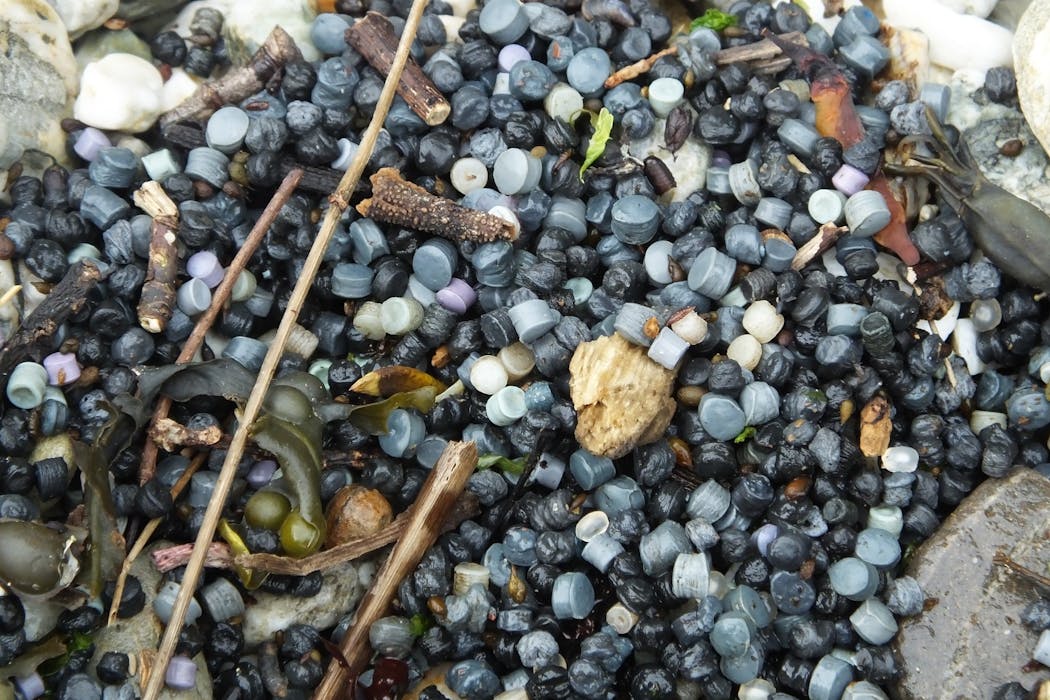
Bio-beads at Colona beach, St Austell Bay in Cornwall. Rob Wells/Cornish Plastic Pollution Coalition, CC BY-NC-ND

A recent spill of bio-beads – small plastic pellets used by some wastewater treatment facilities since the 1990s – has brought renewed attention to a problem that has been quietly accumulating in coastal waters for years.

Millions of bio-beads recently washed up onto the beach at Camber Sands in East Sussex. But this is not just another form of plastic pollution. Bio-beads can carry potentially dangerous bacteria.

Plastic bio-beads are used in wastewater treatment plants to help break down waste. They resemble the plastic pellets known as nurdles that are used as a feedstock by the plastic industry which are often found on beaches.

Bio-beads, however, are compressed, like a concertina, to maximise their surface area-to-volume ratio. This promotes the growth of bacteria that form a biofilm on their surface. These bacteria break down nutrients in the wastewater effluent and help process sewage.

Bio-beads are a relatively cheap and efficient method for treating waste. However, this efficiency comes with a significant environmental cost when these plastics escape.

The UK’s water industry insists that bio-beads shouldn’t escape from treatment facilities. They are supposed to be contained within the system by mesh screens.

Yet water companies are known to have to top up their bio-bead supplies which raises the question of how much of this plastic pollution is being released, and why.

The answer probably lies in ageing infrastructure. Many wastewater treatment works have outdated retention mechanisms that aren’t fit for purpose. Storage is another weak point.

Bio-beads have been seen in large dumpy bags or strewn across the ground in wastewater treatment plants, so they can spill before treatment processes begin.

Like any plastic, bio-beads will gradually break up into smaller particles. Fragmented bio-beads could escape into the environment as soon as they are smaller than the mesh screens used.

Bacteria-laden plastics

What makes bio-beads particularly concerning isn’t just the plastic itself – it’s what they carry. These pellets are designed to maximise bacterial growth, and when they come from sewage treatment facilities, that biofilm may include harmful bacteria, including E. coli and other pathogens dangerous to humans.

More worryingly, research – including our own studies – shows these plastics can harbour “superbug” bacteria that are resistant to antibiotics.


Read more:
How to detect more antimicrobial resistant bacteria in our waterways


Our latest research has examined how bacteria grow on bio-beads and other substrates such as polystyrene, wood and glass in the environment. By collecting samples at various points along two Cornish rivers – from hospital wastewater, upstream near Truro to the marine environment of the Fal estuary – we’ve demonstrated that antimicrobial-resistant pathogens are found on plastics sampled from source to sea.

Protected within their biofilm, each bio-bead can become a tiny vehicle transporting potential pathogens from sewage works to beaches, swimming areas and locations where shellfish are cultivated.

Our 2024 review of this rapidly growing research area suggests that plastics may promote horizontal gene transfer, the process by which antimicrobial resistance can spread between bacteria. The implications are sobering: these small plastics could be facilitating the spread of antibiotic resistance across marine environments.

Reports from 2017 show there were at least 55 wastewater treatment works around the UK using bio-beads, serving a population of at least 2 million people. There are over 10,000 sewage treatment works in the UK, so those using bio-beads comprise a very small proportion.

While exact figures on bio-bead losses remain elusive, their presence on beaches tells another story. Historic spills, including a major incident near Truro in Cornwall in 2010, have deposited billions of these pellets into coastal waters. Their black or grey colour makes them easily mistaken for food by marine wildlife, from commercially important fish and, once broken or fragmented, shellfish and organisms at the base of the food chain.

Some bio-beads pose also additional chemical risks. Many were manufactured from recycled electronics materials and contain substances like lead and bromine.

If bio-beads are found accumulated on beaches, they can be removed – but with caution. Like any material from sewage systems, they should be handled with care. And any cleanup efforts are only treating symptoms. The solution must be at source.

A solvable problem

Alternative wastewater treatment methods exist. Not all wastewater treatment works use bio-beads, proving they’re not essential. Some facilities use different plastic designs (large flat surfaces rather than floating pellets) or denser materials such as ceramic or stone that are less likely to escape.

Some plants use activated sludge (a biological treatment process where wastewater is mixed with a community of microbes) that breaks down organic pollution. Other treatment stages, such as UV processing, add further layers of protection, though these complement rather than replace the bacterial breakdown process.

By collaborating with water companies, we’re investigating whether certain plastic polymers promote antimicrobial resistance more than others. If we can identify which materials pose the greatest risk without compromising treatment efficacy, we could recommend safer alternatives.

This issue demands transparency and accountability. If water companies disclose how many bio-beads they use and how frequently they require replacement, the scale of losses could be quantified. It’s equally important that spillages are reported and pressure for more environmentally sustainable methods is sustained.

Improvements in policy based on robust scientific data are also required, in the UK and elsewhere. This was highlighted in a 2024 report) from the Ospar convention (the Oslo-Paris convention for the protection of the marine environment for the north-east Atlantic) – of which the UK is a signatory.

Better management and a phase out of bio-beads is possible. This isn’t a technical challenge. Investing in alternative treatment methods and modern infrastructure can eliminate this unnecessary source of contaminated plastic pollution from our rivers and ocean.


Don’t have time to read about climate change as much as you’d like?

Get a weekly roundup in your inbox instead. Every Wednesday, The Conversation’s environment editor writes Imagine, a short email that goes a little deeper into just one climate issue. Join the 47,000+ readers who’ve subscribed so far.


The Conversation

Dr Emily May Stevenson is a director of Beach Guardian CIC.

Pennie Lindeque does not work for, consult, own shares in or receive funding from any company or organisation that would benefit from this article, and has disclosed no relevant affiliations beyond their academic appointment.

ref. Plastic ‘bio-beads’ from sewage plants are polluting the oceans and spreading superbugs – but there are alternatives – https://theconversation.com/plastic-bio-beads-from-sewage-plants-are-polluting-the-oceans-and-spreading-superbugs-but-there-are-alternatives-269857

Cop30: five reasons the UN climate conference failed to deliver on its ‘people’s summit’ promise

Source: The Conversation – UK – By Simon Chin-Yee, Lecturer in International Development, UCL

As the sun set on the Amazon, the promise of a “people’s Cop” faded with it. The latest UN climate summit – known as Cop30, hosted in the Brazilian city of Belém – came with the usual geopolitics and the added excitement of a flood and a fire.

The summit saw Indigenous protests on an unprecedented scale, but the final negotiations were once again dominated by fossil fuel interests and delaying tactics. After ten years of climate (in)action since the Paris agreement, Brazil promised Cop30 would be an “implementation Cop”. But the summit failed to deliver, even as the world recorded a devastating 1.6˚C of global warming last year.

Here are our five key observations:

1. Indigenous groups were present – but not involved

Located in Amazonia, this was branded the summit for those on the frontlines of climate change. Over 5,000 Indigenous people were there, and they certainly made their voices heard.

However, only 360 secured passes to the main negotiating “blue zone”, compared to 1,600 delegates linked to the fossil fuel industry. Inside the negotiating rooms it was business as usual, with Indigenous groups remaining as observers, unable to vote or attend closed-door meetings.

The choice of location was nicely symbolic but logistically tough. Hosting the conference in the Amazon cost hundreds of millions of dollars in a region where many still lack basic amenities.

A stark image of this inequality: with hotel rooms full, the Brazilian government even docked two cruise ships for delegates, which per head can have eight times the emissions of a five star hotel.

2. The power of protests

But this was the second largest UN climate summit ever, and the first since Glasgow Cop26 in 2021 to take place in a country that permits real public protest. That mattered. Protests of various sizes happened every day during the two-week conference, most notably an Indigenous-led “great people’s march” on the middle Saturday.

The visible pressure helped obtain recognition of four new Indigenous territories in Brazil. It showed that when civil society has a voice it can secure wins, even outside of the main emissions negotiations.

3. US absence creates a vacuum – and an opportunity

In Donald Trump’s first turn as president, the US sent at least a skeletal group of negotiators. This time, in a historic first, America did not send an official delegation at all.

Trump recently described climate change as “the greatest con job ever perpetrated on the world”, and since returning to power the US has slowed renewables and expanded oil and gas. It even helped scuttle plans for a net zero framework for global shipping last month.

As the US is rolling back its ambition, it is allowing other oil producing countries like Saudi Arabia to ignore their own climate pledges and to try and undermine others.

China has stepped into the void and become one of the loudest voices in the room. As the world’s largest supplier of green technology, Beijing used Cop30 to promote its solar, wind and electric vehicle industries and court countries looking to invest.

But for many delegates, the absence of America came as a relief. Without the distraction of the US attempting to “burn the house down” as it did at the shipping negotiations, the conference was able to get on with the business at hand: negotiating texts and agreements that will limit global warming.

4. ‘Implementation’ through side deals – not the main stage

So what was actually implemented? This year, the main action happened through voluntary pledges, not the binding global agreement.

The Belém pledge, backed by countries including Japan, India and Brazil, committed signatories to quadruple sustainable fuels production and use by 2035.

Brazil also launched a major trust fund for forests, with around US$6 billion (£4.6 billion) already pledged for communities working to protect rainforests. The EU followed by pledging new funds for the Congo Basin, the world’s second largest rainforest.

These are useful steps, but they highlight how the biggest advances at UN climate summits now often happen in the margins, rather than in the main talks.

The outcome of those main talks at Cop30 – the Belém package – is weak, and will get us nowhere near the Paris agreement’s target of limiting global warming to 1.5˚C. Most striking is the absence of the words “fossil fuels” from the final text even though they were central to the Glasgow climate pact (2021) and the UAE consensus (2023) – and of course they represent the main cause of climate change.

5. The Global Mutirão text: a missed opportunity

One potential breakthrough did emerge in negotiating rooms: the Global Mutirão text, a proposed roadmap to “transition away” from fossil fuels. More than 80 countries signed it, from EU members to climate-vulnerable Pacific island states.

Tina Stege, climate envoy for one of those vulnerable states, the Marshall Islands, urged delegates: “Let’s get behind the idea of a fossil fuel roadmap, let’s work together and make it a plan.”

But opposition from Saudi Arabia, India and other major fossil fuel producers watered it down. Negotiations stretched into overtime, not helped by a fire that postponed discussions for a day.

When the final deal was agreed, key references to a fossil fuel phase-out were missing. There was a backlash from Colombia, due to the lack of inclusion of transition away from fossil fuels, which forced the Cop presidency to offer a six-month review as an olive branch.

This was hugely disappointing, as earlier in the summit there seemed to be huge momentum.

A widening gulf

So this was another divisive climate summit. The gulf between oil-producing countries (in particular in the Middle East) and the rest of the world has never been wider.

One positive to come out of the summit was the power of organised people: Indigenous groups and civil society made their voices heard, even if they weren’t translated into the final text.

With next year’s summit to be held in Turkey, these annual climate summits are increasingly migrating to nations with authoritarian leanings where protests are not welcome or completely banned. Our leaders keep stating that time is running out, yet negotiations themselves remain stuck in never ending circles of delays.

The Conversation

Mark Maslin is Pro-Vice Provost of the UCL Climate Crisis Grand Challenge and Founding Director of the UCL Institute for Sustainable Aviation and Aeronautics. He was co-director of the London NERC Doctoral Training Partnership and is a member of the Climate Crisis Advisory Group. He is an advisor to Sheep Included Ltd, Lansons, NetZeroNow and has advised the UK Parliament. He has received grant funding from the NERC, EPSRC, ESRC, DFG, Royal Society, DIFD, BEIS, DECC, FCO, Innovate UK, Carbon Trust, UK Space Agency, European Space Agency, Research England, Wellcome Trust, Leverhulme Trust, CIFF, Sprint2020, and British Council. He has received funding from the BBC, Lancet, Laithwaites, Seventh Generation, Channel 4, JLT Re, WWF, Hermes, CAFOD, HP, Royal Institute of Chartered Surveyors, John Templeton Foundation, The Nand & Jeet Khemka Foundation, Quadrature Climate Foundation.

Professor Priti Parikh is the Director of UCL’s Bartlett School of Sustainable Construction and Vice Dean International for Bartlett Faculty of Built Environment. She is a Fellow and Trustee for Institution of Civil Engineers. Research funding sources include UKRI, Royal Academy of Engineering, Water Aid, British Academy, Bboxx Ltd, UCL, Royal Society and British Council. Her consultancy has received funding from AECOM, Cambridge Institute for Sustainable Leadership, Water and Sanitation for the Urban Poor, UNHABITAT, Arup, ITAD and GTZ

Simon Chin-Yee does not work for, consult, own shares in or receive funding from any company or organisation that would benefit from this article, and has disclosed no relevant affiliations beyond their academic appointment.

ref. Cop30: five reasons the UN climate conference failed to deliver on its ‘people’s summit’ promise – https://theconversation.com/cop30-five-reasons-the-un-climate-conference-failed-to-deliver-on-its-peoples-summit-promise-269750

The world lost the climate gamble. Now it faces a dangerous new reality

Source: The Conversation – UK – By James Dyke, Assistant Director of the Global Systems Institute, University of Exeter

FrankHH / shutterstock

Ten years ago the world’s leaders placed a historic bet. The 2015 Paris agreement aimed to put humanity on a path to avert dangerous climate change. A decade on, with the latest climate conference ending in Belém, Brazil, without decisive action, we can definitively say humanity has lost this bet.

Warming is going to exceed 1.5°C. We are heading into “overshoot” within the next few years. The world is going to become more turbulent and more dangerous. So, what comes after failure?

Our attempt to answer that question gathered the Earth League – an international network of scientists we work with – for a meeting in Hamburg earlier this year. After months of intensive deliberation, its findings were published this week, with the conclusion that humanity is “living beyond limits”.

Exceed 1.5°C and not only do extreme climate events, like droughts, floods, fires and heatwaves grow in number and severity, impacting billions of people, we also approach tipping points for large Earth regulating systems like the Amazon rainforest and the Greenland and West Antarctic ice sheets. Tropical coral reef systems, livelihood for over 200 million people, are unlikely to cope with overshoot.

This translates to existential risks for billions of people. Not far in the future, but within the next few years for extreme events, and within decades for tipping points.

How global warming and social instability increase together:

The missed opportunities between 1997 and 2015 are the failures of the Kyoto protocol to bend the global emissions curve. There then followed a missed decade since the Paris agreement.

The beauty of Paris – getting all countries to commit collectively to cut emissions – has been undermined by the voluntary mechanisms to achieve it. So while staying well below 2°C is legally binding, the actions within national plans are not.

We are now at a critical juncture. We are at or very close to human caused environmental change that will fundamentally unpick the life-sustaining systems on Earth. These risk triggering feedback loops, for example, the accelerating die back of rainforests which would release billions of tons of carbon dioxide which would raise temperatures even further.

Ultimately that could cause the planet to drift away along the pathway to “hothouse Earth”, a scenario where even if emissions were reduced, self amplifying feedback loops would drive global temperature increases up to or even beyond 5°C. The last time the climate warmed by such an amount was tens of millions of year ago.

Well before this nightmare scenario, significant impacts are now unavoidable. Increasingly destructive storms will produce more loss and damages, more loss of life. Efforts to accelerate – or even maintain – decarbonisation could be undermined by social and political destabilisation created by climate change.

If the consequences of climate change begin to interfere with our efforts to deal with its causes, moves towards a more sustainable world risk being delayed or even entirely derailed.

But the scale of suffering is still very much up to us. We still have the ability to minimise overshoot. The best science can offer today, is a future where peak warming reaches 1.7°C before returning to within 1.5°C in 75 years.

This requires immediate action at global scale, on multiple fronts:

First, we’ll have to accelerate the fossil fuel phase out to achieve at least 5% annual global emission reductions from now on. This requires increasing nations’ decarbonisation plans by at least a factor of ten.

Second, we must transform the global food system within the next decade so it is able to absorb 3 billion tons of carbon dioxide a year.

Third, we need new ways to remove an additional 5 billion tonnes of carbon dioxide from the atmosphere each year, and store it safely in the ground. Whether by restoring ecosystems such as forests and wetlands or with new approaches that would directly remove carbon dioxide from the atmosphere, this must be done in safe and socially just ways.

Finally, we must do all we can to ensure continued “health” and resilience in nature on land and in the ocean, in order to safeguard Earth’s capacity to store carbon. All this needs to happen, simultaneously, to have a chance of limiting overshoot and come back to at or below 1.5°C of global warming.

Science is crystal clear here. Our only chance to recover back to a stable and safe climate is to accelerate the phase-out of fossil-fuels, remove carbon and invest in nature (on land and in the ocean), and do that without trading off between them.

The Conversation

The authors do not work for, consult, own shares in or receive funding from any company or organisation that would benefit from this article, and have disclosed no relevant affiliations beyond their academic appointment.

ref. The world lost the climate gamble. Now it faces a dangerous new reality – https://theconversation.com/the-world-lost-the-climate-gamble-now-it-faces-a-dangerous-new-reality-270392

Wargaming: the surprisingly effective tool that can help us prepare for modern crises

Source: The Conversation – UK – By Natalia Zwarts, Research Leader in Wargaming at RAND Europe, RAND Europe

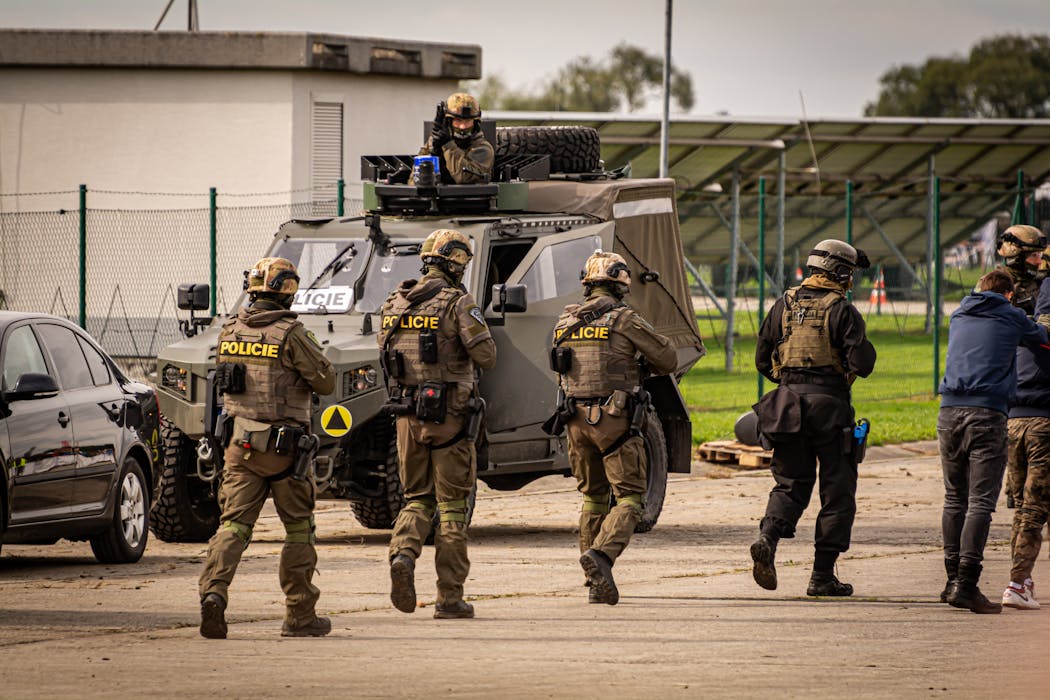
Team with army and police special forces rescue hostages in NATO wargames training. C-S/Shutterstock

Consider the following scenario. There’s a ransomware attack, enhanced by AI, which paralyses NHS systems – delaying medical care across the country.

Simultaneously, deepfake videos circulate online, spreading false information about the government’s response. At the same time, a foreign power quietly manipulates critical mineral markets to exert pressure on the economy.

The scenario is not just a theory. It is a situation waiting to be rehearsed. And research suggests an old tool called wargaming – an exercise or simulation of a threatening situation – provides the method to do exactly that. Researchers are indeed calling for a new research agenda for experimental design for such games, applied to modern scenarios.

In a world of compounding crises, the UK government has published its first-ever chronic risks analysis, delivering a stark warning. It says the threats of the 21st century are already here and they’re deeply interconnected.

From AI-driven cybercrime to biodiversity loss and demographic shifts, the report maps 26 chronic risks that are slowly eroding national security, economic resilience and social cohesion.

The analysis rightly calls for a broader response, urging collaboration across government, industry, academia and society at large.

If chronic risks are the century’s slow burns, then wargaming is the fire drill we haven’t run. In brief, wargaming is a centuries-old tool to explore “what if” scenarios by simulating real-world crises.

In a wargame, participants take on roles, usually in opposing teams, and make decisions in response to unfolding events. Depending on the scenario, participants are recruited to act in a way that would be characteristic for the military, government, industry or humanitarian organisations.

By revealing gaps, stress points and unexpected outcomes, wargaming helps decision-makers plan smarter and respond faster when the real thing hits. Ignoring these feedback loops risks turning slow moving challenges into sudden, systemic shocks.

Historically limited to traditional warfighting, it increasingly offers a way to stress-test systems against cascading threats, from resource scarcity driving geopolitical tensions to digital exclusion fuelling misinformation.

Beyond war

Wargaming is still popular among organisations across the world. The Pentagon uses red team exercises to anticipate hybrid warfare. Red-teaming includes modelling of the adversary and attempting to predict their reasoning, planning and actions.

Nato’s “locked shields” exercises simulate cyberattacks on critical infrastructure. And the EU runs tabletops, exercises that help help stress-test defence capability development plans.

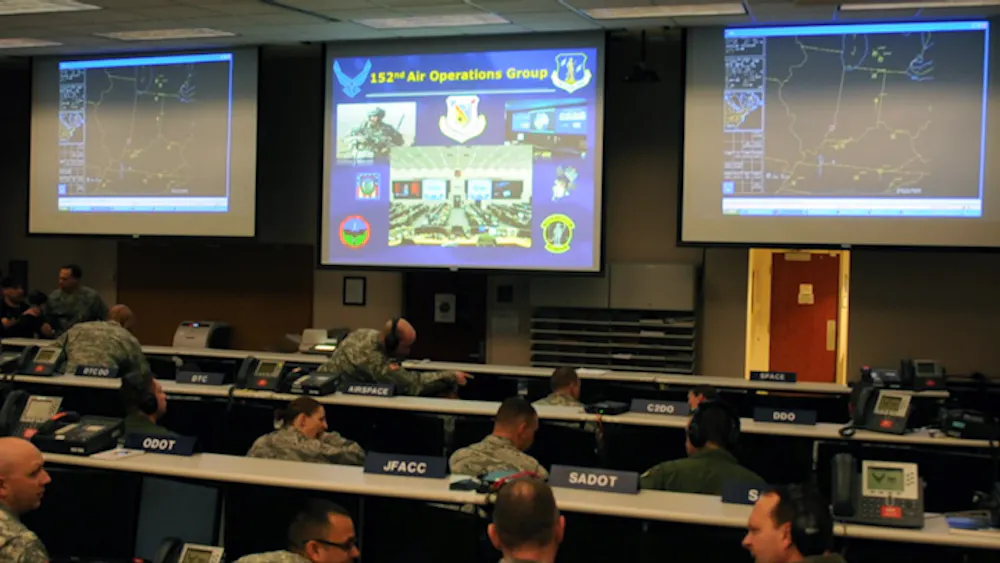
A computer-assisted wargame sponsored by the US Air National Guard (February 2015).
wikipedia, CC BY-SA

Developments in AI have recently been translated into gaming techniques. The Rand corporation has run wargames on issues from anti-microbial resistance to climate change.

Singapore has used wargaming to test urban development policies involving climate adaptation, transportation and population growth.

At a recent Rand Europe wargame examining the governance of AI in healthcare, players were asked to act as policymakers deciding whether to impose strict, moderate or minimal regulation on new AI tools such as automated transcription of doctor visits. They had to balance this with concerns about safety, privacy and equitable access.

The game illustrated how competing priorities, such as innovation speed versus regulatory oversight, shape real-world decisions. Despite the complexity of the topic, participants typically reached a consensus within minutes, revealing not only preferred policies but also the trade-offs that were revealed under pressure. The results of the game showed that regulation has to adapt to emerging risks, rather than be rigid.

Exercises like this demonstrate how wargaming can expose underlying assumptions and offer policymakers, practitioners and the public a structured way to debate difficult choices before or as they appear in the real world.

Depending on the scope of the game, you could choose to play one round or scenario, or extend it to more in-depth questions. The game results are the most relevant for those who will have to make such decisions, but it’s also very telling to provide them with pathways chosen by the public.

So what games should we be playing? The rapid evolution of crypto-based scams could be explored through a matrix game that includes financial regulators, banks and tech companies. A matrix game allows for a quick role-play of specific agendas with proposed actions judged by an expert facilitator. Participants would be divided into groups of criminals, law enforcement, industry and financial sector. They would then simulate a scenario where fraud spreads faster than enforcement can respond, revealing regulatory blind spots and communication failures.

In another exercise, policymakers could model how a terrorist group might weaponise AI-generated deepfakes. Participants from law enforcement, public health and social media platforms would need to determine how quickly they could identify and respond to the threat while maintaining public trust.

A third scenario could focus on geopolitical competition over critical minerals. A simulated trigger event involving European, Chinese and African actors would allow players to explore the impacts on trade policy, infrastructure security and diplomatic engagement.

These simulations would not predict the future, but would reveal how different people might behave when systems come under stress. Indeed, research into wargaming shows that while these tools aren’t perfect, they are extremely useful.

Wargaming offers a range of techniques suited to different risks. Matrix games allow multiple actors to make decisions in an evolving scenario. This makes them ideal for exploring uncertainty and conflicting interests. Red teaming helps organisations see their systems from the perspective of an adversary, exposing vulnerabilities that may go unnoticed in internal assessments. And tabletop exercises can help policymakers trace the second- and third-order effects of a crisis.

We conduct fire drills, flood drills and emergency alerts for physical disasters. It is time we have more opportunities to do the same for digital blackouts, deepfake terrorism and financial manipulation. These risks are not theoretical. They are already beginning to reshape our world – governments must take heed.

Reports like the chronic risks analysis are vital for naming and describing the dangers ahead. But they must be matched with tools that prepare us to navigate them. Wargaming gives us a chance to practise the future — to uncover the gaps in our systems, to rehearse our collective response, and to build the resilience we will need in the years to come.

We might not be able to predict the future perfectly given the speed of change. But we can test the options for potential futures. Wargaming is how we start.

The Conversation

The authors do not work for, consult, own shares in or receive funding from any company or organisation that would benefit from this article, and have disclosed no relevant affiliations beyond their academic appointment.

ref. Wargaming: the surprisingly effective tool that can help us prepare for modern crises – https://theconversation.com/wargaming-the-surprisingly-effective-tool-that-can-help-us-prepare-for-modern-crises-266907

Is supersonic air travel about to return, two decades after the last Concorde flight?

Source: The Conversation – UK – By Malcolm Claus, Senior Lecturer, Astronautics and Space Technology, Kingston University

The X-59 undertakes its first flight from Lockheed Martin’s Skunk Works in California. Lockheed Martin

An experimental supersonic aircraft called the X-59 took to the skies for the first time in October.

The plane lifted off from Skunk Works, the famed research and development facility in California owned by aerospace giant Lockheed Martin. It cruised for about an hour, before landing at Edwards Air Force Base 85 miles (136km) away.

Nasa’s X-59 is designed to test technology for quiet supersonic flight. In the US, loud sonic booms led to a five-decade ban on non-military supersonic aircraft flying over land.

The ban was lifted this year by the US president Donald Trump, via an executive order. In the UK, supersonic flight over land needs to be specifically approved by the Civil Aviation Authority (CAA), which functions independently of government.

The X-59 aims to turn sonic booms into a quieter “sonic thump”. So if this proves possible, how likely is it that we will see a return to commercial supersonic air travel – not seen since the Concorde passenger jet was retired in 2003?

Beginning in the 1950s, the race to achieve commercial supersonic travel was a long and technically challenging one. Teams from the UK and France, consisting of the companies British Aircraft Corporation and Aerospatiale, the US (Boeing) and the Soviet Union (Tupolev) worked on three aircraft to meet this challenge.

Out of these three competing designs only two: Concorde (UK and France) and the Tupolev TU-144 (Soviet Union) produced prototype aircraft and follow-on planes that entered commercial operation.

In the US, the Boeing 2707 aircraft would have carried between 250-300 passengers, three times that of Concorde, and would have done so at a higher cruise speed. However, rising costs, uncertainty about the market for flights and concerns about noise led to the cancellation of the American plane in 1971.

The Soviet TU-144 took to the skies first, on December 31, 1968, while Concorde’s first flight took place in March 1969. The service life of the TU-144 was relatively short, however, lasting from 1975 to 1983.

It initially carried mail, in preparation for passenger services which began in November 1977. However, safety incidents and concern about the economic viability of the plane led to these flights were cancelled in June 1978.

Once passenger flights had been discontinued, the then-Soviet airline Aeroflot operated an updated variant, called the TU-144D, on freight-only services. The withdrawal from service of the TU-144 left Concorde as the only operating commercial supersonic passenger aircraft.

As the standard bearer for supersonic travel, Concorde carried passengers from London and Paris to destinations such as New York, Washington, Rio de Janeiro and Mexico City. But its routes were limited by the US ban on non-military supersonic aircraft flying over land.

The plane operated successfully until July 2000, when Air France flight 4590 crashed shortly after take-off, killing 109 passengers and four people on the ground. Flights by both British Airways and Air France were suspended after the crash, returning only in November 2001. But a lack of confidence and other factors led to the retirement from service of Concorde in 2003.

But within 13 years of the withdrawal of Concorde there was fresh impetus for supersonic travel. In 2016, Nasa launched the Quiet Supersonic Technology (Quesst) project. The aim of Quesst is to investigate aircraft designs which would reduce the sonic boom typically associated with supersonic flight. The centrepiece of the Quesst project is the X-59 an experimental aircraft built by Lockheed Martin at its experimental Skunk Works site in California.

Flying experiment

The X-59 has been designed, manufactured and flown to test both the theories and assumptions relating to low boom technology and to demonstrate that such an aircraft can operate over land without causing disruption on the ground.

The aircraft will act as a flying experiment, collecting data from its test flights which will be disseminated within the aerospace community. This will support current efforts by the companies Boom Supersonic and Spike Aerospace, both of which are proposing their own supersonic aircraft.

So how does the X-59 achieve this? The short answer is in its configuration. The aircraft design has been reached after detailed design work both through extensive computer simulations and through the use of a wind tunnel test programme.

The final configuration which has been reached in effect reshapes the shockwaves produced during supersonic flight, changing the associated boom to a quieter sound. As a result, however, the X-59 does not resemble any conventional aircraft flying today.

The unusual design of the X-59 prevents the shock waves generated at supersonic speed from merging (which would produce the loud boom).

The long, thin tapered nose and other features of the aircraft will mitigate against this by producing a “quieter” boom. This nose, resembling a spear, means that the cockpit for the pilot is located almost halfway down the length of the aircraft.

Its location means that a conventional cockpit window, as seen on all aircraft,` is not possible. Consequently, a number of high-resolution cameras and monitors allow the pilot to fly the aircraft and see what is going on outside.

The X-59 will provide useful flight data on supersonic boom mitigation, which could be applied to future aircraft.

But even when boom mitigation has been addressed, there are still a number of challenges which need to be overcome in order for a new generation of supersonic aircraft to enter service.

A clear and well developed business case will be needed, taking into account the potential customer volume and number of aircraft required. The economics will need to be worked out, such as how much the aircraft costs to operate, its fuel costs and the price of maintenance.

There will also be environmental issues to consider, such as the fuel efficiency of new propulsion systems that can operate for long times under supersonic conditions.

If these challenges can’t be overcome, the rebirth of commercial supersonic travel might remain a distant dream.

The Conversation

Malcolm Claus does not work for, consult, own shares in or receive funding from any company or organisation that would benefit from this article, and has disclosed no relevant affiliations beyond their academic appointment.

ref. Is supersonic air travel about to return, two decades after the last Concorde flight? – https://theconversation.com/is-supersonic-air-travel-about-to-return-two-decades-after-the-last-concorde-flight-269990