How we created a climate change museum to inspire hope among eco-distressed students

Source: The Conversation – UK – By William Finnegan, Head of Programmes in Lifelong Learning in Social Sciences, University of Oxford

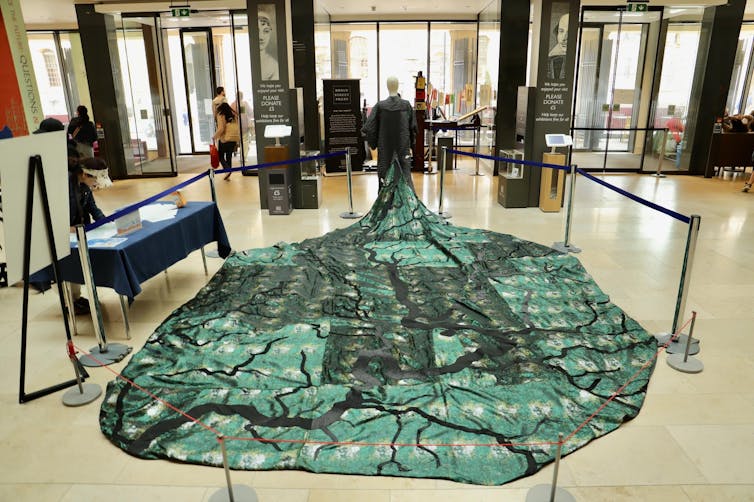
Student contributions were added to a participatory artwork representing the Thames watershed as a 15-metre-long wearable robe.
Authors provided, CC BY

In 2023, a visit to a local state secondary school to discuss our project, The Museum of Climate Hope, led to an unexpected discussion. A few weeks earlier, an eminent climate scientist had presented a harrowing tale of climate apocalypse to the school’s sixth form. But the students told us the scientist’s presentation, intended as a wake-up call to apathetic teenagers, had backfired.

After that “doom and gloom” message, a teacher at the school told us some students who were already concerned about climate change were showing signs of eco-distress. This term has been coined by environmental psychologists to capture the negative emotional responses – worry, anxiety, despair – to environmental change.

In contrast, teachers observed that other students who were less engaged with the issue seemed to be coping by further distancing themselves from the issue.

Subsequently, we took a group of these students to the Oxford Botanic Garden and and the university’s History of Science Museum to help us identify objects to include in our own museum’s trail.

The authors’ digital storytelling project explores climate futures with young people.

The Museum of Climate Hope was designed to foster constructive engagement with the climate crisis. It can be experienced in person – as a trail of objects spread through the University of Oxford’s gardens, libraries and museums – or digitally through our interactive multimedia platform.

Climate in the curriculum

For most students in England, opportunities to learn about climate change are rare. The Curriculum and Assessment Review, published in November 2025, included education on climate change and sustainability as one of five applied knowledge areas, based on feedback from young people, parents and carers. Yet it also noted there is “currently minimal explicit inclusion of climate education in the national curriculum”.

The review has reinforced calls from researchers for climate to be more fully integrated across school subjects, from geography to history. It also noted that enhancing climate education will involve changes not only in content but also pedagogy – the way we teach.

In collaboration with other sustainability education researchers and practitioners, we have proposed a “pedagogy of hope”. We hope this will support teachers as they implement the recommendations of the review “to equip learners to rise to the challenges of a sustainable future”.

Our museum incorporates pedagogies of hope into both structured and self-directed learning. The objects on our trail represent positive stories of resilience, innovation and transformation, rather than negative stories of loss and destruction.

For example, the Oxford University Museum of Natural History is known for having an extinct dodo in its collection. But the young people who helped curate our trail thought that swifts and beavers would be better symbols for exploring successful conservation and rewilding projects.

Another item on our trail is a bronze-age cauldron at the Ashmolean Museum. This large cooking vessel illustrates how resources were shared in those communities, while its signs of repair over many centuries indicate material value and craftsmanship, in contrast to today’s throwaway culture.

The cauldron was discovered in – and is believed to have been a gift to – the River Cherwell. So it also represents its users’ reciprocal relationship with the natural world.

Moving from museums to the classroom, we spent a term working with local primary school students to incorporate environmental themes into activities combining arts and science. Our sessions focused on understanding climate change as a local phenomenon that every child experiences directly. One example was the increased flooding of the nearby Cherwell river.

These students were introduced to another Museum of Climate Hope object in one of the Bodleian Libraries: the 400-year-old Sheldon tapestry map of Oxfordshire. They found their school and homes on the tapestry, and contrasted it with contemporary maps of the same area – helping them to explore local people’s changing relationships with rivers and landscapes. The students then created their own textile art of local nature that was important to them.

Their contributions were added to a participatory artwork representing the Thames watershed – the land area that includes the River Thames and its tributaries – as a 15-metre wearable robe. This Tamesis Unweaving robe combines elements of the Sheldon tapestry map with objects on the trail found in the Pitt Rivers Museum – a Hawaiian cloak made of feathers and an Evenki parka coat made of reindeer skin.

The wearable robe
Student contributions were added to this artwork representing the Thames watershed as a 15-metre-long wearable robe.
Author provided, CC BY-SA

For some of these young people, the first step towards climate action was creatively connecting to the local environment, and depicting a sustainable future through art.

Back at the sixth form assembly in Oxford, we were invited to do a follow-up talk. We spoke about the power of cultural change – not simply technological innovation – in response to climate change, and the importance of constructive hope.

Most of the students humoured our invitation to close their eyes and travel in time to the year 2051, to visit a future museum. It’s an activity inspired by the 1851 Great Exhibition and 1951 Festival of Britain, as well as our research on speculative digital storytelling.

They were encouraged to think of objects that might be put on a pedestal or relegated to a museum as part of the transition to a more sustainable future. We also asked them to think of any people who might have their stories told in this future museum.

One student yelled out the name of someone else in the room – claiming they were the smartest person he knew, someone who could definitely solve any problem the future could throw at us. Laughter rippled through the assembly, tension was released, and we all felt a little more hopeful.


The climate crisis has a communications problem. How do we tell stories that move people – not just to fear the future, but to imagine and build a better one? This article is part of Climate Storytelling, a series exploring how arts and science can join forces to spark understanding, hope and action.


The Conversation

The Museum of Climate Hope project is supported by the Public and Community Engagement with Research Fund and the Cultural Programme at the University of Oxford.

Tina Fawcett receives funding from UKRI and the Askehave Foundation.

Anya Gleizer does not work for, consult, own shares in or receive funding from any company or organisation that would benefit from this article, and has disclosed no relevant affiliations beyond their academic appointment.

ref. How we created a climate change museum to inspire hope among eco-distressed students – https://theconversation.com/how-we-created-a-climate-change-museum-to-inspire-hope-among-eco-distressed-students-269544

Gut microbes may have links with sleep deprivation

Source: The Conversation – UK – By Lewis Mattin, Senior Lecturer, Life Sciences, University of Westminster

Pixel-Shot/Shutterstock

Sleep is one of the essential physiological needs for human survival, alongside food, water and air. But sleep is socially driven, influenced by environmental and personal factors, and a recent study suggests it may be affected by fragments from bacteria.

Historically scientists have thought it unlikely that gut microbes affect physiological sleep regulation. The recent study, published in Frontiers in Neuroscience, indicated bacterial cell wall components (peptidoglycan) have been found in areas of the brain called the brainstem, olfactory bulb and hypothalamus.


Read more:
Preserving barramundi, and the barra and chips


Peptidoglycan, also known as murein in scientific lore, is a strong, mesh-like layer outside the plasma membrane of most bacterial cells. This helps contain the bacteria’s shape and rigidity. Without peptidoglycan, bacteria would just be little water balloons.

The recent study suggested that concentration of peptidoglycan seems to increase in periods of sleep deprivation, or changes in sleeping patterns. This is a sign that the gut microbiota might play a role in sleep quality.

This work was carried out on nine male mice which were housed in a 12-hour light/dark cycle. Measurements were taken over 48 hours to map brain activity cycles during sleep and rest. Afterwards the mice were euthanised. Different areas of the brain were separated immediately so isolated areas could be measured independently for peptidoglycan levels.

The research has been conducted and designed in a rigorous fashion. But the study exclusively used adult male mice. Although animal models can be translated to humans, the crossover in microbiota research is weak. Animal research into microbiota can only tell us so much about what is happening in our guts because the environment in which humans and mice live is vastly different.

For example, a breakthrough paper in 2006 raised mice without any microorganisms in their bodies, known as germ-free mice, and then transplanted some of them with the gut microbiota from obese mice. The study found the mice who had the gut microbiota transplant gained more body fat than germ free mice colonised with microbiota from lean mice. This breakthrough research suggested that the gut microbiota might contribute to weight gain and a knock-on effect obesity.

But follow up studies using humans fecal microbiota transplantation from lean humans into obese adolescents did not lead to weight loss. Findings in mice can suggest mechanisms but not necessarily predict outcomes in humans.

Furthermore the recent sleep research on mice has ignored the other 49% of the population, females. It’s a gap that risks leaving half the world in the dark about sleep health.

So when it comes to understanding the gut microbiota, does it really matter what organisms are found in the gastrointestinal tract of rodents and how this might interfere with their sleep patterns?

Our brain is traditionally considered sterile and protected by the blood brain barrier. This tight system blocks microbes and molecules from entering the brain in healthy people. There is no evidence to suggest that there is a brain microbiome unlike within the digestive system and on our skin.

However, previous studies have shown fragments that relate to bacteria such as peptidoglycan and lipopolysaccharides can be detected within the brain. This is probably because the fragments are smaller than bacteria. The blood brain barrier and intestinal wall are more permeable in conditions like sleep deprivation, inflammation, ageing or even after strenuous exercise.

Woman lying on grey bedsheets with her arms over her face.
Could there be a link between sleep deprivation and gut bacteria?
fizkes/Shutterstock

Day-to-day variations in the cells that make up the wall of your intestines may be affected due to the direct effects of circadian regulation on the junctions between the cell membrane and its other compartments. These junctions form a seal that prevents the passage of molecules and ions between cells, essentially controlling what passes through.

When these junctions relax, this allows the organisms found in the GI tract to enter the blood, which are then transported around the body. It’s unclear whether that is good or bad but leaky junctions have been associated with inflammatory bowel disease.

Some research suggests that our microbiota is closely linked through the gut-brain axis. Although large amounts of research on the gut-brain axis have been conducted on rats and mice, there are very few translational links between what has been researched in animals and what actually happens in the human body.

This means researchers would need to make a massive investment in researching how the gut microbiome interacts with our organs and other physiological systems with large-scale human interventions.

Since there is still much we do not understand about the gut microbiome, we are a long way off this kind of scientific insight. However, this study does reflect growing scientific and public interest in the intersection between human microbiology and neuroscience. It may be that we are only beginning to appreciate just how interconnected the human body and everything in it is.

The Conversation

Lewis Mattin is affiliated with The Physiological Society, The Society for Endocrinology, In2Science & UKRI funded Ageing and Nutrient Sensing Network.

ref. Gut microbes may have links with sleep deprivation – https://theconversation.com/gut-microbes-may-have-links-with-sleep-deprivation-266928

England’s national curriculum review misses opportunity to revitalise language learning

Source: The Conversation – UK – By Joseph Ford, Senior Lecturer in French Studies, School of Advanced Study, University of London

Rawpixel.com/Shutterstock

The decline of languages education in England is a familiar and depressing story. Take-up of French at GCSE is down from 25% in 2009-10 to 18% in 2024-25. German has halved in the same period from 10% to 5%.

There is also a significant gap in take-up at GCSE by disadvantaged pupils (34%) compared with those from more privileged backgrounds (50%).

In March 2025, the interim report of a review of England’s national curriculum diagnosed languages as a particular problem area. Languages education was deemed to be furthest away from the principles set out by the review panel. These included an engaging, coherent, knowledge-rich and inclusive curriculum, and the involvement of teachers in its design and testing.

The review’s final report, now published, recommends a much sharper focus on the provision of languages in primary schools. It encourages a smoother transition from primary to secondary, which has been shown to improve languages take-up even in areas with relatively high numbers of pupils from disadvantaged backgrounds.

Its proposal of the introduction of new “stepped” qualifications, where learners can build up and bank their progress over time, is promising. This has been embraced by the government response to the review and organisations such as the UK Association for Language Learning.

The report points to Hackney in London as an example of good practice. Here, there is a focus on teaching only one language – Spanish – and sharing teacher training and professional development across schools. Figures show that the local authority had the highest take-up of Spanish across England. Students were also more likely to continue with languages at GCSE.

A more joined-up approach is welcome. However, there is a danger that by focusing on a single European language, schools risk ignoring the huge diversity of languages that surround pupils in some of the most multilingual areas of England.

Existing languages

Celebrating pupils’ existing multilingualism brings great benefits. Research shows embracing the languages spoken by children improves educational outcomes for pupils across subjects such as English, maths and science.

Happy primary school children on play equipment
Many children are already surrounded by other languages.
Rawpixel.com/Shutterstock

Some efforts are already being made here. Charity World of Languages, Languages of the World has created a curriculum which engages with the languages pupils already speak at home in an attempt to dissolve the hierarchy of European languages. It works with pupils between the ages of seven and 15 to value the study of languages already spoken in communities around schools. It centres history, culture and communication, while not shying away from contested topics such as migration.

Yet, despite initiatives like this, there is no mention in the curriculum review of that wider sphere of languages that constitutes such a rich tapestry of multicultural life in towns and cities across England.

A core caveat within the curriculum review stems from recent changes made to the existing curriculum for French, German and Spanish GCSEs. This new curriculum has not yet reached its first examinations, which will happen in summer 2026. The review recommends the evaluation of that new GCSE at the end of its first teaching cycle in 2026.

This will be an important moment for teachers to offer feedback on the new specification. The previous languages curriculum received criticism for excluding pupils from disadvantaged backgrounds because exam questions asked for responses based on personal experience, such as describing holidays. Teacher feedback will show whether the government has met its stated aims to make the new curriculum more accessible and relevant for pupils.

It might also be the moment for the government to consider more explicit inclusion of culture in the curriculum at GCSE. How an enhanced awareness of the effects of climate change and the development of digital skills can be built into the study of languages, in line with the review’s wider recommendations, should also be on the table. For instance, language classes could include discussing how the social and political contexts of climate change differ internationally, including in Indigenous cultures.

Finally, the curriculum review revisits what many experts see as the disastrous decision by the government in 2004 to make languages non-compulsory at GCSE. But it stops short of recommending languages become compulsory once again.

This is a shame. According to polling by YouGov, taking a compulsory language learning is supported by a clear majority of Britons. What’s more, research has estimated that removing the language barrier with Arabic, Chinese, French and Spanish-speaking countries could increase UK exports annually by about £19 billion.

Making a language compulsory at GCSE would also help arrest the now catastrophic decline in languages uptake across the educational pipeline, as university languages departments face closure.

Most importantly, promoting the study of languages would foster more nuanced, culturally and linguistically informed responses to the sorts of divisive political discourse increasingly on display in Britain today. Learning languages promotes cross-cultural understanding and tolerance of ambiguity in an increasingly ambiguous world.

The Conversation

Joseph Ford does not work for, consult, own shares in or receive funding from any company or organisation that would benefit from this article, and has disclosed no relevant affiliations beyond their academic appointment.

ref. England’s national curriculum review misses opportunity to revitalise language learning – https://theconversation.com/englands-national-curriculum-review-misses-opportunity-to-revitalise-language-learning-269532

Jair Bolsonaro arrested amid fears he planned to flee as coup trial nears conclusion

Source: The Conversation – UK – By Felipe Tirado, PhD Candidate in Law, King’s College London

Brazil’s former president, Jair Bolsonaro, was taken into custody on November 22 after it was determined there was a “high risk” of him attempting to flee to a foreign embassy. The arrest took place as the Brazilian supreme court was analysing Bolsonaro’s final appeal against a 27-year prison sentence for leading a coup plot after losing the 2022 election.

Bolsonaro was arrested after he broke his ankle monitor. This happened right after his son, Senator Flávio Bolsonaro, called for a vigil outside the former president’s house. The supreme court justice, Alexandre de Moraes, said Bolsonaro’s escape would have been “facilitated by the confusion caused by the demonstration called by his son”.

Federal agents took Bolsonaro to a police facility in the Brazilian capital of Brasília ahead of a custody hearing. He was subsequently taken to the Papuda prison complex, also in Brasília, where he is expected to begin serving his sentence. Bolsonaro’s sons, allies and lawyers said he wasn’t trying to flee.

Ahead of the ankle monitor incident, Bolsonaro’s lawyers had requested that he serve his sentence at home. They cited his health issues and mentioned that the supreme court had recently granted this benefit to another of Brazil’s former presidents, Fernando Collor, who was convicted of corruption earlier in 2025. The court rejected this request.

The coup plot was first discovered during investigations into an insurrection in Brasília in January 2023, where thousands of Bolsonaro supporters stormed the heart of the Brazilian government. Investigators uncovered evidence that the riot was part of an attempted coup.

They subsequently found that the plot also included a plan to assassinate Brazil’s current president, Luiz Inácio Lula da Silva, as well as his vice-president, Geraldo Alckmin, and Justice Moraes. Bolsonaro and several other high-ranking officials were indicted for their involvement in the plot in early 2025, with convictions handed down in September.

Those convicted alongside Bolsonaro include Colonel Mauro Cid, army generals Walter Braga Netto, Augusto Heleno and Paulo Sérgio Nogueira, and former navy commander Almir Garnier Santos. Also convicted were former justice minister Anderson Torres and former intelligence agency director Alexandre Ramagem.

Brazil’s supreme court ordered the arrest of Ramagem on November 21. He fled Brazil in September and has been living in the US since then. Ramagem’s lawyers and political allies informed the press that they did not know he had left the country.

Bolsonaro received the longest sentence of the eight main conspirators. The sentences handed out to Netto, Heleno, Nogueira, Garnier Santos, Torres and Ramagem range from 16 to over 26 years in prison. Cid, who was Bolsonaro’s former main military aide, will serve a two-year house arrest sentence after cooperating with the investigation.

The sentencing and arrest of Bolsonaro and his co-conspirators is a significant moment for Brazil. Never before have members of the country’s political and military elite been held to account for staging a coup.

Supreme court verdict

In total, 34 people have been formally indicted in connection with the coup plot. The supreme court has accepted all but one of these criminal complaints. It still has to analyse the charges against prominent right-wing influencer Paulo Figueiredo, who has not not yet presented his defence. Figueiredo is the grandson of Brazil’s last dictator, João Figueiredo, and lives in the US.

In October, the supreme court panel responsible for the case convicted seven other defendants for their roles in the coup plot. These people were accused of running a disinformation campaign to spread fake news about the 2022 election and attacking Brazil’s state institutions. Their sentences range from seven to 17 years in prison.

Those convicted were former army officers Ailton Barros, Ângelo Denicoli, Giancarlo Rodrigues, Guilherme Almeida and Reginaldo Abreu, as well as federal police agent Marcelo Bormevet. Carlos Moretzsohn Rocha, who was accused of drafting the report used to challenge the 2022 election results, was also sentenced to prison.

More recently, on November 18, the panel convicted nine of ten defendants who were accused of planning the plot’s violent actions. These actions involved the plans to assassinate Lula, Alckmin and Moraes.

One of these defendants, an army general called Estevam Theophilo, was acquitted due to a lack of evidence. And two others, colonels Márcio Resende and Ronald Araújo, may benefit from non-prosecution agreements.
The sentences of the other seven range from 16 to 24 years in prison.

The panel is set to judge six other defendants in December who are accused of planning and coordinating other aspects of the plot.

Reckoning with the past

Over the past few decades, some Latin American countries have held their former leaders accountable for crimes committed while in office. Argentina pioneered this trend in 1985 with the so-called “trial of the juntas”.

This trial ended with the conviction of former dictators Jorge Rafael Videla, Roberto Eduardo Viola and Leopoldo Galtieri, as well as other leading figures of the military regime of 1976 to 1983 for crimes against humanity. Argentina’s last dictator, Reynaldo Bignone, has also been convicted multiple times for such crimes since 2010.

Elsewhere in the region, Uruguayan courts convicted Gregorio Álvarez for crimes against humanity in 2007. Álvarez was the last president of Uruguay’s dictatorship, ruling from 1981 until 1985. Former Peruvian leader Alberto Fujimori was also convicted for human rights violations while in office in 2009.

However, coup plotters and former dictators have generally remained unpunished for their crimes in most Latin American countries. Perhaps the most prominent example is Augusto Pinochet, who was never held to account for his brutal dictatorship in Chile.

Pinochet was arrested in London in 1998 on an international warrant for his alleged role in human rights abuses, but was released on medical grounds before facing trial. Once back in Chile, further charges against him were also blocked by the country’s courts.

The arrest of Bolsonaro represents a long overdue reckoning with Brazil’s authoritarian past and another step in Latin America’s progress towards accountability.

The Conversation

Felipe Tirado receives funding from the Centre for Doctoral Studies – King’s College London.

ref. Jair Bolsonaro arrested amid fears he planned to flee as coup trial nears conclusion – https://theconversation.com/jair-bolsonaro-arrested-amid-fears-he-planned-to-flee-as-coup-trial-nears-conclusion-269554


Abraham accords: Israel’s latest push to improve Arab relations could stall over Palestinian statehood

Source: The Conversation – UK – By Simon Mabon, Professor of International Relations, Lancaster University

Mohammed bin Salman wants to bring Saudi Arabia into the Abraham accords, the network of agreements to normalise relations between Israel with other countries in the Middle East and, increasingly, beyond. Donald Trump would have enjoyed hearing this when the Saudi crown prince visited the White House on November 18.

It was Trump’s first administration that brokered the initial agreements between Israel and the UAE, Bahrain, Morocco and Sudan in 2020. It’s an achievement that is often trumpeted by his supporters as the key foreign policy win of the US president’s first term in power.

But the Saudi leader’s plan to normalise with Israel comes with a price. He wants to see a “clear path [towards a] two-state solution”, he told reporters as he sat alongside Trump in the Oval Office.

The Abraham accords were the first instance of Arab countries formally recognising Israel since 1994, when Jordan and Israel signed a peace agreement. For Trump, Benjamin Netanyahu and others, the signing of the accords was a diplomatic breakthrough. It would, they believed, usher in a new age of peace and prosperity across the Middle East driven by economic aspirations.

But little substantive progress has been made on securing additional signatories since 2020. And when Kazakhstan announced its plan to join the accords and normalise diplomatic relations with Israel at the start of November, it came as something of an anticlimax.

Rumours had begun to spread about a new signatory – and advocates of the accords were almost certainly hoping for a more high-profile signatory. But the Kazakh move reveals much about the current status of the accords.

Big deal

For Trump and Israel’s prime minister, Benjamin Netanyahu, the accords were a significant move – a major effort to reshape the Middle East. But things have not quite gone according to plan in the five years since the first agreements were signed.

Prior to the terrorist attacks of October 7 2023, there was a growing expectation that Saudi Arabia would soon join the accords. Diplomatic overtures from Israel to Saudi Arabia and vice versa, were built on a form of tacit security collaboration that had long endured between the two states. This collaboration was in part driven by a shared fear of Iranian aspirations across the Middle East.

The apparent threat from Iran was a key driving force behind the accords. The UAE, Bahrain and Israel had all expressed concerns about Tehran’s nefarious activity across the Middle East.

According to US inteligence documents published by Wikileaks, Hamad bin Isa Al Khalifa, the king of Bahrain, had been telling US officials of his desire to normalise with Israel as far back as 2007.

By 2023, however, Saudi Arabia was beginning to see Iran as less of a threat. The two countries had embarked on their own process of normalisation earlier that year. They signed a deal to restore full diplomatic and security ties, an agreement seen by some in the Gulf as an indication that the region was moving towards what one scholar called a “post-American Gulf era”.

The Beijing-mediated agreement pointed to a new way of thinking about regional politics, driven by a desire for a more stable regional security environment shaped by states from the region rather than outside it.

Meanwhile, Hamas’s attack on Israel on October 7 2023 and Israel’s destruction of Gaza halted Saudi overtures to Israel. Since then, Saudi officials have declared that, in order for the kingdom to normalise relations with Israel, the establishment of a Palestinian state with East Jerusalem as its capital is a necessary step.

In the months that followed, Bin Salman was increasingly steadfast in his refusal to normalise relations with Israel without a Palestinian state. In the summer of 2024, he reportedly expressed fears about being assassinated because of normalisation with Israel. He indicated he was still pursuing normalisation, but very publicly linked this aspiration with a requirement for Palestinian statehood.

Reassessing Middle East threats

Israeli policy across the Middle East since the October 7 attacks has also shifted threat perceptions away from Iran. Israel’s strikes on Gaza, Lebanon, Syria, Iran, Qatar, Yemen, Iraq and Tunisia – coupled with raids on sites across the West Bank – have created an increasingly unstable regional security landscape.

The focus is now on deeper inter-regional collaboration. This was emphasised in the way that, in the aftermath of Israeli strikes on Iran, leaders from across the Middle East almost unanimously condemned the attacks.

At the same time, Iran has held discussions with the UAE and Saudi Arabia over an arrangement for a uranium enrichment programme which would ensure that Iran’s programme did not provide a means to developing nuclear weapons.

The words and deeds of Israeli politicians have also angered many. Benjamin Netanyahu has repeatedly spoken of his ongoing efforts to prevent the establishment of a Palestinian state.

Israel’s finance minister Bezalel Smotrich has repeatedly called for the annexation of the West Bank. The national security minister, Itamar Ben-Gvir, has provoked anger and concern across the Muslim world by praying at the site of the al-Aqsa Mosque in Jersualem, violating the agreement that only Muslims should worship there.

There was been little or no progress on the implementation of the second phase of Trump’s 20-point Gaza peace deal – a deal that has no concrete steps towards the establishment of a Palestinian state. When you consider this, and the Israeli political elite’s explicit rejection of a Palestinian state, it feels unlikely there will be any more signatories to the Abraham accords for the foreseeable future.

The Conversation

Simon Mabon receives funding from Carnegie Corporation of New York and the Henry Luce Foundation. He is affiliated with the Foreign Policy Centre.

ref. Abraham accords: Israel’s latest push to improve Arab relations could stall over Palestinian statehood – https://theconversation.com/abraham-accords-israels-latest-push-to-improve-arab-relations-could-stall-over-palestinian-statehood-269998

EU proposal to delay parts of its AI Act signal a policy shift that prioritises big tech over fairness

Source: The Conversation – UK – By Jessica Heesen, Head of Research Group, media ethics, philosophy of technology & AI, International Center for Ethics in the Sciences and Humanities (IZEW), University of Tübingen

The roll-out of the European Union’s Artificial Intelligence Act has hit a critical turning point. The act establishes rules for how AI systems can be used within the European Union. It officially entered into force on August 1 2024, although different rules come into effect at different times.

The European Commission has now proposed delaying parts of the act until 2027. This follows intense pressure from tech companies and from the Trump administration.

Rules contained in the act are based around the risk posed by an AI system. For example, high risk AI is required to be very accurate and be overseen by a human. This was to apply to companies developing high-risk AI systems posing “serious risks to health, safety or fundamental rights” from August 2026 or a year later. But now organisations deploying these technologies, whose purposes would include analysing CVs or assessing loan applications, will now not come under the bill’s provisions until December 2027.

The proposed delay is part of an overhaul of EU digital rules, including privacy regulations and data legislation. The new rules could benefit businesses, including American tech giants, with critics calling them a “rollback” of digital protections. The EU says its “simpler” rules would help “European companies to grow and to stay at the forefront of technology while at the same time promoting Europe’s highest standards of fundamental rights, data protection, safety and fairness”.

The negative reaction to the proposals exposes transatlantic fault lines over how to effectively govern the use of AI. The first international speech by Vice President JD Vance in February 2024 offers a useful insight into the current US admininstration’s attitudes towards AI regulation.

Vance claimed that excessive regulation of the sector could “kill a transformative industry just as it’s taking off”. He also took aim at EU regulations that are relevant to AI such as the General Data Protection Regulation (GDPR) and Digital Services Act (DSA). He said that for smaller firms, “navigating the GDPR means paying endless legal compliance costs”.

He added that the DSA created a burden for tech companies, forcing them to take down content and police “so-called misinformation”. Vance further pledged that the US would not accept “foreign governments … tightening the screws” on American tech companies.

On the offensive

By August of this year, the Trump administration had launched its own AI policy offensive, including a plan to accelerate AI innovation and national AI infrastructure. It announced executive orders to streamline data infrastructure, promote the export of American AI technologies and prevent what the administration sees as the potential for bias in federal AI procurement and standards.

It also sought deregulation, open-source development (where the code for AI systems is available to developers) and “neutrality”. The last of these appears to mean resisting what the White House sees as “woke” or restrictive governance models.

Additionally, President Trump has criticised the EU’s Digital Services Act, threatening additional tariffs in response to further fines or restrictions on US tech companies. EU responses varied. While some policymakers were reportedly shocked, others reminded US leaders that EU rules apply equally to all companies, regardless of origin.

So how can this gap over AI policy be bridged? In March 2025, a group of interdisciplinary US and German scholars – ranging in disciplines from computer science to philosophy – gathered at the University of North Carolina in the town of Chapel Hill. Their aims were to tackle a series of questions about the state of transatlantic AI governance and to make sense of evolving tech negotiations between the US and EU.

The recommendations from the meeting were summarised in a policy paper. The scholars saw the combination of US innovation strengths and EU human rights protections as key to meeting the urgent challenges of designing AI systems that benefit society.

The policy paper said: “The interconnected nature of AI development makes isolated regulatory approaches insufficient. AI systems are deployed globally, and their impacts ripple through international markets and societies.”

Major challenges identified in the paper include algorithmic bias (where AI based systems favour certain sections of society or individuals), privacy protection and labour market disruption (including but not limited to intellectual property theft). Also mentioned were the concentration of technological power and adverse environmental consequences from all the energy required.

Based on human rights and social justice principles, the policy paper made a series of recommendations that range from clear guidelines for ethical AI deployment in the workplace to mechanisms for safeguarding reliable information, and preventing potential pressure on academic researchers to support particular viewpoints.

Ultimately, the goal is a democratic and sustainable AI that is developed, deployed, and governed in ways that uphold values like public participation, transparency and accountability.

To achieve that, policy and regulation must strike a difficult balance between innovation and fairness. These variables are not mutually exclusive. For this all to work, they must co-exist. It’s a task that will require transatlantic partners to lead together, as they have for the better part of the last century.

The Conversation

Jessica Heesen received funding from the Excellence Strategy at the University of Tübingen to travel to the University of North Carolina at Chapel Hill.

Tori Smith Ekstrand does not work for, consult, own shares in or receive funding from any company or organisation that would benefit from this article, and has disclosed no relevant affiliations beyond their academic appointment.

ref. EU proposal to delay parts of its AI Act signal a policy shift that prioritises big tech over fairness – https://theconversation.com/eu-proposal-to-delay-parts-of-its-ai-act-signal-a-policy-shift-that-prioritises-big-tech-over-fairness-268814

Does BBC Civilisations gets its four stories of collapse correct? Experts weigh in

Source: The Conversation – UK – By Jay Silverstein, Senior Lecturer in the Department of Chemistry and Forensics, Nottingham Trent University

In four episodes, the BBC’s Civilisations series tells the story of the fall of the Romans, Aztecs, Egypt’s Ptolemies and Japan’s Edo Samurais. The show tells these stories through a combination of recreated dramatic scenes, explanation from experts and discussions of objects from the British Museum. Here, four experts in each period have reviewed the episodes and shared their recommendations for further reading.

The Collapse of the Roman Empire

The canonical date of the fall of the Western Roman Empire is 476, when the general Odoacer deposed the last emperor, Romulus Augustulus – a child who had been on the throne for less than a year. I teach my students that this relatively muted event was probably not noticed by many ordinary people at the time, as very little likely immediately changed in their daily lives.

Instead, the much more dramatic events of 410 were the real collapse moment of the ancient world: the metropolis of Rome, the capital of the empire, was sacked by King Alaric and his Gothic army. As one of the expert contributors to this episode puts it, you would remember where you were when the news reached you.

The episode’s key achievement is to depict the way that Roman mistreatment of the Goths – a Germanic-speaking people many of whom fled war with Huns into the Roman Empire – effectively threatened their survival and backed them into a corner. While historians have long discussed these realities, it’s refreshing to see this message presented in such a compelling and humane way to the wider public. The contemporary resonances are obvious, and while history cannot provide us with answers, it can give us food for thought.

Further reading
To learn more about the end of the Western Roman Empire, I would recommend starting with the very readable and provocative introduction by Bryan Ward-Perkins, The Fall of Rome: And the End of Civilization. It looks at the very real changes that ordinary people would have experienced as a centuries-old empire fell apart.

Tim Penn is Lecturer in Roman and Late Antique Material Culture at University of Reading

The Last Days of the Ptolemies in Egypt

Neither the gradual decline nor the final fall of the Ptolemaic dynasty in Egypt in 30 BC is accurately realised in this episode. It presents a simplistic narrative riddled with factual inaccuracies. It also features inadvertent misreadings or deliberate misrepresentations that play fast and loose with the historical chronology of the reign of Cleopatra VII, and the significant historical figures that were part of it.

Such inaccuracy is not helped by the fact that, with the exception of two contributors, no one participating is actually an expert on this specific period of ancient Egyptian history. One prominent figure is not even an historian or archaeologist at all.

Most of the artefacts that are incorporated in an attempt to provide insight don’t date to this period of Egyptian history, and lead the narrative off in irrelevant directions. It’s not clear who the intended audience is, nor what they are expected to take away from this, beyond appreciation for the sumptuous dramatisation that unfolds in the background. There was potential here, such as the contribution of climate change and the wider geopolitical context, that was unfortunately squandered.

Further reading

If you want to read about Cleopatra’s reign specifically, then Duane W. Roller’s Cleopatra: A Biography is good. For the Ptolemaic dynasty more broadly, from start to end, I’d recommend Lloyd Llewelyn-Jones’s The Cleopatras: The Forgotten Queens of Egypt.

Jane Draycott is Senior Lecturer in Ancient History at the University of Glasgow

The Collapse of the Aztec Empire

The episode on the Aztecs focuses on the Aztec emperor Moctezuma in the 15th century. It offers a refreshing shift from the Eurocentric narrative that often paints him as indecisive while glorifying his nemesis, the conquistador Hernán Cortés. Here, the roles are reversed: Cortés’s ambition and brutality are exposed, while Moctezuma appears as a thoughtful and capable leader. Their confrontation feels less like a simple conquest and more like a high-stakes chess match – Moctezuma had Cortés in check until one audacious move changed history.

If you’re looking for a comprehensive account of the Aztec collapse, this episode won’t deliver that. Experts such as Matthew Restall, known for challenging colonial myths, are used sparingly, and the story remains selective. Key events are skipped, and contradictory sources are left out. All of this is inevitable in a single-episode format.

What it does offer is a visually stunning, well narrated introduction to imperial collapse, framed through iconic artefacts that bring the past to life.

Further reading

To learn more about the fall of the Aztecs, read
The True History of the Conquest of New Spain, Volume 4 by Bernal Díaz del Castillo – a Spaniard who served under Cortés during conquest of the Aztec Empire. There are many translations but the first edition of the text, edited by Mexican historian Genaro García and translated by Alfred Percival Maudslay, is my pick.

Jay Silverstein is Senior Lecturer in the Department of Chemistry and Forensics at Nottingham Trent University

The End of the Samurai in Japan

This episode deals with the military encounter between the American “black ships” (kurofune 黒船) under naval commodore Matthew Perry and the Tokugawa shogunate 徳川幕府 between 1852 and 1855. The interviewed historians are certainly familiar with the event, yet the conceptual framing is not quite right.

“Traditional Japan” is introduced as an unchanging and isolated place. In reality, Japan had lived in close economic and cultural symbiosis with continental East Asia since at least the rise of Buddhism in the 6th century.

A 1603 proclamation, known as sakoku, by the Tokugawa shogunate did make Japan a hostile place for Christians and foreigners. However, the Protestant Dutch, arch-enemies of their former Spanish overlords, were granted the right to send annual expeditions. These became the basis for Japan’s “Dutch studies” (rangaku 蘭學), an exchange of scientific knowledge which is ignored by the programme. Meanwhile, contact with China and Korea continued, albeit under stricter regulations.

The documentary dwells on the image of a powerful and conservative samurai class without alluding to the social transformations which had eroded its influence. The capital Edo was not only the largest city on earth, but a veritable engine of urbanisation and commercialisation.

This documentary is still a pleasure to watch, but the premise that Perry’s western gunboats led to the “fall” of Japanese civilisation is erroneous.

Further reading
If you want to know more about the political and social turmoil that led to the end of the samurais and the Tokugawa shogunate, I recommend The Emergence of Meiji Japan by Marius B. Jansen.

Lars Laamann is Senior Lecturer in the History of China At Soas, University of London


This article features references to books that have been included for editorial reasons, and may contain links to bookshop.org. If you click on one of the links and go on to buy something from bookshop.org The Conversation UK may earn a commission.


Looking for something good? Cut through the noise with a carefully curated selection of the latest releases, live events and exhibitions, straight to your inbox every fortnight, on Fridays. Sign up here.


The Conversation

The authors do not work for, consult, own shares in or receive funding from any company or organisation that would benefit from this article, and have disclosed no relevant affiliations beyond their academic appointment.

ref. Does BBC Civilisations gets its four stories of collapse correct? Experts weigh in – https://theconversation.com/does-bbc-civilisations-gets-its-four-stories-of-collapse-correct-experts-weigh-in-270114

Why hosting the UN climate summit in the Amazon was so important, despite the disappointing outcome

Source: The Conversation – UK – By Alexander C. Lees, Reader in Ecology and Conservation Biology, Manchester Metropolitan University

Storm clouds build over the Cop30 host city of Belém. Alexander Lees, CC BY-NC-ND

Extreme heat, fires and flooding – all hallmark consequences of climate change – directly influenced this year’s UN climate change conference Cop30 in Belém, Brazil.

For the first time, this annual climate summit was held in Amazonia,
a place at the frontline of climate change. The pivot from the two previous conferences in petrostates Azerbaijan and UAE to a base in the world’s largest tropical forest (albeit in one the world’s largest oil producing countries) was jarring.

As Amazonian researchers, and past and present residents of the city, we saw the potential for Cop30 to move discussions further forward than its predecessors in two key ways.

First, and in contrast to many previous gatherings that have sidelined them – or suppressed them altogether – Indigenous and marginalised voices were impossible to ignore at Cop30. They have helped shape media narratives and discourse in the blue zone, the venue that hosted events in hundreds of dedicated spaces for national and organisational bodies.

The Belém gathering saw the largest Indigenous participation in Cop history, with around 900 registered representatives. The Cúpula dos Povos, a parallel event hosted at the Universidade Federal do Pará, gave many more Indigenous peoples and local communities a platform to argue against the status quo of relative inaction.


Read more:
Behind the scenes in Belém: The Conversation’s report from Brazil’s UN climate summit


Hosting Cop30 in Belém broke down the physical travel barriers for many potential attendees from Indigenous peoples and local communities. The summit organisers went beyond the normal attempts at tokenism in engaging them in discussions.

The region’s extensive river networks allowed many Indigenous peoples and local communities from across Amazonia to reach Belém by boat. They held a symbolic “people’s flotilla” with over 500 people in 200 vessels, sailing to demand their voices be heard in calling for climate justice and an end to mining and large infrastructure projects affecting their territories.

Meanwhile, the disruptive influence of some Indigenous protesters and their allies in breaching security lines and temporarily obstructing access to the blue zone hopefully focused minds inside, in addition to garnering global headlines.

Indigenous delegates at the opening of the 30th Conference of the Parties to the United Nations Framework Convention on Climate Change (Cop30).
Ricardo Stuckert / PR, CC BY-ND

The second reason to be hopeful from Cop30 was that the realities of climate and land use change are jarringly obvious in Amazonia. Belém’s oppressive heat and humidity were evident even within the main blue zone arenas. Many delegates were visibly uncomfortable.

This catalysed an official complaint from UN climate chief Simon Stiell about the climate conditions in the Cop venue, asking for “a clear delivery plan on how temperatures will be brought down within the next 24 hours”. The parallels to the goals of the wider negotiation process were hard to miss.


Read more:
Cop30: five reasons the UN climate conference failed to deliver on its ‘people’s summit’ promise


The city’s local climate became a protagonist in its own right. A huge thunderstorm during one afternoon flooded many roads and brought down trees across the city, causing power outages.

A recent study has shown that Belém is now experiencing more and more days of high “wet bulb” temperatures (which determine the comfort level of the atmosphere). Such temperatures can lead to deadly heat stress. Continued warming could make many parts of the tropics unlivable.

Social justice as climate justice

These climate consequences will disproportionately be felt by the less affluent, and significant social inequalities were laid bare to delegates travelling through the urban area – despite some major investment. The need to foreground social justice as climate justice, as argued by Brazilian president Luiz Inácio Lula da Silva in his opening speech, was visibly evidenced by the poverty in some suburbs and stark inequalities.

For many delegates flying into Belém, this will have been their first time in a tropical forest region. But this is the most heavily deforested region in Amazonia – a fact that is painfully evident to anyone flying in from the south on a clear day.

In a Cop30 venue on the campus of the Brazilian Agricultural Research Corporation, our team guided delegates, including heads of state, royalty and CEOs of large multinationals on an interpretive trail through a regenerating patch of rainforest. Some visitors were moved to tears to experience a tropical forest and hear about its importance for climate and biodiversity.

This underscores the power of hosting Cop in such a critically important ecosystem. People could also see how a forest can grow back, if given the chance.

The biome and region were much more than just a venue or educational opportunity. The fate of the Amazon and other tropical forests became a focal point of many of the blue zone discussions, clarifying strong climate and nature links.

This facilitated a narrative shift towards a search for the enabling conditions of forest protection, the value of biodiversity, and the importance of community-led stewardship.

This prominence of both nature and forest citizens is key, as these are fundamental to climate justice and the development of fair and effective adaptation and mitigation strategies. For example, forest fires became a central theme in week two (when the blue zone itself was evacuated owing to an electrical fire).

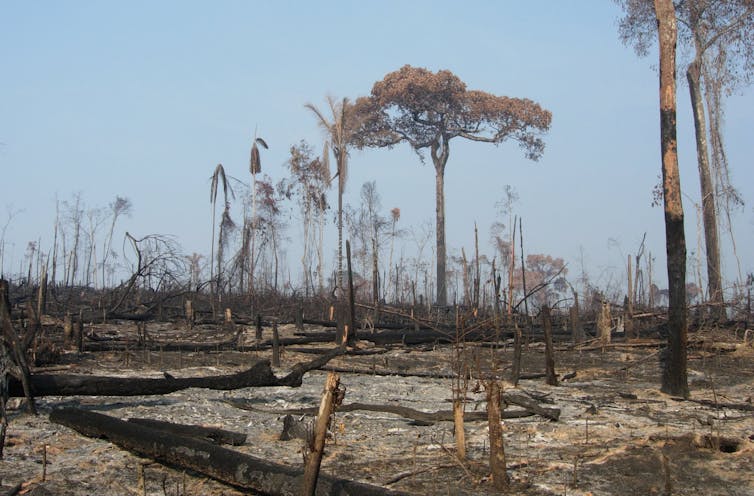
Vestiges of rainforest near the town of Novo Progresso in the Brazilian state of Pará – while the fire in the blue zone attracted press coverage, the location of the Cop also drew attention to threats to the Amazon.
Alexander Lees, CC BY-NC-ND

However, while a stronger focus on nature is essential, the failure to address strategies for ending fossil fuel emissions was the bitter outcome of Cop30. The presentation of the updated global carbon budget showed that we have only four years left to stay within 1.5°C of warming. That’s clearly an impossible task.

Although Belém helped bring the social and ecological effects of climate change to the forefront, the final declaration (which unbelievably contained no direct reference to fossil fuels) demonstrated once again that vested interests remain the strongest barrier to progress, and that climate justice risks continuing as mere rhetoric.


Don’t have time to read about climate change as much as you’d like?

Get a weekly roundup in your inbox instead. Every Wednesday, The Conversation’s environment editor writes Imagine, a short email that goes a little deeper into just one climate issue. Join the 47,000+ readers who’ve subscribed so far.


The Conversation

Alexander C. Lees receives funding from DEFRA’s GCBC programme, the BNP Paribas Foundation’s Climate and Biodiversity Initiative and UKRI. He is a Trustee of the British Ornithologist’s Union.

Joice Ferreira receives funding from the Brazilian National Council for Scientific and Technological Development, DEFRA’s GCBC programme and the BNP Paribas Foundation’s Climate and Biodiversity Initiative.

Jos Barlow receives funding from UKRI, DEFRA’s GCBC programme, the BNP Paribas Foundation’s Climate and Biodiversity Initiative. He is a Trustee of WWF-UK.

ref. Why hosting the UN climate summit in the Amazon was so important, despite the disappointing outcome – https://theconversation.com/why-hosting-the-un-climate-summit-in-the-amazon-was-so-important-despite-the-disappointing-outcome-269841

The three spectres hanging over Rachel Reeves’ make-or-break budget

Source: The Conversation – UK – By Renaud Foucart, Senior Lecturer in Economics, Lancaster University Management School, Lancaster University

As the UK prepares for the budget announcement, familiar debates are taking shape. Should Chancellor Rachel Reeves cut welfare spending? Or reform the “triple lock” on state pensions?

Other debates focus on revenue: how should she raise money without breaking Labour’s manifesto promise not to increase taxes on working people? But these discussions are being held in a strange vacuum, where the three enormous expenditures that led the UK to this point are not mentioned.

COVID debt, energy support schemes and Brexit have fundamentally shaped the UK’s financial woes. Yet voters and politicians alike seem determined not to talk about them. Instead, they’re treated as shocks imposed on the country, although they involved hugely consequential political choices.

Gloomy vibes accompany this Advent budget, and Britain’s awkward collective amnesia is preventing the country from learning the lessons needed for future crises and from talking honestly about the best route forward.

The ghost of COVID past

The COVID pandemic required unprecedented government intervention. Between 2020 and 2022, the UK’s spending watchdog, the Office for Budget Responsibility estimates, support measures totalled £169 billion or 7% of UK GDP. Most of it (£100 billion) went on direct support for things like the furlough scheme.

In hindsight, the vaccine roll-out was one key moment when the country showed its ability to deliver on a massive scale. Some other decisions were less glorious.

There was a general lack of transparency in the purchase of health equipment during the first wave of the pandemic, and the Eat Out to Help Out scheme to support hospitality led to a further increase in infections..

But there is very little discussion of the most important, unanswered questions. Despite a long inquiry examining government failings, there has been no debate about how much risk we as a country are willing to take, and how much we are willing to pay in order to reduce that risk.

COVID support schemes increased public debt from 80.4% of GDP in 2018 to 107.4% in 2021. The government paid close to zero interest on the debt at the time.

But now, higher interest rates make it a huge burden on taxpayers. Debt interest spending is higher than the budget for education, more than twice as big as it was in 2018. This is why Reeves now appears so determined to bring down UK debt levels.

We also know the cost lockdowns put on schoolchildren. But we know very little about the cost of doing less, or the current choice to stop vaccinating people.

Perhaps the main hit on UK budget capacity comes from a global pandemic, something that will happen again in the future. The focus is on putting the finances back on track without discussing how to manage similar trade-offs next time.

The ghost of our present energy transition

When Russia invaded Ukraine and energy prices spiked, the UK faced a choice: reduce demand or subsidise consumption. It chose the latter. The government stepped in with massive support packages to pay people’s energy bills. This cost £78.2 billion, or more than 4% of GDP (compared to less than 3% on average in Europe).

There were strong arguments for this approach. Allowing fuel poverty to spike during a cost-of-living crisis would have been terrible, and there was little time to target the policy. But to be clear about what happened: the public was given huge handouts to avoid having to change lifestyles, technology or consumption patterns.

This happened in the middle of an energy transition. The goal, ostensibly, is to decarbonise, reduce dependence to fossil fuels from dictators, and to modernise infrastructure.

These are complex decisions that require public support, some level of sacrifice, but also a clear collective commitment that change is inescapable. But this is not how the country is approaching these challenges, having just demonstrated that when energy costs rise the government will step in.

Just like COVID debt, UK taxpayers carry the cost of energy support debt while sweeping the decisions that caused it under the rug.

The ghost of Brexit yet to be

The UK’s relationship to Brexit appears more confused than ever. Only 11% of British adults think Brexit is more a success than a failure, and 56% would vote to rejoin the EU. Yet many tout Reform UK leader Nigel Farage as the frontrunner to be the next prime minister while also blaming him (among others) for Brexit’s failures.

This may be because Brexit has largely disappeared from the public’s radar, as Prime Minister Keir Starmer starts to move towards more integration with the EU.

anti-brexit protesters waving a placard reading populism leaves us poor.
The figures are in and they’re not good – Brexit has shaved 6-8% off UK GDP.
Ink Drop/Shutterstock

Conversations on the topic tend to do everything to avoid reopening old wounds. But economists are slowly realising the full extent of the damage caused to the economy. An unprecedented comprehensive study relying on comparisons with other nations and also on detailed data from Bank of England business surveys estimates that Brexit has reduced UK GDP by 6% to 8%. These figures were at the most pessimistic end of the estimates at the time of the referendum.

To put this into perspective, with UK tax receipts at 40% of GDP, a GDP that was 7% higher would give £77 billion extra a year to the chancellor. This is more than half of the 2024-25 budget deficit of £137 billion.

Yet, there has been no massive trade deal with the US and no attempt to replace the EU in any major way. The UK is paying a hefty price for having chosen one of the hardest possible versions of Brexit, but is yet to define what economic gain this could bring.

COVID debt, energy support and the Brexit deficit are the three ghosts that will haunt this budget – ghosts that no one wants to face. The UK cannot prepare for future pandemics without learning from how it handled COVID.

It will not complete its energy transition without confronting the choices made about who bears the costs of energy security. And it will not develop a coherent economic strategy without assessing what to do with Brexit. Until the UK faces up to these issues, it will be left discussing minor austerity measures and hoping for a Christmas miracle.

The Conversation

Renaud Foucart does not work for, consult, own shares in or receive funding from any company or organisation that would benefit from this article, and has disclosed no relevant affiliations beyond their academic appointment.

ref. The three spectres hanging over Rachel Reeves’ make-or-break budget – https://theconversation.com/the-three-spectres-hanging-over-rachel-reeves-make-or-break-budget-270388

Inquiry says COVID lockdowns could have been avoided – they’re right

Source: The Conversation – UK – By Mark Woolhouse, Professor of Infectious Disease Epidemiology, University of Edinburgh

Alexey Fedorenko/Shutterstock.com

The UK was one of the most locked down countries in the world during the COVID pandemic, but this was not inevitable – it was a failure of public health policy.

That should be the lasting legacy of the UK COVID inquiry’s latest report, not a critique of politicians no longer in office.

In a public health emergency, saving lives will always be the first priority, but even as COVID raged, it was never a binary choice between harsher restrictions or more deaths. The choice was between different ways to protect people from a dangerous virus.

In 2020, governments that had never previously contemplated lockdowns imposed them anyway. On March 23, the UK population was ordered to stay at home, without any assessment of how much harm this would do to the economy, education, access to healthcare and the wellbeing of everyone – especially children.

The vast scale of the resulting damage shows why avoiding lockdowns must be a priority for policymakers in future pandemics.

I gave evidence to that effect to the COVID inquiry myself. I also listened to testimony from politicians, officials, doctors and epidemiologists. But I heard surprisingly little about how COVID could have been tackled without lockdowns, even though everyone has had years to reflect on this question.

Instead, witness after witness argued that the problem with the March 2020 lockdown was that it came too late. Matt Hancock, the UK’s then health minister, thought it should have come three weeks earlier, but one week was the majority view.

So, the inquiry was justified in making that point in their report. Backing it up with the claim, based on a mathematical model, that it would have saved more than 20,000 lives is more contentious. Historians distrust counterfactuals, and it makes no difference if one is expressed in equations rather than words.

Despite making that claim, the inquiry doesn’t like lockdowns. “Far from it,” said the inquiry’s chair, Baroness Hallett, when she introduced her report. She explained that if action had been taken earlier, then lockdowns “might not have been necessary at all”.

That’s correct: earlier action can be less drastic action. There is no need for draconian measures intended to drive down the number of cases if you don’t let them rise in the first place.

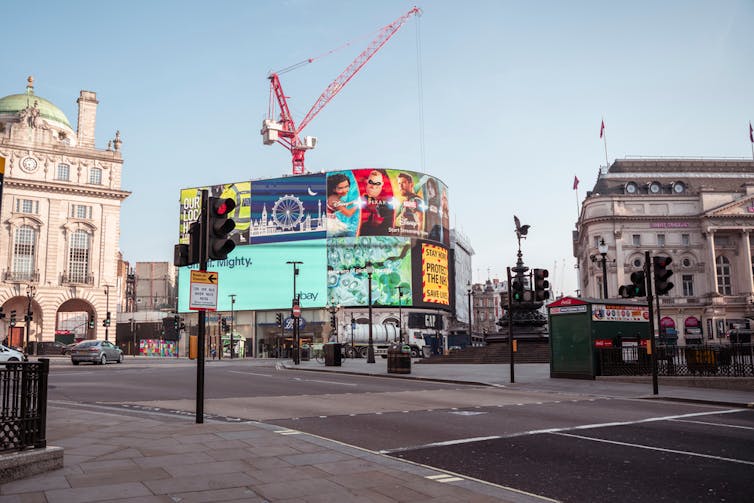
Piccadilly Circus during lockdown. No pedestrians.
The UK was one of the most locked down countries in the world.
Jam Travels/Shutterstock.com

More moderate precautions from respiratory hygiene to self-isolation of people with COVID were enough to keep essential services going, even to make professional sports possible, long before there were vaccines. Next time, basic interventions must be identified more quickly, and rolled out faster and wider than they were in 2020.

The inquiry’s report also concludes that more should have been done to protect those most vulnerable to COVID: the elderly, frail and infirm. This should have been the priority throughout, but it was overshadowed by lockdown — a strategy that did not do enough to protect care home residents, who faced far greater risks than the children no longer able to go to school.

“Cocooning”, ensuring those around them are virus free, is the most effective way of protecting the vulnerable. The cumbersome PCR tests used early in the pandemic were not ideal for this purpose. Lateral flow devices were far better, yet this straightforward technology was not largely deployed for almost two years.

When advisers stop offering alternatives

The next pandemic may be different from COVID, so more generic lessons must be learned too. The most pressing one is why it took so long to intervene effectively, with February 2020 described as a “lost month”.

The inquiry concluded that the quality of the UK’s political leadership was a major barrier, but when the next pandemic arrives, it will again be a case of whoever is in the hot seat. Other considerations are more controllable.

Much better preparedness planning, real-time data collection, and competent public health agencies are all important. So are more resilient national health services, though their current state makes that harder to deliver.

Then there is the approach to giving scientific advice. I write as a former member of COVID advisory committees to the UK and Scottish governments, and the inquiry report describes my attempts to push for strong and urgent action from mid-January 2020. That I failed is no surprise; throughout that period, the UK’s highest-level advisory committee, Sage, was not conveying the same sense of urgency, to the despair of some of its own members.

As the pandemic progressed, there were repeated tensions between a government that did not want to go back into lockdown and advisers who were now reluctant to suggest anything else. I heard senior scientists tell the inquiry that the test, trace and isolate scheme had limited potential, that cocooning was too difficult, mass testing would not deliver, and localised restrictions were insufficient.

The few witnesses who rejected this counsel of despair were in a clear minority.
Yet all these interventions succeeded at other times or places.

Given what it had been told, the best the inquiry could do was endorse an abbreviated form of lockdown called a circuit-breaker; it was all that was left on the table. The COVID pandemic might have played out differently if advisers had engaged more constructively with alternatives to lockdown at the time.

This matters because policy should be informed by science but not driven by scientific advisers presenting limited options. It’s patronising to act as though policymakers will be paralysed into inaction if they hear more than one idea. Yet a senior adviser told the inquiry that advisers should “err on the side of giving unequivocal advice earlier”.

Buried deep in the report are two recommendations that point in the opposite direction. First, advisory committees should be more diverse and entertain a wider range of views. Second, they should seek to give the government options.

Last week’s COVID inquiry report fuels a vital debate that was difficult to have in 2020, even among advisers. If that makes lockdowns less likely when the next pandemic arrives, then the exercise will have been worthwhile.

The Conversation

Mark Woolhouse holds grants from the European Union and the Wellcome Trust. He was previously a member of the UK’s advisory group on modelling SPI-M-O, the Scottish Government’s Covid-19 Advisory Group and Standing Committee on Pandemic Preparedness. He has been a consultant for the Coalition for Epidemic Preparedness. He wrote a book on the pandemic response, The Year The World Went Mad (Sandstone Press, 2022), which has been entered into evidence by the UK Covid Inquiry.

ref. Inquiry says COVID lockdowns could have been avoided – they’re right – https://theconversation.com/inquiry-says-covid-lockdowns-could-have-been-avoided-theyre-right-269827