Environmental pressures need not always spark conflict – lessons from history show how crisis can be avoided

Source: The Conversation – UK – By Jay Silverstein, Senior Lecturer in the Department of Chemistry and Forensics, Nottingham Trent University
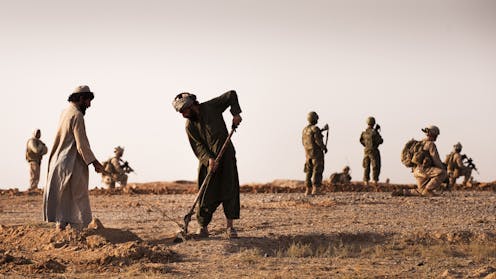
Afghan farmers plough a field while US soldiers patrol in Helmand province in 2010.
ResoluteSupportMedia / Flickr, CC BY-ND

The expectation that competition for dwindling resources drives societies towards conflict has shaped much of the discourse around climate change and warfare. As resources become increasingly vulnerable to environmental fluctuations, climate change is often framed as a trigger for violence.

In one study from 2012, German-American archaeologist Karl Butzer examined the conditions leading to the collapse of ancient states. Among the primary stressors he identified were climate anxieties and food shortages.

States that could not adapt followed a path towards failure. This included pronounced militarisation and increased internal and external warfare. Butzer’s model can be applied to collapsed societies throughout history – and to modern societies in the process of dissolution.


Wars and climate change are inextricably linked. Climate change can increase the likelihood of violent conflict by intensifying resource scarcity and displacement, while conflict itself accelerates environmental damage. This article is part of a series, War on climate, which explores the relationship between climate issues and global conflicts.


Bronze age aridification in Mesopotamia from roughly 2200BC to 2100BC, for example, is correlated with an escalation of violence there and the collapse of the Akkadian empire. Some researchers also attribute drought as a major factor in recent wars in east Africa.

There is a wide consensus that climatic stress contributes to regional escalations of violence when it has an impact on food production. Yet historical evidence reveals a more complex reality. While conflict can arise from resource scarcity and competition, societal responses to environmental stress also depend on other factors – including cultural traditions, technological ingenuity and leadership decisions.

The temptation to draw a direct correlation between climate stress and war is both reductionist and misleading. Such a perspective risks surrendering human agency to a deterministic “law of nature” – a law to which humanity need not subscribe.

Catalysing transformation

In the first half of the 20th century, researchers grappled with the Malthusian dilemma: the fear that population growth would outpace the environment’s carrying capacity. The reality of this dynamic has contributed to the collapse of certain civilisations around the world.

These include the Maya and Indus Valley civilisations in Mesoamerica and south Asia respectively. The same applies to the Hittite in what is now modern-day Turkey and the Chaco Canyon culture in the US south-west.

Civilisations affected by climate stress:

A table documenting examples of civilisations affected by climate stress.
Many civilisations have been affected by climate stress in the past.
Jay Silverstein, CC BY-NC-ND

However, history is equally rich with examples of societies that have successfully averted crisis through innovation and adaptation. From the dawn of agriculture (10,000BC) onward, human ingenuity has consistently expanded the boundaries of environmental possibility. It has also intensified the means of food production.

Irrigation systems, efficient planting techniques and the selective breeding of crops and livestock enabled early agricultural societies to flourish. In Roman (8th century BC to 5th century AD) and early medieval Europe (5th to 8th centuries AD), the development of iron ploughshares revolutionised soil cultivation. And water-lifting technologies – from the Egyptian shaduf to Chinese water wheels and Persian windmills – expanded arable land and intensified production.

In the 19th century, when Europe’s population surged and natural fertiliser supplies such as guano became strained, the Haber-Bosch process revolutionised agriculture by enabling nitrogen to be extracted from the atmosphere. This allowed Europe to meet its growing demand for food and, incidentally, munitions.

Danish economist Esther Boserup’s work from 1965, The Conditions of Agricultural Growth, challenged the Malthusian orthodoxy. It demonstrated that population pressure can stimulate technological innovation. Boserup’s insights remain profoundly relevant today.

As humanity confronts an escalating environmental crisis driven by global warming, we stand at another historic inflection point. The reflexive response to climate stress – political instability and conflict – should be challenged by a renewed commitment to adaptation, cooperation and innovation.

The measuring shaft of a nilometer.
A nilometer, which was used to gauge the optimal time to open agricultural canals in ancient Egypt.
Baldiri / Wikimedia Commons, CC BY-NC-SA

Dwindling military superiority

There are many examples of societies successfully overcoming environmental threats. But our history is also full of failed civilisations that more often than not suffered ecological catastrophe.

In many cases, dwindling resources and the lure of wealth in neighbouring societies contributed to invasion and military confrontation. Droughts have been implicated in militaristic migration in central Asia, such as the westward movement of the Huns and the southward push of the Aryans.

Asymmetries in military power can encourage or deter conflict. They offer opportunities for reward or impose strategic constraints. And while military superiority has largely shielded the wealthiest nations in the modern era, this protection may erode in the foreseeable future.

Natural disasters that erode security infrastructure are becoming increasingly frequent and severe. In 2018, for example, two hurricanes caused a combined US$8.3 billion (£6.2 billion) in damage to two military facilities in the US. There has also been a proliferation of inexpensive military technologies like drones.

Both of these developments could create new opportunities to challenge dominant powers. Under such conditions, increases in military conflict should be expected in the coming decades.

In my view, dramatic action must be taken to avoid a spiral of conflict. Ideals, knowledge and data should be translated into political and economic will. This will require coordinated efforts by every nation.

The growth of organisations such as the Center for Climate and Security, a US-based research institute focused on systemic climate and ecological security risks, signals movement in the right direction. Yet such organisations face a steep climb in their efforts to translate geopolitical climate issues into meaningful political action.

One of the main barriers is the rise of anti-intellectualism and populist politics. Often aligned with unregulated capitalism, this can undermine the very strategies needed to address the unfolding crisis.

If we are to avoid human tragedy, we will need to transform our worldview. This requires educating those unaware of the causes and consequences of global warming. It also means holding accountable those whose greed and lust for power have made them adversaries of life on Earth.

History tells us that environmental stress need not lead to war. It can instead catalyse transformation. The path forward lies not in fatalism, but in harnessing the full spectrum of human creativity and resilience.

The Conversation

Jay Silverstein does not work for, consult, own shares in or receive funding from any company or organisation that would benefit from this article, and has disclosed no relevant affiliations beyond their academic appointment.

ref. Environmental pressures need not always spark conflict – lessons from history show how crisis can be avoided – https://theconversation.com/environmental-pressures-need-not-always-spark-conflict-lessons-from-history-show-how-crisis-can-be-avoided-262300

Two seventh-century people found with west African ancestry – a story of diversity and integration in early Anglo-Saxon society

Source: The Conversation – UK – By Duncan Sayer, Professor in Archaeology, University of Lancashire

In 2022, archaeologists worked on the ancient DNA from a number of early medieval cemeteries, and found two individuals that stood out. One was from Updown Eastry in Kent, known as Updown girl, and the other was a young man from Worth Matravers in Dorset. Both were dated to the 7th century and both appeared to have west African heritage.

Two recent papers on these findings, along with other discoveries, highlight that English people from this time with west African heritage spanned generations and social status. The burials of these individuals also show that they were integrated into their respective communities. For example, Updown girl was buried next to her maternal relatives.

As a result, the presence of African heritage should not be a surprise. Early medieval society was much richer and more globally connected than most people believe.

Updown Eastry is a cemetery associated with the early Anglo-Saxon Kentish elite and part of a royal network. Updown girl was aged between 11 and 13 at her time of death and was buried around the middle of the seventh century.

An analysis of her autosomal DNA (which derives from both parents) found she was 67% continental northern European and 33% west African – most closely related to modern-day Esan and Yoruba populations in Nigeria. One of her great grandparents was 100% west African. Some of her maternal relatives were buried close by and their ancestry derived from northern Europe.

The second burial was of a young man aged between 17 and 25 at the time of his death. He was found in a grave with an unrelated adult male in a small cemetery that was in use for around 100 years, with his burial dated between AD605 to AD650.

Analysis of the site shows that the burial population had predominantly (77%) western British and Irish ancestry. Worth Matravers contained four primary family groups mostly related along the maternal line, suggesting a degree of matrilocality (where women remain after marriage) within this community. The young man also stood out because his Y-chromosome DNA was consistent with west African ancestry (25%) coming from his grandfather.

Some, modern ideas of medieval England paint it as an insular place with little or no diversity. However, England was much more connected to the rest of the world and its society was, as a result, much less homogenous than we imagine. Some early Anglo Saxon’s had brown eyes and African Ancestors.

Finds connecting Britain to the world

Royal burials like that at Sutton Hoo, Suffolk, and Prittlewell, Essex, contained objects from far afield, including Byzantine silver bowls and a jug from the eastern Mediterranean.

Amethysts and garnets have been found in seventh century jewellery and these stones were mined in Sri Lanka and India. Analysis of loop-like bag openings found in female graves from the fifth to seventh century revealed that these were made from African elephant ivory.

The Byzantium reconquest of north Africa in AD634 to AD635 provided new sources of sub-Saharan gold. In the west of Britain, fragments of red slip ware (distinctive Byzantium amphora vessels or pottery) have been found at sites associated with elites, like Tintagel in northern Cornwall. There is also evidence of glass beads made in early medieval England being found in contemporary Tanzania.

The newly emerging elite of seventh century England were looking east and were building new ideas about governance derived from old or far-flung places. Christianity, for instance, came from Rome, part of Byzantium.

There were also historical references to people from the African continent known to be part of society at the time. For instance, in the late seventh century, the African Abbot, Hadrian, joined Archbishop Theodore in Canterbury. And later in the 10th century, an Old English vernacular verse from Exodus described “the African maiden on the ocean’s shore, adorned with gold”.

While we cannot rule out the possibility that the ancestors of Updown Girl and the young man from Worth Matravers had been slaves, we must also be careful of interpreting the evidence though a post-colonial bias. The closer we look, the richer and more complex the connections between Britain, Byzantium and Africa are.

We do not know if these Africans were slaves, but we do know that early medieval slaves would have included western British, Frankish and Anglo-Saxon people too.

At a royal centre like Eastry in Kent, many accents might be found as well as different ways of wearing clothing. These places contained well-travelled people connected via family and marriage. DNA and isotopic studies also show that movement for marriage was common among early medieval elite women, who married into wealthy families, particularly in the east of Britain. So, we must also consider other possibilities alongside slavery, include religion, trading, travelling, marriage and seafaring.

Indeed the difference between Updown Eastry, an elite site, and Worth Matravers, a small coastal community, is critical to understanding the range of possibilities. African ancestry is found at both ends of the social spectrum and in the east and west of England.

Though England was more diverse than we think, life was not easy and, like these two examples, people died young. As well as disease, death by violence was also known – the weapons we find in early medieval graves were displayed as well as being functional objects.

DNA and cemetery evidence points to the importance of kinship and family for survival. These units provided shelter, protection, food and care. The evidence suggests that both of these African descendants were fully integrated into their respective communities sharing family ties and even the grave.


Looking for something good? Cut through the noise with a carefully curated selection of the latest releases, live events and exhibitions, straight to your inbox every fortnight, on Fridays. Sign up here.


The Conversation

Duncan Sayer does not work for, consult, own shares in or receive funding from any company or organisation that would benefit from this article, and has disclosed no relevant affiliations beyond their academic appointment.

ref. Two seventh-century people found with west African ancestry – a story of diversity and integration in early Anglo-Saxon society – https://theconversation.com/two-seventh-century-people-found-with-west-african-ancestry-a-story-of-diversity-and-integration-in-early-anglo-saxon-society-263375

International law isn’t dead. But the impunity seen in Gaza urgently needs to be addressed

Source: The Conversation – UK – By James Sweeney, Professor, Lancaster Law School, Lancaster University

Philippe Lazzarini, the commissioner general of the United Nations Relief and Works Agency for Palestine Refugees (Unrwa) says that Gaza is “becoming the graveyard of international humanitarian law”.

International humanitarian law (IHL), regulates the conduct of armed conflict, which is the legal expression for war. It covers everything from what is a lawful target, to the treatment of prisoners and injured people, and even to the testing of new weapons. The main rules of IHL can be found in the Geneva Conventions of 1948.

Lazzarini, though, has gone so far as to say that we “have made the Geneva convention[s] almost irrelevant. What is happening and being accepted today in Gaza is not something that can be isolated; it will become the new norm for all future conflicts”.

There can be no doubt that the situation in Gaza is dire. There is plausible evidence of the Israeli military carrying out war crimes there in its military operation triggered by, and commenced soon after, the devastating attack by Hamas against Israel on October 7 2023. The Hamas attack itself involved the commission of war crimes – and so does its taking of hostages and the subsequent treatment of them in captivity. But to say that all these atrocities render the law irrelevant is premature.

There are several reasons for this. One is that there is a difference between the existence of an important rule and its enforcement. Even where a rule is not being enforced, international law gives us a precise language to articulate exactly what is wrong with the situation. I recently wrote that what appears to have been a deliberate “double tap” attack against Nasser hospital in Khan Younis, northern Gaza, on August 25, violated IHL and can be seen as a war crime.

I have also written that other Israeli operations in Gaza amount to a crime against humanity, as they are part of a widespread or systematic attack against a civilian population. I, and others, have seriously contemplated the idea that a genocide is under way.

These legal expressions are important, and to accuse anyone of perpetrating the crimes that they embody has very serious political consequences. That is why, however implausibly, states like Israel and Russia have tried to maintain that they are totally compliant with international law.

Enforcement and impunity

Returning to the issue of enforcement, it is important to recognise that there are in fact several legal and political forums that provide an opportunity for it. These include the organs of the UN, including the International Court of Justice. There are also International Criminal Court arrest warrants for key leaders in respect of the events in both Gaza and Ukraine.

States that are signed up to the International Criminal Court are meant to be under an obligation to arrest people who are wanted by it. Yet, several opportunities to arrest Vladimir Putin have been spurned, like when he visited Mongolia recently. Likewise, Hungary failed to arrest the Israeli prime minister, Benjamin Netanyahu, when he visited earlier this year (Hungary has since denounced the court).

It’s debatable whether either of them will ever face trial. But the arrests warrants have already had political consequences. Putin was unable to attend the Brics summit in South Africa in 2023 because that country recognises the ICC. There were mixed reactions internationally to the news of the warrant against Netanyahu, with some affirming their support or at least their intention to comply with the warrants if necessary.

But history tells us that leaders who once seemed untouchable have eventually faced justice in one form or another.

Did the surviving leading Nazis ever expect to go on trial at a hastily convened military tribunal in Nuremberg? Did Augusto Pinochet expect that he would die under house arrest in his native Chile, facing trial for his actions during and since the military coup of 1973? Or that Saddam Hussein would face the death penalty and be hanged for his crimes in Iraq? Or that Libya’s Muammar Gaddafi would be ousted, abused, and then killed by a militia? Probably not.

A fair trial at the ICC would be preferable to most of those examples.

Justice for violations of international humanitarian law clearly needs to be seen to be done – if we don’t want Lazzarini’s catastrophic prediction to become a reality.

The Conversation

James Sweeney does not work for, consult, own shares in or receive funding from any company or organisation that would benefit from this article, and has disclosed no relevant affiliations beyond their academic appointment.

ref. International law isn’t dead. But the impunity seen in Gaza urgently needs to be addressed – https://theconversation.com/international-law-isnt-dead-but-the-impunity-seen-in-gaza-urgently-needs-to-be-addressed-264520

Mass hysteria at Heathrow airport – how social contagion works

Source: The Conversation – UK – By Kit Yates, Professor of Mathematical Biology and Public Engagement, University of Bath

Heathrow’s Terminal 4 was evacuated on September 8 as fire crews were called in to investigate “possible hazardous materials” at the London airport. After a few hours of halted flights and frustrating inconvenience, emergency services declared that no “adverse substance” had been found anywhere in the airport.

People were allowed back into the terminal, and normal service was resumed. In the meantime, however, 21 people were treated at the scene by the London Ambulance Service. So what really happened at Heathrow?

According to the Metropolitan Police, it was probably “mass hysteria”. Such outbreaks – variously called mass psychogenic disorder, mass sociogenic illness, epidemic hysteria or mass hysteria – are all types of social contagion. They are typically characterised by the rapid spread, between members of a social group, of symptoms that have no apparent known cause and for which no physical infectious agent can be identified. The symptoms are real, but the trigger is psychological.

History is full of examples. In 1962, a textile factory in the US city of Spartanburg, South Carolina, shut down after dozens of workers reported rashes, numbness, nausea and fainting. Investigators suspected an insect in a shipment of cloth, but no evidence of such a cause was ever found.

Sociologists later concluded that, while an insect bite may have triggered the first case, the rest were probably psychogenic (something that originates from psychological factors rather than a physical cause). Clusters of illness followed social ties, and the main predictors were background anxiety and stress – classic conditions for hysterical contagion.

Mass psychogenic effects have been recorded even further back in time. The infamous “dancing plague” of 1518 in Strasbourg began with a single woman dancing without pause. Within weeks, hundreds of others had joined her.

In a misguided attempt to help the victims “dance away their mania”, officials in the town hired musicians and erected an enormous stage for the merrymakers to help them burn off their energy. Unsurprisingly, this only attracted more people to the fray. At its height, 15 people a day were reported to be dropping dead until the dancing abruptly stopped.

Positive feedback loop

In their early stages, infectious diseases typically spread according to a mathematical mechanism known as a positive feedback loop. These are characterised by a signal that triggers a response – or series of responses – which ultimately ends up amplifying the original signal.

In an epidemic, infected individuals can come into contact and infect susceptible people, creating more infectious individuals who have the power to infect more people, and so on.

Something similar happens in the spread of social epidemics – only in these cases, the illness is spread by the infectious power of emotion, rather than something physical. The same mathematics that we use to describe the explosive onset of an infectious disease can be used to describe the viral outbreak of an idea.

Just because an illness is spread by an idea or emotion, rather than a virus or bacterium, it doesn’t make that illness any less real for the communities or people affected. Scientists have suggested that a hugely diverse range of social phenomena – from generosity to violence and from kindness to unemployment – may be socially contagious.

Some scientists have even come full circle by suggesting that diseases like obesity, which is typically considered to be a non-communicable disorder, may have a strong social component that allows it to spread like a contagious disease. Whether teen pregnancy, for example, is genuinely socially contagious, as some scientists claim, is still hotly debated.

What is clear is that positive feedback loops can amplify an initially small quantity to unexpected magnitudes. For this reason, the impact of positive feedback is sometimes referred to as the snowball effect. A small amount of snow that begins rolling down a hillside picks up more snow as it rolls and increases in size. The bigger it gets, the more snow it picks up, until the initially small snowball has gathered both size and pace.

It seems that social contagion, mediated by a positive feedback loop, may have been the cause of the disruption at Heathrow airport. Of the 21 people assessed by ambulance staff, all but one was discharged at the scene. The Metropolitan Police even used the positive feedback loop terminology, suggesting the incident may have started with a single person falling ill and then “snowballed” from there.

The situation at Heathrow was quickly resolved, but when ideas spread like diseases, they’re much harder to stop than actual germs. Underestimating an idea’s potency, its longevity and its ability to enthral can lead us to misjudge or misunderstand how a situation will unfold.

One only has to look at the pervasive spread of disinformation throughout the COVID pandemic to see the damage that dangerously incorrect ideas – overstating the potential harms of effective vaccines, underplaying the risks of contracting COVID and falsely claiming the effectiveness of unproven treatments – can do.

The viral spread of such falsehoods through social media means they can reach far and wide in virtually no time – and are, consequently, extremely difficult to counter. We underestimate the snowballing of these pervasive myths at our peril.

The Conversation

Kit Yates does not work for, consult, own shares in or receive funding from any company or organisation that would benefit from this article, and has disclosed no relevant affiliations beyond their academic appointment.

ref. Mass hysteria at Heathrow airport – how social contagion works – https://theconversation.com/mass-hysteria-at-heathrow-airport-how-social-contagion-works-264900

Why painting your home white could help you survive a heatwave

Source: The Conversation – UK – By Rosa Schiano-Phan, Reader in Architecture and Environmental Design, University of Westminster

At a seminar on building cooling strategies in the late 1990s, I vividly remember hearing that “in 30 years time, the climate of London will feel like Marseille’s today”. That warning stuck with me. Back then, it sounded both alarming – and oddly appealing.

Three decades on, it no longer feels theoretical. As a Londoner of Mediterranean origin, I’ve lived through the shift. When I co-wrote The Architecture of Natural Cooling, I drew not only on professional expertise but also on childhood memories of white walls, shady courtyards and shuttered windows. These ancient techniques – once suited to the Mediterranean – now hold lessons for modern Britain, where heatwaves are becoming the new normal.

One of the simplest and most effective ways to cool a building is to change its colour. White surfaces reflect sunlight rather than absorb it, and studies show that painting roofs white or adding some other type of reflective coating can reduce the internal temperatures by more than 1°C and sometimes more than 4°C. They can even lower the surrounding outdoor temperatures by up to 2°C.

That might not sound like much, but across a whole city it can make a real difference, helping to counter the urban heat island effect (where human-made surfaces absorb heat and mean a city is hotter than surrounding countryside) and keep homes more comfortable during the hottest hours of the day.

Seaside scene with white buildings
White roofs and thick walls in Tunisia.
BTWImages / shutterstock

The success of these strategies, however, comes with a caveat. The more low-energy “passive” strategies – shutters, white buildings, ventilation and so on – we adopt in combination the more likely they are to work effectively. A white roof, for example, is more effective if windows stay shut during the hottest hours, with shutters or external shades to keep the sun out.

If you close the windows, you will be better off with heavyweight walls and floors because the materials store coolness from the night air and release it through the day. That’s one reason Mediterranean homes often stay comfortable for longer even in extreme heat.

Night-time ventilation also plays a key role – at least if the air outside actually cools down after dark. In cities like London or Manchester with a strong urban heat island effect reflective roofs and avoiding the waste heat generated by air-conditioning units becomes even more crucial.

What about winter?

Some people may worry that a white roof might make their home colder in winter. But this is a very marginal problem, especially if the roof is well-insulated. How much you’ll need to heat your home is driven by the ability of your home’s outer shell to retain the heat that is already inside, rather than its ability to prevent heat coming from outside.

Rooftop view in winter
In winter, retaining heat is more important than absorbing sunlight.
Multishooter / shutterstock

In northern climates, winter sunlight is weak and often blocked by clouds. If, in a cold climate with sunny skies, you want to harness solar energy for warmth, it’s more effective to let sunlight in through double glazed windows than to rely on darker building materials.

A practical upgrade

Repainting your house white is not excessively expensive, at least compared to the big overall costs involved in heating and maintaining a home. Many homeowners, especially in suburban residential areas in the UK, already choose white finishes when refurbishing.

On flat or low-pitched roofs, reflective coatings can be applied at relatively low cost. For steeply pitched roofs, it is not possible to apply coats of paint as it would soon wear away and look terrible, requiring regular repainting. Tile roofs also need to “breathe” and let moisture out – paint could block this process, leading to damp problems. The best option is to replace dark shingles or slate tiles with more reflective clay tiles that reduce the roof’s surface temperature. This is a more time consuming and expensive option with costs, in the UK, starting from about £125 per square metre of roof.

The climate is changing and there’s no getting away from it. Yet sometimes the best solutions aren’t hi-tech or expensive. A coat of white paint, combined with a few other simple design strategies, could help keep Britain’s homes cooler, cheaper to run and better prepared for the climate changes and high energy prices expected in the decades ahead.


Don’t have time to read about climate change as much as you’d like?

Get a weekly roundup in your inbox instead. Every Wednesday, The Conversation’s environment editor writes Imagine, a short email that goes a little deeper into just one climate issue. Join the 45,000+ readers who’ve subscribed so far.

The Conversation

Rosa Schiano-Phan does not work for, consult, own shares in or receive funding from any company or organisation that would benefit from this article, and has disclosed no relevant affiliations beyond their academic appointment.

ref. Why painting your home white could help you survive a heatwave – https://theconversation.com/why-painting-your-home-white-could-help-you-survive-a-heatwave-264634

As pine martens are reintroduced to south-west England, a new study shows why local people need to be involved

Source: The Conversation – UK – By Roger Auster, Lecturer in Environmental Social Science, Centre for Resilience in Environment, Water and Waste, University of Exeter

Fifteen pine martens have been reintroduced to the south west of England as part of the Two Moors project. Terry Whittaker 2020Vision, CC BY-NC-ND

Fifteen pine martens were relocated from Scotland to Dartmoor, Devon, late last year in the first phase of a reintroduction to south-west England. This autumn, more of these domestic cat-sized mammals will be released into Exmoor as part of a long-term recovery strategy to restore pine marten populations.

Pine martens live primarily in woodland habitats, feeding on fruits, small mammals and birds. They were once found throughout Britain, until habitat loss from woodland clearance and increased predator control led to population collapse. It is thought pine martens lived in south-west England until the late 19th century.

In 2023, before plans for this release had been agreed, my colleague Kirsty Frith and I were commissioned by the Two Moors Pine Marten Project – a conglomeration of seven organisations, including the county’s environmental charity Devon Wildlife Trust and Dartmoor National Park Authority – to independently capture perspectives of local people and interest groups on the proposals. This “social feasibility” assessment used an approach similar to one used previously for a release in Wales to determine how a pine marten reintroduction would be received in this area.

Our new study, published in Human Dimensions of Wildlife, outlines how we used a technique called Q-methodology. This method identifies shared perspectives and enables a rich understanding of subjectivity.

For participants, this involves a sorting exercise with discussion, placing written statements into a configuration to illustrate their levels of agreement with each. Once completed, their sorting arrangements are statistically compared and interpreted to identify perspectives which participants associate with.

small brown pine marten climbs out of enclosure onto ground
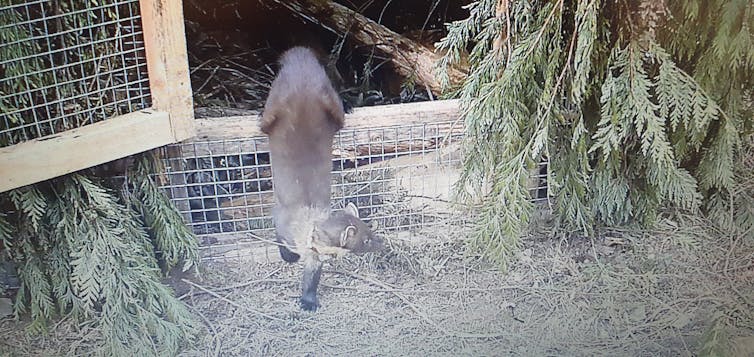
A remote camera trap captures the moment that a pine marten takes its first step into the Devon countryside.
Devon Wildlife Trust, CC BY-NC-ND

Pining for martens?

Three main perspectives were identified. The anonymised participants included farmers, land managers, shooting representatives, conservationists and local residents.

Two of these perspectives supported pine martens and their reintroduction. Although similar, they exhibited some differences. The first viewpoint was more favourable to pine martens and reintroduction as a point of principle, with fewer reservations about introducing wild animals into the countryside. As one environmental farm advisor commented, “living around more nature and wildlife is a good thing”.

Although the second viewpoint still agreed strongly with reintroduction in this region, emphasis was on the motivation to restore the native population of pine martens and natural habitats. Some people expressed concerns about whether there might be negative effects on threatened native wildlife, for example, bats or dormice.

Participants wanted further evidence about the effects pine marten would have on habitats and more information about future plans for monitoring them and dealing with any issues. One participant, an environmental professional and public official, held this viewpoint and agreed with the reintroduction of pine martens “if it is done well and it is well planned”.

The third perspective was opposed to pine martens and their reintroduction. These participants were worried about introducing a predator like pine martens because they perceived them to be a threat to native wildlife, poultry and gamebirds.

They were also concerned about the availability of management support if there were negative effects from the reintroduction of pine martens. As one gamekeeper and conservationist viewed it, “they would add to the taking of wildlife when we have already lost more than 50%”.

What next?

Our new paper and previous research highlight two key challenges for any pine marten reintroduction project. By addressing those, the ability to coexist with pine martens can be improved.

close up face of brown pine marten
Pine martens are acrobatic hunters and people’s perceptions of them vary drastically.
Terry Whittaker 2020Vision, CC BY-NC-ND

People can have very different, polarised views. To minimise any conflict, reintroduction projects need to support inclusive dialogue around pine martens and how they can be monitored and managed. Unanimous support may be unlikely, but more collaborative relationships can be developed when people are involved in making plans for reintroduction.

It also really matters that people have contrasting understandings of predation. While supporters of reintroduction believed pine martens would contribute towards a functioning ecosystem, people who were less supportive were concerned that pine martens could kill threatened wildlife. Giving space for sensitive, nuanced conversations helps build trust and mutual understanding.

Our findings highlight the importance of assessing social feasibility before wildlife reintroductions take place. To ensure future success, that dynamic is just as crucial as ecological feasibility.


Imagine weekly climate newsletter

Don’t have time to read about climate change as much as you’d like?

Get a weekly roundup in your inbox instead. Every Wednesday, The Conversation’s environment editor writes Imagine, a short email that goes a little deeper into just one climate issue. Join the 35,000+ readers who’ve subscribed so far.


The Conversation

This research was commissioned by the Two Moors Pine Marten Project partnership. At the time of the research project, this included: Devon Wildlife Trust, National Trust, Woodland Trust, Exmoor National Park Authority, and Dartmoor National Park Authority.
Additional content contributed by Kirsty Frith.

ref. As pine martens are reintroduced to south-west England, a new study shows why local people need to be involved – https://theconversation.com/as-pine-martens-are-reintroduced-to-south-west-england-a-new-study-shows-why-local-people-need-to-be-involved-240559

How our minds trick us into thinking we are being greener than we really are

Source: The Conversation – UK – By John Everett Marsh, Reader in Cognitive Psychology, University of Lancashire

non c/Shutterstock

You’re in the supermarket. Imported beef mince, shrink-wrapped vegetables and cleaning spray are already in your basket. Then you toss in some organic apples and feel a flicker of moral relief. Surely that small green gesture lightens the load?

Not quite. Objectively, every extra product increases your carbon footprint. But psychology research reveals a curious illusion: when we add eco-friendly items, we often judge our shopping basket as having less impact on our carbon footprint than before.

This mental glitch is called the negative footprint illusion, and it matters for how we shop, how businesses market themselves and how governments design climate policies.

The illusion has been demonstrated across dozens of studies. In a typical experiment, people are asked to estimate the carbon footprint of 150 standard houses. Then they estimate the footprint of those same houses plus 50 eco-houses. Mathematically, the second total must be higher – there are simply more houses. Yet participants often judge the mixed set as lower.

In other words, adding a “good” item doesn’t just seem to cancel out a “bad” one. It creates a false impression that the total footprint has gone down, when in reality it has gone up. And the more “green” items you add, the stronger the illusion becomes.

What’s striking is how stubborn this bias is. It occurs among people with strong environmental values, people with scientific training and even among experts in energy systems. Education and numeracy don’t protect us. This isn’t a problem of knowledge, but of how the mind simplifies complex judgements.

Why does it happen?

The main culprit is averaging. Instead of adding up the total impact, we unconsciously average the mix. Toss in a few low-impact items and the “average impression” improves, even though the overall footprint goes up.

Our memory also plays tricks. If a sequence ends with an eco-friendly item, that last impression weighs heavily and colours the whole set. Likewise, when items are arranged irregularly, we find it harder to keep track of how many there are, so we default to averages rather than totals.

Psychologists have long shown that even when people are told about a bias, they often fall right back into it. Our latest experiments suggest the same applies to the so-called negative footprint illusion. That suggests it isn’t just sloppy reasoning but a deeper mental tendency: the mind simplifies.

The illusion may seem harmless in a lab, but it has real-world consequences when it comes to shopping, for example.

Businesses have also learned, consciously or not, to exploit this bias. A fast-food chain might showcase paper straws while still promoting beef-heavy menus. A hotel might advertise its towel-reuse policy while quietly expanding its energy-hungry facilities. These green cues create a halo that spills over to the whole brand.

Woman Choosing Bamboo Eco Friendly Biodegradable Toothbrush in Zero Waste Shop
One green products doesn’t cancel out other ones.
dmitriylo/Shutterstock, CC BY-SA

Even well-intentioned policy nudges can misfire. Offering more green-labelled choices is often assumed to drive better behaviour. But if those choices mask the real cost of consumption, they may backfire – encouraging people to consume more under the false impression of virtue.

Can it be fixed?

The good news is the illusion can be reduced. One promising approach is “summative priming”: nudging people to think in totals rather than averages. In experiments, participants who first completed simple “totalling” tasks were later more accurate in judging carbon footprints.

Research shows that when eco-friendly items appear at the end of a list, they distort overall impressions more strongly. Placing them earlier makes the illusion weaker. Likewise, when items are arranged in a regular, predictable structure, people find it easier to keep track of totals and are less prone to averaging errors.

These tweaks won’t eliminate cognitive bias entirely, but they show that design matters. Product labels, online platforms and policy communications can all be shaped to help people think in terms of totals rather than averages.

Climate change is driven by millions of everyday decisions: what we buy, what we eat, what we throw away. Understanding the psychological biases behind those decisions is essential.

The negative footprint illusion reminds us that even well-intentioned, environmentally conscious people can misjudge the true impact of their actions. Simply offering more green options isn’t enough. If those options distort our perceptions, they may slow genuine progress.

The challenge, then, is not only to provide information – carbon scores, eco-labels, green badges – but to present it in ways that match how people actually think. That means designing interventions that highlight totals, not averages, and that help consumers see the cumulative impact of their choices.

Climate change is a global problem, but it is fuelled by small misjudgments at the individual level. By recognising how our minds work, we can design smarter tools, better policies and more honest messages – and nudge ourselves towards the sustainable future we urgently need.


Don’t have time to read about climate change as much as you’d like?

Get a weekly roundup in your inbox instead. Every Wednesday, The Conversation’s environment editor writes Imagine, a short email that goes a little deeper into just one climate issue. Join the 45,000+ readers who’ve subscribed so far.


The Conversation

John Everett Marsh is a Reader in Cognitive Psychology at the University of Lancashire in the UK. He is also a Visiting Associate Professor at the Luleå University of Technology in Sweden and Bond University in Australia. He receives funding from Riksbankens Jubileumsfond.

Patrik Sörqvist receives funding from Stiftelsen Riksbankens Jubileumsfond and The Swedish Energy Agency.

ref. How our minds trick us into thinking we are being greener than we really are – https://theconversation.com/how-our-minds-trick-us-into-thinking-we-are-being-greener-than-we-really-are-263959

Curses, whispers and a demon fly: this is the story of the first Welshwoman executed for witchcraft

Source: The Conversation – UK – By Mari Ellis Dunning, Associate Lecturer at the School of Languages and Literature and PhD Candidate, Aberystwyth University

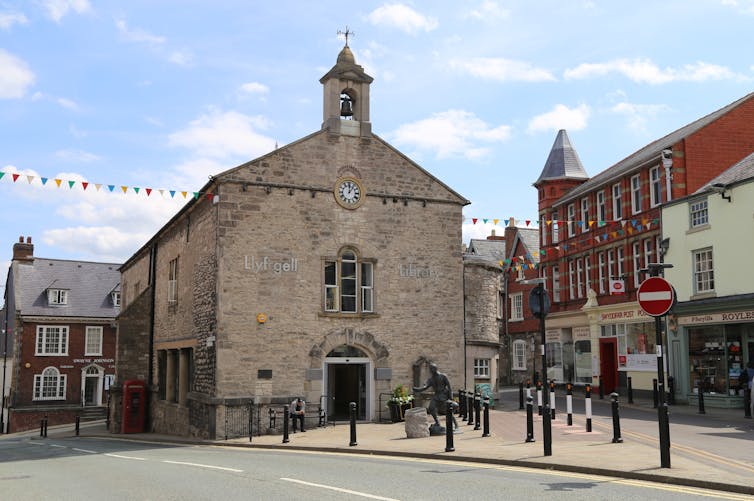
On an October’s day in 1594, Gwen ferch Ellis was led to the gallows in the middle of Denbigh town square in north Wales, and hanged. She was the first recorded woman in Wales to be executed on charges of witchcraft.

Her death stands out in the context of European history. While thousands of women – and some men – were executed for witchcraft across Scotland, England and mainland Europe between the 15th and 18th centuries, only five executions took place in Wales. Surviving records list just 35 witchcraft trials in the country, making Gwen’s case exceptional.

Little is known about Gwen’s early life, but court records paint a picture of a woman who may have stood out. In her 40s, twice widowed and childless, she was described in her indictment as a “spinster”, indicating that she made her living through spinning yarn.

Like many early modern women, she also sold salves, had a reputation for healing and charming, and had achieved financial independence through these means.

The curse

Gwen’s downfall began with a discovery at Gloddaith, the home of Sir Thomas Mostyn, a powerful landowner and justice of the peace. A charm was found written backwards and was consequently believed to have destructive rather than protective uses.

Mostyn had recently quarrelled with Jane Conwy, a gentry woman who counted Gwen as a friend. Gossip quickly connected the two, suggesting Gwen had been hired to place the charm on Mostyn’s household.

As suspicion around her grew, friends urged Gwen to run, but she refused to do so, insisting she had done nothing wrong. Whether this was pride or misplaced trust in the law, it would prove fatal.


Read more:
Five witchcraft myths debunked by an expert


Once suspicion took hold, several people came forward with damning stories. This enabled magistrates to build a case against her, with testimony suggesting that she was responsible for the sickness and maiming of people in her community.

Three formal indictments were laid against her. Gwen was accused of “bewitching Robert Evans by breaking his arm”, of “bewitching Lowri ferch John ap Ieuan … who had lost use of her limbs”, and of “murdering Lewis ap John by witchcraft”.

Ironically, the original charm that sparked the investigation never appeared as evidence, but it had already done its damage. It was enough to secure a guilty verdict which led to her judicial murder. Gwen was executed at a gallows erected on the spot where Denbigh library now stands.

Wide shot of Denbigh town square
How Denbigh town square looks today.
Wozzie/Shutterstock

The demon fly

Some years before her arrest, Gwen had been visited at home by bailiffs who insisted they had seen a huge black fly hovering on top of a drink of ale she had given them. The men were adamant this fly was Gwen’s devil or familiar spirit, a supernatural being which was believed to protect witches. This, they claimed, was proof she was a witch. Though familiar spirits where not a hugely prominent concept in Wales, they did begin to enter the public consciousness around the time of Gwen’s arrest.

Even so, witchcraft in Wales didn’t conform to the concept of a devil-worshipping anti-religion seen elsewhere. Instead, it was grounded in an intrinsic belief in charming, cursing, soothsaying and magic, and the ability of these things to harm and to heal.

But as a lay healer, with her own source of income, Gwen was, nonetheless, a prime candidate for accusations of witchcraft. Accusations were further supported when Catholic relics were found in her home, despite the Protestant church’s attempts to reform religion in Wales.

While Gwen’s case proves that Welsh juries were prepared to convict accused witches, the event was truly exceptional.


Read more:
Why so few witches were executed in Wales in the middle ages


Cursing was most dangerous when crossing boundaries of age, gender or status. It was often a weapon of the physically or socially weaker party. Women laid curses against men, the poor laid curses against those who were more well off.

Gwen’s misfortune was to cross a social boundary. She had, allegedly, left a charm in the house of a prominent landowner and justice of the peace, rather than confining her activities to the farmers, craftsmen and yeomen of her neighbourhood.

Court records suggest the grand jury was uneasy. The indictment was marked as a “true bill”, allowing the trial to proceed. But the faint word “ignoramus” – meaning “we are ignorant of this bill” – was also scrawled on it, hinting at hesitation.

In spite of this, the Elizabethan Witchcraft Act of 1562 had made death by witchcraft a capital offence, and prosecutors were determined to set an example. Unfortunately for Gwen, her fate was sealed. Her story stands as a rare but chilling chapter in Welsh history.

The Conversation

Mari Ellis Dunning does not work for, consult, own shares in or receive funding from any company or organisation that would benefit from this article, and has disclosed no relevant affiliations beyond their academic appointment.

ref. Curses, whispers and a demon fly: this is the story of the first Welshwoman executed for witchcraft – https://theconversation.com/curses-whispers-and-a-demon-fly-this-is-the-story-of-the-first-welshwoman-executed-for-witchcraft-258861

Projecting dissent: China’s new politics of resistance under surveillance

Source: The Conversation – UK – By Tao Zhang, Senior Lecturer, School of Arts & Humanities, Nottingham Trent University

As China ramped up its security in Bejing ahead of its largest military parade in history, over in Chongqing, a city of 30 million people, slogans mysteriously appeared projected on the walls of a university residential complex. “Only without the Communist Party can there be a new China,” read one. “Freedom is not given but seized,” said another. A third urged: “Down with red fascism, overthrow Communist tyranny.”

When the police finally tracked down the source of these projections to a hotel room nearby, they found it empty apart from a projector and remotely controlled cameras which captured their confusion at the puzzling scene. This footage was uploaded on to X along with the slogans projected on the university building walls.

Translated X post with pictures of slgans projected on the walls of buildings.
News of the incident was quickly shared on social media.
@whyyoutouzhele via X

The man behind this coup de théâtre – Qi Hong, a 43-year-old Chongqing native – had already left the country with his family for a “holiday” in the UK, from where he operated the projector and cameras remotely. Within six days, the posts had been viewed more than 19 million times.

This striking act of defiance points to the fact that dissenting voices – given sufficient ingenuity and determination – are still able to penetrate China’s formidable surveillance state. Furthermore, it may signal that there are significant subterranean levels of opposition to the country’s leadership under Xi Jinping.

China’s embrace of digital technologies has always presented it with a dilemma: how to exercise control over this inherently expansive and unruly – yet economically indispensable – communications sphere. As the online world became the most important platform for change in China, giving rise to pro-democracy initiatives, environmental NGOs, human rights defenders and grassroots opposition, the state’s response has essentially remained the same.

Predisposed to top-down control throughout Communist Party history in order to maintain its grip on power, the Chinese state has never been capable of imagining political solutions. Rather, it has consistently fallen back on deploying technology in the suppression of opposing voices.

Hence the Great Firewall of China (also known as the Golden Shield), launched in the late 1990s, which combined censorship with multi-layered online monitoring. This was followed by Skynet, a mass video surveillance system introduced in 2005.

These technologies – later upgraded with big data, AI, facial recognition and cloud computing – were presented as tools against crime and foreign threats. But they have also been widely criticised, both inside and outside China, for silencing dissent and restricting press freedom.

By 2024, China had installed more than 600 million cameras – roughly one for every two adults – making it the largest video surveillance system in the world.

While some devices are used for urban management, Wall Street Journal reporters Liza Lin and Josh Chin have shown how the party-state increasingly harnesses surveillance for social control – often in harsh and coercive ways. During the COVID-19 pandemic, for example, lockdown policies borrowed from Xinjiang’s system of Uyghur surveillance were implemented nationwide under the banner of “Zero Covid”.

While this massive deployment of surveillance has been superficially effective in inhibiting overt demonstrations of opposition, it has also blocked any movement towards addressing political solutions to China’s fundamental internal problems: an over-centralised economy, stalling productivity, widespread corruption and the challenges of an ageing population. Meanwhile, new forms of dissent have emerged within this surveillance state.

Audacious dissent

In October 2022, on the eve the confirmation of President Xi’s historic third term, a Chinese physicist named Peng Lifa staged a dramatic solo protest.

From a busy Beijing bridge, he hung two banners: one demanded food, reform, freedom and elections instead of lockdowns and lies; the other called for boycotts and the removal of Xi himself. Peng was swiftly detained and has not been seen since – but images of his banners went viral on Chinese social media and internationally.

Many China-watchers believe this protest inspired its “White Paper” movement in November 2022, when youth-led demonstrations erupted across the country and overseas. Initially focused on ending zero-COVID policies, many protesters also demanded democracy, equality under the law and Xi’s resignation.

Peng was dubbed “Bridge Man” – evoking the “Tank Man” of China’s 1989 Tiananmen Square crackdown – and the White Paper protests have been described as the most significant movement since Tiananmen. The almost-foolhardy audacity of Peng’s dissent has been referred to as “storming the tower” – a term from gaming culture which describes acts of bold defiance despite enormous risks.

Qi Hong’s recent protest can also be viewed in this way. Although he successfully deployed technology to avoid arrest, the price of his protest is likely to be his self-imposed exile and the constant fear of the retributive reach of the Chinese state.

In a recent interview, Qi acknowledged his protest had been directly inspired by Peng and the White Paper movement. His actions, he said, arose from deep frustration and a desire for truth, critical thinking and freedom of expression – values he felt had been denied to him and his children by China’s party-state.

Qi said he felt compelled to express his view, and to urge more Chinese people to recognise what he described as the brutality and irrationality of the Communist Party’s rule.

Institutional contradictions

Episodes like the Chongqing projections reveal deep contradictions within the Chinese state. On one hand, decades of economic reform have produced a sizeable middle class with global exposure, higher education and expectations of autonomy. On the other, the Communist Party routinely tightens its monopoly on power, leaving little room for pluralism or independent civic life.

As philosopher Ci Jiwei – a professor at the University of Hong Kong – has argued, the issue is not simply the lack of everyday “practical freedoms”. Many Chinese enjoy wide latitude in their personal and economic lives.

Rather, it is the denial of freedom itself as a legitimate value by the state. Protesting Chinese citizens are not seeking adjustments to policy, but rather the recognition of their right to question, debate and express dissent.

Qi’s slogans appear to have resonated because they articulated grievances shared by many people in China – even if voiced only fleetingly. Slowing economic growth, rising youth unemployment and increasing perceptions of inequality sharpen these frustrations. No amount of technological monitoring or punitive threats can make these problems go away.

The Conversation

Tao Zhang does not work for, consult, own shares in or receive funding from any company or organisation that would benefit from this article, and has disclosed no relevant affiliations beyond their academic appointment.

ref. Projecting dissent: China’s new politics of resistance under surveillance – https://theconversation.com/projecting-dissent-chinas-new-politics-of-resistance-under-surveillance-264838

Why people displaced by conflict are particularly vulnerable to climate risks

Source: The Conversation – UK – By Kerrie Holloway, Research Fellow in the Humanitarian Policy Group, ODI Global

After heavy rains, a landslide “completely levelled” a remote village in western Sudan in early September. It was the temporary home of hundreds of internally displaced persons (IDPs) who had fled the conflict between the Sudanese army and the Rapid Support Forces paramilitary, to what they had hoped would be a safe location. In all, more than 1,000 people are feared to have died in the landslide.

At the end of 2024, more than 80 million people were living in internal displacement worldwide. While more attention is usually paid to people who cross borders and become refugees, the reality is most people who are displaced stay within their own borders as IDPs.

A changing climate and the associated extreme or erratic weather affects everyone living in the same region – but it does not affect everyone equally.

IDPs have specific vulnerabilities because they’ve been displaced. They are likely to have used up whatever money and other assets they had prior to their displacement, leaving them unable to make the same adaptations as those who have not been displaced.


Wars and climate change are inextricably linked. Climate change can increase the likelihood of violent conflict by intensifying resource scarcity and displacement, while conflict itself accelerates environmental damage. This article is part of a series, War on climate, which explores the relationship between climate issues and global conflicts.


In northern Mozambique, the centre of a jihadist insurgency since 2017, hundreds of thousands of people have been forced to flee their homes – with many seeking refuge in the port city of Pemba. After their houses were destroyed by a cyclone in 2019, IDPs living in Pemba rebuilt temporary structures. But when these were burned down by insurgents, the IDPs were left with nothing at all.

Research I carried out with ODI Global colleagues on the city of Herat in western Afghanistan found that people who had not been displaced by conflict were able to make simple lifestyle changes during periods of drought and extreme heat. These included switching to clay or earthenware jars to keep their water cool, or buying air conditioners.

But IDPs were unable to make similar adjustments. Their coping strategies focused more on reducing consumption, such as skipping meals or no longer eating meat.

When IDPs arrive in a new area, the only land available to settle on is often free to use because no one else wants to live there. In Mosul, a city in northern Iraq, stagnated reconstruction following the liberation of the city from the Islamic State militant group in 2017 has resulted in a scarcity of adequate housing. This has left many IDPs residing in unfinished or makeshift shelters on unpaved roads that are prone to flooding during heavy rains.

And in Mocoa, where a large number of people moved after fleeing Colombia’s longstanding civil conflict, IDPs settled in an area susceptible to landslides as it was the only place with cheap accommodation and land available for building. A landslide in 2017 killed more than 300 people there, destroying several neighbourhoods that were populated almost entirely by people displaced by conflict.

Furthermore, IDPs are often overlooked in whatever disaster management or disaster risk reduction plans may exist. Low literacy or speaking a different native tongue – both common traits among displaced people – can result in them not heeding early warnings when they are given.

Evidence shows that early warning systems can be effective for displaced people who have sought refuge abroad. In Bangladesh, for example, Rohingya refugees from Myanmar are included in the national early warning system, allowing them to strengthen their shelters and stockpile food before cyclones hit.

However, early warning systems are only effective if they are implemented and understandable to all of the communities at risk. The UN’s Early Warnings for All initiative, which aims to ensure everyone has access to early warning systems for hazardous weather or climate events, has only been implemented very slowly. This is particularly true in the countries most vulnerable to climate change.

Reducing the risk

Reducing the vulnerability of displaced people to climate change and related extreme weather is no easy task. It will require decision-makers – humanitarian and development aid workers, government officials and local city planners – to listen and learn from what local populations are already doing to adapt and build their own resilience.

Indigenous knowledge has a huge role to play. But people who have just moved to a new area may not know about – or be capable of making – the same adaptations as people who have lived there for generations.

There are also limits to individual adaptation, of course. Displaced people need to be included in any disaster risk reduction or risk management efforts, as well as in national adaptation plans.

Yet in 2023, the OECD found that nearly three-quarters of all national adaption plans (31 of 42) did not address the effects of climate change on people who were already displaced. And this research did not include countries with high levels of displacement which lack national adaptation plans altogether.

Unless these issues are addressed, there will continue to be tragedies on the scale of the one seen recently in Sudan.

The Conversation

Kerrie Holloway works for ODI Global, which receives funding from many organisations and governments. Most of our climate-related work has been funded by GIZ, BHA and the Ikea Foundation, though other donors also contribute through our central funding mechanism.

ref. Why people displaced by conflict are particularly vulnerable to climate risks – https://theconversation.com/why-people-displaced-by-conflict-are-particularly-vulnerable-to-climate-risks-264647