Could life exist on Mars today? Here’s what the latest evidence says

Source: The Conversation – UK – By Seán Jordan, Associate Professor in Chemistry, Dublin City University

Part of the ancient lake delta in Jezero Crater on Mars. JPL-Caltech

Recently, Nasa revealed exciting details of new findings from Mars. Scientists have
discovered tiny patterns of unusual minerals in the clay-rich rocks on the edge of
Jezero Crater – an ancient lake once fed by Martian river systems, and the
exploration site of the Nasa Perseverance Rover.

These “leopard spot” patterns have been hailed as a potential sign of past microbial life due to their similarity with traces left behind by microorganisms on Earth.

The jury is still out on whether these are actually signs of life, but this discovery has reignited the discussion about the previous existence of life on Mars, and the possibility that it could still survive there today.

We’ll need many different lines of evidence to answer this question, but there is precedence for considering certain Martian environments as currently habitable.

Early Earth and early Mars were relatively similar, but this similarity didn’t last long. Both had atmospheres and magnetic fields that offered some protection from harmful radiation originating from the Sun, along with bodies of liquid water on their surface. We know that these conditions led to the origin of life on Earth, so it is possible that the same could have happened on Mars.

While life on Earth was beginning to thrive, Mars lost its magnetic field as its core cooled. This exposed the planet to harmful solar rays which began to erode the
atmosphere. As the atmosphere disappeared, the Martian surface became colder
and drier, eventually becoming the freezing desert we know today.

This is why many scientists don’t expect to find living organisms on the surface of
Mars – it is simply too inhospitable for life as we know it. Instead, the hope lies in uncovering microbial life hidden in protected underground or icy regions.

Where could life survive on Mars?

Possible locations for Martian microbial life include caves, inside or underneath ice sheets at the poles, or deep underground. All of these environments have analogues (environments with certain similarities) on Earth that host microorganisms. So it is not much of a stretch to consider that if life began on Mars, it could still be holding on in these extreme niches.

Perhaps the most plausible of these is underground – the Martian subsurface. Extending from a few metres to several kilometres deep, it is thought to be the planet’s most stable and long-lived potential habitat.

While the surface has been cold, dry, and generally inhospitable for much of Martian history, the deep subsurface may have offered more favourable conditions. On Earth, the deep biosphere – the life that survives beneath the surface – provides a useful comparison.

A substantial amount of Earth’s microbial life exists underground, surviving in cracks within rocks. These ecosystems are dominated by lithoautotrophs – microbes that get energy by feeding on those rocks. Methane, a potential byproduct of some
lithoautroph feeding habits, has even been detected on Mars. But there are many
ways to generate methane underground without life, so right now this doesn’t tell us much.

The potential for a deep biosphere hinges on factors including the availability of
liquid water, a source of energy, space to live in, and tolerable temperatures. There is possible evidence for the existence of liquid water below the surface of Mars, but this is still under debate.

This would facilitate chemical reactions known as water-rock reactions which generate energy for microbes to live on. Because of its weaker gravity, rocks on Mars may be less compressed than those on Earth and remain more porous at depth, providing space for microbes to live in.

At the same time, Mars produces less heat from its interior, which means temperatures suitable for life could extend nearly twice as deep underground as they do on Earth.

Scientists spend a lot of time analysing places on Earth – Mars analogues – to try to understand the possibilities for past and present life on Mars. These environments are not identical to Mars, but they share at least one important feature such as extreme dryness, high salt levels, or high UV exposure.

Earth’s deep subsurface is one example, and others include the Atacama Desert in South America, sediments at Lake Salda in Turkey, and salts found in Utah’s Pilot Valley. Researchers around the world are investigating these sites on Earth to better understand how Martian conditions might affect life and its preservation. As no one location on Earth could possibly match all Martian conditions, scientists also run controlled laboratory experiments.

An example of this is the use of specialised “Mars chambers” to reproduce Martian environmental conditions such as its atmosphere, radiation exposure, and temperature. All of these investigations combined help us to better understand the potential for life to exist on Mars.

The Mars chamber at Nasa’s Goddard Space Flight Center.

Signs of life today?

Right now there is no conclusive evidence of life on Mars past or present. Nasa’s
“leopard spots” are the most promising signs we have, but these are still
inconclusive. If life exists on Mars today, it is almost certainly not widespread like on Earth – our probes and rovers would have seen it.

However, important opportunities lie ahead. The upcoming European Space Agency (Esa) ExoMars Rosalind Franklin rover will be able to drill up to two metres below the Martian surface. This will give us a chance to study the shallow subsurface of Mars which may contain living microorganisms. But this is only the start—most scientists agree that we will need to go deeper.

Drilling deep on Earth is still a huge challenge and there is so much we don’t know about our own subsurface life. Probing the deep subsurface of Mars will be a major scientific and engineering challenge, but one that may hold the key to finding existing Martian life.

The Conversation

Seán Jordan receives funding from the European Research Council (ERC) under the European Union’s Horizon Europe research and innovation programme (grant agreement No 1101114969) and from Research Ireland (Pathway award 22/PATH-S/10692). He is affiliated with the Research Ireland Centre for Applied Geosciences (iCRAG).

Devyani Jambhule receives funding from the Research Ireland Pathway Award ((22/PATH-S/10692). She is affiliated with the Origin of Life Early-career Network (OoLEN).

ref. Could life exist on Mars today? Here’s what the latest evidence says – https://theconversation.com/could-life-exist-on-mars-today-heres-what-the-latest-evidence-says-265735

Why we need more Jane Goodalls

Source: The Conversation – UK – By Ben Garrod, Professor of Evolutionary Biology and Science Engagement, University of East Anglia

The pant-hoot of a chimpanzee is one of the most visceral sounds in nature – a rolling call that rises to a crescendo. I once heard the call cutting through the heavy silence of the evening air. The cacophony trailed off and ended with the two apes patting one another, in reassurance and reconciliation.

Unlike most chimpanzee hoots performed in dense African forests, the echoes of this one bounced off the towering sandstone pillars of a cathedral. There were no chimpanzees in sight, just two humans in front of an audience of hundreds, at a science festival. As my heart rate returned to normal, I sat back down to resume my interview with the legendary Dr Jane Goodall.

News of her death, at the age of 91, is being felt around the globe. The grief is both personal and collective. For countless biologists, naturalists, conservationists and animal-lovers, she was a constant presence – a guiding light who shifted how we see the natural world and our place in it.


Read more:
‘Only if we help shall all be saved’: Jane Goodall showed we can all be part of the solution


Having progressed from a secretarial course straight into a doctorate at Cambridge, Jane was no stranger to facing challenges head on. She lived in a tent in rural Tanzania, accompanied by her incredibly supportive mother, to study the behaviour of wild chimpanzees.

Her mentor was the renowned anthropologist Louis Leakey, who believed invaluable insights into our own evolutionary history could be gleaned from the study of orangutans, gorillas and chimpanzees. Many doubted her methods, but Jane was the first to record detailed evidence of hunting and even tool use in chimpanzees. Her groundbreaking work paved the way for identifying culture in non-human animals and, more importantly, helped shatter assumptions about the divide between humans and animals.

Following in her footsteps

Jane changed the way we view and understand animals and hundreds, if not thousands, of academics have followed in her footsteps to carry on and further her work. Many of us academics see the world in a laser focus singularity, at times. It’s what we are trained to do and is often seen as a gold standard. But Jane was always a fan of the wider picture, a more holistic approach. She left active academia to focus on protecting her beloved chimpanzees through community-driven conservation and education.

She took on the seemingly impossible task to engage, support and empower children and young people around the world, setting up “Roots & Shoots” programme through the Jane Goodall Institute. It’s now active in more than 100 countries, with millions of young people having taken part. Her aim was simple but radical: to empower the next generation to act with compassion and knowledge, whatever path they chose.

Moving between worlds

What made Jane extraordinary was not just her science, but her voice. She forged a path in that very grey area between high-level science, political discourse and public engagement. She was plain-speaking and never lacked integrity. She was a calm and trusted voice in a clamouring crowd of increasingly lying politicians and clickbait influencers. Jane brought science, conservation and advocacy to the millions.

She made us all part of the dialogue and equipped us, through patient and diligent explanation, to be able to contribute meaningfully. Her work and her approach meant no one was excluded from having a voice or be unable to offer ideas, advice or solutions. We are rarely very good at doing that in science, but Jane made it her modus operandi. Her calm and trusted voice brought often complex and emotive scientific concepts and challenges to a level where we could all become stakeholders. She made us realise that our actions had global impacts and that what happens across the world can affect us all.

The fact she was so at ease being met by world leaders, sitting on the couch on prime time entertainment shows, in academic conferences or in rural schools in the global south, demonstrated a skill and ability to engage with us all. If we had even a few more voices like Jane’s, perhaps there wouldn’t be such a disconnect between science and society.

There will be countless ways we can carry on with Jane’s legacy, but one of the most powerful is to encourage more of us to make science accessible for all of us. One of her most poignant quotes was: “What do you do makes a difference, and you have to decide what kind of difference you want to make.” We can only make the differences we need to make if we are more compassionate and better scientifically informed.

The Conversation

Ben Garrod does not work for, consult, own shares in or receive funding from any company or organisation that would benefit from this article, and has disclosed no relevant affiliations beyond their academic appointment.

ref. Why we need more Jane Goodalls – https://theconversation.com/why-we-need-more-jane-goodalls-266709

Six everyday habits that could be sabotaging your bladder health

Source: The Conversation – UK – By Dipa Kamdar, Senior Lecturer in Pharmacy Practice, Kingston University

CGN089/Shutterstock

The bladder is easy to overlook – until it starts causing trouble. This small, balloon-like organ in the lower urinary tract quietly stores and releases urine, helping the body eliminate waste and maintain fluid balance.

But just like your heart or lungs, your bladder needs care. Neglect it and you risk discomfort, urinary tract infections and, in some cases, serious conditions such as incontinence (involuntary leakage of urine) or even cancer.


Read more:
Do women have to pee more often? The answer is surprisingly complex


The good news: many bladder problems are preventable and linked to everyday habits. Here are six common habits that can sabotage bladder health.

1. Holding in urine too long

Delaying a bathroom visit allows urine to build up and stretches the bladder muscles. Over time this can weaken their ability to contract and empty the bladder completely, leading to urinary retention. Research shows that holding urine gives bacteria more time to multiply, raising the risk of urinary tract infections (UTIs).

Experts recommend emptying your bladder every three to four hours. In severe cases, chronic retention can even damage the kidneys. When you do go, relax – women in particular should sit fully on the toilet seat rather than hovering, so the pelvic muscles can release. Take your time and consider double voiding: after you finish, wait 10–20 seconds and try again to ensure the bladder is fully emptied.

2. Not drinking enough water

Dehydration makes urine more concentrated, which irritates the bladder lining and increases infection risk. Aim to drink six-to-eight glasses of water (about 1.5 to 2 litres) a day, more if you’re very active or in hot weather. If you have kidney or liver disease, check with your doctor first.

Too little fluid can also lead to constipation. Hard stools press on the bladder and pelvic floor, making bladder control harder.

3. Too much caffeine and alcohol

Caffeine and alcohol can irritate the bladder and act as mild diuretics, increasing urine production. A study found that people consuming over 450mg of caffeine per day – roughly four cups of coffee – were more likely to experience incontinence than those drinking less than 150mg.


Read more:
Caffeine: here’s how quitting can benefit your health


Another study showed men who drank six-to-ten alcoholic drinks per week were more likely to develop lower urinary tract symptoms than non-drinkers. Heavy alcohol use may also increase bladder cancer risk, although the evidence is mixed. Cutting back can ease bladder symptoms and reduce long-term risk.

4. Smoking

Smoking is a major cause of bladder cancer, responsible for about half of all cases. Smokers are up to four times more likely to develop the disease than non-smokers, especially if they started young or smoked heavily for years – cigars and pipes included.

Tobacco chemicals enter the bloodstream, are filtered by the kidneys and stored in urine. When urine sits in the bladder, these carcinogens, including arylamines, can damage the bladder lining.

5. Poor bathroom hygiene

Improper hygiene can introduce bacteria into the urinary tract. Wiping from back to front, using harsh soaps or neglecting hand-washing can all upset the body’s natural microbiome and increase UTI risk.

Sexual activity can also transfer bacteria from the bowel or vaginal area to the urinary tract. Both men and women can reduce their infection risk by urinating soon after sex.

6. Poor diet and lack of exercise

What you eat and how active you are affects your bladder more than you might expect. Excess weight puts pressure on the bladder and increases the likelihood of leakage. Regular exercise helps maintain a healthy weight and prevents constipation, which otherwise presses on the bladder.


Read more:
Pelvic floor dysfunction: what every woman should know


Certain foods and drinks – including fizzy drinks, spicy meals, citrus fruits and artificial sweeteners – can irritate the bladder and worsen symptoms for those already prone to problems. Aim for a fibre-rich diet with plenty of whole grains, fruit and vegetables to protect both digestive and bladder health.

Bladder health is shaped by everyday choices. Staying well-hydrated, avoiding irritants, practising good hygiene and listening to your body can all help prevent long-term problems. If you notice persistent changes such as frequent urination, difficulty emptying the bladder, pain or burning when you pee, cloudy or smelly urine, or any sign of blood, see a healthcare professional. Your bladder will thank you.

The Conversation

Dipa Kamdar does not work for, consult, own shares in or receive funding from any company or organisation that would benefit from this article, and has disclosed no relevant affiliations beyond their academic appointment.

ref. Six everyday habits that could be sabotaging your bladder health – https://theconversation.com/six-everyday-habits-that-could-be-sabotaging-your-bladder-health-262899

Book of Kells: exploring the evidence that points to Pictish origins in north-east Scotland

Source: The Conversation – UK – By Rachel Moss, Professor in the History of Art and Architecture, Trinity College Dublin

Writing in the early 20th century, the celebrated author James Joyce noted that the Book of Kells – an illuminated manuscript depicting the four gospels of the New Testament in Latin – was “the most purely Irish thing we have”.

By this time, the unique and intricate designs of the approximately 1,200-year-old manuscript were instantly recognisable, having been replicated on everything from embroidered clothing to tea sets coveted by nationalists and the Irish diaspora alike. These designs were deemed symbolic of “pure” Irish visual identity, created before the coming of the Vikings and the Anglo-Normans to Irish shores.

For well over a century, debate has raged as to whether the manuscript was made at Iona on the west coast of Scotland, the northern English monastery of Lindisfarne or indeed a different Columban monastery in Ireland. Now, a new contribution to the debate, The Book of Kells Unlocking the Enigma, soon to be published by archaeologist and art historian Victoria Whitworth, adds further food for thought on the topic.

The manuscript known as the Book of Kells was first referred to as such by the great biblical scholar Bishop James Ussher (1581-1656) to distinguish between two “gospel books of [St] Columcill”, one kept at Kells, county Meath, the other at Durrow in county Offaly.

Land charters transcribed on to the pages of the Kells manuscript prove that it had been there since at least the 11th century, and is therefore likely to be the same “great gospel book of Columcille” recorded as having been stolen and subsequently recovered from the same monastery in 1007.

Although nobody knows exactly when it was made, art historians and paleographers (experts in handwriting and manuscripts) agree that the Book of Kells most likely dates to the late 8th century. And therein lies a problem. The monastery at Kells was not founded until 807, when monks fleeing Viking incursions on the Scottish Hebridean island of Iona were gifted a safer inland site in Ireland to establish a new, ultimately thriving, monastery. So, while we know the manuscript spent at least 650 years at Kells, we do not know where it started its life.

Uncovering new evidence

Between 1994 and 2007, an archaeological excavation at the Pictish monastic site of Portmahomack, Easter Ross in the north-east of Scotland revealed the first-known evidence for the widescale manufacture of parchment in northern Europe.

This was particularly surprising, as no surviving manuscript has previously been identified as coming from this area. In addition to this, Whitworth has identified Pictish stones carved with designs and writing like that found in the Book of Kells. So, does this mean that the most purely Irish thing we have is actually Pictish?

The manuscript was made at a time when Irish churchmen and scholars not only travelled extensively but welcomed people from across Europe to study in its schools. Books also circulated widely at this time, whether as working texts, diplomatic gifts or exemplars distributed to scriptoria (monastery rooms where manuscripts were copied) across Europe.

This cultural mix is evident in the significant range of artistic sources drawn on by the Book of Kells artists. Clearly they had access to designs from contemporary continental gospels, Irish fine metalwork, Byzantine icons and imagery found on Pictish stones. None of the scribes or artists recorded their names, and indeed we don’t even know how many there were, such is the relative consistency of the script.

Non-invasive pigment analysis of the manuscript some years ago revealed the use of pigments typical to manuscript production in Scotland and Ireland during the period, some cleverly blended in such a way as to mimic the precious gold and lapis lazuli that lay beyond their reach.

An estimated 159 calf skins were used to make its surviving pages, some of which were of very poor quality. What we don’t know is whether these animals were reared and processed close to the scriptorium where the manuscript was made, whether they might have been collected up from across the territory of a wealthy donor, or whether they were brought in from a single specialist “processor”, as for example, at Portmahamock. Ultimately, advances in non-invasive DNA testing may provide scientific answers to these questions and reveal much regarding the economy of the period.

While at present it is impossible to prove beyond doubt, Whitworth’s book highlights an important new potential provenance for the Book of Kells. However, it also serves as a timely reminder that our preoccupation with the “nationality” of the manuscript is based on a 19th-century construct, which can distract from other considerations.

Whether based in Pictland, Iona or Ireland, its makers may have come together from a variety of locations, and they certainly had an international outlook. As such, this new research is equally important in considering how these people went about creating an object without borders. In this they were successful, as in 1007 it was deemed “chief relic of the Western World” and two centuries later as “the Work of Angels”.


This article features references to books that have been included for editorial reasons, and may contain links to bookshop.org; if you click on one of the links and go on to buy something from this website The Conversation UK may earn a commission.


Looking for something good? Cut through the noise with a carefully curated selection of the latest releases, live events and exhibitions, straight to your inbox every fortnight, on Fridays. Sign up here.


The Conversation

Rachel Moss works for Trinity College Dublin. In the past she has received funding from the Irish Research Council and Bank of America Merrill Lynch for research work relevant to this article.

ref. Book of Kells: exploring the evidence that points to Pictish origins in north-east Scotland – https://theconversation.com/book-of-kells-exploring-the-evidence-that-points-to-pictish-origins-in-north-east-scotland-266568

The pre-Raphaelite muse who inspired Taylor Swift’s The Fate of Ophelia

Source: The Conversation – UK – By Serena Trowbridge, Reader in Victorian Literature, Birmingham City University

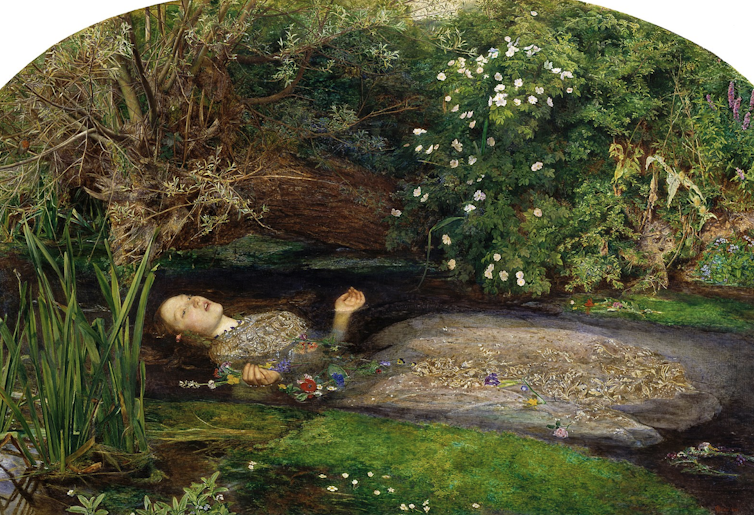
As a professor of pre-Raphaelite studies, I was excited to see that the track list for Taylor Swift’s 12th album, The Life of a Showgirl includes a song called The Fate of Ophelia. Ahead of the album’s release, fans and art historians speculated that the inspiration could come from John Everett Millais’s painting Ophelia (1851-52), one of the most visited paintings at Tate Britain.

The painting shows Ophelia, the heroine of Shakespeare’s play Hamlet (1623), floating in the river after her doomed relationship had driven her to madness and suicide.

The cover art for The Life of a Showgirl confirms this. It shows Swift wearing a silvery outfit, partially submerged in water with her hands floating palm-up to the surface. So far, so Everett Millais. Though the styling is very different from Millais’s work, the pose, with focus on her hands and face, seemed to give a nod to his Ophelia.

Painting of Ophelia in a river
Ophelia by John Everett Millais (1851-52).
Tate Britain

The model who posed for Millais’s painting, Elizabeth Siddal (who is buried in Highgate, near where Swift once lived) lay in a bathtub while he painted her. When the candles heating the water went out, she stayed there for hours, uncomplaining, until she became ill.

As a muse and model, Siddal exemplifies the woman silenced by and sacrificed to male artistic ambition. Swift’s cover transforms the corpse-like Ophelia into a striking image, with her eyes open and staring, as though a dead woman has come back to life to accuse us. The female figure is no longer a muse (or a showgirl).

Siddal was interested in similar themes. In her poem My Lady’s Soul, she wrote about a woman transformed through death into art:

Low sit I down at my lady’s feet

Gazing through her wild eyes,

Smiling to think how my love will fleet

When their starlike beauty dies

The woman in the poem may be silenced, but her eyes accuse us of objectification.

We know Swift is a reader: she’s referenced Daphne du Maurier’s novel Rebecca, the poet Emily Dickinson, The Great Gatsby and Romeo and Juliet among others, in her music. And the first song on the album, The Fate of Ophelia, references Siddal as well as Shakespeare’s tragic heroine.

The song’s conceit is that a happy relationship has saved the singer from Ophelia’s fate of madness and drowning. Swift has said told interviewers that she prefers a happy ending, having rewritten Romeo and Juliet in Love Story (2008), and The Fate of Ophelia is quite detailed in its references to Hamlet: “The eldest daughter of a nobleman / Ophelia lived in fantasy / But love was a cold bed full of scorpions / The venom stole her sanity.”

The Fate of Ophelia is the first track on Swift’s new album, The Life of a Showgirl.

The chorus goes: “All that time / I sat alone in my tower / You were just honing your powers / Now I can see it all. / Late one night / You dug me out of my grave and / Saved my heart from the fate of Ophelia.”

Alone in a tower, waiting for a prince to come? That sounds like some other Shakespearean or pre-Raphaelite heroines, such as Mariana, from Shakespeare’s play Measure for Measure (1604) who was reinterpreted by the poet Alfred Tennyson in 1832. Millais painted Mariana in 1851. The speaker in Swift’s song, however, has been saved from death: “You dug me out of my grave.”

Black and white photo of Siddal
Elizabeth Siddal (circa 1860).
WikiCommons

There are all kinds of interesting resurrection metaphors in the song: was Swift already dead, then? Is this about Ophelia, buried with partial rites due to the suspicion that she killed herself? Or is this about Siddal, the muse and model whose body was exhumed by her husband?

When Siddal died by overdose of laudanum (an opiate many Victorians were addicted to since it was prescribed for many illnesses) in 1862, she was buried at Highgate cemetery. Her grief-stricken (or guilt-ridden) husband Dante Gabriel Rossetti threw his manuscript poems into her coffin. Seven years later, the coffin was exhumed in order to restore the manuscripts to Rossetti for publication.

The myths exploded from that point. Charles Augustus Howell, the unscrupulous friend of Rossetti who oversaw the exhumation, claimed that Siddel’s body was perfectly preserved, her hair had continued growing in her coffin and – as Rossetti wrote to Swinburne in a letter dated October 16 1869 – he believed that “could she have opened the grave, no other hand would have been needed”.

In her reworking of the Ophelia and Siddal story, Swift undermines the stereotype of the mute, decorative showgirl by overlaying it with her own more triumphant ending.

In isolation, Swift’s conflation of Siddal, Ophelia and her own persona isn’t necessarily that progressive: after all, the song features a woman waiting for someone to save her. However, taken in conjunction with the rest of the album, it’s clear that Swift’s approach is to explore the public face of women, from Elizabeth Taylor (reminiscent of Clara Bow from her last album) to Eldest Daughter, and culminating in the title track, which indicates the pain behind the facade of a public figure, “hidden by the lipstick and lace”.


Looking for something good? Cut through the noise with a carefully curated selection of the latest releases, live events and exhibitions, straight to your inbox every fortnight, on Fridays. Sign up here.


The Conversation

Serena Trowbridge does not work for, consult, own shares in or receive funding from any company or organisation that would benefit from this article, and has disclosed no relevant affiliations beyond their academic appointment.

ref. The pre-Raphaelite muse who inspired Taylor Swift’s The Fate of Ophelia – https://theconversation.com/the-pre-raphaelite-muse-who-inspired-taylor-swifts-the-fate-of-ophelia-266713

Dynasties still dominate south-east Asian politics – in democracies and more authoritarian systems

Source: The Conversation – UK – By Neil Loughlin, Lecturer in Comparative Politics, City St George’s, University of London

Paetongtarn Shinawatra walks with her father and prominent Thai political figure, Thaksin Shinawatra, before her endorsement as Thailand’s prime minister in 2024. SPhotograph / Shutterstock

Dynasties are central to south-east Asian politics as parties are weak, patronage is entrenched and family names are the most durable political brands. But they also face persistent difficulties. Heirs inherit office without real authority, patriarchs refuse to step aside and rivals – whether other families or powerful institutions – intervene.

With two prominent political families locked in a bitter feud in the Philippines, the Shinawatra clan currently being sidelined in Thailand and the Hun family navigating an uncertain succession in Cambodia, now is the right moment to take stock of how dynastic politics operates throughout south-east Asia.

The Philippines offers perhaps the starkest example of dynastic democracy in south-east Asia. Philippine politics remains structured less by parties or programmes than by family blocs, with the Marcos and Duterte clans foremost among them. Coalitions rest on name recognition and patronage networks that have proved more durable than any formal party institution.

The Philippine system remains fiercely competitive. But dynastic politics there narrows true democratic representation and weakens accountability. It also leaves coalitions prone to fracture. The alliance between the Marcos and Duterte families that swept the 2022 elections, for example, cracked almost immediately.

The current Philippine vice-president, Sara Duterte, is now in open conflict with President Ferdinand “Bongbong” Marcos Jr – the son and namesake of the former Philippine dictator who was ousted in 1986. This rupture has unsettled government.

Sara Duterte has faced impeachment efforts, which have been blocked by a supreme court shaped by the appointees of her father, Rodrigo Duterte, who was president between 2016 and 2022. At the same time, she is positioning herself as a leading contender for the 2028 presidency.

Campaign posters of candidates Ferdinand Marcos Jr and Sara Duterte taped to a corrugated iron sheet wall.
The Marcos-Duterte alliance swept to victory in the 2022 Philippine elections.
CaveDweller99 / Shutterstock

Indonesia’s newer democracy tells another – albeit relatively similar – story. Since democratisation in 1998, decentralisation and local elections have opened routes from local to national office. Families have used party nominations, money, media and entrenched networks to turn those routes into political power. Dynastic manoeuvring now sits at the centre of national and local Indonesian politics.

Gibran Rakabuming Raka, the son of former president Joko “Jokowi” Widodo, reached Indonesia’s vice-presidency in 2024 after a controversial constitutional court ruling reduced the age requirement for candidacy. The chief justice at the time was Jokowi’s brother-in-law, Anwar Usman.

Puan Maharani, meanwhile, the daughter of former Indonesian president Megawati Sukarnoputri, continues to climb within the Indonesian Democratic Party of Struggle. Figures linked to the family of Indonesia’s last authoritarian leader, Suharto, have also edged back into parliament.

Public unease with hereditary politics in Indonesia has been visible on the streets. Protests in 2024 and wider demonstrations in 2025 have taken place over lawmakers’ perks, cost-of-living pressures and police violence. Much of this anger reflects the trajectory of post-Suharto Indonesia.

The first democratic generation has given way to heirs and wealthy businessmen, steeped in money politics and dependent on patronage. The result has been a crowded system where multiple families compete for leverage. These rivalries make governing alliances unstable and contribute to recurring unrest.

More authoritarian dynasties

Thailand and Cambodia show how dynasties function under less democratic conditions. In Thailand, parties aligned with the Shinawatra family have played a major role in the country’s politics since 2001. Yet governments linked to the family have been routinely constrained or overturned by Thailand’s conservative royalist-military establishment.

The brief premiership of Paetongtarn Shinawatra underscores this point. She took office in 2024 after Pheu Thai, the party founded by her father Thaksin, struck a governing pact with the establishment. This followed an election the previous year, in which the reformist Move Forward party won the most seats but was blocked from taking power by the military-appointed Senate.

However, Paetongtarn was swiftly removed once her actions touched sensitive power balances. A leaked recording of Paetongtarn’s private conversation with former Cambodian prime minister Hun Sen, where she criticised a senior Thai military general, ultimately proved her downfall. The episode reaffirmed that Thailand’s monarchy-military-judicial alliance ultimately calls the shots.

Cambodia illustrates a different dynamic. Prime minister for decades, Hun Sen built a durable coalition of political, economic and security elites, sustained by the brutal suppression of dissent and generous rewards for loyalists. Now the ageing patriarch is attempting to secure his family’s dominance into the next generation.

He installed his son Hun Manet as prime minister in 2023. At the same time, the children and relatives of other long-serving ministers were also promoted. In some cases they even took over their fathers’ portfolios directly.

In Cambodia, where power has long been concentrated in one leader, any transition of rule is likely to be fraught. In autocratic regimes, handovers can create coordination problems and fears of exclusion or retribution among government, military and religious elites. Dynastic succession can reassure these people.

However, Hun Sen and other patriarchs such as Tea Banh and Sar Kheng are still playing prominent roles even as their heirs occupy formal positions. They continue to issue orders and lead diplomacy, undermining the credibility of their children.

The reemergence of Hun Sen as Cambodia’s decisive political voice during the recent border conflict with Thailand, for example, raises doubts about Manet’s readiness for the top job.

Hun Sen speaks during a press conference.
The recent border crisis with Thailand shows that it is Hun Sen that still calls the shots in Cambodia.
Seth Akmal / Shutterstock

Dynasties endure in south-east Asia because they thrive in environments where institutions are weak, parties are underdeveloped and patronage is the main currency of politics. Family names provide continuity that other political structures often cannot.

But dynasties also struggle. Heirs may lack the authority, charisma or networks of their predecessors. Older patriarchs and matriarchs often remain active, limiting renewal. And rival families compete fiercely for power, which can fragment coalitions and unsettle governments.

In the Philippines and Indonesia, two electoral democracies, politics is shaped by bargains among dominant families. This raises doubts about the depth of democratic competition. In Thailand and Cambodia, politics is more tightly controlled. Dynasties there expose the fragility of succession and the limits imposed by entrenched power centres.

Across south-east Asia, dynasties still shape how power is acquired and passed on. But they do not resolve the uncertainties of rule. The only constant seems to be that authority remains concentrated among elites and shifts only within their ranks.

The Conversation

Neil Loughlin does not work for, consult, own shares in or receive funding from any company or organisation that would benefit from this article, and has disclosed no relevant affiliations beyond their academic appointment.

ref. Dynasties still dominate south-east Asian politics – in democracies and more authoritarian systems – https://theconversation.com/dynasties-still-dominate-south-east-asian-politics-in-democracies-and-more-authoritarian-systems-265450

Le Carré, Bacchae and radical feminist punk art – what to see and watch this week

Source: The Conversation – UK – By Naomi Joseph, Arts + Culture Editor, The Conversation

John le Carré was a master of the spy novel – not by glamorising espionage, but by stripping it of illusion. His stories abandoned the trope of the suave, heartless agent in favour of morally complex characters navigating the shadowy ethics of Cold War intelligence. Gritty, ambiguous and deeply human, his thrillers elevated the spy genre to literary art.

Much of that authenticity came from le Carré’s own experience in British counterintelligence with MI5. But as a new exhibition at Oxford’s Bodleian libraries reveals, his success was just as rooted in painstaking research, interviews and relentless editing.

John le Carré: Tradecraft offers a rare look into the creative process behind nine of his novels. On display are early character sketches, field notes, photographs, handwritten drafts and personal correspondence – many shown publicly for the first time.

Though some critics accused le Carré of becoming too political in his later years, the exhibition suggests that conscience was always central to his work. He consistently interrogated the global systems that enable corruption, reward self-interest and erode the freedoms promised by democratic societies.

As co-curator Jessica Douthwaite writes, this exhibition exposes “a worldview borne out in the idiosyncrasies of his factual research, acute observations, obsession with accuracy, compulsion to travel, and interest in the humans behind the news events”.

John le Carré: Tradecraft is open at The Bodleian Libraries in Oxford until April 6 2026.


Read more:
A new exhibition explores John le Carré’s writing process and what it says about his political conscience


Much maligned women

At London’s National Theatre, newly appointed director Indhu Rubasingham launches her tenure with a daring production: Nima Taleghani’s radical reimagining of Euripides’s Bacchae.

The ancient tragedy centres on King Pentheus of Thebes, who is punished by his cousin Dionysus (god of wine, ritual madness and theatre) for denying his divine status. In vengeance, Dionysus drives the women of Thebes, including Pentheus’s own mother, into ecstatic madness. They flee to the mountains to join Dionysus’s followers, the Bacchae, and chaos unfolds as Pentheus attempts to bring them back.

As performing arts critic Will Shüler observes, Greek tragedies have always been a mirror of their times – and this adaptation is no exception. Taleghani weaves in themes of decolonisation, feminism, race, LGBTQ+ identity and war, giving this ancient myth a modern political pulse. While occasionally heavy handed, it’s a bold, imaginative and thought-provoking debut for Rubasingham’s directorship.

Bacchae is at the National Theatre until November 1 2025.


Read more:
Bacchae is bold first choice for National Theatre’s new director


Few historical figures have become so synonymous with Dionysian opulence and excess quite like France’s last queen, Marie Antoinette. Branded “Madame Déficit” and vilified for her extravagant lifestyle, she met a violent end during the French Revolution.

Yet modern research has revealed that much of this reputation was unfairly earned. Still, the myth endures.

A new exhibition at the V&A South Kensington, Marie Antoinette Style, aims to unpack that legacy – reframing the queen not as a frivolous spendthrift, but as a complex cultural icon with a keen eye for art and fashion.

“The exhibition confidently places Marie Antoinette not as an exuberant and frivolous monarch, as she is so often seen, but as an intentional, frequently playful, and decidedly modern patron of the arts,” writes reviewer and fashion historian Serena Dyer.

With most of her wardrobe destroyed by revolutionaries, the exhibition turns to creative means: showcasing dresses, furnishings, and glassware inspired by her influence. A few rare personal items do remain – a delicate shoe, fragments of a torn dress – offering glimpses of the refined taste behind the legend.

Marie Antoinette Style is on at the V&A South Kensington in London until March 2 2026.


Read more:
Marie Antoinette Style at the V&A is a rare opportunity to see what survives of the queen’s closet


Punk and political art

In Edinburgh’s Inverleigh House in the Royal Botanic Garden you can catch the first retrospective of the trailblazing artist, Linder. Spanning 50 years, Danger Came Smiling connects with its location as it dives into her fascination with plants.

The photomontages on show remix images from popular culture, ranging from early pin-up photography to house plants, to invite onlookers to challenge societal norms around gender and sexuality. It is a vibrant and transgressive show that is at once joyful and punk, in true Linder style.

Danger Came Smiling is on at Inverleigh House, the Royal Botanic Garden, Edinburgh, until October 19, and then transfers to the Glynn Vivian Art Gallery, Swansea, in November 2025.


Read more:
50 years of Linder’s art – feminism, punk and the power of plants


With rain and gale-force winds sweeping across much of the UK this weekend, staying in might be your best bet. Why not spend it exploring some of the most iconic presidential appearances and opening monologues in American late-night TV history?

The recent cancellation of Jimmy Kimmel Live! — following controversial remarks by Kimmel that reportedly upset the president — has sparked renewed debate around free speech, state interference and censorship in the US. It’s also drawn global attention to the uniquely American tradition of late-night television.

Mocking presidents has long been a hallmark of the genre. In this piece, media expert Faye Davies traces the evolution of the opening monologue as a platform for social commentary and political satire. Many unforgettable moments are available on YouTube – from Richard Nixon’s appearance on The Tonight Show Starring Johnny Carson to Bill Clinton’s saxophone solo on The Arsenio Hall Show, trying hard to sell his cool factor and win votes.


Read more:
Late-night TV in the US has a storied history of political commentary and presidential engagement


Looking for something good? Cut through the noise with a carefully curated selection of the latest releases, live events and exhibitions, straight to your inbox every fortnight, on Fridays. Sign up here.


The Conversation

ref. Le Carré, Bacchae and radical feminist punk art – what to see and watch this week – https://theconversation.com/le-carre-bacchae-and-radical-feminist-punk-art-what-to-see-and-watch-this-week-266528

Manchester synagogue attack: why so many people in Britain’s Jewish community felt a sense of inevitability that this day would come

Source: The Conversation – UK – By Julian Hargreaves, Senior Lecturer, Department of Sociology and Criminology, City St George’s, University of London

A man believed to be Jihad Al-Shamie, a 35-year-old British citizen born in Syria, has been shot dead by police after launching an attack on a synagogue in Manchester on Yom Kippur, the holiest day in the Jewish calendar. Melvin Cravitz, 66, and Adrian Daulby, 55, died in the attack – one having been accidentally shot by police trying to stop the suspect.

According to BBC News, a member of the public called the police at 9:31am to report the incident. Greater Manchester Police deployed firearms officers to the scene at 9:34am. At 9:38am officers declared “Operation Plato” – a code word used by UK emergency services for a marauding terrorist attacker. At 9:39am, armed counter terrorism police officers, shot and killed Al-Shamie who died at the scene. Counter terrorism police later confirmed the attacked as a “terrorist incident”.

Within hours, it had become clear that many foresaw such an attack. The Financial Times reported comments from Marc Levy, chief executive of the Jewish Representative Council, a body representing Jewish communities in Greater Manchester. Levy described the events as “an inevitability”.

The Board of Deputies of British Jews, a national body representing Jewish communities across the UK, described the attack as “sadly something we feared was coming”.

The Jewish Chronicle, a Jewish interest newspaper, reported that staff at the London Centre for the Study of Contemporary Antisemitism were “shocked but not surprised”.

Recent research by the thinktank Antisemitism Policy Trust analysed demonstrations against the war in Gaza. It found public expressions of anti-Jewish hatred alongside more legitimate pro-Palestinian and anti-Israeli government sentiment, including Arabic chants referencing the massacre of Jews in 628BC.

The Community Security Trust, an organisation serving and protecting Jewish communities, records and reports antisemitic incidents in the UK. In 2023, the CST recorded 4,296 incidents – the largest number in a single year. CST used previous lower annual totals to explain how antisemitism is now fuelled by responses to the October 7 Hamas attacks: 1,684 incidents in 2020, 2,261 in 2021 and 1,662 in 2022.

The CST works carefully to investigate and verify all reports of antisemitism. While their work is entirely robust, it cannot easily reveal whether the dramatic rise in incidents reflects growing antisemitic sentiment, or increases in the reporting of antisemitic incidents to the CST, or both.

According to Home Office figures, religious hate crime against Jewish people more than doubled between the years ending March 2023 to March 2024. In 2022-23, there were 1,543 incidents recorded by the police. In 2023-24, there were 3,282.

While the number of incidents is lower than those against Muslim people – 3,432 in 2022-23 and 3,866 in 2023-24 – Jewish people are more likely to suffer religious hate crime. There were 121 incidents for every 10,000 Jewish in England and Wales compared to 10 incidents for every 10,000 Muslim people.

The same caveats apply here. We cannot know whether these increases represent growing hostility towards Jewish people in the UK or more Jewish people reporting hostility to the police. This issue is further complicated by the fact that police-recorded crime is no longer regarded as meeting the standard required of reliable national statistics due to poorly managed recording practices.

How widespread is antisemitism in the UK?

In 2017, the Institute for Jewish Policy Research (JPR) published what is arguably the most robust mapping of antisemitism in the UK. It estimated the extent of anti-Jewish attitudes using a nationally representative survey.

The JPR found that around 2% of the UK population might be labelled as “hardcore” antisemites and a further 3% as “softer” antisemites on the basis that both groups hold multiple antisemitic ideas. It also found that at least one more antisemitic idea is held by 30% of British society.

It is difficult to say with clarity whether or not antisemitism is rising in the UK, mainly because police statistics are so unreliable. But when terrorist attacks occur, we seek to understand what has happened and reach for robust information. This creates an urgent need for fresh research with better police data and more recent crime data.

Regardless of all this, findings from the JPR show that while strong antisemitism remains relatively uncommon in the UK, the odds of Jewish people encountering neighbours with at least one antisemitic idea remains worryingly high. Small wonder then that so many felt this attack was just a matter of time.

The Conversation

Julian Hargreaves does not work for, consult, own shares in or receive funding from any company or organisation that would benefit from this article, and has disclosed no relevant affiliations beyond their academic appointment.

ref. Manchester synagogue attack: why so many people in Britain’s Jewish community felt a sense of inevitability that this day would come – https://theconversation.com/manchester-synagogue-attack-why-so-many-people-in-britains-jewish-community-felt-a-sense-of-inevitability-that-this-day-would-come-266638

From art form to asset: our study found popular songs are becoming more generic

Source: The Conversation – UK – By Johannes Petry, CSGR Research Fellow, University of Warwick

GaudiLab/Shutterstock

Does all music sound the same these days? Many listeners – and artists – think so. There’s a concern that today’s hits are increasingly generic, predictable and indistinguishable. And it might all come down to money.

Streaming platforms like Spotify have transformed music production, distribution and consumption. In place of nurturing individual expression, there’s long been a belief that streaming platforms have shifted the focus to financial goals.

Our new research examined these perceptions and found that over a 20-year period there was a move towards standardisation, repetition and conformity in popular tracks.

In the 1940s, philosophers like Theodor Adorno and Max Horkheimer argued that, much like Henry Ford’s production lines, music had become a mass-produced commodity designed for passive consumption. By the early 2000s, physical record sales still drove revenues, major labels controlled most of the market, and promotional power was concentrated in radio stations, music television and charts.

Despite this commodified structure, however, music – especially in genres like hip-hop – remained stylistically diverse and regionally distinct.

Yet, over the last decade, a transformation has occurred. The rise of streaming platforms and the growing role of finance have restructured the culture industry. This is not only changing how music is distributed, but fundamentally altering how it is valued and produced.

In our study, we found that today’s industry is no longer primarily about selling commodities like albums, tickets or CDs. Rather, it is about generating financial assets in the form of rising numbers of plays and subscriptions that promise to create future income streams.

This shift is driven by two major forces that we call “platformisation” and “finacialisation”. Platformisation refers to the dominance of streaming services that shape how music is produced and consumed. Financialisation is about prioritising future income streams over immediate profitability.

In this new landscape, value is created not by sales but by ownership over future income. This is turning songs, playlists and platforms into financial assets. It has transformed music into an investment product and playlists into highly curated tools for extracting value.

Spotify, for instance, rarely turns a profit. Instead, its business model revolves around an expectation about future increases in revenue. This lies in increasing plays from both paid and unpaid subscriptions, either by increasing advertising revenue or monthly subscription fees.

Investors value Spotify not for its current earnings but for its capacity to grow. To do this, it must maximise plays and subscriptions and “minimise friction” (that is, making the listening experience smooth and uninterrupted). This is where the playlist comes in.


Read more:
Spotify just made a record profit. What can the platform do now to maintain momentum?


Radio once played a central role in shaping musical tastes. But today, playlists have taken over. With nearly 16 million followers, the highly influential hip-hop playlist RapCaviar does not just reflect listener tastes – it shapes them.

Getting a song on important playlists can generate hundreds of thousands of dollars in revenue, and failing to be listed can mean obscurity. This pressure has changed how music is made.

To be playlisted, songs must conform to a set of unwritten rules: short durations, instant hooks, predictable beats and familiar sonic textures. Songs that deviate too much from the standard risk being skipped and therefore not generating royalties. The result is playlists that are optimised for bingeability and selected for seamless consumption.

mobile phone screen mounted on a car dashboard and showing a spotify playlist
There’s more power in the playlist than you might imagine.
Taner Muhlis Karaguzel/Shutterstock

To test whether these pressures are leading to the homogenisation of music, we conducted a comparative content analysis of hip-hop music from two eras.

For the pre-streaming period, we examined Apple Music’s retrospective chart playlist of the biggest hip-hop and R&B hits from 2002. For the streaming era, we analysed Spotify’s RapCaviar playlist from 2022.

Both contained a sample of 50 songs that we analysed across five categories. We investigated form and structure, sampling, rhythm, vocal style and lyrics – and the findings were striking.

  • Song length: the average track duration fell from four minutes and 19 seconds (2002) to three minutes and three seconds (2022), reflecting the pressure to engage listeners quickly

  • Tempo and key: songs in 2022 clustered much more around similar tempos and harmonic keys, reducing the variety of sound

  • Samples: where early-2000s tracks drew inspiration from diverse genres and local cultures, most 2022 hits favoured similar moods – generic piano and guitar loops – often sourced from pre-packaged production platforms like LANDR

  • Rhythm: while earlier hip-hip songs often used distinct rhythms, 90% of 2022 songs used nearly identical 808s (a synthetic drum machine) and rhythms

  • Vocals: auto-tune effects were nearly ubiquitous in 2022, giving voices a uniform, digital texture

  • Lyrics: using natural language processing (an AI tool), we found that lyrics in 2022 were 60% more similar to each other than in 2002 – even though they used a larger collection of words.

Taken together, these trends suggest that the sonic and stylistic diversity once praised in hip-hop has been replaced by algorithmic compatibility. While in 2002 a diverse group of songs including Busta Rhymes’ Make It Clap, Eminem’s Lose Yourself or Missy Elliott’s Work It were at the top of hip-hop charts, today’s songs on RapCaviar are much more homogeneous.

Once an art form defined by regionality, resistance and individual expression, hip-hop is increasingly shaped by the incentives of platform capitalism.

Why this matters

This speaks to a broader transformation in how cultural products are made, valued and circulated. Music and other art forms are increasingly produced within platforms designed for scalability. As such, often the asset logic replaces artistic freedom, and predictability trumps originality.

Streaming platforms might claim to democratise the music industry, but in reality they often reinforce the dominance of major labels and pre-existing trends.

Even artists who have benefited from these systems are beginning to speak out about their constraints. This is even more important with the rise of generative AI and the possibility of a future of individualised, on-demand music generation.

If music is to reclaim its critical, creative and expressive power, it needs to be disentangled from the financial logic that now governs it. The first step is understanding how this logic works – and whose interests it serves.

The Conversation

The authors do not work for, consult, own shares in or receive funding from any company or organisation that would benefit from this article, and have disclosed no relevant affiliations beyond their academic appointment.

ref. From art form to asset: our study found popular songs are becoming more generic – https://theconversation.com/from-art-form-to-asset-our-study-found-popular-songs-are-becoming-more-generic-266097

Why the green transition must be just and inclusive for neurodivergent people

Source: The Conversation – UK – By Martina Angela Caretta, Associate Professor in Human Geography, Lund University

FAMILY STOCK/Shutterstock

Since 2024 I have been researching the social dynamics surrounding the establishment of one of the most prominent European battery manufacturers in Skellefteå, Sweden. I have interviewed almost 40 people, from civil servants, former Northvolt employees and their family members, to workers at non-profit organisations supporting marginalised groups.

Between 2022 and 2024 the job market in Skellefteå was booming and the unemployment rate was at a record low. Yet, according to my interviewees, people with disabilities and those experiencing neurodivergence were not being employed by Northvolt. This reality is in stark contrast with the EU´s declaration that the green transition should be just and inclusive.

Last March, Northvolt declared bankruptcy. This came as a huge blow to the EU, as it meant that one of the few potential rivals to China’s EV battery production had gone under.

This flagship gigafactory in the north of Sweden, had employed 4,000 people. Its establishment had required the municipality to step up housing construction, infrastructural development and improve its schooling and healthcare offerings.

But the factory didn’t build the Swedish-made batteries it had promised to its customers and shareholders. Although demand for EVs decreased, supply chains were disrupted because of changing geopolitical conditions and the company faced major financial difficulties.

Before Northvolt started to build the factory in 2018, Skellefteå was a rather sleepy town with a falling population and an economy that had slumped since its pre-1990s economic prosperity when mining was the main income for most locals. The establishment of a gigafactory was welcomed by politicians and the community. The sole focus was on improving the local economy through job creation.

My research shows that Northvolt jobs were taken up by locals who left jobs in school and healthcare because of the higher pay. This left those other sectors short of skilled labour. Northvolt also relied heavily on employing immigrants who moved from all over the world to Skellefteå to work in EV batteries production.

Despite this shortage of skilled labour, neurodivergent people living in Skellefteå – those experiencing attention-deficit hyperactivity disorder (ADHD) and dyslexia or on the autism spectrum disorder – and people with disabilities did not get jobs.

What makes the green transition ‘just’? Climate justice expert Alix Dietzel explains.

Northvolt did hire neurodivergent people for a period, according to one interviewee from a charity that supports neurodivergent people in accessing the job market:

“To be neurodivergent was seen as something positive. They would get a salary and become independent. Northvolt did tests and neurodivergent candidates would perform very well. But then they stopped. They probably wanted to recruit and hire people faster. Basically, everyone else applying, even without any relevant experience, was getting jobs”.

rear view person sat at computer in office, next to empty desk, graphics on screens
The green transition needs to involve creating employment for everyone.
fizkes/Shutterstock

Another employee of a non-profit organisation told me: “At a time when everyone has a job, with low unemployment rate, what does it say on me that I am still without a job?! How do I motivate my existence? How can it be that I am left behind when everyone is getting included in this positive societal change?”

Many people I interviewed told me they felt a lack of self-worth. Being disabled was already challenging, but feeling rejected by a flourishing job market was another major blow.

Disregarded skills, missed opportunities

People with ADHD, dyslexia and on the autism spectrum disorder can be creative, innovative and often experience periods of deep focus and attention to detail that are highly beneficial when working on intricate tasks, such as building a lithium battery or checking its quality.

Companies that have hired neurodivergent people tended to experience a boost in productivity and an improvement in workplace culture. Inclusive hiring practices would promote sustainable economic growth through decent work for all and reduce the risk of poverty and unemployment for people with disabilities, compared to workers without disabilities.

Jobs created through the green transition include roles such as technicians and consultants – employment opportunities that can be a fit for people with disabilities without making major accommodations. Companies claiming to be sustainable need to double down on their commitments to achieving inclusivity.

Lyten, a Californian start-up whose business is focused on lithium-sulphur batteries, acquired all Northvolt’s assets in Sweden in August 2025. While it is still too early to know how many people will be employed by Lyten in Skellefteå, this transition of ownership presents a opportunity to realise the goals of the European and Swedish green transition. My research shows that fair, just and inclusive employment conditions are not yet a reality.

In practice, fair and inclusive employment conditions could involve offering more part-time employment, so that more people with disabilities can access formal employment. By embracing an open attitude, adapted hiring practices and flexible working conditions, Lyten can be a catalyst for a more inclusive green transition in Sweden.

The Conversation approached Lyten for comment but received no response.


Don’t have time to read about climate change as much as you’d like?

Get a weekly roundup in your inbox instead. Every Wednesday, The Conversation’s environment editor writes Imagine, a short email that goes a little deeper into just one climate issue. Join the 45,000+ readers who’ve subscribed so far.


The Conversation

Martina Angela Caretta receives funding from the Swedish Research Council Formas grant AC2023/0033.

ref. Why the green transition must be just and inclusive for neurodivergent people – https://theconversation.com/why-the-green-transition-must-be-just-and-inclusive-for-neurodivergent-people-263299