How generative AI is really changing education by outsourcing the production of knowledge to big tech

Source: The Conversation – UK – By Kimberley Hardcastle, Assistant Professor in Business & Marketing, Northumbria University, Newcastle

Chay_Tee/Shutterstock

Generative AI tools such as ChatGPT, Gemini and Claude are now used by students and teachers at every level of education.

According to a report by Anthropic, the company behind Claude, 39% of student interactions with the AI tool involve creating and improving educational content, such as practice questions, essay drafts and study summaries. A further 34% interactions seek technical explanations or solutions for academic assignments – actively producing student work.

Most responses to this from schools and universities have been to focus on immediate concerns: plagiarism, how assessments are conducted and job displacement. They include teaching AI literacy or developing courses for students on how to use and understand AI tools.

While these are important, what’s being overlooked is how evolving generative AI systems are fundamentally changing our relationship with knowledge itself: how we produce, understand and use knowledge.

This isn’t just about adding new technology to classrooms. It changes how we think about learning and challenges the core ideas behind education. And it risks granting power over how knowledge is created to the tech companies producing generative AI tools.

The bigger shift

Generative AI tools, including ChatGPT, Claude and Gemini, can now create content, combine information and even mimic reasoning. As these AI systems are used more in classrooms and lecture theatres, they start to challenge the traditional ways we think about knowledge and learning.

My research focuses on what’s known as AI epistemology. Epistemology is the study of the origins and nature of knowledge. AI epistemology in education means grappling with new questions about how knowledge is produced.

Generative AI can instantly generate seemingly authoritative text on any subject. This forces us to reconsider what constitutes “original thought” versus “assisted thinking”. Traditional skills such as source evaluation, logical reasoning and weighing up evidence, need to be reconsidered when the “source” is a complex AI system trained on huge amounts of data that we can’t fully see or understand.

This represents a profound departure from centuries of education built on human-to-human knowledge transmission. Generative AI doesn’t just change what students learn but fundamentally alters how they come to know anything at all.

Students are increasingly likely to validate ideas by how well generative AI explains them, and increasingly less through their own analysis.

Traditional education relies on learning activities and assessments that align with what teachers want students to be able to do or understand. For example, if the goal is critical thinking, students practice analysing texts and are tested on their analysis skills, not just memorisation, to build deep understanding. But this framework assumes students construct knowledge independently through experience and reflection.

Teacher and pupils in discussion group
AI is changing how students form knowledge.
EF Stock/Shutterstock

Generative AI fundamentally disrupts this model. Students can produce sophisticated outputs without the cognitive journey traditionally required to create them.

Students are now becoming co-creators of knowledge in a machine-mediated system. Co-creation means these groups work together to produce learning outcomes. But co-destruction occurs when their conflicting goals undermine the educational experience. My research on value co-creation and co-destruction in higher education reveals that students, educators, administrators and technology providers with competing interests are shaping educational value.

For example, students might want efficiency, educators want deep learning, and tech companies want engagement metrics. These tensions can either enhance or erode learning quality. This framework now applies to AI integration. When generative AI helps students genuinely understand concepts, it creates value. When it enables shortcuts that bypass learning, it destroys value. Co-creation in education isn’t new, but generative AI as a co-creator changes everything.

Human thought survival

While often framed as the fourth industrial revolution, the current AI shift is more accurately an intellectual revolution. When we outsource thought unthinkingly to machines, we hand unprecedented power to shape knowledge to the technology companies developing this evolving technology.

Tech companies already turn our online behaviour into profit by collecting data to predict and influence what we do next, but we now face something deeper. If a handful of companies own the primary means of knowledge production, they control how we understand the world. Their algorithms’ biases, training data choices, and commercial incentives will determine what is produced and disseminated.

We’ve been here before. Social media exploits our cognitive vulnerabilities to capture our attention. But this time, the stakes are higher. It’s not just our attention at risk, but our capacity to think independently.

This isn’t about whether traditional education remains relevant. It absolutely does. It’s about educators defining what meaningful learning looks like now it’s accompanied by AI.

Generative AI isn’t just a sophisticated calculator; it changes how we understand knowledge. It’s reshaping how students conceptualise expertise, creativity, and their own cognitive capabilities. This will fundamentally change how young people think and learn.

Educators must ensure pedagogical wisdom, not commercial interests, guides this transformation. Encouragingly, this work has started. Centres for responsible AI, such as the one at my own university, ensure educators are driving these critical conversations rather than simply responding to them.

The Conversation

Kimberley Hardcastle does not work for, consult, own shares in or receive funding from any company or organisation that would benefit from this article, and has disclosed no relevant affiliations beyond their academic appointment.

ref. How generative AI is really changing education by outsourcing the production of knowledge to big tech – https://theconversation.com/how-generative-ai-is-really-changing-education-by-outsourcing-the-production-of-knowledge-to-big-tech-263160

From pea protein to buckwheat: surprising foods that can trigger severe allergic reactions

Source: The Conversation – UK – By Dipa Kamdar, Senior Lecturer in Pharmacy Practice, Kingston University

Anaphylaxis can cause a red, itchy, and swollen rash, often appearing as hives (welts) or flushing on the skin. Dmytro Zinkevych/Shutterstock

Food allergies are no longer limited to the usual suspects. Peanuts and shellfish may still dominate the headlines, but a growing number of people are reacting to foods not currently recognised in UK allergen laws.

As cases of severe allergic reactions rise, experts are urging policymakers to rethink which foods require mandatory labelling. As someone who has been caught out more than once by hidden allergens, I welcome the move.

Nearly one third of the UK population – around 21 million people – live with some form of allergy. Between 1998 and 2018, more than 100,000 people were hospitalised for food allergies, and 152 died as a result. About 6% of UK adults – roughly 2.4 million people – have a medically confirmed food allergy.

Under the Food Information Regulations 2014, food businesses must clearly label 14 major allergens when used as ingredients. These include cereals containing gluten (such as wheat, barley and rye); crustaceans (for example crabs and prawns); molluscs (such as mussels and oysters); fish; peanuts; tree nuts (including almonds, hazelnuts and walnuts); soya; milk; eggs; mustard; sesame; celery; sulphur dioxide or sulphites; and lupin. The allergens must be declared on packaging or made available to diners when eating out.

A major advance came in October 2021 with Natasha’s Law. It requires all pre-packed foods for direct sale (PPDS) to display a full ingredients list, with the 14 major allergens clearly highlighted. This reform closed a dangerous loophole and greatly improved transparency and safety for people living with food allergies.

But recent clinical research suggests that even this updated list may no longer be enough. A large study analysed almost 3,000 cases of food-induced anaphylaxis reported to the Allergy Vigilance Network (a European database that collects and monitors severe allergic reactions to food and other triggers) between 2002 and 2023.

It identified eight foods not currently on the EU and UK mandatory labelling list that were responsible for at least 1% of anaphylaxis cases. These include goat’s and sheep’s milk (2.8%), buckwheat (2.4%), peas and lentils (1.8%), pine nuts (1.6%), kiwi (1.5%), apple (1%), beehive products (1%), and alpha-gal – a sugar found in red meat – (1.7%).

The study’s authors argue that at least four of these (goat’s and sheep’s milk, buckwheat, peas, lentils and pine nuts) should be considered for mandatory labelling because of their frequency, severity and potential for hidden exposure.

The popularity of vegan and plant-based diets is increasing the use of ingredients such as pea protein, lentil flour and buckwheat – all linked to allergic reactions. A 2022 study found that pea protein, now common in meat substitutes, triggered reactions in people with legume allergies. Some allergens share similar protein structures, leading to cross-reactivity, which raises concerns about hidden allergens even in “healthy” foods.

It’s important to distinguish a true food allergy from a food intolerance. Intolerance does not involve the immune system and typically causes digestive issues, such as bloating, diarrhoea or stomach pain, because the body struggles to digest certain foods.

A food allergy, by contrast, occurs when the immune system mistakenly identifies specific proteins as harmful. This triggers an immune response involving immunoglobulin E (IgE) antibodies, which release chemicals such as histamine. The symptoms can range from mild itching, hives or nausea to severe swelling, breathing difficulties and anaphylaxis, usually within minutes or within two hours after exposure.

Anaphylaxis is a medical emergency. Symptoms can include swelling of the throat or tongue, difficulty breathing or swallowing, dizziness, fainting, pale or blue skin, and loss of consciousness. Immediate treatment is vital: the Resuscitation Council UK advises giving intramuscular adrenaline into the outer thigh, using an auto-injector such as an EpiPen, and repeating the dose after five minutes if symptoms persist, while calling emergency services.

Beyond the physical risks, food allergies carry a heavy emotional and social burden. Studies show that children and their parents often experience heightened anxiety around eating out, attending school or travelling. The constant vigilance required to avoid a serious reaction can erode quality of life and mental health.

The 14 allergens currently enshrined in UK law were a landmark in consumer protection. But science doesn’t stand still – and neither do allergies. As new triggers emerge, food safety regulations must adapt. Updating the allergen list isn’t just administrative housekeeping; it’s about preventing the next emergency and making sure everyone can eat with confidence.

The Conversation

Dipa Kamdar does not work for, consult, own shares in or receive funding from any company or organisation that would benefit from this article, and has disclosed no relevant affiliations beyond their academic appointment.

ref. From pea protein to buckwheat: surprising foods that can trigger severe allergic reactions – https://theconversation.com/from-pea-protein-to-buckwheat-surprising-foods-that-can-trigger-severe-allergic-reactions-263935

New hope for Huntington’s families as gene therapy shows remarkable results

Source: The Conversation – UK – By Åsa Petersén, Professor of Neuroscience, Lund University

kazoka/Shutterstock.com

A company called uniQure has announced promising results from a trial of a new gene therapy for Huntington’s disease. The news has spread quickly through families affected by this condition, who have been desperately waiting for a treatment that can stop or slow down this devastating illness.

Huntington’s disease is a fatal brain disorder that runs in families, caused by a faulty gene that produces a protein called huntingtin. The disease typically begins to cause symptoms in people between 30 and 50 years old.

People with the condition experience problems with movement, thinking abilities and mental health. The disease gets worse over time and typically leads to death about 20 years after symptoms first appear.

In this study, neurosurgeons delivered the treatment called AMT-130 directly into the brain using precise surgery guided by MRI scans. They targeted the striatum – the brain region most damaged by Huntington’s disease.

The treatment requires a single injection delivered during a complex 12- to 20-hour brain operation, which means it will probably be expensive.

AMT-130 uses a modified virus to carry genetic material that can reduce the amount of harmful huntingtin protein in brain cells. Scientists believe this faulty protein plays a key role in causing the disease.

The results showed that patients who received the high dose of AMT-130 (12 people) experienced significant benefits. The treatment appeared to slow disease progression by 75% over 36 months, compared with a carefully matched group of patients who didn’t receive the therapy and were from another study that investigates how the disease develops over time.

Disease progression was measured using a standard scale that tracks movement problems and thinking abilities in Huntington’s disease patients.

The high-dose treatment also showed benefits on another scale that measures how well people can carry out daily activities. Additionally, levels of neurofilament – a substance that indicates brain cell damage – decreased in patients’ spinal fluid after 36 months.

Crucially, the treatment appeared to be safe, and patients tolerated it well. UniQure plans to apply for approval from US regulators in early 2026.

There is an urgent need for treatments that can change the course of Huntington’s disease. Several clinical trials are currently testing ways to target huntingtin and other factors involved in the disease.

Some previous trials have had to be stopped early because of dangerous side-effects, so it’s particularly encouraging that AMT-130 appears safe.

Huntington’s disease explained.

Results need careful interpretation

However, these positive results need to be viewed with some caution. Only 12 patients received the high dose, which is a small number.

Comparing results to an external control group doesn’t account for the placebo effect – the improvement some patients experience simply from believing they’re receiving treatment. There might also be differences in how symptoms are rated between observational studies and treatment trials.

The company hasn’t yet presented results from more objective measures like brain scans or precise movement tests, and the findings have not been independently reviewed by other scientists.

The results show that this method of delivering gene therapy to the brain appears safe, which strengthens the potential for similar treatments – not only for Huntington’s disease but for other brain conditions.

The positive AMT-130 results have certainly created optimism and raised hope among many families living with Huntington’s disease.

Hope is vital for coping with the daily challenges this condition brings. This study, alongside other research happening worldwide, demonstrates the dedication and hard work of the Huntington’s disease community in their fight for new and effective treatments.

The Conversation

Åsa Petersén is affiliated with European Huntington Disease Network as deputy-chair of the executive committee.

ref. New hope for Huntington’s families as gene therapy shows remarkable results – https://theconversation.com/new-hope-for-huntingtons-families-as-gene-therapy-shows-remarkable-results-266158

Digital ID cards: what are they and how will they help the UK deal with illegal immigration?

Source: The Conversation – UK – By Tim Holmes, Lecturer in Criminology & Criminal Justice, Bangor University

The UK’s new digital ID card scheme, announced by Keir Starmer on September 26, has two big questions swirling around it. Is it a solution to illegal immigration? And will it give the government too much power to monitor people?

These questions are likely to dominate discussion and debate for some time. A petition has been posted and civil liberty groups and politicians are already questioning the value of the scheme. But what is the reality?

What is a digital ID card?

Similar to the NHS app and various other existing digital cards, the new scheme will create a universal form of identification stored on mobile phones. When accessing public services, the ID could be used in the same way similar schemes are used across Europe, offering the promise of a more efficient process. Estonia has famously operated a digital ID system since 2002.

One of the aspects of the new scheme that may be overlooked in the forthcoming debate is the benefits this would have in potentially reducing bureaucracy, cost, fraud and waiting times when people are trying to prove they are eligible for certain services. While there are concerns over ID cards from a civil liberties point of view, their use in improving efficiency is something to bear in mind.


Read more:
A national digital ID scheme is being proposed. An expert weighs the pros and (many more) cons


The other imperative in this scheme is monitoring who has the right to work in the UK. Anyone wanting to work or rent a home in the UK would need one, replacing the current practice of using a variety of documents such as driving licences, national insurance numbers and gas bills.

A phonescreen with the NHS app on it.
There are parallels with the NHS app.
Shutterstock/frank333

There is therefore an expectation that this will affect illegal immigration by deterring people who don’t have the right to be in the UK from trying to get jobs. Employers and landlords would need to examine ID cards to confirm the identity of applicants.

Illegal immigration and the shadow economy

Combating the flow of illegal immigrants has been a consistent problem for both the current Labour government and the previous Conservative regime. The appeal of the UK is related in part to the work opportunities available to those who can make it to the country and blend in.

In principle, the current eVisas scheme and the new digital ID card would cut off access to legitimate work for those entering the country illegally – although groups such as Migrants’ Rights Network have questioned the value of the eVisas scheme for those wanting to prove their immigration status.

With the political debate focusing on trying to stop small boat crossings, this may seem like an indirect way to address a problem – but cutting off access to work could have an impact on the appeal of the UK in the first place.

Those trying to stay in the UK undetected would need to work in the shadow economy and live in accommodation that did not check ID. The shadow economy is estimated to be 10.8% of GDP in the UK. Both activities could lead to increased dependency on organised crime groups and human traffickers.

Research suggests technology has been key in reducing crime over the past 20 years. Solutions to fraud have often been focused on improving security around identification processes, such as the introduction of facial recognition technology in passports. Perhaps digital ID cards are the next hi-tech solution needed to address illegal immigration.

Stepping into the future

ID cards have been tried and proposed before with similar intentions, so this is not a radical new idea. Also, we all carry a collection of digital ID on our phones, so in many respects, people are not being asked to do something we do not already do.


Read more:
Blair’s ID cards failed in the 2000s – could Starmer’s version fare better?


What could capture the public’s attention and concern, however, is the idea that the card is mandatory and universal. If it is only used in the specified circumstances of accessing public services, seeking employment or rented accommodation, then there is no need to see the scheme as anything more than a new way to be efficient.

But will the demand to produce the card outside of these situations become a common practice in efforts to seek out illegal immigrants? What happens to those who do not have access to their digital ID card, or do not want one? Will it create a rift in society by providing more protection from illegal immigration?

These questions are certain to be raised as the government moves ahead with its plan.


Want more politics coverage from academic experts? Every week, we bring you informed analysis of developments in government and fact check the claims being made.

Sign up for our weekly politics newsletter, delivered every Friday.


The Conversation

Tim Holmes does not work for, consult, own shares in or receive funding from any company or organisation that would benefit from this article, and has disclosed no relevant affiliations beyond their academic appointment.

ref. Digital ID cards: what are they and how will they help the UK deal with illegal immigration? – https://theconversation.com/digital-id-cards-what-are-they-and-how-will-they-help-the-uk-deal-with-illegal-immigration-266194

How water fuels conflict in Pakistan

Source: The Conversation – UK – By Daanish Mustafa, Professor in Critical Geography, King’s College London

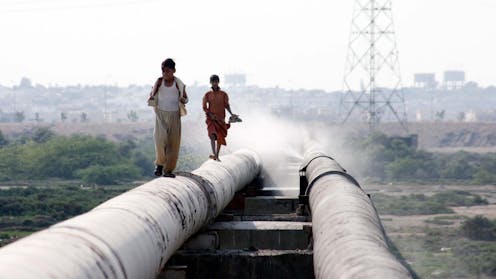
Two children walk along a burst water pipeline in Karachi, southern Pakistan. Asianet-Pakistan / Shutterstock

For ten days in April 2025, Pakistan almost came to a standstill. No freight was moving from its only port city, Karachi, towards the population centres in the north. The cause was the government’s announcement of a project to build six canals to irrigate the Cholistan Desert in the east of the country.

Protesters in the southern Sindh province, fearing diminished water supplies, demanded the immediate cancellation of the project and blocked all highways running northwards. The government soon relented, with prime minister Shehbaz Sharif announcing the project’s suspension in early May.

This was probably, at least in part, because the government was anticipating Indian military action. India blamed Pakistan for the Pahalgam terrorist attack, in which 26 people were killed in Indian-administered Kashmir the previous month. Internal squabbles had to be diffused in the face of external threats.

Geopolitics handed a temporary victory to the protesters. But the potential of water to cause conflict in Pakistan remains a live issue, from households using suction pumps to draw more than their share, to large inter-provincial disputes.


Wars and climate change are inextricably linked. Climate change can increase the likelihood of violent conflict by intensifying resource scarcity and displacement, while conflict itself accelerates environmental damage. This article is part of a series, War on climate, which explores the relationship between climate issues and global conflicts.


As someone who has researched water scarcity in Pakistan for 30 years, I argue that water conflict there is entirely avoidable. It is largely a function of the state’s obsession with supply-side mega projects and a lack of attention to questions of equitable access and quality.

At a time when the effects of climate change are becoming more severe, Pakistan can ill afford to continue its engineering-based approach to water if it is to ensure sufficient access for all.

According to the Pakistani government’s own figures, more than 95% of the available water in Pakistan is devoted to agriculture. It is used to cultivate water-guzzling crops, including rice and sugarcane. Pakistan is the fifth-largest producer and fourth-largest exporter of these crops.

Meanwhile the country’s teeming commercial centre of Karachi, with a population of 18 million, suffers from acute water shortages. Affluent neighbourhoods have water intensive date palms, exotic gardens, golf courses and swimming pools.

But for more than 80% of the city’s poorer neighbourhoods, there is almost complete dependence on water from tankers at up to 30 times the price richer neighbourhoods pay for regular piped water.

Water mains often become battle fronts in Karachi. My own research has documented many instances of violent conflict between different ethnicities and groups around manipulating water mains to gain access.

The minority Christian community in the Gujjar Nala neighbourhood of Karachi, for example, has engaged in violent clashes with the neighbouring Pashtun community over the operation of the regulating valve for allocating water to the two communities.

Conflict has also arisen between the city’s predominantly Urdu-speaking communities of Orangi Town and Altafnagar. Orangi residents attacked and destroyed the overhead water dispenser at the Altafnagar pumping station in early 2015 as it was siphoning water for Orangi to commercial water tankers.

Conflict between provinces

Pakistan is dependent on the Indus River and its tributaries for water. The system recharges the extensive Indus aquifer, which provides up to 80% of the water required for crops in the country.

Inter-provincial conflict over the distribution of Indus River water between upstream Punjab province, where several of Pakistan’s largest cities are located, and downstream Sindh province is an ongoing saga.

Sindh resents any new water mega projects in the powerful Punjab province. Along with the central government, Punjab wants to push forward dams and infrastructure projects in the name of development.

The Sindh-Punjab water conflict had a resolution of sorts in 1991, when the Inter-provincial Water Accord was signed. The agreement allocated water from the Indus River system among Pakistan’s four provinces.

However, Sindh’s civil society and government frequently accuse Punjab of violating the agreement by diverting water from the Indus River without the permission of the chief minister of Sindh, as required by the accord.

Sindhi and Punjabi nationalist politics heavily feature the water conflict in their rhetoric, which is proving corrosive for the federation of Pakistan.

Numerous dams and mining projects in the restive Balochistan province have also alienated the populace against the Pakistani government. They argue that dams are built with little local consultation and become hazards when they are swept away in flash floods. Around 30 dams in Balochistan were swept away during the 2022 floods.

At the same time, massive amounts of water are appropriated by foreign-owned mining operations there. These operations are of little benefit to local populations. The ongoing insurgency in the province, and the associated human rights abuses by the Pakistani state, are not divorced from the politics of water.

A thatched shelter on the banks of the Indus River.
The Indus River has been a source of conflict between Pakistan’s Sindh and Punjab provinces.
thsulemani / Shutterstock

Pakistan’s water development paradigm is based on engineering and infrastructure. But under the greater uncertainty of climate change, what is needed is more adaptive and flexible management of water at the local scale.

The current approach locks the state into fixed management based on assumptions underlying the design parameters of the infrastructure.

During flood season, which typically runs from July to September, the design parameters of dams and other infrastructure are now routinely exceeded. Water has to be released to save the infrastructure, thereby accentuating flood peaks.

The bulk of agricultural water also comes from groundwater, but all the investment is in surface water. It is a common lament in Pakistan that groundwater has been left for unregulated exploitation by private electric pumps, with all the attention devoted to surface water.

In domestic water supply, the obsession for photogenic urban green spaces and mega supply projects also take away water from poor areas and resources from the much-needed maintenance of the distribution infrastructure.

Climate change is a wicked problem that defies centralised decision making in a country the size and diversity of Pakistan. Local knowledge and democratic decision making are the best arbiter of adjustment to climate change and equitable water access.

Yet, in a praetorian state like Pakistan, military-dominated governance is unfortunately moving in exactly the opposite direction.

The Conversation

The research cited in this article emerged from grants funded by United States Institute for Peace (USIP) & Royal Geographical Society.

ref. How water fuels conflict in Pakistan – https://theconversation.com/how-water-fuels-conflict-in-pakistan-262628

A landmark treaty could protect the high seas – and spark new conflicts

Source: The Conversation – UK – By Naporn Popattanachai, Lecturer in Environmental and Marine Law, University of Galway

BobbyWjr / shutterstock

Two-thirds of the world’s oceans lie beyond national borders, an unregulated expanse under growing pressure from mining, fishing and climate change. Now, a new UN treaty promises to change that – but could also trigger fresh conflicts over who controls the high seas.

The high seas treaty, formally known as the BBNJ Agreement, has finally crossed the threshold to become international law after Morocco became the 60th country to ratify it. This triggers its entry into force in January 2026, opening a new era of ocean governance.

At the heart of the treaty is a plan to create protected areas on the high seas, similar to national parks on land. The goal is to protect 30% of the world’s oceans by 2030, a target agreed under the UN’s global biodiversity framework.

Only countries that sign and ratify the treaty will be bound by its rules (with some exceptions). Those that stay outside the agreement, like China or the US, won’t have to follow the treaty – but will lose a say in shaping the multilateral system of ocean governance. The could act unilaterally, but other states would be able to challenge them under the UN convention on the law of the sea.

The new treaty also lays down very detailed processes, thresholds, and other requirements for environmental impact assessments for activities that could harm the high seas. Countries can expect more regulations for activities – especially offshore activities – in their waters if they could cause damage beyond their maritime borders.

The high seas are a huge source of genetic resources. That means any plant, animal or microbe that could lead to new medicines, crops or industrial materials.

The treaty sets out rules for sharing both the materials and the potentially-lucrative scientific information they generate, so that poorer countries can also benefit from discoveries made in these waters. Detailed rules on access and benefit-sharing will be further developed by the countries that have signed the treaty.

However, the treaty will not apply to fishing already covered by international regulations, or to fish or other marine life caught through such activities on the high seas. Effectively, commercial fishing falls outside the scope of this treaty.

Mining pitted against conservation

But conservation isn’t the only activity on the high seas. Mining companies are keen to extract minerals such as nickel, cobalt or copper from below the deep seabed – often in the same areas where fragile ecosystems and valuable genetic resources can be found.

Deep-sea mining is already regulated by the International Seabed Authority, a separate specialised body established by a UN convention that has already granted many exploration contracts and is now drafting new rules for commercial extraction.

The two regimes – the high seas treaty and the seabed authority – compete and conflict with one another. Protecting marine life may significantly limit (if not prohibit) deep-sea mining, and vice versa.

It’s not yet clear how the new treaty will resolve this potential conflict. The only clue we have is that article 5 (2) of the treaty states it shall be interpreted in a way that “does not undermine” other relevant legal and political bodies. It remains to be seen how the two regimes will coordinate in practice, as well as how these competing interests can be reconciled, where the stakes are very high. When protecting biodiversity could stop lucrative mining projects, tensions seem inevitable.

Before the treaty takes effect in 2026, countries that have signed and ratified the treaty will meet again to agree on details: how protected areas will be chosen, how genetic resources will be shared, and how to handle conflicts with activities like fishing and mining.

For anyone involved in marine conservation and governance, this is an exciting moment. The high seas treaty could transform the way we look after the oceans. It gives us the chance to protect vast, vulnerable ecosystems and ensure the benefits of ocean science are shared more equally. But whether it will deliver on that promise depends on whether states can balance conservation with a growing scramble for deep-sea resources.

The Conversation

Naporn Popattanachai does not work for, consult, own shares in or receive funding from any company or organisation that would benefit from this article, and has disclosed no relevant affiliations beyond their academic appointment.

ref. A landmark treaty could protect the high seas – and spark new conflicts – https://theconversation.com/a-landmark-treaty-could-protect-the-high-seas-and-spark-new-conflicts-265908

Nigel Farage’s pledge to end indefinite leave could hurt the economy even before an election

Source: The Conversation – UK – By Tom Montgomery, Lecturer in Work and Organisations, University of Stirling

Nigel Farage’s proposal to abolish indefinite leave to remain is a shifting of the goalposts for those who have already come to the UK legally and settled.

Framing issues of migration as a crisis has been beneficial for Farage and other British politicians as a political strategy. However, on this occasion there are early indications that these proposals may provoke a more negative reaction from the British public.

The idea that even those already granted leave to remain would have to reapply creates insecurity for thousands of people who have come to call the UK home, which speaks to some of the human costs of such proposals.

We should also consider the potential implications for the economy. Reform claims billions could be saved by ending the right to apply for permanent residency in the UK – a claim that was called into question within days.

This indicates a pressing need for scrutiny of the economic impact a Reform government would have, particularly given that the party leading in polls.

Polls are not just indicators of who may next occupy 10 Downing Street. They also send signals to key actors in the economy about the country’s potential future direction of travel. And these signals matter. To understand how, we can turn our attention to the questions that an end to indefinite leave to remain may pose for the UK labour market.

There is already a problem with skills investment in the UK. Decisions to invest in skills and training often require a commitment to long-term investment before the employer and the employee realise the benefits.

But what happens to such investment when employers are unsure if their staff may be forced to leave? This is particularly relevant for those key sectors where there is a greater reliance on migrant workers.

Then there is the issue of job creation. If an employer is currently deciding where to invest and create new jobs, one aspect they will consider is access to the skills they need.

We know that there are key areas where employers are concerned about skills shortages in the UK. Would the potential end of leave to remain make it riskier to invest in creating jobs in the UK? This is a question employers will already be asking.

And if you are a worker from another country with skills that are in high demand, would these proposals make the UK more, or less attractive as a destination to bring skills?

These economic implications lead us to a key political question: who did Reform consult before making this announcement?

Reform has consistently sought to position itself as on the side of British business. Did they speak to the Confederation of British Industry about whether scrapping indefinite leave to remain would be a good idea? The Federation of Small Businesses? Did they speak to industry federations in the care sector, the hospitality sector, the education sector, or the health sector, where employers rely upon migrant workers?

Farage has also been keen to present himself as standing up for British workers and has in the past year been seeking to win support of grassroots union members. Did he consult any of the trade unions that represent millions of workers across the UK? Or did he consult trade union representatives in sectors that may be affected by these new proposals?

What type of consultation has informed these new proposals matters because it sends an important signal on the approach to governing that Farage intends to adopt should he become the next prime minister. Such signals are also likely to inform decisions made before the next election by employers and workers sustaining the UK economy.

Perhaps owing to the rapid rise of the Reform party and the dominance of two parties in government for generations, it has not received the same degree of scrutiny that previous “governments-in-waiting” have received. But given its dominance in the polls, careful consideration of the impact of its proposals is more necessary than ever.

If we look closer at these latest proposals, we see that they will create a more hostile and uncertain environment for those who have lived and worked in the UK for some years and those considering coming to the country. That may have already created risks for the UK economy.


Want more politics coverage from academic experts? Every week, we bring you informed analysis of developments in government and fact check the claims being made.

Sign up for our weekly politics newsletter, delivered every Friday.


The Conversation

Tom Montgomery works in higher education. He has conducted research on issues of social care, migration and labour markets that has been funded by the European Commission.

ref. Nigel Farage’s pledge to end indefinite leave could hurt the economy even before an election – https://theconversation.com/nigel-farages-pledge-to-end-indefinite-leave-could-hurt-the-economy-even-before-an-election-266174

Trump’s love affair with crypto raises worries about presidential conflict and influence

Source: The Conversation – UK – By Thomas Gift, Associate Professor and Director of the Centre on US Politics, UCL

US president Donald Trump’s “meme coin” $TRUMP fell about 8% in five minutes in late September 2025, wiping millions off its value. Users can buy and sell this cryptocurrency, inspired by an internet meme, on the open market.

Shortly before retaking office, Trump had posted on X: “My NEW Official Trump Meme is HERE! It’s time to celebrate everything we stand for: WINNING!” Below the post was a drawing of Trump with the words “FIGHT, FIGHT, FIGHT” – an allusion to his assassination attempt.

Soon after that announcement came the creation of the $MELANIA coin, named after the first lady, which also slid on the markets in late September 2025.

There are concerns that these and other crypto businesses the president and his family are involved with are creating an unprecedented ethical minefield – blurring the line between private profit and public office.

The personal profit Trump might receive from these meme coins is unclear. The website gettrumpmemes.com suggests that while the product is endorsed by the president, it has “nothing to do with any political campaign”. The Trump Organization, a holding company for Trump’s business ventures, and Fight Fight Fight LLC own 80% of the coins, it states.

But critics such as Democratic senator Elizabeth Warren worry that Trump could be leveraging the presidency to add to his family’s wealth. Norman Eisen, a former ethics adviser to President Barack Obama, has argued that Trump’s crypto dealings may be “the single worst conflict of interest in the modern history of the presidency”.

One inquiry by the New York Times into Trump’s budding crypto empire contended that it has “erased centuries-old presidential norms, eviscerating the boundary between private enterprise and government policy in a manner without precedent in modern American history”.

Eric Trump on the benefits of bitcoin.

In response to allegations that Trump has profited off interests while in the Oval Office, his assistant press secretary, Anna Kelly, released a statement saying his assets are “in a trust managed by his children”, and that there was not a conflict of interest.

In May, Democratic senator Jeff Merkeley (Oregon) introduced a bill for an end crypto corruption act, which would ban the president and other senior officials from “issuing, endorsing or sponsoring crypto assets”. The bill is pending with mostly Democrat support, so it is unlikely to pass the Republican-controlled House and Senate.

A family affair

Trump’s forays into crypto are a family affair. His sons Don Jr, Eric and Barron founded World Liberty Financial (WLFI) in September 2024, months before Trump was inaugurated a second time.

The president was originally listed as its “chief crypto advocate”, although his title on the website has since changed to “co-founder emeritus”. The site states this happened when he took office.

Apart from his sons, WLFI includes in the team listed on its website Trump’s chief Middle East envoy and negotiator, Steven Witkoff, and Witkoff’s son Zach.

According to the Trumps, WLFI was founded as “the start of a financial revolution” destined to make crypto more user-friendly. Yet critics say it represents an opportunity for the president to benefit financially, because of his involvement with the firm.

More concerns were raised when its crypto coin, the WLFI token, started trading in September 2025, reaching a high of about 40 cents per coin – hugely expanding the Trump family’s wealth.

Eric Trump also recently founded American Bitcoin. According to a press release, this firm will mine and hoard the world’s most valuable cryptocurrency, bitcoin, as well as capitalise on “opportunistic bitcoin purchases”. Upon its stock debut, estimates were that the Trump sons’ stake in American Bitcoin totalled around US$1.5 billion (£1.12 billion).

Trump’s crypto history

Formerly a crypto sceptic, Trump once said he was “not a fan” of bitcoin. Yet just before re-taking office, he declared that he wanted to make the US “the crypto capital of the planet”.

An early sign of Trump’s interest in crypto came when he spoke to a standing-room only crowd at bitcoin’s annual conference in Nashville, Tennessee in July 2024, becoming the first major presidential candidate to do so.

As America’s chief law enforcement officer, Trump helps set and enforce crypto policy — precisely the arena where his family’s businesses now operate. According to one report, the Trump family’s wealth in crypto, at least on paper, has surpassed US$5 billion – a number that now exceeds Trump’s vast real estate portfolio.

The emoluments clauses were created in the US constitution in 1789 to protect presidents from corrupting influences, and prohibit US leaders from accepting gifts from foreign governments. But they are now considered by some to need updating.

This concern isn’t hypothetical. In May 2025, Freight Technologies (Fr8Tech), a Nasdaq-listed firm based in Mexico, announced it would raise as much as US$20 million to purchase $TRUMP meme coins.

Against the backdrop of the US raising tariffs on Mexico, Fr8Tech CEO Javier Selgas said the deal was both economically and politically advantageous, explaining: “We believe that the addition of the Official Trump tokens [is] an effective way to advocate for fair, balanced, and free trade between Mexico and the US.”

By purchasing Trump’s meme coin, a firm such as Fr8Tech can both support the Trump family’s financial interests and hope to gain favourable treatment on trade policy. More concerns were raised when Trump hosted a black-tie dinner at his club in Virginia for the largest $TRUMP holders.

Trump’s crypto credentials

Trump has been the most crypto-friendly president ever. In March, he signed an executive order to create a national bitcoin strategic reserve – a government stockpile of the asset he has framed as a symbol of US dominance in the digital asset space. Moreover, Trump’s AI and crypto czar, David Sacks, has presided over historic pronouncements to improve the regulatory “rules of the road” for cryptocurrencies.

The US Securities and Exchange Commission, an executive branch agency that regulates markets, has moved to being pro-crypto under Trump, casting aside the approach of the Joe Biden era. This has included dropping legal suits against high-profile crypto firms such as Coinbase.

But while the Trump family benefits financially from its rising investment in crypto, this could yet prove a Pyrrhic victory. If Democrats wrest control of the House of Representatives in the 2026 midterms, they could use it to scrutinise the president’s crypto entanglements – and highlight concerns about presidential conflicts of interest.

The Conversation

Thomas Gift holds shares in Bitcoin financial instruments.

ref. Trump’s love affair with crypto raises worries about presidential conflict and influence – https://theconversation.com/trumps-love-affair-with-crypto-raises-worries-about-presidential-conflict-and-influence-265029

Don’t cut them out: lymph nodes may be key to cancer treatment

Source: The Conversation – UK – By Justin Stebbing, Professor of Biomedical Sciences, Anglia Ruskin University

Oleksandra Bolotina/Shutterstock.com

Removing lymph nodes during cancer surgery has saved countless lives in many tumour types. Yet recent research is challenging parts of this long-standing practice.

Imagine your body’s immune defences as a city, and lymph nodes as the hubs where police and firefighters gather fresh intel to launch their attack on criminals. What happens if you remove too many of these hubs? This is a new question at the centre of modern cancer surgery.

When surgeons remove lymph nodes, it’s usually for two reasons: to find out whether cancer has spread, and to prevent further spread to other organs. For decades, this approach represented the best standard of care.

If a tumour escapes its original site, cancer cells often travel through lymph vessels and settle in the nearest lymph nodes, which act as biological filters. Detecting cancer cells in lymph nodes signals that a patient’s disease may be more likely to return after treatment.

Removing these nodes allows doctors to “stage” the disease accurately, and potentially increase the chances of eradicating all tumour cells – while also telling oncologists like me to treat the cancer more aggressively.

But lymph nodes are not just passive waystations. They play an active role in the body’s immune response, acting as meeting points for immune cells to share information about cancer. Recent scientific discoveries have led researchers to rethink how crucial these hubs are for sparking powerful, lasting immune reactions.

One of the newest studies shows lymph nodes help maintain a special type of immune cell called “CD8 positive T cells”, which can destroy cancer cells. These immune cells are primed and kept ready to act by the environment inside the lymph nodes.

Without these hubs, the body’s anti-cancer immune response, especially during immunotherapy treatment, may be weaker than previously imagined. The research shows how the specific cells in the lymph nodes make an initial anti-cancer burst of activity. However, this has only been demonstrated in the laboratory, not in humans as yet.

Removing lymph nodes is not without drawbacks. Patients can experience swelling (lymphoedema), increased risk of infection in the affected limb, and sometimes chronic pain or mobility problems. There’s also concern that removing lymph nodes, while reducing short-term risks of cancer spread, might inadvertently weaken the body’s long-term immune defences – especially as modern treatments increasingly rely on the patient’s natural immunity. This is in line with the new study findings.

How lymph nodes work.

Why do surgeons still remove lymph nodes, then?

For many types of solid tumour, the risk of metastatic spread remains high, and lymph node involvement is one of the best predictors of cancer recurrence.

Lymph node removal also provides vital information for choosing the most effective post-surgical treatments. In breast cancer, doctors often use a “sentinel node biopsy”. This means removing only the first lymph node that fluid from the tumour drains into. Checking just this sentinel node helps doctors see if the cancer has spread, while reducing the number of nodes removed and lowering the risk of side-effects.

Medical researchers are learning more about how lymph nodes work during long-term illnesses. The new study shows that lymph nodes aren’t just passive filters; they’re active training grounds where special immune cells grow, multiply and become powerful fighters. This is especially important during treatments that boost the immune system, such as checkpoint blockade treatments which are now used for many types of cancer.

These results suggest that taking out lymph nodes doesn’t just block cancer’s spread; it also removes important hubs where the immune system monitors the body and gets reactivated to fight disease.

Over the last decade, hospitals have adopted gentler, more targeted lymph node surgeries. Instead of removing all the nodes in a region, the focus is now on minimising disruption: taking only the nodes most likely to harbour cancer.

This approach reduces complications for patients and may help keep their immunity strong. Some patients with early-stage cancers may even avoid node removal altogether, instead relying on imaging and biopsies to monitor for spread.

For those worried about the consequences of major lymph node removal, emerging therapies offer hope. Immunotherapy drugs, targeted treatments and even cancer vaccines are being developed that can “re-educate” the immune system, even if some lymph nodes have been lost.

Still, there is growing evidence that patients do best when at least some hubs remain – preserving the body’s ability to mount and sustain a defence against lingering cancer cells.

In the future, cancer surgery may become even more personalised. By mapping the activity inside lymph nodes – tracking which ones are essential for immune function and which are most likely to seed new tumours – doctors can tailor surgery so each patient gets maximum benefit with minimum harm.

The recent discoveries challenge surgeons and oncologists to weigh every decision carefully: not just for what is removed today, but for the immunity and future defences left behind.

Is removing lymph nodes in cancer surgery a bad idea? The answer is complex. For many patients, it’s still a good idea and can be lifesaving. But new science teaches us that lymph nodes are more than just staging posts; they may be indispensable for long-term immune protection. The future promises smarter, more strategic surgery, keeping more of the body’s natural defence system intact while targeting cancer with precision.

The Conversation

Justin Stebbing does not work for, consult, own shares in or receive funding from any company or organisation that would benefit from this article, and has disclosed no relevant affiliations beyond their academic appointment.

ref. Don’t cut them out: lymph nodes may be key to cancer treatment – https://theconversation.com/dont-cut-them-out-lymph-nodes-may-be-key-to-cancer-treatment-265557

When mental health apps become worry engines: how digital ‘care’ can hijack our anxieties

Source: The Conversation – UK – By Mikael Klintman, Professor of Sociology, Lund University

voronaman/Shutterstock

It’s 2:47 am and your phone buzzes on the nightstand. The notification suddenly glows in the darkness: “You’re on a 7-day streak!”; “Don’t break your streak!”. You feel the need to open the app right away for an emergency breathing exercise. Half-awake, you fumble for the device, chest tightening. Another buzz: “What’s your positive intention for the day?”

The app that promised to ease your anxiety has just jolted you into a state of micro-panic. Have you fallen prey to some kind of toxic, digital positivity?

Research shows that smartphone notifications from various types of apps can contribute to stress, anxiety and depression, with users receiving dozens of push notifications daily.

A recent meta-analysis found that while mental health apps can help improve clinical outcomes, there are some concerns around too much engagement leading to frustration and stress.

These apps, sometimes marketed as “therapist in your pocket” and “a sort of 24-7 mobile therapist” are employing strategies closely resembling what social media platforms use to maximise psychological engagement. But when the product is mental wellbeing, what happens when the cure becomes part of the disease?

To understand why app design choices matter, we need to consider how our minds process threats, whether positively or negatively framed. In my new book Framing – The Social Art of Influence, I examine topics ranging from caviar ads to public‑health campaigns, asking which kinds of signalling strike a chord with different audiences in particular situations. While mental‑health apps are not directly investigated in my book, there are plenty of parallels to them backed up by research.

One key idea is the distinction between “rough” and “smooth” textures of framing in communication. Rough framing uses threat cues, surveillance language and urgency to capture attention. It’s the difference between a gentle reminder and a fire alarm. These apps systematically deploy rough framing through their notification systems.

Consider how these notifications exploit what evolutionary psychologists call our “hypervigilance bias” — the ancient tendency to overreact to potential threats that once kept our ancestors alive. Research shows that throughout human evolution, diverse environmental threats shaped our brain’s fear response, resulting in cognitive mechanisms that prioritised survival.

When an app warns that your stress is spiking, it’s using the same neural pathways that once alerted us to predators. But unlike a rustling bush that might hide a tiger, these digital warnings can create threats where none existed.

By sending alerts about “detected stress” or “mood dips,” mental health apps create micro-crises that only the app can resolve. User reviews consistently praise the “instant reassurance” these apps provide, yet studies tell a different story about long-term engagement patterns.

Research on mental health app notification timing and frequency reveals concerning patterns. One study found that people using a certain app receiving daily notifications showed higher engagement initially. Still, some users described experiencing frustration with repetitive notification content, with one participant noting: “n the end it got me a bit annoyed, ‘cause I was like, ‘Oh, I’ve done this already.’”

Analysis of push notifications showed that frequent users become less responsive to suggestion-based prompts over time.

Hot and cold framing

In my book’s framework of social influence, I also distinguish between “hot” and “cold” framing temperatures. Hot framing creates urgency and emotional intensity — think breaking news alerts or emergency warnings. Cold framing allows space for reflection and considered response.

Mental health apps have become masters of hot framing. Haptic buzzes accompany streak warnings. Red badges accumulate on home screens. Animation effects show wilting flowers when you miss a meditation session. One popular app even sends notifications styled like text messages: “Hey! Your anxiety score is climbing. Let’s chat?”

The informal tone masks the manipulative design — you’re not chatting with a friend but with an algorithm optimised for engagement.

This matters because mental health recovery often requires the opposite approach. Decades of research in cognitive behavioural therapy emphasise the importance of creating distance from anxious thoughts, not constant monitoring of them. When we’re repeatedly prompted to check our stress levels, we’re training ourselves to become more, not less, aware of every physiological fluctuation.

How to improve design

The solution isn’t to demonise technology or abandon digital mental health tools altogether. Instead, we need to reframe how these apps operate radically. Research suggests several promising approaches that shift from hot to cool, rough to smooth framing.

First, notification caps work. A study on smartphone notification batching found that limiting alerts to three times daily reduced stress and increased wellbeing. Moreover, research on mental health app notifications warns that “a lot of annoying reminders can lead to disengagement” and recommends allowing users to customise reminder frequency and timing.

Second, opt-in rather than default biometric monitoring reduces the surveillance feel while maintaining functionality for those who genuinely benefit. Third, what designers call “intentional friction” — small barriers to obsessive checking — can break compulsion cycles. Such barriers may include limiting how often data is refreshed or using batching notifications.

Colour psychology matters too. Research on healthcare design shows that blue environments can lower blood pressure, reduce heart rate and decrease cortisol levels. A study on mental health app design found that young people “favoured a subtle use of colour” for wellbeing apps, warning against “overly intense colours”.

Language shifts make a difference. “When you’re ready, you might enjoy a breathing exercise” lands differently than “URGENT: Manage your stress NOW!”

What you can do

The next time your mental health app sends an urgent notification, pause before responding. Ask yourself: is this alert serving my wellbeing or the app’s engagement metrics? Are these “insights” about my stress creating more worry than wisdom? The power to reframe these digital interactions lies first in recognising how they frame us.

Perhaps the most radical act of digital self-care is the simplest: turning off notifications altogether. True mental wellness might begin not with another app alert, but with the confidence to trust our own minds, in their own time, at their own pace. Now that would be revolutionary — an app that knows when to stay quiet.

The Conversation

Mikael Klintman does not work for, consult, own shares in or receive funding from any company or organisation that would benefit from this article, and has disclosed no relevant affiliations beyond their academic appointment.

ref. When mental health apps become worry engines: how digital ‘care’ can hijack our anxieties – https://theconversation.com/when-mental-health-apps-become-worry-engines-how-digital-care-can-hijack-our-anxieties-263930