Air pollution may be linked to increased risk of motor neurone disease, our new study indicates

Source: The Conversation – UK – By Jing Wu, Postdoctoral Researcher, Integrative Epidemiology, Karolinska Institutet
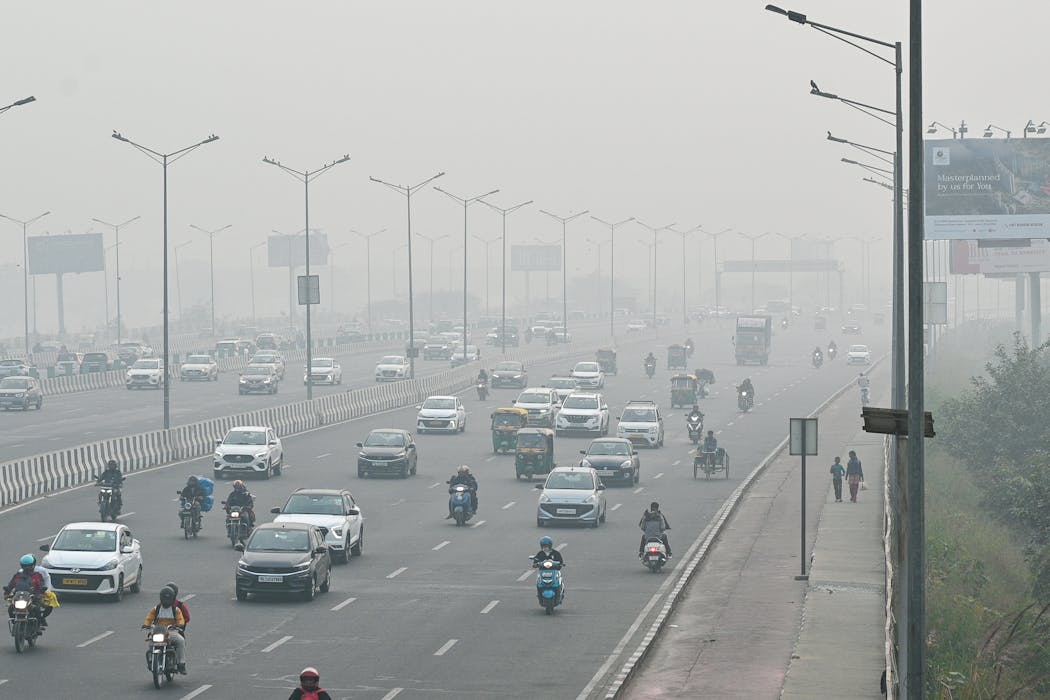
PradeepGaurs/Shutterstock.com

The scientist Stephen Hawking lived with amyotrophic lateral sclerosis (ALS), the most common type of motor neurone disease, for 55 years. He was one of the longest-surviving people with the condition.

However, most people with motor neurone disease are not as lucky. It often progresses quickly, and many pass away within two to five years of diagnosis. There is still no cure. Genetics account for only about 10% of cases, and the rest of the causes are still largely a mystery.

A new study in the journal Jama Neurology showed one possible contributor: air pollution, both for the risk of developing motor neurone disease and for how it progresses.

In the study, my colleagues and I examined air pollution levels at each of the 10,000 participant’s home address for up to ten years before diagnosis. We focused on two common types of outdoor pollutants that are widely linked to health harms: nitrogen dioxide and particulate matter.

Particulate matter is made up of tiny airborne particles (far thinner than a human hair). It is usually grouped by size: PM2.5 (less than or equal to 2.5 micrometres), PM10 (less than or equal to 10 micrometres), and the in-between fraction PM2.5-10 (between 2.5 and 10 micrometres).

We found that being exposed to air pollution over the long term, even at the fairly low levels typically seen in Sweden, was linked to a 20–30% higher chance of developing motor neurone disease. What’s more, the pattern still held up when we compared siblings, which helps rule out a lot of shared factors like genetics and growing up in the same environment.

We also observed that people with motor neurone disease who had been exposed for years to higher levels of PM10 and nitrogen dioxide faced a greater risk of death or of needing a machine to help them breathe.

These pollutants are typically produced by nearby road traffic. Taken together, the results suggest that pollution generated close to home, especially from local vehicle emissions, may have a stronger effect than particulate matter carried in from farther away, which tends to account for much of the broader day-to-day variation in particulate matter levels.
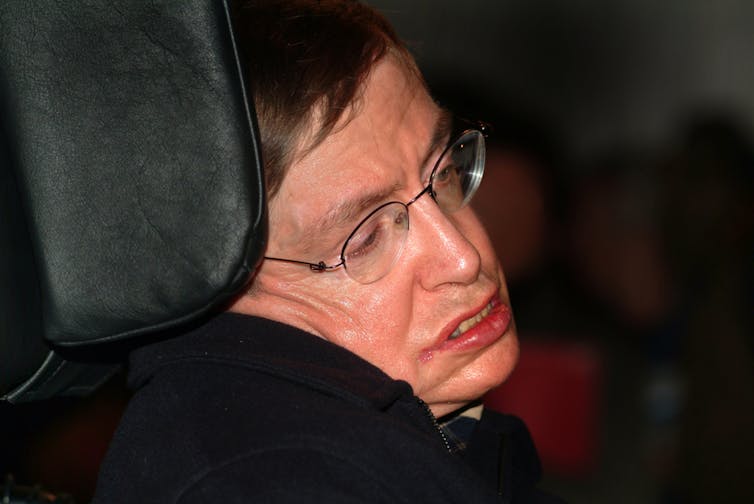
Stephen Hawking.
Stephen Hawking survived for 55 years with ALS.
Koca Vehbi/Shutterstock.com

Doctors regularly keep tabs on how well patients are managing everyday functions across a few key areas. These include bulbar function (speech, saliva control and swallowing), fine motor function (handwriting, cutting food, dressing and personal hygiene), gross motor function (turning in bed and adjusting bedding, walking and climbing stairs) and breathing (shortness of breath, difficulty breathing when lying flat, and signs of respiratory failure).

The participants in our study were assessed about every six months after diagnosis. We then looked at how quickly the disease was getting worse overall and within each of these domains. Patients whose decline was faster than that of 75% of other patients were labelled as having faster progression.

We found that long-term exposure to air pollution was associated with higher odds of having faster progression overall, particularly affecting motor and respiratory function, but not bulbar function.

Broader implications

The reasons for these differences are not yet clear. One possibility is that different parts of the nervous system vary in their vulnerability to pollution-related injury. It could also be because air pollution has consistently been linked to chronic lung diseases, reduced lung function and infections, all of which have been associated with poorer outcomes in ALS.

We accounted for many factors that could influence both air pollution exposure and motor neurone disease risk, including personal and neighbourhood income, education, occupation and whether participants lived in urban or rural areas. Our study did not have data on smoking habits or indoor air pollution exposure. However, there is no evidence suggesting that people with and without motor neurone disease differ significantly in these factors in ways that would explain our findings.

These results bring us closer to understanding motor neurone disease and may eventually help with earlier diagnosis and better treatment. But there’s a wider message here. We’re all exposed to air pollution, and the evidence keeps mounting that it harms our health in serious ways. Cleaning up our air could do far more good than we realise.

The Conversation

Jing Wu receives funding from Karolinska Institutet’s Research Foundation.

ref. Air pollution may be linked to increased risk of motor neurone disease, our new study indicates – https://theconversation.com/air-pollution-may-be-linked-to-increased-risk-of-motor-neurone-disease-our-new-study-indicates-272457

Romantasy: sexy tales of women-centred fantasy fiction are boosting the publishing industry

Source: The Conversation – UK – By Athanasia Daskalopoulou, Senior Lecturer in Marketing, University of Liverpool

In certain corners of the internet recently, people have been debating why “women can’t stop reading fairy porn”.

These discussions centre around the fantasy romance genre, also known as romantasy, which has exploded in both popularity and sales. Onyx Storm, Rebecca Yarros’s third book in The Empyrean series, was the fastest-selling adult novel in 20 years when published in early 2025, according to the New York Times. It sold more than 2.7m copies in its first week.

Bloomberg reported that romantasy was estimated to bring in US$ 610m (£455m) in sales in 2024, revitalising the publishing industry. These growing sales have made us, as feminist marketing scholars, interested in understanding this genre and its readers who swoon over muscular, handsome faerie princes and dream of dragon taming.

Traditionally, male readers have dominated fantasy fiction fandoms. As such, narratives centring female characters have often been sidelined in many of the most popular fantasy fiction books. Think of J.R.R. Tolkein’s Bilbo and Frodo Baggins from The Hobbit and The Lord of the Rings, or Fitz from Robin Hobb’s The Farseer Trilogy series.

Romantasy stories counter this, offering fantasy worlds where romance is a key plot point. The protagonists are often women and they centre women’s stories and women’s romantic relationships.

Female characters in these books set off on “hero journeys”, meet handsome and caring men along the way, experience romance and sexual pleasure, and defeat evil. In some ways, romantasy follows many familiar fantasy tropes, including good vs evil, medieval settings or magical schools, fantastical creatures and magical powers. However, they also incorporate tropes from romance – a genre that has historically sustained the publishing industry – such as enemies to lovers, forbidden love and forced proximity (oh no, there’s only one bed).


No one’s 20s and 30s look the same. You might be saving for a mortgage or just struggling to pay rent. You could be swiping dating apps, or trying to understand childcare. No matter your current challenges, our Quarter Life series has articles to share in the group chat, or just to remind you that you’re not alone.

Read more from Quarter Life:


Romantasy books, however, are often mistaken for erotica or “smut” for women. Readers sometimes rank books in terms of “spicy” levels indicating how salacious their storylines are. However, sexual content is not new to fantasy. Some of the most popular fantasy books, like George Martin’s A Song of Ice and Fire series (Game of Thrones), include frequent and graphic sex scenes.

Romantasy, however, has a distinct draw. These stories feature experiences of consensual sex and female-centred sexual pleasure while also tapping into complex themes. For instance, Rebecca Yarros’s Fourth Wing deals with chronic illness and Sarah J Mass’s A Court of Thornes and Roses deals with several traumas, including grooming, sexual abuse, war and poverty.

Romantasy authors, who are often women, aim to eschew the “male gaze” typical of much media, including literature. This is where, as feminist film scholar Laura Mulvey describes, women are often presented as passive objects for male sexual pleasure and viewing, rather than as active subjects with agency. For instance, in A Song of Ice and Fire and similar fantasy books, the sex often includes a form of violence against women.

Romantasy books instead centre the “female-gaze” in which female desire, power and identity are explored from a female point of view.

In the study we are working on, women have expressed that romantasy enables them to experience romantic and sexual fantasies that they might not experience in the real world, and helps them discover and experiment with their sexuality.

Younger readers we spoke to found liberation in reading about realistic and non-taboo representations of women’s romantic and sexual fantasies. Women from conservative cultures said they were inspired by female characters who are not afraid or ashamed to seek out sexual pleasure.

Romantasy books are not without their issues, however. Despite the female-centred narratives, some of the most popular books in the genre perpetuate heterosexual norms, either ignore racial and sexual diversity, or feature problematic and limiting representations of them. For example, Rebecca Yarros proudly states that Xaden, the male love interest character in Fourth Wing, is not white, without specifying which race he is – as though all non-white racial groups are the same.

However, in our study, we continue to find that even if all women (especially older women and women of colour) cannot connect to romantasy protagonists, they resonate with how these stories prioritise female pleasure and safety, with partners that are devoted to them. It is not only “smut” or “spice” that appeals to female readers, but more importantly, the acknowledgement of women as sexual subjects, rather than objects for male pleasure or targets of sexual violence.

While sex is an important part of romantasy, it is not erotica. Where erotica is all about the sex, often, the “spicy” content in romantasy only lasts a few pages and is a part of a broader romantic arc between the protagonist and the supporting male love interests.

As the genre continues to grow, we hope that romantasy is taken seriously by the publishing industry (it’s certainly benefiting from it) as well as by the wider public. Currently, the industry popularises TikTok viral books, resulting in repetitive, white-centric and heterosexual stories. There are, however, diverse representations to be found. For instance, The Emily Wilde series by Heather Fawcett or Paladin’s Grace by T. Kingfisher both feature women in their thirties and forties.

For queer representation and cosy romance, there’s Legends and Lattes by Travis Baldree. Additionally, books by women of colour, like The Inheritance Trilogy by N.K. Jemisin, and The Adventures of Amina al-Sirafi by Shannon Chakraborty, feature racial and ethnically diverse characters in a fantasy setting with a romantic subplot.

Perhaps in time, like with other genre writing, publishers and readers will seek out, support and promote more diverse stories in romantasy that will appeal to all kinds of women.


Looking for something good? Cut through the noise with a carefully curated selection of the latest releases, live events and exhibitions, straight to your inbox every fortnight, on Fridays. Sign up here.


The Conversation

The authors do not work for, consult, own shares in or receive funding from any company or organisation that would benefit from this article, and have disclosed no relevant affiliations beyond their academic appointment.

ref. Romantasy: sexy tales of women-centred fantasy fiction are boosting the publishing industry – https://theconversation.com/romantasy-sexy-tales-of-women-centred-fantasy-fiction-are-boosting-the-publishing-industry-272737

Ahead of seismic local elections, what we know about Reform’s ability to put boots on the ground for the campaign

Source: The Conversation – UK – By Tim Bale, Professor of Politics, Queen Mary University of London

What we used to think of as Britain’s two main parties, Labour and the Conservatives, seem more than happy to postpone as many of this year’s upcoming local elections as possible.

Labour insists the delays are needed because of ongoing local authority reorganisation. Opponents allege the decision has more to do with opinion polls that show both parties losing out badly to Reform, the Lib Dems and the Greens.

Who knows which is true? But it’s all yet another reminder that the UK’s formerly cosy, two-party system seems to be falling apart in front of our eyes.

In a year that holds the potential for electoral gains in councils and in races for the Welsh Senedd and Scottish parliament, what we used to refer to as country’s “minor” parties will have to run many campaigns.

In order to take full advantage of that fragmentation, they ideally need boots on the ground – people prepared to knock on doors and push leaflets through letter boxes in order to encourage supporters to actually get out and vote. These days, it’s also useful to have people willing to create (or at least share) content online.

That raises the question: who do they have? Given that the people who do the most campaigning for parties are its members, we can start by looking at how these numbers are distributed around the country. Reform makes big splashes in the national media, but does it have people who know the ground in the Vale of Clwyd?

My colleagues and I – the party members project run out of Queen Mary University of London and the University of Sussex – have looked into this in a newly published report.

It’s one thing to have plenty of party members – and there have been huge surges in people joining both the Greens and Reform since we conducted our surveys around the time of the 2024 election – but it matters where they’re located and how much they’re prepared to do.

Obviously, it helps to have members in those areas of the country that, opinion polls suggest, are particularly fertile territory. This may well be the case for the Lib Dems and for Reform, although Reform leader Nigel Farage will surely be hoping that that he’s managed to recruit a few more members in Wales and in London since we did our field work.

At that time, just 8% of Reform members were located in Wales, compared to 30% in the south of England. Only 12% of members were in London, where every borough has a council election in 2026.

A map showing how party membership breaks down across the country for each party.
Where are party members?
T Bale, CC BY-ND

As for the Greens, they look rather thinly spread. Like Reform, there’s more of a presence in the south, where 32% of members are to be found. But in London it’s 12%, although it looks like that might be changing fast and for the better in some parts of the capital.

Certainly, irrespective of which region they’re located in, if Green party members live in those multicultural urban areas where Labour looks vulnerable, then they could still prove very useful in May.

How useful members are, of course, also depends on whether they’re willing to actually help out. At the 2024 election, from which our data is derived, around a third of all Lib Dem and Reform UK members, devoted no time at all to their party’s campaign efforts. The Tories, Greens and Labour had it even worse. Around half of their members put no time in.

Digging a bit deeper into the kind of activities members do reveals some interesting differences. In the increasingly important online world, it looks as if the Greens and Reform UK may well have something of an advantage. Their members were more likely to share social media content about their party than members of the Lib Dems and Conservatives.

A chart showing what percentage of party members across parties share content about their parties on social media.
Which party members are active on social media?
T Bale, CC BY-ND

On the doorstep, however, it’s the Lib Dems who are right up there. Some 37% of Lib Dems delivered leaflets to people’s homes in 2024 – a figure that rises to 59% if we ignore those members who told us they’d done nothing for the party during the election.

This is one of the reasons, along with continued Conservative weakness, why, in spite of them being paid far less attention than current media darlings, the Greens and Reform UK, Lib Dem leader Ed Davey’s often underrated party stands to do well in the spring.

Reform’s membership performed less impressively in 2024 – only 20% delivered leaflets, albeit a figure that rises to 34% if we take those members who did nothing at all out of the equation. The figures for canvassing (a rather more demanding activity which parties often struggle to persuade members to help with) – 12% and 21% – are much lower.

A graphic showing what percentage of party members across parties actually knock on doors to campaign.
Who is knocking on doors?
T Bale, CC BY-ND

A key question for Farage, then, will be how he can motivate the people who’ve flooded into his party (boosting its membership to over 270,000) to get out on the doorstep or at least hit the phones in order to contact voters. Zack Polanski faces a similar challenge when it comes to the 150,000 people who now belong to the Greens, most of whom have joined since he took over as leader.

Campaigning by members isn’t everything, of course. Activists who aren’t members play a part, as does top-down, national campaigning – even in local elections. Still, these figures do give some insight into the strengths and weaknesses of party organisation around the country at the start of what looks set to be a crucial set of elections this spring.


Want more politics coverage from academic experts? Every week, we bring you informed analysis of developments in government and fact check the claims being made.

Sign up for our weekly politics newsletter, delivered every Friday.


The Conversation

Tim Bale has received funding from Research England for this survey work.

ref. Ahead of seismic local elections, what we know about Reform’s ability to put boots on the ground for the campaign – https://theconversation.com/ahead-of-seismic-local-elections-what-we-know-about-reforms-ability-to-put-boots-on-the-ground-for-the-campaign-273626

Juice cleanses, charcoal supplements and foot patches – is detoxing worth the hype?

Source: The Conversation – UK – By Katie Edwards, Commissioning Editor, Health + Medicine and Host of Strange Health podcast, The Conversation

If you’re healthy, do you need to do a charcoal detox? AtlasStudio/Shutterstock

January arrives with a familiar hangover. Too much food. Too much drink. Too much screen time. And suddenly social media is full of green juices, charcoal supplements, foot patches and seven-day “liver resets”, all promising to purge the body of mysterious toxins and return it to a purer state.

In the first episode of Strange Health, a new visualised podcast from The Conversation, hosts Katie Edwards and Dan Baumgardt put detox culture under the microscope and ask a simple question: do we actually need to detox at all?

Strange Health explores the weird, surprising and sometimes alarming things our bodies do. Each episode takes a popular health or wellness trend, viral claim or bodily mystery and examines what the evidence really says, with help from researchers who study this stuff for a living.

Katie Edwards, a health and medicine editor at The Conversation and Dan Baumgardt, a GP and lecturer in health and life sciences at the University of Bristol share a longstanding fascination with the body’s improbabilities and limits, plus a healthy scepticism for claims that sound too good to be true.

This opening episode dives straight into detoxing. From juice cleanses and detox teas to charcoal pills, foot pads and coffee enemas, Katie and Dan watch, wince and occasionally laugh their way through some of the internet’s most popular detox trends. Along the way, they ask what these products claim to remove, how they supposedly work, and why feeling worse is often reframed online as a sign that a detox is “working”.

The episode also features an interview with Trish Lalor, a liver expert from the University of Birmingham, whose message is refreshingly blunt. “Your body is really set up to do it by itself,” she explains. The liver, working alongside the kidneys and gut, already detoxifies the body around the clock. For most healthy people, Lalor says, there is no need for extreme interventions or pricey supplements.

That does not mean everything labelled “detox” is harmless. Lalor explains where certain ingredients can help, where they make little difference and where they can cause real damage if misused.

Real detoxing looks less like a sachet or a foot patch and more like hydration, fibre, rest, moderation and giving your liver time to do the job it already does remarkably well. If you’re buying detox patches and supplements then it’s probably your wallet that is about to be cleansed, not your liver.


Strange Health is hosted by Katie Edwards and Dan Baumgardt. The executive producer is Gemma Ware, with video and sound editing by Sikander Khan. Artwork by Alice Mason.

Dan and Katie talk about two social media clips in this episode, one from 30.forever on TikTok and one from velvelle_store on Instagram.

Listen to Strange Health via any of the apps listed above, download it directly via our RSS feed or find out how else to listen here. A transcript is available via the Apple Podcasts or Spotify apps.

The Conversation

Katie Edwards works for The Conversation and co-hosts the Strange Health podcast.

Dan Baumgardt and Trish Lalor do not work for, consult, own shares in or receive funding from any company or organisation that would benefit from this article, and have disclosed no relevant affiliations beyond their academic appointment.

ref. Juice cleanses, charcoal supplements and foot patches – is detoxing worth the hype? – https://theconversation.com/juice-cleanses-charcoal-supplements-and-foot-patches-is-detoxing-worth-the-hype-273394

Why Keir Starmer had to speak out against Trump over Greenland after staying quiet on Venezuela

Source: The Conversation – UK – By Jason Ralph, Professor of International Relations, University of Leeds

The Labour government came into office promising to “use realist means to pursue progressive ends”. US president Donald Trump’s recent actions over Venezuela and Greenland have tested Keir Starmer’s ability to deliver on that promise.

When the prime minister said he had been “a lifelong advocate of international law” there was a reasonable expectation that he would condemn the US action in Venezuela. Some feared that his ambiguity on that issue was a betrayal of progressive values.

However, US action in Venezuela came at a sensitive moment in the UK’s efforts to achieve a progressive end to the war in Ukraine. US cooperation is vital if Russia is to be forced to negotiate a peace that respects the Ukrainian right to self-determination. That means persuading the US to put pressure on Russia – something that would be impossible if Starmer had alienated Trump by condemning his illegal action in Venezuela.

Starmer has shown that he is able to handle Trump’s unpredictable personality. His ambiguity on Venezuela immediately prior to the Paris meeting that agreed security guarantees for Ukraine can be interpreted in these terms. He knew that the progressive strategy on Ukraine was reliant on a delicate alignment of US power.

When it emerged that British forces had helped the US seize a Russian-flagged oil tanker linked to Venezuela the stakes were raised. Trump’s actions were certainly a grab for Venezuela’s oil but the consequences could work toward progressive ends if Russian investments in Venezuela’s oil industry are written off and Russia’s ability to avoid sanctions by operating a “shadow fleet” are weakened. For the progressive realist then, Starmer’s ambiguity on Trump’s illegal action in Venezuela could be a worthwhile, if regrettable, trade-off.

The word “regret” shouldn’t be lightly passed over. Progressive realists need not be “theological” in the application of international law, and Starmer knows that good legal prosecutors exercise political judgment. But there is a danger.

The risk of not properly condemning Trump on Venezuela was that it could set the world on a slippery slope. It could simply encourage Trump’s imperialist ambitions. That seems to have happened very quickly and Starmer’s speech on Greenland was designed to stop the slide.

Starmer reminded us that “Britain is a pragmatic country”. It will, in other words, compromise with the US to find solutions to problems like Russia. But as Starmer said, “being pragmatic does not mean being passive. And partnership does not mean abandoning principle”.

The principle at stake in Greenland is the same as Venezuela: national self-determination. So why is he drawing the line now?

Starmer’s press conference.

As a realist, Starmer has shown his willingness to compromise on Venezuela. He has listened to Trump’s concerns on Ukraine and has made the case for greater defence spending across Europe. But as a progressive he has also shown there is a limit to how far he can compromise with the US, and he has drawn a line on Greenland.

This is because the argument that the US needs to annex Greenland to pressure Russia makes no sense. Greenland is already part of an anti-Russian alliance: Nato. No positive outcome can emerge from US pressure on Greenland.

European governments made that clear in Paris and Starmer’s speech reinforced the point. The pettiness of Trump’s statement linking the Greenland issue to Norway’s decision not to grant him the Nobel prize adds to the sense that US policy is now based on the personal ambitions of an imperial president. Against this backdrop, progressive realism means no longer compromising with the US.

A breach of trust

Another principle at stake in Greenland is multilateral cooperation based on respect. International relations academics have longed called the transatlantic region a “security community” because it goes beyond transactional deals. It is based on trust that comes from a sense of “we-ness”. Starmer is trying to maintain that community by speaking over Trump and appealing to the narrative of transatlantic solidarity that existed through the second world war, the cold war and the war on terror.

The question, though, is whether that narrative still has power in the US. Trump is intent on putting “America first” and is not concerned about niceties like respect, trust and gratitude. It might seem hard to imagine that the rest of his country will follow him, but recall that America’s founding father, Alexander Hamilton, famously dismissed Thomas Jefferson’s argument that the US owed France a debt of gratitude for its support during the revolutionary wars. When it came to matters of war and peace, Hamilton argued, former allies were on their own.

The UK has aligned itself with the US for decades because it shared values and could leverage US power in the service of its moral as well as material interests. If the Trump administration and the wider Maga movement in Congress continues to undermine the transatlantic security community, and international society more generally, then this relationship may no longer serve Britain’s interests. Progressive realism may have justified strategic ambiguity on Venezuela, but the opposite now appears to be true when it comes to US imperialism towards Greenland.

The Conversation

Jason Ralph has previously received funding from Research Councils UK and the European Union. He is a member of the UK Labour Party.

Jamie Gaskarth is affiliated with Associate Fellow, Chatham House.

ref. Why Keir Starmer had to speak out against Trump over Greenland after staying quiet on Venezuela – https://theconversation.com/why-keir-starmer-had-to-speak-out-against-trump-over-greenland-after-staying-quiet-on-venezuela-273836

How to involve men and boys in tackling misogyny? Start by treating them not just as perpetrators

Source: The Conversation – UK – By Ellie Buxton, Doctoral researcher in Social Policy , Loughborough University

PeopleImages/Shutterstock

Almost half (45%) of teachers across primary and secondary schools in the UK describe misogynistic attitudes and behaviour among boys as being a problem, according to a YouGov survey in 2025. Additionally, 54% of secondary school teachers indicate that boys very or fairly often openly express misogynistic attitudes or behaviour in school.

This gives a sense of why the government is calling for a “whole of society” approach in its strategy to tackle violence against women and girls. The strategy, published in late December 2025, focuses largely on young people, and calls for a “generational shift” in awareness of violence against women.

In addition to strengthening law enforcement responses and increasing support for victims, the strategy introduces measures to support young people who exhibit harmful behaviour. For example, a helpline to support those who display abusive behaviours in their romantic or family relationships.

Another aspect is implementing the recently overhauled sex and relationships curriculum in schools. This includes topics such as misogyny, masculinity and harmful content and communities online.

The government’s strategy largely uses gender-neutral language, which avoids positioning boys as potential perpetrators. Importantly, it also includes support for boys who are themselves victims of harmful behaviour.

But some have interpreted the strategy to mean that men and boys are the targets of the changes. This is problematic because research suggests that approaches which frame boys and young men only as potential perpetrators risk triggering defensive responses, backlash and disengagement.

This was apparent in my own ongoing PhD research into men’s perspectives on misogyny and responses in the UK. I ran focus groups with 35 men over the age of 18 from across the whole of the UK.

I asked them what they thought about misogyny and how, or if, we should address it. At times, this question sparked a feeling of being “blamed” for the problem among some of the men I spoke to. In several of the focus groups, the men felt a sense of unease and unfairness towards prevention measures which are focused on men and boys.

How do we get men involved?

Experts in the field of violence prevention have long discussed the importance of involving men and boys in the prevention of violence against women and girls.

As Australian sociologist Michael Flood explains, this is based on the rationale that, while most men do not use violence, it is primarily men who are responsible for this violence when it does occur.

Violence is also shaped by cultural ideas around masculinity and what it means to be a man. For example, research has found that young men who conform to rigid ideals of masculinity – acting tough, not asking for help – are much more likely to experience and perpetuate different forms of violence. Therefore, we cannot expect to achieve a reduction in violence against women without the involvement of men.

So, how do we have these conversations effectively?

An encouraging finding from my focus groups was widespread support for education which addresses issues such as gender inequality, misogyny and violence against women in a way that doesn’t place blame on men and boys. Experts I spoke to as part of my research suggested that using positive and collaborative approaches, such as participant-led workshops and active bystander training, are more likely to lead to sustained and meaningful engagement.

A number of UK organisations are already seeing success with this approach. For example, Beyond Equality, is a charity focused on the wellbeing of men and boys which aims to end gender-based violence. They facilitate discussion-based workshops in a variety of settings, including schools and workplaces. These workshops encourage boys to reflect on the meanings of masculinity, gender expectations, and sexist attitudes and behaviours.

In facilitating these sessions, Beyond Equality focuses on personal development. Their compassionate, participant-led approach encourages boys and young men to reflect on their role in contributing to positive social change. Their recent survey found that 84% of pupils stated that the workshops helped them to learn more about masculine stereotypes, healthy relationships and tackling gender-based violence.

Anonymous men sitting in a circle talking
A collaborative, problem-solving approach can help involve men in tackling misogyny.
Rawpixel.com/Shutterstock

Involving men and boys as part of the solution to misogyny and violence against women, rather than just treating them as the problem, is also important. A recent project, facilitated by researcher Sophie King-Hill, involved collaboratively working with young people to design a resource for relationship and sex education. Such approaches centre the voices of young people in the solutions to harmful types of behaviour which are relevant to their lives.

Bystander interventions are another strategy which may be effective. Through the bystander approach, boys and men are encouraged to intervene when they witness misogynistic behaviours.

Evaluations of bystander programmes focused on addressing gender-based harms have shown that people feel more confident about intervening following the training. This approach encourages joint responsibility for tackling the problem. And it provides a positive and constructive pathway through which men and boys can be involved.

In moving forward with their action plan, I am hopeful that the government will take onboard this growing research base. Only through positive and collaborative approaches – not blame and targeting – can we engage men as part of the solution to misogyny and violence against women.

The Conversation

Ellie Buxton does not work for, consult, own shares in or receive funding from any company or organisation that would benefit from this article, and has disclosed no relevant affiliations beyond their academic appointment.

ref. How to involve men and boys in tackling misogyny? Start by treating them not just as perpetrators – https://theconversation.com/how-to-involve-men-and-boys-in-tackling-misogyny-start-by-treating-them-not-just-as-perpetrators-272927

How two acclaimed US films reveal the failures of leftwing revolutionary politics

Source: The Conversation – UK – By Gregory Frame, Teaching Associate in Media and Cultural Studies, University of Nottingham

Donald Trump’s victory in November 2024 led to considerable soul-searching among those on the left of US politics. Having failed to defeat a convicted criminal they beat once before, the Democrats spent most of 2025 licking their wounds as Trump launched what they saw as a full-frontal assault on US democracy.

This new year has begun with fresh outrages at home and abroad, with the administration acting with increasingly horrifying impunity.

Coupled with the continued rise of rightwing populism and authoritarianism the world over, Trump 2.0 has felt like an existential crisis for the left.

The country has been here before. Leftwing protest movements in the 1960s in the US contributed to great legislative change – particularly in the area of civil rights – but they were often caricatured as unpatriotic, particularly in relation to the war in Vietnam. The feeling that the country was coming apart at the hands of young, violent radicals led the conservative “silent majority” to deliver Richard Nixon’s 1968 election victory.

Since then, mainstream leftwing politics in the US has recoiled from the idealism of the 1960s and instead offered change mostly in small increments. But this has arguably not proven a particularly successful strategy either over the past half century or more.

In the context of yet another defeat and the latest round of introspection, it seems appropriate, then, that two films concerned with the failures of leftwing revolutionary politics of the 1960s and 1970s should emerge almost simultaneously with Trump’s resurgence.

Exploring leftwing activism

Though very different in style and tone, Paul Thomas Anderson’s One Battle After Another (2025) and Kelly Reichardt’s The Mastermind (2025) both critique what they see as the strategic inadequacy and self-indulgence of leftwing activism, as well as explore its personal cost.

One Battle After Another sees former revolutionary Pat Calhoun, aka “Bob” (Leonardo Di Caprio) trying to rescue his daughter Willa (Chase Infiniti) from the clutches of a psychopathic white supremacist colonel, Lockjaw (Sean Penn). Though Bob had in a previous life resisted the federal government’s cruel, racist immigration policies through a series of daring raids on detention centres, fatherhood and excessive cannabis use have dulled his revolutionary edge.

Instead, Bob is now a somewhat incompetent buffoon. The film mines, for comedic purposes, his shambolic attempts to communicate with the “French 75” – the revolutionary army of which he was once part, modelled on real-life revolutionary groups of the 1960s and 1970s like the Weathermen.

Stumbling around in his bathrobe, he has forgotten all the codes and conventions necessary to navigate this world. From passwords to pronouns, Bob is out of step with the times.

However, the film finds room to poke fun at the sanctimony of the left too. As Bob grows increasingly aggressive when unable to secure information regarding a crucial rendezvous point, the thin-skinned radical to whom he is speaking on the phone informs him that the language Bob is using is having a detrimental impact on his wellbeing. If Bob lacks the competence to support the revolution, the people in charge of it are too fragile to achieve one either.

By contrast, The Mastermind follows J.B. Mooney (Josh O’Connor) in his attempts to evade the clutches of the authorities after he orchestrates the theft of four artworks from a suburban museum. Husband, father, and the son of a judge, Mooney is privileged, directionless, disorganised, selfish and, it seems, oblivious to the impact of the war in Vietnam as conflict rages all around him.

His disorganisation is obvious from the moment he realises his children’s school is closed for teacher training on the day of the heist. His privilege is clear when all he has to do is mention his father’s name when first questioned by police to get them off his back.

Even his attempts to convince his wife, Terri (Alana Haim), that he did this for her and their kids is inadequate, as he stumbles into admitting he also did it for himself.

While on the run from the authorities, Mooney appears ignorant of what is really going on around him, from the young Black men who discuss their imminent deployment to Vietnam, to the news broadcast of the realities of the war. Without spoiling anything, Mooney is, in the end, unable to avoid the effects of Vietnam on US society altogether.

Telling moments in both films also suggest the wavering commitment to revolution among its former acolytes. In The Mastermind, Mooney hides out at the home of Fred (John Magaro) and Maude (Gaby Hoffmann), a couple with whom he attended art college.

Despite her activist past, Maude refuses to let him stay for longer than one night for fear of unwanted attention from the authorities. In One Battle After Another, Bob’s willingness to take risks with his safety and freedom declines when he becomes a parent, and he is – rather problematically – quick to judge Willa’s mother, Perfidia (Teyana Taylor), for continuing to do so.

Political cinema of the 1970s

Both films can’t help but recall the similarly political work produced in US cinema in the late 1960s and early 1970s, such as Five Easy Pieces (1970), Two-Lane Blacktop (1971) and Chinatown (1974). In the midst of the Nixon-era backlash to the radicalism of the 1960s, these films have a tone of defeatist resignation, featuring directionless protagonists and unhappy endings.

The Mastermind’s conclusion is comparable to these earlier examples: its conclusion sees the police at a Vietnam protest, patting each other on the back, having rounded up another bunch of protesters and sent them to the can.

Though One Battle After Another is considerably more effervescent in its style, it too sees leftwing revolutionary politics as something of a dead end. Smaller scale victories are possible, with Sergio (Benicio Del Toro) continuing to fight the good fight for undocumented immigrants, and Willa running off to join a Black Lives Matter protest at the film’s end.

But watching both films from the perspective of a new year in which the Trump administration threatens violent upheaval at home and abroad, I think of Captain America’s (Peter Fonda) mournful lament towards the end of counterculture classic Easy Rider (1969): “We blew it.”


Looking for something good? Cut through the noise with a carefully curated selection of the latest releases, live events and exhibitions, straight to your inbox every fortnight, on Fridays. Sign up here.


The Conversation

Gregory Frame does not work for, consult, own shares in or receive funding from any company or organisation that would benefit from this article, and has disclosed no relevant affiliations beyond their academic appointment.

ref. How two acclaimed US films reveal the failures of leftwing revolutionary politics – https://theconversation.com/how-two-acclaimed-us-films-reveal-the-failures-of-leftwing-revolutionary-politics-270729

The next generation of driverless cars will have to think about what’s on the road, not just see it

Source: The Conversation – UK – By Daniel Zhou Hao, Lecturer in AI and Robotics, School of Computing and Mathematical Sciences, University of Leicester

Autonomous vehicles have made remarkable progress over the past decade. Driverless cars and buses that once struggled to stay in lane can now navigate busy city streets, recognise pedestrians and cyclists, and respond smoothly to traffic signals.

Yet one challenge remains stubbornly difficult. The hardest situations on the road are not the common ones but the rare and unpredictable events – what AI researchers call “long-tail scenarios” or “edge cases”, because they occur as outliers on any event distribution curve.

Examples include unexpected roadworks, unusual behaviour from other road users, and other subtle situations where there is a very low probability of something happening – but which would have a significant impact on the vehicle and journey.

Addressing these issues needs more than just better sensors – it requires vehicles that can reason about uncertainty. The most promising class of AIs yet developed to do this are known as “vision-language-action” (VLA) models. These take visual inputs from sensors, form an internal reasoning process often described as “thinking in steps”, then (almost instantaneously) generate actions such as steering or braking.

VLA models are not new. In robotics research, they have been developed for years as a way of connecting perception, symbolic reasoning and physical behaviour. For example, my research group at the University of Leicester has been examining how robots can reason about ambiguous physical situations, rather than simply react to sensor inputs.

But the recent unveiling of an open-source platform of VLA models by Nvidia, the world’s leading AI chip-manufacturer and most valuable company, has brought global attention to whether this is the technological leap needed to make autonomous vehicles both safe enough and cheap enough to make them a common sight on all our roads.

What’s most notable about Nvidia’s VLA platform – called Alpamayo and launched by the company’s CEO, Jensen Huang, at the Las Vegas Consumer Electronics Show (CES) on January 5 – is the scale and levels of investment it brings: industrial-level data, simulation and computing applied directly to the complex and safety-critical task of driving.

Huang confirmed that German car manufacturer Mercedes will use Alpamayo technology in its new CLA models – but this does not mean these cars will be fully autonomous at launch. There again, I believe this technology is an important step towards a mobility future dominated by autonomous vehicles.

Nvidia’s Alpamayo AI system will feature in Mercedes’ latest CLA models. Video: The Robot Report.

Why long-tail scenarios are so hard for AI

In machine learning, systems are typically trained on large volumes of representative data. For driving, this means countless examples of clear roads, standard junctions and predictable traffic flows. Autonomous vehicles perform well in such conditions because they closely resemble what the system has already seen.

The difficulty lies at the edges of this data. Long-tail scenarios occur infrequently but account for a disproportionate share of risk. A pedestrian stepping into the road from behind a parked van, a temporary lane closure that contradicts road markings, or an emergency vehicle approaching from an unexpected direction are all situations that demand judgement rather than rote response.

Human drivers handle these moments by reasoning. We slow down when something might happen, anticipate uncertainty and err on the side of caution. Most autonomous systems, by contrast, are built to react to recognised patterns. When these patterns break down, so can the system’s confidence.

How Alpamayo works

Alpamayo is neither a self-driving car nor a single AI model. It is an open-source ecosystem designed to support the development of reasoning-based autonomous systems. It combines three main elements: a large, open-source AI model (developed by Nvidia) that links perception, reasoning and vehicle actions; extensive real-world driving datasets from different countries and environments; and simulation tools for testing decisions in complex scenarios.

Alpamayo’s models are designed to produce “intermediate reasoning traces”: internal steps that reflect how a decision was reached. In practical terms, this means a system can explain (and learn from) why it chose to slow down, wait or change course in response to uncertainty.

In contrast, traditional autonomous driving software is usually organised as a pipeline. One system detects objects, another predicts their motion, and a third plans how the vehicle should respond. This structure is efficient and well understood, but can struggle when situations fall outside its predefined assumptions – particularly when multiple plausible outcomes must be considered, rather than a single predicted one.

The power of reasoning that Alpamayo is instilled with should be better able to deal with the unexpected. A system trained to think about what could happen, rather than what usually happens, has a better chance of coping with long-tail scenarios that fall outside its training data. It also makes the system more transparent, allowing engineers and regulators to inspect decisions rather than treating them as outputs from a black box.

Tech pioneer Bill Gates experiences an autonomous vehicle controlled by Wayve technology in downtown London.

However, despite the excitement around the recent Nvidia presentation, Alpamayo is not being presented as a finished self-driving solution. Large reasoning models are computationally demanding and unlikely to run directly in vehicles. Instead, they are intended as research tools: systems that can be trained, tested and refined offline, with their insights later distilled into smaller onboard computers in autonomous vehicles.

Seen this way, Alpamayo represents a shift in how autonomy is developed. Rather than hand-coding ever more rules for rare cases, the aim is to train systems that can reason their way through uncertainty.

This is just part of a wider trend in AI-centric approaches to autonomy. In the UK, autonomous vehicle tech company Wayve has attracted attention for its work on embodied AI. This is where a single learning system learns driving behaviour directly from experience, without relying heavily on detailed maps or hand-engineered rules.

While Wayve’s approach does not emphasise explicit reasoning traces in the same way as Alpamayo, both reflect a move away from rigid pipelines toward systems that can adapt more flexibly to new environments. Each, in its own way, is aimed at improving how autonomous vehicles cope with the long tail of real-world driving.

The Conversation

Daniel Zhou Hao does not work for, consult, own shares in or receive funding from any company or organisation that would benefit from this article, and has disclosed no relevant affiliations beyond their academic appointment.

ref. The next generation of driverless cars will have to think about what’s on the road, not just see it – https://theconversation.com/the-next-generation-of-driverless-cars-will-have-to-think-about-whats-on-the-road-not-just-see-it-273291

Developmental language disorder can have life-long effects – and it’s easily missed in multilingual children

Source: The Conversation – UK – By Teresa Garrido-Tamayo, Visiting Researcher in Speech and Language Sciences, Newcastle University

Marko Poplasen/Shutterstock

Six-year-old Antoni, born in the UK to Polish parents, speaks only a few English words in class and often looks confused when the teacher gives instructions. He could simply be adjusting to English – or the problem could be developmental language disorder (DLD), a condition that severely impairs a child’s ability to learn, use and understand spoken language.

Such challenges are increasingly common for parents and teachers. In England, for example, around 21% of schoolchildren are growing up with a first language other than English. While most children’s language development – whether monolingual or multilingual – is typical, the average classroom includes two DLD-affected children. DLD’s prevalence, roughly 8%, is similar worldwide, from China to Mexico.

Even so, DLD remains under-recognised and under-served – especially compared to other developmental conditions, such as dyslexia, autism or attention deficit hyperactivity disorder (ADHD).

Identifying DLD in multilingual children can be difficult. Each language a child learns develops at its own pace, depending on factors such as how often they hear and use it. For example, multilingual children may temporarily lag behind their monolingual peers in vocabulary in one language, but this should not be mistaken for DLD.

Children with DLD show problems across all their languages and need specialist help. In contrast, those with typically developing language only struggle in the language they need more exposure to, like English at school.

Learning two or more languages promotes linguistic, social and cognitive strengths in all children. Contrary to longstanding myths that multilingualism harms language development, learning multiple languages does not cause or exacerbate DLD. Support for DLD should sustain all of a child’s languages, as these are critical for wellbeing, identity and family relationships.

Happy children
DLD support should include all a child’s languages.
Tom Wang/Shutterstock

The impact of DLD is lifelong and extends far beyond language. It has consequences for mental health, socialisation, literacy, academic performance, and quality of life. Accurate, timely diagnosis and support are essential, not just for individual life chances, but also for society. Adults with DLD are more likely to have difficulty getting a job and have a criminal record.

Addressing DLD

These are key signs that a multilingual child may be at risk for DLD, suggesting an approach to a speech and language therapist. These if they:

  1. are slower to say first words, or put words together, than siblings

  2. struggle to understand what others say or follow instructions

  3. have trouble expressing thoughts or telling stories

  4. rely excessively on gestures (like pointing) to communicate instead of words

  5. are slower to learn English in school than peers with similar age, cultural and linguistic backgrounds

  6. struggle to interact with children who speak the same languages.

Following referral, speech and language therapists gather information from parents, teachers, tests and other sources, aiming to understand the child’s abilities in all their languages.

In linguistically diverse countries, there are still considerable obstacles, however. UK-based speech and language therapists, for example, still lack reliable tools to equally assess English and the children’s additional languages. With few speech and language therapists having multilingual proficiency, and a shortage of appropriately trained interpreters, DLD can be missed – or typical multilingual development mislabelled as disordered – thus delaying or misdirecting support.

Progress is being made, with promising new tools like the UK bilingual toddlers assessment tool and the language impairment testing in multilingual settings battery. The former uses two-year-olds’ vocabulary in British English and their other language, alongside their exposure to each language, to determine whether their language development may be at risk.

Similarly, the Litmus battery includes tools for assessing the language skills of multilingual children from a range of ages and language backgrounds, such as phonological memory and storytelling.

More recently, our team is developing a dynamic assessment resource at Newcastle University that uses enjoyable activities to detect DLD. It explores multilingual children’s learning potential – not just their existing skills – in language and communication areas affected by the condition, such as telling stories or recognising emotions in people’s voices.

Detecting DLD is the first step. Support from family, schools and speech and language therapists can then transform a multilingual child’s life outcomes, helping them grow up healthier and happier.

The Conversation

Teresa Garrido-Tamayo received PhD funding from the Economic and Social Research Council via the Northern Ireland and North East Doctoral Training Partnership from 1st October 2019 to 31st May 2023.

Laurence White received funding from the Economic and Social Research Council from 1st August 2013 to 31st July 2016 (ES/K010123/1 – “Lexical Development in Bilingual Toddlers” – Principal Investigator, Caroline Floccia, University of Plymouth).

Carolyn Letts does not work for, consult, own shares in or receive funding from any company or organisation that would benefit from this article, and has disclosed no relevant affiliations beyond their academic appointment.

ref. Developmental language disorder can have life-long effects – and it’s easily missed in multilingual children – https://theconversation.com/developmental-language-disorder-can-have-life-long-effects-and-its-easily-missed-in-multilingual-children-263059

How George Orwell’s Nineteen Eighty-Four predicted the global power shifts happening now

Source: The Conversation – UK – By Emrah Atasoy, Associate Fellow of English and Comparative Literary Studies & Honorary Research Fellow of IAS, the University of Warwick and Upcoming IASH Postdoctoral Research Fellow, the University of Edinburgh, University of Warwick

Orwell’s dystopian masterpiece envisaged a world dominated by three rival blocs that are constantly at war with one another. U.J. Alexander/Shutterstock

There’s nothing new about calling George Orwell’s most influential novel prescient. But the focus has usually been on his portrayal of the oppressive aspects of life in Oceania, the superstate in which Nineteen Eighty-Four is set.

Today, however, a different feature – which as recently as 2019, some critics dismissed as “obsolete” – is getting more attention: its vision of a world divided into three spheres, controlled by autocratic governments that constantly form and then break alliances.

In 2022, Vladimir Putin initiated Russia’s full-on invasion of Ukraine. This year began with the US mounting a raid on Venezuela and snatching its president, while Donald Trump speculated about US actions against various other countries in Latin America and Greenland. Meanwhile, Xi Jinping regularly repeats China’s intention to “reunify” with Taiwan – by force if necessary.

“Orwell-as-prophet” commentators began showing more interest in the superstate idea early in the decade, often leading with references to Putin’s imperial ambitions. This trend became more pronounced when Trump’s second term began.

Last year, American historian Alfred McCoy led with a tripolar reference in his Foreign Policy essay: “Is 2025 the New 1984?” A Bloomberg report on the Trump-Putin summit in Alaska last August was headlined: “It Looks Like a Trump-Putin-Xi World, But It’s Really Orwell’s”. The article described Nineteen Eighty-Four’s fictional model of global affairs as “prophetic”.

Many observers now see Big Brother-like leaders wielding power in Washington, as well as in Moscow and Beijing. In her first essay of 2026, Anne Applebaum wrote in The Atlantic that: “Orwell’s world is fiction, but some want it to become reality.”

The American journalist and historian noted a dangerous desire of some for “an Asia dominated by China, a Europe dominated by Russia, and a Western Hemisphere dominated by the United States”. Social media is awash with comments and maps in the same vein.

Orwell’s influences

Analysts have claimed that elements of Orwell’s portrayal of politics inside Oceania paralleled various parts of dystopian novels written before Nineteen Eighty-Four. They cite, in particular, the potential influence of Jack London’s The Iron Heel (1908) and Aldous Huxley’s Brave New World (1932) – works Orwell discussed in a 1940 essay.

Then there’s Yevgeny Zamyatin’s novel We (1921), which Orwell wrote about in 1946, and Arthur Koestler’s Darkness at Noon (1940), which he wrote about in 1941. Both inspired him with their criticism of the real Soviet Union.

Could these or other utopian and dystopian texts – such as Ayn Rand’s Anthem (1938), Sinclair Lewis’s It Can’t Happen Here (1935), and Noël Coward’s play Peace in Our Time (1946) – have given him ideas about future geopolitics?

In fact, most of the works mentioned downplay or ignore international issues. Koestler focuses on one unnamed totalitarian country, Zamyatin and Huxley on a single world-state, London and Lewis on an America transformed by a domestic tyrannical movement, and Coward a Britain conquered by Hitler.

Two other novels provide partial precedents. The first is The War in the Air (1908) by H.G. Wells, an author Orwell read throughout his life. It has a tripolar side, depicting a war between Germany, the US and Britain, and a Chinese and Japanese force. The second is Swastika Night by Katharine Burdekin (writing as Murray Constantine).

Orwell never referred to Swastika Night in any publication, and his most prominent biographer, D.J. Taylor, has claimed there is no definitive evidence that he read it. However, as it was a Left Book Club selection and he was a Left Book Club author, Orwell would at least have known about it. The novel describes a world divided into two rival camps, not three, but portrays allies becoming rivals. The competing superstates are Nazi Germany and imperial Japan, who were on the same side when the book was written.

In his own words

The most satisfying place to look for inspiration for Nineteen Eighty-Four’s geopolitical vision, though, is in Orwell’s own experiences and non-fiction reading. Before the 1940s, Orwell spent a lot of time learning and writing critically about three oppressive systems: capitalism, fascism and Soviet communism.

In terms of capitalism, working as a colonial police officer in Burma in the 1920s left him disgusted with what he called the “dirty work of empire”. Living in England later led him to write works on class injustices such as The Road to Wigan Pier (1937).

In terms of fascism, he wrote scathingly about Hitler and Franco. Orwell was also appalled by accounts of repression under Stalin. His time fighting in Spain reinforced his dark view of Moscow and he saw erstwhile allies become arch-enemies as the anti-Franco coalition broke down, and the Soviets began treating groups that had been part of it as villains.

Second world war news stories had an impact as well. In 1939 and 1941 respectively, newspapers were full of reports of Moscow and Berlin signing a non-aggression pact, and then of Moscow switching sides to join the Allies.

And in a 1945 essay, Orwell mocked news of many people on the left embracing the fervently anti-Communist Chinese Nationalist Party leader, Chiang Kai-shek, once he was with the Allies – seemingly having forgetten their earlier disdain for Chiang’s brutal effort to exterminate the Chinese Communist Party.

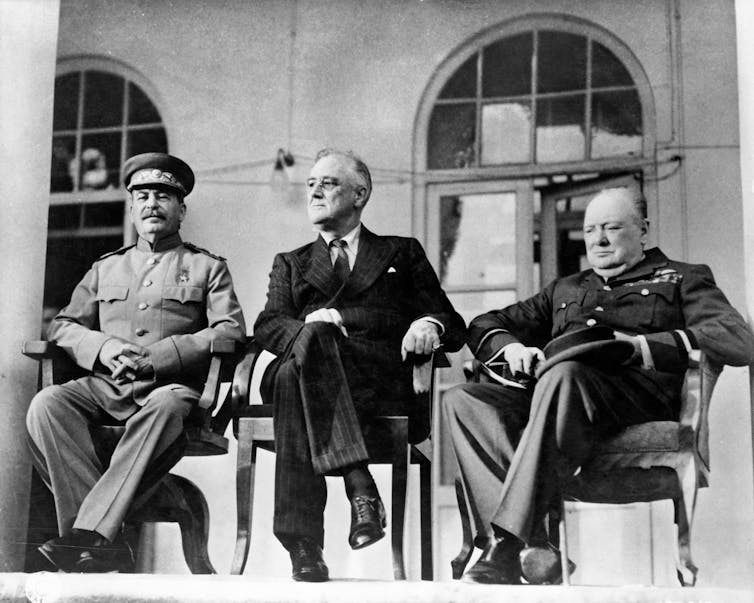
WInston Churchill, Franklin D Roosevelt and Josef Stalin site on chairs together.
Carving up the world: Stalin, Roosevelt and Churchill at the Tehran conference in 1943.
U.S. Signal Corps photo

But perhaps the most notable 1940s news story of all relating to Nineteen Eighty-Four’s geopolitics has been flagged by Taylor as one that broke in 1943. He notes that Orwell sometimes claimed a key inspiration for his final novel were the reports of Roosevelt, Stalin and Churchill talking at the 1943 Tehran conference about carving up the post-war world into three spheres.

Nineteen Eighty-Four has had extraordinary longevity as a go-to text for political commentary. There are many explanations for its staying power, but right now a key feature of it may be its relevance to thinking about both repression of dissent and Newspeak-style propaganda in many individual countries – and the unsettling geopolitical tensions in the world at large.

The Conversation

The authors do not work for, consult, own shares in or receive funding from any company or organisation that would benefit from this article, and have disclosed no relevant affiliations beyond their academic appointment.

ref. How George Orwell’s Nineteen Eighty-Four predicted the global power shifts happening now – https://theconversation.com/how-george-orwells-nineteen-eighty-four-predicted-the-global-power-shifts-happening-now-273122