Greenland’s ‘green mining’ row highlights the key tensions in the energy transition

Source: The Conversation – UK – By Narmin Nahidi, Assistant Professor in Finance, University of Exeter

pathdoc/Shutterstock

Green finance is built on a promise: that capital can be redirected to support the transition to a low-carbon economy while avoiding the environmental mistakes of the past. That promise is getting harder to keep.

The technologies needed for decarbonisation of electric vehicles, wind turbines, batteries and grid infrastructure rely on large quantities of critical minerals. Extracting those materials, even from remote places such as Greenland, remains environmentally disruptive, socially contested and politically fraught.

Sustainable finance shapes investment decisions across energy, infrastructure and manufacturing. The ethical frameworks this finance is based on often assume that environmental harm can be minimised through better disclosure, cleaner technologies and improved governance.

The extraction of critical minerals challenges that assumption. Mining is land intensive, energy hungry and often polluting. Recycling of existing batteries, electronics and turbines, and substitution away from scarce materials can reduce demand.

But most projections from the world’s energy watchdog, the International Energy Agency, show that demand for critical minerals will rise sharply under clean energy transitions . Similar bodies show that extraction of raw materials such as lithium, cobalt, nickel and rare earth elements will rise sharply over the next two decades.

This is because the transition away from fossil fuels depends on large volumes of new infrastructure including electric vehicle batteries, wind turbines and grid storage, which cannot be supplied from recycled materials alone.

Recent research and policy assessments suggest this contradiction is becoming more acute, not less. Recent analyses of critical mineral supply chains show that extraction and processing remain highly concentrated in a few countries particularly China, Australia, Chile and the Democratic Republic of Congo.

These supply chains are environmentally intensive, involving significant land use, water consumption and pollution. These supply chains are slow to scale because it takes years to obtain permits for new mines, requires large upfront investment, and depends on the construction of extensive infrastructure. Yet global climate targets assume rapid expansion of clean-energy technologies.

In Greenland, environmental regulation and local political decisions have delayed or halted mining projects that are often considered key to the green transition.

Greenland is geologically rich. The island is home to significant deposits of rare earth elements, graphite, zinc and other minerals considered critical by both the EU and the US. These materials are central to clean-energy supply chains and have become strategically important as governments seek to reduce dependence on China, a superpower which dominates global processing capacity.

At the same time, Greenland’s environment is exceptionally fragile. Arctic ecosystems recover slowly from industrial disruption, infrastructure is limited and mining projects face high logistical and financial costs. These constraints have already shaped political choices.

In 2021, Greenland’s government introduced restrictions on uranium mining, effectively blocking the development of the large Kvanefjeld rare earth project. That decision reflected environmental and social priorities. It also highlighted the economic and legal pressures that arise when sustainability policies collide with global demand for transition minerals.

When green finance meets geopolitics

In a world of geopolitical competition, governments are increasingly treating access to critical minerals as a matter of national security as well as climate policy. Policy statements and strategy documents from the US, the EU and other major economies now frame mineral supply not just as an environmental issue, but as essential to economic resilience, defence capability and technological leadership.

This shift has encouraged public financial support, diplomatic engagement and strategic partnerships aimed at securing future supply, including increased foreign interest in Greenland’s mineral sector. While Greenland retains control over its resources, international attention reflects the growing geopolitical importance of potential new supply sources.

Projects justified as supporting the energy transition may be driven as much by geopolitical urgency as by environmental benefit. Academic research on critical mineral supply chains shows that when geopolitical and industrial priorities shape governance frameworks, local environmental risks and community consent are often marginalised in favour of strategic and economic goals


Read more:
The economics of climate risk ignores the value of natural habitats


Tension in Greenland

Despite international interest, large-scale mining in Greenland has not taken off. Environmental safeguards, political opposition, infrastructure gaps and high costs have slowed development. This reality complicates the assumption that new mineral frontiers can quickly solve clean-energy supply bottlenecks through investment alone.

For investors, Greenland raises difficult questions about how environmental, social and governance (ESG) standards apply to transition minerals. Financing a rare earth mine may reduce long-term emissions by enabling renewable technologies, yet still impose immediate environmental damage. Standard ESG metrics struggle to capture this trade-off. They are better suited to assessing corporate behaviour than to resolving conflicts between global climate goals and local environmental harm.

lone husky howling on greenland icy landscape
Current geopolitical dynamics have huge consequences for Greenland’s environment.
Kedardome/Shutterstock

In Greenland, the debate over “green mining” (the idea that mineral extraction can be made environmentally acceptable through cleaner technologies, higher standards and better governance) is not a case of poor regulation or weak oversight. Instead, it reflects a jurisdiction that has deliberately placed environmental limits on extraction, even as it faces economic and strategic pressure as a result.

As governments continue to pursue ambitious climate targets under national and international commitments, similar dilemmas will emerge elsewhere. Green finance cannot avoid the material foundations of the energy transition.

Sustainable finance frameworks must evolve to handle situations where environmental protection constrains access to strategically important resources. Greenland shows how protecting the environment can clash with efforts to secure the minerals needed for the energy transition, and that this tension is far from resolved.

Without clearer rules on how to balance climate benefits against local ecological costs and without genuine respect for sovereignty and community choice, green finance risks becoming reactive, stretched between environmental principles and geopolitical realities.

The transition to a low-carbon economy requires minerals. But Greenland highlights that how those minerals are sourced and who bears the environmental cost remains unresolved.


Don’t have time to read about climate change as much as you’d like?

Get a weekly roundup in your inbox instead. Every Wednesday, The Conversation’s environment editor writes Imagine, a short email that goes a little deeper into just one climate issue. Join the 47,000+ readers who’ve subscribed so far.


The Conversation

Narmin Nahidi does not work for, consult, own shares in or receive funding from any company or organisation that would benefit from this article, and has disclosed no relevant affiliations beyond their academic appointment.

ref. Greenland’s ‘green mining’ row highlights the key tensions in the energy transition – https://theconversation.com/greenlands-green-mining-row-highlights-the-key-tensions-in-the-energy-transition-274336

Why does this river slice straight through a mountain range? After 150 years, scientists finally know

Source: The Conversation – UK – By Adam Smith, Postdoctoral Research Associate, School of Geographical & Earth Sciences, University of Glasgow

The Gates of Lodore mark the beginning of the Green River’s path through the Uinta Mountains. Scott Alan Ritchie / shutterstock

The western US is a geologists’ dream, home to the Rocky Mountains, the Grand Canyon, active volcanoes and striking sandstone arches. But one landform simply doesn’t make sense.

Rivers normally flow around barriers. The Danube river, for example, flows between the Alps and the Carpathians, twisting and turning to avoid the mountains.

But in north-western Colorado, one river does the opposite.

The intimidatingly named Gates of Lodore marks the entrance to the 700-metre deep Canyon of Lodore that slices straight through the Uinta Mountains as if the range wasn’t there at all. It was created by the Green River, the largest tributary of the Colorado River (of Grand Canyon fame).

For more than 150 years, geologists have debated why the Green River chose such an unusual path, creating a spectacular canyon in the process.

Large canyon
The Green River carves its way through the Uintas in Dinosaur National Monument, on the border of Colorado and Utah.
Eric Poulin / shutterstock

In 1876, John Wesley Powell, a legendary explorer and geologist contemplated this question. Powell hypothesised that the river didn’t cut through the mountain, but instead flowed over this route before the range existed. The river must have simply maintained its course as the mountains grew, carving the canyon in the process.

Unfortunately, geological evidence shows this cannot be the case. The Uinta Mountains formed around 50 million years ago, but we know that the Green River has only been following this route for less than 8 million years. As a result, geologists have been forced to seek alternative explanations.

And it seems the answer lies far below the surface.

Drip drip

Colleagues and I have found evidence for a process in which part of the Earth’s crust becomes so dense that it begins to sink into the mantle beneath it. This phenomenon, known as a “lithospheric drip”, occurs deep in the Earth, but can have profound effects on the surface.

Drips often form beneath mountain ranges. The sheer weight of the mountains raise temperatures and pressures at the base of the crust, causing dense minerals to form. As these minerals accumulate, the lower crust can become heavier than the mantle it “floats” on. At this point, the crust begins to detach, or “drip”, into the mantle.

Diagram of lithospheric drip
Dripping (left) then rebounding (right).
Smith et al (2026)

At the surface, this causes two things. Initially as the drip forms, it pulls the crust down, lowering the height of the mountain range above. Then as the drip detaches, the crust springs or rebounds back. The whole process is like pulling a trampoline down and then letting it go again.

For the Green River, this temporary lowering of the Uinta Mountains appears to have removed a critical barrier. The river was able to cross the range during this low period, and then, as the range rebounded, it carved the Canyon of Lodore as it continued on its new course.

A geological bullseye

Our evidence for the lithospheric drip comes from the river networks around the Uinta Mountains. Rivers record a record of past changes to landscapes, which geomorphologists can use to assess how the elevation of a mountain range may have changed in the distant past. The rivers around the Uintas show that the range had recently (in geological terms) undergone a phase of renewed uplift.

By modelling these river networks, we were able to map out the uplift. The result was striking: a bullseye-shaped pattern, with the greatest uplift at the centre of the mountain range, with things decreasing further from the centre. Around the world, this same pattern represents the telltale sign of a lithospheric drip. Similar signals have been identified in places such as the Central Anatolian Plateau in Turkey, as well as closer to the Uinta Mountains on the Colorado Plateau or the Sierra Nevada of California.

To test whether such a process was occurring beneath the Uintas, we turned to seismic tomography. This technique is similar to a medical CT (computerised tomography) scan: instead of using X-rays, geophysicists analyse seismic waves from earthquakes to infer the structure of the deep earth.

Existing seismic imaging reveals a cold, round anomaly more than a hundred miles below the surface of the Uintas. We interpreted this huge feature, some 30-60 miles across, as our broken-off section of the drip.

By estimating the velocity of the sinking drip, we calculated it had detached between 2 and 5 million years ago. This timing matches the uplift inferred from nearby rivers and, crucially, perfectly matches separate geological estimates for when the Green River crossed the Uinta Mountains and joined the Colorado River.

Taken together, these different bits of evidence point towards a lithospheric drip being the trigger that allowed the Green River to flow over the Uintas, resolving a 150-year-old debate.

A pivotal moment in the history of North America

When the Green River carved through the Uinta Mountains, it fundamentally changed the landscape of North America. Rather than flowing eastwards into the Mississippi, it became a tributary of the Colorado River, and its waters were redirected to the Pacific.

This rerouting altered the continental divide, the line that divides North American river systems that flow into the Atlantic from those that flow into the Pacific. In doing so, it created new boundaries and connections for wildlife and ecosystems.

The story of the Green River shows that processes deep within the Earth can have profound impacts for life on the surface. Over geological timescales, movements of country-sized lumps of minerals many miles below the surface can reshape mountains, redirect rivers and ultimately influence life itself.

The Conversation

Adam Smith does not work for, consult, own shares in or receive funding from any company or organisation that would benefit from this article, and has disclosed no relevant affiliations beyond their academic appointment.

ref. Why does this river slice straight through a mountain range? After 150 years, scientists finally know – https://theconversation.com/why-does-this-river-slice-straight-through-a-mountain-range-after-150-years-scientists-finally-know-274888

Men rule the Grammys as women see hard drop in wins at 2026 awards

Source: The Conversation – UK – By Luba Kassova, PhD Candidate, Researcher and Journalist, University of Westminster

In her acceptance speech for best pop vocal album at the 68th Grammy Awards ceremony last night, Lady Gaga shone a light on the challenges that women face in studios. “It can be hard,” she said. “So, I urge you to always listen to yourself and … fight for your songs, fight for yourself as a producer. Make sure that you are heard, loudly,” she continued, placing the onus on women to take control of the fight for equality in music.

Many well-established and new female superstars were indeed heard loudly last night in the broadcast, which clearly made sure to display gender balance in front of the camera. However, when it comes to awards, nominations and the wider industry the picture is much different.

Working with my business partner, strategist Richard Addy, I looked at gender representation across all 95 of this year’s Grammy categories. Our analysis reveals that women and female bands sustained a dramatic fall in winners compared to last year. They received less than a quarter of all Grammys (23%), a 14 percentage point drop from last year’s high of 37% and the lowest level since 2022.

This fall has been partly a reflection of women’s declining recognition as Grammy nominees. Women’s representation peaked at under a third (28%) of all nominations last year, and this year just one in four nominations (24%) were given to women.

Despite Lady Gaga’s encouraging words for women to own their music as producers, their fight for a seat at the producers’ table is yet to yield results. Since its introduction 51 years ago, no woman has ever won the coveted Grammy for producer of the year, non-classical. Last year, Alissia became only the tenth woman to even earn a nomination in the category but lost out to Daniel Nigro. This year, all five nominees were male.

Addy and I have previously conducted a year-long data-led investigation of over 9,700 Grammy nominations and over 2,200 wins between 2017, revealing that it takes a village of men to raise a superstar, female or male. The winners of record, album and song of the year – three of the four most coveted Grammy awards – typically come on stage to collect their trophy alone.

In reality, however, they share their award with numerous producers, engineers and mixers, who are overwhelmingly male. So music icons like Beyoncé or Taylor Swift collecting their individual awards masks the male dominated structures behind these wins. For example, Bad Bunny, this year’s album of the year winner, has received it alongside 12 male producers, songwriters and technicians who were not on stage with him.

Despite women’s consistently high visibility at the Recording Academy nominee announcements and broadcasts over the year, their recognition across the Grammys has remained peripheral compared to men’s. Since 2017, 76% of nominations and wins across all categories have been awarded to men. By contrast, women have been nominated for and won only one in five Grammys in the same period.

Research consistently shows that the reasons women remain marginalised in the Grammys and in music more generally, are deeply structural and multifaceted.

Although the Recording Academy’s mission is to advance a strong culture of diversity, inclusion, belonging and respect in the music industry, women remain marginalised as Recording Academy members. The proportion of Grammy voting members who are women has grown from 21% (2018) to 28% (2024). But this growth rate will only deliver gender parity in 2051.

This slow growth is likely linked to 69% of voting members being songwriters, composers, producers and engineers, roles in which women’s marginalisation has repeatedly been reported to be highest. For example, the latest Inclusion In the Recording Studio report from the Recording Academy revealed the overall ratio of men to women songwriters in Billboard Hot 100 year-end charts across 13 years is 6.2 to 1.

Our assessment of 67 academic papers and reports in our report, The Missing Voices of Women in Music and Music News, revealed that gender discrimination, sexual harassment and sexual violence consistently hinder women’s success in music, as do pay gaps, women’s cultural exclusion from the “boys club” and limited discovery and promotional opportunities. According to Be The Change: Gender equity in music, a 2024 report from consultancy Midia based on research conducted across 133 countries 60% of women in the music industry have experienced sexual harassment while one in five women have survived sexual assault.

The evidence points to a reality in which no matter women’s talent or determination to succeed, they will only be able to do so if the music industry changes. Until then, we are unlikely to see women achieving recognition parity at the Grammys or any other music awards.


Looking for something good? Cut through the noise with a carefully curated selection of the latest releases, live events and exhibitions, straight to your inbox every fortnight, on Fridays. Sign up here.


The Conversation

Luba Kassova is a co-founder of AKAS, an audience strategy consultancy which works with primarily purpose led not-for-profit organisations. In the past AKAS has received funding from the Gates Foundation for researching the Missing Perspectives of Women reports published between 2020 and 2025. The research of 2026 Grammy nominations and winners, which will form the backbone of a forthcoming report, has not received any external funding.

ref. Men rule the Grammys as women see hard drop in wins at 2026 awards – https://theconversation.com/men-rule-the-grammys-as-women-see-hard-drop-in-wins-at-2026-awards-274884

Crime is no longer just a local issue – that’s why a national police force is needed

Source: The Conversation – UK – By Estelle Marks, Assistant Professor in Criminology, University of Sussex; King’s College London

Brian A Jackson/Shutterstock

Modern crime transcends place and space. From burglary to fraud, crime increasingly crosses local, national and digital borders. England and Wales’ geographically restricted police forces are not well equipped to respond.

This is why the home secretary, Shabana Mahmood, has announced a significant restructuring of the policing system. The proposals include establishing a National Police Service and merging existing local forces areas into larger regional ones.

Currently, England and Wales have 43 local police forces. Each has different organisational structures and levels of expertise in specific areas of crime. Police intelligence databases and digital capabilities vary, which can silo local forces and result in blind spots.

Most of the country’s specialist policing resources are situated in London’s Metropolitan police and the National Crime Agency. This uneven distribution of resources leaves local forces reliant on each other as specialist needs arise.

Even crime we think of as “local” can exploit force boundaries. Burglars and car thieves may cross local force borders to avoid multiple crimes being linked by police. This problem is more evident in serious crimes like weapons or drug trafficking and modern slavery. Organised crime groups move products and people around the country, and often across international borders.

Much modern crime is also placeless or transnational. Technology-enabled crime, phishing and other scams, and image-based abuse can involve victims and perpetrators in multiple locations, both in the UK and abroad. Fraud is currently the most prevalent crime affecting people in the UK.

The problem for British policing is therefore not simply a question of efficiency, but one of fit. The current structure of policing does not match the structure of crime.

The government’s proposals will centralise existing specialist policing capabilities into a single organisation, better equipped to respond to cross-border crime. This, the home secretary argues, will reduce intelligence blind spots, allow police to share data nationally, and save money.

A National Police Service will also provide stronger leadership and accountability. The NPS will be headed by a chief constable who will be Britain’s most senior officer. The proposals have been welcomed by current police leadership organisations including the National Police Chiefs’ Council, the College of Policing and the independent Police Foundation.

A national approach

To understand the benefits of this approach, we can look at another area where the UK has already nationalised its efforts – extradition policing.

A National Extradition Unit was established ahead of Brexit to bring frontline extradition policing into one team. Before this, responsibility was dispersed across all local forces, with the National Crime Agency coordinating and linking UK policing to partners overseas.

The UK receives more extradition requests – to send criminals to other countries – than it issues. The bulk of extradition work involves tracking down fugitives wanted by foreign states, bringing them before the courts and arranging for their removal from the UK. Although larger forces sometimes had dedicated teams, for many local forces this work competed with other duties and force priorities.

Digital illustration of hands typing on a keyboard in the dark, with a glowing lock emanating from the screen
Crime is crossing international and digital borders every day.
Pungu x/Shutterstock

If a fugitive could not be located in one local area, the warrant would be returned to the NCA to reallocate the case to another force, wasting time and money. Once a fugitive was arrested, local forces would need to transport them to London, where extradition courts are located.

Once extradition was agreed by the court, these forces would have to travel again to meet international police officers at airports (often in London) to hand the individual over into foreign custody. All of this cost significant officer time and resources, often at very short notice.

The National Extradition Unit now sits within the newly formed Joint International Crime Centre, which offers a one-stop-shop service to UK policing and international partners.

This centralisation has reduced inefficiency and strengthened international partnerships, which is crucial in the face of growing transnational crime. There is also potential to centralise more international capabilities, such as criminal evidence exchange.

The formation of a National Police Service aims to replicate these benefits across policing: driving down costs and inefficiency, increasing effectiveness and improving governance. If delivered, it should improve the UK response to national and international cross-border crime.

Unresolved issues

Reform of British policing is long overdue – the last structural reforms were in 1964. But the movement to a national structure naturally raises questions about the future of neighbourhood policing. The number of community support officers has fallen 40% since 2010, and the public is disappointed with police responses to crimes like shoplifting, which predominantly affect local areas.

There is also the question of the relationship between the national and regional levels, which is not clearly spelt out in the proposals. Another unresolved issue is the status of the National Crime Agency – currently the UK’s national law enforcement agency that investigates serious and organised crime – as it is absorbed into a future National Police Service.

Of more concern are proposals to expand the home secretary’s powers to dismiss chief constables and to set centralised performance targets. This centralisation of power into government potentially threatens operational independence, a foundational principle of British policing.


Read more:
Why the home secretary can’t fire a police chief who has done wrong – it’s key to the integrity of British policing


The imposition of performance targets under previous governments has tended to focus police on what is measured, not always on what matters most: maintaining public trust while effectively responding to serious crime. It is important that the implementation of these reforms guards against unintended consequences that undermine those capabilities.

A centralised system could better equip police to deal with modern, borderless crime. Yet this must be balanced against the need for local accountability and operational independence.

The success of a National Police Service will depend on how it is designed and governed. As the proposals move through consultation and scrutiny, the challenge for the government will be to modernise policing without undermining the principle of public trust on which it ultimately depends.

The Conversation

Estelle Marks does not work for, consult, own shares in or receive funding from any company or organisation that would benefit from this article, and has disclosed no relevant affiliations beyond their academic appointment.

ref. Crime is no longer just a local issue – that’s why a national police force is needed – https://theconversation.com/crime-is-no-longer-just-a-local-issue-thats-why-a-national-police-force-is-needed-274543

Your genes matter more for lifespan now than they did a century ago – here’s why

Source: The Conversation – UK – By Karin Modig, Associate Professor, Epidemiology, Karolinska Institutet

buritora/Shutterstock.com

How much do your genes determine how long you’ll live? It’s a question that fascinates us, and one that’s been debated for decades. For years, the answer seemed settled – genes account for about 20–25% of the variation in human lifespan, with the rest down to lifestyle and environment.

But a new study published in Science has challenged this view, suggesting the genetic contribution might be considerably higher.

The reason, according to the researchers, is that previous estimates failed to account for how the causes of death have changed over time. A century ago, many people died from what scientists call extrinsic causes – accidents, infections and other external threats.

Today, in developed countries at least, most deaths result from intrinsic causes: the gradual wearing out of our bodies through ageing and age-related diseases like dementia and heart disease.

To get a clearer picture, the research team analysed large groups of Scandinavian twins, carefully excluding deaths from external causes. They also studied twins who were raised apart and siblings of centenarians in the US.

When they stripped away deaths from accidents and infections, the estimated genetic contribution jumped dramatically – from the familiar 20–25% to around 50–55%.

The pattern makes sense when you look at individual diseases. Genetics explain much of the variation in dementia risk, have an intermediate effect on heart disease, and play a relatively modest role in cancer. As environments become more favourable, populations age and diseases caused by the ageing process itself become more common, the genetic component naturally appears larger.

Our genes haven’t become more powerful

But here’s where interpretation becomes crucial. A higher estimate doesn’t mean genes have suddenly become more powerful, nor does it mean you can only influence half your chances of reaching old age. What’s changed is the environment, not our DNA.

Consider human height as an example. A hundred years ago, how tall you grew depended heavily on whether you had enough food and whether childhood illnesses stunted your growth.

Today, in wealthy nations, nearly everyone gets adequate nutrition. Because these environmental differences have narrowed, most of the remaining variation in height is now explained by genetic differences – not because nutrition has stopped mattering, but because most people now reach their genetic potential. However, a malnourished child will still fail to grow tall, regardless of their genes.

The same principle applies to lifespan. As we’ve improved vaccination, reduced pollution, enhanced diet and adopted healthier lifestyles, we’ve lessened the overall impact of environmental factors.

When environmental variation decreases, the proportion of remaining variation attributed to genetics – what scientists call “heritability” – increases by mathematical necessity. The earlier estimates weren’t wrong; they simply reflected different historical circumstances.

A graphic showing human DNA double helix.
Your genes haven’t changed. The environment has.
romakhan3595/Shutterstock.com

This reveals something fundamental: heritability isn’t a fixed biological property but a measure that depends entirely on the population and circumstances you’re looking at. The traditional 20–25% figure described lifespan as it was actually experienced in historical populations, where external threats loomed large.

The new 50–55% estimate describes a different scenario where those threats have been largely removed – essentially describing a different trait.

The headline figure of lifespan being around “50% heritable” risks being misunderstood as meaning genes determine half of a person’s life chances. In reality, the genetic contribution for any given individual can range from very small to very large depending on their circumstances.

There are countless routes to a long life: some people have robust genetic profiles that protect them even in difficult conditions, while others compensate for less favourable genetics through excellent nutrition, exercise and healthcare. Each person represents a unique combination, and many different combinations can result in exceptional longevity.

Which combinations prove most common depends entirely on the population and the conditions in which people live and age. As external causes of death continue to decline in the real world – though they won’t disappear entirely – it will be fascinating to see how these patterns evolve.

The authors of this latest study admit that about half of lifespan variation still depends on environment, lifestyle, healthcare and random biological processes, such as cells dividing out of control in cancer. Their work, they argue, should renew efforts to identify the genetic mechanisms involved in ageing and longevity. Understanding how different genetic factors interact with different environments is probably the key to explaining why some people live much longer than others.

The study offers valuable insights into how different types of mortality have shaped our understanding of lifespan. But its results are best understood as showing how heritability changes across different contexts, rather than establishing a single, universal genetic contribution to how long we live.

In the end, both genes and environment matter. And, perhaps more importantly, they matter together. So whether that feels like good news or bad news, you will probably never get a simple answer to how much of your lifespan is determined by genes alone.

The Conversation

Karin Modig receives funding from Swedish Research Council for Health, Working Life and Welfare and from Karolinska Institutets research funds.

ref. Your genes matter more for lifespan now than they did a century ago – here’s why – https://theconversation.com/your-genes-matter-more-for-lifespan-now-than-they-did-a-century-ago-heres-why-274796

Trump-style unpredictability isn’t just political theatre – it’s a regulatory problem for your brain

Source: The Conversation – UK – By Robin Bailey, Assistant Professor in Clinical Psychology, University of Cambridge

Vitalii Vodolazskyi/Shutterstock.com

Donald Trump can change the temperature of a room with a sentence. One minute he is certain, the next he is backtracking. One day he is threatening, the next he is hinting at a deal. Even before anything concrete happens, people brace for his next turn.

That reaction is not just political. It is what unpredictability does to any system that requires stability. To act at all, you need some working sense of what is happening and what is likely to happen next.

One influential framework in brain science called predictive processing suggests the mind does not wait passively for events. It constantly guesses what will happen, checks those guesses against reality, and adjusts.

A brain that predicts can prepare, even when what it prepares for is uncertainty.
The gap between what you expect and what actually happens is known as a prediction error. These gaps are not mistakes but the basis of learning. When they resolve, the brain updates its picture of the world and moves on.

This is not about what anyone intends, but about what unpredictability does to systems that need some stability to work. Trouble starts when mismatches do not resolve because the source keeps changing. People are told one thing, then the opposite, then told the evidence was never real.

The brain may struggle to settle on what to trust, so uncertainty stays high. In this view, attention is how the brain weighs up what counts as best evidence, and turns the volume up on some signals and down on others.

Uncertainty can be worse than bad news

When this keeps happening, it’s hard to get closure. Effort is spent checking and second guessing. That is one reason why uncertainty can feel worse than bad news. Bad news closes the question, uncertainty keeps it open. When expectations will not stabilise, the body stays on standby, prepared for many possible futures at once.

One idea from this theory is that there are two broad ways to deal with persistent mismatch. One is to change your expectations by getting better information and revising your view. The other is to change the situation so that outcomes become more predictable. You either update the model, or you act to make the world easier to deal with.

On the world stage, flattery can be a crude version of the second route, an attempt to make a volatile person briefly easier to predict. Everyday life shows the same pattern, such as unpredictable workplaces. When priorities change without warning, people cannot anticipate what is required. Extra effort may go into reducing uncertainty rather than doing the job.

Research links this kind of unpredictability to higher daily stress and poorer wellbeing.

The same pattern shows up in close relationships. When someone is unpredictable, people scan tone and try to guess whether today brings warmth or conflict. It can look obsessive, but it is often an attempt to avoid the wrong move.

Studies link unpredictable early environments to poorer emotional control and more strained relationships later in life.

The strain does not stay in thought alone. The brain does a lot more than thinking. A big part of its work is regulating the body, such as the heart rate, energy use and the meaning of bodily sensations.

It does this by anticipating what the body will need next. When those anticipations cannot settle, regulation becomes costly.

Words matter here in a literal sense. Language does not just convey information. It shapes expectations, which changes how the body feels.

Trump can do this at a distance. A few words about a situation can raise or lower the stakes for people, whether in Minneapolis or Iran. The point is that signals from powerful, volatile sources force others to revise their models and prepare their bodies for what might come next.

Communication is a form of regulation. Clarity and consistency help other people settle. Volatility and contradiction keep them on edge.

When a single voice can repeatedly unsettle expectations across millions of people, unpredictability stops being a personal stress and becomes a collective regulatory problem.

How to deal with unpredictability

So what helps when unpredictability keeps pulling your attention? Try checking for new information if it changes your next step or plan, otherwise it just keeps the uncertainty alive.

When a source keeps changing, reduce the effort spent trying to decode it. Switch to action. Set a rule that makes the next step predictable. For example, read the news at 8am, then stop and get on with your day.

Learn where not to look. When messages keep reversing, the problem is not a lack of information, it is an unreliable source.

Biological systems survive by limiting wasted predictions. Sometimes that means changing your expectations; sometimes it means changing the situation. And sometimes it means accepting that when Donald Trump is talking, the safest move is to stop trying to predict what comes next.

The Conversation

Robin Bailey does not work for, consult, own shares in or receive funding from any company or organisation that would benefit from this article, and has disclosed no relevant affiliations beyond their academic appointment.

ref. Trump-style unpredictability isn’t just political theatre – it’s a regulatory problem for your brain – https://theconversation.com/trump-style-unpredictability-isnt-just-political-theatre-its-a-regulatory-problem-for-your-brain-274252

Critics of Keir Starmer’s trip to China are missing these two important points

Source: The Conversation – UK – By Kerry Brown, Professor of Chinese Politics; Director, Lau China Institute, King’s College London

Flickr/Number 10, CC BY

When I spoke to a European journalist about British prime minister Keir Starmer’s visit to China at the end of January, they laughed about the controversy it had caused: “I mean, when most other leaders go to China, it’s taken as something they should do, rather than having to justify.” In the last few months, France, Canada, and soon South Korea and Germany, will all see high-level visits to Beijing without generating the levels of heat and discussion the British one has.

It is true that Britain has a very specific relationship with China which never makes for easy partnership. In the so-called narrative of “national humiliation” promoted by the Chinese government – covering the period over the 19th and 20th century when the country was partially colonised and, at times, invaded – Britain played a leading role..

Even so, these are events well predating living memory. In no way can China be seen as a victim today. Over the last half a century, it has transformed, overtaking the UK in almost every way, from the size of its economy to its military power and global influence. Even in the area of technology and innovation, it is now outpacing the UK.

Despite this, both sides seem to continue finding ways to argue with each other. Last year there was the furore over the claims of espionage made by the UK against two British nationals. They denied all charges and the case against them was dropped abruptly, after the Crown Prosecution Service decided the evidence did not show China was a threat to national security. This caused angry claims that the government was simply placating Beijing.

A similar situation occurred recently when, after much delay, the planned new embassy for China in London was finally given approval, eight years after the site was bought.

All of this preceded Starmer’s trip to Beijing. He landed to a fanfare of military guard trumpets, even as the main chorus back home was critical and dismissive. Conservative party leader Kemi Badenoch declared that his going was not in the national interest and that, were she in office, she would not have visited.

The brute reality is that in 2026, there are two very tangible and very urgent reasons why Britain and China need to talk to each other as never before. The first is the intensifying realisation that the US is no longer the stable, predictable partner it always was before this.

President Trump is raising daily questions about things that were once assumed to be relatively durable. His proposed foray into Greenland, while seemingly resolved in January, raised the real spectre of the US not just being in dispute with key allies but engaging in outright conflict.

For the first time ever, Britain and China are faced with the same problem – what to make of America’s behaviour, and what to do about it – even if this throws up respectively very different issues. For Starmer, the worry is about how to manage the UK’s greatest security partner as it, at times, no longer seems to want to secure so much as disrupt. For China, it is what to do about preserving its interests globally when an order once underpinned by the US is facing away.

Keir Starmer in China
Starmer visits the Forbidden City.
Flickr/Number10, CC BY

But secondly, we have to return to the staggering speed and scale of China’s technology rise. For research and development in areas that matter to the UK, from environment to life sciences to AI, the risk of not engaging with Beijing is far higher than the alternative. This dramatic change doesn’t seem to be properly understood by many of the most critical domestic voices about Starmer’s visit, not least the politicians with the most hawkish views on China.

For those truly concerned about the UK’s security and national interest, the problem is not that a British prime minister has visited Beijing. Rather, it is that it has been eight years since the last time one did so.

The more Britain continues to bicker and argue even about straightforward contact, the less it will be able to work out how to navigate the new geopolitics – and what to do about a world where access to Chinese technology is not an option, but a necessity.

The Conversation

Kerry Brown does not work for, consult, own shares in or receive funding from any company or organisation that would benefit from this article, and has disclosed no relevant affiliations beyond their academic appointment.

ref. Critics of Keir Starmer’s trip to China are missing these two important points – https://theconversation.com/critics-of-keir-starmers-trip-to-china-are-missing-these-two-important-points-274684

To cry or not to cry: how moving the audience to tears can backfire

Source: The Conversation – UK – By Steve Waters, Professor of scriptwriting and playwright, University of East Anglia

“One must have a heart of stone not to read about the death of little Nell without laughing” was Oscar Wilde’s notorious response to the emotional onslaught of Charles Dickens’s 1841 novel, The Old Curiosity Shop. Having watched two films in two weeks about the death of a child, it offers a clue as to why I cried in only one.

In her journals, the novelist Helen Garner writes: “Sentimentality keeps looking over its shoulder to see how you’re taking it. Emotion doesn’t give a shit whether anyone’s looking or not.” Is the presence of sentiment the reason I was dry-eyed at the end of one film and in pieces at the end of the other?

Chloe Zhao’s acclaimed adaptation of Maggie O’Farrell’s 2020 novel Hamnet promises tears aplenty, given its focus on how the death of Shakespeare’s son influenced the writing of Hamlet. Child mortality is inescapably tragic, and yet too often I found myself wincing at Max Richter’s insistent score or scoffing at scenes of groundlings at the Globe blubbing. I left without shedding a tear, only to find the cinema full of weeping couples comforting each other.


Read more:
Hamnet: by centring Anne Hathaway, this sensuous film gives Shakespeare’s world new life


I knew Tunisian director Kaouther Ben Hania’s The Voice of Hind Rajab – a forensic account of the last hours of a six-year-old girl under fire in Gaza in January 2024 – was going to be a tough watch. This time, by the credits, I was on the floor, choked with tears of rage.

There’s an obvious explanation for these opposing reactions. Hind Rajab was a real child caught up in the IDF’s assault on Gaza whereas Hamnet’s death is distant in time. However I suspect my emotional dissonance stems from Zhao working flat out to make me cry, as opposed to Ben Hania, The Voice of Hind Rajab’s director, forcing me to get over myself and bear witness.

A brief history of art and weeping

How do we evaluate such manipulations? In the history of drama the place of weeping is ambivalent. Tragedy’s tendency to elicit and “purge” emotion is first described in Aristotle’s Poetics, his anatomy of the power of drama in 5th century BC Athens. Aristotle suggests that plays such as Oedipus Tyrannos provoke katharsis in the audience – a collective raising and purging of feeling.

The trailer for Hamnet.

From then on, the literature of crying is sparse, although cultural historian Tom Lutz’s book Crying: The Natural and Cultural History of Tears usefully defines it as “a surplus of feeling over thinking”, eliciting a “gestural language of tears”.

In the late 18th century, a cult of “sensibility” pushed back against conventional notions of emotional restraint and “reason”. Instead, writers and taste-makers favoured heightened sensitivity and emotional fluency. This is epitomised in the heroes of novels such as The Man of Feeling by Henry Mackenzie (1771), which made hitherto indecorous public displays of abjection fashionable.

Yet around the same time, the French philosopher Denis Diderot outlined the paradox of the actor (smiling as they weep or weeping as they smile), challenging the idea that to induce emotion art must express emotion. This notion is definitively expressed in Roman poet Horace’s long reflective poem Ars Poetica which suggests: “If you would have me weep, you must first feel the passion of grief yourself.”

There’s a gendered dimension to this debate. In parading my resistance to tearing up, am I simply contributing to a tradition of patronising melodrama? Terms such as “weepies” or “tearjerker” or “the woman’s picture” reveal a disdain for emotion which risks writing off cinematic masterpieces by filmmakers like Douglas Sirk or George Cukor, such as Imitation of Life (1959) or A Star is Born (1937).

But there may be a simpler answer to this question: is the direct representation of emotion to provoke emotion in fact a turn-off? Watching Jessie Buckley and Paul Mescal give way to their grief in Hamnet made my own feelings surplus to requirements. It left me yearning for German playwright Bertolt Brecht’s push-back on what he called “the narcotics industry” of Hollywood. Puzzling over my resistance to Hamnet, called to mind an observation made by director Peter Hall in his 2000 lectures Exposed by the Mask. In them, he argues that if you wish to reduce an audience to tears, you don’t show a child crying – you show a child attempting not to cry.

The trailer for Hamnet.

That insight explains the force of The Voice of Hind Rajab, with its eponymous heroine braving out her terrifying circumstances. The film has the tact to evade direct representation of her predicament. As Hind speaks, we’re exposed to a naked screen where the raw audio recording is experienced as mere sound waves. The tact of that refusal to represent places the burden on the viewer to question their own emotional response.

After the shock of this trauma, we turn our attention to the paralysed “rescuers” who painstakingly seek to coordinate an eight-minute ambulance journey into the zone of combat. Their reactions – rage and grief – and their attempt to maintain their cool both governs and splits our feelings. For them, crying is an indulgence, they are too busy trying to save a life. We do the crying for them.

The poet John Keats suggested that we “hate poetry that has a palpable design upon us”. Well, these two films evidently have designs on us; and yes, we all feel better after a good cry. But The Voice of Hind Rajab invites us to sit up and pay attention – and sometimes, tears are not enough.


Looking for something good? Cut through the noise with a carefully curated selection of the latest releases, live events and exhibitions, straight to your inbox every fortnight, on Fridays. Sign up here.


The Conversation

Steve Waters has received funding from the AHRC.

ref. To cry or not to cry: how moving the audience to tears can backfire – https://theconversation.com/to-cry-or-not-to-cry-how-moving-the-audience-to-tears-can-backfire-274347

Drastic water shortages and air pollution are fuelling Iran’s protests

Source: The Conversation – UK – By Rachael Jolley, Environment Editor, The Conversation

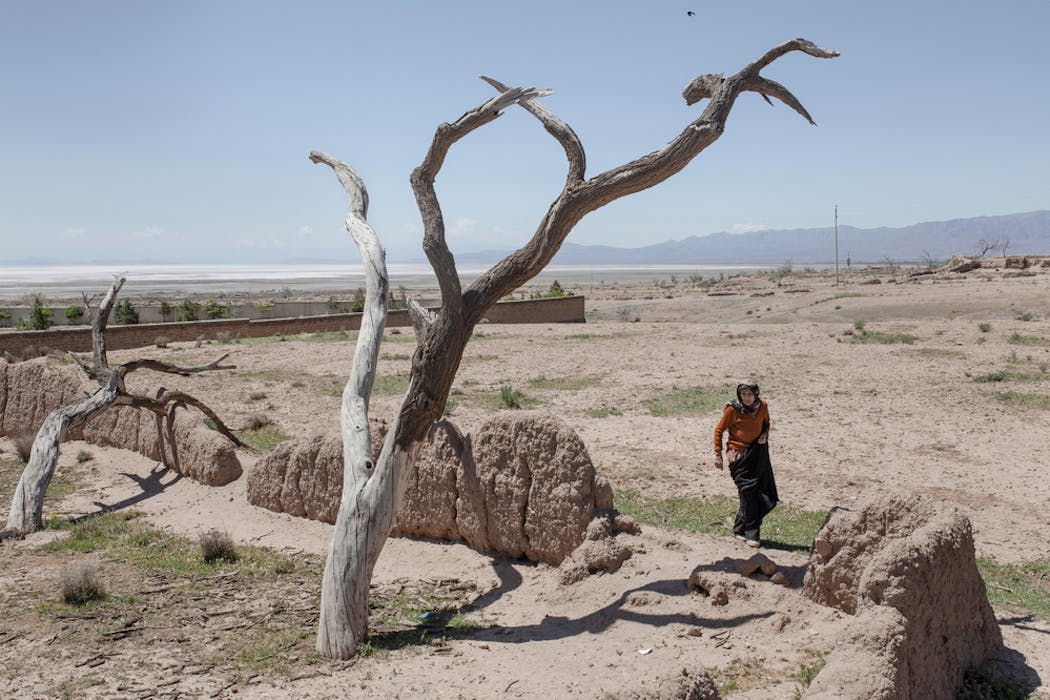
This dry landscape in Iran was once the sixth largest salt lake in the world. solmaz daryani/Shutterstock

This roundup of The Conversation’s climate coverage was first published in our award-winning weekly climate action newsletter, Imagine.

“Iran is experiencing not one environmental crisis but the convergence of several: water shortages, land subsidence, air pollution and energy failure. All added together, life is a struggle for survival.”

This is the situation inside Iran as described by Nima Shokri, an environmental engineer who works on global challenges related to the environment. Shokri highlights a rarely discussed factor in relation to this year’s massive protests across Iran: the severe challenges Iranians are struggling with every day, affecting their ability to simply carry on living.

The air is polluted, the water is drying out and the land collapsing. Many Iranian farmers have been forced to give up their homes and land, and flee to the edges of cities in the hope of just surviving. Their land is cracking and disappearing, and it is no longer possible to grow crops or keep animals alive.

City dwellers are struggling with major water shortages too. On top of that extremely high air pollution levels are forcing hospitals and schools to close, and rising numbers of medical cases are being linked to bad air.

Kevani Madani talks about Iran’s long term water problems.

Living in that environment, it’s no wonder that people feel desperate. As Shokri has pointed out many centres of the massive protests seen in Iran in the past few weeks, where an estimated 30,000 people have been killed, are in places where people are dealing with the most severe environmental challenges.


Read more:
Iran’s biggest centres of protest are also experiencing extreme pollution and water shortages


Of course, these air, land and water issues are not the only reason why thousands of people are on the streets of this country, where they must live with the decisions of a government that wants to decide who is allowed to walk on the streets and what people, women especially, are allowed to wear.

Struggle for basics

But these basics of having clean water and air that you can breathe without damaging your health are impossible for anyone to ignore.

These conditions haven’t just happened without human intervention. Iran’s leaders have made policy choices over the years that have escalated the environmental challenges that many around the world are seeing, such as reduced rainfall. Water intensive agriculture has been encouraged, groundwater has been excessively pumped out, heavy fuel used, and environmental regulation has been weak.

As environmental journalist Sanam Mahoozi and chemical engineer Salome M.S. Shokri-Kuehni wrote, along with Shokri, a few weeks ago, early in January 2026 Iran’s capital ranked as the most polluted city in the world.

Local media were reporting more than 350 deaths linked to worsening air quality over ten days during December 2025. And studies indicate that more than 59,000 Iranians die prematurely every year from air pollution-related illnesses.

The Iranian government has failed to protect its people from these escalating crises. In fact, as the three authors argue, its decisions has put them at more risk. And these day-to-day survival issues along with escalating political repression and economic fragility has left desperate people desperate for change, and a country on the edge of collapse.


Read more:
Iran’s record drought and cheap fuel have sparked an air pollution crisis – but the real causes run much deeper


Iran is not the only country that is experiencing a water crisis that its government hasn’t shown signs of knowing how to manage, and where people are struggling to cope. Mexicans are living with conditions caused by years of drought. Reservoirs that used to supply millions with water are drying up. Some people report spending a quarter of their income on water, while others walk 30 minutes to even find a supply.

Water shortages are projected to affect 30 of 32 Mexican states by the year 2050, Natasha Lindstaedt, a professor of government at the University of Essex who researches human security and climate change, writes. And Mexico’s water crisis is compounded by being forced to send part of its water supply to the US due to a just over 80-year-old agreement between the two countries.


Read more:
Mexico and US look for new deal in long-running battle over 80-year old water treaty


Global crisis

About four billion people – nearly half the global population – live with severe water scarcity for at least one month a year. They are going without access to sufficient water to meet all of their needs, writes Kaveh Madani, director of the Institute for Water, Environment and Health at United Nations University and the author of a new report by UN scientists on water scarcity.

Mexico has been suffering from long periods of drought.

The consequences of water deficit are being seen around the world: dry reservoirs, sinking cities, crop failures, water rationing and more frequent wildfires and dust storms.

One massive consequence of short-term water policies, often related to agriculture, is subsidence. And as Madani explains when groundwater is overpumped, the underground structure, which holds water almost like a sponge, can collapse. And it can be impossible for it to recover.


Read more:
The world is in water bankruptcy, UN scientists report – here’s what that means


In Mexico City, land is sinking by about 25cm per year. In Iran, subsidence is up to 30cm per year, affecting areas where around 14 million people live, more than one-fifth of the population.

The UN report sets out a drastic situation: the world is starting to experience water bankruptcy. This is beyond a crisis. It is long term condition, where cities or regions use more water than nature can reliably replace, where the damage to the environment is so catastrophic that it becomes almost impossible hard to reverse.

And while water becomes such a valuable resource, tension between those who have it and those who don’t is only going to increase.


To contact The Conversation’s environment team, please email imagine@theconversation.com. We’d love to hear your feedback, ideas and suggestions and we read every email, thank you.


Don’t have time to read about climate change as much as you’d like?

Get a weekly roundup in your inbox instead. Every Wednesday, The Conversation’s environment editor writes Imagine, a short email that goes a little deeper into just one climate issue. Join the 45,000+ readers who’ve subscribed so far.


The Conversation

ref. Drastic water shortages and air pollution are fuelling Iran’s protests – https://theconversation.com/drastic-water-shortages-and-air-pollution-are-fuelling-irans-protests-274554

The healing power of poisonous plants

Source: The Conversation – UK – By Anthony Booker, Reader in Ethnopharmacology, University of Westminster

Triff/Shutterstock

Some of the best-known medicines come from poisonous plants. The chemotherapy drug taxol comes from the yew tree, morphine from the opium poppy and digoxin from the foxglove. These plants can have lethal toxicity if taken in their raw form. Digoxin is prescribed to treat angina at doses a thousand times more dilute than most prescription medications, highlighting the plant’s extreme potency.

Many people consider herbal medicines a safe alternative to pharmaceuticals. And it’s true that many herbal medicines are fairly mild. However, there is a less well-known group of herbal medicines that are far more potent and controlled under the Medicines Act, where they are restricted to use by medical herbalists and at strictly defined dosages.


Many people think of plants as nice-looking greens. Essential for clean air, yes, but simple organisms. A step change in research is shaking up the way scientists think about plants: they are far more complex and more like us than you might imagine. This blossoming field of science is too delightful to do it justice in one or two stories.
This article is part of a series, Plant Curious, exploring scientific studies that challenge the way you view plantlife.


These are known as the schedule 20 herbs in the UK and are prescribed for a variety of health needs. All of these plants are toxic at relatively low doses, mainly due to the presence of chemical compounds called alkaloids, which also have healing properties.

Here are ten examples of these deadly, healing plants.

1. Wild saffron

Known as wild saffron or the autumn crocus, Colchicum autumnale is one of the oldest known medicinal plants. It was first mentioned in the Egyptian medical text, Ebers Papyrus (circa 1550BC), where it was described for the treatment of pain and swelling. It is still used in medicine, chiefly for its anti-inflammatory properties and particularly for the treatment of gouty arthritis.

2. Deadly nightshade

Atropa belladonna is commonly known as deadly nightshade. All parts of the plant are pain relieving, antispasmodic, hallucinogenic, narcotic and sedative. Containing tropane alkaloids (the same group as cocoaine), it is used predominantly for the gastrointestinal tract (colic, gastritis, IBS), but also for asthma and for urinary spasm, Parkinson’s disease and topically for pain relief.

Dark purple bell shaped flowers hanging from shrub
Deadly nightshade has healing properties too.
Greens and Blues/Shutterstock

3. Greater celandine

Greater celandine is often seen when walking in the woods. It has a long history of medical use in eastern and central European folk medicine to treat asthma, bronchitis, jaundice, digestive issues and even cancer. However, due to the presence of isoquinoline alkaloids, it has the potential to cause severe liver toxicity when ingested and many experts advise against its use. It can be used relatively safely as a poultice or cream to treat warts and verrucae.

Small yellow flowers with large leaves
Greater celandine is common in woodland.
Zhanna Bohovin/Shutterstock

4. White quebracho

White quebracho is a tropical tree from South America. Rich in indole alkaloids, which are also present in psychoactive drug psilocybin, it has traditionally been used to treat fever, malaria, swellings, stomach upsets, cough, headaches, syphilis, impotence and asthma.

5. Fever tree

Species of chinchona or “fever tree” have been used worldwide to treat malaria. The drug quinine is extracted from its bark. It was introduced into Europe in the 17th century for the treatment of fevers. Although it is commonly used as an appetite stimulant, recent research has suggested that it may have a role to play in weight management and obesity too.

6. Thorn apple

Datura stramonium or thorn apple has traditionally been used for various ailments including respiratory conditions, ulcers, wounds, inflammation, rheumatism and gout, sciatica, bruises and swellings and fever. Modern research has shown that it may also have potential in the treatment of epilepsy.

White bell shaped flower
Thorn apple may look fragile but it is a restricted drug.
Roman Nerud/Shutterstock

7. Ephedra sinica

Ephedra sinica has been known in traditional Chinese medicine for approximately 5,000 years. The plant contains the alkaloids ephedrine and pseudoephedrine, some of the first drugs to be used in the treatment of respiratory conditions. Side effects can include psychosis, delusions and hallucinations, which is one of the reasons drugs obtained from this plant were restricted in the UK in 2014 for cough and cold remedies for use in young children. The psychoactive properties of ephedra also explain its notoriety as a recreational drug and a number of deaths in the US have been linked to its misuse.

8. Henbane

Plants in the nightshade family, including henbane, are potent medicinal plants. They are purported to have anti-diabetic, antioxidant, anticancer, insecticidal, antiasthmatic, antiallergic, antidiarrhoeal, cardioprotective, anticonvulsant and antidepressant effects but more research is needed. However they also contain psychoactive compounds that can cause delirium and hallucinations.

Skull on wooden floorboards with white bell shaped flowers in foreground.
Henbane is no mild herb.
mutie/Shutterstock

9. Pheasant’s eye

Adonis vernalis, (pheasant’s eye) leaves and flowers have long been used in European and east Asian folk medicine to treat cardiovascular conditions. Studies have shown the chemical constituents within this plant also have antimicrobial and anti-inflammatory effects. The cardiovascular effects are largely attributed to the cardiac glycosides (chemicals that slow down heart rate) contained within this plant, which are also responsible for its toxicity, in a similar way to the foxglove.

10. Lily of the valley

A common poisonous plant often found in the garden, lily of the valley, has historically been used to treat cardiovascular conditions such as arrythmias, heart failure and angina. Another plant that contains cardiac glycosides, its common presence in gardens is a particular danger for children and pets.

Other toxic healers

Not all toxic plants are on the schedule 20 list however. Garden herbs comfrey and borage contain pyrrolizidine alkaloids that can be toxic to the liver and comfrey has been banned for medicinal use in many European countries. Comfrey, also known as knitbone, is mainly used topically as an anti-inflammatory and analgesic for acute sprains and strains or more chronic conditions such as osteoarthritis.

Belonging to the same family, borage is not that well known as a medicinal herb in the UK, whereas in Mediterranean countries it has a strong reputation for treating a range of conditions. It is credited with sedative properties, useful for insomnia, and dizziness and melancholy. In gynaecology, it can shift postpartum exhaustion, and helps with the symptoms of menopause. The oil from this plant contains negligible amounts of these alkaloids and supplements are often processed to remove the toxicity.

In the UK there are several professional associations that hold a register of qualified medical herbalists. Learning the right dosage to give a patient was just as important for folk healers. Modern science may help us verify which plants are best for healing but getting the dosage right is an ancient skill.

The Conversation

Anthony Booker is affiliated with The Royal Society of Chemistry, The Register of Chinese Herbal Medicine, The British Pharmacopoeia, The Medicines and Healthcare Products Regulatory Agency, The American Botanical Council, The British Herbal Medicine Association and The European Scientific Cooperative on Phytotherapy..

ref. The healing power of poisonous plants – https://theconversation.com/the-healing-power-of-poisonous-plants-273843