A brief history of table tennis in film – from Forrest Gump to Marty Supreme

Source: The Conversation – UK – By Jeff Scheible, Senior Lecturer in Film Studies, King’s College London

Table tennis and film have a surprisingly entangled history. Both depended on the invention of celluloid – which not only became the substrate of film, but is also used to make ping pong balls.

Following a brief ping pong craze in 1902, the game largely disappeared and was widely assumed to have been a passing fad. More than 20 years later, however, the British socialite, communist spy and filmmaker Ivor Montagu went to great lengths to establish the game as a sport – a story I explore in my current book project on ping pong and the moving image.

He founded the International Table Tennis Federation (ITTF) and codified the rules of the game in both a book and a corresponding short film, Table Tennis Today (1929).

Montagu presided over the ITTF for several decades. In 1925, the same year he founded the ITTF, Montagu also co-founded the London Film Society. The society helped introduce western audiences to experimental and art films that are now considered classics.

The game of table tennis has subsequently appeared at a number of moments when filmmakers and artists were experimenting with new technologies. An early example appears in one of the first works of “visual music”: Rhythm in Light (1934) by Mary Ellen Bute.

Table Tennis Today (Ivor Montagu, 1929)

Meanwhile, an early work of expanded cinema, Ping Pong (1968) by the artist Valie Export, invited audiences to pick up a paddle and ball and attempt to strike a physical ball against the representation of one moving on the cinema screen. Atari’s adaptation of the game into the interactive Pong (1972) is often considered the first video game.

Perhaps the most familiar cinematic example of all, however, is the digital simulation of a photorealistic ping pong ball – made possible by a then-new regime of computer-generated imagery. It helped Tom Hanks appear to be a ping pong whiz in the Academy-Award-winning Forrest Gump (1994).

The ping pong scene in Forest Gump.

There are a number of other fascinating moments in which the game surfaces meaningfully: in Powell and Pressburger’s A Matter of Life and Death (1946), Jacques Tati’s M Hulot’s Holiday (1953), Michael Haneke’s 71 Fragments of a Chronology of Chance (1994), and Agnes Varda and JR’s Faces Places (2017).

And every day for more than two years, from 2020 to 2022, one of the world’s most beloved filmmakers, David Lynch, uploaded YouTube videos in which he pulled a numbered ping pong ball from a jar and declared it “today’s number”. It was a fittingly Dada-esque gesture that stands among the last mysterious works he shared with the world.

Enter Josh Safdie’s Marty Supreme. The title sequence alone discovers a new way of visualising the game’s iconography, as we see a sperm fertilise an egg, which then transforms into a ping pong ball (the digital effects first witnessed in Gump are now fully integrated into popular cinema).

Why Marty Supreme is different

Marty Supreme is very loosely based on the real-life player Marty Reisman (here Marty Mauser, played by Timothée Chalamet). What sets it apart from earlier cinematic appearances of table tennis is that it centres the game as a sport.

When table tennis has previously appeared in film, it is usually to help show off new special effects or as a brief plot device. Or it frequently appears in the background, helping to furnish the mise-en-scene of an office, basement, or bar. In these instances, we might not notice the game or its materials at all. When it does have a narrative function, it usually occupies a single scene, frequently serving to stage or resolve fraught interpersonal relations between the characters who are playing.

In Marty Supreme, however, table tennis seems neither tethered to special effects nor, certainly, to the game’s “background” status. Chalamet trained extensively over the seven years he spent preparing for the role, even taking his own table to the desert while filming Dune (2021). And despite the film’s sometimes compelling eccentricities, Marty Supreme in many senses follows the generic blueprint of a sports film.

The trailer for Marty Supreme.

Safdie has made a sports film, coincidentally or not, like his frequent collaborator and brother Benny Safdie, whose wrestling film The Smashing Machine was also released this past year. Marty Supreme, though, revolves around an athlete who plays a game that generally has been assumed to not have enough gravitas to command a place in the genre or to hold an audience’s interest.

The absence of sports films about ping pong certainly speaks to ways in which it is perceived as something not worth taking too seriously, for reasons that are surely at least partially linked to the same reasons for which the game is often celebrated. It is perceived to be what I refer to as an “equalising” sport, open to people and bodies of all backgrounds and types.

As actor Susan Sarandon, who founded her own chain of ping pong bars, puts it: “Ping pong cuts across all body types and gender – everything, really – because little girls can beat big muscley guys. You don’t get hurt; it is not expensive; it is really good for your mind. It is one of the few sports that you can play until you die.”

This perception of the game has perhaps also led it to appear in more comedic contexts, with athletes embodied by actors we might more readily laugh at, as source material for visual and sonic gags, from a slapstick scene in You Can’t Cheat an Honest Man (1939) to the widely panned Balls of Fury (2007).

The tension between the game’s perceived triviality and Mauser’s extreme dedication lends Marty Supreme a vast blank canvas – or ping pong table – onto which its oscillations can be painted, or played… and in turn felt by the audience, with its high highs and low lows.

While it’s great that a talented director has poured his heart into a cinematic treatment of Reisman for the screen, I’m holding out hope for an Ivor Montagu film, which could be even more beholden to its real-life character – and even more wild.


Looking for something good? Cut through the noise with a carefully curated selection of the latest releases, live events and exhibitions, straight to your inbox every fortnight, on Fridays. Sign up here.


The Conversation

Jeff Scheible does not work for, consult, own shares in or receive funding from any company or organisation that would benefit from this article, and has disclosed no relevant affiliations beyond their academic appointment.

ref. A brief history of table tennis in film – from Forrest Gump to Marty Supreme – https://theconversation.com/a-brief-history-of-table-tennis-in-film-from-forrest-gump-to-marty-supreme-274445

The Playboy of the Western World: National Theatre staging ensures Irish play remains essential viewing

Source: The Conversation – UK – By Laura O’Flanagan, PhD Candidate, School of English, Dublin City University

A revival of a beloved and notorious Irish play from 1907, Catriona McLaughlin’s production of The Playboy of the Western World treats J.M Synge’s play as a work with urgent contemporary force, creating a story with resonance in 2026.

Reuniting Derry Girls Nicola Coughlan and Siobhan McSweeney at the National Theatre, the play is set in a shebeen (an illicit drinking den) in western Mayo. The plot centres on Pegeen (Coughlan), whose life is jolted by the arrival of Christy Mahon (Éanna Hardwicke).

On the run and boasting that he has murdered his father, Christy becomes an instant local hero. His violent, wild tale of defying his father’s supposed tyranny captivates a community in need of a hero. Christy’s notoriety is quickly complicated by the arrival of his very-much-alive father (Declan Conlon) in act two, collapsing the young man’s carefully constructed myth.

First staged in 1907 in Dublin’s Abbey Theatre, The Playboy of The Western World famously enraged audiences who booed and rioted. At this time, Ireland was moving towards independence and national pride was growing. Irish audiences expected homegrown theatre to showcase a serious, disciplined national character.

Synge’s play, depicting a foolish man whose boasts of patricide are hailed as heroic by a drunken, sexually available community was deemed morally offensive, a direct affront to Ireland itself.

In the intervening century, the play has become recognised as a masterpiece of Irish literature. Synge’s biting dark humour and ear for richly authentic dialogue has endured, with the play now recognised as a classic of modernist drama.

Humour, cruelty and urgency

Told in Hiberno-English (the Irish version of English, influenced by Gaelic) dialogue, The Playboy of The Western World depicts rural life as complex and brutal. Almost 120 years later on a London stage, it rejects a nostalgic view of rural Ireland in a bygone era. These characters are human and imperfect, and just as susceptible to a tall tale as anyone in 2026.

Director Catriona McLaughlin has assembled a cast of familiar Irish names. Nicola Coughlan sparkles as Pegeen. Her sharp tongue and fortitude in a shebeen full of men is edged with frustration and a deep yearning for something exciting to happen.

Éanna Hardwicke’s Christy Mahon begins tightly wound, loosening as he basks in female adoration. His performance is infused with a coiled, elastic physicality giving Christy an electric intensity; Hardwicke dares the audience to fall in love with him, too.

Siobhan McSweeney, characteristically sharp and wickedly funny, is unmissable as the Widow Quin. Providing welcome comic relief are Marty Rea as a slyly humourous Shawn Keogh, and Lorcan Cranitch’s uproariously funny and drunken Michael James.

McLaughlin frames the Irish western coast as haunted and mysterious, reinforced by Katie Davenport’s straw mumming costumes (see image below) worn by musicians and extras, and the recurring use of the caoineadh or “keening” – mourning in song.

These design choices create an atmosphere which feels suspended rather than anchored to a particular period. The timelessness sharpens the impact of Christy’s unmasking: the community’s sudden turn against him when they witness a violent act mirrors a familiar real-world pattern. Violence absorbed as story, gossip or spectacle becomes intolerable once its physical reality intrudes.

The crowd’s horror is not prompted by the act itself, but by its visibility. In this way, the production speaks directly to contemporary audiences accustomed to consuming violence at a distance, yet quick to condemn when confronted with its immediate consequences.

Some critics have reported difficulty following Synge’s language, revealing how strongly expectations of “standard” English shape reception. Such dismissals reveal not a failure of intelligibility in the play, but a critical resistance to engaging with Hiberno-English on its own terms.

This requires attention to rhythm, tone and repetition, and dismissing it as unintelligible echoes the play’s broader concern with how stories are received and misread.

Dynamic and intellectually alert, McLaughlin’s production refuses to treat The Playboy of the Western World as a museum piece. It trusts both Synge’s language and its audience, allowing the play’s humour, cruelty and urgency to land without apology. So much more than a revival, this staging reasserts the work’s enduring relevance and makes a compelling case for why it remains essential viewing.

The Playboy of the Western World is at the National Theatre, London, till February 28


Looking for something good? Cut through the noise with a carefully curated selection of the latest releases, live events and exhibitions, straight to your inbox every fortnight, on Fridays. Sign up here.


The Conversation

Laura O’Flanagan does not work for, consult, own shares in or receive funding from any company or organisation that would benefit from this article, and has disclosed no relevant affiliations beyond their academic appointment.

ref. The Playboy of the Western World: National Theatre staging ensures Irish play remains essential viewing – https://theconversation.com/the-playboy-of-the-western-world-national-theatre-staging-ensures-irish-play-remains-essential-viewing-274762

The rise and fall (and rise again) of gold prices – what’s going on?

Source: The Conversation – UK – By David McMillan, Professor in Finance, University of Stirling

i viewfinder/Shutterstock

In late January, the gold price reached an all-time peak of around US$5,500 (£4,025). January 30 saw one of the largest one-day falls in prices, which sank by nearly 10% after hitting a record high only the day before.

This was a dramatic about-turn, from a bullish gold market that rose by more than 300% in the last decade, over 150% in the last five years and (perhaps more pertinently) by 75% since US president Donald Trump’s “liberation day” tariffs announcement. To make sense of it, we need to understand some of the factors that led to the rise.

The reasons broadly break down into two categories. The first concerns market uncertainty and gold in its “safe haven” role. As a financial asset, gold offers no income, unlike shares (which might provide dividends) or bonds (which offer coupon payments). So during good times, gold is eschewed for the former and during periods of high interest rates for the latter.

However, during periods of heightened risk and uncertainty, the tangibility of gold gives it value. This was seen during the financial (and subsequent sovereign debt) crisis and at the beginning of the COVID period. Here both share prices and interest rates were low (interest rates historically so) and gold became the favoured asset because it offered the chance of greater returns relative to risk.

These crisis periods can often be geopolitical in nature, and that is the case now with the war in Ukraine following the Russian invasion, as well as ongoing tensions in the Middle East.

But at the moment, what is providing a further boost to the gold price is the uncertainty created by Trump’s tariffs. This is not only about international trade and growth but also its implications for the global financial system. The US dollar is used as a vehicle currency and means of payment for international trade and the currency in which commodities are priced.

The use of tariffs in this way undermines confidence in the dollar, especially where tariffs are threatened as a punishment – as Trump recently did against European countries for opposing his desire to annex Greenland.

Anti-trump protesters hold placards displaying the Greenlandic flag.
Trump threatened increased tariffs over his designs on Greenland.
Stig Alenas/Shutterstock

And further buoyed by the weak US dollar, which has fallen by 10% in the last year, there has been significant gold-buying, including by central banks as part of their reserves.

As an important aside, while a lot has been said about central banks replacing the US dollar as a reserve currency, overseas holdings of treasuries (US government bonds) are at a record high, countering that view.

The level of debt that countries are building up shows no sign of abating. For example, Trump’s One Big Beautiful Bill Act, which outlines tax cuts and increases to border security and defence spending among many other budget measures, is expected to add several trillion dollars to US debt.


Read more:
The record gold price reflects a deeper problem than recent global instability


The second reason for the long-term increase in the gold price is its greater use in investor portfolios for speculative purposes. The “safe-haven” role of gold implies a negative correlation between stocks and gold. That is to say, when one rises the other falls – and vice versa.

However, with the S&P500 (the index tracking the top 500 companies listed in the US) also reaching record highs, stocks and gold have instead been moving in the same direction. This indicates that investors are buying both asset types.

A major component in the growth of gold as an investment asset (as opposed to only a safe haven) is the rise of gold ETFs (exchange-traded funds) that make it easier for non-professional investors to purchase gold.

So why the fall?

Rather than a single event, there has been an accumulation of small changes, combined with the usual sways in investor sentiment. Geopolitical risk remains high, both in Ukraine and the Middle East (while the situation in Israel and Gaza is calmer, that is not the case with Iran). But there are some positive signs.

Trump’s on-off use of tariffs as a means of political negotiation (this time regarding Greenland) also contributed to a rise and fall in the gold price. And the nomination of Kevin Warsh as the new governor of the US Federal Reserve is expected to lessen economic risk.

While Warsh generally supports Trump’s preference for lower interest rates now (although investors are expressing concerns that this could fuel inflation), Warsh also has an equal desire to reduce the size of the Fed’s balance sheet. So it would be unlikely to be an unreserved loosening of monetary policy.

But there is also the investor side. Profit is only realised when the asset is sold. Part of what we have seen is investors selling gold in a high (arguably over-priced) market to make a profit. The price fall associated with these trades then arguably led to further selling.

This included stop-loss trading (when assets are automatically sold when they dip below a certain price) and sales by the likes of hedge funds and other institutional traders. These investors need to unwind positions to prevent major losses.

After the huge fall on January 30, gold prices surged back a couple of days later in the biggest one-day rise since 2008.

There are always corrections, and in fact current movements are likely to be over-corrections. But it’s safe to assume that after this, the market will stabilise and most likely resume an upward trajectory albeit at a slower pace than immediately before the fall.

The Conversation

David McMillan does not work for, consult, own shares in or receive funding from any company or organisation that would benefit from this article, and has disclosed no relevant affiliations beyond their academic appointment.

ref. The rise and fall (and rise again) of gold prices – what’s going on? – https://theconversation.com/the-rise-and-fall-and-rise-again-of-gold-prices-whats-going-on-275017

Is it illegal to make online videos of someone without their consent? The law on covert filming

Source: The Conversation – UK – By Subhajit Basu, Professor of Law and Technology, University of Leeds

Could those glasses be recording you? Lucky Business/Shutterstock

Imagine a stranger starts chatting with you on a train platform or in a shop. The exchange feels ordinary. Later, it appears online, edited as “dating advice” and framed to invite sexualised commentary. Your face, and an interaction you didn’t know was being recorded, is pushed into feeds where strangers can identify, contact and harass you.

This is a reality for many people, though the most shocking examples are mainly affecting women. A BBC investigation recently found that men based outside of the UK have been profiting from covertly filming women on nights out in London and Manchester and posting the videos on social media.

In the UK, filming someone in public – even covertly – is not automatically unlawful. Sometimes, it is socially valuable (think of people recording violence or police misconduct).

But once a person is identifiable and the clip is uploaded for views or profit, it can become unlawful under data protection law and, in more intrusive cases, privacy or harassment law. The problem here is what the filming is for, how it is done and what the platforms do with it.

UK law is cautious about a general claim to “privacy in public”. There is a key distinction in case law between being seen in a public place and being recorded for redistribution.

Courts have accepted that privacy can apply even in public, depending on circumstances. In the case of Campbell v MGN (2004), the House of Lords ruled that the Daily Mirror had breached model Naomi Campbell’s privacy by publishing photos that, while taken in public, exposed her private medical information.

The rise of smartphones and now wearable cameras has made covert capture cheaper, more discreet and more accessible. With smart glasses, recording can look like eye contact.

Capture is frictionless: the file is ready to upload before the person filmed even knows it exists. And manufacturer safeguards such as recording lights are already reportedly being bypassed by users.

Once it’s been uploaded, modern social media platforms allow this content to become easily scalable, searchable and profitable.

Context is what shifts the stakes. Covert filming, an intrusive focus on the body and publication at scale can turn an everyday moment into exposure that invites harassment.

Privacy in public

Public life has always involved being seen. The harm is being made findable and targetable, at scale. This is why the most practical legal tool is data protection. Under the UK General Data Protection Regulation (GDPR), when people are identifiable in a video, recording and uploading it is considered processing of personal data.

The uploader and platform must therefore comply with GDPR rules, which in this case would (usually) mean not posting identifiable footage of a stranger in the first place or, removing the details that identify them and taking the clip down quickly if the person objects.

UK GDPR does not apply to purely personal or household activity, with no professional or commercial connection. This is a narrow exemption – “pickup artist” channels and monetised social media posts are unlikely to fall within it.

Harassment law may apply where the filming and posting is followed by repeated contact, threats or encouraging others to target the person filmed, which causes them alarm or distress.

Lagging enforcement

Harm spreads faster than the law can respond. A clip can be uploaded, shared and monetised within seconds. Enforcement of privacy and data protection law is split between the Information Commissioner’s Office, Ofcom, police and courts.

Victims are left to rely on platform reporting tools, and duplicates often continue to spread even after posts are taken down. Arguably, prevention would be more effective than after-the-fact removal.

The temptation is to call for a new offence of “filming in public”. In my view, this risks being either too broad (chilling legitimate recording) or too narrow (missing the combination of factors – covert filming, identifiability, platform amplification and monetisation that make this a problem).

A better approach would be twofold. First, treating wearable recording devices as higher-risk consumer tech, and requiring safeguards that work in practice. For example: conspicuous, genuinely tamper-resistant recording indicators; privacy-by-default settings; and audit logs so misuse is traceable. The law could build in clear public-interest exemptions (journalism, documenting wrongdoing) so rules do not become a backdoor ban on recording.

There are precedents for regulating consumer tech in this way. For example, the UK has strict security requirements for connectable devices like smart TVs to prevent cyberattacks.

View through augmented reality smart glasses
Wearable cameras and AI-enabled tech is making covert filming easier than ever.
Kaspars Grinvalds/Shutterstock

Second, platforms need a clear requirement to reduce the harm caused by covert filming. In practice, that means spotting and obscuring identifiers such as phone numbers and workplace details, warning users when a stranger is identifiable, fast-tracking complaints from the person filmed, blocking re-uploads, and removing monetisation from this content.

The Online Safety Act provides a framework for addressing this problem, but it is not a neat checklist for prevention. Where it clearly applies is when the content itself, or the response it triggers, amounts to illegal harassment or stalking. Those are priority offences in the act, so platforms are expected to assess and mitigate those risks.

The awkward truth is that some covert, degrading clips may be harmful without being obviously illegal at the point of upload, until threats, doxxing or stalking follow.

Privacy in public will not be protected by slogans or a tiny recording light. It will be protected when existing legal principles are applied robustly. And when enforcement is designed for the speed, incentives and business models that shape what people see and share online.

The Conversation

Subhajit Basu does not work for, consult, own shares in or receive funding from any company or organisation that would benefit from this article, and has disclosed no relevant affiliations beyond their academic appointment.

ref. Is it illegal to make online videos of someone without their consent? The law on covert filming – https://theconversation.com/is-it-illegal-to-make-online-videos-of-someone-without-their-consent-the-law-on-covert-filming-274885

Why the idea of an ‘ideal worker’ can be so harmful for people with mental health conditions

Source: The Conversation – UK – By Hadar Elraz, Senior Lecturer in Human Resource Management and Organisational Behaviour, Swansea University

PeopleImages/Shutterstock

In the modern world of work, the “ideal worker” is a dominant yet dangerous concept that can dictate workplace norms and expectations. This archetype describes an employee who is boundlessly productive, constantly available and emotionally stable at all times.

What makes this trope so flawed is that it assumes workers have no caring responsibilities outside work, or have unrealistic physical and psychological capabilities. It’s intended to drive efficiency, but in fact it is a standard that very few people can reach. It marginalises people who deviate from these rigid standards, including workers managing mental health conditions.

We are researchers in management and health, and our recent paper found that this “ideal worker” is a means of creating stigma. This stigma is embedded in processes and policies, creating a yardstick against which all employees are measured.

The study is based on in-depth interviews with a diverse group of employees with mental health conditions (including depression, bipolar disorder, anxiety and OCD). They worked across the private, public and third sectors in various jobs, including accounting, engineering, teaching and senior management.

For workers with mental health conditions, the expectation of emotional steadiness creates a conflict with the often fluctuating nature of their conditions.

When organisations are seen to value the ideal worker archetype, they can end up creating barriers to meaningful inclusion. In our paper we understand these as both “barriers to doing” and “barriers to being”.

What this means is that workplaces end up with rigid workloads and inflexible expectations (“barriers to doing”). As such, they fail to accommodate people with invisible or fluctuating symptoms. They can also undermine a worker’s identity and self-worth (“barriers to being”), framing them as unreliable or incompetent simply because they do not meet the standards of the ideal worker.

Because employees with mental health conditions often fear being perceived as weak, a burden or fragile, they frequently work excessively hard to prove their value. This means that these employees might compromise their resting and unwinding time in order to live up to workplace expectations.

But of course, these efforts create strain at the personal level. These workers can end up putting themselves at greater risk of relapse or ill health. Our research found that overworking to mask mental health symptoms (working unpaid hours to make up for times when they are unwell, for example) can suggest an organisational culture that may not be inclusive enough.

What’s really happening

HR practices may assume that mental health conditions should be managed by employees alone, rather than with support from the organisation. At the same time, this constant pressure to over-perform can exacerbate mental health conditions, leading to a vicious cycle of stress, exhaustion and even more stigma.

The ideal worker norm forces many employees into keeping their mental health conditions to themselves. They may see hiding their struggles as a tactical way of protecting their professional identity.

In an environment that rewards constant productivity, disclosing a condition that might require reasonable adjustments could be seen as a professional risk. In other words, stigma may compromise career chances.

Participants in our research reported lying on health questionnaires or hiding symptoms because the climate in their workplace signalled that mental health conditions were poorly understood. But this secrecy creates a massive emotional burden, as workers felt pressure to constantly monitor their health, mask their condition and schedule medical appointments in secret.

Paradoxically, while this approach allows people to remain employed, it reinforces the structures that demand their silence. And it ensures that workplace support remains invisible or inaccessible.

lone woman working at a desk in an office at night.
The research found that some workers put in extra unpaid hours to try to achieve ‘ideal’ levels of productivity.
Gorodenkoff/Shutterstock

Our analysis showed a stark contrast between perceptions of support for people with physical impairments and that for employees with mental health conditions. While physical aids like ramps are often visible and accepted, workers setting out their mental health needs frequently faced the risk of stigma, ignorance or disbelief.

By holding on to the ideal worker archetype, organisations are not only failing to fulfil their duty of care. They may also be undermining their own long-term sustainability if they lose skilled labour. Then there are the costs of constant recruitment and retraining.

Managing stigma is a workplace burden that can lead to burnout or divert energy away from a worker’s core tasks. We suggest a fundamental shift for employers: moving away from chasing the “ideal worker” towards creating “ideal workplaces” instead. This means challenging the assumption that productivity must be uninterrupted and that emotional stability is a prerequisite for professional value.

It also means focusing on the quality of an employee’s contribution rather than judging their constant availability or productivity. And it means designing work environments from the ground up to support diverse needs, so that mental health conditions are normalised. This would reduce the need for employees to keep conditions secret.

Ultimately, the problem with the ideal worker archetype is that it is a persistent myth that ignores the reality of human diversity. True equity requires organisations to stop trying to shape individuals to fit the mould and instead rethink work norms to support all employees so that everyone can play a part in enhancing the business.

The Conversation

Hadar Elraz disclosed this study was supported by the UK Economic and Social Research Council. She disclosed no relevant affiliations beyond their academic appointment.

Jen Remnant does not work for, consult, own shares in or receive funding from any company or organisation that would benefit from this article, and has disclosed no relevant affiliations beyond their academic appointment.

ref. Why the idea of an ‘ideal worker’ can be so harmful for people with mental health conditions – https://theconversation.com/why-the-idea-of-an-ideal-worker-can-be-so-harmful-for-people-with-mental-health-conditions-274350

A UK climate security report backed by the intelligence services was quietly buried – a pattern we’ve seen many times before

Source: The Conversation – UK – By Marc Hudson, Visiting Fellow, SPRU, University of Sussex Business School, University of Sussex

Last autumn, a UK government report warned that climate-driven ecosystem collapse could lead to food shortages, mass migration, political extremism and even nuclear conflict. The report was never officially launched.

Commissioned by Defra – the Department for Environment Food and Rural Affairs – and informed by intelligence agencies including MI5 and MI6, the briefing assessed how environmental degradation could affect UK national security.

At the last minute the launch was cancelled, reportedly blocked by Number 10. Thanks to pressure from campaigners and a freedom of information request, a 14-page version of the report was snuck out (no launch, not even a press release) on January 22.

That report says: “Critical ecosystems that support major food production areas and impact global climate, water and weather cycles” are already under stress and represent a national security risk. If they failed, the consequences would be severe: water insecurity, severely reduced crop yields, loss of arable land, fisheries collapse, changes to global weather patterns, release of trapped carbon exacerbating climate change, novel zoonotic disease and loss of pharmaceutical resources.

In plainer terms: the UK would face hunger, thirst, disease and increasingly violent weather.

An unredacted version of the report, seen by the Times, goes further. It warns that the degradation of the Congo rainforest and the drying up of rivers fed by the Himalayas could drive people to flee to Europe (Britain’s large south Asian diaspora would make it “an attractive destination”), leading to “more polarised and populist politics” and putting more pressure on national infrastructure.

The Times describes a “reasonable worst case scenario” in the report, where many ecosystems were “so stressed that they could soon pass the point where they could be protected”. Declining Himalayan water supplies would “almost certainly escalate tensions” between China, India and Pakistan, potentially leading to nuclear conflict. Britain, which imports 40% of its food, would struggle to feed itself, the unredacted report says.

The report isn’t an outlier, and these concerns are not confined to classified briefings. A 2024 report by the University of Exeter and think-tank IPPR warned that cascading climate impacts and tipping points threaten national security – exactly the risk outlined in the Defra report.

River flows through jagged mountains
Melting glaciers in remote mountains ultimately pose a security threat for the UK, say intelligence services.
Hussain Warraich / shutterstock

The government has not publicly explained why the launch was cancelled. In response to the Times article, a Department for Environment, Food and Rural Affairs spokesperson said: “Nature underpins our security, prosperity and resilience, and understanding the threats we face from biodiversity loss is crucial to meeting them head on. The findings of this report will inform the action we take to prepare for the future.”

Perhaps there are mundane reasons to be cautious about a report linked to the intelligence services that warns of global instability. But the absence of any formal briefing or ministerial comment is itself revealing – climate risks appear to be treated differently from other risks to national security. It’s hard to imagine a report warning of national security risks from AI, China or ocean piracy getting the same treatment.

This episode is not even especially unusual, historically. Governments have been receiving warnings about climate change – and downplaying or delaying responses – for decades.

Decades of warnings

In January 1957, the Otago Daily Times reported a speech by New Zealand scientist Athol Rafter under the headline “Polar Ice Caps May Melt With Industrialisation”. And Rafter was merely repeating concerns already circulating internationally, including by a Canadian physicist whose similar warning went around the world in May 1953. Climate change first went viral more than seven decades ago.

By the early 1960s, scientists were holding meetings explicitly focused on the implications of carbon dioxide build-up. In 1965, a report to the US president’s Science Advisory Council warned that “marked changes in climate, not controllable though local or even national efforts, could occur”.

Senior figures in the UK government were aware of these discussions by the late 1960s, while the very first environment white paper, in May 1970, mentions carbon dioxide build-up as a possible problem.

But the story we see today was the same. Reports are commissioned, urgent warnings are issued – and action is deferred. When climate change gained renewed momentum in the mid-1980s, following the discovery of the ozone hole and the effects of greenhouse gases besides carbon dioxide, the message sharpened: global warming will come quicker and hit harder than expected.

Margaret Thatcher finally acknowledged the threat in a landmark 1988 speech to the Royal Society. But when green groups tried to get her to make specific commitments, they had little success.

Since about 1990, the briefings have barely changed. Act now, or suffer severe consequences later. Those consequences, however, are no longer theoretical.

Why does nothing happen?

Partly, it’s down to inertia. We have built societies in which carbon-intensive systems are locked in. Once you’ve built infrastructure around, say, the private petrol-powered automobile, it’s hard for competitors to offer an alternative. There’s also a mental intertia: it’s hard to let go of assumptions you grew up with in a more stable era.

Secrecy plays a role too. As the Defra report illustrates, uncomfortable assessments are often softened, delayed or buried. Then, if you do accept the need for action, you are then up against the problem of responsibility being fragmented across sectors and institutions, making it hard to know where to aim your efforts. Meanwhile, social movements fighting for climate action find it hard to sustain momentum for more than three years.

Here’s the final irony. Conspiracy theorists and climate deniers insist governments are exaggerating the threat. In reality, the evidence increasingly suggests the opposite. Official assessments tend to lag behind scientific warnings, and the most pessimistic scenarios are often confined to technical or classified documents.

The situation is not better than we are told. It’s actually far worse.


Don’t have time to read about climate change as much as you’d like?

Get a weekly roundup in your inbox instead. Every Wednesday, The Conversation’s environment editor writes Imagine, a short email that goes a little deeper into just one climate issue. Join the 47,000+ readers who’ve subscribed so far.


The Conversation

Marc Hudson was employed as a post-doctoral researcher on various industrial decarbonisation projects. He runs a climate histories website called All Our Yesterdays. http://allouryesterdays.info

ref. A UK climate security report backed by the intelligence services was quietly buried – a pattern we’ve seen many times before – https://theconversation.com/a-uk-climate-security-report-backed-by-the-intelligence-services-was-quietly-buried-a-pattern-weve-seen-many-times-before-274325

Why do our joints crack, pop and crunch and should we worry about it?

Source: The Conversation – UK – By Clodagh Toomey, Physiotherapist and Associate Professor, School of Allied Health, University of Limerick

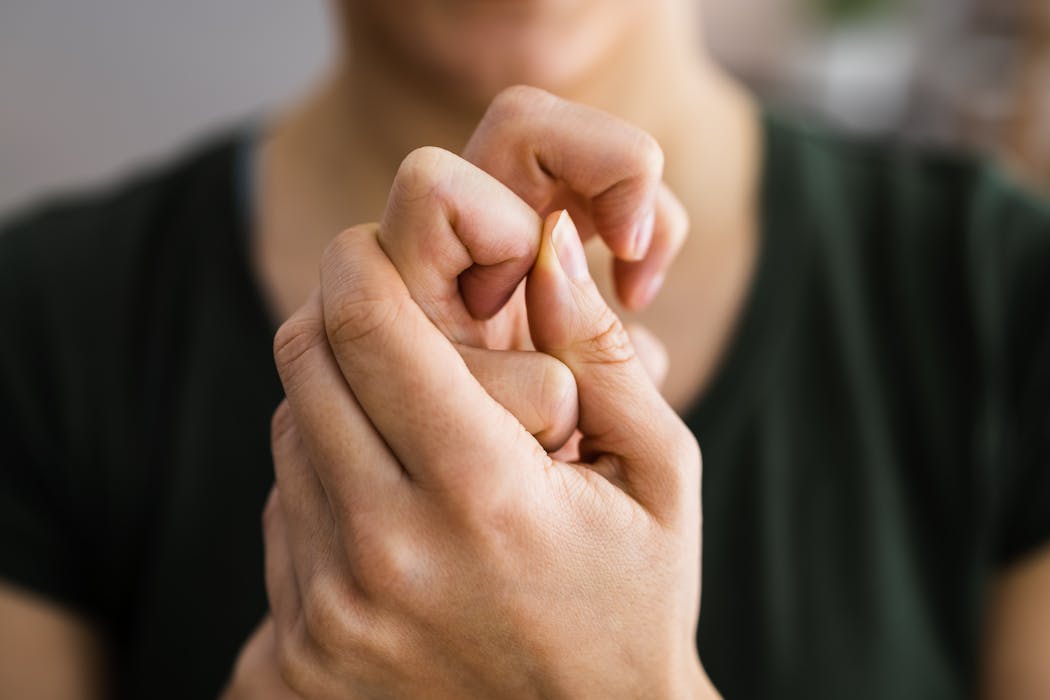
New Africa/Shutterstock

Many of us have noisy joints. Knees crack on the stairs, necks pop when we stretch, and knuckles seem to crack almost on demand. These sounds can be startling and are often blamed on ageing, damage or the looming threat of arthritis.

As a physiotherapist and researcher of chronic joint pain, I am frequently asked whether joint noises are something to worry about. The reassuring answer is that, in most cases, they are not.

One reason joint sounds cause anxiety is that we tend to treat them as a single phenomenon. Clinically, they are not.

The familiar “crack” from knuckles, backs or necks is usually caused by a process called cavitation. Joints are surrounded by a capsule filled with synovial fluid, a thick lubricant that contains dissolved gases such as oxygen, nitrogen and carbon dioxide. When a joint is stretched beyond its usual range, pressure inside the capsule drops. A gas bubble forms and collapses, producing the popping sound.

This is why you cannot crack the same joint repeatedly. It typically takes around 20 minutes for the gas to dissolve back into the fluid.

Other noises are different. Snapping sounds often come from tendons moving over bony structures. Grinding, crunching or creaking noises, known as crepitus, are particularly common in the knees. These are thought to arise from movement between cartilage and bone surfaces and are often felt as well as heard.

Knees are especially prone to crepitus because of how they work. The kneecap sits in a groove at the front of the thigh bone and is guided by muscles above and below it. If those muscles pull unevenly, because of strength imbalances, tightness or foot and hip mechanics, the kneecap can track slightly off centre. This can increase the crunching or grinding sensation.

Noise on its own is rarely a problem. What matters clinically is whether it comes with other symptoms. Pain, swelling, locking of the joint or a noticeable reduction in function are the things that warrant further assessment.

Does cracking joints cause arthritis?

There is no strong evidence that cracking or popping joints causes osteoarthritis.

Research in this area is challenging, as it requires following people over many years and accurately tracking their habits. The studies that do exist, including retrospective and cross-sectional research, have not found a meaningful link between habitual joint cracking and arthritis.

Some studies have explored other outcomes, such as grip strength or joint laxity, which refers to how loose or flexible a joint is and how much it can move beyond its typical range. Findings have been mixed and inconsistent. Overall, there is no convincing evidence that cracking joints causes damage to joint structures, strength or long-term joint health.

Many people report that joint cracking feels satisfying or relieving. This makes sense. Stretching a joint to the point of cavitation can temporarily increase range of motion and reduce muscle tension. There is also a neurological effect, as nerve endings are stimulated during the movement, sending a reflex signal to the brain which causes local muscle relaxation in the area. The audible pop itself can provide a calming, satisfying sensation which may lead to developing that habitual self-soothing mechanism for tension that annoys your family members and friends.

The key point is that these effects are short lived. Joint cracking does not fix underlying mechanical issues or provide lasting improvements in mobility. If relief only comes from repeated cracking, the underlying cause has not been addressed.

Spinal manipulation

Spinal manipulation, whether performed by physiotherapists, chiropractors or other practitioners, relies on the same cavitation mechanism. There is evidence that it can provide short-term pain relief and reduce muscle tension for some people.

However, it is important to be cautious, particularly with the neck. The cervical spine protects the spinal cord and major blood vessels supplying the brain. Rare but serious complications, including stroke, have been reported following neck manipulation. Anyone considering this type of treatment should ensure it is carried out by a properly trained professional and understand that it targets symptoms rather than underlying causes.

Joint noises do tend to become more common with age. Cartilage changes over time, and muscles and ligaments may lose some of their strength and elasticity. These changes can increase the likelihood of noise during movement.

People who have joint conditions such as knee osteoarthritis and have noisy joints tend to report slightly more pain and reduced function compared to people with osteoarthritis and no crepitus. It may be reassuring to know that there is no difference in tests like walking speed or muscle strength between groups, pointing to a potential psychological impact of noisy knees.

Crucially, noise alone is not a reason to stop being active. Some people reduce their physical activity because they fear they are “wearing out” their joints. In fact, the opposite is true. Movement is essential for joint health. Cartilage relies on regular compression and release to receive nutrients, as it has very limited blood supply.

Exercise is a cornerstone of joint health and is recommended as the first treatment to try in national and international clinical guidelines for conditions such as osteoarthritis. Consistency matters more than the specific type of exercise. The best exercise is the one you will keep doing.

There is no evidence that supplements such as collagen or fish oils reduce joint noise. Large studies show limited effects on pain and function at a population level, although some people report benefits. These supplements are generally safe, but if they do not help, they are unlikely to be worth the cost.

Joint noises are usually harmless. They are worth assessing if they are accompanied by pain, swelling, locking, or reduced function, or if they are limiting your confidence to move. Staying active is one of the best things you can do for your joints, whether they crack, pop, crunch or stay silent.


Strange Health is hosted by Katie Edwards and Dan Baumgardt. The executive producer is Gemma Ware, with video and sound editing for this episode by Sikander Khan. Artwork by Alice Mason.

In this episode, Dan and Katie talk about a social media clip from loryalien via TikTok.

Listen to Strange Health via any of the apps listed above, download it directly via our RSS feed or find out how else to listen here. A transcript is available via the Apple Podcasts or Spotify apps.

The Conversation

Clodagh Toomey receives funding from the Health Research Board Ireland. She is affiliated with the non-profit Good Life with osteoArthritis Denmark (GLA:D).

ref. Why do our joints crack, pop and crunch and should we worry about it? – https://theconversation.com/why-do-our-joints-crack-pop-and-crunch-and-should-we-worry-about-it-274161

Medieval women used falconry to subvert gender norms

Source: The Conversation – UK – By Rachel Delman, Heritage Partnerships Coordinator, University of Oxford

Hawks are taking cinematic flight. In two recent literary adaptations, they are entwined with the lives and emotions of their respective protagonists – Agnes Shakespeare (née Hathaway) and Helen Macdonald.

Birds of prey and their symbolism are explored in Hamnet, Chloé Zhao’s adaptation of Maggie O’Farrell’s 2020 novel, and H is for Hawk, based on Macdonald’s 2014 memoir. In these films, hawks become complex and multifaceted figures, articulating gendered relationships to grief, nature, humanity and selfhood.

Hamnet is set in the Elizabethan period, and H is for Hawk in the modern day. However, the relationship between women and birds of prey has an even longer history. My research shows that in the medieval period, too, that relationship was multilayered. Far more than fashionable accessories, hawks offered women both real and symbolic means to express gender, power and status within a male-dominated world.

The mirror case from the British Library collection.
The Trustees of the British Museum, CC BY-NC

In the middle ages, the process of training hawks, with its delicate dance of control and release, was popularly associated with the game of courtship between men and women.

Falconry’s romantic connotations are emphasised in art, objects and literature from the time. Images of men and women hunting together with birds of prey feature across a wide range of medieval material culture, from tapestries for castle walls to decorative cases used to contain and protect hand-held mirrors.

The largest of four fifteenth-century tapestries, known collectively as the Devonshire Hunting Tapestries, takes falconry as its subject. Lovers are depicted strolling arm-in-arm as their birds hunt prey.

On a smaller scale, two fourteenth-century mirror cases from the collections of the British Museum and the Metropolitan Museum of Art show scenes of lovers riding on horseback, each holding falcons. The mirrors may have been gifted as love tokens. Literary texts are also filled with references to women with, and even as, hawks.

The trope of the woman as a hawk needing to be tamed and controlled, however, was not a straightforward one of female submission. Falconry and its symbolism offered elite medieval women mastery and autonomy.

Defining themselves

Where high-status medieval women had the opportunity to represent themselves through visual culture, they often chose to include birds of prey. This is most obviously seen in seals, which were used by a wide range of medieval people to authenticate legally binding documents. Seals represented the sealer’s endorsement, identity and status.

The iconography of seals, and the matrices or moulds used to create them, provides important evidence of how women of status wished to be perceived and remembered. Elizabeth of Rhuddlan, the youngest daughter of King Edward I and Eleanor of Castile, chose the most popular motif among 13th-century women as the matrix for her personal (privy) seal. It shows a woman standing upright, her body tilted towards an obedient bird of prey in her left hand.

In another seal-matrix from the same century, Elizabeth, Lady of Sevorc is shown in a more energetic pose. She rides side-saddle, a falcon in one hand and a large eagle’s claw in the other.

Through their seals, medieval women showed their mastery over their birds of prey and affairs, and their belonging to a fashionable and powerful female collective.

Medieval image of a woman and a hawk
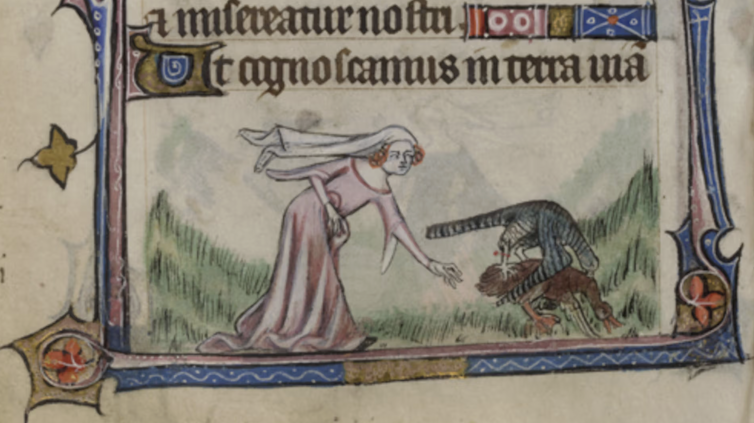
A lady observing her hawk fly towards a duck, from the Taymouth Hours.
British Library

Beyond imagery, records show that queens and noblewomen created and managed parks and hunting grounds. They also hawked together, trained birds of prey, and even gave them as gifts.

Smaller birds, such as merlins, were considered appropriate for women. In the film adaption of H is for Hawk, Claire Foy’s Helen refuses to settle for a merlin, dismissing it as a “lady’s bird”. It seems that medieval women similarly refused to be limited by the options conduct manuals offered them.

Henry VIII’s paternal grandmother, Margaret Beaufort, had many birds of prey. These included merlins and lannerets as well as larger species such as goshawks and lanners.

The deer park Beaufort created at her palace at Collyweston in Northamptonshire, with its terraces, ponds and water meadows, was ideally suited to falconry. Her daughter-in-law, Queen Elizabeth of York, who had her own room at the palace, hunted with goshawks.

In some cases, women appear to have been recognised as authorities on falconry-related matters. The Taymouth Hours, an illuminated 14th century book likely produced for a queenly reader, shows women with billowing headdresses hunting mallards with large birds of prey. The women adopt authoritative stances, demonstrating their skill, command and control over the birds.

In the following century, Dame Juliana de Berners, a prioress from Sopwell Priory, is thought to have authored at least part of the Boke of St Albans, which contains treatises on hunting and hawking.

medieval drawing of a lady observing her hawk bringing down a duck
A lady observing her hawk bringing down a duck in the Yates Thompson manuscript.
British Library

Research by English Heritage has identified that women could even make a living from their expertise in training hawks. In the mid-13th century, a woman named Ymayna was the keeper of the Earl of Richmond’s hawks and hounds at Richmond Castle. In exchange for her expertise, she and her family were permitted to hold land nearby.

Ymayna stands out as a woman in a male-dominated profession, but her example suggests that there were probably other women like her, whose names are unidentified or absent from the historical record.

Women falconers may have been among the owners and users of knives, the handles of which survive in museum collections across Europe. An exquisitely carved example from the 14th century, now displayed in the Ashmolean Museum in Oxford, takes the form of a noble lady with a tiny bird of prey clutched close to her heart.

Literary texts reveal that falconry offered opportunities for female socialisation and bonding. In the Middle English poem Sir Orfeo, Orfeo spies a collective of 60 women on horseback, each with a hawk in hand.

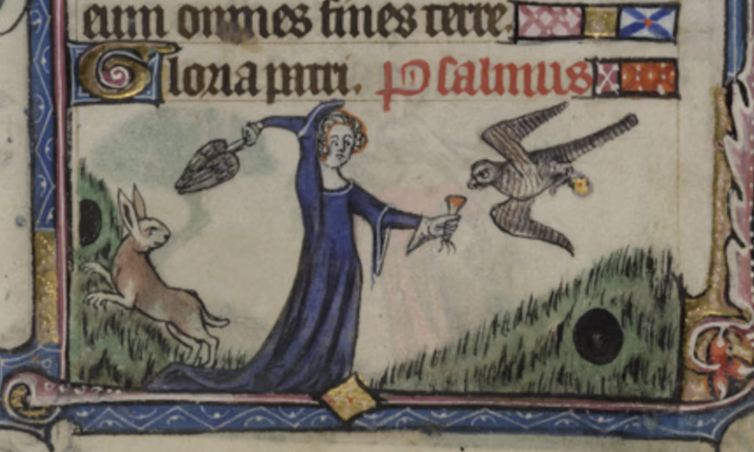
medieval illustration of a lady hawking for a hare i
A lady hawking for a hare in the Yates Thompson manuscript.
British Library

In Hamnet, Agnes tells her husband William Shakespeare that her falconry glove was a gift from her mother. Medieval and early-modern women certainly gave gifts to one another, including gloves. My research, however, suggests that birds of prey were more commonly gifted between women and men.

Margaret Beaufort gave and received birds of prey to and from male relatives and associates, including her young grandson, the future Henry VIII. Birds of prey were considered suitable gifts for special occasions and life milestones. Margaret Pole, Countess of Salisbury, gave her nephew, Henry Courtenay, three falcons to mark his elevation to the title of Marquess of Exeter in 1525.

That powerful women landowners participated in rituals of gift exchange with men suggests falconry was not a straightforwardly feminine expression of power and status. Through their ownership of parks and the giving and receiving of birds of prey as gifts, women also used the culture of falconry to show their belonging to a masculine world of hunting and lordly largesse.


Looking for something good? Cut through the noise with a carefully curated selection of the latest releases, live events and exhibitions, straight to your inbox every fortnight, on Fridays. Sign up here.


This article features references to books that have been included for editorial reasons, and may contain links to bookshop.org. If you click on one of the links and go on to buy something from bookshop.org The Conversation UK may earn a commission.

The Conversation

Rachel Delman received funding from the Arts and Humanities Research Council (2013-2016) and the Leverhulme Trust (2019-2022).

ref. Medieval women used falconry to subvert gender norms – https://theconversation.com/medieval-women-used-falconry-to-subvert-gender-norms-274374

Not an artefact, but an ancestor: why a German university is returning a Māori taonga

Source: The Conversation – UK – By Michael La Corte, Research Associate, Curation and Communication, University of Tübingen

Restitution debates – the question of whether a cultural object should be returned from a museum or other collection to a person or community – often begin with a deceptively simple question: who owns an object?

In colonial contexts, this question rarely has a clear answer. Histories of acquisition are often incomplete, disputed and overwhelmingly recorded from European perspectives. Legal documentation, where it exists at all, usually reflects unequal power relations rather than mutual consent. As a result, many restitution claims cannot be resolved through law alone.

This raises a fundamental question: should the spiritual, social and ancestral significance of an object for its community of origin outweigh unresolved legal arguments about possession?

The case of the Hinematioro pou, which is now being returned from the University of Tübingen to the Māori community Te Aitanga-a-Hauiti on the east coast of New Zealand’s north island, illustrates a restitution process grounded in cultural values. It shows what happens when decisions are guided primarily by spiritual meaning and relational responsibility, rather than by legal uncertainty surrounding colonial acquisition.

A pou is a carved wooden pillar that acts as a marker for tribal boundaries, stories or ancestors. The Hinematioro pou is an early carved panel depicting a standing ancestral figure.

For the Te Aitanga-a-Hauiti, the pou is neither a historical artefact nor a work of art in the western sense. It is the material presence of an ancestor, Hinematioro, who was an ariki (high-ranking leader). The pou is part of a living social order, not a testimony to a distant past.

Within Māori cultural logic, such an object is a taonga: a treasure that carries not only material, but also spiritual, social and genealogical value. Taonga possess mana and mauri – agency and life force – and require ritual relationships as well as responsibility.

This meaning became clear when the pou returned in 2019, for the first time in over 250 years, to Ūawa (Tolaga Bay). It was met with a formal pōwhiri (welcome ceremony) with singing, speeches, tears and embraces – as if a long-absent relative had come home.

Witnessing this special moment made us and many others who were part of the event understand that the question of the pou’s future location is not a museological one for the community, but an existential one. It is not about possession, but about relationship.

How the taonga came to Germany

It is not possible to conclusively reconstruct how the taonga came to Europe. What is certain is that, in October 1769, it was taken from Ūawa to Europe aboard the HMS Endeavour during James Cook’s first Pacific voyage.

The panel is widely regarded as one of the earliest surviving carved pou associated with Māori chiefly genealogies to have entered European collections. This occurred within a colonial context of profound power asymmetries.

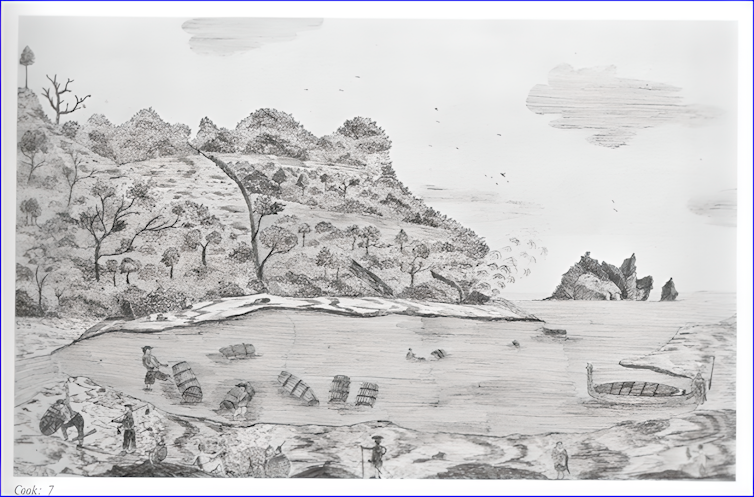
sketch of a cove
The Watering Place in Tolaga Bay, Ōpoutama, Cooks Cove sketch by James Cook 1769.
British Museum, London

It is also not possible to establish how the pou was transferred. A range of possibilities exists, including gifting, coerced handover, exchange or theft. European sources provide no clear evidence, and perspectives from the source community are not sufficiently recognised in Europe. Therefore, a lack of documented violence cannot be taken as evidence of a voluntary transfer.

The object’s later path to Tübingen can only be partially traced. It may have circulated through several 19th-century scientific and collecting networks connected to the Cook expedition.

What is certain is that, in 1937, the pou entered the Ethnological Collection of the University of Tübingen through Emma von Luschan (1864–1941, wife to the anthropologist, explorer, archaeologist and ethnographer, Felix von Luschan) when their collection was curated by the anthropologist and ethnologist Augustin Krämer.

A turning point came in the 1990s, when the panel was identified using a drawing from the Cook expedition held at the British Library. What proved decisive, however, was the establishment of direct relationships with the Hauiti Iwi (tribe or people).

In the following years, close cooperation developed between the University of Tübingen and the Hauiti Iwi. In 2019 the pou was loaned back to the Māori. A jointly curated exhibition Te Pou o Hinematioro (2025–26) at Hohentübingen Castle back in Germany followed – an expressions of a partnership in which trust could grow. The restitution of the pou is therefore not the outcome of conflict, but the result of a long-term relationship that deepened during the exhibition process.

From a legal perspective, the university was not obliged to return the object. Under German civil law, the pou is considered university property, and no binding restitution framework exists for colonial contexts.

Nevertheless, political approaches to colonial collection material in Germany have shifted in recent years. Recent national guidelines encourage transparency, provenance research, dialogue with source communities and restitution as a possible outcome. This reflects a shift away from narrow legal ownership toward acknowledging colonial power imbalances in collection histories.

Decisions about restitution are primarily political and institutional in nature. These decisions raise questions of responsibility: what obligations do present-day collections have towards the circumstances in which their holdings were acquired, and what role do institutions wish to play in global debates on heritage, memory and justice? Universities, with their extensive collections and deep involvement in colonial knowledge production, are particularly affected by these issues.

Where legal histories are inconclusive – as they often are in colonial contexts – restitution cannot be decided by ownership alone. For source communities to be genuine partners, their social, spiritual and ancestral relationships with heritage must be recognised. Otherwise, restitution debates risk perpetuating the very hierarchies it aims to dismantle.


Looking for something good? Cut through the noise with a carefully curated selection of the latest releases, live events and exhibitions, straight to your inbox every fortnight, on Fridays. Sign up here.


The Conversation

The authors do not work for, consult, own shares in or receive funding from any company or organisation that would benefit from this article, and have disclosed no relevant affiliations beyond their academic appointment.

ref. Not an artefact, but an ancestor: why a German university is returning a Māori taonga – https://theconversation.com/not-an-artefact-but-an-ancestor-why-a-german-university-is-returning-a-maori-taonga-274071

Is cracking your neck bad? And why can it feel so good to crack your back, knuckles and knees?

Source: The Conversation – UK – By Katie Edwards, Commissioning Editor, Health + Medicine and Host of Strange Health podcast, The Conversation

Andrey_Popov/Shutterstock

Joint cracking is one of those habits most of us acquire without thinking about it. A knuckle popped mid-sentence. A back twisted as we stand up. A neck gently crunched while the kettle boils. It is common, oddly satisfying and, for anyone sitting nearby, faintly alarming.

It is also surprisingly divisive.

Some people wince at the sound of a knuckle pop or a neck crunch. Others swear by it, twisting, stretching and cracking joints throughout the day in search of relief.

In the third episode of The Conversation’s Strange Health podcast, we turn our attention to one of the body’s most common and least understood noises. Knuckles, backs, knees and necks all feature, along with the enduring warning many of us grew up with: “Stop cracking your joints, you’ll get arthritis.” Is there any truth in it? And why can cracking feel so strangely satisfying?

We turned to this week’s podcast expert guest, Clodagh Toomey, a specialist in musculoskeletal injury and chronic lifestyle-related diseases such as osteoarthritis, to give us the science behind the myths. As she explains in our interview, the familiar popping sound is not bones grinding together. It is caused by a process known as cavitation. Most joints are filled with synovial fluid, which lubricates and cushions movement. When a joint is stretched or twisted, pressure inside it drops suddenly, allowing dissolved gases to form a bubble. The rapid formation or collapse of that bubble creates the cracking noise.

Imaging studies have shown this happening in real time, and decades of research have found no convincing link between habitual knuckle cracking and arthritis. Allergist Donald Unger won the 2009 Ig Nobel Prize in medicine, which recognises quirky research that initially seems trivial or absurd but ends up offering real scientific insight, for his long-running self-experiment. Over decades, he cracked the knuckles on one hand every day and left the other alone, finding no difference between them. Just to prove his mother wrong. You can’t fault his dedication.

So why does it feel good? Part of the answer lies in muscle tension. Stretching a joint stimulates receptors that briefly reduce stiffness and discomfort. Movement also activates sensory nerves that can dampen pain signals, similar to rubbing a sore area after a knock. There may even be a small reward response in the brain, which helps explain why cracking can become habitual.

Neck and back cracking, however, deserves more care. Gentle stretching that produces an occasional crack is usually harmless. Forceful or repeated manipulation, especially by someone untrained, carries more risk. Rare but serious injuries have been linked to damage to blood vessels supplying the brain. These events are uncommon, but they are enough to make aggressive spine cracking a bad idea.

The key message is context. Painless cracking without swelling, locking or loss of movement is usually nothing to worry about. Cracking accompanied by persistent pain, warmth, swelling or a recent injury is a different matter and should be checked out.

Listen to Strange Health to understand why for most people, bone cracking is not a sign of damage or degeneration. It is simply one of the many odd noises the body makes as it moves through the world. Just maybe warn the people sitting next to you first.


Strange Health is hosted by Katie Edwards and Dan Baumgardt. The executive producer is Gemma Ware, with video and sound editing for this episode by Sikander Khan. Artwork by Alice Mason.

In this episode, Dan and Katie talk about a social media clip from loryalien via TikTok.

Listen to Strange Health via any of the apps listed above, download it directly via our RSS feed or find out how else to listen here. A transcript is available via the Apple Podcasts or Spotify apps.

The Conversation

Katie Edwards is a health and medicine editor at The Conversation in the UK. Clodagh Toomey receives funding from the Health Research Board (Ireland) for research in the area of osteoarthritis. She is affiliated with non-profit initiative GLA:D(r) (Good Life with osteoArthritis Denmark).

Dan Baumgardt does not work for, consult, own shares in or receive funding from any company or organisation that would benefit from this article, and has disclosed no relevant affiliations beyond their academic appointment.

ref. Is cracking your neck bad? And why can it feel so good to crack your back, knuckles and knees? – https://theconversation.com/is-cracking-your-neck-bad-and-why-can-it-feel-so-good-to-crack-your-back-knuckles-and-knees-274865