China is losing ground in Latin America

Source: The Conversation – UK – By Amalendu Misra, Professor of International Politics, Lancaster University

Panama’s supreme court invalidated a contract in late January that had allowed Panama Ports Company, a subsidiary of Hong Kong-based firm CK Hutchison, to operate two ports on the Panama canal since 1997.

The decision, which ruled that the laws allowing the firm to operate the ports were “unconstitutional”, comes one year after the US president, Donald Trump, threatened to take control of the canal to limit Chinese influence over the waterway.

Beijing reacted to the ruling angrily, calling the judgment “absurd, shameful and pathetic”. It also said the Panamanian government will pay “a heavy political and economic price” for evicting the company from the ports. The ruling is the latest sign that China’s ambitions in the region are losing momentum.

Chinese influence in Latin America is a relatively recent phenomenon. Since 1823, when President James Monroe declared the western hemisphere closed to further European colonisation, the US has largely maintained strict control over the region’s affairs.

But that changed after the end of the cold war in 1991, with successive US administrations reducing their focus on Latin America. This allowed emerging superpowers such as China to assert their influence in the region.

China is now the top trading partner for South America and is becoming the largest for Latin America as a whole. It is also a major source of foreign direct investment and infrastructure lending for the region.

Chinese influence in what the US considers its own backyard has irked the Trump administration. Shortly after the operation to capture Venezuelan leader Nicolás Maduro in January, the US secretary of state, Marco Rubio, declared: “This is the western hemisphere. This is where we live – and we’re not going to allow the western hemisphere to be a base of operations for adversaries, competitors and rivals of the United States.”

The eviction of Panama Ports Company from the Panama canal will have been celebrated as a victory in Washington, which is looking to promote its own national interests in the region. But it is also possible that the incident could prompt countries throughout Latin America to address their reliance on China.

Over the past two decades, China has swamped countries in Latin America and the Caribbean with loans. However, unlike loans from the World Bank or International Monetary Fund that are contingent on structural and institutional reforms, Chinese loans come with few conditions attached. China generally requires governments to guarantee repayment through the future export of commodities such as oil.

At the same time, Chinese investments generally bring low environmental and labour standards. In a 2023 analysis of 14 Chinese mining, hydroelectric, fossil fuel, infrastructure and agriculture projects in Latin America, the UN Committee on Economic, Social and Cultural Rights identified patterns of serious rights abuses. These included abuses against the rights of Indigenous people, as well as the rights to health, a healthy environment, water, food and housing.

Chinese investments also tend to focus on areas that give Beijing control over a country’s critical infrastructure. For example, China controls a majority stake in the strategically important Chancay port in western Peru and Chinese firms now control approximately two-thirds of Chile’s energy distribution. Under these circumstances, reducing reliance on China is probably in the interests of many Latin American countries.

In February 2025, Panama became the first country in the region to withdraw from China’s global infrastructure and investment project, the Belt and Road Initiative. The announcement followed a visit by Rubio, drawing criticism from Chinese officials over what they saw as US attempts to “deliberately sow discord” between China and Panama.

At a press conference, the Panamanian president, José Raúl Mulino, said: “I do not know what was the intention of those who signed this agreement with China. What has it brought to Panama all these years? What are the great things that this Belt and Road Initiative has brought to the country?”

Wind turbines in the Coquimbo region of Chile.
Jose Luis Stephens / Shutterstock

China’s choices

China itself already appears to be deprioritising Latin America as an investment destination, largely due to the region’s mediocre growth trajectory and frequent delays to loan repayments. It has scaled back on sovereign loans since 2020, while Chinese investment in large-scale Latin American infrastructure projects has reduced in recent years.

And it may be in China’s interests to accelerate this trend. The US capture of Maduro demonstrates the Trump administration’s willingness to induce dramatic changes in the Latin American political environment. These changes may undermine China’s ability to extract unpaid debts from governments in the region.

For example, analysts suggest there is a risk that the new Venezuelan government will attempt to challenge the legitimacy of the roughly US$10 billion (£7.3 billion) of debt it owes to China under a legal doctrine known as “odious debt”. This arises when a government argues that debt incurred by a previous regime did not benefit the nation and is therefore unenforceable.

The future ownership of the two ports previously operated by Panama Ports Company is unclear. The firm has announced it is launching international arbitration proceedings against Panama over the contract ruling, a process that is likely to last years. But it appears the high noon of Chinese economic domination in Latin America may well be over.

The Conversation

Amalendu Misra is a recipient of British Academy and Nuffield Foundation fellowships.

ref. China is losing ground in Latin America – https://theconversation.com/china-is-losing-ground-in-latin-america-275346

Vitamin D: everything you need to know about this supplement – from when to take it, to how much you really need

Source: The Conversation – UK – By Dipa Kamdar, Senior Lecturer in Pharmacy Practice, Kingston University

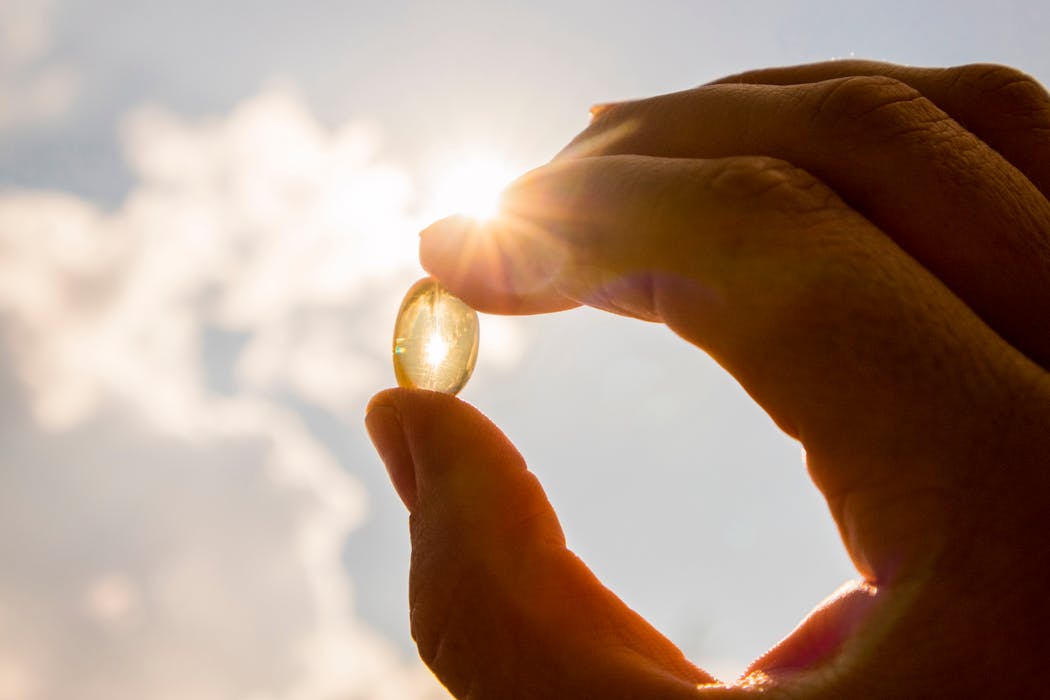
Vitamin D plays a crucial role in bone health. FotoHelin/ Shutterstock

When the days shorten and the sun sinks low in the sky, that familiar winter slump sets in. There’s a fundamental reason for this seasonal fatigue: low levels of vitamin D – the “sunshine vitamin”.

People in the UK simply can’t make enough of this vital nutrient from sunlight during winter, which is why many are advised to take a supplement.

So, what is vitamin D, why does it matter, and how much do you really need?

Why is vitamin D important?

Vitamin D is a fat-soluble vitamin. This means it’s absorbed with other fats in our diet, and stored in the body’s liver and fatty tissue.

Vitamin D helps the body absorb calcium from the gut and regulates calcium and phosphate levels. These minerals are crucial for healthy bones, teeth and muscles.

Vitamin D plays a key role in bone development and in the continuous renewal of bone tissue. Without enough vitamin D, adults can develop osteomalacia (soft bones) and children can develop rickets (a bone deformity, often characterised by bowed legs).

Vitamin D supplementation, in conjunction with calcium, helps maintain bone mineral density and has been shown in trials to reduce fracture risk in people with osteoporosis.

Many tissues in the body have receptors that respond to vitamin D, as well. This means vitamin D can also affect neuromuscular function by helping us maintain muscle strength.

Low vitamin D levels have also been associated with a higher risk of several health problems, including cardiovascular conditions such as high blood pressure and heart failure. However, it’s uncertain whether low vitamin D directly contributes to cardiovascular disease or is simply a reflection of overall poor health in people with chronic conditions.

Although the evidence is mixed, some studies suggest vitamin D may help boost the immune system, too. Some studies suggest that the severity of respiratory infections (such as flu or COVID) may be reduced if you regularly take a vitamin D supplement.

Low vitamin D levels have also been linked to multiple sclerosis. In addition, research suggests that vitamin D may help regulate mood – particularly among people with depression or those who are vitamin D deficient. The studies aren’t definitive, though.

Where do we get vitamin D from?

Unlike other vitamins, which we obtain through diet, vitamin D is made when the skin is exposed to sunlight.

In the UK, around 80-90% of the vitamin D we need comes from the sunlight we’re exposed to. Between late March and September, the sun is usually strong enough that most people produce the vitamin D they need naturally.

But from October to early March, the UK’s sun isn’t strong enough for the skin to synthesise vitamin D – even on bright days. This is why it’s recommended everyone should consider taking a daily supplement during the colder months to maintain optimum levels. This becomes even more important as people spend more time indoors during winter.

An assortment of vitamin D-rich foods, including salmon and sardines, egg yolks and milk.
Only a small proportion of our vitamin D is obtained through diet.
Tatjana Baibakova/ Shutterstock

Some food sources do in fact contain vitamin D – including oily fish (such as salmon or sardines), red meat, egg yolks and fortified cereals. However, only a small proportion (roughly 10–20%) of our vitamin D levels are obtained through diet.

How much vitamin D should I take?

Adults and children over four years old should take 10 micrograms (400IU) of vitamin D per day during the autumn and winter.

Babies under one should be given 8.5-10 micrograms of vitamin D throughout the year if they are breastfed or partly breastfed. Infants are born with limited vitamin D stores, which are primarily transferred from the mother. While infants can produce vitamin D through sunlight exposure, this is often minimal due to sun protection measures. This is why a supplement is recommended.

Because formula is already fortified with vitamin D, only babies who drink less than 500ml of formula a day should be given a supplement.

Although 10 microgram supplements are sufficient, products up to 25 micrograms (1,000IU) are considered safe for general use.

Vitamin D comes in two main forms: D₂ (ergocalciferol) and D₃ (cholecalciferol). Although they differ slightly in chemical structure, both are well absorbed in the small intestine. However, some research shows vitamin D₃ is generally more effective at increasing and sustaining vitamin D levels in the body.

Some people may need to take a vitamin D supplement all year round. This includes people with darker skin tones, such as those of African, African-Caribbean or south Asian heritage, whose higher melanin levels act as a natural sunscreen, reducing how efficiently they synthesise vitamin D from sunlight. People who cover their skin for cultural or medical reasons, or who are housebound or indoors for long periods, will also have less exposure to sunlight and may require a supplement.

Adults over 65 should also consider year-round supplementation. This is because the way the body produces and processes vitamin D changes as we age.

Can you take too much?

It’s important you do not take more than the recommended standard dose. Taking more than recommended is unnecessary and potentially harmful. Higher doses should only be taken under medical supervision for a confirmed deficiency.

Very high intakes (more than 100 micrograms daily) taken over a long time can lead to excessive calcium levels in the body – causing weakened bones and potential kidney and heart problems. Because vitamin D stays in your body for a long time (about two months), symptoms of an overdose can last for several weeks.

You can’t get too much vitamin D from sunlight alone, but it’s still important to protect your skin to reduce the risk of sun damage and skin cancer.

During a British winter, vitamin D is one of the simplest tools we have to support our overall health. With limited sunlight, a small daily supplement offers a reliable way to keep bones and muscles in good working order through the darker months.

The Conversation

Dipa Kamdar does not work for, consult, own shares in or receive funding from any company or organisation that would benefit from this article, and has disclosed no relevant affiliations beyond their academic appointment.

ref. Vitamin D: everything you need to know about this supplement – from when to take it, to how much you really need – https://theconversation.com/vitamin-d-everything-you-need-to-know-about-this-supplement-from-when-to-take-it-to-how-much-you-really-need-274754

Menopause: our study revealed how it affects the brain, cognition and mental health

Source: The Conversation – UK – By Barbara Jacquelyn Sahakian, Professor of Clinical Neuropsychology, University of Cambridge

The menopause was associated with poorer sleep, increased mental health problems and even changes within the brain itself. Gladskikh Tatiana/ Shutterstock

Menopause is a key period in a woman’s life. This transition is often accompanied by wide-ranging physical and psychological symptoms — some of which can be debilitating and affect daily life. Menopause has also been linked to cognitive problems — such as memory, attention and language deficits.

To mitigate the effects of menopause — including hot flashes, depressive symptoms and sleep problems — many women turn to hormone replacement therapy (HRT). In England, an estimated 15% of women are prescribed HRT for menopause symptoms. In Europe, this number is even higher – varying between 18% in Spain to 55% in France.

But there’s limited understanding of the effects of menopause and subsequent HRT use on the brain, cognition and mental health. To address this, we analysed data from nearly 125,000 women from the UK Biobank (a large database containing genetic and health data from about 500,000 people).

We placed participants into three groups: pre-menopausal, post-menopausal and post-menopausal with HRT. The average age of menopause was around 49 years old. Women who used HRT typically began treatment around the same age.

In short, we found that menopause was associated with poorer sleep, increased mental health problems and even changes within the brain itself.

Post-menopausal women were more likely than pre-menopausal women to report symptoms of anxiety and depression. They were also more likely to seek help from a GP or psychiatrist and to be prescribed antidepressants.

Sleep disturbances were more common after menopause, as well. Post-menopausal women reported higher rates of insomnia, shorter sleep duration and increased fatigue.

Brain imaging analyses also revealed significant reductions in grey matter volume following menopause. Grey matter is an important component of the central nervous system which is composed mainly of brain cells. These reductions were most pronounced in regions critical for learning and memory (namely the hippocampus and entorhinal cortex) and areas key in emotional regulation and attention (termed the anterior cingulate cortex).

Notably, the hippocampus and entorhinal cortex are among the earliest affected in Alzheimer’s disease, the most common form of dementia.

The changes we observed in our study could suggest that menopause-related brain changes may contribute to increased vulnerability to Alzheimer’s disease later in life. This could help explain why there’s a higher prevalence of dementia observed in women.

We also investigated whether taking HRT post-menopause had any effect on health outcomes. Notably, HRT did not improve the reduction in brain grey matter.

In addition, we found that women using HRT showed higher levels of anxiety and depression compared to post-menopausal women who had never used HRT. However, further analyses indicated that these differences were already present. This suggested that pre-existing mental health problems may have influenced the decision to begin using HRT rather than these symptoms being caused by the medication itself.

A woman places a hormone treatment patch on her arm.
HRT had some benefit on cognitive performance.
Andrey_Popov/ Shutterstock

One potential benefit of HRT use was noted in cognitive performance – particularly for psychomotor speed. Psychomotor slowing is a hallmark feature of ageing.

Post-menopausal women who had never used HRT showed slower reaction times compared with both pre-menopausal women and post-menopausal women who had used HRT. This indicates that HRT helps to slow the menopause-related declines in psychomotor speed.

HRT and menopause

There’s still much we don’t know about HRT – and more evidence on its benefits and risks are still needed.

Some studies report that those taking HRT have an increased dementia risk, while others suggest a decreased risk of dementia.

More research is also needed to understand the effects of HRT and how the different routes and dosages affect menopause symptoms. But according to one UK Biobank study of 538 women, the effects don’t appear to differ – regardless of factors such as the formulation, route of administration and duration of use.

Importantly, however, it’s difficult to establish whether women are actually receiving an effective dose. One in four women using the highest licensed dose of HRT still had low levels of estradiol (oestrogen) – around 200 picomoles per litre. Older women and HRT patch users were more likely to have lower levels.

Optimal plasma levels to relieve menopause symptoms are between 220-550 picomoles per litre. This means that for 25% of the women in the study, HRT would not have had optimal benefit for menopause symptoms.

Considering that most women go through the menopause, it’s important to resolve the question of whether HRT is beneficial – including preventing brain grey matter volume reductions and reducing the risk of dementia. It will also be important to know what the best dose and route of administration are.

There is evidence to suggest healthy lifestyle habits may mitigate these menopause-related changes in brain health.

Our work and that of other research groups shows that a number of lifestyle habits can improve brain health, cognition and wellbeing, thereby reducing the risk of cognitive decline associated with ageing and dementia. This includes regular exercise, engaging in cognitively challenging activities (such as learning a new language or playing chess), having a nutritious and balanced diet, getting the right amount of good-quality sleep and having strong social connections.

Research also shows regular physical activity can increase the size of the hippocampus, which may help mitigate some of the menopause-related reductions observed in this region.

Sleep is also critically important as it supports the consolidation of memories and helps clear toxic waste byproducts from the brain – processes that are essential for memory, brain health and immune function.

Having a healthy lifestyle may offer an accessible and effective strategy to promote brain health, cognitive reserve and resilience to stress during and after the menopause transition.

The Conversation

Barbara Jacquelyn Sahakian receives funding from the Wellcome Trust and the Lundbeck Foundation. Her research work is conducted within the NIHR Cambridge Biomedical Research Centre (BRC) Mental Health and Neurodegeneration Themes. She receives Royalties from Cambridge University Press for Brain Boost: Healthy Habits for a Happier Life.

Christelle Langley receives funding from the Wellcome Trust. Her research work is conducted within the NIHR Cambridge Biomedical Research Centre (BRC) Mental Health and Neurodegeneration Themes. She receives royalties from Cambridge University Press for Brain Boost: Healthy Habits for a Happier Life.

ref. Menopause: our study revealed how it affects the brain, cognition and mental health – https://theconversation.com/menopause-our-study-revealed-how-it-affects-the-brain-cognition-and-mental-health-275329

These five short video games work like poems – and they’re ideal for Valentine’s Day

Source: The Conversation – UK – By Jordan Magnuson, Senior Lecturer in Games and Media Art, University of Southampton

Chay_Tee/Shutterstock

Exchanging poems on Valentine’s Day is a long-standing tradition. But poetry doesn’t have to be bound to the page. This February 14, why not try sharing a game poem instead?

Game poems are tiny video games made as a form of poetic expression. They generally only take a few minutes to play and tend to challenge our expectations of what video games are for. Rather than entertaining players with points, competition, or spectacle, they aim to capture a feeling, a thought, or a fleeting moment.

It can seem strange, at first, to consider games as a form of poetry. We often associate video games with speed and large-scale entertainment, while we tend to associate poetry with slowness, intimacy and attention. But games are not bound to the conventions that dominate their mainstream forms.

Game poems show how video games can be used to explore interior life, relationships, and emotional nuance and offer a reminder that creative impact doesn’t always require length or complexity. Sometimes, five minutes is enough.

I’ve been making short video games as a form of poetic expression for over 15 years, and recently launched a playable online magazine dedicated to this sort of work.

If that all of that sounds abstract, the best way to understand what these games are about is simply to play one. Here are five short game poems, all playable in a web browser, that explore themes of love, intimacy, longing and separation – perfect for Valentine’s Day, whether you’re playing on your own, or with a special someone.

1. On Second Thought by Tereza Kotěšovcová

Estimated play time: less than five minutes | Gaming skills required: none

On Second Thought contains no text at all. Instead, it unfolds through simple images, rhythm and the repetition of a single button press. The game centres on a familiar emotional moment: the hesitation that comes with making the first move in a relationship.

As you interact, a seemingly quiet encounter is juxtaposed with the inner tumult that can often seize our imaginations at such moments. In the words of the artist: “You hesitate. You imagine the worst. Miss your moment, and the world will stutter: a coffee spills, a sun is eclipsed, a temple crumbles. You start again.”

Like a lyric poem, the game is less interested in explaining this experience than in letting you sit inside it.

2. Queers in Love at the End of the World by Anna Anthropy

A play through of Queers in Love at the End of the World.

Estimated play time: ten seconds (replays recommended) | Gaming skills required: none

Queers in Love at the End of the World lasts exactly ten seconds.

You and your lover are about to witness the end of the world. In that brief span of time, you can choose how to act: kiss, hold hands, try to say something meaningful – or hesitate and watch the moment pass.

The time limit is a merciless and potent constraint. There is no way to do everything, and no way to “win”. Each play-through becomes a small act of acceptance: whatever you chose, that was enough. Like a powerful short poem, the game lands with emotional force precisely because it ends so quickly.

3. Loneliness by Jordan Magnuson

The trailer for Loneliness.

Estimated play time: less than five minutes | Gaming skills required: none

Valentine’s Day can be a difficult time for people who are feeling isolated, and this game poem doesn’t shy away from that.

Loneliness is an abstract exploration game that I created where the only available input is movement. Explore a flat landscape populated by squares that engage in social interaction represented through patterns of their own simple movement. Do you avoid them or choose to approach? And what about the next group?

Is the way the others react to you real, imagined or remembered? The game leaves that question open, inviting reflection instead of offering answers. The familiar video game convention of exploring a landscape becomes a metaphor for navigating social and emotional distance.

4. The Love Letter by Alex Snyder

Estimated play time: five to ten minutes | Gaming skills required: some

Not all game poems are sombre. The Love Letter is playful, awkward and sweet.

You’re a student at school. A note with a heart appears in your locker. The problem is finding a quiet place to read it while navigating busy hallways and crowds of classmates.

This game poem borrows the language of classic arcade challenges – movement, timing, obstacles – but repurposes them to express something small and personal: the anxious thrill of teenage romance. It feels like a Valentine’s card rendered in playable form.

5. How to Walk Out the Door by Anton Patsi

Estimated play time: five to ten minutes | Gaming skills required: None. But fast typing skills will help.

And for the Valentine’s Day sceptics, something completely different. A game about breaking up. Ending a relationship can be harder than starting one. How to Walk Out the Door turns that difficulty into an intense 20-second loop.

Each round plays out under extreme time pressure and revolves around an unusual game mechanic: typing. With each attempt to leave, you can get a little further – or falter – before time resets and you’re forced to begin again.

The repetition is the point. The game uses rhythm and constraint to convey emotional exhaustion in a way that words alone might struggle to match.


Looking for something good? Cut through the noise with a carefully curated selection of the latest releases, live events and exhibitions, straight to your inbox every fortnight, on Fridays. Sign up here.


The Conversation

Jordan Magnuson does not work for, consult, own shares in or receive funding from any company or organisation that would benefit from this article, and has disclosed no relevant affiliations beyond their academic appointment.

ref. These five short video games work like poems – and they’re ideal for Valentine’s Day – https://theconversation.com/these-five-short-video-games-work-like-poems-and-theyre-ideal-for-valentines-day-275148

Replacing humans with machines is leaving truckloads of food stranded and unusable

Source: The Conversation – UK – By Mohammed F. Alzuhair, Candidate for a doctorate in business administration., Durham University

Richard M Lee/Shutterstock

Supermarket shelves can look full despite the food systems underneath them being under strain. Fruit may be stacked neatly, chilled meat may be in place. It appears that supply chains are functioning well. But appearances can be deceiving.

Today, food moves through supply chains because it is recognised by databases, platforms and automated approval systems. If a digital system cannot confirm a shipment, the food cannot be released, insured, sold, or legally distributed. In practical terms, food that cannot be “seen” digitally becomes unusable.

This affects the resilience of the UK food system , and is increasingly identified as a critical vulnerability.

Look at the consequences, for example, when recent cyberattacks on grocery and food distribution networks disrupted operations at multiple major US grocery chains. This took online ordering and other digital systems down and delayed deliveries even though physical stocks were available.

Part of the problem here is that key decisions are made by automated or opaque systems that cannot be easily explained or challenged. Manual backups are also being removed in the name of efficiency.


Read more:
The UK’s food supply is more fragile than you might think – here’s why it should be a national priority


This digital shift is happening around the world, in supermarkets and in farming, and has delivered efficiency gains, but it has also intensified structural pressures across logistics and transport, particularly in supply chains which are set up to deliver at the last minute.

Using AI

AI and data-driven systems now shape decisions across agriculture and food delivery. They are used to forecast demand, optimise planting, prioritise shipments, and manage inventories. Official reviews of the use of AI across production, processing, and distribution show that these tools are now embedded across most stages of the UK food system. But there are risks.

When decisions about food allocation cannot be explained or reviewed, authority shifts away from human judgment and into software rules. Put simply, businesses are choosing automation over humans to save time and cut costs. As a result, decisions about food movement and access are increasingly made by systems that people cannot easily question or override.

Extreme weather such as Storm Chandra can cause food shortages, but there are other factors as well.

This has already started to happen. During the 2021 ransomware attack on JBS Foods, meat processing facilities halted operations despite animals, staff, and infrastructure being present. Although some Australian farmers were able to override the systems, there were widespread problems. More recently, disruptions affecting large distributors have shown how system failures can interrupt deliveries to shops even if goods are available.

Getting rid of humans

A significant issue is fewer people managing these issues, and staff training. Manual procedures are classified as costly and gradually abandoned. Staff are no longer trained for overrides they are never expected to perform. When failure occurs, the skills required to intervene may no longer exist.

This vulnerability is compounded by persistent workforce and skills shortages, which affect transport, warehousing and public health inspection. Even when digital systems recover, the human ability to restart flows may be limited.

The risk is not only that systems fail, but that when they do, disruption spreads quickly. This can be understood as a stress test rather than a prediction. Authorisation systems may freeze. Trucks are loaded, but release codes fail. Drivers wait. Food is present, but movement is not approved.

Based on previous incidents within days digital records and physical reality can begin to diverge. Inventory systems no longer match what is on shelves. After about 72 hours, manual intervention is required. Yet paper procedures have often been removed, and staff are not trained to use them.

These patterns are consistent with evidence from UK food system vulnerability analyses, which emphasise that resilience failures are often organisational rather than agricultural.

Food security is often framed as a question of supply. But there is also a question of authorisation. If a digital manifest is corrupted, shipments may not be released.

This matters in a country like the UK that relies heavily on imports and complex logistics. Resilience depends not only on trade flows, but on the governance of data and decision-making in food systems, research on food security suggests.

Who is in control?

AI can strengthen food security. Precision agriculture (using data to make decisions about when to plant or water, for instance) and early-warning systems have helped reduce losses and improve yields. The issue is not whether AI is used, but who is watching it, and who manages it.

Food systems need humans to be in the loop, with trained staff and regular drills on how to override systems if they go wrong. Algorithms used in food allocation and logistics must be transparent enough to be audited. Commercial secrecy cannot outweigh public safety. Communities and farmers must retain control over their data and knowledge.

This is not a risk for the future. It already explains why warehouses full of food can become inaccessible or ignored.

The question is not whether digital systems will fail, but whether we will build a system that can survive its failure.

The Conversation

Mohammed F. Alzuhair does not work for, consult, own shares in or receive funding from any company or organisation that would benefit from this article, and has disclosed no relevant affiliations beyond their academic appointment.

ref. Replacing humans with machines is leaving truckloads of food stranded and unusable – https://theconversation.com/replacing-humans-with-machines-is-leaving-truckloads-of-food-stranded-and-unusable-274589

Why Sweden’s young people are so good at English

Source: The Conversation – UK – By Una Cunningham, Professor Emerita, Department of Teaching and Learning, Stockholm University

LightField Studios/Shutterstock

Swedish is a vibrant language spoken by about 10 million people, mostly in Sweden and Finland. But Swedish young people are often proficient in English, too.

Sweden consistently ranks very high in English proficiency comparisons, with young people in Sweden speaking such good English that other countries are eyeing them with envy.

Although English has no official status in Sweden, proficiency in English is a formal requirement to progress in education, and often for employment and social activity as well. The Swedish national curriculum points out that “the English language surrounds us in our daily lives and is used in areas as diverse as politics, education and economics”.

Like many national languages in Europe, Swedish is increasingly sharing its space with English. Public spaces have long been papered with signs and advertising in English, or both Swedish and English.

There is a lack of interest in learning other foreign languages among Swedish young people: English is thought to be enough.

English is the default language (lingua franca) for Swedish speakers in any situation where someone is thought not to be fully proficient in Swedish, both in international travel and at home in Sweden when talking to visitors or migrants. In fact, migrants report finding it hard to get Swedes to speak Swedish with them.

Young Swedes seamlessly switch to English and increasingly speak English together. Many young people envision a life outside Sweden and see English as the language of their future.

English at school and beyond

In Swedish secondary schools, English language teaching aspires to help students speak English with confidence. English communication skills – listening, speaking, reading and writing – are taught and assessed, with national testing beginning in year six (age 12). The emphasis is on implicit language knowledge (being able to use the language) rather than explicit language knowledge (knowing about the language).

Accurate language production is not an explicit aim in the curriculum. Consequently, young people, though often orally proficient due to widespread exposure to English, may lack knowledge of grammar and conventions, allowing them to communicate effectively but not always with full accuracy.

This potential lack of accuracy does not stop young Swedes from gravitating towards English. Outside of the classroom, Swedish students engage with English more extensively than many of their peers abroad. English retains significant appeal due to its prominence in media and advertising, the popularity of British and American culture, and the prevalence of Swedish music artists using English in songwriting.

What’s more, many young people are inclined to use English on social media platforms, for swearing, and in slang expressions. Much of the language young people in Sweden encounter online is English. Youth media consumption in Sweden, from Netflix to YouTube, from TikTok to Snapchat, is primarily in English.

Girl sat on bed looking at phone
Much of the social media content Swedish teens interact with is in English.
Ground Picture/Shutterstock

Many Swedish influencers generate content in English. Gaming in Sweden has always been overwhelmingly in English.

Although schools provide exposure to formal language aspects and a chance to receive some corrective feedback, students will usually simultaneously be acquiring English informally outside the classroom.

This English language use is based on students’ personal interests, such as gaming, sports, pop music and reading. The students are not actively aiming to develop their English, but pick up vocabulary, pronunciation and structure while doing something that interests them.

Willingness to use English is not the same thing as a solid knowledge of the language. Most students benefit from combining classroom learning with out-of-school exposure to fully develop their English proficiency. Ideally, teachers should acknowledge and integrate this language use into their instruction.

The new upper secondary English syllabus reflects this by emphasising the value of raising students’ awareness of how language can be learned beyond school.

What goes on in schools is only a small part of how young people learn English in Sweden. Formal instruction and informal language use offer much more together than separately.

The Conversation

The authors do not work for, consult, own shares in or receive funding from any company or organisation that would benefit from this article, and have disclosed no relevant affiliations beyond their academic appointment.

ref. Why Sweden’s young people are so good at English – https://theconversation.com/why-swedens-young-people-are-so-good-at-english-264157

Five ways quantum technology could shape everyday life

Source: The Conversation – UK – By Salil Gunashekar, Senior Research Leader and Deputy Director, Science and Emerging Technology, RAND Europe

The unveiling by IBM of two new quantum supercomputers and Denmark’s plans to develop “the world’s most powerful commercial quantum computer” mark just two of the latest developments in quantum technology’s increasingly rapid transition from experimental breakthroughs to practical applications.

There is growing promise of quantum technology’s ability to solve problems that today’s systems struggle to overcome, or cannot even begin to tackle, with implications for industry, national security and everyday life.

So, what exactly is quantum technology? At its core, it harnesses the counter-intuitive laws of quantum mechanics, the branch of physics describing how matter and energy behave at the smallest scales. In this strange realm, particles can exist in several states simultaneously (superposition) and can remain connected across vast distances (entanglement).

Once the stuff of abstract theory, these effects are now being engineered into innovative, cutting-edge systems: computers that process information in entirely new ways, sensors that measure the world with unprecedented precision, and communication networks that are virtually impossible to compromise.

To understand how this emerging field could shape the future, here are five areas where quantum technology may soon have a tangible impact.

1. Discovery for medicine and materials science

A pharmaceutical scientist seeks to design a new medicine for a previously incurable disease. There are thousands of possible molecules, many ways they might interact inside the body and uncertainty about which will work.

In another lab, materials researchers explore thousands of different atomic combinations and ratios to develop better batteries, chemicals and alloys to reduce transport emissions.T raditional supercomputers can narrow the options but eventually meet their limits.

This is where quantum computing could make a decisive difference. They use quantum bits, or qubits – the most basic unit of information in a quantum computer. Qubits do not simply consist of 1s and zeroes, like bits in conventional computers, but can exist in a variety of different quantum “states”.

Indeed, the ability to develop and control qubits is central to advancing quantum computing and other quantum technologies. By using qubits, quantum computers can simulate vast numbers and different possibilities simultaneously, revealing patterns that classical systems cannot reach within useful time-frames.

In healthcare, faster drug discovery could bring quicker response to outbreaks and epidemics, personalised medicine and insight into previously inscrutable biological interactions. Quantum simulation of how materials behave could lead to new high efficiency energy materials, catalysts, alloys and polymers.

Although fully operational, commercial quantum computers are still in development, progress is accelerating, with existing paradigms combining quantum and classic computational approaches already demonstrating the potential to reshape how we discover and design cures.

2. Sensors for navigation, medicine and the environment

A new range of sensors can exploit different quantum phenomena such as superposition and entanglement to detect changes that conventional instruments would miss, with potential uses across many areas of daily life.

In navigation, they could guide ships, submarines and aircrafts without GPS by reading subtle variations in the Earth’s magnetic and gravitational fields.

In medicine, quantum sensors could improve diagnostic capabilities via more sensitive, quicker and noninvasive imaging modes.

In environmental monitoring, these sensors could track delicate shifts beneath the Earth’s surface, offer early warnings of seismic activity, or detect trace pollutants in air and water with exceptional accuracy.

3. Optimisation for logistics and finance

Many of the hardest challenges today concern the optimisation of staggeringly complex systems; the task of choosing the best option among billions of possibilities.

Managing a power grid or investment portfolio, scheduling flights or financial trading, or coordinating global deliveries all feature optimisation problems so complex that even advanced supercomputers struggle to find efficient answers in time.

Quantum computing could change this. Quantum algorithms could be used to solve optimisation problems that are intractable using classical approaches.

By using quantum principles to explore many solutions simultaneously, these systems could identify solutions far faster than traditional methods. A logistics company could adjust delivery routes in real time as traffic, weather and demand shift.

Airlines and rail networks could automatically reconfigure to avoid cascading delays, while energy providers might balance renewable generation, storage and consumption with far greater precision. Banks could use quantum computers to evaluate numerous market scenarios in parallel, informing the management of investment portfolios.

4. Ultra-secure communication

Security is one of the areas where quantum technology could have the most immediate impact. Quantum computers are inching ever closer to being capable of
breaking many of today’s encryption systems (such as RSA encryption which secures data transmission on the internet), posing a major cybersecurity challenge.

At the same time, quantum communication techniques, such as quantum key distribution (QKD), could offer intrinsically secure encrypted communication.

In practical terms, this could secure everything from financial transactions and health records to government and military communications. For national security agencies, quantum-safe encryption is already a strategic priority. For the average person, it could mean stronger digital privacy, more reliable identity systems and reduced risk of cyberattacks.

5. Supercharging progress in AI

Artificial intelligence is already reshaping industries, but is reliant on the immense computing power needed to train and run large models. In the future, quantum computing could boost AI by handling calculations that classical machines find too complex.

While still at an early stage of development, quantum algorithms might accelerate a subset of AI called machine learning (where algorithms improve with experience), help simulate complex systems, or optimise AI architectures more efficiently. That could lead to AI systems that learn faster, understand context better, and process far larger datasets than today’s models allow.

Think of AI assistants that understand you more naturally, medical diagnostic tools that integrate genomic and environmental data in real time, or scientific research that advances through rapid, quantum-boosted simulations.

Why this matters… and what to watch

Quantum technology is no longer just a theoretical pursuit. Optimism is increasing that commercially viable and scalable quantum technologies may become a reality over the next ten years. With billions in global investment and a growing number of prototypes being tested outside the lab, the “quantum era” is starting to take shape.

Governments see it as a strategic priority, and industries see it as a competitive edge. Its ripple effects could touch nearly every sector from healthcare, energy, and finance, to defence and beyond.

That means we should be asking whether our education systems, workforce dynamics, infrastructure and governance mechanisms are effective – and whether they are keeping pace.

Those who invest early and strategically in quantum readiness and who have the patience to sustain this effort will shape how this technology unfolds. When it does arrive, even if we might be a few years away, its impact could reach far beyond the lab into every part of our connected, data-driven world.

The Conversation

The authors do not work for, consult, own shares in or receive funding from any company or organisation that would benefit from this article, and have disclosed no relevant affiliations beyond their academic appointment.

ref. Five ways quantum technology could shape everyday life – https://theconversation.com/five-ways-quantum-technology-could-shape-everyday-life-274044

Why I’m building an office out of straw

Source: The Conversation – UK – By Stuart Walker, Research Fellow in Sustainabilty Assessment, University of Sheffield

The garden office from the inside. Lorna Jackson, CC BY-NC-ND

When we moved into our house, there was a shed in the garden. Its timbers were rotten, the floor had long since disappeared into the ground, there was no door, the window had fallen out and various creatures had moved in.

I decided to rebuild it out of a material that has been used around the world for hundreds of years, but is less commonly seen in modern buildings: straw bales. A year later, and the “work shed” is now nearly finished.

As sustainability assessment lead at Sheffield University’s Grantham Centre for Sustainable Futures, I wanted to make sure my garden office had the lowest possible embodied carbon (a term used to describe the amount of carbon contained, or “embodied” in the materials used to make a product), and low energy use once it was up and running.

That meant the office would need to be very well insulated to avoid using lots of energy to heat it, and made of materials with low carbon content.

Due to its structure, straw is a fantastic insulating material. It’s also cheap, easy to work with, and since the straw absorbs carbon dioxide from the atmosphere as it grows, straw buildings act as carbon stores. If we use this in a building, the carbon remains stored for the lifetime of the building, and can even be returned to the soil at the end of life.

My first real involvement with straw building was through the design of a low carbon cold room in Kenya, working with energy efficiency experts from the Energy Saving Trust and Solar Cooling Engineering, and architects from Switzerland and Kenya. A cold room is an easy-to-build and cheap alternative to a large fridge, enabling farmers in developing countries to store produce at a market, improving incomes and reducing food waste.

A man wearing red with his hands on a straw bale that is part of a building he is constructing.
Stuart Walker working on his straw bale office.
Lorna Jackson., CC BY-NC-ND

This cold room is now operating at Homa Bay market on the shores of Lake Victoria, Kenya. It has cement-free foundations, solar panels and batteries, water storage, low energy cooling units, a timber structure and straw bale walls. The project showed me that straw bale structures can provide good insulation without the environmental impact of expanded polystyrene.

Natural materials like mud, earth and dung, as well as fibrous materials such as straw were used to build homes for centuries.

Straw bale housing history

Straw in bale form has been used for buildings since the 1800s. After the invention of mechanical baler in the US, straw bales were used to construct homes in places where timber and stone were hard to find.

Some of these early buildings still exist, but most straw bale houses in the US were built since the 1970s. These buildings offer warm comfortable homes and were the inspiration for a new wave of UK straw bale builders in the 1990s.


Read more:
How we can recycle more buildings


Straw works well for single or two-storey buildings, but requires careful design to avoid water leaking into it. Provided the bale buildings are protected from rain splash at the bottom and have an overhanging roof at the top, water isn’t really a problem. Fire requires oxygen and fuel, so a compressed straw bale is fire resistant, and straw bale buildings have met all fire, planning, and building regulations, and even achieved Passivhaus – extremely high standards of insulation, thermal performance and energy use.

A building at a Kenyan market with a woman stood outside, it was built from straw bales.
The straw bale ‘fridge’ built in Kenya.
Francis Maina, CC BY-NC-ND

My new garden office has 40cm thick walls and double glazed windows, it’s clad on the outside with reclaimed timber (some of which came from the original shed) and the roof, windows, doors and underfloor insulation are all secondhand. The final step is cladding the inside.

Here I’ve adopted another traditional building practice and used cob. Cob is a mixture of clay, water, sand and chopped straw. After digging the clay from our garden and mixing it, I’ve applied the cob by hand, via an incredibly messy but very satisfying process.

I know that the lifetime greenhouse gas emissions of my shed will be about 20 tonnes lower than they would have been if I had used expanded foam insulation and plasterboard.

People who live in straw bale houses talk about how the irregular shape and natural materials of straw bale buildings also have a positive impact on them, and say that buildings like my shed create a connection with the builder particular to the use of natural materials.

This concept, known as biophilic design, is challenging to quantify but I look forward to finding how it feels to sit inside it.

The Conversation

Stuart Walker is affiliated with The Grantham Centre for Sustainable Futures, University of Sheffield. He receives funding from the Grantham Foundation for the Protection of the Environment.

ref. Why I’m building an office out of straw – https://theconversation.com/why-im-building-an-office-out-of-straw-273494

Forget flowers: lovers in 18th- and 19th-century Ireland exchanged hair

Source: The Conversation – UK – By Leanne Calvert, Assistant Professor in Irish History, University of Limerick

Only a Lock of Hair by John Everett Millais (1857-1858). Manchester Art Gallert, CC BY-NC

In 18th- and 19th-century Ireland, it was common for courting couples to exchange gifts to mark their developing relationships. Many of these items are familiar gifts today: books, cards, items of clothing, jewellery and sweet treats. Others, however, are less familiar. In fact, some of the gifts exchanged by couples in the past might give many today the dreaded ick – especially those items of the hairier variety.

While you might be familiar with the tradition of mourning hairwork jewellery that was made and worn to remember deceased loved ones in the Victorian era, hairy tokens were traditionally a gift exchanged between couples in love. In my new book, Pious and Promiscuous: Life, Love and Family in Presbyterian Ulster, I explore the tradition of gift-giving among courting couples in Ulster – from hairy tokens to food and clothing. The book reveals for the first time the personal stories that shaped the rituals of Presbyterian family life in 18th- and 19th-century Ulster.

Watercolour of a man being kissed by his lover in a kitchen
Batchelor’s Fare, Bread, Cheese, and Kisses, by Thomas Rowlandson (1813).
Met Museum

Gift-givers thought deeply about what to gift that special someone. Items exchanged in courtship were carefully chosen because different gifts had different meanings. Whereas shirts were understood to symbolise friendship, items like gloves – which covered the hands and fingers – were associated with marriage.

Those on the receiving end also had to consider whether or not to accept these tokens. Accepting a gift from a would-be suitor indicated that the receiver shared their romantic interest. Refusing a gift communicated the opposite. The tradition of gift-giving could also be used to break off relationships. When a relationship failed, people were expected to return any gifts that they had received.

The most special token that a person could gift was their hair. As a physical piece of a person that would outlast their human life, a lock of hair symbolised immortal love. Locks of hair were generally gifted by women to men and sometimes at the request of their male suitors.

Men might write to their beloveds and request that they enclose a lock of hair in their next letter as a token with which to remember them. Locks of hair could be tied into neat plaits and fashioned with a ribbon, enabling the lock to keep its shape. Hair could also be pressed into jewellery or placed in the back of miniatures.

The recipients of these hairy tokens would engage with them both physically and sensorially. Locks of hair could be rubbed, stroked, sniffed and gazed upon as the recipient thought about the person who had sent it. Given their size, these little hairy tokens could also be secreted inside of clothes and worn next to the heart, or placed under a pillow and slept upon, enabling the recipient to dream of its hairy bestower.

A hairy fetish

Some people appear to have had a real appetite, perhaps even a fetish, for hairy gifts and tokens. Robert James Tennent (1803–80), a middle-class man who came of age in 19th-century Belfast, is one such example. Catalogued among his papers at the Public Record Office of Northern Ireland, Belfast, is an extraordinary archive of hairy treasures, each seemingly representing a woman with whom he had some sort of romantic connection.

What makes Tennent’s collection so intriguing is its size. It contains 14 locks of hair, each wrapped individually in a small handmade envelope. At one time the collection may have been even larger. Among the items is an envelope, now empty, bearing the label “Hair”, which possibly held a lock of hair that has since been lost.

The hair itself varies dramatically in colour, condition and care: wisps of fine blonde hair; neatly tied plaits of brown hair, fashioned with pink string; and unshapen masses of dark hair streaked with grey. The collection also contains a broken ring.

In 2022, I published a paper on Tennent’s hairy treasures in which I theorised that he kept and curated the collection as a trophy cabinet of his past romantic (and sexual) adventures. I argued that the collection served the purpose of a handmade and homemade pornographic archive that Tennent could revisit to transport himself back to pleasured memories and experiences.

Evidence for this view is inscribed in the collection itself. Twelve of the locks are labelled, telling us the name of the woman to whom the hair belonged. We can identify ten women in total. Eleven of the locks are also dated, recording the day, month and year that they were received by Tennent. The collection was assembled between 1818 and 1827, when Tennent was between 15 and 24 years of age.

Tennent’s archiving efforts betray his philandering lifestyle when a younger, unmarried man. There is a considerable overlap in the dates that the different locks of hair were collected. In fact, at least two locks of hair were received into his collection at the same time that Tennent was courting his future wife, Eliza McCracken. The pair were involved in a rather bumpy courtship from 1826, eventually marrying in 1830.

Whereas item nine in the collection labelled “Hair of Lucretia Belfast” is dated December 13 1826, item 15, belonging to Ellen Lepper, is dated June 26 1827. A lock of McCracken’s hair is also included in Tennent’s collection; a partly unrolled plait of brown hair bears the label: “Eliza, Where is the Bosom friend dearer than all.”

That Tennent returned to these tokens to revisit his bachelorhood is suggested by the physical state of some of the items too. A lock of hair attributed to Miss Catharine Louise Lawless (dated November 10/11 1820), may have once been tied into a neat little plait. It is likely that the plait has come undone overtime due to excessive touch.

So, if you find yourself stumped, browsing the shelves this Valentine’s Day for the perfect gift for your other half, perhaps the answer lies atop of your head. Hairy tokens might not suit everyone’s taste today, but they remind us that love and how we express it has always been intensely personal.

From locks of hair twisted into plaits and encased in jewellery to chocolate hearts and handwritten love notes, the tokens we give carry meaning and memory. Love and affection, then as now, is an expression of our intimate sides and can occasionally be a little hairy.


Looking for something good? Cut through the noise with a carefully curated selection of the latest releases, live events and exhibitions, straight to your inbox every fortnight, on Fridays. Sign up here.


The Conversation

Leanne Calvert does not work for, consult, own shares in or receive funding from any company or organisation that would benefit from this article, and has disclosed no relevant affiliations beyond their academic appointment.

ref. Forget flowers: lovers in 18th- and 19th-century Ireland exchanged hair – https://theconversation.com/forget-flowers-lovers-in-18th-and-19th-century-ireland-exchanged-hair-275356

Why ‘activating’ your vagus nerve has become the latest wellness trend

Source: The Conversation – UK – By Katie Edwards, Commissioning Editor, Health + Medicine and Host of Strange Health podcast, The Conversation

Girts Ragelis/Shutterstock

The vagus nerve has become the internet’s favourite body part.

On social media, it is everywhere. People hum into their phones, gargle with theatrical enthusiasm, dunk their faces into bowls of ice water and poke at their ears in the hope of “activating” it. Influencers describe it as a hidden master switch for calm, digestion and emotional balance. Some claim that learning to control it can transform everything from anxiety to inflammation.

All of which makes it sound faintly mystical. In reality, the vagus nerve is not a wellness trend. It is a real, physical nerve. And a surprisingly important one.

In the fourth episode of the Strange Health podcast, we turn our attention to the body’s longest cranial nerve and ask a simple question: what does the vagus nerve actually do, and can we really hack it?

To find out, we spoke to Arshad Majid, a professor of cerebrovascular neurology at the University of Sheffield and an expert in vagus nerve stimulation. As he explains, the vagus nerve is one of 12 cranial nerves that emerge directly from the brain. Its name comes from the Latin for “wanderer”, which is fitting. It begins in the brainstem and travels down through the neck into the chest and abdomen, connecting to the heart, lungs, gut and even the liver.

It is less a single-purpose wire and more a busy two-way information highway. Most of its activity involves carrying signals from the body back to the brain, keeping it updated on what is happening internally. It is also part of the autonomic nervous system, which regulates the processes we do not consciously control, such as heart rate, breathing and digestion.

Within that system, the vagus nerve plays a key role in the parasympathetic response, sometimes known as “rest and digest”. When this system dominates, heart rate slows, blood pressure drops and the body shifts into a calmer, more restorative state. That much is well established. What is less clear is how easily we can influence it ourselves.

Despite the explosion of vagus nerve content online, Majid is cautious about claims that it can be switched on like a light. Slow breathing, singing, humming or splashing cold water on the face may indirectly influence vagus nerve activity, but it is not an on-off button and the effects vary widely between people. In some cases attempting to stimulate the vagus nerve can trigger headaches and even depression.

Vagus nerve stimulation is more firmly grounded in medicine. Implanted devices that stimulate the nerve directly have been used for years to treat conditions such as treatment-resistant epilepsy and depression. More recently, researchers have begun exploring non-invasive approaches. Some medical devices stimulate a small branch of the vagus nerve in the ear using gentle electrical pulses.

Majid and colleagues are currently running a major clinical trial investigating whether this kind of non-invasive stimulation can improve arm function in people recovering from stroke by encouraging the brain to rewire itself. If successful, it could transform rehabilitation for many patients.

Despite the online hype, then, scientists are only beginning to understand what this wandering nerve can do and how it might be used therapeutically.

Listen to Strange Health to find out why the vagus nerve has captured so much attention, what the science actually says, and why the next few years of research could reshape how we treat conditions from stroke to depression.

Just maybe hold off on aggressively poking your ear in the meantime.


Strange Health is hosted by Katie Edwards and Dan Baumgardt. The executive producer is Gemma Ware, with video and sound editing for this episode by Anouk Millet. Artwork by Alice Mason.

In this episode, Dan and Katie talk about social media clips via TikTok from drjoedamiani, ayuswellness and prettyspatricia.

Listen to Strange Health via any of the apps listed above, download it directly via our RSS feed or find out how else to listen here. A transcript is available via the Apple Podcasts or Spotify apps.

The Conversation

Katie Edwards is Commissioning Editor for Health and Medicine at The Conversation in the UK. Arshad Majid receives funding from the National Institute of Health research (NIHR) EME Programme for the TRICEPS trial which is investigating tVNS in stroke recovery.

Dan Baumgardt does not work for, consult, own shares in or receive funding from any company or organisation that would benefit from this article, and has disclosed no relevant affiliations beyond their academic appointment.

ref. Why ‘activating’ your vagus nerve has become the latest wellness trend – https://theconversation.com/why-activating-your-vagus-nerve-has-become-the-latest-wellness-trend-275246