Vagus nerve stimulation: from TikTok tips to clinical trials

Source: The Conversation – UK – By Arshad Majid, Professor of Cerebrovascular Neurology, School of Medicine and Population Health, University of Sheffield

Manu5/Wikimedia, CC BY-SA

The vagus nerve has quietly shaped how our bodies function for thousands of years. Recently, it has moved into the spotlight, especially in wellness culture, where manipulating it is often described as a way to calm the body, reset the nervous system or even treat a wide range of conditions.

As someone who researches the vagus nerve in clinical settings, I think it is important to explain what it actually does, what we know so far and where claims run ahead of the evidence.

The vagus nerve is one of 12 cranial nerves that emerge directly from the brain. It is the longest of them, extending from the brainstem through the neck and into the chest and abdomen. Along the way it connects to the heart, lungs, gastrointestinal tract and liver. You cannot see or feel it directly, but it helps regulate everything from your heartbeat to digestion.

Its name comes from the Latin word for “wanderer”, reflecting its long route through the body. One of the most important things to understand is that it is primarily a sensory nerve. Roughly 80% of its fibres carry information from the body back to the brain, acting as a constant internal monitoring system. Only about 20% of the fibres send signals from the brain to the organs.

In practice, this means the vagus nerve continually informs the brain about what is happening inside the body, including heart rate, digestion and inflammation.

Rest and digest

The vagus nerve is a major component of the autonomic nervous system, which controls functions we do not consciously regulate. This system has two main branches.

The sympathetic nervous system drives the fight-or-flight response. It increases heart rate, raises blood pressure and prepares the body for action.

The parasympathetic nervous system has the opposite effect. It slows the heart, supports digestion and promotes a calmer physiological state. The vagus nerve is the primary nerve of this system and is often described as supporting “rest and digest” functions.

This connection explains why the vagus nerve is linked to relaxation and stress regulation. But the relationship is often oversimplified in popular culture.

Many techniques promoted online, such as slow breathing, humming, singing or splashing cold water on the face, are said to stimulate the vagus nerve. These activities do not switch the vagus nerve on or off.

What these activities can do is indirectly influence vagal activity by signalling that the body is safe. Slow breathing with a long exhale, for example, can reduce heart rate and promote a calmer state. You might notice a slowing pulse or a general sense of settling.


Read more:
Conscious breathing can reduce anxiety and depression – tips for how to do it


In some people this effect is clear. In others it is minimal. Importantly, strong evidence on how reliably these techniques influence vagus nerve activity is still limited, and responses vary widely between people.

Medical vagus nerve stimulation

In clinical medicine, vagus nerve stimulation has been used for decades. There are two main approaches.

The first is invasive vagus nerve stimulation. This involves surgically implanting a small pacemaker-like device in the chest, with wires wrapped around the vagus nerve in the neck. The device delivers regular electrical stimulation directly to the nerve.

In the US, this treatment is approved for drug-resistant epilepsy and depression. It can be effective but is used less often in the UK because it requires surgery, ongoing care and significant cost.

The second approach, and the focus of much current research, is non-invasive vagus nerve stimulation. Studies show that a small branch of the vagus nerve supplies part of the outer ear. By placing electrodes on specific areas of the ear, researchers can stimulate this branch electrically without surgery.

Brain imaging studies suggest this produces patterns of activity similar to those seen with implanted devices. This gives researchers confidence that similar neural systems are being influenced, even if it is not always possible to confirm that only the vagus nerve is involved.

Medical vagus nerve stimulation devices must meet strict safety and evidence standards. They have to demonstrate clinical benefit in trials and continue to be monitored after approval.

Consumer wellness devices are not held to the same standards. Many can be sold without strong evidence that they stimulate the vagus nerve or improve health outcomes. This does not mean they are necessarily harmful, but claims about their effects should be treated cautiously.

Stroke recovery

One of the most promising areas of research is stroke rehabilitation. After a stroke, many patients experience weakness in one arm that can affect independence for years.

In ongoing research, my colleagues and I are investigating whether non-invasive vagus nerve stimulation, paired with physical rehabilitation, can improve arm function after stroke. The aim is to enhance neuroplasticity, the brain’s ability to reorganise and form new connections, allowing healthy areas to take over lost functions.

This is being tested in a large clinical trial, in which neither participants nor researchers know who is receiving active stimulation until the end of the study. This helps reduce bias. If the results are positive, this approach could change how stroke rehabilitation is delivered.

Vagus nerve stimulation does not work the same for everyone. Some people experience headaches or worsening migraines. A small minority report changes in mood. In my own case, stimulation produces low mood, which is a recognised but uncommon response.

This variability is one reason why one-size-fits-all advice about stimulating the vagus nerve can be misleading.

The vagus nerve is not a cure-all. Most conditions involve multiple biological and psychological factors, and no single nerve explains or fixes them all.

It is, however, a crucial pathway linking the brain and body. As research progresses, we are likely to see more targeted, properly tested therapies using vagus nerve stimulation for specific conditions.

For now, the key message is caution without cynicism. The vagus nerve is real and important. The science is advancing. But meaningful benefits depend on careful research, appropriate use and an honest understanding of what the evidence does and does not yet show.


Strange Health is hosted by Katie Edwards and Dan Baumgardt. The executive producer is Gemma Ware, with video and sound editing for this episode by Anouk Millet. Artwork by Alice Mason.

In this episode, Dan and Katie talk about social media clips via TikTok from drjoedamiani, ayuswellness and prettyspatricia.

Listen to Strange Health via any of the apps listed above, download it directly via our RSS feed or find out how else to listen here. A transcript is available via the Apple Podcasts or Spotify apps.

The Conversation

Arshad Majid receives funding from the National Institute of Health research (NIHR) EME Programme for the TRICEPS trial which is investigating tVNS in stroke recovery.

ref. Vagus nerve stimulation: from TikTok tips to clinical trials – https://theconversation.com/vagus-nerve-stimulation-from-tiktok-tips-to-clinical-trials-274240

What the troubling use of the term ‘ghettos’ reveals about Denmark’s attitude towards immigration

Source: The Conversation – UK – By Garbi Schmidt, Professor of Cultural Encounter Studies and a member of the inter-institutional research group on migration, Roskilde University

Few countries talk about “ghettos” the way Denmark does. For more than a decade, the term has shaped national debates about migration, integration and who truly belongs.

What began as a policy tool to identify struggling neighbourhoods has evolved into a social experiment in how to manage so-called “parallel societies”. These are predominantly migrant communities considered by politicians to be functioning separately from mainstream Danish life.

In 2010 the then government created a “ghetto list”. This list ranks public housing areas with more than 1,000 residents where unemployment levels and crime rates are higher than average. These areas are also ranked on income and education levels, along with whether more than half of the residents come from non‑western countries.

Over the years, these areas have become shorthand for failed integration. Danish politicians use the list as a roadmap for intervention: tearing down apartment blocks, forcing long-term tenants to relocate. The goal, they say, is to “mix” populations and prevent segregation.

While the government replaced the official term “ghettoområder” (ghetto areas) with “parallelsamfundsområder” (parallel-society areas) in 2021 to reduce stigma, the criteria and policies affecting these neighbourhoods have largely stayed the same.

The first ghetto

For anyone outside Denmark, this language of “the ghetto” or “parallel societies” can sound unsettling. In most European countries, the word still evokes a dark past. From medieval Jewish quarters, to the Nazi-era ghettos where Jews were confined before being deported to death camps – the word ghetto has such a complex history.

Modern housing estates were once a point of pride in the Danish welfare model – clean, affordable and surrounded by green space. So why use such a charged term to describe them?

As part of my research, I look at the historical development of the ghetto in Denmark and Danish culture, and how this has changed over the years.

Indeed, it was back in 1692 when the idea of the ghetto first emerged in Denmark. This was after police constable Claus Rasch proposed confining the city’s Jewish population – of which there were very few – to a designated district. In a long letter to King Christian V, he suggested that all Jews be moved to the Christianshavn area.

There, he argued, they could continue their businesses, but their daily lives should be closely regulated so they would not disturb their Christian neighbours or cause “a scandal”.

The Jewish quarter Rasch imagined strongly resembled the ghettos across Europe that had existed for more than 150 years. Such ghettos were established specifically to enforce a clear boundary between Christians and Jews. And their creation was driven by prejudice and fear.


Read more:
Think twice before copying Denmark’s asylum policies


The answer from the king was a firm no. But a little more than two centuries later, in 1908, Danish newspapers began writing about a ghetto in a squalid part of Copenhagen. This ghetto had, the press reported, been established by Russian Jews in the slum then existing in the streets just east of Kongens Have, in the inner city of the capital.

Black and white photo of people standing on the street.
A Jewish newspaper vendor in the last century’s Eastern European ghetto in Vognmagergade, Copenhagen.
Copenhagen Museum and Josefine Ørskov

Inhabitants of this ghetto included Jewish immigrants who had fled the Russian empire due to religious and political persecution, along with others who wanted to find jobs and a better life. Emigration to North America was the final goal. A life in the slums of Copenhagen was only seen as a stop on the way.

Danish newspapers wrote with a mix of curiosity and excitement about the new “exotic” residents, who looked different and spoke Yiddish and Russian. Though these articles didn’t encourage people to visit the ghetto for a Sunday outing.
Quite the opposite. The area was poor and considered to be full of people with bad morals. Crime, drunkenness and suspicious political ideas were all part of its reputation. In other words, the ghetto was seen as dangerous.

Building division

Today’s “ghetto” or parallel society policies are built on that same instinct: that certain groups must be managed or dispersed to preserve cohesion.

Officially, the Danish government says it wants to break down parallel societies and promote integration. But in practice, the strategy has meant displacement. Families who have lived in the same neighbourhoods for decades are being moved, sometimes against their will, to prevent “concentrations” of non-western residents.

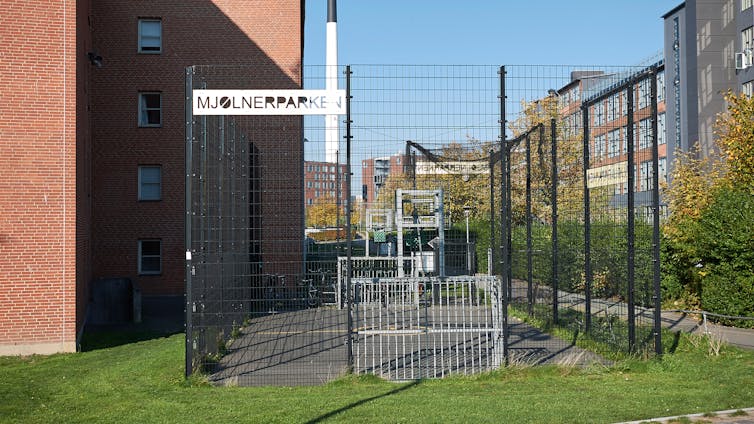
View of Superkilen park
Mjølnerparken in Copenhagen, a public housing estate that for years appeared on Denmark’s official ‘ghetto list’. The area has since undergone extensive renovation and social interventions as part of state efforts to dismantle so-called ‘parallel societies’.
Shutterstock/simona flamigni, CC BY

In 2024, the European Court of Justice (ECJ) ruled that Denmark’s housing policy – used to reshape these districts – amounted to racial discrimination. And at the end of last year, the ECJ said the legislation may be unlawful.

As Britain’s Labour government looks to Denmark for inspiration on asylum and migration reform, it’s worth paying attention to this parallel story. Denmark’s housing and asylum systems are two sides of the same coin: both built on the idea that tighter control creates cohesion.

But the Danish experience suggests something different – that in trying to dismantle “parallel societies”, the country may be building new divisions of its own.


This article was commissioned as part of a partnership between
Videnskab.dk and The Conversation. You can read the article in Danish here.

The Conversation

Garbi Schmidt has received funding from the Carlsberg Research Foundation

ref. What the troubling use of the term ‘ghettos’ reveals about Denmark’s attitude towards immigration – https://theconversation.com/what-the-troubling-use-of-the-term-ghettos-reveals-about-denmarks-attitude-towards-immigration-268581

Four symbolic moments in Bad Bunny’s Super Bowl halftime show

Source: The Conversation – UK – By Natalia Rodríguez Vicente, Lecturer in Translation & Interpreting Studies, University of Essex

The Super Bowl halftime show is one of the most watched cultural events in the US. Every year, tens of millions of viewers tune in, many of them less for the sport than for the spectacle. That reach makes halftime a rare moment in which ideas about national identity and belonging are staged for a global audience.

At the 2026 Super Bowl in Santa Clara, Puerto Rican artist Bad Bunny delivered a halftime performance almost entirely in Spanish and packed with carefully staged symbolism. To understand what the show was communicating, it helps to look closely at four key moments.

1. Sugar cane fields

The show opened in a landscape of sugar cane fields and performers dressed as jíbaros (rural farmers) wearing traditional pava hats. These elements nod to the island’s agricultural roots and carry deep historical and cultural weight, as sugar cane points directly to the plantation economy, first under Spanish colonial rule and later reorganised under US governance.

2. Ricky Martin and Lo Que Le Pasó a Hawái

Ricky Martin is a Puerto Rican singer best known internationally for hits like Livin’ la Vida Loca. Instead of performing one of his global anthems, he sang an excerpt from Bad Bunny’s song Lo Que Le Pasó a Hawái, which frames Hawaii as a cautionary tale for Puerto Rico, warning against the consequences of over-tourism and gentrification:

Quieren quitarme el río
Y también la playa.
Quieren el barrio mío
Y que abuelita se vaya.

No, no suelte’ la bandera
ni olvide’ el lelolai.
Que no quiero que hagan contigo
lo que le pasó a Hawái.

They want to take my river,
and want the beach as well.
They want my neighbourhood,
and want Grandma gone.

No, don’t let go of the flag,
and don’t forget the lelolai.
As I don’t want them to do to you
what they did to Hawaiʻi.

The lyrics trace loss as a gradual process that begins with land and natural resources (“the river” and “the beach”), then moves inward to community space (“my neighbourhood”), family continuity (“grandma”), and cultural memory itself (“lelolai”, a traditional refrain), urging listeners not to “let go of the flag”, as a symbol of identity.

3. Electricity poles sparking

The staging of jíbaros climbing sparking electricity poles, suggesting overload and failure, during El Apagón, Bad Bunny’s protest song about chronic power outages on the island, can be read as a visual reference to Puerto Rico’s fragile power grid following Hurricane Maria.

According to the latest data from the US Energy Information Administration, Puerto Rico experienced an average of around 27 hours of power outages per year between 2021 and 2024. By contrast, customers in the mainland US typically had about two hours of outages per year. The poles thus functioned as signs of uneven material conditions.

4. A continental roll call after God Bless America

The performance closed with Bad Bunny saying: “God Bless America” followed by a roll call of countries across South, Central and North America, as well as parts of the Caribbean. The sequence challenged a familiar assumption about who counts as “America”. In everyday US English, America is often used as shorthand for the United States as in Donald Trump’s slogan “Make America Great Again.” Across much of Latin America, América refers to the continent.

Why the symbolism matters

These four moments form one narrative: the sugar cane fields root the performance in Puerto Rico’s colonial history. Ricky Martin’s lyrics name the risk of cultural erasure. The electricity poles tie questions of identity to material inequality. Finally, the roll call after God Bless America expands the frame outward, celebrating the continent as a shared, plural space.

The show has provoked strong reactions, including Donald Trump dismissing it as “absolutely terrible, one of the worst, ever”.

On the biggest stage in US popular culture, the performance pushed Latin visibility at the highest mainstream level. Against the scale of the spectacle, and the controversy it provoked, a message glowed quietly in the background: “The only thing more powerful than hate is love.”


Looking for something good? Cut through the noise with a carefully curated selection of the latest releases, live events and exhibitions, straight to your inbox every fortnight, on Fridays. Sign up here.


The Conversation

Natalia Rodríguez Vicente does not work for, consult, own shares in or receive funding from any company or organisation that would benefit from this article, and has disclosed no relevant affiliations beyond their academic appointment.

ref. Four symbolic moments in Bad Bunny’s Super Bowl halftime show – https://theconversation.com/four-symbolic-moments-in-bad-bunnys-super-bowl-halftime-show-275527

Mandelson and the financial crash: why the Epstein allegations are so shocking

Source: The Conversation – UK – By Stephen Barber, Professor of Global Affairs, University of East London

Suggestions that Peter Mandelson may have shared government information with Jeffrey Epstein amid the fallout of the global financial crisis are being investigated by police.

Emails between Mandelson and the disgraced financier, released by the US Department of Justice, are said to include market-sensitive details. This was at a time when Mandelson was in government and ministers around him were scrambling to keep the UK economy afloat.

Now, the 2008 global financial crisis belongs to a different political generation, with almost all of the leading players having left the world stage. But the ripple effect of the credit crunch can still be felt in our politics and in our pockets.

This surely makes the allegations against Mandelson, some of which date to his time as UK business secretary, even more awful. The anaemic UK economy, its weakened public finances and the divisive nature of UK politics can all trace their ways back to the crisis.

This catastrophic event, where developed economies were brought to the brink of collapse, came at the end of a long period of prosperity. It put paid to a belief, embraced by Gordon Brown when he was chancellor, that the UK had achieved a “Goldilocks economy” – not too hot and not too cold. This was supposedly a triumphant end to the boom and bust of the past.

For a time it worked. Britain experienced 16 years of quarter-on-quarter economic growth, emerging from the aftermath of “Black Wednesday” in 1992 when sterling fell out of the European Exchange Rate Mechanism.

The cracks first started to appear in 2007 as US lenders specialising in sub-prime mortgages (typically sold to high-risk borrowers) started to collapse. This was at the heart of what would become a global catastrophe. To meet market demand, lenders bundled together thousands of everyday home loans into “mortgage-backed securities”. These were then sold as low-risk debt to investors.

You can see the attraction: safe and steady repayments over the long term, underpinned by bricks and mortar. Only it was a deception, because that debt was not all safe. As house prices kept rising, banks increasingly agreed loans with customers who did not have the capacity to repay them. And the loans were made against property that had been overvalued.

Then the housing market weakened. Credit markets seized up, since holders of securitised debt found they couldn’t unwind their positions (put simply, they were unable to sell them on) – it was impossible to tell which parts of their holdings were sound and which were toxic. The result was that institutions stopped lending, interest rates on corporate borrowing jumped, investment ground to a near halt and stock markets plummeted.

Banks, big as well as small, started to fail. While the collapse of US giant Lehman Brothers in September 2008 marked the start of the global crisis, in the UK it was the liquidity emergency of Northern Rock that brought things into focus. Savers, having lost confidence, queued up outside branches in September 2007 to withdraw their money, marking the first run on a UK bank since the 19th century. But worse still, banks had lost trust in each other.

The world watched in real time in September 2008 as Lehman Brothers collapsed.

Banks are not just any business; they are the arteries of a functioning economy. Policymakers around the world judged that these banks were simply too big to fail. Governments responded with unprecedented interventions, including bank rescues, capital injections, fiscal stimulus and major regulatory reforms.

In Britain, this included nationalising Northern Rock in February 2008, recapitalising Royal Bank of Scotland and Lloyds, and launching wide-ranging guarantee and liquidity schemes. It meant containing the crisis, recapitalising the system, and restructuring the sector – all paid for by government borrowing.

In December 2008, Brown – by now prime minister – claimed he had “saved the world”. But what followed was the longest and deepest recession since the Great Depression of the 1930s. And that sharp downturn, in contrast to the previous decade, hit the young and the unskilled hardest as unemployment rose. For those in work, pay growth stalled.

It was during this period that Mandelson is suspected of sharing sensitive government information with Epstein. In June 2009, an email appears to show the then-business secretary forwarding details of proposals to sell off UK government assets to raise money for the public purse.

The crisis had blown a hole in the UK’s public finances as the Treasury grappled with falling tax receipts and increased demands on spending on public services and welfare. Added to this, bank rescues had of course piled up public debt.

Meanwhile, other emails in late 2009 appear to show Mandelson and Epstein discussing ways to push back against UK government plans for a “supertax” on bankers’ bonuses. These proposals were a bid to recoup some of the public money pumped into the sector.

For all the successes, perhaps the “Goldilocks economy” wasn’t entirely built on responsible policymaking. While inflation targets were hit, Bank of England experts had all but failed to notice the massive asset bubble. And then there were the “light-touch” banking controls, which even the regulator blamed for its failure to spot the storm brewing.

The long tail of the crisis

While economies eventually stabilised, not least because of Brown’s leadership and that of the subsequent coalition government, the consequences of the crisis play out to this day. In contrast to the optimism of the previous period, the years since the financial crisis have seen weak economic output, derisory productivity growth as well as slow improvements in pay.

Those were the years of austerity policies, with increasing distrust of institutions and a backlash against “elites”. All of this fuelled populism on the left and right.

Many felt left behind by the globalisation that had driven the economy from the mid-1990s, or were hit hard as low-skilled work became more precarious and public services squeezed, or felt taken for granted by the political class. When it came to their vote, Brexit was an opportunity to express their frustration and disrupt a system that they no longer believed worked for them.

And so it is impossible to understand the fractious nature of politics today, or the relatively feeble state of the UK economy, without understanding the huge challenge that the financial crisis posed to a generation of politicians. Although Mandelson is understood to deny any criminality, his alleged betrayal came at the peak of this jeopardy. We are all still paying the cost of bringing the global economy back from the brink.

The Conversation

Stephen Barber does not work for, consult, own shares in or receive funding from any company or organisation that would benefit from this article, and has disclosed no relevant affiliations beyond their academic appointment.

ref. Mandelson and the financial crash: why the Epstein allegations are so shocking – https://theconversation.com/mandelson-and-the-financial-crash-why-the-epstein-allegations-are-so-shocking-275272

Fantasy writer Brandon Sanderson has retained rare control over screen adaptations of his Cosmere universe

Source: The Conversation – UK – By Cassie Brummitt, Assistant Professor in Film and Television Studies, University of Nottingham

Have you heard of the writer Brandon Sanderson? If you’ve not, you’re sure to soon as a major deal with AppleTV signals that his writing could be a big new fantasy franchise that everyone will be talking about.

Sanderson is best known for his expansive literary universe, the Cosmere, with books set on various planets that manifest different but interconnected forms of magic. What’s so significant about this AppleTV deal is that Sanderson will possess remarkable control over the production of adaptations of his entire back catalogue. Crucially, it has been reported that he will have approval over any decisions, enabling him to oversee projects as writer, consultant and producer.

It’s a level of creative control over the adaptation process from page to screen which has been described as unprecedented for an author.

Writers are often wheeled out when promoting an adaptation to reassure audiences of how “faithful” it is or to show support for any changes to the source material. But it’s not particularly common for an author to wield significant creative authority over the production process itself, especially for big-budget franchises.

In my book on the Harry Potter franchise I explore, for example, how JK Rowling’s approval (and supposed influence) was frequently invoked in promotion for Harry Potter films to build prestige for the franchise. But, it wasn’t until the Fantastic Beasts series (2016-22) that she actually received a production credit as screenwriter.

There are some exceptions. George RR Martin contributed to script-writing, casting and production in the first few seasons of the Game of Thrones TV show, an adaptation of his novel series A Song of Ice and Fire. Martin has since acknowledged, however, that he had “less and less influence” over the TV show as it progressed, with similar breakdowns in communication during the adaptation of prequel series House of the Dragon.

Authors also sometimes write their own adapted screenplays. Gillian Flynn, for example, wrote both the novel Gone Girl and the screenplay for its film adaptation. Emma Donoghue won a best adapted screenplay Oscar for her work adapting her novel Room.

This process, called “self-adaptation”, has a long history in media and entertainment, even going back to Charles Dickens who adapted his works into stage plays. But authors may, of course, have strong opinions about how their work is adapted or have differing priorities to studio executives. Right now, when big-budget franchise instalments are expected to make hundreds of millions and hopefully attain long-term popularity, it’s a risky strategy to give creative control of a budding franchise to an author.

But that is exactly what’s happened with Sanderson. His literary properties are no doubt attractive to studio heads, having sold more than 50 million copies worldwide and slotting into the science fiction and fantasy niche carved out by mega-franchises like the MCU (Marvel Comic Universe), Game of Thrones and Harry Potter.

He’s also famously productive – publishing more than 50 novels in the last 20 years – which reduces the risk of acquiring a literary property whose overall narrative will never been concluded, something HBO had to navigate with the Game of Thrones TV show. The appeal for AppleTV is also clear, given its strategy to adapt genre fiction such as Foundation, Silo and Murderbot.

But how and why has Sanderson managed to retain so much creative control? I think the key lies in his commercial approach.

Sanderson established his own publishing and entertainment company, Dragonsteel Books, in 2012. As an online storefront it sells merchandise from special-edition books to board games to t-shirts. In 2020, it was reported he raised a record-breaking £30 million through Dragonsteel Books, using Kickstarter to self-publish four “secret projects” he had written during the COVID pandemic.

Since 2021, Dragonsteel Books organises a yearly Brandon Sanderson fan convention. And, in 2024, Sanderson announced that his company had purchased land to build “Dragonsteel Plaza”, which is expected to contain a bookstore, creative hub and company headquarters.

Sanderson challenges our cultural idea of the author as a creative genius who shuns commercial activity: he actively embraces it. He demonstrates the kind of attitude that aligns with the priorities of a global megacorporation such as AppleTV that is looking for ambitious large-scale franchises to launch.

With his Mistborn series touted for film and Stormlight Archive for television, it remains to be seen what Sanderson’s creative direction will look like. But what’s clear is the benefit of Sanderson’s collaboration for AppleTV: a creative figurehead and a commercially strategic ally for a fledgling franchise that has incredible potential for longevity.


Looking for something good? Cut through the noise with a carefully curated selection of the latest releases, live events and exhibitions, straight to your inbox every fortnight, on Fridays. Sign up here.


The Conversation

Cassie Brummitt does not work for, consult, own shares in or receive funding from any company or organisation that would benefit from this article, and has disclosed no relevant affiliations beyond their academic appointment.

ref. Fantasy writer Brandon Sanderson has retained rare control over screen adaptations of his Cosmere universe – https://theconversation.com/fantasy-writer-brandon-sanderson-has-retained-rare-control-over-screen-adaptations-of-his-cosmere-universe-275251

Beckham v Peltz: why families fall out, and how to deal with estrangement

Source: The Conversation – UK – By Paul Jones, Associate Dean for Education and Student Experience at Aston Business School, Aston University

It is tempting to treat the fallout between Brooklyn Beckham and his A-list parents as mere celebrity gossip. But this story has struck a chord with many families because it disrupts a comforting assumption: that strong bonds, shared history and success protect families from fracture.

The breakdown of even highly visible, seemingly close families raises an uncomfortable question. Why do family relationships, often our longest lasting and most emotionally charged connections, sometimes become so strained that contact is reduced or cut off entirely?

Answering that requires a look at the relational dynamics that shape many families. Family rupture is not an anomaly confined to extreme circumstances or public families under scrutiny. It is part of everyday life for many people.

Large population surveys suggest that around one in four adults are estranged from at least one family member at any given point in time. This may involve a parent, sibling, child or other close relative.

When research focuses specifically on parent–child relationships, roughly one in ten adults report estrangement from a parent or child, with some differences between mothers and fathers. Across studies, estrangement from parents tends to begin in early adulthood, often during the early to mid-20s.

Conflict with family members can often feel more painful and enduring than other relationship breakdowns. The reason why has to do with identity and belonging. From early childhood, family relationships shape how we understand ourselves. In Brooklyn Beckham’s case, his public statements hint at this tension.

Growing up in a highly visible family meant that, for him, roles, expectations and identities were formed under constant public scrutiny. As adulthood brings new partnerships and a desire for autonomy, those early roles can become harder to inhabit, particularly when private family dynamics are played out in public.

Roles, expectations and emotional patterns become deeply embedded over time. When conflict emerges, it rarely challenges behaviour alone. It threatens how we see ourselves in relation to people who have known us longest.

When conflict becomes estrangement

Conflict escalation often follows predictable psychological patterns. Minor disagreements take on symbolic meaning. Old grievances resurface. People move from addressing an issue to defending their identity, values or sense of worth. Once this shift occurs, emotional responses intensify, positions harden and resolution becomes much harder to achieve.

Estrangement, then, is rarely about a single argument. It reflects accumulated disconnection, unmet expectations and unresolved emotional histories that have built up over years.

Research in psychology and family studies consistently highlights a few recurring and interacting dynamics. Over time, people can find themselves locked into family roles that no longer fit, particularly if they feel persistently misunderstood or undervalued. What once felt like shared history can begin to feel restrictive rather than supportive.

At the same time, criticism or dismissal within families is often experienced as an attack on core self-beliefs, not simply a disagreement. When repeated attempts to explain or resolve these tensions fail, many people turn to avoidance or emotional distance as a form of self-protection. Silence, while painful, can feel safer than continued conflict.

None of these dynamics are unique to celebrity families. Seeing them play out publicly simply makes visible what many families manage quietly behind closed doors.

How to cope

Popular advice about family conflict tends to emphasise openness and communication. While well-intentioned, suggestions to “just talk it out” often fail because they ignore emotional safety, timing and boundaries. Conversations entered without shared readiness or clear intent can easily reopen old wounds.

Psychological research points to more realistic approaches.

1. Separate repair from reconciliation

Repair may involve greater understanding or boundary setting rather than restoring closeness. Reconciliation is not always possible or healthy.

2. Manage expectations

Accepting that some conflicts reflect fundamental value differences rather than misunderstandings can reduce guilt and self-blame.

3. Protect wellbeing

Prolonged family conflict is associated with stress, anxiety and poorer mental health. Seeking external support is not a sign of disloyalty but of self-care.

Estrangement is also rarely static. Many relationships fluctuate over time. Some reconnect after years or decades, while others remain distant but emotionally resolved.

Family rifts feel particularly unsettling because they collide with powerful cultural myths. In many western cultures, family life is still framed through powerful ideals of unconditional love, permanence and harmony. These narratives are reinforced through media, popular psychology and social expectations, leaving little room to acknowledge conflict, distance or estrangement as ordinary parts of relational life. When reality fails to match that ideal, people often carry shame alongside grief.

Recognising how common family estrangement is, and understanding the psychological dynamics behind it, helps shift the conversation away from blame. It allows space for compassion, boundaries and healthier coping.

The Beckhams’ situation serves as a reminder of something deeply ordinary. Families are complex systems shaped by history, identity and meaning. Sometimes that complexity holds. Sometimes it fractures. And when it does, the experience is painful, but far from unique.

The Conversation

Paul Jones does not work for, consult, own shares in or receive funding from any company or organisation that would benefit from this article, and has disclosed no relevant affiliations beyond their academic appointment.

ref. Beckham v Peltz: why families fall out, and how to deal with estrangement – https://theconversation.com/beckham-v-peltz-why-families-fall-out-and-how-to-deal-with-estrangement-274887

Why ‘superbugs’ thrive in hospitals

Source: The Conversation – UK – By Manal Mohammed, Senior Lecturer, Medical Microbiology, University of Westminster

Jason Grant/Shutterstock

Police Scotland has launched an investigation into the deaths of six patients, including adults and children, believed to have contracted fatal infections at the Queen Elizabeth University Hospital in Glasgow.

The inquiry follows a long-running controversy over hospital-acquired infections at the site, with concerns raised by families and clinicians about water contamination, ventilation systems and wider environmental safety within the hospital.

The hospital has been under scrutiny for several years after campaigners raised questions about possible links between infections and environmental factors within the building. The investigation will examine whether any such factors contributed to the deaths.

Modern hospitals are generally safe places to receive care. But infections remain a risk wherever large numbers of vulnerable patients receive complex treatment.

Hospital-acquired infections (HAIs), also known as nosocomial (meaning originating in hospital) or healthcare-associated infections, are infections patients contract during or after receiving treatment in healthcare settings that were not present when they were admitted.

These infections can occur not only in hospitals, but also in nursing homes, rehabilitation centres, outpatient clinics and dialysis units. They represent a persistent and serious threat to patient safety worldwide. Patients may develop bloodstream infections from contaminated intravenous lines or severe diarrhoeal illness after exposure to resistant bacteria on hospital wards.

Hospital-acquired infections are among the most common adverse events in healthcare globally. They can lead to longer hospital stays, higher costs, disability and death. Across the European Union and European Economic Area combined, surveillance data suggest more than four million patients are affected each year. In the UK, healthcare-associated infections affect hundreds of thousands of people annually and remain a major patient safety concern.

Most hospital-acquired infections are treatable. However, they can become life-threatening when they lead to bloodstream infection or sepsis or occur in already vulnerable patients. Many involve microbes that no longer respond to standard antibiotics.


Read more:
Sepsis: why this deadly condition is so hard to diagnose


These infections are especially dangerous for people with weakened immune systems, including older adults, newborn babies and patients undergoing surgery or intensive treatments. Healthcare workers are also at risk because of repeated exposure to infectious patients and contaminated environments.

Causes of HAIs

Hospital-acquired infections can be caused by many microbes, including bacteria, fungi and viruses.

One well-known bacterium is Staphylococcus aureus, which often lives harmlessly on the skin or in the nose but can cause serious infection if it enters the body. A particularly problematic strain is methicillin-resistant S. aureus (MRSA), which has evolved resistance to several commonly used antibiotics.


Read more:
Golden staph: the deadly bug that wreaks havoc in hospitals


Another major cause is Clostridioides difficile, which can trigger severe diarrhoea and inflammation of the colon, particularly after antibiotic use disrupts normal gut bacteria. These pathogens have been major concerns for decades because they resist treatment and spread easily in healthcare settings.

Other emerging threats include carbapenem-resistant Enterobacteriaceae, gut bacteria resistant to carbapenems, a class of last-resort antibiotics. These gram-negative bacteria have a cell wall structure that makes them naturally more resistant to many antibiotics and harder to treat. They frequently cause bloodstream infections and urinary tract infections in hospitals.

A growing fungal threat is Candidozyma auris, a drug-resistant yeast that has caused outbreaks worldwide and can survive for long periods on surfaces.

Viruses also play a role. Respiratory viruses such as coronavirus, influenza, respiratory syncytial virus and human metapneumovirus can spread rapidly in wards. Norovirus frequently causes outbreaks of vomiting and diarrhoea because it spreads easily and survives well on surfaces.


Read more:
Norovirus: what to know about this bug as northern hemisphere countries face outbreaks


Bloodborne viruses such as hepatitis B, hepatitis C and HIV can spread through contaminated needles, blood products or failures in infection control. Other viruses, including varicella-zoster and measles, have also caused hospital outbreaks.

Hospital-acquired infections spread through multiple routes. Direct contact between patients and healthcare workers is common, as is transmission via contaminated equipment or surfaces when cleaning is inadequate.

movie>

Environmental sources can contribute. Hospital water systems have been linked to outbreaks in some investigations. Surfaces and medical devices such as catheters and ventilators can harbour microbes if not properly sterilised. Research also highlights less obvious routes, including insects carrying resistant bacteria.

Antimicrobial resistance

One of the biggest challenges in tackling hospital-acquired infections is antimicrobial resistance. This occurs when microbes evolve so that medicines designed to kill them become less effective.

Hospitals use large quantities of antibiotics, creating pressure for microbes to develop resistance. Over time this can lead to superbugs that spread quickly, including among frontline healthcare workers. Clear communication about risk and prevention is essential.

Global surveillance indicates that antibiotic-resistant infections in healthcare settings are rising sharply.

Hospital-acquired infections can be fatal, particularly when they lead to bloodstream infection or sepsis. In 2019, antimicrobial resistance was directly responsible for an estimated 1.27 million deaths worldwide.

Outbreaks occur when infection rates rise above expected levels and may begin with a single infected patient, contaminated equipment or environmental sources. Once established, infections can spread quickly between wards.

Preventing hospital-acquired infections requires strict hygiene, sterilisation, environmental cleaning and responsible antibiotic use. Surveillance systems and rapid responses help contain outbreaks early. Improved ventilation, antimicrobial materials and better hospital design may also reduce transmission.

Hospital-acquired infections remain a major global public health challenge because they occur in places meant to heal. No one should enter hospital for treatment and leave with a preventable infection.

The Conversation

Manal Mohammed does not work for, consult, own shares in or receive funding from any company or organisation that would benefit from this article, and has disclosed no relevant affiliations beyond their academic appointment.

ref. Why ‘superbugs’ thrive in hospitals – https://theconversation.com/why-superbugs-thrive-in-hospitals-274414

Pink noise: what is it and can listening to it make your sleep worse?

Source: The Conversation – UK – By Robert MacKinnon, Clinical Scientist and Deputy Head of School for Psychology, Sports and Sensory Sciences, Anglia Ruskin University

Sorapop Udomsri/Shutterstock

Are you one of those people who can’t drop off to sleep if it’s “too quiet”? If so, you’re not alone. According to a 2023 survey of UK participants, 50% of people listen to some kind of noise to help fall asleep.

Many people have turned to pink, white or brown noise to help them drift off. But a new study has found listening to pink noise, an alternative to white noise, even to drown out irritating background sounds, can disrupt the quality of sleep you get.

What is pink noise?

Not all noises are equal though when it comes to sleep. Noises range from structured sound like music and speech, with patterns and meaning, through to others that have some arrangement and perhaps calming effect, like birdsong, ocean waves or wind chimes to noise with no order at all.

We can describe sounds by how much energy each frequency of the sound has. White noise is a totally random sound. Each different frequency in white noise has the same energy, so it sounds like a hissy continuous sound. A 2017 study found white noise seems to help some people concentrate.

Pink noise is different. Instead of equal energy at each frequency, the energy halves with every doubling of frequency (so 500Hz has twice the energy of 1000Hz). This mimics a lot of sounds in nature (like running water) and gives a deeper, more rumbly sound. It sounds less harsh than white noise.

You can also get brown noise – stop laughing – which is named after 18th-century scientist Robert Brown rather than anything bowel related. It is sometimes referred to as red noise instead. Higher frequencies have less energy
(500Hz has four times the energy of 1000Hz). It is even more bass-heavy than pink noise, sounding like heavy rain or a roaring waterfall.

What did the study find?

The new study by the University of Pennsylvania, sponsored by the US Federal Aviation Authority, compared the affect of pink noise and earplugs upon participants’ sleep when intermittent noise of planes flying overhead was played over a loudspeaker.

The control condition here was a noise-free night where the participants were monitored, but were not having their sleep interrupted. The researchers then tested the same participants under different conditions on different nights of their stay during the experiment. They measured brain activity, heart rate and muscle activity while participants slept, which allowed them to analyse the different stages of sleep.

The researchers first looked at how pink noise affected participants’ sleep when there was no other background noise and compared the effect to the control night. They found that pink noise led to a reduction of the amount of participants’ rapid eye movement (REM) sleep, which should make up about a quarter of our sleep. REM sleep isn’t considered a restful type of sleep but it is the sleep state in which we dream. REM is important for memory formation, brain plasticity and emotion regulation, particularly for children.

In the next phase of the experiment, they found that the environmental noise, by contrast, reduced the amount of so-called N3 sleep compared to the control night. This is the deepest non-REM type of sleep. It is where the body grows and repairs itself, and about a quarter of sleep should normally be of this type too.

The researchers then tried to block the environmental noise. When they used earplugs to see if they would help participants’ sleep, they worked well, restoring about three quarters of the lost N3 sleep. When they tried pink noise to see if it could help, they found that it actually made the sleep structure worse, reducing both N3 and REM sleep.

So is silence best?

Perhaps, and especially for babies and toddlers whose brains are still undergoing the most change and development. For adults though, there does seem to be some suggestion playing nighttime sounds helps. A 2022 review found that there was widespread, but low-quality, evidence that sounds at night time (especially pink noise) helps with the amount of sleep people get and also that people felt that it was better quality sleep. This was self-reported, rather than measured using equipment like in the new study from Pennsylvania, which might help to explain the different findings.

Other things may stop you getting to sleep. Many people experience tinnitus, a ringing or buzzing sound in the head or ears, which can be worst before bed and affect sleep quality. A silent room can make it seem even louder. Some people find a background sound, whether a “colour” of noise, nature sound, music or a podcast, helpful here to get to sleep. Being able to pick which “colour” of random sound you prefer has been shown to help people with tinnitus.

However, there are reports of potential harm from using any of these “random” sounds to help with tinnitus instead of more patterned noise like music or speech. This is because the random sounds can show the same kind of effect as ageing does on the brain. How this works, whether potential noise-induced hearing loss acts as an step in the chain, and how broadly it happens, remain areas of investigation.

So it’s not quite time to put the story of sleep quality and noise to bed just yet. In the meantime, trying some earplugs if there is unwanted sound, or keeping any noises calm, not too loud and relaxing for you may be the best bet for a good night’s sleep.

The Conversation

Robert MacKinnon does not work for, consult, own shares in or receive funding from any company or organisation that would benefit from this article, and has disclosed no relevant affiliations beyond their academic appointment.

ref. Pink noise: what is it and can listening to it make your sleep worse? – https://theconversation.com/pink-noise-what-is-it-and-can-listening-to-it-make-your-sleep-worse-275179

Why mid-career is such a dangerous time for burnout and workplace stress

Source: The Conversation – UK – By Katie Green, Senior Lecturer in Leadership and Leadership Development, Manchester Metropolitan University

Elnur/Shutterstock

Everyone recognises the trope of the stressed-out senior manager who’s always close to breaking point. But, in fact, mid-career is one of the most vulnerable periods for burnout and stress in a worker’s life. At this stage, many people have extra responsibilities outside work at the same time as their employer increases expectations around performance, availability and leadership.

Mid-career is often where this double load increases the risk of burnout. Research has found that these professionals experienced particularly high levels of burnout, worked longer hours and reported lower job satisfaction compared to other age groups. A key driver was the ongoing tension between meeting the demands of their job and maintaining a work–life balance.

Importantly, burnout is now widely recognised not as an individual failing, but as a workplace problem. The condition is characterised by emotional exhaustion, cynicism and lower productivity, with research showing that it is shaped primarily by organisational structures, cultures and leadership practices rather than a worker’s weakness or a lack of coping skills.

Burnout does not affect all groups equally. Women, for example, report higher levels of both personal and work-related burnout than men, particularly in mid-career. This could reflect women taking on more of a family’s caring responsibilities as well as expectations about availability and emotional labour.

The COVID pandemic intensified these dynamics. Many mid-career professionals had to juggle work and family responsibilities at the same time as their social interactions were curtailed and their workloads and working hours stretched. Since the height of the pandemic, all sectors and roles have seen increases in burnout rates, with health and social care organisations being hit particularly hard.

Absorbing the pressure

Stress and burnout come at a cost to employers through lost working days, absenteeism and “leavism” (people working while on leave). Mid-career professionals are especially exposed because they are often expected to absorb pressure without showing strain. This could be, for instance, leading a team through organisational change at the same time as meeting their own performance targets and supporting junior colleagues.

In many organisations, chronic overload and constant busyness are normalised and even rewarded. Permanent availability becomes a marker of competence rather than a warning sign.

Despite this, there remains an assumption that mid-career professionals are inherently resilient. However, prolonged exposure to high levels of stress can make them less resilient. Experience does not necessarily protect against burnout; in many cases it just conceals it.

Symptoms such as fatigue, insomnia and anxiety are frequently minimised or ignored until stress reaches a breaking point. Those known for their ability to “power through” often suppress warning signs to maintain a professional identity. These workers often delay asking for help, in part because things commonly associated with burnout (long hours, constant responsiveness and chronic overwork, for example) are often normalised.

While short-term stress can sometimes enhance performance, so-called “good stress” sits close to a tipping point. When pressure becomes chronic and recovery time is limited or absent, stress becomes a direct pathway to burnout.

My research looking at line managers’ development highlights these risks. Middle leaders and mid-career professionals were consistently described as overloaded and under-trained for their management responsibilities. Many had entered leadership roles with little or no formal preparation, and had to learn how to manage people on the job.

Promotions often brought significant increases in responsibility without corresponding investment in training. And where there were opportunities for development, they were frequently ad hoc and inconsistent. This combination fuelled anxiety and self-doubt – well-established precursors to burnout.

group of five professionals sitting around a table talking
Being under-prepared for taking on management duties can fuel the risk of burnout.
fizkes/Shutterstock

As part of the project, we interviewed more than 150 line managers from both the public and private sectors. Our findings strongly suggest that burnout is shaped by workplace systems, norms and expectations. Organisational practices and processes, along with culture and leadership patterns, play an important role. Unrealistic targets, excessive monitoring and a culture of long hours amplify stress. And leadership practices that prioritise constant performance pressure actively increase burnout risk.

Work climate matters more than hours alone – risk factors include bullying, sexual harassment and toxic leadership styles. Notably, burnout is closely linked to engagement from leaders, or the absence of it. For example, one study found that mid-career professionals, particularly women, suffer burnout when their effort goes unrecognised by managers.

Leaders who listen, acknowledge effort and offer recognition can significantly reduce the risk of burnout. Essentially, feeling that your work matters and is valued makes a measurable difference.

Leaders can design work for sustainability rather than endurance. This includes making sure workloads and targets are realistic, as well as stamping out cultures where constant availability is prized.

Mid-career leadership roles must be properly supported, and workers should be given protected time for training and development rather than being expected to learn through trial and error. Their managers should try to create a safe environment – listening seriously, responding early to concerns and intervening before stress escalates into burnout.

Finally, strong team working and a sense of community at work provide meaning that buffers against burnout. In mid-career, when pressures converge from multiple directions, connection is not a luxury but a necessity. The importance of joy at work is often overlooked. Opportunities to create meaning, connection and enjoyment are not indulgent extras; they protect against chronic stress and burnout.

The Conversation

Katie Green does not work for, consult, own shares in or receive funding from any company or organisation that would benefit from this article, and has disclosed no relevant affiliations beyond their academic appointment.

ref. Why mid-career is such a dangerous time for burnout and workplace stress – https://theconversation.com/why-mid-career-is-such-a-dangerous-time-for-burnout-and-workplace-stress-275358

China is losing ground in Latin America

Source: The Conversation – UK – By Amalendu Misra, Professor of International Politics, Lancaster University

Panama’s supreme court invalidated a contract in late January that had allowed Panama Ports Company, a subsidiary of Hong Kong-based firm CK Hutchison, to operate two ports on the Panama canal since 1997.

The decision, which ruled that the laws allowing the firm to operate the ports were “unconstitutional”, comes one year after the US president, Donald Trump, threatened to take control of the canal to limit Chinese influence over the waterway.

Beijing reacted to the ruling angrily, calling the judgment “absurd, shameful and pathetic”. It also said the Panamanian government will pay “a heavy political and economic price” for evicting the company from the ports. The ruling is the latest sign that China’s ambitions in the region are losing momentum.

Chinese influence in Latin America is a relatively recent phenomenon. Since 1823, when President James Monroe declared the western hemisphere closed to further European colonisation, the US has largely maintained strict control over the region’s affairs.

But that changed after the end of the cold war in 1991, with successive US administrations reducing their focus on Latin America. This allowed emerging superpowers such as China to assert their influence in the region.

China is now the top trading partner for South America and is becoming the largest for Latin America as a whole. It is also a major source of foreign direct investment and infrastructure lending for the region.

Chinese influence in what the US considers its own backyard has irked the Trump administration. Shortly after the operation to capture Venezuelan leader Nicolás Maduro in January, the US secretary of state, Marco Rubio, declared: “This is the western hemisphere. This is where we live – and we’re not going to allow the western hemisphere to be a base of operations for adversaries, competitors and rivals of the United States.”

The eviction of Panama Ports Company from the Panama canal will have been celebrated as a victory in Washington, which is looking to promote its own national interests in the region. But it is also possible that the incident could prompt countries throughout Latin America to address their reliance on China.

Over the past two decades, China has swamped countries in Latin America and the Caribbean with loans. However, unlike loans from the World Bank or International Monetary Fund that are contingent on structural and institutional reforms, Chinese loans come with few conditions attached. China generally requires governments to guarantee repayment through the future export of commodities such as oil.

At the same time, Chinese investments generally bring low environmental and labour standards. In a 2023 analysis of 14 Chinese mining, hydroelectric, fossil fuel, infrastructure and agriculture projects in Latin America, the UN Committee on Economic, Social and Cultural Rights identified patterns of serious rights abuses. These included abuses against the rights of Indigenous people, as well as the rights to health, a healthy environment, water, food and housing.

Chinese investments also tend to focus on areas that give Beijing control over a country’s critical infrastructure. For example, China controls a majority stake in the strategically important Chancay port in western Peru and Chinese firms now control approximately two-thirds of Chile’s energy distribution. Under these circumstances, reducing reliance on China is probably in the interests of many Latin American countries.

In February 2025, Panama became the first country in the region to withdraw from China’s global infrastructure and investment project, the Belt and Road Initiative. The announcement followed a visit by Rubio, drawing criticism from Chinese officials over what they saw as US attempts to “deliberately sow discord” between China and Panama.

At a press conference, the Panamanian president, José Raúl Mulino, said: “I do not know what was the intention of those who signed this agreement with China. What has it brought to Panama all these years? What are the great things that this Belt and Road Initiative has brought to the country?”

Wind turbines in the Coquimbo region of Chile.
Jose Luis Stephens / Shutterstock

China’s choices

China itself already appears to be deprioritising Latin America as an investment destination, largely due to the region’s mediocre growth trajectory and frequent delays to loan repayments. It has scaled back on sovereign loans since 2020, while Chinese investment in large-scale Latin American infrastructure projects has reduced in recent years.

And it may be in China’s interests to accelerate this trend. The US capture of Maduro demonstrates the Trump administration’s willingness to induce dramatic changes in the Latin American political environment. These changes may undermine China’s ability to extract unpaid debts from governments in the region.

For example, analysts suggest there is a risk that the new Venezuelan government will attempt to challenge the legitimacy of the roughly US$10 billion (£7.3 billion) of debt it owes to China under a legal doctrine known as “odious debt”. This arises when a government argues that debt incurred by a previous regime did not benefit the nation and is therefore unenforceable.

The future ownership of the two ports previously operated by Panama Ports Company is unclear. The firm has announced it is launching international arbitration proceedings against Panama over the contract ruling, a process that is likely to last years. But it appears the high noon of Chinese economic domination in Latin America may well be over.

The Conversation

Amalendu Misra is a recipient of British Academy and Nuffield Foundation fellowships.

ref. China is losing ground in Latin America – https://theconversation.com/china-is-losing-ground-in-latin-america-275346