Source: The Conversation – Global Perspectives – By Amelia Scott, Honorary Affiliate and Clinical Psychologist at the Woolcock Institute of Medical Research, and Macquarie University Research Fellow, Macquarie University
If you spend any time in the wellness corners of TikTok or Instagram, you’ll see claims women need one to two hours more sleep than men.
But what does the research actually say? And how does this relate to what’s going on in real life?
As we’ll see, who gets to sleep, and for how long, is a complex mix of biology, psychology and societal expectations. It also depends on how you measure sleep.
What does the evidence say?
Researchers usually measure sleep in two ways:
by asking people how much they sleep (known as self-reporting). But people are surprisingly inaccurate at estimating how much sleep they get
using objective tools, such as research-grade, wearable sleep trackers or the gold-standard polysomnography, which records brain waves, breathing and movement while you sleep during a sleep study in a lab or clinic.
Looking at the objective data, well-conducted studies usually show women sleep about 20 minutes more than men.
One global study of nearly 70,000 people who wore wearable sleep trackers found a consistent, small difference between men and women across age groups. For example, the sleep difference between men and women aged 40–44 was about 23–29 minutes.
Another large study using polysomnography found women slept about 19 minutes longer than men. In this study, women also spent more time in deep sleep: about 23% of the night compared to about 14% for men. The study also found only men’s quality of sleep declined with age.
The key caveat to these findings is that our individual sleep needs vary considerably. Women may sleep slightly more on average, just as they are slightly shorter on average. But there is no one-size-fits-all sleep duration, just as there is no universal height.
Suggesting every woman needs 20 extra minutes (let alone two hours) misses the point. It’s the same as insisting all women should be shorter than all men.
Even though women tend to sleep a little longer and deeper, they consistently report poorer sleep quality. They’re also about 40% more likely to be diagnosed with insomnia.
This mismatch between lab findings and the real world is a well-known puzzle in sleep research, and there are many reasons for it.
For instance, many research studies don’t consider mental health problems, medications, alcohol use and hormonal fluctuations. This filters out the very factors that shape sleep in the real world.
This mismatch between the lab and the bedroom also reminds us sleep doesn’t happen in a vacuum. Women’s sleep is shaped by a complex mix of biological, psychological and social factors, and this complexity is hard to capture in individual studies.
Let’s start with biology
Sleep problems begin to diverge between the sexes around puberty. They spike again during pregnancy, after birth and during perimenopause.
Fluctuating levels of ovarian hormones, particularly oestrogen and progesterone, seem to explain some of these sex differences in sleep.
For example, many girls and women report poorer sleep during the premenstrual phase just before their periods, when oestrogen and progesterone begin to fall.
Perhaps the most well-documented hormonal influence on our sleep is the decline in oestrogen during perimenopause. This is linked to increased sleep disturbances, particularly waking at 3am and struggling to get back to sleep.
Caregiving and emotional labour still fall disproportionately on women. Government data released this year suggests Australian women perform an average nine more hours of unpaid care and work each week than men.
While many women manage to put enough time aside for sleep, their opportunities for daytime rest are often scarce. This puts a lot of pressure on sleep to deliver all the restoration women need.
In my work with patients, we often untangle the threads woven into their experience of fatigue. While poor sleep is the obvious culprit, fatigue can also signal something deeper, such as underlying health issues, emotional strain, or too-high expectations of themselves. Sleep is certainly part of the picture, but it’s rarely the whole story.
For instance, rates of iron deficiency (which we know is more common in women and linked to sleep problems) are also higher in the reproductive years. This is just as many women are raising children and grappling with the “juggle” and the “mental load”.
Women in perimenopause are often navigating full-time work, teenagers, ageing parents and 3am hot flashes. These women may have adequate or even high-quality sleep (according to objective measures), but that doesn’t mean they wake feeling restored.
Most existing research also ignores gender-diverse populations. This limits our understanding of how sleep is shaped not just by biology, but by things such as identity and social context.
So where does this leave us?
While women sleep longer and better in the lab, they face more barriers to feeling rested in everyday life.
So, do women need more sleep than men? On average, yes, a little. But more importantly, women need more support and opportunity to recharge and recover across the day, and at night.
Amelia Scott is a member of the psychology education subcommittee of the Australasian Sleep Association. She receives funding from Macquarie University.
Source: The Conversation – Global Perspectives – By Garret Martin, Hurst Senior Professorial Lecturer, Co-Director Transatlantic Policy Center, American University School of International Service
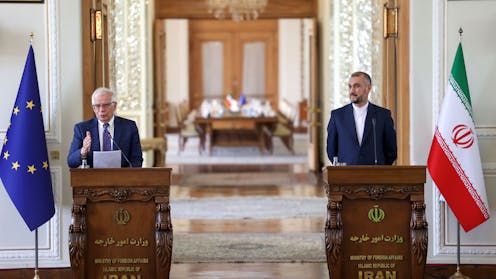
Iran Foreign Minister Hossein Amirabdollahian, right, attends a news conference with EU foreign affairs representative Josep Borrell in Tehran on June 25, 2022.Atta KenareAFP via Getty Images
The U.S. bombing of three Iranian nuclear facilities on June 22, 2025, sent shock waves around the world. It marked a dramatic reversal for the Trump administration, which had just initiated negotiations with Tehran over its nuclear program. Dispensing with diplomacy, the U.S. opted for the first time for direct military involvement in the then-ongoing Israeli-Iranian conflict.
European governments have long pushed for a diplomatic solution to Tehran’s nuclear ambitions. Yet, the reaction in the capitals of Europe to the U.S. bombing of the nuclear facilities was surprisingly subdued.
But the timid reaction also underscored Europe’s bystander role, contrasting with its past approach on that topic. Iran’s nuclear program had been a key focal point of European diplomacy for years. The E3 nations initiated negotiations with Tehran back in 2003. They also helped to facilitate the signing of the 2015 Iran nuclear deal, which also included Russia, the European Union, China, the U.S. and Iran. And the Europeans sought to preserve the agreement, even after the unilateral U.S. withdrawal in 2018 during President Donald Trump’s first term.
As a scholar of transatlantic relations and security, I believe Europe faces long odds to once again play an impactful role in strengthening the cause of nuclear nonproliferation with Iran. Indeed, contributing to a new nuclear agreement with Iran would require Europe to fix a major rift with Tehran, overcome its internal divisions over the Middle East and manage a Trump administration that seems less intent on being a reliable ally for Europe.
Growing rift between Iran and Europe
For European diplomats, the 2015 deal was built on very pragmatic assumptions. It only covered the nuclear dossier, as opposed to including other areas of contention such as human rights or Iran’s ballistic missile program. And it offered a clear bargain: In exchange for greater restrictions on its nuclear program, Iran could expect the lifting of some existing sanctions and a reintegration into the world economy.
As a result, the U.S. withdrawal from the deal in 2018 posed a fundamental challenge to the status quo. Besides exiting, the Trump White House reimposed heavy secondary sanctions on Iran, which effectively forced foreign companies to choose between investing in the U.S. and Iranian markets. European efforts to mitigate the impact of these U.S. sanctions failed, thus undermining the key benefit of the deal for Iran: helping its battered economy. It also weakened Tehran’s faith in the value of Europe as a partner, as it revealed an inability to carve real independence from the U.S.
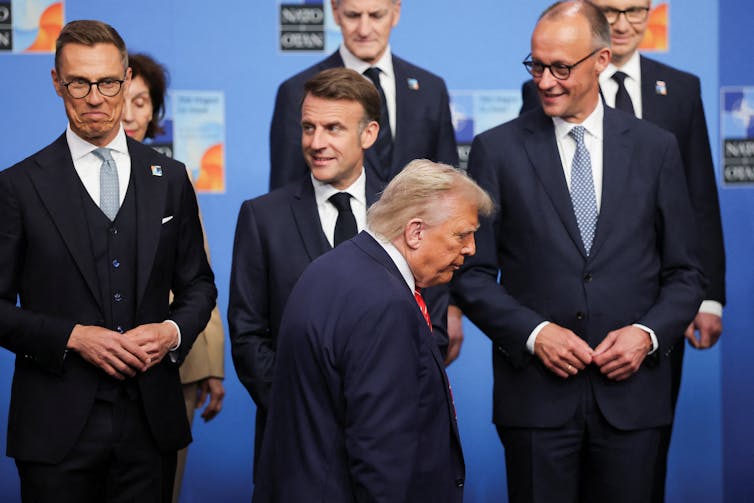
U.S. President Donald Trump walks past French President Emmanuel Macron, center, and German Chancellor Friedrich Merz, right, in The Hague, Netherlands, on June 25, 2025. Christian Hartmann/AFP via Getty Images
These deep tensions remain a significant impediment to constructive negotiations on the nuclear front. Neither side currently has much to offer to the other, nor can Europe count on any meaningful leverage to influence Iran. And Europe’s wider challenges in its Middle East policy only compound this problem.
Internal divisions
In 2015, Europe could present a united front on the Iranian nuclear deal in part because of its limited nature. But with the nonproliferation regime now in tatters amid Trump’s unilateral actions and the spread of war across the region, it is now far harder for European diplomats to put the genie back in the bottle. That is particularly true given the present fissures over increasingly divisive Middle East policy questions and the nature of EU diplomacy.
Unless Europe can develop a common approach toward the Middle East, it is hard to see it having enough regional influence to matter in future negotiations over Iran’s nuclear program. This, in turn, would also affect how it manages its crucial, but thorny, relations with the U.S.
Europe in the shadow of Trump
The EU was particularly proud of the 2015 nuclear deal because it represented a strong symbol of multilateral diplomacy. It brought together great powers in the spirit of bolstering the cause of nuclear nonproliferation.
Ten years on, the prospects of replicating such international cooperation seem rather remote. Europe’s relations with China and Russia – two key signers of the original nuclear deal – have soured dramatically in recent years. And ties with the United States under Trump have also been particularly challenging.
Dealing with Washington, in the context of the Iran nuclear program, presents a very sharp dilemma for Europe.
And pursuing an independent path could easily provoke the ire of Trump, which Europeans are keen to avoid. There has already been a long list of transatlantic disputes, whether over trade, Ukraine or defense spending. European policymakers would be understandably reticent to invest time and resources in any deal that Trump could again scuttle at a moment’s notice.
Trump, too, is scornful of what European diplomacy could achieve, declaring recently that Iran doesn’t want to talk to Europe. He has instead prioritized bilateral negotiations with Tehran. Alignment with the U.S., therefore, may not translate into any great influence. Trump’s decision to bomb Iran, after all, happened without forewarning for his allies.
Thus, Europe will continue to pay close attention to Iran’s nuclear program. But, constrained by poor relations with Tehran and its internal divisions on the Middle East, it is unlikely that it will carve out a major role on the nuclear dossier as long as Trump is in office.
Garret Martin receives funding from the European Union for the organization, the Transatlantic Policy Center, that he co-directs.
With the future of a crucial water-sharing treaty between India and Pakistan up in the air, one outside party is looking on with keen interest: China.
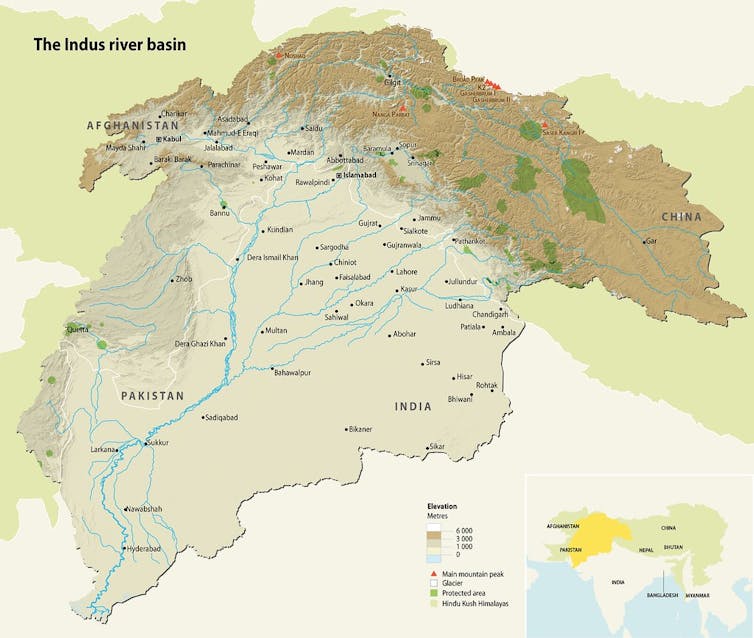
For 65 years, the Indus Waters Treaty has seen the two South Asian rivals share access and use of the Indus Basin, a vast area covered by the Indus River and its tributaries that also stretches into Afghanistan and China.
For much of that history, there has been widespread praise for the agreement as a successful demonstration of cooperation between adversarial states over a key shared resource. But experts have noted the treaty has long held the potential for conflict. Drafters failed to factor in the effects of climate change, and the Himalayan glaciers that feed the rivers are now melting at record rates, ultimately putting at risk the long-term sustainability of water supply. Meanwhile, the ongoing conflict over Kashmir, where much of the basin is situated, puts cooperation at risk.
With treaty on ice, China steps in
That latest provocation threatening the treaty was a terrorist attack in the Indian union territory of Jammu and Kashmir on April 22, 2025. In response to that attack, which India blamed on Pakistan and precipitated a four-day confrontation, New Delhi temporarily suspended the treaty.
But even before that attack, India and Pakistan had been locked in negotiation over the future of the treaty – the status of which has been in the hands of international arbitrators since 2016. In the latest development, on June 27, 2025, the Permanent Court of Arbitration issued a supplementary award in favor of Pakistan, arguing that India’s holding of the treaty in abeyance did not affect its jurisdiction over the case. Moreover, the treaty does not allow for either party to unilaterally suspend the treaty, the ruling suggested.
Amid the wrangling over the treaty’s future, Pakistan has turned to China for diplomatic and strategic support. Such support was evident during the conflict that took place following April’s terrorist attack, during which Pakistan employed Chinese-made fighter jets and other military equipment against its neighbor.
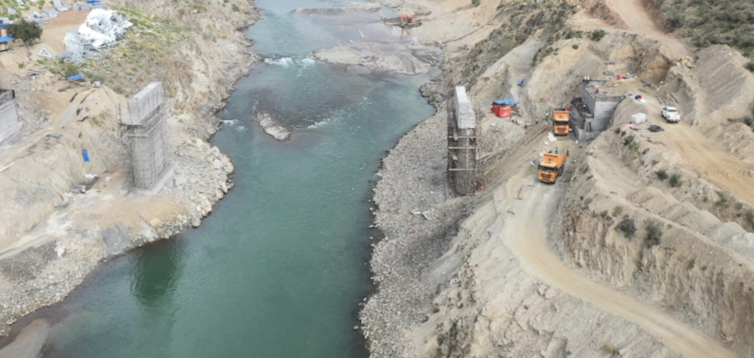
Meanwhile, in an apparent move to counter India’s suspension of the treaty, China and Pakistan have ramped up construction of a major dam project that would provide water supply and electricity to parts of Pakistan.
But as an expert in hydro politics, I believe Beijing’s involvement raises concerns: China is not a neutral observer in the dispute. Rather, Beijing has long harbored a desire to increase its influence in the region and to counter an India long seen as a rival. Given the at-times fraught relationship between China and India – the two countries went to war in 1962 and continue to engage in sporadic border skirmishes – there are concerns in New Delhi that Beijing may respond by disrupting the flow of rivers in its territory that feed into India.
In short, any intervention by Beijing over the Indus Waters Treaty risks stirring up regional tensions.
Wrangling over waters
The Indus Waters Treaty has already endured three armed conflicts between Pakistan and India, and until recently it served as an exemplar of how to forge a successful bilateral agreement between two rival neighbors.
Under the initial terms of the treaty, which each country signed in 1960, India was granted control over three eastern rivers the countries share – Ravi, Beas and Satluj – with an average annual flow of 40.4 billion cubic meters. Meanwhile, Pakistan was given access to almost 167.2 billion cubic meters of water from the western rivers – Indus, Jhelum and Chenab.
In India, the relatively smaller distribution has long been the source of contention, with many believing the treaty’s terms are overly generous to Pakistan. India’s initial demand was for 25% of the Indus waters.
For Pakistan, the terms of the division of the Indus Waters Treaty are painful because they concretized unresolved land disputes tied to the partition of India in 1947. In particular, the division of the rivers is framed within the broader political context of Kashmir. The three major rivers – Indus, Jhelum and Chenab – flow through Indian-administered Jammu and Kashmir before entering the Pakistan-controlled western part of the Kashmir region.
But the instability of the Kashmir region – disputes around the Line of Control separating the Indian- and Pakistan-controlled areas are common – underscores Pakistan’s water vulnerability.
Since Pakistan’s economy relies heavily on agriculture and the water needed to maintain agricultural land, the fate of the Indus Waters Treaty is of the utmost importance to Pakistan’s leaders.
Such conditions have driven Islamabad to be a willing partner with China in a bid to shore up its water supply.
China provides technical expertise and financial support to Pakistan for numerous hydropower projects in Pakistan, including the Diamer Bhasha Dam and Kohala Hydropower Project. These projects play a significant role in addressing Pakistan’s energy requirements and have been a key aspect of the transboundary water relationship between the two nations.
Doing so fits Beijing’ s greater strategic presence in South Asian politics. After the terrorist attack, China Foreign Minister Wang Yi reaffirmed China’s support for Pakistan, showcasing the relationship as an “all-weather strategic” partnership and referring to Pakistan as an “ironclad friend.”
And in response to India’s suspension of the treaty, China announced it was to accelerate work on the significant Mohmand hydropower project on the tributary of the Indus River in Pakistan.
Chinese investment in Pakistan’s hydropower sector presents substantial opportunities for both countries in regards to energy security and promoting economic growth.
The Indus cascade project under the China-Pakistan Economic Corridor initiative, for example, promises to provide cumulative hydropower generation capacity of around 22,000 megawatts. Yet the fact that project broke ground in Gilgit-Baltistan, a disputed area in Pakistan-controlled Kashmir, underscores the delicacy of the situation.
Beijing’s backing of Pakistan is largely motivated by a mix of economic and geopolitical interests, particularly in legitimizing the China-Pakistan Economic Corridor. But it comes at the cost of stirring up regional tensions.
As such, the alignment of Chinese and Pakistani interests in developing hydro projects can pose a further challenge to the stability of South Asia’s water-sharing agreements, especially in the Indus Basin. Recently, the chief minister of the Indian state of Arunachal Pradesh, which borders China, warned that Beijing’s hydro projects in the Western Tibet region amount to a ticking “water bomb.”
To diffuse such tensions – and to get the Indus Waters Treaty back on track – it behooves India, China and Pakistan to engage in diplomacy and dialogue. Such engagement is, I believe, essential in addressing the ongoing water-related challenges in South Asia.
Pintu Kumar Mahla is affiliated with the Water Resources Research Center, the University of Arizona. He is also a member of the International Association of Water Law (AIDA).
Pintu Kumar Mahla has not received funding related to this article.
Conflict in Syria has escalated with Israel launching bombing raids against its northern neighbour.
It follows months of fluctuating tensions in southern Syria between the Druze minority and forces aligned with the new government in Damascus. Clashes erupted in the last few days, prompting Israeli airstrikes in defence of the Druze by targeting government bases, tanks, and heavy weaponry.
a terrorist, a barbaric murderer who should be eliminated without delay.
Despite the incendiary language, a ceasefire has been reached, halting the fighting – for now.
Syrian forces have begun withdrawing heavy military equipment from the region, while Druze fighters have agreed to suspend armed resistance, allowing government troops to regain control of the main Druze city of Suwayda.
What do the Druze want?
The Druze are a small religious minority estimated at over one million people, primarily concentrated in the mountainous regions of Lebanon, Syria, Israel, and Jordan.
In Syria, their population is estimated at around 700,000 (of around 23 million total Syrian population), with the majority residing in the southern As-Suwayda Governorate – or province – which serves as their traditional stronghold.
Since the 2011 uprising against the Assad regime, the Druze have maintained a degree of autonomy, successfully defending their territory from various threats, including ISIS and other jihadist groups.
They advocate for a decentralised model that would grant greater autonomy to regional communities.
However, the transitional government in Damascus is pushing for a centralised state and seeking to reassert full control over the entire Syrian territory. This fundamental disagreement has led to periodic clashes between Druze forces and government-aligned troops.
Despite the temporary ceasefire, tensions remain high. Given the core political dispute remains unresolved, many expect renewed conflict to erupt in the near future.
Why is Israel involved?
The ousting of the Assad regime created a strategic opening for Israel to expand its influence in southern Syria. Israel’s involvement is driven by two primary concerns:
1. Securing its northern border
Israel views the power vacuum in Syria’s south as a potential threat, particularly the risk of anti-Israeli militias establishing a foothold near its northern border.
The Israeli Defence Forces will not allow a military threat to exist in southern Syria and will act against it.
Likewise, Prime Minister Benjamin Netanyahu, who has stated he will not allow Syrian forces south of Damascus:
We are acting to prevent the Syrian regime from harming them [the Druze] and to ensure the demilitarisation of the area adjacent to our border with Syria.
In line with these warnings, the Israeli Air Force has conducted extensive strikes against Syrian military infrastructure, targeting bases, aircraft, tanks, and heavy weaponry.
These operations are intended to prevent any future buildup of military capacity that could be used against Israel from the Syrian side of the border.
2. Supporting a federated Syria
Israel is backing the two prominent allied minorities in Syria — the Kurds in the northeast and the Druze in the south — in their push for a federal governance model.
A fragmented Syria, divided along ethnic and religious lines, is seen by some Israeli policymakers as a way to maintain Israeli domination in the region.
This vision is part of what some Israeli officials have referred to as a “New Middle East” — one where regional stability and normalisation emerge through reshaped borders and alliances.
Israeli Foreign Minister Gideon Sa’ar recently echoed this strategy, stating:
A single Syrian state with effective control and sovereignty over all its territory is unrealistic.
For Israel, the logical path forward is autonomy for the various minorities in Syria within a federal structure.
The United States’ role?
According to unconfirmed reports, Washington has privately urged Israel to scale back its military strikes on Syria in order to prevent further escalation and preserve regional stability.
The US is promoting increased support for Syria’s new regime in an effort to help it reassert control and stabilise the country.
There are also indications the US and its allies are encouraging the Syrian government to move toward normalisation with Israel. Reports suggest Tel Aviv has held talks with the new Sharaa-led regime about the possibility of Syria joining the Abraham Accords (diplomatic agreements between Israel and several Arab states), which the regime in Damascus appears open to.
US Special Envoy Tom Barrack has described the recent clashes as “worrisome”, calling for de-escalation and emphasising the need for
a peaceful, inclusive outcome for all stakeholders – including the Druze, Bedouin tribes, the Syrian government, and Israeli forces.
Given the deep-rooted political divisions, competing regional agendas, and unresolved demands from minority groups, the unrest in southern Syria is unlikely to end soon.
Despite another temporary ceasefire, underlying tensions remain. Further clashes are not only possible but highly probable.
Ali Mamouri does not work for, consult, own shares in or receive funding from any company or organisation that would benefit from this article, and has disclosed no relevant affiliations beyond their academic appointment.
But what makes a power “great” in the realm of international relations?
Unlike other states, great powers possess a capacity to shape not only their immediate surroundings but the global order itself – defining the rules, norms and structures that govern international politics. Historically, they have been seen as the architects of world systems, exercising influence far beyond their neighborhoods.
The notion of great powers came about to distinguish between the most and least powerful states. The concept gained currency after the 1648 Peace of Westphalia and the Congress of Vienna in 1815 – events in Europe that helped establish the notion of sovereign states and the international laws governing them.
Whereas the great powers of the previous eras – for example, the Roman Empire – sought to expand their territory at almost every turn and relied on military power to do so, the modern great power utilizes a complex tapestry of diplomatic pressure, economic leverage and the assertions of international law. The order emerging out of Westphalia enshrined the principles of national sovereignty and territorial integrity, which allowed these powers to pursue a balance of power as codified by the Congress of Vienna based on negotiation as opposed to domination.
This transformation represented a momentous development in world politics: At least some portion of the legitimacy of a state’s control was now realized through its relationships and capacity to keep the peace, rather than resting solely on its ability to use force.
From great to ‘super’
Using their material capabilities – economic strength, military might and political influence – great powers have been able to project power across multiple regions and dictate the terms of international order.
In the 19th-century Concert of Europe, the great powers – Britain, France, Austria, Prussia and Russia – collectively managed European politics, balancing power to maintain stability. Their influence extended globally through imperial expansion, trade and the establishment of norms that reflected their priorities.
During the 20th century, the Cold War brought a stark distinction between great powers and other states. The U.S. and the Soviet Union, as the era’s two “superpowers,” dominated the international system, shaping it through a rivalry that encompassed military alliances, ideological competition and economic systems. Great powers in this context were not merely powerful states but the central actors defining the structure of global politics.
Toward a multipolar world
The post-Cold War period briefly ushered in a unipolar moment, with the U.S. as the sole great power capable of shaping the international system on a global scale.
However, the emergence of new centers of power, particularly China and to a lesser extent Russia, has brought the unipolar era to a close, ushering in a multipolar world where the distinctive nature of great powers is once again reshaped.
In this system, great powers are states with the material capabilities and strategic ambition to influence the global order as a whole.
And here they differ from regional powers, whose influence is largely confined to specific areas. Nations such as Turkey, India, Australia, Brazil and Japan are influential within their neighborhoods. But they lack the global reach of the U.S. or China to fundamentally alter the international system.
Instead, the roles of these regional powers is often defined by stabilizing their regions, addressing local challenges or acting as intermediaries in great power competition.
Challenging greatness
Yet the multipolar world presents unique challenges for today’s great powers. The diffusion of power means that no single great power can dominate the system as the U.S. did in the post-Cold War unipolar era.
Instead, today’s great powers must navigate complex dynamics, balancing competition with cooperation. For instance, the rivalry between Washington and Beijing is now a defining feature of global politics, spanning trade, technology, military strategy and ideological influence. Meanwhile, Russia’s efforts to maintain its great power status have resulted in more assertive, though regionally focused, actions that nonetheless have global implications.
Great powers must also contend with the constraints of interdependence. The interconnected nature of the global economy, the proliferation of advanced technologies and the rise of transnational challenges such as climate change and pandemics limit the ability of any one great power to unilaterally dictate outcomes. This reality forces great powers to prioritize their core interests while finding ways to manage global issues through cooperation, even amid intense competition.
As the world continues to adjust to multiple centers of power, the defining feature of great powers remains an unmatched capacity to project influence globally and define the parameters of the international order.
Whether through competition, cooperation or conflict, the actions of great powers will, I believe, continue to shape the trajectory of the global system, making their distinctiveness as central players in international relations more relevant than ever.
Andrew Latham does not work for, consult, own shares in or receive funding from any company or organization that would benefit from this article, and has disclosed no relevant affiliations beyond their academic appointment.
Nigeria’s former president, Muhammadu Buhari, who died in London on 13 July aged 82, was one of two former military heads of state who were later elected as civilian presidents. Buhari was the military head of state of Nigeria from 31 December 1983 to 27 August 1985 and president from 2015 to 2023.
The other Nigerian politician to have been in both roles is former president Olusegun Obasanjo . He was a military ruler between 1976 and 1979 and elected president between 1999 and 2007.
Buhari led Nigeria cumulatively for nearly a decade. His time as military head of state was marked with a war against corruption but he couldn’t do as much during his time as president under democratic rule.
As a political scientist who once served in the Nigerian Army, I believe that former president Buhari’s government’s war on terrorism was largely underwhelming, despite promises and early gains.
In his elected role, Buhari maintained a modest personal lifestyle and upheld electoral transitions. Nevertheless his presidency was marred by economic mismanagement, a failure to implement bold structural reforms, ethnic favouritism, and an unfulfilled promise of change.
He did leave tangible infrastructural footprints, a focus on agriculture, and foundational efforts in transparency and anti-corruption.
So his mark on Nigeria’s development trajectory was mixed.
Early years
Buhari was born on 17 December 1942, to Adamu and Zulaiha Buhari in Daura, Katsina State, north-west Nigeria. He was four years old when his father died. He attended Quranic school in Katsina. He was a Fulani, one of the major ethnic nationalities in Nigeria.
After completing his schooling, Buhari joined the army in 1961. He had military training in the UK, India and the United States as well as Nigeria.
In 1975 he was appointed military governor of North Eastern State (now Borno State), after being involved in ousting Yakubu Gowon in a coup that same year. He served as governor for a year.
Buhari later became federal commissioner for petroleum resources, overseeing Nigeria’s petroleum industry under Obasanjo. Obasanjo had become head of state in 1976 when Gowon’s successor, Murtala Muhammed, was assassinated in a failed coup that year.
In September 1979, he returned to regular army duties and commanded the 3rd Armoured division based in Jos, Plateau State, north central. Nigeria’s Second Republic commenced that year after the election of Shehu Shagari as president.
The coup that truncated the Shagari government on 31 December 1983 saw the emergence of Buhari as Nigeria’s head of state.
Buhari’s junta years
Buhari headed the military government for just under two years. He was ousted in another coup on 27 August 1985.
While at the helm he vowed that the government would not tolerate kick-backs, inflation of contracts and over-invoicing of imports. Nor would it condone forgery, fraud, embezzlement, misuse and abuse of office and illegal dealings in foreign exchange and smuggling.
Eighteen state governors were tried by military tribunals. Some of the accused received lengthy prison sentences, while others were acquitted or had their sentences commuted.
His government also enacted the notorious Decree 4 under which two journalists, Nduka Irabor and Dele Thompson, were jailed. The charges stemmed from three articles published on the reorganisation of Nigeria’s diplomatic service.
Buhari also instituted austerity measures and started a “War Against Indiscipline” which sought to promote positive values in the country. Authoritarian methods were sometimes used in its implementation. Soldiers forced Nigerians to queue, to be punctual and to obey traffic laws.
He also instituted restrictions on press and political freedoms. Labour unions were not spared either. Mass retrenchment of Nigerians in the public service was carried out with impunity.
While citizens initially welcomed some of these measures, growing discontent on the economic front made things tougher for the regime.
Buhari’s dream to lead Nigeria again through the ballot box failed in 2003, 2007 and 2011. To his credit, he didn’t give up. An alliance of opposition parties succeeded in getting him elected in 2015.
The legacy he left is mixed.
Buhari’s government deepened national disunity.
His appointments, often skewed in favour of the northern region and his Fulani kinsmen, fuelled accusations of tribalism and marginalisation. His perceived affinity with Fulani herdsmen, despite widespread violence linked to some of them, further eroded public trust in his leadership.
His anti-corruption mantra largely did not succeed. While some high-profile recoveries were made, critics argue that his anti-corruption war was selective and heavily politicised.
Currently, his Central Bank governor is on trial for corruption charges.
The performance of the economy was also dismal under his tenure. Not all these problems could be laid at his feet. Nevertheless his inability to tackle the country’s underlying problems, such as insecurity, inflation and rising unemployment, all contributed. He presided over two recessions, rising unemployment, inflation, and a weakened naira.
He did, however, succeed on some fronts.
He tried with infrastructure. The Lagos-Ibadan expressway, a major road, was almost completed and he got the railways working again, completing the Abuja-Kaduna and Lagos-Ibadan lines. He also completed the Second Niger Bridge.
There was an airport revitalisation programme which led to improvements in Lagos, Abuja and Port Harcourt airports.
He also initiated some social investment schemes like N-Power, N-Teach and a school feeding programme. They provided temporary jobs for some and gave some poor people more money in their pockets. N-Power is a youth empowerment programme designed to combat unemployment, improve social development and provide people with relevant skills.
These programmes later became mired in corruption which only became known after he left office.
There was also an Anchor Borrowers Scheme to make the country more sufficient in rice production. Again, it got enmeshed in corruption and some of its officials are currently standing trial.
In the fight against corruption, the Buhari administration made some progress through the Treasury Single Account, which improved financial transparency in public institutions. The Whistle Blower Policy also led to the recovery of looted funds.
Buhari oversaw a deterioration of Nigeria’s security landscape. Banditry, farmer-herder clashes, kidnapping and separatist agitations escalated.
In 2015 Buhari campaigned on a promise to defeat Boko Haram and restore territorial integrity in the north-east. Initially, his administration made some progress. Boko Haram was driven out of several local government areas it once controlled, and major military operations such as Operation Lafiya Dole were launched to reclaim territory.
However, these initial successes were not sustained. Boko Haram splintered, giving rise to more brutal factions like the Islamic State West Africa Province. This group continued to launch deadly attacks.
Buhari’s counter-terrorism strategy was often reactive, lacking a clear long-term doctrine. The military was overstretched and under-equipped. Morale issues and allegations of corruption in the defence sector undermined operations.
Intelligence coordination remained poor, while civil-military relations suffered due to frequent human rights abuses by security forces. Community trust in the government’s ability to provide security dwindled.
Buhari’s second coming as Nigeria’s leader carried high expectations, but he under-delivered.
Kester Onor does not work for, consult, own shares in or receive funding from any company or organisation that would benefit from this article, and has disclosed no relevant affiliations beyond their academic appointment.
“Imagine her tenderly pressing her soft lips against yours”, writes one incel on Reddit, before concluding, “you will never get to experience this because your skeleton is too small or the bones in your face are not the right shape”.
In his debut book, The Male Complaint, Simon Copland escorts his readers through the manosphere and into the minds of its inhabitants. He illustrates how boys and men who are “terrifyingly normal” become attracted to the manosphere’s grim logic – and the cognitive distortions of anti-feminist influencers like Andrew Tate and Jordan Peterson.
While mainstream debates often cite toxic masculinity as the cause of online misogyny, Copland, a writer and researcher at the Australian National University, shifts the blame to a deeper cultural malaise. It’s caused, he argues, by the cruel optimism of the manosphere, the multiple social and economic crises of late-stage capitalism and a collective nihilistic misery in which complaint becomes futile and destruction “the only way out”.
Review: The Male Complaint – Simon Copland (Polity)
The manosphere is a network of loosely related blogs and forums devoted to “men’s interests” – sites like The Rational Male, Game Global and the subreddits ForeverAlone, TheRedPill and MensRights. These online communities, separate in their specific beliefs, are united by their misogynistic ideas – and anti-women and anti-diversity sentiments.
They’re also united by the growing tendency of the men in these communities towards nihilistic violence: not only against others, but also against themselves.
In The Male Complaint, Copland relays his dismay at discovering “a constant stream” of suicide notes on Reddit, including a subreddit, IncelGraveyard, which catalogues close to 100 suicide notes and letters posted by self-identified incels.
Since I was a kid I was fed up with ‘Don’t worry, it will get better’, ‘You will find someone’ […] it’s not even that I want a SO (significant other) anymore. Women are awful. People are awful. I have no friends.
For Copland, the violence incels inflict on themselves is a form of passive nihilism. Incels “don’t just express disgust and despair at the world, but in themselves – their looks, body, lives, personality, intelligence, and more”.
Who’s in the manosphere?
The manosphere includes men’s rights activists, pick-up artists and “Men Going Their Own Way” (male separatists who avoid contact with women altogether). And of course, incels: men who believe they are unable to find a romantic or sexual partner due to their perceived genetic inferiority and oppression.
Incels also blame their problems on women’s alleged hypergamy: the theory women seek out partners of higher social or economic status and therefore marry “up”. Put another way, hypergamy, a concept rooted in evolutionary psychology, is the belief “women are hard-wired to be gold diggers”.
Rollo Tomassi, the so-called “godfather of the manosphere”, complains on his blog that “women love opportunistically”, while “men believe that love matters for the sake of it”.
According to Tomassi, the “cruel reality” of modern dating is that men are romantics who are “forced to be realists”, while women are realists whose use “romanticisms to effect their imperatives”. Tomassi complains:
Our girlfriends, our wives, daughters and even our mothers are all incapable of idealized love […] By order of degrees, hypergamy will define who a woman loves and who she will not, depending upon her own opportunities and capacity to attract it.
Ten years ago, these communities were largely regarded as fringe groups. Today, their ideology has infiltrated the mainstream.
On Sunday, ABC TV’s Compass reported that misogyny is on the rise in Australian classrooms, with female teachers sharing their experiences of sexual assault and harassment on school grounds – ranging from boys writing stories about gang raping their teachers to masturbating “over them” in the bathrooms. One student even pretended to stab his pregnant teacher as a “joke”.
A 2025 report published by UN Women shows 53% of women have experienced some form of technology-facilitated, gender-based violence. The dark side of digitalisation disproportionately affects young women aged between 18 and 24, LGBTQI+ women, women who are divorced or who live in the city, and women who participate in online gaming.
‘Biologically bad’?
Copland argues that simplified critiques of toxic masculinity minimise the problem of male violence. They fail to consider the context and history of gendered behaviour, assuming toxic traits are somehow innate and unique to men, rather than the product of social expectations and relations.
This, in turn, promotes the idea that male violence derives from something “biologically bad” in the nature of masculinity itself. As Copland explains, “this is embedded in the term ‘toxic’, which makes it sound like men’s bodies have become diseased or infected”.
Blaming toxic masculinity for digital misogyny also embraces a form of smug politics in which disaffected men are dismissed as degenerates who are fundamentally different to “us” (meaning the activist left and leftist elites). They are “cellar dwellers”, “subhuman freaks”, or “virgin losers” who need to be either enlightened or locked up. “We”, on the other hand, are educated, progressive, superior.
This kind of rhetoric, as Copland explains, is unhelpful. It does not create the conditions for changing the opinions, narratives and futures of manosphere men because it does not allow people to understand their complaints and where those concerns come from – even if we do not agree with them.
Belittling attitudes and demeaning discourses alienate men who already feel socially isolated. This pushes those men further to the fringes – into the hands of “manfluencers” who claim to understand.
‘Not having love becomes everything’
The manosphere, Copland observes, is not “an aberration that is different and distinct from the rest of the world”, nor is it a community that exists solely on the “dark corners of the web”.
Rather, the manosphere, as an echo chamber, enables and encourages what Copland calls “the male complaint”: a sense of collective pain or “injury” so intrinsic to the group’s identity, it cannot be redressed.
As injured subjects who believe their problems are caused through no fault of their own, manosphere men cannot mend the “wound” they believe society has inflicted upon them. Their “marginalisation” and injured status are the lens through which they view themselves and the world.
In the Men Going Their Own Way (MGTOW) community, for example, some men talk about the movement as a hospital where “physicians of the male soul” use different “methods of healing” to treat the “illness of gynocentric-induced disease weighing them down”. These methods include “self-improvement” strategies that are designed to build men’s power and wealth: purchasing gym equipment, investing in the stock market, even abstaining from pornography and sex.
Others in the MGTOW community are vocally anti-victim: “You can live an extraordinary life,” one man says to another, “but you’re wasting your time on complaints and negativity”.
Even when they disagree, though, manosphere men frame women and feminism as the enemy. In this way, the machinery of the manosphere capitalises on men’s discontent, reflects that messaging back to them and displaces their anger and hurt onto an easy scapegoat.
As Copland observes, it is easier for men to blame women for their unhappiness than it is to blame the complex systems of capitalism: “if love and sex is everything, then not having love becomes everything as well”.
Blackpilled incels, lookism and anonymity
This preoccupation with intimacy is central to the incel community. It is exemplified by the various artefacts Copland embeds in his book – memes and posts from the manosphere itself.
Blackpilled incels are a subgroup of incels who believe their access to romantic and sexual relationships is doomed because of “lookism”: the belief women choose sexual partners based solely on their physical features.
Blackpilled ideology attributes romantic failure to genetically unalterable aspects of the human body, such as one’s height or skull shape. Some blackpilled incels, who call themselves wristcels, even blame their lack of sexual success on the width of their wrists.
This logic is countered by research that demonstrates men, in fact, show stronger preferences for physical attractiveness than women, with women tending to prioritise education level and earning potential.
On Reddit, incels often imagine and bitterly dismiss the potential for love and intimacy because of their looks. Ohsineon/Pexels
The manosphere, however, amplifies this type of thinking and filters out information that challenges these ideas and opinions, increasing group polarisation. Despite its promise of solidarity, the manosphere isolates boys and men, and ultimately distances them from their wider community. This segregation results in a deep sense of alienation – these boys and men become stuck in a perpetual cycle of ideological reinforcement.
The manosphere thrives on anonymity, writes Copland, which only reinforces the idea it is not designed to foster deep relationships or connections.
No silver bullets
The sense of community the manosphere claims to offer is a sham; its alienating structures do not offer boys and men genuine belonging and connection, or real solutions to their problems.
“From one day to the next, the ability to communicate depends on the whims of hidden engineers,” writes media studies professor Mark Andrejevic of online networks more broadly. The manosphere, like other virtual constructs, is subject to manipulation by those who control the infrastructure and the rules of engagement.
More than this, the manosphere does not provide an alternative to complaint. When complaint is the only option, writes Copland, nihilism and violence are the inevitable result.
When nothing matters, there are no consequences to anything, including violence […] Manosphere men do not look to convince others, but rather seek their destruction. Destruction is the outlet they find to deal with their complaint.
That’s what makes the manosphere so dangerous.
‘Popular boys must be punished’
In 2014, 22-year-old Elliot Rodger, a British-American college student, embarked on an hours-long stabbing and shooting spree in the university town of Isla Vista, California, killing six and injuring 14. On the morning of May 23 – the “Day of Retribution” – Rodger emailed a 140-page “manifesto” to his family, friends and therapists. He also uploaded several YouTube videos in which he lamented his inability to find a girlfriend, the “hedonistic pleasures” of his peers and his painful existence of “loneliness, rejection, and unfilled desires”.
In his memoir-manifesto, Rodger – the supposed “patron saint of inceldom” – explains the motive for his violence:
I had nothing left to live for but revenge. Women must be punished for their crimes of rejecting such a magnificent gentleman as myself. All of those popular boys must be punished for enjoying heavenly lives and having sex with all the girls while I had to suffer in lonely virginity.
Four years later, in April 2018, Alek Minassian, a self-described incel, drove a rented van onto a busy sidewalk in Toronto, killing 11 (nine of them women) and injuring many more. On Facebook, Minassian explained that his actions were part of the “incel rebellion” led by the “Supreme Gentleman Elliot Rodger”. Later, Minassian told police, “I feel like I accomplished my mission”.
Rodger, too, ended his final YouTube video with a similar message: “If I can’t have you girls, I will destroy you”.
In his book, Copland even draws a parallel between the Westfield Bondi Junction attack and the explanation for attacker Joel Cauchi’s violence, put forward by his father just two days after the attack: “To you, he is a monster. To me, he was a very sick boy […] he wanted a girlfriend and he’s got no social skills and he was frustrated out of his brain”.
In fact, Cauchi suffered from treatment-resistant schizophrenia and had been unmedicated at the time of the attack: “after almost two decades of treatment, Cauchi had no regular psychiatrist, was not on any medications to treat his schizophrenia and had no family living nearby”. The multifaceted causes of Cauchi’s crime are more complex than misogynistic violence.
Indeed, the pieces of the manosphere puzzle, when put together, reveal a sobering image of the male complaint. However, they demonstrate misogyny is bad for everyone – not just women and girls.
As Copland concludes:
The manosphere promises men that it can make their lives better […] But it really cannot deliver. The promises it offers are not real, and in many cases make things worse […] This is how cruel optimism works, always offering, but never delivering.
‘It’s the combinations’
Recent evidence suggests there is no single route to radicalisation, and no single cause of violent extremism. Rather, complex interactions between push, pull, and personal factors are the root causes of male violence.
The Netflix sensation Adolescence – the harrowing story of a 13-year-old boy who is arrested and charged with murder – is powered by a single question: why did Jamie kill Katie?
In attempting to answer this question, critics and fans have offered a range of explanations: bullying, low self-esteem, emotional dysregulation, obsession with love and sex, deprivation of love and sex, the manosphere. The real answer is less obvious and infinitely more complex. It can be found in a simple line of dialogue, spoken at the end of the series by Jamie’s sister.
“It’s the combinations,” Lisa says. “Combinations are everything.”
In this moment, Lisa is justifying her outfit to her parents as they await Jamie’s trial. But subtextually, her statement doubles as the most likely explanation for his actions. And it’s the closest explanation for why some boys and men commit extreme acts of violence: the combinations.
If this article has raised issues for you, or if you’re concerned about someone you know, call Lifeline on 13 11 14.
Kate Cantrell does not work for, consult, own shares in or receive funding from any company or organisation that would benefit from this article, and has disclosed no relevant affiliations beyond their academic appointment.
A series of atrocity sites of the Khmer Rouge regime in Cambodia have been formally entered onto the World Heritage list, as part of the 47th session of the World Heritage Committee.
This is not only important for Cambodia, but also raises important questions for atrocity sites in Australia.
Before this, the World Heritage list only recognised seven “sites of memory” associated with recent conflicts, which UNESCO defines as “events having occurred from the turn of the 20th century” under its criterion vi. These sat within a broader list of more than 950 cultural sites.
In recent years, experts have intensely debated the question of whether a site associated with recent conflict could, or should, be nominated and evaluated for World Heritage status. Some argue such listings would contradict the objectives of UNESCO and its spirit of peace, which was part of the specialised agency’s mandate after the destruction of two world wars.
Sites associated with recent conflicts can be divisive. For instance, when Japan nominated the Hiroshima Peace Memorial, both China and the United States objected and eventually disassociated from the decision. The US argued the nomination lacked “historical perspective” on the events that led to the bomb’s use. Meanwhile, China argued listing the property would not be conducive for peace as other Asian countries and peoples had suffered at the hands of the Japanese during WWII.
Heritage inscriptions risk reinforcing societal divisions if they conserve a particular memory in a one-sided way.
Nonetheless, the World Heritage Committee decided in 2023 to no longer preclude such sites for inscription. This was done partly in recognition of how these sites may “serve the peace-building mission of UNESCO”.
Shortly after, three listing were added: the ESMA Museum and Site of Memory, a former clandestine centre for detention, torture and extermination in Argentina; memorial sites of the Rwandan genocide at Nyamata, Murambi, Gisozi and Bisesero; and funerary and memory sites of the first world war in Belgium and France.
A number of legacy sites associated with Nelson Mandela’s human rights struggle in South Africa were also added last year.
Atrocities of the Khmer Rouge
The recently inscribed Cambodian Memorial Sites include prisons S-21 (now known as Tuol Sleng Genocide Museum) and M-13, as well as the execution site Choeung Ek.
These sites were nominated for their value in showing the development of extreme mass violence in relation to the security system of the Khmer Rouge in 1975–79. They also have value as places of memorialisation, peace and learning.
The Khmer Rouge developed its methods of disappearance, incarceration and torture of suspected “enemies” during the civil conflict of 1970–75. It established a system of local-level security centres in so-called “liberated” areas.
One of these centres was known as M-13, a small, well-hidden prison in the country’s rural southwest. A man named Kaing Guek Eav – also called Duch – was responsible for prisoners at M-13.
Shortly after the entire country fell to the Khmer Rouge in April 1975, Duch was assigned to lead the headquarters of the regime’s security system: a large detention and torture centre known as S-21.
Under his instruction, tens of thousands of people were detained in inhumane conditions, tortured and interrogated. Many detainees were later taken to the outskirts of the city to be brutally killed and buried in pits at a place called Choeung Ek.
The sites operated until early 1979, when the Khmer Rouge was forced from power.
The S-21 facility and the mass graves at Choeung Ek have long been memorialised as the Tuol Sleng Genocide Museum and the Choeung Ek Genocidal Centre.
However, the former M-13 site shows few visual clues to its prior use, and has only recently been investigated by an international team led by Cambodian archaeologist and museum director Hang Nisay. The site is on an island in a small river that forms the boundary between the Kampong Chhnang and Kampong Speu provinces.
Further research, site protection and memorialisation activities will now be supported, with help from locals.
From repression to reflection
The Cambodian memorial sites have been recognised as holding “outstanding universal value” for the way they evidence one of the 20th century’s worst atrocities, and are now places of memory.
In its nomination dossier for these sites, Cambodia drew on findings from the Khmer Rouge Tribunal to verify and link the conflict and the sites.
In 2010, the tribunal found Duch guilty of crimes against humanity and grave breaches of the Geneva Conventions. Duch was sentenced to 30 years in prison (which eventually turned into life imprisonment). He died in 2020.
While courts such as the International Criminal Court have previously examined the destruction of heritage as an international crime, drawing on legal findings to assert heritage status is an unusual inverse. It raises important questions about the legacies of former UN-supported tribunals and the ongoing implications of their findings.
The recent listings also raise questions for Australia, which has many sites of documented mass killing associated with colonisation and the frontier wars that lasted into the 20th century.
Might Australia nominate any of these atrocity sites in the future? And could other processes such as truth-telling, reparation and redress support (or be supported by) such nominations?
Rachel Hughes has consulted to UNESCO Cambodia.
Maria Elander does not work for, consult, own shares in or receive funding from any company or organisation that would benefit from this article, and has disclosed no relevant affiliations beyond their academic appointment.
Long before pesticides reach lethal doses, they can disrupt hormones, impair brain function and change fish behaviour. Many of these behaviours are essential for healthy ecosystems.
In a new study, my colleagues and I found that pesticides affect many different behaviours in fish. Overall, the chemical pesticides make fish less sociable and interactive. They spend less time gathering in groups, become less protective of their territory, and make fewer attempts to mate.
Imagine the ocean without the vibrant schools of fish we’ve come to love – only isolated swimmers drifting about. Quietly, ecosystems begin to unravel, long before mass die-offs hit the news.
Australia is a major producer and user of pesticides, with more than 11,000 approved chemical products routinely used in agricultural and domestic settings. Remarkably, some of these chemicals remain approved in Australia despite being banned in other regions such as the European Union due to safety concerns.
When a tractor or plane sprays pesticides onto crops, it creates a mist of chemicals in the air to kill crop pests. After heavy rain, these chemicals can flow into roadside drains, filter through soil, and slowly move into rivers, lakes and oceans.
Fish swim in this diluted chemical mixture. They can absorb pesticides through their gills or eat contaminated prey.
At high concentrations, mass fish deaths can result, such as those repeatedly observed in the Menindee Lakes. However, doses in the wild often aren’t lethal and more subtle effects can occur. Scientists call these “sub-lethal” effects.
One commonly investigated sub-lethal effect is a change in behaviour – in other words, a change in the way a fish interacts with its surrounding environment.
Our previous research has found most experiments have looked at the impacts on fish in isolation, measuring things such as how far or how fast they swim when pesticides are present.
But fish aren’t solitary — they form groups, defend territory and find mates. These behaviours keep aquatic ecosystems stable. So this time we studied how pesticides affect these crucial social behaviours.
Pesticide exposure makes fish less social
Our study extracted and analysed data from 37 experiments conducted around the world. Together, these tested the impacts of 31 different pesticides on the social behaviour of 11 different fish species.
The evidence suggests pesticides make fish less social, and this finding is consistent across species. Courtship was the most severely impacted behaviour – the process fish use to find and attract mates. This is particularly alarming because successful courtship is essential for healthy fish populations and ecosystem stability.
Next, we found pesticides such as the herbicide glyphosate, which can disrupt brain function and hormone levels had the strongest impacts on fish social behaviours. This raises important questions about how brain function and hormones drive fish social behaviour, which could be tested by scientists in the future.
For example, scientists could test how much a change in testosterone relates to a change in territory defence. Looking at these relationships between what’s going on inside the body mechanisms and outward behaviour will help us better understand the complex impacts of pesticides.
We also identified gaps in the current studies. Most existing studies focus on a limited number of easy-to-study “model species” such as zebrafish, medaka and guppies. They also often use pesticide dosages and durations that may not reflect real-world realities.
Addressing these gaps by including a range of species and environmentally relevant dosages is crucial to understanding how pesticides affect fish in the wild.
One of the experiments in our study involved convict surgeonfish, which gather in large groups or ‘shoals’. Damsea, Shutterstock
Behaviour is a blind spot in regulation
Regulatory authorities should begin to recognise behaviour as a reliable and important indicator of pesticide safety. This can help them catch pesticide pollution early, before mass deaths occur.
Scientists play a crucial role too. By following the same methods, scientists can produce comparable results. A standardised method then provides regulators the evidence needed to confidently assess pesticide risks.
Together, regulatory authorities and scientists can find a way to use behavioural studies to help inform policy decisions. This will help to prevent mass deaths and catch pesticide impacts early on.
Leave no stone unturned in restoring our waters
Rivers, lakes, oceans and reefs are bearing the brunt of an ever-growing human footprint.
So far, much of the spotlight has focused on reducing carbon emissions and managing overfishing — and rightly so. But there’s another, quieter threat drifting beneath the surface: the chemicals we use.
Pesticides used on farms and in gardens are being detected everywhere, even iconic ecosystems such as the Great Barrier Reef. As we have shown, these pesticides can have disturbing effects even at low concentrations.
Now is the time to cut pesticide use and reduce runoff. Through switching to less toxic chemicals and introducing better regulations, we can reduce the damage. If we act with urgency, we can limit the impacts pesticides have on our planet.
Kyle Morrison does not work for, consult, own shares in or receive funding from any company or organisation that would benefit from this article, and has disclosed no relevant affiliations beyond their academic appointment.
Global warming has picked up pace since around 2010, leading to the recent string of record warm years. Why this is happening is still unclear, and among the biggest questions in climate science today. Our new study reveals that reductions in air pollution – particularly in China and east Asia – are a key reason for this faster warming.
Cleanup of sulphur emissions from global shipping has been implicated in past research. But that cleanup only began in 2020, so it’s considered too weak to explain the full extent of this acceleration. Nasa researchers have suggested that changes in clouds could play a role, either through reductions in cloud cover in the tropics or over the North Pacific.
One factor that has not been well quantified, however, is the effect of monumental efforts by countries in east Asia, notably China, to combat air pollution and improve public health through strict air quality policies. There has already been a 75% reduction in east Asian sulphur dioxide emissions since around 2013, and that cleanup effort picked up pace just as global warming began accelerating.
Our study addresses the link between east Asian air quality improvements and global temperature, building on the efforts of eight teams of climate modellers across the world.
We have found that polluted air may have been masking the full effects of global warming. Cleaner air could now be revealing more of the human-induced global warming from greenhouse gases.
In addition to causing millions of premature deaths, air pollution shields the Earth from sunlight and therefore cools the surface. There has been so much air pollution that it has held human-induced warming in check by up to 0.5°C over the last century.
With the cleanup of air pollution, something that’s vital for human health, this artificial sunshade is removed. Since greenhouse gas emissions have kept on increasing, the result is that the Earth’s surface is warming faster than ever before.
Modelling the cleanup
Our team used 160 computer simulations from eight global climate models. This enabled us to better quantify the effects that east Asian air pollution has on global temperature and rainfall patterns. We simulated a cleanup of pollution similar to what has happened in the real world since 2010. We found an extra global warming of around 0.07°C.
While this is a small number compared with the full global warming of around 1.3°C since 1850, it is still enough to explain the recent acceleration in global warming when we take away year-to-year swings in temperature from natural cycles such as El Niño, a climate phenomenon in the Pacific that affects weather patterns globally.
Based on long-term trends, we would have expected around 0.23°C of warming since 2010. However, we actually measured around 0.33°C. While the additional 0.1°C can largely be explained by the east Asian air pollution cleanup, other factors include the change in shipping emissions and the recent accelerated increase in methane concentrations in the atmosphere.
Air pollution causes cooling by reflecting sunlight or by changing the properties of clouds so they reflect more sunlight. The cleanup in east Asian air pollution influences global temperatures because it reduces the shading effect of the pollution over east Asia itself. It also means less pollution is blown across the north Pacific, causing clouds in the east Pacific to reflect less sunlight.
The pattern of these changes across the North Pacific simulated in our models matches that seen in satellite observations. Our models and temperature observations also show relatively strong warming over the North Pacific, downwind from east Asia.
The main source of global warming is still greenhouse gas emissions, and a cleanup of air pollution was both necessary and overdue. This did not cause the additional warming but rather, removed an artificial cooling that has for a time helped shield us from some of the extreme weather and other well-established consequences of climate change.
Global warming will continue for decades. Indeed, our past and future emissions of greenhouse gases will affect the climate for centuries. However, air pollution is quickly removed from the atmosphere, and the recent acceleration in global warming from this particular unmasking may therefore be short-lived.
Don’t have time to read about climate change as much as you’d like?
Laura Wilcox receives funding from the Natural Environment Research Council (NERC), the Research Council of Norway, the Clean Air Fund, and Horizon Europe.
Bjørn H. Samset receives funding from the Research Council of Norway, the Clean Air Fund, and Horizon Europe.