Don’t write off the Putin-Trump summit just yet – its outcome might confound critics

Source: The Conversation – Global Perspectives – By Peter Rutland, Professor of Government, Wesleyan University

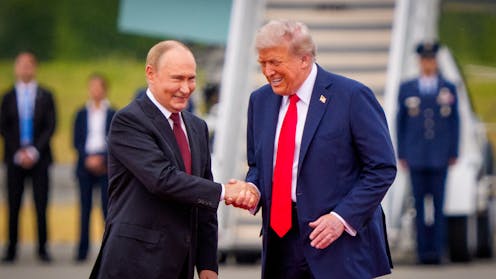
The Alaska summit is the first time the two leaders have met face-to-face since 2019. AP Photo/Alexander Zemlianichenko, Pool, Mark Schiefelbein, File

Like many such confabs before it, the Aug. 15, 2025, Alaska red carpet rollout for Russian President Vladimir Putin is classic Donald Trump: A show of diplomacy as pageantry that seemingly came out of nowhere, replete with vague goals and hardened expectations about the outcome from Trump supporters and opponents alike before the event has even taken place.

Trump is seemingly trying to dial down expectations, billing the summit as a “feel-out meeting” with the Russian leader to try to reach a diplomatic solution to the more than 3-year-old Russian war in Ukraine.

The event follows a recent period where Trump had become more critical of Putin’s role in continuing the war, giving the Russian leader a 50-day deadline to end the war or else face new U.S. sanctions. Trump subsequently reversed course on military support for Ukraine and stepped up weapons shipments. However, he has always made it clear that his priority is to restore a good relationship with Russia, rather than save Ukraine from defeat.

Trump’s track record of admiration for Putin, and the summit format that excludes both Ukraine and its European allies, has provided ample fodder for critics of U.S. policy under Trump.

Military scholar Lawrence Freedman expressed a common critical refrain in expressing fears that Trump will concede Putin’s core demands in Ukraine in return for a ceasefire. Likewise, CNN’s international security editor, correspondent Nick Paton Walsh, said “it is hard to see how a deal emerges from the bilateral that does not eviscerate Ukraine.” Indeed, few mainstream establishment commentators in the U.S. or European capitals are supporting Trump’s initiative, though Anatole Lieven, at the anti-interventionist Quincy Institute, was one of the few giving at least a lukewarm endorsement.


Read more:
This isn’t how wars are ended − a veteran diplomat explains how Trump-Putin summit is amateurish and politically driven


Meanwhile, in Moscow, despite Trump’s vague talk of a “land swap” that implies Ukraine could regain some lost territory, the uniformly pro-government Russian press is already hailing the upcoming summit as a victory for Putin and a “a catastrophe for Kyiv”,“ as the MK newspaper declared.

Still, as a long-time observer of Russian politics, I believe it would be premature to write off the summit as an exercise doomed to fail. Respected Russian émigré journalist Tatyana Stanovaya, for one, has argued that the meeting offers the “first more or less real attempt to stop the war.” And there are several important developments that mainstream commentary has overlooked in arguing against prospects for the Alaska summit.

What has changed?

Despite Trump’s repeated pledge to end the war in Ukraine, there has been no progress to that end thus far. Trump’s earlier efforts to broker a ceasefire, in February and April, were both rebuffed by Putin.

But since then, a number of factors have shifted that could allow Trump some leverage in talks this time around.

Seven months into his second term, Trump appears flush with confidence and has shown more willingness to project power to advance American interests.

In June, he joined Israel’s airstrikes against Iran, Russia’s biggest ally in the Middle East. On Aug. 8, he hosted the presidents of Armenia and Azerbaijan at the White House to sign a historic peace deal – a huge diplomatic defeat for Russia, which historically has dominated the politics of the south Caucasus region.

Trump’s ongoing global trade war is also alarming for Russia. On Aug. 7, Trump slapped punitive new tariffs on 90 countries that failed to make deals before his deadline. Trump has shown himself willing to use American power to bully trade partners who cannot effectively retaliate — such as Brazil, Canada, Switzerland and now India.

Indeed, Trump noticed that India bought US$80 billion of Russian oil last year — more than China. On Aug. 6, the same day that Trump announced the Alaska meeting, he imposed 50% tariffs on India, which will not come into effect for 21 days unless India cuts back on imports of Russian crude.

That creates real leverage for Trump against Putin should he want to use it in Alaska. With the Russian economy under strain and with global oil prices falling, Russia risks losing critical revenue from selling oil to India. That could conceivably be the tipping point for Putin, persuading him to halt the war.

Why it still may not be enough

As significant as those shifts could be, there are still several grounds for skepticism.

First, India may ignore Trump’s oil sanction. Key Indian exports to the U.S., such as iPhones and pharmaceuticals, are exempt from the 50% tariff, and they account for about $20 billion of India’s $80 billion annual exports to the U.S.

Second, the global oil market is highly adaptable. Russian oil not bought by India could easily be picked up by China, Turkey, Italy, Malaysia and others. Even if Russia lost $10 billion to 20 billion as a result of the India sanctions, with overall government revenue of $415 billion a year, that would not derail Moscow’s ability to wage war on Ukraine.

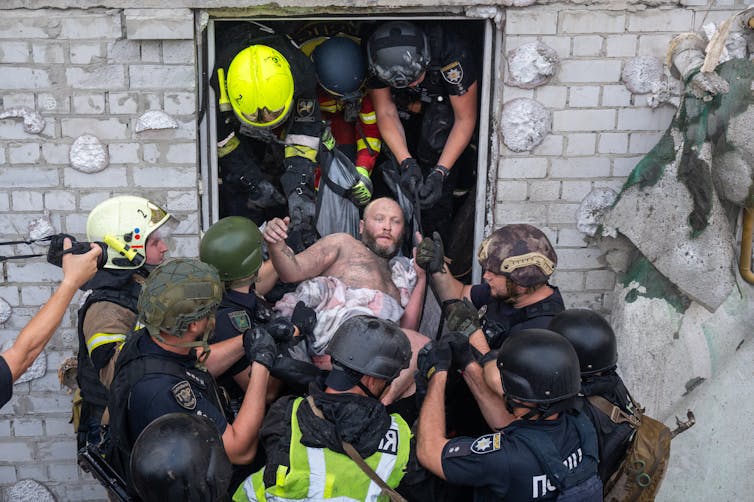
Firefighters wade through rubble.
Ukrainian firefighters work to put out fires stemming from Russian artillery shelling of the city of Kostiantynivka, a sign of the nearly constant toil of the conflict.
Photo by Diego Herrera Carcedo/Anadolu via Getty Images

The devil in the details

It remains unclear what Trump actually wants to achieve in Alaska. The details of the deal he is trying to persuade Putin to accept are unclear. For the Trump administration, the basic idea for ending the conflict appears to be land for peace: an end to military action by both sides and de facto recognition of the Ukrainian territory currently occupied by Russian forces.

One glaring problem with this formulation is that Russia does not control all the territory of the four Ukrainian provinces that it claims. They occupy nearly all of Luhansk, but not all of Donetsk, and only 60% of Zaporizhzhia and Kherson. If Russia insists on taking all of Donetsk province, for example, Ukraine would have to hand over about 2,500 square miles (6,500 square kilometers), with 200,000 people, mainly in the cities of Kramatorsk and Slovyansk.

It is hard to imagine President Volodymyr Zelenskyy agreeing to such a concession.

Yet it is equally hard to see Putin giving up his claim to all four provinces, which were formally incorporated into the Russian Federation in October 2022. In a June 2024 speech to the Russian foreign ministry, Putin laid out his most thorough analysis of the “root causes” and course of the conflict. He stated that the legal status of the four provinces as part of Russia “is closed forever and is no longer a matter for discussion.”

Clearly, the territorial question is the biggest hurdle facing any would-be peacemaker, including Trump.

Other issues, such as Ukraine’s request for security guarantees, or Russia’s demands for the “denazification” and “demilitarization” of Ukraine, could be dealt with later through negotiation and third-party mediation.

There are other factors that play into the chances of peace now.

Both Ukrainian and Russian societies are tired of a conflict that neither of them wanted. But at the same time, in neither country does most of the public want peace at any price.

If Trump can persuade Putin to agree to give up his claims to the entire territory of the four provinces in Ukraine’s east, that would be a substantial concession – and one that Zelenskyy may be well-advised to pocket. Putin would also expect something in return — such as the lifting of international sanctions and restoration of full diplomatic relations with the U.S. Then Putin could fly back to Moscow and tell the Russian people that Russia has won the war.

If such a deal transpires in Alaska, Trump would then face the challenge of persuading Ukraine and Europeans to accept it.

However, given Putin’s apparent confidence that Russia is winning the war, it remains unlikely that he will be persuaded by anything that Trump has to offer in Anchorage.

The Conversation

Peter Rutland does not work for, consult, own shares in or receive funding from any company or organization that would benefit from this article, and has disclosed no relevant affiliations beyond their academic appointment.

ref. Don’t write off the Putin-Trump summit just yet – its outcome might confound critics – https://theconversation.com/dont-write-off-the-putin-trump-summit-just-yet-its-outcome-might-confound-critics-262933

Child malnutrition is a sign of conflict to come: Nigerian study links climate change, food and violence

Source: The Conversation – Global Perspectives – By Marina Mastrorillo, Senior Economist, CGIAR

The pathway from climate change to violent conflict is not simple. There are the obvious immediate effects of global warming like water scarcity and crop failure. But beyond these, climate stress can pave the road to violence through indirect channels – a gradual rise in food insecurity and growing social tensions that set the stage for more armed violence.

We are a team of researchers who investigate the links between climate change, food systems and conflict. We set out to explore the relationship between climate variability, child malnutrition and violent conflict.


Read more:
Climate and mortality rates in Kenya, Mali, and Malawi: what we found


Our study focused on Nigeria. The country has faced rising temperatures, recurrent droughts, and one of the highest burdens of food insecurity and conflict in Africa. Its northern and north-eastern regions in particular have fragile agrifood systems, limited public services, and ongoing insecurity. This makes them especially vulnerable to the impacts of climate shocks.

In north-eastern Nigeria, 8.8 million people are threatened by a nutrition crisis. About 12,000 children in the Lake Chad area suffer from acute malnutrition as a result of resource depletion, climate change and insecurity.

For our research, we used household data from the Nigeria demographic and health surveys and combined this with information on climate and conflict. We applied a system of equations to separate the role child malnutrition plays in climate-related conflict from other factors that aren’t easily observed but which contribute to shape the climate-conflict link.

From this, we found that rising temperatures don’t immediately trigger violence. Instead, they set off a chain reaction: heat stress on the planet over time stresses food systems. As crops fail and household incomes fall, the youngest and most vulnerable are often the first to show signs of distress and become malnourished.


Read more:
The Lake Chad Basin is a security nightmare. 5 guidelines for finding solutions


Climate change contributes to higher rates of acute child malnutrition, or wasting. This is where children have very low weight for their height, usually because of sudden food shortages or illness. Wasting is one of the clearest signs that a child is not getting enough to eat.

In Nigeria, formal safety nets are limited. This means that the social strain of malnourished communities can become a powerful driver – or justification – for engaging in violence, mostly as a desperate alternative source of income or safety. People who aren’t getting the food they need may be increasingly inclined to support or be recruited by armed groups to ensure food security, shelter and physical protection.

One of the study’s key contributions is its use of child malnutrition indicators to trace the indirect effects of climate stress on conflict. Our research shows that acute malnutrition – especially wasting – is an early warning signal of social breakdown in fragile settings.


Read more:
Malnutrition among children is rife in Nigeria. What must be done


We recommend that systems that give early warnings of conflict should analyse nutrition in climate change-affected areas and use the levels of malnutrition as a way to predict potential conflict. Taking nutrition into account is a practical way to anticipate and prevent violence before it erupts.

Malnutrition as a hunger signal

Think of climate-driven conflict like a tangled web. We’ve managed to trace one clear thread – malnutrition – and show how it is linked to violence. But even after accounting for that thread, the web still holds tight. That’s because other forces, like economic shocks, migration, or institutional breakdown, are still tugging at the system.

We carefully mapped the indirect role of malnutrition through a method that helps identify how one factor (climate stress) affects another (conflict) through an intermediate pathway (malnutrition), while also taking other factors into account. This enabled us to calculate the contribution of malnutrition to climate related conflict.

We examined how shifts in climate affect child malnutrition in Nigeria – specifically wasting, stunting and underweight – and how these, in turn, relate to violent outbreaks. Among the various indicators, wasting stood out.


Read more:
11 million Nigerian children are going hungry: how this hurts their health and what needs to be done


Severe wasting is responsible for one in five deaths among children under the age of five globally, making it one of the leading threats to child survival. Because wasting reflects short-term nutritional stress, it can act as an early warning sign that communities are struggling to cope with climate shocks.

This finding is particularly relevant in farming communities where people depend on predictable weather to grow food and earn a living.

This offers a new way to think about climate, peace, and security. It’s about how weather changes unfold through daily meals, children’s diets and household decisions, sometimes quietly but no less dangerously.

Turning data into defence

Our study will improve the accuracy of current estimates of indirect impacts of climate change on conflict, because it looks at how these impacts are mediated by food and nutrition security outcomes.

Integrating malnutrition data into early warning systems, investing in nutrition-sensitive climate adaptation, and targeting support to the most vulnerable regions can reduce both human suffering and the risk of conflict.


Read more:
Extreme weather is disrupting lives in southern Africa: new policies are needed to keep the peace


Today, headlines focus on armed groups and battlefield dynamics, which is understandable. But we risk overlooking the quieter patterns beneath the surface.

The next crisis may not start with a bullet but with starvation.

We gratefully acknowledge the collaboration and support of Anna Belli, a junior professional officer at the Office of the Chief Economist at the Food and Agriculture Organisation and lead author of this research, Antonio Scognamillo, economist in the Agrifood Economics and Policy Division, and Ada Ignaciuk, chief editor of the State of Food Security and Nutrition at the Food and Agriculture Organisation.

The Conversation

Marina Mastrorillo works for The Alliance of Bioversity and CIAT of CGIAR. She receives funding from the CGIAR Trust Fund (https://www.cgiar.org/funders/) through the CGIAR Climate Action and Food Frontiers and Security Science Programmes.

This research was supported by the CGIAR Climate Action and Food Frontiers and Security Programmes, with funding from the CGIAR Trust Fund.

Chun Song works for The Alliance of Bioversity and CIAT of CGIAR. She receives funding from the CGIAR Trust Fund (https://www.cgiar.org/funders/) through the CGIAR Policy Innovation Program.

Grazia Pacillo works for The Alliance of Bioversity and CIAT of CGIAR. She receives funding from the CGIAR Trust Fund (https://www.cgiar.org/funders/) through the CGIAR Climate Action and Food Frontiers and Security Science Programmes. This research was supported by the CGIAR Climate Action and Food Frontiers and Security Science Programmes, with funding from the CGIAR Trust Fund.

Victor Villa works for the Alliance of Bioversity International and CIAT, which is part of CGIAR. He receives funding from the CGIAR Trust Fund (https://www.cgiar.org/funders/) through the CGIAR Science Programmes on Climate Action and Food Frontiers and Security.

ref. Child malnutrition is a sign of conflict to come: Nigerian study links climate change, food and violence – https://theconversation.com/child-malnutrition-is-a-sign-of-conflict-to-come-nigerian-study-links-climate-change-food-and-violence-262359

After 4 years of repressive Taliban rule, Afghans are suffering in silence. Is the world still watching?

Source: The Conversation – Global Perspectives – By Niamatullah Ibrahimi, Senior Research Fellow, Initiative for Peacebuilding, The University of Melbourne

On August 15 2021, Afghanistan’s democratic republic collapsed.

As the last US and NATO troops departed the country, the Taliban swept back into power and the Afghan people braced for an uncertain future.

Despite promises of moderation and inclusion, four years later, the Taliban has established a repressive, exclusionary regime – one that has dismantled institutions of law, justice and civil rights with ruthless efficiency.

As the Taliban regime has tightened its grip, international attention has waned. Crises in Ukraine, Gaza and elsewhere have dominated the global agenda, pushing Afghanistan out of the spotlight.

With the Taliban seeking to end its isolation and gain legitimacy, can the international community find the will now to exert real pressure?

The Taliban’s emirate of repression

After coming back into power, the Taliban discarded the country’s 2004 constitution, allowing the regime to operate without a transparent rule of law. Instead, Mullah Hibatullah Akhundzada, the reclusive Taliban leader, rules by decree from his base in Kandahar.

The Taliban’s repression of women and girls has been so severe, human rights groups now call it “gender apartheid” and argue it should be a new international crime.

Edicts have erased women from public life, banning them from education beyond primary school (with the exception of religious education), employment and public spaces. Women also cannot move freely in public without a mahram, or male guardian.

The Taliban also dismantled the Ministry of Women’s Affairs, replacing it with the Ministry for the Propagation of Virtue and Prevention of Vice. As a central instrument of repression, the ministry reinforces institutionalised gender discrimination through regular raids and arrests, surveillance and monitoring of public spaces.

Taliban rule has also led to the exclusion and persecution of minority ethnic and religious groups such as Hazaras, Shias, Sikhs and Christians.

In the province of Panjshir, the focal point of resistance to the Taliban, human rights groups have documented the Taliban’s severe crackdowns on the local population, including mass arrests and detentions, torture and extrajudicial killings.

More broadly, the Taliban has decimated the civic space in the country. Journalists and activists have been silenced through fear, violence and arbitrary arrests. This has led to widespread self-censorship and an information blackout that allows abuses to continue with impunity.

Despite the immense risks, activists, journalists and ordinary citizens continue to resist the Taliban. Women have staged peaceful protests in the face of harsh crackdowns, while others run secret schools for girls and document abuses in the hope of future accountability.

Humanitarian aid dwindling

Although most countries do not recognise the Taliban as the formal and legitimate government of the country, some regional states have called for an easing of its international isolation.

Last month, Russia became the first country to recognise the Taliban. China is also deepening its economic and diplomatic ties with the group. India’s foreign minister recently met with his Taliban counterpart, after which the Taliban called New Delhi a “significant regional partner”.

International aid continues to flow into Afghanistan, but a report from a US watchdog this week documented how the Taliban uses force and other means to divert it.

The United States had still accounted for more than 40% of all humanitarian support to Afghanistan after the Taliban’s return. But US President Donald Trump’s decision to decimate the US Agency for International Development means this funding has all but disappeared.

This has crippled essential services and threatens to plunge the country into one of the world’s worst humanitarian crises. Health facilities have closed and malnutrition is rising. The mass deportation of hundreds of thousands of Afghans from Iran and Pakistan has only further added to the humanitarian catastrophe.

For years, the United Nations has tried to facilitate talks between the Taliban and international community in Qatar with the aim of improving conditions in the country. However, it has faced repeated setbacks.

The Taliban only decided to attend the talks in mid-2024 after the UN conceded to excluding women and civil society groups and restricting the agenda. The meeting resulted in no breakthroughs or concessions.

Another round of talks is anticipated, but the central dilemma remains: how to engage the Taliban without legitimising its repressive rule.

Courts making some progress

The Taliban’s systematic human rights abuses have global repercussions. Experts warn of a rising trend of similarly styled repression, dubbed “Talibanisation”, taking root in other countries.

In Yemen, for example, Houthi leaders have imposed restrictions eerily similar to Taliban edicts, banning women from walking in public without a male guardian and restricting their work.

While individual states have failed to agree on a coordinated response to the Taliban, international institutions have taken steps in the right direction.

In July, the International Criminal Court issued arrest warrants for Akhundzada and the Taliban chief justice, accusing them of crimes against humanity for gender-based persecution.

Separately, four countries – Australia, Germany, the Netherlands and Canada – have begun the process of bringing a case against the Taliban to the International Court of Justice for gender discrimination. This would be a first for the court.

To complement these efforts, the UN member states must establish an independent international investigative mechanism to systematically document and investigate crimes committed by the Taliban. Such a mechanism would help preserve evidence and lay the groundwork for future prosecutions.

Without concerted international pressure, the suffering of the Afghan people will only worsen and the Taliban’s brand of repression will continue impact women’s rights far beyond Afghanistan’s borders.


The authors are holding a day-long conference with other academics on Afghanistan, four years after the Taliban takeover, at the Monash University Law Chambers in Melbourne on August 15. More information can be found here.

The Conversation

Nothing to disclose.

Arif Saba and Niamatullah Ibrahimi do not work for, consult, own shares in or receive funding from any company or organisation that would benefit from this article, and have disclosed no relevant affiliations beyond their academic appointment.

ref. After 4 years of repressive Taliban rule, Afghans are suffering in silence. Is the world still watching? – https://theconversation.com/after-4-years-of-repressive-taliban-rule-afghans-are-suffering-in-silence-is-the-world-still-watching-262801

For people with ADHD, medication can reduce the risk of accidents, crime and suicide

Source: The Conversation – Global Perspectives – By Adam Guastella, Professor and Clinical Psychologist, Michael Crouch Chair in Child and Youth Mental Health, University of Sydney

Attention-deficit hyperactivity disorder (ADHD) is a neurodevelopmental condition that affects around 7% of children and 2.5% of adults.

ADHD causes difficulties holding and sustaining attention over periods of time. People with ADHD also experience hyperactivity and high levels of impulsiveness and arousal. This can make it difficult to plan, coordinate and remain engaged in tasks.

ADHD is linked to problems at work, school and home, and to higher rates of mental illnesses such as anxiety. It’s also associated with higher rates of long-term harms.

Stimulant medication, such as methylphenidate and dexamphetamine, is the most common treatment for managing ADHD symptoms. Most people with ADHD will respond to at least one ADHD medication.

But, rising rates of prescriptions in recent years has prompted concern for their effectiveness and safety.

New research published today in the journal BMJ points to additional longer-term benefits. It found people with ADHD who took medication were less likely to have suicidal behaviours, transport accidents, issues with substance misuse, or be convicted of a crime.

What did the study do?

The study tracked 148,581 people who received a new diagnosis of ADHD between 2007 and 2018.

The authors used population-based data from Swedish national registers, including everyone aged six to 64 who was newly diagnosed with ADHD. The average age was 17.4 years and 41% were female.

Participants either started or did not start medication within three months of their ADHD diagnosis.

The authors examined the effects of drug treatment for ADHD on five critical outcomes: suicidal behaviours, substance misuse, accidental injuries, transport accidents and committing crime. They looked at both first-time and recurrent events.

This study used a method that uses data from health records or registries to mimic the design of a randomised controlled trial, in an attempt to reduce bias.

The researchers accounted for age, education, other mental and physical illnesses, prior history and use of other drugs, to account for factors that may influence results.

What did they find?

Within three months of receiving an ADHD diagnosis, 84,282 (56.7%) of people had started drug treatment for ADHD. Methylphenidate was the most commonly prescribed drug, accounting for 88.4% of prescriptions.

Drug treatment for ADHD was associated with reduced rates of a first occurrence for four out of the five outcomes: a 17% reduction for suicidal behaviours, 15% for substance misuse, 12% for transport accidents and 13% for committing crime.

When the researchers looked at people with recurrent events, the rate reductions associated with ADHD medication were seen for all five outcomes (including accidental injury).

The effect of medication was particularly strong when someone had a history of these events happening frequently. This means those with the most severe symptoms may benefit most.

Stimulant drugs were associated with lower rates of all five outcomes compared with non-stimulant drugs.

It’s likely these benefits are associated with improvements in attention, impulsivity and hyperactivity. People may be less likely to be distracted while driving, to self-medicate and show impacts from other mental health challenges.

What didn’t the study do?

The large sample size, use of national linked registers and sophisticated design give greater confidence that these findings are due to medication use and not due to other factors.

But the study was not able to examine medication dosages or track whether people reliably took their medication as prescribed. It also had no way to track the severity of ADHD symptoms. This means it can’t tell us if this helped most people or just some people with severe symptoms.

We know that ADHD medication helps most people, but it is not effective for everyone. So, we still need to understand why some people don’t benefit from ADHD medication, and what other treatments might also be helpful.

Finally, even though the study was rigorous in its design and adjusted for many factors, we can’t rule out that other unaccounted factors could be associated with these effects.

As prescribing increases, the size of the benefit decreases

A second study, published in June, used the same Swedish national registers and self-controlled case series design.

This study also concluded ADHD medication was associated with reduced risks for self-harm, accidental injuries, transport accidents and committing crime.

However, this study also showed that as prescribing rates increased nearly five-fold between years 2006 to 2020, the size of the observed benefits of ADHD medications reduced.

While remaining significant, the size of the associations between ADHD medication use and lower risks of unintentional injury, traffic crashes, and crime weakened over this time.

This could mean people who are less likely to need ADHD medications are now receiving them.

What are the impacts for patients and policymakers?

People need to know that if ADHD medications are helpful for them or their children, it might also improve many other areas of life.

These findings can also give governments confidence that their recent initiatives and efforts to increase access to ADHD support and treatment may have positive downstream impacts on broader social outcomes.

But medications aren’t the only ADHD treatment. Medication should only represent one part of a solution, with other psychological supports for managing emotional regulation, executive and organisational skills and problem-solving also beneficial.

Psychological therapies are effective and can be used in combination with, or separately to, medication.

Yet research shows drug treatments are relied on more frequently in more disadvantaged communities where it’s harder to access psychological supports.

Policymakers need to ensure medication does not become the only treatment people have access to. People with suspected ADHD need a high-quality diagnostic assessment to ensure they get the right diagnosis and the treatment most suitable for them.

The Conversation

Adam Guastella receives independent research funding from research organisations (e.g., MRFF, NHMRC, ARC) to investigate the effecicy of supports for children and adults with neurodevelopmental conditions. He is employed as the Michael Crouch Chair in Child and Youth Mental Health at the University of Sydney.

Kelsie Boulton receives funding from research organisations (MRFF) to evaluate the efficacy of interventions for neurodevelopmental conditions.

ref. For people with ADHD, medication can reduce the risk of accidents, crime and suicide – https://theconversation.com/for-people-with-adhd-medication-can-reduce-the-risk-of-accidents-crime-and-suicide-263044

At 50, The Rocky Horror Picture Show is ‘imperfectly’ good (and queer) as ever

Source: The Conversation – Global Perspectives – By Craig Martin, Lecturer in Screen Studies, Swinburne University of Technology

Stanley Bielecki Movie Collection/Getty Images

For half a century, The Rocky Horror Picture Show has lured costumed fans to cinemas for late-night screenings. Its raunchy mix of Broadway musical, science fiction and schlock horror was originally a box-office flop. However, after its first midnight screening on April Fool’s Day 1976 at the Waverly theatre in New York, it never left the late-night circuit and became the ultimate cult film.

Tim Curry’s powerhouse performance as Frank-N-Furter is central to the film’s success. Yet, his truly astounding work often overshadows the film’s many other dynamic performances.

Rocky Horror’s supporting characters and chorus feature alluring oddballs who irreverently challenge norms of physical desirability. Their “imperfect” bodies are not only a tribute to diversity: they radically upturn genre expectations of stage and screen musicals, and discredit broader cultural ideals of beauty.

It’s so dreamy, oh fantasy free me!

Brad Majors (Barry Bostwick) and Janet Weiss (Susan Sarandon) are an attractive young couple seeking help at an isolated castle when their car blows a tyre. During their night, they find the castle’s inhabitants are of a variety of sizes, physiques and galaxies.

Adapted from Richard O’Brien’s 1973 stage musical, Rocky Horror’s anti-Broadway aesthetic is apparent as soon as the “butler” Riff Raff (O’Brien) opens the castle door. This wiry framed hunchback with tangled hair is a far cry from the athletic ideal of the Broadway body.

Inside the creepy mansion, we are dazzled by a festive troupe of alien “Transylvanians” wearing off-beat tuxedos and textured waistcoats. It’s a broad assortment of unconventional body types squeezed into colourful costumes.

Lanky actor Stephen Calcutt stands at 198 centimetres tall, and Sadie Corré at just over 120cm. Hugh Cecil, then 62, has alopecia, which exaggerates his stark monocled whiteness. Fran Fullenwider, with her wild, teased-out coiffure and curvy frame, is clad in skin-tight pants.

Cecil and Fullenwider were among a handful of Transylvanians director Jim Sharman recruited from London-based Ugly Models. While this agency’s name and viability is, to say the least, unfortunate, Rocky Horror’s rejection of cookie-cutter casting was celebratory, not diminishing.

The Transylvanians’ subversion of “sameness” is especially powerful because of the history of its film genre. Busby Berkeley, one of film musicals’ founding innovators in the 1930s and 1940s, is famously quoted as approving the “girls” in his ensembles as being “matched, just like pearls”.

Inverting such sexist tropes, the crass collective of Transylvanians is widely adored as the chorus of the film’s legendary song, Time Warp. They are also welcomingly representative of the throngs of fans who the film has continued to assemble these past five decades.

I can make you a man

Once Frank-N-Furter has invited everyone “up to the lab”, we encounter two more vital characters: the dichotomous Eddie and Rocky.

Gregarious rocker Meat Loaf’s Eddie refuses the lean hypersexual image typical of frontmen in 1970s rock acts. Eddie motorbikes around Frank’s lab and delights his sweetheart Columbia (Nell Campbell). He is loud, sexy and very nearly loved.

Overtly parodying Frankenstein’s creation of a grotesque monster, Frank-N-Furter scientifically “births” the perfectly chiselled Rocky (Peter Hinwood).

With Rocky, Frank-N-Furter has made a “perfect specimen of manhood”: muscular, a sharp jawline, blonde hair and a tan. But Rocky does not have Eddie’s charismatic body positivity, which Frank-N-Furter resents.

Rocky’s blonde hair and sculpted physique bears more than a passing resemblance to Jack Wrangler or Casey Donovan, superstars in the “Golden Age of Porn” of 1969 to 1984.

Wrangler was a pioneering porn star who adopted a rugged Marlborough Man aesthetic. Not unlike Frank-N-Furter, Wrangler was sexually fluid, working in gay porn for ten years from 1970 before crossing over to straight porn.

Donovan found fame in Wakefield Poole’s successful X-rated film Boys in the Sand (1971). Both Donovan and Poole were newcomers to filmmaking and porn. Poole (himself a Broadway dancer) applied a dreamlike narrative and an artistically verité shooting style to his hardcore yet poetic pornography.

On its release, Boys in the Sand was reviewed in Variety, and ads for the film appeared in the New York Times. Poole’s film achieved an enviable level of critical legitimacy and public appeal, which evaded Rocky Horror until it gained legitimacy via its enduring cult status.

Rocky Horror’s presentation of the creature as a queer ideal of masculine physical perfection spicily mirrors the coveted masculine form on display in much gay pornography.

Yet, among Rocky Horror’s eclectic cast, Rocky’s musclebound physique is positioned as very much the exception.

Don’t dream it, be it

Unlike gay icon Wrangler, the blonde Adonis Rocky figure is not a rugged hero, but the monster: an aberration whose existence is the result of “mad science”.

In this reading, the alluring but destructive Frank-N-Furter represents western society’s beauty machine, intent on artificially creating bodies designed to be looked at as objects of sexual desire, queer or straight.

The Rocky Horror Picture Show US poster art.
LMPC via Getty Images

This insight is far from outdated. Indeed, since 1975, Rocky’s queer-inflected bodily “perfection” has today become a problematic norm in the mainstreaming of men’s body sculpting and the proliferation of homoerotic imagery marketed to men.

However, Rocky Horror remains a place where people of all shapes, sizes, ages, abilities, and colours can dance and sing and celebrate without such constraints. In fact, Riff Raff, the “imperfect” figure who first welcomes us to the castle, ultimately kills Frank-N-Furter and halts his exploitation.

Rocky Horror offers many and varied midnight-movie audiences freedom from society’s troubling and relentless obsession with body image, even 50 years on.

The Conversation

The authors do not work for, consult, own shares in or receive funding from any company or organisation that would benefit from this article, and have disclosed no relevant affiliations beyond their academic appointment.

ref. At 50, The Rocky Horror Picture Show is ‘imperfectly’ good (and queer) as ever – https://theconversation.com/at-50-the-rocky-horror-picture-show-is-imperfectly-good-and-queer-as-ever-261852

How can you be sure your clothing has been produced ethically?

Source: The Conversation – Global Perspectives – By Aayushi Badhwar, Lecturer in Enterprise and Technology, RMIT University

Naomi Rahim/Getty Images/Canva

Today’s consumers are swimming in a sea of information. Products are marketed with big, bold words such as “sustainable”, “ethical” and “organic”. They sound good, they catch our attention, and they make us feel better about what we buy.

The reality is, in today’s market, figuring out which claims are true is no easy task.

One big reason is greenwashing, when brands use these buzzwords to sell products without living up to what the words actually mean. In fashion especially, these terms are thrown around so often that their meaning has been watered down. Instead of being about genuine change, they are often just a sales tool.

So, how can you know what to look out for?

Who should take responsibility for green claims?

Greenwashing takes many forms. Sometimes brands know they are misleading; this is direct greenwashing. Other times, it’s indirect, when brands simply do not know the full story of their own supply chains. A T-shirt, for example, might start as raw cotton in one country, get processed into fabric in another, sewn into a garment, and then shipped overseas for sale.

At each stage, there are different suppliers, factories and workers. The brand has limited visibility over what happens in these tiers. When a brand claims it produces ethically, but does not, that is greenwashing. If it involves exploitation or forced labour, it then becomes modern slavery, turning greenwashing into something more dangerous.

This raises a big question: who is responsible? The obvious answer is the brands. They design, order, and sell the products, and they profit from them. Consumers are paying for these goods, so they should have access to credible information, not just vague claims or nice-sounding labels.

The fashion industry is constantly in the spotlight for problems in its supply chains. Stories about poor working conditions, environmental damage, and lack of transparency pop up all the time. But just like a viral trend on social media, the attention often fades quickly, and people move on to the next story.

Certifications aren’t perfect

There are many certifications in the fashion industry trying to help, but they are not foolproof. A label might promise ethical sourcing, but that does not guarantee transparency or prove that every step was ethical.

A large portion of China’s cotton comes from the Xinjiang region, which has long been linked to forced labour; concerns were highlighted in a United Nations report in 2022. Another example is deforestation in Brazil, where cotton from affected areas was certified under the “Better Cotton” scheme. Many major brands – like ASICS producing the Australian Olympic uniforms – have faced scrutiny for sourcing cotton from controversial regions.

Tracing global supply chains is hard. But the responsibility does not disappear just because it’s complicated.

In Australia, the Modern Slavery Act took effect in January 2019 to tackle issues such as forced labour and exploitation. Penalties include heavy fines or jail time.

However, there is a major loophole, as only companies with an annual revenue over A$100 million are required to report under the act. For big corporations, even if they are caught, the penalty can be tiny compared to the profits they have made.

This is not just an Australian problem, it’s global. For example, luxury brand Dior was placed under judicial administration after being found negligent for failing to act against worker exploitation in its subcontracted supply chain in Italy. The pattern is often the same; a company gets accused, sometimes even fined, but the cost is minimal compared to their annual revenue, so it’s barely a setback.

Is there a role for government?

So, should the responsibility rest only with brands? Not entirely. Governments also benefit from these companies through taxes and trade. They profit indirectly when the companies profit, and they benefit from the jobs these companies provide.

A stronger approach would involve government bodies and brands working with supply chain mapping companies, such as Textile Genesis, TrusTrace or FibreTrace. These platforms, often powered by blockchain and artificial intelligence, track a product through every stage of production.

Blockchain – which uses a decentralised database – can be a game changer.

Unlike websites or paper trails, blockchain data cannot be altered without leaving trace. Once recorded, the information is permanent, and it can be shared across manufacturers, brands and government bodies to maintain real-time disclosure.

When products enter a country, the ethical claims behind them could be verified in real time, instead of relying on brands to respond after an allegation is made.

The upfront cost is high and adoption might be slow. But in the long run it could save money on compliance, audits and damage control, while also building consumer trust.

Brands would still make profits, but consumers would have the confidence the products they are buying live up to the claims. Instead of government agencies being passive players, they would actively enforce that products meet the standards consumers expect.

In short, brands need to be held accountable, but so do governments. Greenwashing, modern slavery, and unethical sourcing will keep slipping through the cracks, unless they both work together.

The tools to make the fashion industry more transparent and honest already exist; it’s just a matter of using them.

The Conversation

Aayushi Badhwar does not work for, consult, own shares in or receive funding from any company or organisation that would benefit from this article, and has disclosed no relevant affiliations beyond their academic appointment.

ref. How can you be sure your clothing has been produced ethically? – https://theconversation.com/how-can-you-be-sure-your-clothing-has-been-produced-ethically-262800

70 years of data show extreme heat is already wiping out tropical bird populations

Source: The Conversation – Global Perspectives – By James Watson, Professor in Conservation Science, School of the Environment, The University of Queensland

DeAgostini/Getty Images

Human-driven climate change threatens many species, including birds. Most studies on this topic focus on long-term climate trends, such as gradual rises in average temperatures or shifts in rainfall patterns. But extreme weather events are becoming more common and intense, so they warrant further attention.

Our new research shows extreme heat is having a particularly severe effect on tropical birds. We found increased exposure to extreme heat has reduced bird populations in tropical regions by 25–38% since 1950.

This is not just a temporary dip – it’s a long-term, cumulative effect that continues to build as the planet warms.

Our research helps explain why bird numbers are falling even in wild places relatively untouched by humans, such as some very remote protected tropical forests. It underscores the urgent need to reduce greenhouse gas emissions, to conserve the remaining biodiversity.

Digging into huge global datasets

We analysed data from long-term monitoring of more than 3,000 bird populations worldwide between 1950 and 2020. This dataset captures more than 90,000 scientific observations.

Although there are some gaps, the dataset offers an unmatched view of how bird populations have changed over time. Some parts of the world such as western Europe and North America were better represented than others, but all continents were covered.

We matched this bird data with detailed daily weather records from a global climate database that stretches back to 1940. This allowed us to track how bird populations responded to specific changes in daily temperatures and rainfall, including extreme heat.

We also looked at average yearly temperatures, total annual rainfall, and episodes of unusually heavy rainfall.

Using another dataset that reflects human industrial activity over time, we accounted for human pressures such as land development and human population density.

By combining all these sources of data, we created computer models to evaluate how climate factors and human impacts influence bird population growth.

Our research confirmed the work of other climate scientists showing extreme heat events have increased dramatically over the past 70 years, especially near the equator.

Birds in tropical regions are now experiencing dangerously hot days about ten times more often than they did in the past.

A chart showing the number of very hot days per year over time for the tropics (steep increase), subtropics and extratropics
Tropical birds have experienced a 10-fold increase in exposure to extreme heat over the past 60 years.
Kotz, M. et al. (2025) Nature Ecology & Evolution

What we found: extreme heat is the biggest climate threat to birds

While changes in average temperature and rainfall do affect birds, we found the increasing number of dangerously hot days had the greatest effect – especially in tropical regions.

This is a major concern because tropical birds often have small home ranges and are highly specialised in terms of the habitats and climates they persist in. In many cases tropical birds exist within a small range of heat tolerance.

At temperatures beyond a bird’s limit of endurance, they go into hyperthermia, where their body temperature rises uncontrollably. In this state, birds may adopt a drooped-wing posture to expose more skin for heat loss, hold their beaks open and pant rapidly, spread their feathers, and become lethargic or disoriented. In severe cases, they lose coordination, fall from perches, or even collapse unconscious.

Side profile of a black-collared barbet (_Lybius torquatus_) resting on a branch, The Panhandle, Okavango Delta, Botswana.
A black-collared barbet (Lybius torquatus) from Botswana.
Sergey Dereliev

If they survive the experience, they can suffer long-term damage such as heat-induced organ failure and reduced reproductive capacity. Heat exposure reduces breeding success by lowering adult body condition and reducing time spent foraging – because the birds must rest or seek shade during the hottest hours.

It also causes heat stress in eggs and nestlings. In extreme events, nestlings may die from hyperthermia, or parents may abandon nests to save themselves.

Heat also increases a bird’s demand for water — not because they sweat (birds lack sweat glands) but because they lose water rapidly through evaporative cooling. This happens mainly via panting (respiratory evaporation) and, in some species, gular fluttering (rapid vibration of throat skin to increase airflow), as well as evaporation through the skin. As temperatures climb, these processes accelerate, causing significant dehydration unless birds can drink more frequently or access moister food.

Our study found that across tropical areas, the impact of climate change on birds is perhaps even greater now than the impact of direct human activities such as logging, mining or farming. This is not to say habitat destruction due to these activities is not a serious issue – it clearly is a major concern to tropical biodiversity. But our study highlights the challenges climate change is already bringing to birds in tropical regions.

Infographic describing how birds are impacted by heat extremes
Extreme heat is bad for birds in more than one way.
James Watson, Maximilian Kotz and Tatsuya Amano with icons from Flaticon, design by Canva.

A clear warning

Our research highlights the importance of focusing not just on average climate trends, but also on extreme events. Heatwaves are no longer rare, isolated incidents – they are becoming a regular part of life in many parts of the world.

If climate change continues unchecked, tropical birds – and likely many other animals and plants – will face increasing threats to their survival. Change may be too fast and too extreme for many species to adapt.

And as tropical regions host a huge share of the world’s biodiversity, including nearly half of all bird species, the ripple effects could be far-reaching.

Conservation strategies must take this into account. Protecting habitats from human industrial development remains important, but it’s no longer enough on its own. Proactive action to help species adapt to climate change needs to be part of wildlife protection plans – especially in the tropics.

Ultimately if we are to preserve global biodiversity, slowing down and eventually reversing climate change is essential. That means cutting greenhouse gas emissions, investing in ways to draw down existing carbon dioxide levels, and supporting policies that reduce our impact on the planet. The fate of tropical birds – and countless other species – depends on it.

Tropical bird population declined by one-third since 1980 due to climate change, featuring the study’s lead author Maximilian Kotz (Potsdam Institute for Climate Impact Research)

The Conversation

James Watson has received funding from the Australian Research Council, National Environmental Science Program, South Australia’s Department of Environment and Water, Queensland’s Department of Environment, Science and Innovation as well as from Bush Heritage Australia, Queensland Conservation Council, Australian Conservation Foundation, The Wilderness Society and Birdlife Australia. He serves on the scientific committee of BirdLife Australia and has a long-term scientific relationship with Bush Heritage Australia and Wildlife Conservation Society. He serves on the Queensland government’s Land Restoration Fund’s Investment Panel as the Deputy Chair.

Maximilian Kotz receives funding from European Union’s Horizon 2020 research and innovation programme under a Marie Sklodowska-Curie grant.

Tatsuya Amano receives funding from the Australian Research Council Future Fellowship and Discovery Project.

ref. 70 years of data show extreme heat is already wiping out tropical bird populations – https://theconversation.com/70-years-of-data-show-extreme-heat-is-already-wiping-out-tropical-bird-populations-259892

Whales and dolphins regularly hang out with each other – new study

Source: The Conversation – Global Perspectives – By Olaf Meynecke, Research Fellow in Marine Science and Manager Whales & Climate Program, Griffith University

drewsulockcreations/Getty

As the annual humpback whale migration is underway with thousands of whales passing by the Australian coast, there are reports of dolphins joining the mass movement.

But this isn’t a one off. In fact, our new study, published today in Discover Animals, shows interspecies interactions between dolphins and whales are widespread and frequent around the world.

An astonishing interaction

There have been several reports of whale and dolphin interaction in the past.

One that astonished the public back in 2004 featured a humpback whale in Hawaii repeatedly lifting a bottlenose dolphin on its head.

Researchers suggested such close contact between whales and dolphins is likely very rare – and maybe related to care giving.

But other forms of interactions resembling joint feeding, play and harassment are now being frequently documented thanks to drone technology. Many are also featured on social media.

A ‘whale’s-eye view’ of the world

For our new study, we undertook an analysis of 199 independent whale-dolphin interaction events involving 19 different species. These interactions spanned two decades and occurred across 17 countries.

We drew from social media platforms – such as Facebook, YouTube and Instagram – and footage contributed by citizens to get a variety of observations.

Each entry was carefully reviewed to identify the species involved, validate the interaction and categorise behaviours. Two additional cases came from camera tags attached to humpback whales. These offered an underwater “whale’s-eye view” of their encounters with dolphins.

We categorised behaviours such as rolling, tail slaps, bow riding, and rubbing, and classified dolphin positions relative to whale body parts such as head, flank and tail fluke.

Having fun or fighting?

The study contradicted earlier assumptions that interspecies interactions between dolphins and whales are very rare.

The most common interaction was dolphins swimming near the whale’s head (akin to bow riding). This accounted for 80% of observed dolphin positions. Humpback whales were the most involved whale species, while bottlenose dolphins led the dolphin side.

Based on videos we analysed, dolphins initiated most interactions through bow riding, swimming in formation, or even touching whales.

In more than one-quarter of the events, the whales responded in seemingly similar ways. For example, humpback whales often rolled, exposed their bellies, or gently turned toward dolphins.

Tail slaps and other signs of distress or aggression were rare (roughly 5% of cases).

As a result of this, we classified more than one-third of all interactions between humpback whales and dolphins as positive or possible social play.

The two camera-tag videos revealed previously undocumented interaction. Dolphins were observed following humpback whales not only at the surface but down to the ocean floor. They maintained eye contact or even touched the whales’ head – suggesting intentional, possibly social, engagement.

Reflecting advanced emotional capabilities

The findings reshape our understanding of how social marine mammals interact across species. They suggest interspecies interaction among marine mammals may be far more prevalent and complex than previously believed.

Dolphins may seek out whales as companions for stimulation, play or even courtship-like behaviour. Meanwhile, certain whale species, particularly humpback whales, may not only tolerate but also engage with dolphins in a social capacity.

This interspecies dynamic adds a new dimension to marine mammal social ecology and could point to cultural elements in whale and dolphin societies. The playfulness, cooperation and apparent enjoyment observed in many interactions reflect advanced cognitive and emotional capabilities.

The study also demonstrates the power of new technologies and community science. Social media and drones proved invaluable for collecting a range of diverse behavioural data that traditional surveys might miss.

Social media data has limitations, such as geographic and observer bias caused by different angles, heights, equipment and frequency of use of social media. But it does complement other data and helps uncover previously unknown behaviours.

Whales and dolphins don’t just coexist but also seek each other out. Future studies incorporating acoustic recordings and longer observation periods could further unravel the motivations and meanings behind these fascinating encounters.

The Conversation

Olaf Meynecke receives funding from the Whales and Climate Research Program through a private, charitable trust and is a board member of the not for profit organisation Humpbacks and Highrises Inc.

ref. Whales and dolphins regularly hang out with each other – new study – https://theconversation.com/whales-and-dolphins-regularly-hang-out-with-each-other-new-study-260196

Australia to recognise Palestine state next month at the United Nations

Source: The Conversation – Global Perspectives – By Michelle Grattan, Professorial Fellow, University of Canberra

Prime Minister Anthony Albanese has announced Australia will recognise Palestine as a state at the United Nations leaders’ week in late September.

Unlike some other countries, the government has put no conditions on the recognition, relying on assurances received from the Palestinian Authority, the current Palestinian governing body in the West Bank.

Announcing the decision on Monday, Albanese said he had spoken to Israeli Prime Minister Benjamin Netanyahu last Thursday. In what Albanese said was a long call, Netanyahu argued the case against the proposed Australian action.

“I put the argument to him that we need a political solution, not a military one, because a military response alone has seen the devastation in Gaza, and that has contributed to the massive concern that we see from the international community,” Albanese said.

Albanese told a joint news conference with Foreign Minister Penny Wong “a two-state solution is humanity’s best hope to break the cycle of violence in the Middle East and to bring an end to the conflict, suffering and starvation in Gaza”.

Asked whether this was a symbolic gesture, Albanese said, “This is a practical contribution towards building momentum. This is not Australia acting alone. What we are seeing is a range of countries engaging in detailed dialogue.”

Albanese said that over the past fortnight, he had discussed the issue with UK Prime Minister Keir Starmer, French President Emmanuel Macron, New Zealand Prime Minister Chris Luxon and Japanese Prime Minister Shigeru Ishiba.

He also had a call last week with the Palestinian Authority President Mahmoud Abbas.

Albanese said the Palestinian Authority had committed to there being no role for Hamas in a Palestinian state and reaffirmed it recognised Israel’s right to exist, as well as making other pledges.

Shadow Defence Minister Angus Taylor said there is a risk the decision would be rewarding Hamas for its attacks on Israel on October 7 2023.

When asked earlier about such criticism, Albanese said “Hamas don’t support two states”.

“This is an opportunity to isolate Hamas, that has been forged by the very clear statements of the Palestinian Authority on June 10, and the very clear statements of the Arab League,” he said.

Before the announcement, Netanyahu strongly condemned the move.

He said it was “shameful” and “disappointing” that European countries and Australia would “march into that rabbit hole” and buy “this canard”. He made it clear Israel would not be deterred.

Asked about Australia and other countries moving to recognition, he said, “Well, first of all, those who say that Israel has a right to defend itself are also saying, ‘but don’t exercise that right’.”

He said Israel was applying force judiciously and “they know it”.

“They know what they would do if right next to Melbourne or right next to Sydney you had this horrific attack. I think you would do, at least what we’re doing – probably maybe not as efficiently and as precisely as we’re doing it.”

The Albanese government’s decision, which was reported to a cabinet meeting early Monday, followed years of pressure within the Labor party which has ramped up dramatically in recent months.

Wong spoke at the weekend to US Secretary of State Marco Rubio about Australia’s proposed course.

The Executive Council of Australian Jewry said in a statement about the announcement: “Israel will feel wronged and abandoned by a longstanding ally. The Palestinian Authority will feel that a huge diplomatic prize has been dropped in its lap, despite its consistent failures to reform, democratise and agree to peaceful coexistence alongside a Jewish state. Hamas and other Islamist groups will see that barbarity on a grand scale can lead to desired political transformation”.

The Conversation

Michelle Grattan does not work for, consult, own shares in or receive funding from any company or organisation that would benefit from this article, and has disclosed no relevant affiliations beyond their academic appointment.

ref. Australia to recognise Palestine state next month at the United Nations – https://theconversation.com/australia-to-recognise-palestine-state-next-month-at-the-united-nations-262602

What should I eat (and avoid) while breastfeeding? How does my diet affect baby’s milk?

Source: The Conversation – Global Perspectives – By Therese O’Sullivan, Associate Professor in Nutrition and Dietetics, Edith Cowan University

Natalia Lebedinskaia/Getty Images

Many people are familiar with the saying that a woman is “eating for two” during pregnancy. Although this is an exaggeration, nutritional needs do certainly increase during pregnancy to support the growing baby.

But what’s perhaps less known is that energy needs are actually even slightly higher during breastfeeding than during pregnancy.

Human breastmilk is a dynamic liquid and its composition (including carbohydrates, fats, proteins, vitamins and minerals) varies over the entire breastfeeding period, and even between feeds.

It can change depending on what mum is eating, environmental factors, and what the baby needs, through a biofeedback system (sometimes called “baby backwash”). For example, if a baby is starting to get sick, breastmilk will adjust to include more leukocytes, immune cells that fight infection.

So what should breastfeeding women be eating? And how does a mother’s diet influence the nutritional makeup of her milk?

Nutritional needs increase during breastfeeding

Fully breastfeeding mums can produce around 800 millilitres of milk a day in the first six months after birth, which has an energy content of roughly 3 kilojoules per gram.

Even factoring in using up excess fat stored during pregnancy, mums still need on average an extra 2,000 kilojoules to support milk production. This is roughly equivalent to adding a cheese sandwich, a handful of nuts and a banana on top of normal dietary intake.

Interestingly, requirements don’t drop off after the baby starts solids. In the second six months, milk production is thought to drop to an average of 600ml per day, as babies start to eat solid foods. But because maternal fat stores deplete by this stage, additional energy requirements remain similar.

Some nutrients are particularly important during breastfeeding, including protein, calcium, iron, iodine and vitamins.

For example, compared with a non-pregnant, non-breastfeeding woman, protein requirements increase by almost half when breastfeeding (from 0.75 grams to 1.1 grams per kg of body weight per day).

Meanwhile, iodine requirements almost double (from 150 micrograms per day to 270 micrograms per day). Iodine is important for thyroid function, and can impact baby’s growth and brain development.

It’s important women who are breastfeeding eat a variety of foods, including:

  • high-protein foods (meat, fish, eggs, nuts, seeds, soy-based protein such as tofu and tempeh, legumes such as chickpeas, baked beans and lentils)
  • dairy foods or alternatives (for dairy alternatives, check calcium is included)
  • whole grains
  • fruits and vegetables.

While making all that milk, drinking more water also becomes extremely important. Thirst is a good guide, but around 2.5 litres per day is generally recommended, or more if it’s hot or with exercise.

Is there anything I shouldn’t be eating?

What a mum consumes can pass into her breastmilk. For example, in one study, babies whose mothers drank small amounts of carrot juice while breastfeeding were more accepting of cereal flavoured with carrot juice compared with a control group of babies whose mothers drank water.

It’s therefore important to limit alcohol and caffeine, which can also pass though to the baby. No alcohol is the safest choice, but if you’re planning to have a drink, tools such as the Feed Safe app can be used to estimate when your breastmilk should be free of alcohol.

Up to 200mg of caffeine per day (equivalent to roughly a cup of brewed coffee, an energy or cola drink, or four cups of tea) is considered safe for breastfeeding.

Breastfeeding mums don’t need to take any particular foods out of their diet to prevent allergies in their baby. In fact, experts believe babies exposed to common allergens via breast milk could be less likely to develop allergies to these foods, however we need more research into this question.

Although relatively uncommon, babies can be allergic or intolerant to certain aspects of their mothers’ diet when breastfeeding. They may react in the form of colic or wind, reflux, mucus or blood in their poo, eczema or rash, or appear to be in pain.

In these cases, mum’s diet may need adjustment. The most common culprits include cows’ milk (the protein, not the lactose component), soy and egg.

It’s recommended to remove suspected foods from the diet for a minimum of three weeks. This should ideally be done with supervision from an Accredited Practising Dietitian who specialises in allergy, to ensure the mother’s nutritional needs continue to be met.

4 tips for breastfeeding mums

  1. it’s a good idea to get a blood test to check your vitamin D and iron levels – these can be depleted over pregnancy and are important for breastfeeding. If your levels are low, you can discuss options with your doctor

  2. iodine requirements are so much higher in breastfeeding that an iodine supplement of 150 micrograms a day is recommended to support infant growth and neurodevelopment

  3. have a variety of nutritious snacks that can be eaten with one hand for those late-night feeds, such as peeled boiled eggs, a peanut butter sandwich on wholegrain bread, or avocado and cheese on a rice cake. My personal favourite is homemade rocky road with dark chocolate, nuts, seeds and dried fruit

  4. keep a drink bottle with water nearby when breastfeeding.

Rocky road.
The author’s home-made rocky road, which she gives as a gift to friends with new babies.
Therese O’Sullivan/Author provided

If you’re considering a gift for a family with a new baby, remember new parents’ personal needs often take a back seat when bub arrives, including eating well. Consider a hearty frozen meal, muffins with oats and nuts, a nice stainless steel water bottle, gourmet trail mix or even some homemade rocky road.

The Conversation

Therese O’Sullivan has previously received funding from the Stan Perron Charitable Foundation and the Department of Health Western Australia for a project on antenatal colostrum expressing.

ref. What should I eat (and avoid) while breastfeeding? How does my diet affect baby’s milk? – https://theconversation.com/what-should-i-eat-and-avoid-while-breastfeeding-how-does-my-diet-affect-babys-milk-260423