‘Are you joking, mate?’ AI doesn’t get sarcasm in non-American varieties of English

Source: The Conversation – Global Perspectives – By Aditya Joshi, Senior Lecturer, School of Computer Science and Engineering, UNSW Sydney

Emily Morter/Unsplash

In 2018, my Australian co-worker asked me, “Hey, how are you going?”. My response – “I am taking a bus” – was met with a smirk. I had recently moved to Australia. Despite studying English for more than 20 years, it took me a while to familiarise myself with the Australian variety of the language.

It turns out large language models powered by artificial intelligence (AI) such as ChatGPT experience a similar problem.

In new research, published in the Findings of the Association for Computational Linguistics 2025, my colleagues and I introduce a new tool for evaluating the ability of different large language models to detect sentiment and sarcasm in three varieties of English: Australian English, Indian English and British English.

The results show there is still a long way to go until the promised benefits of AI are enjoyed by all, no matter the type or variety of language they speak.

Limited English

Large language models are often reported to achieve superlative performance on several standardised sets of tasks known as benchmarks.

The majority of benchmark tests are written in Standard American English. This implies that, while large language models are being aggressively sold by commercial providers, they have predominantly been tested – and trained – only on this one type of English.

This has major consequences.

For example, in a recent survey my colleagues and I found large language models are more likely to classify a text as hateful if it is written in the African-American variety of English. They also often “default” to Standard American English – even if the input is in other varieties of English, such as Irish English and Indian English.

To build on this research, we built BESSTIE.

What is BESSTIE?

BESSTIE is the first-of-its-kind benchmark for sentiment and sarcasm classification of three varieties of English: Australian English, Indian English and British English.

For our purposes, “sentiment” is the characteristic of the emotion: positive (the Aussie “not bad!”) or negative (“I hate the movie”). Sarcasm is defined as a form of verbal irony intended to express contempt or ridicule (“I love being ignored”).

To build BESSTIE, we collected two kinds of data: reviews of places on Google Maps and Reddit posts. We carefully curated the topics and employed language variety predictors – AI models specialised in detecting the language variety of a text. We selected texts that were predicted to be greater than 95% probability of a specific language variety.

The two steps (location filtering and language variety prediction) ensured the data represents the national variety, such as Australian English.

We then used BESSTIE to evaluate nine powerful, freely usable large language models, including RoBERTa, mBERT, Mistral, Gemma and Qwen.

Inflated claims

Overall, we found the large language models we tested worked better for Australian English and British English (which are native varieties of English) than the non-native variety of Indian English.

We also found large language models are better at detecting sentiment than they are at sarcasm.

Sarcasm is particularly challenging, not only as a linguistic phenomenon but also as a challenge for AI. For example, we found the models were able to detect sarcasm in Australian English only 62% of the time. This number was lower for Indian English and British English – about 57%.

These performances are lower than those claimed by the tech companies that develop large language models. For example, GLUE is a leaderboard that tracks how well AI models perform at sentiment classification on American English text.

The highest value is 97.5% for the model Turing ULR v6 and 96.7% for RoBERTa (from our suite of models) – both higher for American English than our observations for Australian, Indian and British English.

National context matters

As more and more people around the world use large language models, researchers and practitioners are waking up to the fact that these tools need to be evaluated for a specific national context.

For example, earlier this year the University of Western Australia along with Google launched a project to improve the efficacy of large language models for Aboriginal English.

Our benchmark will help evaluate future large language model techniques for their ability to detect sentiment and sarcasm. We’re also currently working on a project for large language models in emergency departments of hospitals to help patients with varying proficiencies of English.

The Conversation

The research, led by Dipankar Srirag, was funded by Google’s Research Scholar grant awarded in 2024 to Aditya Joshi and Diptesh Kanojia.

ref. ‘Are you joking, mate?’ AI doesn’t get sarcasm in non-American varieties of English – https://theconversation.com/are-you-joking-mate-ai-doesnt-get-sarcasm-in-non-american-varieties-of-english-254986

AI agents are here. Here’s what to know about what they can do – and how they can go wrong

Source: The Conversation – Global Perspectives – By Daswin de Silva, Professor of AI and Analytics, Director of AI Strategy, La Trobe University

George Peters / Getty Images

We are entering the third phase of generative AI. First came the chatbots, followed by the assistants. Now we are beginning to see agents: systems that aspire to greater autonomy and can work in “teams” or use tools to accomplish complex tasks.

The latest hot product is OpenAI’s ChatGPT agent. This combines two pre-existing products (Operator and Deep Research) into a single more powerful system which, according to the developer, “thinks and acts”.

These new systems represent a step up from earlier AI tools. Knowing how they work and what they can do – as well as their drawbacks and risks – is rapidly becoming essential.

From chatbots to agents

ChatGPT launched the chatbot era in November 2022, but despite its huge popularity the conversational interface limited what could be done with the technology.

Enter the AI assistant, or copilot. These are systems built on top of the same large language models that power generative AI chatbots, only now designed to carry out tasks with human instruction and supervision.

Agents are another step up. They are intended to pursue goals (rather than just complete tasks) with varying degrees of autonomy, supported by more advanced capabilities such as reasoning and memory.

Multiple AI agent systems may be able to work together, communicating with each other to plan, schedule, decide and coordinate to solve complex problems.

Agents are also “tool users” as they can also call on software tools for specialised tasks – things such as web browsers, spreadsheets, payment systems and more.

A year of rapid development

Agentic AI has felt imminent since late last year. A big moment came last October, when Anthropic gave its Claude chatbot the ability to interact with a computer in much the same way a human does. This system could search multiple data sources, find relevant information and submit online forms.

Other AI developers were quick to follow. OpenAI released a web browsing agent named Operator, Microsoft announced Copilot agents, and we saw the launch of Google’s Vertex AI and Meta’s Llama agents.

Earlier this year, the Chinese startup Monica demonstrated its Manus AI agent buying real estate and converting lecture recordings into summary notes. Another Chinese startup, Genspark, released a search engine agent that returns a single-page overview (similar to what Google does now) with embedded links to online tasks such as finding the best shopping deals. Another startup, Cluely, offers a somewhat unhinged “cheat at anything” agent that has gained attention but is yet to deliver meaningful results.

Not all agents are made for general-purpose activity. Some are specialised for particular areas.

Coding and software engineering are at the vanguard here, with Microsoft’s Copilot coding agent and OpenAI’s Codex among the frontrunners. These agents can independently write, evaluate and commit code, while also assessing human-written code for errors and performance lags.

Search, summarisation and more

One core strength of generative AI models is search and summarisation. Agents can use this to carry out research tasks that might take a human expert days to complete.

OpenAI’s Deep Research tackles complex tasks using multi-step online research. Google’s AI “co-scientist” is a more sophisticated multi-agent system that aims to help scientists generate new ideas and research proposals.

Agents can do more – and get more wrong

Despite the hype, AI agents come loaded with caveats. Both Anthropic and OpenAI, for example, prescribe active human supervision to minimise errors and risks.

OpenAI also says its ChatGPT agent is “high risk” due to potential for assisting in the creation of biological and chemical weapons. However, the company has not published the data behind this claim so it is difficult to judge.

But the kind of risks agents may pose in real-world situations are shown by Anthropic’s Project Vend. Vend assigned an AI agent to run a staff vending machine as a small business – and the project disintegrated into hilarious yet shocking hallucinations and a fridge full of tungsten cubes instead of food.

In another cautionary tale, a coding agent deleted a developer’s entire database, later saying it had “panicked”.

Agents in the office

Nevertheless, agents are already finding practical applications.

In 2024, Telstra heavily deployed Microsoft copilot subscriptions. The company says AI-generated meeting summaries and content drafts save staff an average of 1–2 hours per week.

Many large enterprises are pursuing similar strategies. Smaller companies too are experimenting with agents, such as Canberra-based construction firm Geocon’s use of an interactive AI agent to manage defects in its apartment developments.

Human and other costs

At present, the main risk from agents is technological displacement. As agents improve, they may replace human workers across many sectors and types of work. At the same time, agent use may also accelerate the decline of entry-level white-collar jobs.

People who use AI agents are also at risk. They may rely too much on the AI, offloading important cognitive tasks. And without proper supervision and guardrails, hallucinations, cyberattacks and compounding errors can very quickly derail an agent from its task and goals into causing harm, loss and injury.

The true costs are also unclear. All generative AI systems use a lot of energy, which will in turn affect the price of using agents – especially for more complex tasks.

Learn about agents – and build your own

Despite these ongoing concerns, we can expect AI agents will become more capable and more present in our workplaces and daily lives. It’s not a bad idea to start using (and perhaps building) agents yourself, and understanding their strengths, risks and limitations.

For the average user, agents are most accessible through Microsoft copilot studio. This comes with inbuilt safeguards, governance and an agent store for common tasks.

For the more ambitious, you can build your own AI agent with just five lines of code using the Langchain framework.

The Conversation

Daswin de Silva does not work for, consult, own shares in or receive funding from any company or organisation that would benefit from this article, and has disclosed no relevant affiliations beyond their academic appointment.

ref. AI agents are here. Here’s what to know about what they can do – and how they can go wrong – https://theconversation.com/ai-agents-are-here-heres-what-to-know-about-what-they-can-do-and-how-they-can-go-wrong-261579

The celebrity halo effect: why abuse allegations against powerful men like Brad Pitt are so easily forgotten

Source: The Conversation – Global Perspectives – By Jamilla Rosdahl, Senior Lecturer, Australian College of Applied Psychology

Last month, actor Brad Pitt stepped onto the Formula One circuit as the leading man of the high-octane film F1, backed by Apple Studios, Jerry Bruckheimer Films and Pitt’s own Plan B Entertainment.

During the publicity campaign, cameras followed Pitt at every twist and turn, beaming his heartthrob persona to audiences. The coverage was gushing, with few mentions of the 2016 allegations of physical and emotional abuse made by Angelina Jolie, the award-winning actor and Pitt’s former partner.

Pitt was never charged over these allegations, but he was under considerable public scrutiny when they first came to light.

The tone has since shifted. Now, many media outlets are focused on Pitt’s clothing, describing him as looking “effortlessly iconic” and someone who is “just trying to have fun with his style” – a seemingly polished return to the limelight.

Pitt is far from an exception. He is part of a well-established pattern of powerful men in Hollywood who rebound from scandal quickly, and with seemingly little repercussion.

Pitt’s career trajectory, bolstered by critical acclaim and PR campaigns, reveals how easily the public memory can be rewritten.

How the media protects accused men

One 2019 study that looked at coverage of rape allegations against Portuguese footballer Cristiano Ronaldo highlighted how the media helps construct narratives that favour the accused. The allegations came from American woman Kathryn Mayorga, who accused Ronaldo of raping her in 2009.

The study found Portuguese media and political leaders largely defended Ronaldo, hailing him as a “national hero”. They focused on his career and presumption of innocence, while minimising and discrediting Mayorga’s account.

When Mayorga reopened the case in 2018, alleging coercion into an earlier settlement, the coverage stereotyped her as a “gold digger”, diverting attention away from the issue of sexual violence. Reports also emphasised “collateral damages”, such as Ronaldo’s club avoiding matches in the United States.

These findings underscore how the “celebrity halo” can compromise serious coverage of allegations.

According to Karen Boyle, gender studies professor and author of the 2018 book #MeToo, Weinstein and Feminism, mainstream media and celebrity culture systemically protect powerful men accused of violence against women.

Celebrity culture is fundamentally patriarchal, Boyle argues, and will centre men even when they’re found to be perpetrators. She writes:

Even when these men fall, they fall spectacularly, with all eyes on them […] Their stories dominate.

Instead of drawing attention to female survivors, media narratives orbit around the accused celebrity – including their downfall, legacy and potential redemption.

The machinery of ‘redemption’

The post-#MeToo era promised a reckoning. Survivors were to be heard, and powerful men held accountable. Yet the cultural reset hasn’t been what many supporters of the movement hoped for.

Boyle argues we must understand #MeToo in relation to an ongoing history of popular misogyny which normalises men’s abuse of women.

The #MeToo movement has faced mounting backlash since it went viral in 2017. Articles in Vox and Dame Magazine highlight how public sympathy is increasingly shifting towards accused men, recasting them as victims of “cancel culture” while sidelining survivors.

Online platforms such as Instagram, Reddit and Youtbe have also created space for public commentators to blame victim-survivors and make excuses for famous male perpetrators.

And it’s not just about attraction-leniency theory, wherein physically attractive people are judged more favourably. It’s also about race.

One 2015 study found media coverage of intimate partner violence by celebrity men was more likely to be portrayed as “criminal” when the man was black.

“Reports are more likely to include excuses for men’s violence against women when the coverage is of a white celebrity than when the celebrity is black,” said the author Joanna Pepin.

White men in Hollywood accumulate prestige, status and connections that operate like currency, buffering them from consequences that would derail the careers of others.

Ideology, power and coercive control

As a scholar who has been analysing coercive control for more than ten years, I argue power operates not just through institutions, but through discourse: through who gets to speak, who is believed, what is remembered, and what is erased.

Belief is often unconscious. The public may know violence occurred, but still act as though it didn’t. People choose to forget, to preserve the comforting fiction their favourite heartthrob is a good man.

My research argues coercive control isn’t limited to perpetrators of domestic violence, but is a widespread tactic employed by high-profile men to assert power and dominance.

It operates like a modern panopticon. Powerful men can use gendered power and social status to not only trap and discipline victims within an invisible prison, but can extend this control to entire communities.

Importantly, this control can be subtle. It is often hidden behind performative niceness – hard to see and harder to prosecute.

Shifting the lens

Gender studies scholar Judith Butler argues Trump-era politics have actively distorted public conversations about gender, power and accountability. They explain in one interview:

What we’re seeing with the Trump administration is a normalisation of hatred, of xenophobia, masculinity and misogyny that emboldens far-right groups and legitimises violence against vulnerable populations.

Moving forward, we need to collectively recognise how media narratives can contribute to our collective amnesia of violence against women.

We also need to prioritise teaching younger generations about masculine culture and the dangers of gendered violence. And when survivors speak, the focus shouldn’t be on whether they seem “credible” or “emotional enough”, but on the structures that may embolden the men they are accusing.

The Conversation

Jamilla Rosdahl does not work for, consult, own shares in or receive funding from any company or organisation that would benefit from this article, and has disclosed no relevant affiliations beyond their academic appointment.

ref. The celebrity halo effect: why abuse allegations against powerful men like Brad Pitt are so easily forgotten – https://theconversation.com/the-celebrity-halo-effect-why-abuse-allegations-against-powerful-men-like-brad-pitt-are-so-easily-forgotten-261101

Donald Trump cannot make the Epstein files go away. Will this be the story that brings him down?

Source: The Conversation – Global Perspectives – By Emma Shortis, Adjunct Senior Fellow, School of Global, Urban and Social Studies, RMIT University

Conspiracy theories are funny things.

The most enduring ones usually take hold for two reasons: first, because there’s some grain of truth to them, and second, because they speak to foundational historical divisions.

The theories morph and change, distorting the grain of truth at their centre beyond reality. In the process, they reinforce and deepen existing divisions, encouraging hateful blindness.

US President Donald Trump is perhaps the most successful conspiracy trafficker in modern American history.

Trump built his political career by trading on conspiracy. These have included a combination of racist birther conspiracies about former president Barack Obama, nebulous ideas about the “Deep State” that conspired against the interests of regular Americans, and nods to a more recent online universe centered on QAnon that alleged a Satanist ring of “elite” pedophiles involving Hillary Clinton was trafficking children.

These theories all had their own grain of truth and tapped into deep-seated historical fears. For example, Obama does have Kenyan heritage, and his Blackness threatened many white Americans’ sense of their own power.

Revelations about disgraced financier Jeffery Epstein’s trafficking in children and the way in which that implicated the “elite” of New York seemed to confirm at least parts of the final theory. It tapped into the belief – one that does have some basis in reality – that America’s elite play by rules of their own, above justice and accountability.

In the lead-up to the 2024 presidential election, Trump increasingly engaged with this online universe. He seemed to quietly enjoy suggestions that he might be “Q” – the anonymous leader who, according to the theory, was going to break the paedophile ring wide open in a “day of reckoning”.

Many of Trump’s perennially online supporters based their championing of him around these conspiracy theories. QAnon believers were among those who stormed the Capitol on January 6 2021. A core section of Trump’s base continues to believe his promises that he would at last reveal the truth – about John F. Kennedy’s assassination, the Deep State, and Epstein.

That it has long been public knowledge that Trump and Epstein had a longstanding friendship did not impinge on these beliefs.

Conspiracy theories have swirled around Epstein since at least his first arrest nearly two decades ago, in 2006. After allegations of unlawful sex with a minor, Epstein was charged with soliciting prostitution. This elicited suggestions he was receiving special treatment because of his elite status as a New York financier and philanthropist.

That pattern continued over the next decade as accusations multiplied, culminating in his arrest in 2019 on federal charges of sex trafficking, including to a private island. The allegations touched the global elite, including former president Bill Clinton, the United Kingdom’s Prince Andrew, and Trump. In August 2019, Epstein was found dead in his cell, allegedly by suicide – adding further fuel to the already intense conspiracy fire.

Epstein’s arrest and death occurred during the first Trump administration. Since then, there has been a steady trickle of accusations and revelations that have increased pressure on the administration to declassify and release material relating to the case. Many of Trump’s most loyal supporters, including a set of influential podcasters and influencers, have built their audiences around Epstein and the insistence that the truth be revealed.

Early in the life of the current administration, Attorney-General Pam Bondi – whom Trump is wont to treat as his personal lawyer – said she was reviewing the Epstein “client list”.

In the past few weeks, however, the administration has indicated it will not release the list or other materials relating to the case. At the same time, more information about Trump’s relationship with Epstein has trickled out, including more photos of the two together. It’s hard to deny the sense there is more to come.

Trump’s posting about the issue, despite his apparent wish to divert from it, seems only to compel more interest. Sections of his online conspiracy base, including vocal supporters such as Tucker Carlson, are outraged at what they see as a betrayal. Reports suggest a significant rift developing between Trump and key backer Rupert Murdoch over the issue. Democrats, rightly, sense weakness.


Read more:
Could Rupert Murdoch bring down Donald Trump? A court case threatens more than just their relationship


Loyal Republicans seem rattled enough that Speaker of the House Mike Johnson called an early summer recess, sending congresspeople home in an apparent effort to avoid any forced vote on the issue.

The obvious inference – though it is inference only – is that Trump and Republicans are so worried about what is in the Epstein material they would rather cop strong backlash from the base, looking scared and weak, than release the information. If nothing else, that is a guaranteed way to fuel an already raging fire.

Trump’s tanking approval rating and the salience of this issue lead to an obvious question: is this going to be the thing that finally scratches the Teflon president? Will his base turn on him at last?

If history is anything to go by, that seems unlikely. Trump is remarkably resilient, using crises like this to consolidate his power. Trump commands loyalty, and he has it from Bondi, Johnson and others in this weakened and increasingly ideologically driven federal government. And his conspiracy-fuelled base is in so deep that turning on the president now is not just a question of admitting error, but one of core identity.

US mainstream media has long pursued a “gotcha” approach to Trump, driven by a model of journalism that still seeks out smoking guns and dreams of Watergate. Not unlike the conspiracy theories it reports on, this framing hopes for a neat, clear resolution to the story of US politics. But politics doesn’t work like that – especially not for Trump.

From the outside, Trump’s attempts to pivot on the issue and build on his existing conspiracies around Obama and Hillary Clinton might look feeble, but they are tried and true. Trump is now focused on fanning theories around Obama and Clinton, broadening them to include accusations of “treason”. Trump’s Director of National Intelligence Tulsi Gabbard went so far as to claim Obama had “manufactured […] a years-long coup against President Trump”. Even reporting on these claims with rightful incredulity adds fuel to the raging fire.

In the personality cult of an authoritarian leader, conspiracy is easily weaponised against enemies, perceived and real. In the febrile environment of US politics, these conspiracy theories tap into and encourage a long vein of white supremacy and racial revanchism that has shaped American politics since even before the nation’s founding.

Trump can morph and change conspiracy theories like no one else, building on fears and deepening existing divisions. He understands the power of pointing to “enemies from within”, and just how well that reinforces the narrative he has already so successfully ingrained in US political culture. We underestimate him, and the power of conspiracy theory, at our peril.

The Conversation

Emma Shortis is Director of International and Security Affairs at The Australia Institute, an independent think tank.

ref. Donald Trump cannot make the Epstein files go away. Will this be the story that brings him down? – https://theconversation.com/donald-trump-cannot-make-the-epstein-files-go-away-will-this-be-the-story-that-brings-him-down-261843

Beijing’s ‘plausible deniability’ on arms supply is quickly becoming implausible – and could soon extend to Iran

Source: The Conversation – Global Perspectives – By Linggong Kong, Ph.D. Candidate in Political Science, Auburn University

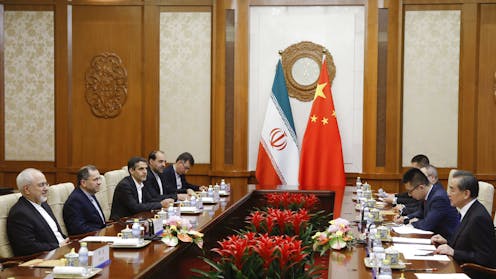
Could longtime allies have a closer relationship than meets the eye? Thomas Peter/Pool Photo via AP

China has long maintained that it does not supply arms to any party at war – a central tenet of its “noninterference” foreign policy. But in recent years, Beijing has repeatedly faced accusations of doing the opposite: providing direct military assistance to nations engaged in conflict, while publicly denying doing so and even adopting a position of diplomatic neutrality.

That has seemingly been the case for two of China’s closest allies: Russia in its war against Ukraine and Pakistan during its recent armed standoff with India in May.

Now, Beijing is facing scrutiny over alleged military links to Iran – a country engaged in a long-running shadow conflict with Israel that recently tipped into a short-lived hot war.

After the ceasefire that followed the 12-day war in the Middle East, China reportedly supplied batteries for surface-to-air missiles to Iran in exchange for oil. Such parts are a critical military need for Tehran after its air defense network was severely damaged by Israeli missiles.

The Chinese Embassy in Israel denied the reports, stating that China firmly opposes the proliferation of weapons of mass destruction and does not export arms to countries at war. But China’s Ministry of Foreign Affairs has yet to issue an official statement on the alleged transfer.

As an expert specializing in China’s grand strategy, I think it is highly possible that China would offer Iran military support while denying it publicly. Such plausible deniability would allow Beijing to assert military influence and showcase some of its hardware, while deflecting international criticism and preserving diplomatic flexibility.

But the tactic works only so far. As indirect evidence accumulates, as many suggest it is, such covert action may gradually develop into an open secret – leading to what scholars term “implausible deniability,” where denial is no longer credible even if it is still officially maintained.

Missiles are put on display.
An air-to-air missile on display at the 15th China International Aviation and Aerospace Exhibition in November 2024.
Shen Ling/VCG via Getty Images

China’s support for Russia’s war

Although Beijing has consistently said it is neutral in the Russia-Ukraine war that broke out in 2022, China has, in practice, quietly supported Russia. In part, that is because China shares the same strategic goal of challenging the Western-led international order.

Recently, Chinese Foreign Minister Wang Yi reportedly told European Union foreign policy chief Kaja Kallas that Beijing cannot afford to see Russia lose the war in Ukraine. He was said to have warned that a Russian defeat would likely bring the full force of U.S. strategic pressure to bear on China.

From Beijing’s perspective, Moscow plays a vital role in keeping the West preoccupied, offering China valuable strategic breathing room by diverting American attention and resources away from the Asia-Pacific region.

Beyond deepening trade relations that have become a lifeline for Moscow’s economy under Western sanctions, China has reportedly supplied Russia with large quantities of dual-use goods – goods that can be used for civilian and military purposes – to enhance both Moscow’s offensive and defensive capabilities, as well as to boost China’s military-industrial production. Beijing has also allegedly provided satellite imagery to assist Russia on the battlefield.

While the U.S. and Europe have repeatedly tried to call out China for aiding Russia militarily, Beijing has consistently denied such claims.

Most recently, on April 18, 2025, Ukraine formally accused China of directly supporting Russia and slapped sanctions on three Chinese-based firms that Kyiv said was involved in weapons production for the Russian war effort.

In what has become a common refrain, China’s Foreign Ministry rejected the Ukrainian accusation, reaffirming that China has never provided lethal weapons to any party in the conflict and reiterating its official stance of promoting a ceasefire and peace negotiations.

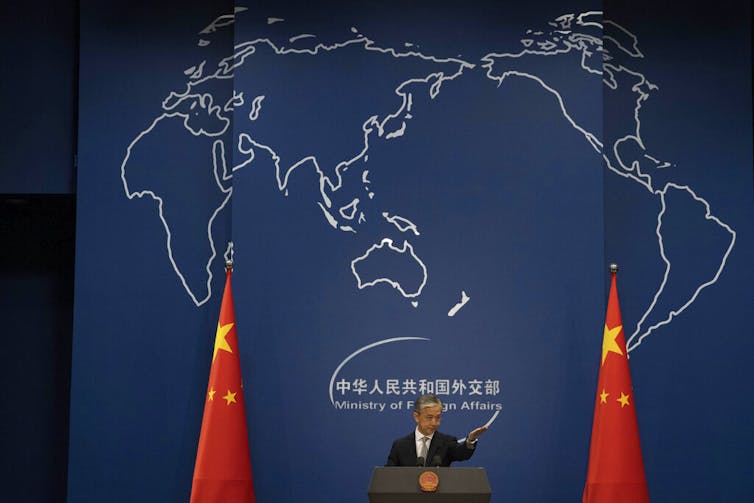
A man talks at a lectern.
A Chinese Foreign Ministry spokesperson gestures for questions during a daily briefing in Beijing in 2020.
AP Photo/Ng Han Guan

China’s quiet backing of Pakistan

Beijing has long presented itself as a neutral party in the India-Pakistan conflict, too, and has called for restraint on both sides and urged peaceful dialogue.

But in practice, China is allied with Pakistan. And the direct military support it has provided to Lahore appears driven by China’s desire to curb India’s regional influence, counterbalance the growing U.S.–India strategic partnership and protect the China–Pakistan Economic Corridor, a massive bilateral infrastructure project.

In the latest flare-up between India and Pakistan in May, Pakistan deployed Chinese-made J-10C fighter jets in combat for the first time, reportedly downing five Indian aircraft.

Pakistan’s air defense relied heavily on Chinese equipment during the short conflict, deploying Chinese-made surface-to-air missile systems, air-to-air missiles, advanced radar systems and drones for reconnaissance and strike operations. Overall, more than 80% of Pakistan’s military imports have come from China in the past five years.

In what would be a far more stark example of military support if proven true, the deputy chief of India’s army alleged that China had provided Pakistan with real-time intelligence on Indian troop movements during the conflict.

When asked to respond, a spokesperson for China’s Ministry of Foreign Affairs said they had no knowledge of the matter. They reaffirmed that China’s ties with Pakistan are not directed against any third party and reiterated Beijing’s long-standing position in favor of a peaceful resolution to any India–Pakistan dispute.

Extending ‘deniability’ to Iran?

Like with Russia and Pakistan, Iran has increasingly been seen as a partner to China.

In 2021, China and Iran signed a 25-year, US$400 billion comprehensive cooperation agreement that covered trade, energy and security, signaling the depth of their strategic relationship.

The accord was indicative of the strategic value Beijing places on Iran. From Beijing’s perspective, Tehran presents a counterbalance to the influence of the U.S. and its allies – especially Israel and Saudi Arabia – in the region and helps divert Western resources and attention away from China.

But recently, Tehran’s position in the region has become far weaker. Not only has its air defense infrastructure suffered badly in the confrontations with Israel, but its regional proxies and allies – Hamas, Hezbollah and the Assad regime in Syria – have either been devastated by Israel or collapsed altogether.

billowing smoke is seen over the top of buildings
Smoke rises over Tehran, Iran, following an Israeli strike on June 23, 2025.
Nikan/Middle East Images/AFP via Getty Images

Under these circumstances, it is strategically compelling for Beijing to provide support to Tehran in order to maintain regime stability.

Indeed, Beijing has frequently circumvented sanctions on Iranian energy, with an estimated 90% of Iran’s oil exports still going to China.

Although Beijing did not extend any substantive support to Iran during the 12-day war, reports have abounded since that Iran is looking to China as an alternative supplier of its defense needs. The thinking here is that Russia, Tehran’s traditional military partner, is no longer able to provide sufficient, quality defense equipment to Iran. Some influential social media posters in China have gone as far as advocating for direct military sales by Beijing.

If China does do this, I believe it is likely to follow the same playbook it has used elsewhere by denying involvement publicly while covertly providing assistance.

Doing so allows China to maintain diplomatic ties with Iran’s regional rivals, such as Israel and Saudi Arabia, while simultaneously benefiting from a turbulent Middle East that distracts Washington and grants Beijing strategic breathing room.

China’s use of plausible deniability reflects a broader strategic ambition. Namely, it wants to assert influence in key regional conflicts without triggering open backlash. By quietly supporting partners while maintaining a facade of neutrality, Beijing aims to undermine Western dominance, stretch U.S. strategic focus and secure its own interests – and all while avoiding the risks and responsibilities of open military alignment.

The Conversation

Linggong Kong does not work for, consult, own shares in or receive funding from any company or organization that would benefit from this article, and has disclosed no relevant affiliations beyond their academic appointment.

ref. Beijing’s ‘plausible deniability’ on arms supply is quickly becoming implausible – and could soon extend to Iran – https://theconversation.com/beijings-plausible-deniability-on-arms-supply-is-quickly-becoming-implausible-and-could-soon-extend-to-iran-261148

3 reasons young people are more likely to believe conspiracy theories – and how we can help them discover the truth

Source: The Conversation – Global Perspectives – By Jean-Nicolas Bordeleau, Research Fellow, Jeff Bleich Centre for Democracy and Disruptive Technologies, Flinders University

Conspiracy theories are a widespread occurrence in today’s hyper connected and polarised world.

Events such as Brexit, the 2016 and 2020 United States presidential elections, and the COVID pandemic serve as potent reminders of how easily these narratives can infiltrate public discourse.

The consequences for society are significant, given a devotion to conspiracy theories can undermine key democratic norms and weaken citizens’ trust in critical institutions. As we know from the January 6 riot at the US Capitol, it can also motivate political violence.

But who is most likely to believe these conspiracies?

My new study with Daniel Stockemer of the University of Ottawa provides a clear and perhaps surprising answer. Published in Political Psychology, our research shows age is one of the most significant predictors of conspiracy beliefs, but not in the way many might assume.

People under 35 are consistently more likely to endorse conspiratorial ideas.

This conclusion is built on a solid foundation of evidence. First, we conducted a meta analysis, a “study of studies”, which synthesised the results of 191 peer-reviewed articles published between 2014 and 2024.

This massive dataset, which included over 374,000 participants, revealed a robust association between young age and belief in conspiracies.

To confirm this, we ran our own original multinational survey of more than 6,000 people across six diverse countries: Australia, Brazil, Canada, Germany, the US and South Africa.

The results were the same. In fact, age proved to be a more powerful predictor of conspiracy beliefs than any other demographic factor we measured, including a person’s gender, income, or level of education.

Why are young people more conspiratorial?

Having established conspiracy beliefs are more prevalent among younger people, we set out to understand why.

Our project tested several potential factors and found three key reasons why younger generations are more susceptible to conspiracy theories.

1. Political alienation

One of the most powerful drivers we identified is a deep sense of political disaffection among young people.

A majority of young people feel alienated from political systems run by politicians who are two or three generations older than them.

This under representation can lead to frustration and the feeling democracy isn’t working for them. In this context, conspiracy theories provide a simple, compelling explanation for this disconnect: the system isn’t just failing, it’s being secretly controlled and manipulated by nefarious actors.

2. Activist style of participation

The way young people choose to take part in politics also plays a significant role.

While they may be less likely to engage in traditional practices such as voting, they are often highly engaged in unconventional forms of participation, such as protests, boycotts and online campaigns.

These activist environments, particularly online, can become fertile ground for conspiracy theories to germinate and spread. They often rely on similar “us versus them” narratives that pit a “righteous” in-group against a “corrupt” establishment.

3. Low self-esteem

Finally, our research confirmed a crucial psychological link to self-esteem.

For individuals with lower perceptions of self worth, believing in a conspiracy theory – blaming external, hidden forces for their problems – can be a way of coping with feelings of powerlessness.

This is particularly relevant for young people. Research has long shown self esteem tends to be lower in youth, before steadily increasing with age.

What can be done?

Understanding these root causes is essential because it shows simply debunking false claims is not a sufficient solution.

To truly address the rise of conspiracy theories and limit their consequences, we must tackle the underlying issues that make these narratives so appealing in the first place.

Given the role played by political alienation, a critical step forward is to make our democracies more representative. This is best illustrated by the recent election of Labor Senator Charlotte Walker, who is barely 21.

By actively working to increase the presence of young people in our political institutions, we can help give them faith that the system can work for them, reducing the appeal of theories which claim it is hopelessly corrupt.

More inclusive democracy

This does not mean discouraging the passion of youth activism. Rather, it is about empowering young people with the tools to navigate today’s complex information landscape.

Promoting robust media and digital literacy education could help individuals critically evaluate the information they encounter in all circles, including online activist spaces.

The link to self-esteem also points to a broader societal responsibility.

By investing in the mental health and wellbeing of young people, we can help boost the psychological resilience and sense of agency that makes them less vulnerable to the simplistic blame games offered by conspiracy theories.

Ultimately, building a society that is resistant to misinformation is not about finding fault with a particular generation.

It is about creating a stronger, more inclusive democracy where all citizens, especially the young, feel represented, empowered, and secure.

The Conversation

Jean-Nicolas Bordeleau receives funding from Social Sciences and Humanities Research Council of Canada.

ref. 3 reasons young people are more likely to believe conspiracy theories – and how we can help them discover the truth – https://theconversation.com/3-reasons-young-people-are-more-likely-to-believe-conspiracy-theories-and-how-we-can-help-them-discover-the-truth-261074

Ceasefire talks collapse – what does that mean for the humanitarian catastrophe in Gaza?

Source: The Conversation – Global Perspectives – By Ali Mamouri, Research Fellow, Middle East Studies, Deakin University

Efforts to end the relentless siege of Gaza have been set back by the abrupt end to peace talks in Qatar.

Both the United States and Israel have withdrawn their negotiating teams, accusing Hamas of a “lack of desire to reach a ceasefire”.

US President Donald Trump’s special envoy Steve Witkoff says it would appear Hamas never wanted a deal:

While the mediators have made a great effort, Hamas does not appear to be coordinated or acting in good faith. We will now consider alternative options to bring the hostages home and try to create a more stable environment for the people in Gaza

State Department spokesman Tommy Piggott reads Steve Witkoff’s statement on the collapse of the Gaza peace talks.

The disappointing development coincides with mounting fears of a widespread famine in Gaza and a historic decision by France to formally recognise a Palestinian state.

French President Emmanuel Macron says there is no alternative for the sake of security of the Middle East:

True to its historic commitment to a just and lasting peace in the Middle East, I have decided that France will recognise the State of Palestine

What will these developments mean for the conflict in Gaza and the broader security of the Middle East?

‘Humanitarian catastrophe’

The failure to reach a truce means there is no end in sight to the Israeli siege of Gaza which has devastated the territory for more than 21 months.

Amid mounting fears of mass starvation, Australian Prime Minister Anthony Albanese says Gaza is in the grip of a “humanitarian catastrophe”. He is urging Israel to comply immediately with its obligations under international law:

Israel’s denial of aid and the killing of civilians, including children, seeking access to water and food cannot be defended or ignored.

According to the United Nations Palestinian refugee agency UNRWA, more than 100 people – most of them children – have died of hunger. One in five children in Gaza City is malnourished, with the number of cases rising every day.

Commissioner-General Philippe Lazzarini says with little food aid entering Gaza, people are

neither dead nor alive, they are walking corpses […] most children our teams are seeing are emaciated, weak and at high risk of dying if they don’t get the treatment they urgently need.

The UN and more than 100 aid groups blame Israel’s blockade of almost all aid into the territory for the lack of food.

Lazzarini says UNRWA has 6,000 trucks of emergency supplies waiting in Jordan and Egypt. He is urging Israel – which continues to blame Hamas for cases of malnutrition – to allow the humanitarian assistance into Gaza.

Proposed ceasefire deal

The latest ceasefire proposal was reportedly close to being agreed by both parties.

It included a 60-day truce, during which time Hamas would release ten living Israeli hostages and the remains of 18 others. In exchange, Israel would release a number of Palestinian prisoners, and humanitarian aid to Gaza would be significantly increased.

During the ceasefire, both sides would engage in negotiations toward a lasting truce.

While specific details of the current sticking points remain unclear, previous statements from both parties suggest the disagreement centres on what would follow any temporary ceasefire.

Israel is reportedly seeking to maintain a permanent military presence in Gaza to allow for a rapid resumption of operations if needed. In contrast, Hamas is demanding a pathway toward a complete end to hostilities.

A lack of mutual trust has dramatically clouded the negotiations.

From Israel’s perspective, any ceasefire must not result in Hamas regaining control of Gaza, as this would allow the group to rebuild its power and potentially launch another cross-border attack.

However, Hamas has repeatedly said it is willing to hand over power to any other Palestinian group in pursuit of a Palestinian state based on the 1967 borders. This could include the Palestinian National Authority (PNA), which governs the West Bank and has long recognised Israel.

Support for a Palestinian state

Israeli leaders have occasionally paid lip service to a Palestinian state. But they have described such an entity as “less than a state” or a “state-minus” – a formulation that falls short of both Palestinian aspirations and international legal standards.

In response to the worsening humanitarian situation, some Western countries have moved to fully recognise a Palestinian state, viewing it as a step toward a permanent resolution of one of the longest-running conflicts in the Middle East.

Macron’s announcement France will officially recognise a full Palestinian state in September is a major development.

France is now the most prominent Western power to take this position. It follows more than 140 countries – including more than a dozen in Europe – that have already recognised statehood.

While largely symbolic, the move adds diplomatic pressure on Israel amid the ongoing war and aid crisis in Gaza.

However, the announcement was immediately condemned by Israeli Prime Minister Benjamin Netanyahu, who claimed recognition “rewards terror” and

risks creating another Iranian proxy, just as Gaza became. A Palestinian state in these conditions would be a launch pad to annihilate Israel – not to live in peace beside it.

Annexing Gaza?

A Palestinian state is unacceptable to Israel.

Further evidence was recently presented in a revealing TV interview by former Israeli Prime Minister Ehud Barak who stated Netanyahu had deliberately empowered Hamas in order to block a two-state solution.

Instead there is mounting evidence Israel is seeking to annex the entirety of Palestinian land and relocate Palestinians to neighbouring countries.

Given the current uncertainty, it appears unlikely a new ceasefire will be reached in the near future, especially as it remains unclear whether the US withdrawal from the negotiations was a genuine policy shift or merely a strategic negotiating tactic.

The Conversation

Ali Mamouri does not work for, consult, own shares in or receive funding from any company or organisation that would benefit from this article, and has disclosed no relevant affiliations beyond their academic appointment.

ref. Ceasefire talks collapse – what does that mean for the humanitarian catastrophe in Gaza? – https://theconversation.com/ceasefire-talks-collapse-what-does-that-mean-for-the-humanitarian-catastrophe-in-gaza-261942

Kazuo Ishiguro said he won the Nobel Prize for making people cry – 20 years later, Never Let Me Go should make us angry

Source: The Conversation – Global Perspectives – By Matthew Taft, Course Coordinator in English and Theatre Studies, The University of Melbourne

Keira Knightley, Carey Mulligan and Andrew Garfield in the film adaptation of Never Let Me Go (2010) IMDB

Our cultural touchstone series looks at works that have had a lasting influence.


Kazuo Ishiguro’s Never Let Me Go was published 20 years ago. Since then, the Japanese-born English writer has been awarded the Nobel Prize in 2017 and knighted for services to literature in 2018.

Never Let Me Go has been translated into over 50 languages. It has been adapted into a film, two stage plays, and a ten-part Japanese television series. A critical and commercial success, the novel has been reissued in an anniversary edition with a fresh introduction from the author.

A spate of reappraisals has accompanied this anniversary: “An impossibly sad novel […] it made me cry several times […] sadness spilled off every page.” “No matter how many times I read it,” one critic wrote, “Never Let Me Go breaks my heart all over again.”

These brief excerpts are clear: the novel pulls us into a morass of sadness that never lets us go. “I’ve usually been praised for producing stuff that makes people cry,” Ishiguro has said. “They gave me a Nobel prize for it.”

Strange and familiar

I want to reconsider the emotional charge of Never Let Me Go.

The deluge of tears attested to by critics hinges on the relationship Ishiguro meticulously crafts between narrator and reader. This is initiated in the novel’s first lines. Ishiguro places us in an alternative 1990s England. His opening gambit will be familiar to novel readers:

My name is Kathy H. I’m thirty-one years old, and I’ve been a carer now for over eleven years. That sounds long enough, I know, but actually they want me to go on for another eight months […] My donors have always tended to do much better than expected.

Within a few pages, the narration slips into Kathy’s recollections of her idyllic 1970s youth at a boarding school called Hailsham. We are immersed in a childhood world of friendship and exclusion, jealousy and love. This is a recognisable world. Ishiguro’s first-person narration affords the reader vicarious access to Kathy’s interior tangle of emotion, desire and reflection, such that we can recognise something of ourselves in her.

Yet something is amiss in her narration. Flat and rather affectless, it is a decidedly less curious, less passionate and more tempered mode of narration than we might expect. The threadbare texture frays the narrative world. What are we to make of the opaque references to “carer”, “they” and “donors”?

This uncanny tension between the strange and the familiar simmers until a third of the way through the novel, when a “guardian” at Hailsham reveals the students’ futures:

Your lives are set out for you. You’ll become adults, then before you’re old, before you’re even middle-aged, you’ll start to donate your vital organs. That’s what each of you was created to do.

Good liberals

Kathy is a clone, condemned to death so her organs can be harvested for “normals”. That this heartless system “reduces the most hardened critics to tears” comes as no surprise. After all, Ishiguro has evoked the familiar genre of the 19th-century boarding-school bildungsroman to encourage us to believe that this is a form of subjectivity we can share. This bildung – the German word for “formation” – is not an integration into society but rather a dismemberment by society.

That this does not provoke anger, in readers and characters alike, does come as a surprise. For if the proclamation of the students’ fates is not distressing enough, Ishiguro forces us to confront the clones’ response or, rather, the lack thereof. There are no incandescent flashes of fury or even mild expressions of dismay.

Instead, the clones are “pretty relieved” when the speech stops. Knowledge of their impending death passes them like a ship in the night, inciting “surprisingly little discussion”. In this disconcerting silence, the relation between reader and clone is mediated through another genre: science fiction.

The bildungsroman and science fiction, identification and misidentification, intimacy and estrangement – these are the tools of Ishiguro’s trade. He manipulates them, and us, with precision. There is intimacy as we recognise that the students’ everyday lives – reading novels, creating art, playing sport – are much like our own. There is estrangement as we realise that the clones are willingly cooperating in their own deaths. They will “donate” and “complete” in the narrative’s chilling terms.

In other words, we cry because the clones are just like us, but our anger towards the machinery of donation is blunted because the clones are not yet us, in that their complicity eerily lacks our instinct for self-preservation.

Confident that we will take ourselves as the measuring stick, Ishiguro compels us to adopt a position of superiority characterised by a paternalistic ethos of sympathy and care. In this way, he persuades us to read as good liberals. We acknowledge the humanity of the clones and embrace the diversity of our common condition. At the same time, we are complacent in the knowledge that we are almost the same, but not quite. We are insulated by a disavowed difference.

An abstract formal equality, evacuated of concrete historical content, is precisely what is expressed when the same critics who praise the novel’s melancholic tone claim that Ishiguro shows us “what it is to be human” or that he enlivens this otherwise “meaningless cliche”.

Kazuo Ishiguro in Stockholm to receive the Nobel Prize in Literature, December 2017.
Frankie Fouganthin, via Wikimedia Commons, CC BY-SA

Beyond liberal sentiments

Is Ishiguro doing anything more than offering a banal endorsement of common humanity? It seems to me that he is, and in doing so he is summoning our liberal sentiments only to turn them against us.

The mechanism he uses is as old as the novel form itself: the romance plot. Romance leads to the happily-ever-after of marriage: a perfect union in which each person completes the other.

Not long after we learn that Kathy and her friends are clones destined to die, we become privy to a rumour: students who can prove they are “properly in love” are eligible for a “deferral” of their donations. To fast-forward through the novel’s tangled romance plot to the denouement, Kathy and Tommy – a fellow clone – track down Hailsham’s former administrator to plead their case. Not only is their request for deferral rejected, but the possibility of deferral is dispelled as a pernicious rumour.

The allure of romance has been a lure, a cold steel trap in the guise of a warm embrace. Ishiguro dangles the promise of romance only to expose its sinister echoes in the donation system.

The “completion” of romance is macabrely inverted. Completion through matrimonial union with an ideal other is transformed into the “donation” of organs, which completes an unknown “normal”, whose life can continue as a result of the clone’s death.

Cover of the first edition of Never Let Me Go (2005)

Ishiguro positions us so that we are unwittingly aligned with the “normal” population, whose “overwhelming concern was that their own children, their spouses, their parents, their friends, did not die from cancer, motor neuron disease, heart disease”.

What we want the clones to do (resist their fates) and the means of doing so (romance) are revealed as responsible for the donation system. If we want Kathy and Tommy to live because they love each other – and we do because Ishiguro has compelled us to care for them – then we are endorsing the logic that designates them as disposable in the first place.

The anger Ishiguro has deliberately blunted returns, redoubled. Our care is transformed into complicity. We, rather than the clones, are the targets of Ishiguro’s ire.

Translating this into political terms, Ishiguro is giving aesthetic form to neoliberalism’s eclipse of liberalism. It is no coincidence that Never Let Me Go takes place in England between the 1970s and 1990s, the exact period of neoliberalism’s emergence and consolidation.

But this is no simple transition. Never Let Me Go implies that liberalism is the ghost in the neoliberal machine. The novel is a representation of a vicious neoliberal class system, where those who can afford replacement parts can substantiate the fantasy of liberal individualism, while those who can’t serve as replacement parts.

In this sense, Ishiguro can be read as posing a series of incisive questions, not simply offering the platitude that we are all human. What are the costs of love? Why is there a trade-off between caring for those close to us and caring for those who are distant? How do our claims of shared humanity pave the way for domination? Why do we assume that our way of life is superior because it is predicated on liberal principles? How do we break from a callous system in which we too are complicit?

Twenty years on, these questions are as relevant as ever. To begin answering them, perhaps we have to wipe the tears from our eyes and turn to anger.

The Conversation

Matthew Taft does not work for, consult, own shares in or receive funding from any company or organisation that would benefit from this article, and has disclosed no relevant affiliations beyond their academic appointment.

ref. Kazuo Ishiguro said he won the Nobel Prize for making people cry – 20 years later, Never Let Me Go should make us angry – https://theconversation.com/kazuo-ishiguro-said-he-won-the-nobel-prize-for-making-people-cry-20-years-later-never-let-me-go-should-make-us-angry-259282

Is sleeping a lot actually bad for your health? A sleep scientist explains

Source: The Conversation – Global Perspectives – By Charlotte Gupta, Senior Postdoctoral Research Fellow, Appleton Institute, HealthWise Research Group, CQUniversity Australia

Walstrom, Susanne/Getty

We’re constantly being reminded by news articles and social media posts that we should be getting more sleep. You probably don’t need to hear it again – not sleeping enough is bad for your brain, heart and overall health, not to mention your skin and sex drive.

But what about sleeping “too much”? Recent reports that sleeping more than nine hours could be worse for your health than sleeping too little may have you throwing up your hands in despair.

It can be hard not to feel confused and worried. But how much sleep do we need? And what can sleeping a lot really tell us about our health? Let’s unpack the evidence.

Sleep is essential for our health

Along with nutrition and physical activity, sleep is an essential pillar of health.

During sleep, physiological processes occur that allow our bodies to function effectively when we are awake. These include processes involved in muscle recovery, memory consolidation and emotional regulation.

The Sleep Health Foundation – Australia’s leading not-for-profit organisation that provides evidence-based information on sleep health – recommends adults get seven to nine hours of sleep per night.

Some people are naturally short sleepers and can function well with less than seven hours.

However, for most of us, sleeping less than seven hours will have negative effects. These may be short term; for example, the day after a poor night’s sleep you might have less energy, worse mood, feel more stressed and find it harder to concentrate at work.

In the long term, not getting enough good quality sleep is a major risk factor for health problems. It’s linked to a higher risk of developing cardiovascular disease – such as heart attacks and stroke – metabolic disorders, including type 2 diabetes, poor mental health, such as depression and anxiety, cancer and death.

So, it’s clear that not getting enough sleep is bad for us. But what about too much sleep?

Could too much sleep be bad?

In a recent study, researchers reviewed the results of 79 other studies that followed people for at least one year and measured how sleep duration impacts the risk of poor health or dying to see if there was an overall trend.

They found people who slept for short durations – less than seven hours a night – had a 14% higher risk of dying in the study period, compared to those who slept between seven and eight hours. This is not surprising given the established health risks of poor sleep.

However, the researchers also found those who slept a lot – which they defined as more than nine hours a night – had a greater risk of dying: 34% higher than people who slept seven to eight hours.

This supports similar research from 2018, which combined results from 74 previous studies that followed the sleep and health of participants across time, ranging from one to 30 years. It found sleeping more than nine hours was associated with a 14% increased risk of dying in the study period.

Research has also shown sleeping too long (meaning more than required for your age) is linked to health problems such as depression, chronic pain, weight gain and metabolic disorders.

This may sound alarming. But it’s crucial to remember these studies have only found a link between sleeping too long and poor health – this doesn’t mean sleeping too long is the cause of health problems or death.


Read more:
If ‘correlation doesn’t imply causation’, how do scientists figure out why things happen?


So, what’s the link?

Multiple factors may influence the relationship between sleeping a lot and having poor health.

It’s common for people with chronic health problems to consistently sleep for long periods. Their bodies may need additional rest to support recovery, or they may spend more time in bed due to symptoms or medication side effects.

People with chronic health problems may also not be getting high quality sleep, and may stay in bed for longer to try and get some extra sleep.

Additionally, we know risk factors for poor health, such as smoking and being overweight, are also associated with poor sleep.

This means people may be sleeping more because of existing health problems or lifestyle behaviours, not that sleeping more is causing the poor health.

Put simply, sleeping may be a symptom of poor health, not the cause.

What’s the ideal amount?

The reasons some people sleep a little and others sleep a lot depend on individual differences – and we don’t yet fully understand these.

Our sleep needs can be related to age. Teenagers often want to sleep more and may physically need to, with sleep recommendations for teens being slightly higher than adults at eight to ten hours. Teens may also go to bed and wake up later.

Older adults may want to spend more time in bed. However, unless they have a sleep disorder, the amount they need to sleep will be the same as when they were younger.

But most adults will require seven to nine hours, so this is the healthy window to aim for.

It’s not just about how much sleep you get. Good quality sleep and a consistent bed time and wake time are just as important – if not more so – for your overall health.

The bottom line

Given many Australian adults are not receiving the recommended amount of sleep, we should focus on how to make sure we get enough sleep, rather than worrying we are getting too much.

To give yourself the best chance of a good night’s sleep, get sunlight and stay active during the day, and try to keep a regular sleep and wake time. In the hour before bed, avoid screens, do something relaxing, and make sure your sleep space is quiet, dark, and comfortable.

If you notice you are regularly sleeping much longer than usual, it could be your body’s way of telling you something else is going on. If you’re struggling with sleep or are concerned, speak with your GP. You can also explore the resources on the Sleep Health Foundation website.

The Conversation

The authors do not work for, consult, own shares in or receive funding from any company or organisation that would benefit from this article, and have disclosed no relevant affiliations beyond their academic appointment.

ref. Is sleeping a lot actually bad for your health? A sleep scientist explains – https://theconversation.com/is-sleeping-a-lot-actually-bad-for-your-health-a-sleep-scientist-explains-259991

As seas rise and fish decline, this Fijian village is finding new ways to adapt

Source: The Conversation – Global Perspectives – By Celia McMichael, Professor in Geography, The University of Melbourne

Celia McMichael, CC BY-NC-ND

In the village of Nagigi, Fiji, the ocean isn’t just a resource – it’s part of the community’s identity. But in recent years, villagers have seen the sea behave differently. Tides are pushing inland. Once abundant, fish are now harder to find. Sandy beaches and coconut trees have been washed away.

Like many coastal communities, including those across the Pacific Islands region, this village is now under real pressure from climate change and declining fish stocks. Methods of fishing are no longer guaranteed, while extreme weather and coastal erosion threaten homes and land. As one villager told us:

we can’t find fish easily, not compared to previous times […] some fish species we used to see before are no longer around.

When stories like this get publicity, they’re often framed as a story of loss. Pacific Islanders can be portrayed as passive victims of climate change.

But Nagigi’s experience isn’t just about vulnerability. As our new research shows, it’s about the actions people are taking to cope with the changes already here. In response to falling fish numbers and to diversify livelihoods, women leaders launched a new aquaculture project, and they have replanted mangroves to slow the advance of the sea.

Adaptation is uneven. Many people don’t want to or can’t leave their homes. But as climate change intensifies, change will be unavoidable. Nagigi’s experience points to the importance of communities working collectively to respond to threats.

Unwelcome change is here

The communities we focus on, Nagigi village (population 630) and Bia-I-Cake settlement (population 60), are located on Savusavu Bay in Vanua Levu, Fiji’s second largest island. Fishing and marine resources are central to their livelihoods and food security.

In 2021 and 2023, we ran group discussions (known as talanoa) and interviews to find out about changes seen and adaptations made.

Nagigi residents have noticed unwelcome changes in recent years. As one woman told us:

sometimes the sea is coming further onto the land, so there’s a lot of sea intrusion into the plantations, flooding even on land where it never used to be

house in fiji village with sea in foreground, climate change, rising seas.
Tides are pushing ashore in Nagigi, threatening infrastructure.
Celia McMichael, CC BY-NC-ND

In 2016, the devastating Tropical Cyclone Winston destroyed homes and forced some Nagigi residents to move inland to customary mataqali land owned by their clan.

As one resident said:

our relocation was smooth because […] we just moved to our own land, our mataqali land.

But some residents didn’t have access to this land, while others weren’t willing to move away from the coast. One man told us:

leave us here. I think if I don’t smell or hear the ocean for one day I would be devastated.

Adaptation is happening

One striking aspect of adaptation in Nagigi has been the leadership of women, particularly in the small Bia-I-Cake settlement.

In recent years, the Bia-I-Cake Women’s Cooperative has launched a small-scale aquaculture project to farm tilapia and carp to tackle falling fish stocks in the ocean, tackle rising food insecurity and create new livelihoods.

Women in the cooperative have built fish ponds, learned how to rear fish to a good size and began selling the fish, including by live streaming the sale. The project was supported by a small grant from the United Nations Development Programme and the Women’s Fund Fiji.

Recently, the cooperative’s women have moved into mangrove replanting to slow coastal erosion and built a greenhouse to farm new crops.

As one woman told us, these efforts show women “have the capacity to build a sustainable, secure and thriving community”.

The community’s responses draw on traditional social structures and values, such as respect for Vanua – the Fijian and Pacific concept of how land, sea, people, customs and spiritual beliefs are interconnected – as well as stewardship of natural resources and collective decision-making through clans and elders, both women and men.

Nagigi residents have moved to temporarily close some customary fishing grounds to give fish populations a chance to recover. The village is also considering declaring a locally-managed marine area (known as a tabu). This is a response to climate impacts as well as damage to reefs, pollution and overfishing.

For generations, village residents have protected local ecosystems which in turn support the village. But what is new is how these practices are being strengthened and formalised to respond to new challenges.

fish ponds, aquaculture.
A women’s cooperative have built aquaculture ponds to raise and sell fish.
Celia McMichael, CC BY-NC-ND

Adaptation is uneven

While adaptation is producing some successes, it is unevenly spread. Not everyone has access to customary land for relocation and not every household can afford to rebuild damaged homes.

What Nagigi teaches us, though, is the importance of local adaptation. Villagers have demonstrated how a community can anticipate risks, respond to change and threats, recover from damage and take advantage of new opportunities.

Small communities are not just passive sites of loss. They are collectives of strength, agency and ingenuity. As adaptation efforts scale up across the Pacific, it is important to recognise and support local initiatives such as those in Nagigi.

Sharing effective adaptation methods can give ideas and hope to other communities under real pressure from climate change and other threats.

Many communities are doing their best to adapt often undertaking community-led adaptation, even despite the limited access Pacific nations have to global climate finance.

Nagigi’s example shows unwelcome climatic and environmental changes are already arriving. But it’s also about finding ways to live well amid uncertainty and escalating risk by using place, tradition and community.

The authors acknowledge the support of the people of Nagigi and Bia-I-Cake, and especially the Bia-I-Cake Women’s Cooperative, for sharing their time and insights.

The Conversation

Celia McMichael receives funding from the Australian Research Council (ARC).

Merewalesi Yee does not work for, consult, own shares in or receive funding from any company or organisation that would benefit from this article, and has disclosed no relevant affiliations beyond their academic appointment.

ref. As seas rise and fish decline, this Fijian village is finding new ways to adapt – https://theconversation.com/as-seas-rise-and-fish-decline-this-fijian-village-is-finding-new-ways-to-adapt-261573