Deep in your memory, your brain has created a playlist of music from your teenage years. Even though life has moved on, hearing that music now likely still brings up some really powerful emotions.
Why?
Well, as with anything to do with the brain and with emotions, it’s hard to say for sure. But it’s likely a bit to do with evolution, and a bit to do with some key neurological changes that occur in the teenage years.
At the same time, we start to become less reliant on our parents.
This increasing independence accelerates the need to forge close relationships with peers. We need to learn very quickly how to interpret the emotions of others, and develop strong memories of things that are safe or unsafe.
Imagine the world of a prehistoric teenager. No longer a child wholly dependent on their parents, the adolescent feels an instinctive drive to explore new territory and strike out on their own.
Away from their family’s protection, survival now hinges on bonds with peers.
Going it alone is fraught with danger. Belonging to a group becomes a matter of life or death.
The teen finds a new pack, which communicates crucial information to each other using body language or non-linguistic verbalisations. Variations in the voice pitch or the speed of speech signal urgency or excitement.
Strong emotional reactions – the fear of danger, the thrill of a successful hunt, an intense connection with a potential mate – ensure memories about what to fear and what to seek are deeply carved into this teenage brain.
In today’s world, we seldom need to hunt for food or protect ourselves from predators trying to eat us. But modern teenage brains are still wired to react quickly and instinctively.
Modern teens will still strike out away from the safety of the family circle, learning to navigate the treacherous world of adolescent relationships.
As we all know – often from searingly painful personal experience – teenage brains are keenly attuned to non-linguistic social cues that signal acceptance or rejection by the pack.
We are evolutionarily wired to lay down deep memories in our brains of events that have had a strong emotional impact on us.
Lyrics can tell a story that makes us feel heard and understood. They might signal we belong and are connected – with the artist, with other fans, and with broader human experiences such as love, lust or loneliness.
In fact, some scholars believe the very reason music exists is related to the non-linguistic elements of speech that our prehistoric ancestors may have used to communicate before spoken language developed.
Our brains may respond to these signals in music the way our prehistoric ancestors responded to expressions of urgency, excitement or peace from other members of the tribe.
The way music communicates and evokes emotion is what makes it so important in life, particularly during the teenage years.
During this period – when emotional experiences and the learning that comes from them are so crucial to learning to survive – music becomes a powerful tool.
It can act as a simulator for practising emotional skills, a guide to navigating emotional ups and downs and a key to finding connection and belonging.
In other words, the music that we hear in our teenage years becomes closely intertwined with the strong emotions we experience at that time.
The music of your teens was likely the backdrop to your first kiss, the anthem you sang along to with friends, and a source of comfort when your heart was first broken.
Evolution has programmed you to feel every moment of your teenage years profoundly, so you can learn important lessons about how to survive, become independent and connect with others.
At the same time, music may be tapping into an ancient, pre-language part of our brains.
The music that accompanied high-stakes moments of your youth is forever linked to the powerful emotions you experienced then, and deeply embedded in the brain.
That is why, for the rest of our lives, those songs act as a kind of musical key to a neurological time capsule.
Sandra Garrido does not work for, consult, own shares in or receive funding from any company or organisation that would benefit from this article, and has disclosed no relevant affiliations beyond their academic appointment.
World Athletics president Sebastian Coe recently announced a new rule for women athletes, requiring mandatory genetic tests to verify their biological sex.
This test must be done if athletes wish to compete in September’s World Athletics Championships in Tokyo.
World Athletics has said all athletes competing as women must have an SRY gene test to identify whether a male Y chromosome is present.
Any athlete whose test shows the presence of the SRY gene will be banned from competing in the women’s category in elite events.
If a human embryo has XY chromosomes, then at six weeks of development the SRY gene on the Y chromosome triggers a cascade of events involving some 30 different genes that lead to the formation of testes.
In simplest terms, the testes then produce hormones including testosterone, leading to male development.
However, if an embryo has XX chromosomes, a whole different group of genes come into play, ovaries form and the hormones produced result in a female.
We know making testes or ovaries requires a complex network of many interacting genes and proteins.
Some genes promote testis development while others promote ovary development.
Other genes either suppress ovary formation or antagonise testis formation.
Even once ovaries or testes are fully formed, we require other genes to maintain them. These genes don’t always function as expected, affecting the development of these organs.
How does this relate to sex testing of elite women athletes?
Changes or variants in the many genes that regulate the development of a testis or ovary can result in sex reversal or a non-functioning testis or ovary.
What do I mean by this?
If there is a change in the SRY gene so it does not function as usual, then a person can fail to develop testes and be biologically female. Yet they carry XY chromosomes and under the World Athletics tests they would be excluded from competition.
Other XY individuals may have a functioning SRY gene but are female – with breasts and female genitalia, for example – but have internal testes.
Importantly, the cells of these people are physically unable to respond to the testosterone produced by these testes. Yet, they would receive positive SRY tests and be excluded from competition.
World Athletics asserts the SRY gene is a reliable proxy for determining biological sex. But biological sex is much more complex, with chromosomal, gonadal (testis/ovary), hormonal and secondary sex characteristics all playing a role.
Using SRY to establish biological sex is wrong because all it tells you is whether or not the gene is present.
It does not tell you how SRY is functioning, whether a testis has formed, whether testosterone is produced and, if so, whether it can be used by the body.
Other problems with the SRY testing process
World Athletics is recommending all women athletes take a cheek swab or blood sample to test for the presence of SRY.
Normally, the sample would be sent to a lab that would extract DNA and look for the presence of the SRY gene.
This may be easy enough in wealthy countries, but what is going to happen in poorer nations without these facilities?
It is worth noting these tests are sensitive. If a male lab technician conducts the test he can inadvertently contaminate it with a single skin cell and produce a false positive SRY result.
No guidance is given on how to conduct the test to reduce the risk of false results.
Nor does World Athletics recognise the impacts a positive test result would have on a person, which can be more profound than exclusion from sport alone.
There was no mention from World Athletics that appropriate genetic counselling should be provided, which is considered necessary prior to genetic testing and challenging to access in many lower- and middle-income countries.
I, along with many other experts, persuaded the International Olympic Committee to drop the use of SRY for sex testing for the 2000 Sydney Olympics.
It is therefore very surprising that, 25 years later, there is a misguided effort to bring this test back.
Given all the problems outlined above, the SRY gene should not be used to exclude women athletes from competition.
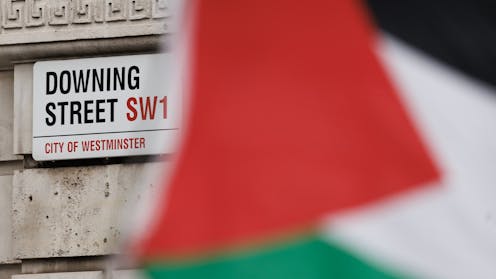
The announcement this week by UK Prime Minister Keir Starmer on the recognition of a Palestininian state has been welcomed by many who want to see a ceasefire in Gaza and lasting peace in the region.
In contrast to other recent statements on the status of Palestine, however, the UK has said it will recognise Palestine as a state in September
unless the Israeli government takes substantive steps to end the appalling situation in Gaza and commits to a long term sustainable peace, including through allowing the UN to restart without delay the supply of humanitarian support to the people of Gaza to end starvation, agreeing to a ceasefire, and making clear there will be no annexations in the West Bank.
Until this week, the UK’s position had been that recognition would only follow a negotiated two-state solution in Israel-Palestine. Other countries have now begun to shift from that position, too.
The latest UK statement was preceded by announcements from France on July 25 and Canada on July 31 that they too would recognise Palestine as a state in September.
But the UK position is different in one important way: it is conditional on Israel failing to comply with its international humanitarian obligations in Gaza and the West Bank.
In other words, recognition of Palestine as a state by the UK is being used as a stick to persuade Israel to agree to a ceasefire. Should Israel agree to those conditions, the UK will presumably not recognise Palestine as a state in September, but will revert to its original position on a two-state solution.
Conditional recognition subject to action by Israel – a third state – represents an unwelcome and arguably dangerous departure from international practice.
While recognition (or otherwise) of states is inherently political – as demonstrated by the unique status of Taiwan, for example – it is not and should not be made conditional on the action or inaction of third states.
How states are recognised
According to the Convention on the Rights and Duties of States, a state must have a permanent population, territory, an independent government, and the capacity to enter into relations with other states, as well as self-determination.
Palestine has arguably met all these criteria, with the possible exception of an independent government, given the level of Israeli intervention in the West Bank and the current situation in Gaza.
Although recognition by other states is arguably not a formal criterion of statehood, it is very difficult to function as a state without reasonably widespread recognition by other states.
Some 147 countries – two-thirds of UN members – now recognise the State of Palestine, including Spain, Ireland and Norway, which made announcements in 2024.
Those choosing not to formally recognise a Palestinian state are now in a small minority, including Australia and New Zealand. This is inevitably leading to calls in those countries to change position.
Australia is considering such a shift, subject to conditions similar to those set out by Canada – including the release of Israeli hostages, the demilitarisation of Hamas, and reform of the Palestinian Authority.
New Zealand is currently maintaining its longstanding position of recognising Palestine within the context of a two-state solution. On July 30, Foreign Minister Winston Peters and 13 of his counterparts issued a joint statement – the “New York Call” – demanding an immediate ceasefire in Gaza and reiterating “unwavering commitment to the vision of the two-State solution”.
The statement also asserted that “positive consideration” to recognise the state of Palestine is “an essential step towards the two-state solution”.
Better options are available
The UK’s position, however, introduces another dynamic. By using recognition of Palestine as a tool to punish Israel for its actual and alleged breaches of international law in Gaza, it is implicitly failing to respect Palestine’s right to self-determination.
If Palestine deserves statehood, it is on its own terms, not as a condition of Israel’s policies and actions.
But it is also setting a dangerous precedent. Countries could choose to recognise (or not recognise) states to pressure or punish them (or indeed other states) for breaches of international law. Such breaches may or may not be connected to the state actually seeking recognition.
This is important, because the post-colonial settlement of geographical boundaries remains deeply insecure in many regions. As well, low-lying island nations at risk of losing territory from sea-level rise may also find their status challenged, as territory has traditionally been a requirement of statehood.
The UK’s apparent conditional recognition of Palestine is only likely to increase this international instability around statehood.
While the UK’s announcement may be “clever politics” from a domestic perspective, and avoids outright US opposition internationally, it has conflated two separate issues.
The better option would be for the UK to recognise Palestine as a state, joining a growing number of countries that plan to do so in advance of the UN General Assembly meeting in September. It could make this subject to conditions, including the release of hostages and exclusion of Hamas from Palestinian governance.
And it should continue to press Israel to agree to a ceasefire in addition to the other demands set out in its announcement, and hold Israel accountable for its gross breaches of international law in Gaza. It can back up those demands with appropriate diplomatic and trade sanctions.
New Zealand, too, has a range of options available, and can help increase the pressure on Israel by using them.
Karen Scott does not work for, consult, own shares in or receive funding from any company or organisation that would benefit from this article, and has disclosed no relevant affiliations beyond their academic appointment.
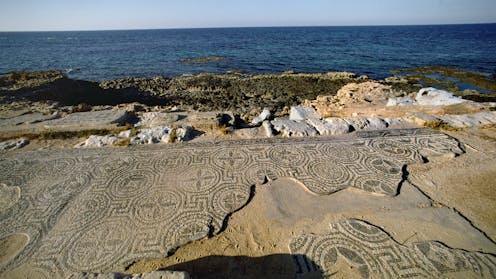
The Roman baths at Sabratha, Libya, were damaged in the earthquake and tsunami of 365 ADReza / Getty Images
The Greek poet Crinagoras of Mytilene (1st century BC–1st century AD) once addressed a little poem to an earthquake. He asked the quake not to destroy his house:
Earthquake, most dread of all shocks … spare my new-built house, for I do not know of any terror equal to the quivering of the earth.
Like us, ancient people had many things to say about natural disasters. So, what information did they leave behind for us, and what can we learn from them?
The story of Nicomedia
One of the most vivid ancient accounts of an earthquake is found in the writings of the Roman historian Ammianus Marcellinus (c. 330–395 AD).
On August 24 358 AD, there was a huge earthquake at Nicomedia, a city in Asia Minor.
A terrific earthquake completely overturned the city and its suburbs … since most of the houses were carried down the slopes of the hill, they fell one upon another, while everything resounded with the vast roar of their destruction.
The human effect was devastating.
The palace of the emperor Diocletian at Nicomedia was damaged in the quake of 358 AD. G. Berggren / Getty Images
Most people were “killed at one blow”, says Ammianus. Others, he tells us, were “imprisoned unhurt within slanting house roofs, to be consumed by the agony of starvation”.
Hidden in the rubble “with fractured skulls or amputated arms or legs”, injured survivors “hovered between life and death”, but most could not be recovered, “despite their pleas and protestations” resounding from beneath the rubble, according to Ammianus.
Famous natural disasters in the ancient world
A number of natural disasters involving earthquakes and tsunamis were especially famous in ancient Greek and Roman times.
In 464 BC, in Sparta, there was a huge earthquake. People at the time said it was greater than any earthquake that had ever occurred beforehand.
According to the Greek writer Plutarch (c. 46–119 AD), the earthquake “tore the land of the Lacedaemonians into many chasms”, collapsed the peaks of the surrounding mountains, and “demolished the entire city with the exception of five houses”.
In 373–372 BC, the Greek coastal cities of Helice and Buris were destroyed by tsunamis. They were permanently submerged beneath the waves.
An anonymous Greek poet evocatively wrote that the walls of these cities, which had once been thriving with many people, were now silent under the waves, “clad with thick sea-moss”.
But arguably the most famous ancient tsunami occurred on July 21 365 AD on the northern coast of Africa, at that time controlled by the Romans.
Again according to Ammianus, early in the morning there was a huge earthquake. Then, not long after, the water retreated from the shore:
the sea with its rolling waves was driven back and withdrew from the land, so that in the abyss of the deep thus revealed people saw many kinds of sea-creatures stuck fast in the slime … and vast mountains and deep valleys, which nature had hidden in the unplumbed depths.
Then, suddenly, the sea returned with a vengeance. As Ammianus tells us, it smashed over the land destroying everything in its path:
The great mass of waters killed many thousands of people by drowning … the lifeless bodies of shipwrecked persons lay floating on their backs or on their faces … great ships, driven by the mad blasts, landed on the tops of buildings, and some were driven almost two miles inland.
Earthquakes were famous for their sound. The Roman scholar Pliny the Elder (23–79 AD) explained that earthquakes have a “terrible sound” – like “the bellowing of cattle or the shouts of human beings or the clash of weapons struck together”.
Ancient ideas about what causes earthquakes and tsunamis
Like today, ancient people wanted to know what caused these phenomena. There were various different theories.
Some people thought Poseidon, god of the sea, earthquakes and horses, was responsible.
As the Greek writer Plutarch (c. 46–119 AD) comments, “men sacrifice to Poseidon when they wish to put a stop to earthquakes”.
An ancient statue of Poseidon, god of the sea and earthquakes, from the island of Milos. Sepia Times / Getty Images
However, other people looked beyond divine explanations.
One interesting theory held by the philosopher Anaximenes (6th century BC) was that the earth itself was the cause of earthquakes.
According to Anaximenes, huge parts of the earth beneath the ground can move, collapse, detach or tear away, thus causing shaking.
“Huge waves”, said Anaximenes, are “produced by the weight [of falling earth] crashing down into the [waters] from above”.
Ancient people knew nothing of tectonic plates and continental drift. These were discovered much later, mainly through the pioneering work of Alfred Wegener (1880–1930).
Preparing for natural disasters
Ancient Greeks and Romans had little way of predicting or preparing for earthquakes and tsunamis.
Pherecydes of Samos (6th century BC) was said to have predicted an earthquake “from the appearance of some water drawn from a well”, according to the Roman statesman Cicero (106–43 BC).
For the most part, though, ancient people had to live at the mercy of these occurrences.
As the anonymous author of a treatise titled On the Cosmos once wrote, natural disasters are part of life on earth:
Violent earthquakes before now have torn up many parts of the earth; monstrous storms of rain have burst out and overwhelmed it; incursions and withdrawals of the waves have often made seas of dry land and dry land of seas…
While our understanding of these events (and our ability to prepare for them, and recover afterward) has improved immeasurably since ancient times, earthquakes and tsunamis are things we will always have to deal with.
Konstantine Panegyres does not work for, consult, own shares in or receive funding from any company or organisation that would benefit from this article, and has disclosed no relevant affiliations beyond their academic appointment.
The money is easy to trace. Scroll back through tech entrepreneur Peter Thiel’s political donations and you’ll soon hit US$15 million worth of transfers sent to Protect Ohio Values, JD Vance’s campaign fund. The donations, made in 2022, are a staggering contribution to an individual senate race, and helped put Vance (Thiel’s former employee at tech fund Mithril Capital) on a winning trajectory.
But if money matters, so do ideas. Scroll back through Vance’s speeches, and you’ll hear echoes of Thiel’s voice. The decline of US elites (and by extension, the nation) is supposedly a result of technological stagnation: declining innovation, trivial distractions, broken infrastructure. To make the nation great again, Thiel believes, tech should come first, corporates should be unshackled, and the state should resemble the startup. For Vance, who has now risen to the office of US vice-president, a Thiel talk on these topics at Yale Law was “the most significant moment” of his time there.
Thiel’s influence on politics is at once financial, technical and ideological. In the New York Times, he was recently described as the “most influential right-wing intellectual of the last 20 years”. And his potent cocktail of networks, money, strategy and support exerts a rightward force on the political landscape. It establishes a powerful pattern for up-and-coming figures to follow.
To “hedge fund investor” and “tech entrepreneur”, Thiel has recently added a new label: Republican kingmaker.
Who is Peter Thiel?
Thiel was born in Germany but grew up in the United States, with a childhood sojourn in apartheid South Africa. Max Chafkin’s critical but balanced biography, The Contrarian, claims Thiel was bullied growing up and protected himself by becoming resolutely “disdainful”. He studied philosophy and then law at Stanford, where he founded The Stanford Review, a libertarian–conservative student paper that signalled his early interest in controversial politics and culture wars.
While difficult to pin down precisely, Thiel’s Christianity shapes his belief in a declining or even apocalyptic world that can only be countered with unapologetic interventions and technological innovations. God helps those who help themselves – but could always use additional help from ambitious tech elites.
In 1998, Thiel cofounded his first tech company, Confinity, which launched its flagship product PayPal in 1999 and merged with Elon Musk’s X.com in 2000. In 2002, eBay bought PayPal for $1.5 billion and Thiel became a multimillionaire. He invested in several startups, including Facebook, and established his hedge fund, Clarium, and his venture capital firm, Founders Fund.
In their own ways, each of these developments is a response to Thiel’s thesis that the world is stuck. In his 2011 essay The End of the Future, he decries the “soft totalitarianism of political correctness in media and academia” and the “sordid world” of entertainment. The result is “50 years of stagnation” that has transformed humanity “into this more docile kind of a species”.
Thiel’s answer is more risk, more tech and more ambition. It’s exemplified most clearly by Palantir Technologies, the data analytics firm he cofounded in 2004.
Palantir has worked closely with US armed forces and intelligence agencies for 14 years. It is currently working closely with the Trump administration to create a “super-database” of combined data from all federal agencies, and building a platform for Immigration and Customs Enforcement (ICE) “to track migrant movements in real time”.
Investing in right-wing politics
Thiel’s political interventions have ramped up over time. Libertarianism generally takes an arms-length approach to politics in favour of individual freedom and market determination. But even in “purely” financial spaces, politics creeps in.
Clarium’s macroeconomic approach meant the political landscape had to be factored in: “high-conviction, directional investments based on key drivers of the global economy and fundamental themes underappreciated by the marketplace”.
If politics, like technology, had stagnated – into a non-choice between similar parties – how could it be “disrupted”? Thiel began making political donations in December 2011, with contributions totalling at least $2.6 million, to the third presidential campaign of Ron Paul, a longstanding conservative congressman in Texas.
While Paul would ultimately be unsuccessful, Thiel recognised something others had missed. Voters had not been attracted to some idealistic libertarian, as the media portrayed him, but to the old Ron Paul, a neoconservative whose newsletters published in his name in the 1980s and ‘90s suggested 95% of Black men in Washington DC were criminals. (He denied writing them in 2011, calling the statements “terrible”.) His appeal was never “merely” about economic freedom, but about race and class, fear and grievance.
Donald Trump took this dark undercurrent, a strain that has always underpinned parts of US politics, and ran with it. Dog-whistles were dispensed with in favour of overt claims that most illegal immigrants were rapists, certain Latin American countries were shitholes, women were bitches, and white supremacists were “very fine people”. Trump, noted one article, was “weaponizing the conservative id”.
In these visions, multiculturalism and progressivism are not just cultural threats, but economic ones. They undermine the ability of company founders to exploit labour, blow past regulations, and obey the brutal logic of the market.
“A world safe for capitalism is presumably one of monopoly companies and patriarchal networks,” note media scholars Ben Little and Alison Winch in their profile of Thiel. It’s a world “where ‘the multiculture’ has been transformed into racialised domination”.
Thiel has certainly contributed to the rise of Trump and the new breed of right-wing politicians through his vast wealth. In 2016, Thiel contributed $1.25 million to Trump’s campaign, thinking “he had a 50-50 chance of winning”. This earned him a speaking slot at the Republican convention. But his influence extends beyond mere money.
Thiel’s endorsement of Trump at the 2016 Republican convention was hugely significant for garnering support. So was his famous declaration there that he was proud to be gay, Republican and American. After Trump won his first term, Thiel continued to be involved. He joined the transition team and recommended aligned individuals for key positions, such as Michael Kratsios, who would become chief technology officer.
So, Thiel’s support of Trump should be understood as an investment, just like his early investments in PayPal and Facebook. As Chafkin notes, Thiel’s bet on Trump is a wager with high upsides and low risk. Thiel’s outspoken views in favour of “seasteading” (floating independent city-states) and against immigration and women’s emancipation had already alienated the more progressive sectors of Silicon Valley.
If the bet paid off, Thiel and his empire could benefit handsomely. And this is exactly what has played out. Since Trump has taken office in his second term, Palantir has already netted more than $113 million in federal government spending.
Palantir: from information to domination
Palantir’s origin story reflects its blend of technical expertise and political ambition. To combat rising fraud, members of PayPal developed a software tool that could mine vast amounts of transactions and find the connections between them, homing in on a handful of culprits in a deluge of data.
Thiel was prescient in spinning this core idea from finance to intelligence, where analysts were searching for patterns and anomalies amid the noise – a needle in a haystack. Palantir commercialised and expanded this concept, bringing a leaner, data-driven Silicon Valley approach to a sector dominated by established Washington incumbents.
Thiel and Palantir chief executive Alex Karp believe Silicon Valley has lost its way, frittering away its vast talents and ingenuity on trivial pursuits: advertising, gaming, social media. For them, the era of ambitious scientific projects and unapologetic military industrial collaborations – the Manhattan Project, the Moon landing — needs to be revived.
In his book, the Technological Republic, Karp calls for a state that looks more like a startup – lean, technology-driven, and led authoritatively by a founder-like figure who is not afraid to “move fast and break stuff” (the Silicon Valley motto), especially when it comes to dominating enemies and ensuring the safety of a nation’s citizens.
Palantir, of course, answers this call. It combines machine learning with military spending, data-driven “intelligence” with naked violence. This is most clear in its longstanding collaboration with ICE, which is now carrying out notorious immigration raids at the behest of the Trump administration. “On the factory floor, in the operating room, on the battlefield,” states a recent Palantir recruitment ad placed across US college campuses, “we build to dominate.”
Palantir’s blueprint has been emulated by a growing array of others. Anduril, Skydio and Shield AI are all founded on developing information technologies for military and intelligence use. Last week, Rune Technologies closed a $24 million Series A round of funding to move warfare logistics away from the “Excel era” and towards AI-augmented tools.
Answering Karp’s call, these startups are unapologetic in leveraging engineering expertise for more substantial, authoritarian and historically controversial areas.
Playing the scapegoat
One of the clearest outlines of Thiel’s political philosophy is laid out in the Straussian Moment, a 30-page essay he published in 2007.
For Thiel, the spectacular violence of the September 11 terrorist attacks was a wake-up call, rousing the citizenry from that “very long and profitable period of intellectual slumber and amnesia that is so misleadingly called the Enlightenment”.
In Thiel’s view, the Enlightenment project – to advance knowledge, cultivate tolerance, and elevate humanity as a whole – rested on a naive understanding of human nature. Like Curtis Yarvin and other influential Silicon Valley political thinkers, he asserts that humanity is brutal and a shift from Enlightenment optimism to Dark Enlightenment pessimism is required.
It is unsurprising, then, that Thiel looks to René Girard (once called “the new Darwin of the human sciences”) for inspiration; he even organised a symposium at Stanford with Girard in attendance. Girard begins from a bleak view of human nature, a Hobbesian world where life is nasty, brutish and short. For Girard, mimesis or imitation is at the heart of the human. This mirroring quality means violence is always threatening to escalate, to constantly ramp up with no inherent limit.
To corral this violence, ancient cultures created the scapegoat, a sacrificial system where all-against-all was replaced by all-against-one. Yet the scapegoat is no longer viable – the revelation of Christ is that the scapegoat is an innocent victim.
Thiel takes Girard’s insights and twists them to his own ends. First, Thiel asserts that even if violence begets more violence, nonviolence is not an option. Enemies must not be allowed to prevail. In the face of uncompromising adversaries, such as the 9/11 attackers, who threaten to dismantle some idealised way of life, preemptively responding to violence is “urgently demanded”.
Second, Thiel takes the concept of the scapegoat and flips it. In this judo-like manoeuvre, the real victims are not the marginalised or the minority, but the hegemonic class (whites, males, liberals, conservatives), who are being pressured by cancel culture, political correctness, diversity initiatives and so on.
Shortly after graduating, Thiel coauthored a book, The Diversity Myth, about alleged political intolerance at Stanford. In it, he rails against a rampant multiculturalism that he claims stifles freedom of speech and derails education and entrepreneurialism. Here, scapegoating is weaponised. It’s mobilised toward a conservative advance in the ongoing cultural wars, which are always also political wars.
Contradiction or evolution?
Thiel is a walking paradox. He bemoans cancel culture and political correctness, while waging a highly expensive and clearly personal war to bankrupt a media outlet that offended him. (After Gawker printed the “open secret” of Thiel’s gay status in 2007, Thiel funded lawsuits against them until they were shut down.)
He calls himself a libertarian, but has founded a company that derives millions in contracts from the bloated budgets of the many military agencies (the National Security Agency, the FBI, the US Army) that now comprise the sprawling state.
He celebrates capitalism and the free hand of the market, but always stresses that the path to business success rests on establishing monopolies with no real competition. He is a German-born immigrant who actively supports technologies (Palantir) and candidates (Trump) that establish xenophobic environments and seek to deport those deemed “other”. And, most personally, he is both a conservative Republican and an openly gay man.
At a purely logical level, these elements are incompatible. There is a perceived gap between Thiel’s words and actions, a gulf between his ideologies and his activities. For staunch libertarians at Thiel’s companies, his manoeuvrings at the state level make no sense. For queer scholars, Thiel’s exclusionary rather than liberatory politics mean he is a man who has sex with other men, rather than being gay.
For these critics, both things cannot be true; therefore, some labels, identities and activities are fake, marginal or impossible. Yet one of Thiel’s many lessons is that contradiction is a strength rather than a weakness.
Thiel’s philosophy, which journalists have called techno-fascism, recalls philosopher Umberto Eco, who described fascism as a “beehive of contradictions” and “a collage of different philosophical and political ideas”. The radical right, in particular, has no problem mashing together many views that at face value should not fit: scavenger ideologies that are opportunistic in grabbing elements that work for them.
Instead of contradictions, these hybrid forms need to be understood as evolutions. They are tensions, held within the body and the mind of the subject, that push monolithic frameworks like conservatism beyond their existing limits. Thiel’s power – and his political blueprint for others – is insisting you can be a philosophical entrepreneur, an illiberal patriot, and a queer conservative.
Luke Munn does not work for, consult, own shares in or receive funding from any company or organisation that would benefit from this article, and has disclosed no relevant affiliations beyond their academic appointment.
Without even realising it, your world sometimes gradually gets smaller: less walking, fewer days in the office, cancelling on friends. Watching plans disintegrate on the chat as friends struggle to settle on a date or place for a catch-up.
You might start to feel a bit flat or disconnected. Subtle changes in habit and mood take hold. Could you be … lonely?
It’s not a label many of us identify with easily, especially if you know you’ve got friends, or are in a happy relationship.
But loneliness can happen to us all from time to time – and identifying it is the first step to fixing it.
So, what is loneliness?
Loneliness is the distress we feel when our relationships don’t meet our needs – in quality or quantity.
It’s not the same as being objectively alone (otherwise known as “social isolation”).
You can feel deeply lonely even while surrounded by friends, or totally content on your own.
Loneliness is subjective; many people don’t realise they’re lonely until the feeling becomes persistent.
What are some of the signs to look for?
You may feel a physicalcoldness, emptiness or hollowness (I’ve heard it described as feeling like you are missing an organ). Some research shows social pain is experienced similarly in the brain to physical pain.
In the past, being separated from your tribe meant danger and risk from predators, so our brains developed a way to push us back towards connection.
The pain of loneliness is designed to keep us connected and safe.
Why is it often hard to recognise loneliness?
Sadly, there’s still a lot of stigma around admitting loneliness, especially for men.
Many people resist identifying as lonely, or feel this marks them as a “loser”.
But this silence can make the problem worse.
When no one talks about it, it becomes harder to break the cycle of loneliness, and the stigma remains.
While passing loneliness is normal, chronic or persistent loneliness can hurt our health.
Research shows chronic loneliness is associated with:
depression
anxiety
weakened immunity
heart disease
earlier death.
Loneliness can also become self-reinforcing. When loneliness feels normal, it can start to shape how you see the world: you expect rejection, withdraw more and the cycle deepens.
The earlier you notice you’re lonely, the easier it is to break.
But I’m in a relationship, have loads of friends and a rewarding job
Yes, but you can still be lonely.
Most of us need different kinds of relationships to thrive. It’s not about how many people you know, but whether you feel connected and have a meaningful role in these relationships.
You may feel lonely even with strong friendships if you are lacking deeper connection, shared identity or a sense of community.
This doesn’t mean you’re ungrateful, or a bad friend.
It just means you need more or different kinds of connection.
OK, I’ve realised I am lonely. Now what?
Start by asking yourself: what kind of connection am I missing?
Is it one-to-one friendships? A partner? Casual social interactions? A shared purpose or community?
Then reflect on what’s helped you feel more connected in the past. For some, it’s joining a choir, a book club or a sports group. For others, it may be volunteering or just saying “yes” to small social moments, like chatting with your local barista or learning the name of the local butcher.
If you’re still struggling, a psychologist can help with tailored strategies for building connection.
The structural causes of loneliness
It’s also important to remember loneliness is often not because of personal failings or overall mental health.
We are also learning more about how climate change can disrupt social connection and worsen loneliness due to, for example, higher temperatures or bushfires.
Loneliness is normal, common, human and completely solvable.
Start by noticing it in yourself and reach out if you can.
Let’s start talking about it more, so others can feel less alone too.
Marlee Bower receives funding from the Henry Halloran Urban and Regional Research Initiative, the BHP Foundation, AHURI and NHMRC. She is affiliated with the University of Sydney Matilda Centre for Research in Mental Health and Substance Use and Australia’s Mental Health Think Tank.
Jason Momoa’s historical epic Chief of War, launching August 1 on Apple TV+, is a triumph of Hawaiians telling their own stories – despite the fact their film and TV production industry now struggles to be viable.
The series stars Momoa (Aquaman, Game of Thrones) as Kaʻaina, an ali’i (chief) who fights for – and later rises against – King Kamehameha I during the bloody reunification of Hawaii.
Already receiving advance praise, the nine-episode first season co-stars New Zealand actors Temeura Morrison, Cliff Curtis and Luciane Buchanan, alongside Hawaiian actors Kaina Makua, Brandon Finn and Moses Goods.
A passion project for Momoa, the Hawaiian star co-created the series with writer Thomas Pa’a Sibbett after years in development. With a reported budget of US$340 million, it is one of the most expensive television series ever produced.
It is also a milestone in Kānaka Maoli (Native Hawaiian) representation onscreen. Controversially, however, the production only spent a month in Hawaiʻi, and was mostly shot in New Zealand with non-Hawaiian crews.
Momoa has even expressed an interest in New Zealand citizenship, but the choice of location is more a reflection of the troubled state of the film industry in Hawaiʻi. On the other hand, it is a measure of the success of the New Zealand screen industry, with potential lessons for other countries in the Pacific.
Ea o Moʻolelo – story sovereignty
Set at the turn of the 19th century, Chief of War tells the moʻolelo (story, history) of King Kamehameha I’s conquest of the archipelago.
Hawaiʻi was historically governed by aliʻi nui (high chiefs), and each island was ruled independently. Motivated by the threat of European colonisation and empowered by Western weaponry, Kamehameha established the Hawaiian Kingdom, culminating in full unification in 1810.
The series is an important example of what authors Dean Hamer and Kumu Hinaleimoana Wong-Kalu have called “Ea o Moʻolelo”, or story sovereignty, which emphasises Indigenous peoples’ right to control their own narrative by respecting the “the inalienable right of a story to its own unique contents, style and purpose”.
Chief of War is also the biggest Hawaiian television series ever produced. Although Hawaiʻi remains a popular setting onscreen, these productions have rarely involved Hawaiians in key decision-making roles.
Sea of troubles
The series hits screens at a time of major disruption in Hollywood, with streaming services upending established business models.
“Linear” network television faces declining viewership and advertising revenue. Movie studios struggle to draw audiences to theatres. The consequences for workers in the the industry have been severe, as the 2023 writers strike showed.
Those changes have had a catastrophic impact on the Hawaiʻi film industry, too.
Long a popular location – Hawaii Five-O (1968-1980, 2010-2020), Magnum P.I. (1980-1988, 2018-2024) and Lost (2004-2010) were all shot on location in Hawaiʻi – it is an expensive place to film.
Actors, crew and production equipment often have to be flown in from the continental United States, and producers compete with tourism for costly accommodation.
Kaina Makua as King Kamehameha and New Zealand actor Luciane Buchanan as Ka’ahumanu in Chief of War. Apple TV+
An industry in transition
These are not uncommon problems in distant locations, and many governments try to attract screen productions through tax incentives and rebates on portions of the production costs.
New Zealand, for example, offers a 20-25% rebate for international productions and 40% for local productions. Hawaiʻi offers a 22-27% rebate.
But this is less than other US states offer, such as Georgia (30%), Louisiana (40%) and New Mexico (40%). Hawaiʻi also has an annual cap of US$50 million on rebates.
To make things even harder, Hawaiʻi offers only limited support for Indigenous filmmakers. Governments in Australia and New Zealand provide targeted funding and support for Aboriginal, Torres Strait Islander and Māori filmmakers.
By contrast, the Hawaiʻi Film Commission doesn’t provide direct grants to local filmmakers or producers (Indigenous or otherwise). Small amounts of government funding have been administered through the Public Broadcasting Service, but this is now in jeopardy after US President Donald Trump recently cut federal funding.
The Hawaiʻi screen industry faces a perfect storm. For the first time since 2004, film and TV production has ground to a halt. Many workers now doubt the long-term sustainability of their careers.
Lessons from Aotearoa NZ
While there are lessons Hawaiʻi legislators and industry leaders could learn from New Zealand’s example, there should also be a measure of caution.
The Hawaiʻi tax credit system is out of date. But despite industry lobbying, legislation to update it failed to reach the floor of the legislature earlier this year. New tax settings would help make local production viable again.
Secondly, decades of investment in Māori cinema have seen it become diverse, engaging and creatively accomplished. Hawaiʻi could benefit from greater direct investment in Hawaiian storytelling, respecting its cultural value even if it doesn’t turn a commercial profit.
On the other hand, New Zealand has a favourable currency exchange rate with the US which can’t be replicated in Hawaiʻi. And New Zealand film production workers have seen their rights to unionise watered down compared to their American peers.
But if Hawaiʻi can get its settings right, a possible second season of Chief of War may yet be filmed there, which could mark a genuine rejuvenation of its own film industry.
Duncan Caillard does not work for, consult, own shares in or receive funding from any company or organisation that would benefit from this article, and has disclosed no relevant affiliations beyond their academic appointment.
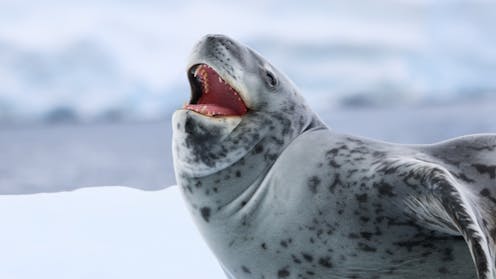
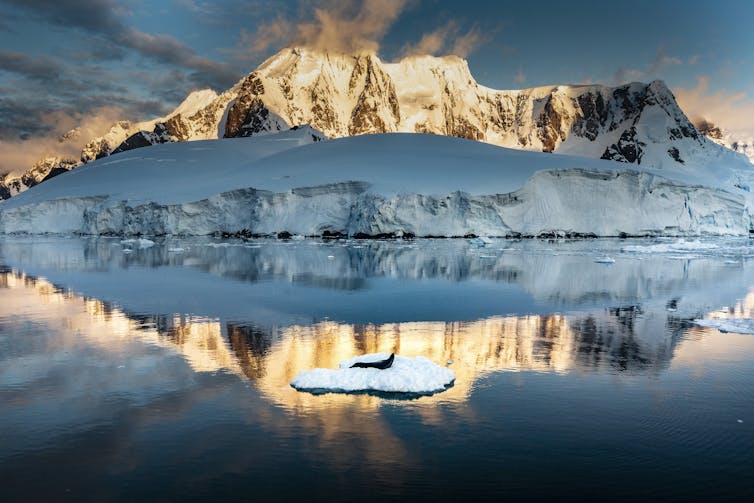
Late in the evening, the Antarctic sky flushes pink. The male leopard seal wakes and slips from the ice into the water. There, he’ll spend the night singing underwater amongst the floating ice floes.
For the next two months he sings every night. He will sing so loudly, the ice around him vibrates. Each song is a sequence of trills and hoots, performed in a particular pattern.
In a world first, we analysed leopard seal songs and found the predictability of their patterns was remarkably similar to the nursery rhymes humans sing.
We think this is a deliberate strategy. While leopard seals are solitary animals, the males need their call to carry clearly across vast stretches of icy ocean, to woo a mate.
Solitary leopard seals want their call to carry. Ozge Elif Kizil/Anadolu Agency via Getty Images
Leopard seals are especially vocal during breeding season, which lasts from late October to early January. A female leopard seal sings for a few hours on the days she is in heat. But the males are the real showstoppers.
Each night, the males perform underwater solos for up to 13 hours. They dive into the sea, singing underwater for about two minutes before returning to the water’s surface to breathe and rest. This demanding routine continues for weeks.
Within a leopard seal population, the sounds themselves don’t vary much in pitch or duration. But the order and pattern in which the sounds are produced varies considerably between individuals.
Our research examined these individual songs. We compared them to that of other vocal animals, and to human music.
Listening to songs from the sea
The data used in the study was collected by one author of this article, Tracey Rogers, in the 1990s.
Rogers rode her quad bike across the Antarctic ice to the edge of the sea and marked 26 individual male seals with dye as they slept. Then she returned to record their songs at night.
The new research involved analysing these recordings, to better understand their structure and patterns. We did this by measuring the “entropy” of their sequences. Entropy measures how predictable or random a sequence is.
What stood out was the similarity between the predictability of human nursery rhymes and leopard seal calls. Nursery rhymes are simple, repetitive and easy to remember — and that’s what we heard in the leopard seal songs.
The range of “entropy” was similar to the 39 nursery rhymes from the Golden Song Book, a collection of words and sheet music for classic children’s songs, which was first published in 1945. It includes classics such:
Twinkle, Twinkle, Little Star
Frère Jacques
Ring Around a Rosy
Baa, Baa, Black Sheep
Humpty Dumpty
Three Blind Mice
Rockabye Baby.
For humans, the predictable structure of a nursery rhyme melody helps make it simple enough for a child to learn. For a leopard seal, this predictability may enable the individual to learn its song and keep singing it over multiple days. This consistency is important, because changes in pitch or frequency can create miscommunication.
Like sperm whales, leopard seals may also use song to set themselves apart from others and signal their fitness to reproduce. The greater structure in the songs helps ensure listeners accurately receive the message and identify who is singing.
Male leopard seals produce high-pitched cricket-like trills.
An evolving song?
Leopard seals sound very different to humans. But our research shows the complexity and structure of their songs is remarkably similar to our own nursery rhymes.
Communication through song is a very common animal behaviour. However, structure and predictability in mammal song has only been studied in a handful of species. We know very little about what drives it.
Understanding animal communication is important. It can improve conservation efforts and animal welfare, and provide important information about animal cognition and evolution.
Technology has advanced rapidly since our recordings were made in the 1990s. In future, we hope to revisit Antarctica to record and study further, to better understand if new call types have emerged, and if patterns of leopard seal song evolve from generation to generation.
Tracey Rogers receives funding from ARC.
Lucinda Chambers does not work for, consult, own shares in or receive funding from any company or organisation that would benefit from this article, and has disclosed no relevant affiliations beyond their academic appointment.
Source: The Conversation – Global Perspectives – By Amin Saikal, Emeritus Professor of Middle Eastern and Central Asian Studies, Australian National University; and Vice Chancellor’s Strategic Fellow, Victoria University
When it comes to dealing with two of the biggest current crises in the Muslim world – the devastation of Gaza and the Taliban’s draconian rule in Afghanistan – Arab and Muslim states have been staggeringly ineffective.
Their chief body, the Organisation of Islamic Cooperation (OIC), in particular, has been strong on rhetoric but very short on serious, tangible action.
The OIC, headquartered in Saudi Arabia, is composed of 57 predominantly Muslim states. It is supposed to act as a representative and consultative body and make decisions and recommendations on the major issues that affect Muslims globally. It calls itself the “collective voice of the Muslim world”.
Yet the body has proved to be toothless in the face of Israel’s relentless assault on Gaza, triggered in response to the Hamas attacks of October 7 2023.
The OIC has equally failed to act against the Taliban’s reign of terror in the name of Islam in ethnically diverse Afghanistan.
Many strong statements
Despite its projection of a united umma (the global Islamic community, as defined in my coauthored book Islam Beyond Borders), the OIC has ignominiously been divided on Gaza and Afghanistan.
True, it has condemned Israel’s Gaza operations. It’s also called for an immediate, unconditional ceasefire and the delivery of humanitarian aid to the starving population of the strip.
It has also rejected any Israeli move to depopulate and annex the enclave, as well as the West Bank. These moves would render the two-state solution to the long-running Israeli–Palestinian conflict essentially defunct.
Further, the OIC has welcomed the recent joint statement by the foreign ministers of 28 countries (including the United Kingdom, many European Union members and Japan) calling for an immediate ceasefire in Gaza, as well as France’s decision to recognise the state of Palestine.
The OIC is good at putting out statements. However, this approach hasn’t varied much from that of the wider global community. It is largely verbal, and void of any practical measures.
What the group could do for Gaza
Surely, Muslim states can and should be doing more.
For example, the OIC has failed to persuade Israel’s neighbouring states – Egypt and Jordan, in particular – to open their border crossings to allow humanitarian aid to flow into Gaza, the West Bank or Israel, in defiance of Israeli leaders.
Nor has it been able to compel Egypt, Jordan, the United Arab Emirates, Bahrain, Sudan and Morocco to suspend their relations with the Jewish state until it agrees to a two-state solution.
Further, the OIC has not adopted a call by Malaysian Prime Minister Anwar Ibrahim and the United Nations special rapporteur on Palestinian territories, Francesca Albanese, for Israel to be suspended from the UN.
Nor has it urged its oil-rich Arab members, in particular Saudi Arabia and the UAE, to harness their resources to prompt US President Donald Trump to halt the supply of arms to Israel and pressure Israeli Prime Minister Benjamin Netanyahu to end the war.
Stronger action on Afghanistan, too
In a similar vein, the OIC has failed to exert maximum pressure on the ultra-extremist and erstwhile terrorist Taliban government in Afghanistan.
Since sweeping back into power in 2021, the Taliban has ruled in a highly repressive, misogynist and draconian fashion in the name of Islam. This is not practised anywhere else in the Muslim world.
In December 2022, OIC Secretary General Hissein Brahim Taha called for a global campaign to unite Islamic scholars and religious authorities against the Taliban’s decision to ban girls from education.
But this was superseded a month later, when the OIC expressed concern over the Taliban’s “restrictions on women”, but asked the international community not to “interfere in Afghanistan’s internal affairs”. This was warmly welcomed by the Taliban.
In effect, the OIC – and therefore most Muslim countries – have adopted no practical measures to penalise the Taliban for its behaviour.
It has not censured the Taliban nor imposed crippling sanctions on the group. And while no Muslim country has officially recognised the Taliban government (only Russia has), most OIC members have nonetheless engaged with the Taliban at political, economic, financial and trade levels.
Why is it so divided?
There are many reasons for the OIC’s ineffectiveness.
For one, the group is composed of a politically, socially, culturally and economically diverse assortment of members.
But more importantly, it has not functioned as a “bridge builder” by developing a common strategy of purpose and action that can overcome the geopolitical and sectarian differences of its members.
In the current polarised international environment, the rivalry among its member states – and with major global powers such as the United States and China – has rendered the organisation a mere talking shop.
This has allowed extremist governments in both Israel and Afghanistan to act with impunity.
It is time to look at the OIC’s functionality and determine how it can more effectively unite the umma.
This may also be an opportunity for its member states to develop an effective common strategy that could help the cause of peace and stability in the Muslim domain and its relations with the outside world.
Amin Saikal does not work for, consult, own shares in or receive funding from any company or organisation that would benefit from this article, and has disclosed no relevant affiliations beyond their academic appointment.
Today at about 11:30am local time, a magnitude 8.8 earthquake struck off the coast of Russia’s Kamchatka Peninsula in the country’s far east.
Originating at a depth of roughly 20 kilometres, today’s powerful earthquake – among the ten strongest in recorded history and the largest worldwide since 2011 – has caused building damage and injuries in the largest nearby city, Petropavlosk-Kamchatsky, just 119 kilometres from the epicentre.
Tsunami warnings and evacuations have reverberated through Russia, Japan and Hawaii, with advisories issued for the Philippines, Indonesia, and as far away as New Zealand and Peru.
The Pacific region is highly prone to powerful earthquakes and resulting tsunamis because it’s located in the so-called Ring of Fire, a region of heightened seismic and volcanic activity. All ten most powerful earthquakes recorded in modern history were located on the Ring of Fire.
Here’s why the underlying structure of our planet makes this part of the world so volatile.
Why does Kamchatka get such strong earthquakes?
Immediately offshore the Kamchatka Peninsula is the Kuril-Kamchatka Trench, a tectonic plate boundary where the Pacific Plate is being thrust beneath the Okhotsk Plate.
While tectonic plates move continuously relative to one another, the interface at tectonic plates is often “stuck”. The strain related to plate motion builds up until it exceeds the strength of the plate interface, at which point it is released as a sudden rupture – an earthquake.
Because of the large areas of interface at plate boundaries, both in length and depth, the rupture can span large areas of the plate boundary. This results in some of the largest and potentially most damaging earthquakes on earth.
Another factor that affects the rates and sizes of subduction zone earthquakes is the speed at which the two plates are moving relative to each other.
In the case of Kamchatka, the Pacific Plate is moving at approximately 75 millimetres per year relative to the Okhotsk plate. This is a relatively high speed by tectonic standards, and causes large earthquakes to happen more frequently here than in some other subduction zones. In 1952, a magnitude 9.0 earthquake occurred in the same subduction zone, only about 30 kilometres away from today’s magnitude 8.8 earthquake.
Other examples of subduction plate boundary earthquakes include the 2011 magnitude 9.1 Tohoku-Oki Japan earthquake, and the 2004 magnitude 9.3 Sumatra-Andaman Indonesia “Boxing Day” earthquake. Both of these initiated at a relatively shallow depth and ruptured the plate boundary right to the surface.
They uplifted one side of the sea floor relative to the other, displacing the ocean above it and resulting in devastating tsunamis. In the case of the Boxing Day earthquake, the sea floor rupture happened along a length spanning roughly 1,400km.
What is likely to happen next?
At time of writing, approximately six hours after the earthquake struck, there have already been 35 aftershocks larger than magnitude 5.0, according to the United States Geological Survey.
Aftershocks happen when stress within Earth’s crust is redistributed following the mainshock. They are often as large as one magnitude unit smaller than the mainshock. In the case of today’s earthquake, that means aftershocks larger than magnitude 7.5 are possible.
For an earthquake of this size, aftershocks can continue for weeks to months or longer, but they typically will reduce in both magnitude and frequency over time.
Today’s earthquake also produced a tsunami, which has already affected coastal communities on the Kamchatka Peninsula, the Kurile Islands, and Hokkaido, Japan.
Over the coming hours, the tsunami will propagate across the Pacific, reaching Hawaii approximately six hours after the earthquake struck and continuing as far as Chile and Peru.
Tsunami scientists will continue to refine their models of the tsunami’s effects as it propagates, and civil defence authorities will provide authoritative advice on the expected local effects.
What are the lessons from this earthquake for other parts of the world?
Fortunately, earthquakes as large as today’s occur infrequently. However, their effects locally and across the globe can be devastating.
Apart from its magnitude, several aspects of today’s Kamchatka earthquake will make it a particularly important focus of research.
For instance, the area has been seismically very active in recent months, and a magnitude 7.4 earthquake occurred on 20 July. How this previous activity affected the location and timing of today’s earthquake will be a crucial focus of that research.
Like Kamchatka and northern Japan, New Zealand also sits above a subduction zone – in fact, above two subduction zones. The larger of these, the Hikurangi subduction zone, extends offshore along the east coast of the North Island.
Based on the characteristics of this plate interface, and geological records of past earthquakes, it is likely the Hikurangi subduction zone is capable of producing earthquakes at magnitude 9. It hasn’t done so in historic times, but if that happened it would produce a tsunami.
The threat of a major subduction zone earthquake never goes away. Today’s earthquake in Kamchatka is an important reminder to everyone living in such earthquake-prone areas to stay safe and heed warnings from civil defence authorities.
Dee Ninis works at the Seismology Research Centre, is Vice-President of the Australian Earthquake Engineering Society, and a Committee Member for the Geological Society of Australia – Victoria Division.
John Townend receives funding from the Marsden and Catalyst Funds of the Royal Society Te Apārangi, the Natural Hazards Commission Toka Tū Ake, and the NZ Ministry of Business, Innovation and Employment. He is a former president and director of the Seismological Society of America and president of the New Zealand Geophysical Society.











.jpg)