Les femmes trans noires et latinas ont été à l’avant-garde de la lutte LGBTQIA+ aux États-Unis. Photo prise lors d’une marche des fiertés à New York, dans les années 1980.Mariett Pathy Allen/Getty Images
Encore trop souvent effacées des récits, les femmes trans, queers et racisées ont joué un rôle crucial dans la lutte pour les droits LGBTQIA+. Ce sont même elles qui ont lancé la fameuse révolte de Stonewall dans les années 1960 de même qu’une autre rébellion, quelques années auparavant, à San Francisco. Retour sur ces actes de résistance et sur le rôle de celles qui, parmi les premières, se sont levées pour les droits des personnes queer.
On ne sait pas exactement qui a lancé la première brique au Stonewall Inn, cette nuit de 1969 à New York qui a marqué un tournant dans la lutte pour les droits LGBTQIA+. Selon la mythologie queer, ce pourrait être Marsha P. Johnson, femme trans noire emblématique de la libération gay, ou Sylvia Rivera, femme trans latina. Mais leurs témoignages contredisent cette version. Marsha P. Johnson a reconnu être arrivée après le début de l’émeute, tandis que Sylvia Rivera a déclaré dans un entretien :
« Beaucoup d’historiens m’attribuent le premier cocktail Molotov, mais j’aime rétablir la vérité : j’ai lancé le second, pas le premier ! »
La scène la plus probable n’implique ni brique ni cocktail Molotov, mais l’appel à l’aide de Stormé DeLarverie, lesbienne métisse. Alors qu’on l’embarquait dans une voiture de police, elle aurait crié à ses camarades queer :
Vers 2 heures du matin, la police de New York est intervenue pour faire évacuer le bar à l’heure de sa fermeture. Au départ, la majorité des clients ont coopéré, mais face à l’escalade des violences policières et des arrestations, les clients – en grande majorité queer – ont riposté. Si les circonstances exactes du début de l’émeute restent floues, il est établi que Marsha P. Johnson et Sylvia Rivera étaient présentes. Elles deviendront par la suite des figures majeures du mouvement pour les droits des personnes LGBTQIA+ et de la résistance queer.
Leur mobilisation – tout comme un acte de rébellion antérieur peu connu – montre à quel point les femmes queer racisées ont été en première ligne de la lutte pour les droits LGBTQIA+ et néanmoins invisibilisées. Malgré certains progrès sociaux, les femmes trans racisées continuent d’en payer le prix, parfois de leur vie.
Du lundi au vendredi + le dimanche, recevez gratuitement les analyses et décryptages de nos experts pour un autre regard sur l’actualité. Abonnez-vous dès aujourd’hui !
Perceptions erronées des émeutes de Stonewall
Le récit des évènements de Stonewall a été largement connu du grand public avec la sortie du film Stonewall en 2015. Ce film a été vivement critiqué pour la façon dont il a blanchi l’histoire et effacé le rôle des personnes queer racisées dans celle-ci.
Marsha P. Johnson lors de la marche des fiertés de 1982, vêtue d’une combinaison noire à sequins. Barbara Alper/Getty Images
Dans cette fiction, c’est un homme blanc gay qui jette la première brique – une version démentie par presque tous les témoignages. Ce sont au contraire des personnes queer racisées, souvent non conformes au genre, qui ont mené la révolte. Et qui sont trop souvent effacées de la mémoire collective.
Avant Stonewall, une autre révolte oubliée
Stonewall n’a pas été pas le premier acte de résistance publique pour les droits LGBTQIA+. Le soulèvement de la cafétéria Compton a eu lieu trois ans plus tôt, à San Francisco, dans le quartier du Tenderloin.
Dans les années 1960, cette cafétéria était un lieu de rencontre nocturne populaire pour les personnes transgenres, en particulier les femmes trans. La direction du lieu et la police soumettaient ces communautés marginalisées à un harcèlement et à des mauvais traitements constants. Les femmes trans étaient souvent arrêtées en vertu de lois sur l’usurpation d’identité féminine et devaient faire face à des humiliations publiques et à des violences physiques récurrentes.
En août 1966, un incident survenu à la cafétéria de Compton a déclenché une vague de résistance. Le documentaire Screaming Queens montre les injustices subies par la communauté trans à l’époque, principalement des femmes trans racisées et travailleuses du sexe.
Après des années de mauvais traitements, un groupe de femmes trans, de drag queens et de personnes non conformes au genre ont décidé qu’ils et elles en avaient assez. Lorsqu’un policier a tenté d’arrêter une femme trans, elle lui a jeté sa tasse de café chaud au visage. Cet acte de résistance a déclenché un soulèvement spontané dans la cafétéria et dans les rues. Quelques instants plus tard, une voiture de police était renversée. À la fin de la manifestation, la police avait arrêté des dizaines de personnes et en avait battu beaucoup d’autres.
Malgré son importance historique, cette révolte à la cafétéria de Compton est restée dans l’ombre. Elle a pourtant semé les graines d’un mouvement plus large de résistance.
Certains agresseurs échappent encore à la prison en invoquant une « défense de panique » : ils imputent leur réaction violente à la peur suscitée par l’identité de genre ou l’orientation sexuelle de la victime.
Ces dernières années, les meurtres de plusieurs femmes trans noires, dont Cashay Henderson, ou KoKo Da Doll, protagoniste du documentaire primé Kokomo City), rappellent l’ampleur persistante des violences queerphobes.
Deion Scott Hawkins ne travaille pas, ne conseille pas, ne possède pas de parts, ne reçoit pas de fonds d’une organisation qui pourrait tirer profit de cet article, et n’a déclaré aucune autre affiliation que son organisme de recherche.
Le génial poète britannique Lord Byron, hors norme et sulfureux, a vécu une « amitié romantique » avec un jeune choriste disparu prématurément, qu’il a racontée dans ses écrits. Dans une Angleterre où l’homosexualité est un crime passible de mort, ces fragments de lettres et de poèmes offrent un rare témoignage d’une passion homosexuelle au tournant du XIXe siècle.
Nous sommes le 5 juillet 1807. Un jeune homme ivre et en larmes est assis dans sa chambre d’étudiant à Cambridge, écrivant dans un « chaos d’espoir et de chagrin » à son amie d’enfance, Elizabeth Pigot. Il vient de se séparer de celui qu’il surnomme sa « cornaline », qu’il aime « plus que n’importe qui au monde » – et il déverse ses sentiments sur le papier.
Le jeune homme, c’est Lord Byron, et sa cornaline, c’est le choriste de Cambridge John Edleston. Il apparaît sous ce surnom dans les écrits en prose de Byron en raison d’une bague qu’il avait offerte à Byron. Le cadeau et le donateur ont été immortalisés dans le premier recueil de poèmes de Byron, Heures de paresse (1807), et Byron a porté l’anneau en cornaline jusqu’à la fin de ses jours.
La lettre que Byron a écrite cette nuit-là est une archive rare, conservée, avec une autre écrite à la mère d’Elizabeth Pigot après la mort de John Edleston, dans les archives de l’abbaye de Newstead. Ce sont des fragments qui évoquent l’histoire plus vaste de la romance adolescente, du deuil et de la vie homosexuelle au début du XIXe siècle.
Pour retracer l’histoire queer (ou LGBTQ+), les chercheurs comme moi doivent travailler avec des absences, des effacements délibérés – des vies et des relations qui ont été cachées, niées ou déguisées. Les chercheurs sur Byron sont généralement confrontés à une surabondance de matériel, mais son homosexualité reste une question de fragments. La recherche sur sa sexualité nécessite un lent processus d’apprentissage pour reconnaître et relier les codes et les fils de sa prose et de ses vers.
[Déjà plus de 120 000 abonnements aux newsletters The Conversation. Et vous ? Abonnez-vous aujourd’hui pour mieux comprendre les grands enjeux du monde.]
Dans le cas de Byron, des gardiens trop zélés de sa réputation posthume – dont sa sœur, son éditeur et ses amis – n’ont pas résisté à la tentation de brûler ses mémoires. Il ne reste que peu d’indices à partir desquels imaginer ce qu’ils auraient pu contenir.
Un autre problème, c’est que, bien souvent, lorsque l’homosexualité de Byron est évoquée par ses contemporains, c’est sous forme d’accusations, par exemple, lorsqu’on rapporte une conversation entre Lady Caroline Lamb (une ancienne maîtresse) et Anna-Bella Millbanke (l’épouse de Byron, dont il était séparé).
D’autres lettres et sources ont été perdues et la correspondance de Byron sur le désir homosexuel est souvent codée. Il écrit à ses amis de Cambridge avec des références sténographiques partagées, généralement basées sur des allusions classiques qui sont difficiles à décrypter pour les non-initiés.
De nombreuses affirmations sur l’homosexualité de Byron proviennent d’une conversation entre sa femme Annabella Milbanke (à gauche) et son ancienne amante Lady Caroline Lamb (à droite). National Portrait Gallery
Alors, comment aborder l’histoire queer de Byron dans toute sa réalité désordonnée lorsque les archives sont un patchwork de fragments, d’absences, d’effacements et d’obscurcissements ? En partie, en acceptant cette fragmentation, en renonçant à l’envie d’une histoire unique qui recouvrerait toute la vie de Byron, et en rencontrant Byron dans le moment qu’une source nous offre.
C’est aussi une question de connexion, de traçage d’éléments à travers la poésie et la correspondance, les mémoires et les accusations, de fils à tirer pour former une image plus complète. Les lettres de Newstead, lues en conjonction avec ses poèmes, ses lettres et ses journaux, sont une source évocatrice.
La lettre de 1807 nous apprend que Byron a rencontré Edleston deux ans auparavant, alors qu’il avait 17 ans et Edleston 15 : « Sa voix attira d’abord mon attention, son beau visage me la retint et le charme de ses manières me l’attacha pour toujours. »
Selon Byron : « Pendant toute la durée de ma résidence à Cambridge, nous nous sommes vus tous les jours, été comme hiver, sans nous ennuyer un seul instant. » Il exagère, créant sa propre histoire romancée. En réalité, Byron était rarement présent à Cambridge, n’y passant que quelques mois par an et préférant généralement passer son temps à Londres.
À un ami, il écrit au retour d’une escapade que le caractère d’Edleston s’était « beaucoup amélioré », donnant à penser que la vénération n’était pas constante. Que la réalité corresponde exactement à la lettre est moins important que le fait que c’est l’histoire que Byron a voulu raconter.
Newstead Abbey était la maison de famille de Lord Byron. Wiki Commons
L’histoire que Byron choisit de raconter est celle d’un attachement romantique durable à un jeune homme. À une époque où il entretenait de nombreuses relations de différents types avec des hommes et des femmes, Byron affirme dans sa lettre : « Je l’aime certainement plus que n’importe quel être humain, et ni le temps ni la distance n’ont eu le moindre effet sur ma disposition (en général) changeante ». C’est bien la déclaration passionnée d’un adolescent qui se sépare d’un amour de jeunesse.
Les espoirs d’un avenir radieux que nourrit Byron, ainsi que ses projets de constance et sa naïveté face aux obstacles sont autant de rappels à son jeune âge. Lorsqu’il atteint sa majorité à 21 ans et qu’il prend enfin le contrôle de sa fortune et de sa vie, il promet ceci : « Je laisserai à Edleston la décision d’entrer comme associé dans la maison de commerce où il va travailler, ou de venir vivre avec moi ».
Vers la fin de sa lettre, juste avant de revenir à des considérations pratiques et à un ton plus jovial, il exprime un espoir plus réaliste mais tout aussi futile : « J’espère que vous nous verrez un jour ensemble ».
Edleston meurt prématurément à l’âge de 21 ans, avant que Byron ne revienne de son voyage à travers l’Europe, que les jeunes aristocrates d’alors avaient coutume de faire.
Les modèles homosexuels de Byron
Lord Byron avait fait de John Edleston son protégé. Ce sera un fil conducteur dans nombre de ses relations. Il parle de ses aventures homosexuelles en Grèce dans une lettre joyeuse adressée à son ancien tuteur Henry Drury et promettait un traité sur « la sodomie ou la pédérastie, dont les auteurs anciens et la pratique actuelle ont prouvé qu’elles étaient dignes d’éloges ».
Ce modèle grec ancien de relation sexuelle avec un homme ou un adolescent plus jeune et de statut inférieur, qui incluait des aspects de patronage, était l’un des principaux modèles auxquels Byron avait accès pour décrire et comprendre ses propres désirs et relations.
Byron établit également des comparaisons avec des figures qui lui sont contemporaines et d’autres plus anciennes, qui nous montrent les raccourcis par lesquels étaient à l’époque dépeintes les relations homosexuelles :
À l’exception des dames de Llangollen Eleanor Butler et Susan Ponsonby, qui se sont enfuies d’Irlande en 1780 et ont vécu ensemble jusqu’à leur mort, ses exemples sont tous imprégnés de tragédie et de mort. Nisus et Euryalus sont deux inséparables soldats dans l’Énéide de Virgile qui sont morts ensemble. Ils font l’objet de deux poèmes dans le premier recueil de Byron, Heures de paresse (1807) mentionné plus haut. Ses références répétées à leur histoire suggèrent une cartographie interne (quoique peut-être inconsciente) de la masculinité homosexuelle qui offre peu d’espoir d’un avenir commun et qui est voué à la perte tragique de l’être aimé et à la mort.
Dans cette même lettre à son ancien tuteur, Byron affirme qu’Edleston « est certainement plus attaché à moi que je ne le suis à lui ». Il révèle un désir d’être aimé plus que d’aimer. Cette insécurité est peut-être liée à son pied droit, frappé d’un difformité à la naissance, léger handicap dont il souffrira toute sa vie.
Byron a également eu maille à partir avec son poids et des troubles alimentaires tout au long de sa vie. Pendant son séjour à Cambridge, son corps s’est beaucoup transformé, en raison de régimes associés à des exercices physiques extrêmes. Mais lorsqu’il y retourne en juin 1807 après un séjour ailleurs, Edleston commence par ne pas le reconnaître.
Ce déséquilibre peut également refléter le sentiment d’indignité de Byron. Dans une grande partie de sa poésie, il s’identifie à une sensualité grossière et Edleston à la pureté, se considérant comme une influence potentiellement corruptrice. Dans To Thryza (1811), Byron dépeint un amour « raffiné » qui risque d’être « avili » :
les baisers si innocents, si purs,
que l’amour se défendait tout désir plus ardent.
Tes beaux yeux révélaient une âme si chaste,
que la passion elle-même eût rougi de réclamer davantage.
Amitiés romantiques
La relation entre Byron et Edleston échappe à toute catégorisation facile. Byron en parlera plus tard comme d’un « amour et d’une passion violents, bien que purs ». Il a également appelé Edleston son « plus qu’ami », tout en niant toute relation sexuelle. Ces déclarations sont à replacer dans le contexte homophobe de l’Angleterre d’alors où les sanctions prévues contre les « sodomites » (ou personnes suspectées comme telles) étaient particulièrement sévères (pendaison en public).
John Murray, l’éditeur de longue date de Byron a publié en 1834 une anthologie de son œuvre, accompagnée de commentaires de divers contemporains du poète, qui qualifie la relation d’« amitié romantique » – une catégorie qui remplit un espace ambigu au-delà de l’hétérosexualité. Lisa Moore, professeure de littérature américaine et anglaise, suggère que le terme « soulève des inquiétudes en tentant de les contenir » – il évoque des notions d’homosexualité tout en semblant les nier.
De même, elle suggère d’autres formes de relations « queer » au-delà des définitions binaires basées uniquement sur l’activité sexuelle. L’approbation sociale était accordée seulement à certaines conditions pour les amitiés romantiques. Il fallait notamment pouvoir nier de manière plausible l’existence d’un contact sexuel réel.
La relative acceptation de ce type de relations a sans doute permis à Lord Byron d’ouvrir son cœur à Elizabeth Pigot. L’« amitié romantique » permet de reconnaître et de valoriser des relations intenses, passionnées ou romantiques entre personnes du même sexe.
Une histoire d’amour tragique
Après la mort d’Edleston, Byron écrit à la mère de Pigot pour lui demander de lui rendre sa cornaline qui « avait acquis par cet événement la [mort d’Edleston] une valeur que j’aurais souhaité qu’elle n’eût jamais à mes yeux ».
Elizabeth avait ajouté un addendum, demandant à sa mère de rendre la bague, car « il ne me l’a jamais donnée, il l’a seulement placée entre mes mains pour que j’en prenne soin à sa place – et de cette façon, je ne ferai que lui rendre ce qui lui appartient. » Un acte de bienveillance et de reconnaissance.
Les illustrations de Byron et de son chien par Elizabeth Pigot montrent leur étroite amitié. Wiki Commons
L’histoire entre Byron et Edelston s’est terminée tragiquement, ce qui contraste avec les espoirs d’avenir radieux exprimés par le poète en 1807, mais réalise la prophétie de ses modèles.
Byron quitte l’Angleterre en 1809 et voyage jusqu’en 1811. La raison exacte de son départ, manifestement précipité, n’est pas claire, bien que certains critiques, comme Leslie Marchand et Fiona McCarthy, aient suggéré qu’il soit lié à sa relation avec Edelston ou à une indiscrétion d’un amant en manque d’affection.
On ne sait pas au juste pourquoi Byron s’est éloigné de son ami ni comment leur relation a évolué. Mais lorsque Byron est rentré en Angleterre, Edleston était mort : une cruelle réalité qu’il n’a découverte que cinq mois plus tard, de la bouche de la sœur d’Edleston.
J’ai appris l’autre jour un décès qui m’a choqué plus que tous les précédents [sa mère et deux autres amis étaient morts récemment], celui d’une personne que j’aimais plus que je n’ai jamais aimé un être vivant, et qui, je crois, m’a aimé jusqu’à la fin, et pourtant je n’ai pas versé une larme pour un événement qui, il y a cinq ans, m’aurait fait tomber dans la poussière ; cela pèse encore sur mon cœur et me rappelle ce que je souhaite oublier, dans de nombreux rêves fiévreux.
Byron a peut-être répété à ses amis qu’il n’avait pas versé une larme, mais la répétition elle-même est révélatrice. La perte d’Edleston l’a conduit à composer les poèmes de Thyrza. Tout en décrivant son chagrin, ils nous livrent d’autres fragments de l’histoire de leur relation. To Thyrza (1811), par exemple, suggère un départ fâché, un malentendu ou simplement le fait de ne pas avoir su dire au revoir :
Si du moins – un mot, un regard
m’eût dit tendrement : « Je te quitte en t’aimant
mon cœur eût appris à pleurer,
avec de plus faibles sanglots, le coup qui enleva l’âme de ton corps
On suit le processus de deuil de Byron à travers d’autres lettres et poèmes, dont Stanzas (décembre 1811) ou To Thyrza (1812), avec une description d’une gaieté autodestructrice et désespérée, teintée de dégoût de soi, qui donne des clés sur l’état d’esprit de Byron en 1812, l’année de son ascension fulgurante vers la célébrité :
Allons, servez-moi du vin, servez le banquet,
l’homme n’est pas fait pour vivre seul :
je serai cette légère et incompréhensible créature
qui sourit avec tous, et ne pleure avec personne.
Il n’en fut point ainsi dans des jours plus chers à mon cœur,
il n’en aurait jamais été ainsi ;
mais tu m’as quitté, et m’as laissé seul ici-bas :
tu n’es plus rien, tout n’est rien désormais pour moi.
Le chagrin de Byron est palpable – ce, même sans pouvoir distinguer quelle part relève de l’autofiction et de la dramatisation et quelle autre d’une tristesse profondément enfouie, de la perte d’un amour qu’il ne pouvait revendiquer publiquement ou s’il s’agit d’une tentative de dépeindre un sentiment constant qu’il aurait voulu ne jamais éprouver, ou bien qu’il n’avait jamais pu dépasser.
Un chagrin queer, non exprimé, couché sur le papier avec des pronoms et des pseudonymes modifiés. Une révélation et une dissimulation – un chagrin, un amour qui n’ose pas dire son nom).
Les émotions douloureuses étaient mêlées à une véritable gaieté, c’est indéniable. Il écrivait ses poèmes rapidement, transformant des impressions potentiellement fugaces en réalités durables. Et ces moments sont peut-être aussi significatifs et éclairants qu’un récit plus global.
Chaque poème et chaque lettre racontent une histoire légèrement différente, capturent un moment différent et donnent un nouvel aperçu d’une vie queer vécue il y a plus de deux cents ans.
Sam Hirst ne travaille pas, ne conseille pas, ne possède pas de parts, ne reçoit pas de fonds d’une organisation qui pourrait tirer profit de cet article, et n’a déclaré aucune autre affiliation que son organisme de recherche.
Source: The Conversation – Indonesia – By Mohamed Arbi Nsiri, Docteur en histoire ancienne, Université Paris Nanterre – Université Paris Lumières
Le plus ancien monastère chrétien encore en activité, Sainte-Catherine du Sinaï, est menacé par un projet touristique.Hejna/Wikimedia Commons, CC BY
Le monastère Sainte-Catherine du Sinaï (Égypte) est reconnu comme le plus ancien établissement monastique chrétien encore en activité. Une décision rendue fin mai 2025 par la cour d’appel égyptienne fait planer une menace sans précédent sur son avenir.
Édifié en 548 sur ordre de l’empereur byzantin Justinien Ier, au pied du mont Moïse, à 1 570 mètres d’altitude, le monastère Sainte-Catherine occupe une place singulière dans l’histoire religieuse et culturelle de l’humanité. Niché au cœur d’un massif aride et majestueux, ce lieu sacré – également connu sous le nom de monastère de la Transfiguration – a traversé les siècles sans interruption, abritant une communauté chrétienne fidèle à la tradition orthodoxe orientale.
Il constitue un témoignage unique de la continuité du monachisme tardo-antique, tel qu’il s’est développé dans l’Orient méditerranéen à partir des premiers ermites du désert. Ce sanctuaire millénaire, dont les murailles de pierre enferment une exceptionnelle bibliothèque de manuscrits anciens et une collection inestimable d’icônes byzantines, fut dès l’origine un carrefour spirituel, accueillant pèlerins, savants et voyageurs de toutes confessions.
Une expropriation au profit de l’État égyptien
Relevant canoniquement du patriarcat grec orthodoxe de Jérusalem, cette institution multiséculaire voit aujourd’hui son existence même remise en question. L’arrêt rendu par la cour d’appel égyptienne fin mai 2025 ouvre, en effet, la voie à une possible expropriation de ses terres au profit de l’État, accompagnée de la menace d’expulsion de sa communauté monastique, forte d’une vingtaine de moines, pour la plupart d’origine grecque. Un tel scénario mettrait un terme brutal à une présence spirituelle ininterrompue depuis près de quinze siècles, dans un lieu où la prière, l’hospitalité et la conservation du savoir sacré ont toujours été au cœur de la vocation monastique.
Inscrit sur la liste du patrimoine mondial de l’Unesco depuis 2002, le monastère Sainte-Catherine se trouve ainsi confronté à une érosion préoccupante de son autonomie séculaire. Ce processus, s’il devait se poursuivre, risquerait non seulement d’altérer l’équilibre délicat entre tradition religieuse et souveraineté égyptienne, mais aussi d’effacer une part précieuse de la mémoire vivante du christianisme oriental, conservée au prix d’un isolement assumé et d’une fidélité sans faille à l’esprit du désert.
Agenda politico-religieux ou patrimonialisation ?
L’origine de cette crise remonte aux années qui ont suivi la révolution égyptienne de 2011. Sous l’impulsion du gouvernement alors dominé par les Frères musulmans (de juin 2012 à juillet 2013, ndlr), des procédures judiciaires furent engagées afin de contester les droits fonciers du monastère. Ces démarches, révélatrices d’une volonté politique d’affirmer la souveraineté de l’État sur des lieux à forte charge symbolique, ont abouti à la décision récemment rendue, laquelle redéfinit en profondeur les rapports entre la communauté religieuse et les autorités civiles.
Désormais, les moines du monastère Sainte‑Catherine du Sinaï ne sont plus considérés comme propriétaires, mais comme de simples « occupants autorisés », bénéficiant d’un droit d’usage strictement limité à leurs fonctions liturgiques.
Avant la décision juridique de 2025, ils ne disposaient vraisemblablement d’aucun titre de propriété formel : aucune preuve d’enregistrement cadastral ou d’acte notarié ne vient attester d’un droit de propriété légalement établi. Leur présence continue depuis près de mille cinq cents ans constituait toutefois un ancrage patrimonial implicite, reposant sur une forme de légitimité historique, voire coutumière. Le droit égyptien admet, dans certaines circonstances, que l’usage prolongé d’un bien puisse fonder un droit réel d’usage – sans pour autant conférer un droit de pleine propriété ou de disposition. Ce type de tenure, parfois désigné sous le nom de ḥikr, demeure subordonné à la reconnaissance étatique et ne suffit pas, en lui-même, à faire valoir un droit de propriété au sens strict.
La décision de 2025 clarifie ainsi une situation juridique jusque-là ambivalente, en affirmant explicitement la propriété de l’État tout en maintenant un droit d’usage limité pour la communauté monastique.
Un projet touristique
Selon des sources locales bien informées, cette évolution juridique s’inscrit dans le cadre d’un vaste projet de réaménagement territorial lancé en 2020 sous le nom de « Grande Transfiguration ». L’objectif affiché est de faire de la région de Sainte-Catherine une destination touristique de premier plan, centrée sur le tourisme religieux, écologique et thérapeutique.
Dans cette perspective, la présence monastique, avec ses exigences de retrait, de silence et de stabilité, peut apparaître comme un obstacle à la conversion du site en un pôle d’attraction touristique intégré – avec, à terme, le risque que le monastère ne soit progressivement vidé de sa vocation spirituelle et transformé en musée, rattaché aux logiques d’un patrimoine marchandisé.
Du lundi au vendredi + le dimanche, recevez gratuitement les analyses et décryptages de nos experts pour un autre regard sur l’actualité. Abonnez-vous dès aujourd’hui !
Inquiétude des autorités grecques
La situation a suscité une vive inquiétude au sein des autorités grecques. Le premier ministre Kyriakos Mitsotakis est intervenu personnellement auprès du président égyptien Abdel Fattah Al-Sissi pour plaider la cause du monastère et de ses moines, soulignant l’importance de préserver l’intégrité spirituelle, historique et culturelle de ce site inestimable, dont la Grèce se considère coresponsable au regard de ses liens ecclésiologiques et historiques avec la communauté des moines orthodoxes du Sinaï.
En réponse à la controverse croissante, la présidence égyptienne a publié, le 30 mai 2025, un communiqué officiel dans lequel elle réaffirme son attachement au respect du statut sacré du monastère. Ce texte vise à contrecarrer les accusations selon lesquelles le projet de la Grande Transfiguration inclurait une évacuation du site ou une remise en cause de la présence monastique. Les autorités égyptiennes insistent sur le fait que l’initiative concerne exclusivement le développement de la ville environnante, sans atteinte directe au monastère.
Des environs sacrés pour les trois grandes religions monothéistes
La ville de Sainte-Catherine, qui s’étend à proximité immédiate du monastère, possède une résonance spirituelle unique. Elle est traditionnellement identifiée comme le lieu où Moïse reçut les Tables de la Loi, et certains y situent également la Transfiguration divine. De ce fait, elle constitue un espace sacré commun aux trois grandes religions monothéistes – judaïsme, christianisme et islam.
L’église dite du Buisson ardent, ou chapelle du Buisson ardent, se trouve au cœur même du monastère Sainte‑Catherine, dans cette même ville au pied du mont Sinaï. Érigée sur le site traditionnel où Moïse aurait entendu la voix divine émanant d’un buisson en feu sans se consumer, elle est intégrée à l’abside orientale de la grande basilique byzantine, construite sous Justinien au VIe siècle. Selon la tradition, cette chapelle abrite encore le buisson vivant, dont les racines affleureraient sous l’autel. Les visiteurs y accèdent depuis l’église principale, en se déchaussant en signe de respect, rappelant le geste de Moïse ôtant ses sandales sur la terre sacrée.
Bien plus qu’un simple lieu commémoratif, cette chapelle demeure le cœur vivant d’une mémoire partagée entre les trois monothéismes et le centre spirituel de la communauté monastique du Sinaï.
Quels recours ?
Face à la menace qui pèse sur l’intégrité matérielle et spirituelle du monastère Sainte-Catherine du Sinaï, il apparaît opportun d’envisager une médiation internationale sous l’égide de l’Unesco, institution multilatérale investie de la mission de protéger le patrimoine mondial de l’humanité. Le statut du monastère, inscrit depuis 2002 sur la liste du patrimoine mondial en raison de sa valeur universelle exceptionnelle, offre un fondement juridique et symbolique solide pour une telle intervention.
Dans le cadre des instruments juridiques existants – notamment la Convention concernant la protection du patrimoine mondial, culturel et naturel de 1972 –, l’Unesco est habilitée à envoyer une mission d’experts sur place afin d’évaluer l’impact potentiel du projet dit de la « Grande Transfiguration » sur la préservation des valeurs culturelles, religieuses et historiques du site. Une telle mission pourrait formuler des recommandations contraignantes ou incitatives à l’intention des autorités égyptiennes, en vue de concilier les objectifs de développement local avec le respect des engagements internationaux pris par l’Égypte en matière de sauvegarde patrimoniale.
Par ailleurs, l’Unesco pourrait jouer un rôle de médiateur entre l’État égyptien, la communauté monastique, le patriarcat grec orthodoxe de Jérusalem et les autorités grecques, en facilitant la mise en place d’un protocole d’accord qui garantirait le maintien de la vie monastique, la préservation du patrimoine matériel (manuscrits, icônes, bâtiments…) et la reconnaissance du rôle spirituel et historique du monastère. Une telle initiative contribuerait non seulement à désamorcer les tensions actuelles, mais aussi à renforcer la dimension interculturelle et interreligieuse du site, conformément aux objectifs de l’Unesco en matière de dialogue entre les civilisations.
Enfin, si la situation devait empirer, le Comité du patrimoine mondial pourrait envisager l’inscription du monastère sur la liste du patrimoine mondial en péril, mesure exceptionnelle, qui alerterait la communauté internationale sur la gravité de la situation et mobiliserait les moyens diplomatiques et financiers nécessaires à sa sauvegarde.
Par cette voie, il est encore possible de transformer une crise en opportunité : celle de renouveler l’engagement commun des États, des Églises et des institutions internationales en faveur d’un patrimoine spirituel dont la valeur dépasse les frontières nationales, et dont la sauvegarde concerne l’humanité tout entière.
Mohamed Arbi Nsiri ne travaille pas, ne conseille pas, ne possède pas de parts, ne reçoit pas de fonds d’une organisation qui pourrait tirer profit de cet article, et n’a déclaré aucune autre affiliation que son organisme de recherche.
Source: The Conversation – (in Spanish) – By Kevin Parthenay, Professeur des Universités en science politique, membre de l’Institut Universitaire de France (IUF), Université de Tours
The United Nations Ocean Conference (UNOC 3) will open in Nice, France, on June 9, 2025. It is the third conference of its kind, following events in New York in 2017 and Lisbon in 2022. Co-hosted by France and Costa Rica, the conference will bring together 150 countries and nearly 30,000 individuals to discuss the sustainable management of our planet’s oceans.
This event is presented as a pivotal moment, but it is actually part of a significant shift in marine governance that has been going on for decades. While ocean governance was once designed to protect the marine interests of states, nowadays it must also address the numerous climate and environmental challenges facing the oceans.
Media coverage of this “political moment” however should not overshadow the urgent need to reform the international law applicable to the oceans. Failing that, this summit will risk being nothing more than another platform for vacuous rhetoric.
To understand what is at stake, it is helpful to begin with a brief historical overview of marine governance.
The meaning of ocean governance
Ocean governance changed radically over the past few decades. The focus shifted from the interests of states and the corresponding body of international law, solidified in the 1980s, to a multilateral approach initiated at the end of the Cold War, involving a wide range of actors (international organizations, NGOs, businesses, etc.).
This governance has gradually moved from a system of obligations pertaining to different marine areas and regimes of sovereignty associated to them (territorial seas, exclusive economic zones (EEZs), and the high seas) to a system that takes into consideration the “health of the oceans.” The aim of this new system is to manage the oceans in line with the sustainable development goals.
Understanding how this shift occurred can help us grasp what is at stake in Nice. The 1990s were marked by declarations, summits and other global initiatives. However, as evidenced below, the success of these numerous initiatives has so far been limited. This explains why we are now seeing a return to an approach more firmly rooted in international law, as evidenced by the negotiations on the international treaty on plastic pollution, for example.
UNOC 3 is a direct offshoot of this convention: discussions on sustainable ocean management stem from the limitations of this founding text, often referred to as the “Constitution of the Seas”.
UNCLOS was adopted in December 1982 at the Montego Bay Convention in Jamaica and came into force in November 1994, following a lengthy process of international negotiations that resulted in 60 states ratifying the text. At the outset, the discussions focused on the interests of developing countries, especially those located along the coast, in the midst of a crisis in multilateralism. The United States managed to exert its influence in this arena without ever officially adopting the Convention. Since then, the convention has been a pillar of marine governance.
It established new institutions, including the International Seabed Authority, entrusted with the responsibility of regulating the exploitation of mineral resources on the seabed in areas that fall outside the scope of national jurisdiction. UNCLOS is the source of nearly all international case law on the subject.
Although the convention did define maritime areas and regulate their exploitation, new challenges quickly emerged: on the one hand, the Convention was essentially rendered meaningless by the eleven-year delay between its adoption and implementation. On the other hand, the text also became obsolete due to new developments in the use of the seas, particularly technological advances in fishing and seabed exploitation.
The early 1990s marked a turning point in the traditional maritime legal order. The management of the seas and oceans came to be viewed within an environmental perspective, a process that was driven by major international conferences and declarations such as the Rio Declaration (1992), the Millennium Declaration (2005), and the Rio+20 Summit (2012). These resulted in the 2030 Agenda and the Sustainable Development Goals (SDGs), the UN’s 17 goals aimed at protecting the planet (with SDG 14, “Life Below Water”, directly addressing issues related to the oceans) and the world’s population by 2030.
A weekly e-mail in English featuring expertise from scholars and researchers. It provides an introduction to the diversity of research coming out of the continent and considers some of the key issues facing European countries. Get the newsletter!
The United Nations Conference on Environment and Development (UNCED, or Earth Summit), held in Rio de Janeiro, Brazil, in 1992, ushered in the era of “sustainable development” and, thanks to scientific discoveries made in the previous decade, helped link environmental and maritime issues.
From 2008 to 2015, environmental issues became more important as evidenced by the regular adoption of environmental and climate resolutions.
A shift in UN language
Biodiversity and the sustainable use of the oceans (SDG 14) are the two core themes that became recurring topics in the international agenda since 2015, with ocean-related issues now including items like acidification, plastic pollution and the decline of marine biodiversity.
The United Nations General Assembly resolution on oceans and the law of the seas (LOS is a particularly useful tool to acknowledge this evolution: drafted annually since 1984, the resolution has covered all aspects of the United Nations maritime regime while reflecting new issues and concerns.
Some environmental terms were initially absent from the text but have become more prevalent since the 2000s.
This evolution is also reflected in the choice of words.
While LOS resolutions from 1984 to 1995 focused mainly on the implementation of the treaty and the economic exploitation of marine resources, more recent resolutions have used terms related to sustainability, ecosystems, and maritime issues.
Toward a new law of the oceans?
As awareness of the issues surrounding the oceans and their link to climate change has grown, the oceans gradually became a global “final frontier” in terms of knowledge.
The types of stakeholders involved in ocean issues have also changed. The expansion of the ocean agenda has been driven by a more “environmentalist” orientation, with scientific communities and environmental NGOs standing at the forefront of this battle. This approach, which represents a shift away from a monopoly held by international law and legal practitioners, clearly is a positive development.
However, marine governance has so far relied mainly on non-binding declaratory measures (such as the SDGs) and remains ineffective. A cycle of legal consolidation toward a “new law of the oceans” therefore appears to be underway and the challenge is now to supplement international maritime law with a new set of measures. These include:
the negotiation of a treaty on marine plastic pollution, still in progress and not finalized yet;
the agreement on fisheries subsidies adopted by the World Trade Organization (WTO) to preserve fish stocks, which so far has failed to be fully implemented;
lastly, the Seabed Authority’s Mining Code, designed to regulate seabed mining.
Of these agreements, the BBNJ is arguably the most ambitious: since 2004, negotiators have been working toward filling the gaps of the United Nations Convention on the Law of the Sea (UNCLOS) by creating an instrument on marine biodiversity in areas beyond national jurisdiction.
The agreement addresses two major concerns for states: sovereignty and the equitable distribution of resources.
Adopted in 2023, this historic agreement has yet to enter into force. For this to happen, sixty ratifications are required and to date, only 29 states have ratified the treaty (including France in February 2025, editor’s note).
The BBNJ process is therefore at a crossroads and the priority today is not to make new commitments or waste time on complicated high-level declarations, but to address concrete and urgent issues of ocean management, such as the frantic quest for critical minerals launched in the context of the Sino-American rivalry, and exemplified by Donald Trump’s signing of a presidential decree in April 2025 allowing seabed mining – a decision that violates the International Seabed Authority’s well established rules on the exploitation of these deep-sea resources.
At a time when U.S. unilateralism is leading to a policy of fait accompli, the UNOC 3 should, more than anything and within the framework of multilateralism, consolidate the existing obligations regarding the protection and sustainability of the oceans.
Kevin Parthenay is a member of the Institut Universitaire de France (IUF).
Rafael Mesquita ne travaille pas, ne conseille pas, ne possède pas de parts, ne reçoit pas de fonds d’une organisation qui pourrait tirer profit de cet article, et n’a déclaré aucune autre affiliation que son organisme de recherche.
Paintings by German artist Emil Nolde (1867-1956) were recently on display at the Musée Picasso in Paris as part of an exhibition on what the Nazis classified as “degenerate art”. At first glance, his works fit perfectly, but recent research shows that Nolde’s relationship to Nazism is much more nuanced than the exhibition revealed.
The German Lesson: a postwar literary classic
While Nolde was one of the many victims of the Third Reich’s repressive responses to “degenerate art”, he was also one of Nazism’s great admirers. The immense popularity of The German Lesson (1968) by author Siegfried Lenz, however, greatly contributed to creating the legend of Nolde as a martyr of the Nazi regime.
The cover of the French edition, which was on sale in the Musée Picasso bookstore, subtly echoes one of Nolde’s works, Hülltoft Farm, which hung in the exhibition.
Set against the backdrop of Nazi policies on “degenerate art”, the novel is about a conflict between a father and son. It addresses in literary form the central postwar issue of Vergangenheitsbewältigung, a term referring to the individual and collective work of German society on coming to terms with its Nazi past.
The German Lesson was met with huge success upon publication. Since then, it has become a classic of postwar German literature. Over 2 million copies have been sold across the world, and the novel has been translated into more than 20 languages. It is still studied in Germany as part of the national school curriculum. Adding to its popularity, the book was adapted for the screen in 1971 and in 2019. More than 50 years after its publication, The German Lesson continues to shape the way we think about Nazi Germany.
Max Ludwig Nansen, a fictional painter turned martyr
Set in Germany in the 1950s, the novel is told through the eyes of Siggi, a young man incarcerated in a prison for delinquent youths. Asked to pen an essay on the “joys of duty”, he dives into his memories of a childhood in Nazi Germany as the son of a police officer.
He remembers that his father, Jens Ole Jepsen, was given an order to prevent his own childhood friend, Max Ludwig Nansen, from painting. As a sign of protest against the painting ban, Nansen created a secret collection of paintings titled “the invisible pictures”. Because he was young enough to appear innocent, Siggi was used by his father to spy on the painter.
Siggi found himself torn between the two men, who related to duty in radically opposite ways. While Jepsen thought it his duty to follow the orders given to him, Nansen saw art as his only duty. Throughout the novel, Siggi becomes increasingly close to the painter, whom he sees as a hero, all the while distancing himself from his father, who in turn is perceived as a fanatic.
The novel’s point of view, that of a child, demands of its reader that they complete Siggi’s omissions or partial understanding of the world around him with their adult knowledge. This deliberately allusive narrative style enables the author to elude the topic of Nazism – or at least to hint at it in a covert way, thus making the novel acceptable to a wide German audience at the time of its publication in 1968.
Nevertheless, the book leaves little room for doubt on the themes it tackles. While Nazism is never explicitly named, the reader will inevitably recognize the Gestapo (the political police of the regime) when Siggi speaks of the “leather coats” who arrest Nansen. Readers will also identify the ban on painting issued to Nansen as a part of Nazi policies on “degenerate art”. And, what’s more, they will undoubtedly perceive the real person hiding behind the fictional character of Max Ludwig Nansen: Emil Nolde, born Hans Emil Hansen.
A weekly e-mail in English featuring expertise from scholars and researchers. It provides an introduction to the diversity of research coming out of the continent and considers some of the key issues facing European countries. Get the newsletter!
Emil Nolde, a real painter become legend
Much like his fictional counterpart Max Ludwig Nansen, the painter Emil Nolde fell victim to Nazi policies aimed at artists identified as “degenerate”. More than 1,000 of his artworks were confiscated, some of which were integrated into the 1937 travelling exhibition on “degenerate art” orchestrated by the regime. Nolde was banned from the German art academy, and he was forbidden to sell and exhibit his work.
A photograph of Nazi propagandist Joseph Goebbels’ visit to the exhibition titled Entartete Kunst (Degenerate Art) in Munich, 1937. At left, from top, two paintings by Emil Nolde: Christ and the Sinner (1926) and the Wise and the Foolish Virgins (1910), a painting that has disappeared. Wikimedia
After the collapse of the Nazi regime, the tide turned for this “degenerate” artist. Postwar German society glorified him as a victim and opponent of Nazi politics, an image which Nolde carefully fostered. In his memoirs, he claimed to have been forbidden to paint by the regime, and to have created a series of “unpainted pictures” in a clandestine act of resistance.
Countless exhibits on Nolde, in Germany and around the world, served to perpetuate the myth of a talented painter, fallen victim to the Nazi regime, who decided to fight back. His works even made it into the hallowed halls of the German chancellery. Helmut Schmidt, chancellor of the Federal Republic of Germany from 1974 to 1982, and Germany’s former chancellor Angela Merkel decorated their offices with his paintings.
The popularity of The German Lesson, inspired by Nolde’s life, further solidified the myth – until the real Nolde and the fictional Nansen became fully inseparable in Germany’s collective imagination.
Twilight of an idol
Yet, the historical figure and the fictional character could not be more different. Research conducted for exhibits on Nolde in Frankfurt in 2014 and in Berlin in 2019 revealed the artist’s true relationship to Nazism to the wider public.
Nolde was indeed forbidden from selling and exhibiting his works by the Nazi regime. But he was not forbidden from painting. The series of “unpainted pictures”, which he claimed to have created in secret, are in fact a collection of works put together after the war.
What’s more, Nolde joined the Nazi Party as early as 1934. To make matters worse, he also hoped to become an official artist of the regime, and he was profoundly antisemitic. He was convinced that his work was the expression of a “German soul” – with all the racist undertones that such an affirmation suggests. He relentlessly tried to convince Goebbels and Hitler that his paintings, unlike those of “the Jews”, were not “degenerate”.
Why, one might ask, did more than 70 years go by before the truth about Nolde came out?
Yes, the myth built by Nolde himself and solidified by The German Lesson served to eclipse historical truth. Yet this seems to be only part of the story. In Nolde’s case, like in many others that involve facing a fraught national past, it looks like fiction was a great deal more attractive than truth.
In Lenz’s book, the painter Nansen claims that “you will only start to see properly […] when you start creating what you need to see”. By seeing in Nolde the fictional character of Nansen, Germans created a myth they needed to overcome a painful past. A hero, who resisted Nazism. Beyond the myth, reality appears to be more complex.
Ombline Damy received funding from la Fondation Nationale des Sciences Politiques (National Foundation of Political Sciences, or FNSP) for her thesis.
In the face of US President Donald Trump’s wavering commitments and Russian President Vladimir Putin’s inscrutable ambitions, the talk in European capitals is all about rearmament.
To that end, the European Commission has put forward an €800 billion spending scheme designed to “quickly and significantly increase expenditures in defence capabilities”, in the words of Commission President Ursula von der Leyen.
But funding is only the first of many challenges involved when pursuing military innovation. Ramping up capabilities “quickly and significantly” will prove difficult for a sector that must keep pace with rapid technological change.
Of course, defence firms don’t have to do it alone: they can select from a wide variety of potential collaborators, ranging from small and medium-sized enterprises (SMEs) to agile start-ups. Innovative partnerships, however, require trust and a willingness to share vital information, qualities that appear incompatible with the need for military secrecy.
That is why rearming Europe requires a new approach to secrecy.
A paper I co-authored with Jonathan Langlois of HEC and Romaric Servajean-Hilst of KEDGE Business School examines the strategies used by one leading defence firm (which we, for our own secrecy-related reasons, renamed “Globaldef”) to balance open innovation with information security. The 43 professionals we interviewed – including R&D managers, start-up CEOs and innovation managers – were not consciously working from a common playbook. However, their nuanced and dynamic approaches could serve as a cohesive role model for Europe’s defence sector as it races to adapt to a changing world.
How flexible secrecy enables innovation
Our research took place between 2018 and 2020. At the time, defence firms looked toward open innovation to compensate for the withdrawal of key support. There was a marked decrease in government spending on military R&D across the OECD countries. However, even though the current situation involves more funding, the need for external innovation remains prevalent to speed up access to knowledge.
When collaborating to innovate, firms face what open innovation scholars have termed “the paradox of openness”, wherein the value to be gained by collaborating must be weighed against the possible costs of information sharing. In the defence sector – unlike, say, in consumer products – being too liberal with information could not only lead to business losses but to grave security risks for entire nations, and even prosecution for the executives involved.
Although secrecy was a constant concern, Globaldef’s managers often found themselves in what one of our interviewees called a “blurred zone” where some material could be interpreted as secret, but sharing it was not strictly off-limits. In cases like these, opting for the standard mode in the defence industry – erring on the side of caution and remaining tight-lipped – would make open innovation impossible.
A weekly e-mail in English featuring expertise from scholars and researchers. It provides an introduction to the diversity of research coming out of the continent and considers some of the key issues facing European countries. Get the newsletter!
Practices that make collaboration work
Studying transcripts of more than 40 interviews along with a rich pool of complementary data (emails, PowerPoint presentations, crowdsourcing activity, etc.), we discerned that players at Globaldef had developed fine-grained practices for maintaining and modulating secrecy, even while actively collaborating with civilian companies.
Our research identifies these practices as either cognitive or relational. Cognitive practices acted as strategic screens, masking the most sensitive aspects of Globaldef’s knowledge without throttling information flow to the point of preventing collaboration.
Depending on the type of project, cognitive practices might consist of one or more of the following:
Encryption: relabelling knowledge components to hide their nature and purpose.
Obfuscation: selectively blurring project specifics to preserve secrecy while recruiting partners.
Simplification: blurring project parameters to test the suitability of a partner without revealing true constraints.
Transposition: transferring the context of a problem from a military to a civilian one.
Relational practices involved reframing the partnership itself, by selectively controlling the width of the aperture through which external parties could view Globaldef’s aims and project characteristics. These practices might include redirecting the focus of a collaboration away from core technologies, or introducing confidentiality agreements to expand information-sharing within the partnership while prohibiting communication to third parties.
When to shift strategy in defence projects
Using both cognitive and relational practices enabled Globaldef to skirt the pitfalls of its paradox. For example, in the early stages of open innovation, when the firm was scouting and testing potential partners, managers could widen the aperture (relational) while imposing strict limits on knowledge-sharing (cognitive). They could thereby freely engage with the crowd without violating Globaldef’s internal rules regarding secrecy.
As partnerships ripened and trust grew, Globaldef could gradually lift cognitive protections, giving partners access to more detailed and specific data. This could be counterbalanced by a tightening on the relational side, eg requiring paperwork and protocols designed to plug potential leaks.
As we retraced the firm’s careful steps through six real-life open innovation partnerships, we saw that the key to this approach was in knowing when to transition from one mode to the other. Each project had its own rhythm.
For one crowdsourcing project, the shift from low to high cognitive depth, and high to low relational width, was quite sudden, occurring as soon as the partnership was formalised. This was due to the fact that Globaldef’s partner needed accurate details and project parameters in order to solve the problem in question. Therefore, near-total openness and concomitant confidentiality had to be established at the outset.
In another case, Globaldef retained the cognitive blinders throughout the early phase of a partnership with a start-up. To test the start-up’s technological capacities, the firm presented its partner with a cognitively reframed problem. Only after the partner passed its initial trial was collaboration initiated on a fully transparent footing, driven by the need for the start-up to obtain defence clearance prior to co-developing technology with Globaldef.
How firms can lead with adaptive secrecy
Since we completed and published our research, much has changed geopolitically. But the high-stakes paradox of openness is still a pressing issue inside Europe’s defence firms. Managers and executives are no doubt grappling with the evident necessity for open innovation on the one hand and secrecy on the other.
Our research suggests that, like Globaldef, other actors in Europe’s defence sector can deftly navigate this paradox. Doing so, however, will require employing a more subtle, flexible and dynamic definition of secrecy rather than the absolutist, static one that normally prevails in the industry. The defence sector’s conception of secrecy must also progress from a primarily legal to a largely strategic framework.
Les auteurs ne travaillent pas, ne conseillent pas, ne possèdent pas de parts, ne reçoivent pas de fonds d’une organisation qui pourrait tirer profit de cet article, et n’ont déclaré aucune autre affiliation que leur organisme de recherche.
High-income professionals over the age of 50 make up 70% of all consumers of bulk products. DCStudio/Shutterstock
The bulk distribution model has been in the news again lately, with well-known brands such as The Laughing Cow making their way into French supermarkets. Stakeholders in the bulk sector are seeking to introduce innovations in order to expand and democratise the concept. But is the bulk model such a clear-cut approach to consuming in a sustainable way?
Bulk can be described as a consumer practice with a lower impact on the environment, since it involves the sale of products with no packaging, plastic or unnecessary waste and the use of reusable containers by consumers. In this type of distribution, predetermined manufacturer packaging becomes a thing of the past.
In this model, distributors and consumers take on the task of packaging the product themselves to ensure the continuity of the multiple logistical and marketing functions that packaging usually fulfils. Unaccustomed to this new role, stakeholders in the bulk sector may make mistakes or act in ways that run counter to the environmental benefits that are generally expected to result from this practice.
Contrary to the usually positive discourse on bulk products, our research points to the perverse and harmful effects of bulk distribution. When bulk stakeholders are left to “cope with” this new task of packaging products, can bulk still be described as ecologically sound?
A new approach to packaging
Packaging has always played a key role. It performs multiple functions that are essential for product distribution and consumption:
Logistical functions to preserve, protect and store the product: packaging helps to limit damage and loss, particularly during transport.
Marketing functions for product or brand recognition, which is achieved by distinctive colours or shapes to create on-shelf appeal. Packaging also has a positioning function, visually conveying a particular range level, as well as an informative function, serving as a medium for communicating a number of key elements such as composition, best-before date, etc.
Environmental functions, such as limiting the size of packaging and promoting certain types of materials – in particular recycled and recyclable materials.
In the bulk market, it is up to consumers and distributors to fulfil these various functions in their own way: they may give them greater or lesser importance, giving priority to some over others. Insofar as manufacturers no longer offer predetermined packaging for their products, consumers and distributors have to take on this task jointly.
Assimilation or accommodation
Our study of how consumers and retailers appropriate these packaging functions used a variety of data: 54 interviews with bulk aisle and store managers and consumers of bulk products, as well as 190 Instagram posts and 428 photos taken in people’s homes and in stores.
The study shows that there are two modes of appropriating packaging functions:
by assimilation – when individuals find ways to imitate typical packaging and its attributes
by accommodation – when they imagine new packaging and new ways of working with it
Bulk packaging can lead to hygiene problems if consumers reuse packaging for a new purpose. GaldricPS/Shutterstock
Some consumers reuse industrial packaging, such as egg cartons and detergent cans, because of their proven practicality. But packaging may also mirror its owners’ identity. Some packaging is cobbled together, while other packaging is carefully chosen with an emphasis on certain materials like wax, a fabric popular in West Africa and used for reusable bags.
A weekly e-mail in English featuring expertise from scholars and researchers. It provides an introduction to the diversity of research coming out of the continent and considers some of the key issues facing European countries. Get the newsletter!
Once packaging disappears, so does relevant information
Appropriating the functions of packaging is not always easy. There is a “dark side” to bulk, with possible harmful effects on health or the environment, and social exclusion. Bulk can lead, for example, to hygiene-related problems or misinformation when consumers fail to label their jars correctly, or use packaging for another purpose. For example, using a glass juice bottle to store detergent can be hazardous if a household member is unaware of its contents.
Bulk shopping can also appear exclusive for people with less culinary education. (High-income professionals over the age of 50 make up 70% of all consumers of bulk products.) Once the packaging disappears, so does the relevant information. Some consumers actually do need packaging to recognize, store and know how to cook a product. Without this information, products may end up in the garbage can!
Our study also shows the ambivalence of the so-called “environmental function” of bulk shopping – the initial idea being that bulk should reduce the amount of waste generated by packaging. In fact, this function is not always fulfilled, as many consumers tend to buy a great deal of containers along with other items, such as labels, pens and so on, to customise them.
Some consumers’ priority is not so much to reuse old packaging, but to buy new storage containers, which are often manufactured in faraway lands! The result is the production of massive amounts of waste – the exact opposite of the original purpose of the bulk trade.
Lack of consumer guidance
After a period of strong growth, the bulk sector went through a difficult period during the Covid-19 pandemic, leading to closures for many specialist stores in France, according to a first survey on bulk and on reuse. In supermarkets though, some retailers invested to make their bulk aisles more attractive – though in the absence of any effective guidance, consumers failed to make them their own. Bulk aisles have become just one among a host of other aisles.
Things seem to be improving however, and innovation is on the rise. In France, 58% of the members of the “Bulk and Reuse Network” (réseau Vrac et réemploi) reported an increase in daily traffic between January and May 2023 compared with 2022.
Distributors need to adapt to changing regulations. These stipulate that, by 2030, stores of over 400 m2 will have to devote 20% of their FMCG (Fast-Moving Consumer Goods) sales areas to bulk sales. Moreover, bulk sales made their official entry into French legislation with the law on the fight against waste and the circular economy (loi relative à la lutte contre le gaspillage et à l’économie circulaire) published in the French official gazette on February 11, 2020.
In this context, it is all the more necessary and urgent to support bulk stakeholders, so that they can successfully adopt the practice and develop it further.
Fanny Reniou has received funding from Biocoop as part of a research partnership.
Elisa Robert-Monnot has received funding from Biocoop as part of a research partnership and collaboration.
Sarah Lasri ne travaille pas, ne conseille pas, ne possède pas de parts, ne reçoit pas de fonds d’une organisation qui pourrait tirer profit de cet article, et n’a déclaré aucune autre affiliation que son organisme de recherche.
In Europe, the fastest-warming continent, the intensification of extreme weather events and changes in precipitation patterns have led to widespread and catastrophic flooding. Last year, storms and flooding affected an estimated 413,000 people, resulting in the loss of at least 335 lives. Material damage is estimated to amount to at least €18 billion, according to the 2024 European State of the Climate report from the Copernicus Climate Change Service and the World Meteorological Organization.
The flooding in October that hit southeastern Spain and the Valencia province in particular took the heaviest toll. Intense and prolonged rainfall and river flooding led to 232 fatalities, and infrastructure damage and economic losses totalled around €16.5 billion. More than seven months later, the local economy has rebounded, thanks in part to public aid packages worth 0.5% of the country’s GDP. However, in early May, the same part of Spain found itself exposed again to the disruptive consequences of climate change when extreme weather hit.
The costs of flooding
The direct costs from the damage to public infrastructure and private assets are only part of the economic losses originating from flooding. The indirect costs might not be immediately visible, but they are certainly not less significant. Business interruptions reduce firms’ revenue and cash flows, straining liquidity and, in the worst cases, threatening their survival. In addition, the increasing likelihood of future flooding may be priced into the valuation of assets and real estate in areas exposed to these types of climate risks. Firms impacted by climate-related hazards might find it difficult to pay back loans or bonds, or to raise finance as physical assets that can be pledged as collateral for bank credit lose value. Ultimately, this can affect the stability of the financial system.
For these reasons, climate change is not just a long-term environmental issue, but a threat to our economy and financial systems now. Economists at the European Commission’s Joint Research Centre (JRC) have been conducting research to better understand how the links between the business sector and the financial system amplify its impact.
A JRC study of flood events between 2007 and 2018 finds that flooding significantly worsened the performance of European firms. Manufacturers exposed to flooding experienced reductions in sales, number of employees and the value of their assets. These impacts occurred in the year following the flooding and tended to be persistent, with no clear signs of recovery seven years after the disaster. Some firms even went out of business. The study also finds that companies in flood-prone areas were better able to weather the shock than businesses exposed to less frequent flooding. This is consistent with the fact that adaptation and protection measures reduce the impacts of flooding.
Threats to smaller firms
Water damage is particularly disruptive for companies that are highly indebted. A second JRC study zooms in on the mechanisms whereby financing choices, and reliance on bank loans in particular, amplify the impact of climate change. This study focuses on loans extended to small and medium-sized enterprises (SMEs) in Italy, Spain and Belgium between 2008 and 2019. It was motivated by the idea that smaller firms, which are more financially fragile than larger ones, might also be more vulnerable to the localised impact of climate-related hazards, not least because of their limited capacity to geographically diversify their operations and access market-based finance. The study shows that flood episodes under analysis strained SMEs’ ability to meet their debt obligations. Flooded firms were more likely to incur delays in servicing their loans and eventually fail to repay them, even two years after the disaster.
In turn, this entails losses for the banks that finance these firms. In general, if banks anticipate the impact of flooding on business operations, they could be expected to divert lending toward safer borrowers or charge a higher interest rate on credit extended to at-risk firms. Indeed, the study finds evidence that prospective flood risk is priced into new loans. In the period under analysis, the “flood risk premium” was especially high for loans to smaller firms and for those granted by local, specialised banks, both of which tend to have geographically concentrated activities that are more exposed to disaster impacts. Loans to borrowers exposed to high flood risk were 12 percent more expensive, all things being equal.
A weekly e-mail in English featuring expertise from scholars and researchers. It provides an introduction to the diversity of research coming out of the continent and considers some of the key issues facing European countries. Get the newsletter!
Thus, flooding causes worse financial conditions for businesses and exposes the banking sector to losses on their loan portfolios. The numbers can be staggering: days after the October 2024 flooding, the Spanish Central Bank said that banks’ exposure in the affected areas would total €20 billion, with €13 billion in household loans and €7 billion in business loans (60% to SMEs), impacting 23,000 companies and 472,000 individuals.
With extreme weather events becoming more frequent and severe, the direct and indirect costs of climate change are projected to increase, unevenly affecting households, firms and territories across Europe. Increasing investments in adaptation, eg in flood defence, and closing the climate insurance protection gap – the uninsured portion of economic losses caused by natural hazards – are crucial to increase the resilience of our economies and financial systems and preserve the wellbeing of our societies. The complex structure of investment incentives calls for a multilayered approach, with a mix of private and public funding and risk-sharing mechanisms.
Serena Fatica ne travaille pas, ne conseille pas, ne possède pas de parts, ne reçoit pas de fonds d’une organisation qui pourrait tirer profit de cet article, et n’a déclaré aucune autre affiliation que son organisme de recherche.
The proverb “practice makes perfect” highlights the importance of repetition to master a skill. This principle also applies to learning vocabulary and other material. In order to fight our natural tendency to forget information, it is essential to reactivate it in our memory. But, how often?
Research in cognitive psychology provides answers to this question. However, it is also important to understand underlying principles of long-term learning to apply them in a useful and personalised way.
First, test yourself to learn and review content. It is much more effective to do this using question-and-answer cards than just to reread the material. After each attempt to recall pieces of information, review the one that could not be retrieved.
The second principle is to space out reactivations over time. This phenomenon, known as the “spacing effect”, suggests that when reviews of specific content are limited to, for instance, three sessions, it is preferable to space them over relatively longer periods (eg every three days) rather than shorter ones (every day).
Reviewing material at long intervals requires more effort, because it is more difficult to recall information after three days than one. However, it is precisely this effort that reinforces memories and promotes long-term retention.
When it comes to learning, we must therefore be wary of effortlessness: easily remembering a lesson today does not indicate how likely we are to remember it in a month, even though this feeling of easiness can cause us to mistakenly believe that review is unnecessary.
Robert Bjork of the University of California coined the term “desirable difficulty” to describe an optimal level of difficulty between two extremes. The first extreme corresponds to learning that is too easy (and therefore ineffective in the long run), while the other extreme corresponds to learning that is too difficult (and therefore ineffective and discouraging).
Finding the right pace
There is a limit to how much time can pass between information retrievals. After a long delay, such as a year, information will have greatly declined in memory and will be difficult, if not impossible, to recall. This situation may generate negative emotions and force us to start learning from scratch, rendering our previous efforts useless.
There are also paper-and-pencil methods. The simplest method is to follow an “expansive” schedule, which uses increasingly longer intervals between sessions. This technique is used in the “méthode des J” (method of days), which some students may be familiar with. The effectiveness of this method lies in a gradual strengthening of the memory.
A weekly e-mail in English featuring expertise from scholars and researchers. It provides an introduction to the diversity of research coming out of the continent and considers some of the key issues facing European countries. Get the newsletter!
When you first learn something, retention is fragile, and memorised content needs to be reactivated quickly not to be forgotten. Each retrieval strengthens the memory, allowing the next retrieval opportunity to be delayed. Another consequence is that each retrieval is moderately difficult, which places the learner at a “desirable” level of difficulty.
Here is an example of an expansive schedule for a given piece of content: Day 1, Day 2, D5, D15, D44, D145, D415, etc. In this schedule, the interval length triples from one session to the next: 24 hours between Day 1 and Day 2, then three days between D2 and D5, and so on.
Gradually incorporating new knowledge
There is no scientific consensus on the optimal interval schedule. However, carrying out the first retrieval on the day after the initial moment of learning (thus, on D2) seems beneficial, as a night’s sleep allows the brain to restructure and/or reinforce knowledge learned the previous day. The subsequent intervals can be adjusted according to individual constraints.
This method is flexible; if necessary, a session can be postponed a few days before or after the scheduled date without affecting long-term effectiveness. It is the principle of regular retrieval that is key here.
The expansive schedule also has a considerable practical advantage in that it allows new information to be gradually integrated. For instance, new content can be introduced on D3, because no session on the initial content is scheduled for that day. Adding content gradually makes it possible to memorise large amounts of information in a lasting way without spending more time studying it.
The other method is based on the Leitner box system. In this case, the length of interval before the next retrieval depends on the outcome of the attempt to retrieve information from memory. If the answer was easily retrieved, the next retrieval should happen in a week. If the answer was retrieved with difficulty, then three days need to elapse before the next test. If the answer could not be retrieved, the next test should take place the following day. With experience, you will be able to adjust these intervals and develop your own system.
In short, effective and lasting learning not only requires that a certain amount of effort be made to retrieve information from memory, but a regular repetition of this process, at appropriate intervals, to thwart the process of forgetting.
Émilie Gerbier ne travaille pas, ne conseille pas, ne possède pas de parts, ne reçoit pas de fonds d’une organisation qui pourrait tirer profit de cet article, et n’a déclaré aucune autre affiliation que son organisme de recherche.
Source: – By Anne-Lorène Vernay, Chargée de cours en stratégie, Grenoble École de Management (GEM)
Renault Zoé est actuellement le véhicule électrique le plus vendu au sein de l’Union européenne (15% de parts de marché) et leader en France (avec 70% de parts de marché).Wikimedia Commons, CC BY
Depuis que Tesla a commercialisé son premier véhicule électrique (VE) au milieu des années 2000, plusieurs constructeurs automobiles tels que le Chinois BYD, Renault-Nissan ou BMW se sont positionnés clairement sur ce marché. Les VE promettent d’améliorer la qualité de vie en milieu urbain grâce à la réduction de la pollution de l’air et des nuisances sonores. L’augmentation significative de la part des VE devrait également réduire les émissions de gaz à effet de serre, notamment si l’électricité utilisée pour la recharge des batteries provient de sources décarbonées.
Selon le dernier rapport global sur les VE de l’Agence internationale de l’énergie, en 2016, le chiffre record de 750 000 véhicules électriques vendus a été atteint, dont plus de la moitié en Chine. Le marché des VE devrait continuer sa croissance dans les années à venir et d’ici à 2020, entre 9 et 20 millions de VE sont attendus sur les routes. À noter également qu’en 2016, les infrastructures de stations de recharge publiques ont crû sur un rythme annuel de 72%.
Pour soutenir le développement des VE, plusieurs pays proposent des réductions de prix aux acheteurs. En France, cette aide peut s’élever à 6 000 euros (plus une prime additionnelle de 2 500 euros si un véhicule diesel de plus de 16 ans est mis à la casse). En 2017, près de 31 000 véhicules électriques ont été immatriculés en France. Ce chiffre correspond à une part de marché de 1,2%, ce qui reste bien en dessous du pays champion du VE, la Norvège, où 17% des ventes sont électriques. En Allemagne pour la même période, les ventes sont un peu moindres mais se situent dans une fourchette assez similaire à la France.
En lien avec ces développements, l’édition hiver 2017-2018 du Baromètre du marché de l’énergie de Grenoble École de Management et du Zentrum für Europäische Wirtschaftsforschung (Centre pour la recherche économique européenne) questionne les perceptions des experts du secteur de l’énergie sur le développement du véhicule électrique en France et en Allemagne.
Adaptation majeure des réseaux de distribution
Experts français et allemands s’accordent pour dire qu’aucun changement majeur ne sera requis au niveau de la production d’électricité et du réseau de transport. Selon une grande majorité des spécialistes de notre échantillon français, une part de 10% de véhicules électriques en France d’ici 2025, soit environ 4 millions de voitures, ne nécessite pas de tels changements.
En revanche, les experts des deux pays pensent que si la part des VE atteint 10%, cela nécessitera de larges investissements dans le réseau de distribution, c’est-à-dire au niveau des transformateurs et des câbles dont la puissance devra être augmentée.
À titre d’exemple, recharger un VE pourrait doubler la demande électrique d’un foyer. Les réseaux de distribution existants pourraient ne pas être en mesure de supporter la charge supplémentaire si les véhicules sont chargés en parallèle des usages conventionnels. Les niveaux d’investissements sont incertains mais une étude récente d’Artelys montre que pour la France, la facture pourrait s’élever à 150 millions d’euros par an et ce jusqu’en 2030. À défaut, le système électrique risque de ne pas pouvoir faire face.
Domination des distributeurs d’électricité
Pour réduire le stress que les VE pourraient imposer au réseau d’électricité et aux capacités de production, un pilotage de la charge peut être mis en œuvre afin de recharger les véhicules électriques en dehors des périodes de pointe et lorsque beaucoup d’électricité renouvelable est injectée dans le réseau. Ainsi, le pilotage des batteries et la charge des VE peut apporter un réel service au système électrique et à son équilibrage. Beaucoup d’incertitudes demeurent sur qui pourrait profiter de ce marché émergent, et l’opinion des spécialistes est assez divisée.
Les experts des deux côtés du Rhin s’attendent à ce que les distributeurs d’électricité jouent un rôle important, quitte à développer des nouvelles compétences (sur la gestion des données par exemple). Cependant, ils ont des opinions assez divergentes en ce qui concerne le rôle des constructeurs automobiles, traders (négociants), start-ups, ou fournisseurs historiques d’électricité, et les experts allemands envisagent un rôle plus prononcé pour ces deux derniers.
Ces divergences peuvent refléter des potentiels différents dans chacun des deux pays et sont révélatrices de l’intérêt exprimé par des acteurs très divers pour ce marché porteur.
Des prix élevés et une faible autonomie
Interrogés sur les freins à l’achat de véhicules électriques, les experts se montrent assez pessimistes et voient de nombreuses barrières à surmonter avant que les VE puissent véritablement concurrencer les voitures thermiques. Ils s’accordent autour du besoin d’améliorer considérablement la performance technologique des VE afin de diminuer leur prix et d’augmenter leur autonomie. Environ 38% des Français et 52% des Allemands pensent que les prix d’achats élevés sont une barrière très importante. Actuellement, les coûts d’achat d’un VE sont de 15 à 25% plus élevés que pour un véhicule traditionnel.
Dans un futur proche, l’augmentation des volumes de production de voitures électriques devrait permettre de réduire les coûts, et notamment le prix des batteries. Les constructeurs automobiles eux-mêmes ne manquent pas d’annoncer la sortie de véhicules électriques à bas coût, comme Tesla et son modèle 3 (vendu à partir de 35 000 dollars) ou Renault qui ambitionne de commercialiser une version électrique de la Renault Kwid pour 7 à 8 000 dollars dès 2019 en Chine.
De même, les VE ont des coûts de fonctionnement plus limités tant en carburant qu’en entretien du fait d’une mécanique simplifiée (pas de vidange, pas besoin de changer les bougies, etc.). Cependant, l’autonomie reste limitée à environ 250 kilomètres pour la plupart des modèles (c’est environ le double pour la Tesla Model S). Ainsi, il n’est pas étonnant de constater que 44% des experts français et 64% des experts allemands voient la faible autonomie des VE comme un frein très important.
Le développement des infrastructures de recharge est également souligné. Ainsi, 61% des Français et 47% des Allemands considèrent le manque de stations de recharge comme une barrière importante – et respectivement 29% et 45% comme très importante. Le fait que la France dispose d’un faible taux de densité de station à 0,1 site pour 1 000 voitures immatriculées (comparé à 3 pour le Land de Baden-Württemberg en Allemagne par exemple) peut expliquer ce résultat.
Les temps de charge trop longs sont aussi considérés comme des barrières importantes par 60% des Français et 56% des Allemands. Vraisemblablement, des temps de charge de batteries jusqu’à 12 heures expliquent ces résultats, même si des sites de charge rapide de 30 minutes existent. Cela devrait s’améliorer dans les années à venir. Ainsi, l’Ademe soutient financièrement l’installation de 13 200 bornes de recharges et plusieurs énergéticiens investissent dans le développement de bornes de recharges (EDF, Engie ou Total notamment).
Il est à noter que les spécialistes allemands s’affichent comme plus pessimistes que leurs collègues français, les barrières à la diffusion du véhicule électrique étant plus importantes selon eux. Cela peut refléter une baisse de confiance dans les annonces faites par l’industrie automobile à propos des performances technologiques des véhicules après le scandale Volkswagen.
Interdiction des véhicules thermiques d’ici 25 ans
En présentant le volet mobilité de son « Plan Climat », le ministre de la Transition écologique et solidaire, Nicolas Hulot, a annoncé l’objectif d’arrêter les ventes de véhicules diesel et essence d’ici 2040 en France. D’autres pays, comme la Norvège, les Pays-Bas et le Royaume-Uni ont des plans pour interdire la mise en circulation de véhicules à moteur thermique dans les vingt prochaines années. Ces interdictions faciliteront la réduction de la pollution en ville, où les concentration d’oxydes d’azote (NOx) posent des problèmes de santé publique importants.
Les experts ont pu exprimer leur opinion sur la possibilité d’une interdiction des voitures diesel et à essence dans les 20-25 prochaines années. À ce sujet, spécialistes français et allemands semblent en désaccord. Alors que la majorité des Français (près de 65%) pensent que les véhicules thermiques seront interdits dans certaines villes en France, peu d’Allemands (13%) pensent que ce sera le cas outre-Rhin. Et si cela arrivait, l’interdiction serait mise en place au niveau national et non local. Signalons aussi que 60% des experts allemands ne pensent pas qu’un ban aura lieu ou jugent la question complètement ouverte – contre environ 14% seulement des experts français.
On peut présumer que les résultats pour la France reflètent l’impact de l’annonce faite par la ville de Paris d’interdire les véhicules diesel et à essence. Il est à noter également que plusieurs villes en régions (comme Grenoble, Lille, Lyon ou Toulouse) ont pris des décisions en ce sens en instaurant des restrictions de circulation (certificat Crit’air) lors des pics de pollution.
L’analyse globale des résultats de ce nouveau Baromètre du marché de l’énergie confirme que la route vers un changement de modèle dominant de la mobilité est encore longue. Si quelques signaux sont favorables et encourageants pour une transition bas carbone, l’adaptation du réseau, la compétitivité des offres et l’origine renouvelable de l’électricité resteront trois défis majeurs pour la décennie à venir.
Le Baromètre du marché de l’énergie mené fin 2017 (en novembre pour l’Allemagne, en décembre pour la France) interroge 250 spécialistes français et allemands qualifiés dans le secteur de l’énergie et opérant dans l’industrie, la science et l’administration publique sur les défis de la mobilité électrique (e-mobilité) pour le secteur de l’électricité. L’intégralité de l’étude pour la France est à retrouver ici et pour l’Allemagne ici.
Les datavisualisations de cet article ont été réalisées par Diane Frances.
Nikolas Wölfing is working at ZEW, a research institute which takes funds from third parties for research and consulting work. He moreover received the “EEX Excellence Award”, a research prize of the European Energy Exchange which is awarded for “outstanding research in the field of energy and exchange trading”.
Olivier Cateura a reçu entre 2003 et 2006 des financements publics de l’ANRT (Association Nationale Recherche Technologie) et privés de Electrabel (Engie) dans le cadre d’une Convention CIFRE (Thèse de doctorat) . Par ailleurs, il est membre-auditeur de l’IHEDN (Institut des Hautes Etudes de Défense Nationale).
Anne-Lorène Vernay, Joachim Schleich, Swaroop Rao et Wolfgang Habla ne travaillent pas, ne conseillent pas, ne possèdent pas de parts, ne reçoivent pas de fonds d’une organisation qui pourrait tirer profit de cet article, et n’ont déclaré aucune autre affiliation que leur poste universitaire.















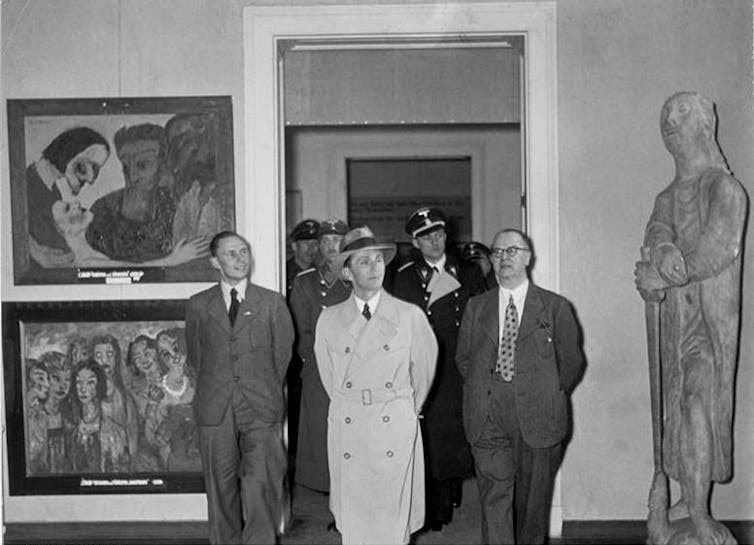








.jpg)
.JPG)


