Dinosaur tracks, made 140 million years ago, have been found for the first time in South Africa’s Western Cape

Source: The Conversation – Africa (2) – By Guy Plint, Professor Emeritus, Earth Sciences, Western University
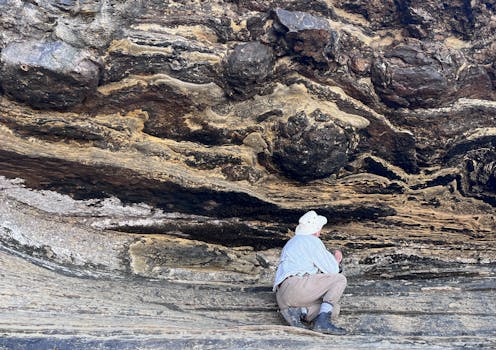
Guy Plint examines one of the dinosaur tracks, which is above his head. Annemarie Plint, CC BY-NC-ND

Dinosaurs have captured people’s imagination ever since their bones and teeth were first scientifically described in 1822 by geologist and palaeontologist Gideon Mantell in England.

Dinosaur bones have taught us a great deal about these animals from the “age of dinosaurs”, the Mesozoic Era, which stretched from approximately 252 million years ago to 65 million years ago. However, there’s something especially appealing about a different kind of dinosaur fossil: their tracks, which show researchers what the animals were doing while they were alive.

Ichnology is the study of tracks and traces and, since 2008, the Cape South Coast Ichnology Project has documented more than 370 vertebrate tracksites on South Africa’s southern coast. These sites are from the Pleistocene Epoch, which stretched from approximately 2.6 million years ago to 11,700 years ago, much more recent than the Mesozoic.

We knew that this coastline contained Mesozoic sedimentary rocks, some of which include non-marine sediments that could potentially preserve dinosaur tracks. We are both familiar with dinosaur tracks from our research in Canada, so we decided to investigate the possibility of tracks in South Africa’s Western Cape.

We found some – and, once we knew what to look for, it was evident that the tracks were not rare. In a new paper published in the journal Ichnos, we describe our findings in detail, presenting evidence of tracks of sauropods (enormous plant-eating dinosaurs) and possibly ornithopods (another group of large herbivorous dinosaurs).

The tracks were found in a rugged, remote, breathtakingly spectacular coastal setting. They were made by dinosaurs in a variety of estuarine settings. Some were walking on sandy, inter-tidal channel bars. Others walked on the bottom of tidal channels, their feet sinking down into soft mud forming the bed of the channel. Other vague “squishy” structures were formed by dinosaurs wading, or even wallowing in the muddy fill of abandoned channels.

These tracks are around 140 million years old, from the very beginning of the Cretaceous period when the African and South American tectonic plates were starting to pull apart. Southern Africa has an extensive record of Mesozoic vertebrate fossils, but that record ends at around 180 million years ago in the Early Jurassic with the eruption of voluminous lava flows. To the best of our knowledge, all the southern African dinosaur tracks known until now are from the Triassic and Jurassic periods, so they pre-date these eruptions.

That means these tracks are not only the first from the Western Cape. They also appear to be the youngest – that is, the most recent – thus far reported from southern Africa.

Knowing where to look

After deciding to hunt for potential dinosaur tracks, we visited a few likely sites on the Cape south coast in 2022, choosing areas with non-marine deposits of the appropriate age, mostly in the eastern coastal portion of the Western Cape. We found a few promising spots on that visit and, in 2023, undertook a dedicated examination.

Large horizontal bedding surface exposures in this area are very rare. We knew that, if we were to find dinosaur tracks, they would be evident mostly in profile in vertical cliff exposures.


Read more:
Footprints take science a step closer to understanding southern Africa’s dinosaurs


In the public imagination a dinosaur trackway extends across a level surface and toe impressions are visible. Some may also know that the infill of dinosaur tracks can occur on what are today the ceilings of overhangs or cave roofs. However, there are also distinctive features that allow tracks to be identified in profile. That’s because the animals’ footfalls deformed underlying layers in a distinctive manner.

The problem is that other mechanisms, such as earthquakes, are capable of generating broadly similar deformation structures.

The deposits we were examining had probably also been affected by seismic activity. The challenge was for us to differentiate between the two types of deformation.

The Early Cretaceous rocks that we examined had been studied and reported on decades ago, and the deformation structures had been attributed to origins such as earthquakes rather than living organisms. Since then, however, scientists have developed a better appreciation of what dinosaur tracks look like in profile.

After careful examination, our conclusion was straightforward: both dinosaur-generated and earthquake-generated types of deformation were present in the Cretaceous rocks.
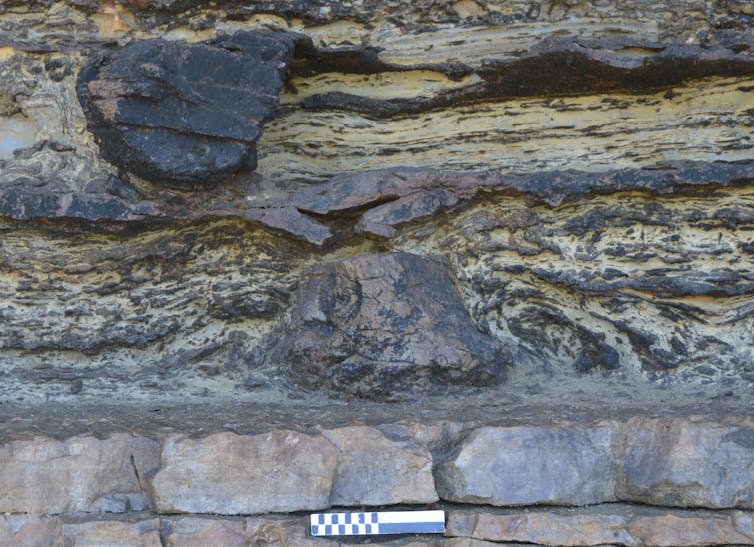
A small scale bar set beneath a dark, rocky protuberance
One of the sauropod tracks identified by the researchers. Scale bar is 20 cm.
Guy Plint, CC BY-NC-ND

Further evidence that we were looking at dinosaur tracks comes from the region’s bone fossil record. Cretaceous bone material has been reported from the region, mostly in the Kirkwood area in the Eastern Cape province. Two dinosaur bones have also been reported from the Knysna area in the Western Cape. One of these, a theropod tooth, was found – and correctly identified – by a 13-year-old boy.


Read more:
Dinosaur tracksite in Lesotho: how a wrong turn led to an exciting find


Clearly, dinosaurs were present in the Western Cape area. That means our discovery of ichnological evidence of their presence is not entirely surprising, but it is still extremely exciting.

Keep exploring

Our team plans to keep exploring deposits of suitable age in the region for evidence of more dinosaur tracks. We also hope that our discovery will inspire a new generation of dinosaur trackers to continue the quest and keep exploring.

The Conversation

The authors do not work for, consult, own shares in or receive funding from any company or organisation that would benefit from this article, and have disclosed no relevant affiliations beyond their academic appointment.

ref. Dinosaur tracks, made 140 million years ago, have been found for the first time in South Africa’s Western Cape – https://theconversation.com/dinosaur-tracks-made-140-million-years-ago-have-been-found-for-the-first-time-in-south-africas-western-cape-250660
Ancient DNA reveals Maghreb communities preserved their culture and genes, even in a time of human migration

Source: The Conversation – Africa (2) – By Giulio Lucarini, Senior Researcher, Institute of Heritage Science, National Research Council (CNR)

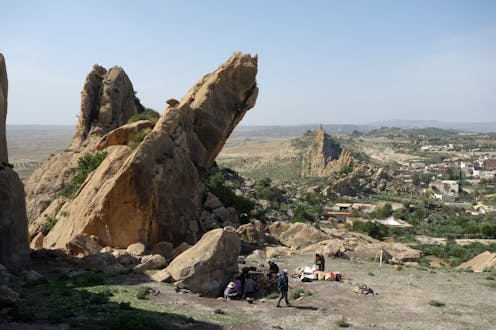
Doukanet el Khoutifa, Tunisia, where some of the remains were found. Giulio Lucarini, CC BY-NC-ND

The Neolithic period began in southwest Asia around 12,000 years ago. It marked a major shift in human history as societies transitioned from hunting and gathering to farming. This sparked migrations across Europe and dramatically reshaped the continent’s gene pool.

For a long time, North Africa was seen as a passive participant in this transformation. The dominant narrative suggested that farming economies never fully took root there.

Some studies proposed that North African communities actively resisted agriculture, except perhaps in the Nile Delta and the western Maghreb (modern-day Morocco). They continued to rely on land snails, wild plants, and hunting for survival. Only later, they also began herding domesticated sheep, goats, and cattle, introduced from southwest Asia.

Genetic studies have only recently tested this reconstruction in North Africa. This has never been done in the eastern Maghreb (modern-day Tunisia and eastern Algeria) – until now.

A clearly ancient human skeleton in a grave alongside a scale bar
A burial at one of the study sites, SHM-1 (Hergla) in Tunisia.
Simone Mulazzani, CC BY-NC-ND

As an Africanist archaeologist, I specialise in the study of ancient societies across Mediterranean Africa and the Sahara. My focus is on how humans adapted to their environments and the rise of food production in these regions. I recently conducted research in the eastern Maghreb alongside an international team of archaeologists, geneticists, and physical anthropologists to trace ancient population movements.

Our new study has just been published in Nature. We analysed the ancient genomes (complete DNA sequences) of nine individuals who lived in the eastern Maghreb between 15,000 and 6,000 years ago.

This may seem like a small sample. But, in the field of ancient DNA research, even a few well-preserved genomes can provide significant insights. They serve as reference points for tracing genetic lineages and identifying ancestral connections.

By adding genetic evidence to broader archaeological findings, we reconstructed patterns of population continuity, interaction and change over thousands of years.

Our results were striking. It’s clear from these genomes that some influence from farmers did reach north Africa from across the Mediterranean. But much of the genetic makeup of the eastern Maghreb populations remained rooted in their ancient foraging heritage.

This challenges the long-held narrative about migration into and out of north Africa before and during the Neolithic. It deepens our understanding of the past and highlights the incredible complexity of human movement and cultural exchange.

As we continue to unravel the genetic legacy of our ancestors, studies like this remind us of the complexity of human history. They show that the history of agriculture in the Mediterranean was not merely one of population replacement. Rather, it was a tale of cultural exchange, adaptation and continuity.

And researching these ancient human movements is more than just a matter of understanding history. It also provides insights into the patterns of migration and adaptation that can help us understand similar processes today.

Extraction and analysis

A map that shows the Mediterranean Sea, the Strait of Sicily and Pantelleria Island
A map of the eastern Maghreb showing the study sites (1: Afalou Bou Rhummel; 2: Djebba; 3: Doukanet el Khoutifa; 4: SHM-1, Hergla)
Giulio Lucarini, CC BY-NC-ND

We worked with ancient genomes extracted from human skeletal remains housed in museum or heritage institution collections. They came from excavations at four sites Afalou Bou Rhummel, Djebba, Doukanet el Khoutifa and SHM-1 (Hergla), all in the eastern Maghreb.

We chose the specimens because they were well-preserved, which is not always the case with ancient DNA.

The analysis found that some of the sampled individuals possessed European farmer ancestry around 7,000 years ago. Europeans contributed some genes to the region – but no more than 20% per individual.

A person working with small bones in a pit alongside some scientific equipment
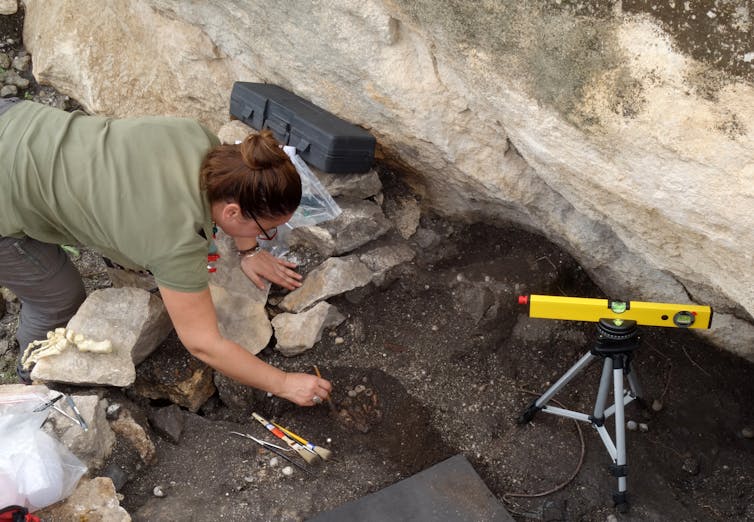
Excavation of human remains at Doukanet el Khoutifa, Tunisia.
Giulio Lucarini, CC BY-NC-ND

This is a modest genetic influence compared to ancient western Maghreb populations where, at some sites, European farmer ancestry can reach as high as 80%.

Our findings suggest that food-producing economies were introduced to the eastern Maghreb not by a large-scale replacement of the population (as seen in Europe) but more gradually. Change happened through sporadic migrations, mixing of cultures, and the spread of knowledge.

Across sea and land

One of the most intriguing discoveries was the genetic trace of European hunter-gatherers found in one individual from Djebba, Tunisia, dating to around 8,000 years ago. This suggests that early European and north African populations could interact via seafaring routes across the Strait of Sicily.

Researchers have long known that cultural exchange took place across the Mediterranean. We see this from the spread of technologies such as the so-called pressure technique – a method of shaping stone tools by carefully applying force with a pointed implement rather than striking the stone directly.

The discovery in Tunisia of obsidian (volcano glass) from Pantelleria, a small island in the Strait of Sicily, strengthens the link between the Mediterranean’s northern and southern shores.

Prehistoric wooden artefacts are seldom preserved over time. This may explain the absence of boat remains from this period in North Africa. However, dugout canoes from similar periods found in central Italy (Bracciano Lake) suggest that seafaring skills were well established around the Mediterranean. While there is no direct evidence linking these specific canoes to connections between Europe and North Africa, they support the idea that navigation was within the technological capabilities of the time.

Our study is the first time the connections suggested by this existing evidence have been substantiated genetically.


Read more:
Discovery of 5,000-year-old farming society in Morocco fills a major gap in history – north-west Africa was a central player in trade and culture


Another exciting aspect of our study is the identification of early Levantine (modern southwest Asia)-related ancestry in the eastern Maghreb. This was detected in human remains dated to around 6,800 years ago. It’s a genetic signature that postdates the arrival of European farmer ancestry by several centuries. It likely reflects the movement of people associated with early pastoralism, who introduced domesticated animals, such as sheep and goats, to the region.

Backing up archaeological evidence

It is especially rewarding to see the genetic evidence aligning with the archaeological record. This underscores the value of multidisciplinary research in uncovering past human dynamics.

What emerges overall is a region of strong genetic and cultural resilience, consistent with archaeological evidence.

The Conversation

Giulio Lucarini receives funding for this study from the National Research Council of Italy (CNR) and ISMEO – International Association for Mediterranean and Oriental Studies, Italy. He is affiliated with the National Research Council of Italy, Institute of Heritage Science (CNR-ISPC).

This study resulted from a collaboration between the following institutions: Harvard University, USA; the Max Planck Institute, Germany; the National Research Council of Italy (CNR); the Institut National du Patrimoine (INP), Tunisia; the Centre National de Recherche Préhistorique, Anthropologique et Historique (CNRPAH), Algeria; the Institut de Paléontologie Humaine (IPH), France; the University of Vienna, Austria; Sapienza University of Rome, Italy; and ISMEO – International Association for Mediterranean and Oriental Studies, Italy.

ref. Ancient DNA reveals Maghreb communities preserved their culture and genes, even in a time of human migration – https://theconversation.com/ancient-dna-reveals-maghreb-communities-preserved-their-culture-and-genes-even-in-a-time-of-human-migration-248338

Black holes spew out powerful jets that span millions of light-years – we’re trying to understand their whole life cycle

Source: The Conversation – Africa (2) – By Gourab Giri, Postdoctoral researcher, University of Pretoria

An artistic representation of what a giant cosmic jet the size of the distance between the Milky Way and Andromeda could look like. Author provided, CC BY-SA

There is a supermassive black hole at the centre of nearly every big galaxy – including ours, the Milky Way (it’s called Sagittarius A*). Supermassive black holes are the densest objects in the universe, with masses reaching billions of times that of the Sun.

Sometimes a galaxy’s supermassive black hole “wakes up” due to a sudden influx of gas and dust, most likely supplied from a neighbouring galaxy. It begins eating up lots of nearby gas and dust. This isn’t a calm, slow or passive process. As the black hole pulls in material, the material gets superheated on a scale of millions of degrees, far hotter than the surface temperature of our Sun, and is ejected from the galaxy at near-light speeds. This creates powerful jets that look like fountains in the cosmos.

The accelerated high-speed plasma matter prompts these “fountains” to emit radio signals that can only be detected by very powerful radio telescopes. This gives them their name: radio galaxies. While black holes are common, radio galaxies are not. Only between 10% and 20% of all galaxies exhibit this phenomenon.

Giant radio galaxies are even less common. They account for only 5% of all radio galaxies and take their name from the fact that they reach enormous distances. Some radio galaxies’ jets reach nearly 16 million light-years. (That’s almost six times the distance between the Milky Way and the Andromeda galaxy.) The largest jet discovered spans nearly 22 million light-years across.


Read more:
South African telescope discovers a giant galaxy that’s 32 times bigger than Earth’s


But how do these structures cover such enormous distances? To find out, I led a study in which we used modern supercomputers to develop models that simulated behaviour of giant cosmic jets within a mock universe, constructed on the basis of fundamental physical laws governing the cosmos.

This allowed us to observe how radio jets propagate over hundreds of millions of years – a process impossible to track directly in the real universe. These sophisticated simulations provide deeper insights into the life cycle of radio galaxies, highlighting the differences between their early, compact stages and their later, expansive forms.

Understanding the evolution of radio galaxies helps us unravel the broader processes that shape the universe.

Supercomputing

Cutting-edge technology was key to this study.

Sensitive observations from world-class radio telescopes like South Africa’s MeerKAT and LOFAR in the Netherlands have recently led to several discoveries of cosmic fountains.


Read more:
MeerKAT: the South African radio telescope that’s transformed our understanding of the cosmos


However, modelling their origins has been challenging. Tracking events over millions of years is impossible in real-time.

That’s where supercomputers come in. These high-performance computing systems are designed to process massive amounts of data. They can perform complex simulations at incredible speeds. In this study, their power was crucial for modelling the evolution of giant radio jets over millions of years.

The necessary supercomputing power was provided by South Africa’s Inter-University Institute for Data Astronomy, a network comprising the University of Pretoria, the University of Cape Town and the University of the Western Cape.

Our universe is governed by fundamental forces like gravity, which can be described through mathematical formulas. These formulas, essentially numbers, are fed into supercomputers to create a simulated “mock universe” that follows the same physical laws as the real cosmos. This allows scientists to experiment with how jets from supermassive black holes evolve over time. With their immense processing power, supercomputers can simulate millions of years of cosmic jet evolution in just a month.

Key takeaways

Gravity is the dominant force in the universe, pulling heavier matter and dragging nearby lighter matter. If gravity were the only force at play, the universe might have collapsed by now. Yet we see galaxies, galaxy clusters and even life itself thriving. We suspect that these cosmic fountains play a key role in solving the mystery of how this happens.

By releasing thermal and mechanical energy, they heat up the surrounding collapsing gas, counteracting gravity and maintaining a balance that sustains cosmic structures.

Our models also shed light on why some radio galaxies’ jets bend sharply, forming an “X” shape in radio waves instead of following a straight trajectory, and revealed the conditions under which giant fountains can continue growing even in dense cosmic environments (that is, in a galaxy cluster).

The study also suggests that giant radio galaxies may be statistically more common than previously believed. There are potentially thousands of undiscovered giant cosmic fountains. Thanks to world-class telescopes like MeerKAT and LOFAR – and the power of supercomputers – there’s plenty more to explore as we try to understand our universe.

The research on which this article is based required extensive collaboration with an international team, including Jacinta Delhaize from the University of Cape Town, Joydeep Bagchi from Christ University, India, and DJ Saikia from the Inter-University Centre for Astronomy and Astrophysics in India. Essential contributions by Kshitij Thorat and Roger Deane from the University of Pretoria also played a crucial role in shaping the study.

The Conversation

Gourab Giri does not work for, consult, own shares in or receive funding from any company or organisation that would benefit from this article, and has disclosed no relevant affiliations beyond their academic appointment.

ref. Black holes spew out powerful jets that span millions of light-years – we’re trying to understand their whole life cycle – https://theconversation.com/black-holes-spew-out-powerful-jets-that-span-millions-of-light-years-were-trying-to-understand-their-whole-life-cycle-250073

Iran and Ethiopia have a security deal – here’s why they signed it

Source: The Conversation – Africa (2) – By Eric Lob, Associate Professor of Politics and International Relations, Florida International University

Ethiopia and Iran signed a memorandum of understanding (MOU) on 6 May 2025. Under it, their national police agencies will cooperate on security and intelligence. This will include combating cross-border crime, sharing intelligence and building capacity. They will also share experiences and training.

For Iran, the MOU marks a significant step towards strengthening relations with a regional power that’s strategically located in the Horn of Africa.

Tehran has been using its security apparatus and military capabilities to establish and expand political and economic ties with countries in Africa. This has included drone transfers to the Ethiopian government that helped it turned the tide of the Tigray war, a separatist struggle in the country’s north that took place from 2020 to 2022.

Iran has also supplied the Sudanese army with surveillance and combat drones. These have been used against the paramilitary Rapid Support Forces in Sudan’s ongoing civil war.

The agreement is important for Ethiopia for two reasons.

Firstly, it’s likely to enable the Ethiopian government in Addis Ababa to combat ethnic militias more effectively. It faces increasing internal instability, including tensions with hostile factions of the separatist Tigray People’s Liberation Front.

Secondly, the agreement comes after a meeting in Addis Ababa between the Ethiopian police chief, Demelash Gebremichael, and a delegation from Iran’s regional rival, the United Arab Emirates (UAE). The exchange concentrated on investigating and extraditing cross-border criminals.

Addis Ababa’s willingness to work with regional rivals in the Middle East shows its pragmatic approach to foreign relations. Ethiopia needs all the friends it can muster as an embattled and weakened state. Since the Tigray war, it has battled the rise of ethnic militias and confronted economic adversity. It is also facing renewed hostility with neighbouring Eritrea.

What Iran stands to gain

Since 2016, Ethiopia has been a gateway for Iran to gain a foothold in the Horn of Africa. That year, other countries in the region severed relations with Iran. This followed Tehran’s disengagement from sub-Saharan Africa under Hassan Rouhani, who served as president from 2013 to 2021, and his prioritisation of a nuclear deal with the US.

The severing of ties was also a byproduct of geopolitical pressure exerted by Saudi Arabia and the UAE on countries in the region. The Middle Eastern states wanted to reduce, if not eliminate, Iran’s presence in the Horn of Africa and Red Sea to limit its support for Houthi rebels in the ongoing Yemeni civil war.


Read more:
Iran’s intervention in Sudan’s civil war advances its geopolitical goals − but not without risks


Ethiopia was the first country in sub-Saharan Africa to establish relations with Iran during the 1960s. It was also one of its top trading partners on the continent before and after the 1979 Iranian Revolution.

Strategically and ideologically, this special relationship was based on the pro-western and anti-communist stances of their monarchs: the Shah of Iran Mohammad Reza Pahlavi, who ruled from 1941 to 1979, and Emperor Haile Selassie, who was in power from 1930 to 1974.

After the revolution, Iran-Ethiopia relations revived under Mahmoud Ahmadinejad, who served as Iranian president from 2005 to 2013. He pursued an active Africa policy to mitigate Iran’s international isolation and circumvent US sanctions.

After Rouhani initially downgraded these relations, they were renewed during his second term. This followed US withdrawal from the nuclear deal.

Relations firmed when Ebrahim Raisi, who served as Iranian president from 2021 to 2024, delivered military drones and other aid to Addis Ababa during the Tigray war.

What’s in it for Ethiopia

Ethiopia is facing increasing instability and uncertainty. The Tigray war has depleted the state’s resources. There is an economic crisis caused by rising inflation and unemployment.

Addis Ababa continues to confront ethnic tensions. Hostile factions of the Tigray People’s Liberation Front remain. It also faces tensions with the Amhara Fano militia, which initially fought alongside the government against Tigrayan forces. Forced disarmament policies and ongoing land disputes caused the militia to take up arms against the government.


Read more:
Somaliland-Ethiopia port deal: international opposition flags complex Red Sea politics


Ethiopian prime minister Abiy Ahmed also faces growing opposition and resistance from his own ethnic group, the majority Oromo, and their Oromo Liberation Army. The reason for their discontent is Abiy’s imposition of centralised rule on their regional state within a federal system.

The security and intelligence cooperation with Iran could allow Addis Ababa to combat ethnic militias more effectively.

It would also enable Ethiopia to prepare for another possible war against neighbouring Eritrea.

Ethiopia and Eritrea normalised relations and fought together against Tigrayan forces. However, tensions between the two countries have been brewing again. These have been triggered by two factors. First, the conditions of the 2022 Pretoria peace agreement caused Eritrea to maintain forces inside Ethiopia. Second are the ambitions of Addis Ababa to acquire a Red Sea port in Somaliland, a breakaway region of Somalia. Eritrea has supported Somalia’s opposition to the deal.

Regional power games

This isn’t the first time that Ethiopia has tried working with two regional rivals – Iran and the UAE. The UAE is also among its top trading partners, along with Saudi Arabia.

In 2016, Ethiopia was the only country in the Horn of Africa that didn’t cut ties with Iran, though it was under pressure from the UAE and Saudi Arabia to do so. The decision was taken by Abiy’s predecessor, Hailemariam Desalegn, whose term ran from 2012 to 2018.

During the Tigray war, Ethiopia received military drones and other assistance from Iran and the UAE, alongside Turkey.

The civil war in Sudan has presented an even more complicated story. Ethiopia has vacillated between engaging with the Rapid Support Forces and the Sudanese Armed Forces at different points in the conflict.

For its part, Iran has supported the Sudanese army. The UAE has backed the paramilitary Rapid Support Forces.

Ethiopia’s efforts to strengthen its security ties with Iran and the UAE show a unique case of convergence between regional rivals that have otherwise remained on opposite sides of conflicts in countries like Yemen and Sudan.

The Conversation

Eric Lob does not work for, consult, own shares in or receive funding from any company or organisation that would benefit from this article, and has disclosed no relevant affiliations beyond their academic appointment.

ref. Iran and Ethiopia have a security deal – here’s why they signed it – https://theconversation.com/iran-and-ethiopia-have-a-security-deal-heres-why-they-signed-it-256486

Is Kenya’s president safe in a crowd? Security expert scans VIP protection checklist

Source: The Conversation – Africa (2) – By Douglas Lucas Kivoi, Principal Policy Analyst, Governance Department, The Kenya Institute for Public Policy Research and Analysis (KIPPRA)

Protecting any president requires multiple layers of intelligence, physical security and rapid response security protocols. Exact operational details are classified, but there are global best practices in VIP protection.

The issue of presidential protection in Kenya has become particularly relevant following an incident in early May 2025 when someone in a crowd threw a shoe at President William Ruto during a public event, hitting his hand.

I have studied policing and security policies in Kenya for over 15 years, interacting closely with the country’s security protocols. In my view this incident exposed several critical security lapses around the elite officers tasked with protecting the president.

The security of the president is a critical issue in Kenya. The country is exposed to terror groups like the Somalia-based Al-Shabaab and other criminal networks in the region.

In 2021, a businessman embedded himself into the presidential motorcade and drove into then president Uhuru Kenyatta’s official residence. In 2017, an unidentified man who was said to have illegally accessed the highly protected state house grounds was shot dead by presidential guards.

There are multiple layers to Kenya’s protection protocols. They include National Intelligence Service officers, the Kenya Defence Force, Presidential Escort Police officers drawn from the highly trained General Service Unit, bomb disposal experts and regular police officers. Their deployment depends on the nature of the presidential engagement.

While the shoe incident may be passed off as simply embarrassing, it should serve as a wake-up call to tighten security protocols around the president without necessarily compromising his public engagement with citizens.

What’s in place

Prior to any presidential visit across the country, security teams conduct a thorough reconnaissance of the destination. This includes coordinating with local policing agencies, clearing airspace, mapping secure transport routes and identifying nearby medical facilities in case of emergencies.

Presidential motorcade routes are pre-planned and a dry run is made. This often includes mapping alternative routes to avoid predictability should there be assailants along a presidential route. It is common to see some roads temporarily closed and security officers conducting sweeps for any threats or explosives. In areas deemed high risk, counter security sniper teams are covertly deployed in strategic areas.

Cases of attacks on presidential motorcades are rare in Kenya. However, in 2002 during presidential campaigns, angry opposition supporters stoned then president Daniel Moi’s motorcade. In November 2021, an angry mob hurled rocks at then deputy president Ruto’s motorcade.

The National Intelligence Service and Presidential Escort Unit covertly scout locations in advance, assessing potential security vulnerabilities. Crowd sizes, and entry and exit points for the head of state are mapped out in advance.

In cases where meetings are held in town halls or huge tents, attendees are screened using metal detectors and/or physical searches. Uniformed and plainclothes security officers embed themselves in the crowd to monitor any threats.

The president and any dignitaries accompanying him have at least three layers of security.

The inner ring consists of close protection officers who are always within an arm’s length of the president to physically thwart any threats. The middle ring has armed security guards who watch for, among others, sudden movements and abnormal behaviour within the crowd. The outer ring consists of regular police and paramilitary units from the General Service Unit who secure the outside perimeter.

The presidential motorcade is a coordinated convoy of heavily armoured vehicles. It includes lead and chase cars, communication units and emergency response teams. Traffic is managed by local traffic police officers to ensure unobstructed movement. Routes are kept confidential until necessary.

The president’s security may opt to use a decoy vehicle if there is a security threat, to confuse and derail potential risk sources. In all these cases, there is a contingent of specialised General Service Unit officers, called the Recce unit, that always accompanies the president.

Kenya’s presidential security precautions follow standard VIP security protection like those for heads of state across the world. However, in some neighbouring countries, for instance, presidents move in heavily armed military convoys. This has not been seen in Kenya.

If a potential threat is detected, the president is immediately shielded and whisked away to a secure vehicle or evacuated by air in high-risk events. In such cases, the Kenya Defence Forces secures the president.

Despite stringent security measures, incidents can occur. For instance, in March 2025, a British tourist was fatally hit by a vehicle in Ruto’s motorcade. This prompted investigations and reviews on motorcade safety protocols.

Such events highlight the challenges of balancing presidential security with public safety, especially in densely populated urban areas.

Security failures

The shoe-throwing incident targeting Ruto highlighted five major failures in presidential protection protocols.

First, crowd screening and access control failures. The alleged assailant was very close to the president, suggesting an inadequate distance between the crowds and the president. The inner ring of security also failed to spot the perpetrator raising a shoe in the air to use as a projectile. This indicates weak front-row eye sweeps and scans by the president’s security.

Second, there was an apparent delay in security response. The elite officers around the president should have subdued the alleged attacker within seconds. It could mean most had their eyes on the president or cameras, as opposed to scanning the crowds for any sudden movements.

Third, security allowed the president to stand too close to a crowd that hadn’t been screened. Best practices require a no-go zone of three to five metres for individuals who have not been scanned or screened.

Fourth, there was an apparent gap in intelligence and threat assessment. Aggressive or agitated people next to the president should draw the attention of security officers. Plainclothes security officers are usually deployed to monitor crowd behaviour. It isn’t enough to rely on uniformed officers.

Undercover agents are critical for flagging pre-attack signals, such as nervousness or repeated adjustments of positions.

Fifth, there was no clear evacuation plan for the president. After the incident, the president continued speaking. In high-risk scenarios, protocols often demand instant relocation of the president to a secure vehicle or helicopter, where the military takes over and airlifts him to safety.

What should change

Kenya’s presidential security detail may be forced to:

  • increase standoff distance between the president and crowds

  • deploy more plainclothes officers to blend in and monitor crowds around the president

  • mandate stricter screening of those in close proximity to the president

  • conduct more frequent security risks drills for rapid neutralisation of potential threats.

The exact details of presidential security in Kenya are confidential. However, the overarching structure aims to provide comprehensive protection to the president while maintaining public safety and order during official engagements. No security protocol is 100% foolproof. But a balance needs to be struck between overly aggressive crowd control and accessibility.

The Conversation

Douglas Lucas Kivoi does not work for, consult, own shares in or receive funding from any company or organisation that would benefit from this article, and has disclosed no relevant affiliations beyond their academic appointment.

ref. Is Kenya’s president safe in a crowd? Security expert scans VIP protection checklist – https://theconversation.com/is-kenyas-president-safe-in-a-crowd-security-expert-scans-vip-protection-checklist-256268

Somaliland’s 30-year quest for recognition: could US interests make the difference?

Source: The Conversation – Africa (2) – By Aleksi Ylönen, Professor, United States International University

More than three decades after unilaterally declaring independence from Somalia, Somaliland still seeks international recognition as a sovereign state. Despite a lack of formal acknowledgement, the breakaway state has built a relatively stable system of governance. This has drawn increasing interest from global powers, including the United States. As regional dynamics shift and great-power competition intensifies, Somaliland’s bid for recognition is gaining new currency. Aleksi Ylönen has studied politics in the Horn of Africa and Somaliland’s quest for recognition. He unpacks what’s at play.


What legal and historical arguments does Somaliland use?

The Somali National Movement is one of the main clan-based insurgent movements responsible for the collapse of the central government in Somalia. It claims the territory of the former British protectorate of Somaliland. The UK had granted Somaliland sovereign status on 26 June 1960.

The Somali government tried to stomp out calls for secession. It orchestrated the brutal killing of hundreds of thousands of people in northern Somalia between 1987 and 1989.

But the Somali National Movement declared unilateral independence on 18 May 1991 and separated from Somalia.

With the collapse of the Somali regime in 1991, the movement’s main enemy was gone. This led to a violent power struggle between various militias.

This subsided only after the politician Mohamed Egal consolidated power. He was elected president of Somaliland in May 1993.

Egal made deals with merchants and businessmen, giving them tax and commercial incentives to accept his patronage. As a result, he obtained the economic means to consolidate political power and to pursue peace and state-building. It’s something his successors have kept up with since his death in 2002.

What has Somaliland done to push for recognition?

Successive Somaliland governments continue to engage in informal diplomacy. They have aligned with the west, particularly the US, which was the dominant power after the cold war, and the former colonial master, the UK. Both countries host significant Somaliland diaspora communities.

The US and the UK have for decades flirted with the idea of recognising Somaliland, which they consider a strategic partner. However, they have been repeatedly thrown back by their respective Somalia policies. These have favoured empowering the widely supported Mogadishu government to reassert its authority and control over Somali territories.

This Somalia policy has been increasingly questioned in recent years, in part due to Mogadishu’s security challenges. In contrast, the Hargeisa government of Somaliland has largely shown it can provide security and stability. It has held elections and survived as a state for the last three decades, though it has faced political resistance and armed opposition.


Read more:
Somaliland elections: what’s at stake for independence, stability and shifting power dynamics in the Horn of Africa


As new global powers rise, Somaliland administrations have pursued an increasingly diverse foreign policy, with one goal: international recognition.

Hargeisa hosts consulates and representative offices of Djibouti, Ethiopia, Kenya, Taiwan, the UK and the European Union, among others.

The government has also engaged in informal foreign relations with the United Arab Emirates. The Middle Eastern monarchy serves as a business hub and a destination of livestock exports. Many Somalilanders migrate there.

Somaliland maintains representative offices in several countries. These include Canada, the US, Norway, Sweden, the UK, Saudi Arabia, Turkey and Taiwan. Hargeisa has alienated China because it has collaborated with Taiwan since 2020. Taiwan is a self-ruled island claimed by China.

On 1 January 2024, Somaliland’s outgoing president Muse Bihi signed a memorandum of understanding with Ethiopian prime minister Abiy Ahmed for increased cooperation. Bihi implied that Ethiopia would be the first country to formally recognise Somaliland. The deal caused a sharp deterioration of relations between Addis Ababa and Mogadishu.

Abiy later moderated his position and, with Turkish mediation, reconciled with his Somalia counterpart, President Hassan Mohamud.

What’s behind US interest in Somaliland?

The US, like other great powers, has been interested in Somaliland because of its strategic location. It is on the African shores of the Gulf of Aden, across from the Arabian Peninsula. Its geographical position has gained currency recently as Yemeni Houthi rebels strike maritime traffic in the busy shipping lanes. Somaliland is also well located to curb piracy and smuggling on this global trade route.

The US Africa Command set up its main Horn of Africa base at Camp Lemonnier in Djibouti in 2002. This followed the 11 September 2001 attacks.


Read more:
Somaliland’s quest for recognition: UK debate offers hint of a sea change


In 2017, China, which had become the main foreign economic power in the Horn of Africa, set up a navy support facility in Djibouti. This encouraged closer collaboration between American and Somaliland authorities. The US played with the idea of establishing a base in Berbera, which hosts Somaliland’s largest port.

With Donald Trump winning the US presidential election in 2024, there were reports of an increased push for US recognition of Somaliland. This would allow the US to deepen its trade and security partnerships in the volatile Horn of Africa region.

Since March 2025, representatives of the Trump administration have engaged in talks with Somaliland officials to establish a US military base near Berbera. This would be in exchange for a formal but partial recognition of Somaliland.

What are the risks of US recognition of Somaliland?

Stronger US engagement with Somaliland risks neglecting Somalia.

Mogadishu depends on external military assistance in its battle against the advancing violent Islamist extremist group, Al-Shabaab. It also faces increasing defiance from two federal regions, Puntland and Jubaland.

US recognition would reward Hargeisa for its persistent effort to maintain stability and promote democracy. However, it could encourage other nations to recognise Somaliland. This would deliver a blow to Somali nationalists who want one state for all Somalis.

The Conversation

Aleksi Ylönen is affiliated with the Center for International Studies, Iscte-Instituto Universitário de Lisboa, and is an associate fellow at the HORN International Institute for Strategic Studies.

ref. Somaliland’s 30-year quest for recognition: could US interests make the difference? – https://theconversation.com/somalilands-30-year-quest-for-recognition-could-us-interests-make-the-difference-255399

Digital government can benefit citizens: how South Africa can reduce the risks and get it right

Source: The Conversation – Africa (2) – By Busani Ngcaweni, Visiting Adjunct Professor, Wits School of Governance, University of the Witwatersrand

The digital revolution is reshaping governance worldwide. From the electronic filing of taxes to digital visa applications, technology is making government services more accessible, efficient and transparent.

South Africa is making progress in its digital journey. In 2024 it climbed to 40th place out of 193 countries, from 65th place in 2022, in the United Nations e-Government Index. This improvement makes the country one of Africa’s digital leaders, surpassing Mauritius and Tunisia.

South Africa has identified more than 255 government services for digitisation. Already, 134 are available on the National e-Government Portal. This achievement is remarkable. Nevertheless, the shift to digitisation comes with challenges and risks.

Some countries have weakened the state’s role by rapidly outsourcing key government functions. But South Africa has the opportunity to build a model of digital transformation that strengthens public institutions rather than diminishes them.

New technologies must bring tangible benefits for citizens. Digital transformation can improve public administration. But, if mismanaged, it could burden taxpayers with costs.

Benefits

Digital transformation comes at a cost. This is particularly true if the state fails to use its procurement power to negotiate reasonable prices. Infrastructure upgrades, cybersecurity measures, software licensing and system maintenance require substantial financial investment.

The question is whether these expenses are a necessary step towards a more efficient and accessible government.

Two South African examples illustrate that digital transformation can save money and enhance service delivery quality.

The first is the South African Revenue Service. Its goal is to ensure that taxpayers and tax advisers can use the service from anywhere and at any time. The changes made more than a decade ago show that digital systems can yield substantial financial gains. After introducing e-filing in 2006, the revenue service streamlined tax processes, reduced inefficiencies and led to higher compliance rates. Ultimately this led to improved revenue collection.

Similarly, digitising social grant payments has had a number of positive effects. In a chapter of a recent edited volume on public governance, my colleagues and I wrote a case study about how the South African Social Security Agency used basic technologies and platforms like WhatsApp and email to process a grant during the COVID pandemic. It allowed over 14 million people to apply, paid grants to over 6 million beneficiaries during the first phase of the project.

South African Social Security Agency annual reports show that over 95% of grant beneficiaries receive their payouts electronically through debit cards, instead of going to cash points. This improves security and lets beneficiaries decide when to get and spend their money.

There are fears that automation could result in massive job losses. But global experience has shown that digitalisation does not necessarily lead to large-scale retrenchments. Instead it can shift the nature of work to other responsibilities.

The South African Social Security Agency provides a compelling case. Its transition to digital grant payments did not lead to job losses. Similarly, the expansion of e-filing at the revenue service has not resulted in workforce reductions. In both cases efficiencies improved.

These cases highlight that digital transformation is reshaping roles rather than displacing employees. Public servants are moving into areas such as cybersecurity, data analysis and AI-driven decision-making.

Shortcomings and pitfalls

A number of inefficiencies are at play in government services.

Firstly, most government digital operations still work with outdated paper-based systems. The lack of a uniform digital identity creates bureaucratic inefficiencies and delays.

Secondly, fragmented procurement of equipment in government has led to duplicated efforts, increased costs and fruitless expenditure.

Thirdly, different departments often use isolated and incompatible digital systems. This reduce the mutual benefits of digital transformation. The State IT Agency has been blamed for inefficiencies, procurement failures and questionable spending.

Fourthly, South Africa’s public service remains fragmented. Citizens still struggle to access government services seamlessly. They often move between departments to complete what should be a single transaction.

Without a centralised system, departments operate in isolation, duplicating efforts, increasing costs and eroding public trust.


Read more:
South Africa’s civil servants are missing skills, especially when it comes to technology – report


Fifth, a lack of skills. Increasing reliance on digital tools requires expertise in data analytics, cloud computing and automation. Many public servants lack the training to take on these new roles. The National Digital and Future Skills Strategy was introduced in September 2020 to bridge this gap, but its effectiveness depends on its implementation.

Introducing it in 2020 at the height of the COVID-19 pandemic forced government to make digital leaps which otherwise might have taken longer. To sustain services, technology had to be rapidly adopted, including basic things like holding Cabinet meetings online, using a system rapidly developed by the State Information Technology Agency.

Sixth, security concerns complicate the transformation. As government systems become digital, they become vulnerable to cyberattacks. South Africa must put in place cybersecurity infrastructure to prevent identity theft, data breaches and service disruptions. A cyberattack on one department could affect the entire public sector.

What needs to be done

Government must streamline procurement, improve coordination and eliminate inefficiencies to ensure interdepartmental collaboration.

A single, integrated e-government platform would:

  • cut red tape

  • reduce queues

  • increase efficiency.

Government needs to upskill civil servants and improve their digital literacy.

Government must create a seamless e-government system that connects services while protecting citizens’ personal information. The success of digitalisation depends on technological advancements as well as the level of trust citizens have in government systems. Without strong security measures, transparency and accountability, even the most sophisticated digital tools will fail to gain public confidence.

South Africa has the chance to demonstrate that a strong, capable state can successfully integrate technology while safeguarding public interests. It should take full advantage of offers by Microsoft, Amazon and Huawei to support digital skills training in the public sector in a way that does not advantage one company’s technologies over others. Choices of technology must be user-centric, not based on preferences of accounting officers and chief information officers. Leaders of public institutions must be measured on their ability to digitally transform their organisations.

The Conversation

Busani Ngcaweni is affiliated with the National School of Government, Wits and Johannesburg Universities.

ref. Digital government can benefit citizens: how South Africa can reduce the risks and get it right – https://theconversation.com/digital-government-can-benefit-citizens-how-south-africa-can-reduce-the-risks-and-get-it-right-254089