Can bigger-is-better ‘scaling laws’ keep AI improving forever? History says we can’t be too sure

Source: The Conversation – Global Perspectives – By Nathan Garland, Lecturer in Applied Mathematics and Physics, Griffith University

Milad Fakurian / Unsplash

OpenAI chief executive Sam Altman – perhaps the most prominent face of the artificial intelligence (AI) boom that accelerated with the launch of ChatGPT in 2022 – loves scaling laws.

These widely admired rules of thumb linking the size of an AI model with its capabilities inform much of the headlong rush among the AI industry to buy up powerful computer chips, build unimaginably large data centres, and re-open shuttered nuclear plants.

As Altman argued in a blog post earlier this year, the thinking is that the “intelligence” of an AI model “roughly equals the log of the resources used to train and run it” – meaning you can steadily produce better performance by exponentially increasing the scale of data and computing power involved.

First observed in 2020 and further refined in 2022, the scaling laws for large language models (LLMs) come from drawing lines on charts of experimental data. For engineers, they give a simple formula that tells you how big to build the next model and what performance increase to expect.

Will the scaling laws keep on scaling as AI models get bigger and bigger? AI companies are betting hundreds of billions of dollars that they will – but history suggests it is not always so simple.

Scaling laws aren’t just for AI

Scaling laws can be wonderful. Modern aerodynamics is built on them, for example.

Using an elegant piece of mathematics called the Buckingham π theorem, engineers discovered how to compare small models in wind tunnels or test basins with full-scale planes and ships by making sure some key numbers matched up.

Those scaling ideas inform the design of almost everything that flies or floats, as well as industrial fans and pumps.

Another famous scaling idea underpinned the boom decades of the silicon chip revolution. Moore’s law – the idea that the number of the tiny switches called transistors on a microchip would double every two years or so – helped designers create the small, powerful computing technology we have today.

But there’s a catch: not all “scaling laws” are laws of nature. Some are purely mathematical and can hold indefinitely. Others are just lines fitted to data that work beautifully until you stray too far from the circumstances where they were measured or designed.

When scaling laws break down

History is littered with painful reminders of scaling laws that broke. A classic example is the collapse of the Tacoma Narrows Bridge in 1940.

The bridge was designed by scaling up what had worked for smaller bridges to something longer and slimmer. Engineers assumed the same scaling arguments would hold: if a certain ratio of stiffness to bridge length worked before, it should work again.

Instead, moderate winds set off an unexpected instability called aeroelastic flutter. The bridge deck tore itself apart, collapsing just four months after opening.

Likewise, even the “laws” of microchip manufacturing had an expiry date. For decades, Moore’s law (transistor counts doubling every couple of years) and Dennard scaling (a larger number of smaller transistors running faster while using the same amount of power) were astonishingly reliable guides for chip design and industry roadmaps.

As transistors became small enough to be measured in nanometres, however, those neat scaling rules began to collide with hard physical limits.

When transistor gates shrank to just a few atoms thick, they started leaking current and behaving unpredictably. The operating voltages could also no longer be reduced with being lost in background noise.

Eventually, shrinking was no longer the way forward. Chips have still grown more powerful, but now through new designs rather than just scaling down.

Laws of nature or rules of thumb?

The language-model scaling curves that Altman celebrates are real, and so far they’ve been extraordinarily useful.

They told researchers that models would keep getting better if you fed them enough data and computing power. They also showed earlier systems were not fundamentally limited – they just hadn’t had enough resources thrown at them.

But these are undoubtedly curves that have been fit to data. They are less like the derived mathematical scaling laws used in aerodynamics and more like the useful rules of thumb used in microchip design – and that means they likely won’t work forever.

The language model scaling rules don’t necessarily encode real-world problems such as limits to the availability of high-quality data for training, or the difficulty of getting AI to deal with novel tasks – let alone safety constraints or the economic difficulties of building data centres and power grids. There is no law of nature or theorem guaranteeing that “intelligence scales” forever.

Investing in the curves

So far, the scaling curves for AI look pretty smooth – but the financial curves are a different story.

Deutsche Bank recently warned of an AI “funding gap” based on Bain Capital estimates of a US$800 billion mismatch between projected AI revenues and the investment in chips, data centres and power that would be needed to keep current growth going.

JP Morgan, for their part, has estimated that the broader AI sector might need around US$650 billion in annual revenue just to earn a modest 10% return on the planned build-out of AI infrastructure.

We’re still finding out which kind of law governs frontier LLMs. The realities may keep playing along with the current scaling rules; or new bottlenecks – data, energy, users’ willingness to pay – may bend the curve.

Altman’s bet is that the LLM scaling laws will continue. If that’s so, it may be worth building enormous amounts of computing power because the gains are predictable. On the other hand, the banks’ growing unease is a reminder that some scaling stories can turn out to be Tacoma Narrows: beautiful curves in one context, hiding a nasty surprise in the next.

The Conversation

Nathan Garland does not work for, consult, own shares in or receive funding from any company or organisation that would benefit from this article, and has disclosed no relevant affiliations beyond their academic appointment.

ref. Can bigger-is-better ‘scaling laws’ keep AI improving forever? History says we can’t be too sure – https://theconversation.com/can-bigger-is-better-scaling-laws-keep-ai-improving-forever-history-says-we-cant-be-too-sure-270448

How the Trump administration tried to sell Ukraine a diplomatic debacle

Source: The Conversation – Global Perspectives – By Matthew Sussex, Associate Professor (Adj), Griffith Asia Institute; and Fellow, Strategic and Defence Studies Centre, Australian National University

A flurry of recent diplomatic activity has seen two competing peace plans for Ukraine emerge.

The first, widely touted as a US plan, was apparently hashed out between Kremlin insider Kirill Dmitriev and Steve Witkoff, President Donald Trump’s Russia point-man.

The second, hurriedly drafted by the United Kingdom, France and Germany, is based on the 28 points in the US plan, but with key modifications and deletions.

Following the release of the US plan, Trump accused Ukraine of showing “zero gratitude” for US assistance in the war effort, and demanded Kyiv accept the terms by Thanksgiving in the United States – November 27 – or face being cut off from US intelligence sharing and military aid.

Unlike the US plan, the European counter-proposal places the blame for the war squarely at Russia’s feet. It proposes freezing Russian assets until reparations are made by Moscow. It also seeks to freeze the conflict in place, leaving the question of which party retains which part of Ukraine contingent on subsequent negotiations.

Speaking about the peace proposals, European Commission President Ursula von der Leyen made it clear the European Union was committed to several key positions:

  • that Ukraine’s borders cannot be altered by force
  • there cannot be limitations on Ukraine’s armed forces that would leave it vulnerable, and
  • the EU needed to have a seat at the table in any agreement.

Comparing the two plans, it is clear Russia and Europe remain as far apart as ever on Ukraine’s future. That much is unsurprising.

What should be more shocking to Western observers is just how much the US plan echoed Russian demands that have remained largely unaltered since President Vladimir Putin’s full-scale invasion of Ukraine in early 2022.

Lacking logic and specifics

Put simply, the US plan would have had as much credibility if it had been written in crayon.

For starters, it has wording that appears to make more sense in Russian than English (or perhaps AI-translated English).

And it seems more focused on bringing about a new era of friendly Russia-US economic cooperation than a serious attempt to resolve Europe’s biggest land war since the Second World War.

Typical of Trumpian robber-baron foreign policy, the document foresaw large cash grabs for the US, amounting to little more than attempts at extortion.

In return, Ukraine was offered a murky NATO-style security guarantee that could be reneged upon under flimsy pretexts.

The plan also demanded:

  • large territorial concessions from Kyiv
  • a limited army
  • a pledge enshrined in Ukraine’s constitution that it would never to join NATO, and
  • a promise to hold elections in 100 days.

And while it expected Ukraine to strategically emasculate itself, the document made only vague suggestions about what Russia is “expected” to do, with no means of enforcement.

No multinational force was put forward to monitor the peace. And Ukraine was required to give up key defensive positions by ceding the territory it still controls in the Donbas region to Russia. That would leave the centre of the country defenceless against future Russian attacks.

Accepting those terms, as originally written, would be politically suicidal for Ukrainian President Volodomyr Zelensky. This was obvious in his sombre message that the plan forced Ukraine to choose between its dignity and continued US support.

A point-by-point breakdown

A closer look at just a selection of its key points illustrates just how bizarre the plan is.

  • Point 4 calls for “dialogue” between Russia and NATO, mediated by the US. That’s odd, since the US is a member of NATO.

  • Point 7 requires NATO to include a provision in its statutes that Ukraine will not be admitted. But the main purpose of NATO is that membership is open to all.

  • Point 9 says “European fighter jets” will be stationed in Poland, but doesn’t mention the American F-35s currently there.

  • Point 10 states that if Ukraine launches a missile “without cause” at St Petersburg or Moscow (strangely implying it’s fine to hit Smolensk or Voronezh, for instance) – then Kyiv loses its US security guarantee.

  • Point 13 says Russia will be invited to rejoin the G8 (the group now known as the G7 after Russia was expelled in 2014). But it says nothing about whether the other six members would agree to that.

  • Point 16 requires Russia to enshrine in law a policy of non-aggression towards Ukraine. However, it had already done so several times in the past, yet still invaded Ukraine in 2022.

  • Point 22 foresees a demilitarised zone in parts of Donetsk that Russian troops will not be able to enter. How to enforce that is left unspecified.

  • Point 26 gives everyone involved in the conflict full amnesty for their actions, including numerous alleged war criminals.

  • Point 27 establishes a “Peace Council” that would be overseen by Trump, similar to the “Board of Peace” envisioned in the Gaza peace plan, also headed by Trump. This gives him the ability to determine whether the agreement is being violated (and, crucially, by whom).

Where to next?

Ukrainians have been sold a diplomatic lemon before. In 1994, Ukraine signed the Budapest Memorandum, in which Kyiv agreed to give up the nuclear weapons it still held from the Soviet era, in return for commitments by Russia and the US that its sovereignty and borders would be respected.

Just as the current US plan has been rebuffed by Kyiv, there is no hope of the European alternative being endorsed by the Putin regime. Indeed, it has already been rejected by one of Putin’s senior advisers.

Where does this leave the peace process? US Secretary of State Marco Rubio has already walked back the US plan from a concrete set of demands to a “living, breathing document”, and hinted at great progress in negotiations with Ukraine.

European and Ukrainian stakeholders have also made approving noises, knowing that if the White House loses interest, securing peace will be much harder.

Yet it’s below the surface that the real soul-searching will be happening, in Ukraine, as well as the broader West. Once again, the Trump administration has proven it is more interested in long-term deals with autocrats than achieving just and lasting resolutions to security crises.

That alone should give US allies pause, and not just in Europe. For those nations, it’s one thing to doubt Putin’s motives. But it’s another thing entirely to now have to doubt America’s as well.

The Conversation

Matthew Sussex has received funding from the Australian Research Council, the Atlantic Council, the Fulbright Foundation, the Carnegie Foundation, the Lowy Institute and various Australian government departments and agencies.

ref. How the Trump administration tried to sell Ukraine a diplomatic debacle – https://theconversation.com/how-the-trump-administration-tried-to-sell-ukraine-a-diplomatic-debacle-270561

Two US National Guardsmen shot and killed near White House

Source: Radio New Zealand

By Leah Douglas and Idrees Ali, Reuters

A Metropolitan Police officer walks between patrol cars near a crime scene after a shooting in downtown Washington, DC, on November 26, 2025. Two members of the National Guard were shot Wednesday just blocks from the White House, according to officials, as a spokesperson for Donald Trump said the president has been briefed on the "tragic situation." Police said they had detained a suspect. (Photo by Drew ANGERER / AFP)

A police officer walks between patrol cars near a crime scene after a shooting in downtown Washington, DC, on November 26, 2025. Photo: AFP / Drew Angerer

Two members of the US National Guard have been shot in Washington DC near the White House.

There were conflicting reports about whether they had been killed immediately after the incident.

The shooting put the building into lockdown on Thursday (NZT) with President Donald Trump away in Florida and drawing a massive law enforcement response to the area.

West Virginia Governor Patrick Morrisey initially said in a post on X that both victims were members of his state’s National Guard and had died from their injuries, but he soon posted a second statement citing “conflicting reports” about their condition.

Police in Washington said one suspect was in custody and that the area was secured.

Trump is at his resort in Palm Beach ahead of Thursday’s Thanksgiving holiday, while US Vice President JD Vance is in Kentucky.

In a social media post, Trump called the suspected shooter an “animal” who was also “severely wounded.” It was not clear how the suspect had been injured, but CNN reported the two Guard members engaged the attacker in gunfire before they were shot.

A police car blocks a street in Washington, DC, following a shooting on November 26.

A police car blocks a street in Washington, DC, following a shooting on November 26. Photo: Joe Merkel/CNN via CNN Newsource

The shooting unfolded near Farragut Square, a popular lunch spot for office workers just a few blocks away from the White House. The park, whose light posts are wrapped in wreaths and bows for the holiday season, is flanked by fast-casual restaurants and a coffee shop, as well as two metro stops.

Stacey Walters, 43, was in an Uber near the White House around 2.15pm ET (1915 GMT) when she heard two loud booms and saw young children and other pedestrians running from the scene.

WASHINGTON, DC - NOVEMBER 26: National Guard soldiers respond to a shooting near the White House on November 26, 2025 in Washington, DC. At least two National Guardsmen have been shot blocks from the White House. According to reports, a suspect is being detained at a local hospital. Chip Somodevilla/Getty Images/AFP (Photo by CHIP SOMODEVILLA / GETTY IMAGES NORTH AMERICA / Getty Images via AFP)

National Guard soldiers respond to a shooting near the White House on November 26, 2025 in Washington, DC. Photo: AFP / Getty Images / Chip Somodevilla

She said she heard someone yell “Help! Help!” and saw what appeared to be US Secret Service agents running after someone in a hooded sweatshirt.

The incident appeared to have triggered a response from the full range of Washington security agencies, from the Secret Service to the Metropolitan Police and the Metro Transit Police.

National Guard soldiers have been in Washington since August, when Trump deployed them to the streets as part of his crackdown on immigration and crime in Democratic-led cities. As of Wednesday, there were about 2200 National Guard troops in Washington, including troops from the district as well as Louisiana, Mississippi, Ohio, South Carolina, West Virginia, Georgia and Alabama.

Trump, a Republican, has suggested repeatedly that crime has disappeared from the capital as a result of the deployment, which was heavily criticised by Democrats.

– Reuters

– Published by EveningReport.nz and AsiaPacificReport.nz, see: MIL OSI in partnership with Radio New Zealand

Peace in Ukraine? Believe it when you see it, especially if Russian demands are prioritized

Source: The Conversation – Canada – By Oleksa Drachewych, Assistant Professor in History, Western University

The United States recently — and suddenly — announced a 28-point peace plan to end Russia’s war in Ukraine, seemingly jointly written with Russian delegates, and presented it to Ukraine.

The leaked contents of the peace plan caused concerns for Ukrainian representatives, European leaders and some American politicians.

Yet it has nonetheless led to “meaningful progress”, according to the White House, on a revised peace proposal drafted by Ukrainian and American delegates in Geneva. Ukraine has reportedly agreed to the deal, with minor tweaks, while Russia says it’s premature to say a resolution is close, even as Russian representatives met with U.S. delegates in Abu Dhabi to discuss the revised plan.

What was in the first plan?

The leaked initial 28-point plan was criticized for asserting many Russian demands that date back to the initial peace negotiations of March and April 2022:

It also explicitly gave the entire Donbas region of eastern Ukraine to Russia, and called on the international community to recognize full Russian control of the Donbas and Crimea and control of Kherson and Zaporizhzhia on the front lines.

In return, there would be “reliable security guarantees” envisioned by U.S. President Donald Trump: a NATO-style “Article 5” for Ukraine. This would mean if Ukraine was purposefully attacked by Russia in the future, the U.S. and other parties involved would come to Ukraine’s defence through sanctions, diplomatic pressure and military support, if necessary.

In many of the economic and security arrangements that could emerge from the agreement, Russia and the United States would manage them together under the terms of the 28-point plan.

The original plan also offered amnesty to all parties for any crimes and atrocities committed during the war, meaning Russia would not be brought to justice for war crimes. It also called for Russia’s return to European and global affairs, ending its political isolation with the West by reforming the G8. In short, the agreement would essentially act as if the war in Ukraine never happened.


Read more:
Why justice for Ukraine must be at the forefront of peace negotiations


Was this a joint U.S.-Russia plan?

The origins of the peace plan have been widely debated. The stilted language in the English version has led some to speculate it was translated from Russian).

American senators said U.S. Secretary of State Marco Rubio, when briefing them, called the deal a “Russian wish list.” The draft reportedly came as a result of meetings held in Florida between Trump’s son-in-law, Jared Kushner, special envoy Steve Witkoff and Russian envoy Kirill Dmitriev, a noted Putin supporter.

Rubio has insisted it was a U.S.-crafted document while Russian President Vladimir Putin said Russia could accept the peace plan.

The fact that the document tended to mirror many of Russia’s demands immediately put Ukraine, and Europe, on the defensive.

Trump declared that Ukraine would have until American Thanksgiving — Thursday, Nov. 27 — to agree to the plan. He has since softened his stance. But he’s also lambasted Ukraine’s leadership for not showing sufficient “gratitude” for American efforts to bring peace to Ukraine.

In response, European leaders offered their own peace plan. They largely removed some of Russia’s most egregious demands, keeping some of the 28 points, while placing sensitive issues like NATO membership as something to be determined by NATO members and Ukraine.

Details of Europe’s plan

But it also acceded to some Russian demands, including accepting a cap on Ukraine’s military and offering Russia re-entry into the G8. It included a provision for territorial swaps with negotiations starting from the current front lines instead of recognizing Russia’s annexations.

European proposals include using frozen Russian assets as reparations for Russia’s aggression, eliminating any of the amnesty clauses and making the European Union and NATO the key players in any future political, economic and military security arrangements.

The European deal also removes key qualifiers in the original 28-point plan that could be manipulated by Russian misinformation — namely that Ukraine would be forced to face Russia alone if it struck either St. Petersburg or Moscow with a missile or it failed to “de-Nazify”, a common and erroneous Russian line of attack against Ukraine.

The Kremlin rejected the European counter-plan outright.


Read more:
Vladimir Putin points to history to justify his Ukraine invasion, regardless of reality


Where does the deal stand now?

Ukrainian and American officials recently met in Geneva to discuss the peace plan. Emerging from the meeting, European leaders were cautiously optimistic while insisting a lot more work needed to be done. Trump stated that “something good just may be happening.”

So what resulted from that meeting? Few details have been leaked. Sources have shared that the 28-point plan has now been pared down to 19. It has also been suggested that key issues like territorial swaps and NATO accession have been left for Trump and Ukraine’s Volodymyr Zelenskyy to discuss at a future meeting.

Ukrainian officials have said the plan has been substantially revised and reflects Ukraine’s concerns.

The Russian response has been cagey, to say the least. Since there’s been no formal presentation of any revised peace plan, they are electing to say nothing firm. But U.S. Army Secretary Dan Driscoll recently met with Russian delegates in Abu Dhabi.. Russian sources, meanwhile, have restated their preference for the original 28-point plan.


Read more:
Trump and Putin didn’t hold new peace talks after all — but that was likely Putin’s plan all along


Seeing is believing

While this appears to be the most notable progress in the peace process in months, expectations should be tempered until there’s a presidential summit between Zelenskyy and Putin and until their signatures are on a treaty.

Such momentum for peace has happened in the past. And it has often been scuttled by the key sticking points of both nations. Ukraine has continued to demand extensive security guarantees, justice for Russian war crimes, and has rejected territorial swaps. Russia has wanted a pliable Ukraine and one that could remain in its orbit politically and economically. Fundamentally, these positions haven’t changed.

At this point, it appears the Ukrainians have managed to bring the Americans to their side in the latest peace talks, which reflects the importance Ukraine places on U.S. support in their fight against Russia. Russia has elected to say little, but if it was to agree to the revised deal, it would represent a seismic shift.

For those reasons, believe in the success in the peace process when you actually see it.

The Conversation

Oleksa Drachewych does not work for, consult, own shares in or receive funding from any company or organisation that would benefit from this article, and has disclosed no relevant affiliations beyond their academic appointment.

ref. Peace in Ukraine? Believe it when you see it, especially if Russian demands are prioritized – https://theconversation.com/peace-in-ukraine-believe-it-when-you-see-it-especially-if-russian-demands-are-prioritized-270436

Two National Guardsmen shot near White House

Source: Radio New Zealand

By Zachary Cohen, Kaanita Iyer, CNN

A police car blocks a street in Washington, DC, following a shooting on November 26.

A police car blocks a street in Washington, DC, following a shooting on November 26. Photo: Joe Merkel/CNN via CNN Newsource

This story is breaking and will be updated with additional details.

Two National Guardsmen have been shot in Washington, DC, according to US Homeland Security Secretary Kristi Noem.

The shooting occurred downtown in the capital on Thursday (NZT), according to a source familiar with the early reports and a law enforcement official.

DC Metropolitan Police said the scene was secure and one suspect was in custody.

They advised people to avoid the area.

The National Guard did not immediately respond to request for comment. The circumstances of the shooting are not immediately clear.

President Donald Trump said the guardsmen were “critically wounded” and the shooter was also severely injured, Reuters reported.

“The animal that shot the two National Guardsmen, with both being critically wounded, and now in two separate hospitals, is also severely wounded, but regardless, will pay a very steep price,” Trump wrote in a post on Truth Social.

National Guard troops from multiple states have been in Washington, DC, for months as part of President Donald Trump’s anti-crime crackdown in the nation’s capital, which has since expanded to other cities across the country.

– CNN with Reuters

– Published by EveningReport.nz and AsiaPacificReport.nz, see: MIL OSI in partnership with Radio New Zealand

Several people shot near White House, including US National Guardsman

Source: Radio New Zealand

A police car blocks a street in Washington, DC, following a shooting on November 26.

A police car blocks a street in Washington, DC, following a shooting on November 26. Photo: Joe Merkel/CNN via CNN Newsource

Two National Guardsmen were shot in Washington, DC, on Wednesday, according to Homeland Security Secretary Kristi Noem.

The shooting occurred in downtown Washington, DC, on Wednesday, according to a source familiar with the early reports and a law enforcement official.

DC Metropolitan Police said on X that the scene is secure and one suspect is in custody. They advised people to avoid the area.

The National Guard did not immediately respond to request for comment. The circumstances of the shooting are not immediately clear.

President Donald Trump has been briefed on the shooting, press secretary Karoline Leavitt said in a statement.

“The White House is aware and actively monitoring this tragic situation,” Leavitt said, adding, “The President has been briefed.”

National Guard troops from multiple states have been in Washington, DC, for months as part of President Donald Trump’s anti-crime crackdown in the nation’s capital, which has since expanded to other cities across the country.

– CNN

– Published by EveningReport.nz and AsiaPacificReport.nz, see: MIL OSI in partnership with Radio New Zealand

Drones, physics and rats: Studies show how the people of Rapa Nui made and moved the giant statues – and what caused the island’s deforestation

Source: The Conversation – USA – By Carl Lipo, Professor of Anthropology and Associate Dean for Research, Binghamton University, State University of New York

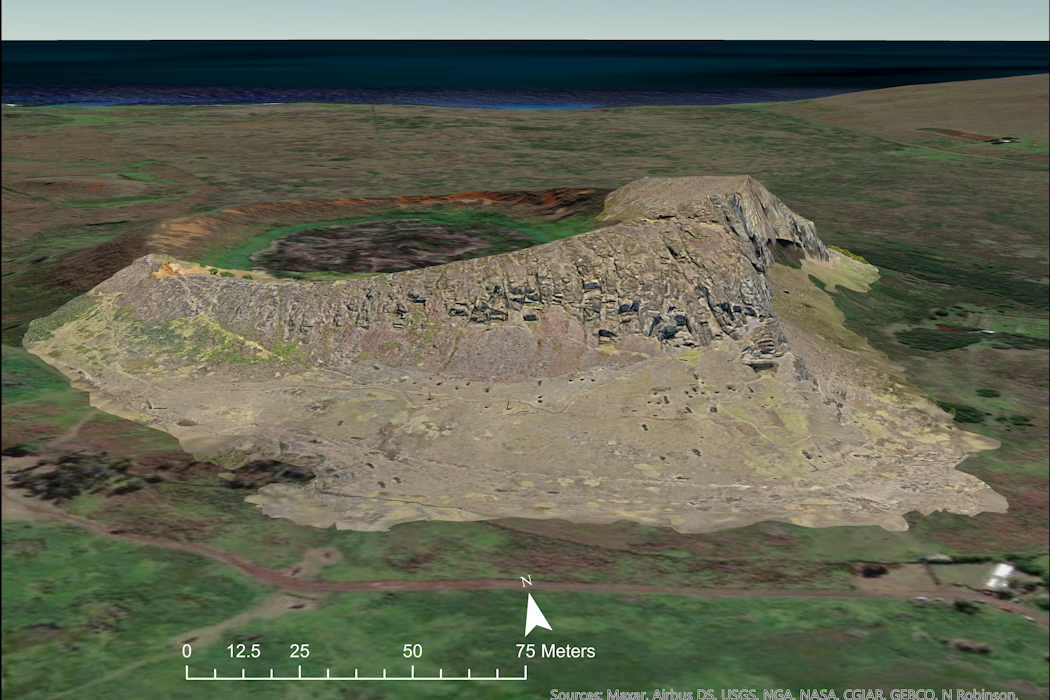
Scientists used drones to produce this 3D model of Rano Raraku, the volcanic crater where 95% of Rapa Nui’s giant statues were carved. Lipo et al., 2025, PLOS One, CC BY

Rapa Nui, also known as Easter Island, is often portrayed in popular culture as an enigma. The rationale is clear: The tiny, remote island in the Pacific features nearly 1,000 enormous statues – the moai. The magnitude and number of these monuments defy easy explanation.

Since European ships first encountered these stone giants in the 18th century, outsiders have branded the island as fundamentally mysterious, possibly beyond archaeologists’ ability to explain. This characteristic is part of what makes the island famous. Tour operators market the inexplicable. Documentaries promise unsolved puzzles. Popular books ask how “primitive people” could possibly move 70-ton megaliths.

Archaeological researchers have put forward various explanations for the statues, which were made between 1200 and 1700, but there remains no consensus. For decades, experts offered plausible scenarios: powerful chiefs commanding workers, elite-controlled statue quarries, wooden sleds drawn by hundreds of islanders, roller systems, wooden rails and ceremonial pathway markers. Based on authoritative assertions and compelling narratives, these accounts are rarely connected to archaeological evidence.

I’m an archaeologist who has been studying Rapa Nui for more than two decades. In newly published research, my colleagues and I believe we’ve solved the mystery in three essential ways.

First, using 11,686 photographs taken by drone, we created a comprehensive, three-dimensional model of Rano Raraku, the volcanic crater where 95% of Rapa Nui’s moai were carved. It was a systematic documentation – every slope, every carved surface, every production feature captured at a resolution down to the centimeter. The model generated predictions that we and other researchers could test: If production had been centralized, workshops would have been clustered; if they’d been hierarchical, we’d find differences in resources used at each level; if it had been dictated by elites, techniques would be standardized.

Our data revealed the opposite: Drone imagery shows 30 independent workshops working simultaneously. Instead of top-down organization, small, clan-level groups seem to have used innovative human engineering.

a stone hillside with multiple carvings with colored line annotations
A close-up of a 3D model of the volcanic crater where nearly all of Rapa Nui’s giant statues were carved, with unfinished carvings outlined.
Lipo et al., 2025, PLOS One, CC BY

Previous attempts to understand Rano Raraku failed not because the quarry held impenetrable secrets but due to the lack of published documentation and the limitations of traditional mapping methods. Two-dimensional maps couldn’t capture three-dimensional relationships. Statues emerge from cliff faces at various angles. Production areas overlap vertically. Carving sequences intersect across time. Traditional archaeological methods provided impressions but missed details and couldn’t capture the system as a whole.

Our 3D model changes that. We identified 426 moai in various stages of production, 341 extraction trenches, 133 voids where completed statues were removed, and previously unmapped quarrying areas on the exterior slopes. Each workshop was self-contained, demonstrating decentralization. Three distinct carving techniques emerge, showing that different groups employed different approaches while producing standardized forms.

figures carved into a rock formation
Unfinished moai remain partially carved in a volcanic crater.
Lipo et al., 2025, PLOS One, CC BY

The walking moai

Second, we generated data to resolve the age-old question about moai transport: How did Rapanui people move these megalithic giants? Despite many decades of attempts, previous transport theories all shared a fatal flaw: They made no predictions that were testable, meaning that scientists could prove or disprove.

Our walking hypothesis – based on oral traditions, ideas by our colleague Sergio Rapu Haoa and tested by Czech engineer Pavel Pavel – made specific, testable predictions. We found that “road moai,” those statues that were abandoned along constructed roads used for transport, differ morphologically from those that reached their final destinations, large platforms called ahu.

We measured 62 moai abandoned along ancient roads. The road moai proved distinct, characterized by wider bases, D-shaped cross sections and a forward lean of 5-15 degrees. These features wouldn’t be necessary if the moai were transported in a horizontal position. They make vertical transport – “walking” the statues – possible.

In 2013, we built a 4.35-ton concrete replica scaled from road moai. It wasn’t an artistic interpretation but a precise reproduction of measurable features from a statue found along the road and abandoned during transport. With 18 people and three ropes, the statue walked 100 meters in 40 minutes.

In previous work, the author and colleagues built a replica moai to demonstrate the walking transport.

In recently published work, we documented that physics confirmed what walking the replica demonstrated about the road moai shape. The forward lean creates an inverted pendulum that converts lateral oscillation into forward progress.

Those moai that reached ahu must have been altered in order for them to stand upright stably, while those along the roads would retain the features that enabled them to be “walked.”

The distribution data for moai across the landscape provided another test: The locations of road moai leading from the quarry follow an exponential decay curve, meaning that probability of a moai falling in transport is highest near the quarry and decreases with distance since those that fall over never get any farther. Fracture patterns on those road moai with breaks align with vertical impact stresses, meaning the broken moai were damaged by falling from a standing position.

Our testable predictions held.

Deforestation without collapse

The third “mystery” is how an advanced society could destroy its own environment. The island was deforested by the end of the 17th century. This mystery also yielded to systematic analysis. We analyzed data from previous archaeological excavations. Rather than finding increased rat consumption by people, indicating dietary stress from a lack of other food sources, remains of rats eaten by people decreased over time while seafood dominated throughout.

Ecological modeling revealed what we think really happened. Polynesian rats, introduced with the arrival of the first Polynesian colonists around 1200, could grow into a population of millions within just a few years. By eating 95% of the island’s tree seeds, rats prevented forest regeneration. Humans cleared land for cultivation, but rats made the recovery of the palm forests impossible. The synergistic interaction seems to have accelerated deforestation within five centuries.

This wasn’t “ecocide” – intentional self-destruction – but rather unintended ecological transformation caused by an introduced species. Our research also demonstrated that the Rapanui adapted through the use of rock mulch agriculture, which improved soil productivity. They continued to eat seafood and produce monuments for 500 years after deforestation began.

To tackle Rapa Nui’s mysteries, we used systematic documentation. We specified testable predictions, gathered data that could prove us wrong and accepted what the evidence showed. Rapa Nui shows that even entrenched mysteries yield to methodical investigation.

The Conversation

Carl Lipo receives funding from the National Science Foundation and the National Geographic Society.

ref. Drones, physics and rats: Studies show how the people of Rapa Nui made and moved the giant statues – and what caused the island’s deforestation – https://theconversation.com/drones-physics-and-rats-studies-show-how-the-people-of-rapa-nui-made-and-moved-the-giant-statues-and-what-caused-the-islands-deforestation-270023

The surprising world of animal penises and what they reveal about humans

Source: The Conversation – UK – By Michelle Spear, Professor of Anatomy, University of Bristol

A revealing appendage. Lukasz Janyst/Shutterstock

In the animal kingdom, penises can be spiked, split, corkscrewed – even detachable. They’re one of the most diverse structures in biology. The human penis is so uniform, it’s an anatomical outlier. Understanding why penises evolved, and why they differ so widely, also helps explain why humans have one at all.

Penises first evolved as a solution to one simple problem: how to achieve internal fertilisation.

The first animals lived in the sea before our ancestors started living on land half a billion years ago. Today, many aquatic animals still simply release sperm and eggs into the water. However, as organisms moved to land, a new mechanism was needed to transfer sperm into the female body – enter the penis.

But here’s the twist: not all land animals use one. Around 97% of bird species have no penis at all. Instead, they reproduce with a “cloacal kiss”. This is a brief contact between a single opening that serves the digestive, urinary and reproductive systems and through which sperm is transferred.

The cloacal kiss demands choreography. For most birds, mating success hinges on split-second timing, elaborate courtship and perfect physical alignment. Animals with penises have an anatomical shortcut. They can deliver sperm straight to the target, even if the encounter is brief or a bit clumsy.

So penises are just one solution among many. But once evolution settles on a penis, the possibilities multiply. It is a prime example of convergent evolution, where different, unrelated, lineages develop similar traits in response to similar pressures.

Sparrowhawk looking surprised.
It’s true – birds don’t have a penis.
mycteria/Shutterstock

In some species, penis size is driven by environmental constraints and access to mates. The barnacle, a crustacean glued to a rock for life, has the longest penis relative to body size of any known animal (up to eight times its own length). This allows it to “fish” for mates in the surrounding water. For those that may be wondering, the largest penis, at 2.5-3 metres, belongs to the blue whale.

The banana slug is a hermaphrodite with a thick penis as long as its body, evolved for deep sperm placement to boost fertilisation chances. Sometimes it gets stuck during withdrawal, and the partner bites it off. But the slug normally heals and survives.

Penile structures are often adapted for sperm competition, which is when multiple males mate with the same female, and their sperm compete internally for fertilisation. In these species, the penis becomes a competitive tool.

The domestic cat, for instance, has backward-facing spines on its penis. These stimulate ovulation in the female, ensuring sperm meets a ready egg, but also discourage mating with other males by making withdrawal painful.

In bedbugs, males take it further. They use a dagger-like penis to stab through the abdominal wall and deposit sperm directly into the body cavity. This “traumatic insemination” gives the male a bypass route – but at significant cost to the female. It’s not typically deadly, but the injuries take time and energy to heal.

Nowhere is this evolutionary struggle more vivid than in ducks. Some species of male ducks have corkscrew-shaped penises that can extend in under half a second. This is a response to female ducks evolving highly convoluted vaginas with dead-end pockets and spirals that twist in the opposite direction. This is a textbook example of sexual antagonistic co-evolution, where male traits that increase fertilisation rates are countered by female traits that limit male control.

In many reptiles, evolution has solved the problem of mating posture, the physical position and alignment of the bodies during copulation, with a pair of reproductive tracts. Snakes and lizards have hemipenes – two separate organs, only one of which is used per copulation. This redundancy probably evolved for flexibility, allowing mating from either side, and may be an adaptation to maximise success in brief mating windows.

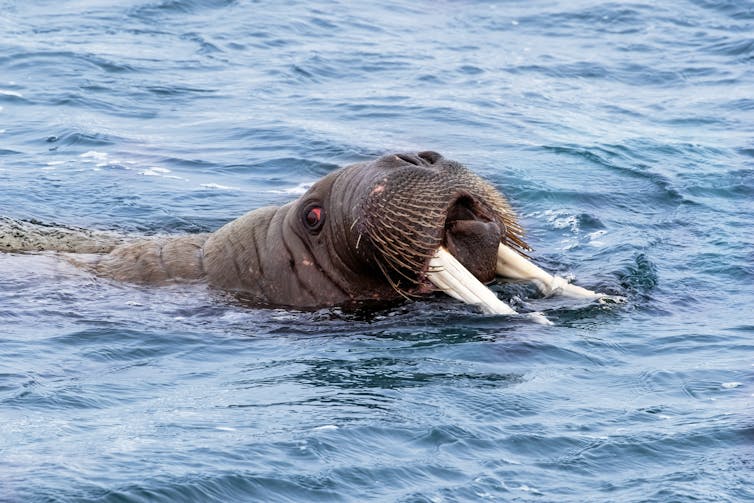
Walrus with head just lifting above water.
Awkward sex? Walruses can tell you all about it.
Jane Rix/Shutterstock

In mammals, the penis can be reinforced by a bone: the baculum. Found in species such as dogs, chimpanzees and walruses, it allows penetration without relying on blood pressure. This structural support is useful in species where mating is prolonged or where mechanical stimulation during copulation is needed to trigger ovulation, in awkward or extended couplings like those of walruses, and when female anatomy or behaviour favours longer copulation.

What do these penises tell us about humans?

Compared to this dazzling variety, the human penis seems almost conservative. But this simplicity is deceptive.

Unlike many other mammals, humans lack a baculum. Instead, erection relies on blood flow. This mechanism may reflect a shift from brief, frequent copulations typical of high-sperm-competition species, to longer, emotionally bonded pairings. In this type of pairing, a visible, hydraulically produced erection serves not only a reproductive function, but also acts as a signal of arousal and health.

Human penile shape may still reflect adaptations to sperm competition. Scientists think the slight flaring of the glans at the corona, a prominent anatomical border between the glans and the shaft, may displace rival sperm during intercourse. This is not unusual among mammals, but in humans it may be especially important because intercourse and ovulation are often not perfectly timed, giving more scope for sperm competition. Human sperm can survive in the female reproductive tract for up to five days.

The glans and the sensitive underside frenulum contain a high concentration of sensory nerve endings that make them particularly sensitive to touch. This heightened sensitivity is thought to provide not only pleasure, but also real-time feedback. It allows the penis to respond to subtle variations in movement, pressure and partner interaction. Such feedback may have played a role in enhancing mutual sexual engagement.


Read more:
Scientists ignored animal clitorises for centuries – now we’re discovering just how varied they are


A 2011 genetic study published in Nature found that humans lost specific DNA sequences that control the development of penile spines – small, keratinised projections on the penis that in chimpanzees and macaques help increase friction and stimulate the female during mating. These spines probably increased stimulation and shortened copulatory duration. Their loss in humans may reflect a shift from competition to cooperation.

This ties into another crucial aspect of human reproductive evolution: concealed ovulation. Unlike many mammals, human females do not advertise their fertility. In response, males evolved a strategy based on sustained sexual access, emotional connection and mate guarding.

The human penis is not just a reproductive organ, but part of a broader behavioural system tied to trust, intimacy and long-term partnership.

The Conversation

Michelle Spear does not work for, consult, own shares in or receive funding from any company or organisation that would benefit from this article, and has disclosed no relevant affiliations beyond their academic appointment.

ref. The surprising world of animal penises and what they reveal about humans – https://theconversation.com/the-surprising-world-of-animal-penises-and-what-they-reveal-about-humans-261690

Minority ethnic women in the UK face economic abuse at twice the rate of white women. These are their experiences

Source: The Conversation – UK – By Punita Chowbey, Senior research fellow, Sheffield Hallam University

Prostock-studio/Shutterstock

Economic abuse may not be as obvious as physical abuse, but for the millions of people it affects in the UK, economic abuse can be totally devastating.

Economic abuse, which is recognised as a form of domestic abuse in law, involves controlling a person’s (often a woman’s) ability to acquire, use and maintain economic resources.

Separating or divorcing does not mean the end of economic abuse in a marriage, particularly when children are involved. Post-separation economic abuse is often related to child maintenance or spousal support payments, which may be manipulated or withheld by abusers.

This harms mothers’ financial independence, mental health and parenting, and has consequences for children’s wellbeing.

A recent national survey found that minority ethnic women face economic abuse at twice the rate of white women (29% vs 13%). Our recently-published research explores why, through the experiences of 28 separated or divorced British south Asian Muslim women. This research is part of our continuing research on divorce and economic abuse.

Two-thirds of our participants had been financially dependent upon their husbands during their marriages, in keeping with broader statistics on the low employment rates of British Pakistani and Bangladeshi women. Further, several participants described their husbands preventing them from working.

UK-born Afsana had to work secretly as a tutor for meagre pay: “This tutoring was undercover with my dad. My working would have looked bad on [my husband].”

After separation or divorce, women were left economically vulnerable. Some struggled to find work, due to lack of recent employment experience as well as labour market discrimination.

“I worked in one school as a volunteer, but the Jobcentre said ‘that’s not enough, we need more evidence of work,’” said one woman. “I said, ‘everywhere you apply, they ask for a qualification, and experience is the main thing.’ I was not going out … how could I have undertaken any work?”

A major theme in our research was how abusers used child maintenance as a means to control women economically. In 18 cases, the father was not paying any child maintenance. Of the rest, only two mothers felt that the amount paid was fair.

Many women described child maintenance mirroring earlier patterns of economic abuse during their marriages. As UK-born Afsana put it: “He didn’t provide when he was with me, so I didn’t expect him to provide when he was not with me.”

Where women had involved the Child Maintenance Service (CMS), they felt it was unresponsive, especially those in transnational marriages involving economic assets overseas.

UK-born Kiran described her experience with CMS after her ex-husband hid assets in Pakistan: “I’ve even given the telephone numbers and addresses in the properties which are in Pakistan. [But] ‘Excuse me. We know that you’re upset. It just takes a bit of time.’ I go, ‘How long does it need?’”

Women felt disbelieved, which undermined their confidence in the system. Although the CMS may face limits in investigating finances held overseas, women felt the evidence they provided was often ignored. Many of the men were in self-employment, which may have made it difficult for the CMS to investigate.

Legal blind spots and immigration abuse

Post-separation economic abuse can also occur through institutions like courts and banks. UK-born Hora described how her husband remarried via an unregistered Islamic marriage, which allowed him to transfer money and assets to his new wife.

She told us: “My barrister said, ‘You’re not divorced from this lady yet, but you’ve remarried.’ He said, ‘Yes judge, in my religion I can have four wives.’ And this is a High Court judge, and he said, ‘Yes, quite!’”

Hora felt that this comment suggested the judge supported her husband’s use of religious justification for re-marrying before divorce, rather than recognising it as part of financial abuse.

Illustration of a man looking through a woman's wallet.
Economic abuse can happen in relationships, or after separation.
BNP Design/Shutterstock

Women with an insecure immigration status might also experience “immigration abuse”. This too can be a form of economic abuse, where, for example, an abuser uses the threat of deportation or immigration enforcement to trap women in financially dependent relationships.

Several women described struggling to open a bank account or obtain credit due to their migration status being exploited by their abusers. Pakistan-born divorcee Fauzia had never had a national insurance number, child benefit or bank account until these were arranged for her by a social worker at the women’s refuge she turned to with her children.

Our research suggests that south Asian women can face severe post-separation economic abuse due to multiple, intersecting disadvantages across the home, labour market and state institutions. Addressing these inequalities requires policies that take women seriously, while also being culturally sensitive and aware of the multiple challenges these women face.

The Conversation

Punita Chowbey receives funding from the NIHR, UKRI and Joseph Rowntree Foundation. Punita works closely with charities working on gender based violence.

Kaveri Qureshi receives funding from the NIHR and the ESRC. Kaveri Qureshi works closely with charities working on gender violence.

ref. Minority ethnic women in the UK face economic abuse at twice the rate of white women. These are their experiences – https://theconversation.com/minority-ethnic-women-in-the-uk-face-economic-abuse-at-twice-the-rate-of-white-women-these-are-their-experiences-267263

Your daily orange juice could be helping your heart

Source: The Conversation – UK – By David C. Gaze, Senior Lecturer in Chemical Pathology, University of Westminster

Ivanko80/Shutterstock

Most of us think of orange juice as a simple breakfast habit, something you pour without much thought. Yet scientists are discovering that this everyday drink may be doing far more in the body than quenching thirst.

A recent study has shown that regular orange juice consumption can influence the activity of thousands of genes inside our immune cells. Many of these genes help control blood pressure, calm inflammation and manage the way the body processes sugar, all of which play an important role in long-term heart health.

The study followed adults who drank 500ml of pure pasteurised orange juice every day for two months. After 60 days, many genes associated with inflammation and higher blood pressure had become less active.

These included NAMPT, IL6, IL1B and NLRP3, which usually switch on when the body is under stress. Another gene known as SGK1, which affects the kidneys’ ability to hold onto sodium (salt), also became less active.

Such changes match previous findings that daily orange juice drinking can reduce blood pressure in young adults.

A regular glass of orange juice could be beneficial for heart health.
retan/Shutterstock

This is noteworthy because it offers a possible explanation for why orange juice has been linked to better heart health in several trials. The new work shows that the drink does not simply raise blood sugar. Instead, it appears to trigger small shifts in the body’s regulatory systems that reduce inflammation and help blood vessels relax.

Natural compounds in oranges, particularly hesperidin, a citrus flavonoid known for its antioxidant and anti-inflammatory effects, seem to influence processes related to high blood pressure, cholesterol balance and the way the body handles sugar.

The response also varies by body size. People carrying more weight tended to show greater changes in genes involved in fat metabolism, while leaner volunteers showed stronger effects on inflammation.

A systematic review of controlled trials involving 639 participants from 15 studies found that regular orange juice consumption lowered insulin resistance and blood cholesterol levels. Insulin resistance is a key feature of pre-diabetes, and high cholesterol is an established risk factor for heart disease.

Another analysis focusing on overweight and obese adults found small reductions in systolic blood pressure and increases in high density lipoprotein (HDL), often called the good cholesterol, after several weeks of daily orange juice consumption. Although these changes are modest, even slight improvements in blood pressure and cholesterol can make a meaningful difference when maintained over many years.

More clues come from studies that examine metabolites, the tiny molecules produced as the body processes food. A recent review found that orange juice influences pathways related to energy use, communication between cells and inflammation. It may also affect the gut microbiome, which is increasingly understood to play a role in heart health.

One study showed that drinking blood orange juice for a month increased the number of gut bacteria that produce short-chain fatty acids. These compounds help maintain healthy blood pressure and reduce inflammation. Volunteers also showed improved blood sugar control and lower levels of inflammatory markers.

People with metabolic syndrome, a cluster of risk factors that includes high blood pressure, raised blood sugar and excess body fat, may see particular benefits.

In one study, daily orange juice consumption improved the function of the lining of blood vessels, known as endothelial function, in 68 obese participants. Endothelial function describes how well blood vessels relax and widen, and better function is associated with a lower risk of heart attacks.

Not all studies report the same outcomes. A broader analysis of blood fat concentrations found that although levels of low density lipoprotein (LDL), often called the bad cholesterol, often fall, other lipid measurements such as triglycerides and HDL may not change much. Even so, people who regularly drink orange juice may still benefit.

A study of 129 workers in an orange juice factory in Brazil reported lower blood concentrations of apolipoprotein B, or apo-B, a marker that reflects the number of cholesterol-carrying particles linked to heart attack risk.

Altogether, the evidence challenges the idea that drinking citrus fruit juice is simply consuming sugar in a glass. Whole fruit remains the better choice because of its fibre, but a modest daily glass of pure orange juice appears to have effects that build up over time.

These include easing inflammation, supporting healthier blood flow and improving several blood markers linked to long-term heart health. It is a reminder that everyday foods can have more influence on the body than we might expect.

The Conversation

David C. Gaze does not work for, consult, own shares in or receive funding from any company or organisation that would benefit from this article, and has disclosed no relevant affiliations beyond their academic appointment.

ref. Your daily orange juice could be helping your heart – https://theconversation.com/your-daily-orange-juice-could-be-helping-your-heart-270492