Kenya’s war on traditional alcohol: a colonial hangover about what it means to be ‘civilised’

Source: The Conversation – Africa – By Wafula Yenjela, Research associate, University of the Free State

At the dawn of Kenya’s colonial era in 1902, consumption of home-made alcohol was deeply embedded in society. For instance, among the Mijikenda of coastal Kenya, palm wine was integral (p.290) to traditional ceremonies, such as marriage and initiations, and in ritual offerings.

This partly explains why the colonial authorities did not consider prohibiting African home-made liquors.

As early as 1908, however, they did prohibit Africans from consuming or handling European liquors. The prohibition was ratified on the pretext of Europe’s commitment to preserving the presumed innocence of Africans. The ban on Africans’ consumption of European liquor fostered and sustained racial “social distance” between the colonised Africans and European colonisers.

The socio-political landscape began to change after the second world war. Neoliberal capitalism was becoming dominant in Africa. Multinational breweries took command of the market through advertisements, propaganda, and networking with government agencies to subdue home-made brews.

It was also a time of growing political awareness by a now sizeable educated African elite. A case in point is the mid-1940s boycott of traditional brews by African elites in Nairobi and in Dar es Salaam, agitating for access to bottled beer.

The prohibition of Africans’ consumption of bottled beer, wines and spirits in Kenya was lifted at the end of 1947. The end of the prohibition marked the beginning of condemnation, criminalisation and vicious attacks on the indigenous African alcohol industry.

Successive governments and religious groups opposed these brews directly. Multinational breweries also targeted them indirectly.

In the emerging propaganda narratives, bottled beer was presented as the consumers’ mark of civilisation, patriotism and respectability. Kenyan media, through popular advertisements, touted the notion of bottled beer as a mark of “good citizenship”.

Consumers of traditional home-made brew were identified as unrespectable, unpatriotic.

My recent research examined three novelistic portrayals of “respectable” alcohol consumption in Kenya. Meja Mwangi’s Going Down River Road (1976) and The Cockroach Dance (1979), and Charles Mangua’s Son of a Woman (1971), highlight urban class imaginaries that emerge from alcohol indulgences at the time.

Based on the analysis of the themes in these novels, I conclude that the Kenyan state’s war against traditional brews was a psychological war driven by a colonial mentality of African barbarism. State operatives’ attempts to wipe out traditional brews, their brewers and patrons sought to create the impression that Kenya was now a civilised country that consumed European liquors.

Novelistic portrayals of alcohol consumption

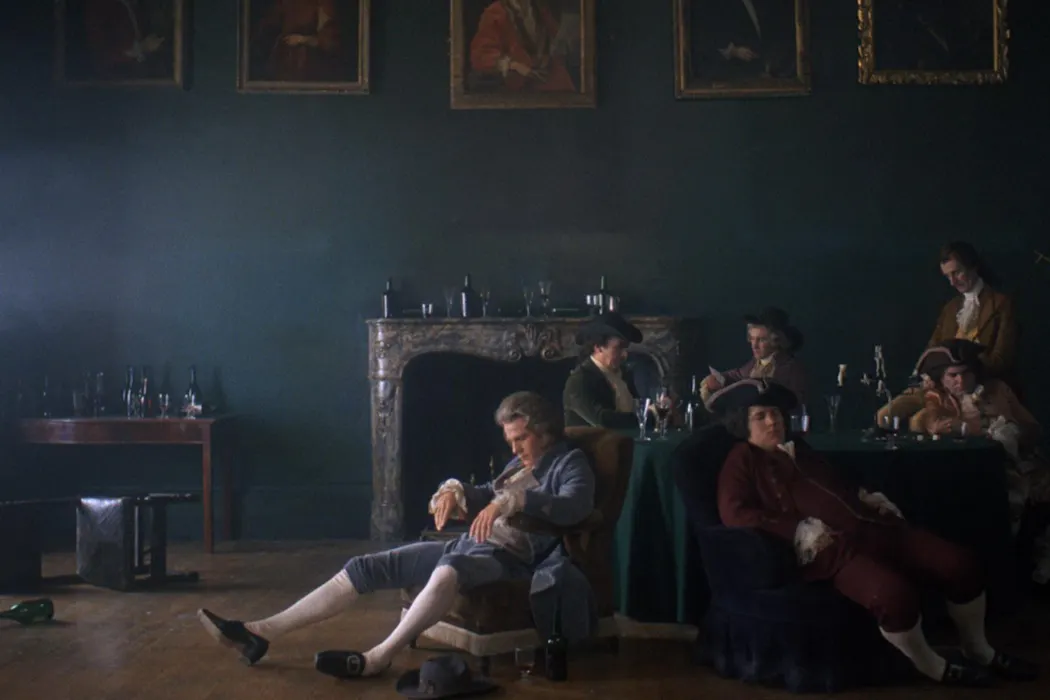
The novelistic representations of alcohol consumption are set in the 1970s. This was a time when Africans were emerging from a highly racialised atmosphere that was the Kenyan colony. The African elites at that time were attempting to adjust to the prevalent notions of respectability. They desired co-option in the colonial order, which they believed was the epitome of civilisation and modernity.

The consumption of bottled beer was one of the available illusory affirmations of European civilisation. Going Down River Road foregrounds clubs in the inner city: Karara Centre, The Capricorn, Small World, Eden Garden. Through these drinking centres, the novelist paints a picture of Nairobi’s 1970s economic disintegration mostly experienced by the city’s marginalised low-income population.

Patrons in Karara Centre admire bottled alcohol adverts on the centre’s walls. The owner sells African brews but displays adverts for Johnnie Walker, pilsner and Scotch whisky. Empty bottles of the European brands are displayed on the counter to reinforce the colonial hype of the superiority of European alcohols.

James, a civil servant, drifts to Karara Centre when broke. He reminds the regular patrons of the home-made alcohol that he is a patriot who builds the nation. That is, he regularly drinks bottled beer. Such sentiments reflect the power of adverts in the construction of a people’s identities.

On payday, Ocholla and Ben abandon Karara Centre for The Capricorn, a club that sells bottled beer. There, they imagine themselves to be in an advanced, modern joint, and among the respectable. But this lasts for only one day before they slip back to Karara Centre, their dependable base.

What we note here is that the colonial histories of bottled beer coupled with the advertisements contribute to a sense of inadequacy among the underdogs who aspire to be among the “civilised” through consumption of bottled beer in “modern, advanced” joints yet cannot afford it.

But in The Cockroach Dance, Meja Mwangi upsets the neoliberal capitalist posturings regarding bottled beer. While the adverts insist on bottled beer being a lubricant for lasting friendships and patriotism, events in the novel highlight the revolutionary savagery of alcohol.

Duzman Gonzaga and Toto, key characters in the novel, partake of bottled beer. Their experiences in various bottled beer joints reveal that the spaces are chaotic. After consuming the alcohol, patrons engage in violent rampages against their neighbours. Essentially, the novel demonstrates that bottled beer is not the hallmark of modernity and orderly development.

My analysis of the novels reveals that the claim that bottled beer was a mark of respectability was merely a marketing strategy. The strategy fed into the neoliberal capitalist interests of the multinational brewing and distillery giants, distributors and retailers. Consequently, traditional home-made alcohols’ criminalisation and condemnation features here as misplaced aggression.

Colonial doctrine against African brews

The sale of home-made brews in informal urban settings is sometimes treated as an act of terrorism against the state. Indeed, distilled home-made alcohol known as chang’aa has caused the deaths of an alarming number of its consumers in recent years. Laboratory tests reveal the brewers’ use of dangerous additives such as industrial methanol.

In February 2024, state operatives led by the country’s deputy president embarked on rounding up and destroying the alcohol and distillation equipment in various places. Despite crackdowns such as these, the sale and distribution continues.

The political elites’ war against the African indigenous brewery industry reveals their colonial anxiety – their own fears of regressing to barbarism.

Alcohol history in Kenya played a crucial role in the making of postmodern identities in the country. Colonial condemnation of African brews as emblematic of regression to African barbarism swayed the African psyche. The African elites who aspired to belong to a progressive postmodern world quickly learnt the colonial doctrine of condemning African brews.

The Kenyan state’s anxieties against home-made alcohol are mainly rooted in respectability politics.

The Conversation

Wafula Yenjela conducts research as a research fellow affiliated with the University of the Free State, Bloemfontein, South Africa.

ref. Kenya’s war on traditional alcohol: a colonial hangover about what it means to be ‘civilised’ – https://theconversation.com/kenyas-war-on-traditional-alcohol-a-colonial-hangover-about-what-it-means-to-be-civilised-281377

In Sudan, a migrant community reveals a resistance to malaria: the genetic study helping shape medicine

Source: The Conversation – Africa (2) – By David Comas, Full Professor, Universitat Pompeu Fabra; Instituto de Biología Evolutiva (IBE – CSIC – UPF)

Sudan lies at the crossroads of Africa and the Middle East. It has played a key role in human demographic movements, reflected in the diversity of its cultures and languages. Although much of the country is arid, the Nile River has long acted as a corridor for trade, facilitating human migration through the region for thousands of years.

This makes Sudan a valuable place to study human genetic diversity and evolutionary history, which has important implications for understanding population-specific adaptation and health.

The Copts are a population that migrated from Egypt from the 7th century and mixed with populations in neighbouring regions, but also remained somewhat isolated. Copts are historically distinguished by their Christian faith and their language. In Sudan their numbers are estimated to be in the hundreds of thousands.

As a group of evolutionary biologists we conducted a genomic study to understand the complex demographic history and identify signals of adaptive selection among Sudanese people. Our research is the first whole-genome sequencing study carried out in Sudan. This is a method scientists use to read and analyse a person’s complete DNA, the full set of genetic instructions, to understand traits, ancestry and disease risk.

Our research covered a total of 125 individuals from five population groups, defined by their language and cultural identity, known as ethnicity.

We found that Sudanese Copts showed unusually high resistance to Plasmodium vivax, the most geographically widespread malaria-causing parasite. This protection comes from a genetic variant they acquired after mixing with local Nilo-Saharan people.

Similar examples of recent adaptation to malaria after population mixing have previously been reported in Madagascar, Cabo Verde and Pakistan. But this is the first time such a process has been documented within mainland Africa itself.

The selection signal observed in Sudanese Copts is among the strongest ever detected in humans.

These findings show that strong natural selection can reshape the human genome very rapidly and that recent demographic history is crucial for understanding present-day genetic patterns. These can help explain differences in disease susceptibility across populations, informing medical research and public health strategies.

Human migrations in the region

The expansion of Arabic-speaking people in north Africa started in 639 CE in Egypt and gradually moved southward. It intensified between the 10th and 11th centuries with the migration of Bedouin groups into north Africa and Nubia. By the 16th century, the spread of Arab culture and Islamic faith contributed to the collapse of the last Christian kingdoms in the region.

But some populations remained in more isolated areas and preserved their own languages and cultural traditions. These include Nilo-Saharan-speaking groups in Darfur, around the Jebel Marra mountains, and Kordofanian speakers from the Nuba Mountains.

These mountainous regions also acted as partial genetic barriers. They limited interactions with surrounding populations. Today these populations show little or no genetic influence from the Arab expansion.

Our study confirms this pattern reported in previous studies. With the use of whole-genome sequencing data, our findings further strengthen this insight.

Adaptive selection to malaria protection

Our study indicates that around 1,000-1,500 years ago, the ancestors of Sudanese Copts intermarried with local Nilo-Saharan groups. The geographical barrier is not applied for all Nilo-Saharan speaking groups, only for those from Darfur. Copts could have admixed with other groups with a Nilo-Saharan origin but living in a more accessible area. The individuals from Darfur are the group in our dataset that better represent these ancestors, but that does not mean they are their direct ancestors. Through this mixing, they acquired the Duffy-null allele. This is a genetic variant (one of the different versions of a gene) that is widespread in Africa south of the Sahara.

This allele is a classic example of natural selection in humans, showing strong geographic differentiation between African populations and the rest of the world. The Duffy-null allele prevents the expression of the ACKR1 receptor, a protein found on red blood cells, used by P. vivax to enter and infect these cells.

Individuals who have inherited the allele lack this receptor and are therefore protected against this form of malaria.

Because the Duffy-null allele is rare among north African and Middle Eastern groups, it would not be expected to be prevalent in Copts. However, our findings show that about 89% of Sudanese Copts carry it.

Our study shows that after admixture with local populations, the variant was introduced into the Coptic population. Natural selection meant it was passed down through generations and became more common.

Having the allele gave people a survival advantage in a malaria area. Sudan reported over half million cases of P. vivax malaria in 2017. There is little or no information on regional variation, but the presence of the adaptive variant in Darfur does not necessarily mean adaptation occurred there.

This provides a clear example of a genetic population adapting to disease, occurring within the past 1,500 years.

Fixing Africa’s under-representation

Our study also identified more than one million previously unknown genetic variants, over 1,500 of which may affect genes and their functions. This highlights a major gap in global genomic databases. These are still heavily biased towards people of European ancestry, although Africa harbours the greatest genetic diversity. North Africa, in particular, has often been overlooked.

It’s important to know more about the genetic heritage of different populations because, as the Coptic resistance to malaria shows, it can guide medical research and help understand human evolution better.

Although whole-genome sequencing has transformed the study of human health and disease, truly global representation remains essential. Africa, as the birthplace of modern humans, harbours the greatest genetic diversity on Earth and should therefore be a top priority for genomic research.

This study fills important gaps in our understanding of Sudan’s and Africa’s demographic histories and increases diversity in global genetic datasets. It also shows the importance of including recently mixed populations to obtain a fuller picture of human evolution.

Hisham Y. Hassan was a co-author on the article.

The Conversation

The authors do not work for, consult, own shares in or receive funding from any company or organisation that would benefit from this article, and have disclosed no relevant affiliations beyond their academic appointment.

ref. In Sudan, a migrant community reveals a resistance to malaria: the genetic study helping shape medicine – https://theconversation.com/in-sudan-a-migrant-community-reveals-a-resistance-to-malaria-the-genetic-study-helping-shape-medicine-278806

Nous avons trouvé le moyen de convertir les déjections de bernaches en nourriture pour volailles et en engrais

Source: The Conversation – in French – By Rassim Khelifa, Assistant Professor, Department of Biology; Canada Research Chair Tier 2 in Global Change Biology, Concordia University

Les oies du Canada produisent des excréments désagréables à fouler et porteurs d’agents pathogènes, qui contaminent les pelouses et entraînent l’effondrement écologique des plans d’eau. (Wikamedia Commons/ Joe Ravi), CC BY-SA

Les bernaches du Canada sont de véritables gangsters. Elles sont imposantes, effrontées et extrêmement adaptables, et survivent admirablement bien en milieu urbain. Partout où elles passent, elles laissent leur marque caractéristique : des déjections verdâtres en forme de cigare.

La population de bernaches a connu une expansion rapide dans de nombreuses villes d’Amérique du Nord grâce à des environnements urbains favorables — nourriture abondante sur les pelouses, sites de nidification sûrs et faible nombre de prédateurs — et à la mise en œuvre de mesures de conservation efficaces au cours des trois dernières décennies.

Les bernaches sont certes adorables, mais lorsqu’elles se regroupent en grand nombre, elles peuvent devenir une nuisance. Elles endommagent les cultures et font concurrence aux autres oiseaux aquatiques. Leurs fientes, qu’il est déplaisant de fouler, sont porteuses d’agents pathogènes qui contaminent les pelouses et entraînent l’effondrement écologique des plans d’eau.

Une bernache peut déféquer toutes les 20 minutes. Imaginez alors la quantité de matières fécales produites chaque jour par des centaines, voire des milliers de ces oiseaux dans une ville. Or, presque aucun effort n’a été fait pour explorer les éventuelles utilisations bénéfiques de ces déchets.

Selon les conclusions de nos recherches publiées dans the Journal of Environmental Management, les déjections des bernaches pourraient être utilisées pour créer une source de protéine servant à la fois de nourriture pour animaux et d’engrais, et ce, grâce à l’apport d’une championne du recyclage que l’on trouve dans la nature : la mouche soldat noire.

Produire de la nourriture pour volailles à partir de fientes de bernaches

Les larves de la mouche soldat noire sont connues pour leur remarquable capacité à consommer et à décomposer les déchets organiques, notamment les déchets d’origine animale provenant des exploitations agricoles. Toutefois, elles n’ont encore jamais été testées sur des déjections de bernaches du Canada.

Dans le cadre de notre étude, nous avons nourri des larves de mouche soldat noire avec trois régimes alimentaires différents : un mélange standard riche en nutriments composé de maïs, de blé et de luzerne (mélange témoin), une combinaison de ce mélange alimentaire avec des déjections de bernaches, et enfin un régime composé exclusivement de fientes.

Nous avons également introduit une autre variable en stérilisant une partie des excréments, pour nous aider à déterminer si les micro-organismes présents dans la fiente ont une incidence sur la digestion.

Les résultats ont été surprenants : l’insecte a pu accomplir l’intégralité de son cycle de vie en se nourrissant exclusivement de déjections. En fait, il a pu en gober un peu plus de la moitié. Sa taille corporelle et sa durée de vie s’en sont trouvées réduites, mais cela n’a pas posé de problème puisqu’il remplissait sa fonction.

Les larves ont grossi plus vite et ont atteint un poids corporel plus élevé lorsque les excréments n’étaient pas stérilisés, ce qui donne à penser que les microbes présents dans les déjections favorisent d’une certaine façon le développement des insectes. Il est à noter que les larves ayant consommé le mélange d’excréments et d’aliments riches en nutriments se sont développées encore mieux que celles nourries uniquement avec des aliments riches en nutriments, et qu’elles ont atteint une condition physique similaire au stade adulte.

Ces résultats semblent indiquer que les larves de mouche soldat noire et les déjections de bernaches pourraient être utilisées pour alimenter un système de traitement des déchets organiques à grande échelle. Les excréments de bernaches pourraient être prélevés dans les parcs et les espaces verts de la ville, puis acheminés vers une installation où les larves pourraient être élevées en consommant ces déchets.

Les larves pourraient ensuite constituer une source de protéines pour l’alimentation de la volaille et en aquaculture, selon une approche circulaire de gestion des déchets urbains axée sur le « suprarecyclage ».

Fertilisant riche en nutriments

Le processus de digestion des larves produit également un résidu, les chiures.Les chiures de mouches soldat noires ont été testées dans le cadre de plusieurs études, principalement sur des cultures terrestres, où elles ont amélioré la croissance des plantes et le rendement des récoltes.

Nous avons décidé d’étudier le potentiel des chiures produites à partir des déjections de bernaches du Canada — en tant qu’engrais pour la lentille d’eau, une plante aquatique à croissance rapide et à forte teneur en protéines utilisée pour l’alimentation animale, la production de biocarburants et le traitement des eaux usées.

Dans le cadre de cette expérience, nous avons testé trois différents engrais potentiels pour la lentille d’eau. Le premier (le témoin) était une solution idéale contenant les nutriments nécessaires à la croissance de la plante. Le deuxième était constitué de déjections de bernaches non traitées, et le troisième de chiures issues de la digestion de la fiente de bernaches par des larves de la mouche soldat noire.

Lorsque les chiures étaient appliquées, la croissance de la lentille d’eau était de 30 % supérieure à celle des lentilles fertilisées par l’engrais témoin. Nous avons également constaté que les racines des lentilles d’eau cultivées dans des chiures issues d’excréments de bernaches étaient plus petites que celles cultivées dans les déjections non traitées, ce qui constitue une réaction typique à un environnement plus riche en nutriments, où ceux-ci sont facilement accessibles par les racines.

Économie circulaire durable

Il existe déjà des installations industrielles de traitement des déchets mettant les insectes à contribution. Entosystem, une entreprise québécoise qui produit des protéines d’insectes destinées à l’alimentation des animaux d’élevage et domestiques, utilise des larves de mouche soldat noire pour transformer les déchets alimentaires et organiques en protéines et en engrais.

En Nouvelle-Écosse, l’entreprise de biotechnologie Oberland Agriscience utilise également des larves de mouche soldat noire et fait appel à des technologies comme l’IA et la robotique pour transformer les déchets organiques en nourriture pour animaux et en produits pour les sols. NRGene, en Saskatchewan, est un centre de recherche et de démonstration qui effectue lui aussi des tests avec la mouche soldat noire dans le but d’optimiser la conversion à grande échelle de déchets en protéines.

Des systèmes similaires pourraient être utilisés pour valoriser les déjections de bernaches grâce à la mouche soldat noire, plutôt que d’acheminer ces rebuts vers les habituels dépotoirs ou sites d’enfouissement.

Cette méthode permet de transformer les déchets en ressources d’une grande utilité pour l’industrie agroalimentaire : les larves peuvent servir de nourriture pour la volaille ou en aquaculture, tandis que les chiures peuvent être utilisées comme engrais organique pour diverses cultures.

Grâce à cette approche respectueuse de l’environnement, une situation conflictuelle liée à la présence de la faune en milieu urbain devient une occasion à saisir. Elle contribue à mettre en place une économie circulaire durable où les déchets sont réutilisés, recyclés ou transformés en une nouvelle ressource.

La Conversation Canada

Rassim Khelifa bénéficie d’un financement du programme CRC de niveau 2 du CRSNG (CRC-2022-00134) et d’une subvention à la découverte du CRSNG (RGPIN-2024-04564). Rassim Khelifa est membre du Centre québécois des sciences de la biodiversité et de la Société canadienne d’écologie et d’évolution.

Carlos Antonio Lopez Manzano bénéficie d’un financement du Fonds de recherche du Québec – Nature et technologies (FRQNT) par le biais de la bourse au mérite pour étudiants étrangers (PBEEE). Membre du Centre québécois des sciences de la biodiversité (CQSBD) et de Ressources aquatiques Québec (RAQ).

ref. Nous avons trouvé le moyen de convertir les déjections de bernaches en nourriture pour volailles et en engrais – https://theconversation.com/nous-avons-trouve-le-moyen-de-convertir-les-dejections-de-bernaches-en-nourriture-pour-volailles-et-en-engrais-282098

Un indice mondial des papillons pourrait faire progresser la conservation des insectes

Source: The Conversation – in French – By Federico Riva, Assistant Professor, Department of Biology, Carleton University

Environ 70 % des espèces présentes sur Terre sont des insectes. Ils constituent des éléments essentiels de la plupart des écosystèmes. Représentant la moitié de la biomasse de la planète, ils pollinisent les fleurs, décomposent la matière organique morte et jouent de multiples rôles dans les réseaux trophiques. Ils sont littéralement partout, y compris dans et autour de nos maisons, mais leur population diminue à un rythme alarmant dans de nombreux endroits.


Les implications sociétales de ce potentiel « insectageddon pourraient être catastrophiques. Des pertes dans la production alimentaire humaine pourraient notamment survenir. Cependant, il est difficile de confirmer les soupçons de déclin mondial, car nous manquons de données fiables sur les populations d’insectes dans de nombreuses régions du monde.

Nous ne disposons tout simplement pas, à l’échelle de la planète, des infrastructures qui nous permettraient de suivre l’ensemble des populations d’insectes. Cela signifie que nous ne savons pas comment les populations d’insectes réagissent aux différents changements mondiaux, et que nous pourrions ne pas parvenir à concevoir des politiques de conservation efficaces ni à vérifier si les mesures actuelles sont efficaces.

Il est donc crucial de s’efforcer de générer rapidement des indicateurs mondiaux sur les tendances des populations d’insectes. Dans notre article récemment publié, mes collègues et moi-même expliquons comment un indice mondial des papillons pourrait aider à suivre les populations de papillons à l’échelle mondiale – et comment nous pouvons atteindre cet objectif important.

Les papillons : l’exemple type des insectes

un papillon beige brunâtre sur une fleur blanche
Il est crucial de s’efforcer de générer rapidement des indicateurs mondiaux sur les tendances des populations d’insectes.
(Federico Riva)

L’une des raisons pour lesquelles les insectes ont été négligés dans le domaine de la conservation est qu’ils sont souvent ignorés – voire redoutés – par de nombreuses personnes. Beaucoup d’entre nous ont été élevés dans la prudence vis-à-vis des insectes, qu’il s’agisse d’abeilles, d’araignées ou d’autres bestioles.

Il existe, en revanche, un large intérêt pour les espèces vertébrées. L’observation des oiseaux fait partie des sociétés humaines depuis des centaines d’années. Le fait que les animaux de plus grande taille suscitent l’intérêt du public a sans doute stimulé les efforts mondiaux visant à calculer des indicateurs des tendances de leurs populations, comme l’Indice Planète vivante du Fonds mondial pour la nature (WWF) et d’autres organisations.

Si les insectes n’ont généralement pas bénéficié de la même attention que d’autres animaux, les papillons font exception à cette règle. Ces insectes, avec leurs motifs et leurs couleurs captivants, fascinent depuis longtemps les gens et sont représentés dans de nombreuses traditions à travers les cultures.

Notre amour pour les papillons se reflète dans une longue histoire de surveillance. Dans les années 1970, l’entomologiste britannique Ernest Pollard a lancé la pratique consistant à recenser les populations de papillons lors de ses promenades en Angleterre. Cinquante ans plus tard, des centaines de « promenades Pollard » sont organisées à travers l’Europe et dans de nombreuses autres régions du monde.


À lire aussi :
Les vagues de chaleur extrême menacent la fertilité des abeilles et provoquent leur mort subite


Recenser la présence d’une espèce dans une zone est un travail important. Cependant, les efforts visant à saisir les changements dans les populations d’insectes au fil du temps sont tout aussi fondamentaux. Néanmoins, une synthèse mondiale des programmes de surveillance des populations de papillons faisait jusqu’à présent défaut.

Un indice mondial des papillons

Notre article récent comble cette lacune. Nous avons coordonné un consortium international dans le but de mieux comprendre les opportunités et les défis liés au calcul d’un indice mondial des papillons qui reflète les tendances des populations de papillons à l’échelle mondiale.

En réunissant des scientifiques de tous les continents à l’exception de l’Antarctique, nous avons pu rassembler un ensemble de données incroyable comprenant plus de 45 000 tendances démographiques pour plus de 1 000 espèces de papillons. Nous avons utilisé cet ensemble de données pour :

un papillon aux ailes noires et jaunes et au corps rouge, jaune et noir sur une fleur rose rougeâtre
Enregistrer la présence d’une espèce dans une zone est un travail important. Cependant, les efforts visant à saisir les changements dans les populations d’insectes au fil du temps sont tout aussi fondamentaux.
(Unsplash/David Clode)
  1. Déterminer où en sont les efforts actuels en termes de couverture taxonomique et spatiale de la faune mondiale des papillons.

  2. Calculer la première version d’un indice mondial des papillons.

  3. Évaluer les lacunes et les limites à combler avant d’aller plus loin.

Malgré un effort sans précédent, nous avons constaté que seules les populations d’environ 5 % des espèces mondiales ont été surveillées.

Il est important de noter que l’ensemble de données est principalement concentré en Europe et en Amérique du Nord et qu’il est biaisé en faveur des espèces généralistes (celles capables de survivre dans des environnements divers) ainsi que des espèces plus faciles à détecter.


À lire aussi :
Guêpes au pique-nique : les conseils d’un scientifique pour manger sans danger


Néanmoins, nous avons constaté que les espèces, en moyenne, sont en déclin, et que les papillons sensibles susceptibles de souffrir du changement climatique avaient tendance à décliner plus fortement que le reste de notre échantillon. Les populations en dehors de l’Europe et de l’Amérique du Nord étaient trop clairsemées pour permettre des conclusions solides.


Déjà des milliers d’abonnés à l’infolettre de La Conversation. Et vous ? Abonnez-vous gratuitement à notre infolettre pour mieux comprendre les grands enjeux contemporains.


Semaine mondiale des papillons

La réalisation de cette étude nous a permis de tirer quelques enseignements. Il reste un travail considérable à accomplir si nous voulons calculer un indicateur véritablement mondial des tendances des populations de papillons.

Par exemple, de nombreuses régions du Sud auront besoin d’aide pour mettre rapidement en place des programmes nationaux de surveillance, et des recherches dans les régions tropicales sont nécessaires pour mieux comprendre quelles méthodes de surveillance fonctionneraient le mieux dans ces régions hyperdiversifiées.

La bonne nouvelle, c’est que les papillons constituent déjà l’un des groupes d’insectes les plus visibles et les plus surveillés, ce qui atténuera les difficultés liées à l’élaboration d’indicateurs sur les populations d’insectes. Les programmes de surveillance existants peuvent servir de modèle pour développer de nouvelles initiatives.

En fin de compte, l’élaboration d’un indice mondial des papillons sera essentielle pour assurer un suivi, attendu depuis longtemps, des changements dans les populations d’insectes. Surtout, cela pourrait également servir de fer de lance pour une conservation plus large des insectes.

Les gouvernements sont censés fixer des objectifs mesurables en matière de biodiversité, conformément à leurs engagements pris dans le cadre d’accords internationaux tels que le Cadre mondial de Kunming-Montréal pour la biodiversité. Cependant, les insectes restent largement négligés dans ces objectifs, et il est impossible de fixer des objectifs significatifs sans indicateurs fiables.

L’élaboration d’un indice fiable sur les papillons est donc fondamentale pour orienter les efforts de conservation, mieux comprendre l’ampleur de la crise de la biodiversité et la faire connaître au grand public. Les papillons ont une forte valeur émotionnelle. Cela peut contribuer à susciter un soutien en faveur de la conservation d’une manière que les insectes moins appréciés ne peuvent pas atteindre.

Notre consortium contribue à créer une telle dynamique : cette année, les membres de notre équipe lancent une Semaine mondiale des papillons et des discussions sont en cours concernant la création d’une organisation internationale.

Nous espérons que les collègues intéressés se joindront à nous pour les prochaines éditions de ces projets. N’hésitez pas à nous contacter.

La Conversation Canada

Federico Riva a bénéficié d’un financement au titre du programme Horizon.

ref. Un indice mondial des papillons pourrait faire progresser la conservation des insectes – https://theconversation.com/un-indice-mondial-des-papillons-pourrait-faire-progresser-la-conservation-des-insectes-280304

A ‘super El Niño?’ Why it’s too early to forecast one with certainty, but not too soon to prepare

Source: The Conversation – USA (2) – By Pedro DiNezio, Associate Research Professor in Climate Modeling, University of Colorado Boulder

El Niño can mean a rainy U.S. Southwest, warmer winters in the North and less Atlantic hurricane activity – but not always. Bill Tompkins/Getty Images

Talk of a “super El Niño” developing in 2026 is gaining momentum, with concerns rising that this climate pattern could bring extreme rainfall, heat, drought and destructive flooding around the world.

The signals appear to be in place: The tropical Pacific is warming along the equator, and computer models point toward extreme conditions by the end of the year.

However, forecasting El Niño is not like predicting next week’s weather. Forecasts for El Niño typically aren’t reliable before late spring – not because scientists don’t understand the system, but because we understand its limits.

A global map showing a streak of high ocean temperatures off South America in the Pacific along the Equator.
Sea surface temperature data on May 12, 2026, shows warming along the equator west of South America, often a sign that El Niño conditions are developing.
NOAA Coral Reef Watch

As an ocean-atmospheric scientist who studies El Niño, I spend a lot of time thinking about what scientists can forecast confidently – and what remains uncertain. Here’s what we know about the current event, what we still don’t, and why many regions should begin preparing now, even if a strong, or “super,” El Niño never fully materializes.

Why is El Niño hard to forecast in spring

The starting point for any El Niño forecast is the heat stored beneath the surface of the eastern equatorial Pacific Ocean. Computer models use data about those conditions to simulate how ocean temperatures will evolve over the coming months, and how they affect weather patterns around the world.

Right now, an exceptionally large reservoir of warm water sits beneath the surface there. In principle, this ocean heat should be a reliable signal of El Niño developing. In practice, what happens next depends heavily on what the atmosphere does.

The warm reservoir was shaped by a burst of wind activity in early 2026. Normally, the Pacific trade winds blow from east to west along the equator, pushing warm water toward Asia and leaving cooler water near South America. But in April, a pair of cyclones straddling the equator caused the wind direction to reverse. This short-lived reversal triggered a downwelling Kelvin wave – a pulse of energy beneath the ocean surface moving eastward along the equator.

That subsurface pulse has now reached the eastern Pacific, helping fuel intense warming off South America. At the ocean surface, this can resemble the early stages of a strong El Niño.

But there is a catch.

For El Niño to develop fully, the ocean and atmosphere need to lock into a feedback loop: Warmer surface waters weaken the trade winds, triggering more downwelling Kelvin waves that push warm water eastward and reinforce the warming. But that loop doesn’t engage automatically. It requires repeated bursts of eastward winds to sustain the process.

Until that feedback loop takes hold, the ocean-atmosphere system is in an unpredictable phase. It might tip into a super El Niño. It might not.

Spring is precisely when forecasts are most uncertain. Impressive early signals can fade if the winds don’t cooperate.

A line chart shows the relative oceanic Nino index, tracking sea surface temperature anomalies compared to average.
El Niño forms when surface temperatures in the tropical Pacific Ocean are about 0.5 degrees Celsius (0.9 Fahrenheit) warmer than normal for three months. A strong El Niño has temperatures over 1.5 C (2.5 F). The chart shows the Relative Oceanic Niño Index (RONI), a three-month running average that accounts for the background warming trend. Some forecasts still rely on the Oceanic Niño Index, based on absolute temperatures, which can overstate El Niño’s strength in a warming climate.
NOAA

There’s a further complication: When models detect strong subsurface warming, they can simulate a stronger feedback loop than actually develops.

The result is that models can look too confident – even alarming – despite the system not being locked in. As of mid-May 2026, the wind patterns needed to amplify the warming have not clearly emerged.

We’ve seen this scenario play out before. In both 2014 and 2017, forecast models were pointing toward strong El Niño conditions by midyear. In both cases, the anticipated wind patterns never fully materialized and El Niño either stayed weak or returned to a neutral state. The early signals were real, but the expected follow-through didn’t happen.

So what do the forecasts suggest?

The current forecasts for 2026-27 still span a wide range in mid-May – from expecting weak to strong El Niño conditions.

How the winds behave in the coming weeks will determine what develops. If trade winds weaken again at the right moment, it could tip the system into self-sustaining warming – the kind that’s hard to stop.

As of mid-May, long-range weather forecasts weren’t showing strong eastward wind bursts on the horizon that could strengthen El Niño. In fact, quite the opposite was expected for the second half of May: a burst of winds blowing in the opposite direction. A full month without major eastward wind activity would be a meaningful brake on ocean warming.

The Pacific has loaded the dice for El Niño, and the National Oceanic and Atmospheric Administration’s May outlook reflects elevated odds of El Niño developing and potentially strengthening later in the year. By NOAA’s mid-June update, the picture should be substantially clearer.

El Niño intensity matters for weather worldwide

The difference between a weak El Niño and an extreme one is not subtle. It reshapes climate patterns across the globe – and with them, real-world risks.

If El Niño intensifies into a strong or “super” event, it can drive drought in the Amazon, fires in Indonesia, flooding in Peru and heavy rainfall in parts of California and southern South America. These effects could materialize by the Northern Hemisphere winter, when El Niño typically peaks.

A world map shows cool, wet conditions across much of the southern U.S., warmer in the Northwest through Canada and Alaska.
How El Niño tends to affect the weather and climate around the world. El Niño’s affects vary based on many factors, so not every El Niño year will look exactly like this.
NOAA

In some regions, the stakes are immediate.

In India, the monsoon rains, which support agriculture and water supplies for hundreds of millions of people, have historically weakened during strong El Niño events. Even modest shifts in monsoon strength can bring food and water shortages, and harm economies.

At the same time, when El Niño is strong, hurricane activity in the Atlantic is typically suppressed – a rare upside – while the eastern Pacific often becomes more active with storms.

NOAA scientists explain how El Niño affects weather across the U.S.

El Niño can even push global temperatures temporarily higher, as changes in cloud cover and the amount of heat the ocean releases alter the planet’s energy balance.

In contrast, a weak El Niño produces far more muted effects. This is why predicting intensity matters.

Using uncertain forecasts in real-world decisions

Because El Niño forecasts deal in probabilities, deciding how to prepare for the seasons ahead should be based on managing risk – not waiting for certainty.

El Niño’s impact does not occur everywhere at once. Some effects emerge quickly. Its impact on the Indian monsoon and Atlantic hurricane activity unfold over the summer and early fall.

Other impacts arrive later, toward the end of the year when El Niño peaks, bringing extreme rainfall to parts of South America between November and January. In Southeast Asia, scorching heatwaves often emerge even later, in April of the following year.

In regions like India, decisions about how to respond to El Niño risks cannot wait for more certainty. Communities need to prepare their water infrastructure now in case El Niño means the monsoon season brings too little rain.

Even where forecasts suggest reduced risks – such as a quieter Atlantic hurricane season – it would be a mistake to assume safety. Destructive hurricanes still hit in otherwise quiet years.

The Conversation

Pedro DiNezio receives funding from NSF and NOAA. He is affiliated with the ATLAS Institute at the University of Colorado.

ref. A ‘super El Niño?’ Why it’s too early to forecast one with certainty, but not too soon to prepare – https://theconversation.com/a-super-el-nino-why-its-too-early-to-forecast-one-with-certainty-but-not-too-soon-to-prepare-282574

Will future missions to the Moon be sustainable? It may depend on whom you ask

Source: The Conversation – USA – By Marco A. Janssen, Professor of Sustainability, Arizona State University

Earth draws closer to passing behind the Moon in this image captured by the Artemis II crew during their lunar flyby. NASA

There’s a new space race to the Moon, and this time the ambitions are not just to visit but to stay. NASA’s Artemis program aims to establish a long-term human presence on the lunar surface in the 2030s. China, India, Japan and a number of private companies all have lunar mission programs of their own.

As of now, the human footprint on the Moon is small. That could change with the planned increase of lunar missions.

National space agencies are focused on science and exploration, while private companies aim to develop a lunar economy – potentially with mining operations. In the coming years, these groups will test technology and build some initial infrastructure on the Moon. From 2030 onward, Moon bases could become a reality.

But what are the long-term consequences of lunar missions for the Moon itself? The Artemis program’s goals are sustainable exploration and setting up a sustainable presence on the Moon. However, sustainability is a broad concept with a variety of definitions and uses when it comes to space exploration. As a sustainability scholar, a space systems engineer and a planetary scientist, we’ve been trying to pin down what sustainability means in a lunar context.

The delicate lunar environment

Unlike Earth, the Moon has no biodiversity, climate as we typically think of it, or oceans. But it does have its own active environment. While the Moon may seem unchanging and indestructible, it is surprisingly sensitive to human activity. Without the wind, water or other natural forces that reshape the Earth, things that happen on the Moon tend to leave a mark – sometimes for thousands, or even millions, of years.

When a rocket lands on the Moon, its engines blast the surface with exhaust gases and send fine dust particles flying at enormous speeds. A single landing by a large modern spacecraft, such as SpaceX’s Starship, could disturb an area of the lunar surface two to five times larger than the Apollo missions did in the 1960s and 1970s.

Some of those ejected dust particles can travel tens of miles across the surface, and the finest grains can reach the Moon’s orbit, potentially threatening other spacecraft. Images from satellites in lunar orbit show that changes to the uppermost layer of the surface from a single landing can remain visible for decades.

Landings can also release water vapor, carbon dioxide and other gases into the lunar exosphere – an extremely thin layer of atoms hovering above the surface – and create a temporary atmosphere.

And all these effects can come from just one mission. Future missions will focus on the polar regions, which have ideal spots for collecting solar energy atop peaks, as well as water in the form of ice in craters. Scientists don’t yet understand what the cumulative effects of the dozens of missions planned over the coming decade on the lunar environment – its surface, its thin atmosphere and its scientifically precious polar regions – will be, and whether they’re reversible.

A close-up view of an astronaut's bootprint in the lunar soil.
Without weather, footprints from human missions to the Moon last much longer than on Earth.
NASA

The concept of sustainability

On Earth, the concept of sustainability balances protecting the environment, maintaining economic well-being and caring for society – current as well as future generations.

But what does sustainability mean on the Moon? To find out, we sent out a survey asking people with a demonstrated interest in space and lunar exploration to define sustainability in this new context. We received 277 complete responses from academics, space industry professionals, space agency staff and engaged members of the public.

We found that people mean very different things when they talk about lunar sustainability – and those differences often track closely with who they are and where they work.

People working in the space industry tended to think about sustainability in financial and operational terms: keeping missions affordable, making infrastructure reusable, and developing the Moon’s resources to support a self-sustaining economy.

Academics, on the other hand, related lunar sustainability to environmental and ethical concerns more frequently. A significant portion of all respondents – roughly 1 in 5 – were opposed to large-scale human activity on the Moon altogether. Their responses echoed a “leave no trace” philosophy: Don’t disturb natural conditions, don’t commercialize what belongs to all of humanity, and don’t plant flags in places that shouldn’t be owned.

The majority of respondents fell somewhere in between, calling for a careful balance of scientific, commercial and environmental interests.

The Apollo 15 lander sitting on the surface of the Moon, with a panoramic view of the dusty, rocky lunar landscape.
Human activity, from robotic landers to crewed missions – such as Apollo 15, shown here – has the potential to reshape the surface of the Moon.
NASA

A continuing conversation

This diversity of perspectives on what sustainability means on the Moon is not a surprise. Even for the Earth, people do not have a universally agreed-upon perspective.

However, the shared cultural significance of the Moon calls for conversations between many groups of people, from space agencies to communities living near rocket launch sites, and from space industry professionals to amateur lunar enthusiasts.

The Moon has always been Earth’s closest celestial companion in our planet’s journey through space. As it becomes a destination for space agencies and some companies, the decisions made now will shape what the lunar surface looks like, and what the Moon means to people, for generations to come.

Some of those decisions may be irreversible. Researchers are only beginning to explore the cumulative effects of human activity on the lunar environment. And policymakers are even further behind in developing the governance frameworks needed to make collective decisions about it.

The conversation about what sustainability means for lunar missions is becoming increasingly relevant as plans for lunar bases move forward.

The Conversation

Marco A. Janssen received funding from NASA.

Afreen Siddiqi received funding from NASA.

Parvathy Prem receives funding from NASA.

ref. Will future missions to the Moon be sustainable? It may depend on whom you ask – https://theconversation.com/will-future-missions-to-the-moon-be-sustainable-it-may-depend-on-whom-you-ask-281095

Astrophysicists use ‘space archaeology’ to trace the history of a spiral galaxy

Source: The Conversation – USA – By Lisa Kewley, Director of the Center for Astrophysics | Harvard & Smithsonian, Smithsonian Institution

This artist’s impression shows the spiral galaxy NGC 1365 colliding and merging with a smaller galaxy. Melissa Weiss/CfA

Billions of years ago, a young spiral galaxy began to grow in a crowded part of the universe. It pulled in gas and small companion galaxies, slowly building up the bright central region and sweeping spiral arms we see today.

In a new study published in March 2026, my colleagues and I used this galaxy’s chemical fingerprints to reconstruct its life story in detail.

Astronomers want to know how spiral galaxies like our own Milky Way came to be, as these galaxies can give us hints about how the elements we rely on, such as oxygen, were created and spread through space over time.

Space archaeology

Like archaeologists sometimes use slices of earth to to turn back the clock and study the Earth’s natural history, we used slices of data of the galaxy’s chemical makeup from different periods in time, alongside sophisticated galaxy evolution models. Together, the data helped us piece together how it formed and grew over 12 billion years.

The galaxy, called NGC 1365, lies relatively nearby, in cosmic terms, and is tilted so we see its spiral disk face-on. Using the du Pont telescope at Las Campanas Observatory in Chile, we mapped oxygen across thousands of star-forming gas clouds.

We then searched through simulations of about 20,000 model galaxies and found one that very closely matched NGC 1365. We looked at a host of factors while matching up the simulations, including the abundance of heavy elements, including oxygen. We used the model to rewind the history of the galaxy and predict how it likely grew over time and merged with other galaxies.

Galaxies form when gravity and dark matter pull material together into their center.

Looking for heavy elements

Heavy elements are forged in stars and released in powerful supernova explosions within galaxies. Over time, this process builds up a traceable record that scientists can look for in the gas – like how archaeologists look for certain key elements in layers of soil.

Research has shown that the center of a galaxy usually ends up richer in heavy elements, while the outer regions have less. That pattern carries clues about when stars formed, how gas flowed in and out, and how often the galaxy collided and merged with others.

For the galaxy NGC 1365, we found that its central region likely formed early in its lifespan and quickly became rich in oxygen. Its outer disk, however, grew more slowly. Over billions of years, the galaxy probably collided with smaller dwarf galaxies, which brought in fresh gas and stars and helped build up the outer spiral arms. A lot of the gas now in the edges of the spiral arms likely arrived relatively late in the galaxy’s life.

Our work is some of the first to use such a detailed “chemical archaeology” technique outside our own Milky Way galaxy. By tying new, super-fine resolution observations directly to state-of-the-art simulations, we’ve opened up a new way to study how distant galaxies assembled over cosmic time.

Unanswered questions

We can reconstruct a history for NGC 1365 using both our simulations and observational data. But some details remain uncertain. Different combinations of gas flows and mergers can sometimes leave similar chemical patterns. We also don’t know yet whether NGC 1365’s life story is typical for large spiral galaxies, or whether it is unusual in ways that aren’t clear to us yet.

A few key things we have yet to uncover include: Do most spiral galaxies build their centers early and their outer disks slowly, as NGC 1365 appears to have done? How much do galaxy mergers versus gas inflow contribute to a galaxy’s growth? And, perhaps most interestingly, how does the history of NGC 1365 compare to that of our own Milky Way?

The Conversation

Lisa Kewley has previously received National Science Foundation and Australian Research Council grants but they did not support her role in this research project.

ref. Astrophysicists use ‘space archaeology’ to trace the history of a spiral galaxy – https://theconversation.com/astrophysicists-use-space-archaeology-to-trace-the-history-of-a-spiral-galaxy-278948

John Adams and Thomas Jefferson disagreed about the American Revolution’s meaning even as they lay dying

Source: The Conversation – USA – By Marianne Holdzkom, Professor of History, Kennesaw State University

The men responsible for producing the Declaration of Independence, known as the Committee of Five, were, left to right: Benjamin Franklin, Thomas Jefferson, Roger Sherman, John Adams and Robert R. Livingston. Vintage etching circa late 19th century, digital restoration by Pictore via Getty Images

Like Americans today, the people living in the United States in 1826 were preparing to celebrate a milestone for their country. July Fourth of that year marked the 50th anniversary of the Declaration of Independence.

As what was known as the “Jubilee” of American independence approached, Americans realized that the founding generation was dying off. They wanted to take advantage of the founders’ insight while they still could.

This meant soliciting memories and advice from the signers of the Declaration, only three of whom were still alive. Thomas Jefferson and John Adams were the men most closely associated with the independence movement, yet they both lay dying and both declined invitations to attend the festivities planned for July Fourth.

But they were able to answer letters from younger men interested in their perspective on the revolution and subsequent history they had helped shape.

As an Adams scholar and someone interested in how he is remembered, I have studied with interest his response to the questions posed to him. He also wrote a good deal about the revolution to his friend and onetime rival, Jefferson.

These two men – who had worked well together during the American Revolution – could not have been more different. Both had thought long and hard about what the American Revolution meant to them. They did not always agree.

If Americans today are looking for a unified vision of their country in their own 250th celebrations, they will not find it with Adams or Jefferson.

A single page publication with the title 'FUNERAL THOUGHTS EXCITED BY THE DEATH OF JOHN ADAMS AND THOS. JEFFERSON'
A broadside published in Boston following the deaths of John Adams and Thomas Jefferson on July 4, 1826.
Library of Congress Printed Ephemera Collection

Rival friends

After the Revolutionary War, Adams and Jefferson became political rivals. They disagreed about how powerful the federal government should be and on foreign policy at a time when England and France, once again at war, were presenting challenges to the new country..

Jefferson founded the Democratic-Republican Party to counter the influence of Alexander Hamilton’s Federalist Party. While Adams never formally aligned with the Federalists, he agreed with many of their policies, especially on foreign policy.

As a result, the friendship between Adams and Jefferson unraveled. For years, they did not speak or correspond until a mutual friend, Benjamin Rush, encouraged their reconcilation.

On New Year’s Day, 1812, Adams was the first to reach out. He used the excuse of sending to Jefferson a pamphlet written by his son, John Quincy, saying that it was from “One who was honoured in his youth with Some of your Attention and much of your kindness.” Adams continued, in casual language, to tell Jefferson about the family and wished him a happy new year.

Jefferson responded warmly, telling Adams, “A letter from you calls up recollections very dear to my mind.”

From that time on, the two wrote to each other on a regular basis, discussing every topic imaginable, from agriculture to religion. Yet it was clear that their past rift was on Adams’s mind when he wrote, “You and I, ought not to die, before We have explained ourselves to each other.”

In the process, they revisited the days when they worked together to form a new nation. As they reflected on the meaning of the United States’ birth, they agreed that writing a history of the American Revolution was next to impossible.

Adams wrote to Jefferson: “Who shall write the history of the American revolution? Who can write it? Who will ever be able to write it?”

The problem, as Adams saw it, was that so much was done in secret. Nobody recorded the debates and speeches of the Continental Congress, the governing body during the revolution. Therefore, how could a true history ever exist?

Jefferson agreed. After restating Adams’ question about who could write a true history, Jefferson’s response was “nobody; except merely it’s external facts.”

On this, they could agree. On some of the specifics, they did not.

Five men in colonial dress, standing next to a table covered with papers.
The Committee of Five – left to right: John Adams, Roger Sherman, Robert Livingston, Thomas Jefferson, Benjamin Franklin – presenting their draft of the Declaration of Independence to the Second Continental Congress in Philadelphia.
Detail from John Trumbull’s 1818 painting in the U.S. Capitol, via Wikipedia

Fundamental difference

In old age, Adams remembered vividly how he convinced Jefferson to write the Declaration of Independence. One historian has argued that Adams’ memory seems a bit too clear, and suggested that he was working to elevate himself in the process of telling the story by claiming that he alone persuaded a reluctant Jefferson to take on the task.

However, scholars still accept Adams’ version of this event. Jefferson remembered the incident differently, stating that he was urged by the entire committee charged with producing the declaration, not just Adams, to take on the task and that he was happy to comply.

More important than the details was the ultimate interpretation by these two men of what they had accomplished 50 years before.

What their letters written after the Jubilee committee’s invitation reveal is a fundamental difference in their attitudes about the human spirit. Adams wrote that he appreciated the invitation and was sorry to decline. He called the birth of the U.S. “a Memorable epoch in the annals of the human race.”

Yet he also demonstrated his realistic view of human beings when he wrote that the independence movement would “form the brightest or the blackest page, according to the use or abuse of those political institutions by which they shall be shaped by the human mind.”

Adams understood that people interpret history according to their own circumstances. He was a realist who could not bring himself to accept the fundamentally optimistic view that humanity was always moving toward liberty.

Jefferson, on the other hand, was hopeful about the revolution’s impact on the world. He believed that the declaration would be “the Signal of arousing men to burst their chains.” The entire letter to the Jubilee committee offered an optimistic view of the future in which the human race was always progressing toward freedom.

When Adams and Jefferson died on July 4, 1826, their lives took on new meaning. In eulogizing them, House member Daniel Webster told the American public: “They are no more. They are dead. But how little is there of the great and good which can die! To their country they yet live, and live forever.”

Now, 200 years later, Americans still look to these Founding Fathers for inspiration. However, what Adams and Jefferson demonstrate is not unity. Instead, they exemplify the capacity for people to disagree and yet work for a common cause.

The Conversation

Marianne Holdzkom is affiliated with the Adams Memorial Foundation. She is an Adams Memorial Foundation Scholar, but receives no compensation from them.

ref. John Adams and Thomas Jefferson disagreed about the American Revolution’s meaning even as they lay dying – https://theconversation.com/john-adams-and-thomas-jefferson-disagreed-about-the-american-revolutions-meaning-even-as-they-lay-dying-278347

Why a growing number of Trump supporters are experiencing voter’s remorse

Source: The Conversation – USA – By Tatishe Nteta, Provost Professor of Political Science, UMass Amherst

Phoenix residents watch presidential candidate Donald Trump speak at the Republican National Convention on July 18, 2024. AP Photo/Ross D. Franklin

In recent months, some prominent conservatives and erstwhile allies of President Donald Trump – former U.S. Rep. Marjorie Taylor Greene and journalist Megyn Kelly, for example – have voiced their displeasure with him on several issues. They range from Trump’s handling of the Iran war and the economy to the release of information concerning his relationship with convicted sex offender Jeffrey Epstein.

Most notably, political commentator Tucker Carlson, once one of Trump’s most stalwart loyalists, expressed remorse for his previous support for the president, declaring in April 2026, “It’s not enough to say, well, I changed my mind – or like, oh, this is bad, I’m out.” Carlson said he will be “tormented” by his support for Trump “for a long time” and that he is “sorry for misleading people.”

Growing unease with the Trump administration among these former allies comes amid some of the worst polling of Trump’s career. According to data compiled by pollster G. Elliott Morris, Trump’s popularity has been steadily declining over the past year. Americans are seriously questioning his handling of key issues, such as inflation, immigration, jobs and foreign affairs.

But beyond former prominent Trump allies, are there other Trump supporters having second thoughts about their votes in the 2024 presidential election? To answer this question, we conducted a nationally representative poll of 1,000 U.S. adults who were recruited from an online panel maintained by YouGov, a survey research firm.

We asked self-identified Trump voters about their votes in the 2024 election. Our results suggest that a growing number of them – especially moderates, African Americans and young people – are experiencing voter’s remorse.

A hand picks up a sticker off a table.
In our poll, roughly one-third of political moderates and African Americans who voted for Trump in 2024 said they would vote otherwise if the election were held again.
AP Photo/George Walker IV, File

Support for Trump remains strong

To be clear, our survey shows that most Trump voters remain in the president’s camp.

We found that 84% of 2024 Trump voters say they would vote for Trump if given the chance to vote again in the 2024 election. That’s down 2 percentage points since we previously asked this question in July 2025.

Over 90% of members of Trump’s core base of voters – including 93% of self-identified Republican Trump voters, 95% of self-identified conservative Trump voters and 92% of Trump voters over age 55 – said they would vote for Trump as they did in 2024 if given a second chance.

Regretful Trump voters

But some groups of Trump voters are having second thoughts. The most regretful are those with whom Trump made significant gains in 2024. They include political independents, African Americans, younger people and those with more education.

Roughly 3 in 10 2024 Trump voters who identify as political moderates and African Americans said they would vote differently if the election were held again. And roughly a quarter of young and middle-aged Trump voters also suggested they would not vote for Trump if they could redo their 2024 vote.

Twenty percent of Trump supporters with postgraduate degrees expressed a reluctance to vote for Trump if given a second opportunity. Voters with some college experience and those making less than $40,000 annually reported the same sentiment in similar percentages.

Perhaps most politically perilous, 31% of independents who voted for Trump in 2024 would not vote for him again in an election do-over.

Several people wearing baseball hats watch a man speak on TV.
New York City residents watch Donald Trump speak as votes are tallied for the presidential election on Nov. 6, 2024.
Fatih Aktas/Anadolu via Getty Images

Cracks in the coalition

What is pushing Trump voters away from the president?

There is no single cause, but our results suggest that negative perceptions of Trump’s performance on high-profile issues are playing a big role. A substantial portion of Trump voters who give the president a negative grade on the economy (22%), the Epstein files (37%) and the Iran war (49%) say they would not vote for him in an election redo.

Our results suggest that cracks are forming in the Trump coalition and that they are concentrated among the groups that before 2024 were less likely to vote for the president.

Trump may take solace in the continued loyalty of his strongest supporters. But in a close election every vote counts, and lingering dissatisfaction could undermine Republicans’ ability to mobilize key swing voters.

As Republicans face the electorate in upcoming midterms, Trump and the GOP will have to work to reclaim the support of regretful voters. Failure to do so could cost Republicans Congress in 2026 and, ultimately, the presidency in 2028.

The Conversation

Jesse Rhodes has received funding from the National Science Foundation, the Spencer Foundation, Demos, and the University of Massachusetts Amherst.

Adam Eichen and Tatishe Nteta do not work for, consult, own shares in or receive funding from any company or organization that would benefit from this article, and have disclosed no relevant affiliations beyond their academic appointment.

ref. Why a growing number of Trump supporters are experiencing voter’s remorse – https://theconversation.com/why-a-growing-number-of-trump-supporters-are-experiencing-voters-remorse-282230

How much is a bat worth? Protecting these tiny insect-eaters isn’t just good for farms – their deaths cost taxpayers and the wider economy

Source: The Conversation – USA (2) – By Dale Manning, Associate Professor in Public Policy and Agricultural and Resource Economics, University of Tennessee

A healthy bat hangs in a cave, resting up to eat its weight in bugs at dusk. Liz Hamrick/TVA

Most Americans tend to think about bats only around Halloween, but the U.S. economy benefits from these furry flying mammals every day.

Bats pollinate plants, including many important food crops, when they stop by flowers to drink nectar. Their guano is mined from caves for fertilizer. And they eat a lot of bugs – the kinds that bother people (think mosquitoes) and others that destroy crops that humans depend on for food.

Sadly, bat populations are declining rapidly in North America. A driving force is a fungal disease known as white-nose syndrome, which has spread among bats throughout the United States. When a bat population crashes, fewer bats are around to eat bothersome insects. All those additional insects can do serious damage.

So, when bats disappear, farms become less productive, and that has broad implications for the agricultural economy, human health, rural governments and even financial markets.

Bats love to eat the bugs that bother people

First, consider how many insects bats eat.

A reproductive female big brown bat can eat its body weight in insects every night in the summer, precisely when farmers are growing food.

Hundreds of bats fly out of a cave.
Mexican free-tailed bats head out of Bracken Bat Cave, near San Antonio, Texas, for an evening of feasting on insects. In summer, the cave is home to the largest bat colony in the world.
Ann Froschauer/U.S. Fish and Wildlife Service

One of those insects is the cucumber beetle, which matures from rootworm – a scourge of U.S. cornfields. Rootworm destroys more than 340 million bushels of corn across the U.S. Midwest and South each year, even as farmers spend US$1 billion annually on pesticides to control outbreaks.

A colony of 150 big brown bats can consume 600,000 cucumber beetles in a single year. If each female cucumber beetle – assuming half are female – had 110 rootworm larvae, the typical brown bat colony would prevent the production of 33 million rootworms.

Farmers experience economic damage when rootworm concentrations exceed about 0.5 per corn plant. Typical planting densities exceed 30,000 corn plants per acre in the Midwest. Therefore, the rootworms that would have hatched could damage more than 2,000 acres of corn – if bats weren’t around to eat the cucumber beetles first.

That is a significant amount of pest control provided by bats!

The disaster known as white-nose syndrome

In the winter of 2006, the fungus that causes white-nose syndrome, the aptly named Pseudogymnoascus destructans, was first detected in the U.S. near Albany, New York.

From there, it spread across the country, infecting 12 species of bats, three of which are listed as endangered under the Endangered Species Act. A 2010 study found white-nose syndrome had killed between 30% and 99% of the bats in infected colonies.

A little brown bat with the telltale signs of white-nose syndrome, a fungal infection that saps the bats’ energy.
Ryan von Linden/New York Department of Environmental Conservation

As of March 2026, the fungus causing white-nose syndrome had been detected in 47 states, reaching as far west as California, Washington and Oregon. White-nose syndrome spreads primarily through bat-to-bat contact, though humans also contribute to the spread when cave explorers carry the fungus from one cave to another.

Despite coordinated efforts by state and federal wildlife agencies to limit access to caves where bats live and slow the transmission, white-nose syndrome continues to spread rapidly. When bats get infected, they wake up early from hibernation and use more energy over the winter. This depletes their fat reserves and causes them to die of starvation, leading to plummeting populations.

Bats’ role in food production

After white-nose syndrome arrives in an area, the loss of bats has significant consequences for farmers.

Yields fall as pests consume crops. To protect their crops, farmers purchase more chemical pesticides, so their costs rise as yields decline. The estimated agricultural losses from white-nose syndrome exceeded $420 million per year as of 2017.

A bat hovers by a large flower as it feeds on nectar.
A lesser long-nosed bat (Leptonycteris curasoae) feeding on an agave blossom in Arizona, spreading the flower’s pollen in the process.
Rolf Nussbaumer/imageBROKER

Greater pesticide use is also associated with human health problems that can be avoided if bat populations remain healthy.

Losing bats hurts local governments financially

The story does not stop at the farm.

Counties in all U.S. states tax agricultural land based on its “use value” – in other words, based on how profitable the land is in agriculture. Without healthy bat populations, lower profits shrink the tax base, leaving county governments with less revenue.

Those governments must respond by reducing services, raising taxes or increasing how much money they borrow – often at a greater cost of borrowing. The effect is especially pronounced in rural counties, where agriculture makes up a large share of property tax revenue.

Our recent research finds that rural county governments lost almost $150 per person in annual revenue after the arrival of white-nose syndrome. For an average-size rural county, that is nearly $2.7 million in lost revenue each year.

How losing bats can hit the bond markets

The loss of county revenue makes municipal bond investors nervous. Buying a municipal bond is a bit like lending money to the county, and the interest rate is what the county pays you for taking on that risk.

When bats disappear, the risk goes up, and the county has to pay about 11.47 hundredths of a percentage point more in interest. That may sound small, but it is 27% larger than the typical risk premium investors already demand from county governments.

The higher interest rate raises borrowing costs for county governments. For example, the borrowing costs on a typical 15-year, $1 million bond would increase by more than $33,000.

Two bats hanging in a cave.
Bats snuggle up in a cave.
Liz Hamrick/TVA

Higher yields also mean lower bond prices for investors, including retirement funds. For example, our research suggests that investors would discount a $1 million bond issued by a rural county by nearly $14,000 if that county’s bats have become infected by white-nose syndrome.

Economic benefits of saving bats

The good news is that the benefits from healthy bat populations create opportunities to make money from bat conservation.

Farmers can increase their incomes. Local governments can recover property tax revenue to fund public services, such as road maintenance, health infrastructure and public schools. Bond investors can earn financial returns from healthier bat populations.

No silver bullet exists for protecting or restoring bat populations affected by white-nose syndrome, but promising efforts are underway.

A fungal vaccine is being tested by the U.S. Geological Survey and partners. Designing artificial roosts and adding cave protections can also help preserve healthy bat populations. Researchers are also working to better understand bat resistance to the disease to explore whether improving resistance alone can stabilize bat populations.

As these solutions develop, opportunities will emerge for farmers, local governments and investors to earn financial returns through bat conservation. In other words, saving bats isn’t just good ecology – it’s good economics.

The Conversation

Eli Fenichel receives funding from the Knobloch Family Foundation. He is a professor at Yale University in the School of the Environment.

Anya Nakhmurina and Dale Manning do not work for, consult, own shares in or receive funding from any company or organization that would benefit from this article, and have disclosed no relevant affiliations beyond their academic appointment.

ref. How much is a bat worth? Protecting these tiny insect-eaters isn’t just good for farms – their deaths cost taxpayers and the wider economy – https://theconversation.com/how-much-is-a-bat-worth-protecting-these-tiny-insect-eaters-isnt-just-good-for-farms-their-deaths-cost-taxpayers-and-the-wider-economy-282014