Can police reforms improve trust in UK forces?

Source: The Conversation – UK – By Tara Lai Quinlan, Associate Professor in Law and Criminal Justice, University of Birmingham
William Barton/Shutterstock

Police in England and Wales have lost public trust over the last decade, with confidence in policing declining across several measures since 2015. Five years on from the murder of Sarah Everard by a serving London Met police officer, Met commissioner Mark Rowley says he understands why women still do not trust the UK’s largest force.

Everard’s murder and the lack of police investigation into violence against women and girls more generally is just one example of why trust has dipped. Other reasons include use of stop-and-search that disproportionately affects black people, and independent reviews finding that police organisational culture in the Met and other forces is institutionally racist, sexist and homophobic.

The government recently released its plans for the most significant overhaul of policing in decades. The proposals include changes to the sizes of forces, a new system of police licensing, and improving oversight and accountability for police.

This is an opportunity for policing to move away from the “warrior culture” that drives a wedge between police and local communities. As I have explored in my research, warrior-like policing culture – characterised by aggression, violence, sexism, racism and homophobia – is present in forces around the world, including in the UK.

The UK has made strides to increase transparency and accountability nationally, with publicly accessible barred police officers lists and using body-worn cameras.

The government’s proposal to reduce the number of forces in England and Wales from 43 to around 12 could be a chance to purge the most harmful aspects of this culture. Larger police forces are typically more diverse, and have more robust complaints and oversight systems. For example, New York and other US cities have civilian complaint review boards, which allow members of the public to review police misconduct complaints and be involved in improving policing.


Read more:
Met police: Casey review shows how ‘warrior culture’ drives policing in the UK


It could also be a chance to replace this warrior-like culture with “guardianship policing”, a policing model that prioritises police legitimacy through community respect, partnership and working with the public to combat crime and violence. This could include creative new solutions to local crime problems – like adopting public health solutions to issues like knife crime, which are health, not punishment, focused.

Improving accountability

Under the proposals, all police officers across England and Wales will be required to hold and regularly renew their Licence to Practice. While the College of Policing will set the standards, this is an opportunity to develop more robust, fair and accountable training and licensing requirements.

Too often, police standards and training are designed and delivered by current and former officers without input from the communities they serve. Members of the public could offer perspectives on their own experiences of crime, and also of poor policing, to better inform police of the consequences of their work.

The government also wants to give the police inspectorate new legal powers to better support and incentivise problematic forces to improve. This means the inspectorate could take action where they find deeply embedded misogyny, racism, homophobia or other worrying misconduct. However, the Independent Office for Police Conduct (IOPC), the police misconduct complaints watchdog, also needs increased enforcement powers so they can directly hold problematic people and forces to account, which they cannot currently do.


Read more:
Police are failing to deliver a minimum standard of service, according to the UK public


But even under the proposals, the police inspectorate and IOPC will still handle too few cases. Currently, police misconduct is mostly handled internally within forces, and often results in little action. The inspectorate and the misconduct watchdog should therefore also be empowered to sue problematic forces for systemic problems, which they still will not be able to do under the proposals.

Another possibility would be to give courts the power to create and enforce consent decrees. Common in the US, these court-ordered settlement agreements mandate changes to troubled police forces, which are overseen by a court or independent monitoring team. These are the types of reforms that would give systemic misconduct investigations real teeth.

Politicising the police

The reforms present some real opportunities to change policing, but are also fraught with potential for misuse.

For example, giving central government more control over policing, including restoring the home secretary’s ability to fire chief constables. This could be helpful in instances of large numbers of police misconduct complaints or low police legitimacy levels in certain forces. But if a home secretary can fire police chiefs on a whim – because they don’t their like politics, because they work too closely with local communities, or because their initiatives are not punitive enough – that is problematic.

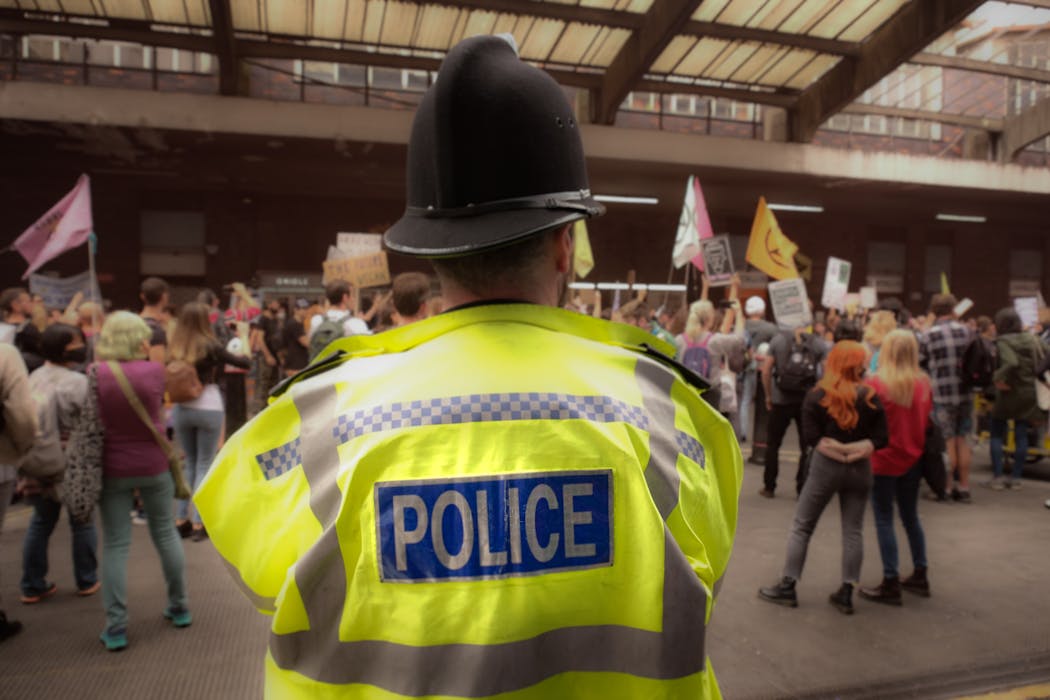
View from behind of Welsh police officers
The reforms will only affect police in England and Wales.
Gareth Llewelyn Evans/Shutterstock

Policing policy should be driven by evidence, not by politics. The risks and implications of overly-politicised policing and security decisions are worrying, because they can mean peoples’ needs are not addressed.

To this end, it is promising that the government is replacing elected Police and Crime Commissioners (PCCs). PCCs were controversially introduced in 2012, with proponents arguing they provided greater police accountability and innovation. Yet critics assert they added additional police bureaucracy, tied the hands of police chiefs in addressing local crime, and are more subject to political pressures.

The proposal to replace PCCs with Policing and Crime Boards under mayoral or local council control could allow for better coordinated, more innovative solutions to local crime and security problems. Or, it may effectively just be keeping PCCs, but under another name.

The Conversation

Tara Lai Quinlan does not work for, consult, own shares in or receive funding from any company or organisation that would benefit from this article, and has disclosed no relevant affiliations beyond their academic appointment.

– ref. Can police reforms improve trust in UK forces? – https://theconversation.com/can-police-reforms-improve-trust-in-uk-forces-274673

Why unemployment – and bad jobs – carry hidden social and political costs

Source: The Conversation – UK – By Peter Howley, Professor of Economics and Behavioural Science, University of Leeds

Irene Miller/Shutterstock

The outlook for job seekers in the UK appears to be taking a turn for the worse. Weak economic growth and continued uncertainty for employers have led to forecasts that unemployment will hit 5.3% this year.

In politics, the debate typically follows a familiar pattern: creating jobs, tackling unemployment and making sure welfare benefits are fair. But this economic framing captures only part of what is at stake. Work is not simply a source of income. It is about much more than a paycheck.

When people lose work or cannot find a job, the damage is often psychological as much as financial. With official estimates suggesting that UK unemployment will climb higher this year than previously forecast, that leaves problems for the government beyond just the numbers.

Economists estimate that in terms of life satisfaction the non-financial costs of unemployment are several times larger than the loss of income itself. Unemployment can also leave long-term scarring effects – fears about becoming unemployed again, for example – even after people have found a new job.

One reason is that employment fulfils important psychological needs. Just as vitamins are essential for human bodies, certain aspects of work – autonomy, variety, recognition – are essential for the mind.

When work disappears, people lose not only financial security but often routine and social connection as well. Days can become less structured, social networks might shrink and confidence can erode. In most societies, work is also closely tied to self-worth, meaning unemployment can bring feelings of guilt, shame or personal failure even when job loss is beyond a person’s control.

A good illustration of how powerful these social meanings can be comes from a study of people’s happiness as they transitioned into retirement. People who move directly from employment into life as a pensioner typically experienced little change in their overall satisfaction.

In contrast, those who had been unemployed before retiring reported a marked improvement in wellbeing once they reached retirement age. The difference was not due to changes in financial circumstances. Rather, retirement removed the stigma attached to not working. During working life, being unemployed carries a heavy social stigma. But no one looks down on a pensioner for not working.

Psychological pain

To illustrate further these non-financial costs of not working, research my colleagues and I conducted also looked at how unhappy people feel when they are out of work depending on the overall unemployment rate in their neighbourhood. If unemployment were purely an economic issue, then living in an area with high joblessness should make things worse. It means fewer jobs and tougher competition for those roles, after all.

But what actually happens is the opposite: although the psychological pain of being unemployed is always substantial, this pain reduces as more people around you lose their jobs. Now, it is clearly not the case that people are just cruel and taking pleasure in others’ misfortune. But when job loss becomes more common, the stigma eases and people no longer feel as alone or to blame for their situation.


Read more:
Why unemployment can feel worse when there is less of it around


The current challenge is not limited to outright job loss. Globalisation and technological change have expanded economic opportunities overall, with things like new industries, cheaper goods and services, and greater access to global markets. But they have also contributed to the growth of insecure and lower-quality work. For many people, stable and meaningful employment has become harder to find.

These changes are unevenly distributed: communities that have historically been reliant on manufacturing have suffered lasting declines. These include higher unemployment, lower wages and wider social problems following exposure to competition from cheaper manufacturing bases. In this sense, economic change has created a new geography of disadvantage.

young greek men holding flares in support of the far-right golden dawn party.
High rates of unemployment in Greece fueled the rise of the far-right Golden Dawn party in the mid-2010s.
Alexandros Michailidis/Shutterstock

The consequences extend beyond individual happiness. Rising job insecurity and dissatisfaction with work can reshape how people view government institutions and politics more broadly. They are associated with falling trust and growing frustration: conditions that have been linked to stronger support for populist and anti-establishment movements across advanced economies.

When large groups feel economically marginalised or socially undervalued, political discontent often follows. Labour market policy, therefore, is not only about employment rates or economic growth. The right decisions can help to sustain social cohesion and democratic stability during periods of economic change.

The rapid advance of AI in the workplace brings these questions into sharper focus. It promises extraordinary gains in productivity, but also raises an uncomfortable question for the future. What happens when large numbers of people are no longer needed for the work that once defined economic life?

The challenge posed by AI is not simply how to distribute income, but how to sustain human flourishing in a world where work plays a smaller role. Financial compensation alone may prevent poverty, but it cannot guarantee satisfaction with life. And if citizens do not feel that their lives have value or direction, the political consequences may prove as significant as the economic ones. The future of work is not just an economic question, but a social one.

The Conversation

Peter Howley does not work for, consult, own shares in or receive funding from any company or organisation that would benefit from this article, and has disclosed no relevant affiliations beyond their academic appointment.

– ref. Why unemployment – and bad jobs – carry hidden social and political costs – https://theconversation.com/why-unemployment-and-bad-jobs-carry-hidden-social-and-political-costs-277559

Netflix and Paramount bidding for a potentially lucrative back catalogue mirrors 18th-century publishing deals

Source: The Conversation – UK – By Marrisa Joseph, Associate Professor of Organisation Studies & Business History, University of Reading

miss.cabul/Shutterstock

Netflix’s plan to buy the Hollywood studio Warner Bros Discovery is over. The streaming giant was eventually outbid by rival company Paramount Skydance, which is willing to pay around US$111 billion (£82.2 billion) for the company.

It’s not a done deal yet. There will be regulatory hoops that Paramount needs to get through.

But after a tense few months of negotiations, Warner Bros, which put itself up for sale last year, said Paramount’s latest bid was “superior” to the one from Netflix, which then refused to raise its offer.

And if things go according to Paramount’s plan, the company will soon become the new owners of a vast library of content. It will own the likes of Casablanca, Friends, Superman, Harry Potter and Game of Thrones. Plus it will have the Sopranos, Sex and the City and Succession.

Media companies like Paramount and Netflix appear to see high quality back catalogues as valuable strategic assets. The theory is that control over legacy content can provide financial stability and a durable competitive advantage.

And it’s a strategy with a long history. Back in the 18th century for example, Longman, the UK’s oldest commercial publishing house, built up its business by acquiring the catalogues of other firms.

Founded by Thomas Longman in 1724, the company steadily and deliberately expanded its portfolio of titles. One of the most famous and lucrative of these was Robinson Crusoe by Daniel Defoe.

In addition to acquiring catalogues from publishers (who were often retiring or leaving the trade) Longman was also a keen trader of shares in consortiums known as “congers”. This was where publishers collaborated to finance new literary works as a way of spreading the risk of potentially costly publishing ventures. In 1755, for example, Longman joined a consortium with five other publishers to produce and publish Samuel Johnson’s Dictionary of the English Language.

By the time Longman reached its centenary in 1824, the firm was regarded as one of the most distinguished publishing houses of the age. Its fortunes were built on the substantial capital generated through the acquisition of lucrative copyrights, a strategy that successive generations continued.

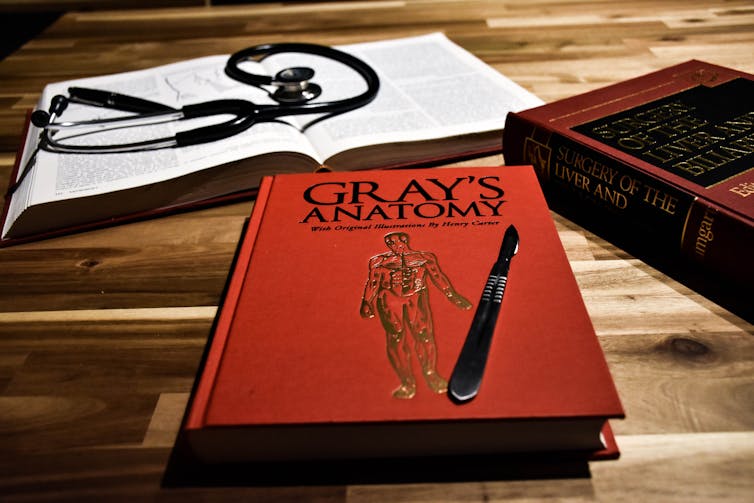
It was the third generation of Longman publishers for example, who, in 1863, acquired the business of John William Parker & Son, publishers of Gray’s Anatomy. First issued in 1858, the work had already become pivotal to medical education, making it a highly valuable addition to Longman’s catalogue. It has never been out of print, and still sells well to medical students and doctors around the world today.

Longman continued to grow, and was considered one of the major players in British publishing in the 19th century. A steady commitment to purchasing reference and instructional works helped cement the firm’s reputation as a leading educational publisher, a position strengthened by its overseas trade and broad catalogue of school textbooks.

Content is always king

This would become their enduring legacy well into the 20th century, as Longman’s reference works came to define standards in English language educational publishing.

Copy of Gray's Anatomy on a desk.
Still a bestseller.
Tom Quisenaerts/Shutterstock

As successive generations of Longman had pursued this strategy of acquiring established firms with profitable lists, new media companies entered the market seeking to expand their portfolios. Longman’s reputation and extensive back catalogue eventually made the firm an attractive target for a take over.

In 1968 Longman was acquired by Pearson, bringing an end to a publishing dynasty that had lasted for centuries. And although no longer family-owned, the Longman imprint has endured as a strong brand in educational publishing.

Similarly, by absorbing Warner Bros. Discovery’s extensive archive, Paramount will gain control over a vast catalogue of cultural content, influencing which stories persist and how future entertainment landscapes may be shaped.

The deal, if it happens, demonstrates how legacy assets remain powerful tools for shaping markets and culture. It will also show that for media companies in the 21st century, as with publishing companies 300 years ago, ownership of a profitable back catalogue continues to be a cornerstone of growth and innovation.

The Conversation

Marrisa Joseph works for the University of Reading.

– ref. Netflix and Paramount bidding for a potentially lucrative back catalogue mirrors 18th-century publishing deals – https://theconversation.com/netflix-and-paramount-bidding-for-a-potentially-lucrative-back-catalogue-mirrors-18th-century-publishing-deals-275955

How the Greeks mapped the mythical places of their heroes and legends

Source: The Conversation – UK – By Lisa Doyle, Postdoctoral Research Fellow, Trinity College Dublin

From the third century BC, Alexandria in Egypt was the intellectual hub of the Greek world, as the literature of classical antiquity was collected, edited and canonised at the Mouseion (Shrine of the Muses) and the Library of Alexandria.

To the ancient Greeks, myths were more than just stories, and to the scholars working at the library, mythical tales presented an opportunity to understand the inhabited world. We are able to uncover how scholars attempted to bridge the gap between myths and the real world through a particular type of source material, one that is preserved in the margins of manuscripts.

We are fortunate that the commentaries and scholarly works of Alexandrian critics have been passed down to us – copied and transmitted across the centuries as comments, notes and annotations in the margins of papyri and manuscripts.

These comments are known as scholia, and they are a window into the workings of ancient scholars. Scholia reveal a range of concerns and ideas, from analysis of poetic techniques to criticisms of grammar. They are also testament to the endeavour of ancient scholars to map the mythical places traversed on heroic voyages onto locations in the known world.

Mapping myths and monsters

One of the most significant scholarly disputes in antiquity, even predating the establishment of the Alexandrian library, was the route taken by the hero Odysseus on his perilous homeward journey after the Trojan War. The final stages of the Greco-Trojan conflict and the subsequent homecoming of Odysseus were the subjects of the ancient epic poems attributed to Homer: the Iliad and the Odyssey.

Homer’s epics were the focal point of scholarly activity in Alexandria. Indeed, one of the chief librarians there, Apollonius of Rhodes, composed his own epic, the Argonautica, which recounts the quest of Jason and the Argonauts to obtain the golden fleece and was modelled on the Homeric poems of a few centuries before.

Like Odysseus, the route taken by Jason was disputed, and Apollonius, as a scholar-poet, was familiar with debates on the exact routes taken by these heroes. Across several annotations, the scholia tell us about the versions of the Argo’s journey that differ from Apollonius’, including that of his contemporary, the poet Callimachus.

The attempt to map mythical locations is most notably characterised by the wanderings of Odysseus (as recounted in Books 9-12 of the Odyssey), which were located in Sicily and Italy. Significantly, the sea monsters Scylla and Charybdis were thought to dwell in the treacherous strait of Messina, the strip of water between the north-east of Sicily and the toe of Italy’s boot.

A strict opponent of this approach, however, was Eratosthenes – the Alexandrian scholar who calculated the circumference of the earth, to a remarkable degree of accuracy. He preferred to locate the wanderings of Odysseus and the travels of the Argo at a remove from the Mediterranean, dispelling them to the remote regions of the ocean.

Professor Helen Lovatt of the University of Nottingham shares insights about Jason and the Argonauts.

How to spot a myth

While the route of Apollonius’ Argonauts contained fantastical elements (like the Sirens and the Clashing Rocks), scholars were also interested in mapping known locations along the route.

As the Argonauts navigate places like the Black Sea in Book II of the Argonautica, the evidence in the scholia demonstrates that scholars had a desire to record the geographical landmarks visited by the heroes, as well as any myths associated with those locations.

In his own epic, Apollonius ensures that the Argonauts leave markers of their journey, often in the form of an altar that is still visible in the landscape. The scholia show us scholars discussing the exact location of these markers – whether the altar to the 12 gods on the Bosporus strait was found on the European side or Asian side, for instance.

In addition to the markers mentioned by Apollonius, the scholia document a vast array of location-based stories which explain the origin of a place’s name – the aition. By using the mythical past to explain a phenomenon in the present, aetiology is a way for the contemporary reader to orient themselves in a text.

It is clear that critics had a “checklist” of sorts for talking about physical landmarks such as rivers or mountains: they note their location, the origin of their name and any connected myths or mythical markers. A standard entry in the scholia reads like this:

The Callichorus is a river sacred to Dionysus in the region of Heraclea. The river is called this because Dionysus organised a chorus there.

The consistency with which these physical landmarks are documented resembles the catalogues which we also find on papyri from the Hellenistic period – the era after the death of Alexander the Great which saw the expansion and transformation of Greek language and culture. Papyri of this type list the names of rivers and associate them with renowned peoples and places (such as those on the Argonautic voyage).

This shows us that these locations, even if they are known from poetry or a fictional voyage, could be situated in the landscape and understood through an origin myth. The cataloguing of mythical landmarks ensures they become enshrined in cultural memory and, through the process of copying them in the margins, ingrained in Greek identity.

The Conversation

Lisa Doyle receives funding from Taighde Éireann / Research Ireland.

– ref. How the Greeks mapped the mythical places of their heroes and legends – https://theconversation.com/how-the-greeks-mapped-the-mythical-places-of-their-heroes-and-legends-275035

Menopause makes teachers’ work lives harder – and may push them out of the profession

Source: The Conversation – UK – By Hannah Ainsworth, Senior Lecturer in Primary and Childhood Education, Edge Hill University

Frame Stock Footage/Shutterstock

Secondary teaching in England currently faces a recruitment and retention crisis. Over 90% of teachers leave before retirement.

Although the government have made efforts to improve recruitment and retention, interventions tend to focus on initial teacher trainees and early career teachers – ignoring the experiences of midlife teachers, including menopause.

Research suggests that menopause can increase the risk of burnout at work. However, there has been limited exploration of how menopause affects secondary teachers’ intentions to remain in the profession.

My PhD research explored this. I surveyed 258 peri- and post-menopausal secondary teachers between the ages of 40 and 65 across England, carrying out interviews with 12. I found that teachers are statistically more likely to intend to leave teaching if they are menopausal than if they are pre-menopausal.

When interviewed, menopausal teachers explained they felt they had no option but to leave or reduce their hours and responsibilities as they were unable to manage their menopause symptoms at work. Teachers experiencing menopause symptoms felt that they were less able to do their jobs. “I am planning my exit as we speak now,” Rachel said. “It’s not a job you can sustain.”

Menopause can cause a range of symptoms, with teachers finding menopause-related bladder problems, heavy bleeding and fatigue to be most problematic. Teachers often had limited access to bathrooms during the school day. Jane explained how she was often unable to access a bathroom for up to four hours, and Maddie said she was having “stress dreams about not being able to go the toilet”.

Alongside bathroom access, women found the lack of flexibility and the performance element of the job difficult to manage while experiencing menopause-related fatigue. Paige, who retrained as a teacher in her forties, recounted how she had “never actually come across a profession which is so rigid”. “It is relentless and there is no let up,” Jane explained.

This rigidity also meant many menopausal teachers could not access health appointments, meaning they lacked menopause support inside or outside of school. This further affected their health and wellbeing, as well as their intentions to leave the profession.

Woman in meeting
Women felt they didn’t receive the right support.
AYA images/Shutterstock

Only 7% of menopausal secondary teachers in my survey felt supported by their school; 80% reported struggling to manage workload and to access accommodations, such as flexible working, cooling down methods and regular breaks. Most teachers felt as though their line manager would not know how to help them or how challenging menopause can be. Caroline, a head of department, thought her current headteacher “would find it almost laughable” if she was to ask for support around menopause.

No sympathy

Those who do try to ask for support are often penalised or ignored. Maria raised her heavy bleeding with her line manager and was told discussing the issue was “inappropriate”. Rachel explained that “they had no sympathy” for her symptoms. Maddie asked for more access to toilets: “Of course, it’s been completely ignored.”

Discriminatory practices are having a detrimental impact on women secondary school teachers, psychologically and financially. Rachel felt forced to give up her role as head of department and “took a huge hit financially”. Susan “felt anxious and ashamed”. The teachers highlighted a systemic failure for midlife women in secondary teaching, noting “a cull of older ladies” in the profession. Only 34% of teachers surveyed identified a menopause policy, with those I interviewed noting how the menopause policies in place were tokenistic and ineffective. Maria explained that her school’s policy was “very much box ticking”.

Despite being a female dominated sector, the “career stifling” described in the interviews is represented in the persistent gender pay gap. Women are less likely to be in leadership positions in schools than men.

These findings raise questions around the inclusivity of secondary teaching, particularly for women and for those who have health-related needs. Supporting menopausal teachers is imperative for retaining experienced and talented teachers.

Changes such as accessing bathrooms, reducing workload and the consideration of flexible working opportunities would make a real difference for women in teaching. Training for line managers and HR would help them effectively support menopausal teachers – and wider scrutiny needs to occur around the potential gendered and ableist discriminatory practices occurring in the teaching profession.

All names have been changed for anonymity

The Conversation

Hannah Ainsworth received funding from the ESRC for the research project informing this article.

– ref. Menopause makes teachers’ work lives harder – and may push them out of the profession – https://theconversation.com/menopause-makes-teachers-work-lives-harder-and-may-push-them-out-of-the-profession-276307

¿Puede la aspirina prevenir el cáncer?

Source: The Conversation – (in Spanish) – By Guillermo López Lluch, Catedrático del área de Biología Celular. Investigador asociado del Centro Andaluz de Biología del Desarrollo. Investigador en metabolismo, envejecimiento y sistemas inmunológicos y antioxidantes., Universidad Pablo de Olavide

Jo Panuwat D/Shutterstock

En estos tiempos, muchos creen que la salud puede depender de un suplemento o una pastilla. De hecho, desde múltiples webs y redes sociales se nos dice que tal o cual enfermedad puede ser prevenida e incluso curada con tratamientos simples y naturales. Pero no, la biología es mucho más compleja y ni hay compuestos para todas las dolencias ni todo es prevenible con una pastilla o un suplemento.

El cáncer, diana de los reclamos “milagrosos”

El cáncer, o mejor dicho los diferentes tipos de cáncer, constituyen las dianas más llamativas para reclamos de todo tipo. Considerada una enfermedad de la que antes apenas se hablaba, ahora ya parece ser algo común, una dolencia más que se ha cronificado en muchos casos.

Así, frente a los avances científicos basados en pruebas, ensayos, resultados, comprobaciones y conclusiones, podemos encontrarnos con consejos de lo más variopinto para “prevenir” o “curar” cualquier cáncer. Y no todos se basan en las evidencias. Mientras que la ciencia va mejorando la quimioterapia y añadiendo tratamientos exitosos como los controles hormonales y las inmunoterapias basadas en anticuerpos, vacunas o células inmunitarias modificadas, otros enfoques no convencionales afirman tener cierto éxito aunque sin haber seguido los controles clínicos necesarios para convertirse en terapias.

En cuanto a la prevención, la ciencia ha demostrado que ciertos comportamientos como el sedentarismo, el tabaquismo, la ingesta de alcohol o ciertas dietas o someterse a ciertos ambientes contaminados aumentan la incidencia de determinados cánceres. Es obvio que evitarlos reduce las posibilidades, aunque no las anula completamente, de sufrirlos.

Sin embargo, otros tipos de cáncer dependen de factores que no podemos controlar, como contraer infecciones por virus que insertan su genoma en nuestras células (Epstein-Barr, herpes, VIH, VPH…). O haber nacido con cierta predisposición al heredar una versión alterada de un gen esencial para reparar el ADN: mutación del gen BRCA1 en el caso del cáncer de mama, útero y ovario o síndrome de Lynch en el caso del cáncer colorrectal, endometrio, ovario, estómago e intestino delgado.

Si tenemos en cuenta todas las causas que pueden desencadenar un cáncer, nos podemos hacer una idea de que seguir la recomendación de tomar tal o cual cosa para prevenirlo carece de base científica suficiente. Es el caso de la aspirina.

¿Hay alguna relación entre la aspirina y el cáncer?

Se ha puesto de moda tomar aspirina para prevenir el cáncer de colon, y así lo indican muchas páginas con aspecto científico. Eso sí, la práctica, genuinamente efectiva, de moderar la ingesta de carne roja y procesados brilla por su ausencia.

Desde los puntos de vista biológico y clínico debemos preguntarnos en qué se basa el supuesto de que ese medicamento disminuye el riesgo de sufrir la enfermedad si no afecta a los procesos esenciales que lo inducen.

La aspirina, o ácido acetilsalicílico, es un antipirético y analgésico, sintetizado de forma estable y pura allá por 1897 en los conocidos laboratorios de una empresa farmacéutica. Su aislamiento se basó en el efecto analgésico de la corteza de sauce, ya indicado por la farmacología egipcia hace más de 2 000 años. Lo que hizo la ciencia fue aislar el compuesto activo.


Leer más:
¿Son de verdad útiles las colonoscopias?


Su mecanismo de acción consiste en inhibir unas enzimas (las ciclooxigenasas-1 y -2) para bloquear la producción de las prostaglandinas. Estos compuestos naturales, como el tromboxano A2, inducen fiebre, inflamación y dolor mediante la activación de células del sistema inmunitario y las plaquetas. Al inhibir esas enzimas, la aspirina impide que dicha activación se produzca y reduce los síntomas. Poco más.

Teniendo en cuenta este mecanismo de acción, es difícil entender que la ingesta crónica de dosis bajas o moderadas de aspirina vayan a afectar a la progresión de un cáncer (al margen de que reducir el componente inflamatorio sí puede influir positivamente, pero solo en algunas modalidades de la dolencia).

Y no, la aspirina no previene el cáncer

Si bien ciertos estudios han indicado que puede haber cierto efecto secundario de la aspirina en la prevención del cáncer, lo cierto es que los trabajos con grandes grupos de personas indican que ese efecto, de haber alguno, es muy bajo.

De hecho, la más reciente revisión sistemática, que analiza todos los estudios clínicos al efecto, demuestra que esa relación no existe.

Es más, el uso crónico del célebre medicamento puede afectar negativamente, aumentando el riesgo de contraer otros tipos de cáncer dependiendo de la edad del paciente o incluso de sufrir hemorragias intestinales y cerebrales.

Seguir confiando en las soluciones farmacológicas sencillas o de suplementos para el cáncer o enfermedades muy complejas sin atender a los mecanismos de acción de los fármacos y a la naturaleza de las patologías es un gran error. No hay varitas mágicas y todos los medicamentos, e incluso los suplementos nutricionales, tienen sus efectos secundarios. Consulten con sus facultativos antes de meter nada en su organismo.

The Conversation

Guillermo López Lluch es miembro de la Sociedad Española de Biología Celular, la Sociedad Española de Bioquímica y Biología Molecular, la Sociedad Española de Geriatría y Gerontología, la Society for Free Radical Research y presidente de la International Coenzyme Q10 Association. Las investigaciones realizadas por el autor están financiadas por fondos públicos provenientes del Gobierno de España, la Unión Europea o del Gobierno Autonómico de Andalucía.

– ref. ¿Puede la aspirina prevenir el cáncer? – https://theconversation.com/puede-la-aspirina-prevenir-el-cancer-277641

Lo que la extinción de una estrella masiva nos enseña sobre el origen de los agujeros negros

Source: The Conversation – (in Spanish) – By Óscar del Barco Novillo, Profesor asociado. Departamento de Física (área de Óptica)., Universidad de Murcia

Recreación artística de las etapas finales de una estrella masiva que no explota como una supernova, sino que implosiona bajo la acción de la gravedad formando un agujero negro estelar. NASA, ESA, and P. Jeffries (STScI)., CC BY

En la galaxia vecina de Andrómeda, una estrella 13 veces más masiva que el Sol se desvaneció sin dejar rastro de su resplandor característico.

Entre 2014 y 2024, el brillo de M31-2014-DS1 (el nombre técnico de esta estrella supergigante) se redujo a tan solo una diezmilésima parte de su brillo anterior en el rango del visible e infrarrojo cercano. De repente, se hizo prácticamente indetectable para los instrumentos ópticos actuales. ¿Que había pasado?

Agujero negro en directo

En un estudio recientemente publicado en la prestigiosa revista Science, investigadores norteamericanos han dado una explicación a este fenómeno: una transformación no violenta de M31-2014-DS1 en un agujero negro estelar de unas 5 masas solares.

Los nuevos resultados desafían las teorías tradicionales sobre la formación de estos apasionantes objetos astronómicos y abre la posibilidad de que estrellas menos masivas también acaben su existencia en forma de un agujero negro. Además, podrían ayudarnos a identificar agujeros negros estelares en regiones del cosmos sin explosión supernova.

Pero ¿cuáles son las consideraciones actuales sobre la formación de agujeros negros a partir de una estrella masiva?

Una violenta explosión estelar

La vida de una estrella se asemeja a la de un ser vivo: a medida que va envejeciendo, sufre cambios en su estructura y composición.

Mientras una estrella se encuentra en la secuencia principal (donde pasará la mayor parte de su existencia), las reacciones de fusión nuclear en su interior convierten el hidrógeno en helio. Eso genera una presión que contrarresta la propia gravedad estelar.

Equilibrio hidrostático en una estrella perteneciente a la secuencia principal. El flujo de energía desde el interior, debido a la fusión nuclear de hidrógeno en helio, proporciona la presión necesaria para que la estrella no colapse bajo su propia gravedad. Créditos: NASA/CXC/M.Weiss.
CC BY

Cuando el combustible se agota, el equilibrio se rompe y la gravedad supera a la presión interna, provocando su colapso. Así, aquellas estrellas entre 15 y 20 veces más masivas que el Sol formarán un agujero negro.

Además, durante el colapso estelar, se genera una gran cantidad de neutrinos (partículas sin carga muy ligeras creadas durante las reacciones de fusión en su núcleo). Como consecuencia, se produce una potente onda de choque que desgarra la estrella en una supernova y expulsa su material estelar al exterior.

En un breve instante de tiempo, estas explosiones de supernova liberan ingentes cantidades de energía, superando incluso a la emisión energética del Sol durante toda su existencia. Su brillo es superior al de su propia galaxia, siendo en ocasiones observables a simple vista.

Imagen de la Nebulosa del Cangrejo registrada por el telescopio espacial James Webb. Formada a partir de los restos de una enorme estrella moribunda que explotó y expulsó sus capas de gas al espacio interestelar (una supernova), está situada a unos 6 500 años luz de nosotros y aún sigue expandiéndose, a una velocidad de unos 1.500 km/s. Créditos: NASA, ESA, CSA, STScI, Tea Temim (Princeton University); Image Processing: Joseph DePasquale (STScI).
CC BY


Leer más:
La Nebulosa del Cangrejo vuelve a brillar


Sin embargo, otra hipótesis plantea un escenario distinto y menos violento para el destino final de una estrella masiva. Nos estamos refiriendo a las supernovas fallidas.

El nacimiento tranquilo de un agujero negro

En ocasiones, durante la fase de colapso, la onda de choque generada es demasiado débil para expulsar violentamente el material estelar hacia el espacio exterior. En este caso, la estrella implosiona de forma serena, convirtiéndose en un agujero negro sin explosión aparente (las denominadas “supernovas fallidas”).

Esta animación muestra la estructura de una estrella masiva colapsando para formar un agujero negro sin explosión de supernova. El agujero negro, oculto en el interior, absorbe gas mientras las capas más externas se van enfriando y brillan en el infrarrojo. Créditos: Keith Miller, Caltech/IPAC – SELab.

¿Qué sucede entonces con las capas de gas más externas? La clave está en las corrientes de convección en el interior de una estrella. Dado que el núcleo es extremadamente caliente y las capas externas mucho más frías, se generan corrientes convectivas que impulsan la circulación de gas entre ambas regiones.

Cuando el núcleo colapsa, el gas exterior sigue en movimiento y las capas más externas son empujadas hacia fuera. Es precisamente este movimiento convectivo el que impide que la mayor parte del material estelar caiga directamente al agujero negro recién formado.

Mecanismos de transferencia de calor en estrellas pertenecientes a la secuencia principal. Nótese las corrientes convectivas de gas en las capas más externas de estrellas como nuestro Sol. Créditos: Wikipedia.
CC BY

A medida que el material expulsado se aleja, su temperatura baja y sus átomos y moléculas empiezan a combinarse para formar polvo estelar. Estos granos estelares absorben la energía generada por el gas caliente cercano al agujero negro y la reemiten en forma de radiación infrarroja.

Como resultado, el nuevo objeto astrofísico brilla en un tono rojizo característico, incluso décadas después de la desaparición de la estrella original.

El oscurecimiento progresivo de M31-2014-DS1

Sirio, la estrella más brillante del firmamento, pertenece a la constelación del Can Mayor (también llamada el perro de Orión) y es visible en ambos hemisferios hasta los 60ºN. Créditos: Elaboración propia del autor a partir del programa Stellarium.
CC BY

Imaginemos por un momento que la estrella más brillante vista desde la Tierra, Sirio, desapareciera por completo de nuestros cielos. Nos perderíamos un espectáculo singular tanto en las frías noches septentrionales como durante el verano austral.

Algo similar sucedió en la galaxia vecina de Andrómeda. La estrella supergigante roja M31-2014-DS1 se desvaneció sin dejar prácticamente rastro.

Si bien existen estrellas cuyo brillo varía periódicamente, como las variables cefeidas o las binarias eclipsantes, hay muy pocos casos documentados de estrellas cuya intensidad va reduciéndose de forma paulatina hasta ser invisibles a los detectores astronómicos.

En este sentido, los investigadores examinaron los datos recopilados por distintos observatorios espaciales y terrestres entre 2005 y 2023. Entre ellos, destacamos la misión NEOWISE de la NASA o el telescopio terrestre Samuel Oschin del Observatorio Palomar en California.

Los resultados fueron bastante concluyentes. La estrella M31-2014-DS1 comenzó a emitir luz infrarroja en 2014, incrementando su brillo hasta 2016. A partir de entonces, éste disminuyó drásticamente en menos de un año.

Para 2022 y 2023, la estrella casi se había extinguido en longitudes de onda del visible e infrarrojo cercano.

El espectro de luz infrarroja abarcando longitudes de onda entre 0.7 y 1000 micras (en particular, el infrarrojo cercano entre 0.7 y 3 micras, y el infrarrojo medio, entre 3 y 15 micras). Créditos: NASA.
CC BY

Lo que queda actualmente de la extinta estrella M31-2014-DS1 solo puede ser detectado en luz infrarroja media y brilla con aproximadamente una décima parte de su intensidad original.

En esta secuencia de imágenes de la estrella M31-2014-DS1, registradas en el visible e infrarrojo cercano por los telescopios Hubble (HST) y Keck en Hawai, la cruz amarilla indica la localización de dicho objeto en el cosmos. Teniendo en cuenta que los tonos en dichas imágenes están invertidos (es decir, tonalidades oscuras representarían más brillo estelar), se puede apreciar una clara disminución del brillo de M31-2014-DS1 en un período de unos 11 años. Créditos: Arxiv.
CC BY

Un avance en la búsqueda de agujeros negros

Hasta la fecha, el hallazgo de agujeros negros estelares se había centrado en la búsqueda de restos de supernova. Al tratarse de eventos muy luminosos, su localización en el cosmos resultaba relativamente asequible.

Con estos nuevos resultados, si las supernovas fallidas son realmente comunes en todo el universo, el número de agujeros negros estelares podría ser mucho mayor de lo esperado. Además, tendríamos que replantearnos si la abundancia de los elementos pesados en el universo proviene exclusivamente de las explosiones supernova.

Y es que este descubrimiento reescribe cómo algunas de las estrellas más masivas llegan a su fin, sin explosión aparente.

Parece evidente que la extinción de la estrella M31-2014-DS1 supondrá un verdadero avance en astrofísica y que sentará las bases para una mejor comprensión del origen no violento de los agujeros negros estelares.

The Conversation

Óscar del Barco Novillo no recibe salario, ni ejerce labores de consultoría, ni posee acciones, ni recibe financiación de ninguna compañía u organización que pueda obtener beneficio de este artículo, y ha declarado carecer de vínculos relevantes más allá del cargo académico citado.

– ref. Lo que la extinción de una estrella masiva nos enseña sobre el origen de los agujeros negros – https://theconversation.com/lo-que-la-extincion-de-una-estrella-masiva-nos-ensena-sobre-el-origen-de-los-agujeros-negros-276206

Así afectan las plantas y los perros a la calidad del aire de nuestras casas

Source: The Conversation – (in Spanish) – By María Teresa Baeza Romero, Catedrática de Universidad. Dpto. Química-Física. Escuela de Ingeniería Industrial y Aeroespacial de Toledo. Inamol., Universidad de Castilla-La Mancha

Pixel-Shot/Shutterstock

¿De verdad las plantas limpian el aire de casa? ¿Y es cierto que las mascotas lo empeoran? Son ideas muy extendidas, pero cuando miramos la evidencia científica, la historia cambia bastante. Ni las macetas son purificadores naturales, ni los perros son pequeños emisores peligrosos. Mientras, para sorpresa de algunos, los humanos seguimos siendo los mayores “contaminadores” de nuestro propio hogar.

Las plantas no limpian tanto

La idea de que las plantas limpian el aire viene de estudios realizados en cámaras selladas. En una casa normal, con ventanas, corrientes de aire y volúmenes grandes, ese efecto prácticamente desaparece.

Las revisiones científicas coinciden en que harían falta decenas o, incluso, cientos de plantas por metro cuadrado para notar una reducción apreciable de contaminantes como formaldehído o benceno. Se trata de compuestos orgánicos perjudiciales para nuestra salud que pueden estar presentes en el aire y provienen del tráfico, del humo del tabaco o de materiales de construcción.

El efecto de los jardines verticales interiores

Sin embargo, aquí hay un matiz interesante: los jardines verticales interiores, que concentran muchas plantas en un mismo plano, sí pueden lograr mejoras medibles en ciertas condiciones. Un estudio de 2021 mostró reducciones de CO₂ del 12–17 % y de PM2.5 (partículas de menos de 2,5 micras) del 8–14 % en un pasillo con una pared vegetal frente a otro idéntico sin ella.

En la misma línea, un trabajo de 2026 en un edificio administrativo encontró que, cerca del jardín vertical, disminuía el formaldehído hasta un 40 %, aunque el efecto desaparecía a pocos metros.

Eso sí: estos sistemas requieren buen diseño y mantenimiento. El mismo estudio detectó más esporas de moho en zonas donde la humedad era elevada o el cuidado no era óptimo.

Así, aunque una maceta no limpia significativamente el aire, un jardín vertical grande y bien mantenido, en zonas concretas, sí puede ayudar modestamente.

Además, las plantas aportan beneficios microclimáticos (humedad, confort, pequeñas reducciones térmicas) y efectos psicológicos positivos. Por tanto, no podemos considerarlas como filtros de aire, pero sí como elementos de bienestar.

¿Y los perros? ¿Liberan muchas emisiones contaminantes?

En cuanto a las mascotas, un reciente estudio midió por primera vez las emisiones reales de perros y humanos en una cámara controlada. Según los resultados, un perro grande emite aproximadamente la misma cantidad de CO₂ y amoniaco que un persona adulta, mientras que un ejemplar pequeño genera bastante menos.

En segundo lugar, las partículas que liberan son del mismo orden que las nuestras, salvo en perros muy activos que levantan más polvo.

La principal diferencia es que estos animales aportan microbios del exterior, lo cual aumenta la diversidad microbiana del hogar. Sin embargo, esto no es necesariamente malo, ya que algunos estudios sugieren que puede favorecer nuestro desarrollo inmunitario.

El dato que lo cambia todo: ¿cuánto emitimos los humanos?

Mucho más que cualquier perro… y desde luego más que cualquier planta. Un estudio de 2022 mostró que cada persona emite más de 2 000 microgramos/hora de compuestos orgánicos volátiles, cifra que se duplica cuando hay ozono en el aire exterior, porque reacciona con las grasas de nuestra piel.

Además, al movernos, levantamos polvo, fibras y partículas. Por tanto, el mayor impacto en el aire interior viene de nuestras propias actividades: cocinar, limpiar, ducharnos, usar ambientadores o, simplemente, estar presentes.


Leer más:
La elevada contaminación del aire en el interior de los hogares activa las alarmas


Es importante recalcar que no solo importa cuántas partículas hay, sino cómo reaccionan en nuestro cuerpo. En este sentido, las asociadas a los perros suelen ser más grandes y menos reactivas que las finas de origen urbano o las que generamos al cocinar.

Entonces… ¿mejor tener macetas o mascotas?

No hay que elegir. Las plantas, especialmente si se agrupan en jardines verticales bien diseñados, pueden aportar pequeñas mejoras locales y mucho bienestar. Las mascotas, en realidad, emiten menos de lo que creemos. Y el aire de casa depende mucho más de nosotros que de ellos.

La receta sigue siendo la misma: ventilar, reducir fuentes contaminantes… y disfrutar de una casa con vida.

The Conversation

Esta publicación es parte del proyecto de I+D+i PID2022-139724OB-I00 financiado por MICIU/AEI/10.13039/501100011033 y FEDER, del proyecto SBPLY/23/180225/000194 financiado por la Agencia de Investigación e Innovación de Castilla-la-Mancha, cofinanciado por la Unión Europea y del proyecto 2025-GRIN-38334, financiado por el plan propio de investigación de la UCLM y cofinanciado con fondos FEDER.

– ref. Así afectan las plantas y los perros a la calidad del aire de nuestras casas – https://theconversation.com/asi-afectan-las-plantas-y-los-perros-a-la-calidad-del-aire-de-nuestras-casas-277636

How dangerous has the conflict in Iran become? Expert Q&A

Source: The Conversation – UK – By Scott Lucas, Professor of International Politics, Clinton Institute, University College Dublin

The conflict in the Middle East is now in its sixth day and is showing no sign of letting up. Israeli and US warplanes have continued to strike targets inside Iran, which has prompted retaliatory attacks throughout the region. An American submarine has also sunk an Iranian navy ship off the coast of Sri Lanka, killing at least 80 people, while Nato defences intercepted a missile heading towards Turkey.

US officials, who initially envisioned the conflict in Iran lasting four to five weeks, are now warning it may go on far longer. “We are accelerating, not decelerating,” Defence Secretary Pete Hegseth told reporters on March 4, adding that “more bombers and more fighters are arriving just today”. We asked Middle East expert Scott Lucas how dangerous the situation has become.

You’ve called this ‘uncontained war’. What do you mean by that?

Once the Iranian regime retaliated, hours after initial US-Israel airstrikes that it was later revealed killed Iranian supreme leader Ayatollah Ali Khamenei, this was no longer just an American-Israeli war on Iran. Tehran, which had refrained from retaliation beyond Israel in the 12-day war in 2025, was taking this across the region.

This was a war in the Gulf states, where Iran fired not only on American bases but also industrial areas, ports and tankers. This was a war in Lebanon, where Israel responded to Hezbollah rocket fire with airstrikes and an expansion of its occupation in the south of the country. This was the possibility of war spreading to Iraq, where the US military and CIA may be supporting Iranian Kurds for a cross-border incursion.

It is now possibly also a war beyond the Middle East. A drone attacked the UK’s RAF Akrotiri base in Cyprus and an Iranian missile has been intercepted flying towards Turkey. Drones have struck an airport and school in Azerbaijan. Iran has denied responsibility but the Azerbaijani president, Ilham Aliyev, has put his armed forces on high readiness.

How dangerous a moment is this?

War is always dangerous, of course, but this conflict is compounded by the shattering of any international “rules of the game”. The US and Israel have blatantly violated international law. They have assassinated the head of another country and his senior officials.

The UN can condemn the strikes, but this will be easily disregarded by Israel and the US. Donald Trump has historically taken little notice of UN criticism, and said in January that his power is limited only by his “own morality”. European countries can call for deescalation, but almost all have now prioritised working with the US on the defence of positions threatened by the Iranians.

China is maintaining a cautious position and Russia will be grateful that attention is being taken away from its invasion of Ukraine. If the Iranian regime does not surrender, there does not appear to be anyone or anything capable of checking the US and Israeli attacks – and thus the retaliatory shocks across the region and beyond.

Is there a risk that Nato will be drawn in?

Nato is already drawn in. Once Iran went beyond the Middle East to threaten Cyprus and Turkey, then the bloc had to take action. However, while Nato forces downed the missile heading towards Turkish airspace, the alliance is not yet discussing invoking Article 5 (the agreement that an attack on one Nato member is considered an attack on all).

The alliance has also become involved in the conflict verbally to ensure the Trump camp does not abandon Ukrainian and European security at a sensitive point in talks to end Russia’s invasion of Ukraine. Nato secretary-general Mark Rutte, already known for calling Trump “daddy”, has given fulsome praise to the war even as some Nato members like Spain condemn it.

In a recent interview with a German television channel, Rutte said: “It’s really important what the US is doing here, together with Israel, because it is taking out, degrading the capacity of Iran to get its hands on nuclear capability.”

Where are the Gulf states in this? What happened to Qatar’s attempts to mediate?

The Gulf states are likely to be happy that Iran’s supreme leader and others in his circle have been assassinated. For decades, Khamenei had pursued a strategy of expanding Iran’s influence across the Middle East – directly threatening Gulf monarchies. However, they are loathe to see regime change, fearing the disorder and instability that marked Iraq after the 2003 US invasion.

They have been trying to pull back the Trump administration – an initiative by Qatar to persaude Trump into finding an off-ramp is notable – but they have to do so quietly. Open opposition to the US president risks even more serious disruption of the political and economic situation, with no guarantee that a triggered Trump will listen.

There is a further complication because of division among the Gulf states. Saudi Arabia, Qatar and Kuwait put some of the blame for the rising hostilities in the Middle East on the United Arab Emirates and Bahrain for their policy of normalising relations with Israel. They claim this has emboldened the Israeli government of Benjamin Netanyahu.

So far, the quiet push for deescalation does not appear to have succeeded. Without naming Qatar or another Gulf partner, Trump said on March 3 that there will be no talks with Tehran.

The US and Israel are reportedly arming Kurdish groups. How could that change things?

With Plan A for regime surrender not succeeding so far, the Trump camp has had to consider what to do next. More bombing and an incursion by ground forces are two options, as is supporting an insurrection by Iranian Kurds.

It appears the US president and his senior advisers (along with their Israeli allies) may opt for the Kurdish option. According to reports, Trump has in recent days called Kurdish minority leaders to offer them “extensive US aircover” and other backing if they enter the conflict.

But the Iranian regime will undoubtedly unleash its military against the insurgents, throwing the west of the country into further turmoil. And it will have a justification to rally Iranians around the nation, despite the mass protests that were crushed in January.

Even if the US can support the insurgency in splitting off part of Iran, what happens to the rest of the country? What does Plan B offer other than instability and fragmentation that could parallel post-2003 Iraq?

This does not bring an assurance that the regime’s retaliation will be halted soon. Meanwhile, the US military is facing a shortage of interceptors which – if Iran’s firepower has not been expended – maintains the threat facing the Gulf states.

The Conversation

Scott Lucas does not work for, consult, own shares in or receive funding from any company or organisation that would benefit from this article, and has disclosed no relevant affiliations beyond their academic appointment.

– ref. How dangerous has the conflict in Iran become? Expert Q&A – https://theconversation.com/how-dangerous-has-the-conflict-in-iran-become-expert-qanda-277632

The Gulf’s delicate balancing act between the US and Iran is now in flames

Source: The Conversation – UK – By Gemma Ware, Host, The Conversation Weekly Podcast, The Conversation

As Israel and the US continued to bomb Iran after killing the country’s supreme leader Ali Khamenei, Iran lashed out at its neighbours. Among the targets of Iranian drone strikes were a hotel in Dubai, a port in Oman, gas facilities in Qatar, and multiple US bases and embassies in the region, including in the Saudi Arabian capital, Riyadh.

Saudi Arabia and Iran have a long and bitter rivalry. Yet, in recent years, the Saudis had begun building new diplomatic relationship with Iran, even as they and other Gulf states continued to host American military bases, and court American investment.

Now the Gulf states find themselves in the middle of the very regional conflict many of its leaders hoped to avoid. It’s one which threatens longstanding efforts to cement the Gulf as a hub for finance, travel and tourism, and as an oasis of security.

In today’s episode of The Conversation Weekly podcast, we speak to Simon Mabon, a professor of international relations at Lancaster University in the UK and expert in Saudi-Iran relations, about how the Gulf’s delicate balancing act between the US and Iran came toppling down.

Mabon says that in recent years, Gulf states realised they had to live alongside Iran. “You can’t do that without having regional stability. And the only way you could get regional stability is to integrate Iran in some way, shape, or form,” says Mabon.

But after the US-Israeli war on Iran, and Iran’s retaliation against its neighbours, Mabon thinks it will be very difficult “to rebuild the sort of trust that had been cultivated over years between the Gulf Arab states and Iran”. That leaves big questions about how Gulf states, which may have advanced military hardware, but only small armies, ensure the security of their populations and their economies.

Listen to the interview with Simon Mabon on The Conversation Weekly podcast. This episode was written and produced by Mend Mariwany and Katie Flood. Mixing by Eleanor Brezzi and theme music by Neeta Sarl. Gemma Ware was the executive producer.

Newsclips in this episode from CNN, 60 minutes, euronews, BBC News, PBS NewsHour and WION.

Listen to The Conversation Weekly via any of the apps listed above, download it directly via our RSS feed or find out how else to listen here. A transcript of this episode is available via the Apple Podcasts or Spotify apps.

The Conversation

Simon Mabon receives funding from Carnegie Corporation of New York and the Henry Luce Foundation. He is affiliated with the Foreign Policy Centre.

– ref. The Gulf’s delicate balancing act between the US and Iran is now in flames – https://theconversation.com/the-gulfs-delicate-balancing-act-between-the-us-and-iran-is-now-in-flames-277449