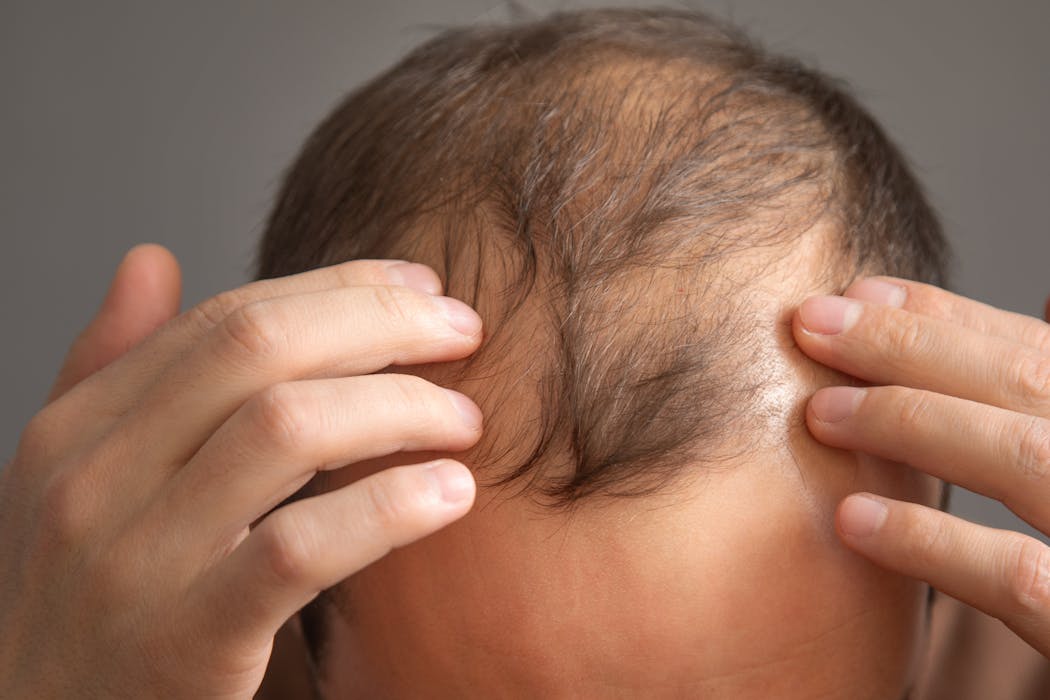
Claves que debemos conocer sobre el peligroso virus Nipah

Source: The Conversation – (in Spanish) – By Raúl Rivas González, Catedrático de Microbiología. Miembro de la Sociedad Española de Microbiología., Universidad de Salamanca

ARVD73/Shutterstock

Un nuevo brote del letal virus Nipah, registrado en el estado indio de Bengala Occidental, ha hecho saltar las alarmas. Hasta la fecha hay dos casos confirmados. Ambos son enfermeros, una mujer y un hombre, de entre 20 y 30 años, que trabajan en el mismo hospital privado de Barasat, a unos 25 kilómetros del centro de Calcuta, una de las ciudades más densamente pobladas del mundo.

La posibilidad de que el virus pase de un entorno rural/semiurbano a una metrópolis con conexiones globales preocupa, con razón, a las autoridades sanitarias.

Tras la confirmación, fue activada una amplia respuesta de salud pública, identificando, rastreando, monitoreando y realizando pruebas a un total de 196 personas que tuvieron contacto con los casos confirmados. De momento, todos los contactos han permanecido asintomáticos y dieron negativo en las pruebas de detección.

India ha sido testigo de al menos ocho brotes del virus Nipah desde 2001, tres en Bengala Occidental y cinco en Kerala.

El gobierno de este país está trabajando para evaluar las medidas preventivas ante el brote, pero advierte de que los datos disponibles sugieren que no hay motivo de alarma para la población general. De hecho, la Organización Mundial de la Salud (OMS) evalúa como moderado el riesgo para la salud pública a nivel subnacional, mientras que lo considera bajo a nivel nacional, regional y global, al no haberse detectado propagación fuera del área afectada.

Un virus extremadamente peligroso

El virus Nipah es un patógeno zoonótico emergente que pertenece al género Henipavirus y a la familia Paramyxoviridae y que causa encefalitis febril grave. Tiene ARN monocatenario (de cadena sencilla) de polaridad negativa. Debido a su tiempo de generación extremadamente corto y a su evolución más rápida, los virus ARN muestran una mayor probabilidad de infección de nuevas especies hospedadoras. Son considerados uno de los principales factores responsables de entre el 25 % y el 44 % de las enfermedades infecciosas emergentes recientes.

Las infecciones con el virus Nipah fueron descritas por primera vez durante los brotes epidémicos que afectaron a criadores de cerdos de Malasia y Singapur entre 1998 y 1999. Su nombre proviene de Sungai Nipah, un pueblo de la península de Malasia donde vivían los criadores de cerdos que enfermaron de encefalitis. Este episodio no solo provocó casi 300 casos y más de 100 muertes en humanos, sino que también generó un impacto económico sustancial, ya que hubo que sacrificar más de un millón de cerdos para ayudar a controlar el brote.

El índice de casos mortales en los diversos brotes registrados hasta la fecha ha variado del 33 % hasta aproximadamente el 75 %, lo que indica que nos enfrentamos a un virus muy peligroso. Además, se estima que el 25 % de los supervivientes padece deficiencias neurológicas residuales.

Síntomas iniciales similares a la gripe

Aunque algunos casos de infección por virus Nipah pueden ser asintomáticos o leves, la mayoría de los infectados experimentan encefalitis y una afectación predominantemente respiratoria, ambos con alta mortalidad.
Los síntomas iniciales son similares a los de la gripe, con fiebre alta, dolor de cabeza y mialgia. Algunos pacientes presentan somnolencia, desorientación y convulsiones. Muchos entran en coma.

Hasta el momento, se han registrado al menos 760 casos de virus Nipah en humanos en todo el mundo, con el resultado de 437 muertes en cinco países: Bangladesh, India, Malasia, Filipinas y Singapur.

¿Cómo se transmite?

Los murciélagos frugívoros del género Pteropus, los llamados zorros voladores, son los reservorios principales del virus. Pueden transmitir el patógeno a través de los excrementos y de la saliva. La transmisión puede ocurrir de murciélagos a humanos o a través de cerdos, que son los huéspedes intermediarios, pero también de humano a humano. La propagación entre personas genera preocupación sobre la posibilidad de que el virus Nipah sea capaz de causar una nueva pandemia mundial.

Existen tres vías de transmisión principales: el consumo de alimentos contaminados, el contacto con fluidos corporales humanos o animales infectados y la exposición a gotitas o aerosoles. La forma habitual de contagio en personas es mediante el consumo de alimentos contaminados que han estado expuestos a los murciélagos o por contacto directo con animales domésticos infectados –en particular, cerdos–, probablemente a través de las membranas mucosas.

Cuidado con el invierno y las bebidas contaminadas

Una de las fuentes más probables de infección en los brotes que han ocurrido en Bangladesh (donde el patógeno fue reconocido por primera vez en 2001) y en la India es el consumo de jugo de palmera datilera, muy popular en varios países asiáticos.

Por desgracia, también es muy apreciado por los murciélagos frugívoros que por la noche sobrevuelan las plantaciones lamiendo la savia derramada por las palmeras y que los oriundos recolectan a través de un cuenco sujeto al tronco. Asimismo, es probable que estos animales orinen o defequen cerca del cuenco. Cada día, a primera hora de la mañana, los vendedores locales comienzan a mercadear con el jugo fresco y sin pasteurizar, provocando, sin querer, un potencial brote de virus Nipah.

La savia cruda de palmera datilera, conocida localmente como khejur-er rosh, es una bebida tradicional milenaria en las zonas rurales de Bangladesh y del estado indio de Bengala Occidental. El costo de este jugo es muy bajo y posee un sabor agradable, distintivamente dulce.

La savia se extrae durante todo el año para diversos usos, pero su consumo es muy estacional. Solo se toma fresca y cruda a primera hora de la mañana durante los meses de invierno, de noviembre a abril, en la conocida como la “temporada de la savia”. Por eso allí los brotes de virus Nipah se producen según un patrón estacional predecible, generalmente de diciembre a abril, coincidiendo con la temporada alta de recolección de savia cruda de palmera datilera.

En el punto de mira

Hoy en día, el virus Nipah es una amenaza preocupante y por ello ha sido clasificado como patógeno de Grupo de Riesgo 4/ BSL4, el más alto que existe.

En la actualidad, no existen medicamentos ni vacunas específicos aprobados para la infección por el virus Nipah. Se recomiendan cuidados paliativos intensivos para tratar las complicaciones respiratorias y neurológicas graves. Las iniciativas de salud pública deben centrarse en la concienciación sobre los factores de riesgo, la promoción de medidas preventivas para reducir la exposición al virus y la detección temprana de casos, con el apoyo de cuidados paliativos intensivos adecuados.

Por su parte, la OMS enfatiza la importancia de la prevención y el control de infecciones en entornos de atención médica, así como la concienciación comunitaria para reducir los riesgos de exposición. Los mensajes clave de salud pública incluyen reducir la transmisión de murciélagos a humanos impidiendo que esos animales accedan a la savia de la palmera datilera, hirviendo la savia recién recolectada, lavando y pelando bien las frutas, desechando las frutas con signos de mordeduras de murciélagos y evitando las áreas donde estos descansan.

También conviene mantener a los animales domésticos, especialmente a los cerdos, alejados de los árboles donde descansan los murciélagos en las zonas de riesgo. Sin olvidar el uso de ropa y guantes protectores al manipular animales enfermos o durante el sacrificio selectivo.

Conviene, igualmente, evitar el contacto cercano sin protección con personas infectadas y practicar una higiene de manos regular. Es prudente realizar protocolos funerarios seguros en áreas con brotes activos y fortalecer el control de las infecciones en entornos de atención de salud, incluida la ventilación adecuada, la evaluación de riesgos y el uso de equipo de protección personal apropiado al atender casos sospechosos o confirmados.

Tratamientos y vacunas en marcha

Por fortuna, existen tratamientos en desarrollo y en evaluación que pueden resultar útiles para combatir las infecciones por el virus Nipah. Uno de ellos es el anticuerpo monoclonal humano M 102.4, que en 2020 completó los ensayos clínicos de fase 1 y ha sido utilizado con carácter compasivo (autorizado de modo excepcional). También el anticuerpo monoclonal humano Hu1F5 ha demostrado una eficacia superior a M 102.4 en modelos de primates no humanos y ahora está avanzando a la evaluación de fase 1 en los EE. UU.

Por su parte, el fármaco antiviral redemsivir se ha revelado eficaz en primates no humanos cuando ha sido administrado como profilaxis post-exposición. Los datos actuales proporcionados por el modelo animal respaldan el posible ensayo en humanos para M 102.4, Hu1F5 y remdesivir, ya sea solos o en combinación.

Además, existen varias vacunas en desarrollo, como la basada en el vector ChAdOx1. La Universidad de Oxford ha utilizado la vacuna ChAdOx1 NipahB para lanzar, en diciembre de 2025, el primer ensayo clínico de fase II del mundo de una vacuna candidata contra el virus Nipah.

Otra vacuna experimental contra el virus Nipah, la mRNA-1215, basada en ARNm, está siendo probada, con buenas expectativas, en adultos sanos de entre 18 y 60 años.

Y por último, están en marcha ensayos con una vacuna vectorial viva, atenuada y recombinante del virus de la estomatitis vesicular PHV02.

Considerando las herramientas actuales, es posible que pronto tengamos estrategias eficaces para luchar contra el virus Nipah. Pero de momento, la prevención sigue siendo nuestra defensa más fuerte contra este patógeno.

The Conversation

Raúl Rivas González no recibe salario, ni ejerce labores de consultoría, ni posee acciones, ni recibe financiación de ninguna compañía u organización que pueda obtener beneficio de este artículo, y ha declarado carecer de vínculos relevantes más allá del cargo académico citado.

ref. Claves que debemos conocer sobre el peligroso virus Nipah – https://theconversation.com/claves-que-debemos-conocer-sobre-el-peligroso-virus-nipah-274855

¿Está el sistema sanitario preparado para abordar las enfermedades cardiovasculares desde una perspectiva de género?

Source: The Conversation – (in Spanish) – By María Jesús Rojas Ocaña, Profesora de envejecimiento y calidad de vida, Universidad de Huelva

brizmaker/Shutterstock

Las enfermedades cardiovasculares son la primera causa de muerte en el mundo, con más de 20 millones de fallecimientos anuales. Desde hace tiempo han sido abordadas como una enfermedad masculina en la investigación médica. Como consecuencia, las mujeres han sido diagnosticadas y tratadas de manera similar a los hombres, sin tener en cuenta las diferencias de género y sexo. Además, presentan síntomas atípicos, que a menudo se confunden con síntomas emocionales, lo que complica su detección temprana.

Por otro lado, la menor representación de mujeres en los ensayos clínicos dificulta reunir suficiente evidencia.

Todo esto se traduce en una menor concienciación, prevención y vigilancia de la salud de las enfermedades cardiovasculares femeninas.

Cuando hablamos de género y corazón, nos referimos tanto al sexo biológico como al género, entendido como el contexto social y cultural. Ambos aspectos se combinan y forman un binomio clave a la hora de diferenciar los riesgos, los síntomas y los cuidados cardiovasculares de hombres y mujeres.

Sexo: biología y corazón

El sexo condiciona ciertas características biológicas que repercuten en la salud cardíaca. Por un lado, los estrógenos protegen parcialmente a las mujeres antes de la menopausia. Por ese motivo, muchos eventos cardiovasculares aparecen entre 5 y 10 años más tarde que en los varones.

Por otro lado, existen factores de riesgo exclusivos o más frecuentes en el sexo femenino (diabetes gestacional, trastornos hipertensivos del embarazo, menopausia precoz y síndrome de ovario poliquístico que modifican el riesgo cardiovascular en ciertas etapas de la vida.

Género: rol social

El género, entendido como rol social, influye en la actividad física, el consumo de fármacos, alcohol y otros comportamientos de salud, así como en la manera de utilizar los servicios sanitarios (reconocimiento de síntomas, quién cuida a quién o cuánto se tarda en pedir ayuda).

En estas enfermedades, la perspectiva de género integra factores biológicos (hormonas, genética) y factores sociales como la doble carga de trabajo, el estrés o la precariedad laboral. Esta mirada permite explicar por qué, incluso con factores de riesgo “clásicos” similares, las mujeres son más vulnerables al efecto de la hipertensión, el tabaquismo o el bajo estatus socioeconómico y suelen presentar un peor pronóstico cardiovascular.

Diferencias biológicas: hormonas, corazón y vasos

Independientemente de la protección estrogénica con la que cuentan las mujeres, y que desaparece tras la menopausia, la fisiología del corazón es distinta. El tamaño del corazón femenino es, en promedio, un cuarto menor que el del corazón masculino. Las arterias principales también presentan diferencias importantes entre mujeres y hombres.

El diámetro y la longitud de los vasos suelen ser menores en las mujeres que en los hombres y el corazón femenino late más rápido, pero genera un gasto cardíaco menor. En consecuencia, se reduce la presión arterial, pero se produce un esfuerzo contráctil considerable. Debido a estas diferencias fisiológicas, las enfermedades cardiovasculares pueden evolucionar de forma diferente en las mujeres que en los hombres, y deben tratarse y detectarse de manera diferente.

Síntomas cardiovasculares en hombres y mujeres.

Factores de riesgo: los mismos… pero no igual

Los factores de riesgo tradicionales –hipertensión, diabetes, dislipidemia y tabaquismo– afectan a ambos sexos, pero sus impactos pueden variar entre hombres y mujeres debido a las diferencias biológicas descritas anteriormente. Sin embargo, las mujeres pueden tener factores “exclusivos”, que aumentan considerablemente el riesgo, como la diabetes gestacional y preeclampsia. Además de trastornos endocrinos en edad reproductiva, como el síndrome de ovario poliquístico (SOP) y la menopausia temprana.

Un infarto, ¿se detecta igual en ambos sexos?

Durante un ataque cardíaco, los hombres presentan los “clásicos síntomas” conocidos y estudiados por todos los sanitarios: dolor opresivo en el pecho, dolor que se extiende a los brazos, náuseas y sudor frío.

Sin embargo, las mujeres presentan principalmente dolor debajo del esternón, dolor abdominal, dificultad para respirar, náuseas y fatiga extrema. Estos síntomas pueden confundirse con problemas digestivos, emocionales de ansiedad o estrés, lo que puede dar lugar a que sean malinterpretados erróneamente, tanto por la propia paciente como por el profesional sanitario.

Como resultado, aparece un retraso en la sospecha de enfermedad cardiovascular, disminuye la rapidez de pruebas, se pospone el tratamiento y se produce un mayor daño del músculo cardiaco. La consecuencia es una mayor morbimortalidad en mujeres.

Factores condicionantes

En estas patologías, la variable tiempo resulta determinante. A medida que transcurre el episodio aumentan tanto la mortalidad como la morbilidad, por lo que es esencial garantizar un acceso rápido a una atención sanitaria cualificada. Sin embargo, existen diversos factores que contribuyen a la demora de atención.

Algunos de esos factores están vinculados a la propia paciente. Para empezar, muchas mujeres minimizan la gravedad de los síntomas, atribuyéndolos a causas banales, lo que retrasa la decisión de consultar al especialista. El hecho de ser mujer se relaciona con mayor edad al debut de estas patologías y con la presencia de patologías asociadas, lo que puede enmascarar el cuadro y dificultar su interpretación. Y como ya adelantamos, la diversidad y presentación atípica de los síntomas puede enmascarar la enfermedad y hacer que tanto la paciente como su entorno no perciban la verdadera gravedad del cuadro.

A esto se suma que un porcentaje importante de mujeres viven solas, debido al aumento de la esperanza de vida, lo que limita el apoyo inmediato para reconocer la urgencia y activar los servicios de emergencia.

Para colmo, en numerosas ocasiones las pacientes se desplazan en medios de transporte propios o de familiares, en lugar de usar los servicios de emergencia, lo que retrasa la valoración especializada.

Si a esto le sumamos que estas patologías se han considerado histórica y culturalmente “enfermedades de hombres”, es fácil entender por qué tendemos a infravalorar el riesgo en las mujeres y a retrasar su diagnóstico.

Por eso, en la práctica clínica, es determinante incorporar la perspectiva de género en valoraciones, protocolos, tratamientos y seguimiento de las patologías cardiovasculares. Además de un incremento en la participación de mujeres en las investigaciones clínicas que permitan elaborar recomendaciones específicas que reflejen mejor la realidad de su riesgo.

The Conversation

María Jesús Rojas Ocaña no recibe salario, ni ejerce labores de consultoría, ni posee acciones, ni recibe financiación de ninguna compañía u organización que pueda obtener beneficio de este artículo, y ha declarado carecer de vínculos relevantes más allá del cargo académico citado.

ref. ¿Está el sistema sanitario preparado para abordar las enfermedades cardiovasculares desde una perspectiva de género? – https://theconversation.com/esta-el-sistema-sanitario-preparado-para-abordar-las-enfermedades-cardiovasculares-desde-una-perspectiva-de-genero-256509

La bicicleta es un medicamento urbano: es hora de tenerlo en cuenta al diseñar nuestras ciudades

Source: The Conversation – (in Spanish) – By Xabier González Santamaría, Profesor Doctor en Ciencias de la Actividad Física y del Deporte en la Facultad de Educación y Deporte, Universidad de Deusto

Durante décadas moverse por la ciudad se ha entendido como un problema de tráfico, tiempo y eficiencia. La nueva Ley 9/2025 de Movilidad Sostenible, en vigor desde el 5 de diciembre de 2025, introduce un interesante cambio de mirada. Plantea un enfoque poco habitual en las políticas de movilidad: tratar los desplazamientos urbanos como una cuestión de salud pública.

Así, caminar y pedalear pasan a formar parte de una estrategia colectiva de prevención. En este marco, la bicicleta deja de ser ocio o activismo: se convierte en un medicamento urbano, capaz de reducir la mortalidad, prevenir enfermedades y transformar el entorno de las ciudades.

Como consecuencia, pedalear ya no constituye solo una elección individual: es una intervención sanitaria con efectos colectivos medibles.

Lo novedoso no es que la bicicleta sea saludable, algo ya bien conocido y estudiado. Lo nuevo es que una ley estatal asuma su papel como herramienta de salud pública, esté integrada en la vida diaria y con un impacto poblacional.

¿Por qué la bicicleta es como un ‘medicamento’?

La eficacia de la bicicleta reside en una doble acción. Actúa de forma simultánea sobre dos de los principales de agentes de la mortalidad evitable en las ciudades: la exposición a la contaminación atmosférica y la inactividad física.

La Agencia Europea de Medio Ambiente recuerda que la exposición a partículas finas PM2.5 se asocia cada año con alrededor de 23 000 muertes prematuras. A ellas se suman 6 800 atribuibles al dióxido de nitrógeno y 1 800 al ozono troposférico, contaminantes estrechamente ligados al tráfico rodado.

Este impacto se agrava con un modelo de movilidad centrado en el coche, que aumenta la contaminación y reduce la actividad física. Esto favorece el sedentarismo y eleva el riesgo de enfermedades cardiovasculares y metabólicas.

La Organizacion Mundial de la Salud subraya que caminar al menos 30 minutos al día o pedalear unos 20 minutos diarios reduce el riesgo de mortalidad general y cardiovascular en torno a un 10 %. En el caso de la diabetes tipo 2 y algunos tipos de cáncer, la reducción puede alcanzar el 30 %.

La importancia del diseño urbano

Convertir la bicicleta en una herramienta de salud publica exige diseñar ciudades donde pedalear sea seguro y viable. Para ello, la infraestructura protegida es determinante: circular por ciclovías segregadas se asocia con un riesgo de lesión hasta nueve veces menor que hacerlo en vías sin infraestructura ciclista.

En los rankings internacionales, como el Copenhagenize Index, las posiciones en cabeza de ciudades amigas de la bicicleta están dominadas por urbes como Copenhague, Ámsterdam, Utrecht, París y Viena.

En Copenhague, la bicicleta forma parte de la movilidad cotidiana desde hace décadas. Alrededor del 49 % de los desplazamientos al trabajo o a centros educativos se realizan pedaleando.

¿Y España?

El referente más cercano cuando hablamos de ciclovías es Vitoria-Gasteiz. Con una red de 120 km de carriles protegidos alcanza una cuota modal de bicicleta cercana al 8 %. Muy cerca se sitúa Valencia, con 225,7 km de carriles bici y 46,9 km de ciclocalles.

Otras ciudades muestran trayectorias reveladoras. En Barcelona, la red ciclista supera ya los 260 km de carriles bici, lo que se traduce en una puntuación elevada en el pilar de infraestructura (54,4).

Sevilla cuenta con cerca de 180 km de este tipo de vías. Sin embargo, su posición global refleja una pérdida de impulso frente a ciudades que han reforzado su apuesta en los últimos años.

Y aunque Zaragoza cuenta con alrededor de 130 km de carriles bici urbanos, registra el valor más bajo en el uso cotidiano (26,2) de esta comparativa, lo que evidencia un amplio margen para transformar una infraestructura existente en desplazamientos diarios efectivos.

En todos estos casos, la continuidad de la red es clave. No bastan los tramos aislados: lo decisivo es disponer de una infraestructura conectada que permita desplazamientos completos y funcionales.

Este cambio de enfoque abre una oportunidad clara para la acción profesional y educativa. La movilidad activa se integra en las políticas de bienestar y conecta ámbitos ligados a la salud, la sostenibilidad y el diseño urbano.

Un cambio educativo

En el ámbito educativo, la Ley 9/2025 refuerza un camino ya iniciado. Promueve desplazamientos seguros, autónomos y saludables desde edades tempranas. Ir al colegio caminando o en bicicleta se convierte en aprendizaje cotidiano, no en una actividad puntual. Este enfoque consolida el papel de la educación física en la adquisición de hábitos de movilidad activa que nos acompañen a lo largo de la vida.

Pero el compromiso va más allá de la escuela. Diseñar rutas seguras, impulsar programas comunitarios y liderar proyectos de movilidad activa requiere conocimiento del cuerpo, del esfuerzo y del entorno. Aquí se abre una oportunidad clara para las y los profesionales de la educación física y deportiva, llamados a asumir un papel activo en este ámbito.

En este sentido, reconocer a la bicicleta como medicamento urbano implica asumir que la salud de las ciudades no depende únicamente de hospitales, tratamientos o campañas sanitarias. Depende también de cómo se diseñan y se disfrutan los espacios cotidianos.

Cuando pedalear es seguro y fácil, moverse cada día se convierte en una forma natural de prevención integrada en la vida social.

La Ley 9/2025 abre una vía clara: tratar la movilidad como una política estructural de salud pública, con capacidad real para reducir la enfermedad, la desigualdad y la mortalidad evitable en las ciudades.

The Conversation

Las personas firmantes no son asalariadas, ni consultoras, ni poseen acciones, ni reciben financiación de ninguna compañía u organización que pueda obtener beneficio de este artículo, y han declarado carecer de vínculos relevantes más allá del cargo académico citado anteriormente.

ref. La bicicleta es un medicamento urbano: es hora de tenerlo en cuenta al diseñar nuestras ciudades – https://theconversation.com/la-bicicleta-es-un-medicamento-urbano-es-hora-de-tenerlo-en-cuenta-al-disenar-nuestras-ciudades-273033

Firefighters face repeat trauma. We learned how to reduce their risk of PTSD

Source: The Conversation – Global Perspectives – By Meaghan O’Donnell, Professor and Head, Research, Phoenix Australia, Centre for Posttraumatic Mental Health, The University of Melbourne

In their day-to-day work, first responders – including police, firefighters, paramedics and lifesavers – often witness terrible things happening to other people, and may be in danger themselves.

For some people, this can lead to post-traumatic stress disorder (PTSD), which usually involves intrusive memories and flashbacks, negative thoughts and emotions, feeling constantly on guard, and avoiding things that remind them of the trauma.

But our research – which tested a mobile app focused on building resilience with firefighters – shows PTSD isn’t inevitable. We found depression, anxiety and PTSD symptoms were less likely when firefighters used a mental health program that was self-led, specifically addressed trauma and focused on teaching practical skills.

First responders’ mental health

First responders report high rates of psychiatric disorders and often have symptoms of depression (such as persistent feelings of sadness), anxiety (such as nervousness or restlessness) and post-traumatic stress (including distressing flashbacks).

Sometimes symptoms aren’t severe enough for a diagnosis.

But left untreated,these “sub-clinical” symptoms can escalate into PTSD, which can severely impact day-to-day life. So targeting symptoms early is important.

However, stigma – as well as concerns about confidentiality and career implications – can prevent first responders from seeking help.

What we already knew about building resilience

For the past decade, we have been testing a program designed to give people exposed to traumatic events the skills to manage their distress and foster their own recovery.

The “Skills for Life Adjustment and Resilience” (SOLAR) program is:

  • skills-based – it teaches people specific strategies and tools to improve their mental health
  • trauma-informed, meaning it has been designed for people who have been exposed to trauma, and avoids re-traumatisation
  • and has a psychosocial focus, focusing on what people can do in their relationships, behaviour and thinking to improve their mental health.

Participants complete modules focused on:

  • the connection between physical health and mental health
  • staying socially connected
  • managing strong emotions
  • engaging and re-engaging in meaningful activities
  • coming to terms with traumatic events
  • managing worry and rumination.

The SOLAR program trains coaches to deliver these modules in their communities. Importantly, these coaches don’t necessarily have specific mental health training, such as Australian Red Cross volunteers, community nurses and case workers.

What our new research did

The evidence shows the SOLAR program is effective at improving wellbeing and reducing depression, post-traumatic stress and anxiety symptoms.

But working with firefighters in New South Wales, they told us they wanted a self-led program they could complete confidentially, independently of their employer, and in their own time – a mobile app. So we wanted to test if the program would still be effective delivered this way.

A total of 163 firefighters took part in our recent randomised control trial, either using the app we co-designed with them, or a mood monitoring app.

A mood monitoring app tracks daily emotions to help understand patterns in how someone is feeling. There is evidence to show it can be useful for some people in reducing symptoms.

But this kind of app doesn’t teach a person practical skills that can be applied to different situations. And it does not specifically address stressful or traumatic experiences. So we wanted to test if taking a skills approach made a significant difference.

Four screenshots of the mobile app modules in progress.
The app was self-directed, so firefighters could complete modules in their own time.
Spark Digital

What we found

Eight weeks after they started using one of the two apps, we followed up with the firefighters.

The study found those who used the SOLAR app had significantly lower symptoms of depression, anxiety and post-traumatic stress, compared to those in the mood monitoring group.

We followed up with participants again three months after their post-treatment assessment.

We found:

  • depression was much lower in the group who learned practical skills about trauma, compared to those who used the mood monitoring app, and
  • anxiety and post-traumatic stress symptoms had reduced significantly for both groups since starting their program (but there was no real difference between them).

What does this mean?

Both apps improved mental health.

But the results show using the SOLAR app, which focused on building skills and specifically addressing trauma, reduced mental symptoms more quickly. It was especially useful for tackling depression longer term.

Firefighters also told us they liked the app. This is important – an app is only effective when people use it.

Around half of the firefighters started using it completed all the modules. This is much higher than usual for mental health apps. Typically, only around 3% of those who start using a mental health app complete them.

The more modules a firefighter completed, the more their mental health improved.

The takeaway

It’s common for firefighters and other first responders to struggle with mental health symptoms. Our study demonstrates the importance of intervening early and teaching practical skills for resilience, so that those symptoms don’t develop into a disorder such as PTSD.

A program that is self-led, confidential and evidence-based can help protect the mental health of first responders while they do the work they love, protecting us.

The Conversation

Meaghan O’Donnell (Phoenix Australia) receives funding from government funding bodies such as National Health and Medical Research Council, and Department of Veterans’ Affairs, and philanthropic bodies such as Wellcome Trust Fund (UK), Latrobe Health Foundation, and Ramsay Health Foundation. Funding for this study in this Conversation article was from icare, NSW.

Tracey Varker (Phoenix Australia) receives funding from government funding bodies such as Department of Veterans’ Affairs, and philanthropic foundations such as Latrobe Health Services Foundation. Funding for the study described in this Conversation article was from icare NSW.

ref. Firefighters face repeat trauma. We learned how to reduce their risk of PTSD – https://theconversation.com/firefighters-face-repeat-trauma-we-learned-how-to-reduce-their-risk-of-ptsd-269283

The penis evolved to be noticed – but the artful fig leaf has hidden it for centuries

Source: The Conversation – Global Perspectives – By Darius von Guttner Sporzynski, Professor of History, Australian Catholic University

Wawel Royal Castle National Art Collection, Kraków/Wikimedia Commons, CC BY

A new evolutionary study has found human penises are large compared with other primates: for two reasons. The first is reproduction. The second is that size works as a signal, attracting potential mates and intimidating rivals. In evolutionary terms, the penis is big because it is meant to be noticed.

That finding lands awkwardly in a world that has spent centuries hiding, shrinking, censoring or symbolically neutralising the penis whenever it becomes too visible.

A single object captures this tension between biological display and cultural embarrassment: the fig leaf.

The fig leaf’s story begins, as so many Western stories do, in Genesis. Adam and Eve eat from the tree of knowledge, realise they are naked, and stitch fig leaves together to cover themselves. Nakedness becomes linked with moral awareness, guilt and self-consciousness.

Nudity no longer neutral

Early Christian art absorbed this lesson. In late antique mosaics and medieval manuscripts, Adam and Eve clutch leaves over their groins with a mixture of alarm and regret. Nudity is no longer neutral. It signals sin, punishment, or humiliation. The only bodies shown naked are the damned.

A naked man and woman, touching hands, with fig leaves covering their genitals
Workshop of Giovanni della Robbia Adam and Eve Walters Front Installation.
Wikimedia Commons

Then comes a sharp reversal. Ancient Greek and Roman sculpture, rediscovered in Renaissance Italy, presents the naked male body as strong, balanced, and admirable. Heroes, gods, and athletes are unclothed because they have nothing to hide. Their genitals are visible, proportioned, and unremarkable. This is not erotic display so much as confidence made stone.

Michelangelo’s David sits squarely in this tradition. Carved between 1501 and 1504, he is naked, alert and physically present. His body is not idealised into abstraction. It is specific, human, and unmistakably male. Florentines reportedly threw stones when the statue was first installed. Before long, authorities added a garland of metal fig leaves to protect public sensibilities, which remained in place until around the 16th century.

This was not an isolated decision. Over the next century, the Reformation fractured Christian Europe, giving birth to Protestantism, and the Catholic Church doubled down on moral discipline. Naked bodies in art became political liabilities. The Council of Trent’s decrees on religious imagery reflected concerns that the prominent display of naked bodies in sacred art risked drawing attention to human physicality rather than directing devotion towards God. This led to what later historians have called the “Fig Leaf Campaign”.

Across Rome and beyond, sculpted genitals were chipped away, painted over, draped, or concealed with leaves. Michelangelo’s Last Judgement in the Sistine Chapel was altered after his death by Daniele da Volterra, who was hired to cover up visible genitalia with drapery. He earned the nickname “the breeches maker” for his efforts.

Classical statues in the Vatican acquired permanent marble underwear. A literal drawer of removed stone penises is rumoured to have existed. Whether or not that is true, the impulse behind it certainly was.

Strikingly, the fig leaf does not erase the penis. It points to it. The cover announces the presence of something that must not be seen. As several writers note, concealment tends to sharpen attention rather than dull it. The fig leaf becomes a visual alarm bell.

Resisting biology

This brings us back to the present. The new evolutionary research argues human penis size evolved partly because it is visible.

For most of our species’ history, before clothes, the penis was on display during daily life. It became a cue others learned to read quickly and unconsciously. Larger size was associated with attractiveness and with competitive threat.

From that perspective, centuries of fig leaves look less like moral refinement and more like cultural resistance to biology. The body insists on signalling. Society keeps trying to mute the signal.

This fig leaf was designed to cover the plaster cast of Michaelangelo’s David presented to Queen Victoria, around 1857.
V&A Museum/Wikimedia, CC BY

Victorian Britain provides a late and almost comic example. When Queen Victoria was presented with a plaster cast of David, in around 1857, a detachable fig leaf was hastily produced and kept on standby for royal visits.

The leaf survives today, displayed separately in the Victoria and Albert Museum. The statue stands naked again, but the object designed to hide him has become a museum piece in its own right.

Even now, museums still debate whether to remove historic coverings. Social media platforms struggle to define what kinds of nudity are acceptable. Statues are boxed up for diplomatic visits. The anxiety persists, even if the fig leaf itself has become unfashionable.

Evolutionary biology suggests the human penis became prominent because it mattered socially – but our cultural history shows centuries of effort devoted to pretending it does not. The fig leaf sits at the centre of this contradiction: a small, awkward object carrying an enormous cultural load.

The Conversation

Darius von Guttner Sporzynski does not work for, consult, own shares in or receive funding from any company or organisation that would benefit from this article, and has disclosed no relevant affiliations beyond their academic appointment.

ref. The penis evolved to be noticed – but the artful fig leaf has hidden it for centuries – https://theconversation.com/the-penis-evolved-to-be-noticed-but-the-artful-fig-leaf-has-hidden-it-for-centuries-274286

An ‘AI afterlife’ is now a real option – but what becomes of your legal status?

Source: The Conversation – Global Perspectives – By Wellett Potter, Senior Lecturer in Law, University of New England

ziphaus/Unsplash

Would you create an interactive “digital twin” of yourself that can communicate with loved ones after your death?

Generative artificial intelligence (AI) has made it possible to seemingly resurrect the dead. So-called griefbots or deathbots – an AI-generated voice, video avatar or text-based chatbot trained on the data of a deceased person – proliferate in the booming digital afterlife industry, also known as grief tech.

Deathbots are usually created by the bereaved, often as part of the grieving process. But there are also services that allow you to create a digital twin of yourself while you’re still alive. So why not create one for when you’re gone?

As with any application of new technology, the idea of such digital immortality raises many legal questions – and most of them don’t have a clear answer.

Your AI afterlife

To create an AI digital twin of yourself, you can sign up for a service that provides this feature, and answer a series of questions to provide data about who you are. You also record stories, memories and thoughts in your own voice. You might also upload your visual likeness in the form of images or video.

The AI software then creates a digital replica based on that training data. After you die and the company is notified of your death, your loved ones can interact with your digital twin.

But in doing this, you’re also delegating agency to a company to create a digital AI simulation of yourself after death.

From the get go, this is different to using AI to “resurrect” a dead person who can’t consent to this. Instead, a living person is essentially licensing data about themselves to an AI afterlife company before they’ve died. They’re engaging in a deliberate, contractual creation of AI-generated data for posthumous use.

However, there are many unanswered questions. What about copyright? What about your privacy?. What happens if the technology becomes outdated or the business closes? Does the data get sold on? Does the digital twin also “die”, and what effect does this have for a second time on the bereaved?

What does the law say?

Currently, Australian law doesn’t protect a person’s identity, voice, presence, values or personality as such. In contrast to the United States, Australians don’t have a general publicity or personality right. This means, for an Australian citizen, there’s currently no legal right for you to own or control your identity – the use of your voice, image or likeness.

In short, the law doesn’t recognise a proprietary right in most of the unique things that make you “you”.

Under copyright law, the concept of your presence or self is abstract, much like an idea is. Copyright doesn’t offer protection for “your presence” or “the self” as such. That’s because there has to be material form in specific categories of works for copyright to exist: these are tangible things, such as books or photos.

However, typed responses or the voice recordings submitted to the AI for training are material. This means the data used to train the AI to create your digital twin would likely be protectable. But fully autonomous AI generated output is unlikely to have any copyright attached to it. Under current Australian law, it would likely be considered authorless because it didn’t originate from the “independent intellectual effort” of a human, but from a machine.

Moral rights in copyright protect a creator’s reputation against false attribution and against derogatory treatment of their work. However, they wouldn’t apply to a digital twin. This is because moral rights attach to actual works created by a human author, not any AI-generated output.

So where does that leave your digital twin? Although it’s unlikely copyright applies to AI-generated output, in their terms and conditions companies may assert ownership of the AI-generated data, users may be granted rights in outputs, or the company may reserve extensive reuse rights. It’s something to look out for.

There are ethical risks, too

Using AI to make digital copies of people – living or dead – also raises ethical risks. For example, even though the training data for your digital twin might be locked upon your death, others will be accessing it in the future by interacting with it. What happens if the technology misrepresents the deceased person’s morals and ethics?

As AI is usually probabilistic and based on algorithms, there may be risk of creep or distortion, where the responses drift over time. The deathbot could lose its resemblance to the original person. It’s not clear what recourse the bereaved may have if this happens.

AI-enabled deathbots and digital twins can help people grieve, but the effects so far are largely anecdotal – more study is needed. At the same time, there’s potential for bereaved relatives to form a dependence on the AI version of their loved one, rather than processing their grief in a healthier way. If the outputs of AI-powered grief tech cause distress, how can this be managed, and who will be held responsible?

The current state of the law clearly shows more regulation is needed in this burgeoning grief tech industry. Even if you consent to the use of your data for an AI digital twin after you die, it’s difficult to anticipate new technologies changing how your data is used in the future.

For now, it’s important to always read the terms and conditions if you decide to create a digital afterlife for yourself. After all, you are bound by the contract you sign.

The Conversation

Wellett Potter is a member of the Copyright Society of Australia and the Asia-Pacific Copyright Association.

ref. An ‘AI afterlife’ is now a real option – but what becomes of your legal status? – https://theconversation.com/an-ai-afterlife-is-now-a-real-option-but-what-becomes-of-your-legal-status-274021

Winter Olympic security tightens as US-European tensions grow

Source: The Conversation – Global Perspectives – By Keith Rathbone, Senior Lecturer, Modern European History and Sports History, Macquarie University

Since the murder of 11 Israeli hostages at the 1972 Munich Summer Olympics, security has been fundamental for games stakeholders.

The 2024 Paris games set new benchmarks for security at a mega-event, and now the presence of American security officials in Milan Cortina threatens to darken this year’s Winter Olympics before they even start.

Security at the games

The scale of security at the games has magnified considerably since the 1970s.

For the 2024 Olympics, the French government mobilised an unprecedented 45,000 police officers from around the nation.

For the opening ceremony, these forces cordoned off six kilometres of the Seine River.

Advocates point to Paris as an example of security done correctly.

Milipol Paris – one of the world’s largest annual conferences on policing and security – pointed to lower crime across the country during the games and a complete absence of any of the feared large security events. It stated:

The operation demonstrated the effectiveness of advanced planning, inter-agency cooperation and strong logistical coordination. Authorities and observers are now reflecting on which elements of the Paris 2024 model might be applied to future large-scale events.

However, critics complained the security measures infringed on civil liberties.

Controversy as ICE heads to Italy

Ahead of the Milan Cortina games, which run from February 4-23, Italian officials promised they were “ready to meet the challenge of security”.

A newly established cybersecurity headquarters will include officials from around the globe, who will sift through intelligence reports and react to issues in real time.

As well as this, security will feature:

  • 6,000 officers to protect the two major locations – Milan and Cortina d’Ampezzo
  • a no-fly zone around key sites
  • a constant restricted access cordon around some sites (as seen in Paris).

Some of the security officers working in the cybersecurity headquarters will come from the United States.

Traditionally the US diplomatic security service provides protection for US athletes and officials attending mega-events overseas. It has been involved in the games since 1976.

Late last month, however, news broke that some of the officers will be from “a unit of US Immigration and Customs Enforcement (ICE)”.

US and Italian officials were quick to differentiate between Homeland Security Investigations (HSI), which handles cross-border crime, and Enforcement and Removal Operations, the department responsible for the brutal crackdown on immigrant communities across the US.

The HSI has helped protect athletes at previous events and will be stationed at the US Consulate in Milan to provide support to the broader US security team at the games.

But the organisation’s reputation precedes them, and Italians are wary.

In Milan, demonstrators expressed outrage. Left-wing Mayor Giuseppe Sala called ICE a “a militia that kills” while protests broke out in the host cities.


Read more:
Shooting of Alex Pretti in Minneapolis has put America’s gun lobby at odds with the White House


US-European relations are stretched

The presence of ICE has also illuminated fractures within Italian Prime Minister Giorgia Meloni’s governing coalition.

Foreign Minister Antonio Tajani defended the inclusion of the US officers, saying “it’s not like the SS are coming”, referring to the Nazis paramilitary force in Germany.

However, local officials, including those from Meloni’s centre-right coalition, expressed concerns.

The tension inside Meloni’s government reflects broader concerns on the continent about US-European relations.

US Vice President JD Vance and Secretary of State Marco Rubio will attend the opening ceremony in Milan, despite some Europeans viewing Vance as the mouthpiece for US President Donald Trump’s imperial agenda.


Read more:
The Making of an Autocrat: podcast out now


Trump’s desire to take over Greenland has undermined American and European support for trans-Atlantic amity and the NATO alliance.

Just ahead of the Olympics, Danish veterans marched outside the US Embassy after Trump disparaged NATO’s contribution to US-led operations in Iraq and Afghanistan. These protests added to Danes’ fears about Trump’s Greenland ambition.

Tensions in Denmark remain high as the Americans and the Danes gear up to play ice hockey in the opening round robin of the men’s competition.

Elsewhere, politicians in the US on both sides have raised concerns that Trump’s bombastic rhetoric will make it harder for American athletes to compete and win.

A double standard?

Critics argue there is an American exception when it comes to global politics interfering in international sport.

Under Trump, the US has attacked Iran and Venezuela, called on Canada to become its 51st state, threatened to occupy Greenland and engaged in cross-border operations in Mexico.

Despite this, US competitors can still wear their nation’s colours at the Olympics.

Compare this to Belarussian and Russian athletes, who are only eligible to compete as Individual Neutral Athletes after the Russian invasion of Ukraine, and only under the condition they have not been publicly supportive of the invasion. An International Olympic Committee (IOC) body assesses each competitor’s eligibility.

Israeli athletes have also been under the spotlight amid geopolitical tensions in the region.

Following the Israeli invasion of Gaza in October 2023, a panel of independent experts at the United Nations urged soccer’s governing body FIFA to ban Israeli athletes, stating:

sporting bodies must not turn a blind eye to grave human rights violations.

But FIFA, and the IOC, have recently defended Israeli athletes’ right to participate in international sport in the face of boycotts and protests.

Competitors from Israel can represent their country at the Winter Olympics.

The political developments which have caused ructions worldwide ironically come after the IOC’s 2021 decision to update the Olympic motto to supposedly recognise the “unifying power of sport and the importance of solidarity”.

The change was a simple one, adding the word “together” after the original three-word motto: “faster, higher, stronger”.

It remains to be seen whether the Milan Cortina games live up to every aspect of the “faster, higher, stronger – together” motto, not just the first three words.

The Conversation

Keith Rathbone does not work for, consult, own shares in or receive funding from any company or organisation that would benefit from this article, and has disclosed no relevant affiliations beyond their academic appointment.

ref. Winter Olympic security tightens as US-European tensions grow – https://theconversation.com/winter-olympic-security-tightens-as-us-european-tensions-grow-274530

I studied 10 years of Instagram posts. Here’s how social media has changed

Source: The Conversation – Global Perspectives – By T.J. Thomson, Associate Professor of Visual Communication & Digital Media, RMIT University

Antoine Beauvillain/Unsplash

Instagram is one of Australia’s most popular social media platforms. Almost two in three Aussies have an account.

Ushering in 2026 and what he calls “synthetic everything” on our feeds, Head of Instagram Adam Mosseri has signalled the platform will likely adjust its algorithms to surface more original content instead of AI slop.

Finding ways to tackle widespread AI content is the latest in a long series of shifts Instagram has undergone over the past decade. Some are obvious and others are more subtle. But all affect user experience and behaviour, and, more broadly, how we see and understand the online social world.

To identify some of these patterns, I examined ten years’ worth of Instagram posts from a single account (@australianassociatedpress) for an upcoming study.

This involved looking at nearly 2,000 posts and more than 5,000 media assets. I selected the AAP account as an example of a noteworthy Australian account with public service value.

I found six key shifts over this timeframe. Although user practices vary, this analysis provides a glimpse into some larger ways the AAP account – and social media more broadly – has been changing in the past decade.

Reflecting on some of these changes also provides hints at how social media might change in the future, and what that means for society.

1. Media orientations have shifted

When it launched in 2010, Instagram quickly became known as the platform that re-popularised the square image format. Square photography has been around for more than 100 years but its popularity waned in the 1980s when newer cameras made the non-square rectangular format dominant.

Instagram forced users to post square images for the platform’s first five years. However, the balance between square and horizontal images has given way to vertical media over time.

On the AAP account that shift happened over the last two years, with 84.4% of all its posts now in vertical orientation.

A chart shows the mix of media types by orientation that were posted to the AAP's Instagram account between 2015 and 2025.
The use of media in vertical orientation spiked on the AAP Instagram account in 2025.
T.J. Thomson

2. Media types have changed

As with orientations, the media types being posted have also changed. This is due, in part, to platform affordances: what the platform allows or enables a user to do.

As an example, Instagram didn’t allow users to post videos until 2013, three years after the platform started. It added the option to post “stories” (short-lived image/video posts of up to 15 seconds) and live broadcasts in 2016. Reels (longer-lasting videos of up to 90 seconds) came later in 2020.

Some accounts are more video-heavy than others, to try to compete with other video-heavy platforms such as YouTube and TikTok. But we can see a larger trend in the shift from single-image posts to multi-asset posts. Instagram calls these “carousels”, a feature introduced in 2017.

The AAP went from publishing just single-image posts in the first years of the account to gradually using more carousels. In the most recent year, they accounted for 85.9% of all posts.

A graph shows the different types of media posts published on the AAP's Instagram account between 2015 and 2025.
Following the introduction of carousel posts on Instagram in 2017, the AAP account’s use of them peaked in 2025 with 85.9% of all posts.
T.J. Thomson

3. Media are becoming more multimodal

A typical Instagram account grid from the mid-2000s had a mix of carefully curated photographs that were clean, colourful and simple in composition.

Fast-forward a decade, and posts have become much more multimodal. Text is being overlaid on images and videos and the compositions are mixing media types more frequently.

A grid of 15 Instagram posts show colourful photos, engaging use of light, and strategic use of camera settings to capture motion.
A snapshot of an Instagram account’s grid from late 2015 and early 2016 showed colourful photos, engaging use of light, and strategic use of camera settings to capture motion.
@australianassociatedpress

There are subtitles on videos, labels on photos, quote cards, and “headline” posts that try to tell a mini story on the post itself without the user having to read the accompanying post description.

On the AAP account, the proportion of text on posts never rose above 10% between 2015 and 2024. Then, in 2025, it skyrocketed to being on 84.4% of its posts.

A grid of 15 Instagram posts show text overlaid on many of the photos or text-only carousel posts.
In 2025, posts on Instagram had become much more multimodal. Instead of just one single photo, the use of carousel posts is much more common, as is the overlaying of words onto images and videos.
@australianassociatedpress

4. User practices change

Over time, user practices have also changed in response to cultural trends and changes of the platform design itself.

An example of this is social media accounts starting to insert hashtags in a post comment rather than directly in the post description. This is supposed to help the post’s algorithmic ranking.

A screenshot of an Instagram post shows a series of related hashtags in a comment.
Many social media users have started putting hashtags in a comment rather than including them in the post description.
@australianassociatedpress

Another key change over this timeframe was Instagram’s decision in 2019 to hide “likes” on posts. The thinking behind this decision was to try to reduce the pressure on account owners to make content that was driven by the number of “like” interactions a post received. It was also hypothesised to help with users’ mental health.

In 2021, Instagram left it up to users to decide whether to show or hide “likes” on their account’s posts.

5. The platform became more commercialised

Instagram introduced a Shop tab in 2020 – users could now buy things without leaving the app.

The number of ads, sponsored posts, and suggested accounts has increased over time. Looking through your own feed, you might find that one-third to one-half of the content you now encounter was paid for.

6. The user experience shifts with algorithms and AI

Instagram introduced its “ranked feed” back in 2016. This meant that rather than seeing content in reverse chronological order, users would see content that an algorithm thought users would be interested in. These algorithms consider aspects such as account owner behaviour (view time, “likes”, comments) and what other users find engaging.

An option to opt back in to a reverse chronological feed was then introduced in 2022.

Screenshot of the Instagram interface where a friend has sent a message describing shenanigans at a tram stop.
Example of a direct message transformed into AI images with the feature on Instagram.
T.J. Thomson

To compete with apps such as Snapchat, Instagram introduced augmented reality effects on the platform in 2017.

It also introduced AI-powered search in 2023, and has experimented with AI-powered profiles and other features. One of these is turning the content of a direct message into an AI image.

Looking ahead

Overall, we see more convergence and homogenisation.

Social media platforms are looking more similar as they seek to replicate the features of competitors. Media formats are looking more similar as the design of smartphones and software favour vertical media. Compositions are looking more multimodal as type, audio, still imagery, and video are increasingly mixed.

And, with the corresponding rise of AI-generated content, users’ hunger for authenticity might grow even more.

The Conversation

T.J. Thomson receives funding from the Australian Research Council. He is an affiliate with the ARC Centre of Excellence for Automated Decision Making & Society.

ref. I studied 10 years of Instagram posts. Here’s how social media has changed – https://theconversation.com/i-studied-10-years-of-instagram-posts-heres-how-social-media-has-changed-272898

China’s new literary star had 19 jobs before ‘writer’ – including bike courier and bakery apprentice

Source: The Conversation – Global Perspectives – By Wanning Sun, Professor of Media and Cultural Studies, University of Technology Sydney

Wavie/Unsplash

Delivering parcels is just one of the 19 different jobs Hu Anyan cycles through over 20 years, as tracked in his Chinese bestseller I Deliver Parcels in Beijing. He also tries his luck working as a convenience-store clerk, a cleaner and in a bike shop, a warehouse, a vegetable market and even an anime design company – always at the very bottom of the ladder.


Review: I Deliver Parcels in Beijing – Hu Anyan (Allen Lane)


Some jobs last weeks, some days, some barely survive the training shift. Bosses disappear, wages evaporate, contracts turn out to be imaginary and rules are invented on the spot. With a blend of hope and resignation, Hu repeatedly comes to realise the true qualifications for survival in the city are a strong back, a flexible sense of dignity and a high tolerance for absurdity.

A smiling man in a hoodie
Hu Anyan.
Penguin

Hu, now aged 47, grew up in Guangzhou, a major city in south China. He has worked in cities big and small, including a brief stint across the border in Vietnam.

They are “places with apparent unlimited potential for development, yet I seemed to have gotten nowhere,” he writes. They promise opportunity, then charge rent on his naivety and optimism. He seems to move through the world with a certain innocence about how it truly works, yet possesses an uncommon capacity for deep, searching reflection.

He writes with dry humour and an eye for the absurd – security guards guarding nothing, managers creating chaos and delivery algorithms ruling lives with godlike indifference. But he also writes like a field researcher issued a hard hat instead of a research grant. His prose has a forensic, documentary precision – wages counted to the cents, shifts timed, fines itemised, and injustices recorded without melodrama.

When he completed his trial as a parcel deliverer, he writes:

an assistant foreman […] told me that although the probationary period wasn’t paid, he would make it up by giving me three extra days of vacation. […] But it wasn’t even a month before the same guy had a dispute with the other foreman and quit. No one mentioned those paid days off ever again.

China’s ‘development didn’t suit me’

This reporting of everyday injustice at work is peppered with occasional philosophical reflections on human nature and the meaning of work. He calmly observes of mean and unhelpful co-workers: “Selflessness may be a noble virtue, but I suppose it isn’t fundamental to being human.”

The real charm is his tone. Even when dealing with exploitation, Hu delivers it with light-footed sarcasm, letting absurdity do the heavy lifting. Writing about heavy workload in the delivery company he works for, he simply comments “capitalists aren’t known for sympathising with workers”.

At times, he reveals his battles with social anxiety, depression and occasional bouts of illness. In one memorable scene, he describes going back and forth between hospitals, community clinics and small medical offices, carefully comparing prices before settling on where to get an IV drip to bring his fever down.

That kind of careful penny-pinching, being unable to justify spending even on one’s own health, feels painfully familiar to anyone trying to survive on very little.

Hu’s story is a personal one about structural inequality and everyday injustice. But he doesn’t sound resentful that China’s economic growth hasn’t benefited him. He just states, matter-of-factly, that China’s “development didn’t suit me”.

His personal account also functions as a practical lesson in the political economy of labour. In that sense, the lesson is not uniquely Chinese. Rather than relying on theories of profit and value, he uses his experience as a courier to show how the gig economy of late capitalism operates globally.

He meticulously calculates how the supposed average monthly pay of 7,000 yuan a month (around A$1,435) he could expect to earn translates in reality. It means working 26 days a month, 11 hours a day – to earn 30 yuan (A$6.16) an hour and 0.5 yuan (ten cents) a minute.

I had to complete a delivery every four minutes in order not to run at a loss. If that becomes unworkable, I would have to consider a change of job.

‘Oddly soothing’

For urban educated readers, both in China and elsewhere, who are crushed by emails, mortgages, childcare and performance anxiety, it can be oddly soothing to read about a life lived under more precarious conditions.

Hu’s calm endurance could work like a psychological release valve – things are hard, yes, but not this hard. The result lets middle-class readers feel ethically awake without feeling accused. This makes the book as reassuring as it is unsettling.

A book cover with an illustration of a man carrying a large pile of parcels

I Deliver Parcels in Beijing is also popular with Hu’s social peers – the urban underclasses and rural migrant workers: it shows that their struggles and small victories are worthy of being recorded and remembered.

A key, albeit implicit, theme circulating the book is unequal access to social mobility. Each of the 19 jobs Hu cycled through may look different on the surface, but rather than climbing a social ladder, he merely shuffles horizontally, stagnating on the same rung: “twelve years have passed, and with the same workload as before, my pay was somehow still lower”.

There is much musing about the meaning of freedom in the book. But freedom, for Hu, is not about the right to vote, but to choose who one wants to be, rather than what society expects one to become.

There’s no cataloguing of human rights abuses – the familiar trope of English-language coverage of China. Nor is the book a sociological exercise by an intellectual, for whom Hu’s world might be an object of study. And it certainly isn’t some diasporic Chinese writer’s rendition of China, often calibrated to the expectations of festival-going, liberal middle-class readers abroad.

Instead, the book speaks from inside the experience it describes, with no apparent desire to translate itself – at least initially – into the moral or political idioms readers might expect. That’s precisely where its quiet power lies.

It doesn’t tell you what to think about China – it shows you a life you would otherwise almost never get to see. The translation, superbly done, helps enhance this objective.

The luxury of being noticed

Like worker-poet Zheng Xiaoqiong and worker-photographer Zhan Youbing, Hu the worker-writer becomes a self-appointed “surrogate ethnographer”, patiently recording rules, rhythms, hierarchies, and survival strategies from the inside. He produces not theory, but something more valuable: reality, rendered with authenticity and credibility.

“I often sat in Jingtong Roosevelt Plaza after finishing my deliveries and watched the passers-by and the salespeople in stores, and the different delivery drivers back and forth,” he writes. “Mostly I supposed they were numb, thinking nothing at all, mechanically going about their days like I once did.”

Social researchers outside China dream of accessing the trove of evidence-based, granular, situated knowledge this book contains – but they rarely do.

Hu is one of the millions of internal labour migrants in China who struggle to survive at the bottom of the social ladder – and a rare case of a worker who became a recognised writer. He has published two books since this one.

His rise was not the result of structural change, but exceptional literary talent and sharp intellectual acuity. Meanwhile, the great majority of China’s urban underclasses and rural migrant workers remain locked in the kind of precarious, exhausting existence Hu describes – without the chance to turn their experiences into art, and without the luxury of being noticed at all.

The Conversation

Wanning Sun does not work for, consult, own shares in or receive funding from any company or organisation that would benefit from this article, and has disclosed no relevant affiliations beyond their academic appointment.

ref. China’s new literary star had 19 jobs before ‘writer’ – including bike courier and bakery apprentice – https://theconversation.com/chinas-new-literary-star-had-19-jobs-before-writer-including-bike-courier-and-bakery-apprentice-272447

Increasing math scores: Why Ontario needs early numeracy screening

Source: The Conversation – Canada – By Michael Slipenkyj, Postdoctoral Fellow, Math Lab, Department of Cognitive Science, Carleton University

Ontario’s 2024-25 Education Quality and Accountability Office (EQAO) standardized test results were recently released, and almost half (49 per cent) of Grade 6 students in English-language schools didn’t meet the provincial standard in mathematics.

These unsatisfactory results should not come as a surprise, and they cannot be attributed to lost time during COVID-19.

Ontario students have been struggling in math for many years. For instance, in 2018-19 and 2015-16, respectively, 52 per cent and 50 per cent of Grade 6 students failed to meet the provincial standard. What can be done to change this situation?

Setting stronger foundations in early math

We know from research in mathematical cognition that children’s early number knowledge (for example, at four-and-a-half years old) predicts their mathematical achievement later in school.


Read more:
New research shows quality early childhood education reduces need for later special ed


Because later learned skills build on earlier ones, kids who fall behind early may never catch up. Just as children need to get comfortable putting their face in the water before they can learn the front crawl, they need to become proficient with counting before they can learn addition and subtraction.

The best ways to support math learning are to:

  1. Provide lessons with clear skill progressions;

  2. Conduct regular assessments so teachers know what their students are learning; and

  3. Ensure that students get plenty of targeted practice on skills they have not yet mastered.

We should equip our students with solid foundational numeracy skills in the early years and check that they are on track before the first EQAO tests in Grade 3.

Roots of the problem, solutions

Clearly, policy initiatives like the $60 million “renewed math strategy”, making new teachers pass a math test and the “back to the basics” math curriculum, have done little to improve low math achievement.

Young children with educators seen in a classroom at tables doing various activities with building blocks and other materials.
The skills that children learn later are scaffolded upon earlier learning.
(Allison Shelley/The Verbatim Agency for EDUimages), CC BY-NC

After the 2024-25 results were announced, the Elementary Teachers’ Federation of Ontario released a statement calling for EQAO funding to be redirected to classrooms, saying “EQAO assessments shift accountability from the government’s chronic underfunding of public education to educators.”

The province agrees that math scores are too low. In the aftermath of the results release, Ontario Education Minister Paul Calandra held a news conference to say the results weren’t “good enough.” He announced the formation of a two-person advisory committee to review the situation and provide “practical recommendations that we can put into action.”

Early universal numeracy screening

As researchers studying mathematical cognition and learning, we have an evidence-based recommendation to help improve children’s math scores: schools should use universal screening to identify and track students’ numeracy learning much earlier than Grade 3 (when the first EQAO tests are given).

Screeners that assess foundational numeracy skills and other forms of assessment are critical for evaluating gaps in students’ numerical knowledge and providing them with targeted supports before they start to fall behind.

Instead of waiting for provincial results at the end of Grade 3 to identify struggling learners, we need to equip students with necessary skills and knowledge earlier.

Measuring foundational skills is critical for mathematics because more advanced skills like geometry, algebra, calculus require students to have fluent access to foundational knowledge. For example, fluent division skills support converting fractions to decimals (for instance, one quarter equals 0.25).

A page showing children's colouring covering various squares coloured to express different fractions.
More complex skills like fractions are assessed in later grades.
(Jimmie Quick/Flickr), CC BY

Extensive store of knowledge needed

Children who lack foundational skills will continue to struggle across grades as the expectations become more advanced. Research has found that kindergarteners with lower counting skills are more likely to under-perform in math in Grade 7. These basic skills have also been linked to other metrics of academic success.

For example, children with strong foundational numerical skills are more likely to take advanced math classes in high school or pursue post-secondary education. Importantly, students who acquire foundational skills also develop more confidence in their mathematics abilities and are less likely to develop math anxiety.

By Grade 6, students need to have acquired a rich and extensive store of knowledge for learning the more complex math required in later grades.

A child at a desk looking happy doing work.
Students who acquire foundational skills develop more confidence in their math abilities.
(Bindaas Madhavi/Flickr), CC BY-NC

The right to calculate

Human rights commissions have called for changes in education to ensure the “right to read” is protected for all students, including those with reading disabilities. We believe all students also have a right to high-quality math instruction — the right to calculate.

In efforts to connect math researchers and educators, we established the Assessment and Instruction for Mathematics (AIM) Collective. The AIM Collective is a community of researchers and educators, from universities and school districts across the country, committed to improving early math education in Canada.

Universal screening is one of the topics that AIM members have discussed in depth, because teachers often have mixed reactions to policies on screening.

However, educators we’ve partnered with have found that early math screening is a helpful teaching tool that helps educators target instruction to support children’s math learning.

Reaching full potential in math

Alberta now mandates universal numeracy screening. The Math Lab at Carleton University, where we are engaged in research, was involved in constructing grade-specific numeracy screeners for students in kindergarten to Grade 3 now in use in Alberta as well as other provinces.

Universal literacy screening is already mandated for students in Ontario from senior kindergarten to Grade 2. Initiating early universal numeracy screening is one step towards ensuring Ontario students reach their full potential in math.

Critically, screening must be accompanied by targeted support. Helping students reach their full math potential will contribute to a thriving Ontario.

As such, we call on the government to invest more in numeracy screening and earlier educational supports for struggling students.

The Conversation

Michael Slipenkyj is partly supported by a Mitacs internship with Vretta Inc., a Canadian educational technology company.

Heather P. Douglas has developed an early numeracy screener that is being used in four provinces in Canada. She collaborates with Vretta Inc., an educational technology company on a project to develop a digital version of the early numeracy screener. The project is funded by a Micas Accelerate grant.

Jo-Anne LeFevre has developed an early numeracy screener that is being used in four provinces in Canada. She collaborates with Vretta Inc., an educational technology company on a project to develop a digital version of the early numeracy screener, funded a Mitacs Accelerate grant.

Rebecca Merkley collaborates with Vretta Inc., a Canadian educational technology company. The project is funded by a Mitacs Accelerate grant titled: “A Research-Driven Approach to Assessment in Early Math Education”.

ref. Increasing math scores: Why Ontario needs early numeracy screening – https://theconversation.com/increasing-math-scores-why-ontario-needs-early-numeracy-screening-273339