Une ambition monumentale… Pourquoi Donald Trump veut-il créer à Washington une copie de l’Arc de triomphe ?

Source: The Conversation – in French – By Garritt C. Van Dyk, Senior Lecturer in History, University of Waikato

Copie assumée de l’Arc de triomphe parisien, l’« Independence Arch », déjà surnommé « Arc de Trump », s’inscrit dans une longue tradition monumentale, entre célébration du pouvoir, réécriture du passé et affirmation politique.


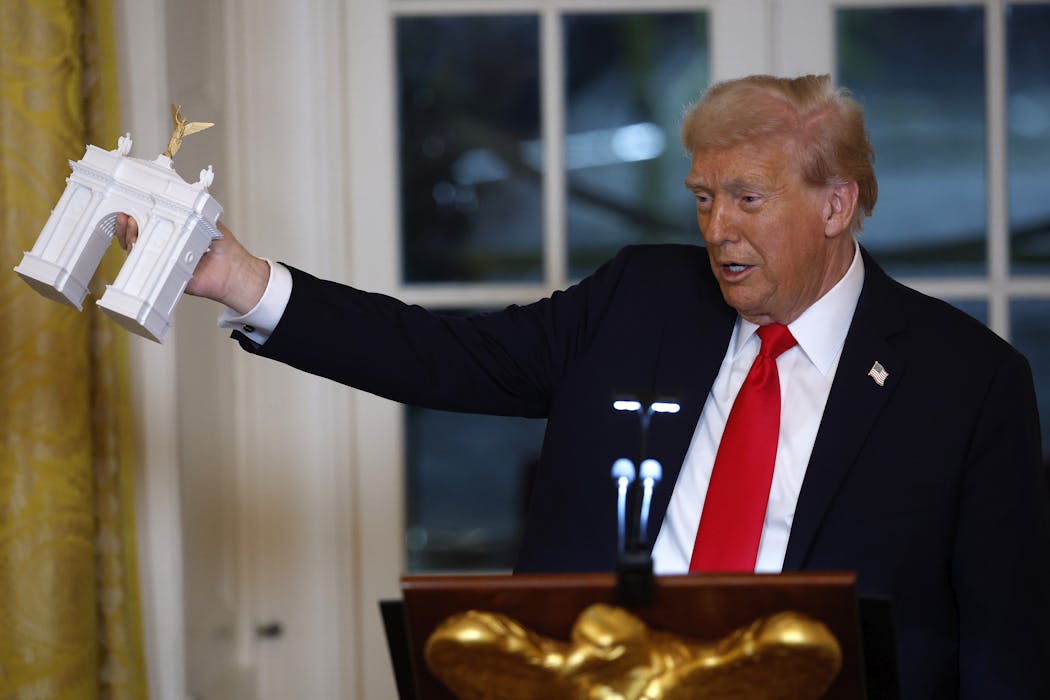
Donald Trump a pris le temps cette semaine, alors que l’actualité internationale et américaine était particulièrement chargée, de présenter trois nouvelles propositions architecturales pour son projet d’« Independence Arch » à Washington. Les trois rendus rappellent clairement l’Arc de triomphe de la place de l’Étoile à Paris, même si l’un d’eux se distingue par des ornements dorés, dans la lignée des choix décoratifs de Trump pour le Bureau ovale de la Maison-Blanche.

Commandée en vue du 250ᵉ anniversaire de la signature de la Déclaration d’indépendance des États-Unis, le 4 juillet, cet arc de triomphe s’inscrit dans une longue tradition de monuments célébrant les victoires militaires, des empereurs romains à Napoléon Bonaparte.

Ce projet de monument participe ainsi pleinement de la politique étrangère de Donald Trump et de l’ambition qu’affiche ce dernier de voir les États-Unis étendre leur contrôle sur l’« hémisphère occidental » – une orientation que le président a lui-même baptisée la « doctrine Donroe ».

Mais une question demeure, largement posée : alors que le projet copie l’Arc de triomphe, monument emblématique s’il en est, un hommage personnel est-il vraiment la manière la plus pertinente de marquer l’anniversaire de la rupture des États-Unis avec le pouvoir absolu et la monarchie britannique ?

L’« Arc de Trump »

Lorsque Donald Trump a présenté pour la première fois, en octobre 2025, des maquettes de l’arche envisagée, un journaliste lui a demandé à qui elle était destinée. Trump a répondu : « À moi. Ce sera magnifique. » Dans une déclaration faite en décembre, le président a affirmé que la nouvelle arche « sera comme celle de Paris, mais pour être honnête avec vous, elle la surpasse. Elle la surpasse à tous les niveaux ».

Une exception toutefois, a-t-il précisé :

« La seule chose qu’ils ont, c’est l’histoire […] Je dis toujours que c’est la seule chose avec laquelle on ne peut pas rivaliser, mais nous finirons par avoir cette histoire nous aussi. »

Le président est manifestement convaincu que son arche contribuera à forger cette histoire. « C’est la seule ville au monde d’une telle importance qui ne possède pas d’arc de triomphe », a-t-il déclaré à propos de Washington, DC.

Prévue à proximité du cimetière national d’Arlington et du Lincoln Memorial, l’implantation placerait la nouvelle structure en dialogue visuel avec plusieurs des monuments les plus emblématiques de la capitale fédérale.

Le projet s’inscrit par ailleurs dans une série d’initiatives destinées à laisser l’empreinte de Donald Trump sur le paysage bâti de Washington : les transformations apportées à la Maison-Blanche l’an dernier, avec notamment la minéralisation du célèbre Rose Garden, la décoration du Bureau ovale dans un style rococo doré, ou encore la démolition de l’East Wing pour permettre une extension de la salle de bal estimée à 400 millions de dollars (334,5 millions d’euros).

Surnommé l’« Arc de Trump », le projet est désormais la « priorité absolue » de Vince Haley, directeur du Conseil de politique intérieure de la Maison-Blanche.

Triomphe et architecture

L’Arc de triomphe de Paris, situé au sommet des Champs-Élysées, est une commande de Napoléon Bonaparte (1804-1814/1815) en 1806 pour honorer l’armée impériale française après sa victoire à la bataille d’Austerlitz (2 décembre 1805). Il ne sera achevé qu’en 1836, sous la Restauration et le règne de Louis-Philippe (1830-1848), dernier roi de France.

Les architectes du projet, Jean-François Chalgrin et Jean-Arnaud Raymond, se sont inspirés des arcs antiques, en prenant pour modèle principal l’arc de Titus à Rome (vers 85 de notre ère). Celui-ci fut érigé par l’empereur Domitien (51–96 de notre ère), tyran cruel et ostentatoire, populaire auprès du peuple mais en conflit permanent avec le Sénat, dont il avait restreint le pouvoir législatif. L’arc fut commandé par Domitien pour célébrer à la fois l’apothéose de son frère Titus et sa victoire militaire contre la rébellion en Judée.

Par ses références, l’arche proposée par Trump ne renvoie à aucun élément de conception spécifiquement américain. Son style néoclassique s’inscrit en revanche dans la continuité de monuments plus anciens, eux aussi inspirés de l’Antiquité.

Le Washington Monument, par exemple, adopte la forme d’un obélisque égyptien. Ce pilier à quatre faces, qui s’amincit en s’élevant et se termine par une pyramide, rend hommage au dieu solaire Rê. Mais il intégrait aussi un élément destiné à symboliser les avancées technologiques et l’esprit d’innovation américains : un pyramidion en aluminium. Lorsque l’obélisque a été achevé en 1884, l’aluminium était un matériau rare, le procédé permettant de le raffiner n’étant pas encore maîtrisé. Le sommet du monument constituait alors la plus grande pièce d’aluminium moulé au monde.

Un combat de valeurs

L’arc de triomphe voulu par Trump s’inscrit dans un débat de longue date sur les monuments publics et sur ce qu’ils disent des valeurs qu’une société choisit de mettre en avant.

Ainsi, pendant le mouvement Black Lives Matter, de nombreuses statues de figures historiques ont été retirées de l’espace public, car elles étaient perçues comme glorifiant le racisme et l’impérialisme. Donald Trump a depuis fait remettre en place au moins une statue confédérée renversée à cette période, et son ambition d’ériger un monument à sa propre personne ne saurait donc surprendre.

Sous le régime des lois Jim Crow (1877, abrogées en 1964), qui ont institutionnalisé la ségrégation raciale, puis durant le mouvement des droits civiques, le nombre de monuments consacrés aux soldats et aux généraux confédérés a connu une nette hausse.

De la même façon que le déboulonnage de ces statues relevait d’un geste politique, l’érection d’un nouveau mémorial destiné à promouvoir la lecture positive que Trump propose de l’histoire nationale en constitue un autre. Le projet s’intègre d’ailleurs dans la mission revendiquée par son administration de « restaurer la vérité et la raison dans l’histoire américaine ».

Reste une question plus immédiate : l’Independence Arch pourra-t-il seulement voir le jour d’ici au 4 juillet, jour de la fête nationale ? Un défi de taille, même pour ce président. Quant à son accueil, l’histoire tranchera.

The Conversation

Garritt C. Van Dyk a reçu des financements du Getty Research Institute.

ref. Une ambition monumentale… Pourquoi Donald Trump veut-il créer à Washington une copie de l’Arc de triomphe ? – https://theconversation.com/une-ambition-monumentale-pourquoi-donald-trump-veut-il-creer-a-washington-une-copie-de-larc-de-triomphe-274636
«Rendre la liberté académique plus solide…» Stéphanie Balme est l’invitée de notre émission « La grande conversation »

Source: The Conversation – France in French (3) – By Laurent Bainier, Directeur de la rédaction The Conversation France, The Conversation

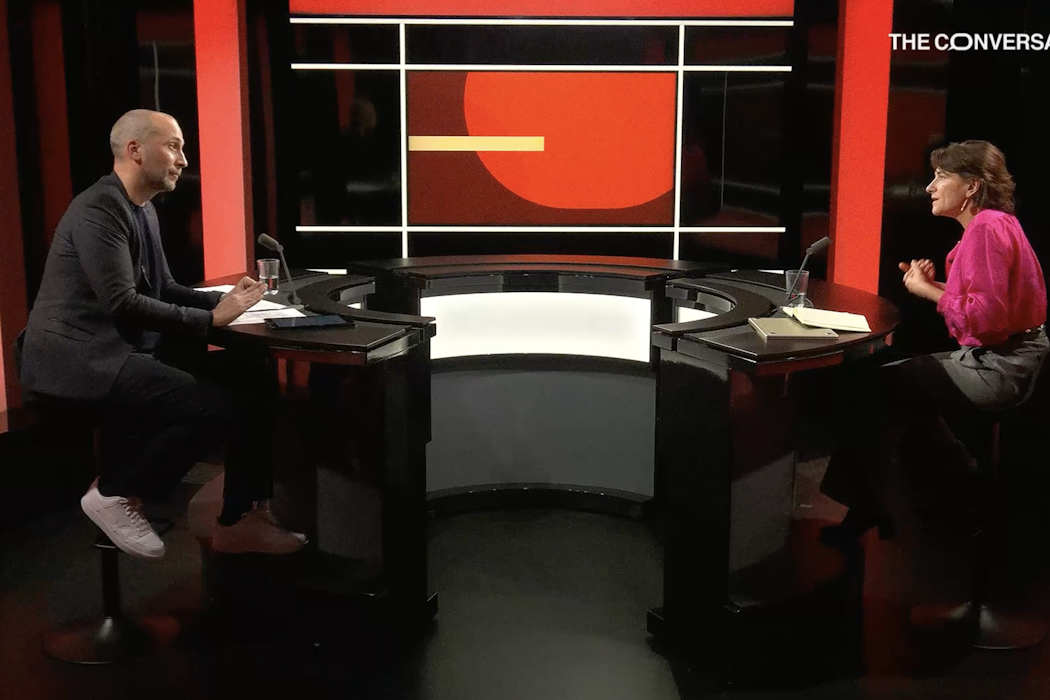
Stéphanie Balme (Sciences Po), rédactrice d’un rapport sur la liberté académique pour France Universités, était l’invitée de l’émission de The Conversation et CanalChatGrandialogue vendredi 23 janvier 2026. TheConversation, CC BY

Elle a rédigé le rapport « Défendre et promouvoir la liberté académique », commandé par France Universités. Stéphanie Balme, directrice du Centre de recherches internationales de Sciences Po et experte de la diplomatie scientifique, était l’invitée vendredi 23 janvier de notre émission « La Grande Conversation », en partenariat avec CanalChat Grandialogue.

La liberté académique est aujourd’hui confrontée à des tensions inédites : pressions politiques, restrictions budgétaires, ingérences étrangères et remise en question des principes d’indépendance scientifique. Ces enjeux, qui touchent les chercheurs et les institutions en France comme à l’international, interrogent notre capacité à produire un savoir libre et critique.

Lors de cette émission, nous abordons avec Stéphanie Balme, rédactrice du rapport« Défendre et promouvoir la liberté académique », le rôle des institutions et des politiques publiques pour la protéger. Quelles mesures prendre pour assurer sa défense? Comment répondre aux critiques récurrentes d’une partie de l’opinion publique? Quelles leçons tirer de ce qui se passe sur les campus américains ? Une émission à retrouver sur notre chaîne YouTube.

L’émission Conversation avec Stéphanie Balme, le 23 janvier 2026.

The Conversation

ref. «Rendre la liberté académique plus solide…» Stéphanie Balme est l’invitée de notre émission « La grande conversation » – https://theconversation.com/rendre-la-liberte-academique-plus-solide-stephanie-balme-est-linvitee-de-notre-emission-la-grande-conversation-274638

Submarine mountains and long-distance waves stir the deepest parts of the ocean

Source: The Conversation – Global Perspectives – By Jessica Kolbusz, Research Fellow, School of Biological Sciences, The University of Western Australia

NOAA Office of Ocean Exploration and Research, 2019 Southeastern U.S. Deep-sea Exploration

When most of us look out at the ocean, we see a mostly flat blue surface stretching to the horizon. It’s easy to imagine the sea beneath as calm and largely static – a massive, still abyss far removed from everyday experience.

But the ocean is layered, dynamic and constantly moving, from the surface down to the deepest seafloor. While waves, tides and currents near the coast are familiar and accessible, far less is known about what happens several kilometres below, where the ocean meets the seafloor.

Our new research, published in the journal Ocean Science, shows water near the the seafloor is in constant motion, even in the abyssal plains of the Pacific Ocean. This has important consequences for climate, ecosystems and how we understand the ocean as an interconnected system.

Enter the abyss

The central and eastern Pacific Ocean include some of Earth’s largest abyssal regions (places where the sea is more than 3,000 metres deep). Here, most of the seafloor lies four to six kilometres below the surface. It is shaped by vast abyssal plains, fracture zones and seamounts.

It is cold and dark, and the water and ecosystems here are under immense pressure from the ocean above.

Just above the seafloor, no matter the depth, sits a region known as the bottom mixed layer. This part of the ocean is relatively uniform in temperature, salinity and density because it is stirred through contact with the seafloor.

Rather than a thin boundary, this layer can extend from tens to hundreds of metres above the seabed. It plays a crucial role in the movement of heat, nutrients and sediments between the pelagic ocean and the seabed, including the beginning of the slow return of water from the bottom of the ocean toward the surface as part of global ocean circulation.

Observations focused on the bottom mixed layer are rare, but this is beginning to change. Most ocean measurements focus on the upper few kilometres, and deep observations are scarce, expensive and often decades apart.

In the Pacific especially, scientists have long known that cold Antarctic waters flow northward, along topographic features such as the Tonga-Kermadec Ridge and the Izu-Ogasawara and Japan Trenches.

But the finer details of how these waters interact with seafloor features in ways that intermittently stir and reshape the bottom layer of the ocean has remained largely unknown.

A bright pink, soft coral attached to a grey seafloor mount.
Deep sea ecosystems are under immense pressure from the ocean above.
NOAA Photo Library

Investigating the abyss

To investigate the Pacific abyssal ocean, my colleagues and I combined new surface-to-seafloor measurements collected during a trans-Pacific expedition with high-quality repeat data about the physical features of the ocean gathered over the past two decades.

These observations allowed us to examine temperature and pressure all the way down to the seafloor over a wide range of latitudes and longitudes.

We then compared multiple scientific methods for identifying the bottom mixed layer and used machine learning techniques to understand what factors best explain the variations in its thickness.

Rather than being a uniform layer, we found the bottom mixed layer in the abyssal Pacific varies dramatically. In some regions it was less than 100m thick; in others it exceeded 700m.

This variability is not random; it’s controlled by the seafloor depth and the interactions between waves generated by surface tides and rough landscapes on the seabed.

In other words, the deepest ocean is not quietly stagnant as is often imagined. It is continually stirred by remote forces, shaped by seafloor features, and dynamically connected to the rest of the ocean above.

Just as coastal waters are shaped by waves, currents and sediment movement, the abyssal ocean is shaped by its own set of drivers. However, it is operating over larger distances and longer timescales.

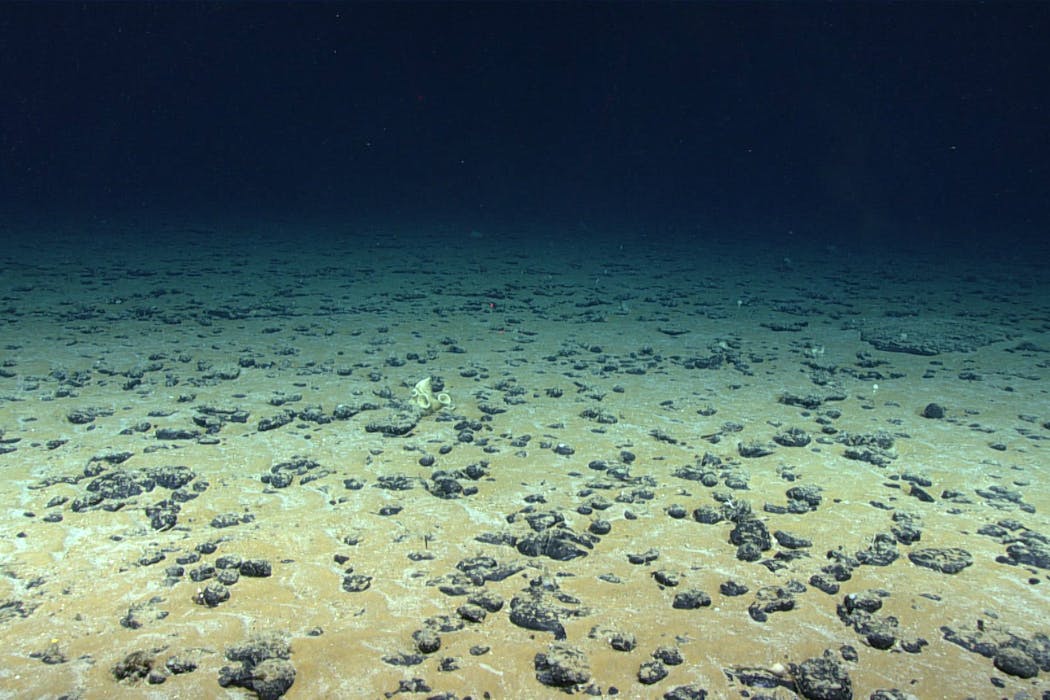
Underwater mounts on the seafloor covered in gold minerals.
Topographic features of the seafloor intermittently stir and reshape the bottom layer of the ocean.
NOAA Photo Library

Connected to the rest of the world

This matters for several reasons.

First, the bottom mixed layer influences how heat is stored and redistributed in the ocean, affecting long-term climate change. Some ocean and climate models still simplify seabed mixing, which can lead to errors in how future climate is projected.

Second, it plays a role in transporting sediment and seabed ecosystems. As interest grows in deep-sea mining and other activities on the high seas, understanding how the seafloor environment changes, and importantly how seafloor disturbances might spread, becomes increasingly important.

Our results highlight how little of the deep ocean we actually observe.

Large areas of the abyssal Pacific remain effectively unsampled, even as international agreements such as the new UN High Seas Treaty seek to manage and protect these regions.

The deep ocean is not a silent, static place. It is active, connected to the oceans above and changing. If we want to make informed decisions about the future of the high seas, we need to understand what’s happening at the very bottom in space and time.

The Conversation

Jessica Kolbusz receives funding from the marine research organisation Inkfish LLC. The funder was not involved in the study design, collection, analysis, interpretation of data, the writing of this article, or the decision to submit it for publication.

ref. Submarine mountains and long-distance waves stir the deepest parts of the ocean – https://theconversation.com/submarine-mountains-and-long-distance-waves-stir-the-deepest-parts-of-the-ocean-274124

What the ‘mother of all deals’ between India and the EU means for global trade

Source: The Conversation – Global Perspectives – By Peter Draper, Professor, and Executive Director: Institute for International Trade, and Director of the Jean Monnet Centre of Trade and Environment, Adelaide University

The “mother of all deals”: that’s how European Commission President Ursula von der Leyen described the new free trade agreement between the European Union and India, announced on Tuesday after about two decades of negotiations.

The deal will affect a combined population of 2 billion people across economies representing about a quarter of global GDP.

Speaking in New Delhi, von der Leyen characterised the agreement as a “tale of two giants” who “choose partnership, in a true win-win fashion”.

So, what have both sides agreed to – and why does it matter so much for global trade?

What has been agreed

Under this agreement, tariffs on 96.6% of EU goods exported to India will be eliminated or reduced. This will reportedly mean savings of approximately €4 billion (about A$6.8 billion) annually in customs duties on European products.

The automotive sector is the big winner. European carmakers – including Volkswagen, BMW, Mercedes-Benz and Renault – will see tariffs on their vehicles gradually reduced from the current punitive rate of 110% to as little as 10%.

The reduced tariffs will apply to an annual quota of 250,000 vehicles, which is six times larger than the quota the UK received in its deal with India.

To protect India’s domestic manufacturers, European cars priced below €15,000 (A$25,500) will face higher tariffs, while electric vehicles get a five-year grace period.

India will almost entirely eliminate tariffs on machinery (which previously faced rates up to 44%), chemicals (22%) and pharmaceuticals (11%).

Wine is particularly notable – tariffs are being slashed from 150% to between 20–30% for medium and premium varieties. Spirits face cuts from 150% to 40%.

In return, the EU is also opening up its market. It will reduce tariffs on 99.5% of goods imported from India. EU tariffs on Indian marine products (such as shrimp), leather goods, textiles, handicrafts, gems and jewellery, plastics and toys will be eliminated.

These are labour-intensive sectors where India has genuine competitive advantage. Indian exporters in marine products, textiles and gems have faced tough conditions in recent years, partly due to US tariff pressures. That makes this EU access particularly valuable.

What’s been left out

This deal, while ambitious by India standards, has limits. It explicitly excludes deeper policy harmonisation on several fronts. Perhaps most significantly, the deal doesn’t include comprehensive provisions on labour rights, environmental standards or climate commitments.

While there are references to carbon border adjustment mechanisms (by which the EU imposes its domestic carbon price on imports into their common market), these likely fall short of enforceable environmental standards increasingly common in EU deals.

And the deal keeps protections for sensitive sectors in Europe: the EU maintains tariffs on beef, chicken, dairy, rice and sugar. Consumers in Delhi might enjoy cheaper European cars, while Europe’s farmers are protected from competition.

An auction takes place at a busy seafood market.
India’s seafood exporters stand to benefit from the deal.
Elke Scholiers/Getty

Why now?

Three forces converged to make this deal happen. First, a growing need to diversify from traditional partners amid economic uncertainty.

Second, the Donald Trump factor. Both the EU and India currently face significant US tariffs: India faces a 50% tariff on goods, while the EU faces headline tariffs of 15% (and recently avoided more in Trump’s threats over Greenland). This deal provides an alternative market for both sides.

And third, there’s what economists call “trade diversion” – notably, when Chinese products are diverted to other markets after the US closes its doors to them.

Both the EU and India want to avoid becoming dumping grounds for products that would normally go to the American market.

A dealmaking spree

The EU has been on something of a dealmaking spree recently. Earlier this month, it signed an agreement with Mercosur, a South American trade bloc.

That deal, however, has hit complications. On January 21, the European Parliament voted to refer it to the EU Court of Justice for legal review, which could delay ratification.

This creates a cautionary tale for the India deal. The legal uncertainty around Mercosur shows how well-intentioned trade deals can face obstacles.

The EU also finalised negotiations with Indonesia in September; EU–Indonesia trade was valued at €27 billion in 2024 (about A$46 billion).

For India, this deal with the EU is considerably bigger than recent agreements with New Zealand, Oman and the UK. It positions India as a diversified trading nation pursuing multiple partnerships.

However, the EU–India trade deal should be understood not as a purely commercial breakthrough, but also as a strategic signal — aimed primarily at the US.

In effect, it communicates that even close allies will actively seek alternative economic partners when faced with the threat of economic coercion or politicised trade pressure.

This interpretation is reinforced by both the deal’s timing and how it was announced. The announcement came even though key details still need to be negotiated and there remains some distance to go before final ratification.

That suggests the immediate objective was to deliver a message: the EU has options, and it will use them.

What does this mean for Australia and India?

For Australians, this deal matters more than you might think. Australia already has the Australia-India Economic Cooperation and Trade Agreement, which came into force in late 2022.

Australia has eliminated tariffs on all Indian exports, while India has removed duties on 90% of Australian goods by value, rising from an original commitment of 85%.

This EU-India deal should provide impetus for Australia and India to finalise their more comprehensive Comprehensive Economic Cooperation Agreement, under negotiation since 2023.

The 11th round of negotiations took place in August, covering goods, services, digital trade, rules of origin, and – importantly – labour and environmental standards.

The EU deal suggests India is willing to engage seriously on tariff liberalisation. However, it remains to be seen whether that appetite will transfer to the newer issues increasingly central to global trade, notably those Australia is now trying to secure with Indian negotiators.

Chasing an Australia-EU deal

Australia should take heart from the EU’s success in building alternative trading relationships.

This should encourage negotiators still pursuing an EU–Australia free trade agreement, negotiations for which were renewed last June after collapsing in 2023.

These deals signal something important about the global trading system: countries are adapting to American protectionism not by becoming protectionist themselves, but by deepening partnerships with each other.

The world’s democracies are saying they want to trade, invest, and cooperate on rules-based terms.

The Conversation

Nathan Howard Gray receives funding from Department of Foreign Affairs and Trade.

Mandar Oak and Peter Draper do not work for, consult, own shares in or receive funding from any company or organisation that would benefit from this article, and have disclosed no relevant affiliations beyond their academic appointment.

ref. What the ‘mother of all deals’ between India and the EU means for global trade – https://theconversation.com/what-the-mother-of-all-deals-between-india-and-the-eu-means-for-global-trade-274515

Monumental ambitions: the history behind Trump’s triumphal arch

Source: The Conversation – Global Perspectives – By Garritt C. Van Dyk, Senior Lecturer in History, University of Waikato

Getty Images

Donald Trump took time out this week from dramatic events at home and abroad to reveal three new design concepts for his proposed “Independence Arch” in Washington DC.

All three renderings resemble the famous Arc de Triomphe in Paris, although one features gilded livery not unlike Trump’s chosen adornments to the Oval Office in the White House.

Commissioned in preparation for the 250th anniversary of the signing of the Declaration of Independence on July 4, the triumphal arch draws on a long history of celebrating military conquest, from Roman emperors to Napoleon Bonaparte.

As such, it aligns seamlessly with Trump’s foreign policy and his stated mission for the United States to control the western hemisphere – as he has dubbed it, the “Donroe Doctrine”.

But as many have been asking, while the design is a copy of an iconic monument, is a personal tribute necessarily the best way to mark the anniversary of America’s break with absolute rule and the British monarchy?

The ‘Arc de Trump’

When Trump first displayed models of the proposed arch last October, a reporter asked him who it was for. Trump replied “Me. It’s going to be beautiful.”

In a December update, the president said the new arch “will be like the one in Paris, but to be honest with you, it blows it away. It blows it away in every way.”

There was one exception, he noted: “The only thing they have is history […] I always say [it’s] the one thing you can’t compete with, but eventually we’ll have that history too.”

The president clearly believes his arch will be part of creating that history. “It’s the only city in the world that’s of great importance that doesn’t have a triumphal arch,” he said of Washington DC.

Set to be located near Arlington National Cemetery and the Lincoln Memorial, the site would put the new structure in a visual conversation with many of the most famous landmarks in the national capital.

This also aligns with other projects that will leave Trump’s mark on the physical fabric of Washington: changes to the White House last year that included paving over the famous Rose Garden, decorating the Oval Office in rococo gold, and demolishing the East Wing for a US$400 million ballroom extension.

The “Arc de Trump” (as it has been branded) is now the “top priority” for Vince Haley, the director of the Domestic Policy Council for the White House.

Triumph and design

The Arc de Triomphe in Paris, located at the top of the Champs-Élysées, was commissioned by Napoleon Bonaparte in 1806 to honour the French imperial army following his victory at the Battle of Austerlitz. It was not finished until 1836, under the reign of King Louis Philippe I.

Architects for the project, Jean-François Thérèse Chalgrin and Jean-Arnaud Raymond, drew on classical arches for inspiration, with Rome’s Arch of Titus (circa 85 CE) as the main source. It was built by Emperor Domitian (51–96 CE), a cruel and ostentatious tyrant who was popular with the people but battled with the Senate and limited its power to make laws.

Domitian commissioned the arch to commemorate the deification of his brother Titus, and his military victory crushing the rebellion in Judea.

Given its inspiration, Trump’s proposed arch doesn’t reference any uniquely American design features. But the neoclassical style recalls earlier monuments that also reference antiquity.

The Washington Monument, for example, is built in the form of an Egyptian obelisk. A four-sided pillar, it tapers as it rises and is topped with a pyramid, a tribute to the sun god Ra.

But it also incorporated an element that was meant to symbolise American technological advancement and innovation – a pyramid cap made of aluminium.

When the obelisk was completed in 1884, aluminium was rare because the process for refining it had not been perfected. The top of the monument was the largest piece of cast aluminium on the planet at that time.

‘Truth and sanity’

Trump’s triumphal arch is likely destined to join a long debate about the merits of public monuments and what they represent.

During the Black Lives Matter movement, many statues of historical figures were removed from public display because they were seen as celebrations of racism and imperialism.

Trump has since restored at least one Confederate statue toppled during that time, and his desire to add a new monument to himself should come as little surprise.

During the Jim Crow era of racial segregation and throughout the civil rights movement, there was a sharp spike in the number of monuments erected to Confederate soldiers and generals.

Just as tearing down those statues was a statement, so is the creation of a new memorial to promote Trump’s positive interpretation of the nation’s past. It is also consistent with his administration’s declared mission of “restoring truth and sanity to American history”.

Maybe the more immediate question is whether the Independence Arch can even be built by Independence Day on July 4, a tall order even for this president. As for its reception, history will have to be the judge.

The Conversation

Garritt C. Van Dyk has received funding from the Getty Research Institute.

ref. Monumental ambitions: the history behind Trump’s triumphal arch – https://theconversation.com/monumental-ambitions-the-history-behind-trumps-triumphal-arch-273567

ICE not only looks and acts like a paramilitary force – it is one, and that makes it harder to curb

Source: The Conversation – USA – By Erica De Bruin, Associate Professor of Government, Hamilton College

As the operations of Immigration and Customs Enforcement have intensified over the past year, politicians and journalists alike have begun referring to ICE as a “paramilitary force.”

Rep. John Mannion, a New York Democrat, called ICE “a personal paramilitary unit of the president.” Journalist Radley Balko, who wrote a book about how American police forces have been militarized, has argued that President Donald Trump was using the force “the way an authoritarian uses a paramilitary force, to carry out his own personal grudges, to inflict pain and violence, and discomfort on people that he sees as his political enemies.” And New York Times columnist Jamelle Bouie characterized ICE as a “virtual secret police” and “paramilitary enforcer of despotic rule.”

All this raises a couple of questions: What are paramilitaries? And is ICE one?

Defining paramilitaries

As a government professor who studies policing and state security forces, I believe it’s clear that ICE meets many but not all of the most salient definitions. It’s worth exploring what those are and how the administration’s use of ICE compares with the ways paramilitaries have been deployed in other countries.

The term paramilitary is commonly used in two ways. The first refers to highly militarized police forces, which are an official part of a nation’s security forces. They typically have access to military-grade weaponry and equipment, are highly centralized with a hierarchical command structure, and deploy in large formed units to carry out domestic policing.

These “paramilitary police,” such as the French Gendarmerie, India’s Central Reserve Police Force or Russia’s Internal Troops, are modeled on regular military forces.

The second definition denotes less formal and often more partisan armed groups that operate outside of the state’s regular security sector. Sometimes these groups, as with the United Self-Defense Forces of Colombia, emerge out of community self-defense efforts; in other cases, they are established by the government or receive government support, even though they lack official status. Political scientists also call these groups “pro-government militias” in order to convey both their political orientation in support of the government and less formal status as an irregular force.

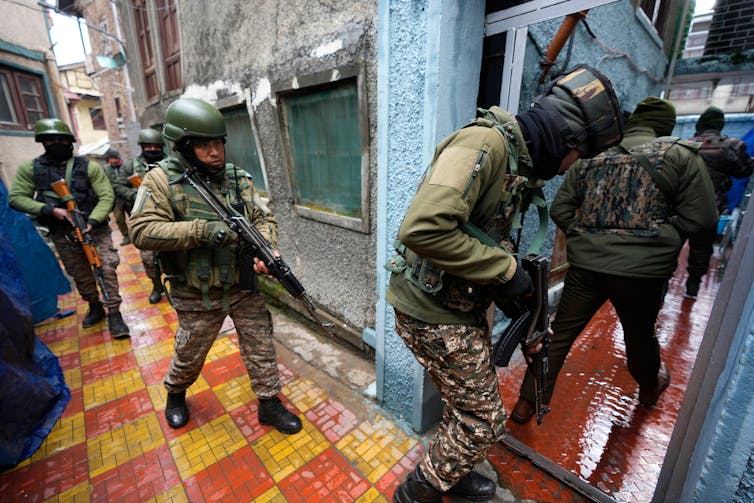
Heavily armed and masked security personnel enter a home.
Indian paramilitary personnel conduct a house-to-house search in Kashmir.
AP Photo/Mukhtar Khan

They typically receive less training than regular state forces, if any. How well equipped they are can vary a great deal. Leaders may turn to these informal or unofficial paramilitaries because they are less expensive than regular forces, or because they can help them evade accountability for violent repression.

Many informal paramilitaries are engaged in regime maintenance, meaning they preserve the power of current rulers through repression of political opponents and the broader public. They may share partisan affiliations or ethnic ties with prominent political leaders or the incumbent political party and work in tandem to carry out political goals.

In Haiti, President François “Papa Doc” Duvalier’s Tonton Macouts provided a prime example of this second type of paramilitary. After Duvalier survived a coup attempt in 1970, he established the Tonton Macouts as a paramilitary counterweight to the regular military. Initially a ragtag, undisciplined but highly loyal force, it became the central instrument through which the Duvalier regime carried out political repression, surveilling, harassing, detaining, torturing and killing ordinary Haitians.

Is ICE a paramilitary?

The recent references to ICE in the U.S. as a “paramilitary force” are using the term in both senses, viewing the agency as both a militarized police force and tool for repression.

There is no question that ICE fits the definition of a paramilitary police force. It is a police force under the control of the federal government, through the Department of Homeland Security, and it is heavily militarized, having adopted the weaponry, organization, operational patterns and cultural markers of the regular military. Some other federal forces, such as Customs and Border Patrol, or CBP, also fit this definition.

The data I have collected on state security forces show that approximately 30% of countries have paramilitary police forces at the federal or national level, while more than 80% have smaller militarized units akin to SWAT teams within otherwise civilian police.

The United States is nearly alone among established democracies in creating a new paramilitary police force in recent decades. Indeed, the creation of ICE in the U.S. following the terrorist attacks of Sept. 11, 2001, is one of just four instances I’ve found since 1960 where a democratic country created a new paramilitary police force, the others being Honduras, Brazil and Nigeria.

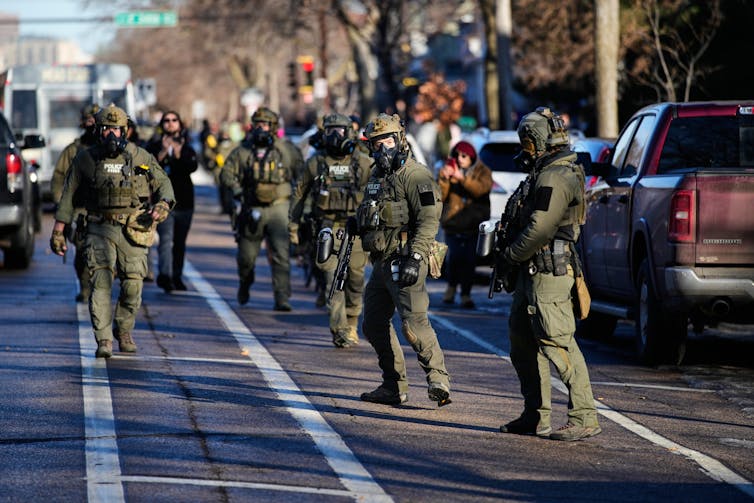
A group of uniformed ICE personnel walk along cars in a bike lane.
ICE agents on patrol near the scene of the fatal shooting of Renee Good in Minneapolis.
AP Photo/John Locher

ICE and CBP also have some, though not all, of the characteristics of a paramilitary in the second sense of the term, referring to forces as repressive political agents. These forces are not informal; they are official agents of the state. However, their officers are less professional, receive less oversight and are operating in more overtly political ways than is typical of both regular military forces and local police in the United States.

The lack of professionalism predates the current administration. In 2014, for instance, CBP’s head of internal affairs described the lowering of standards for post-9/11 expansion as leading to the recruitment of thousands of officers “potentially unfit to carry a badge and gun.”

This problem has only been exacerbated by the rapid expansion undertaken by the Trump administration. ICE has added approximately 12,000 new recruits – more than doubling its size in less than a year – while substantially cutting the length of the training they receive.

ICE and CBP are not subject to the same constitutional restrictions that apply to other law enforcement agencies, such as the Fourth Amendment’s prohibition on unreasonable search and seizure; both have gained exemptions from oversight intended to hold officers accountable for excessive force. CBP regulations, for instance, allow it to search and seize people’s property without a warrant or the “probable cause” requirement imposed on other forces within 100 miles, or about 161 kilometers, of the border.

In terms of partisan affiliations, Trump has cultivated immigration security forces as political allies, an effort that appears to have been successful. In 2016, the union that represents ICE officers endorsed Trump’s campaign with support from more than 95% of its voting members. Today, ICE recruitment efforts increasingly rely on far-right messaging to appeal to political supporters.

Both ICE and CBP have been deployed against political opponents in nonimmigration contexts, including Black Lives Matter protests in Washington, D.C., and Portland, Oregon, in 2020. They have also gathered data, according to political scientist Elizabeth F. Cohen, to “surveil citizens’ political beliefs and activities – including protest actions they have taken on issues as far afield as gun control – in addition to immigrants’ rights.”

In these ways, ICE and CBP do bear some resemblance to the informal paramilitaries used in many countries to carry out political repression along partisan and ethnic lines, even though they are official agents of the state.

Why this matters

An extensive body of research shows that more militarized forms of policing are associated with higher rates of police violence and rights violations, without reducing crime or improving officer safety.

Studies have also found that more militarized police forces are harder to reform than less-militarized law enforcement agencies. The use of such forces can also create tensions with both the regular military and civilian police, as currently appears to be happening with ICE in Minneapolis.

The ways in which federal immigration forces in the United States resemble informal paramilitaries in other countries – operating with less effective oversight, less competent recruits and increasingly entrenched partisan identity – make all these issues more intractable. Which is why, I believe, many commentators have surfaced the term paramilitary and are using it as a warning.

The Conversation

Erica De Bruin does not work for, consult, own shares in or receive funding from any company or organization that would benefit from this article, and has disclosed no relevant affiliations beyond their academic appointment.

ref. ICE not only looks and acts like a paramilitary force – it is one, and that makes it harder to curb – https://theconversation.com/ice-not-only-looks-and-acts-like-a-paramilitary-force-it-is-one-and-that-makes-it-harder-to-curb-274580

Un asno que viene y va: el reiterado error de Cervantes en el ‘Quijote’

Source: The Conversation – (in Spanish) – By Pedro Fresno Chamorro, Doctorando en Literatura Española, Universidad de Jaén

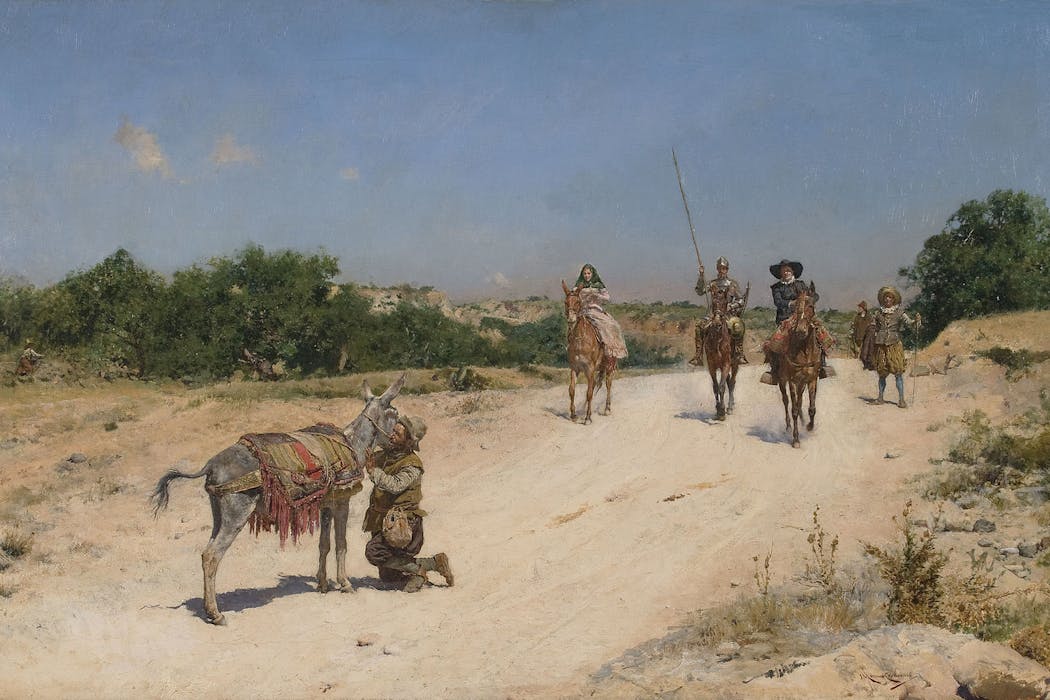
_El encuentro del rucio_, de José Moreno Carbonero. Museo del Prado/Wikimedia Commons

En 1604 Juan de la Cuesta finalizó la impresión (con fecha de 1605) de El ingenioso hidalgo don Quijote de la Mancha, primera parte de la obra más relevante de nuestra literatura. Eran 46 capítulos en los que se narraba el inicio de las aventuras de Alonso Quijano y su fiel escudero Sancho.

Al imaginar al lector de entonces, sacudido por esas páginas, le veo pensando:

“Sancho, pobre y desdichado Sancho, fiel reflejo del hombre común, acostumbrado a perder cosas sin siquiera ser consciente de ello. Por Sierra Morena andabas en el capítulo 25, al pie de una alta montaña, cerca de un arroyuelo que recorría un verde prado, entre árboles silvestres y dulces flores. ‘Este es el lugar, ¡oh cielos!, que diputo y escojo para llorar la desventura en que vosotros mesmos me habéis puesto’, gritó sin juicio tu señor don Quijote, desdichado amante el de la Triste Figura que había decidido hacer allí penitencia de amor por su Dulcinea.

A pie de esta montaña llegaste, Sancho, a lomos de tu rucio, pero ahora, sin comerlo ni beberlo, se ha perdido o lo han robado. ¿Cómo lo explicas? ¿Cómo no lloras, Sancho? ¿Cómo no te lamentas hasta la desesperación? ¿O es que acaso ya lo has hecho y nosotros no lo sabemos? Caso extraño que, igual que desaparece, vuelve a aparecer en el capítulo 46 cuando tu señor te pide que ensilles a Rocinante y aparejes tu jumento”.

Dibujo de un hombre robando un burro.
El galeote Ginés de Pasamonte roba el asno de Sancho.
Cervantes Virtual/Gonzalo Bilbao Martínez para la edición 1905-1908, Madrid, El ingenioso hidalgo Don Quijote de la Mancha (R. L. Cabrera)

Así es. El asno de Sancho desaparece en el capítulo 25 y reaparece ya en el 46, sin explicación ni motivo patente. La anomalía no podía ser sino un error del autor, y esto lleva a Cervantes a publicar, ese mismo año de 1605, una segunda edición. En ella interpola dos pasajes, uno en el capítulo 23, en el que se narra el robo del rucio a manos de uno de los galeotes liberados por don Quijote anteriormente, y otro en el capítulo 30, donde Sancho cuenta cómo recupera su burro.

Sin embargo, esta tentativa de enmienda resultaría poco efectiva, pues la narración del robo se inserta dos capítulos antes de que el pollino aparezca referido por última vez.

Lectores, chistes y una tercera edición de 1608

El error doble (primero olvidar y después fallar en la enmienda) le iba a costar a Cervantes más de una burla por parte de sus contemporáneos. Lope de Vega, fiel rival del alcalaíno, le dedicaría incluso unos versos al asunto en su comedia Amar sin saber a quién:

“Decidnos della, que hay hombre

que hasta de una mula parda

saber el suceso aguarda,

la color, el talle y nombre,

o si no dirán que fue

olvido del escritor”.

La obra se representó por primera vez en 1627 y es bastante posterior a la publicación tanto de la primera parte del Quijote (1605) como de la segunda (1615). Eso indica que el chisme y las mofas debieron extenderse como la pólvora entre los lectores. No sorprende, pues, que Cervantes optara por volver a intentar subsanar el error en una tercera y última impresión de Juan de la Cuesta (1608).

Esta, tal y como ya había hecho de forma acertada la edición de Bruselas de 1607, mantiene la interpolación del robo erróneamente situada en el capítulo 23, pero elimina las alusiones posteriores que generaban inconsistencias.

Tengamos en cuenta entonces que, en cuestión de tres años, los lectores del Quijote pudieron leer tres “versiones” diferentes de la primera parte. La confusión, a pesar de lo baladí que pueda parecer al lector de hoy, no debió ser para nada intrascendente para Cervantes. En la escritura de una segunda parte, el autor tuvo que responder a lectores de una misma y, a la vez, distinta obra.

El Quijote de 1615 y una nueva forma de exculpación

La precipitada segunda parte del Quijote (Cervantes debía replicar con rapidez al malintencionado Quijote apócrifo de Avellaneda publicado en 1614) sale de la imprenta de Juan de la Cuesta en 1615.

Dibujo de un hombre arrodillado ante otro, mientras uno más les mira.
El bachiller Sansón Carrasco con Don Quijote y Sancho Panza.
Jonh Vanderbank /Cervantes Virtual

No tuvo que esperar mucho el lector para encontrarse con la aclaración (siempre jocosa) del asunto del burro por el propio autor. El capítulo 3 sitúa en conversación al bachiller Sansón Carrasco con don Quijote y Sancho. Carrasco cuenta cómo sus aventuras, tras haber sido dadas a la estampa, son ahora conocidas en todo el mundo, y menciona algunos de los errores que sus más fervientes lectores le achacan. Entre ellos, evidentemente, está el del robo del rucio.

Así, en el capítulo siguiente, Cervantes, a través de Sancho, relata de nuevo la historia del robo y su rescate, achacando el error a un engaño del autor ficticio Cide Hamete Benengeli o, con clara intencionalidad de quitarse de encima la responsabilidad, a un descuido del impresor.

Genialidad en el equívoco

En fin, lo que está claro es que el error de Cervantes, doble o triple, es manifiesto e influyó tanto en la recepción como en la propia composición de la obra. De no haber habido faltas (si ello fuese posible) el grandioso Quijote de 1615 habría sido una obra diferente. La novela debe parte de su magnitud a los equívocos, desatenciones, celeridades, disputas y enemistades que implicaban a su autor y que Cervantes quiso subsanar rápidamente en la escritura de la segunda parte.

En este sentido, son muchos los estudiosos de Cervantes que defienden el carácter voluntario de sus descuidos, unas veces a modo de imitación (de Homero, por ejemplo) y otras con un patente tono paródico. Parece claro que el robo del rucio no pertenece a ninguno de estos casos, pero debemos admitir que ha acabado por integrarse en la técnica narrativa de Cervantes como elemento metatextual que influye positivamente en sus creaciones.

¿Qué tendrán los genios, verdad? Que hasta sus yerros terminan por ser brillantes.

The Conversation

Pedro Fresno Chamorro no recibe salario, ni ejerce labores de consultoría, ni posee acciones, ni recibe financiación de ninguna compañía u organización que pueda obtener beneficio de este artículo, y ha declarado carecer de vínculos relevantes más allá del cargo académico citado.

ref. Un asno que viene y va: el reiterado error de Cervantes en el ‘Quijote’ – https://theconversation.com/un-asno-que-viene-y-va-el-reiterado-error-de-cervantes-en-el-quijote-244228

Corrientes de resaca: saber cómo y cuándo se forman puede salvarnos la vida

Source: The Conversation – (in Spanish) – By Deva Menéndez Teleña, Profesora del Departamento de Ciencia y Tecnología Náutica, Universidad de Oviedo

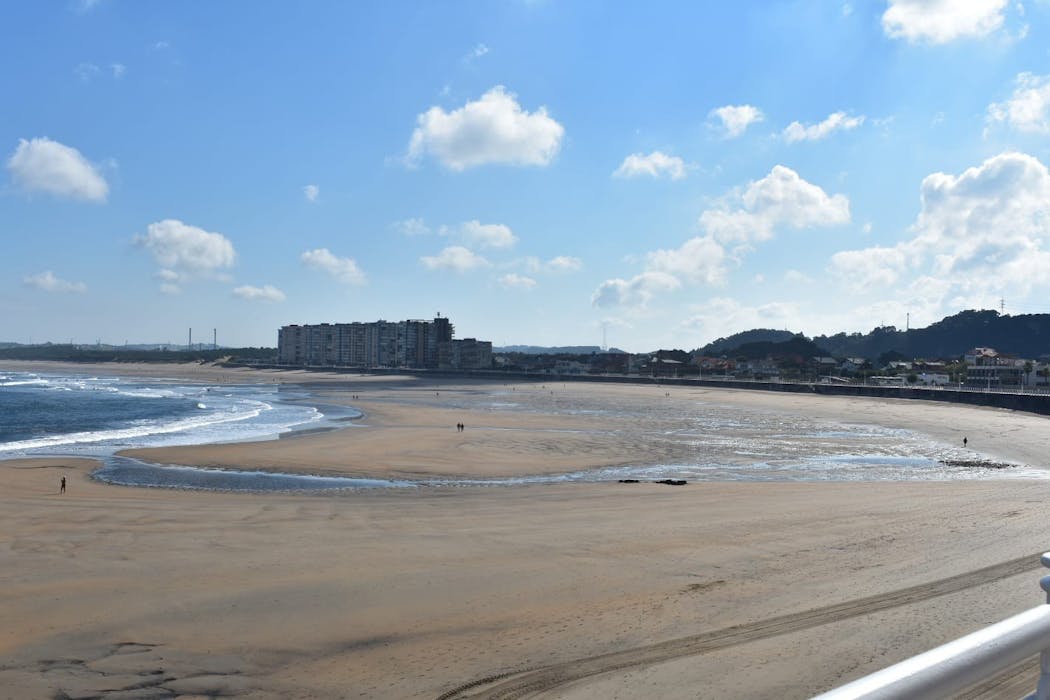
Fotografía de la playa de Salinas, escenario de la investigación llevada a cabo por la Universidad de Oviedo sobre su sistema de corrientes de resaca. En la imagen se distingue una depresión en la zona intermareal, causada por la acción de una de estas corrientes. Aitor Marqués Alonso.

Cada verano, miles de personas disfrutan del mar sin saber que bajo sus pies se esconde una fuerza peligrosa: las corrientes de resaca. Estas corrientes son responsables de más de mil muertes al año en todo el mundo. No se trata de olas gigantes, sino de flujos de agua que pueden empujar mar adentro a quien se cruza en su camino.

Cuando una persona intenta nadar de frente hacia la costa, se fatiga rápidamente. La corriente sigue tirando y el pánico hace el resto. Por eso, comprender cómo y cuándo se forman estas corrientes puede marcar la diferencia entre un baño seguro y una tragedia.

Todo empieza con las olas

Las corrientes de resaca se originan en la zona donde rompen las olas. El oleaje empuja grandes volúmenes de agua hacia la orilla y genera una sobrepresión en la costa. El agua busca, entonces, una vía de escape y regresa al mar formando canales estrechos y veloces que avanzan perpendicularmente a la línea de playa.

Esquema de una corriente de resaca.
Aitor Marqués, adaptado MacMahan et al 2006 doi.org/10.1016/j.coastaleng.2005.10.009

Durante décadas, se pensó que todas las corrientes de resaca eran similares: flujos rectos y concentrados, como se describió en 1941. Sin embargo, investigaciones recientes han demostrado que cada playa tiene su propio sistema de corrientes. Su forma, intensidad y duración dependen del tipo de arena, la pendiente del fondo, las mareas y las condiciones del oleaje. En otras palabras, no hay dos playas iguales.

Cada playa tiene sus resacas

En la Universidad de Oviedo estamos desarrollando el primer experimento en España para analizar y categorizar el sistema de corrientes de resaca de la playa de Salinas-El Espartal, en Asturias. El objetivo es comprender cómo se forman, qué extensión alcanzan y en qué momentos de la condición de marea representan un mayor riesgo para los bañistas.

Playa de Espartal-Salinas, en Asturias.
Wikimedia Commons., CC BY

El reto no es pequeño: estudiar el movimiento del agua requiere tecnología precisa y equipo adecuado. Para hacerlo más accesible, hemos diseñado una metodología de bajo coste que combina tres herramientas. Primero, un drifter GNSS-RTK, un dispositivo flotante que registra su posición cada segundo con un margen de error de menos de un centímetro. También usamos tintes biodegradables (a base del colorante uranina) que permiten visualizar la trayectoria exacta de la corriente sin dañar el ecosistema; y drones, que capturan desde el aire la evolución de la mancha de color y del movimiento del drifter.

Con esta combinación, obtenemos un mapa detallado de la velocidad, dirección y forma de las corrientes bajo distintas condiciones de marea, viento y oleaje.

Equipo del muestreo de las corrientes. A) socorrista con el drifter en el agua; B) maniquí para hacer de victima en el agua; C) bolsa de tinta; y D) dron para tomar las imágenes de la tinta.
Aitor Marqués.

Mejor seguridad para bañistas

Este estudio no solo amplía nuestro conocimiento sobre la dinámica costera, sino que también ofrece una base para mejorar la seguridad en las playas. Con datos precisos, podremos diseñar sistemas de alerta temprana, señalizaciones más efectivas y estrategias de rescate adaptadas a cada playa.

Ejemplo de como las corrientes de resaca son marcadas por la tinta y se toman las imágenes desde el dron.
Aitor Marqués.

Pero comprender las corrientes de resaca no solo sirve para prevenir accidentes. También ayuda a entender mejor el papel que desempeñan en el ecosistema: distribuyen nutrientes, modifican la morfología del litoral y afectan a la vida marina en la zona intermareal.

Cómo reconocerlas

No estamos hablando de monstruos marinos que engullen bañistas, sino fenómenos naturales tan comunes como las olas. Saber reconocer las corrientes y reaccionar adecuadamente puede salvar vidas.

Para ello, lo primero es entrenar la vista. Antes de entrar en el agua, conviene observar durante unos minutos la línea del oleaje y el movimiento general de las olas. Hay varias señales que pueden delatar su presencia:

• Zonas sin rompiente. Es el indicio más evidente. Si en un tramo de la playa las olas no rompen, es muy probable que allí exista una corriente de resaca.

• Bandas de agua más oscura. Un color azul más profundo suele indicar un canal de mayor profundidad por donde el agua está regresando al mar. Estas zonas pueden albergar corrientes persistentes.

• Arena en suspensión. Algunas corrientes registran velocidades muy altas. Lo habitual es que alcancen entre 0,5 y 0,8 m/s con oleaje moderado, pero en ciertas condiciones pueden llegar hasta los 2 m/s. Esa fuerza es suficiente para arrancar arena del fondo y transportarla mar adentro, creando franjas de agua turbia que permiten identificarlas desde la orilla.

Y cómo actuar

Saber detectarlas es fundamental, pero también lo es actuar con calma, si alguna vez nos atrapa una. Lo más importante es no intentar nadar contra la corriente. Ese esfuerzo solo conduce al agotamiento.

Si la playa cuenta con servicio de salvamento, lo recomendable es dejarse llevar y pedir ayuda. Guardar fuerzas facilita que los socorristas puedan asistirle y que pueda colaborar durante el rescate.

Si no hay socorristas, mantenga la serenidad. Estas corrientes suelen perder intensidad una vez superan la zona de rompiente, por lo que lo más eficaz suele ser dejar que nos arrastre hasta que afloje. Una vez fuera de su influencia, podemos nadar en paralelo a la costa antes de dirigirnos de nuevo a la orilla.

Otra opción válida es nadar hacia zonas donde las olas rompen. Allí, el agua avanza hacia tierra y puede ayudarnos a regresar. En cualquier caso, la clave es evaluar la situación, conocer nuestras capacidades y escoger la estrategia más segura en cada momento.

Fomentar una cultura de seguridad, identificar las zonas de riesgo y entender cómo actúan estas corrientes son pasos esenciales para reducir los ahogamientos y disfrutar del mar con respeto y conocimiento.

The Conversation

Las personas firmantes no son asalariadas, ni consultoras, ni poseen acciones, ni reciben financiación de ninguna compañía u organización que pueda obtener beneficio de este artículo, y han declarado carecer de vínculos relevantes más allá del cargo académico citado anteriormente.

ref. Corrientes de resaca: saber cómo y cuándo se forman puede salvarnos la vida – https://theconversation.com/corrientes-de-resaca-saber-como-y-cuando-se-forman-puede-salvarnos-la-vida-269833

La violencia que aprendemos a mirar: series juveniles y responsabilidad social

Source: The Conversation – (in Spanish) – By Bárbara Castillo Abdul, Docente e Investigadora Senior, UDIT – Universidad de Diseño, Innovación y Tecnología

Fotograma de la serie _Euphoria_ donde aparece Zendaya, su protagonista. HBO

Las series se han convertido en uno de los dispositivos culturales más influyentes de nuestro tiempo. No solo porque acumulan millones de visualizaciones, sino porque intervienen directamente en la manera en que la sociedad interpreta la violencia, el sufrimiento y la responsabilidad colectiva, como ocurre en el caso de Adolescencia. Ya no estamos únicamente ante productos de entretenimiento: estamos ante relatos con efectos sociales medibles.

Tráiler de la serie Adolescencia.

Desde la investigación académica en comunicación, ética y cultura digital se observa una tendencia significativa: muchas de estas narrativas construyen un marco estético y emocional en el que la violencia deja de ser un acontecimiento excepcional para integrarse en lo cotidiano.

No se muestra de forma explícita ni espectacular, sino envuelta en una estética cuidada, íntima e incluso amable. Esta combinación de visualidad pulida y contenido profundamente perturbador no es inocente. Un ejemplo de este marco estético aparece en secuencias cotidianas ambientadas en espacios domésticos o escolares, filmadas con luz suave, encuadres estáticos y un ritmo pausado.

En Adolescencia, escenas aparentemente triviales –una conversación en la cocina, un trayecto en autobús o un pasillo escolar en silencio– se convierten en el escenario donde se filtra el malestar, sin necesidad de mostrar la violencia de forma directa. La calma visual contrasta con la gravedad de lo que se sugiere, integrando el conflicto en la rutina diaria y naturalizando su presencia.

Belleza visual en consumo de drogas

Algo similar ocurre en Euphoria, donde situaciones de abuso, autolesión o consumo de drogas se integran en escenas de gran belleza visual, con una fotografía estilizada, colores saturados y una puesta en escena cuidadosamente coreografiada.

Tráiler de la tercera temporada de Euphoria

La violencia y el malestar no aparecen como rupturas excepcionales del relato, sino como parte del día a día de los personajes, envueltos en una estética que resulta emocionalmente atractiva para el espectador, incluso cuando representa experiencias profundamente perturbadoras.

Las evidencias científicas indican que estas producciones operan a través de una ambivalencia ética estructural: invitan al espectador a empatizar intensamente con el dolor, pero sin proporcionarle herramientas suficientes para interpretarlo críticamente ni para situarlo en un marco claro de responsabilidades sociales, institucionales o políticas. El resultado es una experiencia emocional intensa, pero moralmente abierta y ambigua.

En este tipo de narrativas, presentes en distintas series juveniles recientes, la violencia se desplaza hacia los silencios, los primeros planos de rostros devastados, la culpa que no encuentra causa ni solución y la impotencia de familias, escuelas y autoridades. Este patrón no se limita a un solo título, sino que se repite en producciones que integran el conflicto en la experiencia cotidiana de los personajes.

Conmoverse para seguir consumiendo

El espectador no es llamado a comprender las raíces del conflicto ni a cuestionar los sistemas que lo producen, sino a sentir, conmoverse y seguir mirando. El sufrimiento se transforma en un recurso narrativo eficaz, capaz de generar atención, conversación y consumo continuado.

Este modelo encaja con la lógica de las plataformas digitales, donde el impacto emocional sostenido, la ambigüedad y el debate maximizan la permanencia y la rentabilidad.

En este sentido, las plataformas no actúan únicamente como intermediarias culturales: funcionan como agentes de socialización, influyendo en la manera en que se normalizan la violencia, el malestar y la fragilidad institucional.

Un aspecto especialmente relevante del análisis, señalado por estudios recientes, es el modo en que estas narrativas desplazan la responsabilidad. En lugar de situar la violencia en causas estructurales claramente identificables, construyen una culpa difusa que recae simultáneamente sobre familias, escuelas e instituciones desbordadas. Este reparto emocional de la responsabilidad genera una sensación de impotencia colectiva que, lejos de activar el debate público, puede contribuir a la parálisis social.

Desde una perspectiva de política pública, el riesgo no está en mostrar realidades incómodas, sino en habituar a la ciudadanía, y especialmente a los jóvenes, a convivir con ellas sin claves de interpretación. Cuando la violencia se consume como experiencia estética, se debilita la frontera entre empatía y banalización. Y cuando esa frontera se erosiona, la capacidad crítica de la sociedad se resiente.

En el Reino Unido, este debate ya ha comenzado a trasladarse al ámbito educativo. Algunas series juveniles recientes como Adolescencia han sido recomendadas o utilizadas como material de apoyo en contextos escolares para abordar cuestiones como la violencia juvenil, la salud mental o la convivencia, bajo la premisa de que su impacto emocional puede favorecer la reflexión y el diálogo.

No obstante, diversos análisis advierten de que, sin una mediación pedagógica clara y objetivos formativos definidos, este tipo de iniciativas corre el riesgo de confundir la potencia emocional del relato con una intervención educativa eficaz, trasladando a la ficción responsabilidades que corresponden a las políticas públicas y a la acción institucional.

Por ello, la alfabetización mediática ya no puede seguir tratándose como una competencia secundaria o meramente técnica. Es necesario integrarla de forma explícita en las políticas públicas educativas: incorporar la ética audiovisual en los currículos, reforzar la formación del profesorado en lectura crítica de narrativas digitales y promover una mayor corresponsabilidad de las plataformas como actores culturales con impacto social. No se trata de censurar ni de prohibir, sino de formar ciudadanía crítica en un ecosistema mediático dominado por la emoción.

La responsabilidad de las plataformas

Junto a la alfabetización mediática, este debate interpela también a las propias plataformas. Como actores centrales en la circulación y promoción de contenidos, su responsabilidad no se limita a ofrecer acceso, sino que incluye decisiones editoriales, sistemas de recomendación y políticas de visibilidad que influyen directamente en qué narrativas se consumen y en qué condiciones. Incorporar criterios éticos en estos procesos forma parte del debate público pendiente sobre la gobernanza de la cultura digital.

En este sentido, trasladar el conocimiento generado por la investigación académica al debate público se vuelve fundamental para dotar a la ciudadanía de herramientas críticas frente a narrativas audiovisuales cada vez más influyentes.

Porque cuando la violencia se vuelve normal en las pantallas, el verdadero riesgo es que también lo haga en nuestra forma de entender el mundo.

The Conversation

Bárbara Castillo Abdul no recibe salario, ni ejerce labores de consultoría, ni posee acciones, ni recibe financiación de ninguna compañía u organización que pueda obtener beneficio de este artículo, y ha declarado carecer de vínculos relevantes más allá del cargo académico citado.

ref. La violencia que aprendemos a mirar: series juveniles y responsabilidad social – https://theconversation.com/la-violencia-que-aprendemos-a-mirar-series-juveniles-y-responsabilidad-social-273151

Cuando las mascotas devoran la biodiversidad: un conflicto sin regular en la Unión Europea

Source: The Conversation – (in Spanish) – By Miguel Ángel Gómez-Serrano, Assistant lecturer, Universitat de València

Cerca del 44 % de los hogares de la Unión Europea tiene al menos un animal de compañía, de los cuales más del 90 % son perros o gatos.

La tendencia de incorporar mascotas a nuestras vidas no ha parado de crecer en las últimas décadas, pero se disparó a partir de la pandemia de la covid-19. En concreto, se estima que la población europea de animales de compañía creció un 11 % en 2022, alcanzando los 340 millones, principalmente gatos (127 millones) y perros (104 millones.

Y se sabe que, a medida que crece la población humana en contacto con los animales de compañía, aumenta también el interés por el bienestar animal en la sociedad. Algo similar sucede con la vida salvaje. Cuando las poblaciones de las especies silvestres disminuyen, la preocupación por la conservación de la biodiversidad se intensifica.

Pero esta confluencia no siempre convive en armonía. Aunque existe cierto solapamiento entre los objetivos del bienestar animal y los de la conservación de la fauna silvestre, es evidente la existencia de un sesgo a la hora de priorizar entre los animales de compañía y los silvestres, especialmente cuando ambos grupos interactúan.

Un estudio reciente identifica las claves del conflicto entre los defensores del bienestar animal de las mascotas y los partidarios de la conservación de la naturaleza. El trabajo analiza las oportunidades legales en el marco de la Unión Europea para reducir el impacto de las primeras sobre los animales silvestres.

Dos marcos legales que no encajan entre ellos

La Unión Europea cuenta con una sólida legislación ambiental, en la que las directivas sobre aves y hábitats han sido claves para proteger la vida silvestre. En cambio, la legislación sobre bienestar animal —sobre todo la relativa a animales de compañía— es mucho más reciente y aún está en incipiente desarrollo.

Lógicamente, el bienestar animal se ha vinculado únicamente a las especies domésticas, dejando a las silvestres bajo la legislación ambiental. Sin embargo, este desequilibrio ha generado un vacío normativo importante: ¿qué ocurre cuando las mascotas causan daños a la fauna silvestre?


Leer más:
Cuando los gatos se convierten en una amenaza para la biodiversidad


Mascotas que se volvieron silvestres

Entre los tipos de impactos más importantes de las mascotas sobre la vida silvestre están los derivados de las que se asilvestran. Los animales abandonados o escapados pueden formar poblaciones autosuficientes en la naturaleza, con consecuencias graves para las especies autóctonas.

Los loros que se escapan de los hogares son un buen ejemplo de ello. Especies como la cotorra de Kramer o la cotorra argentina han establecido colonias en muchas ciudades europeas. Aunque existe cierto consenso en considerarlas como especies invasoras, su gestión representa un complejo conflicto socioambiental.

No hay dudas de que los loros compiten con especies nativas por lugares de nidificación y recursos, pero representan especies carismáticas y apreciadas por parte de la ciudadanía, por lo que su control genera fuertes controversias sociales.

No obstante, si existe una mascota asilvestrada como centro de las preocupaciones es el gato doméstico, considerado como uno de los depredadores invasores más dañinos del planeta, responsables de alrededor del 25 % de las extinciones contemporáneas de reptiles, aves y mamíferos en todo el mundo.

A pesar de las evidencias, en Europa sigue existiendo una gran resistencia a reconocer a los gatos asilvestrados como especies invasoras, lo que limita las opciones legales para gestionar su impacto.

Mascotas con libertad de movimientos

Muchas mascotas con propietario pasan parte de su tiempo sin supervisión en el exterior. En el caso de los perros, los impactos se centran en la depredación de la fauna silvestre y la transmisión de enfermedades.

Por su parte, los gatos que deambulan libremente desde sus hogares también depredan, incluso cuando están bien alimentados, afectando especialmente a aves y pequeños vertebrados en entornos urbanos y periurbanos.

Un caso particular es el de las colonias felinas. El control de las poblaciones de gatos callejeros suele recaer en los Estados miembros de la UE, lo que da lugar a enfoques muy dispares, que van desde la retirada de animales hasta los programas de captura, esterilización y retorno método CER.

Aunque se trata de un método socialmente aceptado, la evidencia científica muestra que, en la mayoría de casos, no es eficaz para reducir las población de gatos ni tampoco el impacto sobre la fauna silvestre a corto plazo.

El paseo de mascotas en la naturaleza

Pasear al perro en la naturaleza se ha convertido en una de las actividades de ocio más comunes. Un buen ejemplo de esta tendencia es la creciente popularidad de las playas para canes. Un tipo de gestión que probablemente sea positiva para la salud de las mascotas y de sus propietarios, pero no para la fauna silvestre.

En playas naturales, por ejemplo, los perros pueden afectar gravemente a aves que nidifican en el suelo, como los chorlitejos patinegros. Incluso cuando no hay depredación directa, la simple presencia de un perro puede provocar que las aves abandonen sus nidos o reduzcan el tiempo de incubación, con efectos negativos sobre el éxito reproductor.


Leer más:
Los riesgos para la biodiversidad y la salud humana de tener animales salvajes como mascotas


Reconciliar el bienestar animal con la conservación

A medida que la biodiversidad disminuye y la población de animales de compañía aumenta en los hogares europeos, el conflicto entre la conservación de la fauna silvestre y la defensa del bienestar animal se intensifica. Por eso resulta tan urgente reconciliar estas perspectivas divergentes y alinear sus respectivos marcos jurídicos.

La Unión Europea tiene margen legal para actuar. Las directivas ambientales ya obligan a los Estados miembros a prevenir daños a especies protegidas, lo que podría traducirse en restricciones más claras sobre la libre deambulación de mascotas, especialmente en espacios naturales protegidos.

Al mismo tiempo, el desarrollo de una nueva legislación sobre bienestar animal ofrece una oportunidad para reforzar la responsabilidad de los propietarios a la vez que reduce el impacto de la libertad de movimientos y previene el abandono o el asilvestramiento.

Es necesario que las autoridades se tomen en serio la necesidad de regular los impactos de las mascotas y que sus propietarios se impliquen en la tarea de evitarlos. Sólo así no llegaremos al punto irreversible en el que los únicos animales silvestres que observemos en nuestros paseos por la naturaleza sean nuestras propias mascotas.

The Conversation

Miguel Ángel Gómez-Serrano no recibe salario, ni ejerce labores de consultoría, ni posee acciones, ni recibe financiación de ninguna compañía u organización que pueda obtener beneficio de este artículo, y ha declarado carecer de vínculos relevantes más allá del cargo académico citado.

ref. Cuando las mascotas devoran la biodiversidad: un conflicto sin regular en la Unión Europea – https://theconversation.com/cuando-las-mascotas-devoran-la-biodiversidad-un-conflicto-sin-regular-en-la-union-europea-273157