Source: The Conversation – (in Spanish) – By Pelayo Diez Fernández, Profesor en el Departamento de Biologia Funcional. Área Educación Física y Deportiva, Universidad de Oviedo
Un adolescente que se desploma durante un partido, una madre que se desvanece en una celebración familiar o un abuelo que se derrumba en el parque mientras juega con su nieta… Son situaciones poco frecuentes, pero cuando ocurren hay algo que puede marcar la diferencia entre la vida y la muerte: la actuación de quienes están presentes en los primeros minutos.
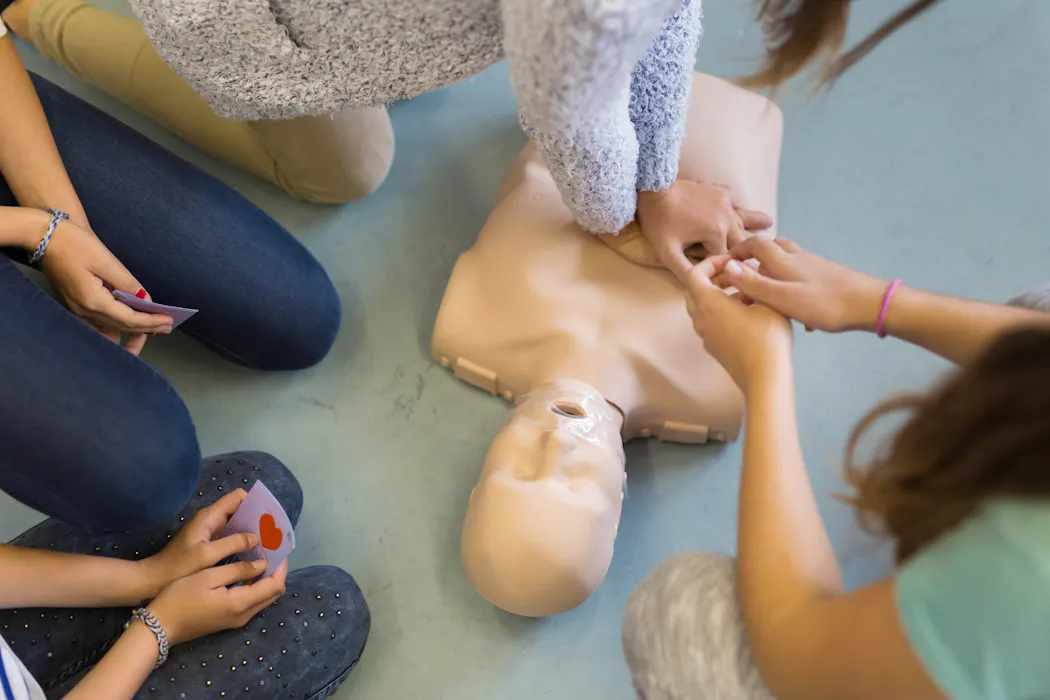
No hay duda de que los niños pueden aprender estas habilidades, y de hecho la mayoría de los currículos educativos los incluyen, como hemos comprobado en una investigación reciente. Pero el reto es cómo enseñar la RCP para que los conocimientos adquiridos se traduzcan en confianza, disposición a actuar y capacidad de respuesta cuando alguien necesita ayuda.
La escuela, el lugar con mayor potencial
Desde hace años, la Organización Mundial de la Salud y el Consejo Europeo de Resucitación impulsan iniciativas como Kids Save Lives, que promueven la enseñanza de la reanimación cardiopulmonar en la escuela desde edades tempranas. La razón es sencilla: ningún otro lugar tiene la capacidad de llegar a toda una generación.
Las campañas dirigidas a adultos son necesarias, pero suelen ser voluntarias y alcanzan a un número limitado de personas. La escuela ofrece algo diferente. Todos los niños pasan por ella y se encuentran en una etapa ideal para aprender habilidades que pueden acompañarlos durante toda la vida.
No se trata de formar sanitarios. Se trata de formar ciudadanos capaces de ayudar.
Algunas personas dudan de si aprender estos mecanismos de reanimación puede ser algo demasiado complejo o les traslada demasiada responsabilidad a los niños. La respuesta es no.
Tan pronto como desde los 6 años, los escolares pueden aprender a reconocer una emergencia, pedir ayuda, comenzar con las compresiones e incluso utilizar un desfibrilador. Aunque los más pequeños no siempre tienen la fuerza necesaria para realizar compresiones de alta calidad, sí pueden aprender los pasos esenciales para poner en marcha la cadena de supervivencia.
Además, la escuela no solo transmite conocimientos. También ayuda a desarrollar actitudes, valores y comportamientos. Igual que enseñamos educación vial o hábitos saludables, podemos enseñar a actuar ante una emergencia.
De la teoría a la práctica: actuar cuando llega el momento
En la enseñanza de la reanimación cardiopulmonar no basta con transmitir conocimientos: hay que conseguir que los estudiantes se impliquen, practiquen y, sobre todo, se sientan capaces de actuar cuando se enfrenten a una emergencia real.
Uno de los principales obstáculos para intervenir ante una parada cardiaca no es la falta de información, sino el miedo a hacerlo mal. Miedo a equivocarse, a hacer daño o a no saber reaccionar bajo presión.
Por eso, el verdadero desafío consiste en encontrar metodologías que permitan aprender mejor, recordar durante más tiempo y aumentar la confianza para intervenir cuando sea necesario.
Las metodologías activas pueden desempeñar un papel importante en este proceso. Estrategias como las simulaciones, los retos o la gamificación convierten al alumnado en protagonista de su aprendizaje. En lugar de limitarse a escuchar, los estudiantes toman decisiones, resuelven problemas y practican en situaciones que se parecen a las que podrían encontrar en la vida real.
La gamificación utiliza elementos propios de los juegos, como misiones, desafíos o historias, para aumentar la participación del alumnado. Esto no significa convertir la RCP en un juego ni restar importancia a la gravedad de una emergencia.
Un estudio reciente con estudiantes de secundaria españoles comparó ambos enfoques y encontró que, aunque las habilidades técnicas resultaron similares entre grupos, quienes habían aprendido jugando mostraron más confianza, mayor intención de actuar ante una emergencia real y menos desmotivación que quienes recibieron una clase tradicional.
El verdadero reto ya no es si los niños pueden aprender RCP, sino cómo enseñarles de una forma que aumente esa confianza y esa disposición a actuar cuando alguien necesite ayuda. Porque en una emergencia no basta con saber qué hacer. Hay que atreverse a hacerlo.
Y quizá la mejor forma de conseguirlo empiece jugando en las aulas.
Las personas firmantes no son asalariadas, ni consultoras, ni poseen acciones, ni reciben financiación de ninguna compañía u organización que pueda obtener beneficio de este artículo, y han declarado carecer de vínculos relevantes más allá del cargo académico citado anteriormente.
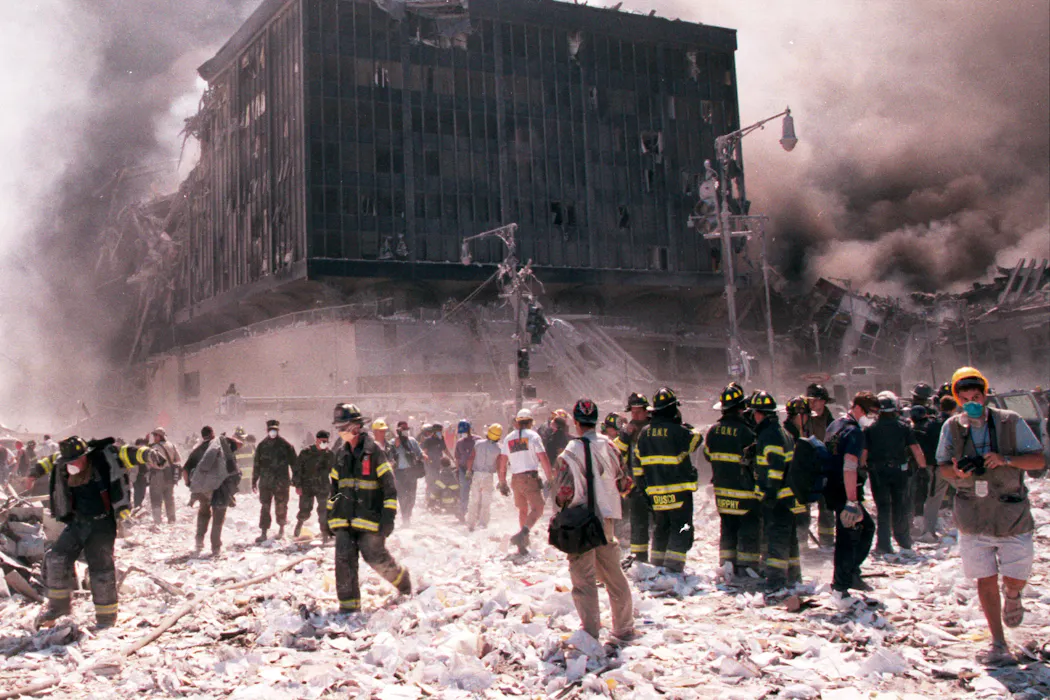
Bomberos y periodistas en la zona cero de Nueva York tras el ataque del 11 de septiembre de 2001.Anthony Correia/Shutterstock
El 11 de septiembre de 2026 se cumplen 25 años de los atentados terroristas que destruyeron las Torres Gemelas de Nueva York. Desde entonces, la literatura ha intentado contar no solo lo que ocurrió aquel día, sino también cómo sus consecuencias transformaron la vida cotidiana y nuestra forma de entender la guerra, la seguridad y las fronteras.
En los días y meses posteriores a los atentados, periódicos y revistas culturales como The Guardian y Harper’s Magazine publicaron textos de reconocidos escritores para ayudar a interpretar unas imágenes que millones de personas habían contemplado casi en directo. Ian McEwan escribió sobre las últimas llamadas de las víctimas; Martin Amis reflexionó sobre la vulnerabilidad estadounidense; Paul Auster dejó unas notas tomadas aquel mismo día, y Don DeLillo analizó en diciembre el significado histórico y político del ataque. Estas intervenciones inmediatas anticiparon cuestiones que después desarrollarían en su ficción.
Del espectáculo televisivo al duelo
Las primeras novelas importantes sobre el 11-S se enfrentaron a una dificultad: los atentados ya parecían una ficción por su dimensión visual. El hombre del salto (2007), de Don DeLillo, comienza con un superviviente que camina entre los restos de las Torres Gemelas, y convierte una imagen contemplada globalmente en la experiencia corporal y desorientada de una persona:
“Ya no era una calle sino un mundo, un tiempo y un espacio de ceniza cayendo y casi noche. Caminaba hacia el norte por los escombros y el barro y pasaban junto a él personas que corrían tapándose la cara con una toalla o cubriéndose la cabeza con la chaqueta. Iban con pañuelos apretados contra la boca. Llevaban los zapatos en la mano, una mujer con un zapato en cada mano pasó corriendo junto a él. Iban corriendo y se caían, algunos de ellos, confusos y desmañados, con los cascotes derrumbándoseles en torno, y había gente que buscaba cobijo debajo de los coches”.
En Tan fuerte, tan cerca (2005), de Jonathan Safran Foer, la televisión, las fotografías, los sonidos y los objetos cotidianos ocupan un lugar central. Las obras no se limitan a reconstruir la destrucción de las torres: se centran en la ausencia, el duelo y la dificultad de recuperar una vida normal.
Paul Auster siguió un camino similar en Un hombre en la oscuridad (2008). Frente a la saturación de imágenes, estas ficciones devolvieron al acontecimiento una dimensión íntima. El atentado empezó a medirse por sus efectos en un matrimonio, en una familia o en una persona incapaz de olvidar lo visto en televisión.
Planeta de Libros/Anagrama
Sin embargo, aquella primera respuesta tuvo sus límites. Una buena parte de la narrativa británica y estadounidense abordó el terrorismo desde las sociedades occidentales. Algunas obras reprodujeron, aun sin pretenderlo, la oposición entre “Occidente” y “el islam” del discurso oficial, mientras relegaban las posibles causas históricas y políticas de la violencia.
La guerra contra el terror, vista desde los márgenes
A medida que avanzaban las guerras de Afganistán e Irak, otras novelas ampliaron el campo de visión. El fundamentalista reticente (2007), de Mohsin Hamid; La casa de los sentidos (2008), de Nadeem Aslam, y Sombras quemadas (2009), de Kamila Shamsie, situaron el 11-S más allá de una tragedia exclusivamente estadounidense. Lo relacionaron con la migración, la ocupación militar, la islamofobia, la tortura y la pérdida de derechos.
En estas obras, un personaje musulmán puede convertirse en sospechoso en Nueva York o en Londres mientras su familia sufre las consecuencias de la guerra en Pakistán, Afganistán o Irak. La literatura muestra que la “guerra contra el terror” no se desarrolló solo en los campos de batalla: también se extendió a los aeropuertos, las aulas, los barrios y los lugares de trabajo.
Riz Ahmed en una imagen de la adaptación cinematográfica de El fundamentalista reticente. Mirabai Films
En mi investigación doctoral propuse leer estas obras de ficción como literatura de la “glocalización”. La idea es sencilla: lo global nunca ocurre en abstracto, sino que se vive en un cuerpo, una casa o una ciudad. Sombras quemadas, por ejemplo, enlaza el bombardeo atómico de Nagasaki, la partición de la India, la Guerra Fría y la guerra contra el terror a través de dos familias. Las decisiones de los gobiernos terminan marcando la piel y las relaciones de personas concretas.
La economía y las finanzas completan esa mirada. Netherland, de Joseph O’Neill; El fundamentalista reticente y Kapitoil, de Teddy Wayne, relacionan terrorismo, finanzas, petróleo y especulación. Sus protagonistas se mueven cerca del centro financiero de Nueva York, pero sus decisiones repercuten en países y vidas alejados de Wall Street.
Madrid, Londres y París: el miedo se propaga
El marco político creado tras el 11-S también condicionó otros atentados. Después del 11 de marzo de 2004, la literatura española abordó los ataques a los trenes de Madrid desde la memoria, el duelo y la dificultad de representar una violencia que afectaba a la ciudad. Así ocurre en El mapa de la vida, de Adolfo García Ortega.
En Londres, Sábado (2005), de Ian McEwan, trasladó el miedo al terrorismo y el debate sobre la guerra de Irak a la vida cotidiana. Tras los atentados del 7 de julio de 2005, otras obras examinaron la vigilancia, la militarización y la sospecha dirigida a las comunidades musulmanas. Incendiary, de Chris Cleave, presenta una ciudad en la que el miedo nace tanto de la violencia como de su tratamiento político y mediático. Los ataques de París de noviembre de 2015 prolongaron este imaginario de ciudades europeas sometidas a una amenaza permanente.
Una violencia que no cesa
Con el paso de los años, la ficción se ha alejado del instante del atentado para ocuparse de las consecuencias convertidas en crónicas. Las novelas más recientes muestran conflictos interconectados, desplazamientos forzosos y personajes que ya no encuentran un regreso claro a casa. La guerra aparece como una red persistente de intervenciones, fronteras y negocios, no como un episodio cerrado.
La literatura posterior al 11-S no ofrece una interpretación única porque el trauma tampoco fue igual para todos. Desde las torres de Nueva York hasta los trenes de Madrid, el metro de Londres o las calles de París, la ficción ha desplazado la mirada del acontecimiento hacia sus consecuencias humanas. Ha convertido una historia global en historias locales y ha preguntado quién merece ser recordado, quién queda fuera de la imagen y qué significa vivir en una guerra interminable.
Leer el 11-S desde la literatura permite recordar que detrás de palabras como terrorismo, seguridad, mercado o guerra hay vidas concretas. También revela una paradoja vigente: las amenazas atraviesan las fronteras, pero las respuestas destinadas a garantizar la seguridad pueden erosionar derechos y libertades y generar nuevas formas de incertidumbre.
¿Quiere recibir más artículos como este?Suscríbase a Suplemento Cultural y reciba la actualidad cultural y una selección de los mejores artículos de historia, literatura, cine, arte o música, seleccionados por nuestra editora de Arte + Humanidades Claudia Lorenzo.
Adriana Kiczkowski no recibe salario, ni ejerce labores de consultoría, ni posee acciones, ni recibe financiación de ninguna compañía u organización que pueda obtener beneficio de este artículo, y ha declarado carecer de vínculos relevantes más allá del cargo académico citado.
Source: The Conversation – in French – By Laurence Hartmann, Maîtresse de conférences en sciences économiques – Economiste de la santé, laboratoire LIRSA EA4603, Conservatoire national des arts et métiers (CNAM)
L’ESSENTIEL
La perte auditive, qui survient avec l’âge, reste insuffisamment dépistée et prise en charge.
Les données montrent pourtant clairement que le fait de porter des appareils auditifs prévient les chutes ainsi que le déclin cognitif.
Ne pas suffisamment prendre en charge la question de l’audition dans les politiques du grand âge a un coût sanitaire, mais aussi économique.
Longtemps reléguée au rang des « petits maux » du vieillissement, la perte auditive est encore trop souvent perçue comme une gêne inévitable. Pourtant, chez les personnes âgées, ses effets dépassent largement la seule difficulté à entendre : elle peut compromettre l’autonomie, fragiliser la sécurité au quotidien et altérer la qualité des soins.
Et, comme souvent en santé publique, les réponses existent, qu’elles soient techniques, cliniques ou organisationnelles. C’est leur intégration dans les parcours de prise en charge qui fait défaut, en particulier en établissement médico-social.
Un fardeau sanitaire… et économique
La prévalence de la perte auditive augmente fortement avec l’âge. Elle est de l’ordre d’un tiers autour de 65-75 ans et atteint environ une personne sur deux aux âges les plus avancés (80 ans et plus), selon des donnéeseuropéennes. Cette progression est également observée en France dans la cohorte CONSTANCES, où la prévalence de la perte auditive dépasse 60 % chez les 71–75 ans.
Les conséquences sont non seulement individuelles, mais aussi collectives : une perte auditive non prise en charge peut entraîner des difficultés de communication, des malentendus dans les consignes de soin, un repli social, un état dépressif, un déclin cognitif plus rapide ainsi que des troubles de l’équilibre et un risque accru d’accidents.
Elle génère ainsi des coûts directs pour le système de santé, mobilise du temps et de l’énergie pour les proches, et entraîne surtout une perte de qualité de vie souvent invisible dans les comptes publics. L’Organisation mondiale de la santé (OMS) estime ainsi que la perte auditive non prise en charge représente près de mille milliards de dollars par an dans le monde ; ce chiffre, qui couvre l’ensemble des âges, doit moins être lu comme une mesure exacte que comme un signal d’ampleur.
Dans la littérature récente, le lien de la perte auditive avec le déclin cognitif et les démences occupe une place croissante. La Commission Lancet 2024, qui fait référence en matière de prévention des démences, a identifié 14 facteurs de risque modifiables pouvant théoriquement prévenir ou retarder près de 45 % des cas de démence.
Parmi eux, la perte auditive se distingue comme le premier facteur de risque modifiable de la vie adulte, avec une fraction attribuable de 7 %, soit autant que le cholestérol LDL élevé (surnommé « mauvais cholestérol » parce que, en excès, il se dépose sur les parois des artères, ndlr), et davantage que le diabète, le tabagisme ou l’hypertension artérielle. L’effet dose-réponse est documenté : chaque aggravation de 10 décibels est associée à une hausse de 16 % du risque de démence.
Surtout, des données interventionnelles viennent désormais conforter ces associations observationnelles. L’essai clinique randomisé ACHIEVE a montré, chez les personnes âgées présentant un risque élevé de déclin cognitif, une réduction de 48 % du déclin cognitif global à trois ans dans le groupe appareillé par rapport au groupe témoin.
En parallèle, une méta-analyse de huit études observationnelles portant sur plus de 127 000 participants, suivis depuis deux ans à vingt-cinq ans, a montré que l’usage d’aides auditives était associé à une réduction de 19 % du risque de déclin cognitif à long terme, par rapport à une perte auditive non corrigée.
Ces résultats suggèrent un bénéfice potentiel de l’appareillage sur le plan cognitif. Sur le plan économique, une modélisation britannique estime que la fourniture d’appareils auditifs pourrait également être génératrice d’économies nettes, notamment en raison de son effet potentiel sur l’incidence de la démence.
La littérature scientifiqueinternationale associe la perte auditive à la fragilité définie comme un état de vulnérabilité accrue aux événements de santé résultant notamment d’une diminution des réserves physiologiques. Cette association est retrouvée de façon robuste dans plusieurs travaux combinant données transversales et longitudinales, même si la part exacte de causalité reste discutée.
Fragilité, perte d’audition et… chutes
Les chutes illustrent concrètement ce lien entre audition et fragilité. Un résultat récent issu de l’essai ACHIEVE renforce ce constat : les participants ayant bénéficié d’une intervention auditive ont présenté, sur trois ans, un nombre moyen de chutes inférieur de 27 % à celui du groupe témoin.
En France, les chutes constituent l’un des marqueurs les plus visibles de la perte d’autonomie. Le plan national triennal antichute des personnes âgées, lancé en 2022, en faisait déjà un enjeu majeur de santé publique et estimait leur coût à 2 milliards d’euros par an, dont 1,5 milliard à la charge de l’Assurance-maladie.
Selon les données récentes de Santé publique France, en 2024, près de 175 000 hospitalisations et plus de 20 000 décès en lien avec une chute ont été recensés chez les personnes âgées de 65 ans et plus. Entre 2019 et 2024, les taux standardisés d’hospitalisation et de mortalité associés aux chutes ont respectivement augmenté de 20,5 % et de 18 %. Ces évolutions interrogent d’autant plus que le plan visait une réduction de 20 % des chutes mortelles ou invalidantes à l’horizon 2024.
La question n’est donc plus de savoir si l’audition mérite une place dans les parcours de soins des personnes âgées, mais comment lui en donner une concrètement.
En Ehpad, des déficiences sensorielles fréquentes
En Ehpad (« nursing homes » dans la littérature internationale), la perte auditive est loin d’être marginale. Elle s’inscrit souvent dans un faisceau de fragilités sensorielles, cognitives et fonctionnelles.
En France, l’enquête Handicap-Santé 2014 montrait déjà qu’en institution, 42 % des résidents souffraient de limitations fonctionnelles auditives, dont 15 % de formes graves ou très graves, soit une prévalence près de deux fois et demie supérieure à celle observée à domicile.
L’étude européenne SHELTER, menée dans huit pays, aboutissait à l’époque à un constat du même ordre : près de deux résidents sur trois présentaient au moins une déficience visuelle ou auditive, et près d’un tiers cumulait les deux. Autrement dit, en établissement, les troubles sensoriels ne relèvent pas de l’exception, mais du quotidien. Pourtant, le repérage reste inégal, et c’est là que se situe l’un des angles morts de la prise en charge.
Ce problème n’est pas nouveau. Dès les années 2000, des travaux en nursing home montraient qu’une perte auditive importante restait non détectée chez plus de la moitié des résidents, et plaidaient pour des évaluations régulières ainsi que pour de véritables politiques institutionnelles de dépistage.
Vingt ans plus tard, le sujet est clairement identifié en France, sans être systématiquement intégré aux organisations de soins. En 2021, le rapport conjoint de l’inspection générale des affaires sociales (IGAS) et de l’inspection générale de l’éducation, du sport et de la recherche (IGESR) sur la filière auditive recommande toutefois la désignation d’un « référent audition » pour un Ehpad ou un groupe d’Ehpad et l’expérimentation d’un protocole adapté au dépistage, à l’appareillage et au suivi des personnes âgées dans l’incapacité de se déplacer.
Autrement dit, le besoin est repéré de longue date ; ce qui manque encore, c’est sa traduction systématique dans les pratiques ordinaires.
Des solutions éprouvées, une organisation à construire
Les obstacles sont bien connus : banalisation du trouble notamment chez les personnes âgées – notamment lorsqu’elles sont polypathologiques ou présentent des troubles cognitifs –, accès inégal aux filières audiologiques, fatigabilité des patients, difficulté d’usage réel des aides auditives et, surtout, absence de routine institutionnelle.
À titre d’illustration, un essai pragmatique en soins primaires montre combien l’organisation concrète du dépistage conditionne son effectivité : lorsque celui-ci était proposé et réalisé sur place, l’adhésion était près de quatre fois supérieure à celle observée lorsqu’il devait être effectué à domicile.
Chez les personnes présentant des troubles cognitifs, les revues de littérature récentes soulignent en outre les limites des seuls auto-questionnaires et l’intérêt de méthodes d’évaluation adaptées à cette population.
Un levier majeur est donc organisationnel : intégrer le repérage des troubles auditifs à l’entrée en Ehpad et à leur suivi, former des référents, faciliter l’accès à la filière audiologique et accompagner l’usage effectif des aides auditives au quotidien. Autant de pistes déjà identifiées, notamment par l’IGAS et l’IGESR, mais qui restent à inscrire plus systématiquement dans les pratiques.
À l’heure où la France cherche à structurer sa politique du grand âge, faire de l’audition un volet à part entière du parcours de soins en établissement n’est pas un luxe : c’est une dimension de la qualité de la prise en charge.
Laurence Hartmann est membre administrateur bénévole du conseil scientifique de l’association nationale de
l’audition depuis 2025.
Le Rassemblement national souhaite interdire le foulard islamique dans l’espace public, s’il emporte l’élection présidentielle.
Le principe invoqué par le RN est la lutte contre l’islamisme. Or, les données de la recherche ne permettent pas de réduire le port du voile à une motivation politique.
Cette interdiction constituerait une rupture avec le principe fondamental de liberté religieuse et contreviendrait à de nombreuses règles de droit.
L’interdiction du foulard dans l’espace public, c’est-à-dire notamment dans la rue, est une proposition du Rassemblement national (RN) qui revient à chaque élection présidentielle. L’idée de restreindre la liberté des femmes musulmanes de porter les signes religieux de leur choix n’est cependant pas nouvelle : après le foulard à l’école, le voile intégral dans l’espace public, le burkini sur les plages, le port du foulard par les mères accompagnatrices lors des sorties scolaires ou les sportives, ou encore l’abaya dans les établissements scolaires, ces propositions se succèdent et se multiplient, et parfois aboutissent.
La difficulté principale, à chaque fois, et cette fois de façon encore plus évidente : c’est le fondement juridique. Limiter une liberté fondamentale, dans un État de droit, requiert en effet un fondement juridique, c’est-à-dire une justification. Est-ce le cas ?
La laïcité ne justifie pas une neutralité religieuse des citoyens dans l’espace public
À la différence d’autres propositions de loi interdisant le foulard dans certains contextes, cette interdiction dans l’espace public ne prétend pas s’appuyer sur le principe de laïcité. Ce dernier impose en effet le respect de toutes les croyances, l’égalité de tous les citoyens sans distinction de religion, et le libre exercice des cultes. La laïcité implique également la neutralité de l’État : les personnes qui exercent une mission de service public doivent, par exemple, s’abstenir de porter des signes religieux dans l’exercice de leurs fonctions. La laïcité a également pu justifier, en 2004, l’encadrement des signes religieux des élèves des établissements scolaires publics. Mais cette interdiction s’inscrit dans le cadre particulier du service public de l’éducation et ne signifie nullement que la laïcité imposerait la neutralité aux citoyens. Dans l’espace public, le principe est donc celui de la liberté de religion.
Une interdiction du foulard dans la rue serait donc en rupture avec ce principe constitutionnel. Ce n’est pas, en tout état de cause, la voie proposée par le Rassemblement national, qui veut justifier cette interdiction en arguant d’un lien entre foulard et islamisme.
Du foulard à l’islamisme : un changement de registre argumentatif
Les restrictions de la liberté de porter des signes religieux sont motivées par différents fondements, et parfois par différents registres argumentatifs :
la loi de 2004 sur les signes religieux à l’école s’appuie sur le principe de laïcité ;
la loi de 2016, qui permet d’insérer une clause de neutralité dans les règlements intérieurs des entreprises a introduit, sous certaines conditions, la possibilité de restreindre la manifestation des convictions au nom d’une exigence de neutralité ;
en 2010, l’interdiction de la dissimulation du visage dans l’espace public a notamment été défendue au nom des valeurs républicaines et du vivre-ensemble.
Ces textes ne portent pas sur les mêmes pratiques et ne reposent pas sur les mêmes fondements. Ce qui les rapproche est le déplacement progressif des registres utilisés pour rendre juridiquement acceptable une restriction de la visibilité religieuse.
Le registre mobilisé aujourd’hui est différent : il ne s’agit plus seulement de présenter le foulard comme une manifestation religieuse incompatible avec certaines conceptions de la laïcité, ni même comme une atteinte au « vivre-ensemble », mais comme le signe visible d’une idéologie politique. Le foulard est ainsi présenté comme un indice d’islamisme.
Cette assimilation suppose qu’un comportement religieux visible permette de déduire l’adhésion à une idéologie politique. Or cette déduction ne va pas de soi.
Les données disponibles ne permettent pas de réduire le port du voile à une motivation politique. Cette pratique varie selon les générations et les trajectoires migratoires et sociales ; le port du voile ne peut donc être considéré comme un comportement homogène correspondant à une même orientation idéologique.
Les travaux sociologiques consacrés au port du foulard montrent, par ailleurs, la diversité des significations qui peuvent lui être attribuées : pratique religieuse, affirmation identitaire, forme d’émancipation ou d’autonomisation. Cette pluralité de significations fait obstacle à toute assimilation générale entre le port du foulard et l’adhésion à une idéologie islamiste.
La distinction est importante juridiquement. Une restriction d’une liberté fondamentale ne peut reposer sur une présomption générale selon laquelle toutes les personnes adoptant un comportement religieux déterminé poursuivraient en réalité un objectif politique ou constitueraient une menace. Lorsqu’une intervention de l’État est justifiée par des comportements ou des engagements particuliers, ceux-ci doivent pouvoir être caractérisés indépendamment du seul exercice d’une pratique religieuse. Le port du foulard, en tant que tel, ne saurait être assimilé à l’adhésion à une idéologie islamiste.
Une interdiction incompatible avec les engagements européens et internationaux
Faute de démonstration convaincante d’une menace politique évidente, cette interdiction s’avèrerait finalement contraire à l’article 9 de la Convention européenne des droits de l’homme, qui protège la liberté de pensée, de conscience et de religion – dont la liberté d’extérioriser ses convictions religieuses, notamment en public. Cette liberté n’est certes pas absolue : la Convention permet certaines restrictions lorsqu’elles sont prévues par la loi, poursuivent un objectif légitime et sont nécessaires dans une société démocratique.
La jurisprudence européenne montre que les restrictions aux signes religieux sont appréciées en fonction du contexte dans lequel ils sont portés. La Cour a ainsi admis certaines restrictions dans des cadres particuliers, notamment scolaire ou professionnel, mais cela ne signifie pas que toute manifestation religieuse puisse être interdite dans l’espace public.
Une telle interdiction serait également contraire aux articles 18 et 26 du Pacte international des droits civils et politiques, qui protègent respectivement la liberté de conscience et de religion, et le principe d’égalité.
Le Comité des droits de l’homme des Nations unies relève ainsi « avec préoccupation l’élargissement de telles restrictions » et invite la France à « évaluer l’effet discriminatoire dans la pratique et l’impact de ces mesures sur les membres des minorités religieuses, notamment les femmes et les filles de confession musulmane ».
Une telle interdiction serait donc une atteinte particulièrement importante à l’État de droit si elle reposait sur l’idée que le pouvoir politique pourrait, par simple affirmation, transformer une pratique religieuse en indice de menace politique. Elle poserait également une question majeure au regard de la non-discrimination puisqu’elle viserait une religion et un genre spécifiques.
Cette question est d’autant plus préoccupante que les femmes portant le foulard font déjà l’objet de discriminations, notamment dans l’accès à l’emploi et dans différents espaces de la vie sociale, comme l’ont documenté les travaux récents du défenseur des droits.
L’évolution des arguments à l’appui de telles interdictions
Cette proposition pose une question qui dépasse le seul port du foulard, elle est symptomatique du rapport aux droits et libertés du Rassemblement national : le souhait de faire fi de l’État de droit, c’est-à-dire du respect des droits fondamentaux garantis par la Constitution, les conventions européennes et internationales.
Dans un État de droit, la volonté politique ne suffit pas à écarter les garanties juridiques qui s’imposent au législateur. Un pouvoir qui fait fi des limites juridiques, c’est la définition même du pouvoir arbitraire.
La question posée par cette nouvelle proposition dépasse donc finalement le seul foulard. Elle est celle des limites que l’État peut imposer à l’exercice d’une liberté fondamentale et, plus largement, de la capacité du droit à constituer une limite effective à la volonté politique.
Lauren Bakir ne travaille pas, ne conseille pas, ne possède pas de parts, ne reçoit pas de fonds d’une organisation qui pourrait tirer profit de cet article, et n’a déclaré aucune autre affiliation que son organisme de recherche.
Source: The Conversation – in French – By Marie Larocque, Professeure au département des sciences de la Terre et de l’atmosphère, Université du Québec à Montréal (UQAM)
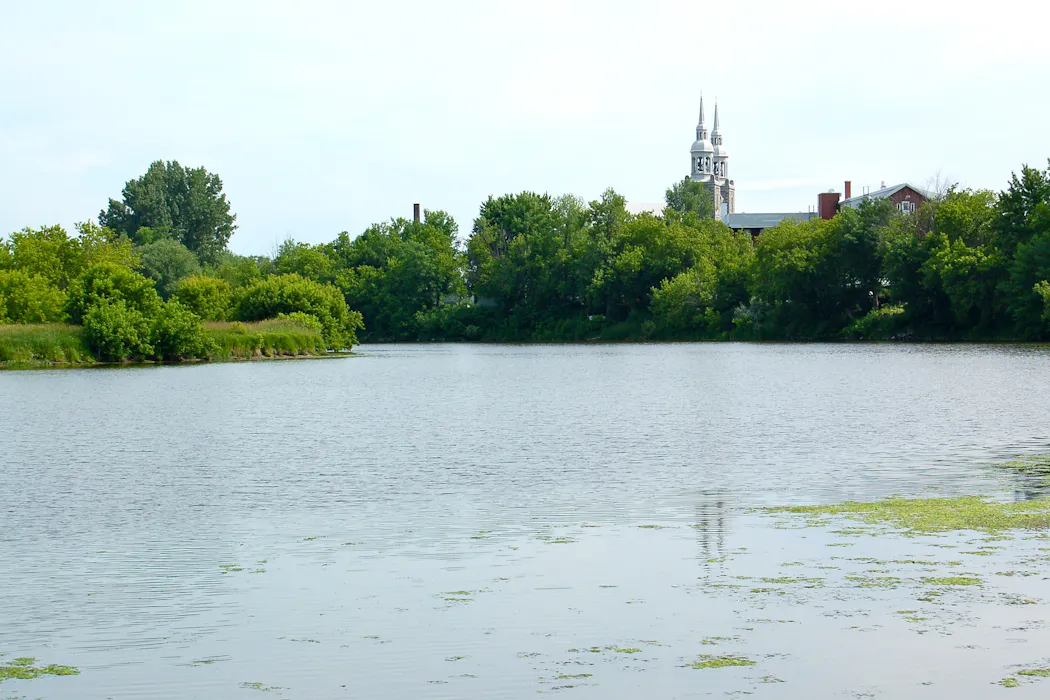
Dans certaines régions du sud-ouest du Québec, comme en Montérégie, des tensions liées à l’accès à l’eau se manifestent. Rivière Châteauguay au village de Sainte-Martine. (Wikipédia)
Le Québec est un territoire riche en eau. Pourtant, il en manque de plus en plus fréquemment dans certains secteurs. La disponibilité de l’eau constitue, même ici, l’un des grands enjeux du XXIe siècle.
Une gestion durable vise à maintenir une quantité et une qualité d’eau suffisantes pour la population et les écosystèmes. Toutefois, assurer la disponibilité de l’eau exige de concilier des usages multiples et parfois concurrents.
En avril 2026, le Centre québécois de recherche sur la gestion de l’eau (CentrEau) a réuni, à l’occasion de son rendez-vous annuel, la communauté scientifique, les instances gouvernementales et municipales, ainsi que les organismes de bassins versants, pour discuter des enjeux liés à la disponibilité de l’eau au Québec.
Ces échanges ont mis en évidence trois défis étroitement liés : la prévention des conflits d’usages, l’acquisition et la mobilisation des connaissances, et l’amélioration des outils de planification.
Lorsque les usages de l’eau entrent en concurrence
Un confit d’usage survient lorsque la ressource en eau est en quantité insuffisante ou de qualité insatisfaisante pour satisfaire les besoins des personnes usagères au même moment. Dans certains secteurs du sud-ouest du Québec, des tensions liées à l’eau se sont manifestées lors des étés secs de 2021 et 2025.
Durant ces périodes de sécheresse, des municipalités peuvent imposer des restrictions d’usage pour éviter une pénurie d’eau. Au même moment, les producteurs agricoles doivent continuer d’irriguer leurs cultures pour éviter les pertes de récoltes. Ces contrastes dans les autorisations peuvent créer un sentiment d’injustice dans la population et entraîner des mécontentements ou un contournement des règlements municipaux.
Plusieurs facteurs interagissent et évoluent dans le temps : les conditions météorologiques et climatiques, l’aménagement du territoire, la croissance des besoins, l’état des infrastructures et les réalités socioéconomiques. Ces facteurs influencent la disponibilité de l’eau ainsi que sa vulnérabilité à la pollution.
Par exemple, un sol sableux favorise l’infiltration de l’eau, ce qui rend les eaux souterraines plus vulnérables aux sources de contamination en surface, tandis qu’un sol argileux peu perméable offre une plus grande protection aux eaux souterraines.
Au Québec, les demandes d’autorisation des usages de l’eau sont priorisées d’abord pour répondre aux besoins essentiels de la population, des écosystèmes, de l’agriculture et finalement, à ceux de l’industrie. Cette hiérarchisation s’inscrit dans une approche de gestion intégrée.
Certaines juridictions ailleurs dans le monde utilisent des indicateurs de disponibilité de l’eau et des seuils d’intervention pour réduire les risques de conflits. Leur mise en œuvre repose toutefois sur une acceptabilité sociale suffisante, puisqu’elle implique parfois des arbitrages. Les indicateurs et les seuils ne sont pas encore largement utilisés au Québec.
Le défi de développer et mobiliser les connaissances
Limiter les conflits d’usage de l’eau passe avant tout par une connaissance fine de la ressource. Les connaissances sur les eaux souterraines au Québec sont relativement récentes. Leur développement s’est véritablement accéléré au cours des deux dernières décennies, alors que la recherche sur les eaux de surface bénéficie d’un historique beaucoup plus long.
Les questions liées à la gestion des ressources en eau sont nombreuses et complexes. Il faut comprendre comment la disponibilité de l’eau varie selon les saisons, les années et les territoires, en plus de mieux documenter ses usages, qu’il s’agisse des prélèvements effectués par les différents besoins humains, ou des besoins en eau des milieux naturels.
Les résultats de recherche ne débouchent pas toujours immédiatement sur des outils applicables à la gestion quotidienne, ce qui crée un défi particulier pour les personnes qui doivent élaborer des outils d’aide à la décision.
Les nouvelles connaissances doivent donc être continuellement intégrées aux pratiques de gestion, de concert avec tous les acteurs et actrices de l’eau.
Au Québec, des organisations comme le Réseau québécois sur les eaux souterraines et les tables de concertation des organismes de bassins versants (OBV), jouent un rôle clé dans le rapprochement entre la recherche et l’action. Créer des pratiques capables de relier la science aux besoins de la société est crucial pour développer une planification efficace.
Mieux planifier pour mieux gérer
La planification régionale de la ressource en eau demeure un élément essentiel pour concilier les usages à court, moyen et long terme. Elle doit tenir compte à la fois des eaux de surface et des eaux souterraines. Malgré les progrès réalisés, cet exercice demeure complexe partout dans le monde et rappelle l’importance de réduire la nécessité d’intervenir dans l’urgence.
Au Québec, les plans directeurs de l’eau (PDE) sont l’outil de planification stratégique utilisé à l’échelle des bassins versants pour assurer la pérennité des ressources en eau et de ses usages. Ils reflètent les préoccupations et les priorités identifiées par la population d’un territoire.
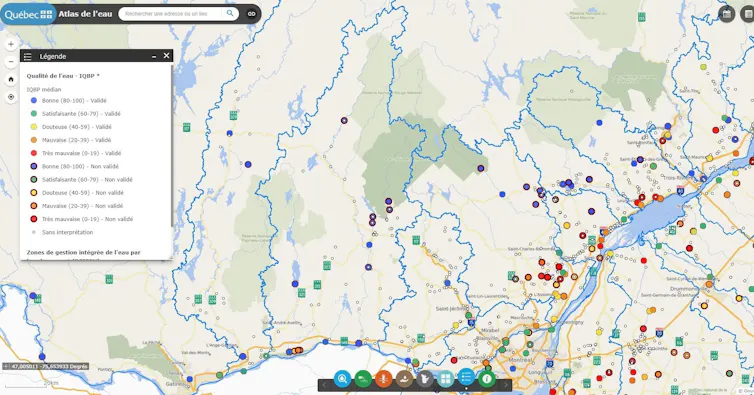
L’Atlas de l’eau propose une cartographie interactive du Québec pour consulter différentes connaissances sur l’eau. (Gouvernement du Québec)
Même lorsque la disponibilité de l’eau n’est pas considérée comme un enjeu majeur, les PDE mettent en lumière des préoccupations liées aux prélèvements, à la vulnérabilité des approvisionnements, aux conflits d’usage ou à la protection des écosystèmes aquatiques. Cette lecture territoriale permet de mieux orienter les efforts de recherche vers les besoins réels des communautés. Elle aide également à repérer les lacunes de connaissances à l’élaboration de stratégies adaptées à chaque région.
Les données (par exemple, des applications cartographiques interactives ou des documents) sur l’eau sont aujourd’hui largement accessibles au Québec pour l’élaboration et la mise à jour des PDE et autres outils. Lorsque ceux-ci sont bien compris et utilisés par les communautés du milieu, avec l’appui de la communauté scientifique, les enjeux sur l’eau peuvent être abordés de manière rigoureuse. C’est ainsi que des stratégies d’adaptation futures peuvent émerger.
Déjà des milliers d’abonnés à l’infolettre de La Conversation. Et vous ? Abonnez-vous gratuitement à notre infolettre pour mieux comprendre les grands enjeux contemporains.
Une approche globale pour l’avenir
Même si le Québec possède 3 % de l’eau douce mondiale, la province n’est pas à l’abri des épisodes de sécheresse qui exercent des pressions importantes sur certaines communautés. Les connaissances progressent néanmoins rapidement, les outils de planification se développent et les mécanismes de concertation sont de plus en plus utilisés.
Le défi des prochaines années sera de mieux arrimer le développement et la mobilisation des connaissances avec une planification régionale intégrant à la fois les eaux de surface et souterraines. Ceci est essentiel pour faire face aux extrêmes, comme les inondations ou le manque d’eau sur le territoire. Continuer de développer ces leviers permettra de soutenir des décisions éclairées lors des périodes critiques, de favoriser la conciliation des usages à moyen terme et de s’adapter aux changements climatiques.
Plusieurs personnes ont contribué à la rédaction de cet article : Isabelle Adam (MRC Les Jardins-de-Napierville), Kristelle Audet (Groupe AGÉCO), Karine Dauphin (ROBVQ), Sébastien Ouellet-Proulx (MELCCFP) et Valérie Sanderson (CentrEau). Leurs réflexions, commentaires et perspectives ont grandement contribué à enrichir ce texte.
Marie Larocque reçoit des financements du MELCCFP et du CRSNG (entre autres).
Jimmy Mayrand a reçu des financements de Fonds de recherche du Québec – Société et Culture.
Seuls 7,5 % de la forêt privée française sont assurés contre l’incendie et/ou la tempête.
Ce faible taux s’explique notamment par la présence d’aides publiques et d’assurances jugées trop chères ou incomplètes.
Les modèles d’assurance étrangers pourraient offrir des pistes de réflexion pour faire évoluer le modèle français.
Sécheresses, incendies, attaques d’insectes… les forêts françaises sont de plus en plus exposées aux aléas climatiques. Les grands incendies de l’été 2026 nous le rappellent brutalement. En août, environ 47 000 hectares ont brûlé dans les Landes et en Gironde.
Pourtant, les forêts françaises sont encore peu assurées. Cet état de fait reste peu connu, mais il est primordial de se pencher sur cette réalité si l’on veut penser un modèle durable de gestion des forêts.
Seulement 7,5 % des forêts privées assurées
Cette question de l’assurance ne concerne pas les forêts publiques, car l’État est son propre assureur. Il faut donc plutôt regarder les 75 % de la surface forestière qui appartiennent à 3,5 millions de propriétaires forestiers privés.
En 2023, le Conseil général de l’alimentation, de l’agriculture et des espaces ruraux (CGAAER) indiquait que seulement 7,5 % de la forêt privée française étaient assurés contre l’incendie et/ou la tempête. Les surfaces assurées et le nombre de contrats souscrits sont cependant en augmentation d’environ 7 % par an depuis 2011, comme l’atteste le graphique ci-dessous.
Plusieurs raisons expliquent cet accroissement. Tout d’abord, la mise en place en 2010 du DEFI Assurance, un dispositif de défiscalisation pour les propriétaires privés. Ils peuvent ainsi déduire de leur impôt sur le revenu 76 % du montant des cotisations payées (voir schéma ci-dessous).
Ensuite, les pouvoirs publics français ont annoncé qu’à partir de janvier 2017, il n’y aurait plus de programmes publics d’aide à la reconstitution des peuplements post-tempête (article L351-2 du Code forestier). Ces programmes finançaient en partie le nettoyage et la reconstitution des peuplements, ou encore le stockage des bois. Dans un contexte de restriction budgétaire, l’État a ainsi cherché à inciter davantage les propriétaires forestiers à se tourner vers l’assurance privée.
Fourni par l’auteur
Malgré ces évolutions, dans un contexte de risques croissants sous l’effet du changement climatique, et d’encouragement à l’assurance comme outil d’adaptation et de résilience par les organisations internationales (Organisation de coopération et de développement économiques, Convention-cadre des Nations unies sur les changements climatiques, protocole de Kyoto, etc.), ce faible taux de couverture assurantielle interpelle.
Car l’assurance couvre les frais liés à la reconstitution du peuplement et assure ainsi une continuité dans la fourniture de services écosystémiques dont la société peut bénéficier comme le stockage de carbone ou la préservation de la biodiversité. Mieux protéger les propriétaires contre les pertes liées aux aléas peut ainsi contribuer à préserver ces bénéfices collectifs.
Pour comprendre comment l’on pourrait remédier à cela, commençons par voir pourquoi si peu de propriétaires forestiers sont assurés.
L’effet « charity hazard »
Une littérature abondante a mis en évidence dans les années 2000 un effet de charity hazard (qu’on pourrait traduire en français par « solidarité post-catastrophe ») qui a également été prouvé en contexte forestier français. Ce phénomène implique que les propriétaires ont tendance à ne pas s’assurer et à se reposer sur les aides gouvernementales post-catastrophe.
Par exemple, le plan chablis (nom donné au bois endommagé par le vent dans une forêt) mis en place après les tempêtes Lothar et Martin en 1999 (920 millions d’euros) et celui instauré après la tempête Klaus en 2009 (475 millions d’euros) auraient ainsi tendance à désinciter les propriétaires forestiers à s’assurer. Toutefois, l’État a annoncé renoncer à ces aides depuis janvier 2017.
Des différences en fonction de la région et de la gestion forestière
Une enquête menée par l’Inrae fin 2024 auprès de plus de 300 propriétaires forestiers privés de toute la France hexagonale tente également d’expliquer ce faible taux d’assurance.
L’étude met notamment en évidence des différences régionales. En Nouvelle-Aquitaine, par exemple, les propriétaires sont davantage susceptibles de souscrire une assurance. Cette particularité s’explique notamment par le fait que cette région est la première productrice de bois en France. La valeur économique des peuplements sur pieds est donc importante. De plus, dans cette région, les forêts sont des monocultures de pins maritimes, ce qui accroît la vulnérabilité des peuplements aux multiples aléas.
Certaines caractéristiques de la gestion forestière sont également associées à une plus forte probabilité de souscrire une assurance, particulièrement l’adhésion à des certifications forestières attestant d’une gestion durable, comme le Forest Steewardship Council (FSC) ou le Programme for the Endorsement of Forest Certification Schemes (PEFC). Ces labels reposent sur le respect d’un cahier des charges et témoignent d’un engagement du propriétaire vis-à-vis de sa forêt. Il en est de même de la présence de documents de gestion forestière (Plan simple de gestion, Code des bonnes pratiques sylvicoles ou Réglement-type de gestion) qui ont un impact positif sur la souscription d’un contrat.
Ces résultats suggèrent que l’assurance s’inscrit dans un ensemble plus large de pratiques de gestion. Enfin, le niveau de compréhension de l’assurance forestière, mesurée par une échelle d’auto-évaluation, est fortement corrélé à la demande d’assurance. Ce résultat suggère que des campagnes d’information pourraient s’avérer utiles afin d’améliorer cette compréhension.
Des assurances jugées trop chères et incomplètes
Mais les raisons de ne pas s’assurer restent multiples, comme en atteste le graphique ci-dessous. 32 % des propriétaires interrogés préfèrent par exemple assurer d’autres types de biens que la forêt, 29 % estiment que l’assurance est trop chère et enfin près de 22 % n’y voient pas d’intérêt. Concernant ce dernier point, les campagnes d’information évoquées précédemment pourraient également être bénéfiques (F. Claise et M. Brunette, « Analyse des déterminants de la souscription à une assurance par les propriétaires forestiers en France, Revue économique, 2026).
Enfin, l’étude montre que les propriétaires souhaiteraient pouvoir bénéficier de contrats multirisques couvrant l’ensemble des principaux aléas (tempête, incendie, pathogènes et sécheresse) plutôt que des aléas seuls ou d’autres combinaisons d’aléas plus limitées. Ils aimeraient ainsi privilégier une couverture complète des risques, alors qu’en France, les contrats disponibles reposent encore largement sur des couvertures distinctes, comme l’incendie seul ou la tempête seule. L’étude montre également que les propriétaires sont peu sensibles au niveau de franchise ainsi qu’à la durée du contrat d’assurance.
Les modèles scandinaves
Pour faire évoluer le modèle assurantiel français, plusieurs pistes peuvent être envisagées.
On pourrait tout d’abord s’inspirer des pratiques mises en œuvre dans certains pays européens. En Suède, plus de 80 % des surfaces forestières privées sont ainsi assurées, tandis qu’en Finlande, ce taux dépasse 50 %. Cette hétérogénéité peut s’expliquer par des différences en matière de gestion forestière, d’essences, et de culture forestière mais aussi peut-être par des différences de contrats car ces deux pays proposent des contrats d’assurance multirisques couvrant les dommages liés aux attaques de pathogènes et, en Suède, ceux résultant également de la sécheresse.
Changer le fonctionnement de l’assurance
Ensuite, l’assurance indemnise actuellement les dommages mais elle pourrait aussi encourager les bonnes pratiques en matière de gestion des risques. Par exemple, certaines pratiques sylvicoles permettent de contribuer à réduire le risque d’incendie. À terme, on pourrait imaginer des contrats tenant compte des efforts réalisés par le propriétaire, comme cela commence à être mis en place en Californie. Ainsi, les parcelles forestières présentant des risques plus faibles pourraient bénéficier de primes d’assurance moins élevées.
Enfin, d’autres innovations pourraient être envisagées comme le recours à de l’assurance indicielle (ou paramétrique). Contrairement à une assurance classique, l’indemnisation ne dépend pas de l’évaluation des dégâts après un sinistre, mais d’un indice prédéterminé (comme le niveau de pluie, une vitesse de vent, un seuil de température, etc.). L’indemnisation d’assurance se déclenche automatiquement dès lors que l’indice franchit un seuil convenu, sans avoir besoin d’une expertise sur place. Ce type de contrat pourrait permettre de simplifier et d’accélérer l’indemnisation après la survenue d’aléas climatiques.
Marielle Brunette est chercheur associé à la Chaire Economie du Climat (CEC), Paris. Elle a reçu des financements du projet Horizon Europe eco2adapt (numéro de subvention 101059498) et du projet X-RISKS du PEPR FORESTT (référence ANR-24-PEFO-0005).
Fanny Claise a reçu des financements du projet Horizon Europe eco2adapt (numéro de subvention 101059498) et du projet X-RISKS du PEPR FORESTT (référence ANR-24-PEFO-0005).
Source: The Conversation – in French – By Nacima Ourahmoune, Professeur / Chercheur/ Consultant en marketing et sociologie de la consommation, Kedge Business School
L’ESSENTIEL
Face à la catastrophe, les dirigeants algériens focalisent l’attention sur leur double réaction : la promesse d’une indemnisation rapide des victimes et la décision de rétablir la peine de mort pour les pyromanes.
Les défaillances structurelles de prévention et de gestion des feux sont pourtant largement en cause : le phénomène est devenu récurrent en Algérie.
En exaltant la « résilience » dont a fait preuve la société, le pouvoir tente de récupérer à son profit le large mouvement de solidarité déployé par les Algériens pour venir en aide aux sinistrés.
La planète brûle, et la Méditerranée avec elle. L’Algérie n’échappe pas à cette nouvelle géographie du feu. Sécheresses prolongées, températures extrêmes et dégradation des sols favorisent des incendies plus rapides et plus destructeurs. Entre 1985 et 2022, plus de 75 000 feux de forêt ont été enregistrés, soit 35 000 hectares brûlés par an en moyenne. Fin août 2026, près de 200 foyers sont recensés en une journée, avec plus de 45 °C et des vents violents.
À Jijel, épicentre de la catastrophe, le feu balaie en quelques heures la bande côtière et montagneuse. Villages encerclés, routes coupées, hôpitaux saturés. Le dernier bilan officiel reste fixé à 12 morts et 54 blessés, tandis qu’avis de décès, listes communales et données hospitalières dessinent une réalité beaucoup plus lourde. À El Djemaa Beni Habibi, plus de 70 victimes figureraient déjà sur la page officielle de la commune ; un décompte indépendant cité par le Monde estime à 200 le nombre de morts dans la wilaya de Jijel. Le bilan reste à consolider ; l’information devient un enjeu.
La piste criminelle peut coexister avec des conditions climatiques extrêmes. Mais rechercher une intention ne dit rien des conditions qui transforment un départ de feu en catastrophe humaine et écologique.
Or celles-ci étaient documentées avant les faits. En juin 2026, la Banque mondiale soulignait plusieurs faiblesses propres à l’Algérie – plans forestiers à actualiser, données fragmentées, coordination insuffisante et gestion trop réactive – et appelait à renforcer les systèmes d’alerte, les capacités locales et l’implication des municipalités et communautés.
Depuis 2021, l’Algérie a développé ses moyens de lutte contre les incendies et acquis des bombardiers d’eau. Leur faible emploi durant les heures critiques ne traduit pas une simple absence d’équipement : selon l’exécutif, des vents atteignant 100 km/h rendaient les interventions aériennes impossibles.
Quand la solidarité change de fonction politique
En 2021, j’avais analysé l’extraordinaire mobilisation qui avait accompagné les incendies : convois venus de tout le pays, collectes diasporiques, villages organisant la réception et la distribution des aides, réseaux numériques permettant d’identifier rapidement les besoins et réseaux de confiance limitant désorganisation et gaspillage.
Cette capacité d’organisation vient de loin. Les solidarités villageoises du nord de l’Algérie ont notamment nourri les travaux de Pierre Bourdieu. Elles avaient trouvé une autre expression, explicitement politique, avec le Hirak, en 2019. Pendant plus d’un an, des millions d’Algériens ont occupé pacifiquement l’espace public pour demander le départ d’un système de pouvoir jugé verrouillé. Le Hirak avait rendu visibles des formes d’organisation horizontales capables de faire circuler information, images et mobilisations sans direction centralisée.
Mais, en 2020, la pandémie suspend les marches, puis l’espace politique se referme peu à peu. Ces capacités, elles, resurgissent régulièrement notamment en août 2026 : dons acheminés nuit et jour depuis différentes wilayas, groupes électrogènes, nourriture, médicaments, mobilisation de psychologues, initiatives pour les animaux touchés…
Des chansons et slogans associés au Hirak réapparaissent aussi. « Un seul héros, le peuple », scandé pendant le mouvement, revient dans des vidéos de solidarité, parfois accompagné de « Liberté » (Soolking Ouled el Bahdja), l’un de ses hymnes.
Le slogan « Ghir binatna » (« Juste entre nous ») traduit un refus de l’ingérence internationale et que l’on ne peut compter que sur nous-mêmes.
Ce registre est ancien : refus de la domination, endurance, sacrifice et solidarité face à l’épreuve appartiennent à l’imaginaire national façonné par la guerre d’indépendance. Le Hirak avait réinvesti cette mémoire en retournant la souveraineté populaire contre le pouvoir en place. En août 2026, Abdelmadjid Tebboune puise à son tour dans ce répertoire : il célèbre « l’élan de solidarité du peuple algérien » et martèle : « Nous sommes un pays très résilient. »
Il y a là une lutte symbolique pour la captation d’une valeur produite concrètement par la société. Le « nous » présidentiel rassemble sinistrés, secouristes, institutions et détenteurs des ressources publiques dans un même récit national.
Ce déplacement rappelle le « rapt symbolique » que j’avais analysé après le Hirak : on avait alors assisté à une reprise de ses marqueurs par le camp présidentiel alors que sa demande de transformation systémique, elle, restait insatisfaite.
Le gant de velours ne remplace pas la main de fer
Depuis le début des incendies, le pouvoir combine une dialectique du soin et une fermeté sécuritaire assumée.
Ici, le même calendrier rapproché, centré sur la date du 15 septembre, entend frapper les esprits : le premier ministre a déclaré, citant le président de la République, que « le moindre objet détruit, même un seul clou, devra être indemnisé » d’ici au 15 septembre, et le président de la république a défait le moratoire sur la peine de mort pour l’appliquer aux pyromanes à la même date.
De cette façon, l’exécutif sature l’espace de deuil et de choc émotionnel à travers des annonces d’actions rapides et extrêmes, faciles et lisibles. Le levier est avant tout symbolique et spectaculaire : à un choc extrême, le pouvoir apporte une réponse extrême susceptible de générer de la communion ou du consensus en période de deuil.
La réponse à la fois sécuritaire et distributive sert à clore le débat plutôt et de déplacer la focale vers des responsables individualisés, alors même que l’examen des défaillances supposerait de remonter des chaînes beaucoup plus longues. Quelques médias s’y sont d’ailleurs risqués.
À chaque crise, on assiste à un même processus : à la pluralité des causes et possibles répond une concentration de la faute sur des individus. À la corruption décriée par le Hirak, la réponse fut une série de procès individualisés qui peinent à de démanteler des mécanismes profonds.
Le coût politique d’une solidarité devenue chronique
Alors que le bilan humain, matériel et écologique reste incertain, l’après-feu est déjà mis en calendrier : indemnisation, réseaux, reconstruction, reboisement. Ces mesures sont indispensables, mais leur temporalité contraste avec celle des pertes. Des vies, des exploitations, des cheptels, des paysages et des écosystèmes ne se rétablissent pas par décret, pas davantage que l’épuisement de ceux qui prennent en charge une large part de la douleur et des dégâts.
Entre catastrophe et réparation administrative, un espace immense est occupé par la société : collecter, transporter, héberger, nourrir, soigner, mobiliser la diaspora, faire circuler information et compétences. Face à la pandémie comme face aux incendies, les citoyens sont les principaux leviers de la solidarité célébrée par le pouvoir.
Ce caractère chronique déplace la question : la participation citoyenne est célébrée lorsqu’elle soigne et compense ; elle est soupçonnée et, souvent, contenue lorsqu’elle prétend délibérer, contester ou peser sur la décision.
Le vocabulaire présidentiel reprend volontiers à son compte les valeurs de résilience et de solidarité chères à la société ; pour autant, cette rhétorique empruntée ne se convertit pas en légitimité politique, comme le montre le taux de participation très bas aux élections.
En réalité, la résilience est une notion bien moins consensuelle qu’il n’y paraît. Sa célébration est, certes, unanime ; mais si elle offre au pouvoir une ressource de discours de proximité, son exercice rend visible l’autonomie du peuple qui, durant les crises, n’attend pas les instructions venues du centre pour se mettre en mouvement.
Par effet de miroir, la solidarité appuie là où elle est chroniquement attendue du fait du manque d’anticipation du pouvoir. En célébrant ce que la société algérienne sait faire lorsqu’elle est libre de se mobiliser, le pouvoir rappelle aussi ce qu’elle continue d’espérer en matière de liberté politique…
Nacima Ourahmoune ne travaille pas, ne conseille pas, ne possède pas de parts, ne reçoit pas de fonds d’une organisation qui pourrait tirer profit de cet article, et n’a déclaré aucune autre affiliation que son organisme de recherche.
En quelque cinquante ans – de la période qui a précédé l’adoption de la loi Veil jusqu’à aujourd’hui après que l’interruption volontaire de grossesse a été inscrite dans la Constitution –, les positions des médecins ont évolué concernant l’interruption volontaire de grossesse. Si les oppositions des années 1970 se sont affaiblies et que le corps médical est plus favorable que jamais au droit à l’avortement, des réticences demeurent.
En 2018, les médias s’étaient fait le relais de la difficulté à avorter pour les habitantes de la Sarthe : l’activité d’interruption volontaire de grossesse (IVG) de l’hôpital du Bailleul, dans la Sarthe, avait été interrompue lorsque le seul des quatre gynécologues qui acceptait de la pratiquer avait pris sa retraite.
Cette situation trouvait un écho dans la déclaration de Bertrand de Rochambeau, président du Syndicat national des gynécologues-obstétriciens (Syngof), principal syndicat de gynécologues, au micro de l’émission Quotidien, le 11 septembre de cette année-là : « Nous ne sommes pas là pour retirer des vies. »
Il n’existe pas de données françaises précises concernant l’usage de la « clause de conscience » – ce droit des médecins de ne pas réaliser d’IVG qui s’appuie sur l’article L2212-8 du Code de la santé publique et qui stipule qu’« un médecin ou une sage-femme n’est jamais tenu de pratiquer une interruption volontaire de grossesse ». Mais en Europe, la situation de l’Italie inquiète : la « clause de conscience » y est invoquée par 70 % des gynécologues, ce qui cause d’importants problèmes d’accessibilité.
Les médecins seraient-ils et elles si massivement anti-IVG ? Étonnant, dans la mesure où, en France, le soutien au droit à l’avortement n’a cessé de progresser dans la population depuis cinquante ans.
Une enquête sociologique auprès de différentes générations de médecins
Pour y répondre, j’ai mené une enquête sociologique portant sur le rapport des médecins à l’avortement et ses effets sur l’accès à l’IVG. Elle s’est appuyée sur six mois d’observation dans trois centres d’IVG et sur des entretiens menés auprès de 133 professionnel·les de santé. Cette recherche a donné lieu à un ouvrage publié en 2025 aux éditions Agone.
Au début des années 1970, la revendication d’une libéralisation de l’avortement prend forme dans différentes parties de l’espace public, portées par des mouvements féministes. Au sein du corps médical, la question divise. En 1973, 81 % des médecins sont favorables à une modification de la loi, jugée trop répressive, mais 73 % refusent l’idée d’une libéralisation totale.
La loi Veil de 1975 autorise l’interruption volontaire de grossesse qu’elle soumet à plusieurs conditions ; et parmi celles-ci, la pratique exclusive de l’IVG par les médecins et dans les établissements de santé : l’avortement sera médical ou ne sera pas. La loi repose donc sur une profession qui alors, dans l’ensemble, n’a aucune envie l’appliquer. Beaucoup des chefs de gynécologie et d’obstétrique refusent d’y prendre part voire s’opposent à ce que l’activité s’organise dans leur service.
Dans un département rural (pour lequel l’anonymat est requis, ndlr) au sein duquel s’est concentrée une partie de mon enquête, il faut attendre 1982, soit sept ans après le vote de la loi, avant qu’une médecin accepte et soit autorisée par un hôpital à pratiquer les premières IVG. Ailleurs, des gynécologues appliquent la loi à leur façon, acceptant ou refusant les demandes d’IVG au cas par cas, interdisant toute forme d’anesthésie ou compliquant à outrance la procédure médicale.
Retours d’entretiens avec des spécialistes de l’avortement
Les entretiens réalisés avec des professionnel·les de santé de différentes générations m’ont permis de retracer la constitution d’un espace professionnel de l’avortement après le vote de la loi Veil. Face au refus des gynécologues, la prise en charge de l’IVG s’organise initialement dans des centres d’IVG hospitaliers autonomes.
Les équipes sont formées de jeunes médecins volontaires, principalement généralistes et, pour une partie, politisé·es à l’extrême gauche, qui appliquent la loi avec libéralité en ne respectant pas toujours le terme légal limite de l’IVG, la semaine d’attente obligatoire (dite « de réflexion »), en permettant aux étrangères ou aux mineures sans autorisation parentale d’avorter.
Ces médecins en font leur spécialité : ils et elles y consacrent une part importante, voire la totalité de leur temps de travail, développent des savoirs spécifiques autour de l’avortement et une maîtrise technique du geste, se mobilisent et se forment dans des organisations professionnelles dédiées. Certain·es développent une identité professionnelle d’« avorteur » ou « avorteuse ».
Ce segment professionnel de médecins qui se spécialisent dans l’IVG s’est maintenu jusqu’à aujourd’hui, avec quelques évolutions. L’engagement partisan des avorteurs et avorteuses à l’extrême gauche s’est atténué bien que cette orientation professionnelle minoritaire s’ancre toujours dans une socialisation politique ou féministe.
Elle est surtout une manière pour des médecins en crise vocationnelle, qui ont un sentiment de désajustement social, politique, éthique avec leur profession et sa culture, de trouver des collègues qui leur ressemblent, des pratiques professionnelles qu’ils et elles valorisent et des conditions matérielles d’exercice aujourd’hui intéressantes.
L’avortement devient une « mission » du gynécologue
En cinquante ans, la prise en charge de l’avortement se banalise progressivement au sein du champ médical et se « gynécologise » : en 1993, l’entrave à l’IVG devient un délit, les chefs de service de gynécologie acceptent le rattachement des centres à leur service, et l’IVG, premier geste pratiqué en autonomie au bloc opératoire, devient un élément central de l’apprentissage du métier par les internes.
Quand il n’y a pas, ou pas assez, de médecins spécialistes pour le faire, ce sont désormais les gynécologues obstétriciens et obstétriciennes des maternités qui pratiquent les IVG, ponctuellement, à la marge du reste de leur activité.
Le droit à l’avortement fait l’objet d’un soutien croissant et largement majoritaire parmi les médecins aujourd’hui. Désormais, les gynécologues, qui ont redéfini leur rôle professionnel au cours des cinquante dernières années autour de la santé des femmes (et plus seulement en référence à la naissance), considèrent souvent l’avortement comme une de leurs « missions », qu’ils et elles assurent dans un « esprit de service public ».
Contrairement à d’autres pays comme les États-Unis, l’Australie, l’Italie ou l’Espagne, il n’existe plus vraiment de « stigmate de l’avorteur » portant atteinte à la carrière professionnelle en France.
Le droit à l’avortement, mais à quel avortement ?
En l’espace de quelques décennies, les oppositions médicales se sont donc considérablement affaiblies et les médecins français sont plus favorables que jamais au droit à l’avortement. Mais le « droit à l’avortement » peut recouvrir différentes réalités plus ou moins propices à l’autonomie des femmes. L’avortement, oui, mais comment, jusqu’à quand, combien de fois ou à quelles conditions ?
L’Ordre des médecins, l’Académie de médecine, le Collège national des gynécologues et obstétriciens français, le Syndicat des gynécologues et obstétriciens de France avaient publiquement pris position contre la proposition de loi visant à allonger de deux semaines le terme légal limite de réalisation de l’IVG, votée en 2022. Des médecins rencontré·es en centre d’IVG dans le cadre de mes travaux de recherche regrettent la suppression de la semaine d’attente ou de l’entretien psychosocial obligatoire.
Au fond, reconnaître que les médecins, en France, ne sont plus que rarement anti-IVG permet de poser une question sociologique intéressante et, dans un pays où l’avortement est légal, un enjeu politique important : pourquoi et comment est-ce que des médecins favorables au droit à l’avortement peuvent néanmoins maintenir certaines barrières d’accès à l’IVG ?
Raphaël Perrin a reçu des financements de l’Université Paris 1 Panthéon Sorbonne.
C’est un paradoxe : malgré la flambée des prix, les trois principaux producteurs de pétrole sont ébranlés.
La crise révèle qu’être un « gros » producteur ne suffit pas pour être puissant, dès lors que les flux sont entravés.
Et, si le pétrole reste indispensable, la transition énergétique affaiblit progressivement la puissance de ces trois pays leaders.
L’été 2026 a mis à l’épreuve les trois piliers de l’offre pétrolière mondiale, États-Unis, Arabie saoudite et Russie. Aucun n’a pu jouer le rôle d’amortisseur. Ce n’est pas encore l’ère post-pétrolière, mais les conditions de la puissance pétrolière ont changé. Pour les pays consommateurs, l’Europe au premier chef, l’enseignement est clair. Ils ne peuvent plus compter sur un producteur bienveillant, ou a minima fiable, pour absorber les chocs à leur place, et la sobriété, l’électrification et la diversification cessent d’être des politiques climatiques pour devenir, littéralement, des politiques de sécurité.
Le 6 septembre 2026, le brent s’échangeait autour de 95 dollars le baril, après un pic à 126 dollars le 30 avril et un creux à 69 dollars, le 2 juillet. Washington a annoncé les sanctions les plus dures jamais prises contre l’Iran, tandis que Téhéran menace toujours de bloquer intégralement le détroit d’Ormuz. Six mois après le début du conflit irano-américain, le marché mondial vit au rythme des revirements diplomatiques.
Les ordres de grandeur donnent la mesure du choc. Selon l’Energy Information Administration états-unienne, les volumes de brut et de liquides transitant par Ormuz sont tombés à 5 millions de barils par jour (Mb/j) au deuxième trimestre 2026, contre 21 Mb/j fin 2025. L’Agence internationale de l’énergie (AIE) relève des stocks mondiaux passés sous 8 milliards de barils, en recul de plus de 400 millions depuis fin février. L’offre mondiale de liquides devrait tomber à 101 Mb/j sur l’année 2026, contre 106 en 2025, avant un rebond à 109 Mb/j en 2027 si le détroit rouvre. Le brent, aux alentours de 90 dollars en moyenne cette année, retomberait alors vers 70 dollars.
Derrière ces fluctuations, cette nouvelle crise révèle surtout la déstabilisation des trois premiers producteurs mondiaux, États-Unis, Arabie saoudite et Russie. Chacun se trouve ébranlé selon une logique spécifique, et ces logiques étaient à l’œuvre bien avant Ormuz.
Washington, une puissance sur tapis roulant
Les États-Unis restent de loin le premier producteur mondial, avec un record de 13,6 Mb/j de brut en 2025, et fournissent aujourd’hui, avec le reste du continent américain, la quasi-totalité de la croissance disponible, soit 1,4 Mb/j supplémentaires en 2026, selon l’AIE.
Mais cette domination repose sur un mécanisme fragile, celui du tapis roulant. Un puits de schiste perd autour de 70 % de sa production dès la première année, contre environ 15 % par an pour un gisement conventionnel. L’écrasante majorité des puits forés chaque année ne sert donc pas à croître, mais à compenser le déclin des précédents. Il faut donc courir pour rester immobile.
C’est ici que le comportement du secteur en 2026 devient théoriquement intrigant. La littérature empirique avait établi que le schiste américain répondait vivement au prix. Richard Newell et Brian Prest estimaient l’« élasticité prix » nette de l’offre non conventionnelle autour de 1,2, et Hilde Bjørnland, Frode Nordvik et Maximilian Rohrer, à partir de plus de 16 000 uits du Dakota du Nord, mesuraient une élasticité de 0,3 à 0,9. Cette réactivité avait fait du schiste, dans les années 2010, le nouveau régulateur du marché mondial.
Rien de tel cette année. Les budgets d’investissement des principaux exploitants américains ont été fixés en baisse d’environ 5 % pour 2026, et le nombre d’appareils de forage actifs dans le bassin permien est resté stable, alors même que le brut dépassait 100 dollars. L’explication n’est pas géologique.
Après une décennie de croissance à tout prix soldée par des destructions de capital massives, les actionnaires exigent des dividendes plutôt que du volume, la consolidation a remplacé des dizaines d’indépendants agressifs par quelques majors prudentes, et les meilleures surfaces s’épuisent. Un producteur qui ne peut pas moduler son offre à volonté n’est pas un swing producer, mais un preneur de prix particulièrement gros.
Le cas saoudien est le plus contre-intuitif. Sur le papier, le royaume détient l’arme absolue du marché, une capacité soutenable estimée par l’AIE à 12 Mb/j. C’est elle qui fonde, depuis les années 1980, son statut de « banquier central » du pétrole. Or, il n’a produit que 8 Mb/j en juillet, très loin d’un quota que l’Opep+ a encore relevé, le 2 août, à 10,5 Mb/j pour septembre.
Ce n’est pas un choix stratégique. Les barils que Riyad pourrait extraire ne trouvent pas tous de chemin vers le marché. L’oléoduc est-ouest, qui contourne Ormuz vers le port de Yanbu, sur la mer Rouge, tourne à sa capacité maximale de 7 Mb/j, ce qui a fait passer les flux de Bab el-Mandeb de 5 à 8 Mb/j.
Mais ce contournement est à son tour menacé de blocus par les houtistes, alliés de l’Iran, et les routes de repli par Suez ou par l’oléoduc Sumed sont plus lentes, plus chères et de capacité limitée. La leçon de 2026 tient en une phrase : la capacité de production ne vaut que ce que valent les infrastructures d’évacuation, et une réserve stratégique enfermée derrière un détroit hostile n’est pas un instrument de puissance, mais un actif entravé, d’une valeur perçue incertaine dans les années prochaines.
Autrement dit, importer du pétrole et ses dérivés du Moyen-Orient sera perçu comme présentant une prime de risque élevée et probablement durable.
Paradoxe saoudien
S’y ajoute une contrainte budgétaire structurelle. Le Fonds monétaire international situe le prix d’équilibre budgétaire saoudien autour de 86 dollars, davantage encore si l’on intègre les dépenses du fonds souverain (Public Investment Fund, PIF). Le déficit du seul premier trimestre de 2026, 125 milliards de riyals (soit 29 milliards d’euros), a consommé les trois quarts de la cible annuelle, tandis qu’Aramco maintenait un dividende de base de 22 milliards de dollars par trimestre au prix d’un recours croissant à la dette.
On retrouve la logique de l’État rentier, décrite par Hazem Beblawi et Giacomo Luciani, où la légitimité se construit sur la capacité de redistribution plutôt que sur l’impôt, ce qui rend la dépense publique très rigide. Bassam Fattouh, Rahmatallah Poudineh et Rob West illustrent la difficulté propre à notre période. Pour un exportateur, la diversification est la seule protection contre la transition énergétique, mais elle doit être financée par la rente que cette transition menace.
Diversifier coûte cher, et cela se paie en pétrole. Autrement dit, la sortie de la dépendance pétrolière exige, pendant la transition, une dépendance pétrolière renforcée.
Moscou, le ciseau des volumes et de la valeur
Quant à la Russie, elle subit une érosion sur trois fronts. Le premier est productif. L’AIE évalue sa capacité soutenable actuellement à 9,5 Mb/j, très en deçà des standards historiques. Les champs de Sibérie occidentale déclinent naturellement, et les projets censés prendre le relais (Arctique, formation de Bajenov, offshore profond) sont précisément ceux qui exigent les technologies occidentales sous sanctions depuis 2014, avec des contraintes encore durcies après 2022.
Le deuxième front est le raffinage. Les infrastructures russes ont traité environ 3,6 Mb/j en juillet, le niveau le plus bas depuis mai 2002, après une campagne de frappes de drones ukrainiens visant les installations à près de 200 reprises, depuis janvier. Il en résulte des restrictions de carburant sur une large part du territoire, et l’obligation d’exporter davantage de brut faute de pouvoir le raffiner, c’est-à-dire d’exporter moins de valeur ajoutée.
Arte, 2026.
Le troisième front est le plus instructif. Henry Farrell et Abraham Newman ont montré que les réseaux économiques mondiaux produisent des goulots d’étranglement que les États qui les occupent transforment en instruments de coercition.
La réorientation vers l’Asie après 2022 visait à échapper aux nœuds occidentaux. Elle a réussi, mais en reconstituant une vulnérabilité symétrique. Deux acheteurs, la Chine et l’Inde, concentrent l’essentiel des exportations maritimes russes. Le Centre de recherche sur l’énergie et l’air pur chiffre la décote de l’Oural à environ 20 dollars le baril, soit près de 25 %. Plus de la moitié du brut transporté par mer l’est par une flotte fantôme dont les coûts rognent la recette nette. Même si les volumes sont préservés, la valeur s’échappe.
Ce que la décarbonation change déjà
Il serait tentant de lire cette convergence comme l’entrée dans l’ère post-pétrolière. Ce serait très prématuré. Si la consommation mondiale recule bien en 2026, de 1,6 Mb/j selon l’AIE, l’Agence prévoit un rebond de + 2,7 Mb/j en 2027.
Ce recul de 2026 est avant tout une destruction de demande, résultat conjugué de prix élevés et de ruptures logistiques, et non d’une substitution technologique seulement. Une demande qui repartirait aussi vite qu’elle s’est contractée ne traduirait pas une demande en voie d’attrition rapide.
Ce que la crise révèle est plus subtil. La puissance pétrolière n’est pas une propriété du sous-sol, mais un assemblage de quatre éléments, à savoir des réserves accessibles, du capital patient, des voies d’évacuation sûres et des acheteurs qui ne dictent pas leurs conditions.
Chacun des trois grands a vu l’un de ces piliers s’affaisser, le capital pour les États-Unis, la logistique pour l’Arabie saoudite, la technologie et les débouchés pour la Russie. Aucun n’a perdu de baril dans le sol. Tous ont perdu en capacité d’action, avec une fragilisation des bénéfices socio-économiques du pétrole en leur sein.
Une reformulation de l’équation
La transition énergétique intervient bien comme facteur qui modifie les termes du problème. Elle amortit d’abord, modestement mais réellement. L’électrification du transport routier a évité environ 1,7 Mb/j de consommation en 2025, et l’AIE situe la part des véhicules électriques autour de 30 % des ventes mondiales de voitures neuves en 2026. Cette proportion atteindrait même près de 60 % en Chine. Ce sont autant de barils que la crise d’Ormuz n’a pas eu à faire disparaître par le prix.
Elle raccourcit ensuite l’horizon. Depuis Harold Hotelling, on sait que le détenteur d’un stock fini arbitre entre extraire aujourd’hui et extraire demain, selon le prix anticipé. Si la demande de carburants routiers culmine en fin de décennie, la fenêtre de monétisation se restreindra ensuite, et certains travaux donnent un aperçu des capitaux menacés par ce basculement. Cela explique, autant que la discipline actionnariale, la prudence de l’industrie pétrolière américaine face à un baril à 100 dollars.
Enfin, elle complique les perspectives. Hans-Werner Sinn a nommé « paradoxe vert » la réaction des détenteurs de ressources qui, anticipant la contrainte climatique, accélèrent l’extraction présente. Appliqué aux États rentiers, ce raisonnement impose de défendre les parts de marché (donc de produire) et de financer une diversification coûteuse (donc de soutenir les prix). Ces deux impératifs sont incompatibles. Ils expliquent que l’Opep+, qui achève en septembre le retrait des coupes volontaires décidées en 2023, se réunisse désormais tous les mois sans parvenir à fixer un cap crédible au-delà de quelques semaines.
Un monde moins dépendant, mais non moins vulnérable
Deux récits symétriques sont également fragiles. Le premier annonce la fin du pétrole, et 2026 démontre l’inverse, puisque quelques millions de barils manquants ont suffi à déstabiliser l’économie mondiale. Le second annonce l’éternité de la rente, alors que les trois plus grands producteurs viennent de montrer qu’ils n’en maîtrisent plus les conditions.
La configuration réelle est plus inconfortable. La dépendance structurelle au pétrole décline lentement, tandis que les amortisseurs du système, capacité de réserve, stocks, investissement de long terme, redondance des routes maritimes, se dégradent plus vite. Moins de pétrole dans l’économie, mais un pétrole plus difficile à remplacer en cas de choc.
Ce qui s’achève n’est donc pas l’ère du pétrole, mais celle de la puissance pétrolière confortable, où l’on convertissait des barils en influence par simple ouverture ou fermeture d’une vanne, et selon les lois du commerce. La rente demeure, l’autorité qui l’accompagnait s’effrite.
Faute de stabilisateur extérieur, les pays consommateurs devront internaliser au plus vite cette fonction d’assureur. Ce que l’Europe présentait comme son agenda climatique s’impose ainsi comme un agenda de sécurité.
Patrice Geoffron est membre fondateur de l’Alliance pour la Décarbonation de la Route. Il siège dans différents conseils scientifiques: CEA, CRE, Engie.
Les incendies de l’été 2026 ne relèvent pas du régime CatNat et font peser un risque sur les particuliers et les assureurs privés.
Si l’assurance indemnise les dommages matériels, elle ne couvre pas encore les pertes d’activité pour 15 000 entreprises girondines.
Le spectre d’une augmentation des primes, d’une réduction des garanties et de l’arrêt de couverture de certains risques est à craindre. Une seule solution : l’adaptation.
Le bâtiment de Bénédicte Baggio, interviewée par l’AFP, n’a pas brûlé. C’est précisément pour cela qu’elle ne sera probablement pas indemnisée. Cogérante d’un fumoir artisanal à Lège-Cap-Ferret (Gironde), elle a vu les flammes s’arrêter avant son établissement. Mais celui-ci se trouvait en zone d’évacuation : impossible d’y accéder ou de surveiller la chaîne du froid dont dépendait un tiers de son chiffre d’affaires annuel.
Son cas n’est pas isolé. L’incendie de Saumos a parcouru 42 000 hectares et provoqué 220 000 évacuations. Selon la Chambre de commerce et d’industrie (CCI) de Gironde environ 14 500 entreprises se sont retrouvées à l’arrêt. Pour l’essentiel, sans dommage matériel direct.
C’est là qu’apparaît une faille majeure de notre système assurantiel. L’assurance indemnise d’abord le dommage matériel. Mais une catastrophe climatique produit aussi des pertes indirectes : interruption d’activité, marchandises perdues, frais de redémarrage ou clientèle perdue. Ces pertes ne sont couvertes que lorsqu’elles entrent explicitement dans le contrat. Une entreprise fermée par décision préfectorale peut donc subir un sinistre économique majeur sans avoir droit à une indemnisation.
Explication des mécanismes d’assurance de catastrophe naturelle en France, notamment pour les entreprises.
L’assurance couvre une partie du risque, pas le risque
Le régime français reste pourtant l’un des plus protecteurs au monde. Depuis 1982, la garantie CatNat organise une mutualisation nationale des dommages, financée par une surprime portée de 12 % à 20 % en 2025 et adossée à la Caisse centrale de réassurance (CCR) puis à l’État.
Tous les périls n’en relèvent pas ; les autres reposent sur le contrat privé, et donc sur l’assureur.
Plusieurs de ces périls exclus pèsent déjà lourd. En 2025, la grêle a coûté 2,2 milliards d’euros aux assureurs français, contre 1,6 milliard pour l’ensemble des périls du régime. L’incendie est, selon Swiss Re, le péril dont les indemnisations progressent le plus vite au monde, d’environ 12 % par an. Les feux de l’été 2026 sont hors régime CatNat ; le risque repose sur les assureurs privés.
Pour fixer les ordres de grandeur, prenons une entreprise touristique évacuée subissant cent euros de pertes économiques. D’après les témoignages recueillis en Gironde et les conditions contractuelles usuelles, 45 euros relèvent de pertes d’exploitation sans dommage matériel, 8 de marchandises périssables et 17 de frais de redémarrage et de clientèle perdue. Restent 30 euros de dommages matériels potentiellement indemnisables, encore soumis aux franchises, plafonds et règles de vétusté.
C’est ce que j’illustre dans le schéma ci-dessous :
Fourni par l’auteur
L’entreprise reste ainsi exposée à l’essentiel de la perte économique, bien qu’elle soit assurée.
L’Autorité européenne des assurances (EIOPA), une agence de l’Union européenne, parle d’« illusion d’assurance », à savoir l’écart entre la protection que l’assuré croit avoir achetée et celle qu’il découvre après le sinistre. En Europe, un quart seulement des pertes liées aux événements extrêmes ont été assurées entre 1980 et 2024. Et moins de 10 % de la forêt privée française est assurée.
Ce qui a brûlé cet été n’était, pour l’essentiel, assuré par personne.
Augmenter les primes ne réduit pas le risque
Demander aux assureurs de couvrir davantage semble naturel. Mais l’assurance ne fait pas disparaître le risque : elle organise son financement. Or, celui-ci est déjà tendu.
Sur la branche dommages aux biens des particuliers, le ratio combiné, qui rapporte sinistres et frais aux cotisations, s’établissait à 106,7 % en 2023 et dépassait 137 % après réassurance pour les seules catastrophes naturelles.
Lorsqu’une branche devient durablement déficitaire, l’assureur dispose de trois leviers :
augmenter les primes :
réduire les garanties ;
cesser de couvrir certains risques.
Pour l’assuré, les trois leviers conduisent au même résultat : davantage de risque sur son bilan. Tarifer chaque bien à son « vrai » risque ne résout pas davantage le problème. Les assureurs savent déjà tarifer assez finement pour identifier ce qu’ils ne veulent plus porter. La Banque des règlements internationaux évoque des territoires approchant leur « point de bascule d’assurabilité ».
La question pertinente devient alors moins « Comment assurer davantage ? » que « Comment avoir moins de risque à assurer ? ».
De l’assurance à l’assurabilité
C’est le rôle de l’adaptation. Encore faut-il savoir ce que le climat coûte réellement à l’entreprise.
La première étape consiste à chiffrer le coût de l’inaction. Les risques climatiques s’expriment en degrés, en millimètres de pluie, en kilomètres-heure. Ces grandeurs décrivent l’aléa mais ne permettent pas d’arbitrer un investissement. Il faut les traduire en euros : perte maximale probable lors d’un événement extrême et perte moyenne attendue chaque année. L’exposition des actifs de l’entreprise aux risques climatiques ne se limite pas aux extrêmes. Un été trop chaud ou un automne trop humide pèsent sur les résultats sans déclencher le moindre sinistre.
La deuxième étape consiste à isoler le risque net, en soustrayant ce que l’assurance prend effectivement en charge. Franchises, exclusions, plafonds, vétusté et pertes non garanties font apparaître ce que l’entreprise conserve réellement sur son bilan. Presque aucune entreprise française ne connaît ce montant.
La troisième consiste à réduire ce risque net.
Un système d’alerte anticipée permet de déplacer des stocks ou d’interrompre un chantier. Un plan de continuité, un site de repli ou des fournisseurs redondants réduisent la durée d’interruption, principal poste de perte pour une entreprise évacuée sans dommage. Des investissements physiques (batardeaux, surélévation des équipements, débroussaillement) diminuent la vulnérabilité. Assurance, lignes de crédit et trésorerie financent enfin le risque résiduel.
L’assurance reprend ainsi sa juste place : celle d’un outil de transfert du risque résiduel après prévention et adaptation.
Investir avant plutôt que payer après
Cette logique vaut aussi pour l’action publique : une digue, un urbanisme qui évite les zones exposées ou une politique de débroussaillement réduisent le risque que chacun doit financer seul. L’adaptation collective rend l’adaptation individuelle économiquement supportable.
Selon la CCR, un euro investi à travers le Fonds de prévention des risques naturels majeurs (FPRNM), ou fonds Barnier, permet d’éviter jusqu’à 8 euros de dommages. Pourtant, le fonds est plafonné à 300 millions d’euros par an, quand plusieurs milliards sont consacrés à l’indemnisation ; nous dépensons beaucoup plus pour réparer le risque que pour le réduire.
La proposition de loi portée par le député Fabrice Barusseau, adoptée à l’unanimité par l’Assemblée nationale en avril 2026, remet en cause la reconstruction systématique à l’identique. Car reconstruire à l’identique revient à financer la prochaine catastrophe.
Bénédicte Baggio rouvrira son fumoir. Sécuriser sa chaîne du froid, préparer un site de repli ou chiffrer le coût d’une fermeture réduira sa dépendance à l’assurance. L’action de sa commune et de l’État déterminera combien d’autres pourront en faire autant. Mais, aujourd’hui, une entreprise qui réduit son risque ne voit, le plus souvent, ni sa prime diminuer ni un assureur revenir.
Reconnaître l’adaptation, c’est mettre la mesure du risque au service de sa réduction : si les assureurs savent identifier les risques qu’ils ne peuvent plus porter, ils doivent aussi reconnaître ceux que l’adaptation rend à nouveau assurables.
Professeur de finance à l’ESSCA School of Management, Jean-Louis Bertrand est engagé dans l’analyse des vulnérabilités climatiques des entreprises et des collectivités territoriales chez Tardigrade AI et en tant que vice-président du GIEC des Pays de la Loire.