Les neurosciences permettent de comprendre ce que la nature provoque dans notre cerveau

Source: The Conversation – in French – By Mar Estarellas, Postdocotoral Researcher, Social and Transcultural Psychiatry, McGill University


Parc national Yoho, Field, Canada.
(Unsplash/Hendrik Cornelissen)

Vous est-il déjà arrivé de ressentir un apaisement dès que vous entrez dans une forêt ? Ou peut-être avez-vous remarqué que votre esprit se calme lorsque vous regardez la mer ?

Nous savons depuis un certain temps, et beaucoup d’entre nous le sentent intuitivement, que se retrouver dans la nature nous fait du bien. Les neurosciences nous permettent désormais de comprendre pourquoi, et ce qui se produit dans le cerveau dans ces moments-là.

J’ai récemment participé à la rédaction d’une revue exploratoire sur les aspects neuroscientifiques de l’exposition à la nature, publiée dans Neuroscience and Biobehavioral Reviews, en collaboration avec des collègues de l’Université Adolfo Ibáñez, au Chili, et de l’Imperial College de Londres, au Royaume-Uni.

Nous avons passé en revue 108 études de neuroimagerie évaluées par des pairs sur l’exposition à la nature et avons constaté que les résultats étaient cohérents. Lorsque les gens se retrouvent dans des environnements naturels (ou même s’ils regardent des photos de la nature), le cerveau présente des signes de réduction du stress, d’allègement de l’effort mental et d’une meilleure régulation émotionnelle.

Augmentation des ondes alpha et thêta

Nous sommes nombreux à vivre dans des environnements qui maintiennent notre cerveau en état d’alerte avec la circulation, les écrans, le bruit, l’agitation et une constante prise de décision. Si les villes sont de formidables créations humaines, elles sollicitent fortement notre attention et notre système de gestion du stress.

Une voiture dans une rue, la nuit
Le bruit, les lumières et l’agitation d’une rue urbaine fatiguent notre cerveau.
(Unsplash/Howei Wang), CC BY

La nature, en revanche, semble offrir un tout autre type de stimulation, auquel le cerveau réagit différemment.

L’une des conclusions les plus marquantes provient des études par électroencéphalographie (EEG), qui mesurent l’activité électrique du cerveau. Dans de nombreuses expériences que nous avons passées en revue, les environnements naturels causaient une augmentation des ondes alpha et thêta. Celles-ci sont associées à un état d’éveil détendu. Les études ont souvent mis en évidence une diminution de l’activité bêta, qui est davantage liée à un effort actif ou à une charge cognitive.

Pour résumer, le cerveau semble moins « surchargé » dans la nature.

Cela ne signifie pas pour autant qu’il devienne passif ou somnolent. Disons plutôt qu’il passe à une forme d’attention plus calme, qui nécessite moins d’efforts. Observer le mouvement des feuilles, écouter le bruit de l’eau ou remarquer les variations de lumière sollicite l’esprit de manière différente qu’une rue bondée ou un flot de notifications.

Certaines études indiquent que ces effets peuvent se manifester rapidement. Dans plusieurs expériences d’EEG, tant dans le monde réel qu’en réalité virtuelle, des changements sont apparus en l’espace de quelques minutes, parfois en seulement trois minutes.

Les effets sont généralement plus marqués lors d’une exposition plus longue, surtout si les participants passent au moins 15 minutes dans un environnement immersif.

Baisse de l’activité de l’amygdale

Nous avons également passé en revue des études basées sur l’imagerie par résonance magnétique fonctionnelle (IRMf). Ces techniques permettent de mesurer les variations du débit sanguin liées à l’activité neuronale et d’observer quelles régions deviennent plus ou moins actives.

Nous avons ainsi pu constater la diminution de l’activité dans les zones cérébrales impliquées dans le stress et la rumination chez une personne qui avait passé du temps dans la nature. L’amygdale, qui aide à détecter les menaces et à réagir au stress, devient alors moins active. Il en va de même pour le cortex préfrontal sous-génual, une région associée aux pensées négatives répétitives.

D’autres études basées sur l’IRMf ont mis en évidence des modifications dans les réseaux impliqués dans l’attention et les pensées axées sur soi, notamment dans certaines parties du réseau du mode par défaut. Ces zones sont engagées dans l’introspection, le vagabondage mental et ce que l’on pourrait appeler « le flux de fond de l’expérience intérieure ».

Dans la nature, ces régions se sont réorganisées de manière à favoriser un état mental plus calme et moins dispersé.

Des effets en cascade

En passant en revue ces 108 études, nous avons constaté une tendance largement cohérente, que nous présentons comme une cascade d’effets par laquelle la nature pourrait influencer le cerveau.

Tout d’abord, les environnements naturels sont généralement plus faciles à traiter pour le cerveau. Leurs formes et leurs rythmes suivent souvent des motifs fractals, comme ceux que l’on observe sur les côtes, dans les feuilles et les nuages, que le cerveau semble traiter facilement.

Cela peut réduire la charge sensorielle et perceptive. À mesure que cela se produit, les systèmes liés au stress se stabilisent et le corps peut sortir du mode « combat ou fuite ».

L’attention nécessite alors moins d’efforts et la gestion émotionnelle devient plus stable. Nous décrivons ce phénomène comme un circuit reliant la perception, la régulation du stress, l’attention et le traitement des informations liées à soi.

La nature peut-elle modeler l’anatomie du cerveau ?

Certaines études indiquent que, au-delà des effets immédiats de l’exposition, la nature pourrait également influencer le développement du cerveau à long terme. Des études d’IRM structurelle suggèrent que le fait de vivre dans des zones avec de la verdure est associé à des différences dans l’anatomie cérébrale avec, notamment, davantage de matière grise et une meilleure intégrité de la matière blanche chez certaines populations.

Ces études sont pour la plupart corrélationnelles, il convient donc de les interpréter avec prudence. Elles ne permettent pas de prouver que la nature est la seule responsable de ces différences, mais indiquent la possibilité que de petits effets réparateurs, répétés au fil des mois et des années, puissent s’accumuler pour favoriser la cognition et la résilience.

Ainsi, lorsque le temps passé en plein air vous procure une sensation de légèreté, de clarté ou vous aide à vous libérer l’esprit, sachez que cette sensation découle probablement du fait que votre cerveau est entré dans un autre état.

Si nous comprenions un peu mieux comment la nature agit sur nous et comment nous interagissons à notre tour avec elle, nous pourrions peut-être mieux la protéger. Prendre soin de la nature, c’est aussi prendre soin de soi-même et des autres.

La Conversation Canada

Mar Estarellas ne travaille pas, ne conseille pas, ne possède pas de parts, ne reçoit pas de fonds d’une organisation qui pourrait tirer profit de cet article, et n’a déclaré aucune autre affiliation que son organisme de recherche.

ref. Les neurosciences permettent de comprendre ce que la nature provoque dans notre cerveau – https://theconversation.com/les-neurosciences-permettent-de-comprendre-ce-que-la-nature-provoque-dans-notre-cerveau-278707

Dick Van Dyke attribue sa longévité à son attitude positive – selon des études, les optimistes vivent plus longtemps

Source: The Conversation – in French – By Jolanta Burke, Associate Professor, Centre for Positive Health Sciences, RCSI University of Medicine and Health Sciences

Dick Van Dyke, célèbre acteur et humoriste américain qui a joué dans des classiques tels que Mary Poppins et Chitty Chitty Bang Bang, a soufflé ses 100 bougies le 13 décembre dernier. L’acteur attribue sa remarquable longévité à son attitude positive et au fait qu’il ne se met jamais en colère.


Si la longévité dépend de nombreux facteurs, notamment la génétique et le mode de vie, les propos de Van Dyke contiennent néanmoins une part de vérité. Plusieurs études ont en effet montré qu’un faible niveau de stress et une attitude positive et optimiste étaient associés à une meilleure longévité.


Cet article fait partie de notre série La Révolution grise. La Conversation vous propose d’analyser sous toutes ses facettes l’impact du vieillissement de l’imposante cohorte des boomers sur notre société, qu’ils transforment depuis leur venue au monde. Manières de se loger, de travailler, de consommer la culture, de s’alimenter, de voyager, de se soigner, de vivre… découvrez avec nous les bouleversements en cours, et à venir.


Les effets de la colère sur le cœur

Au début des années 1930, des chercheurs ont demandé à un groupe de 678 novices religieuses, âgées pour la plupart d’environ 22 ans, d’écrire une autobiographie au moment de leur entrée au couvent.

Soixante ans plus tard, des chercheurs ont analysé leurs textes. Ils les ont aussi comparés aux données relatives à la santé à long terme de ces femmes.

Ils ont constaté que celles qui exprimaient des émotions plus positives au début de leur vie (en déclarant par exemple ressentir de la gratitude plutôt que du ressentiment) avaient vécu en moyenne dix ans de plus que les autres.

Une étude britannique a également révélé que les optimistes vivaient de 11 à 15 % plus longtemps que les pessimistes.

En 2022, une étude portant sur quelque 160 000 femmes de différentes origines ethniques a révélé que celles qui se disaient optimistes avaient davantage de chances de vivre au-delà de 90 ans que les pessimistes.

Une explication possible de ces résultats réside dans les effets de la colère sur le cœur.

Les personnes qui ont une vision positive ou optimiste de la vie semblent mieux gérer ou maîtriser leur colère. Ce n’est pas anodin, car la colère peut avoir de nombreux effets néfastes sur l’organisme.

La colère provoque la libération d’adrénaline et de cortisol, les principales hormones du stress, et ce, en particulier chez les hommes. De brefs accès de colère suffisent à entraîner une détérioration de la santé cardiovasculaire.

La pression que le stress chronique et la colère exercent sur le système cardiovasculaire a été associée à un risque accru de développer des problèmes tels que les maladies cardiaques, les accidents vasculaires cérébraux et le diabète de type 2, qui sont responsables d’environ 75 % des décès prématurés. Si le stress et la colère ne sont pas les seules causes de ces maladies, ils y contribuent toutefois de manière significative.

Ainsi, lorsque Dick Van Dyke affirme qu’il ne se met pas en colère, cela pourrait bien expliquer en partie sa longévité.

Attention au stress

Une cause plus profonde, au niveau cellulaire, expliquerait l’influence du stress sur la longévité. Elle concerne les télomères, qui sont les parties protectrices situées à l’extrémité de nos chromosomes (les paquets d’ADN contenus dans nos cellules).

Dans les cellules jeunes et saines, les télomères sont longs et intacts. Avec l’âge, ils raccourcissent et s’effilochent progressivement. Lorsqu’ils sont trop usés, les cellules ont du mal à se diviser et à se réparer. C’est l’une des raisons pour lesquelles le vieillissement s’accélère avec le temps.

Le stress est associé à un raccourcissement rapide des télomères, ce qui rend la communication entre les cellules et leur renouvellement plus difficiles. En d’autres termes, les émotions stressantes, telles qu’une colère incontrôlée, peuvent accélérer le vieillissement.

Un homme vêtu d’une chemise et d’une cravate froisse deux boules de papier et crie de frustration ou de colère alors qu’il est assis devant son ordinateur
La colère est néfaste pour le cœur.
PeopleImages/Shutterstock

Une étude a aussi révélé que la méditation, qui permet de réduire le stress, était associée de manière positive à la longueur des télomères. Une meilleure gestion de la colère pourrait ainsi contribuer à prolonger la durée de vie.

De plus, les optimistes semblent plus enclins à adopter des habitudes saines, comme la pratique régulière d’une activité physique ou une alimentation équilibrée, qui peuvent également favoriser la santé et la longévité en diminuant le risque de maladies cardiovasculaires. Dick Van Dyke lui-même s’efforce de faire de l’exercice au moins trois fois par semaine.

Pour améliorer sa longévité

Si vous souhaitez vivre aussi longtemps que Dick Van Dyke, voici quelques conseils pour gérer le stress et la colère.

Contrairement à la croyance populaire, chercher à « évacuer » sa colère en frappant dans un sac, en criant dans un oreiller ou en courant jusqu’à ce que le sentiment disparaisse n’est pas efficace. Ces actions maintiennent le corps dans un état d’alerte qui affecte le système cardiovasculaire et peut prolonger la réponse au stress.

On recommande de privilégier plutôt une attitude calme. Ralentir sa respiration, compter ses inspirations et expirations ou pratiquer d’autres techniques de relaxation, comme le yoga, permettent d’apaiser le système cardiovasculaire plutôt que de le surstimuler. À long terme, cela réduit la pression sur le cœur et permet de vivre plus longtemps. Il est important de le faire chaque fois que l’on se sent particulièrement stressé ou en colère.

On peut également stimuler les émotions positives en essayant d’être plus présent dans sa vie au quotidien. La présence permet d’avoir davantage conscience de ce qui se passe autour de soi et en soi.


Déjà des milliers d’abonnés à l’infolettre de La Conversation. Et vous ? Abonnez-vous gratuitement à notre infolettre pour mieux comprendre les grands enjeux contemporains.


Si l’on planifie une sortie au restaurant avec son conjoint, on peut organiser la soirée avec soin en réservant, par exemple, une table dans un restaurant que les deux personnes aiment, en demandant une table dans un coin calme pour faciliter la discussion ou encore en ralentissant le rythme et en se concentrant sur l’instant présent de manière à prendre conscience des différentes sensations que l’on éprouve.

On peut également susciter des émotions positives en réservant du temps pour jouer. Pour des adultes, cela signifie faire quelque chose simplement parce que c’est agréable, sans but particulier. Le jeu procure des émotions positives, ce qui peut avoir des effets bénéfiques sur la santé.

Les conseils de Dick Van Dyke sont peut-être justes. Si l’on ne peut pas contrôler tous les facteurs influençant notre santé, apprendre à gérer sa colère et adopter une attitude positive dans la vie peuvent toutefois contribuer au bien-être et prolonger l’espérance de vie.

La Conversation Canada

Jolanta Burke ne travaille pas, ne conseille pas, ne possède pas de parts, ne reçoit pas de fonds d’une organisation qui pourrait tirer profit de cet article, et n’a déclaré aucune autre affiliation que son organisme de recherche.

ref. Dick Van Dyke attribue sa longévité à son attitude positive – selon des études, les optimistes vivent plus longtemps – https://theconversation.com/dick-van-dyke-attribue-sa-longevite-a-son-attitude-positive-selon-des-etudes-les-optimistes-vivent-plus-longtemps-272141

Nature et mouvement : un duo essentiel pour la santé mentale des jeunes

Source: The Conversation – in French – By Corentin Montiel, Chercheur postdoctoral, Université de Montréal; Université du Québec à Montréal (UQAM)

La combinaison d’une exposition élevée à la nature dans la vie quotidienne et dans le contexte de la pratique d’activité physique serait associée aux scores les plus élevés de santé mentale positive. (Pixabay)

Passer du temps en nature améliore la santé mentale, c’est prouvé. Mais peut-on aller plus loin ? Exposés à différents environnements naturels et en pratiquant une activité physique, les jeunes peuvent-ils vraiment renforcer leur bien‑être, alors que leur santé mentale est de plus en plus fragilisée ?


Au Canada, la prévalence des troubles anxieux et dépressifs chez les 19-24 ans a connu une hausse marquée entre 2011 et 2018. La pandémie de Covid-19 n’a fait qu’aggraver la situation : la proportion de jeunes Canadiens et Canadiennes qui rapportent une très grande satisfaction face à la vie est passée de 72 % en 2018 à seulement 26 % en juin 2020. C’est la chute la plus importante enregistrée parmi tous les groupes d’âge.

Dans ce contexte, identifier des leviers accessibles pour promouvoir le bien-être des jeunes adultes devient une priorité de santé publique. D’un côté, les bienfaits de l’activité physique pour la santé mentale sont bien établis ; la recherche démontre que l’activité physique réduit les symptômes dépressifs et anxieux, protège et renforce la santé mentale positive — c’est-à-dire le sentiment de bien-être psychologique, émotionnel et social.

D’un autre côté, il existe un intérêt grandissant pour les bénéfices que procure l’exposition à la nature. En effet, le temps en nature est lui aussi associé à une réduction du stress, des symptômes anxieux et dépressifs, et une augmentation de la santé mentale positive dans la littérature scientifique. Les bienfaits de l’exposition directe à la nature semblent avoir un effet plus marqué sur le renforcement des émotions positives que sur la diminution des émotions négatives.

Une combinaison gagnante

Une étude canadienne longitudinale récente que nous avons menée auprès de jeunes adultes suggère que la combinaison d’une exposition élevée à la nature dans la vie quotidienne et dans le contexte de la pratique d’activité physique serait associée aux scores les plus élevés de santé mentale positive. En plus de la présence de nature dans les milieux de vie, cela peut prendre la forme de déplacements quotidiens à pied ou à vélo en empruntant des rues bordées d’arbres ou des corridors verts, la course à pied le long du fleuve, des entraînements extérieurs ou encore des sports d’équipe au parc.

Dans une moindre mesure, une exposition élevée à la nature dans l’un ou l’autre de ces contextes est également associée à une meilleure santé mentale comparativement à une faible exposition dans l’ensemble de ces contextes. Ces résultats soulignent l’intérêt potentiel de promouvoir des environnements riches en nature dans plusieurs sphères de la vie, afin de soutenir le bien-être émotionnel, psychologique et social au début de l’âge adulte.

Des effets positifs sur l’humeur après 15 minutes d’exposition

Contrairement à la plupart des études qui s’appuient sur des mesures géospatiales, comme le couvert végétal ou la proximité d’un parc, notre équipe de recherche a choisi de mesurer la perception de la présence de la nature chez les jeunes, dans leur environnement quotidien et lors de la pratique d’activité physique, une dimension encore peu explorée. Comprendre comment les jeunes perçoivent, investissent et donnent du sens à leurs expériences en nature est essentiel pour maximiser les retombées de ces environnements sur leur bien-être.

Cette étude s’inscrit dans la continuité des travaux sur le sujet, qui montrent que l’activité physique pratiquée en milieu naturel, y compris dans les parcs urbains, bénéficie davantage à la santé mentale, comparativement à celle réalisée dans des environnements urbains non naturels. Certaines études suggèrent que l’activité physique pratiquée en nature entraîne des effets positifs sur l’humeur et l’attention dès 15 minutes d’exposition, et ce, quelle que soit l’intensité de l’effort.

Ces résultats s’inscrivent dans une hypothèse de synergie : l’activité physique facilite l’exposition aux espaces verts, ce qui rend les individus plus susceptibles de bénéficier des effets bénéfiques du contact avec la nature. À l’inverse, l’accès à des environnements naturels favorise également la pratique d’activité physique, augmentant ainsi la probabilité d’en retirer les bienfaits.

Les environnements naturels offrent des occasions uniques d’interaction, de défis physiques et d’expériences émotionnelles qui contribuent au bien-être. Les espaces naturels proposent une variété de stimuli et de défis qui mobilisent les individus sur les plans physique, émotionnel et social. Par exemple, monter une montagne en groupe ou nager dans un lac offre des occasions de mettre à l’épreuve ses capacités physiques et de vivre des émotions positives, tout en favorisant les liens sociaux.


À lire aussi :
Passer deux heures par semaine dans la nature est bon pour la santé et le bien-être


Déjà des milliers d’abonnés à l’infolettre de La Conversation. Et vous ? Abonnez-vous gratuitement à notre infolettre pour mieux comprendre les grands enjeux contemporains.


Un accès inégal aux bienfaits

Encourager la fréquentation régulière d’espaces naturels, que ce soit dans le cadre d’activités physiques structurées ou de la vie quotidienne, constitue une stratégie de promotion de la santé mentale fondée sur les données probantes. Une telle approche revêt une importance particulière chez les jeunes adultes, à un moment de la vie caractérisé par des transitions multiples et une plus grande vulnérabilité.

Cette accumulation de preuves scientifiques sur les bienfaits de la nature soulève tout de même une problématique de justice sociale importante : toutes et tous n’ont pas accès de manière équitable à la nature. Dans de nombreux pays, dont le Canada, les quartiers moins favorisés sur le plan socio-économique disposent de moins d’espaces verts.

Dans le Grand Montréal, par exemple, les quartiers économiquement défavorisés présentent une proportion de territoire couverte par les arbres environ 28 % plus faible que les autres secteurs. De plus, leurs résidents passent moins de temps en nature, par manque de temps, de mobilité ou de ressources financières. Ces inégalités d’accès contribuent à reproduire et aggraver des disparités sociales de santé mentale.

Une cible couramment utilisée en aménagement urbain consiste à assurer l’accès à un parc ou à un espace vert d’au moins un hectare à moins de 300 mètres du domicile (environ 5 minutes de marche). Or, la répartition des parcs montre que certains secteurs défavorisés ne disposent pas d’un tel accès à proximité.

Concevoir l’aménagement du territoire comme un levier de santé mentale permet d’agir en amont sur les déterminants sociaux. L’accès aux parcs, aux forêts, aux lacs et à d’autres espaces naturels favorise l’activité physique, la détente et le ressourcement, particulièrement dans les zones densément peuplées. Les décideuses et décideurs peuvent ainsi contribuer à réduire ces inégalités en intégrant des objectifs de santé dans les politiques d’aménagement.

La Conversation Canada

Corentin Montiel a reçu des financements de la Société canadienne du cancer.

Isabelle Doré a reçu des financements de carrière du Fond de recherche du Québec – Santé (Chercheur-boursier Junior 2).

ref. Nature et mouvement : un duo essentiel pour la santé mentale des jeunes – https://theconversation.com/nature-et-mouvement-un-duo-essentiel-pour-la-sante-mentale-des-jeunes-277308

Hungarian election exposes tensions at the heart of Donald Trump’s plans to boost the far-right in Europe

Source: The Conversation – UK – By Stefan Wolff, Professor of International Security, University of Birmingham

The world will be watching on April 12 when Hungarians head to the polls in parliamentary elections that will determine the country’s next prime minister. This may sound exaggerated, but these parliamentary elections are about much more than simply whether the incumbent prime minister, Viktor Orbán, will serve another term as Hungary’s leader.

His main challenger, Péter Magyar, was until two years ago a close ally of the Hungarian prime minister. On some key issues – future oil purchases from Russia, resisting fast-track EU accession for Ukraine – Magyar is a continuity candidate who, at best, signals moderation, rather than radical change.

If he fails to win a two-thirds majority, which would allow him to change the constitution and undo many of the deeply undemocratic changes Orbán has made to Hungary’s political system, Magyar’s hands will also be tied domestically and he may not even be able to deliver on his key campaign promise – to clean up the systemic corruption that has thrived under Orbán.

But – while important in itself – the outcome of the elections is almost secondary in a bigger picture of an election campaign that has revealed much about the broader, and increasingly fraught, geopolitical dynamics of European politics.

Orbán has been leaning into his close relationship with the US president, Donald Trump. At one level, this is not surprising. Trump has publicly endorsed him twice this year alone – first in February and then again in March. The US president also dispatched both his secretary of state, Marco Rubio, and vice president, J.D. Vance, to Hungary to add weight to his candidacy.

Vance, visiting Hungary just days before the elections, praised Orbán’s governance and leadership style as a model for Europe and attacked the EU for trying to influence the outcome of the vote.

Such blatant election interference by the US in a Nato and EU member state is as unprecedented as it is worrying. It signals a new level of determination by the White House to shape alliances with other far-right populists predicated on the vague notion of “moral cooperation … and the defence of western civilisation”, as Vance put it during his visit to Budapest on April 7.

But while Orbán revelled in Washington’s endorsements, his unconditional embrace of Trump is no longer the dominant approach to Washington among many of Europe’s rightwing populist parties. The appeal of the Maga movement is rapidly diminishing in Europe.

While fulsome in their support for Donald Trump for more than a decade, many European rightwing populists have begun to realise the fraught nature of their association with Trump. “America first” is exactly what it says on the tin. Moreover, Trump’s interpretation of what it means makes it even worse for some of his erstwhile supporters.

For Poland’s president, Karol Nawrocki, Trump’s cosy relationship with Russian president Vladimir Putin runs counter to the almost universal perception of Russia as the main threat to Polish security. For the Danish People’s Party, which sits with the far-right Patriots for Europe faction in the European parliament, Trump’s designs on Greenland were so unpalatable that one of its members, Anders Vistisen, told the US president to “fuck off”.

For others, like the French Rassemblement National (National Rally), Trump’s tariff threats have affected some of their core constituencies among farmers. Even more so, Trump’s illegal war against Iran, hugely unpopular across European electorates, highlights the electoral liabilities of an association with the US president.

This does not make these rightwing populist movements more liberal. They still share a broad resentment of liberalism and what it stands for: open societies, open borders and a commitment to global institutions. But many of these parties have staked their political legitimacy on the defence of the sovereignty of their individual nation states. They are now asking themselves whether this sovereignty is perhaps more threatened by Washington – and Moscow – than by Brussels.

The answer to this question will partly be determined by the outcome of Sunday’s elections in Hungary.

What an Orbán victory would mean

A win for Orbán would, at a minimum, indicate sufficient desire for an autocratic and illiberal model of governance and at least some residual appeal of an alignment with Trump. But that logic may not prevail for long in the face of the conflict in the Middle East and Russia’s continuing onslaught on Ukraine.

Orbán’s close relationship with Putin – and his persistent obstruction of the EU’s Ukraine policy – is likely to leave him increasingly isolated, even among otherwise ideologically close rightwing populists. This vulnerability became apparent as early as 2022 when Orbán’s long-time ally Jaroslaw Kaczynski, then Polish deputy prime minister, publicly bashed his pro-Russian leanings.

Divisions over the EU’s Russia policy have exposed one significant faultline among rightwing populist movements across Europe between those seeking accommodation with the Kremlin and those seeking deterrence and containment. The far-right Sweden Democrats, for example, threatened to leave the European Conservatives and Reformists parliamentary bloc if Orbán’s Fidesz party had been allowed to join. This is precisely because the Hungarian prime minister was seen as too close to Russia.

For these Russia-sceptical parties, Orbán’s alignment with Putin is clearly anathema. Trump’s apparently warm relationship with the Russian president is likely to deepen their unease about aligning too closely with the White House. Geographical proximity to Russia and a long history of confrontation with Russia will remain powerful drivers for these parties’ foreign and security policies.

Trump’s endorsement of Orbán may thus more effectively accelerate Orbán’s isolation among rightwing populists in Europe. This will undermine his agenda of building a powerful coalition of like-minded illiberal leaders eroding the EU from within.

These tensions and contradictions at the heart of a supposedly ideologically well-aligned transatlantic populist right movement predate Hungary’s parliamentary elections and they will outlast them. At a time of almost unprecedented global disorder and uncertainty, the battle for Hungary is both an election campaign and, more broadly, a key episode in the ongoing debate over the meaning of the west as a geopolitical project.

The Conversation

Stefan Wolff is a past recipient of grant funding from the Natural Environment Research Council of the UK, the United States Institute of Peace, the Economic and Social Research Council of the UK, the British Academy, the NATO Science for Peace Programme, the EU Framework Programmes 6 and 7 and Horizon 2020, as well as the EU’s Jean Monnet Programme. He is a Trustee and Honorary Treasurer of the Political Studies Association of the UK and a Senior Research Fellow at the Foreign Policy Centre in London.

ref. Hungarian election exposes tensions at the heart of Donald Trump’s plans to boost the far-right in Europe – https://theconversation.com/hungarian-election-exposes-tensions-at-the-heart-of-donald-trumps-plans-to-boost-the-far-right-in-europe-280065

How Nasa’s Artemis II mission rediscovered the majesty and mystery of the Moon

Source: The Conversation – UK – By Gareth Dorrian, Post Doctoral Research Fellow in Space Science, University of Birmingham

Nasa named this image of the Moon ‘edge of darkness’ because it shows the terminator (top of the image) – the boundary between day and night. Nasa

On April 10, Artemis II – humanity’s first mission to the Moon in more than half a century – will draw to a close when the Orion capsule carrying four crew members detaches from its service module.

The capsule will then make a fiery plunge towards Earth, travelling at a speed of 25,000 miles per hour. As it plummets through the atmosphere, Orion’s heat shield will encounter temperatures of more than 1,600°C as the spacecraft decelerates rapidly.

A series of 11 parachutes will deploy in sequence to bring Orion to a relatively sedate 25mph splashdown off the coast of San Diego in California. Splashdown will round out a remarkable flight which took the astronauts Reid Wiseman, Victor Glover, Christina Koch and Jeremy Hansen on a looping lunar flyby.

Clockwise from left: Artemis II astronauts Christina Koch (Nasa), Jeremy Hansen (Canadian Space Agency), Reid Wiseman, Victor Glover (both Nasa).
Clockwise from left: Artemis II astronauts Christina Koch (mission specialist), Jeremy Hansen (mission specialist), Reid Wiseman (commander), Victor Glover (pilot).
Nasa

Reaching a distance of 252,756 miles from Earth, they travelled further from our planet than humans have ever been – exceeding a record set by the crew of Apollo 13 in 1970.

The four-day journey out to the Moon was remarkably smooth, barring a few minor hiccups. The capsule’s 3D-printed titanium toilet malfunctioned early in the flight and had to be fixed by mission specialist Koch who, during a group interview, declared: “I’m the space plumber!” A communications dropout about 50 minutes into the flight was quickly resolved.

The Moon is tidally locked to Earth, meaning it completes one rotation on its axis in the same time it takes to orbit the Earth (28 days). This means we always see the same face of the Moon.

The night side of Earth, captured by Reid Wiseman during Orion’s journey to the Moon. Green aurora can be seen over the North and South magnetic poles. The planet Saturn is visible bottom right.
Nasa

The lunar far side therefore remains permanently out of view from Earth, and has often been referred to as the dark side of the Moon. In fact, it receives just as much sunlight as the near-side face.

The two faces are, however, remarkably different. On the near side, the darker regions (the lunar maria) that we can see from Earth are vast smooth plains of solidified, iron-rich lava.

This lava has been gradually powdered by meteoroid impacts over the aeons. The lighter regions we see are comprised of mountains and densely packed impact craters.

The stages of Orion’s flyby of the Moon.
Nasa / Gareth Dorrian

Compared with the face we see from Earth, the lunar far side is extraordinarily rugged. It is peppered with impact craters and has very few smooth lunar maria. Why this disparity exists is still debated.

The Artemis II astronauts were struck by this difference during their flyby, remarking on the shadows cast by lunar topography near the far-side terminator (the boundary between day and night).

Orion’s loop around the Moon brought the crew to a distance of 4,067 miles from the lunar surface. From this remarkable vantage point, high over the lunar far side, the astronauts were treated to a grand view of the full lunar disk.

Mare Orientale at the centre of the lunar far side has a ‘bullseye’ appearance. The image also reveals the ruggedness of the terrain near the day-night terminator (top right). A portion of the near side, Oceanus Procellarum (Ocean of Storms), is visible on the left.
Nasa

They captured some beautiful imagery of our nearest, yet still-enigmatic celestial neighbour.

One of the few distinct far-side maria is Mare Orientale, a circular bullseye-like impact basin which was subsequently flooded with lava.

Orientale was formed by a powerful impact some 3.8 billion years ago, towards the end of the Late Heavy Bombardment – a surge of enormous meteorite impacts which struck the planets of the inner Solar System. Mare Orientale measures 180 miles across, roughly the distance between London and Leeds in the UK.

Artemis II astronauts describe the lunar flyby (Associated Press).

One advantage of sending astronauts to directly view terrain like this is the human eye. Despite the advances of modern imaging technology, our eyes are still one of the best instruments for perceiving colour.

While high over the lunar far side, the astronauts reported seeing not just shades of grey on the lunar surface far below them but also subtle tones of browns and greens, hinting at the complex mineral make-up of this ancient terrain.

During their flyby, the crew also observed two unnamed craters which they named Integrity, after their spacecraft, and Carroll, after Wiseman’s wife who died of cancer in 2020 aged 46. Canadian astronaut Hansen’s voice cracked with emotion as he announced the name during Nasa’s live mission coverage.

Artemis II astronauts dedicate a lunar crater to the commander’s late wife Carroll (C-Span)

As the Orion spacecraft passed behind the Moon (from our perspective), the astronauts were treated to a stunning view of Earthset where, from their perspective, the Earth dipped below the lunar horizon.

During this time, radio signals between Earth and the spacecraft were blocked, causing a 47-minute communication blackout. But the astronauts remained busy with tasks, including photographing the part of the lunar far side that was in darkness, to see if any flashes from meteorite impacts could be seen.

Wiseman, the mission’s commander, explained: “As soon as we went out of [contact] with planet Earth, we did have maple cookies … and then right back into the science. We had to take a moment to honour that time going behind the Moon and out of touch with Earth. That was a very surreal moment.”

Shortly after regaining contact with Earth, the astronauts were treated to yet another stunning perspective: a total solar eclipse, but seen from space near the Moon.

From Earth, a total solar eclipse at a given location typically lasts a few minutes and, by coincidence, the visible size of the lunar disk is approximately the same size as the visible size of the solar disk.

Rugged terrain near the far side terminator.
Rugged terrain near the Moon’s far-side terminator.
Nasa

However, from near the Moon, the lunar disk appears much larger and the eclipse lasted nearly an hour. By blocking the powerful light from the Sun, it revealed part of the Sun’s extended atmosphere called the corona (Latin for crown).

This diffuse atmosphere is more than a million times fainter than direct sunlight. When the Moon blocked this out, the astronauts could clearly see the corona extending out far into the solar system. It is actually a combination of diffuse gas flowing out into space and dust particles which scatter sunlight (called the F-corona).

Earth, the Moon and Artemis II, taken from a camera on one of the solar panels as the Earth passed behind the limb of the Moon – shortly before the loss of signal.
Nasa

The F-corona is more extensive in the plane (an imaginary flat surface in space) in which the planets all orbit the Sun. This effect can be seen in the image below, where the corona extends outwards towards the planet Venus (bottom left).

Total solar eclipse as seen from near lunar space. The bright point of light (bottom left) is the planet Venus.
Nasa

Technically, Artemis II is an engineering mission designed to test the performance of the Orion spacecraft in supporting human crews in deep space for extended periods.

However, when one looks at the images it has returned and the stories of the astronauts, it is hard not to think of this as a mission of exploration in its purest sense. The crew were heading out into the unknown, just to see what’s out there.

The Conversation

Gareth Dorrian does not work for, consult, own shares in or receive funding from any company or organisation that would benefit from this article, and has disclosed no relevant affiliations beyond their academic appointment.

ref. How Nasa’s Artemis II mission rediscovered the majesty and mystery of the Moon – https://theconversation.com/how-nasas-artemis-ii-mission-rediscovered-the-majesty-and-mystery-of-the-moon-280192

Three reasons Donald Trump won’t pull the US out of Nato

Source: The Conversation – UK – By Paul Whiteley, Professor, Department of Government, University of Essex

President Donald Trump met Nato secretary general Mark Rutte on April 8 for what Rutte described as a “very frank, very open” discussion. The pair are reported to have discussed the US-Israeli war against Iran at which, according to White House spokesperson Karoline Leavitt, Trump believes that Nato was “tested and they failed”.

The president later posted to his Truth Social platform that “NATO WASN’T THERE WHEN WE NEEDED THEM, AND THEY WON’T BE THERE IF WE NEED THEM AGAIN.”

The US president’s meeting with Rutte came a week after he told Reuters press agency that he was “absolutely” considering withdrawing the US from Nato, after America’s allies refused to join the US-Israeli campaign against Iran. But this is very unlikely to occur for three reasons.

First, in 2023, Congress enacted a law that prohibits the president from “suspending, terminating, denouncing, or withdrawing the United States from the North Atlantic Treaty” — which established the North Atlantic Treaty Organization (Nato) — without the advice and consent of the Senate or an act of Congress. It is extremely unlikely that this will be changed before the midterm elections in November and impossible subsequently if the Democrats end up controlling the House of Representatives.

The second reason is that Nato membership is popular among Americans. A Pew survey conducted in 2025 showed that 66% of US respondents thought that America benefited from Nato membership while 32% thought the opposite. While, as in many things, the US is divided – with more Democrat voters (77%) supporting Nato membership than Republicans (45%) – it’s clear that, on the whole, Americans approve of Nato membership.

The third reason is that leaving Nato would significantly weaken the US militarily. More than half a century of research by historians and international relations specialists has concluded that leaving Nato would also significantly weaken the US.

In 1989, historian Paul Kennedy’s detailed study of wars over a period of 500 years, The Rise and Fall of the Great Powers, found that a decisive feature of success in war is the resources that parties to the conflict can mobilise. Kennedy cites the examples of the two world wars and demonstrates that a key reason why Germany was defeated was that the allies could mobilise many more resources in manpower, arms production and economic assets than Germany and its allies. Eventually, this proved decisive in both conflicts.

Research into quantifying the military capacity of nations has been conducted for more than half a century as part of the Correlates of War project founded in 1963 by American political scientist J. David Singer. The project aims to systematically collect data about the causes and consequences of wars.

One of the datasets collected in the project is called the Composite Index of National Capability. This combines data on the demographic, industrial, economic and military capabilities of nations, including the US and China. The higher the index score the more resources a county has to fight wars.

Scores in the Composite Index of National Capability of the Top Nations

The chart shows the size of the index for the top countries in the database. China is the most powerful nation in the chart with a score of 23 on the index. The US comes a rather distant second with a score of 13.

There are five Nato nations in the chart in addition to the US. They are Germany, Turkey, the UK, France and Italy. The total score of all six Nato members is 20 – much closer to the Chinese total.

The chart does not include the scores for the remaining Nato member states, but when they are added to the total the Nato score is well above that of China. So the assumption that the US can go it alone in a war with China is doubtful.

How Article 5 works

Article 5 of the Nato charter stipulates that an armed attack against one member state is considered an attack against all, triggering collective defence by all the member states. A recent report by the US Naval War College concluded that: “A large and growing body of evidence suggests that the PLA (People’s Liberation Army) is preparing credible capabilities to invade Taiwan”. The report argued that extensive deception will be used by China to confuse its opponents when the war is launched with rapid action by its armed forces to create a fait accompli. It notes that this type of blitzkrieg attack is very often successful.

If this occurred, then since the US has military advisers in Taiwan and military assets in the region that would need to be neutralised in the first phase of the war if the invasion were to be successful this would trigger Article 5 of the Nato charter. In that case China would find itself at war with 32 Nato countries – not to mention countries in the Far East, such as Japan, Indonesia and Vietnam, who have serious concerns about Chinese aggression, but are not members of the alliance.

So, whatever the US president’s ambivalence towards Nato, the fact is that without its support, the US could face a humiliating defeat by China in a future confrontation over Taiwan. America is much stronger as part of Nato – and Trump’s advisers should be strenuously reinforcing that message.

The Conversation

Paul Whiteley has received funding from the British Academy and the ESRC.

ref. Three reasons Donald Trump won’t pull the US out of Nato – https://theconversation.com/three-reasons-donald-trump-wont-pull-the-us-out-of-nato-280224

Some countries in Asia are rationing energy – why they’ve been hit hardest by the crisis in the Gulf

Source: The Conversation – UK – By Gokcay Balci, Lecturer in Sustainable Freight Transport and Logistics, University of Leeds

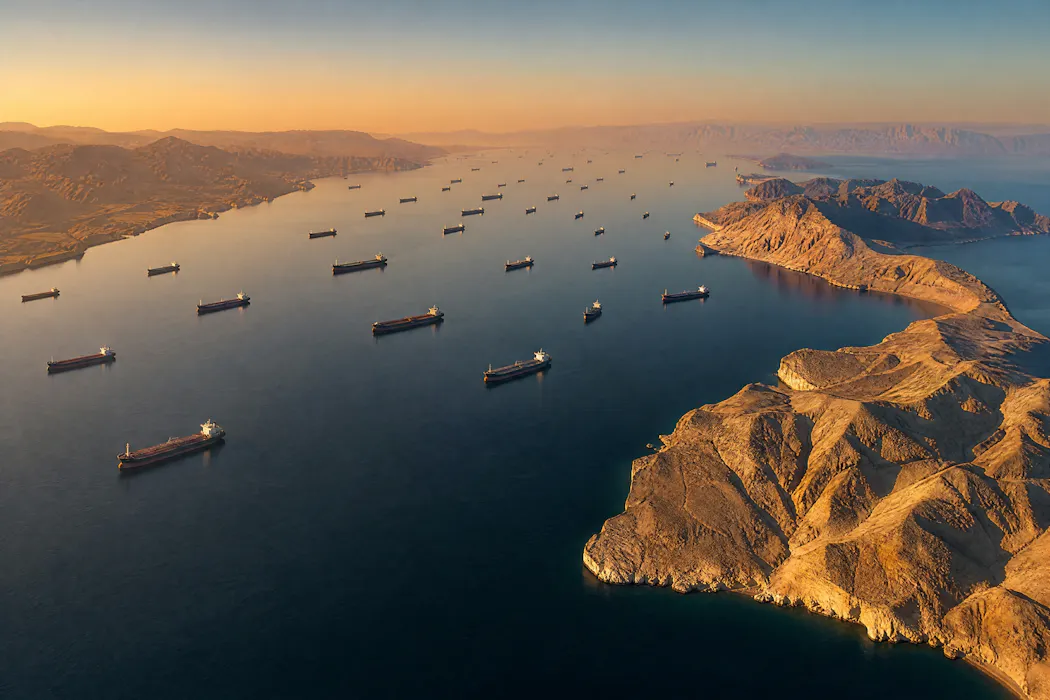
The war in Iran has led to a global energy crisis. Shipping traffic through the Strait of Hormuz, a major energy chokepoint that handles roughly 20% of the world’s oil, has been largely blocked by Iran since hostilities broke out in late February. This has, at times, caused oil prices to rise above US$100 a barrel.

As the primary customers of Gulf energy, Asian economies are being hit particularly hard by this crisis. According to figures published by the International Energy Agency in 2025, around 80% of the oil and petroleum products and nearly 90% of the LNG that transited the Strait of Hormuz that year were destined for Asia.

Not all countries in Asia are equally vulnerable. Those most exposed to energy market disruption share a set of structural characteristics: heavy reliance on imported fossil fuels, limited fiscal space and constrained energy systems that make it difficult to switch to alternatives quickly.

Countries such as Bangladesh, Pakistan and Sri Lanka are all heavily dependent on imported oil and gas to meet domestic demand. However, they lack the foreign exchange reserves needed to secure energy supplies in volatile global markets. When prices spike or supplies tighten, these economies are forced into painful trade-offs between energy access, inflation and fiscal stability.

Wealthier Asian economies such as Japan, South Korea, Hong Kong and Singapore have greater financial resources, granting them superior purchasing power in volatile markets. But they, too, are structurally exposed to global energy crises. Their energy systems are also deeply dependent on fuel imported from the Gulf, which leaves them sensitive to supply disruptions.

These countries have the fiscal capacity to maintain strategic energy reserves, providing them with temporary relief from disruption. Japan and South Korea, for example, have both initiated record-breaking releases from their state oil reserves since the start of the Iran war.

But with the exception of China, which has huge stockpiles of oil and LNG as well as robust domestic energy supply, these reserves are not designed to offset prolonged disruptions. Japan and South Korea’s national stockpiles only hold enough oil for around 200 days.

Governments under pressure

Faced with tightening supplies and rising prices, many Asian governments have moved quickly to curb energy demand. One of the most immediate responses has been to limit mobility. The Philippines, Pakistan and Sri Lanka have all introduced four-day working weeks or have extended public holidays to cut commuting and fuel use.

Pakistan has also introduced hybrid working arrangements for public-sector employees, encouraging remote work to reduce transport demand. Education systems have been similarly affected. Bangladesh brought forward Ramadan holidays in universities, while Pakistan closed schools for two weeks from March 10 and shifted higher education online.

In some cases, governments have introduced more direct restrictions. Myanmar’s military leaders have imposed fuel rationing and have restricted private vehicle use to alternating days based on licence plate numbers.

Other interventions have focused on managing demand in less disruptive ways. Thailand, for example, has raised recommended air-conditioning temperatures to 27°C and is encouraging energy-efficient workplace practices such as replacing suits with short-sleeved shirts.

Some Asian governments have turned to subsidies to shield households and businesses from rising energy costs. Indonesia has allocated tens of billions of US dollars to maintain affordable fuel and electricity prices, while Thailand has capped cooking gas prices and promoted alternative fuels such as biodiesel.

However, subsidies are proving difficult to sustain. For lower-income countries in particular, fiscal constraints limit how long such support can be maintained. Pakistan initially introduced targeted subsidies for farmers and the transport sector, but has been forced to scale them back as the crisis has continued.

Perhaps the most consequential response has been in Asia’s power sector. As energy supplies have tightened and prices surged, several Asian countries have reverted to coal – a fuel many nations have been phasing out.

Thailand has restarted two decommissioned units at the Mae Moh coal-fired power plant, while South Korea and Japan have lifted restrictions on coal generation to allow older plants to operate at higher capacity.

Smoke billows from chimneys at the Mae Moh coal power plant in Thailand.
The Mae Moh coal-fired power plant in Lampang, Thailand.
Tavarius / Shutterstock

The current energy market disruption has exposed structural vulnerabilities in Asia’s energy systems, including import dependence, limited diversification and fiscal constraints. Governments have relied on a mix of demand reduction, subsidies and fuel switching to limit the impact.

However, these are stopgap measures. If disruptions persist, these countries may be forced to rethink their energy strategies more fundamentally. This could accelerate investment in renewables and nuclear power, as well as efforts towards regional energy integration. But it also risks entrenching coal use and, in the process, hindering global climate goals.

Either way, the current crisis is a reminder that energy security and economic stability remain tightly intertwined and that disruptions in a single chokepoint can ripple across the global economy.

The Conversation

The authors do not work for, consult, own shares in or receive funding from any company or organisation that would benefit from this article, and have disclosed no relevant affiliations beyond their academic appointment.

ref. Some countries in Asia are rationing energy – why they’ve been hit hardest by the crisis in the Gulf – https://theconversation.com/some-countries-in-asia-are-rationing-energy-why-theyve-been-hit-hardest-by-the-crisis-in-the-gulf-279888

Hungary election: how a new opponent has forced Viktor Orbán into the first genuinely competitive race in 16 years

Source: The Conversation – UK – By Zsofia Bocskay, Postdoctoral Researcher, CEU Democracy Institute, Central European University

For the first time since Viktor Orbán came to power in 2010, the Hungarian electorate is faced with a genuinely competitive campaign ahead of the 2026 general election on April 12.

For the past 16 years, Prime Minister Orbán’s party Fidesz has dominated. Faced with smear campaigns and attacks portraying opponents as a threat to national interests and sovereignty, any opposition has been fragmented and ineffectual, held together by uneasy alliances.

This time round, however, Fidesz’s hold is threatened by a single challenger, the Respect and Freedom Party (Tisza), which is currently leading by around 20 percentage points in the polls. Founded in 2020 and led by Péter Magyar since 2024, this centre-right party positions itself as a cross-ideological alternative. Its main focus is tackling government corruption and improving living standards and public services. Its international stance is pro-European and unifying.

The 2026 contest comes at a time of economic strain and growing public dissatisfaction. Hungary is one of the EU’s poorest member states. It also ranks among the most corrupt in international indices. Voters are therefore not just choosing between parties, but between the continuation of an entrenched system and what the Tisza is framing as a regime change.

Hungary is widely described as a competitive autocracy. Elections are regularly held, but the government dominates most of the media and benefits from institutional rules that favour it. Research bears this out. Campaigns in competitive autocracies occur in constrained information environments: governments dominate the media, limit opposition visibility, and, as studies I have contributed to show, often disseminate misinformation from the top.

The monument on Budapest's Heroes' Square under a pale sky.
The opposing parties drew huge crowds to Heroes’ Square and the Hungarian Parliament on March 15 this year.
Wikimedia, CC BY

Increased public engagement

Fidesz has reshaped the country’s political system in ways that help it retain a durable electoral advantage. Since 2010, televised debates have disappeared from election campaigns. Around 85% of the media is now controlled by pro-government outlets that often convey identical narratives.

In line with these constraints, the government’s rhetoric has centred on security for over a decade. In 2022, Russia’s invasion of Ukraine gave new momentum to the Fidesz campaign. It framed the opposition as pro-war. Campaign events were held in controlled settings, with Orbán appearing in pro-government media and smaller local events.

The 2026 election campaign has been different. Orbán is now campaigning more actively across the country. While he has continued to claim that the opposition, aligned with Ukraine and the EU, would take Hungary to war, he has been making frequent appearances and directly engaging with voters. Other government figures have also taken on a more visible role. Ministers are touring the country and appearing at campaign events.

The party has also made efforts to strengthen its social media presence as a way to distribute pro-government messages.

Despite this, the government’s control over the campaign agenda has been less stable than in previous elections. Increased exposure has come with greater risks.
High-profile party members have generated public controversy. In January, transportation minister János Lázár drew ire for comments he made about the country not needing foreign labour, in which he also insulted Hungarian Roma.

Elsewhere, there have been confrontations at campaign events, where protesters have openly challenged the prime minister and black-clad security personnel have intervened. Anti-government protests at these events have also multiplied, reflecting this more direct and less controlled campaign environment.

Robust opposition

This shift is in direct response to the challenge Tisza poses. The party emerged as a major contender following the 2024 European parliamentary elections.

Magyar is a former Fidesz member and the ex-husband of the former justice minister Judit Varga. He entered frontline politics in early 2024, distancing himself from the government following the presidential pardon scandal, which led to the resignation of both Varga and president Katalin Novák. He later released a recording of Varga referring to alleged interference in a major corruption case.

He has spent the past two years touring the country and building local Tisza organisations. In his speeches, streamed on social media, Magyar often responds within hours to government-related developments then returns to them in later appearances. Following allegations of intelligence interference targeting his party, he quickly incorporated the issue into his campaign.

Cost of living

This campaign is unfolding against a backdrop of difficult economic conditions. Inflation is high, living costs are rising, the economy is stagnant. Research shows that competitive authoritarian governments, like Orbán’s, use propaganda to shape media narratives and reduce the salience of economic problems for voters. Tisza, by contrast, has made living standards a central theme.

In the final weeks of the campaign, Magyar has emphasised the argument that Orbán’s government is aligned with Russia and highlighted concerns about election rigging as a basis to call for electoral reform. Orbán has struggled to push back on all counts and has found itself unable to shift the campaign agenda back towards security issues.

Magyar’s party has also demonstrated its ability to connect to the public. On March 15, a key national holiday marking the 1848 Revolution, Tisza held a rally in Heroes’ Square, Budapest, rivalling the government’s own peace march. Sources vary on the scale of both events. Fidesz quoted the Hungarian Tourism Agency’s figures of 180,000 people at the government’s march, and 150,000 at Tisza’s. Politico quoted sources close to the opposition estimating their attendees numbering over 350,000.

In his speech at his march, Orbán again framed the election as a contest between peace and war, casting it as a decision between himself and Ukrainian President Volodymyr Zelenskyy. Magyar, however, used national symbols and historical references to present the vote as a decisive turning point in Hungary’s political direction.

For years, Fidesz shaped campaigns on its own terms, limiting uncertainty. The current campaign shows that this control can be disrupted: rather than responding to government attacks, the opposition has set the agenda by elevating issues that mobilise public attention, forcing the government into a more competitive mode of campaigning.

This election therefore presents the possibility of more than a routine change of government. It could mark a turning point for the political system. Whether or not such a shift materialises, the campaign demonstrates that even in constrained environments, ruling parties can be pushed into forms of competition more typical of democratic settings. Once this happens, structural advantages no longer compensate for the strategic demands of open contest.

The Conversation

Zsofia Bocskay does not work for, consult, own shares in or receive funding from any company or organisation that would benefit from this article, and has disclosed no relevant affiliations beyond their academic appointment.

ref. Hungary election: how a new opponent has forced Viktor Orbán into the first genuinely competitive race in 16 years – https://theconversation.com/hungary-election-how-a-new-opponent-has-forced-viktor-orban-into-the-first-genuinely-competitive-race-in-16-years-279941

The more commodified your job, the more likely AI can do it – lessons from online freelancing

Source: The Conversation – UK – By Fabian Stephany, Assistant Professor, AI and Work, University of Oxford

Gorodenkoff/Shutterstock

Not long ago, if you needed a speech polished, a document translated or a logo designed, you would probably have hired a freelancer online. Millions of people did exactly that. They went to platforms such as Fiverr and Upwork and paid someone (maybe on the other side of the world) to do the job.

In 2023, online gig workers were estimated to number between 154 million and 435 million globally. As such, they could represent as much as 12.5% of the global labour force.

Today, however, many people do something else. They open ChatGPT. Generative AI now acts as a copy editor, translator, illustrator and research assistant in one. It can summarise a report in seconds, write social media posts, create a presentation or produce a simple logo at virtually no cost.

What, then, has happened to the freelancers who used to do this work?


AI has long been discussed as a threat to jobs and livelihoods. But what’s the reality? In this new series, we explore the impact it is already having on different occupations – and how people really feel about their AI assistants.


Some freelancers are struggling. But perhaps surprisingly, others are doing better than ever.

Demand and wages have fallen for some kinds of online freelance work. Translation, basic copywriting and simple graphic design have been hardest hit. According to one study, demand for freelance writers was found to have fallen by up to 30% after the release of generative AI tools. Other research suggests that freelancers who are highly exposed to AI saw earnings fall by as much as 14%.

Yet there is also evidence that many freelancers are thriving. Freelancer platform Upwork reports that higher-value contracts – those worth more than US$1,000 (£745) – increased across various disciplines after the arrival of generative AI. Freelancers using AI-related skills earn around 40% more than comparable freelancers who do not.

How can both of these things be true? The answer becomes clearer when you stop thinking about “freelancers” as one group and instead look at the tasks and skills they perform.

Some kinds of freelance work are highly commodified. They consist of narrowly defined, repetitive tasks that can be clearly described and easily compared. This could be things like translating a document, summarising a report, drafting a press release or designing a basic logo.

These tasks are exactly what generative AI is good at. They rely on patterns, templates and predictable instructions. The more closely a freelancer’s work resembles the tasks that AI can perform, the more likely it is to come under pressure.

But other freelancers do not sell a single narrow skill. They sell a more complex bundle of expertise. A legal translator does not merely convert words from one language to another. They understand legal terminology, cultural nuance and the risks of getting a phrase wrong.

Similarly, a branding consultant combines design with market research and consumer psychology. A software developer may use AI to generate code, but still needs to understand the client’s business problem to decide which solution actually works.

These workers can use AI to automate the repetitive parts of their jobs while concentrating on the aspects that clients still value most: expertise, judgment and trust.

Online today, in the office tomorrow

This matters far beyond online freelancing platforms. Online labour markets often act as an early warning system for the wider economy. This work is more transactional and less protected by the institutions that shape conventional employment (things like long-term contracts, internal promotion ladders and unions).

Because tasks are posted, bought and completed on the open market, technological change shows up there more quickly than in ordinary workplaces. What happens on Fiverr or Upwork today may happen in offices tomorrow.

This is already becoming visible in law firms, consultancy companies and marketing agencies. Many junior employees spend much of their time summarising documents, preparing presentations, drafting reports or conducting basic research. These are precisely the kinds of tasks that AI can perform.

Recent evidence from the US labour market suggests that younger and less-experienced workers are already bearing the brunt of AI-related disruption. Senior workers, by contrast, tend to do more complex work, combining technical knowledge with experience and human interaction.

someone pointing to a  section of a contract while another person offers them a pen.
Legal translation is more than converting words from one language to another.
CrizzyStudio/Shutterstock

The response should not be to compete with AI at the things AI already does well. Instead, workers need help building deeper forms of expertise and combining skills in ways that are harder to automate.

This is in the interest of workers, but also of the platforms themselves. Fiverr, Upwork and others promise clients efficient and high-quality work. If routine tasks are increasingly automated away, they will depend more heavily on workers who can offer something more than a standardised service.

That means platforms should actively provide skill-building courses, training resources and guidance on how to use AI productively. They could also offer micro-credentials that certify newly acquired expertise. These credentials have been found to help workers enter online labour markets and increase their earnings.

The challenge, then, is not to stop people from using AI. It is to ensure that workers are not trapped in forms of work that are so narrow, standardised and commodified that they can easily be automated away. The future of online (and onsite) work may depend less on whether we use AI than on whether our jobs can be reduced to something an AI can easily imitate.

The Conversation

Fabian Stephany does not work for, consult, own shares in or receive funding from any company or organisation that would benefit from this article, and has disclosed no relevant affiliations beyond their academic appointment.

ref. The more commodified your job, the more likely AI can do it – lessons from online freelancing – https://theconversation.com/the-more-commodified-your-job-the-more-likely-ai-can-do-it-lessons-from-online-freelancing-280236

The human body isn’t a masterpiece of design – it’s a patchwork of evolutionary compromise

Source: The Conversation – UK – By Lucy E. Hyde, Lecturer, Anatomy, University of Bristol

Our bodies are a living archive of evolution. ZCOOL HelloRF/ Shutterstock

The human body is often described as a marvel of “perfect design”: elegant, efficient and finely tuned for its purpose. Yet, when we look closer, a rather different picture emerges.

Far from being a flawless machine, the body reads more like a patchwork of compromises shaped by millions of years of evolutionary tinkering. Evolution does not design structures from scratch. Rather, it modifies what already exists.

As a result, many aspects of human anatomy are just “good enough” solutions – functional, but far from perfect. Some of the most familiar medical problems and ailments arise directly from these inherited constraints.

The spine

The human spine tells this story best.

Our vertebral column has evolved little from our four-legged, quadrupedal tree-dwelling ancestors, where it functioned primarily as a flexible beam for smooth movement from branch to branch, while also protecting the spinal cord.

When humans adopted an upright bipedal gait, the spine retained these functions. But it was also repurposed for the additional need of supporting our body weight vertically and maintaining our centre of gravity, while still allowing the flexibility for us to move. These opposing demands creates strain.

The characteristic curves of the human spine helps distribute weight, but it also predisposes us to lower back pain, herniated discs and degenerative changes affecting its most important function – protection the spinal cord and surrounding nerves. These conditions are extraordinarily common, not because the spine is inherently poorly made, but because it’s doing a job it was never originally designed to do.

The neck

Another clear argument against divine design is the recurrent laryngeal nerve, which takes a course that simply makes no sense to invent.

This nerve, which is a branch of the vagus nerve, predominantly controls our organs’ “rest and digest” functions (such as slowing heart rate and breath). The laryngeal nerve also connects the brain and larynx, helping control speech and swallowing.

Logically, one might expect it to use the most direct route to connect brain and larynx. Instead, it descends from the brain into the chest, loops around a major artery, then travels back up to the voice box.

This detour is not a clever design, but a historical leftover from our fish-like ancestors when the nerve took a straightforward path around the gill arches. As necks lengthened over evolutionary time, the nerve was stretched rather than rerouted.

This inefficiency can increase our vulnerability to injury during surgery.

The eyes

Even the eyes reflect evolutionary compromise.

In humans and other vertebrates, the retina (the light-sensitive layer at the back of the eyeball) is wired “backwards.” This means light must pass through layers of nerve fibres before reaching the photoreceptors – specialised cells responsible for detecting light and converting that into a nerve impulse to send to the brain.

The optic nerve then exits through the back of the retina, creating a blind spot just below the horizontal level of the eye where no vision is possible. The brain fills in this gap seamlessly, so we rarely notice it.

A close-up of the human eye, with a beam of light gathered at the top of the eyeball.
Our incredible vision has come with a compromise.
mark gusev/ Shutterstock

So while we’ve developed incredible vision and light receptor cells, this has happened at the expense of having a gap in our visual field.

The teeth

Our teeth offer another reminder that evolution prioritises adequacy over durability.

Humans develop two sets of teeth: baby teeth and adult teeth – and that’s all. Once adult teeth are lost, they’re not replaced – unlike sharks, which continually regenerate teeth throughout life.

In mammals, tooth development is tightly regulated and linked to complex jaw growth and feeding strategies. This system worked well for our ancestors, but for modern humans it leaves us vulnerable to decay and tooth loss.

Wisdom teeth provide another example of evolutionary lag. Our ancestors had larger jaws, suited to tougher diets that required heavy chewing. Over time, human diets softened and jaw size decreased. However, the number of teeth did not change as quickly. Many people no longer have space for their third molars – leading to impaction, crowding and often requiring surgical removal.

Wisdom teeth aren’t useless in principle, but they no longer fit comfortably within modern skulls.

The pelvis

Childbirth presents one of the most profound evolutionary compromises. Like the spine, the human pelvis must balance two competing demands: efficient bipedal walking and birthing large-brained infants.

A narrow pelvis improves locomotion, but restricts the birth canal’s size. Meanwhile, human babies have unusually large heads relative to body size, resulting in a difficult and sometimes dangerous birth process – often requiring outside assistance.

This tension between mobility and brain size has shaped not only anatomy but also social behaviour, encouraging cooperative care and cultural adaptations around childbirth.

Evolutionary persistence

Evolution doesn’t necessarily eliminate structures unless they impose a strong disadvantage. So some anatomical features persist despite offering limited benefit.

The appendix, once considered a completely useless evolutionary left-over, is now thought to have minor immune functions. Yet it can become inflamed, causing appendicitis – a potentially life-threatening condition.


Read more:
Intelligent design without a creator? Why evolution may be smarter than we thought


Similarly, the sinuses, have unclear functions. They may lighten the skull or influence voice resonance, and we can even use their size and variability for forensic identification. But the sinus’s drainage pathways go direct into the nose, making it prone to regular blockage and infection, a developmental byproduct rather than a purposeful adaptation.

Even tiny muscles around the ears hint at our evolutionary past. In many mammals, tiny ear muscles allow the outer ear (pinna) to swivel, improving directional hearing. Humans have these muscles, but most people cannot use them effectively.

Our bodies are not perfectly designed, but are a living archive of evolution. Anatomy reveals a historical record of adaptation, compromise and contingency. Evolution does not aim for perfection; it works with what is available, modifying structures step by step.

Understanding anatomy through this evolutionary lens can also help us reframe how we see common medical problems. Back pain, difficult childbirth, dental crowding and sinus infections are not random misfortunes. They are, in part, the consequences of our evolutionary history.

The Conversation

Lucy E. Hyde does not work for, consult, own shares in or receive funding from any company or organisation that would benefit from this article, and has disclosed no relevant affiliations beyond their academic appointment.

ref. The human body isn’t a masterpiece of design – it’s a patchwork of evolutionary compromise – https://theconversation.com/the-human-body-isnt-a-masterpiece-of-design-its-a-patchwork-of-evolutionary-compromise-279343