3 things to know about Kevin Warsh, Trump’s nod for Fed chair

Source: The Conversation – USA (2) – By D. Brian Blank, Associate Professor of Finance, Mississippi State University
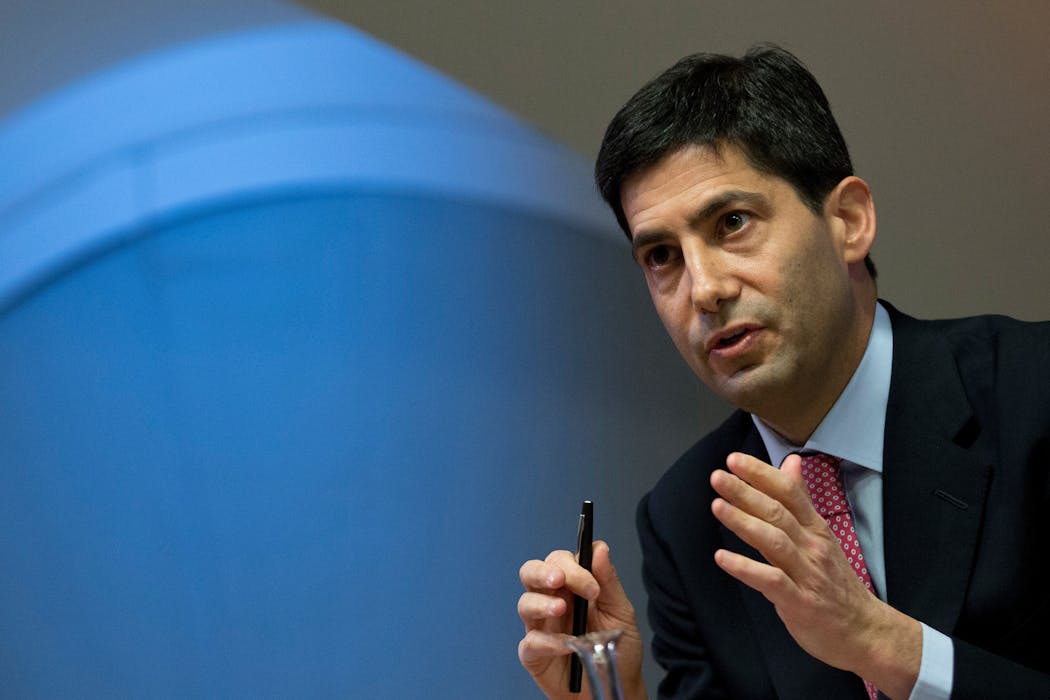
Kevin Warsh has been tapped by Donald Trump to lead the Federal Reserve. AP Photo/Alastair Grant

After months of speculation, President Donald Trump nominated Kevin Warsh on Jan. 30, 2026, to be the next chair of the Federal Reserve.

If confirmed by Congress, Warsh will inherit leadership of the U.S. central bank at a delicate time. For months, current Fed Chair Jerome Powell has come under attack from the Trump administration for failing to heed the president’s call for lower interest rates. The fight has put into question the central bank’s independence and its role in stewarding the economy.

Powell’s term as chair will end in mid-May, leaving his successor to navigate an economy that has improved on some fronts but remains uneven and uncertain.

But what should America expect from the next Fed chair? Here are three things to note about Trump’s nominee.

1. He is a familiar face …

Warsh brings deep experience with monetary policymaking to the role.

A graduate of Stanford University and Harvard Law School, he served as special assistant to the president for economic policy and executive secretary of the White House National Economic Council under President George W. Bush before becoming one of the youngest members of the Federal Reserve Board of Governors.

Warsh is no newcomer to discussions about Federal Reserve leadership. He was a finalist for the job in 2017, when Trump instead appointed Powell. Trump has since stated that he made a mistake by not selecting Warsh then – though clashes between Trump and Powell may have influenced that view.
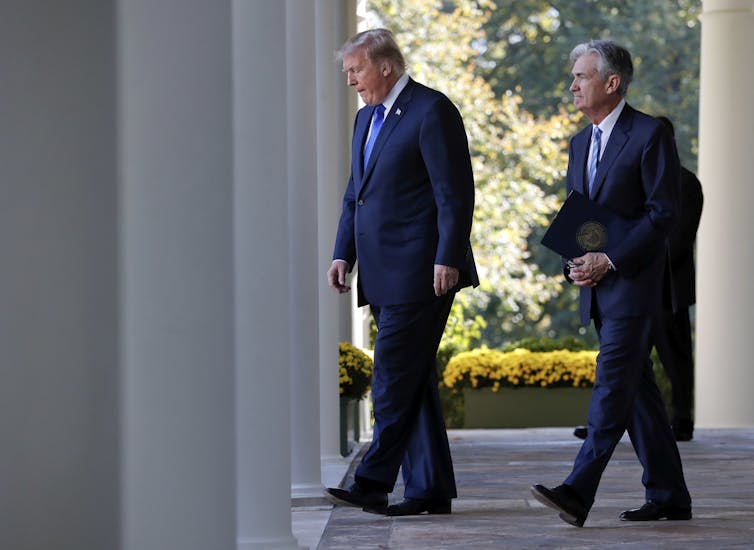
Two men in suits walk outside.
Fed Chair Jerome Powell increasingly found himself out of step with Donald Trump’s wishes.
AP Photo/Pablo Martinez Monsivais

Warsh’s credentials are unquestionable. As a governor of the Federal Reserve Board from 2006 to 2011, he worked closely with other policymakers and with Wall Street during the global financial crisis of 2008. Since departing the Fed, he has returned to Stanford as a visiting fellow at the Hoover Institution and a lecturer at the Graduate School of Business, as well as a member of the Panel of Economic Advisers of the Congressional Budget Office.

He also has ties to the finance industry. He began his career in mergers and acquisitions at Morgan Stanley and, since leaving the Fed, has worked as a partner at Duquesne Family Office, an investment firm that manages the personal wealth of hedge fund manager Stanley Druckenmiller and other investors.

In 2016, Trump included Warsh in an economic advisory group assembled during his transition. Critics of Warsh’s nomination point toward his father-in-law, Ronald Lauder, a college friend and donor of the president, as evidence of politicization.

2. … with evolving monetary views

The big question people have is what a Warsh Fed would mean for monetary policy – that is, is it likely to play tight or loose with rates.

When the economy is growing quickly, like in 2021, the Federal Reserve tightens policy by raising interest rates to avoid the kind of economic growth that may not be sustainable long term and can lead to bubbles. However, during downturns, like in 2008 or 2020, the economic policy that can provide a backstop for the economy is looser. The Fed tends to lower rates in these situations, which supports growth.

Warsh’s views on monetary policy have long been considered hawkish, meaning he is inclined toward tighter policy and generally higher interest rates to keep inflation in check, even at the expense of slower economic growth. During his previous tenure at the Fed, he signaled concern about expansive monetary tools such as quantitative easing, in which the central bank buys Treasurys and other securities to stimulate the economy. This resulted in what Warsh called a “bloated” Fed balance sheet that held almost US$9 trillion of debt at its peak in 2022.

In recent public remarks leading up to his nomination, however, he has increasingly aligned in part with Trump’s push for lower interest rates and discussed establishing a new Treasury-Fed Accord, like in 1951, when Fed independence from fiscal authorities such as the Treasury Department was established.

3. His nod highlights fight over Fed independence

A central question surrounding this nomination is whether it promotes the politicization of the Federal Reserve.

The Fed’s independence from day-to-day political pressure has long been viewed as a cornerstone of U.S. economic policymaking. Decisions about interest rates, inflation control and financial stability are insulated from electoral politics for that reason. A truly independent Fed can resist making decisions that provide a short-term economic bump – something incumbent governments tend to like – but may lead to longer-term economic pain down the road.

The Fed tends to use its monetary policy tools carefully. Yet politicians tend to want looser monetary policy so the economy grows fast and they get credit for it.

And Warsh’s nomination can be seen in the context of a broader push from the executive branch to exert greater influence over monetary policy. Given Trump’s public criticism of Powell and vocal calls for his early departure, the president almost certainly intended to nominate someone who would lower interest rates according to preferences stated by the administration.

Critics of the nomination have argued that Warsh has a tendency to be more opportunistic with his policy views than Powell and other economists, who try to ignore political preferences.

As such, Warsh’s nomination encapsulates more than just a leadership transition. It highlights the ongoing tensions between political priorities and the traditional economic playbook, between short-term growth pressures and long-term stability, and between institutional independence and democratic accountability.

Time will tell whether he turns out to be hawkish or politically motivated as chair, if he is confirmed.

The Conversation

The authors do not work for, consult, own shares in or receive funding from any company or organization that would benefit from this article, and have disclosed no relevant affiliations beyond their academic appointment.

ref. 3 things to know about Kevin Warsh, Trump’s nod for Fed chair – https://theconversation.com/3-things-to-know-about-kevin-warsh-trumps-nod-for-fed-chair-274781


Introducing our new Science & Technology editor

Source: The Conversation – Canada – By Kim Honey, CEO|Editor-in-Chief, The Conversation

The Conversation Canada is thrilled to announce Heather Walmsley, one of the
founding editors who helped us launch in 2017, is returning to the fold. She was instrumental in establishing The Conversation Canada as an independent source of news and views from the academic and research community. Over the next three years, she edited science, education and health articles and helped grow our news coverage, audience and university membership.

Heather will be our Science & Technology editor, and these two beats are a key part of our mission to share trusted academic knowledge with the public. She comes to The Conversation Canada from the University of Victoria, where she worked for the Office of the Vice President Research and Innovation, raising the profile of health research across campus. She has worked in journalism, research and knowledge mobilization for a variety of media outlets, non-profits and research institutions in the United Kingdom and Canada.

Heather has MA degrees in anthropology and postcolonial literature from the universities of Edinburgh and Sussex, a PhD in science and technology studies from Lancaster University and held a SSHRC Banting Postdoctoral Fellowship in medical sociology at the University of British Columbia.

Her editing expertise, ideas and deep understanding of our mandate will be a boon to the newsroom. As The Conversation Canada matures from a scrappy startup to a trusted non-profit news organization, Heather will be a great asset on the eve of our 10th birthday. We can’t wait until she starts on Feb. 23.

Welcome Heather!

The Conversation

ref. Introducing our new Science & Technology editor – https://theconversation.com/introducing-our-new-science-and-technology-editor-274769

Animals might be sentient in the law’s eyes, but how they’re treated still varies hugely

Source: The Conversation – UK – By Angus Nurse, Professor of Law and Environmental Justice, Anglia Ruskin University

CHAIWATPHOTOS/Shutterstock

Caged hens will be a thing of the past. Puppy farming will be stopped. New laws will enforce humane slaughter standards. All this is part of a new animal welfare strategy for England announced by the government in December 2025.

The prospect of new animal welfare laws and better enforcement shows an intention to improve animal welfare standards and reduce animal suffering.

This follows the adoption into UK law in 2022 of the idea that animals are sentient beings. The Animal Welfare (Sentience) Act means that government has to check whether its policies consider and minimise any negative consequences for animal welfare. Other jurisdictions that have recognised animal sentience include the EU, New Zealand and parts of Canada and Australia.

But the wording of the law rarely means animal welfare should actually be prioritised. Instead, it means that animal welfare must be considered and properly taken into account. Where policy fails to do this it could be argued that there has been a failure in the decision-making process.

Ultimately, despite the legal recognition of sentience, the variety of welfare laws and policies highlights that how we treat animals still differs depending on their type and on how humans value or act around them.

The UK’s animal sentience committee, the official body that scrutinises the government’s animal welfare policy, recently identified some areas where policy falls short of properly considering animal welfare – for example, through inconsistent monitoring and enforcement of animal welfare standards. The committee also suggested there were “substantial” gaps in animal welfare enforcement.


Read more:
How the world might look if animals had legal rights


Although animal sentience is recognised in law, animals are still treated as “things” in law and policy. While they have some protections, many people still consider them as our property. This is despite laws that create animal welfare standards and try to reduce animal harm by requiring the consideration of animal needs.

busy pig enclosure at farm, one pig looking up to camera
Pigs are often farmed in crowded conditions.
Mark Agnor/Shutterstock

When animals are viewed as food or needed to make products like milk or clothing, their sentience might not carry much weight. Clearly animals kept for meat will be killed but in this case, laws will usually require that slaughter is carried out “humanely” and that animals should suffer as little as possible before death.

Battery cages for poultry were banned in the UK in 2012, but “colony cages” (those that allow a larger number of hens to be kept in close proximity) are still allowed despite being considered by animal campaign groups and activists as cruel.

Some animals, such as crows or grey squirrels, are regarded as “pests” so that they can be killed or taken to protect human interests. Some controls are permitted as part of wildlife management to protect livestock or crops, for example and can be covered by what’s known as a general licence.

Specific animals can be killed or taken without a clear identification and justification of the necessity of management or control. The law also allows control of pests on your property – this can include using poisons as long as the law is followed.

Five freedoms

Wild animals tend to be treated differently to companion animals like dogs and cats, which get more protection than wildlife mainly because they depend on humans for food and shelter. The law gives these companions a type of rights by creating legal obligations, sometimes creating a duty of care towards them.

The UK’s Animal Welfare Act (2006) does more than just prevent animal cruelty. It creates a duty for people who own or care for companion animals to actively provide animal welfare.

These so-called “thin” rights are a limited form of rights that mean if you have a companion you must cater for the specific needs of your animals and ensure that the individual animal’s needs are met according to the “five freedoms”. These were developed in the 1960s following a major government report into the welfare of intensively farmed animals.

The five freedoms were then formally established by the Farm Animal Welfare Council – the independent body that has advised the UK government – as the basis of good animal welfare. These include freedom from hunger and thirst, discomfort, pain, disease and distress.


Read more:
Animal sentience bill is necessary for the UK to be a true world leader in animal welfare


Thin rights are different to “thick” rights whereby the law protects all of an animal’s fundamental interests such as an absolute right to life – such as the right not to be killed for human clothing or to be killed to benefit human commercial interests. The thick approach would prevent most actions that would interfere with an animal’s rights.

A logical conclusion of applying thick rights would be an abolition of most if not all animal use, including the use of animals for food. The late animal rights lawyer Steven Wise argued that “without legal personhood, one is invisible to civil law. One has no civil rights. One might as well be dead”. A thick approach gives animals rights not to be treated as “things”.

Author George Orwell wrote in his 1945 book, Animal Farm, “All animals are equal, but some animals are more equal than others.” He might have meant it as satirical comment on the Soviet Union, but the limitations of legal sentience for animals means it can be applied in a more literal way today. If we truly believe that all sentient creatures deserve protecting, the world has a long way to go to put this into practice.


Don’t have time to read about climate change as much as you’d like?

Get a weekly roundup in your inbox instead. Every Wednesday, The Conversation’s environment editor writes Imagine, a short email that goes a little deeper into just one climate issue. Join the 47,000+ readers who’ve subscribed so far.


The Conversation

Angus Nurse has received research funding from animal welfare organisations including the International Fund for Animal Welfare (IFAW) the RSPCA and Humane World for Animals (formerly called Humane Society International). He is an independent member of the Wild Animal Welfare Committee (WAWC)

ref. Animals might be sentient in the law’s eyes, but how they’re treated still varies hugely – https://theconversation.com/animals-might-be-sentient-in-the-laws-eyes-but-how-theyre-treated-still-varies-hugely-272579

Facial recognition technology used by police is now very accurate – but public understanding lags behind

Source: The Conversation – UK – By Kay Ritchie, Associate Professor in Cognitive Psychology, University of Lincoln

New policing proposals include raising the number of live facial recognition vans in England and Wales from ten to 50. Mounir Taha/Shutterstock

The UK government’s proposed reforms to policing in England and Wales signal an increase in the use of facial recognition technology. The number of live facial recognition vans is set to rise from ten to 50, making them available to every police force in both countries.

The plan pledges £26 million for a national facial recognition system, and £11.6 million on live facial recognition technology. The announcement has come before the end of the government’s 12-week public consultation on police use of such technology.

The home secretary, Shabana Mahmood, claims facial recognition technology has “already led to 1,700 arrests in the Met [police force] alone – I think it’s got huge potential.”

We have been researching public attitudes to the use of this technology around the world since 2020. While accuracy levels are constantly evolving, we have found people’s awareness of this is not always up to date.

In the UK, the technology has so far been used by police in three main ways. All UK forces have the capability to use “retrospective” facial recognition for analysis of images captured from CCTV – for example, to identify suspects. Thirteen of the 43 forces also use live facial recognition in public spaces to locate wanted or missing individuals.

In addition, two forces (South Wales and Gwent) use “operator-initiated facial recognition” through a mobile app, enabling officers to take a photo when they stop someone and then compare their identity against a watchlist containing information about people of interest – either because they have committed a crime or are missing.

In countries such as China, facial recognition technology has been used more widely by the police – for example, by integrating it into realtime mass surveillance systems. In the UK, some private companies including high-street shops use facial recognition technology to identify repeat shoplifters, for example.

Despite this widespread use of the technology, our latest survey of public attitudes in England and Wales (yet to be peer reviewed) finds that only around 10% of people feel confident that they know a lot about how and when this technology is used. This is still a jump from our 2020 study, though, when many of our UK focus group participants said they thought the technology was just sci-fi – “something that only exists in the movies”.

A longstanding concern has been the issue of facial recognition being less accurate when used to identify non-white faces. However, our research and other tests suggest this is not the case with the systems now being used in the UK, US and some other countries.

How accurate is today’s technology?

It’s a common misconception that facial recognition technology captures and stores an image of your face. In fact, it creates a digital representation of the face in numbers. This representation is then compared with digital representations of known faces to determine the degree of similarity between them.

In recent years, we have seen a rapid improvement in the performance of facial recognition algorithms through the use of “deep convolutional neural networks” – artificial networks consisting of multiple layers, designed to mimic a human brain.

Surrey and Sussex police forces unveil new live facial recognition vans, November 2025. Video: Sussex Police.

There are two types of mistake a facial recognition algorithm can make: “false negatives”, where it doesn’t recognise a wanted person, and “false positives” where it incorrectly identifies the wrong person.

The US National Institute of Standards and Technology (Nist) runs the world’s gold standard evaluation of facial recognition algorithms. The 16 algorithms currently topping its leaderboard all show overall false negative rates of less than 1%, while false positives are held at 0.3%.

The UK’s National Physical Laboratory’s data shows the system being tested and used by UK police to search their databases returns the correct identity in 99% of cases. This accuracy level is achieved by balancing high true identification rates with low false positive rates.

While some people are uncomfortable with even small error rates, human observers have been found to make far more mistakes when doing the same kinds of tasks. Two of the standard tests of face matching ask people to compare two images side-by-side and decide whether they show the same person. One test recorded an error rate of up to 32.5%, and the other an error rate of 34%.

Historically, when testing the accuracy of facial recognition technology, bigger error rates have been found with non-white faces. In a 2018 study, for example, error rates for darker-skinned women were 40 times higher than for white men.

These earlier systems were trained on small numbers of images, mostly white male faces. Recent systems have been trained on much larger, deliberately balanced image sets. They are actively tested for demographic biases and are tuned to minimise errors.

Nist has published tests showing that although the leading algorithms still have slightly higher false positive rates for non-white faces compared with white faces, these error rates are below 0.5%.

How the public feel about this technology

According to our January 2026 survey of 1,001 people across England and Wales, almost 80% of people now feel “comfortable” with police using facial recognition technology to search for people on police watchlists.

However, only around 55% said they trust the police to use facial recognition responsibly. This compares with 79% and 63% when we asked the same questions to 1,107 people throughout the UK in 2020.

Both times, we asked to what extent people agree with police using facial recognition technology for different uses. Our results show the public remains particularly supportive of police use of facial recognition in criminal investigations (90% in 2020 and 89% in 2026), to search for missing persons (86% up to 89%), and for people who have committed a crime (90% down slightly to 89%).

There are lots of examples of facial recognition’s role in helping police to locate wanted and vulnerable people. But as facial recognition technology is more widely adopted, our research suggests the police and Home Office need to do more to make sure the public are informed about how it is – and isn’t – being used.

We also suggest the proposed new legal framework should apply to all users of facial recognition, not just the police. If not, public trust in the police’s use of this technology could be undermined by other users’ less responsible actions.

It is critical that the police are using up-to-date systems to guard against demographic biases. A more streamlined national police service, as laid out in the government’s latest white paper, could help ensure the same systems are being used everywhere – and that officers are being trained consistently in how to use these systems correctly and fairly.

The Conversation

The authors do not work for, consult, own shares in or receive funding from any company or organisation that would benefit from this article, and have disclosed no relevant affiliations beyond their academic appointment.

ref. Facial recognition technology used by police is now very accurate – but public understanding lags behind – https://theconversation.com/facial-recognition-technology-used-by-police-is-now-very-accurate-but-public-understanding-lags-behind-274652

ICE at the Winter Olympics and the reshaping of intelligence and security in Europe

Source: The Conversation – UK – By Robert Dover, Professor of Intelligence and National Security & Dean of Faculty, University of Hull

A diplomatic row is brewing over US plans to involve agents from Immigration and Customs Enforcement (ICE) in its security arrangements for the 2026 Winter Olympics in Milan.

The city’s mayor, Giuseppe Sala, described ICE as “a militia that kills,” adding that: “They’re not welcome in Milan.” While this specific deployment has created a strong political debate in Italy, it can be seen as an element in a wider recalibration of European security.

This is due to the perception that there is a widening gap in values and security practice between the US and Europe, with only the Hungarian prime minister Viktor Orban remaining uncritical of the US administration.

The changes in cooperation can also be put down to the dwindling trust European powers have in the US as an ally. This is not without precedent. But it is notable that disruptions to intelligence are happening more often and more deeply under the two Trump presidencies, suggesting this is becoming the norm.

Many people in Italy are aware of the Trump administration’s use of ICE in an enforcement capacity in Minneapolis and other US cities. The recent shootings of two US citizens whose were protesting against ICE’s mission to identify, round up and deport people considered to be illegal immigrants in Minneapolis have exacerbated Italian unease.

Alessandro Zan, a politician representing Italy’s Democratic party, took to social media to register a strong objection. He posted on X: “In Italy, we do not want those who trample on human rights and act outside of any democratic control. It is unacceptable to think that an agency of this kind could have any role whatsoever in our country.”

Italy’s foreign minister, Antonio Tajani, has attempted to play matters down, saying, “It’s not like the SS are coming.” But the perception of ICE agents as poorly trained and tending towards violence has been compounded by an incident between agents and a news crew from the Italian state broadcaster RAI in Minneapolis on January 25. RAI footage showed agents armed and wearing bulletproof vests threatening to smash the journalists’ car window and pull them out of the vehicle.

Until the recent controversies in its domestic immigration enforcement role, the use of ICE abroad has been uncontroversial. Jason Houser, a former ICE chief of staff, told journalists that ICE is regularly deployed at events the US is involved with in other countries as part of coordinated security provision.

ICE, he said, will be “supporting the US Department of State’s Diplomatic Security Service and host nation to vet and mitigate risks from transnational criminal organizations”. ICE will also be under the control of the Diplomatic Security Service (DSS). But Elly Schlein, the leader of Italy’s Democratic party, expressed concern about hosting “an armed militia that is not respecting the law on American soil”, raising the prospect that ICE agents would not respect Italian law either.

Principled approach

Perceptions that US intelligence or law enforcement agencies sometimes push the boundaries of international law – or breach it altogether – have led to friction in the past. There was a definite chill between the US and its allies over the US rendition programme in the global “war on terror” in the early 2000s.

Suspects could be rendered (which is another way of describing, in effect, sanctioned kidnapping) and taken to prisons in third countries. In the case of British resident Binyam Mohamed (2004), his rendition and torture by US authorities, and the disclosure of evidence revealing this in a British court, resulted in the then US president, Barack Obama, restricting the flow of intelligence to the UK.

Rendition and torture were widely considered to be American failures to comply with international law. It resulted in the UK changing its intelligence sharing through what are known as the Fulford principles.

Named after Sir Adrian Fulford, the former investigatory powers commissioner who in 2010 published the UK’s official guidance for intelligence agencies detaining and interviewing detainees abroad, this stopped British officials providing intelligence that might lead to torture.

In 2020, the UK Supreme Court ruled that the UK government had acted unlawfully in sharing information with US authorities regarding El Shafee Elsheikh and Alexanda Kotey (two of the so-called “Isis Beatles” terror cell). The two men faced prosecution in a US court which could have resulted in them facing the death penalty. The decision meant that British intelligence and security agencies cannot share information that might lead to the death penalty. This strengthened the Fulford principles.

But even back-office intelligence roles have been disrupted in the recent past. After the bombing of Ariana Grande’s concert in Manchester in 2017, there were US administration leaks to the New York Times of forensic evidence and the identities of the perpetrators. The prime minister at the time, Theresa May, then cut the flow of UK intelligence to the US for 24 hours in response.

The UK has also restricted the flow of intelligence around Latin American drug movements to avoid potential breaches of international law as the US has sought to eliminate seaborne drug traffickers in the Caribbean.

Where now for intelligence sharing?

The deployment of a branch of ICE at the Winter Olympics has become controversial because of how Europeans perceive ICE’s domestic operations. It is also because Europeans are seeking ways to say no to Donald Trump and the manner in which his administration is projecting US power abroad.

Consequently ICE, as an agency seen as having close ties to the US president, has become an attractive option for this opposition and they will remain under close scrutiny.

This small but politically divisive issue is important because it tells us a lot about the current state of transatlantic security. The shared values that have shaped the world since the second world war are under considerable strain. The practice and conduct of the respective sides has increasingly been called into question.

Europe seems close to trying to work out how to do security without America. If so, that would be an era-defining change.

The Conversation

Robert Dover does not work for, consult, own shares in or receive funding from any company or organisation that would benefit from this article, and has disclosed no relevant affiliations beyond their academic appointment.

ref. ICE at the Winter Olympics and the reshaping of intelligence and security in Europe – https://theconversation.com/ice-at-the-winter-olympics-and-the-reshaping-of-intelligence-and-security-in-europe-274551

The type of job you do could be affecting your ability to save money – and not just because of the salary

Source: The Conversation – UK – By Karina Pavlisa, Lecturer in International Business Management, University of Bristol

Finances don’t figure much in the workday of an artist. DimaBerlin/Shutterstock

It’s often said that millions of people in the UK don’t save enough – with one in ten adults saving no money at all. That figure from a 2025 report from the Financial Conduct Authority regulator came with a warning that it’s leaving people walking a financial tightrope.

The UK household saving ratio (the proportion of income available but not spent) stood at 11.1% in 2024, below the EU average of around 14.5%. This gap shows the importance of encouraging a savings habit among the UK population.

Research shows that even modest savings buffers significantly improve financial resilience. A reserve of £2,000, for example, halves the risk of someone falling behind with bills in later years.

Gaps in income are often named as a key reason for not saving enough, alongside limited numeracy skills. But there are other dimensions that explain why some groups tend to save more than others.

Women, for example, are less likely to save than men. But this is just one part of the picture. My latest research suggests that people’s ability to navigate their finances stems partly from their professional background.

Workers in some professions are much more likely to save than others – and not necessarily because they earn more. Different professions encourage different competencies, habits and ways of thinking, as well as social influences. Financial confidence is a lifelong pursuit, yet my study found it comes more easily to people in some professions.

Who is more likely to save?

To understand these dynamics and test the differences between professions, I explored data from the Understanding Society survey, which explores social and economic change using data collected from around 40,000 UK households every year.

My study focused on more than 37,000 adults in the UK between 2009 and 2019. It adjusted the data to account for the effects of income and characteristics such as age and number of children, to examine how much (and how likely) people in various professions are to save.

Even with similar income increases, people working in business, finance and sales were 31 percentage points more likely to save every month than creative professionals and ten percentage points more likely than those in education.

Professions in business, finance and sales tend to encourage commercial acumen and confidence in handling financial decisions. And their workplaces are often guided by commercial logic, the need to save money, risk assessment, and more pronounced on-the-job learning about financial decision-making. This normalises discussions about money.

woman delivering a presentation to colleagues with charts and graphs on a screen behind her.
Financial acumen is built into some professions.
fizkes/Shutterstock

By contrast, creative professionals such as artists and writers, whose fields emphasise intrinsic motivation and creative fulfilment, are significantly less likely to save, even when their income increases.

Similar patterns appeared across managerial occupations. Corporate directors working in more finance-aligned environments were 40 percentage points more likely to save every month than managers in sectors such as retail, logistics and hospitality.

Of course, professional environments orientated towards finance draw on employees with relevant backgrounds. But finance-related conversations are also more common in these workplaces, and this can strengthen personal money-management capabilities.

We tend to think that saving is mainly down to an individual – their planning, numerical skills, confidence, and family background. Yet some careers build financial resilience more actively, while others do not. Professional environments in some ways represent the hidden structures that shape how people think about managing money. This creates a structural advantage (or disadvantage).

Differences in saving behaviour and ways of thinking about money translate into larger gaps in financial resilience. This is a subtle driver of financial inequality. Jobs quietly and subtly “teach” financial habits and norms, and workers should be aware that their professional circle may bias their financial habits.

One practical approach is to look beyond your own occupational circle, observing how friends in professions with stronger financial cultures talk about money – and adopting some of their planning strategies. If your role gives you little exposure to financial decision-making, you could seek out this knowledge by surrounding yourself with people who discuss finances. Using financial-literacy tools such as apps, podcasts or articles can also help to fill that gap.

Importantly, people tend to blame themselves for a lack of discipline and planning. My study shifts some of this blame on to other, broader conditions. It does not suggest that personal discipline is unimportant. But replacing self-blame with an awareness that your social and professional environments can be more or less supportive of financial resilience can build confidence and encourage positive steps forward.

This also has implications for employers, especially in workplaces or departments that are less orientated towards finance. For example, efforts to support employees’ financial resilience could include practical sessions with advisers who can teach money-management skills, talk through steps to strengthen financial resilience and discuss ways of short-term and long-term saving.

While this study illustrates the significance and size of disparities in saving habits, its findings could help to identify solutions. Universities, for example, are well placed to offer financial education. Similar to my findings about professions, students in some subjects (such as the arts, humanities, social sciences or health fields) may particularly benefit from workshops or modules to feel more confident about money matters.

Good savings habits are not only a matter of individual choice – social and structural factors also play a part in financial resilience and have implications for inequality. Initiatives aimed at improving financial wellbeing should recognise that when it comes to saving, it’s a very uneven playing field.

The Conversation

Karina Pavlisa does not work for, consult, own shares in or receive funding from any company or organisation that would benefit from this article, and has disclosed no relevant affiliations beyond their academic appointment.

ref. The type of job you do could be affecting your ability to save money – and not just because of the salary – https://theconversation.com/the-type-of-job-you-do-could-be-affecting-your-ability-to-save-money-and-not-just-because-of-the-salary-274694

Industry’s Faustian pact, a Welsh detective drama, and the return of Bridgerton – what to watch, read and listen to this week

Source: The Conversation – UK – By Anna Walker, Senior Arts + Culture Editor, The Conversation

I don’t think my new year’s resolution – to take a lunch break every day – would much impress the cast of Industry. In the BBC show’s fourth series, the idea that work might pause politely at midday feels almost quaint, like a relic of a slower moral universe.

As our reviewer Peter Watt, who researches the philosophy of work culture, explains, when Industry first aired in 2020 it seemed ostensibly to be a drama about a recent cohort of ambitious young graduates entering the cut-throat world of investment banking. But as the opening season unfolded and its central characters were established, it became clear that although the trading floor of the fictional-but-all-so-familiar Pierpoint and Co. was its setting, this was not just a show about finance.

Now returning for season four, the show is exposing the Faustian pact of modern work culture. For the Industry cast (and so many of us in the real world) life no longer interrupts work – work is life.

Industry season four is streaming on BBC iplayer


Read more:
Industry season four exposes the Faustian bargain of modern work culture


Off-beat mysteries

A grizzled former detective reunites with their former partner to solve a case uncomfortably close to the one that got them kicked off the force. On paper, it’s familiar detective territory. But the new Sky Arts drama Under Salt Marsh quickly subverts expectations.

Jackie Ellis (Kelly Reilly) isn’t a chain-smoking, jaded old hand, but a middle-aged woman driven by the search for her missing niece. Her former partner Eric Bull (Rafe Spall) is no rigid rule-follower either: he’s a queer man with an encyclopaedic grasp of local flora and fauna. And he’s happy to investigate using all his senses, tasting ditchwater and chewing samphire.

Set against the rugged north-Welsh coast, our reviewer calls it “an excellent, environmentally engaged detective drama”.

Under Salt Marsh is streaming on Sky Arts


Read more:
Under Salt Marsh: detective drama uses the Welsh coast to explore climate anxiety


The trailer for Under Salts Marsh.

Mysteries of a more esoteric nature abound in Glyph, the new novel from Ali Smith with the same – yet different – title as her last novel, Gliff. While not obviously connected through either characters or subject matter, the characters of Glyph have read the novel Gliff, and discuss it.

While I don’t profess to always understand her novels, I love reading Smith. She’s one of the most experimental mainstream writers working in the UK, and I always find myself thinking about her work months – and in some cases even years – after turning the last page.


Read more:
Ali Smith’s Glyph is an exhilarating and excoriating follow-up to Gliff


Bonnet season

Mark your calendars and don your best bonnet – Bridgerton is back. This season the focus is on bohemian second son Benedict who loves his freedom and is loath to settle down. For every person lapping up the drama, however, there’s another (usually very vocal) cynic.

Period drama expert Shelley Galpin explains why it’s a mistake to dismiss Bridgerton as fluffy period drama. To her mind, the show represents a complex interplay of the real – whether historical moments or relatable issues – with the fantastical, in its deliberately heightened aesthetics and swoonworthy romantic resolutions.

Bridgerton is streaming on Netflix


Read more:
It’s a mistake to dismiss Bridgerton as fluffy period drama


Bridgerton season four trailer.

For episode seven of Jane Austen’s Paper Trail, we’re doing something a little different. Rather than putting Austen under the microscope ourselves, we’re handing the questions over to you. We’ve received a virtual sack full of letters from you, ranging from questions about Austen’s religious beliefs to her grasp of contemporary science, and even what she might have made of social media.

Unlike Jane’s sister Cassandra Austen, however, we have no intention of throwing your letters into the flames. Instead, three experts join me to debate them – and, where possible, to settle them.


Read more:
How much can we really know about Jane Austen? Experts answer your questions


Looking for something good? Cut through the noise with a carefully curated selection of the latest releases, live events and exhibitions, straight to your inbox every fortnight, on Fridays. Sign up here.


This article features references to books that have been included for editorial reasons, and may contain links to bookshop.org. If you click on one of the links and go on to buy something, The Conversation UK may earn a commission.

The Conversation

ref. Industry’s Faustian pact, a Welsh detective drama, and the return of Bridgerton – what to watch, read and listen to this week – https://theconversation.com/industrys-faustian-pact-a-welsh-detective-drama-and-the-return-of-bridgerton-what-to-watch-read-and-listen-to-this-week-274668

Routine medical procedures can feel harder for women – here’s why

Source: The Conversation – UK – By Michelle Spear, Professor of Anatomy, University of Bristol

Oksana Shufrych/Shutterstock.com

Many women recognise the pattern. A routine procedure takes longer than expected. It’s more uncomfortable than promised. The doctor reassures them that this sometimes happens, or suggests anxiety or muscle tension might be playing a role. But often the explanation is simpler – and anatomical.

This mismatch between bodies and procedures isn’t related to rare conditions or specialist care. It reflects a recurring problem in everyday medicine. Many routine procedures were designed around male anatomy, and they don’t always work the same way on female bodies.

Take colonoscopy. It’s one of the most common investigations used to diagnose bowel disease and screen for cancer. Yet women are more likely than men to experience discomfort, require repositioning, or have an incomplete examination on the first attempt.

The reason lies in normal anatomy. On average, women have a longer and more mobile colon, particularly in the sigmoid segment that loops through the pelvis.

The female pelvis itself is broader and shallower, creating sharper angles as the bowel curves downward. These features make the scope more likely to bend and loop inside the bowel, slowing its progress and pulling on surrounding tissue – a major source of pain.

This isn’t abnormal anatomy. It’s normal anatomy that standard techniques don’t always take into account.

Urinary catheterisation is another routine procedure where anatomy matters. Although the urethra performs the same function in men and women, its length, course and anatomical context differ in ways that matter clinically.

In males, the urethra is long – around 18-22cm – and is usually described in three parts: the prostatic urethra, which is wide and fixed as it passes through the prostate; the membranous urethra, the narrowest segment as it crosses the pelvic floor; and the spongy (penile) urethra, which runs in a predictable course to a clearly identifiable external opening at the tip of the penis. Despite its length, the male urethra follows a stable path and ends at a prominent external landmark.

The female urethra is much shorter, usually about 3-4cm long, but lies within a more variable anatomical environment. From the bladder neck, it passes through the bladder wall and pelvic floor, before opening into the vulval vestibule at a meatus (the external opening of the urethra) closely related to the anterior vaginal wall.

Its position varies between individuals and across the life course, influenced by pelvic floor tone and hormonal status. In practice, this can make catheter insertion technically more difficult, increasing the likelihood of repeated attempts and discomfort – particularly in older women or those with atrophic tissue (thin, delicate tissue).

Lumbar puncture and spinal procedures show similar issues. Women tend to have a greater lumbar curve and different pelvic tilt, altering the angle at which a needle must pass between vertebrae. Mild spinal curvature is also more common in women. The procedure itself doesn’t change, but the geometry does, increasing the likelihood of multiple attempts and prolonged discomfort.

Model of a spine.
Women have a greater lumbar curve.
Teeradej/Shutterstock.com

Even airway management, a cornerstone of anaesthesia and emergency medicine, reflects the same mismatch. Female airways are, on average, shorter and narrower. When equipment sizing and technique is based on a “standard” airway, women are more likely to experience sore throat and hoarseness afterward – effects often dismissed as minor, but rooted in anatomy rather than sensitivity.

Even something as commonplace as peripheral venous cannulation, the insertion of a small tube into a vein to deliver fluids, medications, or to take blood, reflects this mismatch. Women’s superficial veins are often smaller, less prominent and more mobile in soft tissue, making standard cannulation techniques more likely to result in repeated attempts, bruising and pain.

Design for variation, not exception

Doctors know bodies vary. In practice, many already adapt – choosing different patient positions, smaller instruments or altered techniques. But these adjustments are informal, inconsistently taught and rarely explained to patients.

Instead, difficulty is often bundled into vague categories: anxiety, tension, low pain tolerance or “one of those things”. The result is that women experience real, anatomy-driven discomfort without being told why, and may internalise it as a personal failing.

This matters. When discomfort is normalised or minimised, patients are less likely to return for screening, more likely to delay care, and more likely to mistrust reassurance that future procedures will be different.

None of this requires radical innovation. It requires naming the issue accurately. When procedures are taught and designed around a single reference body, predictable anatomical variation becomes an obstacle rather than a design feature.

Acknowledging that bodies differ – in length, curvature, mobility and spatial relationships – allows doctors to plan, explain and adapt more effectively.

Crucially, it also shifts the narrative. Instead of “this shouldn’t hurt”, the message becomes: “your anatomy means this procedure can be more challenging, and we’ll adjust it accordingly”.

The Conversation

Michelle Spear does not work for, consult, own shares in or receive funding from any company or organisation that would benefit from this article, and has disclosed no relevant affiliations beyond their academic appointment.

ref. Routine medical procedures can feel harder for women – here’s why – https://theconversation.com/routine-medical-procedures-can-feel-harder-for-women-heres-why-274041

Why Xi purged China’s top military general

Source: The Conversation – UK – By Kerry Brown, Professor of Chinese Politics; Director, Lau China Institute, King’s College London

Zhang Youxia, a top military general and vice-chairman of the body in overall command of China’s military forces, was removed from office on January 23. His departure means all but one of the seven members of the central military commission (CMC), which is chaired by Chinese president Xi Jinping, have lost their positions in the last three years.

Xi has an established record of purging senior officials. Back at the dawn of his tenure as head of the Chinese Communist party in the early 2010s, there were a series of high-level fellings. Bo Xilai, a fellow politburo member who was convicted on bribery and embezzlement charges, was perhaps the most commented on.

But even Zhou Yongkang, a former senior party leader, was taken in under corruption charges in 2013 and expelled from the party. The slogan used by party leadership at the time was that even tigers needed to be afraid, not just flies. There were no exceptions when it came to party loyalty – no one was exempt and no one was safe.

Xi then turned his attention to the party’s armed wing, the People’s Liberation Army (PLA), which has been undergoing a series of abrupt personnel changes in recent years. In mid-2023, the then-minister of defence, Li Shangfu, disappeared from public view before being removed from office. This was followed by the removal of a number of senior military figures, largely on corruption claims.

The formal announcement of Zhang being under investigation was issued in the official party newspaper, the People’s Daily. He was accused with fellow CMC member Liu Zhenli of having severely fuelled political and corruption problems that threaten the party’s absolute leadership over the armed forces. It has thus led to external speculation of power struggles and internal fights.

No one really knows what is happening in the inner circle of Chinese leadership at the moment. It is a largely watertight place. Stories of Zhang leaking nuclear secrets to the US and plotting a coup against Xi that led to a gunfight in Beijing thus need to be treated with a great deal of scepticism. What is less contentious is the claim that the PLA is afflicted with ongoing structural issues.

China’s military issues

Zhang is in his seventies and is one of the very few senior military figures in China with actual combat experience, having served in the war against Vietnam in the late 1970s. He is also reportedly a native of an area near to where Xi’s family hailed from in the Shaanxi province of north-west China. This has been given as reason for the claim that the two are long-term friends.

But in the uppermost reaches of Chinese politics, sentiments and emotional links are unlikely to have much currency. For Xi, the priority is to deal with a world undergoing dramatic change. The US has become unpredictable and is now fighting not just with its enemies but also its friends.

That unpredictability is not welcome to a China that is dealing with significant economic, environmental and demographic issues. It does not want to become burdened with international obligations before it feels it can manage these.

And while many China-watchers have talked of 2027 marking the date when China may launch an invasion of Taiwan, over which it continues to claim sovereignty, the reality is that China’s military is untested in combat in recent decades. No one, including the Chinese themselves, know how it might perform.

The unease of China’s leaders at the poor showing of the much more experienced Russian forces in Ukraine underlines this. Several months after the invasion, an article in the People’s Daily criticised Russia’s performance, concluding that its military was too weak and its capabilities too limited to achieve its objectives. An amphibious operation in Taiwan will be far more difficult than Russia’s ground invasion of Ukraine.

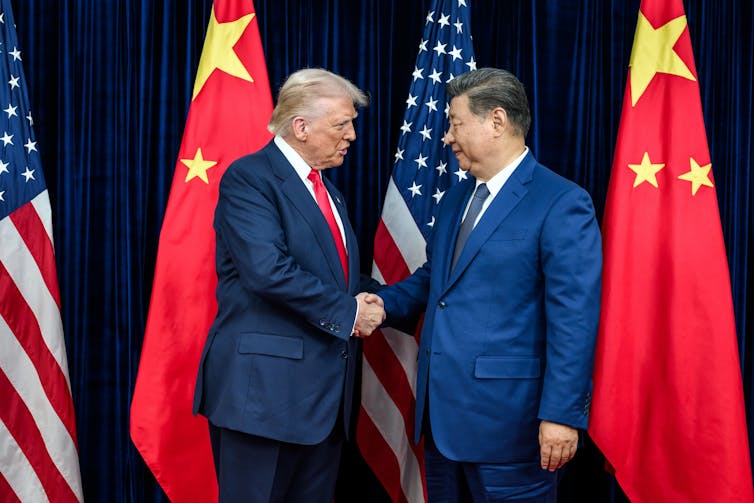
Xi Jinping greets Donald Trump ahead of their meeting in South Korea.
Xi Jinping greets Donald Trump ahead of their meeting in South Korea in October 2025.
carlos110 / Shutterstock

Xi has demanded absolute loyalty and discipline from his political colleagues. The same extends to the PLA. The main objective is that it is battle-ready and able to deploy should opportunities arise, even if these were not expected to happen. The military must be ideologically and practically ready to move. It cannot be distracted by divisions and fractures within.

Zhang is clearly a man with rich and extensive experience, but there have been rumours for some time that he and Xi had disagreed on specific issues. As the Chinese saying goes, there can never be two tigers on the same mountain – Xi can only tolerate so much dissent, even from a figure with huge stature and seemingly incontestable credentials.

In the short term, all of this shows that the PLA is likely to be viewed as not yet fully ready to undertake major tasks such as mounting operations against Taiwan that are expected of it. In the longer term, the key thing is to watch is who replaces the figures already felled.

The coming year is likely to be one of generational change in China, at the provincial and then national level. China’s current key leaders are all in their late sixties and early seventies. While Xi himself is unlikely to move aside any time soon, those around him are going to experience a reshuffle.

The military will be seeing new core leaders. Who is appointed, what their backgrounds are and what that may mean for the overall posture of the country will be crucial things to track in the weeks and months ahead.

The Conversation

Kerry Brown does not work for, consult, own shares in or receive funding from any company or organisation that would benefit from this article, and has disclosed no relevant affiliations beyond their academic appointment.

ref. Why Xi purged China’s top military general – https://theconversation.com/why-xi-purged-chinas-top-military-general-274384

The record gold price reflects a deeper problem than recent global instability

Source: The Conversation – UK – By Hafiz Muhammad Usman Rana, Senior Lecturer in Finance, Birmingham City University

Guguart/Shutterstock

The price of gold has risen to over US$5,000 (£3,662) an ounce for the first time ever, after doubling in value over the course of a very strong 2025 for the precious metal.

The usual explanation for such strong rises is that gold is considered a safe bet for investors when other options look a little shaky. High inflation for example, when cash quickly loses value, is often linked to gold price rises. Trade wars and actual wars usually have a similar effect.

A common view then, is that gold performs well in moments of instability. But research I was involved with suggests that gold prices are not simply a reaction to short-term economic events.

Instead, they are a response to something deeper, reflecting an overall level of confidence in how economic systems are managed over time.

For during recent periods of sustained economic stability in the west, gold prices have remained largely flat. The steady growth, moderate inflation and predictable policy of the early 1990s and 2000s for example, were not good times for gold.

And rather than responding to every economic peak or dip, the thing that really pushes gold prices up is instability in what’s known as “monetary credibility”. In other words, when there are doubts about whether central banks and governments will be able to maintain discipline over inflation, public debt and currency value over the coming decades. At times like this gold becomes more desirable.

This helps explain why gold can continue to rise even as inflation falls, as has happened recently in several big economies, including the US and parts of Europe.

And although recent weakness in the dollar and political uncertainty in the US have probably added momentum to gold’s rise, these factors amplify a deeper shift in confidence rather than explain it on their own.

Our findings suggest that no single set of macroeconomic variables (like inflation, interest rates and stock prices) consistently explains gold prices across developed and emerging economies. They matter sometimes, but not always.

So simple narratives (whether they’re about inflation, or trade wars or the weakening of the US dollar) are not enough to account for today’s gold market. Inflation alone cannot explain why gold prices remain elevated even as headline price pressures have eased.

What gold tells us about the world

There is more evidence for this in the fact that, according to the World Gold Council, central banks have been buying gold at the fastest pace in decades, particularly since 2022. This has continued even as inflation has fallen in many countries, again suggesting that these decisions are driven by longer term considerations rather than short term price movements.

The decisions of central banks reflect concerns about resilience, diversification and trust. And to those banks, gold’s appeal lies squarely in the fact that it carries relatively little risk.

It is not issued by a government like fiat currencies. It cannot be created at will like paper money. And it does not depend on the credibility of any single institution.

So in a world of high public debt, geopolitical fragmentation and increasing pressure on central bank independence, gold offers stability and insurance. And its price rises when confidence in the rules governing money becomes uncertain.

Dollar bill folded up into the shape of a downward pointing arrow.
Dollar down.
ImagePixel/Shutterstock

That uncertainty can persist even when growth resumes or inflation falls. Seen in this light, gold’s recent surge does not signal a kneejerk panic or imminent collapse.

Instead, it reflects a reassessment of long-term monetary confidence at a time when governments face difficult trade-offs between debt sustainability, political pressures and price stability.

With its current high value, gold is not predicting a specific crisis. Nor does it provide a clear forecast for inflation. But it is revealing something important about the current moment.

Markets appear less certain that the frameworks governing money, debt and policy will remain unchanged. That does not mean those systems have failed, but it does suggest their credibility is no longer taken for granted in the way it has been in the past.

Gold does not predict the future. But it does offer a window into how confident markets are about the foundations of the world’s economics system.

The Conversation

Hafiz Muhammad Usman Rana does not work for, consult, own shares in or receive funding from any company or organisation that would benefit from this article, and has disclosed no relevant affiliations beyond their academic appointment.

ref. The record gold price reflects a deeper problem than recent global instability – https://theconversation.com/the-record-gold-price-reflects-a-deeper-problem-than-recent-global-instability-274654