Financial case for college remains strong, but universities need to add creative thinking to their curriculum

Source: The Conversation – USA (2) – By Caroline Levander, Vice President Global Strategy & Carlson Professor in the Humanities, Rice University

Unemployment rates are lower among people who have a college degree, compared to those with a high school degree. Wong Yu Liang/iStock Images/Getty Images

A college degree was once seen as the golden ticket to landing a well-paying job. But many people are increasingly questioning the value of a four-year degree amid the rising cost of college.

Almost two-thirds of registered voters said in an October 2025 NBC News poll that a four-year college degree isn’t worth the cost – marking an increase from 40% of registered voters who said that college wasn’t worth the cost in June 2013.

Caroline Field Levander, the vice president for global strategy and an English professor at Rice University, argues in her December 2025 book “Invent Ed” that people have lost sight of two factors that made universities great to begin with: invention and creativity.

Amy Lieberman, education editor at The Conversation U.S., spoke with Levander to break down the benefits of going to college and university – and how schools can better demonstrate their enduring value.

How can we measure the value of a college degree?

College graduates earn substantially more than people who do not have a college degree.

The average high school graduate over a 40-year career earns US$1.6 million, according to 2021 findings by the Georgetown University Center on Education and Workforce. The average college graduate, over this same 40-year time frame, earns $2.8 million. That $1.2 million difference amounts to around $30,000 more salary per year.

People who earn a degree more advanced than a bachelor’s, on average, earn $4 million over 30 years, making the lifetime earning difference $2.4 million between these graduates and people with just a high school diploma.

College graduates are also better protected against job loss, and they weather job disruption cycles better than high school graduates.

The unemployment rate for people with a high school degree was 4.2% in 2024, according to the U.S. Bureau of Labor Statistics. By contrast, 2.5% of people with a bachelor’s degree and 2.2% of people with a master’s degree were unemployed in 2024.

Do any of these benefits extend beyond individual students?

In addition to the substantial financial benefits college graduates experience, colleges and universities are major employers in their communities – and not just professors and administrators. Higher education institutions employ every trade and kind of worker, from construction workers to police, to name a few.

Universities are crucial to developing and strengthening the U.S. economy in other ways. The discoveries that faculty and researchers make in laboratories lead to new products, businesses and ideas that drive the U.S. economy and support the country’s financial health.

Researchers at the University of Texas Southwestern did important work in helping to discover statins, while scientists at the University of Pennsylvania developed the mRNA vaccine. The list of inventions that started at universities goes on and on.

Some people are questioning the value of a degree. What role can universities play in reassuring them of their relevance?

Discovery and invention have traditionally been the focus of many graduate programs and faculty research, while undergraduate college educations tend to focus on ensuring that students are able to successfully enter the workforce after graduation.

Undergraduate students need to gain competency in a field in order to contribute to society and advance knowledge.

But I believe universities need to teach something else that is equally valuable: They also need to build creative capacity and an inventive mindset into undergraduate education, as a fundamental return on the investment in education.

Employers report that creativity is the top job skill needed today. The IBM Institute for Business Value, for example, concluded in 2023 that creativity is the must-have skill for employee success in the era of generative AI.

The Harvard Business Review reports that employers are developing short courses aimed to build creative capability in their workers.

A woman with dark hair looks down with various small images around her.
Creativity and innovation are both likely to become increasingly important for young people entering the workplace, especially as AI continues to grow.
Andriy Onufriyenko/iStock/Getty Images

What can faculty and students easily do to encourage creativity and innovation?

Professors can build what I call a “growth mindset” in the classroom by focusing on success over time, rather than the quick correct answer. Faculty members can ask themselves as they go into every class, “Am I encouraging a growth mindset or a fixed mindset in these students?” And they can use that answer to guide how they are teaching.

Students could also consider committing to trying new courses in areas where they haven’t already been successful. They could approach their college experience with the idea that grades aren’t the only marker of success. And I think they could benefit from developing thoughtful ways to describe their journey to future employers. Simple practices like keeping a creativity notebook where they record the newest ideas they have, among many others that I describe in my new book, will help.

And university leaders need to open the aperture of how we define our own success and our university’s success so that it includes creative capability building as part of the undergraduate curriculum.

The Conversation

Caroline Levander does not work for, consult, own shares in or receive funding from any company or organization that would benefit from this article, and has disclosed no relevant affiliations beyond their academic appointment.

ref. Financial case for college remains strong, but universities need to add creative thinking to their curriculum – https://theconversation.com/financial-case-for-college-remains-strong-but-universities-need-to-add-creative-thinking-to-their-curriculum-269463

Eating less ultraprocessed food supports healthier aging, new research shows

Source: The Conversation – USA (3) – By Moul Dey, Professor of Nutrition Science, South Dakota State University

Studies have linked ultraprocessed foods to poor health outcomes, but such foods make up about half the calories of a typical American diet. Kobus Louw/E+ via Getty Images

Older adults can dramatically reduce the amount of ultraprocessed foods they eat while keeping a familiar, balanced diet – and this shift leads to improvements across several key markers related to how the body regulates appetite and metabolism. That’s the main finding of a new study my colleagues and I published in the journal Clinical Nutrition.

Ultraprocessed foods are made using industrial techniques and ingredients that aren’t typically used in home cooking. They often contain additives such as emulsifiers, flavorings, colors and preservatives. Common examples include packaged snacks, ready-to-eat meals and some processed meats. Studies have linked diets high in ultraprocessed foods to poorer health outcomes.

My team and I enrolled Americans ages 65 and older in our study, many of whom were overweight or had metabolic risk factors such as insulin resistance or high cholesterol. Participants followed two diets low in ultraprocessed foods for eight weeks each. One included lean red meat (pork); the other was vegetarian with milk and eggs. For two weeks in between, participants returned to their usual diets.

A total of 43 people began the dietary intervention, and 36 completed the full study.

In both diets, ultraprocessed foods made up less than 15% of the total calories – a significant reduction from the typical American diet, where more than 50% of total calories comes from ultraprocessed foods. The diets were designed to be realistic for everyday eating, and participants were not instructed to restrict calories, lose weight or change their physical activity.

Older couple shopping in a supermarket
Maintaining metabolic health promotes healthy aging.
Giselleflissak/E+ via Getty Images

We prepared, portioned and provided all meals and snacks for the study. Both diets emphasized minimally processed ingredients and aligned with the 2020-2025 Dietary Guidelines for Americans, the U.S. government’s nutrient-based recommendations for healthy eating, while providing similar calories and amounts of key nutrients.

The 2025-2030 Dietary Guidelines for Americans, released on Jan. 7, 2026, explicitly recommend eating less ultraprocessed food, but the previous versions of the guidelines did not specifically address food processing. Our feeding study design allowed us, for the first time, to examine the health effects of reducing ultraprocessed foods while keeping nutrient levels consistent with recommended targets.

We compared how participants fared while eating their habitual diets with how they responded to the two diets that were low in ultraprocessed foods. During the periods when participants ate fewer ultraprocessed foods, they naturally consumed fewer calories and lost weight, including total and abdominal body fat. Beyond weight loss, they also showed meaningful improvements in insulin sensitivity, healthier cholesterol levels, fewer signs of inflammation and favorable changes in hormones that help regulate appetite and metabolism.

These improvements were similar whether participants followed the meat-based or the vegetarian diet.

Why it matters

Ultraprocessed foods make up more than half the calories consumed by most U.S. adults. Although these foods are convenient and widely available, studies that track people’s diets over time increasingly link them with obesity and age-related chronic diseases such as Type 2 diabetes and heart disease. With older adults making up a growing share of the global population, strategies that preserve metabolic health could support healthy aging.

Most previous feeding studies testing how ultraprocessed foods affect people’s health haven’t reflected real-world eating, especially among Americans. For example, some studies have compared diets made up almost entirely of ultraprocessed foods with diets that contain little to none at all.

Our study aimed to more closely approximate people’s experience while still closely tracking the foods they consumed. It is the first to show that for older adults a realistic reduction in ultraprocessed foods, outside the lab, has measurable health benefits beyond just losing weight. For older adults especially, maintaining metabolic health helps preserve mobility, independence and quality of life.

What’s still unknown

Our study was small, reflecting the complexity of studies in which researchers tightly control what participants eat. It was not designed to show whether the metabolic improvements we observed can prevent or delay diseases such as diabetes or heart disease over time. Larger, longer studies will be needed to answer that.

On the practical side, it’s still unclear whether people can cut back on ultraprocessed foods in their daily lives without structured support, and what strategies would make it easier to do so. It’s also not fully understood which aspects of processing – for example, additives, emulsifiers or extrusion – matter more for health.

Answering these questions could help manufacturers produce foods that are healthier but still convenient – and make it easier for people to choose healthier food options.

The Research Brief is a short take on interesting academic work.

The Conversation

Moul Dey receives funding from the National Pork Board, the U.S. Department of Agriculture, and the National Institute of Food and Agriculture (Hatch project).

ref. Eating less ultraprocessed food supports healthier aging, new research shows – https://theconversation.com/eating-less-ultraprocessed-food-supports-healthier-aging-new-research-shows-271986

What is Christian Reconstructionism − and why it matters in US politics

Source: The Conversation – USA (3) – By Art Jipson, Associate Professor of Sociology, University of Dayton

Elements of Christian reconstructionist thought appear in parts of the Christian homeschooling movement. Forest Trail Academy, CC BY-NC

Christian Reconstructionism is a theological and political movement within conservative Protestantism that argues society should be governed by biblical principles, including the application of biblical law to both personal and public life.

Taking shape in the late 1950s, Christian Reconstructionism developed into a more organized movement during the 1960s and 1970s.

It was born from the ideas of theologian R. J. Rushdoony, an influential Armenian-American Calvinist philosopher, theologian and author. In his 1973 book, “The Institutes of Biblical Law,” Rushdoony argued that Old Testament laws should still apply to modern society. He supported the death penalty not only for murder but also for offenses listed in the text such as adultery, blasphemy, homosexuality, witchcraft and idolatry.

As a scholar of political and religious extremism, I am familiar with this movement. Its following has been typically very small – never more than a few thousand committed adherents at its peak. But since the 1980s, its ideas have spread far beyond its limited numbers through books, churches and broader conservative Christian networks.

The movement helped knit together a network of theologians, activists and political thinkers who shared a belief that Christians are called to “take dominion” over society and exercise authority over civil society, law and culture.

These ideas continue to resonate across many areas of American religious and political life.

Origins of Christian Reconstructionism

Rushdoony’s ideas were born from a radical interpretation of Reformed Christianity – a branch of Protestant Christianity that follows the teachings of John Calvin and other reformers. It emphasizes God’s authority, the Bible as the ultimate guide and salvation through God’s grace rather than human effort.

Rushdoony’s ideas led him to found The Chalcedon Foundation in 1965, a think tank and publishing house promoting Christian Reconstructionism. It served as the movement’s main hub, producing books, position papers, articles and educational materials on applying biblical law to modern society.

It helped train Greg Bahnsen, an Orthodox Presbyterian theologian, and Gary North, a Christian reconstructionist writer and historian, both of whom went on to take key leadership roles in the movement.

At the heart of reconstructionism lies the conviction that politics, economics, education and culture are all arenas where divine authority should reign. Secular democracy, they argued, was inherently unstable, a system built on human opinion rather than divine truth.

These ideas were, and remain, deeply controversial. Many theologians, including conservatives within the Reformed tradition, rejected Rushdoony’s argument that ancient Israel’s civil laws should apply in modern states.

Christian dominionism and different networks

Nonetheless, reconstructionist ideas grew as people who more broadly believed in dominionism began to align with it. Dominionism is a broader ideology advocating Christian influence over culture and politics without requiring literal enforcement of biblical law.

Dominionism did not begin as a single, unified movement. Rather, it emerged in overlapping strands during the same period that Christian Reconstructionism was developing.

Between the 1960s and 1980s, Christian Reconstructionism helped turn dominionist beliefs into an explicit political project by grounding them in theology and outlining how biblical law should govern society. Religion historian Michael J. McVicar explains that Rushdoony’s work advocated applied biblical law as both a theological and political alternative to secular governance. This helped in influencing the trajectory of the Christian right.

At the same time, parallel streams – especially within charismatic and Pentecostal circles – advanced similar claims about Christian authority over society using different theological language.

The broad network of those who believe in Christian dominionism includes several approaches: Rushdoony’s reconstructionism, which provides the theological foundation, and charismatic kingdom theology.

Charismatic kingdom theology, which emerged in Pentecostal and charismatic circles, teaches that believers – empowered by the Holy Spirit – should shape politics, culture and society before Christ’s return.

Unlike reconstructionism, it emphasizes prophecy and spiritual authority rather than formal biblical law; it seeks influence over institutions such as government, education and culture.

What unites them is the idea that Christian faith should be the basis of the nation’s moral and political order.

Taken together, I argue that these strands have reinforced one another, creating a larger movement of thinkers and activists than any single approach could achieve alone.

From reconstructionism to the New Apostolic Reformation

Christian reconstructionist and dominionist ideas gained wider popularity through C. Peter Wagner, a leading charismatic theologian who helped shape the New Apostolic Reformation, or NAR, by adapting elements of Christian Reconstructionism. NAR is a charismatic movement that builds on dominionist ideas by emphasizing the use of spiritual gifts and apostolic leadership to shape society.

Wagner emphasized spiritual warfare, prophecy and modern apostles taking control of seven key areas – family, church, government, education, media, business and the arts – to reshape society under biblical authority. This is known as the “Seven Mountains Mandate.”

Both revisionist and dominionist movements share the belief that Christians should lead cultural institutions.

Wagner’s dominion theology, however, adapts Christian Reconstructionism to a charismatic context, transforming the goal of a Christian society into a spiritually driven movement aimed at influencing culture and governments worldwide.

Doug Wilson and homeschooling

Another key bridge between reconstructionism and contemporary dominionist thought is Doug Wilson, a pastor and author in Moscow, Idaho.

Though Wilson distances himself from some of reconstructionism’s harsher edges, he draws heavily from Rushdoony’s intellectual framework. Wilson’s influence can be seen in publications such as “Reforming Marriage,” where he argues for applying biblical principles to law, education and family life.

A grey-haired man in a blue suit speaks into a microphone while gesturing with his finger.
Doug Wilson, a pastor and author in Idaho, Moscow.
Liesbeth Powers/Moscow-Pullman Daily News, CC BY

He has promoted Christian schools, traditional family roles and living out a “Christian worldview” in everyday life, bringing reconstructionist ideas into new areas of society.

Through his writings, teaching and leadership within the Communion of Reformed Evangelical Churches – the CREC – network, Wilson encourages a vision of society shaped by Christian values, connecting reconstructionist thought to contemporary cultural engagement.

Wilson’s publishing house, Canon Press, and his classical school movement have brought these ideas into thousands of Christian homes and classrooms across the U.S. His local congregation – the Christ Church in Moscow, Idaho – numbers around 1,300.

The Christian homeschooling movement offers parents a curriculum steeped in reformed theology and resistance to secular education.

Enduring influence

Some critics warn that the fusion of dominionist and reconstructionist theology with political action can weaken pluralism and democratic norms by pressuring laws and policies to reflect a single religious worldview. They argue that even moderated forms of these visions challenge the separation of church and state. They risk undermining the rights of religious minorities, nonreligious citizens and others who do not share the movement’s beliefs.

Supporters frame their mission as the renewal of a moral society, one in which divine authority provides the foundation for human flourishing.

Today, Christian Reconstructionism operates through small but influential networks of churches, Christian homeschool associations and media outlets. Its reach extends far beyond its original movement.

Even among those unfamiliar with Rushdoony, the political and theological patterns he helped shape remain visible in modern evangelical activism and the ongoing debates over religion’s place in American public life.

The Conversation

Art Jipson does not work for, consult, own shares in or receive funding from any company or organization that would benefit from this article, and has disclosed no relevant affiliations beyond their academic appointment.

ref. What is Christian Reconstructionism − and why it matters in US politics – https://theconversation.com/what-is-christian-reconstructionism-and-why-it-matters-in-us-politics-266915

Why the mad artistic genius trope doesn’t stand up to scientific scrutiny

Source: The Conversation – UK – By Daisy Fancourt, Associate Professor Psychobiology and Epidemiology, UCL

Vincent van Gogh sliced off his ear with a knife during a psychotic episode. Ballet dancer Vaslav Nijinsky developed schizophrenia and spent the last 30 years of his life in hospital. Virginia Woolf lived with bipolar disorder, eventually taking her own life as she felt another deep depression beginning.

Many famous creative artists have lived with severe mental illness. Catherine Zeta-Jones, Mariah Carey, Demi Lovato, Jean-Claude Van Damme and Mel Gibson have all reported diagnoses of bipolar disorder. Yayoi Kusama, Sylvia Plath, Kurt Cobain and Syd Barrett spoke about experiences of psychosis. Speculation abounds about whether Amy Winehouse, Marilyn Monroe and Ernest Hemingway lived with borderline personality disorder.

The concept of the “mad creative genius” harks back to antiquity. Artists in the Renaissance and Romantic periods would sometimes assume eccentric personalities to distinguish themselves as extraordinary individuals who had made Faustian bargains for their talents.

Edvard Munch, the Norwegian painter, described his “sufferings” as “part of myself and my art … their destruction would destroy my art.” Poet Edith Sitwell, who experienced depression, reportedly used to lie in an open coffin to inspire her poetry.

In 1995, a study of 1,005 biographies written between 1960 and 1990 even proposed that people in the creative professions had a higher rate of severe psychopathology than the general population.

So how does this square with the fact that artistic expression is beneficial for our mental health? As I explain in my new book Art Cure: The Science of How the Arts Transform Our Health, there is a wealth of scientific evidence on these benefits.

However, the reality for professional artists can be a bit different. While they tend to report enhanced overall wellbeing, the life of an artist can be psychologically challenging. They have to endure everything from precarious careers to professional competition.

Additionally, fame brings stress, challenging lifestyles, an increased risk of substance abuse, and an inevitable but unhealthy focus on oneself. In a 1997 study, scientists analysed the number of first-personal pronouns – I, me, my, mine and myself – in songs by Cobain and Cole Porter (who himself had bouts of severe depression). As their fame increased, both saw a statistically significant increase in their use of these pronouns.

Linking artistry and severe mental illness

But what about artists who developed mental illness before becoming famous, or even before becoming artists? Genetics research has uncovered some shared genes that may underlie severe mental illness and creativity.

A variation in the gene NRG1 is associated with both increased risk of psychosis and higher scores on questionnaires that measure people’s creative thinking. Variations in dopamine-receptor genes have been linked with both psychosis and various creative processes like novelty seeking and decreased inhibitions. It’s a mixed bag of findings, however – not all studies show such links.

Beyond genetics, there are also some personality traits that can be common both to mental illness and creativity, including openness to experience, novelty-seeking and sensitivity. It’s possible to see how such research could provide a lens for viewing artists like Van Gogh, Nijinsky and Woolf.

Yet creativity and mental health difficulties can act against one another. For instance, Woolf described her depressive episodes of bipolar disorder as a well: “Down there, I can’t write or read.” So while some people with severe mental illnesses may make art, not everyone can all the time.

What’s more, when we look for signs of a link between severe mental illness and creative pursuits at a population level, the evidence isn’t clear-cut. In 2013, a Swedish study tracked over 40 years of data from 1.2 million people in national patient registers, including medical records of diagnoses, mental health treatments and cause of death.

The researchers found that people with schizophrenia, schizoaffective disorder, anxiety disorders and unipolar depression were actually less likely than the average person to be in creative professions. The only slight exception was bipolar disorder, where people had around 8% higher odds of being in a creative profession.

But this study also found something arguably more intriguing: the parents and siblings of people with schizophrenia, schizoaffective disorder and bipolar disorder were more likely to be in creative professions. It’s not hard to think of examples amongst famous artists: James Joyce’s daughter and David Bowie’s half-brother both had schizophrenia. Why might this pattern exist?

People who are genetically susceptible to severe mental illness but don’t develop the full conditions may instead have milder versions. Minor hypomania, for instance, involves elevated moods but not with the intensity of bipolar disorder. Schizotypy involves divergent thinking and heightened emotion without the severity of schizophrenia.

These conditions have been associated with creative processes like reduced inhibitions, defocused attention and neural hyperconnectivity (the ability to make cross-sensory associations like hearing colours or tasting musical notes).

Perhaps the siblings and parents of people with mental illness tend to be more likely to have such conditions, and this explains why they choose creative professions. Having said that, not all creative people work in a creative profession – for many, creative hobbies are their outlet away from work.

Essentially, the science suggests there may be some shared processes between severe mental illness and creative processes like the arts. But it’s not the clear linkage that anecdotes might lead us to believe. The myth of the “mad creative genius” is overly simplistic. It also risks perpetuating stigma rather than understanding, so it’s perhaps better put to bed.

It seems more productive to focus on the value that creative engagement can bring to support our mental health. Whether people have a mental illness or are just dealing with day-to-day moods and emotions, there are more studies emerging every week that are building our understanding of the tangible, meaningful benefits the arts can have. This research is revealing how artists, clinicians and communities can work together to build safe, accessible, inclusive opportunities to enjoy the arts.


This article features references to books that have been included for editorial reasons, and contains links to bookshop.org. If you click on one of the links and go on to buy something from bookshop.org, The Conversation UK may earn a commission.

The Conversation

Daisy Fancourt receives funding from Wellcome, UK Research and Innovation, the Prudence Trust, and Bloomberg Philanthropies.

ref. Why the mad artistic genius trope doesn’t stand up to scientific scrutiny – https://theconversation.com/why-the-mad-artistic-genius-trope-doesnt-stand-up-to-scientific-scrutiny-272841

What Cubans want – and what they are bracing for, following Trump’s threats

Source: The Conversation – UK – By Anna Grimaldi, Lecturer in Politics and International Relations, University of Leeds

The Cuban capital of Havana, where we are currently on a research trip, woke to an unfamiliar silence on January 5. As we drove through the city, no music drifted from open windows and shops and restaurants were shuttered. The streets were almost deserted.

It was the first day of national mourning for the 32 Cuban soldiers killed during the US operation to capture Venezuelan leader Nicolás Maduro in Caracas two days earlier. For 48 hours, Cubans observed a duelo (period of grief), honouring what some describe as the “heroes who resisted the aggressors”.

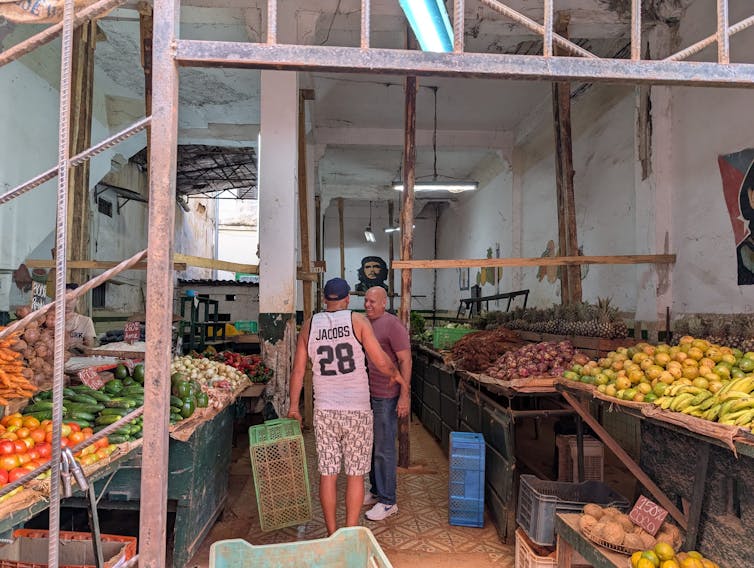
Apart from the eerie quiet, little else in Havana has changed. Street vendors still try to lure tourists with half‑price cigars and last‑minute excursions. The general hospital’s neon lights flicker under the strain of power cuts. And the once‑grand, now crumbling, facades of buildings in central Havana remain coated in a thick film of dust, while passers-by dodge the occasional falling piece of concrete.

A crumbling building in Havana, Cuba.
Cuba’s streets and infrastructure are crumbling due to decades of economic hardship.
Anna Grimaldi

The US government says Cuban officials should be scared of becoming their next target. At a news conference on January 3, secretary of state Marco Rubio said: “If I lived in Havana and I was in the government, I’d be concerned.” President Donald Trump has since urged Cuba to “make a deal” with his government or face consequences.

But no one seems particularly troubled by the possibility that the US attack on Caracas might be repeated here. “They have always underestimated us,” says Antonio, our taxi driver, as he steers through the empty streets. He speaks with the matter‑of‑fact pride common among Cubans, quick to recall the fiasco of the failed Bay of Pigs US invasion in 1961. “It won’t happen here, Cubans are different.”

He points to Venezuela’s history of political betrayals, from the conspiracies against independence leader Simon Bolívar in the early 19th century to the attempted coup against former president Hugo Chávez in 2002 and now the removal of Maduro, apparently betrayed by someone close to him. Antonio insists Cubans remain loyal to their ideals of revolution and sovereignty: “The US can try to strangle us with sanctions, but they won’t break us.”

While much of the world reacts with alarm to Trump’s escalating threats against Mexico, Colombia, Iran and even Greenland, Cubans have barely flinched. Hostility from the US is nothing new, and there is general confidence in the country’s longstanding preparation for any potential escalation with what they see as an old adversary. “We’ve been getting ready for this war for more than 65 years,” one resident remarked.

A mural depicting Che Guevara next to a Cuba flag in Havana.
A mural depicting Che Guevara, a major figure of Cuba’s 1959 revolution, in Havana.
Anna Grimaldi

Trump insists that, when Cuba finally collapses, a better future awaits it – an argument that has been amplified by mainstream international media. But this strikes many Cubans as detached from their lived reality. We spoke to Alejandro, a 20‑year‑old law student, who dismissed this idea as wishful thinking: “They’re wrong if they think they know what’s best for us.”

Cuba is living through one of its most difficult periods since the 1990s. Power cuts, water shortages, scarce foreign currency, falling tourism and rising prices shape daily life for most people.

Sanctions imposed after the socialist revolution in 1959 – and later tightened under Trump following a brief thaw under the presidency of Barack Obama – have intensified these hardships. However, there is little sign that Cubans are waiting for Trump’s help.

Cuba’s stoic resilience

Many western analysts say the halt in Venezuelan oil imports will be devastating for Cuba, arguing that the island has no real alternatives. Cubans seem to think otherwise. “We’ll get oil from the Middle East, from Mexico – we don’t rely on Venezuela as much as they say,” says Yadira, a housekeeper.

Still, the reality is more nuanced. While Mexico has now overtaken Venezuela as Cuba’s main oil supplier, providing nearly half of the island’s crude oil in 2025, it also has to deal with increasing pressures from Washington to align with US foreign policy goals in the region. These pressures forced the Mexican president, Claudia Sheinbaum, to clarify on January 7 that, while oil exports to Cuba are continuing, they will not increase.

Losing Venezuelan imports alone may not cause Cuba to collapse, but the impact will be serious and uneven. Cities, which depend heavily on fuel-intensive transport and electricity, will suffer most. And as past crises show, distribution can break down even when food is available.

“During COVID, all I could get hold of in Havana was mangoes and spring onions,” says Sophie, a British expat. Cuba’s vulnerability lies less in total isolation and more in the fragility of its internal systems – especially those that keep urban life functioning.

Two men greeting each other in a grocery store in Havana, Cuba.
Two men greet each other in a grocery store in Havana, Cuba.
Anna Grimaldi

Beneath the surface of stoic resilience, subtle cracks are beginning to show. Albeit timidly, some Cubans point to internal governance failures.

“If I told you what I really think, I’d be arrested,” says a tour guide who told us he would prefer to remain anonymous. A trained engineer, he never managed to achieve the prosperity promised by the government’s provision of free education for all Cubans.

Like many young people, his children emigrated to Spain and, for him, Cuba’s current situation feels increasingly unsustainable. “Nothing works,” he says. “There are no medicines, no supplies, and the repression is getting worse.”

So, while Trump may not be the answer many seek, his threats underscore a broader truth for Cubans: change must come one way or another. Foreign rule is far from a solution to Cuba’s problems, yet some see it as one of the few paths left when no other way forward seems possible.

Cubans do not expect an invasion, but they do expect their lives to grow harder. They are not calling for regime change imposed from outside, but what they seem to want is the chance to build a future at home.

As the situation in Venezuela unfolds, Cubans will watch closely – not because they expect the same to happen on their island, but because they know that events elsewhere in the region have a way of washing up on their shores.

The Conversation

The authors do not work for, consult, own shares in or receive funding from any company or organisation that would benefit from this article, and have disclosed no relevant affiliations beyond their academic appointment.

ref. What Cubans want – and what they are bracing for, following Trump’s threats – https://theconversation.com/what-cubans-want-and-what-they-are-bracing-for-following-trumps-threats-272857

What January taught George Orwell about control and resistance

Source: The Conversation – UK – By Nathan Waddell, Professor of Twentieth-Century Literature, University of Birmingham

Like many of us, George Orwell saw January as a month to be endured rather than enjoyed. You can picture him steeling himself against its cold, gloom, rain, frost and wind.

And not only because of his ailing, vulnerable body, which was ravaged for so many years by respiratory malfunction. But also because grimacing defiance is the posture January tends to bring out in people. Orwell wasn’t an exception. His attitude to January is soothingly familiar yet peculiarly his own.

At one point in Orwell’s novel Keep the Aspidistra Flying (1936), the protagonist Gordon Comstock meets his girlfriend Rosemary under some railway arches on “a horrible January night”. There’s “a vile wind” that screeches round corners and flings dust and torn paper into their faces.

In Animal Farm (1945), January’s “bitterly hard weather” makes the earth “like iron” and stops the creatures from working in the fields.

Nineteen Eighty-Four (1949) transposes these imagined Januaries to other points on the calendar. It begins on a “bright cold day in April”.

As in Keep the Aspidistra Flying, a “vile wind” whirls dust and scraps of paper into the air. The sameness between the books isn’t mere repetition. On the contrary, I think that it subtly evidences January’s tenacious impact on Orwell’s mind.

One of Nineteen Eighty-Four’s concluding episodes takes place on “a vile, biting day in March” when the grass seems dead and the earth is “like iron”, just as it is in Animal Farm. These are moments following long, hard winters, and it’s no accident that the protagonist of Nineteen Eighty-Four, Winston Smith, suffers through a long period of torture in the Ministry of Love in the year’s coldest, bleakest months.

Writing about the weather for the Evening Standard newspaper in 1946, Orwell noted that January and February are particularly difficult to bear – at least for those in colder regions. This is when rooms get chilly and pipes tend to freeze and burst. Remove January and February from the calendar, he claimed, and where the weather is concerned the English “should have nothing to complain about”.

Nevertheless, Orwell knew that winter was an indispensable adversity, the rest of the year depending on its burdens. Tasty fruit and scrumptious vegetables need “rain-sodden soil” and the slow arrival of spring to develop their flavours, just as England’s ordinary flowers – primroses, wallflowers and daffodils – thrive after frost and cold.

Take away the contrast between the months and they become less special. There’s a time for chilblains and noses that run endlessly in chilly weather, Orwell insisted, and heat and sweat have their place, too. We need January to enjoy July (and, for some, vice versa).

The arrival of spring

In his brilliantly titled essay Some Thoughts on the Common Toad (1946), Orwell reflected on the ostensibly “miraculous” arrival of spring after the bitter winters of the preceding five years – a time during which the climatic afflictions of January, February and March were made harder still by the burdens of the second world war.

It had been difficult to believe that spring would come, and it had been near-impossible to think that the conflict would end. And yet: hostilities ceased, spring arrived.

Orwell thought that January could be “beastly”, as he put it in his novel Coming Up for Air (1939), but he also argued that winter is a necessary trial: a time of temporary retreat ahead of release and recuperation. The war could have gone either way.

Spring, however, is not so fickle. The broader miracle is not that spring delivers warm weather and hope, Orwell claimed, but that nature’s rhythms guarantee their advent. The predictability of January’s beastliness matters because it points to the cyclical logic of the seasons themselves.

A short film celebrating Some Thoughts on the Common Toad by George Orwell.

The shift from January into February and then into March and April is a progression that in Orwell’s view reveals an absolute limit to authoritarian power. “The atom bombs are piling up in the factories,” he wrote in Some Thoughts on the Common Toad, “the police are prowling through the cities, the lies are streaming from the loudspeakers, but the Earth is still going round the sun, and neither the dictators nor the bureaucrats, deeply as they disapprove of the process, are able to prevent it”.

It matters to feel the chill, in other words, because in feeling it we glimpse a structure in nature that remains away and apart from human influence. In an unexpected manner, the revolving seasons prove that those who’d like to bring the world to heel are themselves subject to natural laws they cannot change, and which make them forever inferior to a cosmos indifferent to their arrogant cravings.

Orwell never wanted to be sentimental about nature, or about the seasons. But he did think that seasonal cycles tell us important things about our dreams, complicating our myths of power and control.

Can January be wished away? No. And for Orwell it’s precisely because it can’t be wished away that it means something good. He never quite put it in these words, but he meant to say that January is our friend.


Looking for something good? Cut through the noise with a carefully curated selection of the latest releases, live events and exhibitions, straight to your inbox every fortnight, on Fridays. Sign up here.


This article features references to books that have been included for editorial reasons, and may contain links to bookshop.org. If you click on one of the links and go on to buy something from bookshop.org The Conversation UK may earn a commission.

The Conversation

Nathan Waddell does not work for, consult, own shares in or receive funding from any company or organisation that would benefit from this article, and has disclosed no relevant affiliations beyond their academic appointment.

ref. What January taught George Orwell about control and resistance – https://theconversation.com/what-january-taught-george-orwell-about-control-and-resistance-272860

The economics of climate risk ignores the value of natural habitats

Source: The Conversation – UK – By Narmin Nahidi, Assistant Professor in Finance, University of Exeter

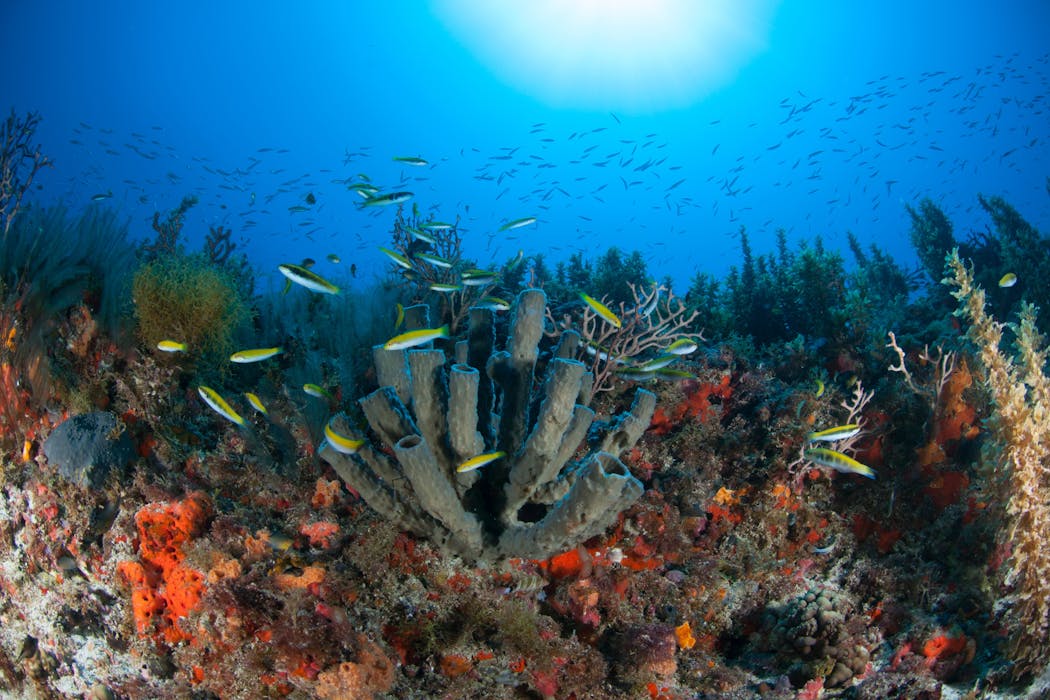
Coral reefs in Quintana Roo, Mexico. Connect Images – Curated/Shutterstock

When Hurricane Delta hit Mexico’s Caribbean coast in 2020, insurance payouts were released within days – not to rebuild hotels or roads, but to repair coral reefs.

In the Mexican state of Quintana Roo, reefs are insured and restoration is taken care of by a local trust. After storms, payouts fund rapid restoration so reefs can keep doing their job: breaking up waves so they don’t erode the shore, reducing flooding, protecting tourism jobs and lowering insurance losses.

Nature is treated as part of the economic infrastructure. This idea is spreading, as it directly affects costs, risks and financial stability.

Until recently, sustainable or “green” finance has focused almost entirely on carbon emissions, net zero targets and climate-related investments. But these climate-only measures miss something basic. The economy doesn’t just depend on temperature; it depends on living systems.

In my field of sustainable finance and financial stability, research shows that when ecosystems fail, the costs show up in rising food prices, insurance bills and public finances. The health of the planet affects everyday costs.


Read more:
The UK’s food system is built on keeping prices low – but this year’s droughts show up its failings


Take food. Around three-quarters of our leading food crops benefit at least partly from animal pollination, including by bees. When pollinator numbers fall, harvests shrink. That pushes up food prices, drives inflation and squeezes household budgets.

Or consider flooding. Wetlands, forests and mangroves absorb water and slow storms. When they’re destroyed, floods cause more damage. Insurers pay out more, premiums rise or cover disappears. Governments often step in, using public money to deal with the fallout.

These aren’t niche environmental problems, they are economic shocks. In many parts of finance, climate risk is now being modelled. But nature loss is only starting to be treated in the same way.

From carbon to nature

In finance, the term “greenium” refers to the lower borrowing costs enjoyed by companies or governments seen as safer environmental bets. When the idea first emerged in the late 2010s, it was almost entirely about carbon emissions. But that’s starting to change.

Investors are beginning to recognise that destroying forests, reefs or soils increases future losses. Where risk rises, returns have to rise too. Where ecosystems are protected, financing becomes cheaper.


Read more:
Your essential guide to climate finance


Change is already happening in three key areas: government debt, insurance schemes and regulation.

In 2021, for example, Belize refinanced part of its national debt in a deal linked to ocean protection. In return for protecting marine habitats, the country received debt relief. For investors, this wasn’t charity: healthy oceans support tourism, fisheries and long-term growth – all of which matter for a country’s ability to repay its debts.

The reef insurance scheme in Mexico isn’t alone any more. Similar ideas are being explored for mangroves and wetlands, especially in storm-prone regions such as the Caribbean and parts of southeast Asia. These ecosystems reduce damage before disasters happen. For insurers, that means fewer claims. For households and businesses, it can mean lower premiums and better access to cover.

shot from underwater of mangroves trees
Mangroves help absorb wave power and protect coastlines from extreme weather.
Nattapon Ponbumrungwong/Shutterstock

Regulators are paying attention too. Central banks and financial supervisors are increasingly asking how nature loss makes other risks worse. A degraded ecosystem can turn a heatwave into a food crisis, or a storm into a fiscal emergency. From this perspective, biodiversity loss isn’t an ethical issue – it’s a risk amplifier.

Research highlights that focusing only on climate misses important economic channels. Carbon metrics tell us about long-term warming, but say much less about near-term shocks.

Ecosystem damage often hits faster than long-term climate consequences, through crop failures, floods and disaster costs – and these shocks don’t stay local. They affect inflation, strain government budgets and ripple through financial markets. When nature is degraded, the economy becomes more fragile.

If ecosystems fail, food costs more. Insurance becomes harder to afford, and governments spend more on responding to disasters. These costs are shared across society.

Seeing nature as part of the economic system isn’t radical, it’s realistic. The sooner finance reflects that reality in everyday financial decisions, the more resilient our ecosystems and economies will be.


Don’t have time to read about climate change as much as you’d like?

Get a weekly roundup in your inbox instead. Every Wednesday, The Conversation’s environment editor writes Imagine, a short email that goes a little deeper into just one climate issue. Join the 47,000+ readers who’ve subscribed so far.


The Conversation

Narmin Nahidi does not work for, consult, own shares in or receive funding from any company or organisation that would benefit from this article, and has disclosed no relevant affiliations beyond their academic appointment.

ref. The economics of climate risk ignores the value of natural habitats – https://theconversation.com/the-economics-of-climate-risk-ignores-the-value-of-natural-habitats-272769

The Norwegian 4×4 Hiit workout is a favourite among athletes and actress Jessica Biel – here’s why it’s so beneficial

Source: The Conversation – UK – By Paul Hough, Lecturer Sport & Exercise Physiology , University of Westminster

The intensity of the 4×4 workout can improve your cardiovascular health. TORWAISTUDIO/ Shutterstock

Lack of time is often the main reason people don’t exercise regularly. But a type of interval workout recently popularised by actress Jessica Biel could be the solution – with research showing it can improve fitness faster than traditional, steady-pace workouts, such as jogging or cycling.

The Norwegian 4×4 workout has traditionally been used by athletes. It’s a form of high-intensity interval training (Hiit) that involves four-minute sets of very intense cardio exercise, followed by three minutes of very light exercise. A typical training session includes a five-minute warm-up, four high-intensity intervals and a five-minute cool-down.

The 4×4 workout format follows the same format as other Hiit workouts, which alternate periods of high-intensity exercise with periods low-intensity exercise (or rest). Most Hiit workouts involve work intervals that last anything from ten seconds up to a couple of minutes. In contrast, the 4×4 workout employs four minute work periods, which raises your heart rate for longer than most Hiit protocols.

Decades of research has shown that regular Hiit workouts are often more effective than moderate-intensity workouts (such as running or cycling at a steady pace continuously) in improving cardiovascular fitness and other health outcomes (such as improving blood sugar and cholesterol levels). Hiit is even effective for improving health in adults with type 2 diabetes and cardiovascular disease.

Hiit also offers these benefits with less training time than traditional endurance training. A 2008 study showed that as few as six Hiit sessions over two weeks improved the muscles’ endurance capacity.

Several studies have also explored the benefits of the 4×4 protocol. For example, an eight-week study showed that the 4×4 workout produced greater aerobic fitness improvements than 45-minute moderate-intensity running sessions.

The reason the 4×4 workout specifically is so effective for improving cardiovascular fitness is because the four-minute intervals are intense enough to maximally challenge your heart and lungs while minimising muscle fatigue. This helps improve your maximum oxygen uptake (or VO₂ max), which is the highest rate at which your body can take in, transport and use oxygen during intense exercise.


Read more:
VO₂max: the gold standard for measuring fitness explained


VO2 max is considered the gold standard measure of cardiovascular fitness. Higher VO₂ max values are associated with reduced risk of cardiovascular disease and premature death, and better overall health.

During a 4×4 workout you’ll spend roughly 16 minutes close to you maximum heart rate. This means that it can improve VO2 max more effectively than longer duration, moderate-intensity workouts.

Choosing the right workout

For people with busy schedules, Hiit is a time-efficient option because it offers the same health and fitness benefits as longer workouts with less training time. However, a 4×4 Hiit session still lasts between 35–40 minutes, which might be too long for some people.

A man sprints up some stairs at a sports stadium.
A sprint interval HIIT workout can also be beneficial for those shorter on time.
Panumas Yanuthai/ Shutterstock

For those seeking a shorter workout option, the 10×1 Hiit protocol is a suitable alternative as it can be completed in just 30 minutes – including warm-up and cool-down periods.

This involves doing ten one-minute intervals of intense exercise. Each minute of hard work is followed by a minute of light exercise or complete rest.

But while this protocol also improves VO₂ max, the shorter work periods must be performed at a much higher intensity than the four-minute intervals to challenge the cardiovascular system. This could make it difficult to pace yourself consistently during each interval.

Another Hiit workout option is sprint interval training. This involves exercising as hard as possible for ten to 20 seconds – followed by three minutes of recovery. These sprints can be done running, cycling or even rowing.

One 12-week study found that participants who performed three, 20-second sprints (followed by three-minute recovery periods) just three times a week significantly improved their cardiovascular fitness compared to those doing longer, steady-state workouts. However, the 4×4 workout has been shown to produce better gains in aerobic fitness than sprint interval training.

Although most research shows that Hiit produces rapid health and fitness benefits, it’s difficult to know exactly how effective it is in the real world because most studies use specialised equipment and are supervised by researchers. As such, study results may not reflect what happens when people train on their own.

The very demanding nature of Hiit may also make it less enjoyable for some people – particularly those who aren’t used to intense exercise. This is important, because lower enjoyment is linked to poorer motivation and lower likelihood of sticking to a workout programme.

Also, while Hiit is often promoted as exciting and time efficient, its novelty may wear off. What feels new and motivating at the start may become tiring or repetitive, especially without variety or support. As a result, some people may struggle to stick with a workout programme after a few weeks.

Long-term fitness improvements come from training consistently. For that reason, it’s essential to choose a form of exercise that you enjoy.

If Hiit is less appealing to you than alternatives, such as steady jogging, cycling or weightlifting, it may be more effective to focus on workouts you’re more likely to stick with.

You don’t always have to push yourself to the limit to improve your health and fitness. Even consistent activity, such as accumulating around 7,000 steps a day, can still lead to meaningful physical and mental health benefits.

The Norwegian 4×4 protocol is just the latest popular Hiit workout. While it can offer many health and fitness benefits for you in a short period of time, it might not suit your needs – so be sure to pick a workout that best suits your goals and schedule.

The Conversation

Paul Hough does not work for, consult, own shares in or receive funding from any company or organisation that would benefit from this article, and has disclosed no relevant affiliations beyond their academic appointment.

ref. The Norwegian 4×4 Hiit workout is a favourite among athletes and actress Jessica Biel – here’s why it’s so beneficial – https://theconversation.com/the-norwegian-4×4-hiit-workout-is-a-favourite-among-athletes-and-actress-jessica-biel-heres-why-its-so-beneficial-271560

Groenlandia: colocarse de parte de los inuit

Source: The Conversation – (in Spanish) – By Ludovic Slimak, Archéologue, penseur et chercheur au CNRS, Université de Toulouse

74º escuadrón de cazas interceptores F-89 en la base aérea de Thule, en Groenlandia, en 1955. United States Air Force – Menard, David W. / Wikipedia

Es 16 de junio de 1951. El explorador francés Jean Malaurie avanza en trineos tirados por perros por la costa noroeste de Groenlandia. Había llegado solo, de forma impulsiva, con unos escasos ahorros del CNRS, oficialmente para trabajar en los paisajes periglaciales. En realidad, este encuentro con pueblos cuya relación con el mundo era de otra naturaleza forjaría un destino singular.

Ese día, tras largos meses de aislamiento entre los inuit, en el momento crítico del deshielo, Malaurie avanza con algunos cazadores. Está agotado, sucio, demacrado. Uno de los inuit le toca el hombro: “Takou, mira”. Una espesa nube amarilla se eleva hacia el cielo. A través del catalejo, Malaurie cree al principio que se trata de un espejismo: “una ciudad de hangares y tiendas de campaña, de chapas y aluminio, deslumbrante bajo el sol entre el humo y el polvo […] Hace tres meses, el valle estaba tranquilo y desierto. Había plantado mi tienda, un día claro del verano pasado, en una tundra virgen y llena de flores”.

El aliento de esta nueva ciudad, escribirá, “no nos abandonará jamás”. Las excavadoras tentaculares raspan la tierra, los camiones vomitan los escombros al mar, los aviones dan vueltas. Malaurie es proyectado de la edad de piedra a la era atómica. Acaba de descubrir la base secreta estadounidense de Thule, cuyo nombre en clave es Operación Blue Jay, uno de los proyectos de construcción militar más ambiciosos y rápidos de la historia de los Estados Unidos.

La base estadounidense de Thule a principios de la década de 1950.
U.S. Army, The Big Picture — Operation Blue Jay (1953), CC BY

Tras este nombre anodino se esconde una logística faraónica. Estados Unidos teme un ataque nuclear soviético por la ruta polar. En un solo verano, unos 120 barcos y 12 000 hombres se han movilizado en una bahía que hasta entonces solo había conocido el silencioso deslizamiento de los kayaks. Groenlandia contaba entonces con unos 23 000 habitantes. En 104 días, sobre un suelo permanentemente helado, surge una ciudad tecnológica capaz de albergar los gigantescos bombarderos B-36, portadores de ojivas nucleares.

A más de 1 200 kilómetros al norte del círculo polar ártico, en un secreto casi total, Estados Unidos acaba de levantar una de las bases militares más grandes jamás construidas fuera de su territorio continental. En la primavera de 1951 se había firmado un acuerdo de defensa con Dinamarca, pero la base de Thule ya estaba en marcha: la decisión estadounidense se había tomado en 1950.

La anexión del universo inuit

Malaurie comprende inmediatamente que la desmesura de la operación supone, de hecho, una anexión del universo inuit. Un mundo basado en la velocidad, la máquina y la acumulación acaba de penetrar de forma brutal y ciega en un espacio regido por la tradición, el ciclo, la caza y la espera.

El arrendajo azul (“Blue Jay” en inglés) es un pájaro ruidoso, agresivo y extremadamente territorial. La base de Thule se encuentra a medio camino entre Washington y Moscú por la ruta polar. En la era de los misiles hipersónicos intercontinentales, ayer soviéticos, hoy rusos, es esta misma geografía la que sigue sustentando el argumento de la “necesidad imperiosa” invocado por Donald Trump en su deseo de anexionar Groenlandia.

La base de Thule tiene una posición estratégica entre Estados Unidos y Rusia.
U.S. Army, The Big Picture — Operation Blue Jay (1953), CC BY

El resultado inmediato más trágico de la Operación Blue Jay no fue militar, sino humano. En 1953, para asegurar el perímetro de la base y sus radares, las autoridades decidieron trasladar a toda la población inughuit local a Qaanaaq, a unos cien kilómetros más al norte. El traslado fue rápido, forzado y sin consulta, rompiendo el vínculo orgánico entre este pueblo y sus territorios ancestrales de caza. Un “pueblo raíz” desarraigado para dar paso a una pista de aterrizaje.

Es en este momento de cambio radical donde Malaurie sitúa el colapso de las sociedades tradicionales inuit, en las que la caza no es una técnica de supervivencia, sino un principio organizador del mundo social. El universo inuit es una economía del sentido, hecha de relaciones, gestos y transmisiones, que dan a cada uno reconocimiento, papel y lugar. Esta coherencia íntima, que constituye la fuerza de estas sociedades, también las hace extremadamente vulnerables cuando un sistema externo destruye repentinamente sus fundamentos territoriales y simbólicos.

Consecuencias del colapso de las estructuras tradicionales

Hoy en día, la sociedad groenlandesa está ampliamente urbanizada. Más de un tercio de los 56 500 habitantes vive en Nuuk, la capital, y casi toda la población reside ahora en ciudades y localidades costeras sedentarizadas. El hábitat refleja esta transición brutal.

En las grandes ciudades, una parte importante de la población ocupa edificios colectivos de hormigón, muchos de ellos construidos en los años sesenta y setenta, a menudo vetustos y superpoblados. La economía se basa en gran medida en la pesca industrial orientada a la exportación. La caza y la pesca de subsistencia persisten. Las armas modernas, los GPS, las motos de nieve y las conexiones por satélite acompañan ahora a las antiguas costumbres. La caza sigue siendo un referente identitario, pero ya no estructura la economía ni la transmisión.

Las consecuencias humanas de esta ruptura son enormes. Groenlandia presenta hoy en día una de las tasas de suicidio más altas del mundo, especialmente entre los jóvenes inuit. Los indicadores sociales contemporáneos de Groenlandia –tasa de suicidio, alcoholismo, violencia intrafamiliar– están ampliamente documentados. Numerosos trabajos los relacionan con la rapidez de las transformaciones sociales, la sedentarización y la ruptura de las transmisiones tradicionales.

Maniobras militares estadounidenses en Thule.
U.S. Army, The Big Picture — Operation Blue Jay (1953), CC BY

Volvamos a Thule. El inmenso proyecto secreto iniciado a principios de la década de 1950 no tiene nada de provisional. Radares, pistas, torres de radio, hospital: Thule se convierte en una ciudad totalmente estratégica. Para Malaurie, el hombre del arpón está condenado. No por una falta moral, sino por una colisión de sistemas. Advierte contra una europeización que no sería más que una civilización de chapa esmaltada, materialmente cómoda, pero humanamente empobrecida.

El peligro no reside en la irrupción de la modernidad, sino en la llegada, sin transición, de una modernidad sin interioridad, que opera en tierras habitadas como si fueran vírgenes, repitiendo, cinco siglos después, la historia colonial de América.

Espacios y contaminaciones radiactivas

El 21 de enero de 1968, esta lógica alcanza un punto de no retorno. Un bombardero B-52G de la Fuerza Aérea de los Estados Unidos, comprometido en una misión permanente de alerta nuclear del dispositivo Chrome Dome, se estrella en el hielo marino a unos diez kilómetros de Thule. Transportaba cuatro bombas termonucleares. Los explosivos convencionales de las bombas nucleares, destinados a iniciar la reacción, detonaron con el impacto. No se produjo una explosión nuclear, pero la deflagración dispersó plutonio, uranio, americio y tritio por una amplia zona.

En los días siguientes, Washington y Copenhague lanzan el Proyecto Crested Ice, una vasta operación de recuperación y descontaminación antes del deshielo primaveral. Se movilizan unos 1 500 trabajadores daneses para raspar el hielo y recoger la nieve contaminada. Varias décadas más tarde muchos de ellos iniciarán procedimientos judiciales, alegando que trabajaron sin la información ni la protección adecuadas. Estos litigios se prolongarán hasta 2018-2019, dando lugar a indemnizaciones políticas limitadas, sin reconocimiento jurídico de responsabilidad. Nunca se llevará a cabo una investigación epidemiológica exhaustiva entre las poblaciones inuit locales.

Hoy rebautizada como Pituffik Space Base, la antigua base de Thule es uno de los principales nodos estratégicos del dispositivo militar estadounidense. Integrada en la Fuerza Espacial de los Estados Unidos, desempeña un papel central en la alerta antimisiles y la vigilancia espacial en el Ártico, bajo un régimen de máxima seguridad. No es un vestigio de la Guerra Fría, sino un eje activo de la geopolítica contemporánea.

En Los esquimales del Polo: los últimos reyes de Thule, Malaurie muestra que los pueblos indígenas nunca tienen cabida en las consideraciones estratégicas occidentales. Ante las grandes maniobras del mundo, la existencia de los inuit se vuelve tan periférica como la de las focas o las mariposas.

Las declaraciones de Donald Trump no dan lugar a un mundo nuevo. Su objetivo es generalizar en Groenlandia un sistema que lleva setenta y cinco años en vigor. Pero la postura de un hombre no nos exime de nuestras responsabilidades colectivas. Escuchar hoy que Groenlandia “pertenece” a Dinamarca y depende de la OTAN, sin siquiera mencionar a los inuit, equivale a repetir un viejo gesto colonial: concebir los territorios borrando a quienes los habitan.

Los inuit siguen siendo invisibles e inaudibles. Nuestras sociedades siguen representándose a sí mismas como adultos frente a poblaciones indígenas infantilizadas. Sus conocimientos, sus valores y sus costumbres quedan relegados a variables secundarias. La diferencia no entra en las categorías a partir de las cuales nuestras sociedades saben actuar.

Siguiendo a Jean Malaurie, mis investigaciones abordan lo humano desde sus márgenes. Ya se trate de sociedades de cazadores-recolectores o de lo que queda de los neandertales, cuando los despojamos de nuestras proyecciones, el Otro sigue siendo el ángulo muerto de nuestra mirada. No sabemos ver cómo se derrumban mundos enteros cuando la diferencia deja de ser pensable.

Malaurie concluía su primer capítulo sobre Thulé con estas palabras:

“No se habrá previsto nada para imaginar el futuro con altura”.

Por encima de todo, hay que temer no la desaparición brutal de un pueblo, sino su relegación silenciosa y radical a un mundo que habla de él sin mirarlo ni escucharlo nunca.

The Conversation

Ludovic Slimak no recibe salario, ni ejerce labores de consultoría, ni posee acciones, ni recibe financiación de ninguna compañía u organización que pueda obtener beneficio de este artículo, y ha declarado carecer de vínculos relevantes más allá del cargo académico citado.

ref. Groenlandia: colocarse de parte de los inuit – https://theconversation.com/groenlandia-colocarse-de-parte-de-los-inuit-273258

Les critères d’évaluation académique ignorent les chercheurs africains qui ont un impact local, selon une étude

Source: The Conversation – in French – By Eutychus Ngotho Gichuru, PhD Candidate in Educational Management, Makerere University

Aujourd’hui, partout dans le monde, les universitaires sont enfermés dans un système d’évaluation de leurs recherches. Des indicateurs mesurent combien de fois leurs travaux sont cités par d’autres universitaires et le prestige des revues qui les publient. Ces indicateurs décident de tout y compris la carrière et le financement de leurs recherches.

Que signifie ce système international pour les universitaires africains comme nous ? Nos travaux ont montré que les indicateurs, censés mesurer l’excellence, désavantagent les universitaires qui cherchent à générer des connaissances utiles à leurs communautés.

Plus les indicateurs traditionnels (comme le nombre de citations) sont élevés pour un chercheur africain, plus son impact local et sa pertinence communautaire sont jugés faibles. En somme, les indicateurs mondialement acceptés pénalisent ce qui compte le plus, tout en bloquant la progression de carrière des chercheurs africains.

Nos conclusions montrent qu’il est nécessaire de trouver une alternative philosophique et pratique au système existant. Les travaux de Ngotho dans le cadre de son doctorat en gestion de l’éducation en proposent une : un cadre d’évaluation fondé sur le principe éthique africain de l’ubuntu: « Je suis parce que nous sommes ». Ces travaux suggèrent un outil d’évaluation pratique et quantifiable permettant de créer un score ubuntu pour les productions académiques.

Évaluer un universitaire

L’étude doctorale s’est d’abord penchée sur les mécanismes d’évaluation utilisés dans toutes les universités membres de l’Alliance des universités de recherche africaines.

Elle a révélé que les indicateurs utilisés comme base pour l’évaluation académique à travers le monde, bien qu’ils semblent objectifs dans leur conception, ne le sont pas. Ils favorisent des préjugés très ancrés à l’encontre des travaux universitaires africains.

  1. L’indice h mesure à la fois la productivité en matière de publication et l’impact des citations. Il désavantage intrinsèquement les travaux universitaires collaboratifs, en particulier les travaux communautaires, qui sont essentiels à la transformation sociale. Nos recherches indiquent que 73 % des professeurs engagés dans la recherche participative ont des indices h qui ne reflètent pas leur véritable impact. Cet indice présente d’autres défauts : il peut être artificiellement gonflé par des autocitations, et sa valeur varie en fonction de la base de données utilisée pour le calculer.

  2. Les facteurs d’impact des revues favorisent les revues du Nord. L’Europe occidentale et l’Amérique du Nord dominent l’édition universitaire, contribuant à 74 % des revues indexées en santé publique. L’Afrique ne représente que 2 %. Cela oblige les chercheurs à délaisser d’excellentes revues régionales, pourtant lues par leurs pairs et les décideurs politiques. Ce qui revient à étouffer les débats importants au niveau local.

  3. Le nombre de citations renforce les tendances négatives à l’égard de la recherche africaine dans des domaines tels que la santé publique et le développement agricole. La pression constante pour un nombre élevé de publications privilégie la quantité au détriment de la qualité. Selon cette étude doctorale, 61 % des enseignants africains déclarent avoir subi une pression excessive pour publier, ce qui ne leur laisse pas suffisamment de temps pour mener les analyses contextuelles approfondies dont leurs communautés ont besoin.

  4. Même les altmétriques, conçues pour suivre l’impact sociétal au sens large, sont calibrées pour les écosystèmes des réseaux sociaux des pays du Nord. Elles ignorent généralement la manière dont les connaissances sont transmises dans le contexte africain, comme les programmes de radio communautaires, les conférences et les ateliers locaux. Cela signifie que les comités de promotion, qui se concentrent sur les mentions dans les réseaux sociaux et les citations dans les blogs, négligent la manière dont les universitaires africains s’engagent réellement auprès de leurs communautés.

De nombreux universitaires africains souffrent de préjugés géographiques avant même que leurs travaux ne soient lus. Comme le soutient l’étude, des résumés ont même été rejetés parce que les évaluateurs avaient une mauvaise opinion de l’institution ou du pays d’origine des auteurs.

Ubuntu : une alternative africaine

La thèse de doctorat propose une alternative philosophique et pratique à ce système dysfonctionnel. Il s’agit d’un cadre d’évaluation fondé sur le principe éthique africain de l’ubuntu, « je suis parce que nous sommes », qui signifie que l’identité de chaque individu est fondamentalement liée au bien-être collectif.

Un « score ubuntu » conserve les critères classiques, mais les enrichit, voire les dépasse par “quotient d’impact collaboratif”. Il mesure la co-création de connaissances avec les communautés, le travail d’équipe interdisciplinaire, les partenariats durables et les efforts de coopération similaires dans la formation des connaissances indigènes. Les mesures ubuntu inversent la logique : on passe du bien-être individuel au bien-être collectif, en accordant de la valeur à :

  • l’analyse des défis du développement africain

  • les travaux universitaires publiés en langues africaines

  • les recherches diffusées dans des canaux pertinents au niveau régional, comme la presse africaine.

De la théorie à la pratique : les premiers succès

Des essais préliminaires menés à l’université d’Addis-Abeba en Éthiopie et à l’université de Nairobi au Kenya ont révélé que 68 % des professeurs défavorisés par le facteur d’impact traditionnel des revues ont obtenu une note élevée avec l’évaluation basée sur l’ubuntu, qui mesurait leur contribution à la société.

Des panels pilotes de parties prenantes ont été organisés à l’université de Pretoria (Afrique du Sud) et ont confirmé cette conclusion. Des chercheurs à fort impact, ignorés par les comités de promotion attachés aux seules citations, ont été reconnus par les membres de leur communauté. Leur excellence, ancrée dans le service rendu à la société, était occultée par les mesures conventionnelles.

Cela rejoint une prise de conscience de plus en plus partagée : les universités africaines doivent passer d’institutions centrées sur la recherche à de véritables moteurs d’innovations.

La question va bien au-delà de la simple création de nouveaux indicateurs. Elle implique une transformation complète de la culture universitaire.

Les systèmes de classement devraient émaner des universités africaines elles-mêmes. Encourager les citations d’articles pertinents produits par leur propre région pourrait renforcer la présence et l’influence des publications africaines.

Au-delà des mesures alternatives, l’évaluation de type ubuntu préconise une recomposition totale des valeurs universitaires. Elle ne pose pas la question « Quelle est la visibilité de ce chercheur dans le monde ? », mais « Comment les travaux de ce chercheur ont-ils renforcé sa communauté ? ». Elle ne mesure pas les citations dans des revues lointaines, mais les solutions dans des contextes locaux.

The Conversation

The authors do not work for, consult, own shares in or receive funding from any company or organisation that would benefit from this article, and have disclosed no relevant affiliations beyond their academic appointment.

ref. Les critères d’évaluation académique ignorent les chercheurs africains qui ont un impact local, selon une étude – https://theconversation.com/les-criteres-devaluation-academique-ignorent-les-chercheurs-africains-qui-ont-un-impact-local-selon-une-etude-273029