El nuevo anteproyecto de Ley de Consumo Sostenible obliga a reparar ciertos productos más allá del período de garantía

Source: The Conversation – (in Spanish) – By Arantxa Serrano Cañadas, Contratada investigadora predoctoral en área de Derecho Financiero y Tributario – Economía circular, Universidad de Castilla-La Mancha

ANATOLY Foto/Shutterstock

El anteproyecto de Ley de Consumo Sostenible, aprobado el pasado mes de julio por el Consejo de Ministros, supone el intento más ambicioso de los últimos años para reorientar el modelo de consumo en España hacia mayores estándares de durabilidad, transparencia e impacto ambiental reducido.

Se trata de una norma transversal que transpone las directivas de la Unión Europea (UE) 2024/825 y 2024/1799, centradas respectivamente en combatir las prácticas verdes engañosas y en promover el derecho a reparar. Su aprobación podría modificar de forma sustancial el modo en que los consumidores eligen productos, cómo los diseñan las empresas y cuáles son los incentivos económicos asociados a reparar en lugar de sustituir.

La norma, que entrará en vigor entre julio y septiembre de 2026, interviene sobre dos pilares del ordenamiento: la Ley de Competencia Desleal y el texto refundido de la Ley General para la Defensa de los Consumidores y Usuarios. Aunque este método de “injerto normativo” ha sido criticado por generar dispersión y falta de sistematicidad, constituye la vía que ha escogido el legislador para dar cumplimiento a las obligaciones europeas.

Más información, menos greenwashing

Una de las áreas con mayor impacto es la regulación de las alegaciones medioambientales. El anteproyecto incorpora la categoría de “ecoimpostura”, entendida como el uso de declaraciones ambientales vagas, no verificables o directamente engañosas. Esta figura deriva de la Directiva (UE) 2024/825, que busca evitar que el término “sostenible” se utilice como reclamo sin respaldo técnico.

En consecuencia, la publicidad que atribuya a un bien características verdes deberá basarse en certificaciones verificables, trazabilidad y criterios objetivos. La norma también prohíbe los distintivos ambientales poco transparentes y somete a especial escrutinio las menciones globales como “cero emisiones”, que pueden ocultar compensaciones externas o metodologías de cálculo discutibles.

Además, la ley resucita una prohibición clásica: la “publicidad del miedo”. Será ilícito promover servicios, especialmente en seguridad, mediante mensajes que exploten ansiedad o riesgo sin aportar datos verificables. Se trata de una respuesta a prácticas que combinan emocionalidad y opacidad, y que condicionan decisiones de compra alejadas de la racionalidad económica.


Leer más:
Los límites del miedo en la narrativa del cambio climático


Derecho a reparar: de la retórica a la obligación jurídica

El núcleo del texto se encuentra en el derecho a reparar. La Directiva (UE) 2024/1799 obliga a redefinir las relaciones entre consumidores, vendedores y fabricantes. Los fabricantes deberán reparar determinados bienes (por ejemplo: grandes electrodomésticos de uso doméstico y teléfonos móviles) más allá del período de garantía legal cuando estos productos cuenten con normas europeas que establezcan sus requisitos de reparabilidad.

Esta obligación se ve reforzada por tres instrumentos:

  1. Formulario europeo de información sobre la reparación: documento estandarizado que detalla precio, plazos y condiciones, y que permitirá comparar ofertas en un mercado que hasta ahora sufría una asimetría informativa estructural. Su uso garantiza el cumplimiento de los deberes de información precontractual por parte del reparador.

  2. Plataforma europea en línea de reparaciones: España contará con una sección nacional que incluirá reparadores, vendedores de bienes reacondicionados y entidades que participen en iniciativas comunitarias de reparación. Esta plataforma introduce competencia en un mercado históricamente atomizado, facilitando el acceso a reparadores y reduciendo costes de búsqueda.

  3. Sistema de financiación parcial de reparaciones: mecanismo novedoso en el derecho español por el que fabricantes, importadores o distribuidores cofinancian reparaciones una vez agotada la garantía legal. Su diseño es decreciente en el tiempo y solo se activará cuando no exista garantía comercial o esta sea más corta que el periodo previsto por la ley.

Este sistema pretende corregir el sesgo económico que empuja al reemplazo: cuando reparar es tan caro como comprar un bien nuevo, la decisión racional del consumidor se orienta hacia el reemplazo. El mecanismo busca invertir esa lógica.

Transparencia en precios y durabilidad

El anteproyecto aborda también la reduflación –la reducción de cantidades manteniendo precio– mediante nuevas exigencias informativas. Aunque la reduflación no es ilícita per se, sí puede resultar engañosa si el consumidor no percibe la reducción efectiva del contenido. La norma obliga a informar de forma clara y visible cuando se produzca este cambio, reforzando la comparabilidad de precios unitarios.

Asimismo, se introduce la “garantía comercial de durabilidad”, que permitirá señalar, mediante una etiqueta armonizada, si el producto cuenta con un compromiso de durabilidad superior al mínimo legal y sin coste adicional. Esta etiqueta aspira a crear un incentivo reputacional para los fabricantes de productos robustos y reparables, y a generar una señal fiable para el consumidor en un mercado saturado de información.


Leer más:
Nuevas normas de etiquetado de la UE para que las baterías duren más y no lleguen a los vertederos


Implicaciones económicas y sociales

Las obligaciones derivadas del anteproyecto pueden generar costes de adaptación relevantes para empresas, particularmente pymes del sector tecnológico y electrodoméstico. La disponibilidad de piezas de repuesto, la documentación técnica y la obligación posgarantía exigen reorganizar cadenas de suministro y, en algunos casos, rediseñar productos. Sin embargo, estos efectos deben analizarse a la luz de beneficios sistémicos: reducción de residuos, impulso a la economía circular y creación de negocios locales de reparación.

Para los consumidores, la norma incrementa la tutela jurídica y reduce incertidumbre: alargar la vida útil de bienes, ofrecer información fiable y evitar prácticas comerciales engañosas refuerza el comportamiento racional y disminuye costes a largo plazo.

Aplicable solo a algunos productos

Del análisis conjunto del anteproyecto y la doctrina se desprende un aspecto poco discutido: el riesgo de generar una asimetría regulatoria de reparabilidad. El derecho a reparar se aplicará solo a determinados productos designados por la Unión Europea. Esto puede incentivar a algunos fabricantes a desplazar su catálogo hacia productos no incluidos en la lista de reparabilidad para evitar obligaciones de reparación posgarantía.

Este efecto, aunque indirecto, es relevante y exige que el legislador monitorice la evolución del mercado para evitar distorsiones competitivas y garantizar que la transición ecológica no quede limitada por el perímetro de la regulación europea. La propia doctrina advierte de la necesidad de una ley autónoma de consumo sostenible que permita integrar coherentemente estas obligaciones y evitar vacíos sistémicos.

The Conversation

Arantxa Serrano Cañadas recibe fondos de un contrato predoctoral de investigación cofinanciado por el Ministerio de Ciencia, Innovación y Universidades, así como por la Unión Europea.

Gemma Patón García recibe fondos para proyectos de investigación del Ministerio de Ciencia, Innovación y Universidades (MICIU). Miembro del Consejo Asesor de Economía Circular del Ministerio de Transición Ecológica y Reto Demográfico (MITERD). Miembro de la Asociación para el Progreso y Sostenibilidad de las Sociedades (ASYPS).

ref. El nuevo anteproyecto de Ley de Consumo Sostenible obliga a reparar ciertos productos más allá del período de garantía – https://theconversation.com/el-nuevo-anteproyecto-de-ley-de-consumo-sostenible-obliga-a-reparar-ciertos-productos-mas-alla-del-periodo-de-garantia-269738

¿El cuento de la vieja? Cómo Margaret Atwood desmonta el edadismo y la antipatía intergeneracional

Source: The Conversation – (in Spanish) – By Daniel Nisa Cáceres, Profesor Titular de Filología Inglesa, Departamento de Filología y Traducción, Universidad Pablo de Olavide

Margaret Atwood en la Feria del Libro de Frankfurt de 2019. Markus Wissmann/Shutterstock

Dice el refranero que “Más sabe el diablo por viejo que por diablo” y “Cuanto más vieja, más pelleja”, en alusión a que la edad no siempre trae virtud, sino a veces más astucia o picardía.

Ciertamente, la experiencia femenina siempre ha sido peligrosa e incómoda para las estructuras de poder. En esa línea, la escritora canadiense Margaret Atwood afirma que a partir de cierta edad se etiqueta a las mujeres como sabias ancianitas o brujas malvadas. De ahí que quiera poner orden con su Libro de mis vidas. Como unas memorias (2025).

Portada de un libro con una señora mayor haciendo el gesto de callar la boca.
Portada de la autobiografía de Margaret Atwood, Libro de mis vidas.
Penguin Libros

La tendencia de agrupar a las sociedades en grupos estereotipados enfrentados entre sí es muy cuestionada por los estudios feministas, culturales y decoloniales. En concreto, se critican los llamados binarismos jerárquicos, tales como hombre/mujer, cultura/naturaleza o mente/cuerpo.

Ahora, jóvenes y viejos son la yesca para encender otra hoguera polarizada más. Hay quien la define como guerra, antipatía o brecha intergeneracional entre los mayores (silent generation y boomers) y los jóvenes (millennials o generación Z). Pero culpar a unos, por ejemplo, de la falta de viviendas y tachar a otros de indolencia es, cuando menos, una simplificación.

Atwood frente al edadismo

Si alguien posee pericia imaginativa para arrojar luz sobre estos y otros problemas actuales, esa es Margaret Atwood. En sus ensayos recientes sobre feminismo, cultura contemporánea y el cambio climático, también aborda la discriminación por cuestión de edad. En Cuestiones candentes (2022) reflexiona sobre cómo la sociedad invisibiliza a las personas mayores. En particular a las mujeres, al usar una doble vara de medir en lo que respecta al físico o su valía laboral. Además, critica la expectativa cultural de que la edad limite la relevancia intelectual, la autoridad o la presencia pública.

En paralelo, su ficción dialoga directamente con estas ideas. Baste el ejemplo de cómo la narradora entrada en años de El asesino ciego (2000) hace frente a los prejuicios sociales que minimizan o tergiversan su experiencia vivida. Y cómo en Los testamentos (2019), la secuela de El cuento de la criada (1985), se otorga a una ya anciana tía Lydia un papel central de poder, agencia y subversión del orden misógino y totalitario de la República de Gilead.

Quemar a una generación

Mención aparte merece el relato “A la hoguera con los carcamales” (Nueve cuentos malvados, 2014). En él, una organización internacional llamada “Nuestro turno” se dedica a quemar residencias de la tercera edad con sus ocupantes dentro. Los jóvenes les culpan, sin hacer distinciones, de las desigualdades y la crisis climática que han heredado.

A Wilma, la protagonista, apenas le queda visión y padece el síndrome de Charles Bonnet: ve liliputienses bailando allá donde va. Para colmo, cientos de activistas desaforados asedian su residencia –llamada con sorna “Ambrosia Manor”, como el alimento que da inmortalidad y brío divino a los dioses griegos–. En un desenlace propio de un capítulo final de temporada de The Walking Dead, Wilma y su añoso noviete Tobias logran huir del edificio antes de que lo consuman las llamas.

Vista la deriva distópica del mundo actual y la capacidad de Atwood para anticipar acontecimientos, quizás debiéramos preocuparnos. Por supuesto se trata de una sátira grotesca pero, como ella apunta, la historia no está exenta de coloridos precedentes. Los necropolíticos deciden, por acción u omisión, quién vive y quién muere en sus estados. Y lo personal es político, como Atwood no se ha cansado de repetir desde que publicara su poemario Juegos de poder (1973). La ética, como la envidia, puede ser sana o no. Considerar a los ancianos como prescindibles en momentos de crisis obviamente no lo es (como por desgracia ocurrió durante la pandemia).


¿Quiere recibir más artículos como este? Suscríbase a Suplemento Cultural y reciba la actualidad cultural y una selección de los mejores artículos de historia, literatura, cine, arte o música, seleccionados por nuestra editora de Cultura Claudia Lorenzo.


Tampoco es ético sacar provecho de preocupaciones legítimas sobre el acceso a la vivienda, el empleo, las pensiones, la educación y una atención sanitaria digna para enfrentar a grupos sociales. La realidad acaso supera a la ficción, pero esta nos ayuda a entender ‘la fricción’. Y no es solo un juego de palabras. Tanto la injusticia social como los prejuicios entre generaciones pueden ir a más.

Desde la última vuelta del camino: Atwood y el arte de no dejarse engañar

Ahí es donde Atwood desentumece nuestros sentidos, apela a nuestra inteligencia y desarma estos discursos de confrontación. Sobre todo porque desoír o quitar hierro a la sabiduría de la edad es osado.

La protagonista de El cuento de la criada (1985) y la serie homónima subestima las advertencias de su madre, feminista de la segunda ola, quien alerta sobre la pérdida de libertades y derechos ganados a pulso por millones de mujeres. Craso error. Sus temores se confirman con la instauración de una lúgubre dictadura teocrática y la desaparición de Estados Unidos, país que parece acercarse a pasos agigantados a esta realidad que dibuja la Premio Príncipe de Asturias de las Letras 2008.

Una mujer joven y una mayor se abrazan.
Elizabeth Moss y Cherry Jones interpretan a June y a su madre en la serie basada en El cuento de la criada.
Hulu

En efecto, en sus ensayos, entrevistas y obras de ficción la vejez ocupa un espacio de lucidez crítica y resistencia. Desde aquí, Atwood examina las tensiones que acompañan el paso del tiempo. Observar y escuchar no implica credulidad ni sumisión. Y fiel a su habitual elocuencia e ingenio, nos deja una perla para que tomemos nota: “Soy toda oídos, pero a mí no me timan”.

The Conversation

Daniel Nisa Cáceres no recibe salario, ni ejerce labores de consultoría, ni posee acciones, ni recibe financiación de ninguna compañía u organización que pueda obtener beneficio de este artículo, y ha declarado carecer de vínculos relevantes más allá del cargo académico citado.

ref. ¿El cuento de la vieja? Cómo Margaret Atwood desmonta el edadismo y la antipatía intergeneracional – https://theconversation.com/el-cuento-de-la-vieja-como-margaret-atwood-desmonta-el-edadismo-y-la-antipatia-intergeneracional-266433

Historia del chavismo: de la insurrección de 1992 al tablero geopolítico de 2026

Source: The Conversation – (in Spanish) – By Benigno Alarcón, Director of the Center for Political Studies, Universidad Católica Andrés Bello

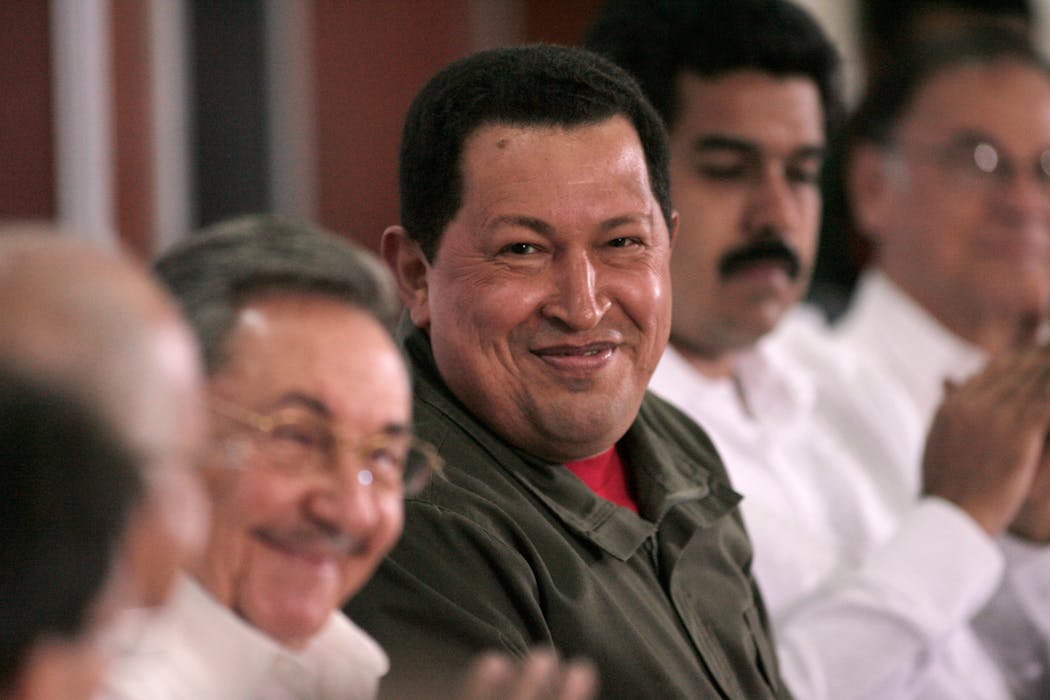
Hugo Chávez con el presidente cubano Raúl Castro y Nicolás Maduro, entonces ministro de Relaciones Exteriores, en abril de 2009. Harold Escalona/Shutterstock

El fenómeno político conocido como chavismo constituye uno de los procesos de reconfiguración estatal más profundos y controvertidos de la historia contemporánea de América Latina.

Definido como un movimiento cívico-militar de orientación socialista y bolivariana, ha gobernado Venezuela de forma ininterrumpida desde febrero de 1999. El chavismo logró trascender la figura de su fundador, Hugo Chávez, para convertirse en una estructura de poder hegemónica.

Su trayectoria se divide en etapas marcadas por el colapso del orden tradicional, la refundación institucional y una fase terminal de resistencia que ha desembocado en la crisis sistémica de enero de 2026.

Génesis y colapso del orden puntofijista

Para comprender el ascenso del chavismo es imperativo analizar el agotamiento del Pacto de Puntofijo, el acuerdo de gobernabilidad firmado entre los partidos Acción Democrática (socialdemócrata) y COPEI (demócratacristiano) en 1958, tras la caída de la dictadura militar del general Marcos Pérez Jiménez.

Con este pacto, se estableció un sistema bipartidista que durante años garantizó la estabilidad pero que acabó siendo un modelo excluyente. A finales de los años 80, la caída de los precios del petróleo y una deuda externa insostenible forzaron al presidente Carlos Andrés Pérez (socialdemócrata), nada más comenzar su segundo mandato, a implementar el Gran Viraje, un programa de ajustes supervisado por el FMI.

Este paquete económico fue la causa primordial de que, el 27 de febrero de 1989, se produjese el Caracazo, un estallido social masivo en la capital del país y sus zonas aledañas, que fue reprimido brutalmente por el ejército. Aunque el saldo oficial fue de 276 muertos, estimaciones extraoficiales hablan de más de 3 000.

Saqueos y disturbios en Caracas en febrero de 1989 tras las medidas impuestas por el gobierno venezolano a instancias del FMI.
Jose Angel Murillo V/Shutterstock

Este suceso actuó como un catalizador ético para un grupo de oficiales jóvenes, que sentían que el ejército era usado injustamente contra el pueblo. En este entorno, la logia militar MBR-200, fundada en 1982 bajo el Samán de Güere (un árbol histórico y tricentenario), aceleró sus planes de derrocamiento. La base ideológica del movimiento se llamó el árbol de las tres raíces. Así lo explicaba el propio Chávez en una entrevista concedida en 2005:

“Consiste en la raíz bolivariana (su planteamiento de igualdad y libertad, y su visión geopolítica de integración de América Latina); la raíz zamorana (por Ezequiel Zamora, el general del pueblo soberano y de la unidad cívico-militar) y la raíz robinsoniana (por Simón Rodríguez, el maestro de Bolívar, el Robinson, el sabio de la educación popular, la libertad y la igualdad). Este ’árbol de las tres raíces’ dio sustancia ideológica a nuestro movimiento…”.

La insurgencia de 1992 y el camino al poder

El 4 de febrero de 1992, el teniente coronel Hugo Chávez lideró un intento de golpe de Estado contra el presidente Pérez. Aunque fracasó militarmente, su asunción pública de la responsabilidad y su frase “por ahora” lo catapultaron como un mito político y una esperanza de cambio. Tras dos años en prisión, el presidente Rafael Caldera ordenó en 1994 el sobreseimiento de la causa contra él como parte de una política de pacificación del país.

Declaraciones de Chávez tras el fracaso de la intentona de golpe del 2 de febrero de 1992. Fuente: CENDES Venezuela.

Chávez abandonó la vía armada y fundó el Movimiento V República (MVR) para participar en las elecciones de 1998. Con una campaña centrada en la erradicación de la corrupción y la pobreza –que afectaba al 85 % de los hogares– ganó la presidencia el 6 de diciembre de 1998 con el 56,2 % de los votos. Su primer acto en el Gobierno fue convocar una Asamblea Nacional Constituyente, aprobada en 1999 por el 88 % de los votantes, para refundar el Estado bajo una nueva Constitución, que renombró al país como República Bolivariana de Venezuela.

Del chavismo carismático al régimen de supervivencia

La muerte de Chávez, en 2013, marcó un punto de inflexión. Nicolás Maduro heredó el poder sin el carisma ni la legitimidad de su antecesor. A partir de entonces, el chavismo dejó de ser un proyecto ideológico expansivo y se transformó en un régimen de supervivencia, cada vez más dependiente de la coerción y del control institucional.

El quiebre definitivo ocurrió en 2015, cuando la oposición, cohesionada bajo lo que se conoció como la Mesa de la Unidad Democrática (MUD), ganó la mayoría calificada (dos tercios) del Parlamento. La respuesta del gobierno fue desconocer el resultado electoral, vaciar de competencias al Parlamento y crear estructuras paralelas de poder con la elección amañada de una nueva Asamblea Constituyente, consolidando un autoritarismo cerrado que eliminó la competencia política real.

Desde entonces, las elecciones sin garantías, la persecución judicial, la represión sistemática y el uso del aparato estatal contra la disidencia se convirtieron en prácticas habituales.

Pese a ello, el 28 de julio de 2024, el régimen madurista recibió la estocada política final al perder de manera abrumadora, pese a a todo el ventajismo electoral, la elección presidencial contra Edmundo González Urrutia –el candidato apoyado por María Corina Machado, a quien no se le permitió competir–, que logró obtener el doble de votos que el oficialismo.

Los balances y contrapesos del poder chavista

Hoy, el chavismo no funciona como un partido político convencional sino como una coalición de intereses. El Partido Socialista Unido de Venezuela (PSUV) actúa principalmente como maquinaria de movilización y control social.

El poder real se sostiene en el equilibrio entre cuatro pilares fundamentales:

  1. La cúpula político civil, encabezada por Nicolás Maduro y, a partir los eventos del sábado 3 de enero de 2026, por quien era su vicepresidenta, Delcy Rodríguez, que administra el Estado y gestiona las relaciones internacionales, junto a su hermano, Jorge Rodriguez, quien controla el Parlamento y el sistema electoral.

  2. La Fuerza Armada, convertida en actor político y económico, con control directo sobre sectores estratégicos y empresas públicas, y liderada desde hace más de 10 años por el general Vladimir Padrino López.

  3. Redes opacas, vinculadas al petróleo, el oro, el contrabando y otras economías ilícitas, que financian la lealtad dentro del gobierno.

  4. Los aparatos de inteligencia y represión, responsables de neutralizar la disidencia política y social.

Este entramado le ha permitido sostenerse pese al colapso económico y a la pérdida casi total de legitimidad interna.

El tablero geopolítico en enero de 2026

El régimen chavista se insertó, desde muy temprano, en una geopolítica de antagonismo con los Estados Unidos y otras naciones democráticas. Cuba ha sido el aliado estructural más importante desde la llegada al poder de Chávez, quien consideraba a Fidel Castro su mentor, con especial apoyo en materia de inteligencia, control sociopolítico y diseño represivo.

A ello se suman las alianzas con Rusia, China e Irán, cada una con intereses estratégicos distintos: respaldo diplomático y militar, financiamiento e infraestructura, o cooperación tecnológica y de seguridad. Venezuela se ha convertido así en una pieza funcional dentro de una geopolítica de confrontación con Occidente.

Tras la muerte de Chávez, Maduro heredó un país en declive económico. Pese a que pocos le daban más de unos meses en el poder, no vio culminada su trayectoria política sino 11 años después, y de manera drástica el pasado 3 de enero con la operación militar estadounidense “Resolución Absoluta”.

Quiénes detentan el poder político en Venezuela

El ataque de la madrugada del 3 de enero resultó en la captura de Maduro y su esposa, Cilia Flores, quienes ahora enfrentan cargos por narcoterrorismo en Nueva York. Este evento ha reconfigurado (y continuará reconfigurando) el reparto del poder en Venezuela. Hoy por hoy lo conforman:

  • Delcy Rodríguez: designada presidenta interina por el Tribunal Supremo de Justicia tras la captura de Maduro y juramentada luego por su hermano en la Asamblea Nacional. Es hija de Jorge Antonio Rodríguez, que fue guerrilero y mártir de la izquierda, cuya muerte en manos de los servicios de inteligencia en 1976 marcó su ADN político. Al no figurar en las listas de recompensas de la DEA, se ha convertido en la interlocutora pragmática aceptada por Washington para gestionar una transición controlada.

  • Jorge Rodríguez: hermano de Delcy y presidente de la Asamblea Nacional. Es considerado el cerebro estratégico del régimen desde tiempos de Maduro, y controla el engranaje legislativo necesario para mantener la cohesión interna frente a las facciones radicales y los grupos paramilitares.

  • Donald Trump: con la incursión del 3 de enero, el mandatario estadounidense ha relanzado la doctrina Monroe. Ahora exige el control de los recursos energéticos venezolanos y condiciona al gobierno interino de Rodriguez a que rompa totalmente sus relaciones con China, Rusia, Irán y Cuba.

  • Vladimir Padrino López: como ministro de Defensa ha garantizado hasta ahora la lealtad de los militares. Su reconocimiento a Delcy Rodríguez ha evitado un colapso interno de la Fuerza Armada Nacional Bolivariana (FANB) tras la intervención externam.

  • Diosdado Cabello: ministro del Interior y Justicia, controla los aparatos policiales y de inteligencia. Representa el ala más radical; su subordinación a Rodríguez se considera incierta pero crítica para evitar un conflicto abierto en las filas del chavismo.

  • María Corina Machado y Edmundo González Urrutia: quienes constituyen el eje del liderazgo político de la oposición democrática y del gobierno electo en 2024. Son los actores que cuentan con la mayor legitimidad política y los llamados a gobernar una transición, en caso de que esta se concrete.

Y hoy, ¿qué es el chavismo?

El chavismo llega a 2026 en un estado de mutación forzada, intentando sobrevivir como una estructura administrativa bajo la sombra de una nueva hegemonía hemisférica que ha demostrado su disposición a imponerse por el uso de la fuerza.


Leer más:
Estados Unidos cruza la línea: Venezuela y el regreso del intervencionismo abierto en América Latina


Hace mucho que el chavismo dejó de ser una revolución o un movimiento popular expansivo para convertirse en un régimen autoritario pragmático, orientado a la preservación del poder mediante el control interno, la fragmentación social, el clientelismo político y económico, así como alianzas internacionales de conveniencia con otros regímenes autoritarios.

Comprender esta trayectoria –de promesa de redención social a sistema cerrado de poder– es clave para entender por qué el caso venezolano no es solo un evento local sino un problema político global. Con una estrategia relativamente exitosa, no ha sido posible derrotar el chavismo domésticamente pese a la amplia mayoría política que se le opone. Si las democracias no aprendemos a lidiar con fenómenos como el chavismo-madurismo venezolano continuaremos viendo cómo se repite este mismo patrón en otros gobiernos con vocación autoritaria.

The Conversation

Benigno Alarcón no recibe salario, ni ejerce labores de consultoría, ni posee acciones, ni recibe financiación de ninguna compañía u organización que pueda obtener beneficio de este artículo, y ha declarado carecer de vínculos relevantes más allá del cargo académico citado.

ref. Historia del chavismo: de la insurrección de 1992 al tablero geopolítico de 2026 – https://theconversation.com/historia-del-chavismo-de-la-insurreccion-de-1992-al-tablero-geopolitico-de-2026-273030

A Man on the Inside: Netflix comedy offers a timely defence of higher education

Source: The Conversation – Canada – By Barbara K Seeber, Professor, English Language & Literature, Brock University

Season 2 of Netflix’s A Man on the Inside finds Charles Nieuwendyk, private investigator and retired engineering professor (played by Ted Danson), undercover at Wheeler College.

The mission: recover the college president’s laptop. This might not seem juicy, but said laptop contains sensitive information about a $400 million donation by a tech multibillionaire, Brad Vinick.

As someone who has lived and studied academic life, I find the series created by Michael Schur (also behind The Good Place starring Ted Danson, among other hit series) is both funny and uncomfortable because it hits close to home.

Budgets trimmed to the bone

The P.I. is thrilled by his university case, calling it something “I can really sink my teeth into.”

Wheeler College, founded in 1883, has seen better days. It is struggling financially and its leadership is unpopular. The board of trustees hired a president who trims department budgets to the bone, cuts student aid and embraces corporate sponsorship — as well as the bonus he receives with every major donation.

These measures are not enough. Enter Vinick.

‘A Man on the Inside’ Season 2 trailer.

Vinick’s secret plan — “Project Aurora” — is to fire half the professors, exclude faculty from decision-making and close what he considers “non-essential departments,” leaving “three tracks of study — biotechnology, economics and computer science to prepare young adults for life in the modern world.”

President Jack Beringer knows Vinick’s intentions but does not want anyone to know he knows. Faculty uprisings would not help his bid for a higher-paying university job in Dallas, where he ate the best steak ever.

Language of efficiency, innovation

Any campus stroll reveals that Wheeler’s “Pepsi T-Mobile Covered Garage brought to you by Sephora” (Episode 4) is only a slight exaggeration.

Vinick’s language of efficiency and innovation dominates in real life. Universities are run increasingly on a corporate model, as numerous studies have demonstrated, including my collaboration with Maggie Berg in our book The Slow Professor: Challenging the Culture of Speed in the Academy.

Budgets and programs are being slashed, and in the guise of economic necessity, principles of higher education are undermined.

Professors also satirized

While Beringer and Vinick are the villains of the piece, there are, of course, some digs at the professors. (I admit we are an easy target).

The musicologist, for example, will abandon any conversation mid-sentence when inspiration hits.

In Episode 4, we see the chair of the English department is a snob about books you can buy at airports.

However, the show resists indulging in nutty, overpaid professor stereotypes because it recognizes, in the words of Dr. Benjamin Cole, head of the English department, “these are not the best of times.” The show focuses on staff and faculty efforts in an era of budget cuts and attacks on what the billionaire investor calls “pointless subjects” like art history and philosophy.

Holly Bodgemark, the provost, is so overworked she swallows nicotine gum (“It works faster if it goes right to the stomach”) and mixes her own “Peptocoffee.”

The musicologist may be flaky, but she buys used instruments out of her own pocket for students who can’t afford them. Money is tight for students. Student Claire Chung works a dozen jobs to pay tuition and housing. “When do you sleep?” Nieuwendyk asks. “In class,” she replies.

Defending higher education

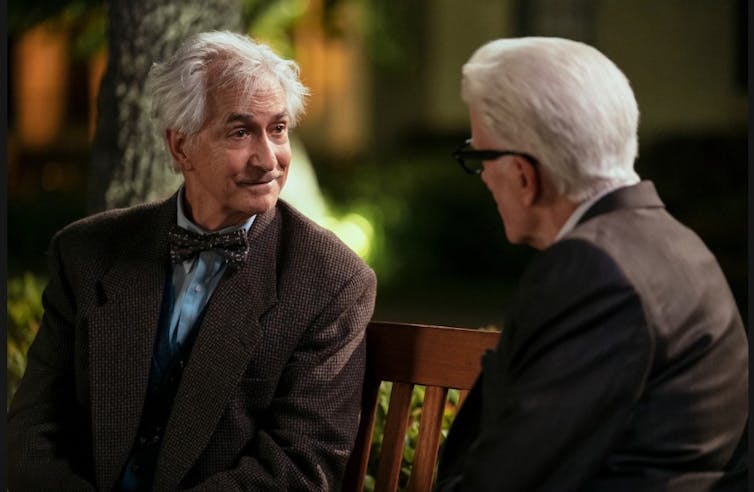
To defend higher education, the show calls in the big guns: Ozymandias, a sonnet by 19th- century Romantic writer Percy Bysshe Shelley. It’s mentioned in one of Cole’s lectures, where he recites some of its lines and comments on its continued relevance: “Money, fame, power do not last. But ideas … can endure.”

Two men in discussion on a bench.
Literature professor Dr. Cole tells his students: ‘ideas … can endure.’
(Netflix)

Published in 1818, Ozymandias speaks of a “traveller from an antique land.” The traveller comes across the remains of a sculpture with an inscription that reads:

“‘My name is Ozymandias, King of Kings,

Look on my Works ye Mighty, and despair!’”

The rest of the sculpture is a “colossal Wreck,” and the king’s boast has dwindled into unintentional irony.

Given that the show is American, the literary allusion might be a veiled reference to the No Kings protests.

Making sense of the present

The series seems to side with philosophers like Martha Nussbaum, who argues that a liberal arts education can help us make sense of the present and read it critically.

Vinick is a modern Ozymandias. He wants to be immortal, literally (he undergoes longevity treatments) and figuratively (he commissions oil portraits of himself). As the professor of fine arts notes in the first episode of Season 2: “Newsflash: the billionaire is a narcissist.”

Not to give away the mystery, but a crisis is averted. Wheeler is safe … for now. It might go under, but, as the provost says, “better to end on our own terms.”

And those terms are: education is not a business; it cannot be reduced to the delivery of quantifiable outcomes. The book What Are Universities For?, by Stefan Collini, professor emeritus of intellectual history and English literature, makes this case in a particularly compelling (and at times laugh-out-loud) way.

Higher education is a public good because it teaches critical thinking and civil debate and prepares engaged citizens.

Community

Good satire like A Man on the Inside points out the problems as well as possible remedies. Vinick mocks the notion of community, but the show values it above all because, without it, resistance is impossible. Wheeler College’s faculty and staff celebrate each other and band together across disciplinary divides.

In the words of the provost in the last episode of the season, they are committed to protecting “community and knowledge for the sake of knowledge.”

Schur’s comedy offers a timely defence of higher education and is notable for bridging the gap between academics and the general public.

The Conversation

Barbara K Seeber received a Social Sciences and Humanities Research Council Institutional Grant at Brock University.

ref. A Man on the Inside: Netflix comedy offers a timely defence of higher education – https://theconversation.com/a-man-on-the-inside-netflix-comedy-offers-a-timely-defence-of-higher-education-270934

Why America hasn’t become great again

Source: The Conversation – Canada – By Robert Chernomas, Professor Of Economics, University of Manitoba

United States President Donald Trump and his MAGA base are often portrayed as a break from past political norms. While that is certainly true, it overlooks the long and predictable path that led to his rise.

The slogan “Make America Great Again” (MAGA) became the movement’s rallying cry, tapping into a nostalgic vision of a past era of economic prosperity and social dominance and appealing to voters who feel left behind by demographic and economic change.

Trump is the predictable result of the deteriorating economic conditions in the U.S. since the 1980s and the political machinations that brought those economic conditions about. In our recent book Why America Didn’t Become Great Again, we explore how the U.S. has set itself on a path toward self-destruction.

The rise of corporate power

Book cover of Why America Didn't Become Great Again by Robert Chernomas and Ian Hudson.
‘Why America Didn’t Become Great Again’ by Robert Chernomas and Ian Hudson.
(Taylor & Francis)

In the 1970s, higher taxes and regulation, a growing “rights-conscious revolution” around the environment, gender and race, demand for rising wages and increasing foreign competition threatened corporate power. In response, American business embarked on what billionaire Warren Buffett described as “class warfare.”

To transfer wealth and power from the many to the few, institutions had to be organized, government policies reoriented and economists, journalists and politicians recruited, funded and promoted.

Corporate lobbying skyrocketed. In 1971, only 175 firms had registered lobbyists in Washington, D.C.,; by 1982, 2,445 did. The number of corporate political action committees (PACs) rose from fewer than 300 in 1976 to more than 1,200 by the mid-1980s.

Business lobbying organizations advocated for policies like corporate tax cuts, deregulation, free trade, anti-worker legislation and more permissive rules on corporate political donations. Between 1998 and 2022, the U.S. Chamber of Commerce spent US$1.8 billion on lobbying activities, making it the single largest spender in the nation.

The role of wealthy individuals

Individual business owners also chipped in. Figures like Charles and David Koch funded organizations that aligned with their desire to create a U.S. free from government regulation, taxation, redistribution or public services. During the 2016 election cycle, Koch-backed PACs spent just under US$900 million.

Many of these organizations, like the Tea Party, also helped put into the mainstream an evangelical creationism that distrusted science and expert opinion, supported a patriarchal animosity to women’s rights, opposed policies to further racial equality and expressed xenophobic opinions.

The flood of corporate money shifted the political centre, making Democrats more conservative. No progressive economic policy has been passed in the United States since the 1970, with the tepid exception of the Affordable Care Act, which is friendly to the health insurance industry.

The strategy proved remarkably successful. According to political scientists Martin Gilens and Benjamin Page, when wealthy Americans strongly support a policy, it’s about twice as likely to be adopted. But strong support from the middle class has “essentially no effect.”

How does this happen in a working democracy?

Business leaders cannot win elections on their own — they need allies. One particularly large group was easy to convince. Since the 1960s, no Democratic presidential candidate has won the majority of white voters.

Between the 1960-64 and 1968-72 election cycle, support for Democratic candidates among less-educated white voters fell from 55 to 35 per cent. With the exception of the 1992 and 1996 elections when their votes were more evenly split, this gap has held to the present day.

Although their share of the population is declining, less-educated white voters still made up just under 50 per cent of the electorate nationally in 2018. College-educated white voters have tended to split their votes more evenly or provide a small edge to Republicans.

If Democrats have branded themselves as the party of inclusion — of different races, genders, ethnicities and sexualities — the Republican Party has defended what they euphemistically term “traditional values.”

In a Faustian bargain to advance a pro-business agenda, the Republican Party successfully appealed to less-educated white voters, whose historical economic and social advantages have been diminishing. They earn less and die younger than they used to and their advantages over other groups in society are diminishing.

The Republican Party seized on this group’s discontent and actively channelled it against African Americans and immigrants. As early as the 1960s, the Republican’s Southern strategy promoted racism, successfully shifting white voters to their party and shifting the political spectrum to the right. That strategy continued through Ronald Reagan, George W. Bush, the Tea Party and Trump.

Importantly, this shift in voting preferences occurred well before the advent of the so-called “Rust Belt.” According to Pew Research, manufacturing jobs peaked in 1979.

Faced with declining standards of living, less-educated white voters could have chosen solidarity with all other workers and forced concessions from the elite of the business community to make the lives of all working-class people better. Instead, they voted to maintain the relative advantage of being white.

Rising inequality

The redistribution of income and wealth was detrimental to most Americans. Between 1973 and 2000, the average income of the bottom 90 per cent of U.S. taxpayers fell by seven per cent. Incomes of the top one per cent rose by 148 per cent, the top 0.1 per cent by 343 per cent, and the top 0.01 per cent rose by 599 per cent.

If the income distribution had remained unchanged from the mid-1970s, by 2018, the median income would be 58 per cent higher ($21,000 more a year). The decline in profits was halted, but at the expense of working families. Stagnant wages, massive debt and ever longer working hours became their fate.

Income stagnation is not the only quality of life indicator that suffered. In 1980, life expectancy in the U.S. was about average for an affluent nation. By the 2020s, it dropped to the lowest among wealthy countries, even behind China or Chile, largely due to the stagnation of life expectancy for working-class people.

The paradox of “red state” support

Less-educated white voters have historically supported politicians (mainly Republicans) who support cutting taxes for the rich and cutting social programs that they significantly benefit from.

In 2023, the Republican Gov. Sarah Huckabee Sanders of Arkansas vowed to get the “bureaucratic tyrants” of the federal government “out of your wallets.” Yet the numbers tell a different story.

In 2019, the federal government collected only half as much in taxes as it spent in the state, amounting to about US$5,500 per person in Arkansas. Similar patterns hold in many other regions.

Republican Kentucky is the largest destination of federal transfers, receiving US$14,000 per resident, approximately 30 per cent of its entire gross domestic product.

The electoral preferences of red states don’t result in good outcomes. States won by Trump in the 2016 presidential election had lower average scores (similar to Russia) on the American Human Development Index — which measures income, education and health — than states won by Democrats, which are similar to the Netherlands.

The modern Republican agenda

For decades, the alliance between less-educated white voters and business worked very well for business. Trump’s MAGA still delivers longstanding pro-business policies, from deregulation to antagonism to workers’ rights and massive tax cuts for the rich.

Today, however, the Republican Party now also promotes policies that business has long fostered, if not supported, including a distrust of facts and science, the ethnic cleansing of the labour force, racism, a vengeance for justice and a hodgepodge of crony, incompetent economic priorities and policies.

This combination has created a more unstable and unpredictable political, economic and social environment, leaving a significant majority of CEOs yearning for the stable Republican Party of a bygone era.

The Conversation

Robert Chernomas is a Professor of Economics at the University of Manitoba and a member of Elbows Up: A Practical Program for Canadian Sovereignty. I am not affiliated with a political party or industry association but I am politically active.

Ian Hudson receives funding from SSHRC.
Ian Hudson is a Research Associate for the Canadian Centre for Policy Alternatives.

ref. Why America hasn’t become great again – https://theconversation.com/why-america-hasnt-become-great-again-272778

Why Donald Trump is telling such obvious lies on the ICE Minneapolis killing

Source: The Conversation – Canada – By Jennifer Saul, Chair in Social and Political Philosophy of Language, University of Waterloo

By now, many of us have probably seen the video of a Minneapolis woman whose last words were a calm “It’s fine, dude; I’m not mad at you,” before she was shot three times in the head as she turned her car to drive away from an Immigration and Customs Enforcement (ICE) agent.

U.S. President Donald Trump claimed that Renee Good “violently, willfully, and viciously ran over the ICE Officer, who seems to have shot her in self defense.

Vice-President JD Vance declared “the reason this woman is dead is because she tried to ram somebody with her car… You have a woman who aimed her car at a law enforcement officer and pressed on the accelerator. Nobody debates that.”

These statements, and others that doubled down on them, were made even as videos showing they were clearly false were in wide circulation.

It’s puzzling. Why lie in a situation like this? Who can you hope to deceive, when evidence falsifying your statements is freely available?

Seeing is not believing?

Our work on authoritarian public discourse stresses that there are multiple answers to this question, partly because there are many different audiences of mass communication. We need to come to grips with the multiple functions of obvious falsehoods like these to understand why they are made so often and so prominently, and how they serve authoritarian leaders.

First, something that seems obvious to you can be credible to others. How? Because in an era of algorithmic news feeds, we are not all getting the same news. Those with a newsfeed of nothing but MAGA influencers are in a different epistemic bubble from other people.

And they may well be in an echo chamber, in which opposing voices are so discredited that when an alternative narrative reaches them, it’s immediately dismissed.

Millions of people may not have seen the videos of the incident at all, or may have seen versions with instructions on how to interpret the visuals: she’s not turning around, she’s backing up in preparation to ram into the shooter; she’s not calmly indicating that she isn’t a threat, she’s refusing to comply with orders.

Videos of police using force often have this dual nature: they can document and prove wrongdoing; but they can also be used to train citizens to see threats where there are none.

Footage of the last moments of Renee Good’s life. (The Canadian Press)

Authoritarian tactics

Some people will find the lies too obvious to be plausible attempts at deception. Yet bald-faced lies are important in strongman politics.

Authoritarians can display their power by asserting obvious falsehoods, showing that they cannot be held to account. They also play to their base by showing contempt for a shared enemy, while demanding displays of loyalty and compliance from underlings.

Officials are forced to engage in the humiliating ritual of repeating what we call compliance lies. Think here of White House press secretary Sean Spicer at the start of Trump’s first term, forced to defend absurd lies about Trump’s and Obama’s inauguration crowds.

At the time, this may have seemed merely buffoonish. What’s happened since illustrates how dangerous this can be as the subject of the lies has changed to matters concerning life and death.

Other people may simply become confused by obvious lies. The competing interpretations of the Minneapolis video are diametrically opposed. Once news sites and social media feeds are sufficiently populated by these opposing views, it can feel like an overwhelming task to discern what’s really true.

And exposing a lie still doesn’t end its influence. It is easier to create an opinion with a lie than to undo that opinion when the lie is debunked, something known to psychologists as the continued influence effect.

Filling social media feeds with falsehoods to create confusion is a crucial part of the strategy that Steve Bannon, a Republican strategist and former Trump adviser, called “flooding the zone with shit.” This can leave people unsure of who to trust, what to believe, or even what the issue really is.

‘Both sides’ reporting

Relatively savvy and good-faith entities can be used as instruments of this strategy. In the name of neutrality and balance, centrist news media can fall back on a “both sides” model that frames stories mainly in terms of what each side is saying.

When one side commits to obvious lies, this approach obligingly repeats those lies while outsourcing the fact-checking to the opposing side, as if it were merely a partisan dispute.


Read more:
Why Donald Trump is such a relentless bullshitter


These duelling narratives can then become the story. The strategy to lie shifts focus away from the shooting itself, in this incident, and onto the alleged controversy.

In other words, obvious lies aren’t necessarily failed lies. They can confuse, distract, excite and intimidate a range of audiences. They can also be believed, no matter how obviously false they seem.

To treat them as mere indications of shamelessness or incompetence on the part of the liar is to overlook the serious harm they can do and the appeal they have in authoritarian politics.

The Conversation

Jennifer Saul is a member of Democrats Abroad.

Tim Kenyon has received funding from the Social Sciences and Humanities Research Council of Canada.

ref. Why Donald Trump is telling such obvious lies on the ICE Minneapolis killing – https://theconversation.com/why-donald-trump-is-telling-such-obvious-lies-on-the-ice-minneapolis-killing-273200

Thomas Hardy’s Jude the Obscure criticised university elitism – it still rings true today

Source: The Conversation – UK – By Shelley Galpin, Lecturer in Culture, Media and Creative Industries, King’s College London

Thomas Hardy’s final novel, Jude the Obscure (1895), was ahead of its time in more ways that one. Upon its publication, it provoked controversy with its explicit criticism of organised religion and traditional marriage, leading to book burnings and public criticism.

Hardy attributed the public criticism to his retirement from novel writing. He had already courted controversy in the literary establishment a few years earlier by describing the unmarried mother who (spoiler alert) goes on to commit murder at the centre of Tess of the D’Urbervilles (1891) as “a pure woman”. But Jude the Obscure was his most searing attack yet on the hypocrisies of late Victorian society.

The novel’s apparent endorsement of free love, and damning portrait of conventional marriage, alienated many readers including – perhaps unsurprisingly – Hardy’s wife, with whom the novel caused an irreparable breach.


This article is part of Rethinking the Classics. The stories in this series offer insightful new ways to think about and interpret classic books and artworks. This is the canon – with a twist.


There’s no getting away from it, the story is something of a downer. It’s the tale of a young man – the “obscure” Jude – whose life starts off hard and gets harder as he faces a string of obstacles in the pursuit of his dreams. And he is a dreamer.

The novel opens with a young Jude being introduced to the idea of a university education, as his beloved schoolteacher leaves him for the dreaming spires of Oxford (called Christminster in the novel). Gazing at the “mirage” of the cityscape on the horizon and captivated by the idea of this “beautiful city”, Jude is immediately cautioned by his guardian that it “is a place much too good for you”.

Black and white photo of Thomas Hardy. He wears a suit and has a prominent moustache
Thomas Hardy.
Library of Congress

As the somewhat bleak title suggests, this is a story about alienation and social exclusion. Unperturbed by the ominous warnings, the working class Jude seeks to prepare himself for a university education by self-educating, using borrowed textbooks to teach himself Ancient Greek and Latin and studying diligently for many years.

As a young man, working as a stonemason in Christminster, Jude is determined to prove that universities are not, as he is told, “only for them with plenty o’ money”. He writes to the university, seeking advice on how to further his ambition of studying with them. The answer, when it comes, is crushing. Jude is advised that “as a working-man … [he] will have a better chance of success in life by remaining in [his] own sphere and sticking to [his] trade”.

In one of the most visceral images in the book, Jude responds by scrawling on the outside walls of the university: “I have understanding as well as you. I am not inferior to you.”

Sadly, this act of protest is still resonant today. As Jude understands, education is a path to social mobility. His impassioned defence of his own worth, as a scholar and as a human being, highlights the barriers faced by economically disadvantaged young people.

Inequality persists

In today’s society, it is unlikely that any hopeful student would receive such overt “stay in your lane” advice. Contemporary higher education aspires to a culture of widening participation, in which students from traditionally underrepresented groups are encouraged through outreach initiatives, contextual offers (in which applicants from disadvantaged backgrounds are given slightly lower grade requirements) and scholarships to apply to university.

Well-publicised schemes such as the Stormzy Scholarships, which seek to make University of Cambridge degrees more affordable for black students, have the explicit aim of redressing historical inequalities to make the university admissions process a more equitable system.

However, inequalities persist. Students from the poorest backgrounds are still drastically underrepresented at the UK’s most elite universities. Admissions statistics show that at Oxford, the object of Jude’s ambitions, applicants from fee-paying schools are more likely to be accepted than those from state schools.

Trailer for the 1996 adaptation of Jude the Obscure.

Factor in, too, the increasingly eye-watering costs of living for students and, despite years of effort, the danger is that a university education remains the preserve of “them with plenty o’ money”.

As Hardy shows in the novel, the consequences can be devastating. While on a population level it results in stagnating social mobility, on a personal level the frustrations associated with the failure to fulfil your potential are profound, and the practical implications of being forced to remain in a position of economic dependence are severe.

Jude’s persistent reliance on the goodwill of others, and his struggles to provide for his growing family, all stem from his exclusion from the opportunity to raise his social position.

As his desperate scrawls on the walls of the university argue, access to higher education should be for those with merit, not money. Some 130 years on from the publication of Hardy’s novel, it seems work still needs to be done, lest we risk future generations falling into obscurity.

Beyond the Canon

As part of the Rethinking the Classics series, we’re asking our experts to recommend a book or artwork that tackles similar themes to the canonical work in question, but isn’t (yet) considered a classic itself. Here is Shelley Galpin’s suggestion:

Like Jude the Obscure, Willy Russell’s Educating Rita (1980) is about education and the class system. In one scene, Rita, a working class Open University student from the north of England, has her books burned by her husband after he discovers she’s secretly been using contraception.

Watching Rita look on helplessly as her books and notes gradually succumb to the flames, as dramatised in the 1983 film, I vividly remember being moved to tears. I understood that Rita’s husband wasn’t just hindering her learning, he was telling her he didn’t want her to become an educated person, as he feared what education would give her.

Trailer for the 1983 adaptation of Educating Rita.

At the heart of the play is a message that is too often lost in the current obsession with quantifiable measures of success and employability. That is, for some people, education is not merely a means to a qualification or a higher paying job. Education can be the end in itself.

Describing the book burning, Rita reflects on her husband’s failure to understand her studies, stating that her education is a chance to “breathe” and find herself. The value of this for anyone, although not easily measurable, can be profound.

While Jude’s barriers prove insurmountable, Rita’s is a more hopeful story. It stands as an impassioned argument for the significance and power of lifelong learning, and like Hardy’s novel before it, for the importance of accessible education.


Looking for something good? Cut through the noise with a carefully curated selection of the latest releases, live events and exhibitions, straight to your inbox every fortnight, on Fridays. Sign up here.


This article features references to books that have been included for editorial reasons, and may contain links to bookshop.org. If you click on one of the links and go on to buy something from bookshop.org The Conversation UK may earn a commission.

The Conversation

Shelley Galpin does not work for, consult, own shares in or receive funding from any company or organisation that would benefit from this article, and has disclosed no relevant affiliations beyond their academic appointment.

ref. Thomas Hardy’s Jude the Obscure criticised university elitism – it still rings true today – https://theconversation.com/thomas-hardys-jude-the-obscure-criticised-university-elitism-it-still-rings-true-today-266009

The solar boom has a dirty secret. Here’s how to avoid another mountain of waste that can’t be recycled

Source: The Conversation – UK – By Rabia Charef, Senior Research Associate in Circular Economy & Digitalisation, Lancaster University

RenNeo / shutterstock

Solar power has a dark side: panels are still built to be thrown away, and we risk creating a mountain of waste that locks away valuable minerals.

The world already faces up to 250 million tonnes of solar waste by 2050, as panels installed during the solar boom of the 2000s and 2010s reach the end of their service life.

These panels were not designed to be repaired, refurbished, or disassembled. Indeed, current recycling processes mainly extract glass and aluminium, while the materials that carry the highest economic and strategic value such as silver, copper and high-grade silicon are generally lost in the process.

The industry now faces a narrow window to rethink. Without a shift in design, the energy transition could end up shifting environmental pressures rather than reducing them. Building low-carbon technology is essential, but low-carbon does not inherently mean sustainable.

A booming industry designed for the dump

The average lifespan of solar modules is about 25 to 30 years. This means a massive wave of installations from the early 2000s is now reaching the end of its life cycle. Countries with mature solar markets like Germany, Australia, Japan and the US are already seeing a sharp increase in the number of panels being taken out of service.

The challenge lies not only in the scale of the waste but also in the very design of the panels. To survive decades of weather, solar panels are built by stacking layers of glass, cells and plastic, then bonding them together so tightly with strong adhesives that they become a single, inseparable unit.

diagram of a solar panel
You can think of a solar panel like an industrial-strength sandwich.
VectorMine / shutterstock

But this durability has a downside. Because the layers are so tightly bonded, they are exceptionally difficult to peel apart, effectively preventing us from fixing the panels when they break or recovering materials when they are thrown away (those materials could generate US$15 billion (£11 billion) in economic value by 2050).

The limits of recycling

In any case, recycling should be a last resort because it destroys much of the embedded value. That’s because current processes are crude, mostly shredding panels to recover cheap aluminium and glass while losing high value metals.

For instance, while silver represents only 0.14% of a solar panel’s mass, it accounts for over 40% of its material value and about 10% of its total cost. Yet it is rarely recovered when recycling. During standard recycling, solar panels are crushed. The silver is pulverised into microscopic particles that become mixed with glass, silicon and plastic residues, making it too difficult and expensive to separate.

That’s why strategies that aim to extend the life of solar panels – such as repair and reuse – are vastly superior to recycling. They preserve the value of these products, and avoid the massive energy cost of industrial shredding. They keep valuable materials in circulation and reduce the need to extract new raw materials. They can even generate new revenue for owners. But this circular vision is only viable if solar panels are designed to be taken apart and repaired.

Designing panels for a circular future

Moving towards such an approach means redesigning panels so they can be repaired, upgraded and ultimately disassembled without damaging or destroying the components inside. The idea of designing for disassembly, common in other sectors, is increasingly essential for solar too.

Instead of permanent adhesives and fully laminated layers, panels can be built using modular designs and reversible connections. Components such as frames, junction boxes and connectors should be removable, while mechanical fixings or smart adhesives that release only at high temperatures can allow glass and cells to be separated more easily.

Standardising components and improving documentation would further support repairers, refurbishers and recyclers throughout a panel’s life cycle. In short, the next generation of solar panels must be designed to last longer, be repairable, and use fewer critical materials — not simply to maximise short-term energy output.

Digital tools can help

If you want to repair or recycle a panel years from now, you’ll need to know what materials it contains, what adhesives were used and how it was assembled. Digital tools can help here by storing information, essentially acting like a car’s logbook or a patient’s medical record.

One promising example is the EU’s new Digital Product Passport. These passports will include guidance on repair options, disassembly, hazardous substances, lifecycle history and end-of-life handling. They will be introduced progressively for priority product groups from 2027, with further expansion to many other products, expected towards around 2030.

The Digital Product Passport acts as a static “ingredients list” for a solar panel. It shows what a panel is made of and how it should be handled. Digital twins, by contrast, function more like a real-time monitoring system.

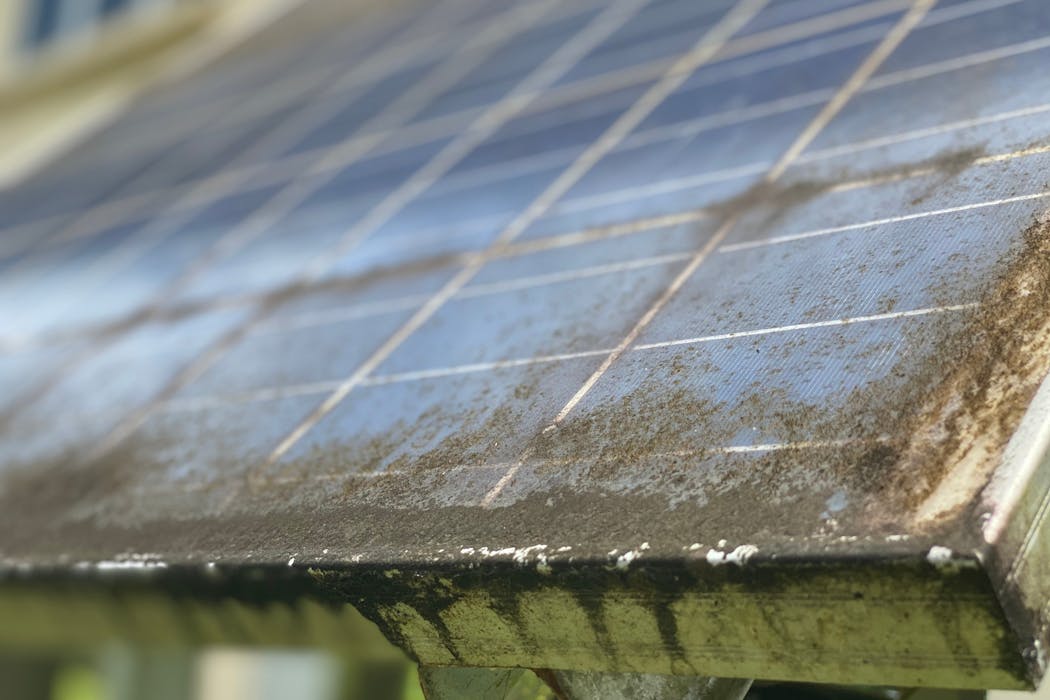
Continuously updated with performance data, they can signal when a panel is under-performing, has become too dusty, or needs repairing. Used together, these tools can help technicians identify which parts can be be repaired or reused and ensure solar panels are safely dismantled at the end of their life.

However, even the best digital twin isn’t much use if the panel itself is glued shut and designed for the dump. Without panels that are built to be repaired or taken apart, digitalisation will offer only marginal benefits.

Digital tools also have their own environmental footprint, from sensors to data storage, which makes it even more important that they support genuinely repairable designs rather than compensate for poor ones. We must rethink how we design solar panels right now, before today’s solar boom locks in tomorrow’s waste problem.

The Conversation

Rabia Charef is a Senior Research Associate at Lancaster University and works as an independent consultant on circular economy and digitalisation. She has previously worked on research related to the end-of-life of solar photovoltaic panels. This article is based on a review of the academic literature and does not draw on unpublished project data. The views expressed are the author’s own.

ref. The solar boom has a dirty secret. Here’s how to avoid another mountain of waste that can’t be recycled – https://theconversation.com/the-solar-boom-has-a-dirty-secret-heres-how-to-avoid-another-mountain-of-waste-that-cant-be-recycled-272134

Iran protests 2026: our surveys show Iranians agree more on regime change than what might come next

Source: The Conversation – UK – By Ammar Maleki, Assistant Professor, Public Law and Governance, Tilburg University

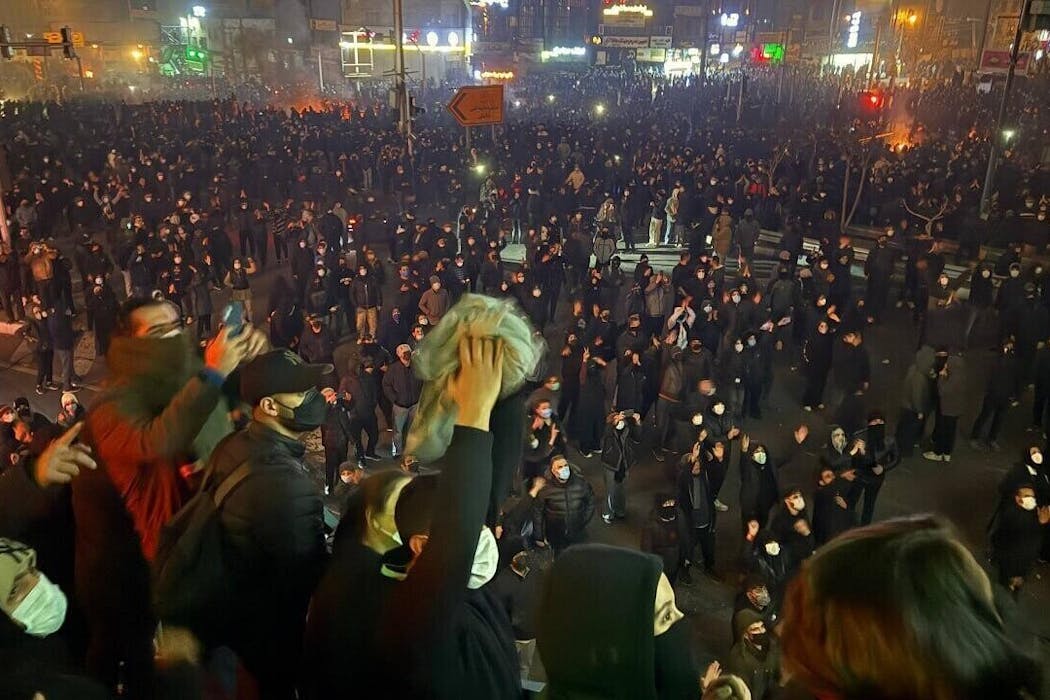
Protesters defied a savage regime crackdown to take to the streets to demand change. X

Iranians have shown a willingness to pay a devastating price for political change, as protest has consistently been met by the Islamic Republic with violence and mass killing. The death toll since Iranians took to the streets on December 28 has reportedly passed 500, with more than 10,000 arrested. Incoming reports put the casualty count much higher.

A clear majority of Iranians do not want the theocracy that came to power with the 1979 revolution. They want a secular democracy. But what does public opinion tell us about what that should entail and how this change should be achieved?

Measuring public opinion in one of the world’s most repressive countries is not an easy matter. Conventional surveys conducted through (landline) phones or by face-to-face interviews tend to reflect an implausibly homogeneous Islamic and pro-regime society. By contrast, Gamaan — the Group for Analysing and Measuring Attitudes in Iran — conducts surveys anonymously through the internet.

Our research is based on representative samples of anything from tens of thousands to over 100,000 respondents. In 2020 a Gamaan survey revealed a diverse, secularising and dissident society, in which around 70% rejected the compulsory hijab. These numbers materialised in the streets in 2022, during the “woman life freedom” protests (find out more about sample characteristics, weighting information, and external benchmark tests at gamaan.org and this Wapor methodology webinar).

To improve randomisation, we collaborate with Psiphon VPN, which is widely used across Iran. By 2025, an estimated 90% of Iranian internet users relied on VPNs to access blocked platforms, including basic messaging apps such as Whatsapp.

This level of coverage enabled what we call VPN sampling, yielding large, socially diverse samples under conditions of safety and anonymity. Combined with scale, anonymity offers reliable insight into what Iranians really want. The latest survey on the 12-day war with Israel, taken in September 2025, secured more than 30,000 responses from inside the country.

Why protests, again? What is different?

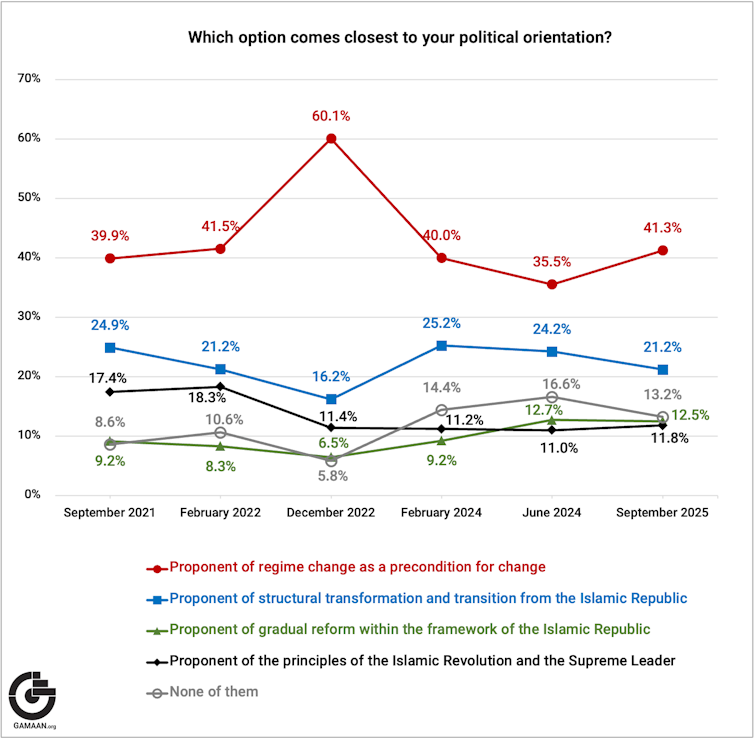
Our surveys consistently show that the majority shares a consensus on what it does not want. Across provinces, rural and urban areas, age groups and gender, roughly 70–80% say they would not vote for the Islamic Republic.

In all survey waves, support for regime change as a precondition for meaningful progress has been the most popular position. This support previously spiked during the “woman life freedom” protests. We believe we are currently witnessing another spike, given the increase observed after the 12-day war.

Results from GAMAAN’s surveys conducted between 2021 and 2025.
CC BY-ND

In contrast with the context of previous protests, the regime is militarily weakened from the 12-day war, during which many senior commanders were killed. Iran is now culturally weakened, no longer able to enforce the compulsory hijab. It is also economically weakened, with a plummeting currency.

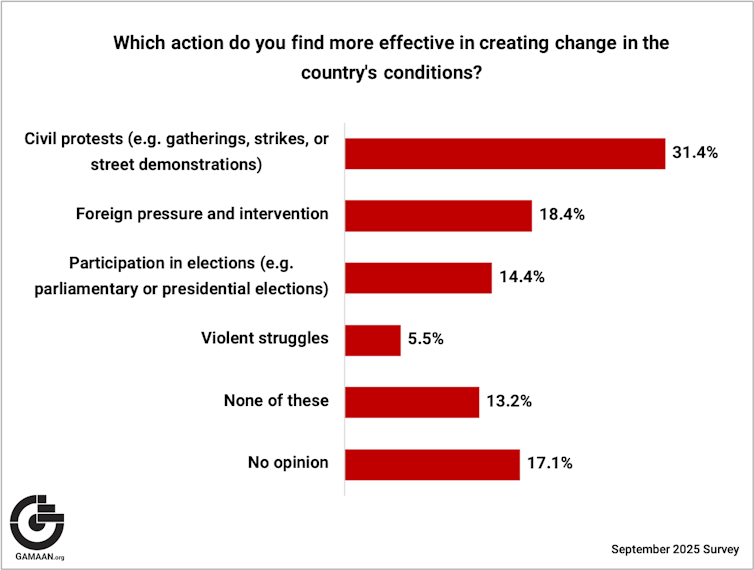
Iranians believe that protests, foreign pressure and intervention are more likely to bring about political change than elections and reforms. They were thus emboldened when, for the first time, a US president threatened intervention should protesters be killed. This came days after the abduction by the US military of the Venezuelan president, Nicolás Maduro, a key ally of the Islamic Republic.

Results from GAMAAN’s 2025 survey on the 12-Day War.
CC BY-ND

What might lie ahead?

Protesters today separate the very idea of Iran from the Islamic Republic. They view the regime as an alien element, an occupying force. This has long been expressed in slogans such as “Our enemy is right here, they lie that it is America” and “Not Gaza, not Lebanon, I only give my life for Iran” (supported respectively by 73% and 64% when we tested them in 2021).

The popularity of Reza Pahlavi, the former crown prince in exile who represents inherited monarchical nationalism, can be understood in light of this Iran-first mentality. Pahlavi’s social base remained stable in Gamaan’s surveys between 2022 and 2025. Roughly one-third are strong supporters and another third strongly oppose him. The remaining segment somewhat agrees or disagrees, or expresses no opinion.

The current surge in pro-Pahlavi slogans suggests that his popularity is attracting segments of the latter moderate or undecided population. But our surveys found that his popularity is unevenly distributed. It is lower in provinces with higher ethnic minority populations, such as the Kurds, Azeri Turks and Baluch.

Results from GAMAAN’s 2025 survey on the 12-day war.
CC BY-ND

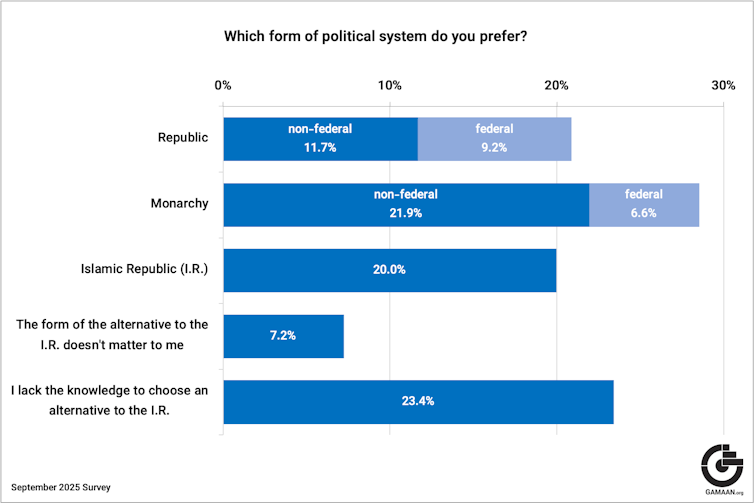
Although there is no consensus on the form or structure of an alternative political system, it is noteworthy that in 2025 there was, for the first time, a marked increase in support for monarchy. Given the significant size of those who do not voice a strong opinion on the alternative, any group that can successfully topple the Islamic Republic will have an advantage in convincing the majority to adopt its proposed model.

Results from GAMAAN’s 2025 survey on the 12-day war.
CC BY-ND

Iranians overwhelmingly support a “democratic political system” – with 89% in favour. Support for political liberalism, however, is weaker. In 2024, 43% agreed with having “a strong leader who does not have to bother with parliament and elections”. This view is significantly higher among those without higher education – among monarchists, it is 49%.

These facts should not be lamented or mocked but understood, if the threat of a lack of liberalism is to be mitigated. While nationalism may generate the force of a revolutionary storm capable of toppling the regime, long-term stability, after the fall of the Islamic Republic, will also require an acceptance of Iran’s cultural and ideological diversity as permanent features of a truly free nation.

The Conversation

Ammar Maleki is the founder and director of non-profit GAMAAN. He was selected as World Association for Public Opinion Research’s national representative for Iran for the 2025–2027 term.

Pooyan Tamimi Arab receives funding from the Dutch Research Council for the project Iran’s Secular Shift (2025-2030; VI.Vidi.231F.020). He is a board member of the non-profit research institute GAMAAN.

ref. Iran protests 2026: our surveys show Iranians agree more on regime change than what might come next – https://theconversation.com/iran-protests-2026-our-surveys-show-iranians-agree-more-on-regime-change-than-what-might-come-next-273198

La selección: intervencionismo, expansionismo, imperialismo en el siglo XXI

Source: The Conversation – (in Spanish) – By Elba Astorga, Editora de Economía, The Conversation

Libin Jose/Shutterstock

Que a nadie extrañe la vuelta estadounidense a una nueva versión de la doctrina Monroe, a la manera de Trump, puesta en evidencia hace justo una semana con la captura del presidente venezolano Nicolás Maduro y su esposa, Cilia Flores.

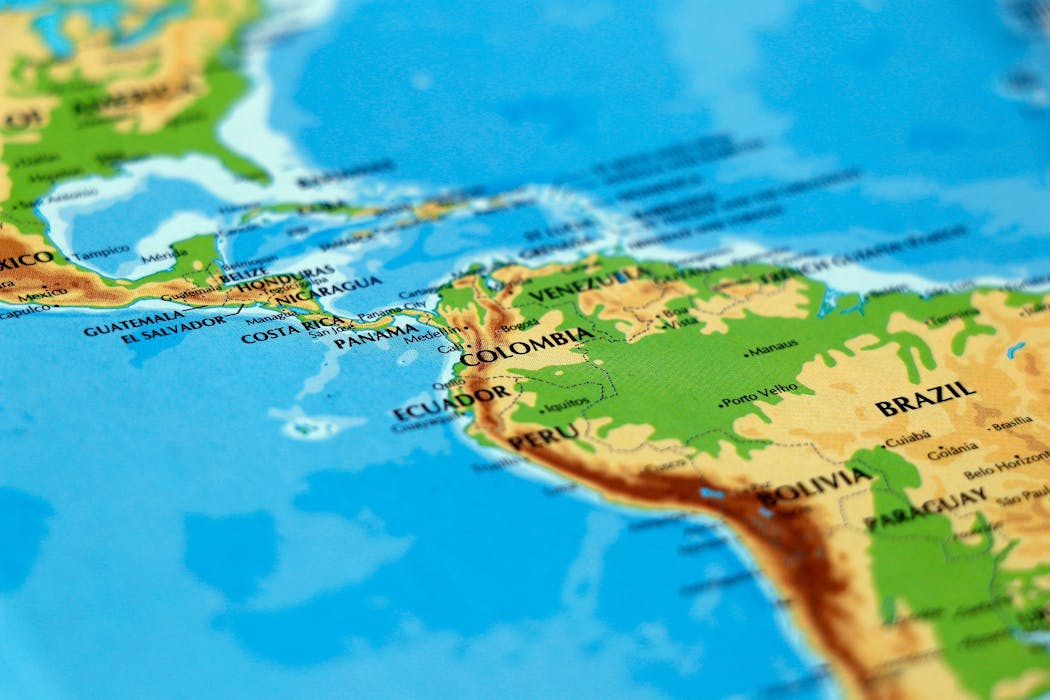
La doctrina Monroe ha sido la base teórica de una política internacional con sus vecinos de continente caracterizada por el expansionismo, el intervencionismo y el imperialismo, una política que ha permitido a Estados Unidos expandir sus intereses económicos en América Latina (en Centroamérica, la fruta; en Panamá, la construcción del Canal; en Venezuela, el petróleo) y que ahora busca extenderse hacia los gélidos territorios groenlandeses.

La doctrina Monroe nació dos siglos atrás, en 1823, en el fragor de las luchas independentistas de los países americanos. La frase del presidente Monroe “América para los americanos” era, de origen, idealista, y planteaba la necesidad de que el destino de las jóvenes repúblicas americanas quedase fuera de cualquier injerencia europea.

La doctrina Monroe fue un manifiesto de emancipación geopolítica: la participación europea en los procesos independentistas hispanoamericanos implicaba para Estados Unidos un ataque a su propia seguridad. Para el nuevo país, la posibilidad de que surgiesen monarquías en América implicaba un riesgo de desestabilización. Por eso, para los estadounidenses, la libertad americana tenía que ser republicana.

Años después, en 1898, esta doctrina servirá al presidente William McKinley para reivindicar el derecho natural de Estados Unidos para obrar y disponer en los países latinoamericanos y del Caribe.

El primer gran ensayo de la propuesta de McKinley fue la guerra de independencia cubana, en 1898. En 1903, Estados Unidos apoyó que Panamá se separase de Colombia, tras el triunfo de los conservadores en la Guerra de los Mil Días, lo que favorecería los intereses de EE. UU. para la construcción del Canal de Panamá (1904-1914).

Luego, a lo largo del siglo XX, y bajo la excusa de sofocar movimientos insurgentes o evitar la instauración del comunismo en la región, vendría la presencia de tropas estadounidenses en República Dominicana, Haití, Nicaragua, Guatemala y la infructuosa incursión en la cubana Bahía de Cochinos (1961), en un intento de derrocar el régimen castrista.

En el Cono Sur participó veladamente, a través de operaciones de la CIA, en la instauración de dictaduras militares en Argentina, Bolivia, Chile, Paraguay y Uruguay, aunque luego se sumarían Brasil, Ecuador y Perú.

El siglo XX cierra con la invasión de la isla caribeña de Granada (1983) por el auge del marxismo, y la de Panamá (1989) para derrocar al dictador y antiguo aliado Manuel Noriega, acusado de narcotráfico.

Lo que el 1 de septiembre de 205 empezó como una gran operación de lucha contra el narcotráfico en aguas del Caribe, acabó, el 3 de enero de 2026, con la captura y traslado a Nueva York de Maduro y su mujer para ser juzgados por narcoterrorismo. Esta vuelta sin ambages a la doctrina Monroe queda claramente reflejada en en el documento sobre la estrategia de seguridad nacional presentada ante el Congreso de los Estados Unidos en diciembre de 2025.

La incursión estadounidense en territorio venezolano dibuja una estrella de cinco puntas, cinco vertientes geopolíticas que ganan importancia en 2026:

  1. El poder presidencial estadounidense busca expandirse y volverse imperial.

  2. Surge la doctrina Donroe: América para los estadounidenses.

  3. El objetivo, más que controlar ideologías, es dominar los recursos.

  4. Consecuencias geopolíticas: ¿cómo cambia el panorama en otras regiones? Pensemos en los casos China-Taiwán o Rusia-Ucrania.

  5. El peso y la importancia de los valores democráticos, el Estado de derecho o el libre comercio se desvanecen ante el resurgir del imperialismo estadounidense.

Esto no acaba aquí. El presidente Trump ha dejado claro su interés en ganar el control sobre otros territorios geoestratégicos: “Necesitamos a Groenlandia por motivos de seguridad nacional”. Y las alarmas han saltado en Europa.

The Conversation

ref. La selección: intervencionismo, expansionismo, imperialismo en el siglo XXI – https://theconversation.com/la-seleccion-intervencionismo-expansionismo-imperialismo-en-el-siglo-xxi-273113