L’écologie, un problème de riches ? L’histoire environnementale nous dit plutôt le contraire

Source: The Conversation – France (in French) – By Renaud Bécot, Maitre de conférences en histoire contemporaine, Sciences Po Grenoble
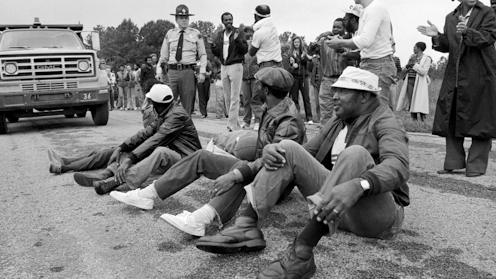
À Warren County, en Caroline du Nord, la mobilisation des habitants contre de la pollution aux polychlorobiphényles en 1982 marque un événement fondateur du mouvement pour la justice environnementale. Ricky Stilley/Henderson Dispatch

L’environnement n’intéresse-t-il que les classes supérieures ? Les travailleurs ont en réalité très vite identifié l’impact de l’industrialisation sur les écosystèmes dont ils dépendent. Mais cette conscience environnementale s’exprime de façon différente en fonction des classes sociales, comme l’explique Renaud Bécot, chercheur en histoire contemporaine et environnementale, dans un chapitre intitulé « Fin du monde, fin du mois, et au-delà ? L’environnementalisme des classes populaires » publié au sein de l’ouvrage collectif La Terre perdue. Une histoire de l’Occident et de la nature XVIIIᵉ-XXIᵉ siècle.


Au milieu des années 1950, Agnès Varda filme une scène ordinaire dans un quartier populaire du littoral méditerranéen. Quelques chats observent le réveil des familles dont les revenus d’existence reposent sur l’extraction des ressources de la mer. Les pêcheurs s’apprêtent à reprendre leur labeur, alors même que les fumées d’une industrie lourde souillent le rivage proche. Ils préparent leurs barques avec discrétion, car les autorités publiques surveillent la capture des poissons potentiellement pollués. Pourtant, « on ne veut pas travailler comme des empoisonneurs ! », s’exclament ces pêcheurs sétois.

Si cette représentation s’inscrit dans une œuvre de fiction (La Pointe courte, 1955), la scène illustre la position singulièrement inconfortable dans laquelle se trouvent les classes populaires contemporaines dans leurs rapports aux environnements. En effet, ces pêcheurs sont bien conscients que leurs revenus, et plus largement leurs conditions de subsistance, dépendent de l’extraction de ressources naturelles (ici halieutiques) – et, par extension, de la nécessité d’assurer la soutenabilité de celles-ci. Leur conscience est d’autant plus nette que l’industrialisation conforte une menace sur ces ressources et sur leur qualité.

Pourtant, malgré cette préoccupation, ces pêcheurs (tout comme les paysans au cours de cette période) sont pris dans l’état de la transition urbaine-industrielle que connaissent les sociétés européennes et américaines depuis le XIXe siècle.

[…]

L’acte d’accusation à l’encontre des classes populaires, supposément indifférentes aux enjeux écologiques, procède du déni des contraintes dans lesquelles se structurent les vies ordinaires au sein des groupes subalternes dans les sociétés occidentales. Face à l’ampleur des transformations urbaines et industrielles depuis le XIXe siècle, les préoccupations populaires pour l’environnement ont pourtant été récurrentes, et bien souvent ancrées dans des enjeux liés à l’organisation de la subsistance et à la protection de la santé.

De l’environnementalisme des pauvres à l’environnementalisme ouvrier

L’économiste catalan Joan Martinez-Alier distinguait trois principaux courants au sein des mouvements écologistes au début du XXIe siècle. Le premier, parfois qualifié de protectionniste, se caractérise par un culte de la nature sauvage. Son histoire se confond souvent avec les actions menées par des membres de classes aisées en faveur de la mise en réserve d’espaces présentés comme emblématiques, à l’instar d’intellectuels tels que John Muir (1838-1914), fondateur du Sierra Club, qui fut longtemps la principale association environnementale étasunienne.

Le deuxième courant renvoie aux promoteurs de l’écoefficacité ou de la modernisation écologique ; les membres de ce courant témoignent d’une conception technicienne et instrumentale du rapport des sociétés à l’environnement. Il vise à organiser les flux d’énergie et de matière de manière plus efficace et il est souvent associé à des figures scientifiques, à commencer par l’ingénieur forestier Gifford Pinchot (1865-1946).


Du lundi au vendredi + le dimanche, recevez gratuitement les analyses et décryptages de nos experts pour un autre regard sur l’actualité. Abonnez-vous dès aujourd’hui !


Enfin, le troisième courant correspond à l’environnementalisme des pauvres, dont Joan Martinez-Alier analyse que « le ressort principal n’est pas le respect sacré de la nature, mais l’intérêt matériel que représente l’environnement, source et condition de la subsistance ».

Cette catégorie d’environnementalisme des pauvres était d’abord pensée pour étudier les conflits dans les pays non occidentaux. Alier constatait que les motifs de protestation soulevaient des enjeux d’accès aux espaces naturels, de partage des ressources, ou de protection des milieux dont l’équilibre était essentiel pour la survie humaine. Plus qu’un culte de la nature ou une volonté de maximiser le rendement des écosystèmes, Alier observait ce qu’il désigne comme des conflits écologico-distributifs. Dans cette approche, il s’agit de penser une « nature ordinaire » correspondant à la protection d’une biodiversité sans valeur économique ou patrimoniale particulière, mais dont le maintien rend possible la protection de la santé humaine et du vivant. Cette nature ordinaire s’oppose aux initiatives de protection exclusive de sites naturels admirables, ou d’espèces animales emblématiques.

[…]

Luttes environnementales, conditions de travail et santé des ouvriers

Au crépuscule du XIXe siècle, dans les manufactures insalubres ou les mines de charbon, des voix s’élèvent pour dénoncer les maux de l’industrialisation. En 1893 puis 1895, ce sont les ouvrières d’usines d’allumettes de Trélazé (Maine-et-Loire), de Pantin et d’Aubervilliers (Seine) qui dénoncent notamment les dégâts sanitaires de leur exposition au phosphore blanc qui provoquent des nécroses maxillaires. Tout comme à Hull (Québec) en 1919, ces grèves d’allumettes rendent visibles les dégâts sanitaires d’une industrialisation à marche forcée. Autour de 1900 encore, l’historienne Judith Rainhorn souligne une convergence entre de rares syndicalistes et des médecins réformateurs, afin de défendre l’interdiction de l’usage de la céruse (ou blanc de plomb) dans la peinture utilisée sur les bâtiments – en France, cette revendication aboutira à l’adoption d’une loi d’interdiction en 1915.

La dénonciation des dommages ouvriers sanitaires et environnementaux de l’industrie se trouve partiellement désamorcée par l’adoption de réglementations encadrant les activités productives dans la plupart des pays industrialisés au début du XXe siècle. En matière de maladies professionnelles, ces lois consacrent le principe de la « réparation forfaitaire des risques du travail ». Ces maux sont présentés comme le revers empoisonné mais inéluctable du progrès. Si les syndicalistes contestèrent initialement cette monétarisation de la santé, la majorité d’entre eux se rallia par défaut à ce qui devint l’un des rares leviers de reconnaissance des maux endurés par les travailleurs.

Pourtant, au cours des années 1960, dans les territoires italiens de la pétrochimie tout comme dans les zones industrielles japonaises, certains groupes ouvriers alimentent une critique de pratiques qu’ils dénoncent comme une manière de « perdre leur vie à la gagner ». Dans une période marquée par une centralité ouvrière (symbolique, politique et sociologique) dans les sociétés occidentales, ces mobilisations réactivent un environnementalisme ouvrier, lequel conjugue un refus de la monétarisation des risques de santé, une volonté de protéger le cadre de vie des classes populaires, tout en énonçant des prescriptions pour une politique du travail plus respectueuse des corps et des environnements.

La justice environnementale, lutte dans un monde abîmé

Dans la typologie proposée par Joan Martinez-Alier, l’environnementalisme des pauvres recouvre également le mouvement se réclamant de la justice environnementale. Celui-ci s’enracine dans l’histoire spécifique des luttes socioécologistes étasuniennes, avant de connaître les résonances dans d’autres aires industrialisées.

Aux États-Unis, deux filiations militantes doivent être soulignées. D’une part, d’anciens militants des droits civiques alimentent une critique des grandes associations environnementales (à commencer par le Sierra Club), accusées de défendre prioritairement une nature « sauvage ». Cette préservation de la wilderness est dénoncée comme un mythe généré par des militants issus de la classe moyenne ou supérieure blanche. D’autre part, une seconde filiation s’inscrit dans la lignée des mobilisations ancrées dans les mondes du travail. Dans les années 1960, de grandes fédérations syndicales étasuniennes exigeaient une réglementation de certaines pollutions industrielles, et parfois une transformation des activités productives, à l’instar du syndicat des travailleurs de l’automobile (l’United Auto Workers). Ce double héritage militant fut à l’origine de grèves intenses, dont celle des éboueurs de Memphis, à laquelle Martin Luther King apporta son soutien lorsqu’il fut assassiné en 1968.

Néanmoins, le mouvement pour la justice environnementale ne s’est désigné comme tel qu’à l’orée des années 1980. Son récit fondateur voudrait qu’il débute lors de la mobilisation des habitants du quartier de Warren County (Caroline du Nord), confrontés au projet d’ouverture d’une décharge de produits toxiques. Ils dénoncent l’inégalité d’exposition aux toxiques dont sont victimes les populations racistes et paupérisées. Leur action se prolonge par l’invention d’un répertoire dans lequel la production de savoirs de santé occupe une fonction toujours plus considérable, comme en témoigne l’enquête d’épidémiologie populaire menée par les habitants de Woburn (en périphérie de Boston), avec le souhait d’éclairer le lien de causalité entre un cluster de leucémies infantiles et leur exposition à des forts taux de plomb, d’arsenic et de chrome. La multiplication des initiatives locales se prolonge dans des coordinations nationales et dans la publication d’études.

En 1987, le chimiste et militant Benjamin Chavis publie un rapport invitant à réfléchir aux processus sociaux de relégation de certaines populations dans des milieux pathogènes comme une forme de « racisme environnemental ». La justice environnementale est peu à peu devenue une grille d’analyse universitaire, consacrée notamment par les travaux du sociologue Robert Bullard au début des années 1990.

Mouvement social, autant que grille d’analyse du social, l’approche par la justice environnementale demeure largement ancrée dans son berceau nord-américain. Des historiens comme Geneviève Massard-Guilbaud et Richard Rodger ont montré la difficulté à transposer en Europe des catégories si liées à l’histoire étasunienne. Pourtant, la plus forte exposition des classes populaires aux toxiques est à l’origine d’une expérience commune de « violence lente » de part et d’autre de l’Atlantique. Proposée par le chercheur Rob Nixon, cette notion vise à désigner le phénomène d’atteintes différées à la santé qui marque les populations vivantes dans les territoires abîmés, ainsi que la difficulté à se mobiliser face aux pollutions dont les effets deviennent perceptibles après plusieurs décennies.

C’est pourtant face à ces violences pernicieuses qui se sont élevées habitants et salariés de nombre d’aires pétrochimiques dans l’Europe, au cours des années 1970. Ces initiatives se prolongent parfois jusqu’à nos jours, comme en témoignent les collectifs militants de Pierre-Bénite, dans le couloir de la chimie (Rhône). Après des conflits particulièrement vifs contre la fabrique d’acroléine entre 1976 et 1978, ce sont aujourd’hui les pollutions rémanentes des perfluorés (ou PFAS) qui sont au cœur des protestations adressées aux industriels de la chimie.

En France, au début du XXIe siècle, un ménage appartenant au décile le plus aisé de la population émet chaque année l’équivalent de 30 à 40 tonnes de dioxyde de carbone, soit au moins deux fois plus qu’un ménage appartenant au décile le plus pauvre (environ 15 tonnes). Pourtant, ce constat n’empêche pas l’éternelle réitération de la stigmatisation des classes populaires.
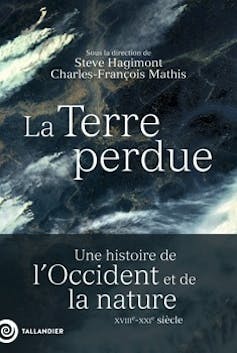
Couverture de La Terre perdue. Une histoire de l’Occident et de la nature XVIIIᵉ-XXIᵉ siècle, ouvrage dirigé par Steve Hagimont et Charles-François Mathis.
Éditions Tallandier

Contrairement aux parangons de la modernisation écologique, l’ethos des actrices et acteurs d’un environnementalisme populaire se caractérise souvent par une relative modestie dans le récit de leur rapport à une nature ordinaire. Cette attitude est aux antipodes de la mise en spectacle du syndrome du sauveur de la planète. De plus, l’étau de contraintes qui verrouillait le champ des possibles pour les pêcheurs sétois de l’après-guerre dans leur rapport à l’environnement ne s’est pas desserré pour les classes populaires du XXIe siècle. Il n’en reste pas moins que certaines fractions de celles-ci restent porteuses d’un rapport singulier à l’environnement.

The Conversation

Renaud Bécot ne travaille pas, ne conseille pas, ne possède pas de parts, ne reçoit pas de fonds d’une organisation qui pourrait tirer profit de cet article, et n’a déclaré aucune autre affiliation que son organisme de recherche.

– ref. L’écologie, un problème de riches ? L’histoire environnementale nous dit plutôt le contraire – https://theconversation.com/lecologie-un-probleme-de-riches-lhistoire-environnementale-nous-dit-plutot-le-contraire-258764

Togo’s ‘Nana-Benz’: how cheap Chinese imports of African fabrics have hurt the famous women traders

Source: The Conversation – Africa – By Fidele B. Ebia, Postdoctoral fellow, Duke Africa Initiative, Duke University

The manufacturing of African print textiles has shifted to China in the 21st century. While they are widely consumed in African countries – and symbolic of the continent – the rise of “made in China” has undermined the African women traders who have long shaped the retail and distribution of this cloth.

For many decades Vlisco, the Dutch textile group which traces its origins to 1846 and whose products had been supplied to west Africa by European trading houses since the late 19th century, dominated manufacture of the cloth. But in the last 25 years dozens of factories in China have begun to supply African print textiles to west African markets. Qingdao Phoenix Hitarget Ltd, Sanhe Linqing Textile Group and Waxhaux Ltd are among the best known.

We conducted research to establish how the rise of Chinese-made cloth has affected the African print textiles trade. We focused on Togo. Though it’s a tiny country with a population of only 9.7 million, the capital city, Lomé, is the trading hub in west Africa for the textiles.

We conducted over 100 interviews with traders, street sellers, port agents or brokers, government officials and representatives of manufacturing companies to learn about how their activities have changed.

“Made in China” African print textiles are substantially cheaper and more accessible to a wider population than Vlisco fabric. Our market observations in Lomé’s famous Assigamé market found that Chinese African print textiles cost about 9,000 CFA (US$16) for six yards – one complete outfit. Wax Hollandais (50,000 CFA or US$87) cost over five times more.

Data is hard to come by, but our estimates suggest that 90% of imports of these textiles to Lomé port in 2019 came from China.

One Togolese trader summed up the attraction:

Who could resist a cloth that looked similar, but that cost much less than real Vlisco?

Our research shows how the rise of China manufactured cloth has undermined Vlisco’s once dominant market share as well as the monopoly on the trade of Dutch African print textiles that Togolese traders once enjoyed.

The traders, known as Nana-Benz because of the expensive cars they drove, once enjoyed an economic and political significance disproportionate to their small numbers. Their political influence was such that they were key backers of Togo’s first president, Sylvanus Olympio – himself a former director of the United Africa Company, which distributed Dutch cloth.

In turn, Olympio and long-term leader General Gnassingbé Eyadéma provided policy favours – such as low taxes – to support trading activity. In the 1970s, African print textile trade was considered as significant as the phosphate industry – the country’s primary export.

Nana-Benz have since been displaced – their numbers falling from 50 to about 20. Newer Togolese traders – known as Nanettes or “little Nanas” – have taken their place. While they have carved out a niche in mediating the textiles trade with China, they have lower economic and political stature. In turn, they too are increasingly threatened by Chinese competition, more recently within trading and distribution as well.

China displaces the Dutch

Dating back to the colonial period, African women traders have played essential roles in the wholesale and distribution of Dutch cloth in west African markets. As many countries in the region attained independence from the 1950s onwards, Grand Marché – or Assigamé – in Lomé became the hub for African print textile trade.

While neighbouring countries such as Ghana limited imports as part of efforts to promote domestic industrialisation, Togolese traders secured favourable conditions. These included low taxes and use of the port.


Read more:
West Africans ditch Dutch wax prints for Chinese ‘real-fakes’


Togolese women traders knew the taste of predominantly female, west African customers better than their mostly male, Dutch designers. The Nana-Benz were brought into the African print textile production and design process, selecting patterns and giving names to designs they knew would sell.

They acquired such wealth from this trade that they earned the Nana-Benz nickname from the cars they purchased and which they used to collect and move merchandise.

Nana-Benz exclusivity of trading and retailing of African print textiles cloth in west African markets has been disrupted. As Vlisco has responded to falling revenues – over 30% in the first five years of the 21st century – due to its Chinese competition, Togolese traders’ role in the supply chain of Dutch cloth has been downgraded.

In response to the flood of Chinese imports, the Dutch manufacturer re-positioned itself as a luxury fashion brand and placed greater focus on the marketing and distribution of the textiles.

Vlisco has opened several boutique stores in west and central Africa, starting with Cotonou (2008), Lomé (2008) and Abidjan (2009). The surviving Nana-Benz – an estimated 20 of the original 50 – operate under contract as retailers rather than traders and must follow strict rules of sale and pricing.

While newer Togolese traders known as Nanettes are involved in the sourcing of textiles from China, they have lower economic and political stature. Up to 60 are involved in the trade.

Former street sellers of textiles and other petty commodities, Nanettes began travelling to China in the early to mid-2000s to source African print textiles. They are involved in commissioning and advising on the manufacturing of African print textiles in China and the distribution in Africa.

While many Nanettes order the common Chinese brands, some own and market their own. These include what are now well-known designs in Lomé and west Africa such as “Femme de Caractère”, “Binta”, “Prestige”, “Rebecca Wax”, “GMG” and “Homeland”.

Compared to their Nana-Benz predecessors, the Nanettes carve out their business from the smaller pie available from the sale of cheaper Chinese cloth. Though the volumes traded are large, the margins are smaller due to the much lower final retail price compared to Dutch cloth.

After procuring African print textiles from China, Nanettes sell wholesale to independent local traders or “sellers” as well as traders from neighbouring countries. These sellers in turn break down the bulk they have purchased and sell it in smaller quantities to independent street vendors.

All African print textiles from China arrive in west Africa as an incomplete product – as six-yard or 12-yard segments of cloth, not as finished garments. Local tailors and seamstresses then make clothes according to consumer taste. Some fashion designers have also opened shops where they sell prêt-à-porter (ready-to-wear) garments made from bolts of African print and tailored to local taste. Thus, even though the monopoly of the Nana-Benz has been eroded, value is still added and captured locally.

Since the COVID-19 pandemic, Chinese actors have become more involved in trading activity – and not just manufacturing. The further evolution of Chinese presence risks an even greater marginalisation of locals, already excluded from manufacturing, from the trading and distribution end of the value chain. Maintaining their role – tailoring products to local culture and trends and linking the formal and informal economy – is vital not just for Togolese traders, but also the wider economy.

The Conversation

Rory Horner receives funding from the British Academy Mid-Career Fellowship. He is also a Research Associate at the Department of Geography, Environmental Management and Energy Studies at the University of Johannesburg.

Fidele B. Ebia does not work for, consult, own shares in or receive funding from any company or organisation that would benefit from this article, and has disclosed no relevant affiliations beyond their academic appointment.

– ref. Togo’s ‘Nana-Benz’: how cheap Chinese imports of African fabrics have hurt the famous women traders – https://theconversation.com/togos-nana-benz-how-cheap-chinese-imports-of-african-fabrics-have-hurt-the-famous-women-traders-260924

Historic ruling finds climate change ‘imperils all forms of life’ and puts laggard nations on notice

Source: The Conversation – Global Perspectives – By Jacqueline Peel, Professor of Law and Director, Melbourne Climate Futures, The University of Melbourne

Hilaire Bule/Getty

Climate change “imperils all forms of life” and countries must tackle the problem or face consequences under international law, the International Court of Justice (ICJ) has found.

The court delivered its long-awaited advisory opinion overnight. The momentous case opens the door for countries impacted by climate disasters to sue major emitting countries for reparations.

And citizens could seek to hold governments to account for a failure to safeguard their human rights if their own or other countries fail to take adequate action to ensure a safe climate.

Here’s what the court ruled – and the global ramifications likely to flow from it.

man giving speech in front of demonstration.
Vanuatu’s Climate Change Minister Ralph Regenvanu delivers a speech at a demonstration before the International Court of Justice issued its first advisory opinion on state’s legal obligations to address climate change.
John Thys/AFP

Climate change breaches human rights

The ICJ case was instigated by law students at the University of the South Pacific in Vanuatu in 2019. They successfully launched a campaign for the court to examine two key issues: the obligations of countries to protect the climate from greenhouse gases, and the legal consequences for failing to do so.

The court found a clean, healthy and sustainable environment is essential for the enjoyment of many other human rights. As such, it found, the full enjoyment of human rights cannot be ensured without the protection of the climate system and other parts of the environment.

The ruling confirms climate change is much more than a legal problem. Rather, the justices concluded, it is an:

existential problem of planetary proportions that imperils all forms of life and the very health of our planet.

Most nations have signed up to global human rights agreements such as the International Covenant on Civil and Political Rights. The ICJ ruling means parties to those agreements must take measures to protect the climate system and other parts of the environment.

An advisory opinion from the International Court of Justice is not legally binding. But it is an authoritative description of the state of the law and the rights of countries to seek reparations if the law is breached. As such, it carries great legal weight.

Just as climate science assessments of the Intergovernmental Panel on Climate Change have become the gold standard for understanding the causes and impacts of climate change, the court’s ruling provides a clear baseline against which to assess countries’ action, or inaction, on climate change.

Keeping 1.5°C alive?

In recent years, many states’ emissions reduction targets under the Paris Agreement have seemed to “settle” at levels which would hold global temperature increases to 2°C at best.

But the International Court of Justice ruled the much more ambitious 1.5°C goal had become the scientifically based consensus target under the Paris Agreement.

Some countries argued formal emissions targets should be left to the discretion of each government. However, the court found against this. Rather, each nation’s targets had to be in line with – and make an adequate contribution to – the global goal of holding heating to 1.5°C.

The court found each state’s emissions reduction pledges should be judged against a stringent “due diligence” standard. The standard takes into account each country’s historical contributions to emissions, level of development and national circumstances, among other factors.

The ruling means rich countries, such as Australia, will be required under international law to make more ambitious emission-reduction pledges under the Paris Agreement, such as for the 2035 target currently under consideration by the Albanese government.

The court decision also provides a measure of climate justice for small island states, which have historically low emissions but face a much higher risk of damage from climate change than other nations.

Holding states accountable for inaction

Because climate change is global, it is difficult – but not impossible – to attribute damage from extreme weather to the actions of any one nation or group of nations.

On this question, the court said while climate change is caused by the cumulative impact of many human activities, it is scientifically possible to determine each nation’s total contribution to global emissions, taking into account both historical and current emissions.

If a nation experiences damage caused by the failure of another nation, or group of nations, to fulfil international climate obligations, the ruling means legal proceedings may be launched against the nations causing the harm. It may result in compensation or other remedies.

For small, climate-vulnerable nations such as those in the Alliance of Small Island States, this opens more legal options in their efforts to encourage high-emitting nations to properly address climate change.

Importantly, the court made clear nations can be legally liable even if damage from climate change comes from many causes, including from the activities of private actors such as companies.

That means nations cannot seek an exemption because others have contributed to the problem. They must also act to regulate companies and other entities under their jurisdiction whose activities contribute to climate change.

pacific island, palm trees and beach.
Pacific Island nations emit very little but face huge threats from climate change.
Luca Turati/Unsplash, CC BY-NC-ND

Paris Agreement quitters aren’t safe

One line of argument put to the court by Australia and other states was that climate treaties represented the only obligations to tackle climate change under international law.

But the court found this was not the case. Rather, other international laws applied.

The United States pulled out of the Paris Agreement earlier this year. The court’s opinion means the US and other nations are still accountable for climate harms under other international laws by which all countries are bound.

Could this lead to greater climate action?

The International Court of Justice has produced a truly historic ruling.

It will set a new baseline in terms what countries need to do to address climate change and opens up new avenues of recourse against high-emitting states not doing enough on climate change.

The Conversation

Jacqueline Peel receives funding from the Australian Research Council under her Australian Laureate Fellowship and Kathleen Fitzpatrick Award on ‘Transforming International Law for Corporate Climate Accountability’.

– ref. Historic ruling finds climate change ‘imperils all forms of life’ and puts laggard nations on notice – https://theconversation.com/historic-ruling-finds-climate-change-imperils-all-forms-of-life-and-puts-laggard-nations-on-notice-261848

Why Texas Hill Country, where a devastating flood killed more than 135 people, is one of the deadliest places in the US for flash flooding

Source: The Conversation – USA (2) – By Hatim Sharif, Professor of Civil and Environmental Engineering, The University of Texas at San Antonio

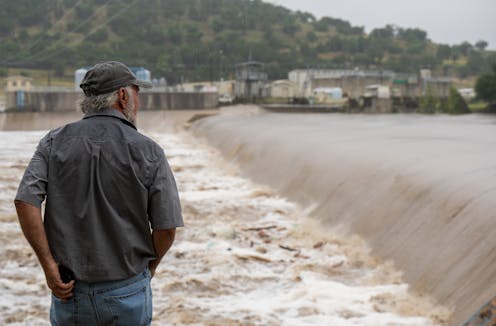
A Kerrville, Texas, resident watches the flooded Guadalupe River on July 4, 2025. Eric Vryn/Getty Images

Texas Hill Country is known for its landscapes, where shallow rivers wind among hills and through rugged valleys. That geography also makes it one of the deadliest places in the U.S. for flash flooding.

In the early hours of July 4, 2025, a flash flood swept through an area of Hill Country dotted with summer camps and small towns about 70 miles northwest of San Antonio. More than 135 people died in the flooding. The majority of them were in Kerr County, including more than two dozen girls and counselors at one summer camp, Camp Mystic. Dozens more people were still unaccounted for a week later.

The flooding began with a heavy downpour, with more than 10 inches of rain in some areas, that sent water sheeting off the hillsides and into creeks. The creeks poured into the Guadalupe River.

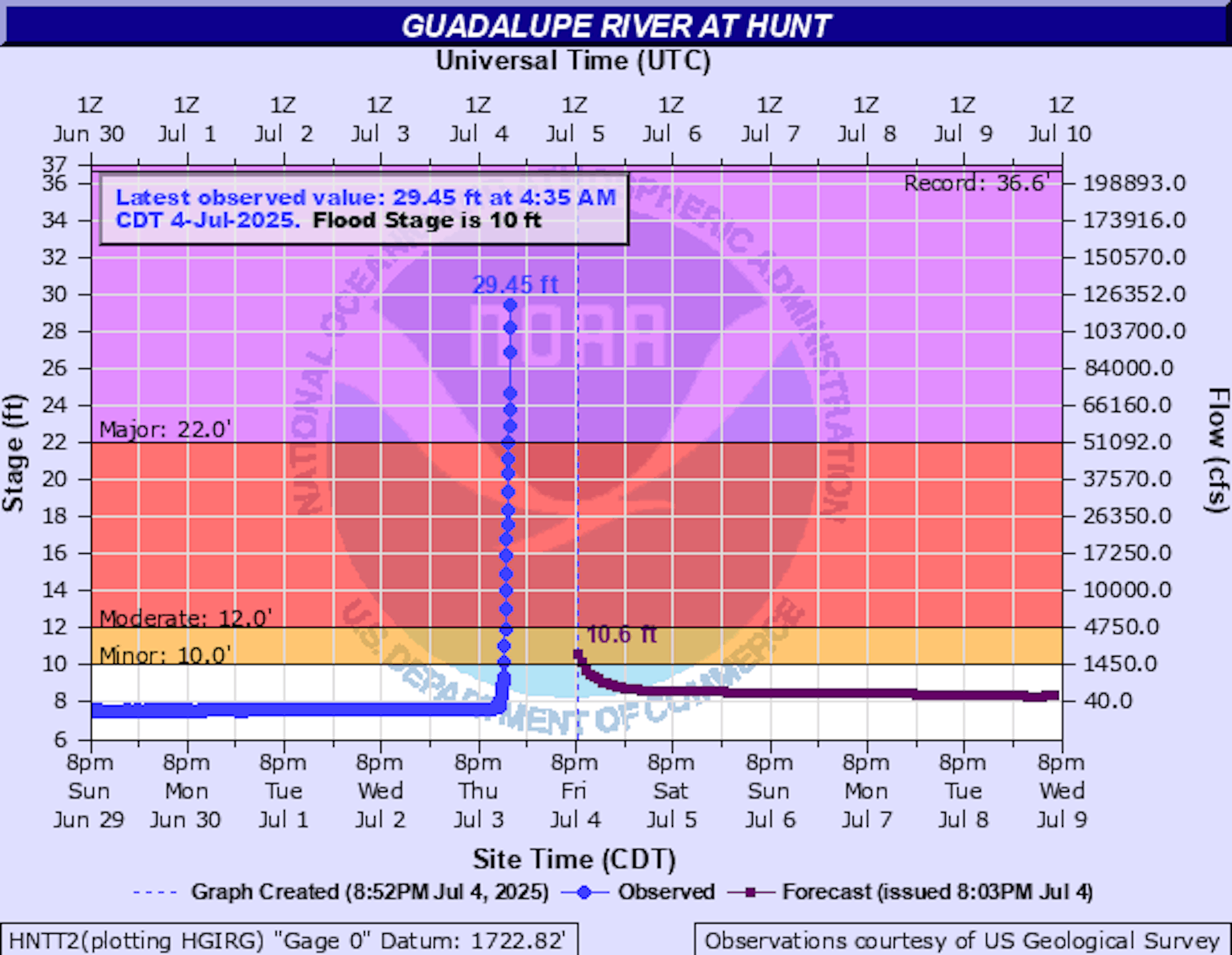
A river gauge at Hunt, Texas, near Camp Mystic, showed how quickly the river flooded: Around 3 a.m. on July 4, the Guadalupe River was rising about 1 foot every 5 minutes at the gauge, National Weather Service data shows. By 4:30 a.m., it had risen more than 20 feet. As the water moved downstream, it reached Kerrville, where the river rose even faster.

Flood expert Hatim Sharif, a hydrologist and civil engineer at the University of Texas at San Antonio, explains what makes this part of the country, known as Flash Flood Alley, so dangerous.

What makes Hill Country so prone to flooding?

Texas as a whole leads the nation in flood deaths, and by a wide margin. A colleague and I analyzed data from 1959 to 2019 and found 1,069 people had died in flooding in Texas over those six decades. The next highest total was in Louisiana, with 693.

Many of those flood deaths have been in Hill County. It’s part of an area known as Flash Flood Alley, a crescent of land that curves from near Dallas down to San Antonio and then westward.

The hills are steep, and the water moves quickly when it floods. This is a semi-arid area with soils that don’t soak up much water, so the water sheets off quickly and the shallow creeks can rise fast.

When those creeks converge on a river, they can create a surge of water that wipes out homes and washes away cars and, unfortunately, anyone in its path.

Hill Country has seen some devastating flash floods. In 1987, heavy rain in western Kerr County quickly flooded the Guadalupe River, triggering a flash flood similar to the one in 2025. Ten teenagers being evacuated from a camp died in the rushing water.

San Antonio, at the eastern edge of Hill Country, was hit with a flash flood on June 12, 2025, that killed 13 people whose cars were swept away by high water from a fast-flooding creek near an interstate ramp in the early morning.

Why does the region get such strong downpours?

One reason Hill Country gets powerful downpours is the Balcones Escarpment.

The escarpment is a line of cliffs and steep hills created by a geologic fault. When warm air from the Gulf rushes up the escarpment, it condenses and can dump a lot of moisture. That water flows down the hills quickly, from many different directions, filling streams and rivers below.

As temperature rise, the warmer atmosphere can hold more moisture, increasing the downpour and flood risk.

A tour of the Guadalupe River and its flood risk.

The same effect can contribute to flash flooding in San Antonio, where the large amount of paved land and lack of updated drainage to control runoff adds to the risk.

What can be done to improve flash flood safety?

First, it’s important for people to understand why flash flooding happens and just how fast the water can rise and flow. In many arid areas, dry or shallow creeks can quickly fill up with fast-moving water and become deadly. So people should be aware of the risks and pay attention to the weather.

Improving flood forecasting, with more detailed models of the physics and water velocity at different locations, can also help.

Probabilistic forecasting, for example, can provide a range of rainfall scenarios, enabling authorities to prepare for worst-case scenarios. A scientific framework linking rainfall forecasts to the local impacts, such as streamflow, flood depth and water velocity, could also help decision-makers implement timely evacuations or road closures.

Education is particularly essential for drivers. One to two feet of moving water can wash away a car. People may think their trucks and SUVs can go through anything, but fast-moving water can flip a truck and carry it away.

Officials can also do more to barricade roads when the flood risk is high to prevent people from driving into harm’s way. We found that 58% of the flood deaths in Texas over the past six decades involved vehicles. The storm on June 12 in San Antonio was an example. It was early morning, and drivers had poor visibility. The cars were hit by fast-rising floodwater from an adjacent creek.

This article, originally published July 5, 2025, has been updated with the death toll rising.

The Conversation

Hatim Sharif does not work for, consult, own shares in or receive funding from any company or organization that would benefit from this article, and has disclosed no relevant affiliations beyond their academic appointment.

– ref. Why Texas Hill Country, where a devastating flood killed more than 135 people, is one of the deadliest places in the US for flash flooding – https://theconversation.com/why-texas-hill-country-where-a-devastating-flood-killed-more-than-135-people-is-one-of-the-deadliest-places-in-the-us-for-flash-flooding-260555

Bali is built on informal and ‘illegal’ settlements. Bulldozing Bingin Beach misses the real threat of overdevelopment

Source: The Conversation – Global Perspectives – By Kim Dovey, Professor of Architecture and Urban Design, The University of Melbourne

Balinese officials have begun the demolition of more than 40 businesses at Bingin Beach, a popular tourist spot in the Uluwatu region.

In June, the Balinese House of Representatives determined the settlement is on public land, and is therefore illegal and needs to be demolished. But I’d argue it doesn’t.

The ‘illegal’ settlement

The Bingin Beach coastal settlement began development in the 1970s as an informal surfer hub at the base of a steep escarpment. The beach is a few hundred metres long and largely disappears at high tide.

Originally lined with a string of makeshift warungs (small food stores) and cheap accommodations, the settlement has grown incrementally over the decades, up and along the escarpment, with an intensive mix of surf shops, restaurants and small hotels.

The steepness of the slope precludes vehicle access. The only public access is via two somewhat narrow pedestrian stairways.

While it initially served the surfer community, the settlement now caters to a broader tourist market, with some rooms going for upwards of US$150 per night.

But after more than 50 years of incremental development, the House of Representatives has declared the settlement was illegally constructed on state land, and has ordered the demolition of 45 buildings – effectively the entire settlement.

While most of the buildings seem highly durable, the demolition order is based on illegality, and not durability. A spokesperson for the traders argues most of the businesses are locally owned, and livelihoods are at stake.

The ‘legal’ settlement

The former farmland at the top of the escarpment is also covered with tourist developments that mostly emerged since 2010, and now extend up to a kilometre inland. This is a much more familiar landscape for Bali: a mix of walled hotel compounds and private villas, with manicured gardens and swimming pools.

However, one could scarcely call this larger settlement “planned”. Shops and restaurants emerge wherever they can find a market along the narrow roads. There are no sidewalks and pedestrians are constantly engaged in an anxious game of negotiated passing.

The infrastructure of roads and lanes has also been designed incrementally, across the former farm fields, as the settlement developed. The resulting street network is convoluted and largely unwalkable. The most common street sign is “no beach access this way”.

What is informality?

I’m an academic, architect and urban planner who studies informal settlements and informal urbanism more generally. In this context “informal” can mean illegal, makeshift and unplanned, but it can also mean incremental, adaptive and inventive.

Informal settlement is the means by which a large proportion of Indonesians produce affordable housing. It is also the most traditional form of indigenous housing globally.

After many decades of governments trying to demolish such settlements, the overwhelming consensus across the United Nations Human Settlements Programme is that wholesale demolition is rarely an answer. On-site formalisation and upgrading is the more sustainable pathway.

When engaging with informal settlements, we need to preserve the infrastructures that work and only demolish where necessary. The Bingin Beach escarpment settlement has proven sustainable and has become an integral part of the local heritage.

Its demolition will destroy livelihoods and displace the surfing market, while feathering other nests.

So why is it being demolished? Perhaps to clear the ground for the next round of up-market resorts – what urban studies research calls “accumulation by disposession”. Bingin is widely seen as a major real estate hotspot for investment.

What is overdevelopment?

One of the key dangers of informal settlement is “overdevelopment”. Without
formal planning codes, density can escalate to destroy the very attraction that produced the settlement.

Most buildings along the Bingin Beach escarpment are two to four storeys, and step back with the slope of the escarpment. The exception is the 2019 addition of the Morabito Art Cliff hotel that rises more than six storeys, obscuring the natural landscape, blocking views, and setting a precedent for more of the same.

If everyone in the area built like this, the Bingin settlement would be replaced with a cliff of buildings. To demolish this one building would set a useful precedent of containing the settlement to a sustainable scale.

The Impossibles dream

A few hundred metres south-west of Bingin Beach, a different story unfolds near the beach known as Impossibles. Here, a precarious limestone cliff largely precludes access to the beach, and the clifftop has long been lined with low-rise tourist compounds.

An aeriel view of the Uluwatu coast shows Bingin Beach and the Impossibles.
Map data: Google, 2025 Maxar Technologies

This earlier layer of development is now being demolished and replaced with larger, denser resorts as part of the Amali project which claims a “rare cliff-front location”. The location is “rare” because about half of the 50-metre-high cliff has been excavated to construct villa units quite literally in the cliff.

This excavation was well underway when, in May 2024, it caused much of the remaining natural cliff face to collapse onto the beach and into the ocean. It remains unclear whether the excavation was formally approved. Either way, it prompts the question: what if everyone did that?

The Bingin escarpment and the Impossibles cliff face represent very different kinds of development. One is incremental, irregular and geared to its social and environmental context, while the other is large-grain and environmentally destructive. It makes no sense to demolish the former in order to make way for the latter.

It is imperative to not only save the Bingin Beach settlement, which is part of Bali’s surfing heritage, but also to awaken from the impossible dream of building more and more villas on this fragile and limited coastland.

The Conversation

Kim Dovey does not work for, consult, own shares in or receive funding from any company or organisation that would benefit from this article, and has disclosed no relevant affiliations beyond their academic appointment.

– ref. Bali is built on informal and ‘illegal’ settlements. Bulldozing Bingin Beach misses the real threat of overdevelopment – https://theconversation.com/bali-is-built-on-informal-and-illegal-settlements-bulldozing-bingin-beach-misses-the-real-threat-of-overdevelopment-261755

Cycling’s governing body is introducing new rules to slow down elite riders. Not everyone’s happy

Source: The Conversation – Global Perspectives – By Popi Sotiriadou, Associate Professor of Sport Management – Director Business Innovation, Griffith University

MARCO BERTORELLO/AFP via Getty Images

Most sports look to support their athletes to become “faster, higher, stronger” – in reference to the Olympic Games’ original motto – so it is perhaps surprising that cycling’s world governing body is trying to slow down elite riders.

However, there’s good reason the Union Cycliste Internationale (UCI) recently announced new rules to slow riders down.

These rules – which apply to elite road and cyclo-cross mass-start events for men and women such as the Tour de France – come into place shortly and are aimed at improving rider safety.


Read more:
I rode the Tour de France to study its impact on the human body – here’s what I learned


What are the new rules?

From August 1, a new bicycle gearing regulation will kick in.

Professional cyclists will only be allowed to use a 54-tooth front chainring with an 11-tooth rear cog.

This replaces the current common setup of 54-10.

To put this into context, a 54-tooth chainring is the big front gear on a bike and the 11-tooth cog is a small rear gear. Moving to a slightly bigger cog (54-11) makes it harder to hit top speeds: the change from a 54-10 to a 54-11 gear setup could reduce the top speed by about 2.4 kilometres per hour.

Pro riders can reach incredible speeds during descents, sometimes surpassing 130 kilometres per hour.

Then, from January 1 2026, handlebars must become wider, increasing from a minimum 350–360 millimetres width (depending on the event) to at least 400mm wide.

The handlebar width affects how a rider controls their bike: narrower bars reduce frontal surface area, making a rider more aerodynamic which again means a faster ride.

This is especially useful in time trials or sprints.

Wider bars offer better stability and control, helping navigate tight turns, peloton traffic, or crosswinds.

The UCI has also announced plans to introduce a formal helmet approval protocol in 2027, which will include separate standards for helmets used in mass-start events and time trials.

This shift suggests helmets may soon be subject to the same pre-race approval process as frames and wheels, potentially leading to safer, more regulated head protection.

New rules, different opinions

Professional cycling is getting faster due to stronger athletes, better training and advanced, lighter equipment.

As a result, high-speed crashes, especially downhill or in crowded sprint finishes, have become more common and more dangerous.

The UCI maintain the new regulations are part of a broader strategy to mitigate speed-related risks, enhance safety and uphold the integrity of the sport.

However, these measures have sparked debate within the cycling community.

Some elite cyclists, particularly those who have suffered severe crashes and injuries, suggest it is time safety caught up with technology.

Wout van Aert, who suffered a severe knee injury in September 2024 during a wet descent, said:

Limiting the number of gears would make the sport much safer.

Chris Froome, four-time Tour de France winner, also said he supported strategies “to keep the speeds down on the descents”.

The Professional Cycling Council supports testing gear ratio limits.

It is also likely these changes could limit cutting-edge innovations that only wealthy teams can afford. This would in turn narrow technological disparities across teams.

Former pro Michael Barry though believes gear restrictions are not the answer, and the UCI should instead focus on improved course design and inspection, better barriers and crash protective clothing.

Technology experts agree, arguing speed is determined more by a rider’s power output and aerodynamic drag than by gear ratios. To enhance safety, they propose alternative solutions such as real-time rider tracking, crash-protective clothing, improved course design and inspection and faster medical response.

The wider handlebar rule has also stirred controversy, especially among smaller-framed riders, many of whom are women, who typically ride with 360–380mm handlebars for better comfort and control.

Under the new regulation, those forced to use bars that exceed their optimal fit range could end up suffering from poor wrist alignment, increased fatigue and a higher risk of repetitive strain injuries.

Despite the growth of women’s cycling, the UCI has not made exemptions for smaller riders, raising concerns a one-size-fits-all solution may compromise inclusively and safety.

Even though regular riders can continue to use the equipment they prefer, what happens in the pro world often shapes non-elite rider preferences and trends, and the bikes sold in stores. If narrower bars are banned at the top level, manufacturers may stop offering them.

Historically, advancements in aerodynamics, gear ratios and component weights seen in the pro peloton have become standard features on consumer bikes.

A delicate balance

The UCI’s new regulations mark a likely shift towards standardised equipment and heightened safety. This deliberate emphasis on safety naturally elevates awareness among all cyclists about the crucial link between equipment choices and rider wellbeing.

While these restrictions may foster a more level playing field, they also risk curbing the sport’s long-standing tradition of engineering innovation.

The very appeal of professional cycling has often been intrinsically tied to the relentless pursuit of technological advancements that yield even fractional competitive advantages.

Striking a balance between ensuring safety and preserving this spirit of ingenuity remains a crucial challenge for the sport’s future.

The Conversation

Popi Sotiriadou does not work for, consult, own shares in or receive funding from any company or organisation that would benefit from this article, and has disclosed no relevant affiliations beyond their academic appointment.

– ref. Cycling’s governing body is introducing new rules to slow down elite riders. Not everyone’s happy – https://theconversation.com/cyclings-governing-body-is-introducing-new-rules-to-slow-down-elite-riders-not-everyones-happy-260917

Swirling nebula of two dying stars revealed in spectacular detail in new Webb telescope image

Source: The Conversation – Global Perspectives – By Benjamin Pope, Associate Professor, School of Mathematical and Physical Sciences, Macquarie University

The day before my thesis examination, my friend and radio astronomer Joe Callingham showed me an image we’d been awaiting for five long years – an infrared photo of two dying stars we’d requested from the Very Large Telescope in Chile.

I gasped – the stars were wreathed in a huge spiral of dust, like a snake eating its own tail.

An orange swirl on a black background with a blue dot in the middle.
The coils of Apep as captured by the European Space Observatory’s Very Large Telescope.
ESO/Callingham et al., CC BY

We named it Apep, for the Egyptian serpent god of destruction. Now, our team has finally been lucky to use NASA’s James Webb Space Telescope (JWST) to look at Apep.

If anything could top the first shock of seeing its beautiful spiral nebula, it’s this breathtaking new image, with the JWST data now analysed in two papers on arXiv.

Violent star deaths

Right before they die as supernovae, the universe’s most massive stars violently shed their outer hydrogen layers, leaving their heavy cores exposed.

These are called Wolf-Rayet stars after their discoverers, who noticed powerful streams of gas blasting out from these objects, much stronger than the stellar wind from our Sun. The Wolf-Rayet stage lasts only millennia – a blink of the eye in cosmic time scales – before they violently explode.

Unlike our Sun, many stars in the universe exist in pairs known as binaries. This is especially true of the most massive stars, such as Wolf-Rayets.

When the fierce gales from a Wolf-Rayet star clash with their weaker companion’s wind, they compress each other. In the eye of this storm forms a dense, cool environment in which the carbon-rich winds can condense into dust. The earliest carbon dust in the cosmos – the first of the material making up our own bodies – was made this way.

The dust from the Wolf-Rayet is blown out in almost a straight line, and the orbital motion of the stars wraps it into a spiral-shaped nebula, appearing exactly like water from a sprinkler when viewed from above.

We expected Apep to look like one of these elegant pinwheel nebulas, discovered by our colleague and co-author Peter Tuthill. To our surprise, it did not.

A black backfground with a swirling red spiral in the centre that brightens to an orange globe.
The ‘pinwheel’ nebula of the triple Wolf-Rayet star system WR104.
Peter Tuthill

Equal rivals

The new image was taken using JWST’s infrared camera, like the thermal cameras used by hunters or the military. It represents hot material as blue, and colder material in green through to red.

It turns out Apep isn’t just one powerful star blasting a weaker companion, but two Wolf-Rayet stars. The rivals have near-equal strength winds, and the dust is spread out in a very wide cone and wrapped into a wind-sock shape.

When we originally described Apep in 2018, we noted a third, more distant star, speculating whether it was also part of the system or a chance interloper along the line of sight.

The dust appeared to be moving much slower than the winds, which was hard to explain. We suggested the dust might be carried on a slow, thick wind from the equator of a fast-spinning star, rare today but common in the early universe.

The new, much more detailed data from JWST reveals three more dust shells zooming farther out, each cooler and fainter than the last and spaced perfectly evenly, against a background of swirling dust.

Three shells of dust, looking like coiled snakes, the middle one yellow and the outer ones red against a background of blue stars.
The Apep nebula in false colour, displaying infrared data from JWST’s MIRI camera.
Han et al./White et al./Dholakia; NASA/ESA

New data, new knowledge

The JWST data are now published and interpreted in a pair of papers, one led by Caltech astronomer Yinuo Han, and the other by Macquarie University Masters student Ryan White.

Han’s paper reveals how the nebula’s dust cools, links the background dust to the foreground stars, and suggests the stars are farther away from Earth than we thought. This implies they are extraordinarily bright, but weakens our original claim about the slow winds and rapid rotation.

In White’s paper, he develops a fast computer model for the shape of the nebula, and uses this to decode the orbit of the inner stars very precisely.

He also noticed there’s a “bite” taken out out of the dust shells, exactly where the wind of the third star would be chewing into them. This proves the Apep family isn’t just a pair of twins – they have a third sibling.

An illustration of the cavity carved by the third star companion in the Apep system.
White et al. (2025)

Understanding systems like Apep tells us more about star deaths and the origins of carbon dust, but these systems also have a fascinating beauty that emerges from their seemingly simple geometry.

The violence of stellar death carves puzzles that would make sense to Newton and Archimedes, and it is a scientific joy to solve them and share them.

The Conversation

Benjamin Pope receives funding from the Australian Research Council and the Big Questions Institute.

– ref. Swirling nebula of two dying stars revealed in spectacular detail in new Webb telescope image – https://theconversation.com/swirling-nebula-of-two-dying-stars-revealed-in-spectacular-detail-in-new-webb-telescope-image-258314

Sweet spot for daily steps is lower than often thought, new study finds

Source: The Conversation – UK – By Jack McNamara, Senior Lecturer in Clinical Exercise Physiology, University of East London

Focus and blur.

Your fitness tracker might be lying to you. That 10,000-step target flashing on your wrist? It didn’t come from decades of careful research. It came from a Japanese walking club and a marketing campaign in the 1960s.

A major new study has found that 7,000 steps a day dramatically cuts your risk of death and disease. And more steps bring even greater benefits.

People hitting 7,000 daily steps had a 47% lower risk of dying prematurely than those managing just 2,000 steps, plus extra protection against heart disease, cancer and dementia.

The findings come from the biggest review of step counts and health ever done. Researchers gathered data from 57 separate studies tracking more than 160,000 people for up to two decades, then combined all the results to spot patterns that individual studies might miss. This approach, called a systematic review, gives scientists much more confidence in their conclusions than any single study could.

So where did that magic 10,000 number come from? A pedometer company called Yamasa wanted to cash in on 1964 Tokyo Olympics fever. It launched a device called Manpo-kei – literally “10,000 steps meter”. The Japanese character for 10,000 resembles a walking person, while 10,000 itself is a memorable round number. It was a clever marketing choice that stuck.

At that time, there was no robust evidence for whether a target of 10,000 steps made sense. Early research suggested that jumping from a typical 3,000 to 5,000 daily steps to 10,000 would burn roughly 300 to 400 extra calories a day. So the target wasn’t completely random – just accidentally reasonable.

This latest research paper looked across a broad spectrum – not just whether people died, but heart disease, cancer, diabetes, dementia, depression and even falls. The results tell a fascinating story. Even tiny increases matter. Jump from 2,000 to 4,000 steps daily and your death risk drops by 36%. That’s a substantial improvement.

But here’s where it gets interesting. The biggest health benefits happen between zero and 7,000 steps. Beyond that, benefits keep coming, but they level off considerably. Studies have found meaningful benefits starting at just 2,517 steps per day. For some people, that could be as little as a 20-minute stroll around the block.

Age changes everything, too. If you’re over 60, you hit maximum benefits at 6,000 to 8,000 daily steps. Under 60? You need 8,000 to 10,000 steps for the same protection. Your 70-year-old neighbour gets 77% lower heart disease risk at just 4,500 steps daily.

The real secret of why fitness targets often fail? People give up on them.

Research comparing different step goals found a clear pattern. Eighty-five per cent of people stuck with 10,000 daily steps. Bump it to 12,500 steps and only 77% kept going. Push for 15,000 steps and you lose nearly a third of people.

One major study followed middle-aged adults for 11 years. Those hitting 7,000 to 9,999 steps daily had 50-70% lower death risk. But getting beyond 10,000 steps? No extra benefit. All that extra effort for nothing. Other researchers watching people over a full year saw the same thing. Step programmes worked brilliantly at first, then people slowly drifted back to old habits as targets felt unrealistic.

Commuters walking across London Bridge.
Steps easily accumulate from everyday activities.
Marius Comanescu/Shutterstock.com

Most steps happen without you realising it

Here’s something that might surprise you. Most of your daily steps don’t come from structured walks or gym sessions. Eighty per cent happen during everyday activities – tidying up, walking to the car, general movement around the house.

People naturally build steps through five main routes: work (walking between meetings), commuting (those train station treks), household chores, evening strolls and tiny incidental movements. People using public transport clock up 19 minutes of walking daily just getting around.

Research has also found something else interesting. Frequent short bursts of activity work as well as longer walks. Your body doesn’t care if you get steps from one epic hike or dozens of trips up the stairs. This matters because it means you don’t need to become a completely different person. You just need to move a bit more within your existing routine.

So, what does this mean for you? Even 2,500 daily steps brings real health benefits. Push up to 4,000 and you’re in serious protection territory. Hit 7,000 and you’ve captured most of the available benefits.

For older people, those with health conditions, or anyone starting from a sedentary baseline, 7,000 steps is brilliant. It’s achievable and delivers massive health returns. But if you’re healthy and can manage more, keep going. The benefits climb all the way up to 12,000 steps daily, cutting death risk by up to 55%.

The 10,000-step target isn’t wrong exactly. It’s just not the magic threshold everyone thinks it is.

What started as a Japanese company’s clever marketing trick has accidentally become one of our most useful health tools. Decades of research have refined that original guess into something much more sophisticated: personalised targets based on your age, health and what you can actually stick to.

The real revelation? You don’t need to hit some arbitrary target to transform your health. You just need to move more than you do now. Every single step counts.

The Conversation

Jack McNamara does not work for, consult, own shares in or receive funding from any company or organisation that would benefit from this article, and has disclosed no relevant affiliations beyond their academic appointment.

– ref. Sweet spot for daily steps is lower than often thought, new study finds – https://theconversation.com/sweet-spot-for-daily-steps-is-lower-than-often-thought-new-study-finds-261605

¿Por qué al tomar helados o bebidas muy frías tenemos la sensación de que nos duele el cerebro?

Source: The Conversation – (in Spanish) – By José Miguel Soriano del Castillo, Catedrático de Nutrición y Bromatología del Departamento de Medicina Preventiva y Salud Pública, Universitat de València

Está tomando un granizado o muerde un helado demasiado rápido y, de pronto, siente un dolor agudo, helado y punzante, tan breve como intenso, que le atraviesa la frente. Según la Clasificación Internacional de Trastornos de Cefalea, se trata de una “cefalea por estímulo frío”, también conocida con el nombre de dolor de cabeza por helado (en inglés brain freeze). Y aunque parezca trivial, revela una sorprendente complejidad neurológica y médica.

En los últimos años, varias investigaciones han revelado que este pequeño “dolor de verano” podría enseñarnos sobre el tratamiento de las migrañas, las reacciones cerebrales al frío e, increíblemente, cómo proteger al cerebro en situaciones críticas.

Una señal al cerebro

El brain freeze es el dolor frontal o temporal de corta duración, que puede ser intenso, inducido en personas susceptibles por el paso de material frío (sólido, líquido o gaseoso) sobre el paladar y/o la pared faríngea posterior. Este cambio de temperatura tan brusco provoca una vasoconstricción, seguida de vasodilatación en los vasos sanguíneos de la zona. El nervio trigémino, que conecta el rostro con el cerebro, interpreta este cambio como una amenaza térmica, y lanza una señal de “dolor” al cerebro.

Lo curioso del caso es que ese dolor no lo sentimos en la boca, sino en la frente o las sienes. Es lo que se llama dolor referido: el cerebro malinterpreta la fuente del estímulo, algo muy común en otros tipos de dolor visceral.

Un artículo publicado en Critical Care Medicine en 2010 –con el provocador título “Can an Ice Cream Headache Save Your Life?” (¿Puede un dolor de cabeza por helado salvarle la vida?)– sugirió que los mecanismos detrás del brain freeze podrían inspirar estrategias clínicas para proteger el cerebro después de un paro cardíaco, usando hipotermia terapéutica. Este tipo de reacciones neurovasculares rápidas ayudarían a regular la presión intracraneal, el flujo sanguíneo cerebral y los reflejos autonómicos.

En otras palabras, un helado puede activar rutas que los médicos intentan replicar de forma controlada en cuidados intensivos.

Un dolor que dice más de lo que parece

Un artículo de revisión publicado en 2023 examinó la involucración en este fenómeno de estructuras profundas del cráneo como el nervio trigémino y el ganglio esfenopalatino, ambos conocidos por estar implicados en migrañas, cefaleas en racimo y neuralgias faciales.

Además, múltiples trabajos han mostrado que la respuesta dolorosa al frío podría revelar una hipersensibilidad del sistema trigémino, especialmente en personas predispuestas. La prevalencia de este fenómeno varía en un rango del 15 al 37 % en la población general, pero es significativamente mayor en niños y adolescentes, alcanzando cifras entre el 40,6 % y el 79 %, según datos recopilados en la literatura científica.

Un estudio clave alemán realizado con estudiantes de 10 a 14 años, padres y profesores, mostró una prevalencia del 62 % en los menores y del 31 % en los adultos. Esta diferencia podría deberse a una combinación de factores: el aprendizaje conductual para evitar desencadenantes dolorosos, una mayor estabilidad neuronal frente al frío con la edad y diferencias anatómicas que hacen que los niños sean más susceptibles a una rápida estimulación de los receptores del frío.


Leer más:
Por qué la natación es tan buena para cuidar el cerebro


Por otro lado, el dolor por estímulo frío tiene una fuerte relación con antecedentes de migraña. Las personas aquejadas por este tipo de dolor presentan prevalencias de entre el 55,2 % y el 73,7 %, muy por encima de quienes sufren cefaleas tensionales (23-45,5 %). Un estudio incluso reveló una sorprendente prevalencia del 94 % en personas con antecedentes de cefalea punzante. Esto sugiere que el brain freeze podría servir como marcador clínico indirecto de una sensibilidad trigeminal aumentada, compartida con otras cefaleas más incapacitantes.

Otros factores de riesgo identificados incluyen antecedentes de traumatismo craneal y, especialmente, historia familiar: los hijos de padres con cefalea por estímulo de frío tienen un riesgo significativamente mayor de desarrollarla. Si la madre la ha sufrido, el riesgo se multiplica por 10,7 y si es el padre, por 8,4.

Todos estos datos revelan que lo que muchas veces se percibe como un simple “dolor de helado” es, en realidad, una expresión de procesos neurológicos complejos. Lejos de ser banal, podría ayudar a entender mejor los umbrales de dolor y la predisposición a trastornos neurosensoriales más amplios.

¿Es peligroso?

En general, no. Se trata de un fenómeno benigno, autolimitado y sin consecuencias médicas. Sin embargo, existe un caso clínico extraordinario, publicado en 1999 en el American Journal of Forensic Medicine and Pathology, donde un hombre joven colapsó tras beber agua muy fría. Los forenses sospecharon un reflejo vagal extremo como causa de muerte, no un brain freeze clásico, sino una respuesta autonómica descontrolada en un contexto de calor extremo y predisposición fisiológica.

Este suceso aislado sirve más para mostrar la capacidad del cuerpo para reaccionar drásticamente ante estímulos extremos que para generar alarma sobre los helados o las bebidas frías.

¿Cómo evitarlo?

La buena noticia es que esta peculiar cefalea se puede evitar con algunas estrategias simples. La más eficaz es comer o beber lentamente. Cuando ingerimos alimentos fríos a gran velocidad, el estímulo térmico en el paladar es demasiado brusco para que el cuerpo lo compense a tiempo, activando la respuesta dolorosa.

También es importante evitar que la materia a baja temperatura toque directamente el paladar superior, ya que esta zona está altamente vascularizada y cercana al trayecto del nervio trigémino. Usar una pajita, mantener el líquido en la lengua antes de tragar o no dejar que el helado se derrita demasiado rápido en la boca pueden ayudar.

Y si el dolor ya comenzó, hay un truco sencillo: presione la lengua contra el techo de la boca. Este contacto ayuda a restaurar la temperatura y aliviar la molestia en segundos.

Así que la próxima vez que una cucharada de helado le congele la frente, recuerde: no está exagerando. Su sistema nervioso está ensayando una respuesta que los científicos aún están tratando de descifrar… y quizás de aprovechar.

The Conversation

José Miguel Soriano del Castillo no recibe salario, ni ejerce labores de consultoría, ni posee acciones, ni recibe financiación de ninguna compañía u organización que pueda obtener beneficio de este artículo, y ha declarado carecer de vínculos relevantes más allá del cargo académico citado.

– ref. ¿Por qué al tomar helados o bebidas muy frías tenemos la sensación de que nos duele el cerebro? – https://theconversation.com/por-que-al-tomar-helados-o-bebidas-muy-frias-tenemos-la-sensacion-de-que-nos-duele-el-cerebro-261587

Orientación, aislamiento, altura, ventanas… ¿Está su vivienda adaptada al calor?

Source: The Conversation – (in Spanish) – By Ainhoa Arriazu-Ramos, Dra Arquitecta-Investigadora postdoctoral en sostenibilidad medioambiental y adaptación al cambio climático de las ciudades, Universidad de Deusto

Kzww/Shutterstock

El año 2024 fue hasta ahora el más caluroso a nivel mundial desde que existen registros, con una temperatura media 1,55 °C más alta que la registrada en la época preindustrial 1850-1900. Las olas de calor han dejado de ser eventos aislados: cada vez son más frecuentes, intensas y prolongadas.

El impacto de este calentamiento global es especialmente crítico en las ciudades. El fenómeno de isla de calor urbana provoca que las temperaturas en las ciudades sean hasta 4 °C más altas que en las zonas rurales cercanas, especialmente durante las noches de verano.

Si a lo anterior se suma que cada vez más personas viven en entornos urbanos –en 2050 más del 70 % de la población mundial residirá en dichos entornos–, surge una pregunta inevitable: ¿cómo podemos diseñar nuestras ciudades para que sigan siendo habitables con tanto calor?

Cambios en el espacio público

Introducir más naturaleza en nuestras urbes es una de las mejores estrategias para adaptarlas al calor. Sin embargo, no es solo cuestión de “cumplir” con un mínimo de superficie verde por habitante: ¿de qué sirve tener un gran parque a una hora de distancia si no contamos con sombra en el camino al trabajo o con un espacio verde en nuestro barrio donde refugiarnos del calor?

Hay que incorporar la naturaleza diseñando con los principios de proximidad, calidad y cantidad de arbolado urbano. En esta línea, se ha propuesto la regla del “3-30-300”: cada persona debería poder ver al menos 3 árboles desde su casa, vivir en un barrio con al menos un 30 % de superficie cubierta por árboles y tener un parque a menos de 300 metros.

Revisar los acabados urbanos es tan urgente como plantar árboles. Las cubiertas de los edificios pueden ser aliadas a la hora de reducir el calor. Para ello, incorporar vegetación o materiales reflectantes puede ser clave. Las fachadas también son importantes: una correcta decisión sobre el color –mejor tonos claros– y el material de las mismas puede hacer que éstas contribuyan a reducir el problema, en vez de a aumentarlo.

A nivel de suelo, es igualmente importante revisar los sistemas de pavimentación. Hay que evitar el uso constante de asfalto y hormigón, que absorben calor. Explorar materiales más permeables, frescos y con vegetación integrada puede suponer una gran diferencia.


Leer más:
¿Qué hace que las ciudades y los edificios sean vulnerables al frío y al calor?


Viviendas adaptadas al calor

Pero no basta con mejorar el espacio público. También se debe adaptar las viviendas para hacer frente al calor. En ellas pasamos la mayor parte del tiempo y muchas no están preparadas. Por ejemplo, un estudio reveló que el 85 % de las viviendas de Pamplona presentaron temperaturas muy altas durante el verano de 2022.

El diseño de los edificios es determinante. Es importante tener en cuenta ciertos aspectos del diseño y la construcción para no agravar el problema del sobrecalentamiento.

El aislamiento térmico es el primer punto a considerar. Aislar mucho un edificio es una medida positiva sobre todo en invierno, pero también para el verano. Sin embargo, cuando el calor entra en viviendas muy aisladas y herméticas es mucho más difícil liberarlo. La clave está, pues, en el diseño: la distribución de la planta y las habitaciones debe permitir una ventilación cruzada adecuada.

Los grandes ventanales son otro punto crítico. Hoy se valoran por la luz natural y las vistas, pero si no se protegen adecuadamente del sol, permiten que el calor entre de forma directa. Es importante que las protecciones solares formen parte del diseño integral del edificio y no sean elementos accesorios. El objetivo es frenar la radiación solar consiguiendo que la casa no se quede a oscuras. Existen múltiples opciones como aleros, persianas orientables, toldos o lamas, etc.

En cuanto al tipo de vivienda, las que tienen una única orientación son especialmente vulnerables a sufrir temperaturas interiores más altas.

Con la actual necesidad de vivienda, las nuevas casas tienden a ser más pequeñas e incluso muchos pisos de los centros de las ciudades se están dividiendo en apartamentos más reducidos. Esta tendencia es crítica ya que hace que cada vez haya más inmuebles con una sola orientación. Por ello, además de cumplir con la superficie mínima, sería necesario exigir que estas construcciones garanticen unas condiciones mínimas de confort térmico.

Además, se ha demostrado que las viviendas situadas en últimas plantas sufren entre un 3.4 % y un 5.4 % más de horas de sobrecalentamiento que las localizadas en plantas intermedias. Aislar mucho las cubiertas no es la solución definitiva para reducir este sobrecalentamiento, ya que el aislamiento tiene un límite de eficacia. Por ello, hace falta invertir en innovación para mejorar la construcción en este punto de los edificios.

Y no todo depende del diseño urbano o de la arquitectura. Los ciudadanos también tienen que aprender a adaptarse al calor dentro de las ciudades. Saber cómo gestionar las viviendas puede ser clave en los días más calurosos: entender la orientación del hogar, ventilar en el momento adecuado según la diferencia entre la temperatura interior y exterior o utilizar correctamente las protecciones solares.


Leer más:
Cómo construir edificios más sostenibles y resistentes al cambio climático


Una mirada al futuro

Cuando se analiza cómo adaptar las ciudades al calor, no podemos olvidar la dimensión social del problema. El calor extremo no afecta por igual a toda la población: las personas mayores, los niños y quienes viven en viviendas de peor calidad o en barrios con poca vegetación sufren un mayor riesgo.

Por último, tenemos que ser conscientes de que el confort térmico no puede depender solo del aire acondicionado u otros sistemas mecánicos. Es necesario pensar nuestras ciudades y viviendas para que, por su propio diseño, puedan adaptarse al calor. En un mundo cada vez más caluroso, las ciudades realmente adaptadas serán aquellas capaces de mantener el confort térmico minimizando la dependencia del consumo energético.

The Conversation

Ainhoa Arriazu-Ramos no recibe salario, ni ejerce labores de consultoría, ni posee acciones, ni recibe financiación de ninguna compañía u organización que pueda obtener beneficio de este artículo, y ha declarado carecer de vínculos relevantes más allá del cargo académico citado.

– ref. Orientación, aislamiento, altura, ventanas… ¿Está su vivienda adaptada al calor? – https://theconversation.com/orientacion-aislamiento-altura-ventanas-esta-su-vivienda-adaptada-al-calor-261693