The hubris arc: how visionary politicians turn into authoritarians

Source: The Conversation – UK – By Trang Chu, Associate Fellow, Saïd Business School, University of Oxford

Shutterstock/Pandagolik1

What turns a democratically elected leader into an authoritarian? The process is rarely abrupt. It unfolds gradually and is often justified as a necessary reform. It is framed as what the people wanted. All this makes it difficult for citizens to recognise what is happening until it’s too late.

Consider Viktor Orbán’s transformation in Hungary. Once celebrated as a liberal democrat who challenged communist rule, Orbán now controls 90% of the Hungarian media and has systematically packed the country’s constitutional court. His trajectory is now widely recognised as a textbook case of democratic backsliding.

Turkish president Recep Tayyip Erdoğan was initially praised for showing that democracy and Islamic governance could coexist. In early reforms, he lifted millions from poverty by challenging Turkey’s secular establishment – a feat that required exceptional confidence and a bold vision. Now, a decade on, Erdoğan has turned Turkey into what political scientists call a competitive authoritarian regime.

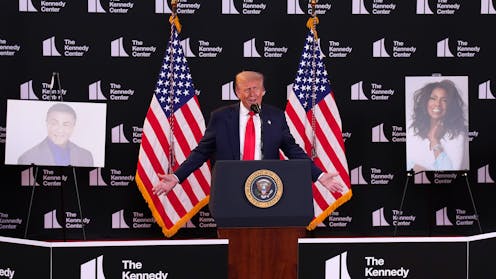
In the US, Donald Trump rose to power promising to “drain the swamp”. In Brazil, Jair Bolsonaro campaigned as an anti-corruption crusader who would restore the country’s moral foundations. Both have since weaponised democratic institutions to consolidate their own power.

Part of this shift is a psychological process we term the hubris arc. This sees a visionary leader become increasingly myopic once in office. Their early successes bolster their belief in their transformative capabilities, which gradually diminishes their capacity for self-criticism.

The visionary stage typically coincides with systemic failure. When established institutions prove inadequate for addressing public grievances, it provides fertile ground for leaders with exceptional self-confidence to emerge. These outsiders succeed precisely because they possess the psychological conviction that they can challenge entrenched systems and mobilise mass support through bold, unconventional approaches.

Such leaders excel at crafting compelling narratives that enable them to to transform public frustration into electoral momentum. They offer simplified solutions to complex problems, providing certainty where establishment politicians offer only incrementalism and compromise.

Losing perspective

But as visionary capacity increases, so too does myopia. Seeing a singular path with exceptional clarity necessitates narrowing one’s perceptual field.

These leaders initially succeed because their heightened focus cuts through the paralysis of nuanced thinking. But they quickly reach an inflection point where they face a fundamental choice: accept institutional constraints as necessary feedback mechanisms or redefine them as obstacles to their vision.

A cartoon of a group of people round a board table with one person gagged and bound. The leader of the meeting is asking,
When dissenting voices magically drop away.
Shutterstock/Cartoon Resource

Those who maintain a productive vision actively build systems for honest feedback. They allow formal channels for dissent to continue and construct diverse advisory teams.

Where strong democratic institutions endure – independent media, empowered legislatures, autonomous courts – leaders must continue negotiating and compromising. This tends to keep their confidence grounded. Some leaders successfully work within these constraints, which proves that the descent into myopia is actually more a reflection of institutional weakness than psychological destiny.

Where institutions lack strength or leaders resist self-discipline, electoral success may embolden rather than restrain authoritarian tendencies. As leaders become increasingly convinced of their transformative vision, their ability to perceive alternatives diminishes.

This psychological narrowing manifests in predictable behaviours, notably eliminating dissenting voices. With every election victory, Orbán has replaced independent-minded allies with loyalists. Trump’s first presidency featured constant turnover among advisers who challenged him. His second is populated by people who can be trusted to toe the line.

Myopic decline follows when hubris reaches saturation. Once leaders systematically eliminate feedback mechanisms, they lose all capacity for self-correction. As their ability to process contradictory information deteriorates, they may increasingly conflate personal power with national interest.

This conflation appears most pronounced in cases where leaders have systematically weakened independent media and judicial oversight.

When leaders achieve complete institutional capture, this self-conception becomes institutionalised. Orbán’s declaration, “We have replaced a shipwrecked liberal democracy with a 21st-century Christian democracy,” reveals how personal vision becomes indistinguishable from national transformation.

Institutional capture occurs through different methods but serves similar purposes. Orbán’s control of the media and courts means he has created parallel institutions that exist solely to validate his vision. Erdoğan used emergency powers after a 2016 coup attempt to instigate mass purges.

In both cases, motivated reasoning becomes institutionalised: leaders come to control the institutions that usually determine what information is legitimate and enable forms of dissent.

The endpoint is a transformation in which opposition becomes an existential threat to the nation. When Orbán positions himself as defender of “illiberal democracy” against EU values, or when Erdoğan arrests his rivals, they frame dissent as treason.

Opposition is a threat not just to their power but to the nation’s essence. Maximum vision has produced maximum blindness. Institutions have been redesigned to perpetuate rather than puncture the delusion.

Resisting the decline

The robustness of democratic institutions is decisive in determining whether hubristic tendencies can be contained within democratic bounds or whether they culminate in authoritarian consolidation.

Hungary and Turkey display a more linear model of democratic erosion. Both Orbán and Erdoğan leveraged initial electoral mandates to systematically capture state institutions. Their hubris evolved from a tool for challenging establishments into a self-reinforcing system in which the regime’s vast sway over state institutions eliminated feedback mechanisms.

Bolsonaro’s slide toward authoritarianism – denying COVID science, attacking electoral systems, attempting to overturn his 2022 defeat – triggered immediate institutional pushback. Unlike Hungary or Turkey, where courts and civil society gradually bent to executive pressure, Brazilian institutions held firm.

Bolsonaro’s trajectory from populist outsider to authoritarian to electoral defeat and institutional rejection suggests that robust federal structures and an independent judiciary can function as circuit breakers. They can prevent permanent democratic capture.

The American experience presents a third model: democratic resilience under stress. Unlike Hungary and Turkey, where institutional capture succeeded, Trump’s first presidency tested whether these patterns could emerge in a system with deeper democratic roots and stronger institutional checks.

While his efforts to pressure state election officials and weaponise federal agencies followed recognisable authoritarian scripts, American institutions proved more resistant than their Hungarian or Turkish counterparts. Courts blocked key initiatives, state officials refused to “find votes,” and congressional oversight continued despite partisan pressures.

Yet even this institutional resistance came under severe strain, suggesting that democratic durability may depend more on specific design features and timing than general democratic culture.

The Trump stress test has revealed vulnerabilities. The erosion of democratic norms – when parties prioritise loyalty over constitutional obligations – creates openings for future exploitation.

The second Trump term could systematically target the weaknesses identified during his first: expanded emergency powers, strategic appointments to undermine the administrative state, and novel statutory interpretations to bypass Congress. The critical question is whether American institutions retain sufficient strength to again disrupt Trump’s trajectory.

The hubris arc appears inherent in populist psychology, underscoring why constitutional constraints and institutional checks are indispensable. Democracies survive not by finding perfect leaders but by constraining imperfect ones.

The Conversation

The authors do not work for, consult, own shares in or receive funding from any company or organisation that would benefit from this article, and have disclosed no relevant affiliations beyond their academic appointment.

ref. The hubris arc: how visionary politicians turn into authoritarians – https://theconversation.com/the-hubris-arc-how-visionary-politicians-turn-into-authoritarians-262562

Fear built the nuclear bomb – only trust can ensure it is never used again

Source: The Conversation – UK – By Nicholas John Wheeler, Professor of International Relations, Department of Political Science and International Studies and Non-Resident Senior Fellow at BASIC, University of Birmingham

The world entered its nuclear epoch 80 years ago on August 6 1945. The US dropped an atomic bomb on the Japanese city of Hiroshima, killing between 70,000 and 140,000 civilians by the end of that year.

A stark reminder of this immense destructive power came recently. On August 1, US president Donald Trump announced the redeployment of two submarines – presumably Ohio-class subs carrying ballistic missiles – in response to what he called “highly provocative statements” by Russia’s former president Dmitry Medvedev.

It may have been empty posturing by Trump. But one Ohio-class submarine (the US Navy has 14 in its fleet) carries approximately 90 warheads, each with destructive power many times greater than the bombs dropped on Hiroshima and, three days later, Nagasaki.

As the world remembers the devastation wrought by these bombings, the threat of nuclear conflict remains a persistent threat to humanity.

Frisch-Peierls memorandum

For many years it was believed that building an atomic weapon was not feasible given the amount of uranium-235 required for a bomb. This assumption changed in March 1940 when two refugee physicists – Rudolf Peierls and Otto Frisch, who both worked at the University of Birmingham – produced in secret what became known as the Frisch-Peierls memorandum.

Their memorandum showed that a powerful atomic bomb could be built using only a small amount of uranium-235. What drove Frisch and Peierls was fear that Nazi Germany might build the bomb first.

They wrote: “If one works on the assumption that Germany is, or will be, in the possession of this weapon … The most effective reply would be a counter-threat with a similar bomb. It would obviously be too late to start production when such a bomb is known to be in the hands of Germany, and the matter seems, therefore, very urgent.”

The Frisch-Peierls memorandum was submitted to the British government as a warning. Prime Minister Winston Churchill heeded the message, establishing the Maud committee a month later to investigate the military potential of atomic energy.

It reported in secret in July 1941, urging production of a bomb and Britain’s cooperation with the US in this endeavour. In a now-famous line, the committee said: “No nation would care to risk being caught without a weapon of such decisive possibilities.”

The demonstration of what the atomic bomb was capable of at Hiroshima, and then at Nagasaki, spurred others to follow the committee’s logic. The Soviet Union, fearing a US atomic monopoly, tested its first bomb in 1949. Britain joined the nuclear club in 1952, followed by France in 1960 and China in 1964.

It is widely accepted that Israel had developed nuclear capability by the early 1970s, though it has maintained a position of ambiguity. India and Pakistan became declared nuclear powers in 1998 and North Korea followed in 2006.

While factors such as national ambition and status played a role in proliferation, a key driving force was fear, fear of adversaries achieving a lasting strategic advantage and, in the case of North Korea, an external attack.

Fear’s centrality to the nuclear story is not only in relation to its role as a driver of proliferation. Nuclear fear has also been a key source of restraint. The most dramatic manifestation of this was the October 1962 Cuban missile crisis.

As I have argued elsewhere, shared fear of nuclear catastrophe led the then US president, John F. Kennedy, and his Soviet counterpart Nikita Khrushchev to develop empathy and trust. This was a key factor in the peaceful resolution of the crisis.

John F. Kennedy meeting with Nikita Khrushchev.
John F. Kennedy meeting with Nikita Khrushchev during a 1961 summit held in Vienna.
US Department of State

However, nuclear fear – and the deterrence it makes possible – is a fragile basis on which to safeguard humanity’s future. The world may have avoided the use of nuclear weapons since August 1945 through a combination of prudent statecraft and good luck. But how long is it before some combination of bad luck and reckless risk-taking leads to the use of nuclear weapons once again?

Russian nuclear sabre-rattling over Ukraine and the May 2025 conflict between India and Pakistan, unleashing military force between two nuclear-armed states, are warnings that the ever-present threat of nuclear weapons still hangs over humanity.

In the cold war’s climate of deep distrust and nuclear fear, the US and Soviet Union at least had some shared guardrails and channels of communication. Arms control agreements agreed after the Cuban missile crisis limited superpower competition through the 1960s and 1970s. They continued to restrain US-Soviet competition in the early 1980s.

Nowadays, however, arms control has all but collapsed while reliable and trusted channels of communication between major nuclear adversaries are virtually non-existent. The prospects for regulating the nuclear arms competition between Russia, the US and China are bleak.

Replacing fear with trust

To mark the 80th anniversary of the advent of the nuclear epoch, the Nobel Laureate Assembly – a gathering of Nobel laureates and nuclear experts at the University of Chicago – warned in its 2025 Declaration for the Prevention of Nuclear War that: “Ultimately, security cannot be built on fear.”

If the bomb was born out of fear, then ensuring it is never used again requires replacing fear with trust. Ten years into the nuclear epoch, Albert Einstein and philosopher Bertrand Russell issued a manifesto signed by 11 signatories. It was created principally as a trust-building project between the east and west.

The manifesto concluded: “We appeal as human beings to human beings: remember your humanity, and forget the rest. If you can do so, the way lies open to a new paradise; if you cannot, there lies before you the risk of universal death.”

We now face the same choice the manifesto laid bare. One path leads to annihilation, the other to survival through a recognition of our common humanity.

Japan gives expression to that common humanity every August when Hiroshima and Nagasaki hold their peace memorial ceremonies. Remembering the victims and those who continue to suffer from the effects of the atomic bombings, these memorials look to a future where nuclear weapons no longer exist.

The nuclear bomb may have been born in fear. But only the building of trust, which may spring from that fear, can ensure it is never used again.

The Conversation

I have received past funding from the Economic and Social Research Council and the Open Society Foundations.

ref. Fear built the nuclear bomb – only trust can ensure it is never used again – https://theconversation.com/fear-built-the-nuclear-bomb-only-trust-can-ensure-it-is-never-used-again-262637

Plastics and human health: what’s at stake in the global treaty talks in Geneva

Source: The Conversation – UK – By Cat Acheson, Research Associate, School of Social and Political Science, University of Edinburgh

Plastics are everywhere – they’re even in you right now – and are making many of us sick. Now, global negotiators are fighting over whether that matters.

As 180 countries meet in Geneva to seek agreement on a global treaty on plastic pollution, a landmark review published in medical journal The Lancet has made the stakes clear. Plastics, the evidence shows, are a threat to human health – from womb to grave.

They’re linked to miscarriages, birth defects, heart disease and cancer. Plastics are harming people at every stage of the plastics lifecycle – from initial oil extraction to the production and use of plastic products, and their eventual disposal via landfill, incinerator or just being left in the environment.

Yet the possibility of a strong, health-centred treaty hangs in the balance. Campaigners, scientists and healthcare groups are pushing for strong measures to cap production and ban hazardous chemicals. But petrochemical producers and industry lobbyists are pushing back – arguing, against mounting evidence, that plastics are essential to saving lives.

The UN meeting in Geneva is the culmination of several years of negotiating. In theory, delegates will agree on a global treaty by August 15.

The current draft text, which will be the basis for these negotiations, contains provisional elements which could make a real difference. These include cutting plastic production (Article 6), banning plastic products and chemicals that are hazardous to humans or the environment (Article 3), and a section dedicated to protecting human health (Article 19).

But some negotiators oppose these elements, and there is a risk they will be watered down or scrapped entirely in the final treaty.

The so-called Like-Minded Group of countries – many of whose members are petrochemical producers including Saudi Arabia, China, Iran, and Russia – has led the opposition to a health-centred treaty. They have done so by arguing that plastics are in fact essential for protecting health, due to the role of single-use plastic in modern medicine.

For example, Kuwait’s submission to the previous negotiating round in Busan, South Korea, last year called concerns about plastic “not inclusive”, and cited medical devices as proof that plastic saves lives. Saudi Arabia has opposed the inclusion of a dedicated article on health, arguing that this would divert the treaty away from its core purpose of managing plastic waste.

Since almost all plastic is made from oil or gas, these petrostates have a clear incentive to maintain the status quo of plastic production and dependency. No wonder they want to focus on managing waste, rather than making less in the first place.

Huge bales of plastic waste
Less than 10% of the world’s plastic is recycled.
Clare Louise Jackson / shutterstock

Plastics industry lobbyists have also been accused of “infiltrating” the negotiations and wielding outsized influence. They too have pushed the narrative that plastics are essential for human health – for example, with posters displayed in Busan which claimed “plastics save lives”.

These lobby groups are pushing for healthcare plastics to be exempted from the treaty entirely, which would provide a significant loophole for plastic producers.

As evidence grows of the ways plastics are harming humans, claims they are necessary to safeguard our health are looking increasingly far-fetched. Of course, plastics are everywhere in modern healthcare. But in most cases, and especially with single-use plastics, they can and should be replaced with a less harmful alternative.

Civil society groups, scientists and healthcare professionals are building momentum for a strong health-centred treaty. The international nongovernmental organization Health Care Without Harm has coordinated an open letter rejecting exemptions for the health sector. Signed by 65 organisations representing 48 million health workers across 88 countries, it calls for a treaty that tackles the full plastics lifecycle – and says cutting unnecessary plastic in healthcare is both possible and necessary to protect patients.

The Scientists’ Coalition, made up of independent experts, has been instrumental in bringing evidence of plastics’ health effects into the debate, while groups like the Global Alliance for Incinerator Alternatives have been pushing for the treaty to recognise that plastics, and especially their disposal, affect marginalised populations hardest. They argue that justice for the most affected people and places should be at the heart of the treaty.

The global plastics treaty is an unprecedented opportunity to take decisive, coordinated action to tackle one of the planet’s biggest threats. At stake in Geneva is whether health will stay at the heart of this treaty – or be sacrificed under pressure from industry and petrostates.

The Conversation

Cat Acheson receives funding from The Wellcome Trust for a project which partners with Health Care Without Harm.

Alice Street received a Wellcome Discovery Award for the project: ‘After the Single Use: Rethinking Medical Devices for Reuse, Resilience and Renewal’, which partners with Health Care Without Harm.

Rob Ralston is a member of Scientists’ Coalition for an Effective Treaty.

ref. Plastics and human health: what’s at stake in the global treaty talks in Geneva – https://theconversation.com/plastics-and-human-health-whats-at-stake-in-the-global-treaty-talks-in-geneva-262593

When US and Japanese troops stopped fighting to talk, eat and pray together

Source: The Conversation – UK – By Nick Megoran, Professor of Political Geography, Newcastle University

Japan’s Emperor Hirohito ordered his country’s surrender in a radio broadcast on August 15 1945. After the deaths of some 70 million people, the second world war had finally come to an end.

Reflections on the anniversary of the conflict’s end often turn, understandably, to the cataclysmic atomic bombings of Hiroshimi and Nagasaki that precipitated the emperor’s decision.

But to research a strikingly different – and little-known – story from the final stages of the war in the Pacific, we recently travelled to the remote Japanese island of Aka, where a scarcely believable truce between US and Japanese soldiers took place 80 years ago. In the shadow of one of the war’s fiercest battles, enemy combatants stopped fighting to negotiate, exchange souvenirs, eat – and even pray together.

Map of the Kerama Islands group in Okinawa Prefecture, Japan.
Aka is part of the Kerama Islands group in Okinawa Prefecture, Japan.
Okinawa Island Guide

The battle of Okinawa was the last great engagement of the second world war, and one of its most terrible. The US and UK saw Okinawa as a staging post to the full-scale invasion of mainland Japan, some 400 miles further north. For Japan, defending Okinawa was a way to prolong the war and strengthen its hand in eventual peace negotiations.

To prepare for a battle of attrition, the Japanese army spent months fortifying Okinawa. Sheltering in tunnels and caves, the troops were largely unscathed by a massive initial US air and naval bombardment. They emerged to fight what historian Yunshin Hon called a “three-month orgy of killing”.

After ten weeks of intense combat, the battle was lost. Rather than surrender, before committing ritual suicide, the Japanese commanding generals Mitsuru Ushijima and Isamu Chō issued a final communique ordering every man to “fight to the end of the sake of the motherland … Do not suffer the shame of being taken prisoner.”

Okinawa’s Cornerstone of Peace memorial records the names of more than 240,000 people who died in the battle – more than half of them Okinawan civilians. The Japanese army coerced the civilian population into mass collective suicides, with family members killing each other to prevent them falling into the hands of US troops.

Given this horror, the events on Aka island, 15 miles west of Okinawa, are all the more extraordinary. Using declassified military reports, interviews with participants and eyewitnesses plus archives held by their relatives, we were able to piece together this forgotten story.

An unlikely truce

The Aka operation began on June 13 1945, led by led by US marine reservist Lt. Col. George Clark. About a dozen American soldiers and marines had volunteered for the dangerous mission of going ashore to secure the surrender of a 200-strong Japanese garrison, concealed in the jungle.

The US operation was supported by Japanese prisoners who, having been persuaded of the futility of further deaths in a now-unwinnable war, broadcast appeals for the garrison to surrender from portable loudspeakers.

There was no initial response from the Japanese. But on June 19, the final day of the scheduled mission, the team spotted some civilians. In his official report, Clark recounted that “in a last desperate attempt to save the day”, Lt. David Osborn (a US marine officer who had volunteered to help Clark lead the expedition) “plunged into the water and, naked with the exception of a pair of white skivvy shorts, made off in hot pursuit”.

In the dense undergrowth, the unarmed Osborn stumbled across a Japanese soldier who, remarkably, did not harm him. Instead, the garrison commander, Major Yoshihiko Noda, agreed to meet the Americans – but only if they were accompanied by an old comrade of his, Major Yutaka Umezawa, who had been injured and taken prisoner at the start of the battle.

On June 26, the team returned to Aka (with Umezawa carried on a stretcher), landing on the remote Utaha beach for this conference between Noda and Clark. Umezawa – whose views on the Americans and the war had been transformed by his benign treatment in captivity – strove to persuade Noda of the futility of suicidal resistance.

As negotiations continued, Clark had lunch brought onto the beach and shared with the Japanese: pork and sweet potatoes for the officers, canned goods for the men.

In his official report, Clark noted this led to “the most amazing spectacle it has ever been my lot to behold … On the sand dunes and on the beaches were Jap soldiers and officers, United States marines, soldiers, sailors who had brought in the food, Jap prisoners, officers as well as enlisted men, white folks, black folks, yellow folks; a general melee if there was ever one.”

As a gesture of mutual trust, Noda invited Osborn and another officer, Lt. Newton Steward, back to his command post. He had his men wash and dry the Americans’ shirts, which had become sweaty during the negotiations, and served them tinned pineapple. The Americans then left the island with Noda promising a formal response the next day.

When the marines returned on June 27, Noda’s adjutant, Second Lt. Yoshiyuki Takeda, informed Clark that, regrettably, they were unable to surrender without permission from the emperor. However, the two sides agreed a tacit truce. Noda promised that if the Americans refrained from military action, their men could go “hunting shells or swimming along the beaches” without danger.

In a remarkable final gesture, Clark asked Takeda “if he would like to join the group in a prayer to the Supreme Being of all faiths for international understanding and peace”.

In his report, Clark wrote that Takeda “readily agreed” and, as US and Japanese soldiers knelt together by the shore in prayer, was “visibly moved, arose and thanked us all when the gist of the prayer had been interpreted for him”.

Clark left the island disappointed that he had failed to secure a surrender. However, the truce held until the end of the war. It prevented further Japanese and US military casualties, and spared the island’s inhabitants the devastation that was unleashed on the rest of Okinawa.

Shared humanity

The Aka truce was an isolated event, and we should not romanticise it. Noda’s garrison was responsible for the deaths of a dozen starving Korean conscripted labourers at the start of the battle for Aka, executed for “theft” when they were found with rice stuffed in their pockets.

But like the 1914 Christmas truces on the western front, the Aka truce captures the imagination – and we believe offers three instructive and hopeful lessons.

First, even in the most appalling of circumstances, enemy combatants were able to recognise each other’s shared humanity. They attended to basic needs of food and comfort, and joined together in a moment of spiritual intimacy that transcended cultures.

Second, it showed that enemy soldiers were able to enter into dialogue and choose not to continue fighting – risking not only immediate death or injury, but also future courts-martial. This raises the ethical question: “Do soldiers on the battlefield have the right not to fight?” It is a right that soldiers have increasingly sought to assert, in contexts ranging from Vietnam to the occupied Palestinian territories.

Finally, the Aka truce offered a glimpse of the subsequent Allied-Japanese reconciliation that seemed unthinkable at the time. On the 80th anniversary of the end of history’s most terrible war, that is a story and message worth retelling.

The Conversation

Nick Megoran received funding for this research from Hakusem Partners Ltd, Sapporo City, Japan. He is grateful to the Director, Yasuhiro Kawamoto.

Hiroshi Sakai received funding for this research from Hakusem Partners Ltd, Sapporo City, Japan. He is grateful to the Director, Yasuhiro Kawamoto.

ref. When US and Japanese troops stopped fighting to talk, eat and pray together – https://theconversation.com/when-us-and-japanese-troops-stopped-fighting-to-talk-eat-and-pray-together-262068

Virtual Beauty exhibition – is our sense of beauty changed by new technologies?

Source: The Conversation – UK – By David Bate, Professor at Westminster School of Arts, University of Westminster

Virtual Beauty is the summer show at Somerset House, London, featuring a fascinating collection of visual work by artists dealing with the connection between technology and beauty. As you might expect, it focuses on the human form and the reshaping of the body and face through computational processes.

While humans have contemplated their self-image through mirrors and pictures of themselves for hundreds of years, digital inventions have reconfigured all this. Today, people regularly use mobile phone screens as mirrors and the camera to record themselves. Posting these images online only affirms that identity to their wider community and networks.

The rectangular shape of a phone screen is used extensively in the exhibition by digital artists to show the new malleability of human identity and how we can reimagine ourselves through digital technologies.

The artist Orlan, for example, conducted cosmetic surgery and recorded it live on video, originally live-streaming it into galleries in 1992. Astonishingly in the video she is seen awake and even discussing the aesthetics of her facial surgery with special guests while the surgeons work with a scalpel on the dotted lines on her face.

But today you don’t need a surgeon to change your image, you can use your phone and apps to “try out” new identities. This is our new digital world and the questions about what these processes mean is what concerns the artists here.

In visual anthropologist Mathilde Friis’s excellent accompanying essay to the exhibition From the Selfie to the Avatar: Beauty, Bias and the Digital Self, she suggests that the actual body no longer limits beauty thanks to our online lives.

In this online presentation of self, she argues, is a tension between our offline identity, the facets of ourselves we inherit and literally inhabit, and the freedom to escape these fixed features in how we present ourselves online.

Do you want to look like a well known model, an exotic anime character or something else? These are all possibilities in the digital world, but what kind of change do they represent? Such are the lingering questions for the viewer at the exhibition.

The artworks explore the trials and tribulations of identity and its relation to traditional notions of beauty and attempts at liberation from them. This point is strongly made in Filip Custic’s installation Pi(x)el (2022), where a 3D silicone mannequin has tiny screens attached in front of the key features of the body.

The screen images flicker between different images of eyes, ears, mouth, nose, genitals and fingernails to demonstrate the potential choices one might make to change them.

I was particularly drawn into Qualeasha Wood’s intriguing textile work It’s All For U (If U Rlly Want It), (2024). The tapestry looks like a photo-collage. At the centre is a black woman who reaches towards a phone screen.

Around her are the tools used to construct the digital self, the phone camera the screen of the selfie, its menu buttons, texts and her hand that taps out this creation. These facets are all beautifully scrambled together into a single work that invites the viewer to linger and meditate on them.

At the same time the many artworks that do use screens tend to play with traditional expectations of them. Some of these images can seem uncanny or confronting while other conform to more traditional ideas of what a digital avatar can be.

An example of one of these works in Angelfire’s XENA (2021), which is inspired by the TV series character Xena: Warrior Princess (1995-2001). This take on the character shows a powerful hyper hybrid figure, a kind of masculine and feminine, neither firmly one nor the other and maybe not even both.

Another is Lil Miquela’s Rebirth of Venus (2020), which presents a virtual figure who looks like a real person. Beautiful butterflies fly around and settle on her, as if to emphasise her beauty. Although Lil Miquela does not exist beyond her digital space, she has a massive following online as a viral influencer as well as a virtual avatar.

The exhibition is a welcome engagement with ideas of virtual beauty and into the growth of digital identities that are at once a part and separate or different from our offline selves. It shows how hybridity is a feature of virtual space and how we tend to sometimes subtly merge our own ideals with the computer images that we see.

It has been said that photography and cinema had a similar effect during the 20th century. The exhibition also offers great insight how these virtual spaces have allowed people to present identities online which might be challenged offline.

All in all, its is an interesting presentation of the tension between the animation of new selves and the palpable anxiety and questions about where we are all headed.

Virtual Beauty is on at Somerset House in London until September 28 2025


Looking for something good? Cut through the noise with a carefully curated selection of the latest releases, live events and exhibitions, straight to your inbox every fortnight, on Fridays. Sign up here.


The Conversation

David Bate has received funding from The Arts Council and The British Council.

ref. Virtual Beauty exhibition – is our sense of beauty changed by new technologies? – https://theconversation.com/virtual-beauty-exhibition-is-our-sense-of-beauty-changed-by-new-technologies-262454

La biología explica por qué nos hacemos mayores de repente a los 44 y a los 60 años

Source: The Conversation – (in Spanish) – By Francisco José Esteban Ruiz, Profesor Titular de Biología Celular, Universidad de Jaén

Bricolage/Shutterstock

Siempre hemos creído que el envejecimiento es un proceso lento y progresivo, casi como si los años nos fueran apagando poco a poco, de forma inexorable.

Así lo recogen manuales y revisiones médicas recientes, que siguen definiendo el envejecimiento biológico, en su modo más simple, como “alteraciones lentas y progresivas de la función física que empiezan en la madurez y concluyen con la muerte”.

Aunque esta imagen del tiempo –o la metáfora de un goteo constante de pérdidas– sigue dominando nuestra forma de entender la vejez, estudios recientes revelan que no envejecemos en línea recta, sino a saltos, con momentos precisos en los que, de pronto, todo cambia.

Esta hipótesis desafía décadas de modelos lineales y abre la puerta a una nueva manera de entender los cambios biológicos asociados al tiempo.

Lo que revela el laboratorio

La nueva visión del envejecimiento a saltos se apoya en un trabajo publicado en 2024 en la prestigiosa revista Nature Aging. Durante varios años, los investigadores siguieron de cerca la evolución molecular de más de un centenar de personas adultas, analizando hasta 135 000 moléculas distintas de cada voluntario. Se trata del mayor estudio longitudinal multiómico realizado hasta ahora sobre envejecimiento humano.

Lejos de encontrarse con un continuo suave de transformaciones, observaron un patrón interesante: casi todos los grandes cambios bioquímicos que acompañan al envejecimiento se concentran en dos momentos concretos de la vida adulta, aproximadamente a los 44 y a los 60 años.

En otras palabras, nuestras moléculas –y por tanto, nuestras células y órganos– parecen mantenerse estables hasta que, en condiciones normales, se producen transformaciones profundas y sincronizadas en muchos sistemas corporales.

Lo notable es que estos picos no se deben a un único tipo de molécula, sino que afectan a proteínas, metabolitos, lípidos, citoquinas, factores hormonales e incluso patrones epigenéticos, todos a la vez.

Esto da respaldo biológico a la sensación tan extendida de que, en ciertos momentos, uno “se hace mayor de repente” y nota un bajón físico o mental de golpe.

Hacerse mayor de repente

Esta idea no es completamente nueva. En 2019, ya se había publicado en Nature Medicine un extenso análisis de proteínas en sangre que señalaba tres grandes “picos” de envejecimiento fisiológico: a los 34, los 60 y los 78 años.

Sin embargo, el nuevo estudio realizado en 2024 es más completo al analizar otros tipos de moléculas, además de proteínas. Con ello se ha logrado precisar los dos saltos más intensos que ya se habían señalado anteriormente: uno en la mitad de la vida adulta, alrededor de los 44 años, y otro posterior, en torno a los 60.

Al analizar muchas más moléculas y tipos diferentes, este trabajo se centra en los dos saltos donde los cambios son más globales en el organismo, aunque no descarta que pueda haber otros más adelante.

¿Qué ocurre en estos saltos?

En el primer salto, que suele llegar antes de los cincuenta, se desencadena una cascada de cambios en el metabolismo de grasas, se alteran las vías de procesamiento del alcohol y la cafeína, y se modifican proteínas fundamentales para el corazón, los músculos y la piel.

Cuando llega el segundo, cerca de los 60 años, se acelera el deterioro de funciones inmunitarias y renales, se altera el metabolismo de la glucosa y aumentan los procesos celulares vinculados al envejecimiento y al riesgo de enfermedades crónicas.

Por eso, muchas personas notan que de pronto les cuesta más recuperarse tras un esfuerzo, o que aumentan las “pequeñas molestias” de un año para otro.

Estos saltos no distinguen entre hombres y mujeres, ni dependen del contexto reproductivo, como la menopausia. Aunque se observa cierta variabilidad entre individuos en el momento y la intensidad de los cambios, los patrones generales parecen responder a mecanismos comunes de la biología humana.

Las causas moleculares

Si bien aún no se conoce con exactitud el porqué de los saltos, sí se han detectado algunos de los mecanismos implicados. Una de las hipótesis más estudiadas propone que, al alcanzar cierto umbral de células envejecidas, podría desencadenarse una reacción en cadena que acelere el deterioro de los tejidos.

Además, la epigenética –las “marcas” que regulan a los genes– también sufre reconfiguraciones masivas en esos periodos, lo que provoca la activación o inactivación de cientos de genes de golpe.

Por último, en esos momentos críticos se detectan alteraciones coordinadas en moléculas clave del metabolismo energético, como NAD⁺, carnitinas y ácidos grasos. Estos cambios sugieren una posible disfunción mitocondrial, ya que las mitocondrias son los orgánulos encargados de producir la mayor parte de la energía celular y participan en múltiples procesos de envejecimiento.

Todo esto, que puede sonar abstracto o lejano, tiene implicaciones muy concretas en nuestra vida diaria.

Implicaciones prácticas

El impacto práctico es enorme. Por un lado, ofrece una explicación convincente a esa sensación que tantos expresamos que “de repente me siento mayor”.

Por otro, señala que esos momentos críticos pueden ser ventanas de oportunidad para intervenir y prevenir. Si sabemos que nuestros sistemas biológicos van a someterse pronto a un gran cambio, podríamos anticiparnos cuidando más la salud metabólica, cardiovascular o inmunitaria justo antes y durante esos periodos clave.

Mirando al futuro

Aunque aún quedan muchas cuestiones abiertas, como si será posible identificar las causas y mecanismos detallados del tercer salto alrededor de los 78 años que sugería el estudio de 2019, lo cierto es que el conocimiento de estos patrones nos permite mirar el envejecimiento con otros ojos.

A medida que se amplíen los estudios longitudinales y se integren más capas de análisis molecular, podríamos incluso anticipar con precisión cuándo está a punto de producirse un salto biológico individual.

Con todo, ya sabemos que nuestra vida no es solo una lenta cuesta abajo, sino una serie de etapas estables, interrumpidas por momentos de cambio profundo. Así, el secreto de envejecer mejor podría estar en prepararse para saltar cuando llegue el momento de hacerlo.

Y es que, como cantan Celtas Cortos, “a veces llega un momento en que te haces viejo de repente”.

The Conversation

Francisco José Esteban Ruiz recibe fondos para investigación de la Universidad de Jaén (PAIUJA-EI_CTS02_2023), de la Junta de Andalucía (BIO-302), y está parcialmente financiado por el Ministerio de Ciencia e Innovación, la Agencia Estatal de Investigación (AEI) y el Fondo Europeo de Desarrollo Regional (FEDER) bajo el proyecto PID2021-122991NB-C21.

ref. La biología explica por qué nos hacemos mayores de repente a los 44 y a los 60 años – https://theconversation.com/la-biologia-explica-por-que-nos-hacemos-mayores-de-repente-a-los-44-y-a-los-60-anos-262399

Centenaire de Patrice Lumumba : la jeunesse dessine l’avenir du panafricanisme

Source: The Conversation – in French – By Christophe Premat, Professor, Canadian and Cultural Studies, Stockholm University

Patrice Lumumba, héros de l’indépendance congolaise, demeure une source d’inspiration pour la jeunesse Wikimedia Commons, CC BY-SA

Du 30 juin au 2 juillet 2025 s’est tenu à Kinshasa un événement majeur pour les dynamiques politiques et culturelles africaines : le Congrès panafricain des jeunes pour un éveil patriotique. Organisé à l’initiative de la Représentation des étudiants du Congo (REC) et du Centre culturel de l’Afrique centrale. Ce rassemblement a réuni des acteurs engagés autour de grandes causes panafricaines.

Il s’est inscrit dans une double temporalité marquante : les violences persistantes dans l’est de la RDC et le centenaire de la naissance de Patrice Lumumba. Ce dernier reste une figure tutélaire du panafricanisme, invoquée comme symbole de résistance et de souveraineté.

Lumumba est né en juillet 1925 au Congo belge (actuelle RD Congo), et mort en 1961 au Katanga. Il fut dirigeant du Mouvement national congolais (MNC) et premier Premier ministre du Congo indépendant en 1960. Il incarnait le nationalisme africain et le panafricanisme, menant la lutte contre la colonisation belge pour transformer le Congo en république souveraine.

Soupçonné d’alignement à gauche dans le contexte de la guerre froide, il fut renversé, arrêté puis assassiné en janvier 1961 avec la complicité de dirigeants congolais et de puissances étrangères, y compris la Belgique et les États‑Unis.

Plusieurs décennies après sa mort, il reste une figure majeure de la mémoire collective africaine, célébrée pour son courage, sa vision d’une Afrique libre et sa dénonciation des dominations néocoloniales.

En tant que spécialiste des théories postcoloniales, il me semble essentiel de comprendre que la figure de Patrice Lumumba ne se limite pas à une mémoire strictement héroïque. Elle devient un levier actif pour repenser les enjeux contemporains de souveraineté, d’éducation et de diplomatie culturelle en Afrique.

Ce contexte a offert un espace inédit d’expression à une nouvelle génération de penseurs, militants, croyants et étudiants africains, porteurs d’un discours panafricaniste renouvelé, pluraliste et de plus en plus structuré.

Lumumba comme catalyseur

Le choix des dates n’a rien de fortuit. Lumumba reste une figure emblématique de la souveraineté africaine, de la lutte contre l’impérialisme et de l’indépendance des esprits. La RDC a marqué son centenaire par une série d’événements commémoratifs, avec le soutien de plusieurs pays, dont la Russie.

À Kinshasa, un dépôt de gerbe a été organisé devant la stèle du héros national et un programme d’expositions et de conférences est prévu jusqu’en juillet 2026.

Le Congrès panafricain s’inscrivait pleinement dans ce contexte mémoriel. Loin de se contenter de célébrer une icône, les participants ont cherché à réactiver la pensée de Lumumba à travers des revendications concrètes, tournées vers l’avenir. Parmi elles, la proposition de créer un institut panafricaniste Patrice-Émery Lumumba, destiné à structurer l’enseignement et la diffusion des idéaux panafricains auprès des jeunesses africaines.

Une parole étudiante plurielle et offensive

L’un des traits les plus marquants du congrès a été la centralité de la jeunesse dans les interventions. Le congrès est ainsi apparu comme une plateforme d’affirmation politique où les étudiants ont pris acte de leur responsabilité civique.

Au-delà du contexte congolais, le congrès a permis de faire émerger une parole collective qui interroge les modèles éducatifs africains, la marginalisation des figures historiques locales et la persistance d’une domination culturelle.

Panafricanisme spirituel et souverainetés multiples

Un autre aspect novateur du congrès a résidé dans la place accordée aux dimensions religieuses et spirituelles spécifiquement africaines. Des représentants de la spiritualité Vuvamu, issue de traditions africaines anciennes, ont souligné la nécessité d’une décolonisation intégrale, incluant la pensée religieuse.

L’idée selon laquelle l’Afrique ne peut être politiquement souveraine sans être d’abord culturellement et spirituellement indépendante a traversé plusieurs prises de parole.

Longtemps marginalisé dans les discours panafricanistes classiques, ce registre tend aujourd’hui à s’imposer comme un axe fort de mobilisation. Il implique à la fois la réappropriation des références culturelles endogènes et l’autonomie des institutions religieuses face aux tutelles extérieures, qu’elles soient ecclésiastiques, missionnaires ou issues de puissances étrangères.

Cette pluralité des approches — politique, éducative, mémorielle, spirituelle — témoigne de la vitalité d’un néopanafricanisme qui refuse la simplification idéologique. Il ne s’agit plus seulement de dénoncer l’impérialisme ou d’appeler à l’unité africaine de manière incantatoire. Il s’agit désormais de proposer des instruments, des espaces et des méthodes pour construire une souveraineté active et plurielle.

Vers un soft power panafricain ?

La proposition d’un institut panafricain Patrice-Émery Lumumba, portée par des figures comme Kemi Seba, marque un tournant important : le passage d’un discours contestataire à une volonté d’institutionnalisation. Ce projet, pensé comme un levier de formation, de diffusion culturelle et de diplomatie populaire, participe à l’émergence d’un véritable soft power panafricain.

Ce nouveau pouvoir d’influence s’appuie sur les mémoires locales, les récits de résistance, la mobilisation des jeunesses, les langues africaines, les spiritualités endogènes et la critique active des héritages coloniaux. Il ne s’exerce pas du haut vers le bas, mais depuis les marges, dans une logique ascendante, souvent à contre-courant des canaux institutionnels traditionnels.

Le centenaire de Lumumba agit ici comme un déclencheur. En rendant hommage à celui qui a incarné le refus de la soumission politique, les acteurs du congrès réactivent une mémoire vivante et performative. La figure de Lumumba ne sert pas uniquement à construire une identité nationale, mais bien à fédérer des projets transnationaux, à l’échelle continentale.

Une diplomatie alternative est-elle en train d’émerger ?

À travers ce congrès, ce sont aussi les limites des institutions francophones classiques qui se trouvent indirectement interrogées. Ni l’Organisation internationale de la Francophonie (OIF), ni l’Union africaine, ni les grands bailleurs multilatéraux ne figuraient parmi les partenaires ou intervenants de l’événement. Cette absence n’a pas empêché la tenue d’un rassemblement structuré, mobilisateur, et à haute portée symbolique. Bien au contraire : elle a renforcé l’idée qu’une autre diplomatie africaine, moins verticale, plus enracinée dans la société civile et les réseaux associatifs, peut exister et rayonner.

Début juin, l’OIF a mené une mission en RDC pour évaluer la situation politique et les violences dans l’est du pays. En parallèle, un congrès organisé à Kinshasa par des étudiants et acteurs culturels a mis en lumière des enjeux négligés. Parmi eux : l’éducation souveraine, la mémoire historique, la spiritualité africaine et le rôle central de la jeunesse dans l’avenir du continent.

Ces thématiques s’inscrivent dans une diplomatie alternative qui mobilise les récits, les corps, les rituels, les affects — autant de ressources d’un soft power panafricain en formation.

Kinshasa 2025 pourrait ainsi rester dans l’histoire non seulement comme un élan générationnel, mais aussi comme un jalon vers un modèle d’action géopolitique et culturelle post-institutionnelle, porté par les jeunesses africaines, et non plus simplement au nom d’elles.

Le Congrès panafricain de Kinshasa a mis en lumière une recomposition profonde du discours panafricaniste en Afrique francophone. Loin des nostalgies ou des rhétoriques figées, ce rassemblement a montré que les jeunesses africaines entendent proposer leurs propres modèles de souveraineté, de mémoire et de diplomatie.

En convoquant Lumumba à l’aube de son centenaire, les participants n’ont pas seulement rendu hommage à une figure historique. Ils ont affirmé la nécessité de penser un avenir panafricain qui ne soit pas dicté par les anciens centres du pouvoir, mais qui prenne racine dans les dynamiques populaires, éducatives et culturelles du continent. Ce moment constitue peut-être l’amorce d’un nouvel âge du panafricanisme : plus horizontal, plus pragmatique, mais tout aussi ambitieux.

The Conversation

Christophe Premat est actuellement membre de la CISE (Confédération Internationale Solidaire Écologiste), une association des Français de l’étranger créée en 2018.

ref. Centenaire de Patrice Lumumba : la jeunesse dessine l’avenir du panafricanisme – https://theconversation.com/centenaire-de-patrice-lumumba-la-jeunesse-dessine-lavenir-du-panafricanisme-261118

C’est normal de ne pas comprendre une expo d’art contemporain ?

Source: The Conversation – in French – By Antonio Félix Vico Prieto, Profesor Educación Musical, Universidad de Jaén, Universidad de Jaén

Le public connaît des œuvres d’art contemporain sans toujours les « comprendre », mais est-ce indispensable pour être sensible à leur contemplation ? Think A./Shutterstock

L’art contemporain exclut-il le spectateur ? Entre provocation, élitisme et discours abstraits, une réflexion sur la place du public dans la création artistique.


Dans le livre Du spirituel dans l’art, Vassily Kandinsky affirmait que la période matérialiste avait façonné, dans la vie comme dans l’art, un type de spectateur incapable de se confronter simplement à l’œuvre. Le spectateur d’aujourd’hui, assure Kandinsky, cherche et analyse tout : chromatisme, composition, coup de pinceau, etc. – sauf la vie intérieure du tableau et l’effet sur sa sensibilité.

Art excluant : tout cela ne serait-il qu’une imposture ?

De fait, aujourd’hui encore, l’art contemporain demeure souvent une expérience non assimilée.

Visuels de la Biennale de Liverpool dessinés par Yoko Ono (2004).
David Lambert-Rod Tidnam/Liverpool Biennial

Le critique britannique John Carey racontait, dans What Good Are the Arts? (2006), que, pour promouvoir la Biennale de Liverpool en 2004, des affiches et badges montrant une poitrine féminine nue et un pubis avec poils pubiens, dessinés par Yoko Ono, avaient été distribués dans la ville.

Cela avait profondément choqué le public britannique. Pour John Carey, les organisateurs étaient convaincus que les citoyens qui s’étaient plaints vivaient à un niveau de sophistication bien inférieur au leur. Ils avaient une posture délibérément excluante, notamment à l’égard des couches de population aux niveaux d’éducation plus faibles que le leur et souvent, aussi, moins favorisées économiquement : le cliché selon lequel il faut « être trop ignorant pour ne pas comprendre cela ». De toute évidence, la Biennale de Liverpool ne cherchait pas à transmettre des idées à un large public. Tout son matériel explicatif visait à exclure le citoyen ordinaire.

Le plus ironique est que ce sentiment d’ignorance concerne sans doute le public dans son ensemble (moi, y compris), et ne découle pas d’un manque d’intelligence ni de curiosité culturelle.

Les visiteurs des expositions d’art contemporain ont souvent le douloureux soupçon que tout ce qui est exposé n’est qu’une supercherie. Un large public connaît par exemple l’œuvre de Marcel Duchamp ou Carl André sans pour autant la comprendre.

De la vision objective de l’art à la provocation

En résumé, on peut dire que le concept d’art a évolué depuis l’Antiquité classique, où il reposait sur une vision objective fondée sur l’idée de beauté et des règles artistiques, vers la pensée esthétique de notre époque. Celle-ci repose sur une vision subjective de l’art, qui ne réside pas dans une caractéristique particulière de l’objet, mais dans la capacité réceptive du sujet. Ce concept a permis l’émergence des formes d’art contemporain que nous connaissons aujourd’hui.

Série de blocs empilés sur le sol en forme de rectangle
Équivalent VIII, de Carl André.
Tate Gallery

Cette vision subjective a ouvert la voie à un dernier élan : l’art comme provocation. Ainsi, dès le XXe siècle, les artistes ont développé la liberté de défendre leurs idées en dehors des cadres de la beauté, des règles et du bon goût Les artistes contemporains pensent que l’art doit provoquer des expériences artistiques, même si elles ne sont pas liées à la beauté. Il s’agit, dans la plupart des cas, d’expériences déroutantes et audacieuses.

Nous assistons donc à l’avènement de la « dé-définition » de l’art. Dans le concept actuel, si quelqu’un affirme qu’un objet donné est une œuvre d’art, nous devons le considérer comme tel.

Si tout est art, il faut bien l’expliquer

Mais évidemment, si soudain tout peut être considéré comme de l’art, un discours esthétique devient nécessaire pour expliquer cet objet artistique que personne ne comprend. Ce discours apparaît toujours a posteriori. C’est précisément à ce moment-là, avec l’apparition du langage comme support, que nous assistons à la naissance de l’art conceptuel.

À ce sujet, le grand historien espagnol José García Leal pose une question perfide, mais pertinente : nous admirons des œuvres hermétiques dans leur signification, mais aurions-nous le même intérêt pour elles si elles n’étaient pas revêtues du manteau révérencieux de l’art, si leurs auteurs ne se revendiquaient pas comme artistes, si ces objets n’étaient pas exposés dans des galeries ? La réponse est, probablement, non.

C’est là que réside le cœur du problème : une idée artistique est (ou devrait être) inséparable du sensible, car seul ce qui relève du domaine du sensible possède un caractère artistique. L’œuvre appartient aux émotions, à la condition humaine.

La cuisine de l’art

Quiconque a eu l’occasion de goûter à ce qu’on appelle la nouvelle cuisine a sans doute perçu le puissant discours esthétique qui sous-tend ses recettes – et en tirer une conclusion bien plus importante qu’on ne le pense : le cuisinier (contemporain) peut élaborer un concept complexe derrière sa recette, mais il ne perd jamais de vue le convive.

Dessert de nouvelle cuisine
Esthétique, conceptuel… et délicieux.
Bambo/Shutterstock

Poursuivons cette analogie avec la dérive actuelle des relations entre l’art contemporain et le public. Dans la nouvelle cuisine, le discours est extrêmement développé – bien qu’il convienne de rappeler qu’il s’agit d’un discours créé a priori. Mais sur un point, les cuisiniers et chefs de la nouvelle cuisine surpassent de loin les artistes : la cuisine est redevable envers celui qui la mange.

Il n’y a ni stratégie ni subterfuge pour échapper à l’épreuve finale de leurs créations. Si un groupe de personnes rejette une recette, c’est que, tout simplement, elle ne fonctionne pas. Aucun discours a posteriori ne peut rattraper ce que le palais rejette.

L’art appartient à la condition humaine

En suivant cette voie, nous disposons peut-être d’un outil précieux et efficace pour aborder l’œuvre d’art de façon claire et profonde.

On accorderait alors de la valeur au discours élaboré en amont, presque toujours rattaché à une réalité étrange où tout doit être guidé par l’intellect – la plupart du temps, celui des élites. Mais on prendrait aussi conscience de la nécessité de revenir au sensible, à la dimension humaine de l’œuvre d’art.

En abordant ainsi l’œuvre, le discours a posteriori, tel qu’il est proposé par une certaine forme d’art contemporain, deviendrait inutile et inopérant.

The Conversation

Antonio Félix Vico Prieto ne travaille pas, ne conseille pas, ne possède pas de parts, ne reçoit pas de fonds d’une organisation qui pourrait tirer profit de cet article, et n’a déclaré aucune autre affiliation que son organisme de recherche.

ref. C’est normal de ne pas comprendre une expo d’art contemporain ? – https://theconversation.com/cest-normal-de-ne-pas-comprendre-une-expo-dart-contemporain-258248

Do elephants make deliberate gestures to ask for things? Our study says yes

Source: The Conversation – Africa (2) – By Vesta Eleuteri, PhD candidate, Universität Wien

Elephants are known for their intelligence, strong social bonds, and good memories. But do they communicate to show real intention? A new study suggests they do. The research showed that elephants gestured to ask for food when a person was around and that they kept gesturing when they didn’t receive all the food. These are signs that the elephants are trying to communicate with intention.

We spoke to lead author Vesta Eleuteri, a PhD candidate, to learn more about what this means and why it matters.


Why did you study how elephants use gestures to communicate?

Most of the research on elephant communication is on their calls and chemical signals, likely because of their extraordinary hearing and smell. How elephants communicate with gestures is comparatively less studied. But there are descriptions of elephants using many different body movements and displays in different contexts, which suggests a key role of gestures in elephant communication.

But whether elephants gesture intentionally to others to communicate goals in mind has not been systematically explored before. My colleagues and I study the cognition and communication of animals to understand how complex cognitive skills evolved, which is what this article is based on.

In our study led by the University of Vienna and in collaboration with the University of St Andrews, the University of Portsmouth and City University of New York, we show that semi-captive elephants use many different gestures intentionally to ask a human to give them apples (their goal).

We found that the elephants used 38 different gesture types intentionally. The elephants kept gesturing when they only got half the apples (only partially reached their goal), while they changed gestures when they got no apples (did not reach their goal), both key behaviours to establish intentional use.

Why is it important to know whether their communication is intentional?

The ability to intentionally communicate goals in mind using a variety of gestures might help elephants navigate their complex social lives. By showing that semi-captive elephants gesture intentionally to humans using many different gesture types, our study builds on the evidence that this ability is not unique to primates, but that it has repeatedly emerged during evolution.

Here we consider intentionality as “goal-directed intentionality”, which is the ability to communicate goals we have in mind to others. This was in the past considered to be a unique human skill. Today we know that all the other apes and even some other primates (although in a less flexible way) communicate intentionally using over 70 different gesture types to communicate many different goals in mind. Some examples include gesturing for things like “come here”; “give me that”; “groom me”.


Read more:
Whose turn is it? The question is at the heart of language and chimpanzees ask it too


In non-primates, this intentionality was shown only in a few animals, from guppy fish to Arabian babblers. But typically this was done with one or two gestures and for specific goals, like “follow me”.

Elephants are distantly related to humans in evolution. We last shared a common ancestor with them over 100 million years ago. But, like apes, they are highly intelligent and live in complex societies where they have many different types of relationships (from kin to allies, friends and strangers). Also, there are descriptions of elephants using many different body movements and displays during many different contexts. These include when they greet, affiliate, play with each other or even when they travel together.


Read more:
Female elephants rumble to say ‘let’s go!’ New study in Namibia shows males do too, a sign of unexpected social bonds


What gestures did the elephants use, and how do you know they were on purpose?

The elephants in semi-captivity often reached their trunks or swung them back and forth towards the human or the tray with apples. This made it clear they were communicating that they wanted the apples.

Elephant gestures.

To know whether the elephants were using their gestures intentionally, we applied the behavioural criteria first created to study the development of intentional communication in human infants. These are: audience directedness, persistence and elaboration.

Signallers should use gestures when there is a recipient and appropriately according to whether he/she is looking or not (audience directedness). For example, if the recipient is not looking at them, they should use tactile gestures instead of visual gestures that the recipient would not see.

After gesturing, signallers should wait for the recipient to react and, if the recipient does not react as they wanted, they should keep gesturing (persistence) or change gestures (elaboration) to clarify what they wanted.

I can make an example. If I want to ask you to pass me the salt (my goal), I first should consider whether you are looking at me and, if you are, I may reach my hand towards the salt (audience directedness). If you don’t react or pass me the wrong thing, like the pepper, I should keep gesturing (persistence) or should change gesture by, for example, pointing towards the salt to clarify I wanted the salt from you (elaboration).

You worked with semi-captive elephants; do wild elephants act the same?

We and many other elephant experts have observed wild elephants gesturing apparently intentionally to each other (and even to us!) many times in the field. Nonetheless, we cannot confirm their ability to gesture intentionally merely from our observations. Science is there to systematically test with data the intuitions or feelings we get from observations.

Whether wild elephants use the same gestures we observed in this semi-captive group is an interesting question that needs to be explored. The same goes for assessing if different elephant groups or populations use different gestures. Based on previous descriptions, wild elephants should use, intentionally, a few of the gestures we found (trunk reaches or swings) but maybe they don’t use some of the “more creative” ones like the “blow leaf in the air” our elephant Pfumo had fun using.


Read more:
Spotted hyenas all sound different when they call – they can tell friend from foe


What’s next for your research?

We want to systematically test whether wild elephants gesture intentionally to each other, describe the repertoire of their intentional gestures and the goals (meanings) they use these gestures for (they may say to each other: “travel with me”, “move away”, “stop that”). We have thousands of videos collected in two elephant populations in South Africa that I am video coding for gestures and their intentional use.

It will take time to define the repertoire and meanings of elephant intentional gestures. But we hope to someday do this and to compare the gestures of different populations to understand if elephants may have different “gestural languages”.


Read more:
When a hippo honks, here’s what it could mean – to another hippo at least


Studying animal communication offers “a window” into our own language, into our minds, because it allows us to understand what, if anything, makes language unique. Showing that animals have so much in common with us makes people empathise more with them and care more about them, which is important for their conservation.


Read more:
Bottlenose dolphins smile at each other when they play — new study reveals how and why


Most importantly, studying animal communication is crucial because we can understand animals better and, if we know them better, we can take better measures to safeguard them.

The Conversation

Vesta Eleuteri is affiliated to the University of Vienna and receives funding from the Austrian Science Fund (FWF) under the grant “DK Cognition and Communication 2”: W1262-B29 (10.55776/W1262).

ref. Do elephants make deliberate gestures to ask for things? Our study says yes – https://theconversation.com/do-elephants-make-deliberate-gestures-to-ask-for-things-our-study-says-yes-261782

Ce qui conduit à la guerre : les leçons de l’historien Thucydide

Source: The Conversation – France in French (3) – By Andrew Latham, Professor of Political Science, Macalester College

Retraite des Athéniens de Syracuse lors d’une des batailles de la guerre du Péloponnèse, tirée de l’_Histoire universelle_, publiée en 1888 par la maison d’édition londonienne Cassel and Company. Ken Welsh/Design Pics/Universal Images Group/Getty Images

Depuis plusieurs années, des spécialistes des relations internationales se fondent sur l’œuvre de l’auteur grec ancien Thucydide pour affirmer que les conflits entre nouvelles et anciennes puissances sont inévitables. Appliquée à notre temps, cette idée conduit à penser que les États-Unis et la Chine marchent vers la guerre. Mais est-ce bien là ce qu’affirme Thucydide ?


Le supposé piège de Thucydide est devenu un classique du vocabulaire de la politique étrangère depuis une dizaine d’années, régulièrement invoqué pour expliquer la rivalité grandissante entre les États-Unis et la Chine.

Formulée par le politologue Graham Allison – d’abord dans un article de 2012 du Financial Times, puis développée dans son livre de 2017 Destined For War (Destinés à la guerre, en français) – l’expression renvoie à une phrase de l’historien grec Thucydide (Ve-IVeavant notre ère), qui écrivit dans son Histoire de la guerre du Péloponnèse :

« Ce fut la montée en puissance d’Athènes et la peur qu’elle inspira à Sparte qui rendirent la guerre inévitable. »

À première vue, l’analogie est séduisante : l’émergence de nouvelles puissances inquiète les puissances établies, menant inévitablement au conflit. Dans le contexte actuel, l’implication semble claire : la montée en puissance de la Chine provoquera un jour où l’autre un affrontement militaire avec les États-Unis, tout comme celle d’Athènes en déclencha un avec Sparte.

Cette lecture risque cependant de ne pas rendre honneur à la complexité de l’œuvre de Thucydide et d’en déformer le message philosophique profond. L’objectif de Thucydide n’était pas, en effet, de formuler une loi déterministe de la géopolitique, mais d’écrire une tragédie.

Un auteur imprégné de l’imaginaire de la tragédie grecque

Thucydide a combattu durant la guerre du Péloponnèse (431-404 av. n. è.) du côté athénien. Son univers mental était imprégné des codes de la tragédie grecque et son récit historique porte la trace de ces codes du début à la fin.

Son œuvre n’est pas un traité sur l’inévitabilité structurelle de la guerre, mais une exploration de la manière dont la faiblesse humaine, l’erreur politique et la décadence morale sont susceptibles de se combiner pour provoquer une catastrophe.

Ce goût du tragique chez Thucydide est essentiel. Là où les analystes contemporains cherchent des schémas prédictifs et des explications systémiques, lui attire l’attention du lecteur sur le rôle des choix, des perceptions et des émotions des acteurs individuels. Son récit est rempli des réactions délétères que suscite la peur, des attraits de l’ambition, des échecs des dirigeants et, finalement, du naufrage tragique de la raison. C’est une étude sur l’hubris et la némésis – la folie de la démesure et la vengeance obsessionnelle – et non pas sur le déterminisme structurel des relations entre États.

Une grande partie de cette complexité est perdue lorsque le « piège de Thucydide » est élevé au rang de quasi-loi des relations internationales. Elle devient une justification pour plaider l’inévitabilité : une puissance monte, les autres ont peur, la guerre suivra.

Mais Thucydide s’intéressait davantage aux raisons pour lesquelles la peur s’empare des esprits, à la façon dont l’ambition corrompt le jugement et à la manière dont les dirigeants – piégés face à des options toutes plus mauvaises les unes que les autres – se convainquent que la guerre est la seule voie possible. Son récit montre que les conflits surgissent souvent non par nécessité, mais par erreur d’analyse de la situation, mêlée à des passions détachées de la raison.

Les utilisations fautives de l’« Histoire de la guerre du Péloponnèse »

Il convient de rendre justice à Graham Allison, l’auteur de Destined For War : lui-même n’a jamais prétendu que le « piège » était inévitable. Le cœur de sa pensée est que la guerre est probable, mais non certaine, lorsqu’une puissance montante défie une puissance dominante. En réalité, une grande partie de ses écrits est supposée servir d’avertissement pour sortir de ce schéma destructeur, non pour s’y résigner.

Malgré tout, le « piège de Thucydide » a été bien mal utilisé, aussi bien par les commentateurs que par les décideurs politiques. Certains y voient une confirmation que la guerre est structurellement liée aux transitions de pouvoir – une excuse, par exemple, pour augmenter les budgets de la défense ou pour tenir un discours musclé face à Pékin – quand ce concept devrait plutôt nous pousser à la réflexion et à la retenue.

Lire attentivement Thucydide, c’est en effet comprendre que la guerre du Péloponnèse ne portait pas uniquement sur un rééquilibrage des puissances régionales. Il y était surtout question de fierté, d’appréciations fautives et de gouvernements insuffisamment sages.

Examinons cette remarque célèbre, tirée de l’Histoire de la guerre du Péloponnèse :

« L’ignorance est audacieuse, et la connaissance prudente. »

Ce n’est pas une analyse structurelle, mais une vérité humaine. Elle s’adresse directement à ceux qui prennent leurs pulsions pour une stratégie, et la fanfaronnade pour de la force.

Ou encore cette formule glaçante :

« Le fort fait ce qu’il veut, et le faible supporte ce qu’il doit. »

Il ne s’agit pas d’une adhésion au réalisme politique, mais d’une lamentation tragique sur ce qui se produit lorsque le pouvoir du fort devient incontrôlé et que la justice est abandonnée.

Dans cette optique, la véritable leçon de Thucydide n’est pas que la guerre est déterminée à l’avance, mais qu’elle devient plus probable quand les nations laissent la peur obscurcir leur raison, quand les dirigeants délaissent la prudence au profit de postures et quand les décisions stratégiques sont guidées par la peur plutôt que par la lucidité.

Thucydide nous rappelle à quel point la perception peut facilement devenir trompeuse – et combien il est dangereux que des dirigeants, convaincus de leur vertu ou de leur caractère indispensable, cessent d’écouter les voix dissidentes.

Les vraies leçons de Thucydide

Dans le contexte actuel, invoquer le « piège de Thucydide » pour justifier une confrontation des États-Unis avec la Chine pourrait faire plus de mal que de bien. En effet, ce raisonnement renforce l’idée selon laquelle le conflit est déjà en marche, et qu’il n’est plus question de l’arrêter.

S’il y a une leçon à tirer de l’Histoire de la guerre du Péloponnèse, ce n’est pourtant pas que la guerre est inévitable, mais qu’elle devient probable quand la place réservée à la prudence et à la réflexion s’effondre face à la peur et à l’orgueil. Thucydide ne nous offre pas une théorie des relations internationales, mais un avertissement, un rappel aux dirigeants qui, obsédés par leur propre place dans l’histoire, précipitent leur nation vers l’abîme.

Éviter ce destin demande un jugement avisé. Cela demande surtout l’humilité de reconnaître que l’avenir ne dépend pas uniquement de déterminismes structurels, mais aussi des choix que les femmes et les hommes font.

The Conversation

Andrew Latham ne travaille pas, ne conseille pas, ne possède pas de parts, ne reçoit pas de fonds d’une organisation qui pourrait tirer profit de cet article, et n’a déclaré aucune autre affiliation que son organisme de recherche.

ref. Ce qui conduit à la guerre : les leçons de l’historien Thucydide – https://theconversation.com/ce-qui-conduit-a-la-guerre-les-lecons-de-lhistorien-thucydide-260274