All The President’s Men at 50: how a trusted US media covered politics in the 1970s

Source: The Conversation – UK – By Matthew Mokhefi-Ashton, Lecturer in Politics and International Relations, Nottingham Trent University

This month marks the 50th anniversary of a much-revered classic of American cinema, All The President’s Men.

The 1976 movie starring Robert Redford and Dustin Hoffman was an adaptation of Bob Woodward and Carl Bernstein’s 1974 book of investigative journalism detailing their two-year unravelling of the Watergate conspiracy. The shocking scandal brought down a president and profoundly shook Americans’ trust in government.

On June 17 1972, operatives working for President Richard Nixon’s Committee for the Re-election of the President (often satirically referred to as CREEP) were caught breaking into the Democrat party’s national headquarters at the Watergate complex in Washington. The subsequent attempted cover-up eventually led to the resignation of Nixon and many in his administration going to jail.

The book and film led to several words and phrases entering the popular lexicon, including “deep throat” as shorthand for informants, the expression “follow the money” and of course the use of the word “gate” tacked on at the end of a word to denote a scandal. The film is probably the most famous movie about journalism ever made and helped shape the public’s view of who journalists were and how they functioned.

In many ways it’s strange to see an America where the media were so trusted. At the time a significant majority of Americans held the view that if the Washington Post or New York Times printed something, then it must be true. This is in contrast to today where trust in the US media is at an all-time low.

Woodward and Bernstein’s success was partly helped by the fact that the news cycle was a lot slower. Newspapers only went to print once or twice a day, so journalists had valuable time to check sources, look at records and discuss what they were doing with colleagues and editors.

Crucially, if they weren’t sure of the merits of a story, it was easier to shelve it for the next day. The current 24-hour news cycle makes this much more difficult. Journalists are under constant pressure to publish as soon as possible, leaving far less time for verification and reflection. Speed is rewarded over accuracy and the competitive scramble to be first can mean stories go out before they are fully formed.

The funding model is also fundamentally different. Many local newspapers were owned by families who lived in the cities where they were based and had been there for generations (in the case of the Washington Post with Katherine Graham). They often had a personal stake in the community.

There were still press barons, for instance William Randolph Hearst. The Orson Welles film Citizen Kane was based on his life story. But even at their most powerful, these proprietors operated within a media ecosystem where credibility was the currency that kept readers buying.

The media was funded by sales and advertising, giving journalists the freedom to work on a story. Today, by contrast, there is a focus on chasing clicks with articles either made up of lists or with clickbait headlines designed to be shared across social media.

How the press shaped the national agenda

The early 1970s was a world where the press were just as important – if not more so – than TV in shaping the national agenda. While commentators and columnists such as Walter Winchell had always been celebrities, the film established the idea of journalists as household names in their own right.

This has arguably been problematic in some ways as it could be claimed that it encouraged a more ego-driven approach to reporting, where the journalist-as-hero narrative risks making the story about the person covering it rather than the subject itself.

It was also an environment where the media still focused on the idea of reporting the news rather than making it. Today many media platforms explicitly market themselves as investigative journalism and see their role as setting the agenda. More traditional outlets see this as the media becoming too activist and ideological. There are proponents on both sides of the debate; All The President’s Men seems to take the view that the media report the news and the public decide how to interpret it.

However, the film’s very existence complicates that position. Woodward and Bernstein did not merely report events – they led the debate. The question of whether the press should be a mirror held up to power or a force that actively shapes political outcomes is still ongoing.

It’s worth noting that 1976 also saw the release of Network. This movie was entirely fictional and told the story of a broadcaster, played by Peter Finch, who has a mental breakdown live on air. He becomes “the mad prophet of the airwaves”, telling his audience to shout out of the window: “I’m mad as hell and I’m not going to take it any more!”

While All The President’s Men served as a monument to what the press had achieved and what it could and should be, Network, though billed as outrageous satire at the time, has proven a significantly more accurate prediction of the future.

In the film the TV network is owned by a vast corporation with financial interests in several other areas. While Woodward and Bernstein are professionals doing their job, they do it largely without animosity. Their goal is to uncover the truth of the Watergate conspiracy, not to bring down the president. Network predicted a world where profit is everything and media and politics are fundamentally adversarial, with reporters aiming to make their audience as angry as possible.

Fifty years on, the question is not which film got it right (all the evidence suggests Network). It is whether the world All The President’s Men celebrated was already vanishing, even as audiences and critics were praising it.

The Conversation

Matthew Mokhefi-Ashton does not work for, consult, own shares in or receive funding from any company or organisation that would benefit from this article, and has disclosed no relevant affiliations beyond their academic appointment.

ref. All The President’s Men at 50: how a trusted US media covered politics in the 1970s – https://theconversation.com/all-the-presidents-men-at-50-how-a-trusted-us-media-covered-politics-in-the-1970s-280613
Human rights and the rights of Nature are linchpins for truly sustainable development

Source: The Conversation – France – By Farid Lamara, Responsable de programmes de recherches, Agence Française de Développement (AFD)

United Nations member states unanimously adopted the sustainable development agenda in 2015. It aims to ensure development that “meets the needs of the present without compromising the ability of future generations to meet them” (1987 Brundtland Report, “Our Common Future”). This agenda outlines 17 Sustainable Development Goals (SDGs) and sets out 169 targets to be achieved by 2030. They represent the programme’s accountability framework.

None of the 17 Sustainable Development Goals (SDGs) is specifically devoted to human rights. In reality, they are everywhere – at the heart of the social, economic, cultural, civil, and political life of all inhabitants of the world, but also at the centre of contemporary ecological issues, which the United Nations General Assembly endorsed in 2022 through a historic resolution acknowledging the right to a healthy environment as a human right.

According to the Danish Institute for Human Rights (DIHR), 92% of the SDG targets are rooted in international human rights law. The promotion, respect and protection of human rights therefore form the backbone of the SDGs.

‘Strong sustainability’, a prerequisite for preserving nature and the universality of human rights

On the whole, the SDGs combine environmental, economic, human development and governance issues. However, there are several competing visions, based on different economic and environmental assumptions, regarding how to achieve them. These are referred to as “weak” and “strong” sustainability. The latter is a concept that aims to strengthen sustainable development by ensuring that economic policies do not compromise (or sacrifice) human development, the environment or nature.

Unlike weak sustainability (based on the concepts of the substitutability of natural capital), strong sustainability is based on the principle that natural capital is irreplaceable and must be preserved.

Three key principles of strong sustainability stand out:

  • the finite nature of the environment

  • social justice

  • the limits to economic growth.

Within this framework, the human rights-based approach and the approach based on the rights of nature are essential for truly sustainable development. This involves recognising nature – ecosystems and natural entities – as a subject of law.

Today, more than 650 initiatives recognising the rights of nature have been documented. Without these approaches, the current system exacerbates inequalities and threatens the habitability of the planet.

This is documented in several research studies and international conferences organised by the French Development Agency (AFD) whose mission is analysing the intersecting issues between human rights and sustainable development, with specific areas of focus such as the ecological transition, multidimensional inequalities and the rights of nature. The AFD also works with DIHR on other issues relating to human rights and climate policies.

What emerges from this overview is that the (anthropogenic) ecological crisis exacerbates inequalities and severely undermines human rights – both substantive (the right to life, health, food, housing, etc.) and procedural rights (the right to participation, information and redress), primarily among vulnerable populations: children, women, indigenous peoples and local communities, human rights and environmental defenders, migrants and displaced persons.

Environmental governance meanwhile remains inadequate, with governments and the private sector generally limiting themselves to a risk-reduction approach (“no harm done”) that lacks accountability and an integrated, proactive vision of human rights, the right to a healthy environment, and the rights of nature. It thus, appears urgent to come up with other alternative models incorporating accountability, justice (social and environmental) and citizen participation for reconciling ecology and human rights within an eco-centred rather than anthropocentric approach.

Especially now that the planet’s limits have been largely exceeded.

Looking at the planet’s limits from a human rights perspective

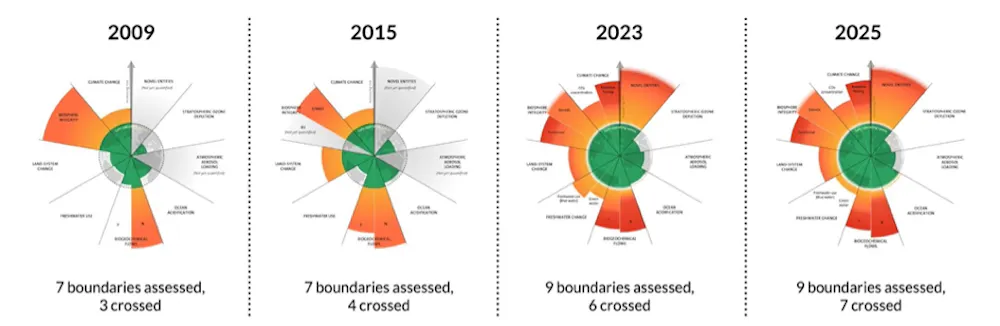
These limits (see chart below) define the safe operating space for humanity in relation to the terrestrial ecosystem and are linked to the planet’s biophysical subsystems or processes. Today, 7 out of 9 boundaries have been exceeded. And since the adoption of the SDGs in 2015, 3 have been exceeded.


Stockholm Resilience Centre. Click to zoom.

Beyond the significant impact on the natural world, the implications for human rights are systemic. Take the right to health, for example evidence shows that each “planetary limit” has direct consequences for human and animal health and ecosystems.

As far as human health goes, chemical pollution (pesticides, plastics, persistent organic pollutants) causes a range of chronic illnesses and an increase in cancer cases.

Air pollution alone causes more than 4 million deaths worldwide every year.

Premature deaths linked to heatwaves (climate), malnutrition (changes in the water cycle), soil degradation or the decline in biodiversity further exacerbate the health toll and human mortality, primarily affecting the poorest populations, particularly in a world governed by a profoundly asymmetrical and unequal model.

Inequality as a driving force behind the ecological crisis and the erosion of human rights

According to the World Inequality Lab’s 2025 report on climate inequality, the poorest 50% of the world’s population account for 10% of greenhouse gas (GHG) emissions, which is significantly less than the emissions of the richest 1%. The latter, moreover, are solely responsible for 41% of GHG emissions linked to the ownership of assets (both financial and non-financial).

The poorest 50% are not only the least responsible. They are also the most vulnerable to loss and damage, whilst having the least financial capacity to cope with it. And if we look at income and wealth inequality, we see that the richest 10% of the world’s population harness more income than the remaining 90%. Overall although inequality has been rising sharply within countries for several decades, these findings point to very significant North-South disparities. Yet the greater inequality, the less ability people have to assert their rights.

The inconsistencies of an asymmetrical and unequal model in the 2030 Agenda

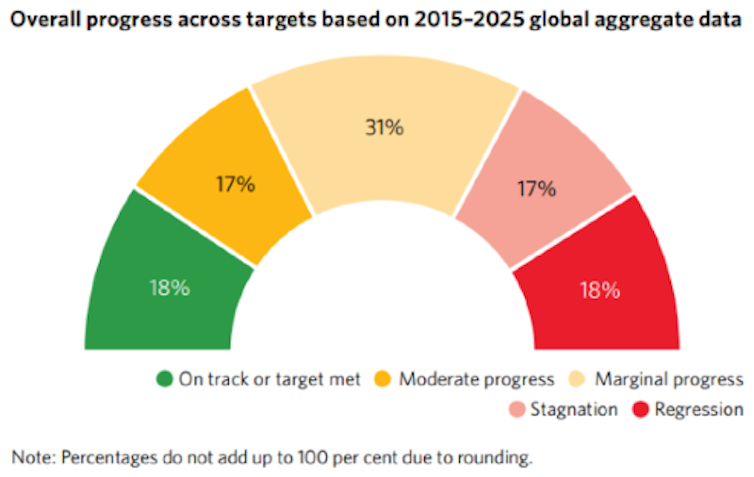
Under these circumstances, achieving the expected outcomes of the 2030 Agenda is a long shot. The 2025 United Nations report on the SDGs shows that of the 169 SDG targets, only 18% have been met or are on track to be met by 2030. And 66% of them show marginal progress, stagnation or regression.


The Sustainable Development Goals Report 2025.

A more detailed analysis, SDG by SDG, shows that several of them will not meet any of their targets by 2030. This is particularly the case for SDG 1 (poverty), 5 (gender), 6 (water), and 16 (peace, justice and strong institutions). Meanwhile, SDGs 2 (hunger), 3 (good health), 4 (quality education), 10 (reduced inequalities) and 13 (climate action) are expected to meet only one target each.

Given that human rights form the backbone of the SDGs, these results demonstrate that issues of justice remain marginal in their operational implementation.

On the other hand, democratic backsliding, the decline in human rights and the extreme narrowing of civic space that is materialising, for example, in censorship and the violent repression of journalists, human rights and environmental defenders, peaceful protesters, etc. – around the world are further obstacles to their achievement.

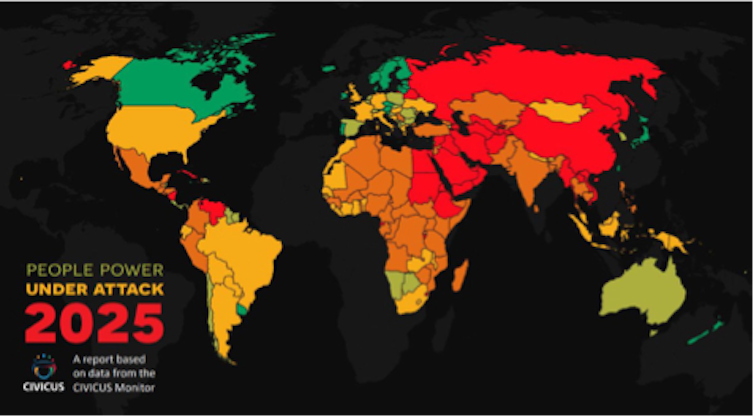
Today, according to the Civicus Monitor, only 7.2% of the world’s population lives in an “open” or “reduced” civic space. The rest live in a “restricted” (19.9%), repressed (42.3%) or closed (30.7%) civic space.

It is therefore becoming urgent for the international community in general, and development actors in particular, to give full priority to approaches based on human rights and the rights of living things in the implementation of the 2030 Agenda.


Civicus Monitor

Human rights and the rights of nature: a vital symbiosis for future generations

To achieve this, the challenges associated with the dominant economic model and global governance must be considered. This goes far beyond the legal sphere.

And yet the rights of nature are powerful levers for strengthening human rights and vice versa, as recently recognised by the International Union for Conservation of Nature (IUCN) through the adoption of several resolutions.

With this in mind, the approach based on human and living rights should be integrated into all public policies aimed at achieving SDGs, with a strong focus on sustainability.

This is precisely what the COP15 Kunming-Montreal Decision on Biodiversity states, calling for action to support Mother Earth, that is to say, an “eco-centric and rights-based approach conducive to the implementation of actions aimed at establishing harmonious and complementary relationships between people and nature, promoting the sustainability of all living beings and their communities, and avoiding the commodification of the environmental functions of Mother Earth”.


A weekly e-mail in English featuring expertise from scholars and researchers. It provides an introduction to the diversity of research coming out of the continent and considers some of the key issues facing European countries. Get the newsletter!


The Conversation

Farid Lamara ne travaille pas, ne conseille pas, ne possède pas de parts, ne reçoit pas de fonds d’une organisation qui pourrait tirer profit de cet article, et n’a déclaré aucune autre affiliation que son organisme de recherche.

ref. Human rights and the rights of Nature are linchpins for truly sustainable development – https://theconversation.com/human-rights-and-the-rights-of-nature-are-linchpins-for-truly-sustainable-development-279023

‘Canadian experience’ keeps skilled immigrants out of the labour market

Source: The Conversation – Canada – By George Kofi Danso, PhD, Human Geography, Queen’s University, Ontario

Canada positions itself as a nation in need of skilled immigrants to address labour shortages, support an aging population and drive economic growth. But the reality of Canada’s labour market tells a different story.

Upon arrival, the credentials of the talent attracted from abroad often face skepticism. The issue isn’t just about integration, it’s about the bigger problem of how Canada recognizes and values educational backgrounds, skills and professional experience.

At the centre of that failure is the idea of “Canadian experience.” This refers to the requirement that job applicants have prior work experience in the Canadian labour market to gain further employment.

Employers often defend this requirement as practical. They argue it ensures that workers understand local norms, workplace culture and regulatory expectations. In practice, this requirement acts as a screening tool.

This is both a social and an economic mistake. Canada’s immigration policy is based on the idea that newcomers are crucial to its future success. Yet it continues to squander the skills of the professionals it accepted to take in.

As a researcher specializing in immigration and international student retention in Canada, I believe the system isn’t failing at selecting talent, it’s failing at recognizing it.

Immigrants aren’t the problem, recognition is

A report from RBC found that immigrants often struggle to secure suitable employment in Canada because their training or field of study does not align with labour market needs. This explanation is incomplete, as data shows that a majority of immigrants with a post-secondary education are often more over-qualified than Canadian-born workers.

In September 2025, 34.7 per cent of recent immigrants reported being over-qualified compared with 18.5 per cent of Canadian-born workers. This suggests that many immigrants are failing because their skills are not being fully acknowledged or used.

Immigrants didn’t arrive without skills. They were carefully selected for the strong education, experience and qualifications that met Canada’s immigration standards. The problem starts after they arrive, when their qualifications face even deeper scrutiny.

Most employers ask for Canadian experience as a prerequisite, creating an impossible cycle: newcomers cannot gain Canadian experience without being hired, yet cannot get hired without Canadian experience.

At the core of the problem is a tendency to view unfamiliar foreign experience as a liability rather than as evidence of skill. Employers usually trust what they know. Regulatory bodies focus on credentials they easily understand. So foreign training is often seen as uncertain until it’s translated into Canadian terms.

The problem repeats across immigration streams

Two groups highlight this issue clearly: international students and internationally trained doctors. Although they differ in many ways, both show how Canada delays or denies recognition of people it has invited.

International students often come to Canada for the promise of education and work that can lead to a better future. However, they soon face a tough reality: costly housing, tight finances and immigration rules that limit their options.

To make ends meet, many take jobs in retail, food service, warehouses, delivery or care work. These roles are essential and demanding, yet they don’t provide the professional experience or career advancement that students expect.

International students are encouraged to work, contribute and build a life in Canada. Yet the jobs available to them, while technically providing Canadian work experience, are not in their fields of study. After graduation, employers often dismiss this experience as irrelevant and continue to demand professional Canadian experience in their specific industry, which students had no opportunity to gain.

Health experts often warn about a shortage of physicians. Family medicine faces pressure, emergency rooms are crowded and many communities lack access to care. However, many qualified foreign-trained doctors encounter a maze of licensing hurdles, repeated exams and limited chances to practice.

In 2021, Canada had roughly 39,000 internationally educated people with medical training, yet only 41.1 per cent of foreign-educated doctors were working in related occupations, compared with about nine in ten Canadian-educated medical graduates.

Many of these doctors come with strong clinical knowledge and experience from other health systems. Yet in Canada, their qualifications must go through extensive verification processes, credential checks and limited licensing pathways.

While these requirements are set up to ensure the Canadian health-care system can meet the highest standards of care, they also create barriers for foreign-qualified professionals.

What Canada keeps getting wrong

Canada seeks global talent but builds systems that undervalue it. This contradiction could explain why labour shortages in healthcare and certain skilled trades persist despite high-skilled immigration streams.

To gain real benefits from immigration, Canada must improve how it recognizes and integrates foreign expertise. And it should stop using “Canadian experience” as a method of exclusion.

Underusing skilled immigrants is both unfair to them and harms the economy. Canada can’t claim it needs talent from abroad while discounting it once it arrives.

The Conversation

George Kofi Danso does not work for, consult, own shares in or receive funding from any company or organisation that would benefit from this article, and has disclosed no relevant affiliations beyond their academic appointment.

ref. ‘Canadian experience’ keeps skilled immigrants out of the labour market – https://theconversation.com/canadian-experience-keeps-skilled-immigrants-out-of-the-labour-market-277036

China’s Africa strategy is shifting and Iran conflict will speed it up

Source: The Conversation – Africa – By Lauren Johnston, Associate Professor, China Studies Centre, University of Sydney

The global geoeconomic volatility wrought by the second Donald Trump US presidency and hostilities in the Middle East make the shift in China’s Africa strategy even more important for China and for Africa.

China’s Africa strategy started to shift in 2019, towards investment. It is anchored in Hunan Province.

The “Hunan Model” emerged because the “Angola Model” (building infrastructure and extracting resources) faced sustainability hurdles. Given the vulnerability of African countries to shocks, they often struggle to keep up with mounting debt repayments. The other factor was China’s changing domestic needs.

Traditional trade partnership and growth corridors were also under increasing contestation and subject to high trade barriers.

Under these pressures, Beijing selected Hunan Province to become its “project implementation unit” for a new era of trade and development between China and Africa.

The model has become more important since formal approval of the China-Africa Economic and Trade Deep Cooperation Pilot Zone in early 2024 and the growth of the China-Africa Economic and Trade Exhibition since launch in 2019.


Read more:
China’s Africa strategy is shifting from extraction to investment – driven from the industry-rich Hunan region


It seeks to deepen and bring greater balance to China-Africa trade and industrial integration. It is also at the heart of efforts to overcome the three main barriers to African development – shortages of capital, skilled labour and infrastructure – while offering China a secure and growing supply of resources.

Based on years of study of China-Africa trade relations, I argue that the tensions in the Middle East and the economic disruptions they have caused globally will speed up China’s thrust towards renewables and the electrification of its economy. It will also accelerate its push for new markets. This has implications for Africa.

Hunan Province is central to green transportation and to construction, heavy industry and minerals processing. It is also central to China’s economic relations with Africa.

What Hunan is all about

At the centre of the Hunan Model sit two national policy initiatives:

Hunan Province’s capital, Changsha, is home to China’s third-largest wholesale market, the Gaoqiao Grand Market. It is the primary distribution hub for non-commodity African imports landing in and near Changsha and passing through “green lanes” that fast-track African exports into China.

The market has a permanent trade facilitation hall where African countries market their goods directly and which provides other trade services.

The Hunan Model also has three functional areas to support trade between land-locked Hunan and the world, with an emphasis on Africa:

The China-Africa cooperation zone also has five “functional clusters” that drive trade, investment and industrial development between and within China and African nations. These target specific sectors where Hunan excels – and that match potential for growth and industrialisation in Africa. Construction machinery, mining equipment and precious metals processing are among them.

The China-Africa Economic and Trade Exhibition comprises the permanent exhibition hall in the zone and a series of trade expos, held in China and in Africa.

In the last few years, as I’ve detailed in a journal article, a series of China-Africa Economic and Trade Exhibition events have also begun springing up in African countries, including Kenya and Nigeria.

Impact of Middle East conflict

The importance of the Hunan Model has, arguably, been increased by the second Trump presidency and intensifying US-China trade tensions. As western markets become more restrictive, China has pivoted towards the global south with remarkable speed. Africa is no exception. In 2025, while Chinese total foreign trade grew by 3.8%, China-Africa trade surged by 17.7%.


Read more:
US trade wars with China – and how they play out in Africa


More recently, tensions in the Middle East have offered a dramatic shock to the global economy and its energy supply chains. This is likely to intensify China’s push towards renewables and electrification of its economy. It may also elevate global demand for electric vehicles, and it is Hunan Province that is home to Chinese e-vehicle giant BYD.

Given Hunan’s centrality to China’s own renewables industry, especially electric transformation and minerals processing, as well as construction, the Hunan Model can drive a new renewables-run era in China and between China and Africa too.


Read more:
China’s interests in Africa are being shaped by the race for renewable energy


In 2025, the “biggest highlight” of Changsha’s exports to Africa was the explosive growth of the “new three items”. These are lithium batteries, electric vehicles and photovoltaic products. Hunan’s exports of these items to Africa increased by 160.4%, 840.4% and 62.1% year-on-year, respectively. That’s why they have become a “new calling card” for Hunan’s exports to Africa.

Alongside electric transportation companies like BYD, Hunan Province is also home to electric railway giants like CRRC, which is at the heart of a “green” rail export surge. Moreover, in the wake of conflict in Iran, China has announced a new rare minerals research and innovation hub, to be set up in Changsha, Hunan.

Avoiding ‘Africa last’

While the Hunan model offers a focus on surmounting non-tariff barriers to trade and an industrial-focused alternative to past extraction-heavy policies, risks remain. The sheer scale of Chinese exports to Africa – up 17.7% in 2025 while African exports to China grew only 5.4% – underscores a growing trade imbalance.

African countries and sub-regions must build their own industrial supply chains, as China did with investment from earlier industrial giants.

The Hunan Model has its own research alliance of Chinese scholars and industry experts to inform its advance and progress. African nations require their own equivalent.

Shock after shock is upsetting the world economy. The Hunan Model is no longer just an experiment or a policy idea. It is driving China-Africa economic transformation. It offers potential for growth and development in China and Africa.

The Conversation

Lauren Johnston does not work for, consult, own shares in or receive funding from any company or organisation that would benefit from this article, and has disclosed no relevant affiliations beyond their academic appointment.

ref. China’s Africa strategy is shifting and Iran conflict will speed it up – https://theconversation.com/chinas-africa-strategy-is-shifting-and-iran-conflict-will-speed-it-up-280046

China’s military support for Somalia is on the rise – what Taiwan and Somaliland have to do with it

Source: The Conversation – Africa (2) – By Brendon J. Cannon, Associate Professor, Khalifa University

China recently pledged to expand military support to Somalia in its fight against al-Shabaab militants. Beijing has promised equipment, training and closer security cooperation with Mogadishu. This marks a shift from China’s traditionally cautious and small presence in the country. Brendon J. Cannon has researched how external powers – including China – engage with sub-Saharan Africa. He explains how these dynamics are converging in Somalia.

What form does China’s support in Somalia take?

China’s interests in Somalia take two paths.

The first is broadly geopolitical. It relates to China’s long-standing interests in the Horn of Africa as a strategic crossroads. The region links the Indian Ocean to the Red Sea and the Mediterranean. The Horn of Africa includes Djibouti, Ethiopia, Somalia, Eritrea and Somaliland. Sudan and Kenya are important actors in the region’s affairs.

Beijing’s priorities here are about expanding political influence and embedding itself in regional security architectures. This explains its existing military presence in Djibouti and infrastructure investments across Ethiopia, as well as neighbouring states like Kenya, Uganda and South Sudan.

The second path is specific to Somalia. It is mainly shaped by China’s domestic politics and stance on Taiwan. Beijing considers Taiwan a breakaway province, and is concerned that Somaliland’s ties with Taipei could lend legitimacy to separatist movements. Somaliland is a de facto independent state that left its voluntary union with Somalia in 1991, and diplomatically recognised Taiwan in 2020.

To understand this Somalia-specific dynamic, it is necessary to look at what China’s support to Somalia entails. Beijing provides diplomatic backing, development assistance and, more recently, security cooperation framed around counterterrorism and support for Somalia’s fight against al-Shabaab militants.

Even so, China’s economic footprint remains modest. Unlike neighbouring Ethiopia, where Beijing has financed railways, ports and airports, Somalia has not received large-scale Belt and Road infrastructure.

Chinese engagement is, therefore, better understood as selective and strategic rather than transformative.

What are the strategic interests driving this engagement?

China is increasingly involved in Somalia because of Somaliland’s diplomatic recognition of Taiwan and its progress in pushing for its own international recognition.

Since 1949, Taiwan has been an independent, self-governing state, though the People’s Republic of China lays claim to the island.

Beijing has worked over the past three decades to isolate Taiwan diplomatically. It’s offered development, technology and infrastructure assistance in exchange for states severing diplomatic relations with Taipei.

As of 2026, only Eswatini and Somaliland in Africa maintain some form of diplomatic relations with Taiwan.

From Beijing’s perspective, the fact that a small, de facto independent state in the Horn of Africa had the temerity to exchange diplomats with Taiwan was bad enough. When Israel became the first state to formally recognise Somaliland’s independence in December 2025, Beijing reaffirmed its support for Somalia’s sovereignty and territorial integrity. US policymakers are also pushing to recognise Somaliland.

China and Somalia’s leaders in Mogadishu frequently affirm their support for “One Somalia” and “One China”, respectively. In their view, Somaliland must submit to Mogadishu’s rule. Ditto for Taiwan: it must join the People’s Republic of China.

Neither Somaliland nor Taiwan wish to be part of what they view as broken political experiments.

Their larger, angry neighbours don’t care. They resort to bullying and threaten violence – in different ways.

China has wealth, economic power and a global profile. It also has a huge military and growing navy, much of it tailormade to invade Taiwan. Despite this, Taiwan still prefers to go it alone, with support from the United States, Japan, Australia and others.

Mogadishu, on the other hand, is unable to exercise legitimate control over much of its own territory. Despite decades of external security assistance and military training, Somalia still has no capable military. The national army continues to underperform against al-Shabaab and remains entangled in clan-based politics.

Failure to shift the status quo in either Taiwan or Somaliland unites China and Somalia against smaller, weaker entities.

How does China’s approach in the Horn of Africa differ from that of western actors?

In my view, Beijing’s growing interest in Somalia is less about development corridors and more about political alignment, diplomatic positioning and security cooperation.

Western states have tended to emphasise counterterrorism operations, governance reforms and security sector training. Other actors like Turkey and the United Arab Emirates have combined military engagement with infrastructure investment and commercial interests, sometimes becoming deeply embedded in Somalia’s internal politics.

China, by contrast, has focused on regime support to reinforce Somalia’s territorial integrity. This assistance has been less overtly military, and is closely tied to diplomatic objectives.

China prefers building technological and institutional dependencies – in telecommunications, technology and surveillance, for example – across much of Africa.

In both the short and long term, greater Chinese involvement risks adding another layer of geopolitical competition in an already fragile region. Rather than acting as a stabilising force, Beijing may find itself drawn into the same local dynamics that have frustrated other external actors.

Somaliland, in comparison, has developed a relatively functional security sector and a high degree of domestic political legitimacy.

What could greater Chinese involvement mean for Somalia’s security?

There is little reason to expect China’s military assistance to succeed where others have failed. Its broader impact will likely be political rather than operational.

Increased Chinese backing for Mogadishu could deepen internal divisions within Somalia. It may intensify competition over territory, authority and external patronage.

Nowhere is this dynamic more visible than in Las Anod, a contested city in eastern Somaliland.

It has recently become the focal point of a new political entity – SSC Khatumo, armed by external state actors, including China, according to reports. It is backed by Mogadishu and viewed by Somaliland as illegitimate.

Political developments in Las Anod have taken on geopolitical overtones. Abdikhadir Firdhiye was inaugurated in January 2026 as the first president of what Mogadishu has recognised as its Northeast State. The SSC Khatumo administration considers Las Anod its capital.

Among those attending Firdhiye’s inauguration were ambassadors from Turkey, Saudi Arabia, China, Djibouti and Sudan. Their interests extend well beyond local governance.

For Somaliland, the message was clear: its bid for independence is now entangled in a much wider geopolitical contest.

The Conversation

Brendon J. Cannon does not work for, consult, own shares in or receive funding from any company or organisation that would benefit from this article, and has disclosed no relevant affiliations beyond their academic appointment.

ref. China’s military support for Somalia is on the rise – what Taiwan and Somaliland have to do with it – https://theconversation.com/chinas-military-support-for-somalia-is-on-the-rise-what-taiwan-and-somaliland-have-to-do-with-it-279600

Inside Southeast Asia’s scam compounds: A trafficked worker tells of fraud, coercion and torture

Source: The Conversation – Canada – By Randall Hansen, Professor, Canada Research Chair in Global Migration & Director of the Global Migration Lab, University of Toronto

I was recently in Phnom Penh, Cambodia, and approached a group of young men in front of the Indian embassy. I told them I was a University of Toronto researcher.

I asked: “Are you from the scam compounds?” Scam compounds are industrial-scale complexes where trafficked workers are confined and forced to carry out online fraud.

They were. One man in his early 30s named Akshit told me his story.

Akshit was not your typical human trafficking victim. His English is perfect, he is educated, and he has worked in banks and call centres. But he was trafficked. In 2024, a friend told him of a friend who knew about a job in Cambodia paying twice what he earned in India.


Read more:
‘I thought about escaping every day’: how survivors get out of Southeast Asia’s cybercrime compounds – Scam Factories podcast, Ep 3


After a quick interview, he paid US$500 to fly to Phnom Penh via Kuala Lumpur. The flight and his car ride to Sihanoukville, a coastal city in southwest Cambodia, were comfortable, and on arrival at an apartment block he was given a welcome bag and a nice room. It all seemed above board.

It was anything but. He was in a scam compound where hundreds of workers sat at computers and convinced Asians and westerners to invest in fake schemes or love interests. Workers were arranged in teams of eight, led by a team leader, with a manager overseeing several teams and a Chinese criminal syndicate above them. His recruiter had sold him for US$5,000.

Labour violations

Hundreds of thousands of people have been trafficked in Cambodia and Myanmar alone. Media coverage of scam compounds has often focused on the beatings, broken bones and workers screaming as they are tasered. These outrages are real, but they are only the most extreme form of abuse.

At the core of scam compounds is a system of paid but forced labour: 15-hour days, seven days a week, multiple chats open, texting victims in English and workers’ native languages.

Akshit worked in English and Hindi, targeting southern Indians. The chats started at 10:30 a.m. — latecomers were fined — and ended at 2 a.m.

They followed a fluid but predictable script: a “developer” texts multiple clients. When they engage, he passes them on to a “chatter.” The chatter texts with the victim for three to four days, determining whether they’re interested in love or financial gain. He then passes them on to the “killer,” who seals the deal, instructing the victim on how to transfer the funds.

Akshit moved between the three roles.

The original investment would be small — around $250 — and would build from there. Once the victim had transferred enough money, it would all go quiet. The amounts varied by victim, but large transfers — hundreds of thousands of dollars or more — were rare; it was usually a few thousand.

The role of the pandemic

Scam compounds took off in Cambodia during the COVID-19 pandemic, as closed casinos and apartment blocks in cities such as Sihanoukville and the border towns of Bavet (Vietnam), Koh Kong and O’Smach (Thailand) were repurposed to house scam operations. They then spread to Myanmar (clustering along the border with Thailand) and Laos (especially the “Golden Triangle,” where Laos, Myanmar and Thailand meet).

Operations on this scale are recent, but the business model is far older: large gains based on low margins per transaction.

Billions are siphoned from victims — American losses to cryptocurrency scams alone reached US$5.6 billion in 2023 — but spread across hundreds of compounds and hundreds of thousands of workers, the returns per operation are far less impressive.

In Akshit’s team, everyone had a target of US$10,000 per month, for which they received $800; beyond that, there was a gradually increasing cut. But not everyone made the target.

Payroll sheets Akshit showed me recorded a few payouts of more than US$5,000, but many were in the low hundreds, meaning they brought in only a few thousand dollars monthly. Those who failed to make the target got less, or no, pay. Those who refused to work were abused, threatened and, in some cases, tortured.

One night, Akshit was awoken by screams several doors down. A Pakistani national had refused to comply and instead pleaded for help in texts to those he was supposed to scam. A team leader reported him, and his supervisors and security personnel used electroshock batons on him.

Illusion of shutdowns

A scam compound’s fixed costs are high once housing, food, security, transportation and team leaders’ and managers’ salaries are factored in. Forced labour makes the operation profitable. In its structural reliance on cheap labour, in fact, human trafficking in illegal scam compounds bears similarities to human trafficking in the legal fish processing or garments sectors.

The fact that so many victims come from wealthy western and East Asian countries explains the immense pressure on the Cambodian government. Hundreds of scam centres have closed since January 2026, and thousands of Chinese, South Asian, African and Indonesian workers were on the streets of Phnom Penh, struggling to get home.

But appearances deceive. Akshit’s compound was raided only after the owners had been tipped off; they moved workers to a hotel. Investigative journalist Danielle Keeton-Olsen told me in an interview that many of those released were low-level workers. Several other sources confirmed this.

What’s more, as Nathan Paul Southern from the Eyewitness Project explained to me:

“There is a huge difference between being raided and being shut down. The majority of the Prince Group (compound) closures were not raids; they just ceased operations. The cops said you need to go but keep us paid. And the doors closed.”

Much infrastructure remains, he noted, and some compounds are reportedly filling up again. The aggregate profits, generated on the back of cheap labour, are too large.

Lucrative enterprise

The total annual revenue from scams in Cambodia was US$12.9 billion in 2023, about 40 per cent of the country’s GDP. Officials throughout Cambodia — police, border guards and civil servants — receive bribes to look the other way.

Many powerful entities, including criminal organizations, businesses and politicians, have an interest in the system continuing. If scam compounds close in Cambodia, they will open elsewhere.

There is also worker agency. Some do the work voluntarily; Akshit estimates 40 per cent in his compound were willing, earning around US$5,000 per month. The figure may be exaggerated, but some clearly have an interest in the system continuing.

Globally, there are millions desperate enough to take the risk. In one form or another, scam compounds — and the trafficking that sustains them — are here to stay.

The Conversation

Professor Randall Hansen receives funding from his Canada Research Chair in Global Migration

ref. Inside Southeast Asia’s scam compounds: A trafficked worker tells of fraud, coercion and torture – https://theconversation.com/inside-southeast-asias-scam-compounds-a-trafficked-worker-tells-of-fraud-coercion-and-torture-280311

Why Pete Hegseth’s Pentagon prayer services challenge traditional notions of separation of church and state – but might be blessed by the Roberts Supreme Court

Source: The Conversation – USA – By John E. Jones III, President, Dickinson College

The wall between church and state appears increasingly thin. hayesphotography/iStock Getty Images Plus

Secretary of Defense Pete Hegseth is engaging in “a proselytizing Christian campaign” in his job, according to The Washington Post.

Hegseth hosts prayer services at the Pentagon and virtually crusades as a Christian, praying at the Pentagon for U.S. troops to inflict “overwhelming violence of action against those who deserve no mercy in Iran.” Politics editor Naomi Schalit spoke with Dickinson College President John E. Jones III about the legal implications of Hegseth’s actions.

Jones was a longtime federal judge, and his most famous decision, Kitzmiller v. Dover, was a case in which a district school board ordered the teaching of so-called intelligent design – claimed by advocates to be an alternative to the theory of evolution. Jones’ 139-page decision concluded that it was “abundantly clear” that the board’s policy violated the establishment clause of the Constitution, which forbids the government from creating an official religion or favoring one religion over another.

Schalit: What issues do Hegseth’s behavior and statements raise for you, if any?

Jones: From afar, it looks as if he is flirting with a violation of the establishment clause as contained within the First Amendment. The establishment clause mandates that there can’t be a national religion, nor can the government favor one religion over another.

What appears to be happening at the Pentagon are services that basically recognize only a particular religious tradition. And it’s very notable that Americans United for Separation of Church and State filed suit against both the Defense Department and the Labor Department because there are similar activities that are taking place there.

Defense Secretary Pete Hegseth asked God to “let every round find its mark against the enemies of righteousness and our great nation” during a monthly Christian service at the Pentagon on March 25, 2026.

What they’re seeking under the Freedom of Information Act are certain records, because they likely can’t attend these sessions. Any information they receive could support a separate lawsuit that, in effect, says the government – via the departments of Labor and Defense – is violating the establishment clause.

From my perspective, it sure looks like they are in violation. These activities are hosted on government property. They’re potentially coercive and appear to promote one particular religious viewpoint above others. While they may say they’re not requiring people to attend, you don’t know whether there may be some incentivizing or negative consequence if somebody doesn’t come.

Let me be the casual bystander and say, “Gosh, it’s just really nice. He’s a God-fearing man, and you know, he’s saying things that show his belief, which is a good thing to have.” Why did the authors of the Bill of Rights have a problem with the government establishing a state religion?

They were people of their time. They knew England had the Church of England and thus a national religion that was intertwined with the state. It ultimately caused untoward problems. They wanted everyone to have the freedom to worship, or not, as a personal choice and felt very passionately about that.

What has been long debated is the concept of a wall of separation between church and state. That phrase is not in the Constitution, but it is something that appears in cases, or is at least implied. And I’ve often said that wall is somewhat porous because there are circumstances where courts have allowed a little bit of seepage of religion under certain circumstances into the so-called public square.

What is really interesting is the tilt of the current Supreme Court court towards relaxing what have been generations of jurisprudence holding that the establishment clause should be more strictly enforced.

The Kennedy v. Bremerton School District case of 2022 involved a high school football coach assembling his players for prayer after games. It was pretty remarkable in the fact that the Supreme Court ultimately decided that that was not a violation of the establishment clause.

Some of the reasons were that it was after the game and that it was not a required activity for the players. Those who opposed it claimed that it was a violation of the establishment clause and that it was inherently coercive.

These current activities by the government – assuming that Americans United for Separation of Church and State files a lawsuit, not just an information request – are very likely to get to the Supreme Court.

The other thing the Supreme Court has done is it abandoned the so-called Lemon test, which courts utilized to determine whether a law or practice violated the establishment clause. Particularly in Kitzmiller v. Dover, I found the Lemon test to be a really helpful vehicle to use in measuring whether the policy in that case, which involved a school board mandating the teaching of the so-called alternative to evolution – intelligent design – violated the establishment clause.

President John F. Kennedy says people unhappy with a 1962 Supreme Court decision banning prayers in public schools can “pray a good deal more at home.”

How did the Lemon test work?

The Lemon test says that a judge should first measure the purpose of the government’s action, and then the effect on a reasonable person. You can then go to a third point, which is whether it represents an excessive entanglement with religion.

It doesn’t fit every case, but it worked in most establishment clause challenges.

But the Supreme Court, first in Kennedy v. Bremerton School District, pronounced it dead.

They in effect said to judges, “You have to look at historical antecedents and traditions and so forth.” That’s great writing at the Supreme Court level, but it leaves district judges completely unmoored. So whomever the poor judge is who gets this case is likely going to have a difficult time trying to read the tea leaves to determine whether it is, in fact, a violation. And I guarantee you, there won’t be unanimity among jurists and lawyers on that point.

So you’ve got a case where in the old days there was legal scripture that said, “OK, apply these tests and you can tell whether the government has stepped over the line into endorsing religion.” But now the Supreme Court has made it unclear where that line is?

Yes, and the very fact that Americans United for Separation of Church and State is trying to get information under the Freedom of Information Act means that they know that you have to come armed with a lot of salient surrounding facts in order to have this declared unconstitutional.

If this had been 10 or 20 years ago, they probably wouldn’t have filed that action under the Freedom of Information Act. They would have directly challenged the law and in effect said, “Look, it speaks for itself. You have services favoring one religion over others within the Pentagon and Labor departments. It’s inherently unconstitutional and a violation of the establishment clause.”

But we’re in a post-Lemon world today where there is a relaxation of the previously recognized constraints of the establishment clause.

Where does that get the country?

I fear where it goes if the progression continues. The proponents of this kind of behavior ask, “What’s wrong with a little of that good old-time religion in the public square?”

They never appear to contemplate the fact that in generations hence, America could, for example, be a predominately Muslim population. Suppose that became the favored religion in a country, or any religion that may be embraced by some but be disfavored by others became the favored religion. The establishment clause is meant to protect everyone, including, by the way, nonbelievers and atheists.

There’s nothing in the establishment clause that says that you can’t worship – or not – as you see fit. And that’s the beauty of this country. The founders knew that if there was a move towards a favored or national religion in the eyes of the government, that could replicate what took place in Great Britain, where religion and politics mixed with occasionally terrible results.

Failure to adhere to the dictates of the church could render you a second-class citizen, or worse. My hope is that judges will be very, very careful about a systemic creep that totally eviscerates the purpose and intent of the establishment clause.

The Conversation

John E. Jones III does not work for, consult, own shares in or receive funding from any company or organization that would benefit from this article, and has disclosed no relevant affiliations beyond their academic appointment.

ref. Why Pete Hegseth’s Pentagon prayer services challenge traditional notions of separation of church and state – but might be blessed by the Roberts Supreme Court – https://theconversation.com/why-pete-hegseths-pentagon-prayer-services-challenge-traditional-notions-of-separation-of-church-and-state-but-might-be-blessed-by-the-roberts-supreme-court-280535

Your local fishing hole is getting browner, changing which fish species thrive and which ones struggle

Source: The Conversation – USA (2) – By Allison M. Roth, Assistant Professor of Biological Sciences, University of Missouri-Columbia

Increased carbon in runoff from land is turning freshwaters darker. Andrew P. Hendry via Flickr

The lakes, streams and ponds you’ve visited for years are likely looking more brown than they used to. And people who are fishing those waters are likely catching different species and sizes of fish than in the past.

Our research has identified a link between those two developments, which means that trout, bass, perch and whitefish may become less common in unstocked lakes. But pike and walleye anglers may be in for a trophy-sized surprise.

In the past several decades, across much of northeastern North America and northern Europe, many freshwater ecosystems are getting darker, and they are changing in other ways as a result.

What is freshwater browning?

The specific phenomenon of darkening water, called “freshwater browning,” is driven by a few factors. Among the reasons are climate change, as higher temperatures and increased runoff are combining to increase the amount and types of carbon compounds that move from soil and land into bodies of water.

Similarly, as people have taken steps to reduce acidic emissions coming from smokestacks and other sources, less acid has fallen as precipitation, changing the chemistry of soils. Those chemical changes are also increasing the flow of carbon to bodies of water.

Higher levels of carbon make water look brown because it’s basically dissolved plant matter that stains the water like tea leaves would.

Underwater visibility

It’s harder to see in browner waters, which makes it harder for fish to locate prey, escape from predators and find suitable habitat to live in.

Our recent study combined a review of past research with some new analyses to examine how different kinds of fish do in darker water. Working with a large team of experts, we tallied findings from previous studies that looked at the relationship between the darkness of a body of water and fish growth rates in that same body of water.

We found that in browner waters, fish often grow more slowly. The decreased growth rate in individual fish appears to reduce the population sizes of these fish, which may, in turn, change the quantities and proportions of different kinds of fish in a lake.

But freshwater browning doesn’t affect all species of fish equally.

A person's hands hold a fish with large eyes and an open mouth.
Walleyes are among the fish species that seem to thrive in browner waters.
AP Photo/Daniel Miller

Unsurprisingly, we found that vision appeared to be quite important for navigating browner waters. When we studied fish communities in 303 Canadian lakes, we found that in lakes with darker water, fish species with larger eyes were more common.

When we looked at data on populations of eight economically important fish in 871 lakes across North America and Europe, we found that browning was associated with smaller populations of several species, including lake trout, lake whitefish, yellow perch, largemouth bass and smallmouth bass. Brook trout abundance was not affected by freshwater browning.

Browning was associated with larger populations of northern pike and walleye.

We believe that’s because walleye, for example, have a specialized retina that helps them see in browner waters with poorer visibility.
Similarly, pike have a well-developed lateral-line sensory system that allows them to sense vibration, movement and pressure changes in the water.

A person holding a fishing rod uses a float to remain above the surface of a body of water.
Anglers may want to use different types of lures in darker waters.
AP Photo/Ted S. Warren

A change for anglers

People fishing in browner lakes may consider appealing to the senses of the fish that are likely to be in the water. For example, rather than using colorful or shiny lures to attract their visual attention, when fishing in darker water, consider using vibrating lures that a fish’s lateral line system can detect, or scented lures that trigger an olfactory response.

By examining what’s happening to the water and in it, both scientists and people who enjoy fishing can understand the changes we’re seeing and what they mean in practical terms.

The Conversation

Allison M. Roth received funding to conduct this work from the Groupe de recherche interuniversitaire en limnologie/the Interuniversity Research Group in Limnology (GRIL; https://doi.org/10.69777/341034), which is funded by the Fonds de recherche du Québec Nature et Technologie (FRQNT).

This contribution was made possible by a working group grant, led by A. M. R., from the Groupe de Recherche Interuniversitaire
en Limnologie/the Interuniversity Research Group in Limnology (GRIL; https://doi.org/10.69777/341034), which is funded by the Fonds de recherche du Québec Nature et Technologie (FRQNT).

ref. Your local fishing hole is getting browner, changing which fish species thrive and which ones struggle – https://theconversation.com/your-local-fishing-hole-is-getting-browner-changing-which-fish-species-thrive-and-which-ones-struggle-279259

Why women in groups face a ‘collaboration penalty’ that solo female stars like Taylor Swift and Coco Gauff escape

Source: The Conversation – USA (2) – By David Hekman, Associate Professor of Organizational Leadership, University of Colorado Boulder

Whether in sports, music or business, all-women teams earn less. Minnesota Lynx guard Renee Montgomery drives between Indiana Fever guards Layshia Clarendon, left, and Shenise Johnson at a WNBA game in Minneapolis. AP Photo/Stacy Bengs

When Taylor Swift’s Eras Tour became the highest-grossing concert tour of all time in 2024, hauling in more than US$2 billion, it was hailed as a breakthrough for women in music.

But Swift’s success, it turns out, didn’t translate into broader gains for female artists. A closer look at the list of top-earning tours shows a clear pattern: Among the top 27 highest-grossing tours ever, there are no all-women ensembles, while 14 are all-male.

The same discrepancy appears in album sales: No all-women groups crack the top 100 bestselling artists of all time, while 41 all-men groups do.

Does Swift’s success stem from her status as a solo artist? As scholars of management who have researched organizational behavior and workplace bias, we argue that it did. And it points to a broader conclusion: Women working in same-gender groups face a “collaboration penalty” that solo women escape. Our work found that this pattern holds across venture capital, professional sports, health care and entertainment.

Why? Our research suggests it’s because all-women groups are seen as more threatening, as they’re more likely to challenge power structures through collective action. Notably, this perception was shared by male and female study participants alike – that is, women applied this bias to all-female groups just as men did.

A giant image of Taylor Swift on a screen looms over a concert crowd while she performs on stage during her Eras tour in Foxborough, Mass.
Taylor Swift performs at Gillette Stadium in Foxboro, Mass., in August 2023.
Stephen Mease on Unsplash, CC BY

The venture capital disappearing act

The starkest evidence appears in startup funding.

Despite years of diversity initiatives, all-women founding teams receive just 2.4% of venture capital dollars – a figure that has barely budged in three decades.

What explains this dramatic gap? We designed an experiment in which participants evaluated venture capital pitches that were identical in substance but varied by gender and solo vs. team status. The study’s participants described all-women investor groups as much more likely to engage in “social competition” – that is, challenging existing power structures through collective action. All-men groups faced no such perception, even when making identical investment decisions prioritizing diversity.

This prejudgment mattered. Those perceived as “socially competitive” were judged as less deserving of funding and resources, our research found. The penalty wasn’t about competence or performance, because the pitches were the same. It was about how group composition triggers assumptions about motivation. All-women teams were seen as pushing an agenda; all-men teams were just doing business.

Why women on teams pay a penalty

The music industry tells the same story.

Solo women can reach the pinnacle. Taylor Swift, Beyoncé, Madonna and Pink all rank among the world’s top musical earners. But their success makes the absence of all-women groups even more glaring. If individual women can succeed at the highest levels, why can’t groups of women working together?

Our research on professional sports provides an insight. We analyzed prize money from 1,145 major international competitions across 44 sports from 2014-2021. Solo men and solo women earned similar amounts. But in team sports, a massive gap emerged: All-women teams earned less than half of their male counterparts.

This wasn’t about performance. The all-women teams in our dataset had won their competitions – they were literally champions. The gap also wasn’t about popularity or revenue generation, as we controlled for sport type and governing body. Something about the group composition itself triggered lower compensation.

To test this mechanism, we conducted another experiment. Study participants viewed identical athlete profiles, varying only by gender and whether the athlete competed solo or in a same-gender group. Once again, all-women groups were perceived as more socially competitive than all-men groups, and this perception predicted lower expected compensation – even when performance statistics were identical.

As a consequence, women team athletes pay an expensive penalty. For example, no women at all appear in Forbes’ top 50 highest-paid athletes in 2025. Notably, the highest-paid female athlete, tennis player Coco Gauff, plays an individual sport – but even her $33 million of earnings in 2025 would rank around 150th if compared with men. And only one of the top 15 highest-paid female athletes plays a team sport: basketball star Caitlin Clark, who earned just $119,000 in WNBA salary her rookie year, compared to $16 million in individual endorsements. Even Clark’s success comes from being valued as an individual brand, not for her team play.

Tennis player Coco Gauff pumps her fist with joy after winning a point against Karolina Muchova at the Miami Open tennis tournament.
Coco Gauff celebrates a point against Karolina Muchova in the semifinals of the Miami Open tennis tournament in March 2026 in Miami Gardens, Fla.
AP Photo/Jim Rassol

It’s not just elite athletes

These patterns don’t apply just to high-profile industries. We found the same effect in a conventional workplace: a large health maintenance organization in the northwestern United States.

We analyzed salary data for 682 medical providers across 18 clinic locations. Among solo practitioners, men and women earned similar salaries. But providers working in same-gender groups showed dramatic pay gaps. Men in all-men groups earned the most ($111,004 on average), while women in all-women groups earned the least ($52,497) – less than half. This held even after controlling for age, experience, credentials, specialty, patient satisfaction scores and clinic location.

These weren’t cherry-picked cases but licensed medical professionals with quantifiable performance metrics, working for an organization with formal human resources policies and pay scales. Yet the gender composition of their immediate work group somehow predicted a $58,000 annual salary difference – despite women’s higher average patient satisfaction scores.

Perhaps the most striking illustration comes from professional sports cheerleading. NFL cheerleaders earn approximately $150-$500 for performing at the Super Bowl, while the minimum NFL player salary is $885,000.

Even players on the losing Super Bowl team who never leave the bench earn $103,000 each – roughly 687 times what cheerleaders make for performing the entire game. Both groups face high injury risk. Both perform at the same event. The difference? One is an all-men team, the other an all-women team.

What can be done?

To counter this deeply entrenched bias, organizations could look at their compensation data not just to detect individual gender gaps but to see whether all-women teams systematically receive smaller bonuses and raises than all-men teams. Likewise, investors and funders could examine whether a team’s gender composition influences the evaluation of proposals, separate from actual team qualifications and business potential. Manager training could also explicitly call out this misconception as inaccurate, unconscious and costly.

Most importantly, it should be understood that employees rarely control their team’s gender composition. Women are being economically penalized for something shaped by organizational demographics, project needs and scheduling – factors entirely outside their control.

Women can succeed alone. Taylor Swift, Beyoncé and Coco Gauff prove that. But until all-women groups receive the same legitimacy, funding and compensation as all-men groups, enormous talent and economic potential will be left on the table. As our research shows, the collaboration penalty isn’t just unfair – it’s economically irrational.

The Conversation

The authors do not work for, consult, own shares in or receive funding from any company or organization that would benefit from this article, and have disclosed no relevant affiliations beyond their academic appointment.

ref. Why women in groups face a ‘collaboration penalty’ that solo female stars like Taylor Swift and Coco Gauff escape – https://theconversation.com/why-women-in-groups-face-a-collaboration-penalty-that-solo-female-stars-like-taylor-swift-and-coco-gauff-escape-280317

Thousands of AI-written, edited or ‘polished’ books are being sold – an eerie echo of Orwell’s ‘novel-writing machines’

Source: The Conversation – USA (2) – By Laura Beers, Professor of History, American University

When it comes to machine-produced ‘literature,’ does it really matter whether the outputs can pass for original art? J Studios/Digital Vision via Getty Images

At some point in the next several months, I am hoping to receive a modest check as a member of the class covered in the class-action settlement Bartz v. Anthropic.

In 2025, the artificial intelligence company Anthropic, best known for creating the chatbot Claude, agreed to pay up to US$1.5 billion to thousands of authors after a judge ruled that the company had infringed upon their copyrights.

When I first learned about the settlement, I assumed that Anthropic was primarily interested in teaching Claude about the subject of my stolen work, former socialist activist, British Labour politician and feminist Ellen Wilkinson.

It did not initially occur to me that Claude might also be learning about how I, Laura Beers, political historian, craft my sentences and translate my voice to the page.

Yet there is increasing evidence that chatbots like Claude can be trained not only to regurgitate an author’s content, but also to mimic their voice. In March 2026, journalist Julia Angwin filed a class action suit against the owners of Grammarly, alleging that the company misappropriated her and other writers’ identities to build its “Expert Review” AI tool, which offers to give editorial feedback in the voices of various authors, living and dead.

That a machine might use my writing not only to learn about my subject matter, but also to analyze and ultimately mimic my authorial voice, points to a future that George Orwell envisioned with eerie prescience. In his 1949 dystopian novel “1984,” Orwell imagined “novel-writing machines” capable of mass-producing literature, employing programmed mechanical “kaleidoscopes” as substitutes for individual artistic process.

‘In place of a human mind, a statistical average’

To what extent, I wondered, could Claude mimic my own voice?

I prompted the chatbot to write an essay “in the style of Laura Beers” about an early 20th-century politician. I struggled to recognize myself in the resulting prose. But maybe Claude, having only consumed one of my books, didn’t have enough to go on to really nail my tone.

I decided to try again. This time, I would ask it to write a brief essay in the style of Orwell. The subject of my book “Orwell’s Ghosts: Wisdom and Warnings for the Twenty-First Century,” Orwell is one of the most distinctive literary essayists and prose stylists of the 20th century.

Most of Orwell’s work is in the public domain, meaning it could have legally been used to train Claude.

I prompted Claude to write an essay “in the style of George Orwell about the threat to individual identity and freedom of thought posed by AI and particularly by the ability of ‘novel writing machines’ to produce literature.”

Primed with ample source material, the AI did a passable job:

“Here is a type of comfort, familiar to anyone who has ever been slowly dispossessed of something, that consists not in denying the loss but in not yet noticing it. The frog does not leap from the gradually heated water. The citizen does not protest the gradual narrowing of the permitted thought. And the reader, it seems, does not mourn the novel until the novel has already been replaced by something that resembles it in every outward particular – same chapters, same characters, same approximate sequence of feeling – yet contains, in place of a human mind, a statistical average of all the human minds that came before it.”

The final sentence about the statistical average rings false. But Orwell would, I suspect, have liked the image of the slowly boiling frog. “Here is a type of comfort” is also a phrase that Orwell might well have written.

The Claude AI app is seen in the app store on a smartphone with the promotional text 'Meet Claude's voice with yours.'
Trained on vast collections of text, chatbots can convincingly imitate the prose of the literary greats.
Michael M. Santiago/Getty Images

I am skeptical that anyone would classify Claude’s efforts as indistinguishable from Orwell’s prose. But when it comes to machine-produced “literature,” perhaps it doesn’t really matter whether it can fully approximate original art, as long as it’s good enough to function as entertainment and distraction for the masses.

Jam, bootlaces and books

This was Orwell’s own dispirited suggestion in “1984.

With the help of “novel-writing machines,” the employees of the Ministry of Truth – the government department responsible for controlling information and rewriting history – are able to mass-produce not only novels, but also “newspapers, films, textbooks, telescreen programmes [and] plays.” They churn out “rubbishy newspapers containing almost nothing except sport, crime and astrology, sensational five-cent novelettes” and “films oozing with sex,” along with cheap pornography intended for the “proles,” as the uneducated working classes of Big Brother’s Oceania were known.

The technology disgusts Orwell’s protagonist, Winston Smith, who pointedly decides to purchase a diary and pen to write down his own independent thoughts. But to Julia, Winston’s nymphomaniac, anti-intellectual lover who works as a mechanic servicing the machines, “Books were just a commodity that had to be produced, like jam or bootlaces.”

‘Full-Length Novels in Seconds’

According to estimates, thousands of books for sale on Amazon have been written in whole or in part using AI.

In other words, today’s AI is also being used to mass-produce literature like jam or bootlaces.

Many of these works are not fully machine-written. Instead, they’ve been, as the AI writing tool Sudowrite advertises, “polished by AI.” With its “Rewrite” function, the company promises to give users an opportunity to “refine your prose while staying true to your style, with multiple AI-suggested revisions to choose from.” The service is akin to the “touching up” provided by the Ministry of Truth’s Rewrite Squad in “1984.”

Other books for sale on Amazon are, however, entirely machine-generated. The AI writing tool Squibler promises that if you give it an overarching prompt, it can produce “Full-Length Novels in Seconds.”

The potential of AI-generated “literature” to turn a quick-and-easy profit ensures that readers will continue to encounter more of this content in the future, especially as AI’s large language models become more refined. Already, studies have shown that readers cannot easily distinguish AI-generated forgeries from original prose.

Last year, I had lunch with a screenwriter friend in Los Angeles. He told me that his colleagues are particularly nervous about the use of AI to produce sequels. Once you have an established cast of characters for a movie franchise like, say, “Fast & Furious,” audiences will likely see the next installment whether it’s written by man or machine.

Yet my own brief experiments with Claude give me at least some hope for the future of literary art. A chatbot like Claude might be able to absorb and analyze “a statistical average of all the human minds that came before it,” but without the input of actual human experience and sensibility, it is hard to envisage them ever producing true art.

Whether AI can produce the next George Orwell novel or essay remains to be seen. That it can and will churn out an increasing volume of popular fiction and screenplays like “Fast & Furious 25” seems less in doubt.

The Conversation

Laura Beers does not work for, consult, own shares in or receive funding from any company or organization that would benefit from this article, and has disclosed no relevant affiliations beyond their academic appointment.

ref. Thousands of AI-written, edited or ‘polished’ books are being sold – an eerie echo of Orwell’s ‘novel-writing machines’ – https://theconversation.com/thousands-of-ai-written-edited-or-polished-books-are-being-sold-an-eerie-echo-of-orwells-novel-writing-machines-276008