Can Australia build one of the world’s largest data centres?

Source: The Conversation – Global Perspectives – By Bronwyn Cumbo, Lecturer, Transdisciplinary School, University of Technology Sydney

The Conversation, CC BY-SA

➡️ Click here to read the full interactive

The Conversation

Bronwyn Cumbo receives funding from the Australia Public Policy Challenge Grant for her research investigating possibilities and challenges to establishing New South Wales as a sustainable data centre hub.

Digital Storytelling Team does not work for, consult, own shares in or receive funding from any company or organisation that would benefit from this article, and has disclosed no relevant affiliations beyond their academic appointment.

ref. Can Australia build one of the world’s largest data centres? – https://theconversation.com/can-australia-build-one-of-the-worlds-largest-data-centres-273703

From ‘this machine kills fascists’ to ‘King Trump’s private army’: the art of protest music

Source: The Conversation – Global Perspectives – By Panizza Allmark, Professor of Visual & Cultural Studies, Edith Cowan University

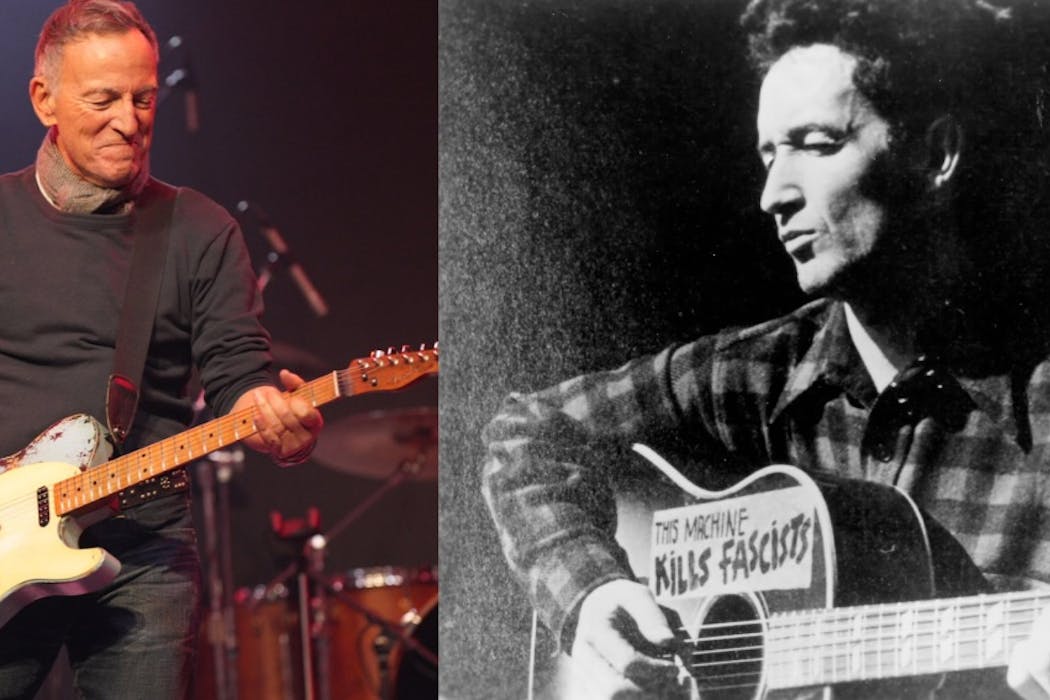
Alex Kormann/The Minnesota Star Tribune and Michael Ochs Archives, via Getty

In January, over the course of three days, Bruce Springsteen wrote, recorded and released the political protest song Streets of Minneapolis.

The song’s release was a matter of urgency and reflects Springsteen’s fury towards the Minneapolis immigration enforcement operation from the United States Department of Homeland Security with around 2,000 Immigration and Customs Enforcement (ICE) officers and agents.

Last month, Renée Good and Alex Pretti were killed by ICE in separate incidents. In his lyrics, Springsteen names them as a memorial tribute, “citizens [who] stood for justice”. He refers to ICE as “King Trump’s private army”.

Springsteen marches in the footsteps of protest songs from legendary artists such as Woody Guthrie and Bob Dylan who raised their lyrical voices in a direct response against injustice.

The Dust Bowl migrants

On January 30 Tom Morello, the guitarist with social activist rock band Rage Against the Machine, held a benefit concert to support the families of the Minneapolis ICE shooting victims.

Morello described it as “a concert of solidarity and resistance to defend Minnesota” and against “the rising tide of the state of terror”.

Springsteen was a surprise guest artist. In addition to performing Streets of Minneapolis he played his 1995 song, The Ghost of Tom Joad.

Tom Joad is a character in John Steinbeck’s 1939 novel The Grapes of Wrath, about the Dust Bowl migrants from Oklahoma. During the Great Depression, the Dust Bowl migrants left Oklahoma and travelled west, forced off the land by drought and the intensive farming methods. Springsteen’s song describes “the new world order” where homelessness, policing and inequality prevail.

Woody Guthrie also sang about Tom Joad on his 1940 album Dust Bowl Ballads. Guthrie travelled south to California with migrants who scraped a living working in others’ fields and picking fruit in others’ orchards.

Tom Joad is a working class man who stands up to authority through the call for collective action. Guthrie’s two songs about the character featured on Guthrie’s first and most successful recording, bring national attention to the plight of the Dust Bowl farmers.

Guthrie emblazoned on his guitars the slogan “This machine kills fascists”.

The civil rights movement

When Robert Zimmerman left his parental home in Hibbing, Minnesota, to reinvent himself in New York as Bob Dylan, he achieved his desire to meet Guthrie.

One of Dylan’s very early compositions was The Death Of Emmett Till, which he performed for a Congress on Racial Equality benefit concert in 1962. It didn’t appear on an album until the compilation album Broadside Ballads, Vol.6, in 1972, under his pseudonym Blind Boy Grunt.

Emmett Till was a 14-year-old Black boy who was brutally murdered in 1955 by two white brothers in Mississippi. His murder, and their acquittal by an all white jury, caused public outrage, and became a catalyst of the Civil Rights Movement. Emmett Till has been memorialised in many songs, but Dylan’s focus, with an accusation in the lyrics that the jury “helped the brothers”, is the most well-known tribute.

Dylan went on to write many songs for the civil rights movement and anti-war songs such as Blowin’ In The Wind, Masters of War and A Hard Rain’s Gonna Fall, all on his second album, The Freewheelin’ Bob Dylan (1963).

The Vietnam War

In 1970, Neil Young composed Ohio about the murder by Ohio National Guard of four protesters against the Vietnam War on the campus of Kent State University. The song was recorded by Crosby, Stills, Nash and Young but the studio version only appeared on the 1974 compilation, So Far.

The activist rock song became an anthem of the anti-Vietnam War movement. Young’s horror toward the killing of protestors motivated him to write and record the song quickly, with a rush to release it.

The song got radio play, but was banned by some stations for its anti-war sentiments. Within three weeks of the shooting, it reached number 14 on the Billboard charts. The opening lyrics, “Tin soldiers and Nixon coming, we’re finally on our own”, remarks on a heightened state of alert for ordinary people.

Trump’s America

The title of Lucinda Williams’ first overtly political album, 2025’s World’s Gone Wrong, echoes Dylan’s 1993 album, World Gone Wrong.

Music magazine Uncut called it a “compelling, compassionate, state of the nation address”.

The album focuses on the destruction of civil society in Trump’s America. Something’s Gotta Give is a song of anger and disillusionment with America. Black Tears connects present day America to its long history of injustice with the lyrics “400 years is long enough, How long will [Black tears] rain down?”.

Jesse Welles’ song Join ICE is a satirical recruitment song, adopting the tone of a recruitment pitch to expose the abuse of power “If you’re lackin’ control and authority, come with me and hunt down minorities,” he sings.

Popular music, especially in America, has always been bound up with political commentary.

But it hasn’t always been on the side of the oppressed. Written and sung by Staff Sergeant Barry Sadler, The Ballad Of The Green Berets, supporting the United States Army Special Forces in Vietnam, was number one on the Billboard singles charts for five weeks in 1966.

Can a Trump acolyte manage a similar feat about ICE?

The Conversation

The authors do not work for, consult, own shares in or receive funding from any company or organisation that would benefit from this article, and have disclosed no relevant affiliations beyond their academic appointment.

ref. From ‘this machine kills fascists’ to ‘King Trump’s private army’: the art of protest music – https://theconversation.com/from-this-machine-kills-fascists-to-king-trumps-private-army-the-art-of-protest-music-274974

Anas Sarwar: why did the leader of Scottish Labour call for Keir Starmer’s resignation – and has the move backfired?

Source: The Conversation – UK – By Jonathan Parker, Lecturer in Politics, University of Glasgow

Scottish politics has a dual nature. It is significantly distinct from politics in the rest of the United Kingdom, with its own dynamics, parties and leaders. But it can still be affected by events down south. And for the Scottish sections of the UK parties – the Conservatives, Liberal Democrats, Labour and Reform UK – negative perceptions of their UK leaderships can have consequences for their Scottish wings.


Read more:
How much longer can Keir Starmer survive?


This is the situation Anas Sarwar, leader of the Scottish Labour party, finds himself in. In recent weeks the UK government has been engulfed in a scandal surrounding former Labour peer, MP, minister and (most recently) ambassador Peter Mandelson and his ties to Jeffrey Epstein.

This has led to his resignation from the House of Lords and the Labour party, the launch of a police investigation and an intense backlash that has put Prime Minister Keir Starmer under pressure. Sarwar has entered the foray in dramatic fashion, summoning the media to a press conference in Glasgow where he called on Starmer to resign.

Why did Sarwar publicly turn on Starmer?

Sarwar’s primary motivation is that his party is struggling badly ahead of May’s crucial Scottish parliamentary elections. The most recent polling shows the governing Scottish National Party (SNP) in a reduced first place, and Labour fighting the radical right Reform UK party for second.

While historically Scotland’s dominant party, Labour lost power to the SNP in 2007 and was then reduced to third place in 2016. But it made a striking comeback in 2024 when Sarwar’s party won the UK general election in Scotland, capitalising on voters’ perception of declining public services under the SNP.

However, following the installation of a Labour government at the UK level, the party’s ratings rapidly declined. Sarwar is concerned that the fallout from the Mandleson scandal will lead to even further losses of support in the polls.

While Starmer’s cabinet has rushed to defend him, Sarwar is, so far, the most high-profile Labour figure to call for Starmer’s resignation. What is especially interesting is that Sarwar has specifically framed his call in Scottish terms, speaking of his loyalty to Scotland and alleging that Starmer’s actions have been detrimental to his party’s prospects in May. He stated that Starmer must go if Scotland is going to avoid another decade of SNP rule.

Was he right to do it?

Sarwar is right that UK Labour’s unpopularity since it took office has damaged the standing of its devolved wings. He also presumably feels very angry his chances of taking power have been ended by this. But the choice to blame Scottish Labour’s failings on Starmer obscures Sarwar’s own responsibility for Labour’s poor standing.

While Starmer is undoubtedly highly unpopular in Scotland, Sarwar has spent the time since the general election steadfastly failing to differentiate himself from the prime minister – despite suggestions during in the 2024 campaign Scottish Labour MPs would serve as an autonomous group at Westminster and pursue an independent line.

This failure is important as it means Sarwar’s Scottish party has been severely discredited by UK Labour’s failings and can no longer serve as the receptacle of anti-SNP protest voting as it did in the general election. Continuing criticism of the SNP’s record now rings much hollower when voters can look at a very similar party in Westminster they don’t perceive as doing any better or even as worse.

What’s behind this row?

Ultimately, this is linked to broader underlying issues in Scottish Labour around the party’s continuing inability to come to terms with its loss of status as the country’s dominant political force and adapt to the politics of the devolution era. The party has consistently failed to take into account how Holyrood-centric Scottish politics has become or the need for policy and messaging differentiation between Scotland and the UK. This is something that Welsh Labour realised in the 2000s.

Sarwar calls for the PM to resign.

The return of a new majority of Labour MPs in Scotland should have been viewed as the next step towards the campaign to win the 2026 elections in Scotland. Instead it seems to have renewed the party’s Westminster-centrism.

Scottish MPs in Westminster have toed the party line, including on policies which are highly unpopular north of the border. This has been exacerbated by frequent campaign misfires, such as the printing and distribution of leaflets with fake quotes endorsing Sarwar and a bizarre series of adverts centred on Sarwar’s life.

Such a personality-centred campaign makes little sense when the party is no longer running neck and neck with the SNP but struggling for second place. Arguably, setting out a strong vision of what Scottish Labour wants Scotland to look like – other than merely a place without the SNP in charge – would leave the party in a much stronger place.

Sarwar’s move will likely not harm his party’s prospects in May, but the move to a more assertive Scottish leadership is very late in the game and much more will be needed for a true turnaround in Scottish Labour’s fortunes.

The Conversation

Jonathan Parker does not work for, consult, own shares in or receive funding from any company or organisation that would benefit from this article, and has disclosed no relevant affiliations beyond their academic appointment.

ref. Anas Sarwar: why did the leader of Scottish Labour call for Keir Starmer’s resignation – and has the move backfired? – https://theconversation.com/anas-sarwar-why-did-the-leader-of-scottish-labour-call-for-keir-starmers-resignation-and-has-the-move-backfired-275504

Held captive in their own country during World War II, Japanese Americans used nature to cope with their unjustified imprisonment

Source: The Conversation – USA (2) – By Susan H. Kamei, Adjunct Professor of History and Affiliated Faculty, USC Shinso Ito Center for Japanese Religions and Cultures, USC Dornsife College of Letters, Arts and Sciences

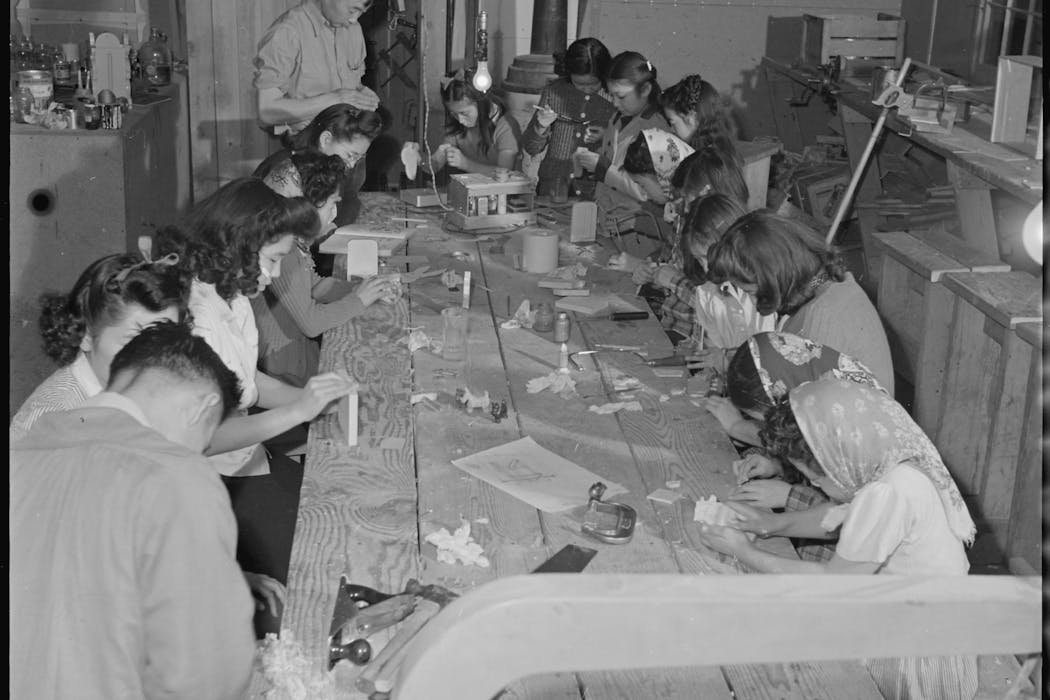
Japanese Americans incarcerated at Heart Mountain concentration camp in Wyoming took art classes at the craft shop, using what they could find. Tom Parker, War Relocation Authority, Department of the Interior, via National Archives and Records Administration

With a stroke of a presidential pen, the lives of Izumi Taniguchi, Minoru Tajii, Homei Iseyama and Peggy Yorita irreparably changed on Feb. 19, 1942. On that day, President Franklin D. Roosevelt issued Executive Order 9066, which set in motion their wartime incarceration along with other people of Japanese ancestry who were forcibly removed from their homes in parts of California, Oregon, Washington and Arizona.

To cope with their fear, anger and loss in the turbulent times, they would have to dig deep into their emotional reservoirs of resolve and ingenuity.

Without bringing charges against them or providing any evidence of disloyalty, the U.S. government detained legal Japanese immigrants and their American-born descendants in desolate inland locations during and after World War II, simply because of their ethnicity. Nearly 127,000 people of Japanese ancestry were incarcerated between 1942 and 1947, according to Duncan Ryȗken Williams, director of The Irei Project, which is compiling a comprehensive list of those detained. My grandparents, parents and their families were among them.

As I describe in my book “When Can We Go Back to America? Voices of Japanese American Incarceration during World War II,” they boarded livestock trucks and World War I-era trains guarded by armed U.S. soldiers for destinations that were not disclosed to them. They could only take what they could carry and what they had within themselves.

When the Japanese Americans arrived at temporary detention facilities, euphemistically called “assembly centers,” hastily constructed on fairgrounds, racetracks and other government property, they were shocked to be body-searched, fingerprinted and interrogated. Thousands discovered their living quarters were animal pens or horse stalls. The ones considered lucky were assigned to poorly built barracks. The barracks had only cots, bare light bulbs hanging from the ceilings, and pot belly stoves in the corners; the interiors lacked any partitions.

People stand and sit near beds in an open space with clothes hanging from hooks on the wooden wall.
Japanese Americans incarcerated at assembly centers were quartered in rough barracks.
Clem Albers, War Relocation Authority, Department of the Interior via National Archives and Records Administration

Immediately they scavenged wood from vegetable crates and construction debris they found nearby to create privacy within the barracks units and to make furniture and other household furnishings. Displaced from their livelihoods, education and social structure, with nothing to do, they also quickly organized a wide range of activities, including sports, as well as arts and crafts of all kinds. Their resourcefulness born out of necessity converged with the Japanese aesthetic to make functional items beautiful as they sought to make their temporary quarters more livable.

When the prisoners were transferred to long-term detention facilities run by the War Relocation Authority later in 1942, they brought with them what Delphine Hirasuna, an author and descendant of people who had been incarcerated during the war, calls the “art of gaman.” “Gaman” is a Japanese word meaning the dignity and grace to bear the seemingly unbearable. With this philosophy, they created objects of both utility and beauty.

Delphine Hirasuna speaks in 2014 about how Japanese Americans endured their incarceration with grace and even creativity.

Finding beauty in branches, rocks and shells

At the Gila River and Poston camps located on tribal land in the Mojave Desert, incarcerees found that desert wood could be carved, filed and polished to make partitions, household objects and works of art.

Armed soldiers guarded the barbed-wire perimeters from lookout towers, but as the war wore on, the incarcerees were allowed to venture beyond the camp fences. Izumi Taniguchi, then 16 years old from Contra Costa County, California, recalled getting permission to walk outside the Gila River camp boundaries to while away the time.

He remembered, that some people used the ironwood for sculpting. Minoru Tajii, then 18 years old from El Centro, California, held at the Poston camp, described ironwood as “an oil-rich wood, so when you polish it up it comes out very nice, so we go out and find that and bring it back.”

The Poston “sculptoring department” advertised in the camp newsletter “Poston Chronicle” on Jan. 20, 1943, that “anyone with ironwood wishing to learn how to make figures and notions may bring their materials to the department, 44-13-D, and work under the guidance of sculptoring teachers.”

A stone teapot and cup.
A teapot and cup made out of slate by Homei Iseyama, decorated with depictions of pomegranates and leaves evoking his connection with nature as a landscape gardener and bonsai master.
Gift of the artist’s family via Smithsonian American Art Museum

Homei Iseyama, from Oakland, California, became known for the exquisite teapots, teacups, candy dishes and calligraphy inkwells he carved out of slate stones he found around the Topaz, Utah, camp. Born in 1890, he attended Waseda University in Tokyo before immigrating to the United States in 1914 with dreams of attending art school.

At the Tule Lake camp, located on an ancient lake bed, the incarcerees discovered thick veins of shells that provided material for making art and jewelry. Fusako “Peggy” Nishimura Yorita got very involved in making shell jewelry. As digging for shells became a popular and competitive pastime for the Tule Lake incarcerees, Yorita enlisted her two teenagers and friends to help dig waist-deep holes at sunrise and sift the sand with homemade wire sieves.

A pin with flowers, leaves and a bow.
Peggy Nishimura Yorita composed the flowers and leaves in this corsage pin from shells she found at the Tule Lake concentration camp.
Courtesy of the Bain Family Collection via Densho Digital Repository

A 33-year-old single mother, Yorita sold her shell jewelry to make a little money. She also enjoyed the creative endeavor. She recalled: “I was just making new things all the time. And to me, it … was … a wonderful outlet.”

As the incarcerees were allowed to leave the camps, they were given $25 and a one-way bus or train ticket to wherever they were going to rebuild their lives. Many took with them their handcrafted objects, reminders of how they overcame the physical and mental harshness of their detention years.

A small wooden chest of drawers.
The author’s grandfather, Ayatoshi Kurose, made this small tansu chest out of crate wood for her teenage mother in the Heart Mountain, Wyo., camp.
Courtesy Susan H. Kamei, CC BY-NC-ND

When my mother entrusted to me the fragile small tansu chest that her father made for her in camp out of crate wood, she told me that her father had felt sorry for her that she didn’t have anyplace to store her belongings. To improve the appearance of the wood, my grandfather placed a hotplate on the pieces to deepen the grain. My mother appreciated the care he took to carve traditional Japanese scenes onto the panels with a pen knife. She said the chest represented to her the depth of her father’s love.

Eight decades after Roosevelt issued Executive Order 9066, researchers are delving into the traumatic intergenerational impact that the incarceration has had on the camp survivors and their descendants. Memorials such as The Irei Project seek to restore dignity to those who suffered unconstitutional injustices. On Feb. 19, known annually as the Day of Remembrance, Americans can honor them by appreciating their “art of gaman,” testaments to their resilient spirit as they found and created beauty in their wartime environments.

The Conversation

The Mellon Foundation has provided funding to the USC Shinso Ito Center for Japanese Religions and Culture, which is one of Susan Kamei’s academic affiliations. Duncan Ryuken Williams is the director of the USC Shinso Ito Center for Japanese Religions and Culture. She is a researcher for The Irei Project and is a member and volunteer of the Japanese American National Museum.

ref. Held captive in their own country during World War II, Japanese Americans used nature to cope with their unjustified imprisonment – https://theconversation.com/held-captive-in-their-own-country-during-world-war-ii-japanese-americans-used-nature-to-cope-with-their-unjustified-imprisonment-272989

How much longer can Keir Starmer survive?

Source: The Conversation – UK – By Martin Farr, Senior Lecturer in Contemporary British History, Newcastle University

When they disintegrate, governments often do so slowly, then quickly. Despite dragooned public statements of support from the cabinet, the government of Keir Starmer gives every appearance of entering that second phase.

In the wake of the scandal surrounding former Washington ambassador Peter Mandelson and his ties to deceased sex offender Jeffrey Epstein, Starmer lost his chief of staff Morgan McSweeney, who had championed Mandelson for the role. Then the PM lost his press secretary, Tim Allan.

Then, in a live press conference, he lost the leader of the Scottish Labour party, Anas Sarwar. Eighteen months ago, Starmer could not have been closer to Sarwar. Now he has cut his national leader adrift and called for Starmer to resign.

Sarwar is not in Westminster. Sarwar has to fight an election in Scotland in May, and Starmer and the Westminster Labour government has been a liability for Scottish Labour for over a year. Sarwar had to act to have any chance of mounting a challenge against the governing Scottish National Party in those elections.

Sarwar’s actions may be be the most impactful, owing to the political momentum he has now so dramatically accelerated. But McSweeney’s resignation is the more significant development. The last line of defence for a prime minister is their chief of staff, and Sweeney was much more than that.

Party leaders and prime ministers have come not to be able to live without them, but so often are forced to. The chief of staff is part human, part metaphor: a conduit, a pressure valve, a lightning rod.

When forced out, their principal rarely lasts long, albeit as much for the related erosion of their authority as prime minister as in what that chief of staff may personally have provided. But McSweeney, a brilliant electoral tactician and party organiser with no experience of government, was also in the wrong job. And Starmer put him there.

The Mandelson scandal

Much of what is taking place is what takes place when governments are old, or infirm, but much is also new, or at least new in effect. To write a rudimentary historical political equation: Marconi plus Profumo equals Mandelson.

The 1912 Marconi scandal revolved around shady share dealing on the part of those around the chancellor of the exchequer, David Lloyd George. The 1963 Profumo affair involved the minister for war sharing his bed with a woman who also shared hers with the Russian naval attache – and in the year of the Cuban missile crisis.


Read more:
The fall of Peter Mandelson and the many questions the UK government must now answer


Marconi remains the most serious financial scandal in modern British politics, though Lloyd George survived. John Profumo resigned, but for lying to MPs. No secrets were divulged, but the political establishment was discredited, and the lives of young women were ruined. The Mandelson scandal combines both, and to greater effect. And is still ongoing.

The effect of Epstein continues to corrode. Endless news channel recycling of footage of Starmer and Mandelson roaring with tactile laughter as they approach the cameras at the UK embassy in Washington DC only a year ago has become a visual backdrop to the crisis. The king is now routinely heckled in public over Epstein.

The end of the line?

The history of chiefs of staff is a short one. The first chief, indicative of the move to an increasingly presidential premiership, was Jonathan Powell, who served without personal controversy throughout Tony Blair’s decade as prime minister. Fiona Hill and Nick Timothy provided the political smarts for (another politically dysfunctional) prime minister, Theresa May. They accepted responsibility for the disastrous 2017 general election, but only delayed May’s defenestration.

Harold Wilson had his “kitchen cabinet”, including Marcia Williams, Joe Haines and Gerald Kaufman, who damaged the prime minister by osmosis. Margaret Thatcher was too strong a leader to need one, though she had advisers she relied on.

This is potentially much more damaging for Starmer than for any of his predecessors. It is, almost as much if not more so, McSweeney’s government as it is Starmer’s, and Starmer himself is as much McSweeney’s creation as much as he is his own man. It may have been significant that in his resignation statement McSweeney wrote: “I have always believed there are moments when you must accept your responsibility and step aside for the bigger cause.”

The McSweeney project, born in opposition, was to reclaim the Labour party from the Corbynite left, and present it as a competent and moderate alternative to a chaotic and dysfunctional period of Conservative government. Starmer, effectively, was recruited for this job by McSweeney for that purpose. To that extent the 2024 general election revealed the project to have been completely successful. Hundreds of Labour MPs owed their election to McSweeney. But then, what next?

Starmer, as with Tony Blair and David Cameron, became prime minister without any experience of government. Unlike Blair or Cameron, however, he also had no serious experience of politics: hence his need for, and appointment of, McSweeney.

For Starmer, the prime minister is the monarch’s first minister, first lord of the treasury, head of government, minister for civil service; the country’s representative internationally. He has never fully appreciated that the prime minister is also a politician. If they are not, they will soon be found out.

Political skills are not sufficient, but they are necessary. Ted Heath did not have them either, but he at least knew about governing. Starmer was found out some time ago and now a concatenation of circumstance – Mandelson, Allan, Sarwar, the looming byelection in Gorton and Denton (a formally safe seat that Labour looks set to lose), the May elections in Scotland and Wales and in English councils – has provided the moment.

McSweeney’s departure has probably clarified Starmer’s fate – he has never been weaker. But there is still no obvious alternative. This may provide Starmer with the time during which he hopes personnel changes may help provide a reset.

If this is the end for Starmer, a serious and damaging pattern in British politics and public life will have been reinforced. Since David Cameron stepped down in 2016, no prime minister has lasted more than about three years. The impatience and intolerance of voters with the political classes has increased, and will only increase further.

Starmer’s was always a dual leadership, and then premiership, held with someone who effectively saved him the trouble of thinking. He is now on his own.

The Conversation

Martin Farr does not work for, consult, own shares in or receive funding from any company or organisation that would benefit from this article, and has disclosed no relevant affiliations beyond their academic appointment.

ref. How much longer can Keir Starmer survive? – https://theconversation.com/how-much-longer-can-keir-starmer-survive-275488


Anas Sarwar: why did the leader of Scottish Labour call for Kier Starmer’s resignation – and has the move backfired?

Source: The Conversation – UK – By Jonathan Parker, Lecturer in Politics, University of Glasgow

Scottish politics has a dual nature. It is significantly distinct from politics in the rest of the United Kingdom, with its own dynamics, parties and leaders. But it can still be affected by events down south. And for the Scottish sections of the UK parties – the Conservatives, Liberal Democrats, Labour and Reform UK – negative perceptions of their UK leaderships can have consequences for their Scottish wings.


Read more:
Keir Starmer on the ropes as Scottish party leader calls for his resignation


This is the situation Anas Sarwar, leader of the Scottish Labour party, finds himself in. In recent weeks the UK government has been engulfed in a scandal surrounding former Labour peer, MP, minister and (most recently) ambassador Peter Mandelson and his ties to Jeffrey Epstein.

This has led to his resignation from the House of Lords and the Labour party, the launch of a police investigation and an intense backlash that has put Prime Minister Keir Starmer under pressure. Sarwar has entered the foray in dramatic fashion, summoning the media to a press conference in Glasgow where he called on Starmer to resign.

Why did Sarwar publicly turn on Starmer?

Sarwar’s primary motivation is that his party is struggling badly ahead of May’s crucial Scottish parliamentary elections. The most recent polling shows the governing Scottish National Party (SNP) in a reduced first place, and Labour fighting the radical right Reform UK party for second.

While historically Scotland’s dominant party, Labour lost power to the SNP in 2007 and was then reduced to third place in 2016. But it made a striking comeback in 2024 when Sarwar’s party won the UK general election in Scotland, capitalising on voters’ perception of declining public services under the SNP.

However, following the installation of a Labour government at the UK level, the party’s ratings rapidly declined. Sarwar is concerned that the fallout from the Mandleson scandal will lead to even further losses of support in the polls.

While Starmer’s cabinet has rushed to defend him, Sarwar is, so far, the most high-profile Labour figure to call for Starmer’s resignation. What is especially interesting is that Sarwar has specifically framed his call in Scottish terms, speaking of his loyalty to Scotland and alleging that Starmer’s actions have been detrimental to his party’s prospects in May. He stated that Starmer must go if Scotland is going to avoid another decade of SNP rule.

Was he right to do it?

Sarwar is right that UK Labour’s unpopularity since it took office has damaged the standing of its devolved wings. He also presumably feels very angry his chances of taking power have been ended by this. But the choice to blame Scottish Labour’s failings on Starmer obscures Sarwar’s own responsibility for Labour’s poor standing.

While Starmer is undoubtedly highly unpopular in Scotland, Sarwar has spent the time since the general election steadfastly failing to differentiate himself from the prime minister – despite suggestions during in the 2024 campaign Scottish Labour MPs would serve as an autonomous group at Westminster and pursue an independent line.

This failure is important as it means Sarwar’s Scottish party has been severely discredited by UK Labour’s failings and can no longer serve as the receptacle of anti-SNP protest voting as it did in the general election. Continuing criticism of the SNP’s record now rings much hollower when voters can look at a very similar party in Westminster they don’t perceive as doing any better or even as worse.

What’s behind this row?

Ultimately, this is linked to broader underlying issues in Scottish Labour around the party’s continuing inability to come to terms with its loss of status as the country’s dominant political force and adapt to the politics of the devolution era. The party has consistently failed to take into account how Holyrood-centric Scottish politics has become or the need for policy and messaging differentiation between Scotland and the UK. This is something that Welsh Labour realised in the 2000s.

Sarwar calls for the PM to resign.

The return of a new majority of Labour MPs in Scotland should have been viewed as the next step towards the campaign to win the 2026 elections in Scotland. Instead it seems to have renewed the party’s Westminster-centrism.

Scottish MPs in Westminster have toed the party line, including on policies which are highly unpopular north of the border. This has been exacerbated by frequent campaign misfires, such as the printing and distribution of leaflets with fake quotes endorsing Sarwar and a bizarre series of adverts centred on Sarwar’s life.

Such a personality-centred campaign makes little sense when the party is no longer running neck and neck with the SNP but struggling for second place. Arguably, setting out a strong vision of what Scottish Labour wants Scotland to look like – other than merely a place without the SNP in charge – would leave the party in a much stronger place.

Sarwar’s move will likely not harm his party’s prospects in May, but the move to a more assertive Scottish leadership is very late in the game and much more will be needed for a true turnaround in Scottish Labour’s fortunes.

The Conversation

Jonathan Parker does not work for, consult, own shares in or receive funding from any company or organisation that would benefit from this article, and has disclosed no relevant affiliations beyond their academic appointment.

ref. Anas Sarwar: why did the leader of Scottish Labour call for Kier Starmer’s resignation – and has the move backfired? – https://theconversation.com/anas-sarwar-why-did-the-leader-of-scottish-labour-call-for-kier-starmers-resignation-and-has-the-move-backfired-275504

The most prevalent disability in classrooms may be FASD — and supporting students is vital

Source: The Conversation – Canada – By Tanya Joseph, PhD Student, Faculty of Education, Queen’s University, Ontario

As I walk into the classroom as a newly graduated teacher, I see children — each with unique abilities, interests and an eagerness to learn. This Ontario classroom was designed to be inclusive — a space where all students, regardless of their needs, can thrive.

Yet, as an educator, I find myself asking: Am I truly prepared to support every child? Have I received the training I need to guide each student on their learning journey including students with disabilities such as Fetal Alcohol Spectrum Disorder (FASD)?

Many teachers entering the classroom after graduating from teacher education programs in Ontario will ask similar questions.

In the past, schooling for students with disabilities was accomplished through segregated education. However, in the last 20 years, Ontario has reformed its educational structure to include all students within the general education classroom.

In accordance with Ontario education policies, classroom teaching must be designed for all students and inclusive approaches must be used to mitigate discrimination and exclusion. One way educators seek to meet the needs of many diverse learners is through implementing frameworks like Universal Design for Learning or “differentiated instruction” in their classrooms.

Yet despite expanded teaching approaches and policy changes, a dual system still exists that involves children with disabilities such as FASD being excluded from the rest of the class.

Fetal Alcohol Spectrum Disorder

FASD is a condition that occurs due to maternal alcohol consumption during pregnancy. As a consequence, children are born with brain damage and delays in neurodevelopment.

FASD may be the most prevalent disability in Canadian classrooms. FASD affects between 1.4 per cent and 4.4 per cent of the population in Canada — a prevalence greater than Autism Spectrum Disorder (ASD), Down Syndrome and Cerebral Palsy combined.

FASD Expert Collaboration Team with the Canada FASD Research Network: Adults with lived experience of FASD speak about their lives and advocacy around FASD.

FASD affects each individual in varied ways, and each person has unique strengths and faces varied challenges. Children with FASD exhibit a range of symptoms and varying degrees of impairment, including difficulties with motor skills, sensory processing, communication, academic achievement, memory, executive functioning, abstract reasoning, hyperactivity and adaptive behaviour.

As children with FASD experience academic difficulties and behavioural challenges, they require multifaceted supports, including instruction tailored to their unique learning profiles, individualized academic interventions and modified curricula aligned with the child’s developmental and ability levels.

Teachers must be responsive to the needs of students with FASD and proactive in providing supports to promote students’ success.

Teacher knowledge of FASD

In teacher education programs, teacher candidates receive training through a combination of coursework and placements. Although courses offered to teacher candidates that reflect special education may be compulsory, explicit instruction on specific disabilities, such as FASD, may be limited.

Currently, there is a lack of research completed in Ontario reflecting how teachers are prepared to support students with FASD. To gain deeper insight into the nature of teacher candidates’ knowledge and understanding of FASD — and their preparedness to teach these students — I collected data using a questionnaire administered to final year teacher candidates graduating in 2024 in a teacher education program accredited by the Ontario College of Teachers (OCT).

In this questionnaire, I examined teacher candidates’ knowledge, confidence in that knowledge, self-efficacy and overall preparedness and readiness to support students with FASD as they enter the profession.


Read more:
The truth about fetal alcohol spectrum disorder


Preliminary findings revealed teacher candidates reported feeling inadequately trained to support students with FASD, and most reported that they had not discussed FASD in their teacher education programs.

Experiences with disabilities were variable and specific knowledge of the needs of students with FASD was limited. While teacher candidates possessed knowledge of strategies to support students with disabilities such as ASD and attention deficit hyperactivity disorder, they were largely unaware of the challenges faced by children with FASD.

Further learning opportunities

Although teacher candidates were familiar with Universal Design for Learning and differentiated instruction, they need to be flexible, prepared to advocate for their students and able to adapt these frameworks to the individual needs of students with FASD.

These teachers may face the challenge of supporting a child with FASD in their first year of teaching.

The assumption that teachers are ready upon entering the classroom with the training they receive must be revised. Additional curricular and/or learning opportunities should be provided that are responsive to teachers’ particular contexts to further develop their knowledge and preparation, including around strategies to support a child with FASD.

Resource to support children with FASD

As teacher candidates continue to prepare to support students with FASD in the classroom, it is necessary to review the curriculum taught in teacher education programs to ensure that FASD is discussed with emphasis on the nature of the condition and best practices to support the child.

A valuable resource for both teacher candidates and current teachers in the classroom is the Canada FASD Research Network, which provides evidence-based information on FASD.

This resource includes past and current research completed in Canada, and provides tools and resources for parents/caregivers, educators and professionals who may support individuals with FASD.

An earlier version of this article was published in the Queen’s University Knowledge Forum.

The Conversation

Tanya Joseph does not work for, consult, own shares in or receive funding from any company or organisation that would benefit from this article, and has disclosed no relevant affiliations beyond their academic appointment.

ref. The most prevalent disability in classrooms may be FASD — and supporting students is vital – https://theconversation.com/the-most-prevalent-disability-in-classrooms-may-be-fasd-and-supporting-students-is-vital-272553

February is hard on ‘night owls’ in northern climates, but there are ways to cope

Source: The Conversation – Canada – By Erica Kilius, Assistant Professor of Anthropology, University of Northern British Columbia

In northern climates, February has a particular heaviness. Even though we’ve passed the longest night of year, the days often feel darker, longer and more draining than December ever did. For society’s “night owls,” whose internal clocks naturally run later, this stretch of winter can be especially challenging.

As a biological anthropologist who studies sleep (and a night owl living in the North), I see this unfold every winter, and science offers a clear explanation for it.

The major reason can be found in our circadian system, the body’s internal 24-hour clock, which relies on morning light to stay aligned with the Earth’s day. After months of dim, delayed sunrises, that system is running low on the cues it needs to keep us alert and energized.

To understand this winter misalignment, it helps to look at our evolutionary history. Early human ancestors evolved near the equator, where sunrise and sunset are consistent throughout the year. In this stable environment, daylight serves as a reliable zeitgeber (German for “time giver”), synchronizing our internal clock to the external world.

But at higher latitudes, the light-dark cycle swings dramatically across seasons. Winter brings long nights, weak sunlight and more time indoors, and our internal clocks slowly drift later without that consistent morning light. Many people feel this misalignment as fatigue, irritability, low mood, difficulty waking or even difficulty falling asleep despite exhaustion.

These symptoms can intensify as winter progresses. Seasonal Affective Disorder, a seasonal pattern of depression, is more prevalent in northern regions.

February’s perfect storm

Our chronotype, or our biological preference for mornings (people known as “larks”) or evenings (night owls), can shape how strongly we feel these effects. It’s influenced by genetics, age and environment, and research has found that chronotype shifts later with increasing latitude. In other words, the farther north you live, the more likely you are to be a night owl.

This makes intuitive sense: when sunrise creeps toward 8 a.m., the body’s clock shifts later in response . The problem is that our social schedules don’t shift with it. School and work start times remain rigidly fixed, regardless of daylight hours.

In fact, our society is built around early chronotypes — it’s a lark-centred world — and these larks are often praised as disciplined or productive. In contrast, late chronotypes are often blamed for staying up late or struggling to wake on time.

But from an evolutionary perspective, chronotype variation may have been adaptive. The sentinel hypothesis proposes that having different chronotypes in a group staggers sleep and wake times across the night, thus helping early humans maintain vigilance against night-time threats.

We all had our shift on the night watch — a built-in, rotating system of protection in our species. Yet in the modern world, the strengths of night owls (including increased openness and extraversion) are often overlooked.

What’s important to note is that late chronotypes aren’t choosing a different schedule. They are biologically tuned to a later rhythm. Forcing them into early mornings creates what researchers call social jet lag — the chronic mismatch between biological time and social time.

Social jet lag is strongly associated with increased caffeine use and alcohol use, higher rates of smoking and greater risk-taking behaviours. The chance of being overweight has been found to increase by 33 per cent for every hour of social jet lag.

February creates the perfect storm: while limited daylight affects everyone, late chronotypes face the added burden of social jet lag layered with this circadian misalignment. So what does this mean for health, and in particular, getting through the dark days of February?

Winter strategies for night owls

There are several practical, evidence-based strategies that can help align our circadian rhythms and reduce social jet lag during this last sprint of winter.

First, seek morning light, even if it’s weak. Morning light is the most powerful signal that synchronizes your circadian clock. If you can, get outside within the first hour of waking. If you can’t, use bright, indoor light strategically: bright light therapy in the first 30 minutes of waking can help shift the circadian clock earlier and improve mood.

In the afternoons and evenings, switch to using warm-toned bulbs instead. And avoid blue light from screens in the last hour before going to bed, as it’s a known suppressant of melatonin (the “darkness” hormone).

For late chronotypes, it’s important to keep a consistent schedule. While sleeping in on weekends can help recoup sleep loss, it also unfortunately increases social jet lag. Slowly shifting your bedtime on weekends earlier by around 10-15 minutes can more closely align free- and work-day rhythms.

It’s also critical to work with your biological rhythms, not against them. Try to structure your workday strategically: hold off on cognitively demanding tasks until late morning or early afternoon, when your circadian rhythm (and thus your alertness) is at its peak, and reserve early mornings for simpler tasks.

Lastly, emerging findings suggest that saunas may play a beneficial role in sleep health. Something to consider on cold, snowy days.

February may feel long, but it’s also the turning point; the slow return of light is already underway.

For those who naturally run on later schedules, remember that your chronotype is not a character flaw. Late chronotypes are more common for us northerners, shaped by our genetics and the environment around us. The goal shouldn’t be to force ourselves into someone else’s rhythm, but to find ways to live in better alignment with our own biology and the world we inhabit.

The Conversation

Erica Kilius does not work for, consult, own shares in or receive funding from any company or organisation that would benefit from this article, and has disclosed no relevant affiliations beyond their academic appointment.

ref. February is hard on ‘night owls’ in northern climates, but there are ways to cope – https://theconversation.com/february-is-hard-on-night-owls-in-northern-climates-but-there-are-ways-to-cope-275047

Which countries are best-placed to resist state-supported cyber-attacks? A government advisor explains

Source: The Conversation – UK – By Gerald Mako, Research Affiliate, University of Cambridge

In April 2007, the Baltic nation of Estonia woke up to one of the world’s first major cyber-attacks on civil society carried out by a state. A series of massive “distributed denial of service” assaults – floods of fake traffic from networked computers – targeted government websites, banks, media outlets and online services for weeks, slowing or shutting them down.

These cyber-attacks followed Estonia’s decision to relocate a Soviet-era war memorial and war graves from the centre of the capital city, Tallinn, to a military cemetery.

Amplified by false reports in Russian media, this sparked nights of protest and rioting among Russian-speakers in Tallinn – and cyber chaos throughout the country. Though the cyber-attack was never officially sanctioned by the Kremlin, the “faceless perpetrators” were later shown to have Russian connections.

Estonia has since transformed itself, in part through voluntary initiatives such as the Cyber Defence Unit (a network of private-sector IT experts), into a leader in this field. It is home to Nato’s Cyber Defence Centre of Excellence, and ranks fifth in the International Telecommunication Union’s global cybersecurity index – alongside the UK.

The massive 2007 cyber-attack on Estonia explained. Video: Cybernews.

But in many ways, Estonia is far ahead of Britain in its cybersecurity planning. A 2025 government review found that nearly one-third of the UK’s public sector IT systems were “critically vulnerable” due to historical underinvestment – with some aspects of the police and NHS at particular risk.

International cyber-attacks on the UK increased by 50% last year. “Nationally significant” incidents rose from 89 to 204 – including, in September 2025, a major ransomware attack on Jaguar Land Rover that halted production for a month, causing losses of around £1.9 billion.

Amid these threats, the UK government recently launched its Cyber Action Plan and held the first ever cross-party international security briefing – co-chaired by the National Cyber Security Centre’s CEO, Richard Horne.

So can this more preemptive approach staunch the flow of cyber-attacks on the UK? In my experience of advising European and Asian governments on cybersecurity matters, the problem is that nothing is ever urgent – until everything is.

Cyber-attacks could shatter public trust

A key worry for British ministers is that an attack on government systems could shatter public trust. Imagine welfare benefits going unpaid, tax returns being ignored and health records frozen amid a major ransomware crisis.

The new plan prioritises central government digital services including tax, benefits, health records and identity verification. Pledging £210 million in additional funding, it promises to address the difficulty of attracting highly paid private-sector engineers, analysts and penetration (“pen”) testers to the public sector. Defence companies, specialist security firms and big tech typically pay 30-50% higher salaries.

While establishing a Government Cyber Unit is welcome, its phased rollout to 2029 feels too leisurely amid the level of threats the UK (and other countries) now face. Groups linked to Russia and China in particular are dramatically increasing the volume and sophistication of cyber-attacks. They combine state resources with criminal ecosystems to exploit the vulnerabilities of years of IT under-investment much faster than most cyber-defences can adapt.

Rapid developments in AI technology are also making the threat more severe – for example, through highly personalised phishing attacks and use of deepfakes. Defenders are struggling to keep up with the scale and constantly changing nature of these threats.

Interview with the UK’s National Cyber Security Centre CEO, Richard Horne. Video: McCrary Institute for Cyber and Critical Infrastructure Security, Auburn University.

Who leads the way on cyber-defence?

The US is in a league of its own when it comes to cyber-defence. The federal government alone spends an annual US$25 billion (£18 billion) on defending its IT systems, compared with the UK’s £2-2.6 billion.

Australia’s budget – A$6.2 billion (£3.2 billion) – also exceeds the UK’s, despite its much smaller population. It enforces strict rules such as 12-hour critical incident reporting and, most importantly, has prioritised investing in new technologies.

Countries that are ahead of the cybersecurity curve show the same ingredients work: mandatory rapid reporting of incidents, serious investment in AI-powered monitoring, real-time sharing of information between government and private sectors, and strong international partnerships.

What came as a shock to Estonia in 2007 has been hitting European institutions and infrastructure for years now. Since Russia launched its full-scale invasion of Ukraine four years ago, it has woven cyber operations much more closely into its hybrid warfare playbook. In 2022, there were more than 650 documented attacks by pro-Russian groups, of which only 5% targeted Ukraine – the rest focused on Nato and other EU countries.

In contrast, China has tended to prioritise stealthy, long-term espionage, including the UK Ministry of Defence payroll breach in 2024. Iran has focused on aggressive disruption, and North Korea on seizing funds through cyber heists – the most successful of which stole US$1.5 billion in cryptocurrency by hacking into the Bybit crypto exchange.

To keep pace, the UK needs to lean harder into its alliances, including with Nato and the EU. It should insist on compulsory AI-threat training across government and key industries, and show more willingness to expose attackers publicly. A timely but measured response should at least raise the risk (and cost) of the next cyber-attack for its state-sponsored perpetrators.

The Conversation

Gerald Mako does not work for, consult, own shares in or receive funding from any company or organisation that would benefit from this article, and has disclosed no relevant affiliations beyond their academic appointment.

ref. Which countries are best-placed to resist state-supported cyber-attacks? A government advisor explains – https://theconversation.com/which-countries-are-best-placed-to-resist-state-supported-cyber-attacks-a-government-advisor-explains-275447

How African principles of community are helping Black students in the UK into PhD study

Source: The Conversation – UK – By Ifedapo Francis Awolowo, Senior Lecturer in Accounting, Sheffield Hallam University

GaudiLab/Shutterstock

Across the UK, Black students remain significantly underrepresented in doctoral programmes. This is despite years of widening participation policies and a growing awareness that the pathways into a PhD are often far harder to navigate for some groups than others.

My research with colleagues shows that a different approach is possible: one that draws on long-standing African philosophies of community, character and collective care.

In 2021, I and colleagues launched the Accomplished Study Programme in Research Excellence (Aspire), an initiative led by Sheffield Hallam University in partnership with Manchester Metropolitan University and higher education charity Advance HE. The programme emerged from a national funding competition aimed at widening access and participation for Black, Asian and minority ethnic groups in postgraduate research.

Aspire provides personalised, culturally grounded mentorship that combines academic development and wellbeing support. The programme works with Black students in their final year of undergraduate and master’s degrees, as well as graduates who may have left university long ago, helping them find their way into doctoral study.

Aspire takes inspiration from two African philosophies. One is ubuntu, a concept from Southern Africa meaning: “I am because we are.” It emphasises community, mutual support and shared humanity.

The other is omoluabi, a Yoruba principle of “good character”. It values integrity, humility, respect and responsibility towards others.

These ideas may be centuries old, but they offer a powerful framework for modern mentorship. Students told us that mentoring based on these values felt different: more personal, more understanding and more connected to who they are. It gave them permission to see themselves not as outsiders in academia, but as people whose experiences and identities belong there.

Each participant is paired with a Black academic mentor who offers personalised guidance and support throughout the six month duration of the programme. Instead of presenting the doctoral process as a rigid checklist, mentors helps students understand the unwritten expectations of academia.

This includes how to approach potential supervisors, how funding works and how to build a research profile. The programme builds confidence and opens up the possibility of a PhD for people who may never have imagined doctoral study as an option for them.

The programme, and the research my colleagues and I have published on its methodology, offer the clearest evidence yet that culturally grounded mentorship is not simply beneficial; it is transformative.

Group of people sat looking at the camera
Aspire scholars.
ASPIRE, CC BY-NC-ND

Many students begin thinking about doctoral study years before they apply. But for Black students, this journey is often shaped by additional pressures. These include limited access to academic role models, navigating structural inequalities, and the experience of feeling out of place in academic spaces. Standard university support, such as one-off career talks or short mentoring schemes, rarely addresses these deeper issues.

Feeling seen and heard

A key element of the programme is the Talk About Race Forum, a structured but open discussion space where students can reflect on their experiences of university life. For many, this was the first time they could speak honestly about the challenges such as racial microaggressions or the fear of “not being good enough”.

These conversations were not counselling sessions, nor were they complaints forums. Instead, they became places of validation. Students heard others articulate struggles similar to their own. This helped them realise that these challenges were not personal failings but often the result of broader inequalities. Mentors and peers provided reassurance and practical advice rooted in lived experience.

This sense of recognition was central to students’ growth. Many described gaining a stronger sense of who they were academically, and beginning to picture themselves in doctoral settings they once assumed were “not for people like me”.

One of the strongest findings from the research is that culturally informed mentorship can create measurable impact.

Across three cohorts, the programme has supported 59 Black students. Of these, 15 scholars have progressed into fully funded PhD programmes in different UK universities. This 25% progression rate far exceeds typical sector patterns for Black students. These achievements stem not only from academic guidance but also from the emotional support students received and the reassurance that they belonged, that their ideas mattered, and that doctoral study was within reach.

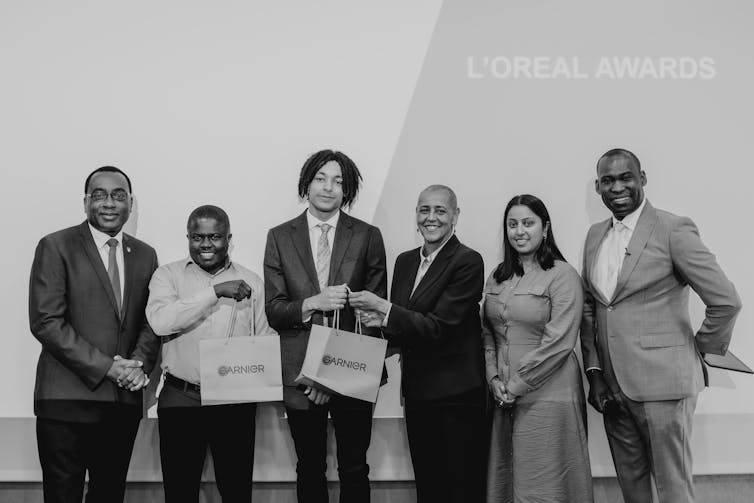
Group of people in black and white photo
Aspire showcase event, 2024.
ASPIRE, CC BY-NC-ND

A model for the future

Universities often call for increased diversity in postgraduate research. However, many rely on surface-level initiatives that do little to address structural barriers. The Aspire approach suggests a realistic alternative.

It is about adopting principles that make mentorship meaningful. This includes seeing students as whole people, not problems to be “fixed”. The programme values cultural knowledge and lived experience and invests time in building trust. It provides personalised guidance rather than one-size-fits-all workshops.

For institutions, the benefits extend beyond individual student success. A more diverse doctoral community enriches research, expands perspectives and strengthens the university’s connection to the society it serves.

The under-representation of Black students in UK doctoral programmes is often seen as a long-standing, stubborn inequality. But our findings show it is neither mysterious nor impossible to address. When mentorship is rooted in compassion, culture and community, it becomes a powerful tool for change.

Culturally grounded approaches like ubuntu and omoluabi do more than help students navigate an unfamiliar system. They reshape students’ sense of possibility. They also challenge universities to rethink the kinds of support that truly foster inclusion.

The Conversation

Ifedapo Francis Awolowo receives funding from Office for Students and Research England

ref. How African principles of community are helping Black students in the UK into PhD study – https://theconversation.com/how-african-principles-of-community-are-helping-black-students-in-the-uk-into-phd-study-271357