Do women board members make a company more innovative or risk averse? The answer is both, according to our recent study. It all depends on how the company performs relative to its goals.
Professors Małgorzata Smulowitz, Didier Cossin and I examined 524 S&P 1500 companies from 1999 to 2016, measuring innovation through patent activity. Patents reflect both creative output and risk-taking. They require significant investment in novel ideas that might fail, disclosure of proprietary information and substantial legal costs. In short, patents represent genuine bets on the future.
Our findings revealed a striking pattern. When companies performed poorly in relation to their goals, they produced fewer patents after more women joined their boards.
However, companies exceeding their performance targets saw increased patent output as their number of women directors grew. Similarly, when companies were financially flush, there were more patents generated when their boards had more women.
The situation changed when we examined radical innovations, those patents in the top 10% of citations. For these high-risk, high-reward innovations, the risk-averse effect of women board members dominated.
When a company’s performance fell below aspirations, there were fewer radical innovations as its board gained female members. We found no corresponding increase in radical innovations when performance exceeded goals.
One finding surprised us. We predicted that boards with more women would reduce innovation when companies approached bankruptcy. Instead, it was the opposite: Boards with more women actually increased patent output as bankruptcy loomed. This suggests that women directors may fight harder for a company’s survival through innovation when facing existential threats.
For companies and regulators pushing for greater board gender diversity, this research provides practical guidance. Companies performing well can expect increased innovation by adding women to their boards. These directors can bring diverse perspectives, improved decision-making and better resource allocation that translate into more patents.
Conversely, poorly performing companies can expect boards with more women to focus on stability over risky innovation. This isn’t necessarily negative.
Research shows that banks led by women were less likely to fail during the financial crisis, and companies with more women directors experience less financial distress. Reduced innovation during tough times may reflect prudent risk management rather than risk aversion.
Traditional theories predict that poor performance triggers risky searches for solutions. But boards with more women appear to prioritize organizational survival over uncertain innovation when performance suffers. They may assess that failed innovation attempts could worsen an already precarious situation.
This research also speaks to the “glass cliff” phenomenon, where women often join boards during crisis periods. Our findings suggest these directors may bring exactly what struggling companies need: careful risk assessment and focus on survival rather than potentially wasteful innovation spending.
What still isn’t known
We measured innovation through patents, but many innovations never become patents. How women directors affect other forms of innovation – such as copyrights, trade secrets and first-mover advantage – remains unclear.
What are the mechanisms driving the differences? Do women directors actively advocate for different innovation strategies? Do they change board discussion dynamics? Do they influence CEO and management team decisions indirectly? Future research needs to open the “black box” of boardroom decision-making.
Finally, the long-term consequences need examination. We measured patent output, but not whether the patents translated into commercial success or competitive advantage. Understanding whether the innovation patterns we documented ultimately benefit company performance would provide crucial insights for decision-makers.
The Research Brief is a short take on interesting academic work.
Stephen J. Smulowitz does not work for, consult, own shares in or receive funding from any company or organization that would benefit from this article, and has disclosed no relevant affiliations beyond their academic appointment.
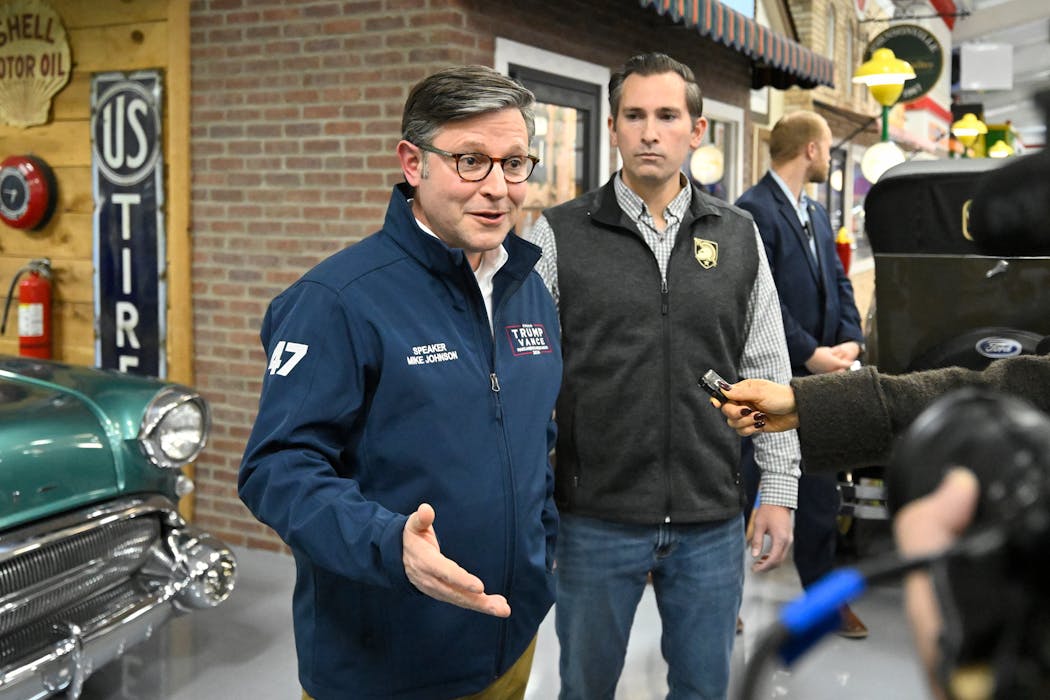
Hoping to preserve his narrow majority, U.S. House Speaker Mike Johnson campaigned alongside Matt Van Epps, who narrowly won a December 2025 special election in a strongly Republican district in Tennessee.AP Photo/John Amis
On Feb. 7, 2026, Chasity Verret Martinez won a special election to fill a vacant seat in the Louisiana House. That’s an outcome that might not mean very much to people outside of the state or even outside her Baton Rouge-area district.
Because fewer people turn out for special elections, they’re considered an early predictor of partisan enthusiasm heading into regularly scheduled elections. And with the 2026 midterm elections less than nine months away, analysts are already scrambling for indications of the likely outcome.
As a political scientist who studies congressional elections, I’m interested in the question of whether special elections can really tell us which way the political winds are currently blowing.
In the 2026 election cycle, as in previous ones, prognosticators and political professionals are looking to the outcomes of these intermittent races at various levels of government as a gauge of how voters are feeling about the two parties. And the results from the first 15 months of the second Trump administration appear to spell very bad news for the Republicans.
Setting a baseline
Since Election Day 2024, 88 special elections featuring candidates from both major parties have taken place for institutions including state legislatures and the U.S. House.
When analyzing the results of these races, it’s important to have figures to compare them to. After all, a Democrat just barely squeaking by in a state legislative race may not look very impressive on its face – but if that race took place in the rural heart of a red state, it could raise hackles among Republicans.
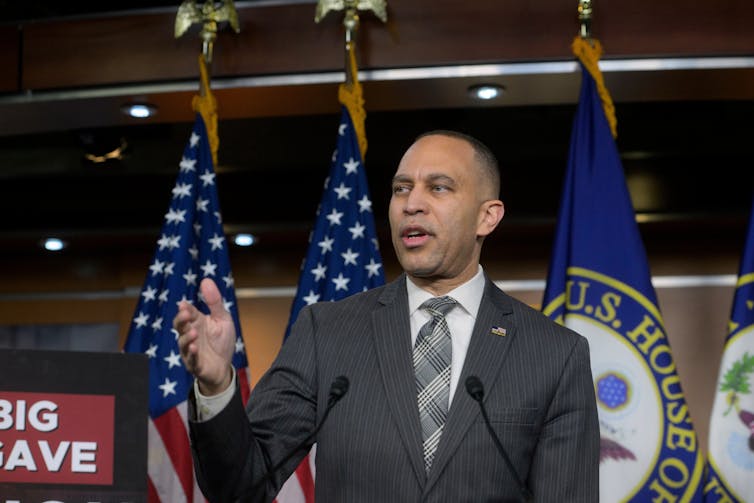
New York Democrat Hakeem Jeffries would likely become the first Black U.S. speaker of the House if Democrats win a majority in 2026. AP Photo/Rod Lamkey
Most political analysts agree that the best available comparison point for special elections are the results for the most recent presidential election in that same district. There are a few reasons for this.
Second, using presidential results creates the same baseline for all races. By comparing special election results to the prior election environment, all the special election results get compared to the same standard.
Finally, and perhaps most importantly, recent midterm elections have typically served as a referendum on the party in power, particularly the president. In trying to measure how voters are reacting to Trump’s second term, it makes sense to measure their behavior against the last time Trump was on the ballot.
Conversely, in 2018 – like this year, a midterm following a Trump election – Democrats bested Republicans by 8 percentage points in November, after overperforming Hillary Clinton’s 2016 margins in special elections throughout the previous two years by 9 percentage points on average.
The 2024 cycle is a clear exception to this pattern of regular elections closely following special election results: Prior to the presidential election, Democrats outperformed in special elections by an average of 4 percentage points but ended up losing nationally by 3 percentage points in November.
Like special elections, midterm contests tend to turn out fewer but more engaged voters than presidential years. Therefore, it may be that special elections are more predictive of midterm results than presidential cycles. At any rate, if previous midterm outcomes are any guide, the numbers being posted by Democrats in special elections so far in the 2026 cycle are impossible to ignore.
On average, they’re running ahead of Harris’s 2024 margins by a whopping 13 percentage points. That’s better than they did in 2018, when they ultimately picked up 40 seats in the House and seven governorships across the country.
What’s different about specials?
Democrats, however, may not want to pop the champagne corks just yet. Many roadblocks remain in their quest to take back control of Congress. For one thing, the U.S. Senate map remains a difficult one for Democrats. Even if they end up creating a 2018-like election environment with an unpopular president, many Senate contests are taking place in solidly red states.
It’s also always worth bearing in mind that there’s no telling how the events of the next nine months might reshape public opinion.
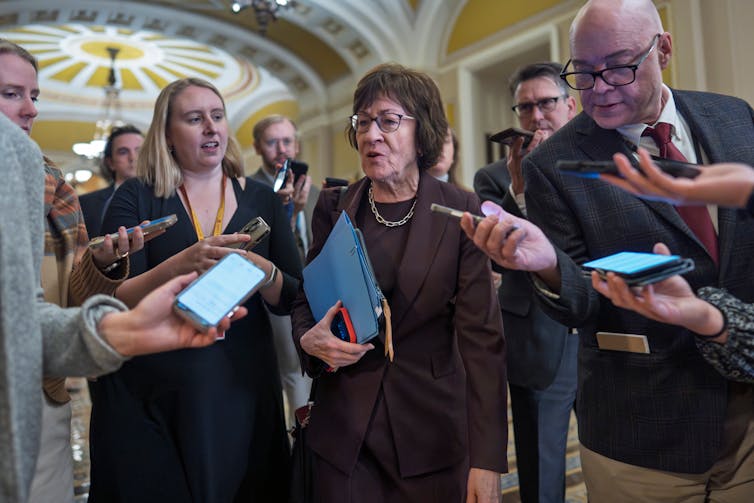
U.S. Sen. Susan Collins of Maine has proved an elusive target for Democrats in a state they carry at the presidential level. AP Photo/J. Scott Applewhite
And special elections, while useful metrics, are far from perfect barometers of public opinion. They take place at different times, and could be just as reflective of hyperlocal factors, such as flawed candidates, as they are of nationalized partisan conditions.
Special elections tend to have far lower turnout than regular midterm or presidential contests. It’s also difficult to tell whether overperformance is due to highly motivated partisans or persuasion of independents and voters from the other party.
Using all the tools available
Still, special elections do have key advantages over traditional polling. Although polls do their best to approximate voters’ political attitudes, elections reveal these attitudes through voters’ actual, observed behavior – exactly the type of behavior that analysts are trying to predict in November.
In the end, special elections are just one piece of the prediction puzzle. But the other puzzle pieces are also spelling out potential bad news for the GOP.
The generic ballot, a standard polling question that asks voters’ intent to vote for one party or the other in November without naming specific candidates, has the GOP about 6 percentage points behind the Democrats. Trump’s approval rating, meanwhile, continues to hover below 40%.
There’s no telling for sure whether these indicators will turn out to be truly predictive until November. But all of them should be sounding alarm bells for Republicans.
Charlie Hunt does not work for, consult, own shares in or receive funding from any company or organization that would benefit from this article, and has disclosed no relevant affiliations beyond their academic appointment.
Source: The Conversation – UK – By Tim Penn, Lecturer in Roman and Late Antique Material Culture, University of Reading
For ancient Romans, many of the gestures now associated with Valentine’s Day would be unfamiliar, if not completely puzzling. Love and desire were not confined to a single day, nor expressed through standardised tokens of romance. There were no cards written (or forgotten), flowers purchased (at inflated prices) or eateries teaming with lovers. Instead, intimacy was negotiated through daily social encounters, leisure activities and moments of shared experience.
Ancient evidence – texts, art, and material remains – show that games were everywhere in the Roman world. We’ve been studying ancient board games together since 2018 and our work has found that games brought ancient people together in many different situations, including ones that encouraged closeness, flirtatious competition and prolonged interaction. Often these games, played with simple equipment, could be deeply meaningful and memorable for those who played together.
Roman games included games of strategy played without dice, such as ludus latrunculorum (“the game of the little soldiers”). They also played games which mixed skill and chance by using dice (even though playing dice games was often prohibited by law, like ludus duodecim scriptorum (“the game of 12 lines”), an ancestor of modern backgammon.
There are lessons to be learnt from ancient approaches to these love games. Today, people who are dating report dissatisfying or even dangerous gaps between romantic expectations and reality, as apps and screens compress intimacy into emojis or fleeting swipes.
The 1st-century Roman poet, Ovid, explains the importance of play for attracting and keeping a lover in his poetic manual, The Art of Love. One of his top tips is to play boardgames, and, importantly, to play to lose.
Ovid tells men: “If she is gaming and throwing the ivory dice with her hand, throw amiss and move your throws amiss”. In other words, try and play badly, so that the girl you are trying to charm wins.
Ovid also suggests that a woman in search of a lover should learn how to play, and “should know the throws of the dice, and your powers, O flung counter”, as knowledge of gaming with dice and counters was a key skill for hopeful lovers.
Playing for love, according to Ovid, is never purely about winning: it is about connection, attention, and spending time together.
You can see the ways that people in the ancient world used games to flirt in images too. A bronze mirror from Praeneste (modern Palestrina), an Italian town outside Rome and probably dating to the 2nd or 3rd century BC, shows a young couple sitting close together and wearing rather limited clothing while playing a board game. This game is possibly a larger variant of a dice-based one known as pente grammai (five lines), in which players compete to position their pieces on the centre-most line.
To help us understand how much the game is bringing them together, there is a useful dialogue above their heads. She’s saying something like, “I shall beat you,” to which he replies flirtatiously, “I expect you will.” So, the game is less about winning than about what happens around it: the proximity, the banter, and the shared moment of play that brings the couple together.
Returning to the present day, board games offer a striking counterpoint to many of today’s expressions of intimacy. Unlike digital forms of interaction, board games require presence: players gather around a shared surface, negotiate rules, take turns, and respond to one another spontaneously.
Board games structure attention and time, encouraging sustained engagement rather than fleeting exchange, and create opportunities for conversation, competition, and collaboration. In doing so, they bring people together in a shared social experience – one that foregrounds presence, interaction, and mutual awareness.
As is often the case, experience brings the theory to life. For eight years we have been researching ancient board games, so in a different way they brought us together. Somewhere along the line, we got married. Perhaps the Romans were on to something, after all.
Looking for something good? Cut through the noise with a carefully curated selection of the latest releases, live events and exhibitions, straight to your inbox every fortnight, on Fridays. Sign up here.
Tim Penn received funding for some of the underlying research in this article from the Society of Antiquaries of London.
He is the co-leader of Working Group 2 ‘Cultural Heritage of Games’ for COST ACTION CA2214: Computational Techniques for Tabletop Games Heritage.
Summer Courts is the Science Communications Coordinator for COST ACTION CA2214: Computational Techniques for Tabletop Games Heritage.
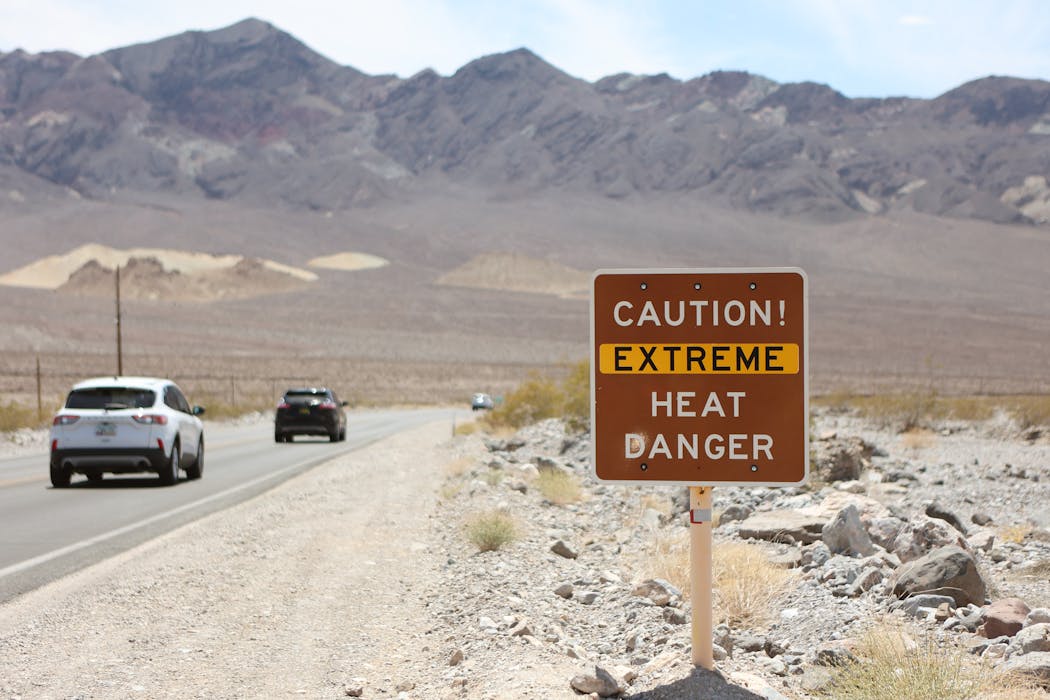
Rising global temperatures are increasing the risk of heat stroke on hot days, among many other human harms.Ronda Churchill/AFP via Getty Images
The Trump administration took a major step in its efforts to unravel America’s climate policies on Feb. 12, 2026, when it moved to rescind the 2009 endangerment finding – a formal determination that six greenhouse gases that drive climate change, including carbon dioxide and methane from burning fossil fuels, endanger public health and welfare.
But the administration’s arguments in dismissing the health risks of climate change are not only factually wrong, they’re deeply dangerous to Americans’ health and safety.
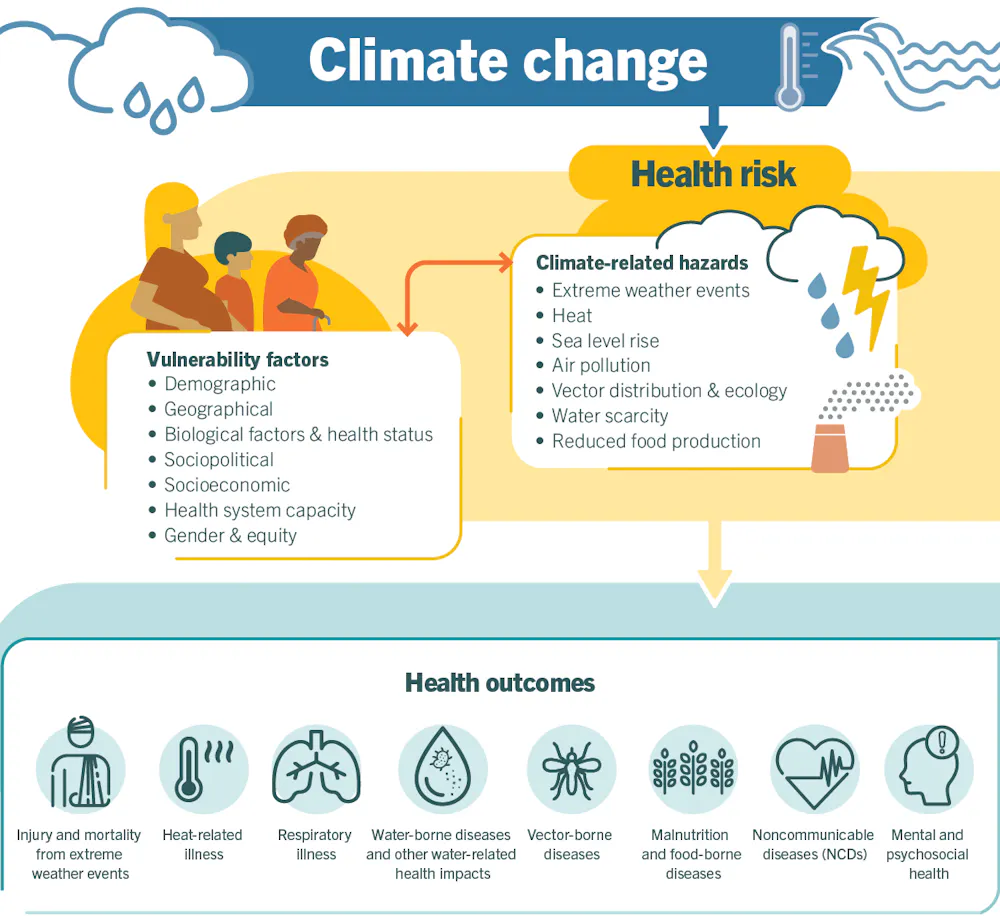
As physicians, epidemiologists and environmental healthscientists, we’ve seen growing evidence of the connections between climate change and harm to people’s health. Here’s a look at the health risks everyone face from climate change.
Greenhouse gases from vehicles, power plants and other sources accumulate in the atmosphere, trapping heat and holding it close to Earth’s surface like a blanket. Too much of it causes global temperatures to rise, leaving more people exposed to dangerous heat more often.
Most people who get minor heat illnesses will recover, but more extreme exposure, especially without enough hydration and a way to cool off, can be fatal. People who work outside, are elderly or have underlying illnesses such as heart, lung or kidney diseases are often at the greatest risk.
Heat deaths have been rising globally, up 23% from the 1990s to the 2010s, when the average year saw more than half a million heat-related deaths. Here in the U.S., the 2021 Pacific Northwest heat dome killed hundreds of people.
Climate scientists predict that with advancing climate change, many areas of the world, including U.S. cities such as Miami, Houston, Phoenix and Las Vegas, will confront many more days each year hot enough to threaten human survival.
Increased flooding carries health risks, including drownings, injuries and water contamination from human pathogens and toxic chemicals. People cleaning out flooded homes also face risks from mold exposure, injuries and mental distress.
Flooding from hurricanes and other extreme storms can put people at risk of injuries during the cleanup while also triggering dangerous mold growth on wet wallboard, carpets and fabric. This home flooded up to its second flood during Hurricane Irma in 2017. Sean Rayford/Getty Images
Climate change also worsens droughts, disrupting food supplies and causing respiratory illness from dust. Rising temperatures and aridity dry out forests and grasslands, making them a setup for wildfires.
Air pollution
Wildfires, along with other climate effects, are worsening air quality around the country.
Because they are cold-blooded organisms, insects are directly influenced by temperature. So with rising temperatures, mosquito biting rates rise as well. Warming also accelerates the development of disease agents that mosquitoes transmit.
As global temperatures rise, regions are becoming more suitable for mosquitoes to transmit dengue virus. The map shows a suitability scale, with red areas already suitable for dengue transmissions and yellow areas becoming more suitable. Taishi Nakase, et al., 2022, CC BY
New York and many other cities now open cooling centers during heat waves to help residents, particularly older adults who might not have air conditioning at home, stay safe during the hottest parts of the day. Angela Weiss/AFP via Getty Images
Young children, older adults, pregnant women and people with preexisting medical conditions are among the highest-risk groups. Lower-income people also face greater risk because of higher rates of chronic disease, higher exposures to climate hazards and fewer resources for protection, medical care and recovery from disasters.
The evidence is clear: Climate change endangers human health. But there’s a flip side to the story.
When governments work to reduce the causes of climate change, they help tackle some of the world’s biggest health challenges. Cleaner vehicles and cleaner electricity mean cleaner air – and less heart and lung disease. More walking and cycling on safe sidewalks and bike paths mean more physical activity and lower chronic disease risks. The list goes on. By confronting climate change, we promote good health.
To really make America healthy, in our view, the nation should acknowledge the facts behind the endangerment finding and double down on our transition from fossil fuels to a healthy, clean energy future.
Jonathan Levy receives funding from the National Institutes of Health, the Federal Aviation Administration, the City of Boston, the Masschusetts Office of the Attorney General, and the Mosaic Foundation.
Howard Frumkin has no financial conflicts of interest to report. He is a member of advisory boards (or equivalent committees) for the Planetary Health Alliance; the Harvard Center for Climate, Health, and the Global Environment; the Medical Society Consortium on Climate Change and Health; the Global Consortium on Climate and Health Education; the Yale Center on Climate Change and Health; and EcoAmerica’s Climate for Health program, and chairs the National Academy of Medicine Committee on the Roadmap for Transformative Action to Achieve Health for All at Net-Zero Emissions—all voluntary unpaid positions.
Jonathan Patz receives funding from the National Institutes of Health. He is affiliated with the Medical Society Consortium for Climate and Health, and its affiliate Healthy Climate Wisconsin.
Vijay Limaye is affiliated with the Natural Resources Defense Council.
An increasing number of people are dying of colorectal cancer at a young age, including those as young as 20. Actor James Van Der Beek, who was diagnosed with colorectal cancer in 2023, died at age 48 on Feb. 11, 2026, bringing the disease back into the limelight.
The Conversation U.S. asked gastrointestinal oncologist Christopher Lieu and cancer researcher Andrea Dwyer to explain what’s known about early-onset colon cancer and what young people can do to protect themselves.
Why are more young people getting colorectal cancer?
Researchers have identified a number of factors associated with increasing numbers of young people developing colorectal cancer, but there is no one clear answer that explains this trend.
Lifestyle factors like ultra-processed foods and alcohol, as well as lack of exercise, have been linked to early-onset colorectal cancer. However, these are correlations that aren’t proven to be the cause of colorectal cancer in young adults.
Many researchers are focusing on the gut microbiome, which is an ecosystem of microorganisms in your gut that helps your body digest food and carry out other important functions. When the microbes in the gut are out of balance – a condition called dysbiosis – this causes a disruption that allows for inflammation and negative health effects, including increased cancer risk.
What increases your risk of developing colorectal cancer?
For example, someone’s diet plays a role in cancer risk. Eating a lot of red meat and processed foods and not enough dietary fiber can increase your risk of colorectal cancer. Alcohol also causes cancer – even having less than one drink a day can increase your cancer risk.
Smoking, obesity and lack of exercise are other factors that increase cancer risk.
Colorectal cancer is rising among young people.
What’s the survival rate for young people with colon cancer?
There is a lot of debate among researchers on whether there are differences in survival rates between those with early-onset colorectal cancer survival and those who develop the disease after age 50.
Finding cancer at an early stage can lead to five-year survival rates as high as 80% to 90%. When cancer is detected at an advanced stage where it has spread to other parts of the body, survival rates are closer to 10% to 15%.
One study found that young patients with metastatic colon cancer had a slightly lower survival rate compared with those age 50 or older.
What are early symptoms of colorectal cancer?
The most common signs and symptoms for early-onset colorectal cancer are blood in the stool, abdominal pain and a change in bowel habits, or any combination of these conditions. Unexplained anemia, or low red blood cell levels, is another potential symptom. These are warning signs that people should not ignore.
Having these symptoms does not necessarily mean you have colorectal cancer, but they are worth discussing with a physician. In some cases, your doctor may request a colonoscopy for further evaluation.
How does colon cancer screening work?
The first step is to have a conversation with your health care team about which test is right for you. Understanding what your risk category is helps guide screening, prevention and lifestyle changes to reduce your likelihood of colorectal cancer.
People with an average risk for colorectal cancer typically have no personal or significant family history of colorectal cancer, hereditary cancer, precancerous polyps or inflammatory bowel disease. They have several options for screening, including stool tests that check for blood and abnormal cells, as well as imaging scans to visualize the colon and rectum. Screening is recommended to begin at age 45 and should continue at regular intervals until age 75.
People with a high risk of colon cancer typically have a personal or family history of colorectal cancer, hereditary cancer or inflammatory bowel disease. They may also have several lifestyle risk factors. Colonoscopy is the only recommended screening test for those with high risk, and earlier and more frequent screening may be necessary.
How can you reduce your risk of colon cancer?
Communication and action are key. Talk to your health care team about your personal risk based on your age, family history and any signs and symptoms to ensure you’re matched with the screening exam and test best for you.
Take charge of your health. There are lifestyle factors you can control to reduce your personal risk of colorectal cancer. These include regular physical activity; a diet high in fruit, vegetables and fiber, and low in processed meats; and maintaining a healthy weight. Moderating or eliminating alcohol and tobacco use can also reduce your colorectal cancer risk.
Share information with loved ones and your health care team. Knowing your personal and family history of polyps or colorectal cancer and communicating it with your doctor can help ensure you get the right test at the right time. Sharing your personal history could save the lives of your children, siblings and parents.
The authors do not work for, consult, own shares in or receive funding from any company or organization that would benefit from this article, and have disclosed no relevant affiliations beyond their academic appointment.
Source: The Conversation – UK – By Jonathan Este, Senior International Affairs Editor, Associate Editor, The Conversation
This article was first published in The Conversation UK’s World Affairs Briefing email. Sign up to receive weekly analysis of the latest developments in international relations, direct to your inbox.
Before he sent his war machine into Ukraine nearly four years ago, the Russian president, Vladimir Putin, talked of the need to rid the country of the “neo-Nazi cabal” which was holding it hostage and perpetrating a “genocide” of Russian speakers in eastern Ukraine.
Putin has doubled down on this regularly during the conflict, refusing to recognise Ukraine’s sitting president, Volodymyr Zelensky, as a legitimate negotiating partner and repeatedly calling for elections. He seems to have found a receptive ear in Donald Trump, who has repeated this call several times, usually after a phone chat with the Russian leader.
Now it’s being reported that Zelensky is planning for elections and a referendum on the Trump peace proposal, after the US insisted he do both by May 15 or lose US security guarantees. Zelensky has repeatedly pointed out that the Ukrainian constitution bars elections while martial law is in effect.
It’s easy to see why. As it stands, 20% of Ukraine’s territory is occupied by Russia. Do the people living on that land get a vote? How about the millions of displaced people – either in Ukraine or in the enforced diaspora? How to organise ballots for the hundreds of thousands of troops on active duty? The logistics are mind-boggling.
But it’s not just logistics. Stefan Wolff, an expert in international security at the University of Birmingham, and Tetyana Malyarenko of the University of Odesa present five reasons why holding a poll and referendum are a problem, given the present circumstances.
On the face of it, they argue, it feels as if the US president is once again coming up with a plan that favours Russia over Ukraine. But given the impossibility of organising these votes under the present circumstances, let alone providing for what would happen if, as seems likely, the people vote for Zelensky and against the Trump peace deal, this might actually play into the hands of Kyiv and its allies. Apart from anything else, the process will buy them some time to come up with a new strategy that will take into account Washington’s role as the most unreliable of partners.
Having said that, the phrase “if the people vote for Zelensky” is doing some heavy lifting here. The fact is that, four years into an existential struggle, Ukrainians are exhausted and morale is taking a beating in the face of relentless Russian bombardment. Zelensky, who was voted into power with 74% of the vote in 2019 on a platform of fighting corruption has seen some of his closest political allies embroiled in massive corruption scandals.
The fact that the most recent scandal, which saw his chief of staff resign, related to allegations of graft involving Ukraine’s biggest energy supplier was particularly damaging, given that many Ukrainians are living without power in the coldest winter in a decade, thanks to Russian bombing.
So Zelensky’s reelection is not a foregone conclusion. In fact, two of his close associates – Valerii Zaluzhnyi, the former chief of Ukraine’s armed forces and now ambassador to the US, and Kyrylo Budanov, who the Ukrainian president recently appointed as his chief of staff – would both be popular candidates. Neither has said they would run for office, but what politician ever does say that – until they do?
Jennifer Mathers, an expert in Russian and eastern European politics at Aberystwyth University, takes us through the possible challengers.
To Washington, where members of Congress have started to sift through some of the 3 million documents from the “Epstein files” released by the Department of Justice at the end of January. Observers have commented that, unlike in Europe, where the fallout has included considerable political splashback for some important people, reaction in the US – so far at least – has been comparatively muted.
Of course, the unredacted files have only just been made available to US lawmakers. So it’s hard to gauge how people are going to react when big names begin to be linked with sleazy acts – whether that might be sexual, political or business-related.
Releasing the files is a gamble for the US Department of Justice and the attorney-general, Pam Bondi, writes Katie Pruszynski, an analyst of US politics at the University of Sheffield. While the potential for scandal is huge, the US public is having to digest so many other stories. This year alone, the US has conducted a raid on Venezuela and abducted its president. There have been threats against Greenland and Canada. The activities of ICE and other immigration agencies in US cities, particularly in Minneapolis where two people have been shot dead, have also rightly dominated headlines.
On top of that, millions of people have seen their health insurance premiums skyrocket after the subsidies established under Obamacare lapsed on January 1. People may simply not have the mental bandwidth to take it all in.
But all this might change once the unredacted files are made public. The key thing Republicans will be hoping for is that any furore surrounding the Epstein scandal will die down before the midterm elections in November.
Meanwhile, as Pruszynski notes, Epstein’s victims – many of whose names were not redacted, despite the US Congress passing a law to that effect – are still waiting for justice.
The release of victims’ names raises an interesting side issue: who decides what information is released and what is redacted? Matthew Mokhefi-Ashton explains the competing legal principles which balance the public’s right to know with people’s right to privacy.
When the US secretary of state, Marco Rubio, was taking questions after the raid on Caracas on January 3, he appeared to relish the idea of the US turning its attention to Cuba, commenting that: “If I lived in Havana, and I was in the government, I’d be concerned – at least a little bit.” His boss appeared to rule out direct intervention, at least for now, saying: “Cuba is ready to fall … I don’t think we need any action. Looks like it’s going down. It’s going down for the count.”
He may not be far off the mark, given that Cuba is fast running out of oil. The situation there is so parlous that at least one air carrier, Air Canada, has cancelled all flights to Cuba because it can’t be sure that its aircraft would be able to refuel. This is a disaster. Cuba is heavily dependent on tourism for the foreign currency is so desperately needs.
Since Trump returned to power a year ago, the US has made it nigh on impossible for Cuba to source enough fuel to meet its energy needs. Now he is essentially saying the communist government of Miguel Díaz-Canel must negotiate a deal (on American terms) or else.
But whatever Rubio, who has nursed a career-long obsession with his parents’ home country of Cuba, may want to see, achieving regime change on the Caribbean island will not be easy, writes Nicolas Forsans of University of Essex. Forsans sketches out what a US deal with Cuba that falls short of replacing the government might look like.
Sign up to receive our weekly World Affairs Briefing newsletter from The Conversation UK. Every Thursday we’ll bring you expert analysis of the big stories in international relations.
Source: The Conversation – Global Perspectives – By Mehmet Ozalp, Professor of Islamic Studies, Head of School, The Centre for Islamic Studies and Civilisation, Charles Sturt University
The recent unrest in Iran, with the third mass protests in the past six years, has left the theocratic regime wounded but not out.
Iran is no stranger to such unrest. In 1979, similar circumstances led to the Iranian revolution. However, Iranians soon became disappointed that the revolution did not deliver what they had been promised. So while the ideology of the revolution collapsed, the regime remains in place.
To understand this, we need to go back to the emergence of modern Iran.
The recent popular unrest reflects the Iranian people’s desire for self-determination, freedom and progress. The fight for self-determination goes back to the late 19th century and the rise of the Persian Constitutional Revolution.
In 1906, this push succeeded in forcing Qajar Shah to instate a constitution and one of the first parliaments in the Muslim world.
Later, in the turbulent aftermath of the first world war, Shah Mohammad Reza Pahlavi led a military coup establishing modern Iran. He was an authoritarian leader, in keeping with the trend of the 1920s and 30s. At the same time, he also tried to modernise Iran with a series of reforms and developments.
During the second world war, Pahlavi was deposed with the Anglo-Soviet invasion of Iran in 1941. Iran was too important geopolitically – for the war in Russia against the Nazis and Indian Ocean against the Japanese – with a constant and free supply of oil for the British war machine.
This importance did not wane after the war. Now, the Cold War dominated geopolitics and Muslim countries found themselves in the middle of it. Iran and Turkey were key countries where communist Soviet expansion efforts were intensified.
In response, the United States provided both countries with economic and political support in return for their membership in the democratic western block. Turkey and Iran accepted this support and became democratic in 1950 and 1951, respectively.
Later in 1951, Mohammad Mosaddeq’s National Front became the first democratically-elected Iranian government. Mosaddeq was a modern, secular-leaning, progressive leader who was able to gain the broad support of both the secular elite and the Iranian ulama (Islamic scholars).
He was helped by a growing public disdain for Pahlavi monarchy and rising Iranian anger at British exploitation of their oil fields. Iranians were only receiving 20% of the profits.
Mosaddeq made the bold move to address this issue by nationalising the British-owned Anglo-Iranian Oil Company (AIOC). This did not work out in his favour, as it attracted British and US economic sanctions, crippling the Iranian economy.
In 1953, once again, Iranian people were denied self-determination. The Mosaddeq government was replaced in a military coup organised by the CIA and British intelligence. The shah was returned to power and the Anglo-Iranian Oil Company became BP, British Petroleum, with a 50-50 divide of profits.
Tanks on the streets of Tehran, 1956. Wikicommons
This intervention sent the unintended message that a democratically elected government would be toppled if it did not fit with Western interests. This narrative continues to be the dominant discourse of Islamist activists today, in Iran and beyond.
The Islamic Revolution
Between 1953 and 1977, the shah relied heavily on the US in his efforts to modernise the army and Iranian society, and transform the economy through what he called the White Revolution.
But it came at a hefty cost. Wealth was unequally distributed, with a large underclass of peasants migrating to urban centres. The economy could not keep up with the growing population, unplanned urbanisation and lack of an open economy.
Having tasted democracy for a brief period during 1951–53, many Iranians wanted democratic rights and economic progress. This uprising resulted in large-scale political suppression of dissent.
Disillusioned religious scholars, such as Ayatollah Ruhollah Khomeini, were alarmed at the top-down imposition of a Western lifestyle, believing Islam was being completely removed from society.
In a 1978 interview with a US news program, Khomeini characterised the shah’s regime as one that deprived Iranians of independence and freedom, stating that “we don’t have the true independence, we are suffering […] we want the liberty of our people.”
Ironically, Iranian protesters say almost the same things about the current regime created by Khomeini: that it is the cause of their suffering and lack of freedoms.
The revolution promised true independence, freedom, a more Islamic social and political order, and greater economic prosperity. The failure to deliver on these promises is at the heart of the popular unrest in Iran today.
The 1979 Islamic Revolution ended Iran’s strategic alignment with the US and the West, leading to decades of political and economic isolation. While the Islamic Republic maintained its ideological stance of “neither East nor West”, sustained Western sanctions gradually pushed Iran closer to Russia and China.
The 45 years of a theocratic regime have been equally or even more oppressive than the shah’s rule. People’s freedoms and rights have regressed significantly. While strict public dress codes for women remain in law and are still enforced — sometimes harshly, as seen in the 2022 protests following the death of Mahsa Amini — compliance has loosened over time, with many women pushing the boundaries in major urban centres.
The most important premise of Islamism – making society more religious through political power – has also failed. Nearly two-thirds of Iranians today were born after the 1979 revolution. Yet, a 2020 GAMAAN survey found state-driven Islamisation has not produced a more religious society. Identification with organised religion appears to have declined, particularly among younger people.
Khomeini and his supporters promised economic prosperity and to end the gap between rich and poor. Today, the Iranian economy is in poor shape, despite the oil revenues that hold it back from the brink of collapse. People are unhappy with high unemployment rates, hyper-inflation and never-ending sanctions. They have little hope for the country’s economic fortunes to turn.
As a result, Iranians have lost hope in the ruling elite’s ability to ensure a brighter future.
Will the theocratic regime collapse any time soon?
So, the main ideology of the revolution has collapsed. What about the regime itself?
For any regime to collapse, including the current one in Iran, four key forces and factors, or a combination of them, have to exert sufficient force: popular mass protests, an army coup, external interventions and division among the ruling elite.
Iran has seen many mass protests in the past 40 years. While these did not bring down the regime, their frequency is increasing.
The November 2019 protests, triggered by a sudden fuel price hike, rapidly spread across the country. The 2022–23 protests, sparked by the death of Mahsa Amini in morality police custody, evolved into a sustained nationwide movement under the slogan “woman, life, freedom”. Most recently, the 2025–26 protests have been driven primarily by a severe economic downturn.
But protests are not sufficient to cause a collapse of the regime. They are usually met with countrywide internet blackouts and violent crackdowns leading to hundreds of deaths. This happened again in the recent unrest, with the death toll reaching at least 5,000.
International interventions
Iran has been under extensive economic sanctions for decades, yet these have failed to bring about major political change or weaken the Islamic Republic’s hold on power. In the aftermath of the revolution, Iraq — backed politically and materially by United States and its allies — invaded Iran in 1980 in a bid to contain and possibly topple the new regime before it consolidated. After eight years of devastating war, this effort also failed to dislodge the Islamic Republic.
Other countries have launched short military interventions in the past, with the last one by the United States and Israel in June 2025 targeting the army headquarters and nuclear facilities. These did not lead to a regime change.
It seems anything short of a full-scale war or land invasion is unlikely to lead to a regime change in Iran. And we know from the experience in Iraq and Afghanistan that such interventions don’t end well.
Could Iran’s Islamic Revolutionary Guard Corps (IRGC) stage a coup? It seems highly unlikely. The IRGC is structurally oriented toward preserving and reshaping the system from within, not overthrowing it. Created as a parallel force to prevent coups, the IRGC is intentionally kept fragmented, bound by layered chains of command, and vertically loyal to the supreme leader, making unified action very difficult.
Then, there is the potential for a leadership struggle within the regime itself. For now, this is not a factor, but it could be soon if the elderly Supreme Leader Ali Khamenei dies.
Khamenei, who succeeded Khomeini in 1989, is Iran’s longest-serving leader. His power comes from being part of the original revolution, drawing respect within the leadership and supporters in the government.
He is 86 years old and has health issues. When he goes, there will be many vying for the role. Whoever becomes leader is likely to purge those who supported others, leading to political persecution and instability at the top.
It is very hard to predict when and if the current Islamic Republic will collapse. Iran may continue as is, but moderate over time. Such a trajectory is more likely to emerge through greater integration with the international community rather than continued isolation through sanctions.
Hard social, political and economic realities have an uncanny ability to test and smooth ideologies. If the regime stays hardline and unwilling to evolve, change is inevitable, and will probably occur at the least expected moment.
Mehmet Ozalp is the Executive Director of ISRA Academy.
Source: The Conversation – USA – By Jamey Jacob, Regents Professor of Aerospace Engineering and Executive Director, Oklahoma Aerospace Institute for Research and Education, Oklahoma State University
When the Federal Aviation Administration closed the airport in El Paso, Texas, and the airspace around it on Feb. 10, 2026, the cause was, ironically, the nearby use of a technology that could be key to keeping airports and airspace open and safe.
According to news reports, Customs and Border Protection officials used a Department of Defense anti-drone laser weapon to target what they identified as a drone crossing the border from Mexico. The FAA closed the El Paso airport and airspace out of concern that the weapon inadvertently posed a threat to air traffic in the area.
The targeted drone turned out to be a party balloon, though U.S. officials claim that drug cartels based in Mexico have flown drones at the U.S.-Mexico border. The episode highlights the need for counter-drone technologies, the state-of-the-art systems used by the U.S. military, and the challenges to safely and effectively countering drones, which are also known as uncrewed aircraft systems.
I am an aerospace engineer and director of the Counter-UAS Center of Excellence at Oklahoma State University, where we develop and evaluate technologies to detect, identify and counter drone threats. The military laser weapon CBP that personnel used near El Paso is an example of one of three categories of counter-drone technologies: directed energy weapons. The other two are radio frequency jamming and kinetic, or physical, weapons like missiles and nets.
The emerging threat
Starting in 2015, the ISIS terrorist group modified commercial off-the-shelf drones to drop grenades and mortars on U.S. troops in Iraq and Syria, who had little way to combat the threat. This started the trend of modifying consumer drones for military purposes that continues to this day on the Russian-Ukrainian front lines.
While military bases ostensibly have some protective capabilities, critical U.S. infrastructure such as airports and power plants have few methods to track, let alone defend against, drones. For example, in 2018, traffic at London Gatwick International Airport in the U.K. was shut down for three days because of an unidentified drone in the airport’s airspace. Hundreds of flights were canceled, affecting over 100,000 passengers.
Sites such as civilian and military airports, power plants and stadiums are vulnerable to drone flights, both from malicious and negligent operators. Drone flight over open stadiums such as those hosting upcoming FIFA World Cup soccer matches are banned by the FAA. But the ban wouldn’t prevent an errant civilian drone or a drone used in a terrorist attack from entering a stadium and potentially causing serious harm to spectators.
A drone flies near a small airplane in a test at Oklahoma State University. Jamey Jacob
On June 1, 2025, Ukrainian forces deployed more than 100 “kamikaze” drones deep in Russian territory in an attack labeled Operation Spiderweb that damaged a significant portion of Russia’s bomber fleet. There is little stopping something like this from happening in the U.S.
To address this threat, companies are evaluating numerous ways to track, identify and, most importantly, defeat drones and protect critical U.S. infrastructure. At present, however, there is no one-size-fits-all solution.
Counter-drone technologies
Radio frequency waves that both track and jam drones have become widely used in the Russia-Ukraine war. Like all remote control devices, drones use radio frequencies to control flight and monitor video coming from the drone camera. Detectors can track these radio frequency signals to determine a drone’s location.
Devices that emit radio frequency signals can be used to block, or jam, communications between drones and their operators or send false, or spoofed, signals. Jamming or spoofing a drone typically causes it to enter into a “return to home” mode and leave the defended area. Radio frequency systems are helpful in situations where a low-impact response is required, because they prevent drones from completing their intended mission without causing physical damage to them.
However, this doesn’t necessarily work if a drone is operating in a “run silent” mode by not transmitting information back to a remote operator. Similarly, jamming GPS can cause a drone to lose its ability to navigate using the satellite system, but this also blocks GPS signals for other users. Drones can also navigate without GPS, with less accurate techniques such as following terrain with cameras or the dead reckoning approach commonly used by pilots.
Directed energy systems, on the other hand, use high-energy lasers or microwave beams to disable drones. These systems work by directing a concentrated beam of energy toward an incoming drone. A laser or microwave can heat components rapidly until the drone becomes inoperative. A laser can also disable a drone’s camera, disabling its surveillance capability. Additionally, because these systems use energy beams, they can engage multiple drones at once.
However, fast-moving drones may be difficult for the weapons to target, and the cost of such systems makes them prohibitively expensive for widespread use.
Kinetic systems involve physically intercepting drones to neutralize them. This category includes everything from net-carrying interceptor drones to traditional projectile weapons, such as firearms and missiles. Kinetic systems physically disable or capture drones, making them particularly useful in scenarios where it is necessary to quickly remove drones from sensitive areas or when the drone presents an immediate threat.
However, because a damaged aircraft can crash in unpredictable locations, these systems may be more effective in battlefields where falling debris is less likely to cause unwanted damage on the ground.
The U.S. military uses several counter-drone systems to defend against small drones.
Swiss cheese safety
Together, these three types of counter-drone technologies – radio frequency, directed energy and kinetic – provide a comprehensive tool kit for addressing the diverse threats posed by unauthorized drones. However, there is no single ideal solution to counter these threats.
To maximize safety, the Swiss cheese model is often the best approach. In this analogy, each defensive strategy is a slice of the familiar holey cheese. While some threats may pass through a hole in one layer, the next layer can capture what passes through. This way, a drone making it through the weaknesses in one system can be defeated by the next slice of cheese.
Jamey Jacob receives funding from the Depts. of Defense and Homeland Security to evaluate Counter-UAS capabilities and UAS threats. He is affiliated with AUVSI, the Association of Unmanned Vehicle Systems International (AUVSI).
In 2009 the U.S. Environmental Protection Agency formally declared that greenhouse gas emissions, including from vehicles and industry, endanger public health and welfare. The decision, known as the endangerment finding, was based on years of evidence, and it has underpinned EPA actions on climate change ever since.
The Trump administration is now tearing up that finding as it tries to roll back climate regulations on everything from vehicles to industries.
“This is as big as it gets,” EPA Administrator Lee Zeldin said in announcing with President Donald Trump on Feb. 12, 2026, that the administration had “terminated” the endangerment finding. Zeldin argued that the finding had “no basis in law.” Trump, smiling next to him, talked about the benefits of fossil fuels and said the finding that greenhouse gas emissions endanger public health and welfare “had no basis in fact. None whatsoever.”
Transportation is the nation’s leading source of emissions, yet the federal government aims to roll back vehicle standards and other regulations written to help slow climate change. Kevin Carter/Getty Images
There’s no question that the EPA’s decision will be challenged in court. The legal question over the EPA’s authority to regulate greenhouse gases will be debated, just as it was in 2009. The administration’s claim that the finding was scientifically wrong, however, has no basis in fact.
Several legal issues have already surfaced that could get in the EPA’s way. They include evidence from emails submitted in a court case that suggest political appointees sought to direct the scientific review that the administration has used to defend its plan, at the exclusion of respected scientific sources. On Jan. 30 a federal judge ruled that the Department of Energy violated the law when it handpicked five researchers to write the climate science review. The ruling doesn’t necessarily stop the EPA, but it raises questions.
To understand what happens now, it helps to look back at history for some context.
The Supreme Court started it
The endangerment finding stemmed from a 2007 U.S. Supreme Court ruling in Massachusetts v. EPA.
The court found that various greenhouse gases, including carbon dioxide, were “pollutants covered by the Clean Air Act,” and it gave the EPA an explicit set of instructions.
The court wrote that the “EPA must determine whether or not emissions from new motor vehicles cause or contribute to air pollution which may reasonably be anticipated to endanger public health or welfare.”
But the Supreme Court did not order the EPA to regulate greenhouse gas emissions. Only if the EPA found that emissions were harmful would the agency be required, by law, “to establish national ambient air quality standards for certain common and widespread pollutants based on the latest science” – meaning greenhouse gases.
The Supreme Court under Chief Justice John Roberts in 2007 included seven justices appointed by Republican presidents. Front row, left to right: Anthony M. Kennedy (appointed by Ronald Reagan), John Paul Stevens (Gerald Ford), John Roberts (George W. Bush), Antonin Scalia (Reagan) and David Souter (George H.W. Bush). Standing, from left: Stephen Breyer (Bill Clinton), Clarence Thomas (George H.W. Bush), Ruth Bader Ginsburg (Clinton) and Samuel Alito Jr. (George W. Bush). AP Photo/J. Scott Applewhite
The EPA was required to follow formal procedures – including reviewing the scientific research, assessing the risks and taking public comment – and then determine whether the observed and projected harms were sufficient to justify publishing an “endangerment finding.”
That process took two years. EPA Administrator Lisa Jackson announced on Dec. 7, 2009, that the then-current and projected concentrations of six key greenhouse gases in the atmosphere – carbon dioxide, methane, nitrous oxide, hydrofluorocarbons, perfluorocarbons and sulfur hexafluoride – threatened the public health and welfare of current and future generations.
Challenges to the finding erupted immediately.
Jackson denied 10 petitions received in 2009-2010 that called on the administration to reconsider the finding.
On June 26, 2012, the U.S. Court of Appeals for the D.C. Circuit upheld the endangerment finding and regulations that the EPA had issued under the Clean Air Act for passenger vehicles and permitting procedures for stationary sources, such as power plants.
This latest challenge is different.
It came directly from the Trump administration without going through normal channels. It was, though, entirely consistent with both the conservative Heritage Foundation’s Project 2025 plan for the Trump administration and President Donald Trump’s dismissive perspective on climate risk.
Trump’s burden of proof
To legally reverse the 2009 finding, the agency was required to go through the same evaluation process as before. According to conditions outlined in the Clean Air Act, the reversal of the 2009 finding must be justified by a thorough and complete review of the current science and not just be political posturing.
That’s a tough task.
Energy Secretary Chris Wright has talked publicly about how he handpicked the five researchers who wrote the scientific research review. A judge has now found that the effort violated the 1972 Federal Advisory Committee Act, which requires that agency-chosen panels providing policy advice to the government conduct their work in public.
Scientific research available today clearly shows that greenhouse gas emissions harm public health and welfare. Importantly, evidence collected since 2009 is even stronger now than it was when the first endangerment finding was written, approved and implemented.
Many locations around the world had record or near-record warm years in 2025. Places with local record warmth in 2025 are home to approximately 770 million people, according to data from Berkeley Earth. Berkeley Earth, CC BY-NC
The Sixth Assessment of the Intergovernmental Panel on Climate Change, a report produced by hundreds of scientists from around the world, found in 2023 that “adverse impacts of human-caused climate change will continue to intensify.”
Summer temperatures have climbed in much of the U.S. and the world as greenhouse gas emissions have risen. Fifth National Climate Assessment
In other words, greenhouse gas emissions were causing harm in 2009, and the harm is worse now and will be even worse in the future without steps to reduce emissions.
In public comments on the Department of Energy’s problematic 2025 review, a group of climate experts from around the world reached the same conclusion, adding that the Department of Energy’s Climate Working Group review “fails to adequately represent this reality.”
What happens now that the EPA has dropped the endangerment finding
As an economist who has studied the effects of climate change for over 40 years, I am concerned that the EPA’s rescinding the endangerment finding will lead to faster efforts to roll back U.S. climate regulations meant to slow climate change.
It will also give the administration cover for further actions that would defund more science programs, stop the collection of valuable data, freeze hiring and discourage a generation of emerging science talent.
Cases typically take years to wind through the courts, but both the Environmental Defense Fund and the Union of Concerned Scientists expect to file lawsuits quickly once the rescission is published in the Federal Register.
Unless a judge issues an injunction, I expect to see an accelerating retreat from U.S. efforts to reduce climate change. For example, consider the removal in early February of the climate science chapter from a new “Reference Manual on Scientific Evidence” that advises judges. Republican state attorneys general had complained to the Federal Judicial Center of the National Academies of Science, Engineering, and Medicine that the manual “treated human influence on climate as fact.” But it is fact. That is not just my opinion. The National Academies itself said so in 2020 and again in 2025.
I see no scenario in which a legal challenge doesn’t end up before the Supreme Court. I would hope that both the enormous amount of scientific evidence and the words in the preamble of the U.S. Constitution would have some significant sway in the court’s considerations. It starts, “We the People of the United States, in Order to form a more perfect Union,” and includes in its list of principles, “promote the general Welfare.
This article, originally published Feb. 2, 2026, has been updated with EPA rescinding the endangerment finding.
Gary W. Yohe does not work for, consult, own shares in or receive funding from any company or organization that would benefit from this article, and has disclosed no relevant affiliations beyond their academic appointment.
Rising global temperatures are increasing the risk of heat stroke on hot days, among many other human harms.Ronda Churchill/AFP via Getty Images
The Trump administration took a major step in its efforts to unravel America’s climate policies on Feb. 12, 2026. It moved to rescind the 2009 endangerment finding, a formal determination that greenhouse gas emissions, such as carbon dioxide and methane from burning fossil fuels, endanger public health and welfare. But the administration’s arguments in dismissing the health risks of climate change are not only factually wrong, they’re deeply dangerous to Americans’ health and safety.
Greenhouse gases from vehicles, power plants and other sources accumulate in the atmosphere, trapping heat and holding it close to Earth’s surface like a blanket. Too much of it causes global temperatures to rise, leaving more people exposed to dangerous heat more often.
Most people who get minor heat illnesses will recover, but more extreme exposure, especially without enough hydration and a way to cool off, can be fatal. People who work outside, are elderly or have underlying illnesses such as heart, lung or kidney diseases are often at the greatest risk.
Heat deaths have been rising globally, up 23% from the 1990s to the 2010s, when the average year saw more than half a million heat-related deaths. Here in the U.S., the 2021 Pacific Northwest heat dome killed hundreds of people.
Climate scientists predict that with advancing climate change, many areas of the world, including U.S. cities such as Miami, Houston, Phoenix and Las Vegas, will confront many more days each year hot enough to threaten human survival.
Increased flooding carries health risks, including drownings, injuries and water contamination from human pathogens and toxic chemicals. People cleaning out flooded homes also face risks from mold exposure, injuries and mental distress.
Flooding from hurricanes and other extreme storms can put people at risk of injuries during the cleanup while also triggering dangerous mold growth on wet wallboard, carpets and fabric. This home flooded up to its second flood during Hurricane Irma in 2017. Sean Rayford/Getty Images
Climate change also worsens droughts, disrupting food supplies and causing respiratory illness from dust. Rising temperatures and aridity dry out forests and grasslands, making them a setup for wildfires.
Air pollution
Wildfires, along with other climate effects, are worsening air quality around the country.
Because they are cold-blooded organisms, insects are directly influenced by temperature. So with rising temperatures, mosquito biting rates rise as well. Warming also accelerates the development of disease agents that mosquitoes transmit.
As global temperatures rise, regions are becoming more suitable for mosquitoes to transmit dengue virus. The map shows a suitability scale, with red areas already suitable for dengue transmissions and yellow areas becoming more suitable. Taishi Nakase, et al., 2022, CC BY
New York and many other cities now open cooling centers during heat waves to help residents, particularly older adults who might not have air conditioning at home, stay safe during the hottest parts of the day. Angela Weiss/AFP via Getty Images
Young children, older adults, pregnant women and people with preexisting medical conditions are among the highest-risk groups. Lower-income people also face greater risk because of higher rates of chronic disease, higher exposures to climate hazards and fewer resources for protection, medical care and recovery from disasters.
The evidence is clear: Climate change endangers human health. But there’s a flip side to the story.
When countries work to reduce the causes of climate change, they help tackle some of the world’s biggest health challenges. Cleaner vehicles and cleaner electricity mean cleaner air – and less heart and lung disease. More walking and cycling on safe sidewalks and bike paths mean more physical activity and lower chronic disease risks. The list goes on. By confronting climate change, we promote good health.
To really make America healthy, in our view, the nation should acknowledge the facts behind the endangerment finding and double down on our transition from fossil fuels to a healthy, clean energy future.
Jonathan Levy receives funding from the National Institutes of Health, the Federal Aviation Administration, the City of Boston, the Masschusetts Office of the Attorney General, and the Mosaic Foundation.
Howard Frumkin has no financial conflicts of interest to report. He is a member of advisory boards (or equivalent committees) for the Planetary Health Alliance; the Harvard Center for Climate, Health, and the Global Environment; the Medical Society Consortium on Climate Change and Health; the Global Consortium on Climate and Health Education; the Yale Center on Climate Change and Health; and EcoAmerica’s Climate for Health program, and chairs the National Academy of Medicine Committee on the Roadmap for Transformative Action to Achieve Health for All at Net-Zero Emissions—all voluntary unpaid positions.
Jonathan Patz receives funding from the National Institutes of Health. He is affiliated with the Medical Society Consortium for Climate and Health, and its affiliate Healthy Climate Wisconsin.
Vijay Limaye is affiliated with the Natural Resources Defense Council.