Exploring questions of meaning, ethics and belief through Japanese anime

Source: The Conversation – USA (2) – By Ronald S. Green, Professor and Chair of the Department of Philosophy and Religious Studies, Coastal Carolina University

A still from the Japanese anime ‘Spirited Away.’ Choo Yut Shing via Flickr, CC BY

Uncommon Courses is an occasional series from The Conversation U.S. highlighting unconventional approaches to teaching.

Title of course:

Anime and Religious Identity: Cultural Aesthetics in Japanese Spiritual Worlds

What prompted the idea for the course?

As a scholar who studies Japanese religion and has a lifelong love of visual storytelling, I started using anime in my class to spark conversations around the Buddhist ideas of karma and Shintō notions of “kami,” or spirits in nature.

When I introduced the idea of karma, a scene from “Mob Psycho 100” – a Japanese manga and anime series from 2016 to 2022 about a shy teenage boy with powerful psychic abilities – came up in discussion. It sparked a conversation about how our intentions and actions carry real moral weight. In Buddhism, karma is not just about punishment or reward in a future life. It is believed to play out in the present – shaping how we relate to others and how we grow or get stuck as people.

Later, when I explained kami in Shintō, a quiet moment from “Mushishi” helped students think differently about the world around them. “Mushishi” is a slow-paced, atmospheric anime about a wandering healer who helps people affected by mysterious spiritlike beings called mushi. These beings are not gods or monsters but part of nature itself – barely seen, yet always present. The series gave students a visual language for imagining how spiritual forces might exist in ordinary places.

The Japanese animation movie ‘Mushishi.’

Over the years, two moments convinced me to create a full course. First was my students’ strong reaction to Gyōmei Himejima, the Pure Land Buddhist priest in “Demon Slayer.” He is a gentle but powerful guardian who refuses to hate the demons he must fight. His actions lead to honest and thoughtful conversations about compassion, fear and the limits of violence.

One student asked, “If Gyōmei doesn’t hate even the demons, does that mean violence can be compassionate?” Another pointed out that Gyōmei’s strength does not come from anger, but from grief and empathy. These kinds of insights showed me that anime was helping students think through complex ethical questions that would have been harder to engage through abstract theory alone.

The second moment came from watching “Dragon Ball Daima.” In this 2024 series, familiar heroes are turned into children. This reminded me of Buddhist stories about being reborn and starting over, and it prompted new questions: If someone loses all the strength they had built up over time, are they still the same person? What, if anything, remains constant about the self, and what changes?

What does the course explore?

This course helps students explore questions of meaning, ethics and belief that anime brings to life. It examines themes such as what happens when the past resurfaces? What does it mean to carry the weight of responsibility? How should we act when our personal desires come into conflict with what we know is right? And how can suffering become a path to transformation?

What materials does the course feature?

We start with “Spirited Away,” a 2001 animated film about a young girl who becomes trapped in a spirit world after her parents are transformed into pigs. The story draws on Shintō ideas such as purification, sacred space and kami. Students learn how these religious concepts are expressed through the film’s visual design, soundscape and narrative structure.

Later in the semester, we watch “Your Name,” a 2016 film in which two teenagers mysteriously begin switching bodies across time and space. It’s a story about connection, memory and longing. The idea of “musubi,” a spiritual thread that binds people and places together, becomes central to understanding the film’s emotional impact.

Attack on Titan,” which first aired in 2013, immerses students in a world marked by moral conflict, sacrifice and uncertainty. The series follows a group of young soldiers fighting to survive in a society under siege by giant humanoid creatures known as Titans. Students are often surprised to learn that this popular series engages with profound questions drawn from Buddhism and existential thought, such as the meaning of freedom, the tension between destiny and individual choice, and the deeper causes of human violence.

The characters in these stories face real struggles. Some are spirit mediums or time travelers. But all of them must make hard decisions about who they are and what they believe.

As the semester goes on, students develop visual or written projects such as short essays, podcasts, zines or illustrated stories. These projects help them explore the same questions as the anime, but in their own voices.

Why is this course relevant now?

Anime has become a global phenomenon. But even though millions of people watch it, many do not realize how deeply it draws on Japanese religious traditions. In this course, students learn to look closely at what anime is saying about life, morality and the choices we make.

Through these characters’ journeys, students learn that religion is not just something found in ancient texts or sacred buildings. It can also live in the stories we tell, the art we create and the questions we ask about ourselves and the world.

The Conversation

Ronald S. Green does not work for, consult, own shares in or receive funding from any company or organization that would benefit from this article, and has disclosed no relevant affiliations beyond their academic appointment.

ref. Exploring questions of meaning, ethics and belief through Japanese anime – https://theconversation.com/exploring-questions-of-meaning-ethics-and-belief-through-japanese-anime-260035

AI and art collide in this engineering course that puts human creativity first

Source: The Conversation – USA (2) – By Francesco Fedele, Associate Professor of Civil and Environmental Engineering, Georgia Institute of Technology

A Georgia Tech University course links art and artificial intelligence. Yuichiro Chino/Moment via Getty Images

Uncommon Courses is an occasional series from The Conversation U.S. highlighting unconventional approaches to teaching.

Title of course:

Art and Generative AI

What prompted the idea for the course?

I see many students viewing artificial intelligence as humanlike simply because it can write essays, do complex math or answer questions. AI can mimic human behavior but lacks meaningful engagement with the world. This disconnect inspired the course and was shaped by the ideas of 20th-century German philosopher Martin Heidegger. His work highlights how we are deeply connected and present in the world. We find meaning through action, care and relationships. Human creativity and mastery come from this intuitive connection with the world. Modern AI, by contrast, simulates intelligence by processing symbols and patterns without understanding or care.

In this course, we reject the illusion that machines fully master everything and put student expression first. In doing so, we value uncertainty, mistakes and imperfection as essential to the creative process.

This vision expands beyond the classroom. In the 2025-26 academic year, the course will include a new community-based learning collaboration with Atlanta’s art communities. Local artists will co-teach with me to integrate artistic practice and AI.

The course builds on my 2018 class, Art and Geometry, which I co-taught with local artists. The course explored Picasso’s cubism, which depicted reality as fractured from multiple perspectives; it also looked at Einstein’s relativity, the idea that time and space are not absolute and distinct but part of the same fabric.

What does the course explore?

We begin with exploring the first mathematical model of a neuron, the perceptron. Then, we study the Hopfield network, which mimics how our brain can remember a song from just listening to a few notes by filling in the rest. Next, we look at Hinton’s Boltzmann Machine, a generative model that can also imagine and create new, similar songs. Finally, we study today’s deep neural networks and transformers, AI models that mimic how the brain learns to recognize images, speech or text. Transformers are especially well suited for understanding sentences and conversations, and they power technologies such as ChatGPT.

In addition to AI, we integrate artistic practice into the coursework. This approach broadens students’ perspectives on science and engineering through the lens of an artist. The first offering of the course in spring 2025 was co-taught with Mark Leibert, an artist and professor of the practice at Georgia Tech. His expertise is in art, AI and digital technologies. He taught students fundamentals of various artistic media, including charcoal drawing and oil painting. Students used these principles to create art using AI ethically and creatively. They critically examined the source of training data and ensured that their work respects authorship and originality.

Students also learn to record brain activity using electroencephalography – EEG – headsets. Through AI models, they then learn to transform neural signals into music, images and storytelling. This work inspired performances where dancers improvised in response to AI-generated music.

The Improv AI performance at Georgia Tech on April 15, 2025. Dancers improvised to music generated by AI from brain waves and sonified black hole data.

Why is this course relevant now?

AI entered our lives so rapidly that many people don’t fully grasp how it works, why it works, when it fails or what its mission is.

In creating this course, the aim is to empower students by filling that gap. Whether they are new to AI or not, the goal is to make its inner algorithms clear, approachable and honest. We focus on what these tools actually do and how they can go wrong.

We place students and their creativity first. We reject the illusion of a perfect machine, but we provoke the AI algorithm to confuse and hallucinate, when it generates inaccurate or nonsensical responses. To do so, we deliberately use a small dataset, reduce the model size or limit training. It’s in these flawed states of AI that students step in as conscious co-creators. The students are the missing algorithm that takes back control of the creative process. Their creations do not obey AI but reimagine it by the human hand. The artwork is rescued from automation.

What’s a critical lesson from the course?

Students learn to recognize AI’s limitations and harness its failures to reclaim creative authorship. The artwork isn’t generated by AI, but it’s reimagined by students.

Students learn chatbot queries have an environmental cost because large AI models use a lot of power. They avoid unnecessary iterations when designing prompts or using AI. This helps reducing carbon emissions.

The Improv AI performance on April 15, 2025, featured dancer Bekah Crosby responding to AI-generated music from brain waves.

What will the course prepare students to do?

The course prepares students to think like artists. Through abstraction and imagination they gain the confidence to tackle the engineering challenges of the 21st century. These include protecting the environment, building resilient cities and improving health.

Students also realize that while AI has vast engineering and scientific applications, ethical implementation is crucial. Understanding the type and quality of training data that AI uses is essential. Without it, AI systems risk producing biased or flawed predictions.

The Conversation

Francesco Fedele does not work for, consult, own shares in or receive funding from any company or organization that would benefit from this article, and has disclosed no relevant affiliations beyond their academic appointment.

ref. AI and art collide in this engineering course that puts human creativity first – https://theconversation.com/ai-and-art-collide-in-this-engineering-course-that-puts-human-creativity-first-256673

Doing business in conflict zones: what companies can learn from Lafarge’s exit from Syria

Source: The Conversation – France – By Nathalie Belhoste, Associate professor, EM Lyon Business School

The world experienced over 60 armed conflicts in 2024, a “historically high” number according to scholars in the Department of Peace and Conflict Research at Uppsala University. Consequently, the risks faced by multinational companies (MNCs) operating in conflict-torn regions, especially the Middle East and North Africa, have significantly intensified. Israel’s recent airstrikes targeting Iran’s nuclear facilities are another reminder of the escalating violence and instability that are causing loss of life and threatening businesses.

In response to the increase in international crises and armed violence, the United Nations Global Compact has urged companies and investors to adopt more responsible practices in conflict-affected and high-risk areas, so as to position themselves as crucial actors in providing peace and stability.

The role of business in conflict zones

The debate over the role of business in conflict zones is not new but is gaining traction among scholars and practitioners alike. Questions include whether companies can leverage their influence to support peacebuilding efforts, and whether some firms may exploit unstable environments to maximize profit and thus exacerbate conflict.

MNCs tend to respond to conflict by adopting one of the following strategies:

1) an exit strategy (ie withdrawing from a conflict zone)

2) a business-as-usual strategy that merely complies with changing local conditions and regulations

3) a take-advantage strategy of profiteering from a war economy

4) or a proactive engagement strategy aimed at contributing to public security

But, if an MNC decides to stay and continue operating in a conflict zone, it can hardly be guided by a single strategy. Moreover, since strategies evolve in response to unfolding events, their adaptation may lead to unforeseen consequences and possibly far-reaching negative impacts.

This is clearly demonstrated by our recent study on the case of Lafarge in Syria. Lafarge Cement Syria (LCS), the local subsidiary of the former French multinational construction company Lafarge, continued operating during the Syrian civil war from 2011 until 2014, while most foreign companies withdrew in response to escalating violence and political instability. To maintain production at its Jalabiya plant in northeast Syria, LCS managers established arrangements with various armed groups, including the Islamic State of Iraq and Syria (ISIS) and the al-Nusrah Front (ANF) – “both US-designated foreign terrorist organisations” – providing financial payments called “protection money” and purchasing raw material from suppliers under their control.

The MNC’s stay-at-all-cost strategy in an active civil war zone culminated in a forced withdrawal from Syria – the night before ISIS took full control over the LCS factory – and subsequent, ongoing legal proceedings in France against Lafarge and LCS for alleged financing of terrorism (at least €13 million paid to armed groups including ISIS), violation of international sanctions against Syria, complicity in crimes against humanity, and endangering the lives of others. In early 2024, a French court dropped the charge against Lafarge of endangering the lives of its Syrian employees.

In 2022, Lafarge and its Syrian subsidiary pleaded guilty in a US federal court to conspiring to provide material support to foreign terrorist organisations. Lafarge agreed to pay a $778 million fine. The guilty plea came seven years after “what was originally billed as a merger of equals” between Lafarge and its Swiss rival Holcim. The year after LafargeHolcim, amid a growing scandal over the allegations, renamed itself Holcim Ltd.

A weekly e-mail in English featuring expertise from scholars and researchers. It provides an introduction to the diversity of research coming out of the continent and considers some of the key issues facing European countries. Get the newsletter!

A ‘downward spiral’

In our study, we examined how some Lafarge and LCS managers navigated Syria’s shifting wartime landscape by analysing the relational, informational and financial strategies they used to engage with various non-state armed groups to sustain operations. Our findings reveal that over the four-year period from 2011 to 2014, a series of short-term, cost-benefit decisions produced a “downward spiral” of strategic responses. Rather than ensuring the company’s survival in an active conflict zone, these strategies increased its dependence on regime-connected intermediaries and war profiteers, and entangled it in the darkness of the Syrian war economy. Ultimately, this led to consequences that extended far beyond mere business failure.

Four key factors shaped this downward spiral. The first is the diversity and fluidity of non-state armed actors with whom the company engaged. LCS paid “protection money” to a range of armed groups – including Kurdish military factions, insurgent groups and militias – prior to the emergence of jihadist organisations, particularly ISIS, in the vicinity of its cement factory. Initially, threats posed by jihadist groups were overshadowed by the complex, shifting alliances and rivalries among local actors vying for control over the resources in the region.

The second factor that shaped the downward spiral is the gradual collapse of state authority in Syria, especially in the region near the factory. When the factory began production in 2010, its operations took place in a zone under the control of the Syrian government. This was a certain guarantee of security provided by the regime, which wanted to ensure the continuous payment of LCS local taxes. But after the outbreak of the civil war in 2011, the government started losing control in many parts of the country, including northeast Syria. Faced with this institutional vacuum, LCS managers took security into their own hands by establishing arrangements with various armed groups to safeguard their business.

The third factor is the level of the subsidiary’s exposure to the conflict. At first, the plant’s exposure to violence was low because of its geographical distance from the heart of the conflict. However, by mid-2012, and especially in 2013, fighting intensified close to the factory, which sat near the strategic M4 highway linking eastern Syria to Turkey and Iraq. The highway was a key route used by the company’s suppliers, but also by local rebel and militia groups.

The fourth factor relates to the vulnerability of infrastructure and local supply chains. With $680 million invested in the cement plant’s construction and big hopes for a post-war reconstruction boom in the region, Lafarge was determined to protect its assets and access to critical resources. This imperative, coupled with ambitions to merge with Holcim as early as 2013 (the merger was completed in 2015), drove the company to prioritize continued production, even if it meant aligning with local warlords.

These four factors and their respective dynamics pushed Lafarge and LCS to adopt increasingly unconventional and ethically questionable strategies. In adapting to the unfolding conflict and increasing violence, the company made a series of compromises that ultimately led to negotiations and arrangements with ISIS.

What lessons should MNCs draw from this case?

Lafarge’s dismal experience in war-torn Syria highlights a pattern of “organisational shortsightedness” that often affects MNC managers operating in conflict zones. As security deteriorates, firms may become entangled with local power brokers, adapting incrementally to survive, until they are so embedded that withdrawal becomes impossible. To break this cycle, companies must rigorously assess the potential fallout of their strategies and avoid entanglements with armed factions altogether. Moreover, to survive in conflict zones, MNC subsidiary managers need to gain country-specific knowledge and experience, and consider context complexity and dynamics as constituent elements of their strategies.

Our research serves as a cautionary tale. It warns decision-makers of the dangers of deploying financial and relational strategies in conflict zones that may increase a company’s dependence on non-state armed groups. Such business practices risk compromising objective decision-making and obscuring legal and ethical boundaries and can ultimately backfire. To avoid this, managers should design a responsible withdrawal strategy at the beginning of an armed conflict to ensure employees’ safety. Managers must also adopt ethical and conflict-sensitive practices in strict compliance with the actions for businesses operating in conflict zones recommended by the UN Global Compact.


À lire aussi :
Will multinational companies flock to Syria? Maybe, if foreign aid arrives first


We also encourage corporate leaders to develop “critical geopolitical awareness” by gaining more contextual knowledge and integrating a multilevel political risk analysis into their strategies. This would provide them with a deeper understanding of the complexity and dynamics of an armed conflict and the relevant actors they need to engage with or avoid. Only with informed leadership can managers effectively and responsibly navigate the complex and often hazardous landscape of doing business in conflict zones.

The Conversation

Les auteurs ne travaillent pas, ne conseillent pas, ne possèdent pas de parts, ne reçoivent pas de fonds d’une organisation qui pourrait tirer profit de cet article, et n’ont déclaré aucune autre affiliation que leur organisme de recherche.

ref. Doing business in conflict zones: what companies can learn from Lafarge’s exit from Syria – https://theconversation.com/doing-business-in-conflict-zones-what-companies-can-learn-from-lafarges-exit-from-syria-260604

What makes a good AI prompt? Here are 4 expert tips

Source: The Conversation – Global Perspectives – By Sandra Peter, Director of Sydney Executive Plus, Business School, University of Sydney

FOTOSPLASH/Shutterstock

“And do you work well with AI?”

As tools such as ChatGPT, Copilot and other generative artificial intelligence (AI) systems become part of everyday workflows, more companies are looking for employees who can answer “yes” to this question. In other words, people who can prompt effectively, think with AI, and use it to boost productivity.

In fact, in a growing number of roles, being “AI fluent” is quickly becoming as important as being proficient in office software once was.

But we’ve all had that moment when we’ve asked an AI chatbot a question and received what feels like the most generic, surface level answer. The problem isn’t the AI – you just haven’t given it enough to work with.

Think of it this way. During training, the AI will have “read” virtually everything on the internet. But because it makes predictions, it will give you the most probable, most common response. Without specific guidance, it’s like walking into a restaurant and asking for something good. You’ll likely get the chicken.

Your solution lies in understanding that AI systems excel at adapting to context, but you have to provide it. So how exactly do you do that?

Crafting better prompts

You may have heard the term “prompt engineering”. It might sound like you need to design some kind of technical script to get results.

But today’s chatbots are great at human conversation. The format of your prompt is not that important. The content is.

To get the most out of your AI conversations, it’s important that you convey a few basics about what you want, and how you want it. Our approach follows the acronym CATS – context, angle, task and style.

Context means providing the setting and background information the AI needs. Instead of asking “How do I write a proposal?” try “I’m a nonprofit director writing a grant proposal to a foundation that funds environmental education programs for urban schools”. Upload relevant documents, explain your constraints, and describe your specific situation.

Angle (or attitude) leverages AI’s strength in role-playing and perspective-taking. Rather than getting a neutral response, specify the attitude you want. For example, “Act as a critical peer reviewer and identify weaknesses in my argument” or “Take the perspective of a supportive mentor helping me improve this draft”.

Task is specifically about what you actually want the AI to do. “Help me with my presentation” is vague. But “Give me three ways to make my opening slide more engaging for an audience of small business owners” is actionable.

Style harnesses AI’s ability to adapt to different formats and audiences. Specify whether you want a formal report, a casual email, bullet points for executives, or an explanation suitable for teenagers. Tell the AI what voice you want to use – for example, a formal academic style, technical, engaging or conversational.

A person typing into a chatbot on their mobile phone.
In a growing number of roles, being able to use AI is quickly becoming as important as being proficient in office software once was.
Shutterstock

Context is everything

Besides crafting a clear, effective prompt, you can also focus on managing the surrounding information – that is to say on “context engineering”. Context engineering refers to everything that surrounds the prompt.

That means thinking about the environment and information the AI has access to: its memory function, instructions leading up to the task, prior conversation history, documents you upload, or examples of what good output looks like.

You should think about prompting as a conversation. If you’re not happy with the first response, push for more, ask for changes, or provide more clarifying information.

Don’t expect the AI to give a ready-made response. Instead, use it to trigger your own thinking. If you feel the AI has produced a lot of good material but you get stuck, copy the best parts into a fresh session and ask it to summarise and continue from there.

Keeping your wits

A word of caution though. Don’t get seduced by the human-like conversation abilities of these chatbots.

Always retain your professional distance and remind yourself that you are the only thinking part in this relationship. And always make sure to check the accuracy of anything an AI produces – errors are increasingly common.

AI systems are remarkably capable, but they need you – and human intelligence – to bridge the gap between their vast generic knowledge and your particular situation. Give them enough context to work with, and they might surprise you with how helpful they can be.

The Conversation

The authors do not work for, consult, own shares in or receive funding from any company or organisation that would benefit from this article, and have disclosed no relevant affiliations beyond their academic appointment.

ref. What makes a good AI prompt? Here are 4 expert tips – https://theconversation.com/what-makes-a-good-ai-prompt-here-are-4-expert-tips-260502

If you have a pet as a kid, does this lower your risk of asthma and eczema?

Source: The Conversation – Global Perspectives – By Samantha Chan, Immunology and Allergy Lead, Snow Centre for Immune Health, WEHI (Walter and Eliza Hall Institute of Medical Research)

Catherine Delahaye/Getty Images

As the number of people with allergies grows worldwide, scientists are trying to work out precisely how and why these conditions – such as asthma and eczema – develop.

One long-standing idea is the “hygiene hypothesis”. This suggests our modern indoor lifestyles are to blame, as they limit our early exposure to germs and allergens which help train the immune system.

But growing evidence suggests having a pet may counter this effect. As any pet owner knows, our furry friends bring a lot of mess, germs and fur into our homes – along with the cuddles.

So, does spending time with animals lower children’s risk of allergies? Here’s what we know.

How allergies develop

During early childhood, our immune systems learn what to attack and what to ignore to stop us getting sick.

Evidence suggests early exposure – to family members, food, germs, dust, dirt, pollen and pet dander (skin flakes) – shapes this immune response.

Allergic conditions develop when the immune system overreacts to harmless substances, such as dust, pollen or certain foods. These reactions can affect the skin, airways and gut.

Big fluffy dog nuzzles baby in colourful jumpsuit.
Dogs bring both love and mess – which might be just what a developing immune system needs.
Samantha Chan/Author provided, CC BY-NC-ND

However, we still don’t fully understand why some people develop allergies while others don’t.

Scientists have identified genes linked to allergic conditions. But most have subtle effects on the immune system and act as “risk factors” – they increase the chance of disease but don’t cause it outright.

Recent research suggests exposure to bacteria in our environment could be another major factor.

From birth, our bodies are colonised by bacteria, especially in the gut. This community of microorganisms is known as the microbiome.

Ongoing “crosstalk” between the microbiome and immune system is crucial for healthy immune function. When this balance is disturbed, it can contribute to inflammation and disease.

The effect of our early environment

In the last few decades, studies of children raised on farms gave us some of the first clues that early environments can affect allergy risk.

Compared to children raised in cities, children on farms are less likely to have allergic conditions such as eczema and asthma. This is especially true of those in close contact with animals.

Notably, farm-raised children tend to develop a more diverse microbiome than children raised in urban environments. This may help make their immune system more tolerant to foreign substances (such as bacteria and dirt) and less likely to develop allergies.

However, across the world children are increasingly living in urban areas.

This means a pet may be the closest contact they have with animals. So, does this still lower their risk of developing allergies?

Close-up of boarder collie sheep dog protecting herd in field.
Children raised on farms, especially those in close contact with animals, seem to have a lower risk of allergic diseases.
Peter van Haastrecht / 500px/Getty Images

What the studies show in eczema

Some studies indicate children with pets may be less likely to have allergies.

However this evidence hasn’t always been easy to interpret.

It can be difficult to tell whether lower allergy rates are due to the pets themselves or other factors, such as location, lifestyle or a family history of allergies.

A review of results from 23 studies found children exposed to dogs early in life were significantly less likely to develop eczema.

Another 2025 study analysed genetic data from more than 270,000 people. It found a gene linked to eczema only increased risk of eczema in children who hadn’t been exposed to dogs.

This suggests early dog exposure may help protect children who are genetically more likely to develop eczema.

What about asthma?

When it comes to asthma, the story gets trickier.

One 2001 study followed more than 1,000 children in the United States from birth to age 13. It found those living with dogs indoors were less likely to develop frequent wheezing – a common asthma symptom – but only if they didn’t have a family history of asthma.

A Korean study from 2021 found those who had dogs during childhood were less likely to develop allergies. But they had a slightly higher risk of non-allergic wheeze — a type of breathing difficulty usually caused by airway irritation or infections (not allergens).

This suggests while growing up with a dog may protect against allergic conditions, such as asthma, it may increase the chance of certain non-allergic respiratory symptoms.

What about cats?

It’s challenging to tease apart the specific effects of cats versus dogs, since many early studies grouped all furry pets together.

But in studies that have looked at them separately, living with cats didn’t seem to reduce allergy risk.

One potential reason is cats and dogs carry very different microbes, which may influence how they shape the household environment.

A boy holds up his cat.
Cats and dogs carry very different microbes, which may influence how they shape the household environment.
Photo by Mochamad Reza Aditya on Unsplash

So, should you get a pet?

If you’re already thinking about getting a dog, there’s decent evidence early exposure could reduce your child’s risk of eczema, and possibly other allergic conditions too.

It’s not a guarantee, but a potential bonus – alongside companionship, joy and never having to worry about what to do with leftovers.

And if a dog’s not on the cards, don’t worry. Spending time outdoors, encouraging messy play, and avoiding overuse of disinfectants can all help build a more resilient immune response.

The Conversation

Samantha Chan has served on advisory boards for CSL Behring. She is in receipt of funding from the Allergy and Immunology Foundation Australia and Walter & Eliza Hall Institute. She is affiliated with the Australasian Society of Clinical Immunology and Allergy, American Academy of Allergy, Asthma, and Immunology and European Academy of Allergy and Clinical Immunology. She is a physician for the Snow Centre for Immune Health, funded by the Snow Medical Research Foundation.

In the past five years, Jo Douglass has served on advisory boards, provided advice or undertaken presentations on behalf of Astra-Zeneca P/L, GSK, CSL, Stallergenes, Immunosis P/L , Novartis and Sanofi. She is in receipt of funding from the Medical Research Future Fund for studies in allergic asthma. She is a clinical co-director of the Snow Centre for Immune Health, funded by the Snow Medical Research Foundation.

ref. If you have a pet as a kid, does this lower your risk of asthma and eczema? – https://theconversation.com/if-you-have-a-pet-as-a-kid-does-this-lower-your-risk-of-asthma-and-eczema-258581

‘Next time bring my daughter’: Barbara Demick reunited a Chinese family with the stolen ‘missing twin’ adopted in the US

Source: The Conversation – Global Perspectives – By Kathryn Shine, Associate Professor, Journalism, Curtin University

Reunited twins Esther (left) and Shuangjie Barbara Demick

At the end of a long road trip through rural China in 2009, American journalist Barbara Demick had an encounter that would change the course of her life. In the previous days, she had interviewed several parents whose children had been forcibly removed from them by government officials. Demick suspected there may be a link between the missing children and China’s booming international adoption industry.

She had enough for her story, but some instinct compelled her to follow the next lead to remote Gaofeng Village, high in the mountains of Hunan Province.

Her driver could only take her so far. The dirt road ended at a stream, where she was met by local woman Zanhua Zeng and her daughter Shuangjie. They guided her across a makeshift bridge and into the village where “everything was in the process of falling down or going up”.

Zanhua Zeng and daughter Shuangjie, meeting Barbara Demick in a moment that would change all their lives.
Barbara Demick

There, she learnt about two-year-old Fangfang, daughter of Zanhua and twin sister of Shuangjie, violently taken from her aunt’s care in 2002. Government officials had told the family they were in breach of China’s One Child Policy and were not allowed to keep the baby. They had no idea what had happened to their daughter and sister.

Zanhua’s parting words were: “Come back again and next time bring my daughter.”


Review: Daughters of the Bamboo Grove: From China to America, A True Story of Abduction, Adoption, and Separated Twins – Barbara Demick (Text)


Extraordinary consequences

At the time, Demick had no premonition of the significance the Zeng family and their story would play in her life – and those of many others. But in writing a front-page report for the Los Angeles Times about the links between China’s stolen children and international adoptions, including a small piece about the missing twin Fangfang, she started a chain of events with extraordinary consequences.

Fangfang (renamed Esther), in the referral photo supplied by the orphanage.

For Zanhua and Shuangjie, it would eventually lead to a reunion with Fangfang, accompanied by Demick, who helped organise it. She was to develop an enduring connection with the family – and with Fangfang’s adoptive American family, too.

Daughters of the Bamboo Grove does what the best stories do: humanises a big issue. In this case, China’s one child policy and the international adoption industry it created.

Demick’s book is a story of China, and of incomprehensible government control. But as told through this case of the separated twins, it’s also a story of family, identity, loss and resilience.

It’s personal and moving, but also thoroughly researched, strengthened with compelling and confronting statistics and anecdotes.

The twins’ meeting as young women was documented by Barbara Demick for the Los Angeles Times.

Demick outlines the population growth that led to the introduction of the One Child Policy in 1979 and the rise of the State Family Planning Commission, set up to enforce the law limiting most Chinese families to one child.

“Family Planning morphed into a monstrous organization that dwarfed the police and military in manpower,” she writes. “By the 1990s, it was estimated that eighty-three million Chinese worked at least part-time for Family Planning.” (By comparison, China’s combined armed forces were estimated to number roughly three million at the time.)

The organisation was “intrusive in the extreme”, with female workers having to report when they had their periods and, in some cases, show their blood-stained sanitary pads. After giving birth to their first child, women were forced to have an IUD or were sterilised.

People who violated the law received fines of two to six times their annual income. If violators were civil servants, they could lose their jobs. In rural areas, where people were less reliant on government jobs, the policy was implemented with “brute force”.

People were beaten. Sometimes their homes were demolished or set on fire. “If you violate the policy, your family will be destroyed,” read a sign on a wall not far from the Zeng’s home. Family Planning officials regularly checked even the most remote villages, sometimes tipped off by neighbours.

If a woman was discovered to be pregnant after having a child, she would be forced to undergo an abortion. The methods were “crude, often barbaric,” Demick writes. “Doctors would sometimes induce labor and then kill the baby with an injection of formaldehyde into the cranium before the feet emerged.”

Although Chinese people, particularly those from rural communities, often wanted to have bigger families, they had no power to fight the authorities. Those who tried to quietly subvert the system were ruthlessly punished.

These practices were so common, they were generally accepted. But when government officials started to take babies from families who had defied the policy, resistance grew. Other families started reporting cases like what had happened to Fangfang. Family Planning had forcibly removed children, refusing to provide any details about their whereabouts.

Officials miscalculated in 2005 when they dared to take a boy, Demick writes. He lived in a town, attended school and was not as poor as some of the other affected families. The school made a complaint, which was supported by a local politician. The boy was returned to his family after 29 days.

Hearing about this case emboldened other families to mobilise and fight back. These were among the first families Demick met when she travelled to cover the story of the missing children in 2009.

Child trafficking by ‘good Samaritans’

In the meantime, news was starting to emerge about the child trafficking of children through Chinese orphanages, with “good Samaritans” who “rescued” babies being paid increasingly large amounts of money. “The orphanages were competing with one another to procure babies,” Demick writes.

Chinese babies were in high demand for international adoption, and it had become a lucrative business. One Hunan orphanage director later told police they started a service to allow foreigners to adopt babies in 2001; they were charged a US$3,000 cash donation per baby. In some cases, the babies genuinely needed homes and families, Demick writes, but the payment was “in effect a bounty that incentivised a wave of kidnapping of female babies and toddlers”.

Shaoyang Social Welfare Institute, where Esther spent the last six months of her life in China.
Barbara Demick

It gradually became clear that many of the children removed by Family Planning officials were among the wave of Chinese babies and toddlers adopted by families from other countries, all of whom paid significant fees to do so, as well as donating to the orphanages. It was later revealed that orphanages routinely fabricated information about how and where the babies had been reportedly left.

By the time Demick’s reports were published in 2009, nearly 100,000 babies had been sent out of China, more than half to the US. The worldwide number would reach 160,000 by 2024, when China ended its international adoption program.

Demick’s story about stolen babies, plus other reports from within China and elsewhere, stunned the international adoption community and parents of Chinese adoptees around the world. Until then, China was perceived to be the most ethical choice for international adoption. For adoptive parents who now feared their adopted children could be taken from them, the revelations were terrifying, Demick says.

Marsha and Esther (background) in their Texas kitchen.
Barbara Demick

One of these parents was a Texan women named Marsha. She and her husband Al had adopted two Chinese girls: Victoria in 1999 and Esther in 2002. Through developing connections among families who had adopted from China, Demick came across Marsha – and realised Esther may be Fangfang: the missing twin.

She was correct. However, the story was far from resolved, which explains, in part, why Demick had plenty of material for her book.

Reporter as dogged detective

Daughters of the Bamboo Grove is a testament to dogged reporting. Demick’s skills as a researcher, interviewer – and effectively, a detective – imbue the book with substance and credibility.

She handles difficult subject matter sensitively, portraying the Zeng family in China and adoptive mother Marsha in the US with empathy. She acknowledges the challenges they faced and recognises their devotion to their children.

Her descriptions of the twin sisters, Shuangjie and Esther, are perceptive and gentle. Restraint is a powerful writing tool and Demick uses it here to great effect.

This is the moment where the twins first meet, outside the Zeng family home in China:

When everybody was out of the van, the two of them stood next to each other, side by side, facing the photographer. Nobody embraced. Nobody spoke. I imagined the twins as bride and groom in an arranged marriage, meeting for the first time, willing to pose for the photographer but not yet able to engage in conversation.

a girl in a beanie is getting out of a van, with her twin looking at her, smiling, in a parka
Twins Esther (left) and Shaungjie, separated most of their lives, meet for the first time since babyhood.
Barbara Demick

Demick came to this story with the perspectives and limitations of an American journalist, but has gone to remarkable lengths to hear and convey the voices of Chinese people impacted by the One Child Policy.

At the same time, she challenges Western paternalistic ideas around adoption, questioning the view expressed by many she encounters that the Chinese children adopted by Westerners were lucky, guaranteed to have better lives elsewhere.

China’s One Child Policy was not formally abolished until 2015. In its 35 years, it did almost unimaginable damage, concludes Demick:

the policy shattered marriages, led to the deaths of countless children and suicides of parents, and left China with a population expected to continue declining into the next century. It was all encompassing, leaving almost everyone a victim or perpetrator or both.

For the hundreds of thousands of children sent out of China during this period, the legacy of One Child endures. As Demick writes, they are

citizens of their adopted countries but tethered by blood to another family and country they struggle to comprehend. Living in this in-between space between worlds.

In dedicating Daughters of the Bamboo Grove to Chinese adoptees around the world, Demick says she hopes in some small way it helps them to understand where they came from, and how they got to where they are today.

The Conversation

Kathryn Shine does not work for, consult, own shares in or receive funding from any company or organisation that would benefit from this article, and has disclosed no relevant affiliations beyond their academic appointment.

ref. ‘Next time bring my daughter’: Barbara Demick reunited a Chinese family with the stolen ‘missing twin’ adopted in the US – https://theconversation.com/next-time-bring-my-daughter-barbara-demick-reunited-a-chinese-family-with-the-stolen-missing-twin-adopted-in-the-us-259993

Avoid bad breath, don’t pick partners when drunk: ancient dating tips to find modern love

Source: The Conversation – Global Perspectives – By Konstantine Panegyres, Lecturer in Classics and Ancient History, The University of Western Australia

Henryk Siemiradzki via Wikimedia Commons

To love and be loved is something most people want in their lives.

In the modern world, we often see stories about the difficulties of finding love and the trials of dating and marriage. Sometimes, the person we love doesn’t love us. Sometimes, we don’t love the person who loves us.

Ancient Greeks and Romans also had a lot to say about this subject. In fact, most of the issues people face today in their search for love are already mentioned in ancient Greek and Roman literature.

So, what did they say? And is the advice they put forward still relevant for modern people?

Advice for finding a lover

The Roman poet Ovid (43BCE–17CE) wrote a poem called The Art of Love (Ars Amatoria). In it, he offered advice for those who are still single.

First, Ovid says, you should make an effort to find someone you’re interested in. Your lover “will not come floating down to you through the tenuous air, she must be sought”.

As suitable places to find a lover, Ovid recommends walking in porticos and gardens, attending the theatre, or (surprisingly enough) lingering near law courts.

You need to catch someone’s eye and then invent an excuse to talk with them, he says.

Seek your lover in the daytime, says Ovid. Be careful of the night. You won’t choose the right person if you’re drunk. And you can’t see their face properly if it’s too dark – they might be uglier than you think.

Second, Ovid says you need to look presentable. Make sure your clothes are clean and you have a good haircut. Moreover, keep yourself groomed properly at all times:

Do not let your nails project, and let them be free of dirt; nor let any hair be in the hollow of your nostrils. Let not the breath of your mouth be sour and unpleasing.

Ovid’s The Art of Love may be regarded as a kind of love manual. But aside from making personal efforts to find a lover, people could also use matchmakers.

However, matchmaking was a difficult process. Sometimes matchmakers didn’t tell the truth about the situations of the parties involved. So the Athenian writer Xenophon (430–353 BCE) says people were sometimes “victims of deception” in the matchmaking process.

What if you’re not in love?

The ancients recognised that not being in love can be a problem. They thought it bad for your mental and physical health, but also for society more broadly.

For example, the Roman writer Claudius Aelian (2nd–3rd century CE) in his Historical Miscellany says soldiers who are in love will fight better than soldiers who are not in love:

In the heat of battle when war brings men into combat, a man who is not in love could not match one who is. The man untouched by love avoids and runs away from the man who loves, as if he were an outsider uninitiated into the god’s rites, and his bravery depends on his character and physical strength.

According to Aelian, the Spartans had a punishment for men who did not fall in love:

Any man of good appearance and character who did not fall in love with someone well-bred was also fined, because despite his excellence he did not love anyone […] lovers’ affection for their beloved has a remarkable power of stimulating the virtues.

So, when two people are in love, they can inspire each other and bring out the best in one another. Being in love can help a person become better and achieve more.

Fighting for and keeping a lover

If we are lucky, the person we love will also love us back, and we won’t have any love rivals.

But what happens when the person we love is also loved by someone else? We may need to put in more effort to win the affection of that person, but sometimes this brings us into conflicts.

For example, the Roman orator and politician Marcus Tullius Cicero (106–43 BCE), in his On the Orator, tells how Gaius Memmius, Roman tribune of the year 111 BCE, apparently took a bite out of his love rival’s arm, “when he had a quarrel with him at Tarracina over a girlfriend”.

Some ways to keep one’s lover interested that are mentioned in ancient sources include showing off one’s wealth.

For example, in one of the plays of the poet Alexis (375–275 BCE) a young man who is in love puts on a large banquet to impress his girlfriend with a display of wealth. Engagements were at that time sometimes cancelled if it turned out the husband was too poor.

Of course, things did not always work out, and people had grievances against former lovers. One particularly famous invective was from the poet Martial (38–104 CE) to a woman called Manneia:

Manneia, your little dog licks your face and lips. Small wonder that a dog likes eating dung!

Timeless concerns

Today, we often see debates about whether it’s better to stay single or get into a relationship.

The same goes for antiquity. In the 4th-century BCE play Arrephoros or The Pipe Girl by poet Menander, one character says:

If you’ve got any sense, you won’t get married […] I’m married myself – which is why I’m advising you not to do it.

Others lamented that they missed their opportunity for love. So the poet Pindar (6th–5th century BCE) wrote a poem regretting that he could not make the much younger Theoxenus his boyfriend:

You should have picked love’s flowers at the right time, my heart, when you were young. But as for the sparkling rays from Theoxenus’ eyes, whoever looks on them and is not roiled with longing has a black heart forged with cold fire out of steel or iron.

Clearly, finding a lover was as difficult then as it is now.

The Conversation

Konstantine Panegyres does not work for, consult, own shares in or receive funding from any company or organisation that would benefit from this article, and has disclosed no relevant affiliations beyond their academic appointment.

ref. Avoid bad breath, don’t pick partners when drunk: ancient dating tips to find modern love – https://theconversation.com/avoid-bad-breath-dont-pick-partners-when-drunk-ancient-dating-tips-to-find-modern-love-250792

What is rejection sensitive dysphoria in ADHD? And how can you manage it?

Source: The Conversation – Global Perspectives – By Victoria Barclay-Timmis, Adjunct Lecturer in Psychology, University of Southern Queensland

Vitalii Khodzinskyi/Unsplash

Imagine your friend hasn’t replied to a message in a few hours. Most people might think, “they are probably just busy”.

But someone with attention-deficit hyperactivity disorder (ADHD) might spiral into a flood of thoughts like, “they must hate me!” or “I’ve ruined the friendship!”

These intense emotional reactions to real or imagined rejection are part of what’s called rejection sensitive dysphoria.

The term isn’t a formal diagnosis, but it’s gaining traction in both research and clinical work, especially among adults seeking to understand themselves better.

So, what is rejection sensitive dysphoria, how does it relate to ADHD, and how can we handle it with more compassion?

It’s more than just disliking criticism

Everyone feels hurt when they’re criticised or left out. But rejection sensitivity dysphoria isn’t just about “not liking” feedback. The word dysphoria refers to intense emotional distress.

People with rejection sensitivity dysphoria describe overwhelming reactions to perceived rejection, even if no one actually said or did anything cruel.

A passing comment such as “I thought you were going to do it this way” can trigger feelings of shame, embarrassment or self-doubt.

The emotional pain often feels immediate and consuming, leading some people to withdraw, over-apologise or lash out to protect themselves.

The ADHD brain and emotional hypersensitivity

ADHD is often associated with attention or impulsivity, but one major (and often overlooked) component is emotional dysregulation: difficulty managing and recovering from strong emotional responses.

This isn’t a character flaw; it’s a neurological difference. Brain imaging studies show people with ADHD tend to have differences in how their amygdala (the brain’s emotional alarm system) and prefrontal cortex (which regulates impulses and emotions) work together.

Brain graphic showing the amygdala and prefrontal cortex
The amygdala is the brain’s emotional alarm system. The prefrontal cortex regulates emotions.
chaiyo12/Shutterstock

The result? Emotional experiences hit harder and take longer to settle.

A 2018 study highlights this imbalance in emotional control circuits in people with ADHD, explaining why intense feelings can seem to “take over” before logical thinking kicks in.

What does the research say?

Recent research from 2024 reports a strong link between ADHD symptoms and rejection sensitivity. It found students with higher ADHD symptom levels also reported significantly more rejection sensitivity, including a heightened fear of being negatively evaluated or criticised.

Further evidence comes from a 2018 study which showed adolescents with ADHD symptoms were far more sensitive to peer feedback than their peers. Their brain activity revealed they were more emotionally reactive to both praise and criticism, suggesting they may perceive neutral social cues as emotionally charged.

This reflects what I see daily in my clinic. One 13-year-old boy I work with is creative, empathetic and full of potential, yet social anxiety tied to a deep fear of rejection often holds him back. He once told me, “if I say no, they won’t like me anymore”. That fear drives him to go along with things he later regrets, simply to keep the peace and avoid losing connection.

This constant social hypervigilance is mentally draining. Without support, it can spiral into shame, low confidence and ongoing mental health struggles.


Read more:
Parents are increasingly saying their child is ‘dysregulated’. What does that actually mean?


Adults with ADHD aren’t immune either. A 2022 study explored how adults with ADHD experience criticism and found many linked it to persistent feelings of failure, low self-worth and emotional reactivity – even when the criticism was constructive or mild.

One client I support – a high-achieving professional diagnosed in her 50s – described learning about rejection sensitive dysphoria as “finding the missing piece of the puzzle”.

Despite consistently excelling in every role, she had long felt anxious about how she was perceived by colleagues. When she received a minor, formal complaint at work, she spiralled into intense self-doubt and shame.

Instead of brushing it off, she thought: “I’m too much”. This belief
had been silently reinforced for years by her emotional sensitivity to feedback.

What helps?

If you experience rejection sensitivity dysphoria, you’re not alone, and you’re not broken.

Here are some tools that may help:

  • name it. Saying to yourself, “This feels like rejection sensitivity,” can give you distance from the emotional flood

  • pause before reacting. Taking slow breaths, counting backwards, or stepping outside are simple grounding strategies that help calm the body’s stress response and restore balance to your nervous system. Research shows slowing your breath and grounding your senses can help shift your body out of fight-or-flight mode, supporting clearer thinking and emotional regulation

  • challenge the story. Ask yourself, “What else could be true?” or “How would I speak to a friend feeling this way?”

  • consider therapy. Working with a psychologist who understands ADHD and rejection sensitivity dysphoria can help untangle these reactions and develop healthy, self-compassionate responses. The Australian Psychological Society has a Find a Psychologist service: you can search by location, areas of expertise (such as anxiety, ADHD, trauma) and the type of therapy you’re interested in

  • start early with kids. Helping children with ADHD learn emotional language, boundary-setting and resilience can prevent rejection sensitivity from becoming overwhelming. For parents, resources such as Raising Children Network and books like The Whole-Brain Child by Daniel Siegel and Tina Payne Bryson offer practical ways to teach these skills at home

  • communicate gently. If you work or live with someone who has ADHD, try to give feedback clearly and kindly. Avoid sarcasm or vague phrasing. A little extra clarity can go a long way.

Rejection sensitivity dysphoria isn’t about being fragile or “weak”. It’s about how the ADHD brain processes emotional and social cues. With insight, tools and support, these experiences can become manageable.

The Conversation

Victoria Barclay-Timmis is a clinical psychologist and works in private practice.

ref. What is rejection sensitive dysphoria in ADHD? And how can you manage it? – https://theconversation.com/what-is-rejection-sensitive-dysphoria-in-adhd-and-how-can-you-manage-it-259995

Sleep divorce: could sleeping separately from your partner lead to a better night’s rest?

Source: The Conversation – Global Perspectives – By Alix Mellor, Research Fellow, Psychology, Monash University

Cemile Bingol/Getty Images

Hundreds of years ago, it was common for married couples among the European upper classes to have separate bedrooms. Sleeping separately was a symbol of luxury and status historically reserved for royalty and the very wealthy.

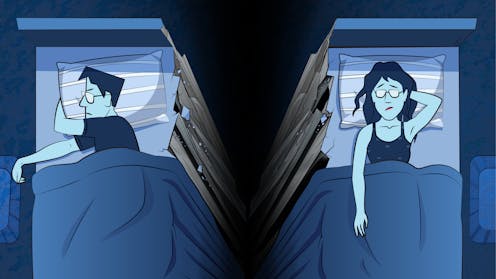
Nowadays, it’s common for married couples and other couples in relationships to sleep in the same bed. But sometimes – for reasons from conflicting schedules to snoring to sleep talking – couples might choose to sleep separately in pursuit of a better night’s sleep.

This is known as “sleep divorce”. Though I prefer the term “sleep separation”, as this doesn’t have to be a permanent arrangement – but more on that later.

So why might couples choose to sleep separately? And what does the evidence say about the effects on sleep quality if you sleep alone versus with a partner?

Why do couples opt for a sleep separation?

Couples may choose to sleep apart if one partner’s sleep is disturbing the other’s, or both are disrupting one another. This can happen for a variety of reasons.

These include waking up frequently in the night, mismatched body clocks (for example, one person coming to bed later than the other), conflicting schedules (for example, shift workers), snoring, twitching legs or sleep talking.

Parents with babies and young children may choose to sleep separately to avoid both partners’ sleep being disturbed.

Those with conflicting preferences for sleeping environments, such as one partner liking a cool room with a fan and the other preferring warmth, may also decide to sleep apart.

What are the benefits of sleeping alone?

Many couples say they prefer to sleep – and sleep better – next to their partner.

But when scientists measure sleep objectively, such as via an electroencephalogram (EEG) to assess brain waves, the data actually shows poorer sleep quality when co-sleeping. So sleeping alone may, in fact, mean better quality and longer sleep.

Research also shows when one member of the couple has a sleep disorder, such as insomnia or sleep apnoea (where breathing is frequently interrupted during sleep), these people often inadvertently wake up their partner when they wake in the night. So sleeping alone could be a good idea if your bed partner has a sleep disorder.

What’s more, studies have found sleep disturbances are linked to reduced relationship satisfaction. So sleeping apart could actually mean happier couples.

Finally, anyone who has struggled with their sleep will know anxiety around sleep is common. Many clients I have seen who experience insomnia report sleeping alone can alleviate some of their anxiety because at least they know they won’t disturb, or be disturbed by, their partner.

A birds-eye-view of a couple turned away from each other in bed.
Disturbed sleep has been linked to lower relationship satisfaction.
Gorodenkoff/Shutterstock

Are there any downsides to separate sleeping arrangements?

Some people dislike sleeping alone, reporting comfort, and feelings of safety and protection when sleeping alongside their partner – and loneliness when they don’t.

Sleeping separately also requires two rooms, or at least two beds. Many couples may not have these options available to them in their home.

Sleeping separately is often stigmatised, with some people seeing it as the death of a couple’s sex life. But while sleeping in separate beds may provide fewer opportunities for sex, this doesn’t necessarily mean the end of intimacy.

Sleeping apart could mean some couples actually have more sex. We know better sleep is linked to more positive feelings about relationships, so it’s possible the desire to be intimate could increase after a good night’s sleep in separate beds. Sleeping apart may even mean some couples have more energy to be intimate.

Nonetheless, if you choose to sleep separately from your partner, it’s important to have an open discussion and prioritise opportunities for connection and intimacy. One client I worked with referred to “visiting rights” where her partner came into her bed for a short period before sleep or in the morning.

Who should potentially consider a sleep separation?

You may wish to think about a “sleep separation” if you are disturbing each other’s sleep, have young children, or have different preferences in terms of temperature, light and noise, which are causing issues.

Ultimately, if sleeping in the same bed is leading to poor sleep then sleeping apart, if it’s possible, could help.

If you can’t sleep separately there may be other ways to reduce disturbance from a partner such as using an eye mask, white noise or earplugs.

If you decide to try a sleep separation, remember this can be a flexible arrangement or “re-set” and doesn’t have to be permanent, or every night. Some couples find sleeping separately during the working week but sharing a bed on the weekend works well for them.

Lastly, it’s important to talk to your GP about any persistent sleep problems, such as snoring, insomnia, or unusual behaviour during sleep (for example, shouting or walking around), as there may be an underlying sleep disorder which needs treating.

The Conversation

Alix Mellor works for the Monash University Healthy Sleep Clinic at the Turner Clinics as a provisional psychologist.

ref. Sleep divorce: could sleeping separately from your partner lead to a better night’s rest? – https://theconversation.com/sleep-divorce-could-sleeping-separately-from-your-partner-lead-to-a-better-nights-rest-258085

A Shakespearean, small-town murder: why Australia became so obsessed with the Erin Patterson mushroom case

Source: The Conversation – Global Perspectives – By Xanthe Mallett, Criminologist, CQUniversity Australia

The “mushroom murder trial”, as it has popularly become known, has gripped Australia over the past 11 weeks. More than that, it’s prompted worldwide headlines, multiple daily podcasts, and even YouTube videos of self-proclaimed “body language experts” assessing defendant Erin Patterson’s every move.

There’s an ABC drama series in the works. Acclaimed Australian author Helen Garner has been in the courtroom.

But why did this tragedy, in which three people died and a fourth was lucky to survive, grip the public consciousness in way no other contemporary Australian case has?


Read more:
Erin Patterson has been found guilty in the mushroom murder trial. Legal experts explain why


A not-so-wholesome family lunch

On July 29 2023, in a sleepy town called Leongatha in the foothills of the Strzelecki Ranges in Victoria, a very normal woman called Erin Patterson made an ostensibly very normal lunch of beef Wellington.

She was cooking for her in-laws, Gail and Don Patterson, Gail’s sister Heather Wilkinson, and Heather’s husband Ian. Erin’s estranged husband, Simon Patterson, was also invited, but chose not to attend.

Simon and Erin had two children, a boy and a girl, who did not attend the lunch either.

Shortly after the lunch, all four guests were admitted to hospital with suspected gastroenteritis. Erin Patterson also presented to hospital, but refused to be admitted.

Within a few days, Gail, Don, and Heather all died as a result of what was later confirmed as poisoning with Amanita phalloides, better known as death cap mushrooms.

Ian survived, but he was lucky. He spent seven weeks in hospital and needed a liver transplant.

The questions became, how did the mushrooms get into the beef Wellington? Was this an awful accident or something more sinister?

Public obsession

These questions became the focus of very significant public and media attention.

Erin Patterson spoke to the media in the days after the incident. She presented as your typical, average woman of 50.

That is, in my opinion, where the obsession with this case began.

This case had the feel of a Shakespearean drama: multiple deaths within one family, death by poison, and a female protagonist.

The juxtaposition between the normality of a family lunch (and the sheer vanilla-ness of the accused) and the seriousness of the situation sent the media into overdrive.

Then there were the lies. Patterson lied about foraging for mushrooms, and about having cancer to encourage the guests to attend.

The location also played a huge part. Leongatha is known for its staggering natural beauty and thriving food and wine scene. It’s hardly a place where the world expected a mass murderer to live.

However, the perception that rural areas are utopias of safety and social cohesion, and cities are dark and dangerous places, is a myth.

One study by the Australian Institute of Health and Welfare paints a different picture.

For serious assault cases that resulted in hospitalisation, for major cities the rates were 65 per 100,000 people. In rural areas, this rose to 1,244 people per 100,000. And for murder, in very remote areas the rate was five per 100,000 population, but fewer than one per 100,000 in urban areas.

Then there was Erin Patterson’s unusual behaviour. She disposed of the desiccator in which the mushrooms she had foraged were dehydrated. She used multiple phones, one of which underwent multiple factory resets on in the days following the lunch. One of these resets was done remotely after police seized her phone.

There are also the much-discussed plates. The court heard she prepared her meal on a different-coloured plate to those of her other guests so they were easily identifiable.

The public latched onto these details, each providing a new talking point around water coolers or spurring new Reddit threads dedicated to unpacking their significance.

The courtroom as a stage

Ultimately, after three months, Erin Patterson was charged with three counts of murder and one count of attempted murder. She pleaded not guilty.

The trial lasted 40 days. The prosecution alleged Patterson intentionally poisoned her guests, whereas the defence suggested it was all an awful, tragic accident.

The jury took six and a half days to deliberate. During that time, various media outlets did everything they could to keep the story on the front page.

Bizarre pieces began appearing online from credible sources such as the ABC, profiling people who had attended court. They included stories of people turning down work to attend the court daily, cases of friendships blossoming during the trial between regular attendees, and the outfit choices of locals turning up every day to watch the drama unfold.

There were also articles profiling local cafe owners and how they felt about being at the centre of the legal theatrics. The daily podcasts continued even when news from the courtroom didn’t.

The vibe felt more appropriate for a royal visit than a triple murder trial.

It seemed everyone in Australia was gripped by one event, united in a way few other things could manage. We all waited with bated breath to see what the 12 men and women of the jury would decide.


Read more:
Justice on demand? The true crime podcasts serving up Erin Patterson’s mushroom murder trial


Humanity behind the spectacle

The end to this strange and unique criminal case came on Monday July 7.

The result? Guilty on all four counts. Erin Patterson is formally a mass murderer, though many in the court of public opinion had reached the same conviction months earlier.

Leongatha will always be known for being the setting of (arguably) the most infamous multiple murder case in Australian history. It will join Snowtown in South Australia (home of the “bodies in the barrell” murder case), Kendall in New South Wales (where William Tyrrell disappeared), and Claremont in Western Australia (the murder or disappearance of three women) as places forever linked to tragic crimes.

While the trial is over, there’s much more content still to come, the public’s appetite yet to be satiated.

But the final word should be saved for the Patterson and Wilkinson families. This is an awful tragedy, and there are no winners. Ian and Simon have lost loved ones. The Patterson children have lost grandparents and now have to come to terms with the fact their mother caused those deaths intentionally.

Amid the spectacle, it’s easy to lose sight of the humanity at the centre. As the media spotlight dims, may the families get the privacy and respect they deserve.

The Conversation

Xanthe Mallett does not work for, consult, own shares in or receive funding from any company or organisation that would benefit from this article, and has disclosed no relevant affiliations beyond their academic appointment.

ref. A Shakespearean, small-town murder: why Australia became so obsessed with the Erin Patterson mushroom case – https://theconversation.com/a-shakespearean-small-town-murder-why-australia-became-so-obsessed-with-the-erin-patterson-mushroom-case-259982